




Abstract
Disability glare is associated with veiling luminance caused by light from bright sources being scattered within the eyes of observers, thereby reducing retinal luminance contrast. This study compares the reduction in observers’ performance in the presence of glare with veiling luminance in the eye, calculated using a non-subjective method. A total of 42 observers performed a target detection task in the presence of a glare source in conditions similar to street lighting at night. Luminance contrast thresholds were measured for each observer under different levels of glare. Results show that, while veiling luminance has a significant effect on the performance of observers, its effect is lower than expected from contrast loss. Furthermore, the performance of observers over the age of 50 is unaffected by increasing the glare level.
1. Introduction
Improved street lighting, in general, is widely thought to be an effective means of reducing the likelihood of road traffic accidents for pedestrians, cyclists and vehicle users. In this context, glare has long been recognised as one of the main issues; this is due to the fact that glare from street lamps and vehicle headlamps can cause a reduction in the conspicuity of objects and discomfort for both motorists and pedestrians. The problem of glare has been recognised for many years and the current design guidance for road lighting1,2 includes provisions for limiting glare. This study focuses on the impact of glare on road users’ performance in conditions similar to street lighting. Moreover, this study benefits from not using subjective measures to calculate veiling luminance in the eye.
1.1 Veiling luminance
Disability glare has been studied for many years, with perhaps the key initial work in the area being carried out by Holladay. 3 The proposed mechanism for disability glare is that light is scattered by the ocular media, and this results in extra light being added to areas of the retina surrounding the area directly illuminated by the glare source. It is known that the amount of scattered light in the eye, and the angular size of the region affected, increases with age and this correlates with increased susceptibility to glare. 4 Older people tend to have more problems in coping with glare sources and this makes lighting difficult since they also need more light to perform common visual tasks. 5
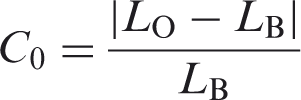
Conventionally, disability glare has been understood by treating the scattered light as if it added an extra veiling luminance across the visual field, as this would thereby reduce luminance contrasts. There are several possible equations that could be used for quantifying the luminance contrast, for simplicity, equation 1 is used. Consider the normal luminance contrast of an object against its background as

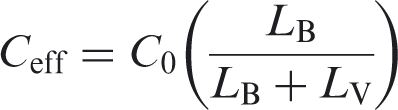
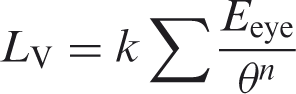
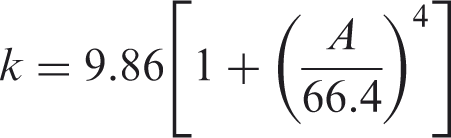
Changes in the light scattering properties of the eye were calculated using a scatter system applied on the P_SCAN 100 pupillometer apparatus at City University (London, UK). This method permits simultaneous measurement of pupil size and eye movements. 8 This programme uses extended scatter sources that can be produced on a visual display and uses a flicker cancellation technique similar to that used in the van den Berg et al. study. 9 In order to maintain a constant illuminance in the plane of the pupil, the dimensions of the scattering source are adjusted for five eccentricities. The sinusoidally modulated scatter source causes short bursts of flicker. Light scattered from the source causes the dark centre disc of the annulus to flicker in phase with the scatter source. In order to null out the modulation of retinal illuminance caused of scattered light, the luminance of the dark disc at the centre of the annulus is modulated sinusoidally in counterphase with the scatter source. The nulling display target luminance is required to balance the retinal illuminance by the scattered light. This was measured for each of the five annuli that formed the scatter source. During each run, for each scatter source eccentricity, six readings were measured and averaged. The output of the programme on the P_SCAN 100 system produces the n and k parameters used in equation 4.
2. Method
The objective of the test was to assess the effect of glare in conditions that were similar to those encountered in normal street lighting conditions. A dual target detection task was employed to explore the effect of glare on peripheral target detection.
2.1 Observers
A total of 42 observers (21 males), between the age of 20 and 75 participated in this experiment. All observers were tested for visual acuity and ocular diseases. Each of the observers had the scatter function of their eyes measured using the method explained above. Figure 1 illustrates the range of k and n values for subjects over and under 50 years of age.
k and n values for observers over and under the age of 50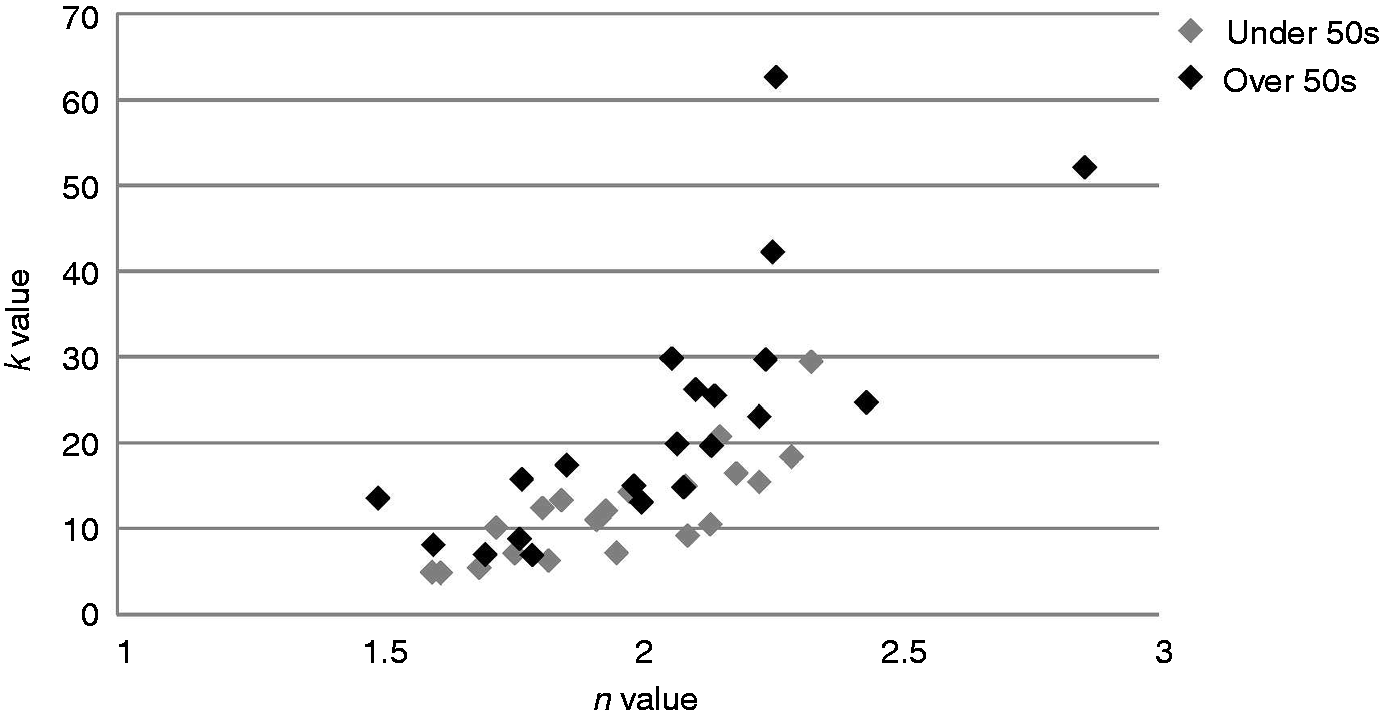
2.2 Apparatus
A street scene was presented on a white screen at a distance of 4 m from the observer. The luminances of the scene were set to closely resemble the luminances encountered on a real street. To prevent problems associated with colour contrast confounding the results of the experiment, an achromatic image was used. The scene was controlled by custom software that permitted the scene to be overlaid by different targets for fixed periods of time. The scene with targets is shown in Figure 2.
Street image used in the experiment with embedded targets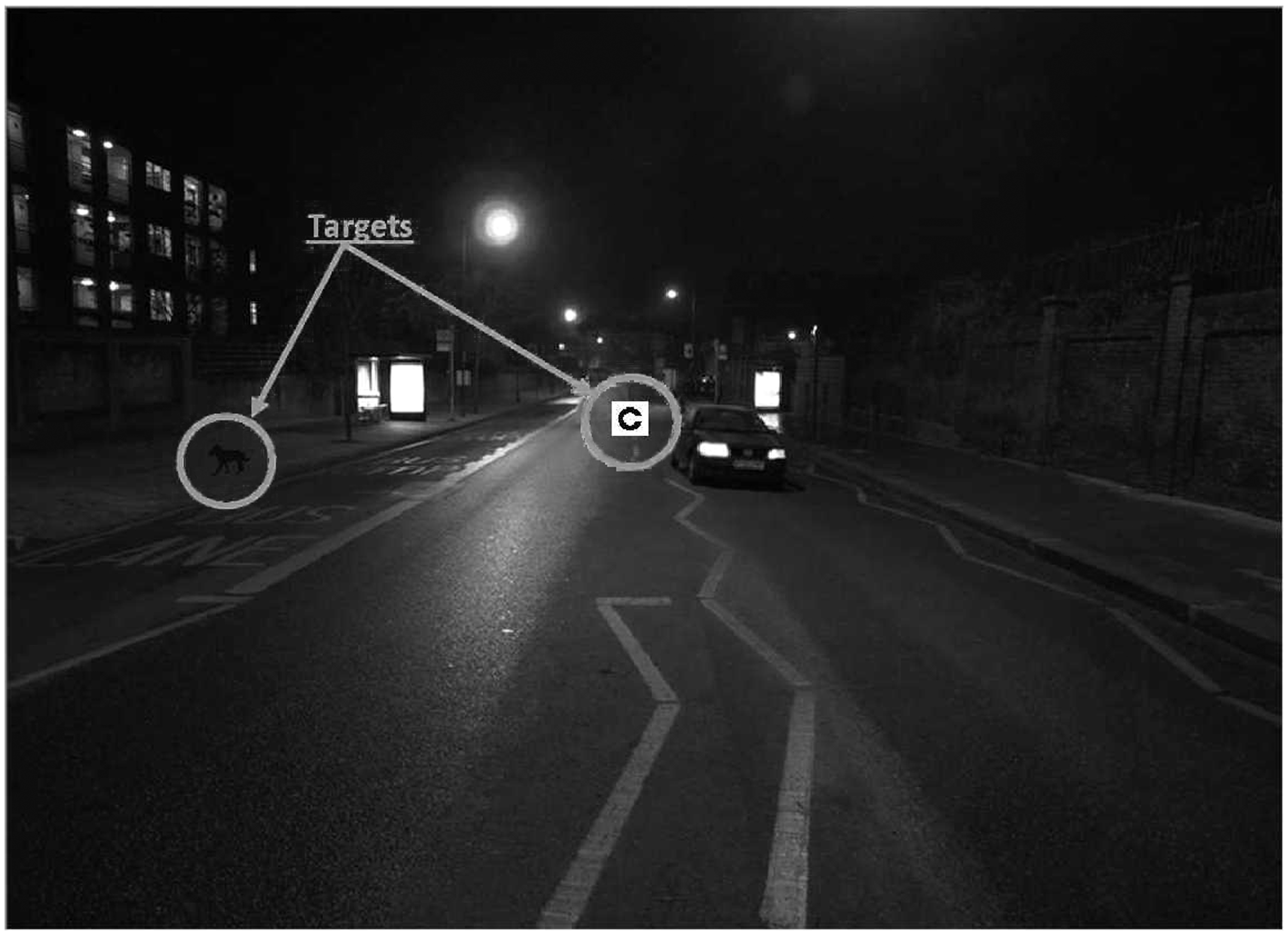
Two light-emitting diode (LED) light sources were used as the glare sources and their spectra are shown in Figure 3. To make the scene look natural the glare source was located at the position of the first street light.
Spectral power distributions of the light sources used as glare sources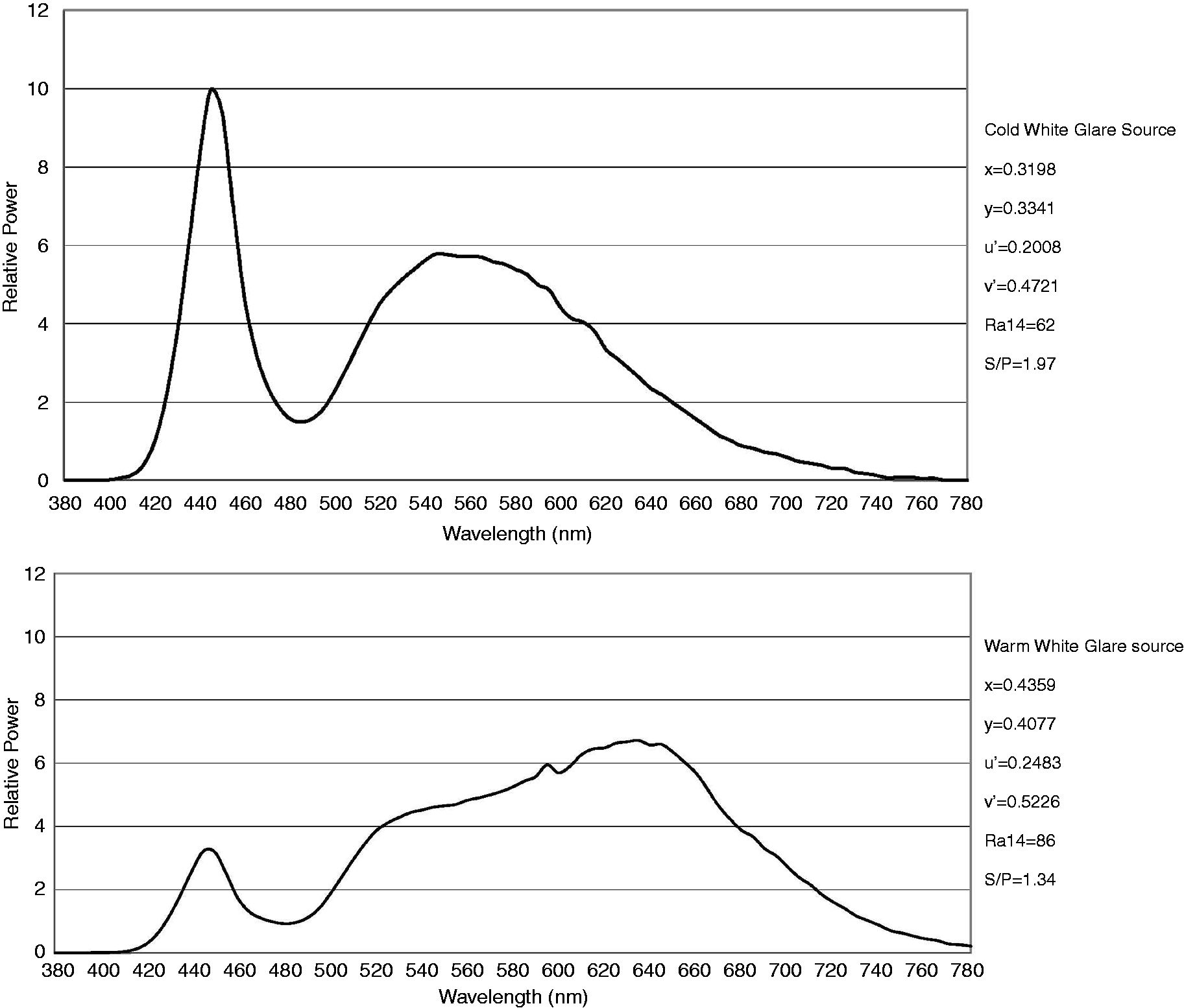
The street scene was presented by a data projector on a white screen. The glare sources were two AR111 retrofit fittings containing eight LEDs (40° optics) in warm white and cool white colours. The experiment was carried out in no glare, high glare (≈2 lx at the observer’s eye, standard deviation = 0.175 lx) and low glare levels (Eeye ≈ 1 lx at the observer’s eye, standard deviation = 0.0912 lx). Also two glare source sizes were used; small (0.2° visual angle at the observer’s eye) and large (0.8° visual angle at the observer’s eye). The glare source sizes are equivalent to a typical street luminaire seen at 40 m from the observer. The illuminance the glare source created at the eye of the observers was similar to that produced by a typical street luminaire mounted on a 5 -m column, 10 m away from a pedestrian. A bent tube painted matt white was used to create a uniform large glare source and an iris was used to create the small glare source (Figure 4).
The large and small glare sources: (a) a white painted tube used to create the uniform large glare source, (b) the small glare source and (c) a wooden iris placed on the LED fitting to build the small glare source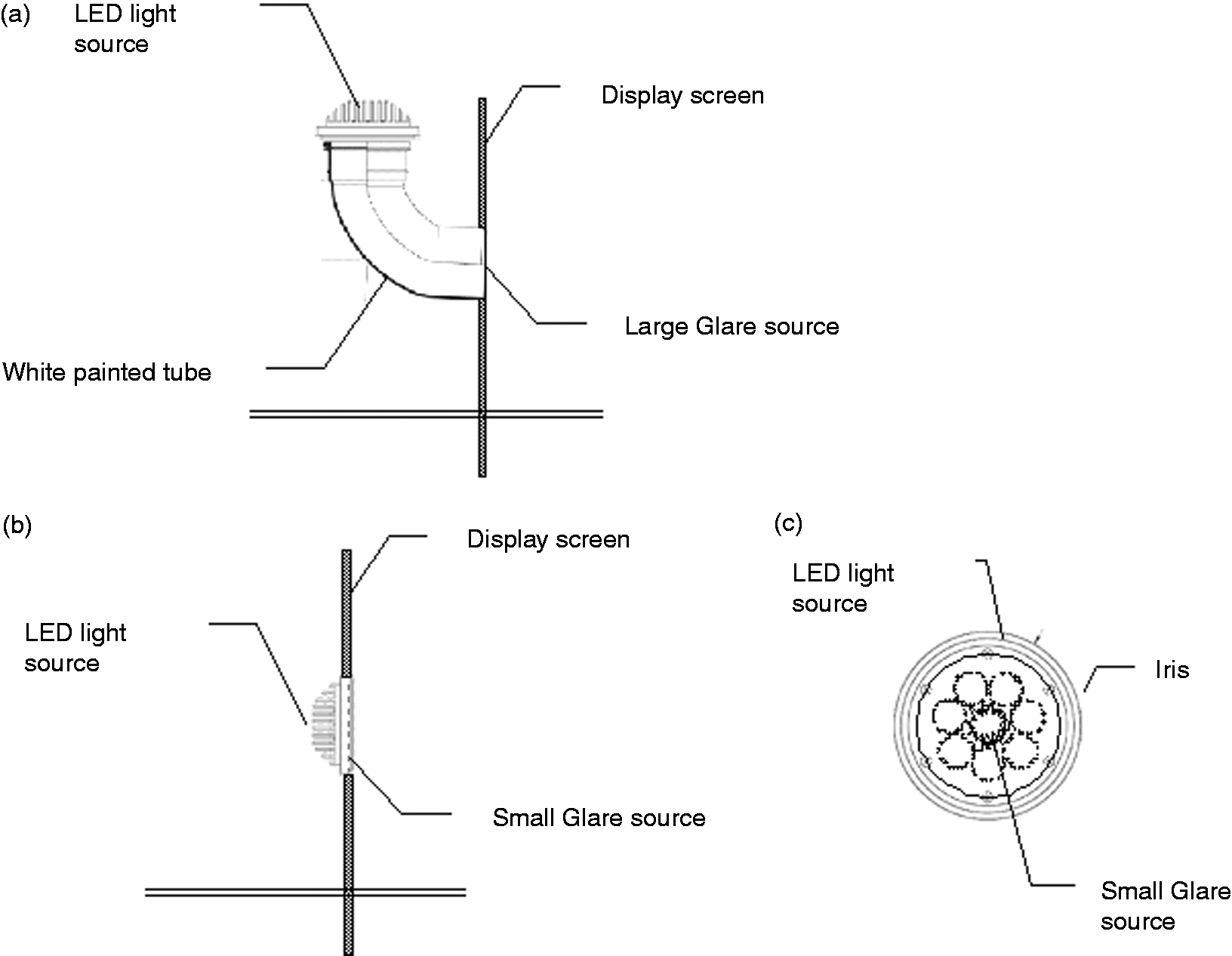
Two targets were embedded in the street scene: a Landolt ring was selected as the foveal target and the observers were asked to locate the gap in the ring (two alternative forced choice). The size and contrast of the ring were constant and at a suprathreshold level (size = 0.39° visual angle and luminance contrast = 0.99) (Figures 2 and 5). The foveal target was used to keep the main attention of the subjects on the fixation point to ensure the other target was found by peripheral vision. The peripheral target was a black dog (0.7° visual angle wide and 0.55° visual angle high) which appeared at one of two locations on either side of the road. The luminance of the adjacent street surface on the brightest point on the right-hand side was 1.02 cd·m−2 and 0.8 cd·m−2 on the left-hand side. The results for the right dog were eliminated from this study due to inaccuracy in some conditions as a result of apparatus malfunction.
Setting specifications: visual angle between the eye and glare source = 5.0°, the eye and target = 7°, the glare source and left-hand side target = 8.7°, and the glare source and right-hand side target=5.0°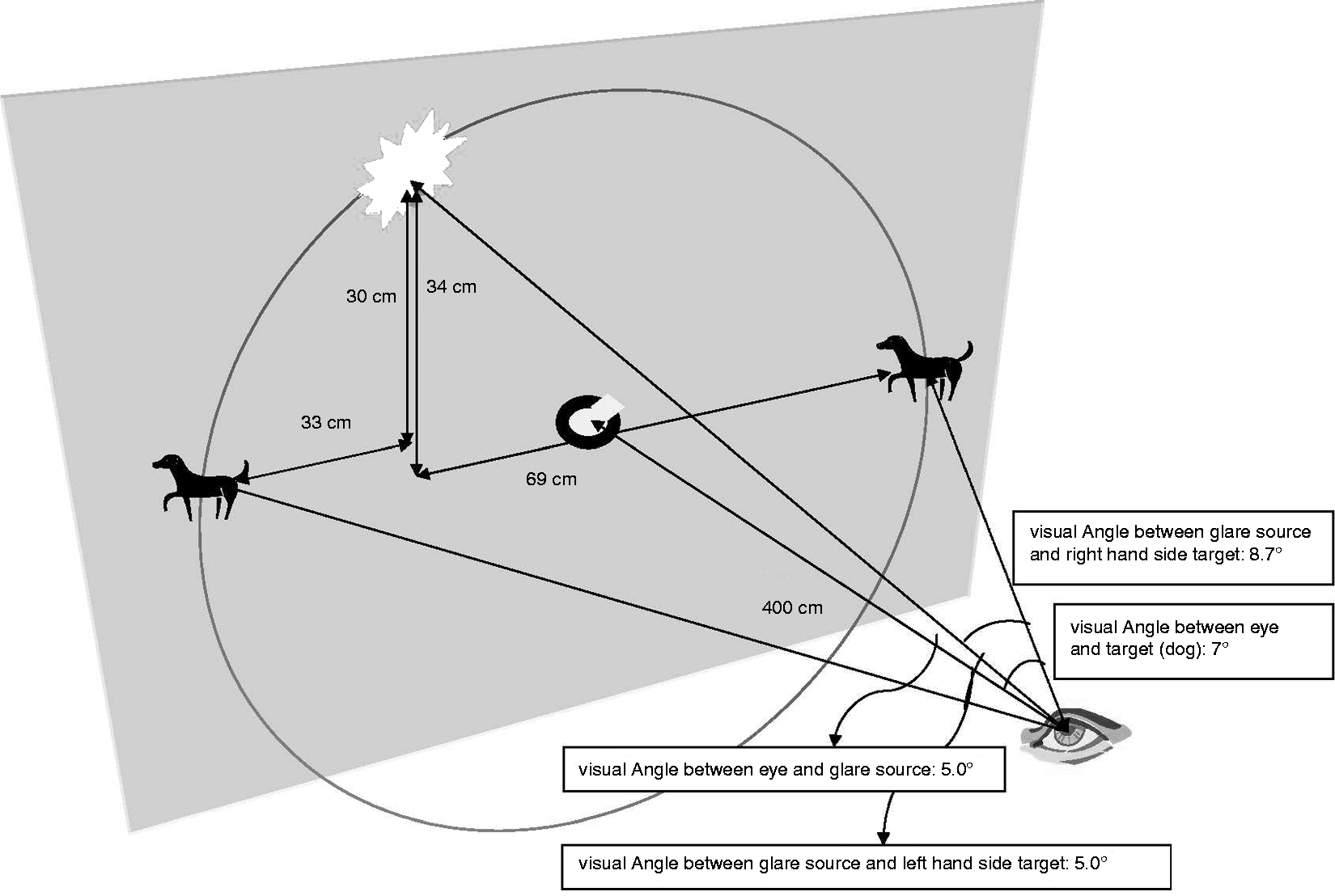
The luminance contrast of the dog was calculated based on the mean pixel brightness of the dog against its immediate background and was confirmed by on site measurements. The area of 0.5° in the dog’s immediate background (total area of 1.2 by 1.05° visual) was manually uniformed to avoid the effect of a cluttered background on target detection. 10 The luminance of the background was 0.84 cd·m−2 and 0.64 cd·m−2 for the left and right dogs, respectively. The luminance contrast of the dog against its immediate background was reduced based on a variation of the random two inter-leaved staircase method from the highest contrast to the lowest contrast. 11 In this method, one staircase was allocated for the dog on each side of the road and the presentation order was randomised between the two sides of the road. The contrast of the dog was decreased until two incorrect answers were given after which the direction of the staircase reverses until the target could be seen again. After four reversals the procedure stops and the mean value of the last three reversals was deemed to be the threshold value. The luminance contrast values were calculated based on the luminance of the dog and its immediate background measured on the screen.
2.3 Procedure
The illuminance at the eye of individual observers for each condition of low and high glare level was measured. The observers were required to have a minimum adaptation time of 10 minutes to adapt to the experimental light level. Observers performed several practice trials until they were confident in their ability to carry out the test.
The foveal and peripheral targets were presented simultaneously to observers for 650 ms. Observers were instructed to report the location of the gap in the ring (bottom or top) and the location of the dog (left or right side of the street) and the orientation of the dog (head inward or head outward). All subjects did the test in no, low and high glare levels with two glare sources and two glare sizes. The order of using glare sources, glare sizes and glare levels was randomised to minimise the bias due to presentation order.
3. Results
A comparison between the LCT for different glare source sizes, correlated colour temperature and illuminances
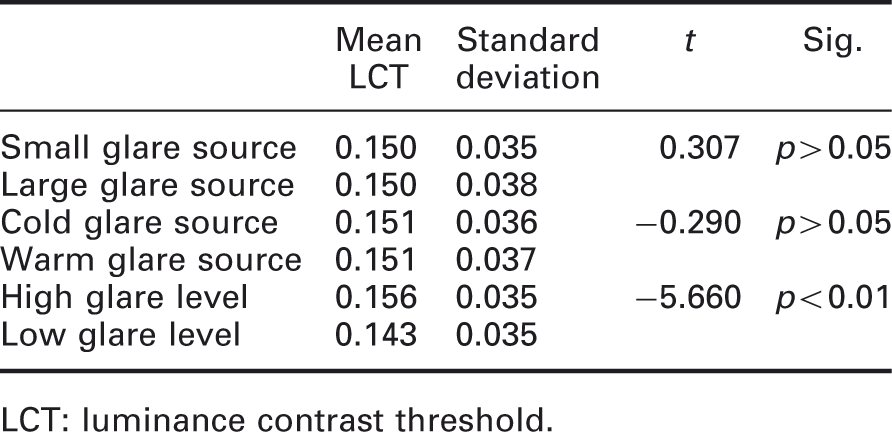
LCT: luminance contrast threshold.
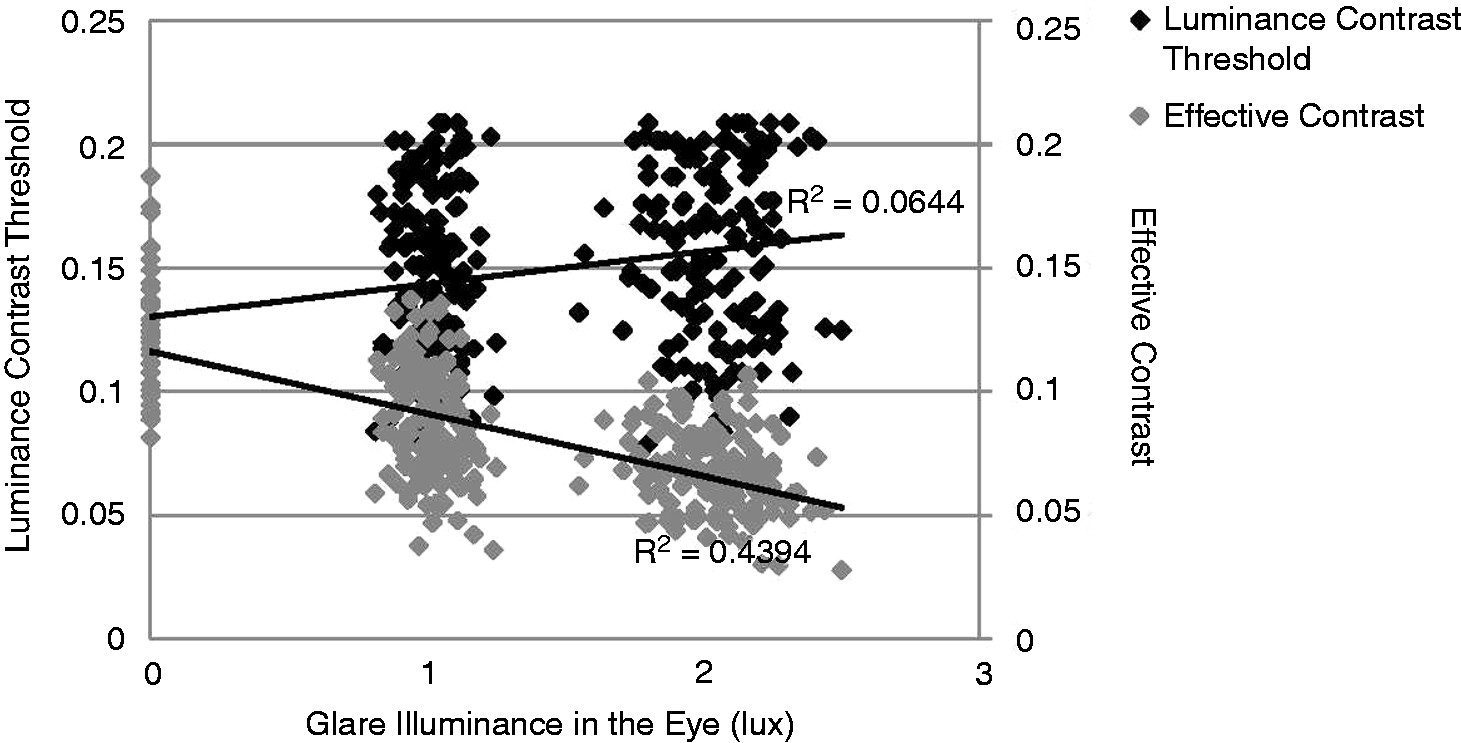
Luminance contrast thresholds and calculated effective luminance contrast at different levels of illuminance at the eye
Looking at the effect of LV on LCT, the statistical analysis shows a statistically significant but not strong correlation between veiling luminance and LCT, r = 0.37, p < 0.01 (Figure 7).
Correlation between luminance contrast threshold and calculated veiling luminance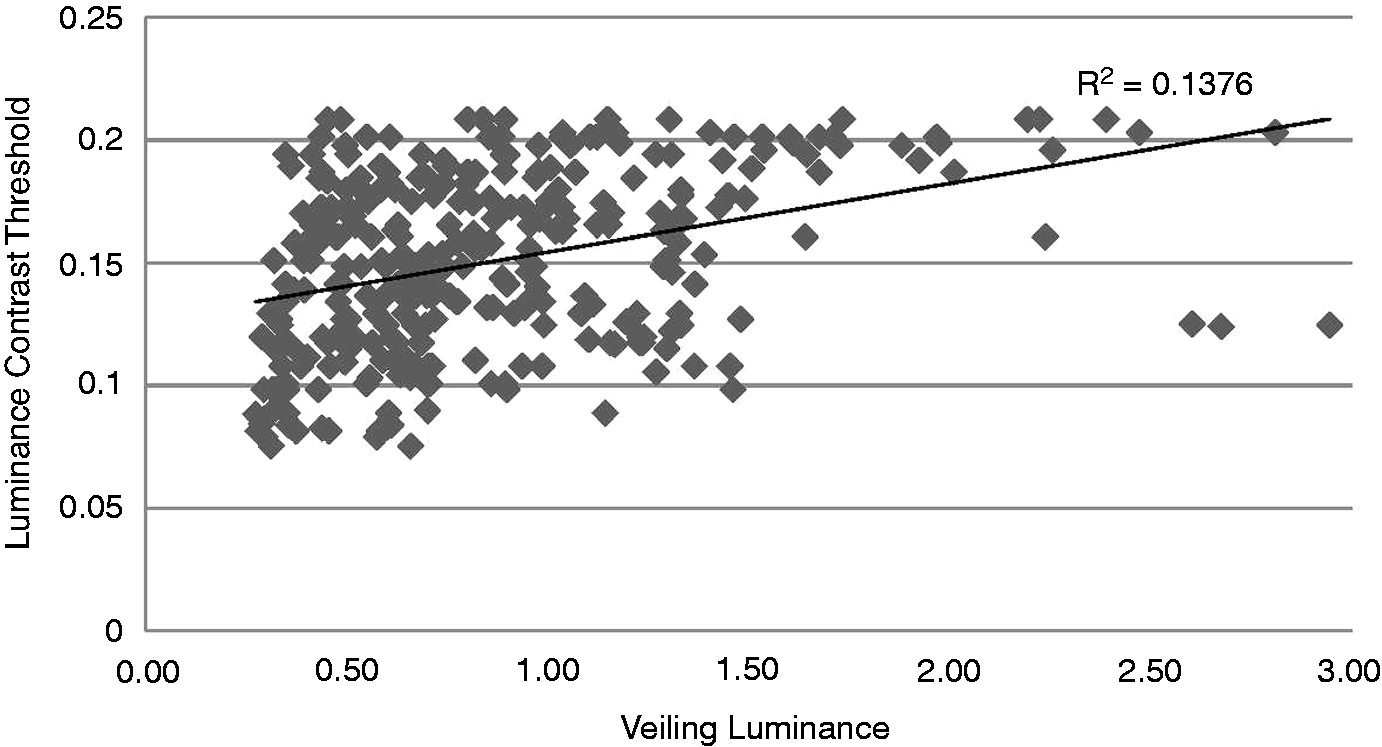
Age has been assumed to be a strong predictor of LV in the eye, to test how our results support that assumption, LV for a target at 5° visual angle from the glare source while illuminance at the eye is 1 lx was calculated for all observers individually and plotted against their age (Figure 8).
Relationship between age and calculated veiling luminance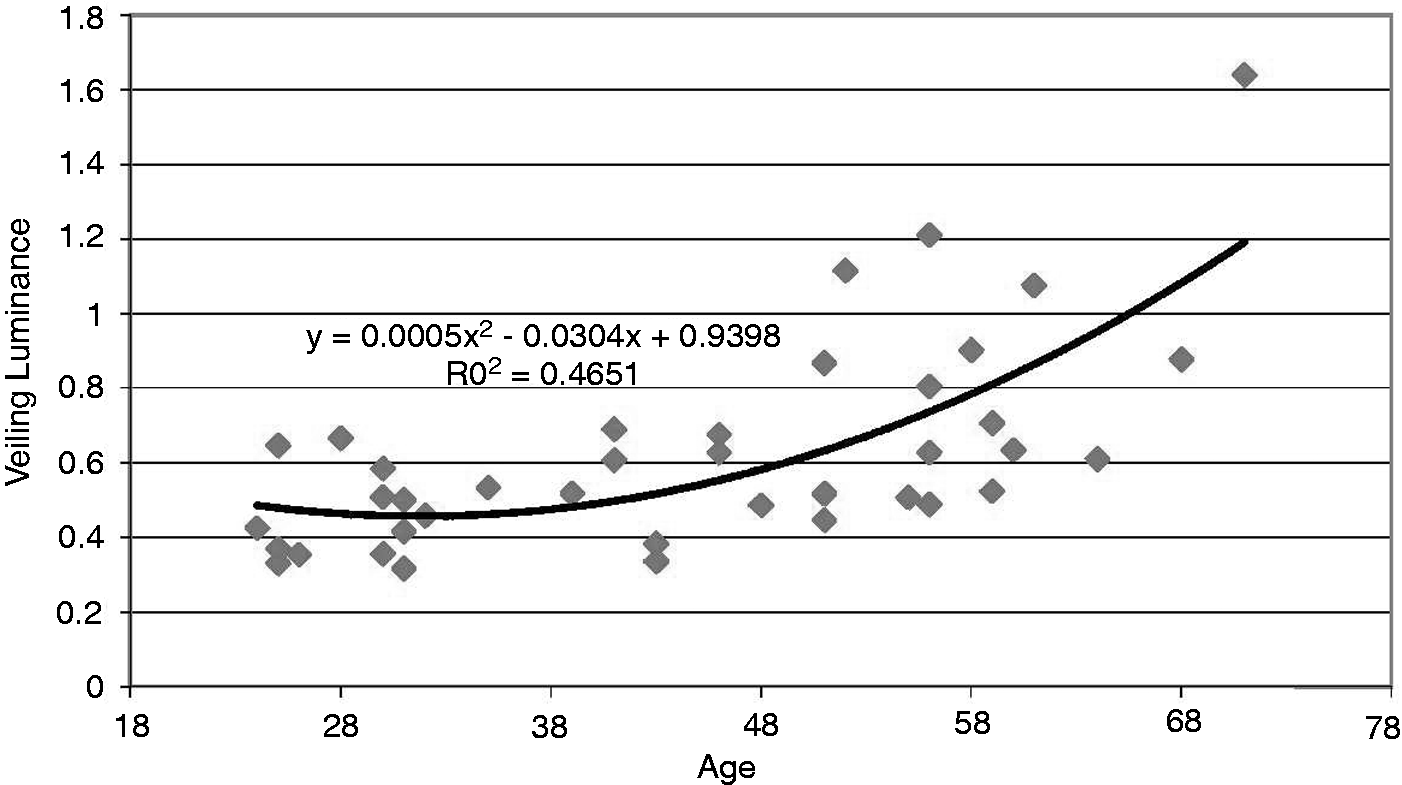
The result shows a significant correlation between the age of subjects and veiling luminance, r = 0.68, p < 0.01. As can be seen in Figure 8, the main increase in the level of veiling luminance in the eye starts from about age 50, p < 0.05, while there is no significant increase of veiling luminance for the under 50 group, p > 0.05.
The results for the effects of age and LCT without a glare source also show a significant relationship between the measures, however the effect of this relationship only explains 14% of the variance in the results, r = 0.37, p < 0.01 (Figure 9).
Relationship between age and luminance contrast threshold in the absence of glare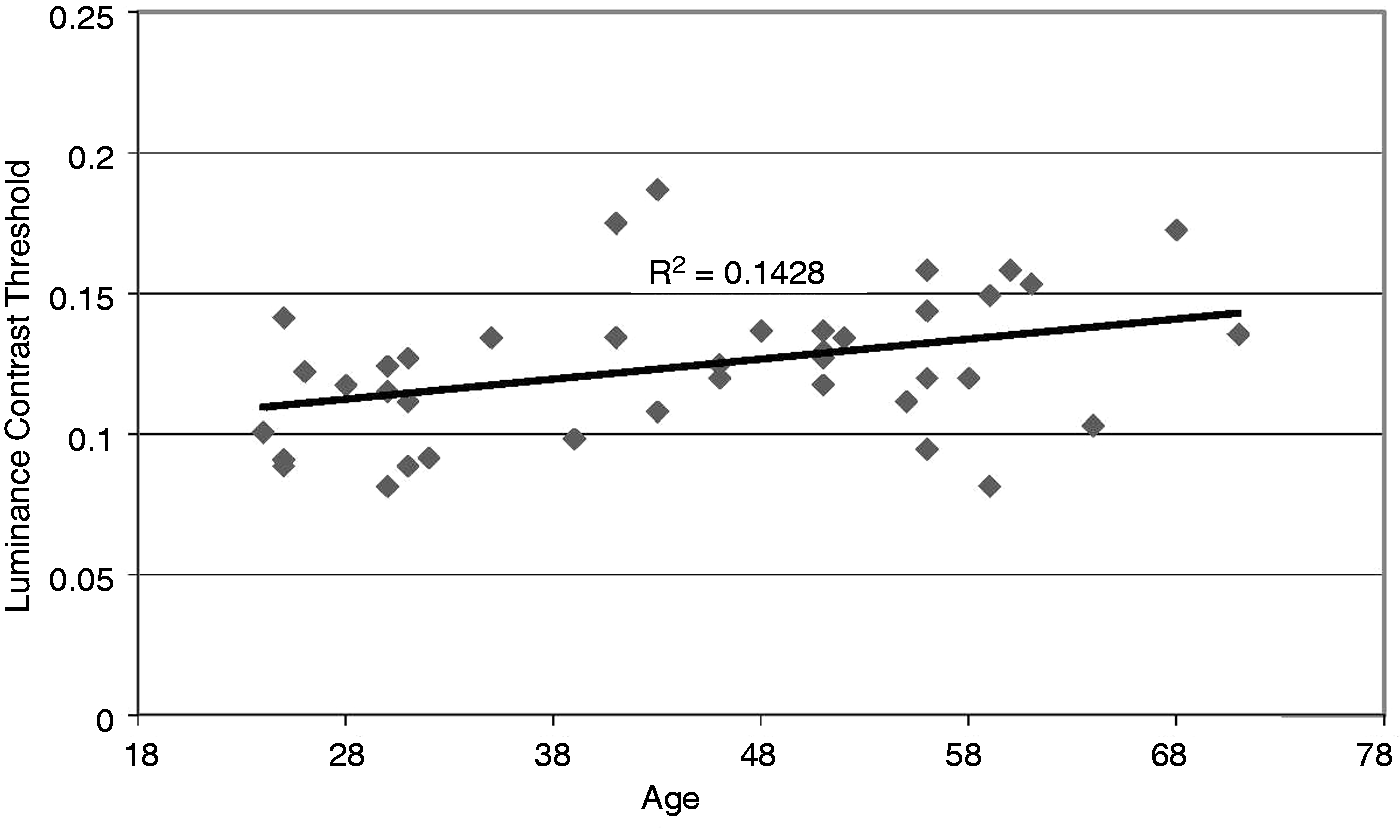
Figure 9 shows a lot of inter-observer variability in LCT in the absence of glare. In order to focus only on the impact of glare on LCT and to remove the within-subject variance in LCT, the difference in LCT (ΔLCT) was calculated for every condition using equation 6:
Difference in luminance contrast threshold with and without glare for observers over and under the age of 50
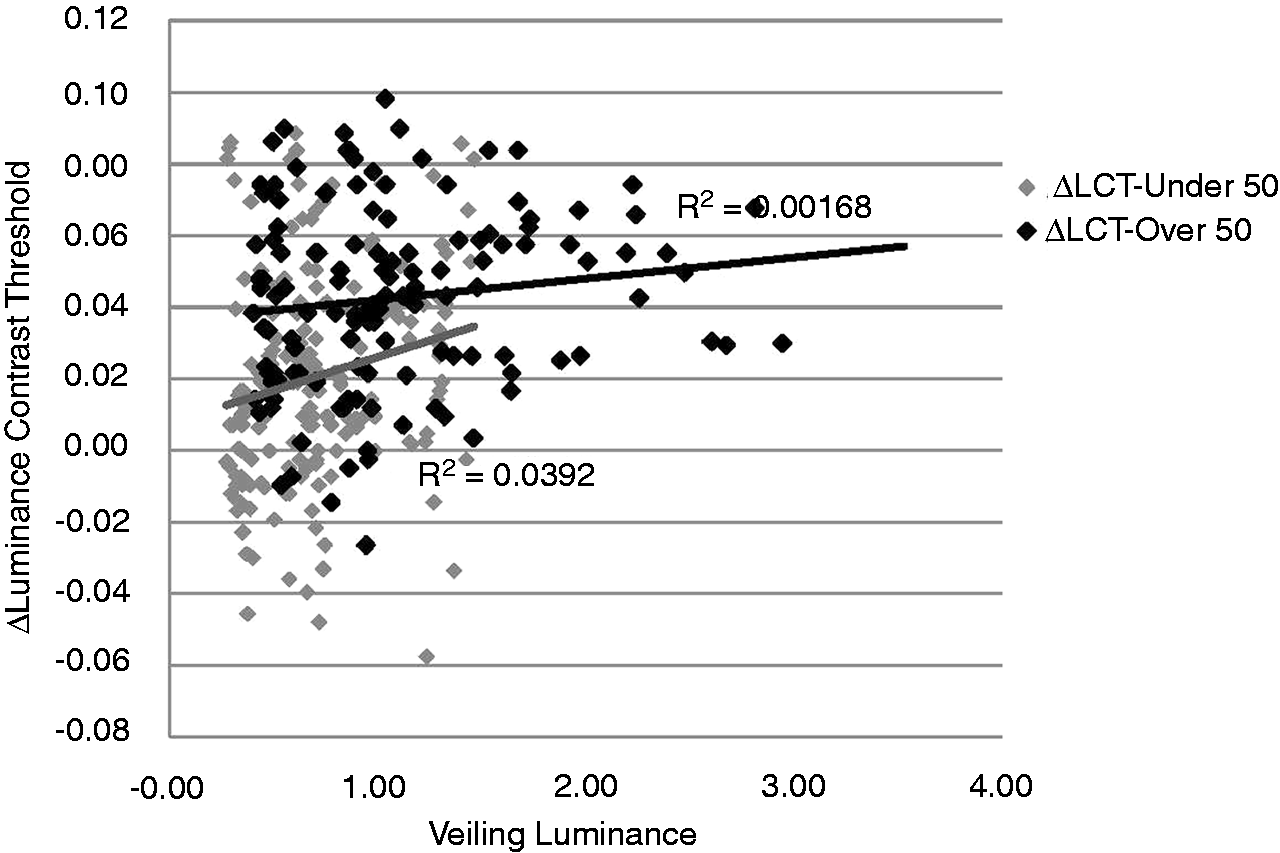
Surprisingly, the data show no statistically significant increase in ΔLCT for increasing veiling luminance for subjects over 50, p > 0.05. However, increasing veiling luminance results in a statistically significant increase in ΔLCT for observers under 50 years of age, r = 0.198, p < 0.01.
4. Discussion
The results of this study confirmed that veiling luminance caused by glare sources increases threshold luminance contrast. However, this increase is less than the amount predicted by the decrease in effective contrast. This finding is consistent with those of Patterson et al. 12 who also showed that in high mesopic conditions the effect of glare on threshold contrast is less than would be predicted by a consideration of the change in effective contrast alone.
The age dependency of the effect of veiling luminance showed similar trends to the IJspeert et al. study. 7 However, in this study the main increase in veiling luminance in the eye is from the age of 50 and before that there is no significant increase in veiling luminance by age. This study also shows that age has a significant effect on threshold contrast in the absence of glare. However, this effect has low impact and high within-observer variance and thus age is not a strong predictor of the observers’ performance.
Surprising results were found by exploring the changes made by the introduction of glare on LCT (ΔLCT) for observers over and under 50 years of age. It was found that while increasing veiling luminance significantly increases threshold luminance contrast in observers under 50 years of age, it has no statistically significant effect on observers over 50 years of age. Whether this lack of effect is due to the greater noise in the data of the over 50 years of age group or an offsetting benefit due to the increase in retinal illuminance produced by the glare 13 remains to be determined.
This study has several strengths. First, it is the first study of its kind that directly measures scattered light in the eye in the context of street lighting. Previous studies are mainly based on psychophysical experiments.3,14–16 Second, the conditions of this study simulated the lighting condition in real streets in terms of background light level, glare source intensities and task and setting involved to make the results closer to what is being practiced in real street conditions.
The findings of this study, while preliminary, suggest that in road lighting, predictions of threshold contrast in the presence of glare cannot be made simply on the level of veiling luminance in the eye. While it is an important predictor, other parameters affecting contrast sensitivity should be explored. One of the possible parameters is inter-subject variability in their reaction to glare which may be independent of the age of subjects and possibly related to discomfort glare. Another possible issue could be the variation in true retinal illuminance. It is known that in older subjects the ocular media tends to absorb more light and so the amount of light reaching the retina is less than would be predicted by the standard formula for retinal illuminance.
Footnotes
Funding
This work was carried out as part of the EPSRC funded project, EP/G044538/1. The project was run as a collaboration between University College London, City University and Royal Holloway University, UK.