




Abstract
Feminist participatory action researchers (FPAR) recognize transformative praxis as a political, relational, deeply felt and embodied experience that centers issues of power, participation, and relationality. This paper offers an in-depth exploration of FPAR praxis from a study conducted with young people who were learning to be activists in a youth-led organization in British Columbia. This work highlights the generative potential of creativity and art for embodied, affective, intellectual research practices. Specifically, I describe and analyze three research practices designed to generate meaning making: 1) critical reflexivity and interviewing as relational practice, 2) a loving creative embodied analytical practice, and 3) reflective and dialogical analytical practice. Findings provide insights for designing transformative research praxis that can catalyze a greater sense of personal and collective power. Implications of creative participatory methods for documenting and deepening the diverse meanings of experiences of activism, resistance, and community are addressed. I argue for demonstrate the value of FPAR praxis for sustaining social justice work through practices designed to generate spaces for people who are becoming activists to share about their experiences, grow their relationships, and make meaning together.
Keywords
We are living through troubling times marked by intensifying social and ecological crises that demand transformative research designed to improve lives and create a more just world (Bradbury et al., 2019). Feminist participatory action research (FPAR) answers that call with a conceptually and methodologically flexible framework for co-producing knowledge with emancipatory and social justice aims (Brydon-Miller et al., 2004; Fine & Torre, 2019; Lykes et al., 2021; Maguire, 1996). Centering issues of power, participation, and relationality is necessary to fulfilling emancipatory research’s transformative potential. FPAR takes these epistemological and methodological concerns seriously through research praxis designed to intentionally open, rather than foreclose, new possibilities through the recognition and engagement of others in relationships and dialogue while seeking experience and meaning.
The distinct fields of feminist theory and participatory action research are expansive, interdisciplinary, and diverse. Thus, FPAR scholarship is broad and diverges in scope, methods, theoretical commitments, and aims. FPAR is an increasingly popular approach to activist-oriented scholarship, yet there is a need for research explicitly addressing the ways in which feminist and participatory theories, frameworks, methods, and social change aims are translated to practice (Reid & Frisby, 2008; Shimei & Lavie-Ajayi, 2022). This paper offers an in-depth exploration of FPAR praxis from a study I conducted with young people who were learning to be activists in a youth-led organization in Vancouver, British Columbia. I focus on the research praxis as a potential site for meaning making and knowledge production rather than the youths’ activism.
For this work, I draw upon intersectional feminist and participatory scholars who recognize transformative praxis as a political, relational, deeply felt and embodied experience with ongoing attention to the body-mind-spirit (Ahmed, 2017; Fernández, 2018; hooks, 2000, 2003; Larrea, 2022; McIntyre, 2003) 1 . This work highlights the generative potential of infusing FPAR praxis with creativity and art for designing embodied, affective, intellectual methods for catalyzing transformation (Aabye et al., 2022; Conrad & Sinner, 2015; Dewhurst, 2014; Fox, 2015; Goessling, 2020; Lewin & Shaw, 2022). Specifically, I present three research practices designed to generate meaning making: 1) critical reflexivity and interviewing as relational practice, 2) a loving creative embodied analytical practice, and 3) reflective and dialogical analytical practice.
Although my critical qualitative study was not a participatory action research design it was grounded in FPAR commitments and offers pathways for infusing traditional research with FPAR principles and practices in meaningful ways (Reid & Frisby, 2008). Findings provide insights for designing transformative research praxis that can catalyze a greater sense of personal and collective power. Implications of creative participatory methods for documenting and deepening the diverse meanings of experiences of activism, resistance, and community are addressed. This work demonstrates the importance of FPAR praxis for strengthening and supporting social justice work by generating spaces for activists to share about their experiences, connect with each other, and make personal and collective meaning.
Feminist participatory action research: Foundations for a praxis of possibility
Participatory researchers work alongside people and communities with lived experience of oppression to produce knowledge and strategies to transform structures of oppression. The pedagogical nature of researching with rather than on directly impacted people and communities situates PAR at the forefront of strategies for creating knowledge and action toward social justice aims. Feminist participatory action research draws upon a breadth of feminist theories resulting in a range of forms and approaches to research building upon the premise that the social construction of gender is a key organizing principle in social, cultural, and political life (Griffin, 2010). FPAR is inherently critical, rejecting positivist approaches and demanding ongoing attention to relations of power, privilege, and voice throughout the research endeavor (see Guy & Arthur, 2022 for historical overview of FPAR). In this paper, I draw on FPAR scholarship with an explicitly political approach to collaborative knowledge production rooted in principles of democratic participation that recognizes and amplifies local knowledge toward social change aims (e.g., Fine & Torre, 2019; Frisby et al., 2009; Lykes & Hershberg, 2012; Lykes et al., 2021; McIntyre, 2003; Maguire, 1996; Shimei & Lavie-Ajayi, 2022). FPAR praxis maintains a dual focus on personal and social transformation as interrelated processes wherein changes in individual consciousness contribute to theory and world building through a commitment to the praxis of research and action (Fals Borda, 2006; Goessling & Wager, 2021).
Relationality and reflexivity are core pillars of FPAR praxis, providing epistemological guidance for addressing issues of power, voice, and representation throughout the research process (Fine & Torre, 2019; Lykes & Moane, 2009). Building upon feminist scholars, relationality “refers to the nexus of relationships that make up organizational and social reality” that situates attention to the “space between” one another as well as the “more than human world” (Bradbury & Divecha, 2020, p. 274). FPAR researchers engage in an ongoing practice of critical reflexivity to analyze how we impact and are impacted by the relationships and knowledge we are co-constructing through the praxis with attention to the mediating flows of power (Lykes et al., 2021). Cahill et al. (2010) defined youth centered FPAR praxis as an embodied commitment to mutuality, negotiation, and struggle for relational collectivity. Thus, feminist participatory youth scholars center relationships and care by working with young people in collective inquiry and action (Cahill et al., 2010; Fernández, 2018; Pech et al., 2019). From here, relationships are sites of tension and possibility where power, privilege, and oppression are examined and negotiated throughout the research process. The goal is not to ‘solve’ power inequities – especially across race, class, gender identity, etc. – rather it is to grapple with their relationality, mutuality, interdependence, and in-between nature within a nexus of power (Cahill, 2007). Further, power-sharing is integral to research design, ensuring young people’s ownership and decision-making power and to avoid reproducing oppressive environments that commonly exist in adult–youth partnerships with particular attention to ageism and adultism (Johnson & West, 2022; Pech et al., 2019).
The field of PAR has grown significantly in the past 20 years and with it has come the increased recognition of YPAR (youth participatory action research) as a legitimate approach for knowledge production reflecting the significant shift from viewing children and young people as subjects of research to co-researchers with valuable expertise (Jacquez et al., 2013; Johnson, 2017; Johnson & West, 2022). In youth-adult research projects, adults are positioned as allies, mentors, and co-learners working alongside young people to co-produce knowledge that leads to collective self-efficacy and action. The research praxis privileges the social and situated nature of learning to facilitate a radical humanizing process where young people “name, explore, and analyze their experiences” and are respected as authors and experts of their own lives (Mirra et al., 2016, p. 5). Through FPAR praxis, young people learn about themselves in and of the world as they work together to change it.
Fernández (2018) argued that researchers have an ethical imperative to embrace the personal and political nature of research through a holistic approach that addresses the “embodied subjectivities that emerge through our bodies and affect while engaging our heart, hand, and head” (p. 231). The research practices presented in this paper do this by embracing complexity and interconnection through creativity as an embodied potentially transformative process (Bradbury & Divecha, 2020). Creative and arts-based research methods focus on emergent processes to open new ways of thinking, being, and doing knowledge production (Barone & Eisner, 2012; Capous-Desyllas & Morgaine, 2018; Leavy, 2015). Relationality is reflected through a view of research as care work that values the embodied and subjective experiences of co-producing knowledge. Creative methods designed to intentionally produce reflective, embodied, and practical knowledge can overcome the limitations of the mind-body split dominating traditional research (Conrad et al., 2015; Zaal et al., 2007).
Engaging with young people in creativity as an emerging practice provides a platform to ignite imaginations in a meaningful way that “unabashedly strives to affect our very ways of living, being, and co-being” through introspection, reflection, and action (Finley, 2014, p. 531). Similar to the synergy with feminist theory, PAR is particularly well-suited for creative, visual, expressive and performative research practices as generative pathways for collaborative knowledge production (Lewin & Shaw, 2022). Creative practices democratize notions of experts and expertise by recognizing embodied ways of knowing and considers the body a valuable place of learning and experience (Perry & Medina, 2011; West, 2007). Fox (2015) has demonstrated creative participatory methods for strengthening validity, catalyzing participant meaning making, and democratizing the social justice-oriented knowledge creation endeavors. Creative research practices can generate analytical depth and nuanced insight that would not otherwise be available using traditional methods (Fox, 2015; Goessling, 2020). Further, conceptualizing the arts as participatory cultural production that generates meaning “with, in, and through our research,” (citing Irwin, 2004) can strengthen social change movements and foster resiliency (Conrad & Sinner, 2015). Because art and creativity are emergent process-oriented practices, they provide space for deeper participation for youth co-researchers to exert their own ideas and control over the research which is essential for transformative FPAR (West, 2007). This work expands the conversation on FPAR praxis by focusing on youth and creative practices for co-producing knowledge with liberatory aims.
Background: The lonely and alienating work of learning to be an activist in contemporary Canada
In this section, I provide an overview of the original research which was the focus of my dissertation and approved by the institutional ethics review board. Because this manuscript focuses on research practices, rather than the topic of focus, I offer a brief introduction to the youth organization, the participants, and the study. Although my critical qualitative study was not PAR, my prior experience as PI of a photovoice study for my master’s thesis and orientation as a participatory scholar informed every aspect of the research from conceptualization to implementation and dissemination. Think Again (TA) 2 was a youth-led organization that used a popular education approach to achieve their mission of educating and activating young people as social change agents. I first encountered TA in August 2013 when I invited them to facilitate gender and media workshops in the education courses I was teaching at my graduate institution. We hit it off and immediately began conversations to explore ways we could collaborate. Veronica, the educational coordinator at the time, invited me to support the Youth and Gender Media project (YGM) as a researcher and mentor. This was the third and final YGM cohort that ran from September 2013 to August 2014 and both Veronica and TA were curious about youths’ experiences with the cohort model, which was different from TA’s other offerings. At the time of the study, 2013-2014 (and even more now), explicitly political youth-driven spaces like TA were increasingly rare and precarious in late-stage capitalism and neoliberalism 3 societies marked by adultism, uncertainty, economic precarity, and a shrinking public sphere. As an activist-scholar-educator, I wanted to better understand youths’ activist journeys and the meanings they made in and of their participation at TA. Additionally, I aimed to co-construct youth counter narratives to challenge prevailing dominant deficit narrative about young people circulating at the time (e.g., lazy, apathetic, self-involved) (Goessling, 2015).
Participant chosen Pseudonyms and demographic information.
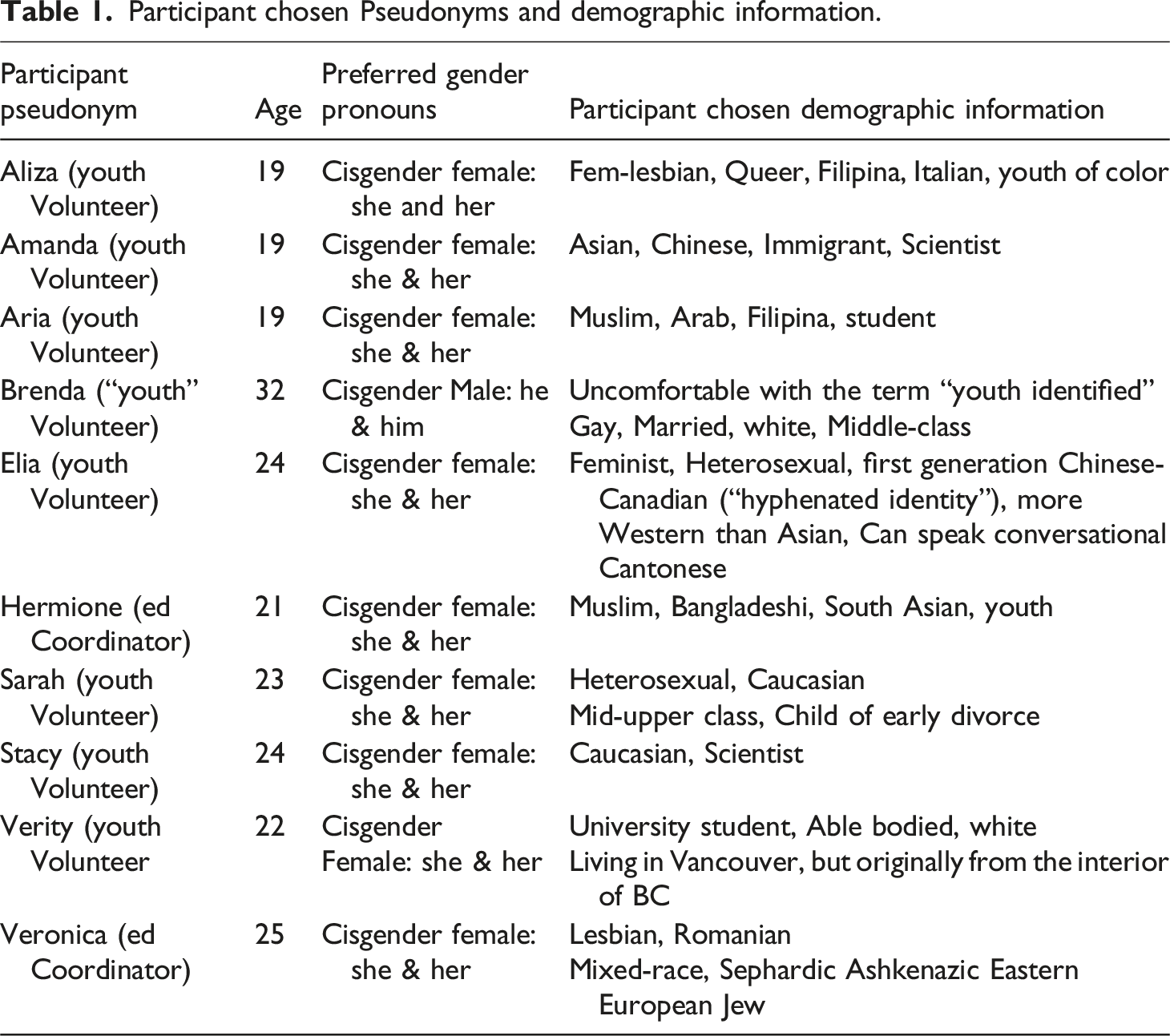
My roles within the group were fluid and my relationships with the youths were reinforced through my co-participation in monthly meetings, activities, and workshop facilitation as both a participant and an observer. I was deeply involved with the youths’ CAPs wherein I provided hands-on support from conceptualization through implementation. This collaborative work was extremely generative as FPAR praxis as I accompanied them in putting their vision, passion, and goals to practice. Throughout the year, I led creative and brainstorming activities, facilitated dialogues, organized open-studio sessions, and provided one-on-one support for planning, logistics, gathering resources, materials, and showing up when and where needed. Throughout the study, I regularly sought out opportunities to engage youth as co-researchers and struggled to overcome their extremely demanding schedules and lives. Rather than a barrier to participation, I viewed challenges of time and capacity as an opportunity for methodological innovation, which I reflect on here (see Goessling, 2017 for in-depth discussion of the impact of neoliberalism on busyness and scheduling).
Data were generated using multimodal qualitative methods, including meaning making maps, participant observations of the videotaped monthly meetings, experiential interviews, cultural artifact elicitation interviews, and gathered and generated cultural artifacts. The interpretation and analyses of the data was iterative and included participatory processes throughout the study. I first analyzed themes across the data (Braun & Clarke, 2006). Based upon the themes, and informed by narrative theory, I then co-constructed narratives of participation from the data, followed by the two iterations of participatory analysis presented in this paper. Participatory analysis involves participants as expert co-researchers to analyze and refine understandings of the data (Fine, 2014).
Transformative research praxis as “love ethic”: Responsive and generative spaces by design
This section includes three sub-sections consisting of a description and analysis of three different research practices. The first section illustrates the productive tensions of FPAR with youth activists by focusing on the core tenet of relationality to explore the personal, political, and ethical implications of a relational epistemology on parts and the entirety of knowledge production efforts. The second and third sub-sections focus on two emergent practices of participatory analysis that I developed with the youth. The first is referred to as participatory analysis #1 (PA #1) because it was conducted first chronologically during the August YGM meeting with Brenda, Elia, Hermione, Sarah, and Verity. It focused on the experiential interviews and contributed to an evolving understanding of becoming an activist at TA. Participatory analysis #2 (PA #2) took place after the youths’ commitment to TA was complete and focused on video data of the monthly meetings. It was conducted with two participants, Brenda and Sarah.
Reflexivity and Interviewing as Relational Practice
In this section, I describe critical reflexivity and interviewing as relational practices to shed light on the ways in which I influenced and was influenced by the young people I was working alongside as well as how those relationships mediated the co-construction of knowledge (Lykes, et al., 2021). Critical reflexivity is an ethical and political commitment to addressing the always partial, socioculturally situated, and power-laden nature of research practice (Fine et al., 2003). I draw on bell hooks (1990, 2010) to support my intentional positionality as one that actively seeks to disrupt normative/dominant assumptions by first acknowledging my relatedness to the dominant culture and then challenging the very structures and systems that support it. During this research, I kept a journal to reflect on my subjective experiences and perceptions; I continuously considered and critically reflected upon how my own social locations, biases, and experiences influenced the conditions of this research (Goessling & Wager, 2021).
I am a white cisgender female scholar – activist – artist from a small town in the midwestern United States. At the time of this study, two social locations particularly salient to this study were my status as an “adult” in my mid-30s and an international graduate student. My interest in how we come to know, to be and to value stems from more than 15 years of professional experience as an educator, artist, mentor, youth worker, social worker, and therapist. These factors and my positionality influenced, and were influenced by, my relationships with the youth participants. I extended TA’s critical pedagogical approach with bell hooks (1994, 2000, 2010) work on teaching and learning as a practice of freedom by applying a “love ethic” to the research praxis and mentorships based on respect, love, and mutuality. For hooks, love is quite literally at the heart of our everyday lives, learning, and the pursuit of social change. hooks (2000) defined love as an active intentional choice for resisting and overcoming oppressive systems (i.e., white supremacy, patriarchy, and capitalism). A “love ethic” presupposes the notion that all humans deserve to live free and full lives (hooks, 2000). Together, hooks’ work offers a heart centered, emotional, embodied, and relational model of learning as activism for social change (Godden, 2017).
Building from this stance, interviews create a relational space of dialogical reflection to both facilitate and understand the meaning therein (Lykes & Távara, 2020; Lykes et al., 2021). I conducted in-depth experiential interviews with participants to hear their individual stories about their activist journeys and experiences of TA. As a relational practice, the interviews were a dialogic space where I answered their questions and was open about shared experiences. These interviews were completed during the first three months of the project, at a time and place chosen by the youth, almost all involved food and lasted around 2 hours or more.
I began the interviews by inviting them to tell me their story and how they came to social justice work. Through their stories, the participants' descriptions reflected Ahmed’s (2017) work of becoming a feminist as beginning with “a sensible reaction to the injustices of the world” and in making sense of the nonsensical we exercise agency and our own becoming (p. 21). Becoming a feminist (activist) is inherently risky because as we hone our consciousness we begin recognizing and deeply feeling the ubiquity of oppression. The practice of consciousness, or what Ahmed calls living a feminist life, involves taking action, such as speaking out and naming a problem wherein one becomes the problem – the killjoy (Ahmed, 2017). Through the interviews, youth shared their experiences of becoming killjoys with stories of internal struggles around beliefs and identity, conflicts with loved ones, hopes and dreams of a better world, and the ups and downs of their participation at TA.
The timing of these interviews coincided with a leadership change at TA with Veronica’s resignation and the appointment of Hermione as interim educational coordinator for the YGM. I became the relational fulcrum for the youth and TA through the transition as I strove to maintain consistency for the group and negotiated my in/outsider roles toward this aim. I felt partially responsible for the youths’ participation experiences. I wanted them to have positive experiences, I wanted them to continue and grow as activists and was afraid a negative experience could deter their activist journeys. I also believed in TA and valued their contributions to young people across the province. I empathized with the organization’s struggle to negotiate the challenges created by the neoliberal conditions, including precarious funding and conservative political forces. I supported Hermione’s onboarding and built a relationship with her in the same ways I built relationships with the other young folks – by reaching out, inviting her to coffee, and being available. She asked for my perspective and opinion about how things had been going and how she could best lead the cohort through the final leg of their volunteer commitment. My reflexive practice provided essential scaffolding to make sense of these complexities and uphold my collective accountability to the young folks I was working alongside.
I did not have a formal role in the organization, I was a volunteer, yet I had different levels of power than the young people due to my age, researcher status, and other layers of privilege. I also had relational power due to the time I had spent with everyone in one-on-one situations, which they did not have with anyone else in the group. Being a FPAR researcher allowed me the gift of time to invest in relationship building as essential “work,” not an add on or extra, but a foundational practice. From my interviews, I knew most of the youth were not happy with their experiences at TA and were frustrated with the overly structured “all business” nature of the YGM, which was a direct reflection of funding requirements and expectations. I wanted Hermione to succeed. I wanted the young folks to accomplish their goals, and I wanted to remove roadblocks – perceived or otherwise – that were holding them back from connecting to each other in the ways I knew they wanted.
My primary concern was the youths’ disappointment in the lack of opportunity for them to make new friends and build community, which was a common motivation for joining TA. Feminist scholars have demonstrated how political activation can involve challenging emotional and social experiences (Ahmed, 2017; Gordon, 2009; Kennelly, 2009a, 2009b). For emerging activists, identity construction, subjectivity, and critical awareness are equally important and interrelated with the relationships that facilitate a collective orientation, “an us” (Holland & Gómez, 2013). I understood that developing a collective identity and activist community are key to overcoming the challenges of becoming an activist and I was worried about what not having this could mean for the participants and future social movements. This critical awareness sharpened my commitment to designing generative and responsive practices with the youth.
Participatory analysis #1: A loving creative embodied analytical practice
I designed this practice toward the aim of creating space and time for the youth to connect with each other. PA#1 had three distinct parts: 1) dialogue, 2) creative writing reflection, and 3) dialogue. I video recorded the hour-long practice, took pictures, and extensive field notes before, during and after the practice.
I opened the activity by explaining the steps I had taken to prepare for the practice and my goal of co-constructing a shared understanding of the data and their participation at TA. I began with the question: “what do you think some of the differences and similarities across all of the interviews might be?” After some joking about not doing the homework and confusion the youth began talking about their participation at TA at a very surface level, the number workshops they had facilitated and struggles to find the time they wanted to dedicate to their activist work at TA while balancing extremely full schedules of work, school, family, and life. I pushed them to go deeper and asked what facilitation or their participation at TA meant to them:
Throughout this dialogue, Brenda, Verity, Sarah, and Elia listened attentively and actively to each other. Although I had talked with the youth one-on-one about their experiences at TA and the YGM, this was the first time they talked to each other about their experiences. This was a significant moment of joining where they constructed meaning of the workshops and their roles as facilitators.
As they talked, the youth quickly appropriated this analytical space to relate and connect to each other in ways they had not done during their time at TA. They tentatively articulated what they perceived as shared values and perspectives across the group. Elia suggested the interviews probably reflected differences in their lived experiences and perspectives. Verity posited that she thought they all shared an ‘academic’ background and had a passion for learning. They explored TA’s definition of learning as a form of social justice of critical awareness and action. Everyone smiled and nodded while Brenda described the experience of facilitating workshops in schools as “scary,” but exciting. This was followed by a round of commiserating about how they all wished they could have done more than they did.
I then shared two emergent themes as dialogical anchors to open space for youth to engage in a broad discussion in a relevant and meaningful way: 1) the value and role of community, and 2) social justice as a learning process. I asked if folks wanted to share what ‘community’ meant to them. Brenda laughed and said: “community is one of those words that is very nebulous and all over the place and it means a lot but means nothing at the same time.” Sarah then began to work through her own conceptualizations of community in relation to TA. …
Together, the young people defined TA as a particular kind of community of like minded individuals with common values working toward a shared vision of a better world. Central to this relational co-construction was the positive affective experiences generated through TA, which were distinct, yet still powerful, from ideas of community defined as close or intimate relationships. Sarah described feeling supported by her peers, but in a way that enabled her—as an individual—to do her own thing. Brenda then named the YGM as community based on a distributed affect of care that he elaborated as political and ethical relation, an example of hooks (2000) “love ethic.”
Through this dialogue, Verity and Sarah confirmed their mutual appreciation for each other as a source of the confidence and motivation necessary to push forward on their activist paths. The sense of belonging and connection to like minded peers gave them the courage necessary to take action. This supports Kennelly’s (2009a) argument that relational agency generated through activist friends and networks is vital for youths’ political participation. The discussion continued (below), illuminating the impact I had in negotiating this relational space with the young people: Author: I think that might be something that we can get at, like: what is it? Like, those aren’t symbolic, right? Those are concrete material things: Knowing that Verity has done this or knowing that Sarah has done this, encourages you and motivates you - Verity & Sarah: (nod in agreement) Author: then how do we build that, like communication, contributing to knowledge, knowing that everyone’s super busy, too?
Importantly, this also shows how much even a distal relationality can provide becoming activists a sense of support that can enable them to take political action.
The shared “guilty feeling” about the amount they participated was salient across all the data, yet this was an important moment where they named it as a common affective experience. This is particularly relevant to activism in a neoliberal era, which is built upon an ethos of individualism where individuals bare sole responsibility for themselves and the world and burdened with feelings of burden, guilt, and anxiety (Kennelly, 2009a). Further, the exchange illuminates some of the challenges of building “an us” and a broader social movement and reflects another layer of influence of the dominant ethos of individualism on contemporary youth activism.
The next step was a ten-minute embodied reflective writing guided by the following prompt: “Write a letter to anyone, dead or alive, about either or both of the themes and how you hold them in your body.”
After the letter writing session, Brenda (Figure 1) and Verity read their letters out loud while we listened, responded, and shared ideas. Brenda talked with me about his negative experiences with the broader activist community during his interview, but this was the first time he shared with his peers. Before he read his letter, Brenda said to the group “don’t judge me” and then modeled vulnerability and read his letter aloud. In this way, Brenda asked for acceptance, respect, and affirmation while creating an opportunity for the group to take loving action (hooks, 2000). The embodied performance of reading his letter to the group built another layer of relationality and created space for the deeper emotional sharing that came later. In so doing, Brenda enacted his vision of an activist community where everyone is accepted, is affirmed rather than shaming, and a politics of care is facilitated by a view of activism as a learning process (hooks, 2003). From the performative practice of letter reading, a place of possibility and hope emerged as the group became an activist community with new avenues for relating, connecting, feeling, learning, imagining, and becoming (Holland & Gómez, 2013; hooks, 1994). Further, this activity illustrates the ways in which new possibilities and learning can come from creative practices. Brenda’s letter.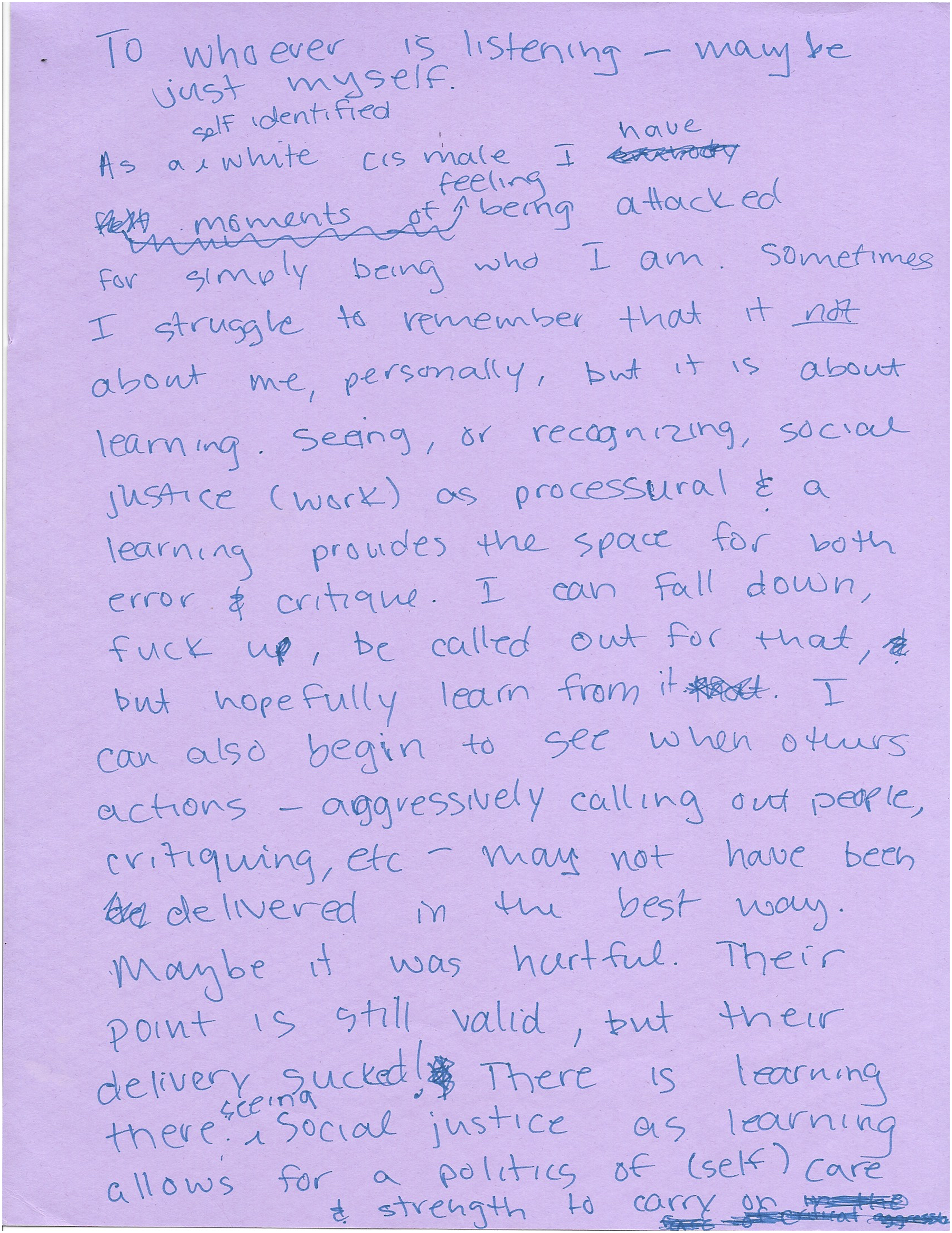
In her letter (Figure 2), Sarah articulated the embodied aspects of her participation at TA and social justice work. She viewed them as interrelated, providing cyclical motivation she needed to keep working toward social justice. Her letter gives life to the real risk and vulnerability involved in taking action, but also the collective power in finding a community of like minded peers. The YGM was Sarah’s entry to activism and she considered it a community, even though she did not feel as close to her peers as she would have liked. Sarah named what it felt like to enter a new activist community in her body – heavy in the chest – hard to breathe and finding courage to speak with a breaking voice that transforms through conversation to goosebumps. The letter as cultural production provides a rich description of Sarah’s affective and sensorial path to becoming an activist (Ahmed, 2017), which shifted from anxiety to courageous action through feelings of connection and community. Sarah’s letter.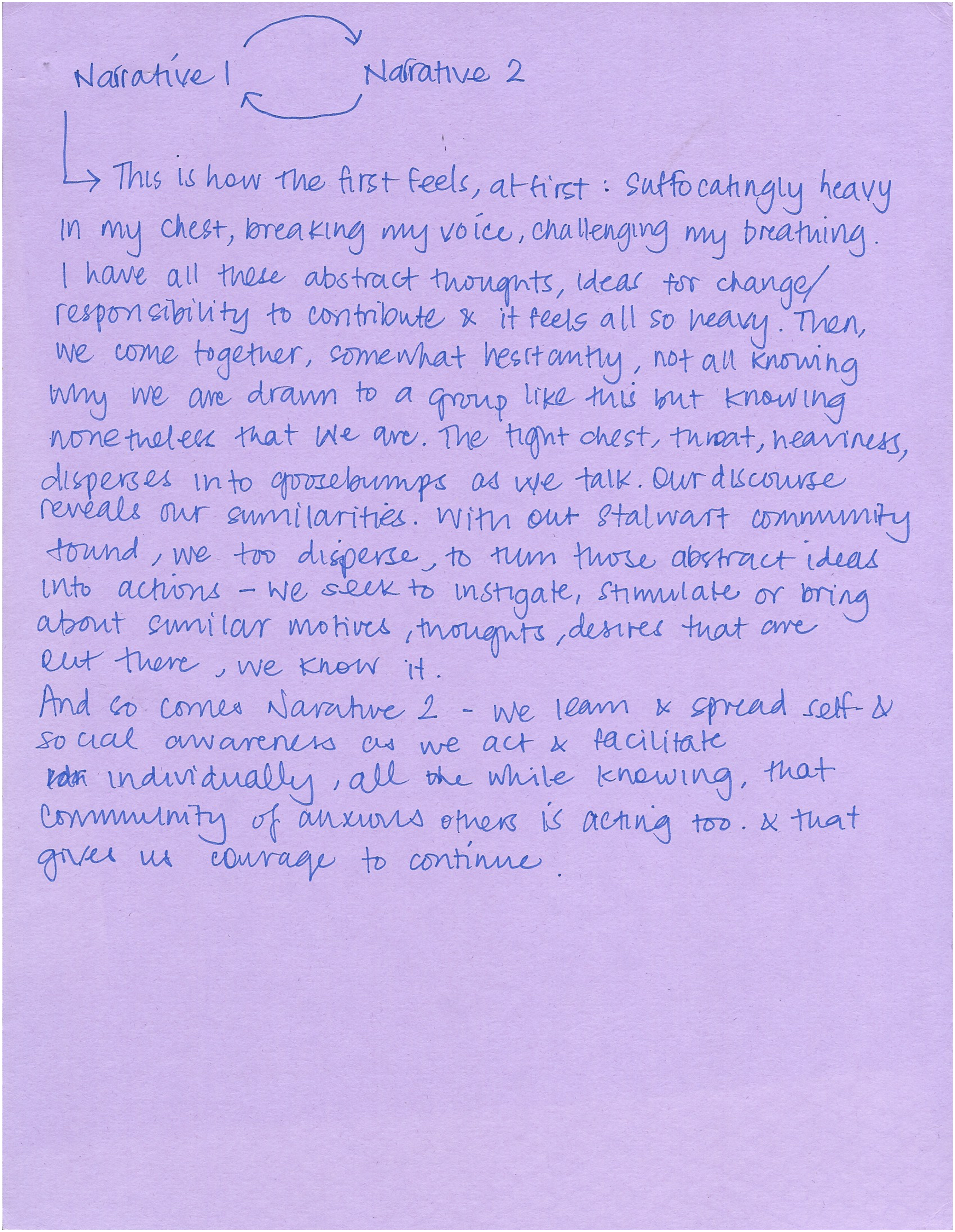
Later in the conversation, I asked Elia if she had anything she wanted to share and she explained: it brought back, like, the times when my brother would attack me and how even though I’m a sociology major I’m not in tune with all the news happenings and that I should be ashamed of myself, like, (laugh) arguing, I guess I can be hard on myself because I might not be aware of everything that’s going on… And because I have this like strong need to know everything, I feel this pressure, in that people out there might realize I might not be as socially aware as I may appear to be.
Everyone commiserated with the pressure to be aware and knowledgeable about everything going on in the world and fears of not knowing. The risk and pressures came not just from fellow activists, but from family members and internalized perfectionism. Elia described screaming matches with her brother where he called her awful names and ended with her feeling ashamed and like a failure. Around the table, we shared personal stories about feelings of isolation and alienation from loved ones due to our engagement with social justice work. Ahmed (2017) described her family and the dinner table as a place where she felt the pain of alienation as “the experience of being a feminist is often an experience of being out of tune with others,” including family (p. 40). Strikingly similar to Ahmed’s (2017) story, almost all of our shared stories were about times we became the problem by naming a problem with our friends and families and various sensations of alienation.
There was a significant dialogical shift after the letter writing when-- for the first time in their 10 months of participating at TA—participants shared personal stories about their lives and the challenges of becoming activists. I designed this practice as an intentional response to the stories the youth shared with me about wanting and needing more opportunities to reflect and connect about their activist journeys. The creative practice created the conditions for this intimate conversation about the relational and emotional aspects of becoming an activist for this group of young people. Becoming an activist within the YGM group generated feelings of support, courage, solidarity, and an ethics of care whereas other contexts, particularly families, were traced with feelings of alienation, isolation, shame, and anger.
Participatory analysis #2: Reflective and dialogical practice
The goal of this practice was to better understand the relational, dialogical, and affective aspects of the youths’ participation in and through the social practices represented in the monthly meeting video recordings. Understanding the youths demanding schedules and time constraints, I was explicit about providing opportunities for collaboration that could meet their needs and support their unique goals and aspirations (graduate school, work, skills). During one of these conversations, Brenda and Sarah shared academic aspirations and a desire to gain research experience that led to co-design of this analytical practice.
We scheduled two analysis sessions to take place at my house in the evening for about 3–4 hours. I provided food and snacks that I knew they liked. Along with our work, we spent time eating, checking in about life and the world, and took ample breaks. To prepare for the collaborative sessions, I watched all the video data and took extensive notes to create “content logs” listing details of each recording, including participants, location, duration, timestamps, and agenda (Ruhleder & Jordan, 1997). Next, I prepared three analysis templates for the youth to choose from. At the first session we reviewed the templates, content logs, clarified our goals and focus. We then watched 2 minutes of video and selected a template to use. Instead of using a preconceived coding scheme, the themes emerged through multiple re-playings of the video, our dialogue, and deepening understanding of the video interactions.
This discussion focuses on our analysis of the August meeting described above, specifically the final conversation about families that segued into graduation planning. The youth began sharing what they wanted to do for their graduation celebration:
In their analyses (Figures 3 and 4), Brenda and Sarah noted that this was the first time they were really getting to know each other – two months before the end of their participation. Brenda and Sarah commiserated over the emotional release that took place as everyone was open and honest about wanting to simply hang out with no agenda or objectives. For this cohort, youth activism at TA involved packed meetings, learning objectives, organized activities and actions designed to produce specific outcomes. And they were over it. They noted a palpable shift in mood and affect amongst the group when the coordinator (Hermione) said, “not everyone is ever going to come.” Sarah said it was like “FINALLY, the elephant in the room” had been named. In a sense, Hermione’s statement relieved the youth from the pressure of perfectionism and created space for everyone (TA included) to just be. Together, they co-constructed a vision of graduation as an open space for connection and possibility. Brenda’s Analysis Notes [transcribed to text by author for readability]. Sarah’s Analysis Notes [transcribed to text by author for readability].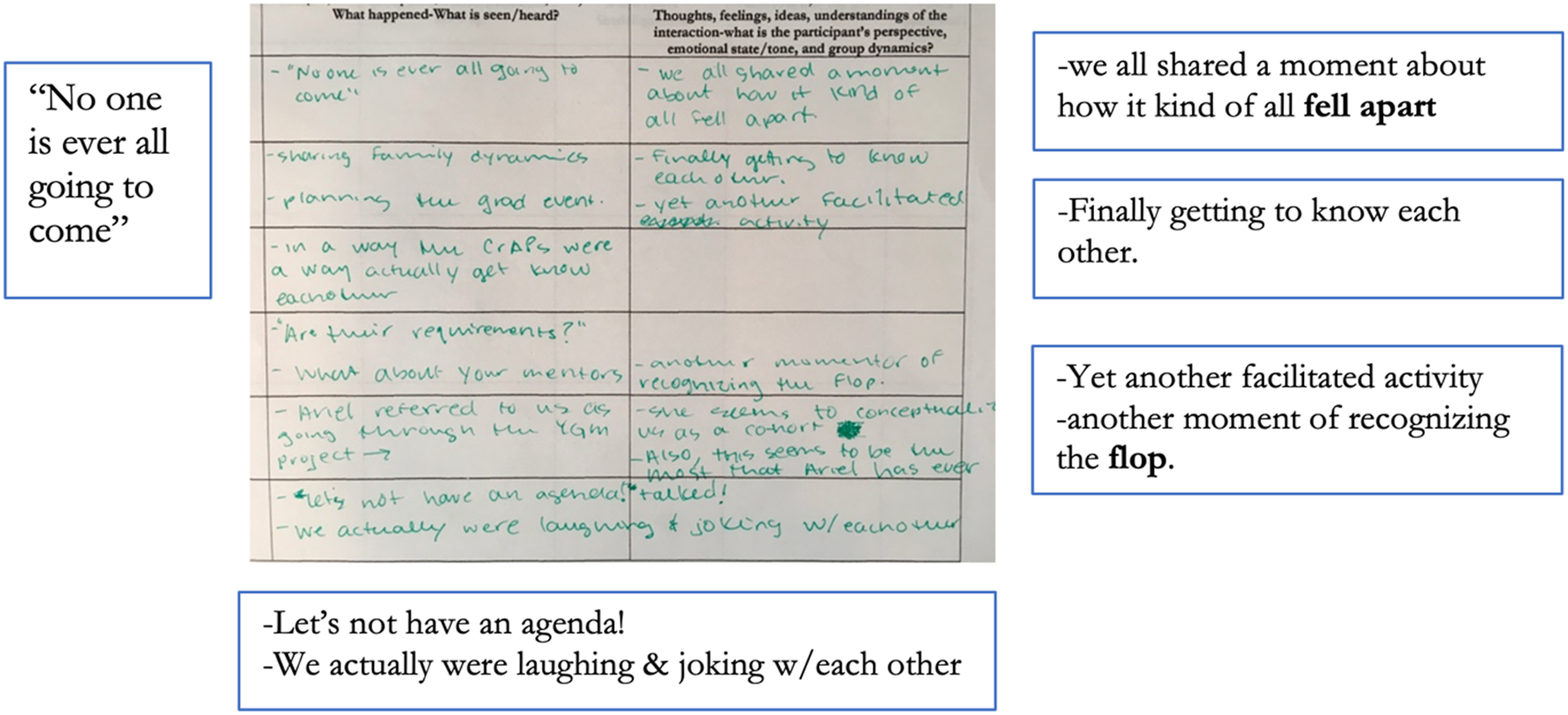
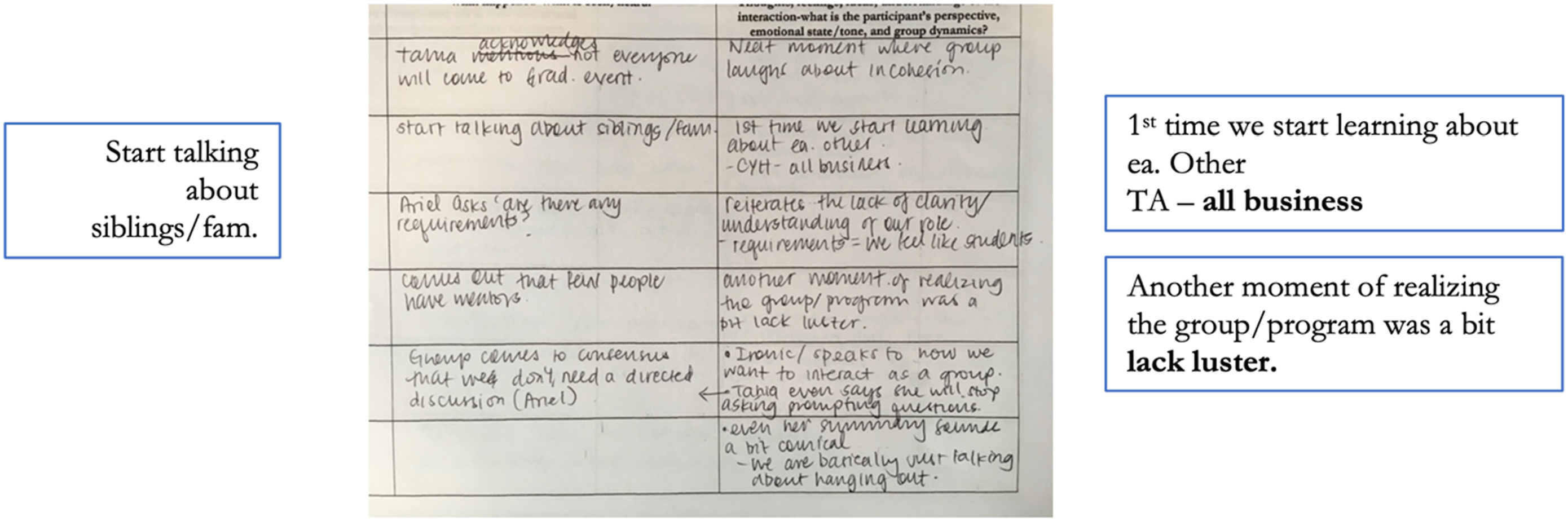
During PA #2 Brenda and Sarah talked about their affective experiences at TA and both of them wished they had more opportunities to connect with each other. This was the first time Brenda and Sarah named their disappointment about TA out loud and they were met with mutual respect and affirmation (hooks, 2003). Brenda described the YGM as “all falling apart” and a “flop” and Sarah called it “lack luster.” The video reviewing, notetaking, reflection, and dialogue of PA #2 was a form of cultural production and intertextual meaning making through which Brenda and Sarah made sense of their individual and collective activist paths and a shared vision of an activist community that they hoped to be a part of one day
The youths’ responses and insights added layers of meaning to the data through a sharpened range and focus of expertise that strengthened and democratized the notion of expert validity (Fine, 2008). Fox (2015) described PAR as an epistemology that democratizes knowledge production while “artistic embodied methodologies provide a praxis” (p. 324). In these layered analytical moments, the youth came together around the challenging feelings and sensations of their activist becomings and their experiences at TA. The risks the youth took earlier in the conversation of PA #1 generated a sense of connection and trust that enabled them to name their desire for time together so they could finally get to know each other. When Sarah and Brenda analyzed this particular moment in PA #2 they generated a dialogical relational space wherein they made meaning of activism and their experiences at TA together.
These research practices significantly contributed to the knowledge produced through this study and provided insight into the ways the youth encountered and made meaning of the material, symbolic, spatial, relational, affective conditions of TA. Following hooks’ (1994; 2003), I sought to create the research practices as a humanizing loving learning space for relationships to grow. I had a sense that the youth wanted less structure and more time to connect with each other and I designed the research practices as a response. Conceptualizing the research practices as an “in between” or encounter that gave rise to a particular place, both afforded and constrained by the symbolic and material conditions enabled by TA, revealing the generative potential of research practices as site of resistance where the young people made sense of their participation at TA and activist journeys. These emergent, never completed spaces come to fruition through a juxtaposition, overlap, or “in-between” people, objects, places (Ellsworth, 2005) and through these layers, textures and gaps space is made for affective and transformative experiences.
Conclusion: The transformative potential of relational creative practices
This work illustrates the potential of FPAR praxis informed by relational and embodied commitments grounded in a love ethic that supports young people’s meaning making as a rich and invaluable source of knowledge production. Research practices such as these have the potential to shift top-down models of learning and participation where youth are positioned as passive recipients of information, to a reciprocal model where they share their insights, opinions, and experiences about their needs and wants for their participation. This paper extends the FPAR conversation with a focus on young people as co-researchers that illuminates the importance of relationality as an ethic of love ongoing negotiation of power. I offer research practices for recognizing and lifting up young people as experts on their experiences while building relationships that are essential for constructing identities and growing social movements within a complex sociopolitical context. Shifting focus toward research practices as a site of resistance and possibility provides an anchor for thinking through the ways in which relationality and embodiment are central to co-creating knowledge that can transform people and the world. Further, reflexivity is imperative, FPAR scholars must continuously reassess and reimagine their research praxis to maintain a critical edge and transformative potential in the contemporary sociopolitical context.
In the most basic sense, I cared and care about the people I’m in relationship with as collaborators and co-researchers. My relationships with many of these young people extended beyond this project and TA. I have written recommendation letters for jobs and graduate school, listened and supported their full humanness through challenges with friends and family, and I keep up with some of them via social media. Our relationships were not project or contextually bound, which is true for rigorous FPAR. The youth in this study were in an ongoing negotiation and struggle with the neoliberal conditions in which they were situated. Their participation and engagement at TA was an embodied form of resistance. The research practices described in this paper brought these affective and emotional experiences to the fore in a way that enabled the youth to relate to each other in new ways and build a sense of solidarity in their struggles of becoming activists. It was not just about what the youth wrote in their letters, but the full process of reflecting, writing, reading, and sharing that required vulnerability and risk, two factors that hooks and Ahmed argue are essential to transformational experiences and becoming. In an in-between space, this risk can facilitate the meaning and transformational potential of individual and group challenges, conflict, difficult and complex tasks in the hopes of new and radical possibilities. Within the contemporary neoliberal era, practices such as these that enable possibilities and connections are vital for cultivating young people’s beliefs and actions toward an equitable and just society. These practices strengthened and democratized the notion of expert validity by clarifying the finding that young people becoming activists need time to reflect, discuss, create, and connect about their experiences. Following hooks (1990), these kinds of spaces, “give[s] us a new location from which to articulate our sense of the world” (p. 154). A place of possibility begins as such a space; it is a new location with a new view of ourselves, of others and of our possible worlds.
Footnotes
Declaration of conflicting interests
The author(s) declared no potential conflicts of interest with respect to the research, authorship, and/or publication of this article.
Funding
The author(s) received no financial support for the research, authorship, and/or publication of this article.
