




Abstract
This paper presents successive phases of Taking Boys Seriously (TBS), a longitudinal participatory action research initiative bringing together diverse educational bodies and indigenous educators across a highly stratified education system in a contested society. The voices and everyday life and school experiences of adolescent boys are positioned firmly at the centre of a research methodology aimed at re-engaging, empowering, and learning from marginalised boys. We discuss how a collaborative and reflexive process co-produced with a committed steering group has been vital in pursuit of systemic change. New concepts of compounded educational disadvantage, relational education, and an educational ecosystem have been co-theorised and applied in practical ways to counter deficit narratives and support holistic approaches and new partnerships across educational settings in Northern Ireland. Strengths and limitations of our participatory approach are considered, particularly in relation to the role and participation of boys in the research process.
Keywords
Introduction
This article discusses the evolutionary nature of Taking Boys Seriously (TBS), an action research initiative spanning 17 years embedding participatory principles and processes in pursuit of systemic change. Attention is focused on breakthroughs afforded through participatory action research (PAR) to tackling an entrenched social issue. Global concerns around a long-standing male attainment gap in education are underpinned by international evidence that consistently points to higher rates of unexcused absence and lower academic performance for boys from low-income backgrounds (Ingram, 2018; Ullah & Ullah, 2019). In higher education, working class males remain one of the most under-represented groups (Stahl, 2022; Tazzyman et al., 2022). Our unfolding PAR approach has repositioned traditionally unheard voices of adolescent boys from disadvantaged communities as central in developing new approaches to educational change at scale. Emphasis is placed on the research process as a vehicle for making a difference from the ground up, integrated in contextually relevant ways across diverse educational settings. We report five successive phases, each building on the previous: 1. First steps in action research (2006–2011) 2. Reinvestment and co-creation (2018) 3. Collaborative case studies and co-producing new concepts (2018–2020) 4. Regional trial of TBS principles (2021–2022) 5. Transformation (2023 onwards)
To date over 800 adolescent boys and 200 educators across 45 formal and informal education settings have directly contributed to qualitative and quantitative data along with engagement from a wider educational ecosystem including parents, local and regional youth organisations, educational bodies, media, local business, and other universities. Crucial in holding together the multiple phases and managing challenges arising from transitions over a 17-year period has been the sustained commitment of Ulster University to supporting the research. TBS is one of a suite of ongoing outreach initiatives from Ulster University’s widening access and participation department which variously engage boys, girls, men, women, and LGBTQ + communities. Our specific focus on boys is a response to a well-established concern regarding young males, masculinities, and educational outcomes (Ingram, 2018; Stahl, 2015). We have been particularly focused on creating a platform for the most disenfranchised boys within education to inform us about systemic issues and solutions that impact not only disadvantaged boys but all learners. Ethical approval throughout 17 years has been obtained and updated from Ulster University’s Research Ethics Committee (REC/18/0095).
Participatory action research in a contested society
TBS originates in Northern Ireland, a deeply divided and contested society where education and cultural identities are fraught with histories of violence, sectarianism, and polarisation (Gray et al., 2018; Morrow, 2017). Approximately 93% of pupils attend either predominantly Catholic or Protestant schools, with a modest integrated sector (Milliken et al., 2021). This system is further stratified through academic selection in the form of grammar schools which typically use admissions tests compared with secondary schools which are open to all, reproducing educational privilege and disadvantage (Leitch et al., 2017). Education other than at school (EOTAS) centres provide placements for children who have been excluded or otherwise disengaged from their school. Attuned and sensitive to contentious issues, the researchers intentionally sought to foster cooperation and shared ownership across this disparate sector. Youth work approaches have been heavily utilised with an emphasis on conversation, dialogue, relationship building, participation, and experiential learning (Hammond & McArdle, 2023). This youth work focus derives from our own practice backgrounds in the youth service alongside scholarly contributions to the transformative potential of informal learning (Harland and Morgan, 2010) and gender-conscious practice (McArdle & Morgan, 2018; Morgan & Harland, 2009; Walsh & Harland, 2021) especially with young people who have experienced dislocation within formal education.
First steps in action research
Funded jointly by the departments of Education and Justice in Northern Ireland, the first phase of TBS was a 5-year longitudinal study (2006–2011) seeking to identify and clarify issues around low academic attainment for adolescent boys. A cohort of 378 boys across 9 post-primary schools annually completed questionnaires from ages 12–17. The schools represented a mix of all-male and co-educational as well as grammar and secondary schools. This study established TBS as a research project firmly locating boys’ voices as central. Boys reported a disconnect from their teachers and concerns included: ‘Teachers should understand better the way boys think and why they do some things. They’re out of touch.’ ‘Even though you get older, teachers still treat you as kids. They should give you more respect as you get older.’ ‘Teachers treat you by what class you’re in – like I think they’re stricter on the bottom classes.’
Consequently, the senior leadership team in a participating all-boys secondary school actively realigned their ethos and communicated to all staff that the first objective was to ‘get the relationship right with each boy’.
In this first phase of TBS, the researchers worked closely with an established youth organisation, YouthAction NI (YANI) who continue to be integral members of our research steering group and collaborators in the research process. Youth workers from YANI, with expertise in embedding gender-conscious programmes with young people, facilitated three classroom interventions per year alongside the researchers in schools. These youth work interventions were highly relational and aimed to enhance boys’ experiences of education through the research. Boys were encouraged to share feelings and emotions and engage at a deeper level with difficult and controversial issues around culture, identity, gender, and masculinities. The strength of this approach was grounded in relational and informal ways of working exploring how boys experience and make sense of masculinities. From the outset, the research process challenged impersonal characteristics of the formal setting, introducing new ways of working with boys in the classroom. Teachers participated by observing, giving feedback, and discussing how they might integrate more relational approaches in their practice.
While the implementation of action research was still emerging in the first phase of TBS, the positive experiences of teachers and youth workers collaborating with the researchers was carried forward and scaled up, heavily influencing the direction of subsequent phases.
Nothing changes
The 2012 landmark TBS report (Harland & McCready, 2012) inspired action across several individual schools and led to key academic outputs (Ashe & Harland, 2014; Harland & McCready, 2015), however, nothing substantially changed at scale across the education system. Despite the development of significant relationships with the departments of education and justice, there was a reliance on traditional linear models of knowledge mobilisation (OECD, 2022) and ‘findings-based impact’ (Banks et al., 2017, p. 543). Absent was a participatory approach which recognises ‘the whole system needs to be activated to establish connections among its various parts’ (OECD, 2022, p. 19). This shaped new developments in TBS research funded directly by Ulster University’s widening access and participation department initially for 5 years (2018–2023) and subsequently extended to 2028.
Reinvestment and co-creation
With renewed funding in 2018 the research team engaged in a period of focused reflection. Drawing on strengths and lessons from the first phase of TBS, a series of underpinning principles for the research were crystallised. These included reinforcing the centrality of boys’ voices; a commitment to tipping balances of power in young people’s favour; driving forward a research process that would do something rather than say something; elevating the indigenous knowledge of boys and educators; increasing shared ownership and co-design; countering deficit narratives surrounding boys with low academic attainment; limiting the additionality for research participants; and being non-prescriptive. These evolving principles led us to design the next phase of TBS around participatory action research as a democratising methodology bringing the tacit knowledge of boys and educators to the fore and in the process disrupting traditional power dynamics in education (Jordan & Kapoor, 2016; Wood & McAteer, 2023).
Building on an existing steering group representative of the formal and informal education sectors, new members were invited as co-creators bringing their expertise to help shape a participatory and relational research endeavour. This expanded steering group, made up of youth workers and teachers embedded in local communities and educationalists from influential educational bodies, have been a centrifugal force and an intrinsic part of the research team over the past 5 years. Their richness of practice experience and networks cutting across the education system alongside their collective knowledge and appreciation of the issues boys face has been crucial. As respected gatekeepers in both grassroots communities and with prominent educational bodies, the steering group have facilitated the engagement of boys who often find themselves on the margins of their classrooms and communities and have provided a platform for their voices to be heard and acted upon across many educational settings.
The steering group took on significant roles and responsibilities including setting the agenda of inquiry, clarifying with boys the purpose of the research, supporting data collection and analysis, and deciding how to apply new knowledge generated through the process (Brown, 2022). Throughout, they have been active in co-theorising new concepts (Vaccaro, 2023). While the researchers took a lead on an inductive reflexive thematic analysis process drawing on our own subjectivities as an ‘analytic resource’ (Braun & Clarke, 2021, p. 330), consecutive phases of data coding were shared and discussed with the steering group, widening the scope of this ‘interpretative activity’ (Vaccaro, 2023). Similarly, boys and educators collaborated in making sense of the research data through workshops in local schools and youth centres and discussion groups at conferences. We were conscious that our approach fell short of youth participatory action research (YPAR) but alongside the steering group were developing ways of involving boys as ‘stakeholders in the process’ rather than ‘objects of study’ (Bettencourt, 2020, p. 154). This included working in a developmental way, starting by listening to adolescent boys about what motivated and engaged them in education and shaping each step of the process around their insights. A series of video vignettes 1 were co-produced with boys proving highly influential in prompting regional participation of schools and youth centres as well as being integrated into staff training. A Boys and Young Men’s Summit in 2022 involved 200 boys who were participants in the research, led by their peers. This summit was designed to both recognise their contribution and to create further opportunities for the boys to comment on themes developed through the research through workshops facilitated by youth workers from local youth organisations.
On reflection, we were not ready to manage a YPAR project. Meaningful engagement of boys and a commitment to the elevation of their voices through the research methodology was a conscious decision with an emphasis on countering post-positivist academic orthodoxies where the participation of ‘those being researched was traditionally not even considered’ (Lundy, 2022, p. 538). However, we lacked resources at this stage to engage adolescent boys as co-constructors of the research process in a way that would authentically build their own capacity as action researchers. We decided to prioritise building relationships with school principals, teachers, and youth workers who work directly with these boys. This necessitated significant amounts of time and energy over the past five years, coinciding with the COVID-19 pandemic inducing unprecedented challenges for educators and exacerbating many of the issues experienced by disadvantaged students (Holt & Murray, 2022).
Reflexivity
Through a reflexive process that ‘extends beyond concepts of self-reference and self-awareness’ (Costa et al., 2019, p. 21), we as a research team acknowledge and respond to our positionality, power, and biases. We have sought to use our position within our academic institution to bring in community leaders, educators, and activists working for social change in communities marked by poverty and conflict legacies. Many educators reported benefits of their work being recognised through a university-based research project. Julie, for instance, a senior leader in an EOTAS centre emphasised: ‘It was great to have the kudos that our relational ways of working with boys was linked with TBS as ongoing research trying to make practice better.’
We share a commitment to what Brydon-Miller et al. (2003, p. 11) suggests as a central unifying concern for action researchers, reflecting on ‘how we go about generating knowledge that is both valid and vital to the well-being of individuals, communities and for the promotion of larger-scale democratic social change.’ Each step of data collection and analysis has been infused by the voices of boys, grounded in a Freirean critical pedagogy that maintains ‘education must begin with the solution of the teacher-student contradiction, by reconciling the poles of the contradiction so that both are simultaneously teachers and students’ (Freire, 1970, p. 72). As researchers we were another ‘pole’ in the relationship and we intentionally sought to adopt the position of learner in our interactions with boys, educators, and the steering group.
Appreciative inquiry was employed to generate knowledge that would facilitate ‘the collective discovery of what gives life to a system, rather than a diagnosis of its problems’ (Sharp et al., 2018, p. 228) energised by the ‘discovery of those things which are positive and life-giving, rather than deficit and problem oriented’ (Duncan, 2015, p. 56). We were mindful that continually asking about ‘problems’ with boys in education reinforces deficit narratives. Therefore, launching the research at a conference in 2018, educators were asked, ‘What do you like about working with boys and young men? This opening question set the tone of the conference as well as the future trajectory of the research.
Collaborative case studies and co-producing new concepts
Together, the researchers and steering group agreed to examine examples of innovative practice. Collaborative case studies (2018–2020), involving three schools each partnered with a local youth project, became the source of three major conceptual developments. All three schools were non-selective and had a high proportion of pupils entitled to free school meals, a key metric of social deprivation (NIA, 2010). Both the schools and youth centres were in areas of high multiple deprivation as measured by the Northern Ireland multiple deprivation measure (Northern Ireland Statistics & Research, 2017).
Focused data collection across case studies.
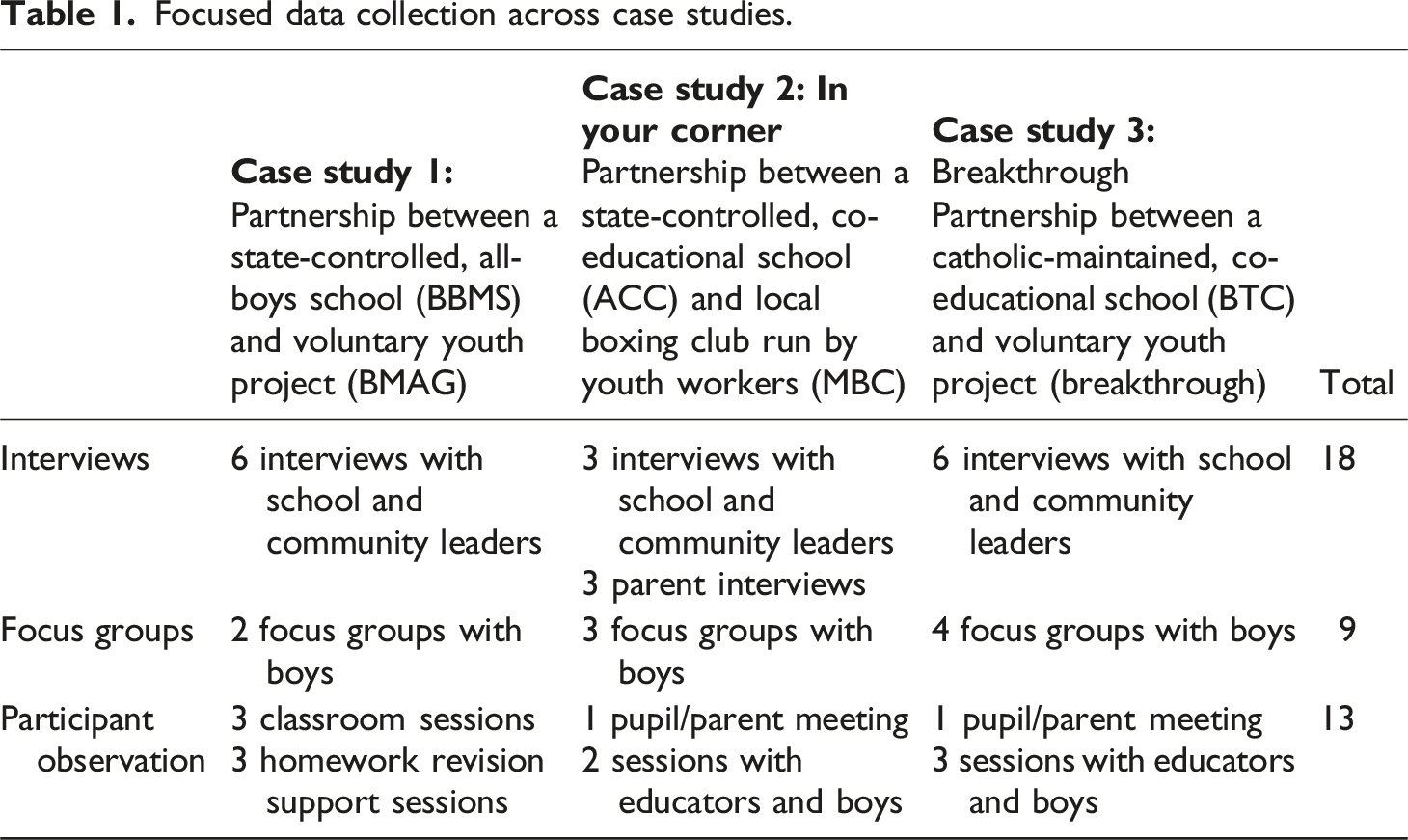
Parents talked about the transformative nature of the approaches taken by the schools and youth projects with comments such as: ‘I saw a completely different side to my son. He changed his whole outlook on education and wanted to be there. He was much happier too’ (Parent).
And boys recognised how the support they were receiving to become more focused and engaged in their learning had wider impacts on their family: ‘My family are happy because they wanted me to improve, but they knew I wouldn’t be able to do it by myself, I wouldn’t get help doing it, and this is me getting help’ (Jake, 15).
The inquiry process was a joint venture which led to three key concepts co-produced through a reflexive conversational process involving the steering group, educators, parents, and boys.
Compounded educational disadvantage
Compounded educational disadvantage was the first conceptual development from the case studies and was a breakthrough moment, helping us to clarify exactly the boys we needed to engage with and capturing a shared concern that the steering group cohered around. Continual references to deeply felt barriers made it increasingly clear that the intersectionality of poverty, conflict legacies, restrictive masculinities, and a selective education system, as represented in Figure 1, were at the heart of the male ‘underachievement’ narrative that pathologizes boys (Roberts and Elliot, 2020). In Northern Ireland conflict legacies include a politically and religiously segregated schooling system which is further stratified by academic selection at age 11, separating pupils into grammar schools perceived as more academic compared with all-ability non-grammar schools (Milliken et al., 2021). Social housing is also highly segregated, and these communities are most impacted by residual paramilitarism (Gray et al., 2018). Young men in working class communities remain targets for recruitment into paramilitary groups as well as the primary victims of paramilitary-style attacks (Morrow & Byrne, 2020). Narratives of tough and violent masculinities linked to a history of violence contribute to our notion of ‘restrictive masculinities’ where boys are socialised to expect and accept violence, embrace patriarchy, and where certain levels of sectarianism and ‘othering’ are normalised. Each time a boy encountered one of these structural obstacles, it was like another brick had been added to his backpack, making it harder for him to progress through the education system. The concept gave us new and simple language that spoke to interconnected issues and inequitable starting points experienced by certain boys. It also countered individualised accounts of academic failure premised on meritocracy (Owens & de St Croix, 2020). Four salient features of compounded educational disadvantage.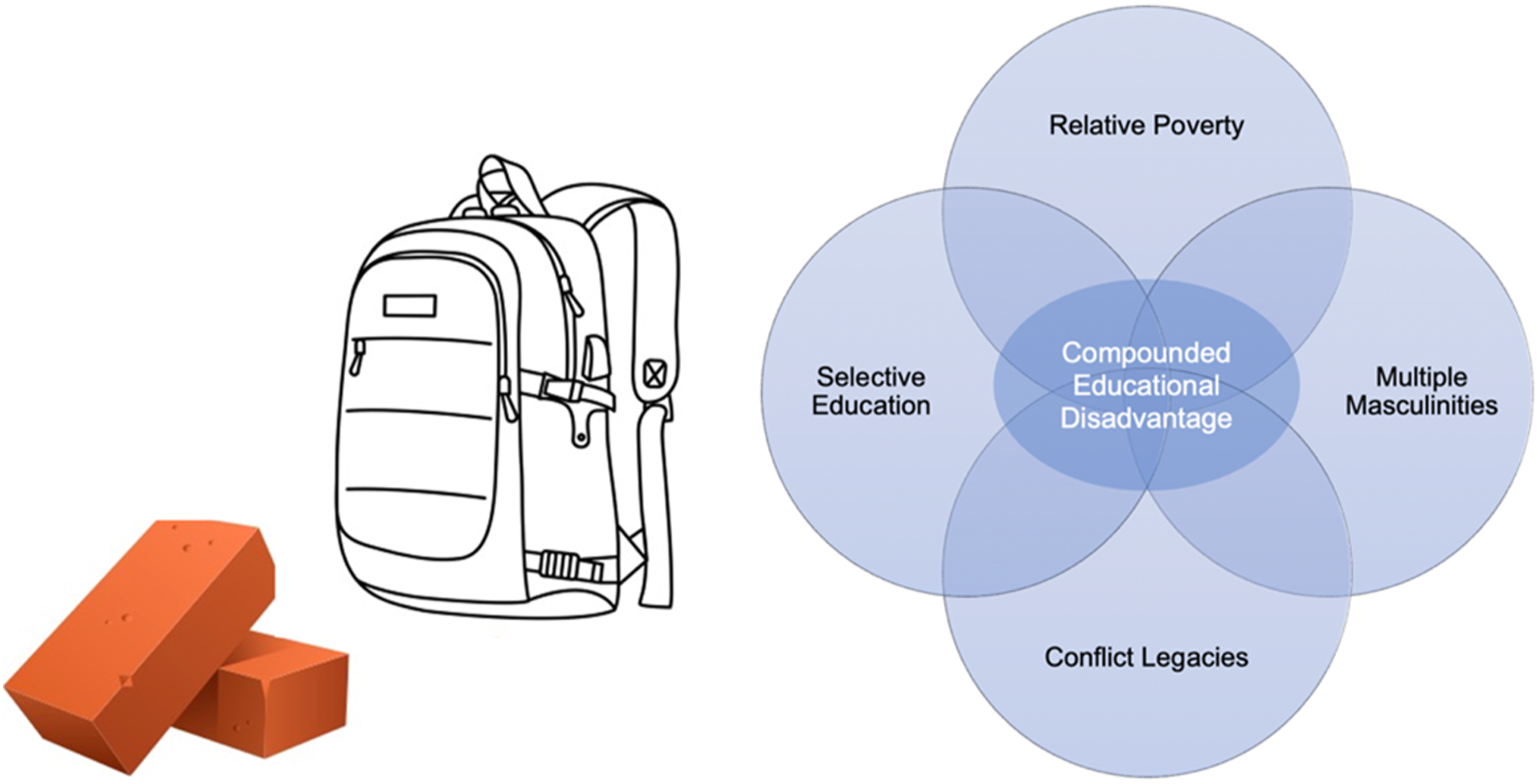
Mobilising school-community resources was identified as significant in tackling compounded educational disadvantage. On a community level the case studies were demonstrating the power of local collaboration between schools and youth centres. Boys underscored the transformative nature of new opportunities afforded through school-community partnerships. For instance, boys told us: ‘I love coming to the boxing club, it’s like being part of a family here. I always feel more confident and relaxed in here. Whenever you feel all that, you actually want to learn.’ ‘It’s given me more self-confidence, feeling like I can pass, with maths especially. The youth workers and teachers make you feel smart, I hadn’t felt like that before.’
The steering group along with the researchers envisioned a broadening and enlargement of such joint working which matured into the conceptualisation of an educational ecosystem.
Educational ecosystem
The educational ecosystem began as a socially constructed concept (Flood, 2010) that invites a broad range of actors to frame challenges and solutions to compounded educational disadvantage in new ways, each bringing their own unique gift. Tangible action ensued as teachers, youth workers, parents, researchers, policymakers, media, local businesses, and of course boys themselves contributed to the co-creation of new practices and partnerships. Significantly, it has been the evolving PAR methodology that has been the nucleus around which disjointed parts of the broad educational system find connection points and can situate their contribution to effecting change within a larger mosaic.
Figure 2 offers a snapshot of our evolving ecosystem
2
. Key developments and relationships are represented including contributions of parents, boys, and indigenous educators who participated in the research; senior educationalists who endorsed TBS; 4 star pizza, a local business who promoted TBS in their stores; youth organisations who facilitated workshops at the TBS Boys and Young Men’s Summit; local media who helped reshape the narrative around boys; and Arts University Bournemouth who established a Boys Impact Steering Group engaging a wider network of universities across England adopting TBS outputs and a PAR approach, utilising the research across the UK (Blower, 2022). Many of these developments grew organically as participants shared positive experiences of their active involvement in the research with their wider networks. An evolving educational ecosystem.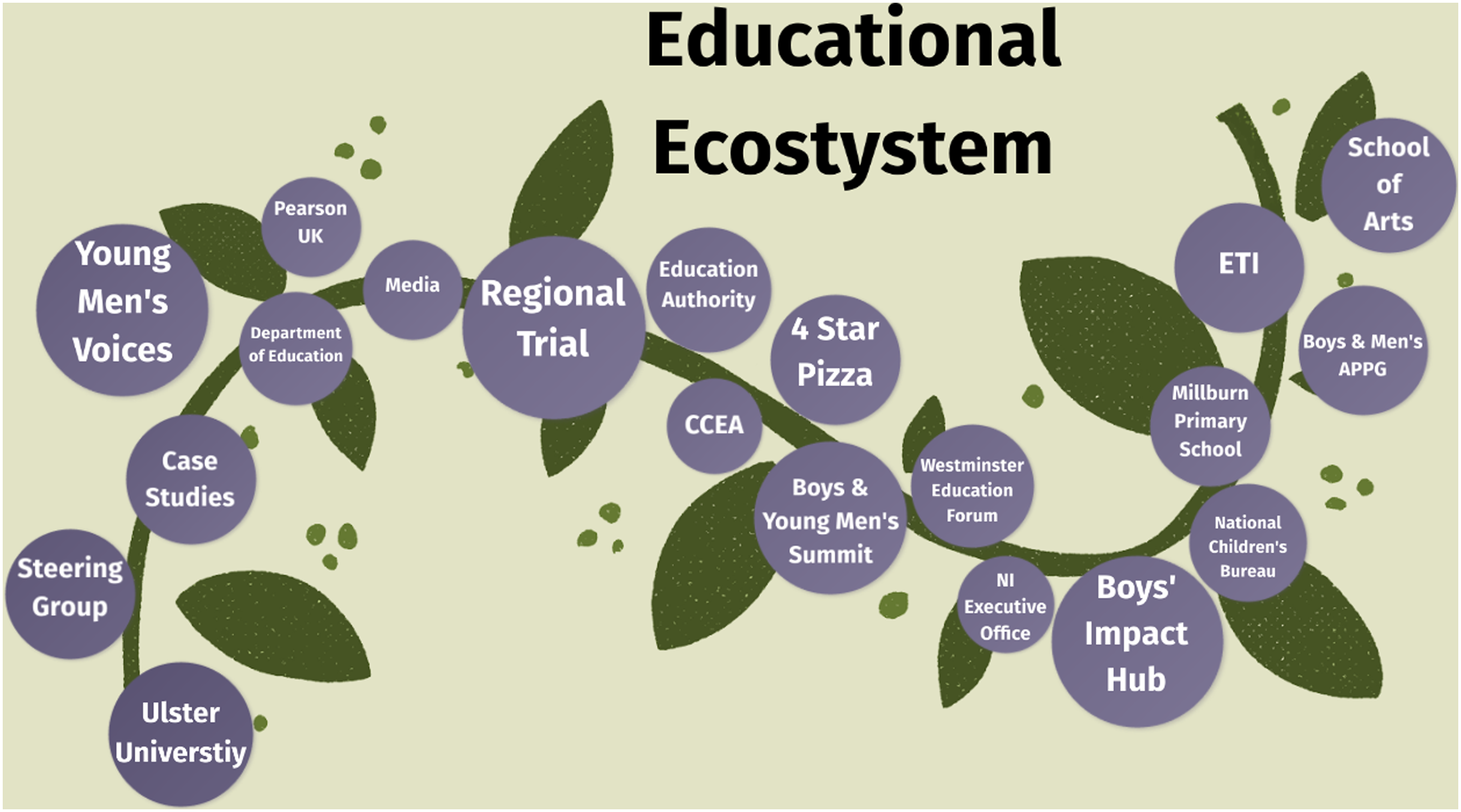
Relational education was the third major concept derived from the case studies. While resonating with an established literature on relational pedagogies (Hickey & Riddle, 2022) the concept signified a broader emphasis further than educator-student relations, pointing to the significance of partnership working across educational settings. These ‘relational architectures’ (Edwards-Groves et al., 2010) of an expanding educational ecosystem proved to be the context in which relational education thrived.
Relational education
The primacy of relationships has consistently been emphasised throughout the research. The case studies pointed to underpinning principles that guide relational work with boys. An inductive process of systematic data coding and thematic development, involving the researchers and steering group, led to the generation of 10 TBS principles of relational education, outlined in Figure 3 3(Morgan et al., 2021). The first iteration of these principles was examined over six weeks with a group of boys from one of the case study schools. Led by a teacher indigenous to the community the findings were collated and presented back to the researchers and steering group indicating how the principles could be refined and developed. TBS principles of relational education.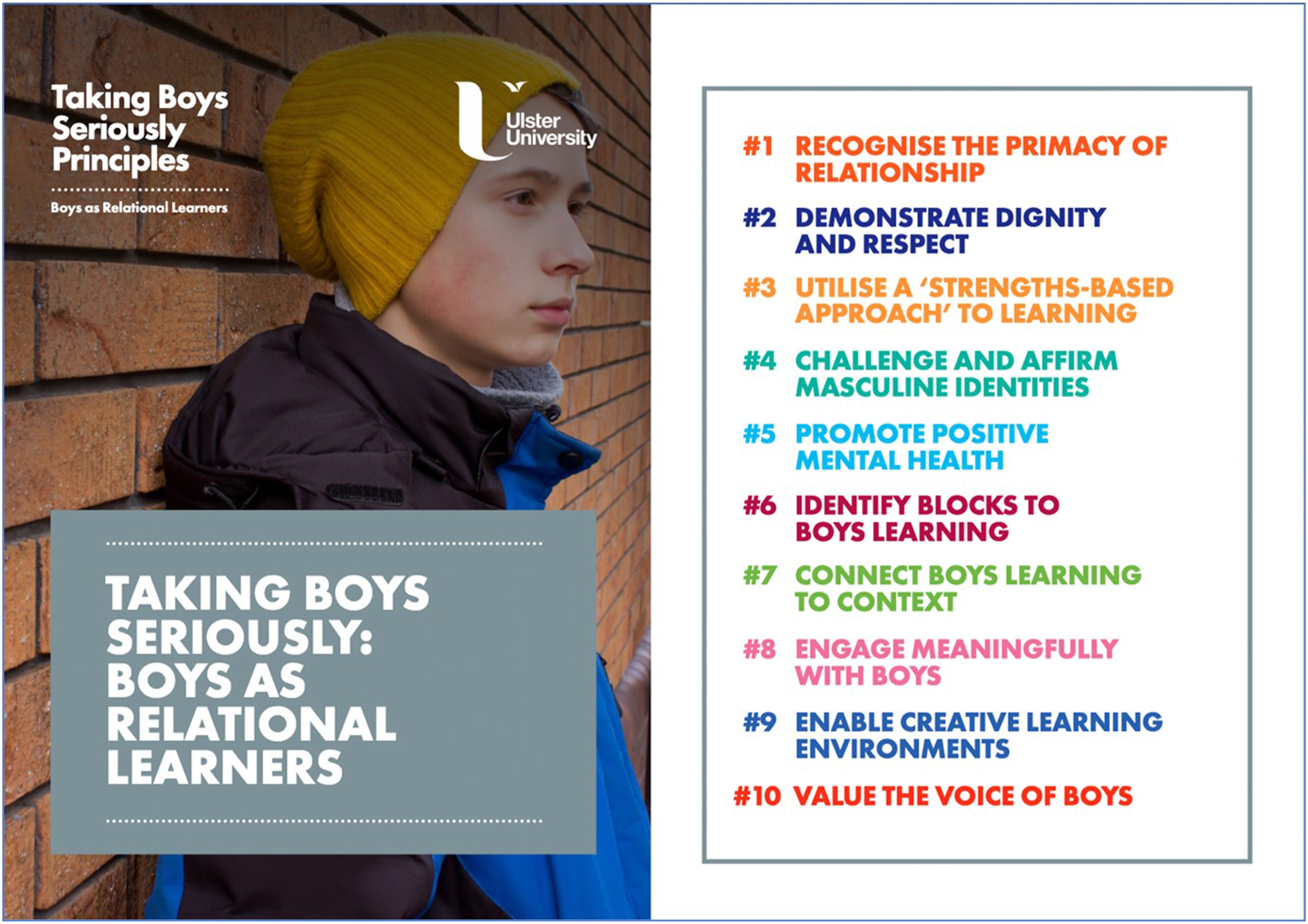
While there was a sense these may be universal principles benefiting all, it was significant that boys who are consistently recorded as being at the bottom rung of education in terms of formal academic outcomes were providing crucial insights and illustrating areas requiring action to bring about meaningful change.
Regional trial of taking boys seriously principles
Following the case studies, the research team took time to reflect, re-think and re-direct the research. As the concepts from the case studies germinated, we agreed that a regional trial framed around the 10 TBS principles would help to grow the educational ecosystem. The trial of the TBS principles was launched at a conference in 2021 attracting over 450 attendees, evidencing the extent of concern across the education sectors for tackling compounded educational disadvantage experienced by boys. An invitation to participate in the trial was presented as a ‘call to action’. This purposive sampling process resulted in 37 research sites being established with regional representation across Northern Ireland and direct engagement of 442 boys aged 12–17. More than 100 educators in secondary schools, EOTAS centres, and youth organisations became active researchers in their own setting applying the TBS principles and facilitating data collection with boys over a 12-week period, indicated in Figure 4. Online forms were provided with questionnaires for boys and educators and questions to guide both the educator-led collaborative enquiry session and the memorable learning experience activity with boys. PAR cycle for regional trial.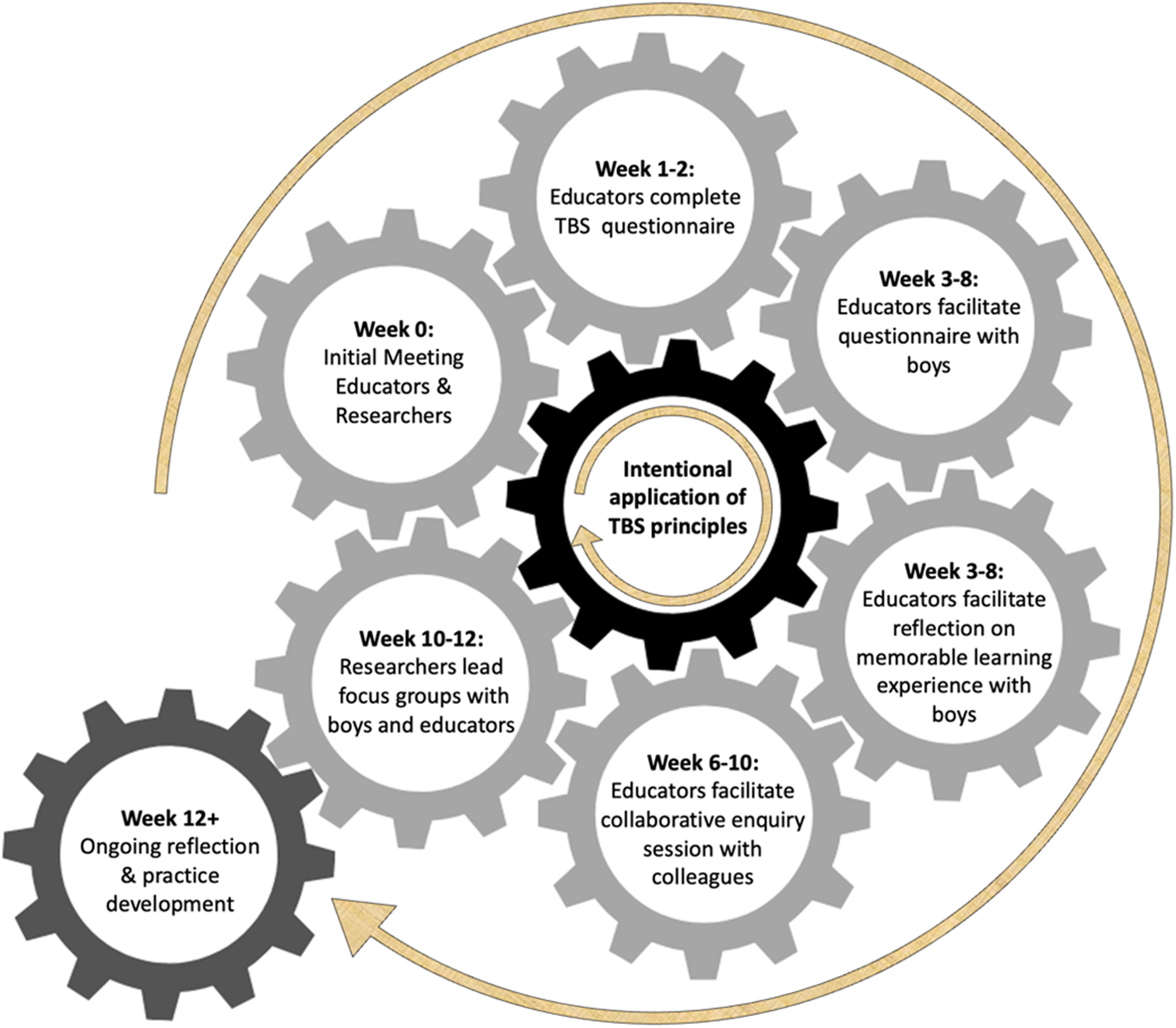
The research team were not prescriptive in detailing how educators should apply the TBS principles. Educators made decisions over how many and which boys to invite to participate in their own setting, guided by a focus on boys impacted by compounded educational disadvantage. The process was flexible and collegial, ‘locally situated, collectively owned, and promote [d] critical reflexivity’ (Banks & Brydon-Miller, 2018, p. 6).
Educators highlighted the strengths of the principles and research process as a creative and practical tool for encouraging reflective practice: ‘These principles bring it all together, the core of effective relational practice with boys. They need to take precedence over curriculum because the only way you can effectively deliver a curriculum is to work in this way, and that’s mainstream as well as here’ (EOTAS teacher).
‘The memorable learning experiences activity was really good because we got the lads to stop and think about their relationships with teachers and youth workers and to hear them saying how much difference it makes when teachers take an interest in their lives just reinforced that and encouraged me to think more deeply about how we build relationships’ (Youth worker).
Boys reported increased levels of confidence, motivation, and engagement in education as they worked alongside educators in a collective process of ‘co-constructing knowledge together’ (Lykes & Crosby, 2014, p. 146): ‘It makes you feel like you’re making a difference when you say something and then the teacher does something about it – that doesn’t usually happen’ (Thomas, 15). ‘The teacher helped me realise what I was good at and how to build on that. They also respected my opinions and started using my work as examples for the rest of the class’ (Charlie, 13).
Research sites continued to innovate beyond the 12-week process. Local developments included integration of TBS principles into school-development plans, video vignettes with boys to inform staff training, TBS toolkits devised by teachers, new school-community partnerships, and a Taking Girls Seriously initiative alongside TBS. The trialling and testing of the principles generated participatory impact, defined by Banks et al. (2017, p. 543) as ‘changes in the thinking, emotions and practice of researchers and core partner organisations, which happen as a result of their involvement in conducting PAR.’ A critical mass of educators took ownership of the research and these organic developments reflected successes of a self-sustaining participatory action research process. For the researchers this created increasing workloads and tensions of trying to hold everything together as the research took new directions undetermined by the research team. Regular requests were made for support with new initiatives, staff training, and resources. New educational settings were asking how they could get involved. And we were conscious that our institution expected academic outputs. In response we looked to our educational ecosystem concept and identified the need to engage with other collaborators whose ‘gifts’ include supporting with training and generating resources grounded in the research findings. This alleviated pressure on the research team by fostering shared responsibility for the embedding of research findings across an ecosystem.
Lessons from boys
While many of the boys who participated in the research have at times been characterised as ‘disengaged’ from education, it was clear that when given a platform, these boys have plenty to say. Many lessons have been learnt from boys informing both educational practice and our research process.
Fourteen-year-old Colin told us: ‘I learn better if I’m seen and heard.’
This simple statement captured a poignant sense that many boys experiencing compounded educational disadvantage feel invisible in the classroom or mis-characterised in their schools and communities. Boys reflected: ‘In the youth centre I feel cared for, the staff know who I am and care about my wellbeing and what goes on in my life in and out of school, but in school I feel like teachers don’t really care’ (Joshua, 15) ‘They call us ‘Facebook famous’ but it’s not a good thing. It’s because people are always saying we’re getting into trouble with the police and being anti-social.’ (Paul, 14).
For many boys their identities and support networks were strongly related to expectations around accepted ways of displaying masculinity. The following is a snapshot of boys’ perceptions of what is expected of men: Matthew (14): ‘Men have got to be strong.’ Dara (13): ‘Men have to be strong mentally.’ Josh (16): ‘Men shouldn’t cry or show emotional weakness.’
Significantly, constraints imposed on emotional openness by culturally dominant masculinities impact upon how willing boys are to seek out support in school. Figure 5 shows that 73% of boys reported rarely or never talking to an educator in school about their emotional state when feeling stressed or overwhelmed and Figure 6 shows that 45% felt they rarely or never get the emotional support they need in school when feeling down. Boys talking about emotions. Levels of emotional support reported by boys.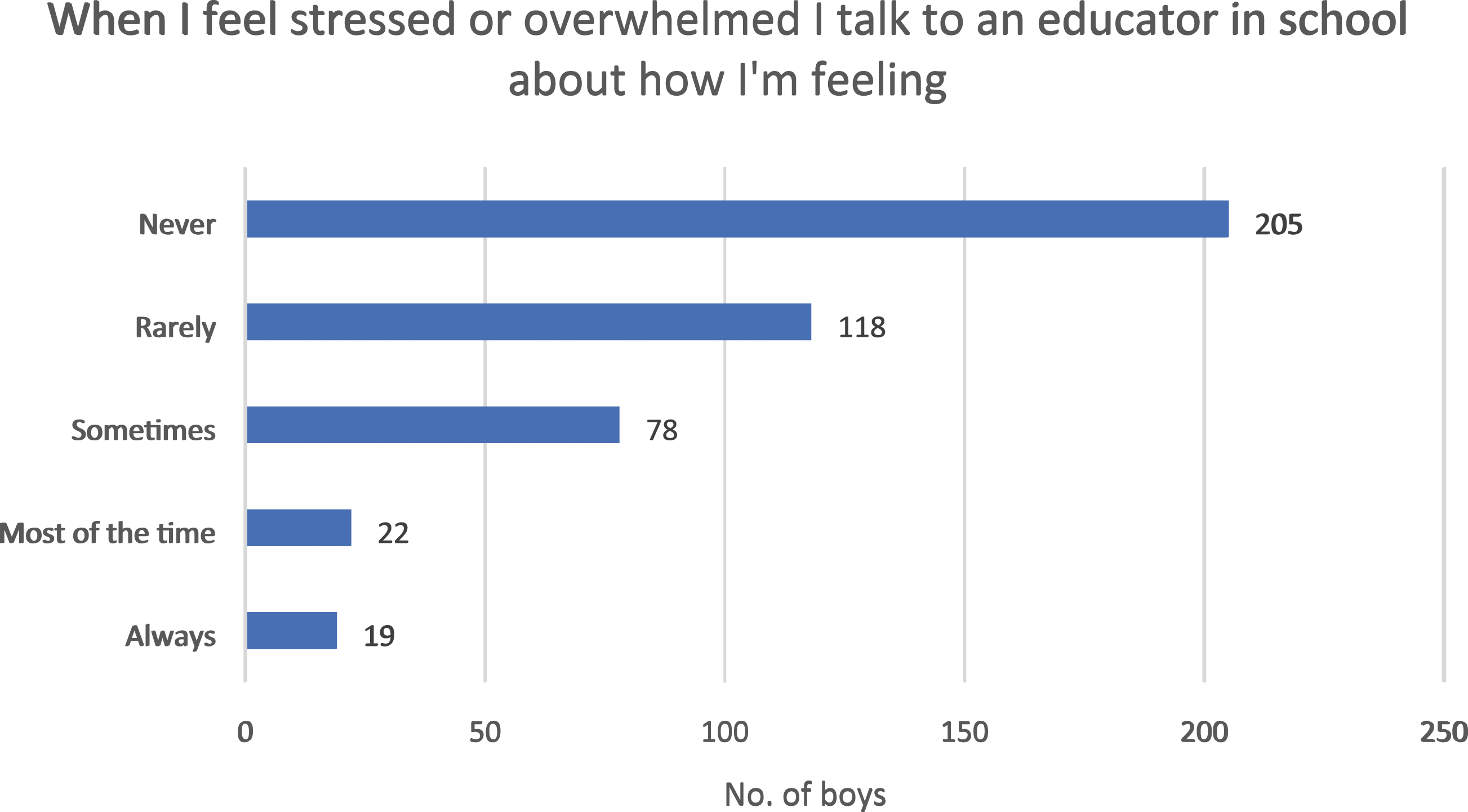
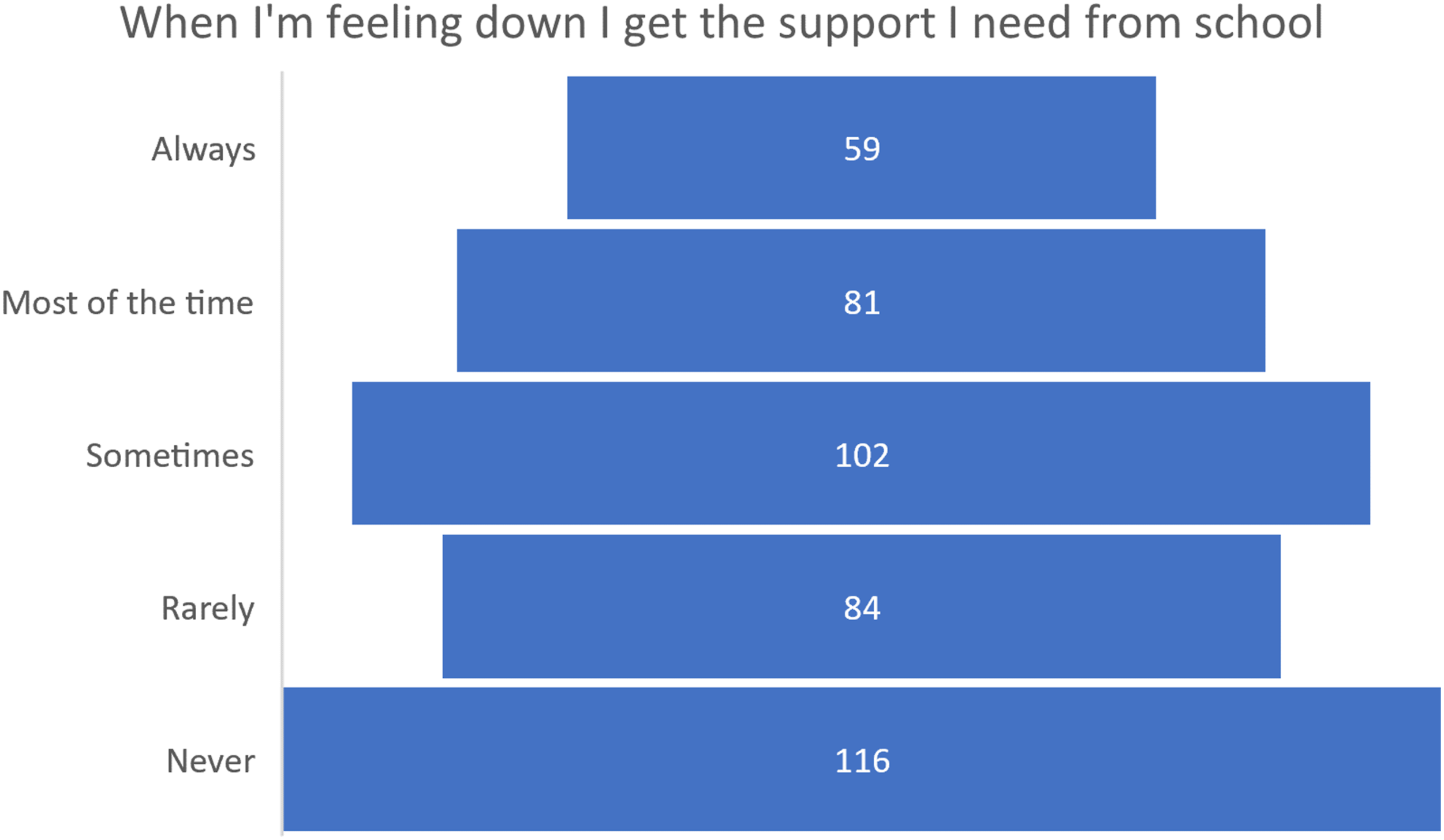
This snapshot of quotes and graphs highlight the extent to which boys experience a scarcity of affective dimensions within education and learning. Responding to this absence, educators began to enact a culture of emotional learning within their practice not only with boys experiencing compounded educational disadvantage but with all students. This shift in emphasis to emotional learning involved being more attuned to how boys expressed or refrained from expressing emotions. Educators encouraged boys to connect with their feelings. A common strategy adopted by several educational settings was to facilitate a group ‘check-in’ with boys and ask each of them to rate how they had been feeling that day on a scale of 1–10 and to express why they choose that number. This started to normalise talking about feelings and emotions and provided a foundation for building this more intentionally into the curriculum.
Rebalancing power relations was a fundamental concern of boys who sought to disrupt didactic and authoritarian approaches in favour of increased opportunities for peer learning as well as greater parity of esteem between boys and educators. Given the complexity of navigating adolescent transitions from boyhood to becoming a young man, and masculine narratives around achieving status, the sense of being put down, especially publicly, was a particular grievance for boys. Aaron’s (15) comment exemplifies many of the responses from the boys: ‘Teachers shouldn’t act like they’re higher than pupils’.
And Jack (14) contrasts much of the shared feeling amongst boys when talking about a teacher they had a good relationship with. He was drawn to Mr McAfee because: ‘He doesn’t talk down to us.’
While many teachers, through the research, worked to embed greater egalitarianism and facilitated new democratic and participatory approaches with boys, they also perceived difficulties with some colleagues who would resist seeing power redistributed to pupils. As researchers we have equally been challenged to increase the influence and decision-making power of boys in our research process.
Boys have taught us that despite schools being presented as inclusive and democratic spaces, many young people routinely experience adultism which ‘dictates that only adults are viewed as credible authorities and able to act, while youth serve as recipients of knowledge and action’ (Bettencourt, 2020, p. 154). Similarly, while there is much acclaim directed towards relational pedagogies (Hickey & Riddle, 2022), boys experiencing compounded educational disadvantage, like many of their peers, rarely find the ‘student-teacher contradiction’ (Freire, 1970, p. 72) being reconciled. Boys have also emphasised the lack of opportunities in formal education to explore cultural and gendered identities, which are particularly salient in a contested society for all young people. Rather than being confined to a discrete area of the curriculum, boys indicated they would benefit from all teachers across all subject areas being attuned to their community contexts and gendered experiences and incorporating this into pedagogy and practice. This learning has helped develop our critical thinking as researchers, moving beyond relational education as a stand-alone concept towards a gender-conscious conception of relational learning which incorporates critical engagement with gender identities, relationships, and hierarchies. Furthermore, boys have taught us that creative partnerships between schools, EOTAS centres, and youth projects can be a lifeline for those whom the traditional system of formal education leaves behind.
Transformation
Committed to transforming experiences and outcomes for boys experiencing compounded educational disadvantage, the researchers, steering group, and participants in the study have sought to shift educational culture by re-aligning relational and holistic education approaches, underpinned by 10 TBS principles. This has involved re-balancing systems of power in schools; encouraging more democratic processes in educational settings; and connecting learning to social, cultural, and community contexts. The participatory approach has injected the research with energy, optimism, and critical perspectives. Engaging in the process has been recognised as ‘an outcome unto itself’ supporting ‘iterative growth and learning’ (Bettencourt, 2020, p. 159). This has been supported by the wider educational ecosystem with the Education Authority placing the TBS at the centre of a new toolkit aligned with a regional priority of ‘maximising boys’ potential’ (Purdy et al., 2021) and adopting the participative inquiry focus as part of professional learning initiatives emanating from the national Learning Leaders strategy (DE, 2016). The Council for Curriculum, Examinations and Assessment (CCEA) are identifying enabling factors across the Key Stage 3 curriculum for educators to implement the TBS principles. More recently the Education and Training Inspectorate have committed district inspectors to work alongside schools and youth projects in supporting the next phase of TBS, from 2023–2028. These transformative developments are all indicators of momentum towards a tipping point for change (Burns, 2014) that moves beyond a narrow and competitive focus on academic attainment and invests in supporting the holistic needs of boys impacted by compounded educational disadvantage.
Despite increased buy-in across the education system, three key areas of resistance remain. Firstly, a constant stream of policy guidance and expectations to cover new curriculum content is overwhelming for educators. The TBS principles therefore are positioned as a framework to guide reflective and reflexive practice rather than an additional programme; however, this is dependent on leaders in education ringfencing such time for practitioners. Second is a tendency to discount capacity to meaningfully affect change in the face of a stubborn social issue. In response we reinforce that everyone at all levels of education and society has a ‘gift’ to contribute to enable boys to thrive. Thirdly, educational bodies consistently seek quantitative measures of improved academic attainment. We are considering developing this in the next part of the research, whilst appreciating that for many boys and educators success is often much broader than academic outcomes.
Scholes (2019, p. 345) argues an ecological approach that considers working-class boys’ social contexts and interactions across social spheres is ‘missing from mainstream educational initiatives and policy decision-making’. TBS, supported by the sustained commitment of a local university
As the research continues to evolve, greater emphasis is being placed on a gender-conscious approach which encourages an intersectional lens accounting not only for relational ways of tackling disadvantage but also to explore and redress male power and privilege in educational and community settings (Keddie et al., 2022). Emphasis remains firmly on strengthening participatory processes that engage disenfranchised boys to lead the inquiry process, not only as co-producers of knowledge but as central contributors to a co-created research process (Carl & Ravitch, 2021). This is being pursued through continual assessment of ensuring boys have ownership of process and outcome. For example, engaging with YouthAction NI to establish boys’ advisory groups at pivotal stages of the research and a collaborative youth-led arts project which will engage boys in analysing data and using photography to capture poignant findings from their perspective to be presented to new audiences in creative ways. We would caution that persuading boys experiencing compounded educational disadvantage to participate with educators who they believe do not give voice to or respect the tacit knowledge they bring will undoubtedly be challenging, and as noted by Luguetti et al. (2023, p. 5) is very ‘hard work’ that involves ‘disrupting traditional power relationships in research.’ As a research team we are fully committed and have developed productive partnerships across the education sectors to employ increased YPAR methods that embed the authentic voices and participation of young people in the next phase of our longitudinal research. While TBS has impacted our regional context, there is evidence of the relational, transformative PAR processes outlined in this paper benefitting participant action researchers in other educational contexts (Blower, 2022).
Footnotes
Acknowledgments
The research team would like to thank the reviewers of this paper for their constructive and helpful feedback. We also thank all the boys, schools, teachers, youth workers and steering group members who have supported and participated in the research.
Declaration of conflicting interests
The author(s) declared no potential conflicts of interest with respect to the research, authorship, and/or publication of this article.
Funding
The author(s) received no financial support for the research, authorship, and/or publication of this article.
