




Abstract
Merging of Knowledge is a research approach that creates the conditions for people with lived experience of poverty to participate at an equal level with academics and practitioners, in the co-generation of knowledge about poverty. This paper reflects critically on the application of ‘Merging of Knowledge’ to study poverty in Tanzania, assessing its challenges, achievements, and lessons learned about revealing hidden knowledge about poverty. It also provides a brief literature review to place the Merging of Knowledge alongside other participatory approaches. This paper finds that Merging of Knowledge can effectively interrupt patterned social relationships, and empower individuals and peer groups, thereby stimulating transformation of both academics and people and poverty. It does so by addressing imbalances in social status, empowering all groups of participants at each stage of the research, and building trust, confidence, and freedom from fear in a sustainable manner. The conclusion drawn is that Merging of Knowledge holds great promise for future research on topics where strong hierarchies of knowledge exist, and where the physical inclusion of participants in data collection is not readily translated into intellectual inclusivity during analysis and the dissemination of findings.
Keywords
Introduction and background
‘The eradication of poverty in all its forms and dimensions, including extreme poverty’, is recognized as ‘the greatest global challenge and an indispensable requirement for sustainable development’ by the United Nations in its 2030 Development Agenda. The eradication of poverty has subsequently been adopted into the 17 Sustainable Development Goals (SDGs) in 2015, by the 193 countries of the United Nations (UN) General Assembly (Bray et al., 2020, United Nations, 2019). Its seven associated targets aim, among others, to 1) eradicate extreme poverty everywhere (target 1.1), and 2) halve the proportion of men, women, and children of all ages living in poverty in all its dimensions according to national definitions (target 1.2) (Bray et al., 2020), while 3) “leaving no-one behind” in processes and priorities relating to this goal (United Nations, 2019). According to the 2017/18 Tanzania Household Budget Survey, 26.4 percent of the population live in poverty as defined by those whose consumption is below the national poverty line of TZS 49,320 per adult equivalent per month and who therefore were unable to meet their basic consumption needs (World Bank, 2018). As the phrase “poverty in all its dimensions” has never officially been defined, the implications are that poverty is both multidimensional and country-specific and that it is the responsibility of a nation to identify its dimensions against which they will be drawing up strategies and measuring progress on fighting poverty (UNICEF, 2017).
Historically, attempts to address the alienation of those experiencing poverty have brought participatory approaches to poverty into the mainstream, and generated definitions of poverty derived from the insights of those experiencing poverty daily, in diverse global South contexts. In Tanzania for instance, Participatory Approach to Research (PAR) started in 1972 in several coastal villages as a way to engage residents in the government-initiated development process (Swantz, 2015). Other studies include, notably, the World Bank’s Voices of the Poor project (Narayan et al., 2000), and research involving fieldwork across six countries to develop the Individual Deprivation Measure (Bessell, 2015; Wisor, 2014).
While inclusive in their approach, these and related studies did not set out to share analytical decision-making with people living in poverty. Consequently, they have struggled and often failed to include the perspectives of the most marginalized, omitting them in defining the dimensions of poverty and overlooking the empirical value of collective analysis of poverty as a lived experience, alongside its conceptualizations in policy, research, and practice. It is recognized that achieving the SDG goals related to eradicating poverty relies on finding practical ways to engage people experiencing poverty and those working to address it at all levels as equals in study design, governance, operation, analysis, and dissemination (Patrick, 2019), thereby valuing their competence and status as knowing individuals (Fricker, 2007) and achieving a shared mandate.
This paper reflects on the possibilities offered by Merging of Knowledge, an approach to research and practice initiated and developed in the social movement ATD Fourth World. In 1980, the movement’s founder Joseph Wresinski argued that the fight against poverty requires the active, free, informed, and meaningful participation of people perceived as poor, illiterate, and voiceless, at all stages of the design, implementation, monitoring, and evaluation of decisions and policies affecting them (CHR, 2012, Wresinski, 1980). In the early 1990s, members of ATD Fourth World created “Le croisement des saviors”, translated as the Merging of Knowledge (MoK), to enable people with lived experience of poverty to join as co-researchers, participating throughout and on an equal footing to academics and others considered experts on poverty. They consider policy formation and action to be more effective when processes start with people living in poverty thinking together alongside policy-makers, academics, business leaders, social workers, and/or teachers, followed by a collective analytical process that draws on their respective sources of knowledge (ibid.). Structuring the research process this way interrupts status and power hierarchies, providing an alternative platform of interaction for understanding and tackling poverty. The paper explores the viability and value of this approach in working around strong cultural norms defining sources of authority and patterning everyday social relationships in Tanzania. It draws on research workshops, meeting materials, and reflections from participants living in poverty, academics, and practitioners to illuminate the lived experience of applying MoK, and complements findings from a broader study to understand the dimensions of poverty involving six countries (Bray et al., 2020). The draft paper was shared with two practitioners who were involved in the project in Tanzania, and finalized after receiving their feedback.
Author positionality
The life experiences we bring, and those we cannot bring, have a bearing on our insight into what was occurring during the Tanzanian research and on our subsequent interpretations.
Three of us have worked in academia; one is now a Deputy Vice-Chancellor at a Tanzanian university who joined the national research team at the outset, another combines research with service in the UK and helped coordinate the six-country study, and one is a Ph.D. candidate in the USA who assisted in the design process. The fourth is a practitioner working to fight poverty in the senior leadership team of the social movement ATD Fourth World. He also accompanied the TNRT during the three-year study. Three of us have lived and worked alongside people living in poverty for several years in Africa, Asia, and Europe. Our roles have included volunteering in a shelter for children living on the streets, running art clubs in an informal settlement, supporting women and adolescent girls with mobile technology, and developing a holistic family support strategy.
None of us have ever lived in poverty. We were all born into families where our parents’ work and social positions afforded us schooling, respect, and opportunities. One author remembers people living in poverty queuing outside their homes for support as his father was a priest and his mother a community worker. Another observed villagers giving gifts to his father because he was a teacher. Education was considered the only legitimate source of knowledge and people living in poverty were seen as different, to pity and to help: “I had never imagined that I could sit with them and think with them constructively”.
Curiosity brought us into this research; the prospect of leading a research project in partnership with people living in poverty felt bizarre to the Tanzanian academic who joined the team to find out how this could work. Two of us knew the power of deep participatory work over sustained periods through our innovation as social researchers and wanted to experience an approach in which individual and social transformation was explicit, expected outcomes. The fourth, on joining ATD Fourth World, discovered the impossibility of fighting poverty without those who experience it first-hand and wondered how the movement’s Merging of Knowledge approach could be applied in research straddling age groups, genders, ethnicity, and rural/urban contexts. On a personal level, we all recognized that collaborating in a study using the Merging of Knowledge could illuminate and challenge our assumptions, pushing us beyond our comfort zones during data collection, analysis, and dissemination. We underestimated how much we were going to learn from and with people living in poverty, and in the deliberative process of collaborative conclusion-building. Our reflections on how our participation affected us as individuals, and the way we now work, are woven into the paper’s conclusion.
Research process
Conducted between 2016 and 2019, the Tanzanian study was led by a National Research Team (TNRT) comprising six people living in poverty, five practitioners, and four academics (one of whom is an author of this paper). It is the first in Tanzania investigation of poverty to use MoK and publish outcomes (ATD Tanzania, 2019).
The study comprised three main stages: socialization for two months, consultation and data collection for eighteen months and data analysis for three months. The initial socialization stage involved visiting different villages, identifying participants, explaining what the project was about, and conducting several training sessions on the Merging of Knowledge approach. Socialisation included eating meals together to build relationships, including a sense of commonality and ease in being part of the project. Such a foundation proved critical to the research because it enabled people with direct experience of poverty, professionals, and practitioners, to know and trust each other, and to recognize the specific contributions made by each group to the knowledge-building process.
The MoK process was applied during the consultation and data collection phase via a set of steps designed to facilitate ease of self-expression and to foster high-quality engagement among people who would not ordinarily converse to make joint decisions. A detail of each step taken in Tanzania is given below. The approach was originally designed for three ‘peer’ or ‘reference’ groups of people who share a similar social position: (i) people with direct experience of poverty, (ii) professional or volunteer practitioners, including service-providers, and (iii) academics (ATD Fourth World, 2012). Subsequent studies have incorporated policy-makers, business-leaders, people working in the media, and the general public (Gupta & Blewett, 2008, Levesque et al., 2009, Loignon et al., 2015).
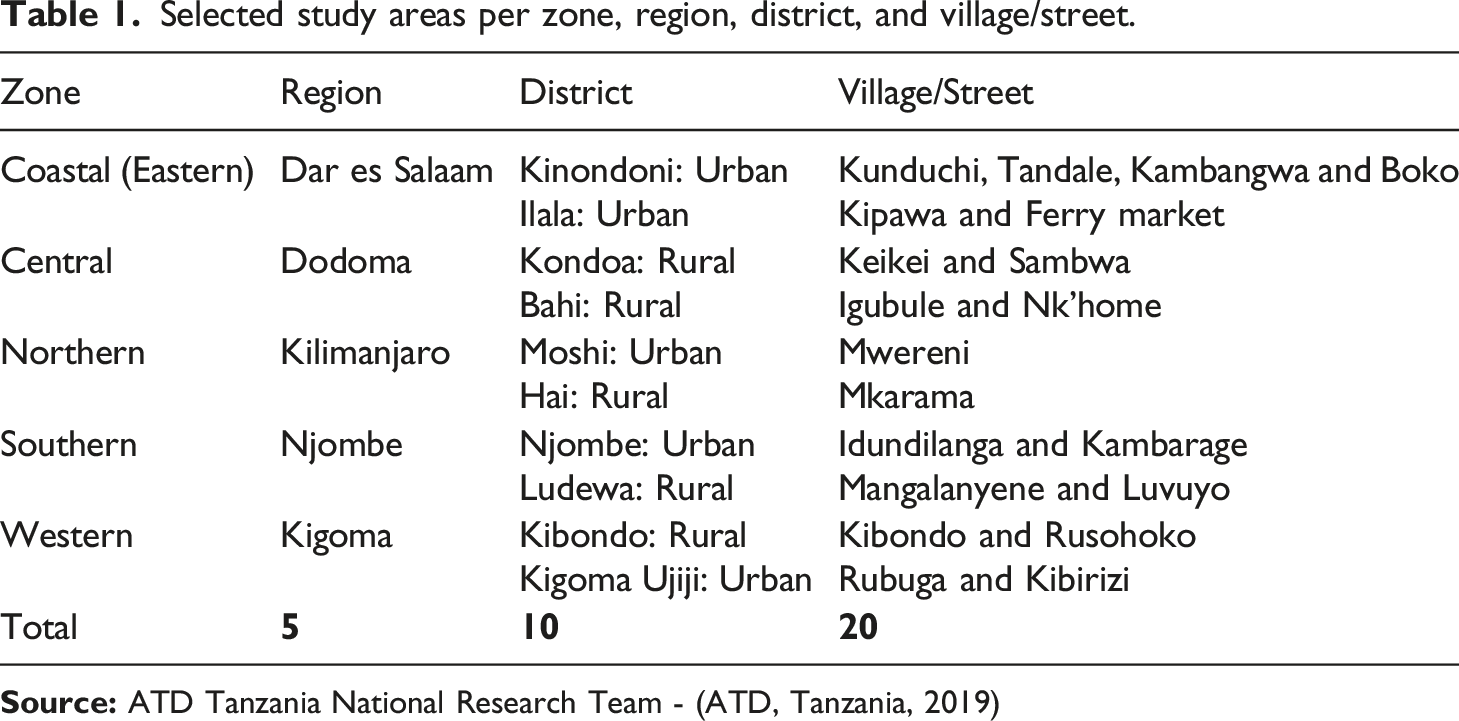
Selected study areas per zone, region, district, and village/street.
Total number of participants and type of peer groups involved in the study.
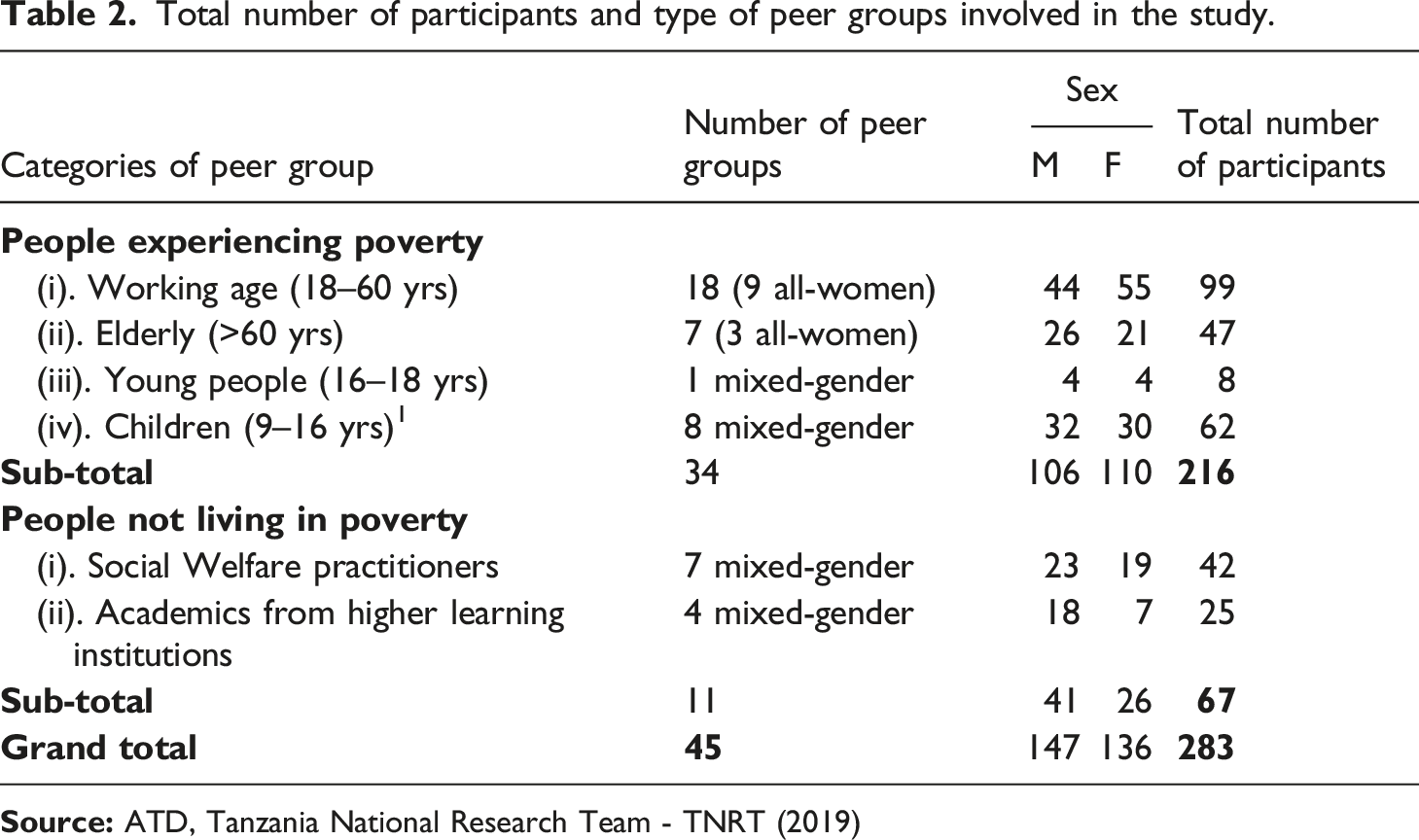
The first step was to bring seven to twelve individuals in each category of peer group together from all peer groups, to get to know one another and build confidence to speak, as preparation for individual and collective work. For instance, there were 18 peer groups of people in poverty of working age (44 men and 55 women) totalling 99 participants (see Table 2). This decision recognized that processes of self-actualization require a relatively safe space in which individuals feel able to challenge one another and themselves (Skelton & Kalisa, 2017). TNRT members who had lived or worked in communities of poverty consistently accompanied new participants living in poverty, becoming their ally in addressing any barriers to communication, confidence, or self-worth over the entire research period. TNRT practitioners and academics worked together to select culturally-appropriate tools for generating discussion and data (e.g. body-mapping, storytelling, photo-voice, and drawing) from the research guide prepared for the six-country study. Co-researchers from the TNRT were trained to use these tools to enable peer group participants to reflect on the daily realities of poverty and contribute their understanding of its characteristics.
Step two in the MoK process occurred in the same peer groups, typically half-day sessions for practitioners and academics, and over 2–3 days for people living in poverty to support engagement through more time. It involved facilitated reflective discussions of individual understandings and collective knowledge-building in a total of 45 peer group meetings (Table 2). Short reports were written using verbal and audio recordings of each peer group’s co-construction of conclusions. TNRT members with direct experience of poverty then wrote a synthesis of all the reports from peer groups comprising people living in poverty including recurring themes or issues. Practitioners in the TNRT did the same from reports made by practitioner peer groups and likewise the academics. All TNRT members included insights from their field experiences to contextualize the descriptive data generated by the peer groups. Using these three syntheses, the entire TNRT identified commonalities and differences across the peer groups and drafted proposed dimensions of poverty consistent with all.
The third and final MoK step involved two or three individuals from each peer group coming together for several days in a new group comprising those living in poverty, academics, and practitioners in the same geographic area. There the TNRT’s draft of proposed dimensions was collectively reviewed, critiqued, and developed. Using the results of four area-based MoK events, the TNRT refined their initial analysis and produced a definition of each poverty dimension with illustrative quotes from the peer groups. The results were a set of dimensions for rural and urban Tanzania respectively, which were combined by the TNRT into a single set of national dimensions (ATD Tanzania, 2019).
Measures taken to address early perceptions and experiences
Members of the TNRT knew that this study’s success depended on engaging people with direct experience of poverty, practitioners, and academics as co-researchers who participated on an equal footing in the data collection and analysis. They encountered fears, preconceptions, and low levels of trust in the process of all three groups that were rooted in prevailing social attitudes and individual experiences of everyday social relationships. For example, the notion that research is conducted only by academics who know everything was conveyed in the hesitation to participate amongst those living in poverty who typically asked “How will I express myself amongst the professors?” Correspondingly, the invited academics were full of confidence, considering themselves the primary creators of knowledge. One professor refused to join the project simply because he did not know how he would cope, asking “How can I discuss issues concerning poverty with a poor person?”
Somewhat similarly, practitioners did not initially see any value in engaging with people living in poverty, belittling their contributions in ways that risked re-enforcing the status quo, for example asking “What are we going to learn from people who have not gone to school? What are they going to say in front of the professors and will it make any sense to them?” Their early fears were also rooted in a personal challenge, namely coping with working alongside both people living in poverty whose capacities they doubted, and with highly-educated professors, whom they saw as the legitimate keepers of knowledge.
Measures taken to empower participants and nurture equity in contributions
Recognizing the need to empower all members of their team and support wider participation, the TNRT invested time and money in a series of training and team-building days over several months within and outside the meeting venue. These interactions proved critical to the onward use of MoK because they enabled all TNRT members to express their knowledge of poverty freely and to gain experience in facilitating peer group conversations in which all members could contribute and air their views in an equitable manner.
As the research progressed, people living in poverty became more animated as they learned from each other, grew in confidence, and retained control of their contributions to the debate. One woman commented, “Following the training and empowerment my confidence improved and I was able to work with academics and practitioners without fear”. Academics were able to reflect on their assumptions, gain humility and consider how to become equal partners in conducting research. At the same time, all participants understandably tended to revert to the roles they were accustomed to, felt comfortable with, and had grown up believing were legitimate. For example, people living in poverty tended to hold back while academics tended to dominate discussions, by making forceful arguments within and outside their peer groups, using English words unknown to other participants, or introducing topics that were irrelevant to those living in poverty.
Participants living in poverty expressed shame and related doubts about the value of their contributions to research and wider society. “I have not attended any formal education, and have no research experience, so how can the professors accept my input?” The steady and structured process of building relationships and engaging in dialogue (outlined above) enabled people living in poverty to overcome initial fears of exposing their shame and its origins to people they did not know and to bring these into an analysis of dimensions of poverty in Tanzania. One young woman recalled advising her daughter “Do not try to pass your examinations because I do not have money for further education” Another said, “I was beaten by my husband frequently in front of my children”.
Following the structured MoK process also helped the TNRT to listen attentively to all participants, engage in a multi-way dialogue, open their minds to the everyday realities of poverty, and then facilitate these qualities of interaction in the peer groups. TNRT members recall being surprised at the logic articulated by people living in poverty regarding how their lived experience should be reflected in the conclusion-building. For example, the women who proposed that violence and abuse of women should be a dimension of poverty described being chased from their homes by their husbands, with no share of the wealth they had created together. The TNRT observed that, on hearing this explanation, other peer groups concurred with the proposal rather than foisting their perspectives on those living in poverty.
Initially there were disagreements within TNRT about who should collate the information collected in peer groups and prepare draft conclusions. Some practitioners and academic members thought the analysis was their responsibility, proceeded accordingly, and presented some provisional dimensions to representatives from a range of peer groups. People living in poverty noted alterations to the dimensions they had brought forward, asked who did the merging, and why these new dimensions? Discussion within the TNRT enabled members to recall the principles of co-research and agree that people living in poverty should be fully involved at all stages of the process.
All TNRT members came to understand that the main focus in a MoK process is not to teach but to be taught. Individual knowledge was offered through personal expression, within a process involving mutual recognition and respect between all concerned. In order to truly listen to one another and accept differences, TNRT members had to consider how their understanding was being challenged and shaped by others’ knowledge.
Discretion was a key element in the process. Everything that participants said or wrote that had not been published was treated confidentially and could not be quoted or used until conclusions had been agreed upon and approved by each group. To accommodate the diversity in participant backgrounds, the MoK approach insists on conditions that allow fair expression for all. For example, people living in extreme poverty may need more time to prepare for interactive sessions, or more moral and physical support, to keep up with a work schedule that is considered normal by academics and professionals.
The TNRT found that asking people living in poverty to share their perspectives first avoided the constraints of time pressure or cultural pressure to mirror earlier input from participants with a higher social standing. Academics and practitioners were then invited to ask clarificatory questions to build an understanding within the group of how poverty is experienced physically, mentally, and emotionally, and to sharpen the collective analysis of the proposals being put forward. Such a strategy runs counter to local social norms of deference to those who are older, more educated, and/or have positions within institutions. The fact that interaction in the research felt qualitatively different to people living in poverty and was observed to make a genuine contribution to its conclusions suggests that MoK can constructively interrupt patterned social relationships in ways that do not threaten social cohesion. One participant living in poverty reflected: “I thought that knowledge only came from academics but after participating in this research, I know that our knowledge can help eradicate poverty. We learned to know each other, to trust each other, and to feel that we are all equal, whether we are practitioners, academics, or people living in poverty.”
The TNRT was struck by the determination with which people living in poverty defended their proposals. In one event in Dar es Salaam, people living in poverty refused to allow a dimension that they had named ‘violence and abuse against women and children’ to be subsumed within a dimension termed ‘social maladjustment’, suggested by academics and practitioners because their proposed dimension had the most profound effect on their lives. Academics and practitioners began to see that people living in poverty genuinely understood the social dynamics within which they lived and could readily defend their ideas and positions when the conditions for the conversation were set up for equity and respect for all. The structured MoK process enabled the team to circumvent the usual power imbalances that privilege the opinions of educated people with social status and to do so in ways that retained the space for ongoing dialogue and constructive disagreement. During the final MoK step, people in poverty asked, “Why do we no longer see some dimensions like the absence of peace (amani) and water shortages mentioned earlier?” The TNRT reinstated these as urban and rural attributes of the agreed dimensions. One participant living in poverty then remarked “I have noted that the voices of people living in poverty count just as much as those of the academics and practitioners, and each peer group needs the information and experience of the others to generate a complete picture of poverty”.
The role of emotions and embodiment in revealing hidden knowledge about poverty
In several peer group discussions, women, men, and children living in poverty cried as they recounted their experiences. TNRT team members offered to sit with them to provide support until they were ready to rejoin the team discussions. Visible distress was interpreted as an indication of how badly people living in poverty are routinely treated and how the actions of people who are not living in poverty are, in themselves, a dimension of poverty: “When you look at someone’s face and hear their sobs, you realize that it is not acting or hypocrisy, it comes from real, sustained experience.”
When people living in poverty in urban areas proposed the absence of peace (“amani”) as a dimension of poverty, the tangible and sustained nature of this feeling as core to the experience of poverty was not immediately understood by other peer groups in Tanzania. These embodied experiences were incorporated in the analysis because the MoK process enabled street-based business owners to explain the persistent anxiety and absence of peace of mind, and their co-researchers to feel the depth of emotion and empathize: “Imagine a woman who cooks porridge or food to sell in the street and is expecting to earn a little money to feed her children. A policeman suddenly appears, takes the porridge, and throws it away. There is a pain when there is no predicting whether one will eat today, be able to earn, or lose one’s business entirely”.
While embodied experiences of poverty are well-known to sociologists, anthropologists, and some economists (Batallan et al., 2017, Jackson & Palmer‐Jones, 1999, Lister, 2015, Walker & Bantebya-Kyomuhendo, 2014), they are largely overlooked in efforts to define and measure poverty (including the US$1.9 a day poverty line, Human Poverty Index (HPI) or Multidimensional Poverty Index (MPI)) and hence absent in policy discussions. Research using MoK may provide insight into how such dimensions interact with other material or relational dimensions to shape the experience of poverty in different contexts.
Key achievements and lessons learnt
The application of MoK in Tanzania proved effective in enabling people in poverty to be equal partners in the research, identify dimensions of poverty that touch their lives most, and contribute actively to both analysis and the dissemination of findings. All participants witnessed the capacity of each individual to express and interpret his or her life situation with the appropriate support in place (ATD, Tanzania, 2019). The TNRT also learned that such expressions of personal life experiences will remain fragile until they can feed into the common life experience of a social or professional peer group (ibid.), and that the sense of belonging to a peer group reinforces and consolidates the knowledge that each person possesses (ibid.). Over time, the academics and practitioners in the TNRT started to assign greater weight to knowledge born from lived experience and to work with it during the collective analysis when differences of opinion occurred. They accepted resistance from people living in poverty to the proposal by academics and practitioners to subsume ‘poor education’ (a dimension generated by people living in poverty) within a dimension termed ‘poor services’. ‘Poor education’ remained a discrete dimension.
Alongside such progress, the journey towards building knowledge together remained gradual, uneven, and contained several limitations. Fear, low trust, and wavering confidence persisted within peer groups of people living in poverty, while academics and practitioners tended to dominate discussions. Members of the TNRT spoke up to remind all co-researchers of MoK principles and enable effective co-construction to resume. Yet they concluded that more time than the allotted 18 months for data collection would be needed for these new ways of constituting social relationships to become everyday practice and normative.
Events that unfolded in a dissemination meeting at the University of Arusha demonstrate how the deliberative preparation and structure required in research using MoK successfully interrupted social patterns and hierarchies of knowledge. This opened up new spaces for dialogue and had a transformative effect on the individuals involved and the collective production of knowledge. People in poverty presented the dimensions and their related experiences with confidence to the University students and staff who remarked on “the way people living in poverty presented the dimensions; we could not differentiate between the professors, the practitioners and those with direct experience of poverty”. Others said, “We were more touched by participants’ accounts relating to a dimension of poverty, than by the definition”. For example, one person living in poverty explained that “Unable to read a poster on the street, I took the road towards the state house and was caught then beaten badly by the security guards”. His experiences illuminated the human experiences of several dimensions; ‘poor education’, ‘violence and abuse’, ‘social exclusion’, and ‘suffering’.
Merging of knowledge concerning participatory action research
Participatory action research approaches can help address the limitations of participatory approaches to poverty (outlined earlier) because they are designed to access knowledge from diverse groups of people regardless of their power or position in society (Anderson & McLachlan, 2016). However, while the lived experiences of participants are typically made visible during data collection, academics may hold sway during analysis, writing, and dissemination. For people living in poverty, this kind of extractive research can be an additional form of repression because they are asked to provide facts about their lives, only to have these interpreted by others. Merging of Knowledge is rooted in the understanding that such an imposition of external interpretive frameworks is a form of epistemological injustice (Fricker, 2007), and sets out to offer a viable alternative.
As illustrated through experience in Tanzania, the first task is to make space for a dual process of action and reflection through which new learning emerges (Levin, 2012), and the second is to enable this iterative process amongst diverse individuals and groups – with very different social positions – who are simultaneously engaged in the research (Burchardt, 2014). The published evidence indicates that the Merging of Knowledge can be transformative in effecting empowerment amongst individuals and stimulating action in social spheres beyond the research team (de Boe, 2007, Gupta & Blewett, 2008, Levesque et al., 2009, Loignon et al., 2013, Loignon et al., 2015). Testimony from people living in poverty suggests new (often unexpected) personal confidence in the value of one’s knowledge built on experience and one’s contribution to the analysis, the net effect of which is an unprecedented, rigorous co-examination of the issues at stake and lasting change in individual agency (Bennett with BennettF with Roberts, 2004, Tardieu, 2012). Examples of social transformation stimulated by studies include changes in service provision to vulnerable people towards ensuring respect, care, and empowerment and reducing exclusion, control, or denigration (Gupta & Blewett, 2008, Lévesque et al., 2009, 2015).
The notion of research as a process through which to fulfill a social contract is fundamental to the premises of Merging of Knowledge and helps situate this approach concerning other participatory action research methodologies. Osinski (2021a) offers three evaluative criteria for participation: 1) Consultation - which tends to be extractive and tokenistic, and does not allow respondents a say in how the research is conducted or used, 2) Collaboration - where participants are involved in the research study but not in the data analysis and dissemination, and 3) Control - where participants have control over each stage of the research process, including the way it is conceptualized, led and used (Godrie, 2017 cited in Osinski, 2021a). She argues that the last two criteria - collaboration and control - enable transformation at an individual or societal level. In her evaluation of the six-country study that incorporated the Tanzanian research discussed in this paper, Osinski notes that the Merging of Knowledge could, in principle, be considered to meet these criteria of transformation. What is more, the approach extends commitments to equality of inclusion to practitioners and academics too.
Typically, participatory research invites people with direct experience of poverty into research in ways that overlook wider power dynamics and their silencing effects (Patrick, 2019, Greenhalgh et al., 2016). Prevailing social imbalances often act to marginalize and frustrate participants in consultative exercises, partly because they reinforce socially-accepted assumptions about where expertise lies (Brett et al., 2014). Merging of Knowledge differs through provisions that anticipate and counter these forces. For example, people with direct experiences of poverty participating in Merging of Knowledge are offered a companion to accompany and support them throughout the research. Their presence can reduce the emotional burdens of recalling one’s own experiences, listening to others recount theirs, and any felt responsibility in bridging the worlds of lived experience and research (noted as problematic for service-users in other forms of participatory research reviewed by Brett et al., (2014)).
In a second paper evaluating the Merging of the Knowledge approach Osinski (2021b) argues that its use in research could benefit from an analysis of how power dynamics emerge, persist, and evolve during any study, to raise awareness of the different types of power that coexist in a research context, and to ensure that the imbalances present in wider society are not reproduced within the research process. Learning from the limitations of the Tanzanian study supports investment in exploring these dynamics and sharing insight.
Concluding reflections
As authors, we are struck by the power of the MoK structure and process to enable transformations in participant perceptions of what is possible, specifically about leveling the playing field in ways that enable genuine co-production. According to the senior Tanzanian academic on the team; “working with people who have first-hand experience of poverty was very interesting. They brought a lot of new insights and had an impressive capacity for work and analysis. I learned a lot about poverty from them, and with them, we learned to work differently. Without them, we would not have produced the same dimensions of poverty. They weren’t talking about theory; they were talking about their lives.” The experienced practitioner said “I learnt that the knowledge of the academics and professionals was incomplete without the knowledge of people living in poverty. This research has changed the way I interact with people in poverty because I now understand that their knowledge is not interchangeable.” The two remaining authors witnessed more deliberate, sustained, and deeper participatory processes through the application of MoK in Tanzania than either had previously encountered over two decades of participatory and action research. Struck by the transportability of MoK’s basic tenets, one author recently brought the approach into a university policy-making process in which large status and power differences exist between the policy’s intended beneficiaries and those who traditionally make decisions.
On listening to the TNRT members describing the research process and its outcomes at a conference in Dar es Salaam (EAAN, 2020), several academics who were new to MoK reflected on what they saw as distinct. “I have been using participatory methodologies in my research for many years, and I can now see the difference between MoK and other approaches. I had never imagined it was possible to involve people living in poverty to this level in the research. Now I know that their input is critical and make a big difference to the outcomes and recommendations. I promise you I will disseminate this new methodology while remaining aware that it takes more time”. Another commented, “Becoming familiar with MoK has changed the way I mark my students’ theses, I now tend to question them on how participatory work was done, and to what extent the research was genuinely participatory”.
How Merging of Knowledge was applied in Tanzania fulfills Osinski’s two criteria for participation; collaboration with people in poverty and equal control for people in poverty at all stages and levels of the research process, in ways that enable individual and societal transformation. MoK provided a set of principles and a structure in which participants can engage with each other as human beings, allowing emotional expression and overcoming social barriers by introducing different kinds of interactions to those anticipated by participants. The approach prompted healthy disruptions in patterned social relationships and, through a re-configured understanding of whose knowledge counts and how conclusions are drawn, several previously invisible dimensions of poverty were revealed.
Introducing and developing MoK in a range of rural and urban settings in Tanzania also enabled individual-level transformation in attitudes, beliefs, and behavior of all three peer groups. Indications of a more gradual societal transformation are evident in the ripple effects of this work, for example, discussions amongst academics in Tanzania and other African countries interested in applying MoK in their research and plans for one University in Tanzania to develop an MoK curriculum and become a training center.
The challenges encountered can help plan strong action research initiatives, for example by considering how best to ensure that people in poverty are supported and empowered in ways that ensure that their insights and perspectives are valued throughout the research process, specifically conclusion-building. The considerable financial and human resources needed to conduct new studies or to replicate existing research using MoK may constrain its adoption. Yet the consensus within the TNRT was that such investments were worthwhile because they underpinned a process able to reveal hidden dimensions of poverty (Wetengere et al., 2022) and to enable colleagues with direct experience of poverty to contribute actively and confidently to conferences hosted by influential organizations including the OECD and the UN. At the same time, there is work to be done in developing MoK in ways that allow its more consistent use. Useful starting points include creating expectations amongst the policy and research community of transformative levels of participation and, legitimizing appropriate resource allocations to avoid compromising the process.
Footnotes
Declaration of conflicting interests
The author(s) declared no potential conflicts of interest with respect to the research, authorship, and/or publication of this article.
Funding
The author(s) received no financial support for the research, authorship, and/or publication of this article.
