




Abstract
Embedded within family law proceedings and the United Nations Convention on the Rights of the Child (UNCRC, 1989) there is ambiguity surrounding the terms rights, participation, best interests, and capacity. Research furthering the rights of children is necessitated across academic literature and practice. Across research, literature and practice there is an evident reliance upon age in relation to the participation of children in family law settings. There is considerably limited research regarding strong characterisations of such concepts, and significantly less literature involving the voices of children and their perspectives regarding the topic. This qualitative action research aimed to gather the perspectives of children aged 6–12 regarding concepts relating to their capacity to participate using child-friendly methods of assessment, specifically the use of play, art, and narrative activities. This research aim to explore the research questions, how do children aged 6–12 demonstrate, understand and describe participation capacities, what does capacity, rights and participation mean to them? How can children demonstrate and increase their understanding of complex concepts through the use of child-friendly methods such as narrative, play, and drawing? This research allowed children to meaningfully share their unique perspectives, educated the participants, and provided one further step in actualizing the rights of children. Further, this research has offered recommended various methodologies for future endeavours involving children’s participation.
Keywords
Introduction
The participation of young children in family law proceedings has become extensively researched, especially in more recent years. Research relating to the rights of children, specific provisions within the United Nations Convention on the Rights of the Child (United Nations, 1989), and the participation of children have increased (Kellett, 2011). Further, research involving children as capable contributors has expanded across various research fields, especially in the field of family law (Lundy, 2007; Tisdall, 2016).
When considering the UNCRC and articles within, there are various provisions which directly relate to the participation and evolving capacities of children. Articles 5 for example notes participation should correlate with the evolving capacities of children. Similarly, provision 1 of Article 12 of the UNCRC states:
1. States Parties shall assure to the child who is capable of forming his or her own views the right to express those views freely in all matters affecting the child, the views of the child being given due weight in accordance with the age and maturity of the child. (United Nations, Article 12, 1989).
Article 12 has been discussed frequently in literature, and accordingly, has become one of the most controversial and discoursed provisions within the UNCRC (Lundy, 2007; Tisdall, 2016). The tension within this article appears to be the dependence of participation and voice in relation to maturity. In this case, article 12 fundamentally states, children will be given a voice but that voice is dependent on how an adult figure views the child’s level of maturity or capacity (Campbell, 2013). No developmentally appropriate indication is embedded within article 12 dictating how to measure a child’s maturity level or capacity to participate. There is limited literature on how to assess how mature or capable a child is. This lack of research is problematic as determination of capacity or maturity has a direct correlation with a child’s participation opportunities in family law proceedings. This research endeavour aimed to provide further inquiry into what capacity, rights and participation means to children to indicate how they can demonstrate, understand and describe their participatory capacities. In terms of general knowledge and cognition, adults may be considered superior thinkers to children, but on the topic of childhood, children’s experiences of their own feelings, thoughts, opinions and understandings, it is evident that children possess the superior knowledge (Campbell, 2013; Cowden, 2012; Kellett, 2011). This ideology maintains, who better to inquire about the capacities, rights, and participation of children, then children themselves? This research aimed to address the following research questions: How do children aged 6–12 demonstrate, understand and describe participation capacities, what does capacity, rights and participation mean to them? How can children demonstrate and increase their understanding of complex concepts through the use of child-friendly methods such as narrative, play, and drawing?
Current considerations regarding the rights and capacities of children
The capacity of children is a notion that is relatively under-researched but frequently discussed in legal settings that involve children, even the definition of capacity is ambiguous and inconsistent across literature (Daly, 2020; Gibson et al., 2011; Hein et al., 2015). Currently, there are no clear assessments, frameworks, or guidelines to assist professionals in the family law setting to assess the maturity, competency, or capacity of children (Havenga & Temane, 2015; Hein et al., 2015; van Rooyen et al., 2015). Research regarding the capacities of children is needed to inform policy makers about conditions and guidelines to support the meaningful participation of children (Havenga & Temane, 2015). Furthermore, in accordance with the UNCRC, research should prioritize children’s voices and their contributions regarding their thoughts surrounding what capacity means to them.
At a more basic level, children’s understandings of their rights must first be established before divulging into a deep understanding of their capacities. Kemp and Watkins (2021) for example demonstrated in a research study with children a general lack of comprehension relating to their rights. They concluded their study by noting, the most effective way to inform children about their rights, was to ‘create and maintain a culture in which those rights are consistently and overtly respected.’ (p. 14) (Kemp & Watkins, 2021). Further, they noted that this can be done through the imposition of universally accepted standards, but most importantly it must be informed by the perspectives of children (Kemp & Watkins, 2021). Thus, the lack of knowledge and understanding children hold in relation to their rights must also be considered.
There are assessments which intend to measure the different factors that collectively form the capacities of children, however these evaluations only assess and consider certain elements separately and fail to combine all factors to gather a more complete understanding of a child’s capacity level. However, if children’s understanding of their own rights are limited, these tools are not necessarily relevant or particularly rights-based. Children needing to display or uphold their capacity level in relation to actualizing their rights is evidently limiting to their participation. As outlined by Daly (2018), this holds children to standards of ‘rationality, consistency and independence than could ever be expected of adults” (p. 10).
The current study aimed to focus on and include children’s participation in the initiation and structuring of a universal participation assessment standard which focuses on the unique rights and capacities of children. The research applied child-friendly methods such as play, drawing, and narratives. The methods intended to explore children’s definitions and understandings of concepts embedded in their rights, capacities, and participation. It was important to consult and collaborate with children in considering the design of such a standard (Kellett, 2011). By consulting children, a prospective assessment standard becomes comprehensive, child-friendly, inclusive, and effective. Comprehensions relating to capacity, rights and participation must be understood by the children themselves in order to subsequently assess their capacity level. Essentially, the terms included in the research (which were gathered from the UNCRC and from common language used in family law proceedings) must be understood before a child can properly participate. If definitions and a potential assessment standard is formed upon the basis of children’s perspectives, then it is inherently rights-based and child-friendly. There is an influx of research relating to giving due weight to children’s views, such as Daly’s (2018) research which maintains the notion that clear legal definitions of capacity, competence and maturity in relation to a child’s best interests are still considerably limited. Further, there is emerging research relating to the evolving capacities of children and how Committee members on the Rights of the Child must be encouraged to move past the broad definition of capacity and develop more specific acknowledgements (Varadan, 2019). Though the aforementioned offer relevant and critical research advancements, more literature and research involving children is necessitated to gather their perspectives and voices.
Methodology
Participatory Action Research (PAR) was embedded within the methodology of this research, and evidently based upon children’s rights (Shamrova & Cummings, 2017). Essentially, this maintains that the rights of children were prioritized throughout, by ensuring the research activities were tailored towards and enjoyable for children to participate in. PAR aims to co-create ideas with children, it is a research endeavour that has evolved significantly over recent years and has presented a current positioning where children meaningfully participate (Kellett, 2011). This approach to research requires efforts to create spaces for knowledge exchange between researcher and those who are sharing their lived experiences and multiple ways of knowing (Caraballo & Lyiscott, 2020). When conducted with children, PAR aims to foster “an acceptance that children’s knowledge of their own worlds is owned by them and that they are the experts in knowing and recording their own worlds” (Berson et al., 2019). This view of research is transformative, it allows adults to capture information regarding children’s perspectives pertaining to rights. According to O’Reilly and Dogra (2016) the most effective research methods for children between the ages of 5 and 11 must reflect the interests, routines, strengths, and experiences of children. For this particular research, methods of drawing, narrative creation, and active play were included as they effectively allow children to participate across a wide range of developmental stages (Coad, 2007). This study carefully followed the work of the Children’s Research Centre (CRC) which maintains that children are the experts of their own lives (Campbell, 2013; Kellett, 2011). Further, the CRC aims to provide all children participating in research with age-tailored methodology that will make them feel confident and capable. Accordingly, Welty and Lundy (2013) suggest a framework which outlines the working parts of a children’s rights-based approach. Essentially, it suggests that when children’s perspectives are sought out, there are four main considerations to ensure children’s rights are being respected: Space, Voice, Audience, and Influence (Welty & Lundy, 2013). These considerations are indeed drawn from the CRC itself and provide practical considerations that should be applied throughout research efforts with children. Finally, an approach that highlights Action Research when working with children is transformative, as it shifts children from research participants to active citizens in society who possess distinctive human rights (Berson et al., 2019). This research displayed that children’s comprehension of complex concepts such as: capacity, participation, best interests and other relevant terms can be furthered through the use of child-friendly methods. The research applied the aforementioned methods along with language embedded from family law settings and the UNCRC to help further the meaningful participation of children aged 6–12.
Study design
The research began with individual interviews with each of the children. As supported by Kellett (2011), this research implemented a “mosaic” of methods to ensure the children’s authentic voices, and perspectives were included. Using a variety of methods in research endeavours with children improves interest and engagement (Clark, 2017; Kellett, 2011). Using multiple methods when trying to understand children’s views is beneficial as the range of various methodology can help capture a deeper understanding of children’s worldviews, experiences, and insights (Clark, 2017). Furthermore, applying a wide range of methods allows for children to choose and have control in participation of the research, in doing so, children begin to realize they hold rights and agency (Clark, 2017).
Interview structure: Activities and purpose.
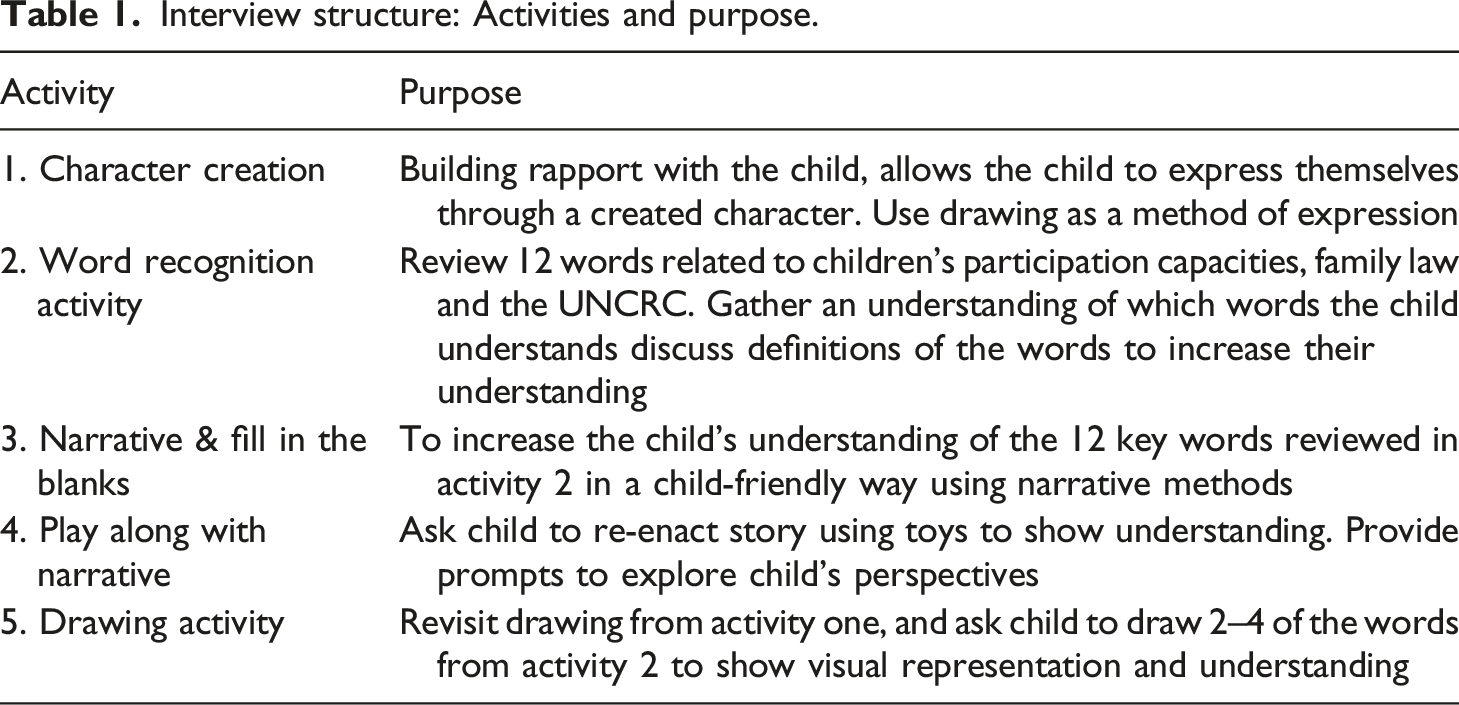
Implementing simple, child-friendly language, play or drawing based activities allowed for children to meaningfully participate regardless of their age or developmental stage. In developing the methodology for this research endeavour, methods that would be appropriate for children from ages 6–12 were designed and included. Aligned with PAR, many children find ‘traditional’ methods of research like questionnaires or standardized tools, “boring” (Barker & Weller, 2003). Engagement and enjoyment were prioritized through the development of the methodology in this study. A multi-method approach in this case allowed all children’s strengths and abilities to be included, which simultaneously allowed for rapport building and increased confidence with the children participating (Barker & Weller, 2003).
In the first activity of the initial meeting, children were asked to design and colour a blank template of a ‘character’ using provided drawing materials. The characters were co-created as a relational element in order to build rapport between researcher and child as well as gain more insight into the capacity level and how they view themselves (Lyon, 2011; Skipper & Pepler, 2021; van Bijleveld et al., 2020). Second, the researcher provided the participant with a list of 12 words in the following order:
Child, Adult, Voice, Wishes, Intelligence, Decisions, Opinion, Participation, Maturity, Best Interests, Rights and Capacity.
The researcher presented the words from what were considered as easiest to most difficult. The researcher read the words aloud one at a time and the child was asked if they knew what the word meant. The amount of words children understood were scored out of a possible 12, these scores can be viewed in Figure 3. If they responded they understood or knew the meaning to a word, the researcher would ask what that word means to them. Regardless, if the child knew the meaning of the word, the researcher read and visually displayed a pre-determined, child-friendly definition to assist with the child’s understanding and ensure that each participant heard the same definition. This ensured the definition of the word was presented in English using language young children would understand and providing a practical example to increase understanding. Third, the child was read a pre-created narrative (Appendix 1) related to the notion of capacity, voice, and participation. The narrative was read once to the child from start to finish. Each of the 12 words presented earlier, fit with a sentence in the narrative as an example. The sentences were reread one at a time, and the child was asked which of the 12 words was the best fit to what the sentence was describing.
Subsequently, the child was asked to select three dolls from an assortment, to re-enact the narrative with. This aimed to see if children can recall and re-create the story or the details within based upon their own understanding. The children were then each asked the same five thought-provoking questions to engage in dialogue related to the story. The last research activity included the previous drawing of the child’s character. The researcher placed the 12 words beside the child as they drew and asked the child to select a few they best understood (omitting child and adult) to visually represent how they understood the meaning of the words. Following the participation of the child, a certificate of completion was given to them to express gratitude for their contribution.
Participants
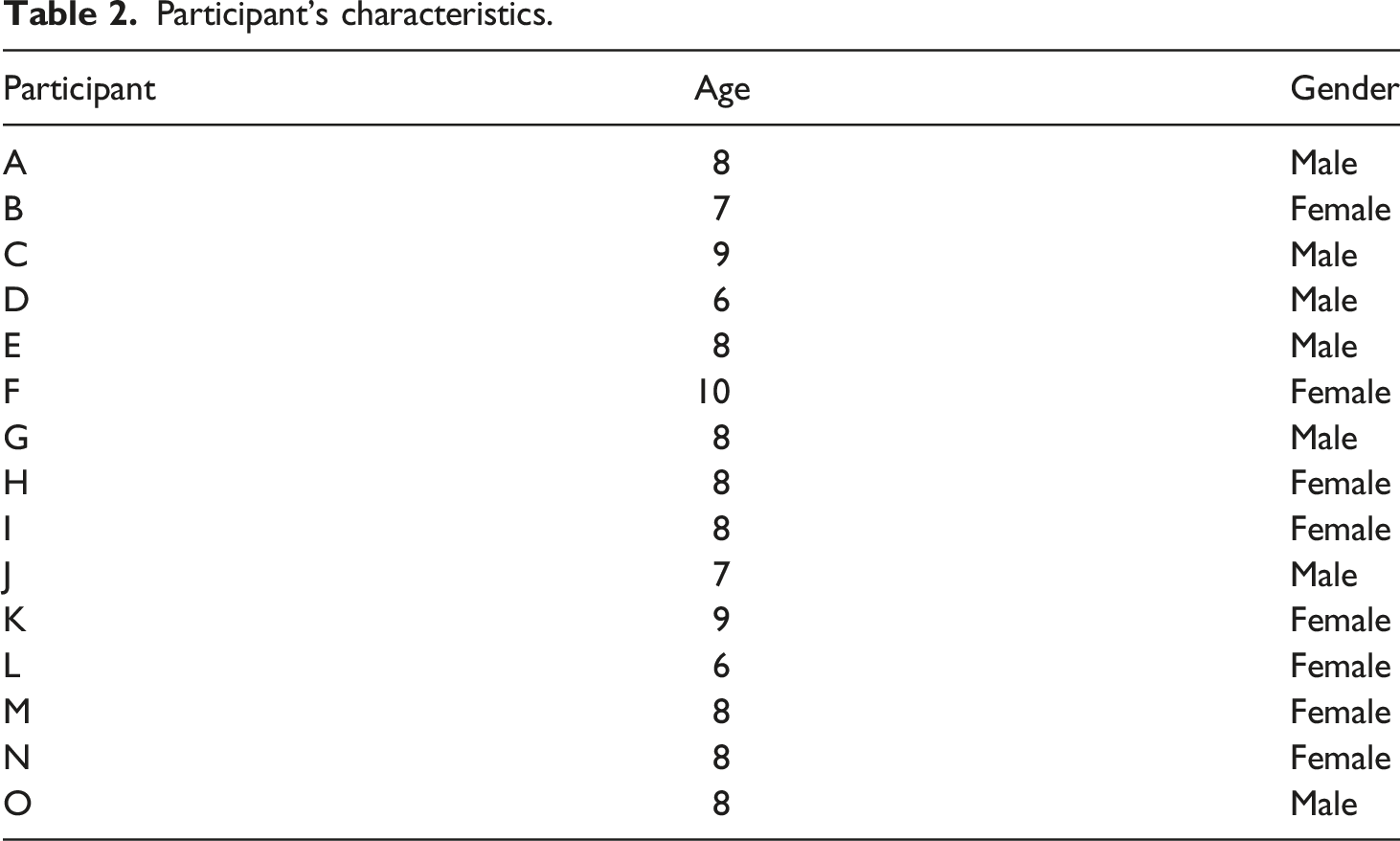
Participant’s characteristics.
Ethical considerations
After receiving approval from the Ethical Review Board (ERB) of Tilburg University (RP170), permission from an afterschool program in Alberta, Canada was sought and approved. Permission to approach parents of children enrolled in an after-school program was provided. Consent forms developed specifically for the children to read and sign were provided. The consent forms made for children explained they could withdraw their consent at any time during the research with no negative consequences. Creating consent forms for the children to read and understand before agreeing to research, aligned with the rights-based approach of this research. Further, the children were reminded to ask any questions or state if they were unsure about any of the research tasks throughout the process.
Data analysis
To conduct the data analysis, each meeting with the participants was audio recorded, and detailed field notes were taken throughout interactions in order to record relevant behavioural cues, context, and other notable instances. The qualitative portion of the research was transcribed and uploaded onto the program InVivo to enable thematic analysis. Crosscutting themes were gathered simultaneously when analyzing the data, in order to maintain the value of each child’s perspectives throughout the research endeavours (van Bijleveld et al., 2020). An inductive and iterative approach allowed for insights, perspectives, and themes to emerge throughout data collection as well as throughout the analysis (Treloar, 2019). Some of the drawings produced by the participants, with permission, were anonymously included to provide context or display children’s understandings. To ensure credibility, theoretical triangulation was implemented by using various theoretical perspectives and viewpoints to analyze the data (Harvey, 2015). To determine dependability, a single researcher conducted the interviews and two additional researchers reviewed and confirmed the emergent themes presented to perform a type of ‘inquiry audit’ (Shenton, 2004).
Results
Table of themes.
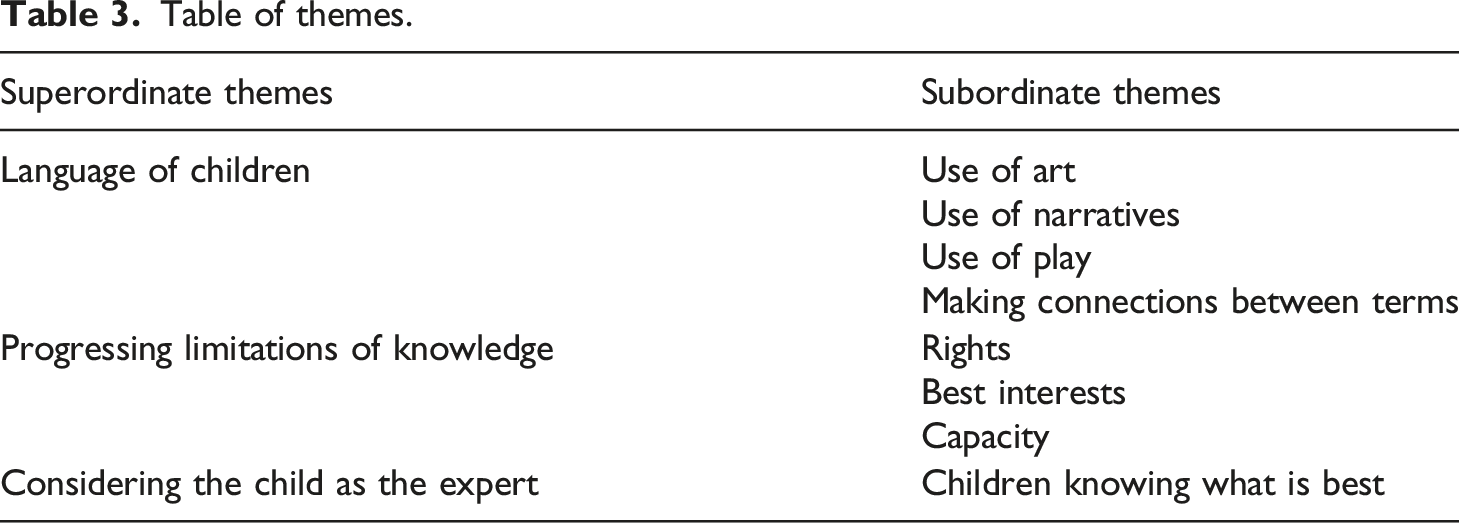
Language of the children
Within the United Nations Convention on the Rights of the Child (UNCRC) and embedded within the practice of the participation of children, the ‘language of children’ is an important consideration and in this particular research endeavour was an emergent theme. In research or practice with children, asking them to understand, listen, or verbally explain their perspectives can be limiting. Rather, methods that are tailored to the strengths and abilities of children are encouraged. Thus, this research aimed to employ research endeavours including art, narratives, and play based activities, all of which are elements that comprise the language of children. When children are able to use images to describe their experiences or perspectives their abilities to explain are expanded. Children were given the opportunity and materials to draw what the meaning of the words and concepts embedded within the research meant to them. The findings presented interesting results in terms of how child-friendly methods can help children better understand, participate and explain their unique perspectives.
Use of art
One method that children used to explain their understanding was through the use of art and drawing. Within this theme and throughout the other emergent themes, drawings completed by the children will be provided along with the children’s explanations of the meaning of each element embedded in the art. Again, the drawing was just one method within the mosaic of methods this research included in order to allow children to express their understanding of various concepts.
One concept that was discussed throughout the research and is explained in more detail in section 2.1, is the concept of Rights. When explaining what rights meant, one child drew and wrote about the adult and child dynamic that unfolds during participation. The child noted that generally adults lead the conversation and make assumptions about children’s abilities. She was able to adequately draw and subsequently use her drawing to explain her understanding of the term, “[In the drawing] they are saying ‘hey, you can’t do that!‘, and the other guy is saying ‘he’s right’. They’re going to be like saying ‘you can’t do that’ and then I am going to be like saying ‘yeah I can, who says I can’t do something?’ …because it is like yeah, this other guy is saying, ‘she has the right to do anything she wants’” -Participant H (8Y).
The image the participant drew representing this quote is shown in Figure 1. She visually represented the amount of adult influence and opinion that is often found in situations where children may wish to participate. This drawing allowed for more conversation and explanation to ensue between the researcher and the child and allowed the research to better understand how the child understood the concept of Rights. Drawing by participant H (8Y).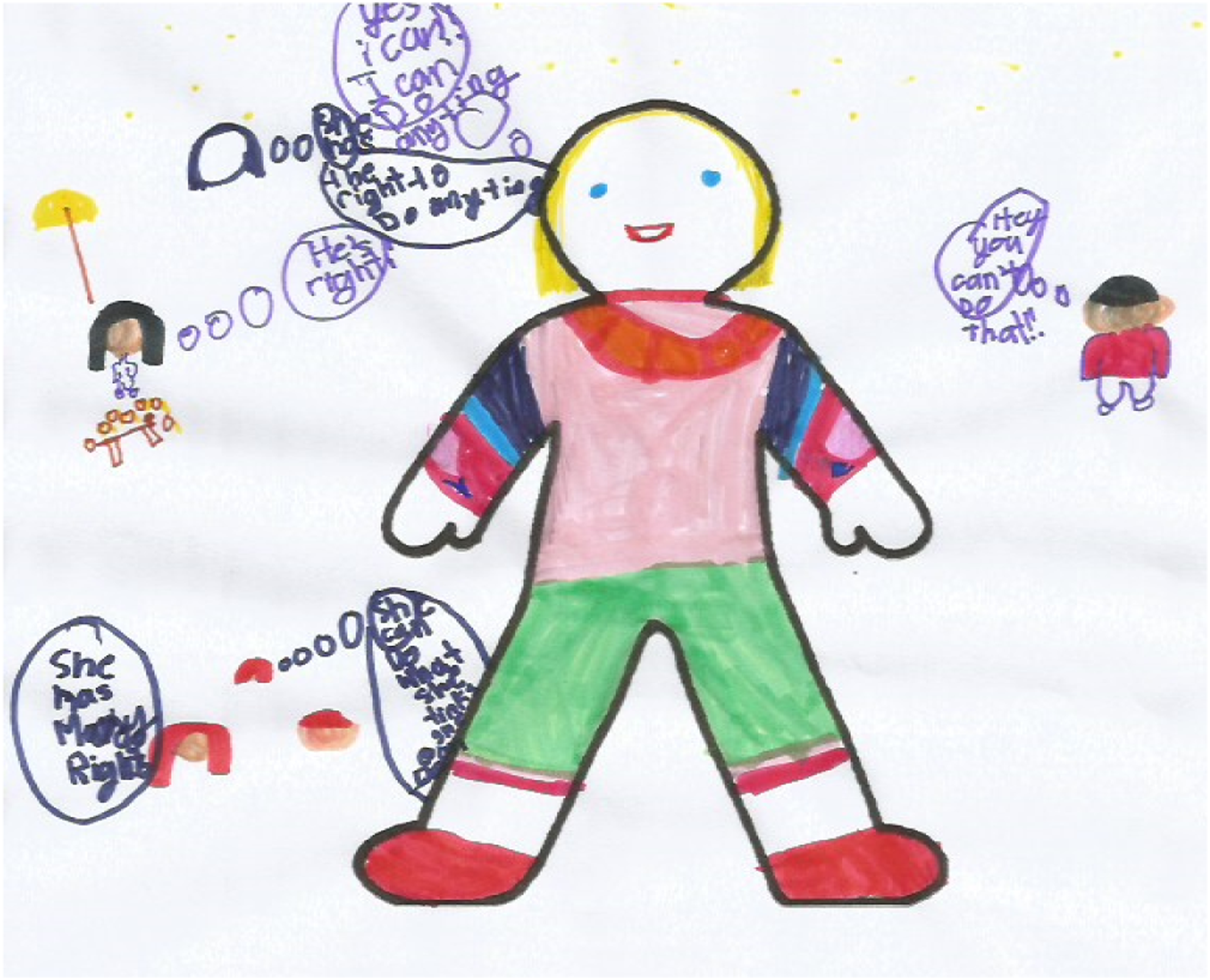
Drawing allowed for children to describe and comprehend more complicated concepts as well, like the notion of Capacity. Though all children initially did not understand the meaning of capacity in relation to their participation, through drawing and co-creating definitions, many children were able to visually show and explore their understandings. In Figure 2 for example, a child began to understand that capacity is held in your brain, and similar to the capacity of a water bottle for example, your brain can be full or have ‘capacity’ as well. He explains, “…the same way his water bottle would be full and so at the maximum capacity it could be, I am going to draw that his brain is full and that can show his capacity he has like in his brain to do stuff, like play hockey or be in the NHL or something.” -Participant O (8Y). Drawing by participant O (8Y).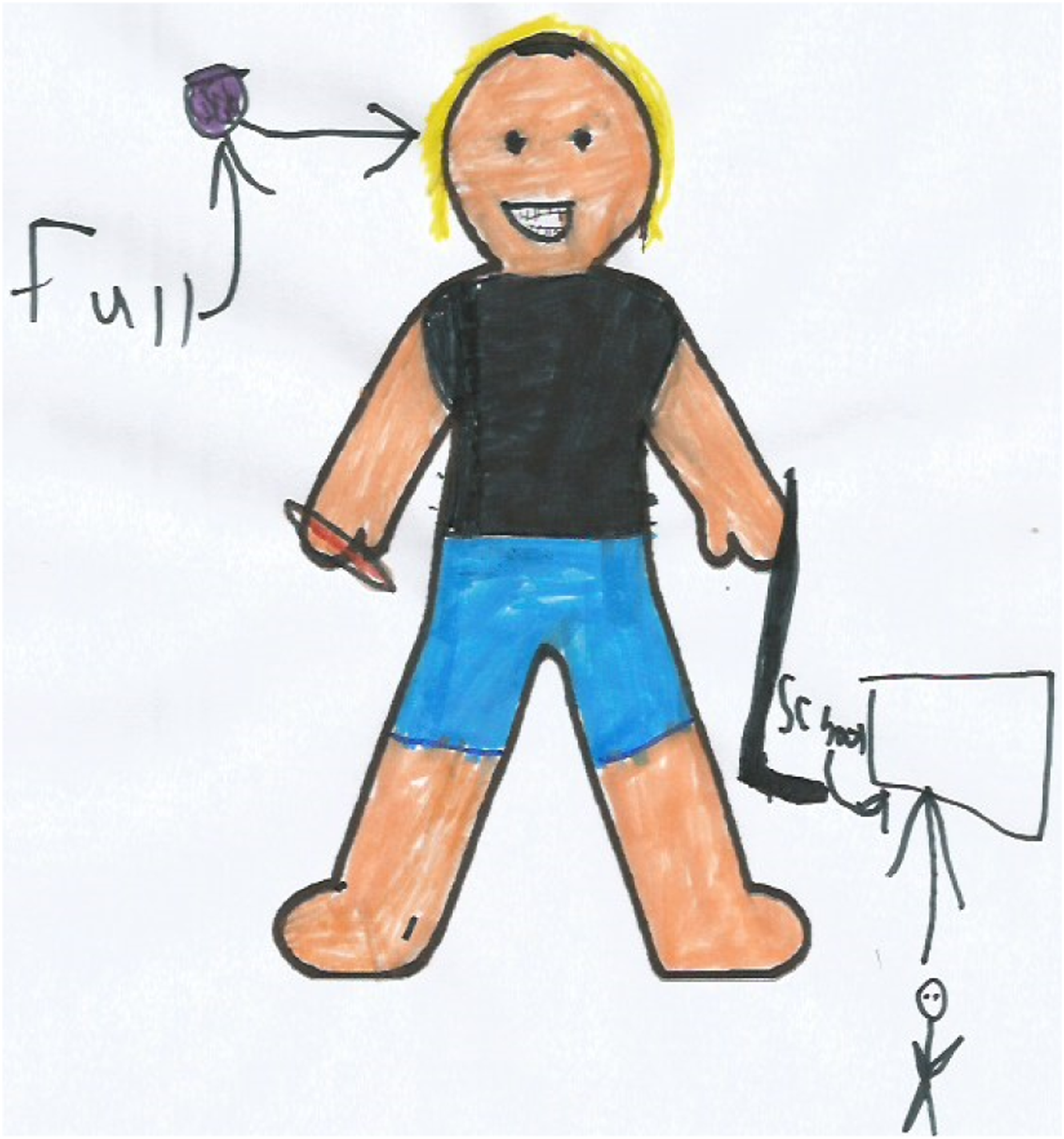
A multitude of drawings will be included within the article to show the increase in understanding of children when using a method such as drawing to further their understandings regarding concepts related to their participation and rights. Overall, drawing provided insight for the researcher to gather a richer account of children’s own experiences and perspectives which will be shown throughout the subsequent exploration of emergent themes.
Use of narratives
Another method that was employed within this research adding to the mosaic was the use of narratives. This involved reading a fictional narrative involving a character named Sam and his parents. The narrative discusses where Sam will live after his mother receives a job offer far away. The narrative involved elements such as the character Sam’s voice, rights, best interests, maturity and capacity to participate. Following the researcher reading the story to the participant, the participant was asked to complete a fill in the blank activity relating the earlier definitions of concepts to the story of Sam and his family. Figure 3 quantitatively displays the increase in understanding after hearing definitions of the terms and embedded the terms into practical examples shown in the narrative. Essentially, the findings showed that while some children maintained the same level of understanding (received the same score) most of the participant’s comprehension increased. This displayed how reading a narrative and applying new terms with the child can increase their understanding as it is tailored to their learning and language. These numeric scores display an increase in comprehension, additionally, the narrative allowed children to practice the use of the new concepts and understand them on a deeper level, for example, “From the story of Sam, you can tell he was thinking really hard, after he said to his mom ‘I think I have enough maturity to make my own choice of which house I can live in, so he thought really hard and realistically and then he thought what was best for him, was that he lives with his dad.” -Participant E, (8Y). Chart displaying children’s increase in conceptual understanding.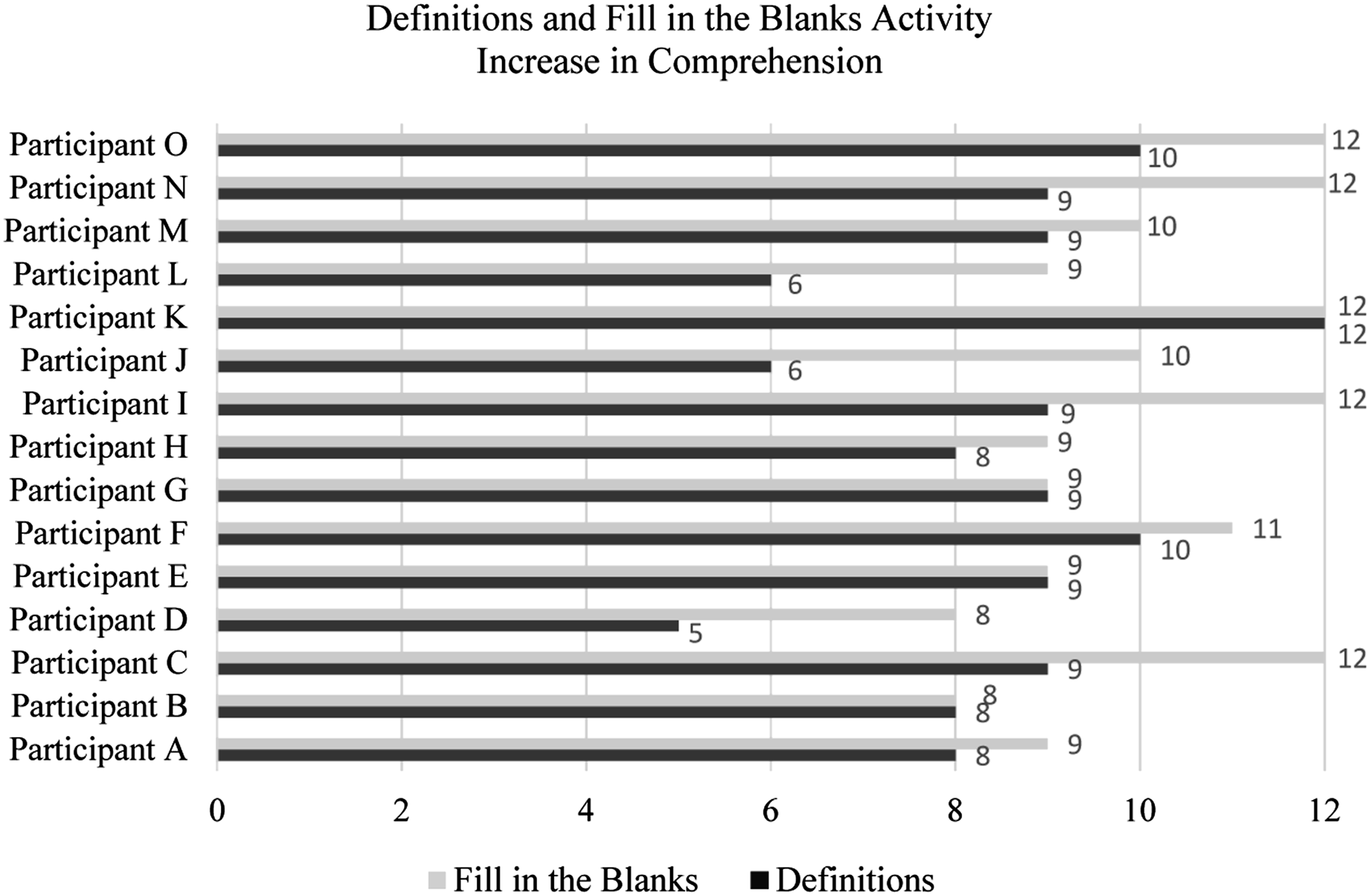
When asked about the character’s best interests as made apparent from the narrative, the participant could easy follow and reiterate what the best interests were. The participant was also able to note an alternative outcome, “His best interests were that he should get to choose what was good for him and what was not good for him, he wanted to stay with dad but even if he wanted to go with his mom he is mature so that is an okay choice also” - Participant E, (8Y).
In Figure 3, children’s initial understandings when asked to provide a definition of the term increased after being given a child-friendly definition and applying the definition to an example provided within the narrative. Children were asked the meaning of 12 words, if they knew the meaning and could provide a definition they were scored as knowing the word, if they could not explain what the word meant they were not scored for that particular word. This is represented by the line titled Definitions in Figure 3.
After discussing the meaning of each of the terms, the narrative was read and children were then asked to complete a fill-in-the-blanks activity based upon the same 12 words, this is represented by the line titled Fill in the Blanks in Figure 3. As displayed, the comprehension of each participant either remained the same, or increased.
Use of play
It was interesting to note the details and occurrences that children remembered clearly from a narrative being read to them once. When asked to re-enact the story of Sam and his family, many children were able to adequately display the main events and feelings present. One participant accurately displayed through interactive play how he predicted Sam would be feeling: “Then Sam said he wished they could all stay in the same house forever, but like, mostly he wants to stay with his dad because it is better to stay in the same spot that you are instead of almost starting an entire new life, like moving to a different place. Sam is feeling uncomfortable because people are talking about him, and also like, you wouldn’t get to choose like you weren’t the one who would get to choose where you are going.” - Participant G, (8Y)
The younger children were also more drawn to methods of play as it helped them to portray their understanding. One participant showed his active listening throughout the narrative by then using the characters to retell the story. Though some children opted to tell the story with the dolls through narration, the younger children acted the scenes out using character voices, “Well, Sam didn’t want to move, “I don’t want to move, I like it here I don’t want to move.” And then he said what is best for him, “I want to do what is best for me”. Then his parents said, “okay okay, you can do what is best for you, so you can stay with dad.” And then they kissed and his mom said, “okay bye bye.”” -Participant D, (6Y).
Telling the story using voices for each character was one method of play. Another method embedded within the play was conveying distance or actions through the use of dolls. One participant explained why he places the dolls where he does while re-telling the story of Sam and his family, “Well Sam’s mom had to go to work far away, and they decided it was best if sam lived with his father and that is why I separated the dolls and put Sam’s mom very far away, because she has to move, she probably took a truck with all her stuff too”-Participant J, (7Y).
Another example was the use of play to display emotions as well, one child explained, “I think Sam was feeling really sad, that is why I put his head down like that, because he was very sad, he might even have been crying about it all…”- Participant A, (8Y)
Though these appear to be very basic or simple actions, it demonstrates how play can helps a child understand a concept such as distance, separation and emotions and how they can portray that understanding through play.
Making connections between terms
While discussing the various concepts embedded within this research, many children began to form meaningful connections between concepts. The use of multiple methods of research that were overviewed in the previous section, allowed for children to collect knowledge along the way and form connections that they were able to present. One method of displaying deep, connected comprehension was through drawing some of the terms collectively to show how they may present as interdependent upon each other. One example was the connection between voice and opinion, “I am going to do like a voice bubble and opinion because it goes with voice a little bit…they are saying ‘hey you can’t do that’, and the other guy is saying, ‘he’s right’. And it’s kind of good because I am going to say yes and, in my opinion, I can do that because my voice is also my opinion.” -Participant H, (8Y).
The drawing being referenced in the above quote can be found in Figure 1, this shows how child-friendly methods of understanding can also help children make meaningful connections. Another participant mentioned an important connection between decision and intelligence, noting that there are certain decisions that may be considered as intelligent, and those decisions are often better. This is presented visually in Figure 4, and is supported by the following quote, “So here I am showing, maybe you chose to do more of a smarter decision, so you can choose the danger way or the safe way, and the safe way is the intelligent decision.” -Participant F, (10Y). Drawing by participant F (10Y).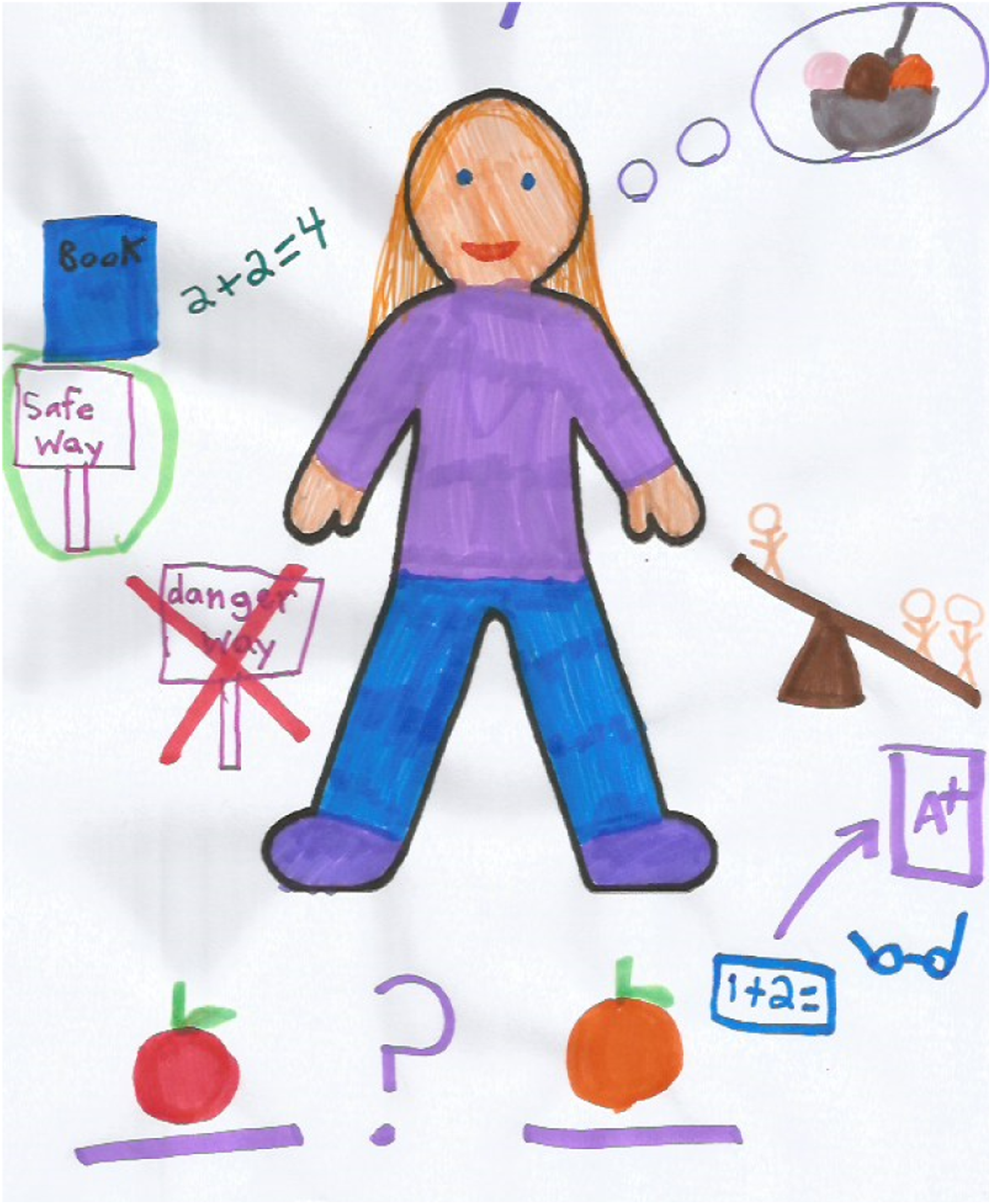
Progressing limitations of knowledge
As mentioned, the initial research activity asked children if they knew what 12 different words meant: Child, Adult, Voice, Wishes, Intelligence, Decisions, Opinion, Participation, Maturity, Best Interests, Rights and Capacity. Initially, children showed limitations of understanding when asked in a standard way what these terms meant to them. Particularly, Rights, Best Interests, and Capacity were terms that children struggled to understand at first. As this section will display, understandings developed as child-friendly methods of assessment were implemented. As discussed in Figure 3, quantitative scores showed an increase in understanding after just reading a narrative with the child once. Following play-based and art-based activities, their comprehension increased even more. The subsequent section will overview the three most initially unfamiliar terms being: Rights, Best Interests, and Capacity and how applying child-friendly methods of assessment throughout the research allowed children to deepen their understanding surrounding each term.
Rights
Primarily, many children did not know the meaning of rights as it relates to the UNCRC or the rights that children themselves hold. The few participants who knew the meaning of rights possessed a limited knowledge regarding the concept. One child provided the following definition when asked what rights mean, “It is like what you can do and what you can’t do…I think” -Participant E, (8Y)
This description contains a basic explanation of rights, noting that rights refer to what you are allowed to do. Another participant added more detail to their definition by noting, “So, I have the right to choose where I live for example, or I have the right to eat good food or I have the right to do something, like that.” -Participant H, (8Y)
This definition further explains the rights that children can have and practice. However, it was concerning to notice that when a child did understand the meaning of rights, it was not understood in a deep way and the child did not reference their own rights to more meaningful participation in their lives. This
finding supports the notion that children need to learn and understand what they are entitled to rights and what those rights are (Figure 5). Drawing by participant m (8Y).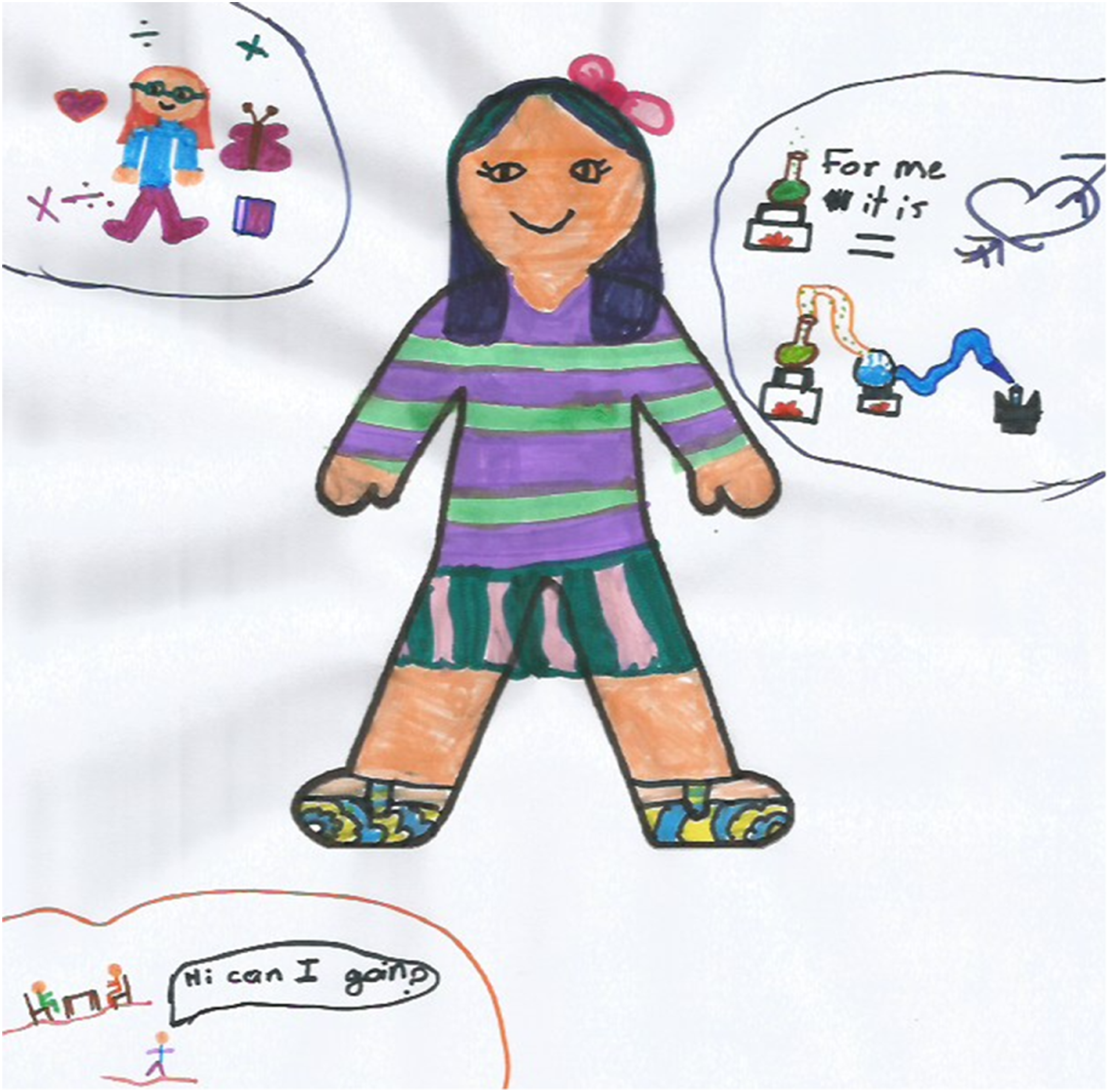
After the researcher explained the definition of rights, children’s understanding increased and was expanded upon throughout the various research activities of drawing, narratives, and play. One child even began to understand rights so deeply, by the final research activity she connected the notion that children have a right to play: “I’m going to draw my character skipping rope, and she can do it whenever she wants because she has the right to play whenever she wants.” -Participant B, (7Y)
This example displayed that once children are explained the meaning of their rights, and they can comprehend the meaning more deeply through play, art, and story-telling they began to understand their rights in a more meaningful way. Another participant linked the notion of voting and how certain people have the right to vote. He recounts he remembers seeing an image of someone voting in a book he read in class. When asked what the drawing meant he stated, “Like I have the right for my voice to be heard, this is me voting, I actually remember this because like I saw this voting box in another picture in a book I once read about voting” -Participant E, (8Y).
The drawing to accompany this quote can be seen in Figure 6. The drawing activity allowed the child to visually recall a time he saw an image relating to rights and visually represent and alter that image to his own drawing representing what rights mean to him. The image shows an evolution in the comprehension of rights but showing that he understands that is a person exercising their right by being able to vote.
Best interests
When asked about the meaning of best interests, initially almost all of the participants were unable to identify what the term truly meant. Many of the participants considered the meaning quite literally. For example, one participant described their understanding of best interests as: “Like when you are interested in something that means you really, really, like it and yeah you really want to do it more, you are interested in it.” -Participant E, (8Y)
This child thought best interests referred to enjoying something and it is therefore your best interest. Another participant also referred to best interests as curiosity or what you might be interested in learning more about, “So, like, I am like really interested in how to make clothes and like my best interests is how to be a scientist and like my best interest is how do they make playgrounds or how do they make plastic? That is what a best interest is.” Participant I, (8Y).
Essentially, through initial collections of the term best interests it was evident children did not possess knowledge regarding what their best interests were. They understood the words separately but not the meaning created when you link the words, without that connection the children formed their own in order to try to make sense of the term. For example, when asked later in regards to the narrative what the best interests of the main character Sam were, many children could reiterate what they thought would be in Sam’s best interest. The same participants whose initial understanding were quoted above displayed an evolution in comprehension regarding best interests: “Sam’s best interests were that he should get to choose what was good for him and what was not good for him…like what would make him happiest.” -Participant E, (8Y)
Through listening to a narrative, discussing the meaning of best interests, and re-enacting the narrative using play, the child’s comprehension of best interests shifted. A similar increase in knowledge occurred with the aforementioned female participant as well when asked about Sam’s best interests, “His best interests were to live with his Dad because like her dad probably hangs out with her I bet, more, and then her mom just sort of works all day works all night and then like maybe she would miss all her friends at home too. Like at her own home and dad would be all alone and plus mom works and is used to being at work, so the best interest would be to stay with dad” -Participant I, (8Y).
Both participants initially did not understand what best interests meant or consisted of. The understanding of Participants A and G increased to the point they could recognize from a narrative the best interests of a character and eloquently explain why those were the character’s best interests. This shift in comprehension regarding the term best interests was striking as the term itself remains noticeably ambiguous in literature pertaining to children’s participation. To show that children can understand the term deeply from child-friendly methods and then begin to essentially create their own definitions based upon their new knowledge surrounding the concept further supported the outcomes of this research.
Capacity
Within the definition word recognition activity of this research endeavour (see Table 1) when children were asked what the word capacity means, a vast majority of the participants could not identify or discuss the meaning in relation to participatory capacity. Though some children could define the practical understanding of capacity, for example, initially, one participant understood capacity as the amount of people that can enter a store. She defined capacity as: “Um, I think capacity, for example the capacity in a store can only be 15 people or only 25 people or like the amount of people or things that there is in something.” -Participant H, (8Y).
Another child mentioned the relation to science when she explained, “Let’s say you have a water bottle it has an amount of capacity of the water or air that it can hold. Like a balloon it can only hold a certain amount of air or oxygen” -Participant B, (7Y).
Participant K was able to relate the meaning of capacity to the amount of knowledge or ability someone can hold within their brain, “So, I think it’s how much someone can handle or something can handle, like the max capacity that I can do for my spelling test, like the max words I can do, the capacity I have in my brain” -Participant K, (9Y).
Though initial understanding surrounding the term capacity was limited (as 13 of the 15 participants could not define the concept) through the child-friendly methods of assessments, understanding significantly increased, this was considerably noteworthy, as the term capacity in relation to participation is quite difficult to understand. Children began to understand capacity as an abstract concept, which must be detached from the literal meaning of the word. One child for example, explained that she understood what capacity meant now but that it was too difficult to describe through words. She therefore displayed through art, that her comprehension had increased (Figure 1). “This is hard to describe for me in words…so…like…I’m going to draw a couple of people like maybe two or three who are talking about capacity and they are going to be saying, ‘she can do what she thinks she can do, she is capable, she has the capacity”. -Participant H, (8Y)
Another participant similarly asked the researcher for more clarity before drawing what capacity meant to them and related capacity to playing professional hockey. “So like capacity you could say, like having the capacity to do like a certain job? So, like if you wanted to be an NHL player you would have to like have the capacity to be good at skating and play the game really well, so you would be a player who has the capacity.” -Participant C, (10Y).
The above quote also emerged while the child was drawing his character as a hockey player, showing methods of drawing or art can provoke and stimulate children’s own experiences and relate these to their understanding. Similarly, when discussing future career aspirations, one participant noted that her capacity to be a scientist has increased from practice, “Maybe for most people they don’t have the capacity to do what I can do in science, because I have been doing experiments for years, so I have the capacity so I drew like, for most people they would only see like a test tube, but for me, how I drew an equal sign like that is what science equals for me, I don’t know it’s just my thing, I just love science.” -Participant M, (8Y).
The quotations and images included within this section of the article show an increase in understanding from considering capacity as an amount in a water bottle to the knowledge, experience or ability each person has.
Overall, when considering the initial limitations of knowledge surrounding the terms: Rights, Best Interests, and Capacity and the progressions that occurred from the implementation of child-friendly methods, the emergent results displayed effectivity.
Considering the child as the expert
The last theme which reoccurred throughout the research was the notion that children, or in this research specifically, the character “Sam” should be considered as the expert in his life. This example provided throughout the research allowed children to relate and explain the importance of listening to the voices of children, despite their age. Most of the children noted the relevance of children’s voices and opinions in relation to their participation.
Children knowing what is best
Connections were made between Sam and his participation, as well as to the children who participated and their own lives. Instinctively, many of the children explained that when decisions are made involving participation, that children should be included as they know the most about their lives. One participant made this connection when discussing how Sam felt about his parents making decisions for him, “His [Sam’s] parents went off to talk about moving and he could hear, he thought to himself that he should have made the decisions, he knows what is best for him. And he knows what he wants, his parents know stuff too but no one knows better than Sam.” -Participant, N, (8Y).
This excerpt captures the importance of children’s self-identity, this participant emphasized that the best person to make the decision about Sam would be Sam himself. When asked if Sam as able to adequately participate one participant noted, “Yes, he participated, he was able to because he is really intelligent and mature, even though he is only 9, they listened to him because what he said was smart.” -Participant B, (7Y).
Participant B was able to recognize the interdependence upon various terms. In the opinion of this participant, the child cannot participate fully if they are not mature and intelligent. Many children throughout the research identified that Sam’s voice was the most correct as it is what he wanted, and that it would not be fair to discount his voice only because he is 9 years old.
Children related the importance of voice and participation to Sam within the research, but many children also provided similar examples related to their own voice. One participant noted, “…I think I know what is best for me and I don’t know about you guys but I think people should know the most about themselves. Like other people don’t know as much about them and themselves do. Like I know the most about myself, my mom doesn’t know as much about myself and stuff.” -Participant H, (8Y).
This quote adequately displays understanding in regards to how each child is the best person to voice their own thoughts, wishes and feelings. Recognizing this individuality and unique capacity in each child to make the best decisions about their own lives is remarkable. Further, the unique intelligence and skills children hold was discussed in detail by one child, “I think kids are different intelligent from adults, because like…kids are like they have more creativity and know more about their lives. They actually like can be so many different things, they can be like think of maybe a better way to do something like stick your hand through a crack and maybe like instead of sliding it that way you can go this way…and they can think of like out-of-the-box more than an adult. Like yeah and I feel like kids are like, if you learn like, my mom told me this, but when you learn something as a kid, it keeps on flowing in your mind, but it is way harder to learn when like you are older. It is harder to learn when you are older, you already know several things, but you still don’t know everything.” -Participant E, (8Y).
This child notes the importance of adult support, but that adults “don’t know everything” especially as it relates to what children know about themselves. This child is also referring to the difference of learning and understanding that exists between adults and children. Children’s knowledge is not necessarily lesser than that of an adult, just different. What separates adults from children is not knowledge but experience. This child notes that children are constantly evolving their knowledge, thus age can bring more knowledge, but it is not inevitably superior.
Another important notion embedded within this theme was the empowerment of children. Once children began to understand what rights and capacity truly meant, they began to marvel in the abilities and potential that children have. One child noted, “…because it’s like, yes I can do that, I can do stuff that adults might not be able to do, I can take care of myself, but people might think, you can’t take care of yourself you’re just a kid, but yeah I can.” -Participant H, (8Y)
Overall, this theme was integral to the research as it showed an increase of comprehension in terms of voice, participation, and children’s rights to be heard. By using examples relating to the character Sam and themselves, the participants showed their understanding and were able to articulate through various methods that children are entitled to and hold an authentic voice.
Discussion
Prior to the completion of this study, the initial review of relevant literature clearly displayed that there was a critical need, across various fields, to enhance and further research regarding the capacities and rights of children.
The initial findings of this research maintain the notion that education regarding children’s rights and participation is required to be provided to children. Children must know what their rights entail and when making any decision, they understand their best interests should be considered. Further, the language that exists within the United Nations Convention on the Rights of the Child (UNCRC) must be altered so children can clearly comprehend their rights. The overtly adult language embedded within the UNCRC limits children’s understanding and ultimately their understanding of their capacities. If children cannot comprehend their fundamental rights, then how are they to expand their knowledge and deepen their understandings regarding their unique capacities? Thus, as adult agents, we must collectively aim to better the education of children surrounding their rights and capacities, or alter the language being used. The research clearly outlines that working with these children to help further their understanding regarding their rights and capacities is possible through child-friendly methods.
Particular terms included in this research for example, best interests, and capacity were selected for the very reason that they are vaguely defined and understood in research (Alderson, 2007; Gibson et al., 2011; Hein et al., 2015). These are concepts that are still widely ambiguous and after the application of various child-friendly methods, many children were able to grasp the complexity and apply their understanding to their own lives, experiences, and perspectives. Capacity and best interests for example are abstract concepts which must be understood as detached from their literal meanings, thus once this was apparent to the children their creativity was ignited. Understanding abstract terms holds value for children as through creative, child-friendly methods and free thinking, sense can be made of abstract concepts. As made apparent through the findings of this research. Again, this maintains that children’s understanding and knowledge is not lesser to that of adults, just different and perhaps more challenging to extract. Though, difficulty in obtaining information from children may be due to the expectation that it replicates itself in the same ways adults understand information, which evidently, is not the case.
Throughout the research, children were able to display their participation capacities and what complex concepts such as capacity, children’s rights and best interests meant to them. Rap (2016) notes that “because of young children’s assumed immaturity and incapacity, they should be provided with adequate means to be able to express their views in the first place” (p. 99). This addresses the necessary shift required in foundational thinking and assumptions that children under the age of 12 cannot meaningfully participate or are capable in doing so.
By providing child-friendly methods, children were provided with the adequate tools to express themselves and share their perspectives. This research shows that children require a multitude of methods when participating to utilize their strengths. Though children’s capacities evidently differ from adults, they also vastly differ from each other. In many research undertakings, drawings are used, however, there must be an option for children to try other child friendly methods such as play and storytelling. As made apparent through this research, some children’s learning increased through the drawings, but others understood and participated more enthusiastically during the storytelling and play aspects. Such a difference in preferences and strengths speaks to the importance of variation in methodology when working with children. Some children take their time to expand on their thoughts through carefully drawing, others feel they must rush to write their ideas down while their memory elicits key words. Though neither technique or method within this research proved to be more effective, the importance was providing options of expression so each child could uniquely and meaningfully express their perspective.
Pathways for future action research endeavours with children
This research highlighted the need for the evident requirement for more education regarding children’s rights as a future direction. The future of children’s rights, capacities, and participation are undeniably linked and can progress through the application of relevant education and action research. The multitude of research procedures within the use of the action research method allowed for children to express their voices adequately and fairly, such a research design allowed for rich qualitative experiences. Observing the differences in strengths and preferences of children was an important part of this rights-based action research as it allowed the child to take the lead and use which methods they identified with most. It also furthered the importance of applying a mosaic of methods both in research and in practice as each child possesses different skills, preferences, strengths and limitations. When discussing the future of children in research, taking a rights-based approach which aims to provide opportunity for all children to participate meaningfully should be considered. When considering the lack of research pertaining to children’s capacity levels, this research initiates a critical first step. The capacities of children are complicated, multifaceted, intricate, and very much present regardless of age or stage of development, professionals must deeply consider these capacities as meaningful. The research methodology suggested and implemented in this study is transformation for the participation of children in the future. By elevating children’s participation and providing a platform of comprehensive methodology, research can continue to prioritize the voices of children.
Arguably the most important elements of Participatory Action Research or any research endeavour with children are presented in Figure 6 as: engagement, ability, and confidence (Gibbs et al., 2018; Garcia-Quiroga & Agoglia, 2020). As researchers, prioritizing engagement, confidence, and abilities of children when considering methodology, more meaningful participation and ultimately, results, will emerge. Visual representation of the importance of child-friendly methodology.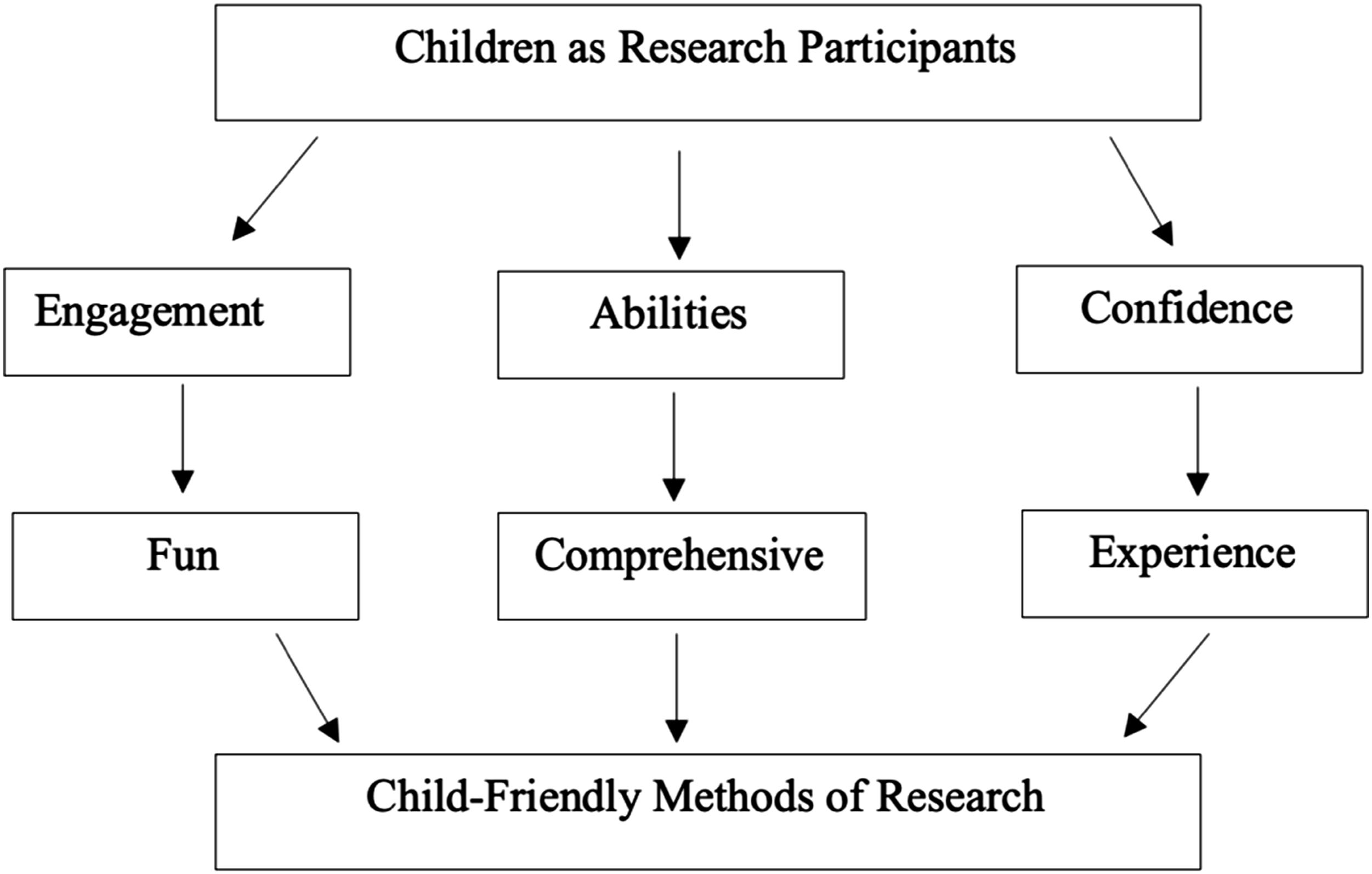
Engagement
Engagement is a critical element of action research with children. As researchers, it is important to not only consider the potential results or data of a research endeavour, but the research process itself (MacDonald, 2013). The age of a research participant or knowledge surrounding the research process itself should not be a barrier to engagement (Kellett, 2011). Rather the mosaic of methods suggested in the present research study allow for child to be active participants with various means to engage their interests and illicit their perspectives. Aligning with the rights of children to play and fun, these activities should be embedded to allow the research process to be both informative for the researcher, but enjoyable for the young participant. Throughout this research, areas of comprehension were converted into a “fill in the blanks” game, playing with figurines, and freely drawing. If children are engaged and having fun throughout research, their attention, focus, and comprehension will be enhanced, developing in beneficial findings (Kellett, 2011; MacDonald, 2013). Engagement in research also requires meaningful participation, moving beyond tokenism. Tokenism speaks to the notion that children may appear to be given a voice, but in practice they may have few choices for how to participate. (Johnson, 2017; Lundy, 2007). Ensuring active engagement ensures avoiding tokenism in participation.
Abilities
Comprehension is also critical for research endeavours conducted with children. Not only will researchers receive better results when the participants thoroughly understand the intention of the research, but it is aligned with the rights of children (Kellett, 2011). According to Daelman et al., (2020) gaining insight on the multifaceted world of childhoods must involve deeply considering children’s different cultures and backgrounds, as well as unique abilities/disabilities. By including various research methodologies, children could engage in areas that aligned with their strengths (i.e. if the children enjoys drawing most, that ability could be highlighted throughout research). Aligning with the Children’s Research Center (CRC) and action research, when children’s abilities are embedded within research, children become empowered, active, co-researchers. Empowerment moves beyond just noting children’s rights or perspectives regarding their own lives, it aims to provide opportunities for capacity formation and meaningful participation in research (Daelman et al., 2020).
Confidence
When children are empowered research participants, their confidence and capacity to participate becomes more meaningful. Essentially as children co-create and participate in research, their experience increases (MacDonald, 2013). By becoming active participants in research, children gain insight and experience into exercising their rights and capacities (Lundy, 2007). When children engage in research activities that are tailored to their capacities and abilities, their confidence increases. Throughout this research for example, children could successfully complete each activity and comprehend the results, leading to confidence in their abilities and participation. Confidence is a critical part of the research process, and can be upheld through embedding the strengths and abilities of children in methodology.
Overall, if children are given the adequate tools to express themselves, they are extremely capable of participating and understanding complex concepts. Children are capable in their own unique ways as evidently displayed when provided with the appropriate methodology. This research offered tools and methods that researchers or individuals working with children could meaningfully apply in practice. The intention of the research was to display young children can effectively have their authentic voices included using specific methods. More specifically, aligned with the findings of this research the use of art, use of narrative, use of play, and making connections between terms allowed the researchers to engage children in the action research methodology by way of a mosaic of auspicious procedures. To ensure the transformative change of children’s participation in research, these tools and multiple methods must be embedded by practitioners.
Reflexivity in work with children
Throughout research endeavours with children, it is critical to reflect upon the process. Reflexivity is one way to mitigate and manage assumptions of adult researchers to ensure the research process is not influenced (Canosa et al., 2018). Assumptions about childhood or what is means to be a child are often insidious when working with children, it was important to remain mindful of these potential biases. To mitigate these potential biases, the process of bracketing was implemented. This process was conducted by the researchers to ensure that expectations or presuppositions were acknowledged and remained distant from the research. As the researchers all have professional experience working with children across various disciplines it was critical not to assume developmental expectations or compare other professional experiences with children. Through each qualitative research experience with the participants of this study, the researchers learned more about what it means to be a child and begin to learn about your rights and capacities. Rich field notes were collected throughout the interview process to make notes of relevant non-verbal interactions (i.e. boredom or enthusiasm). These notes were subsequently shared through reflective conversations with all researchers. The empowerment and wonder children displayed when engaging in the research activities was truly gratifying. Initiating the research with pre-conceived notions of how each method may unfold was immediately challenged throughout the action research process. Action research is transformative and truly places children as the experts of their own lives and capable citizens.
Limitations
In this research endeavour there were limitations involved within. The particular population of participants did not include vulnerable groups of children (i.e. low socioeconomic status, children with lower intellectual development etc.) which is an element that must be considered. Further, the researcher worked with the children and therefore previously had contact with the participants. Power dynamics when conducting research with children should always be considered (Hunleth, 2011). This is especially true when considering gaining consent or having a pre-existing educational contact with the participants. To mitigate these factors, the researcher ensured to give the children all the consent information, provided in child-friendly language, and allow time for them to discuss and consider with their parents or guardians. They were invited to ask any questions prior to their participation, and assured throughout the process that they could stop the study at any time if they wished with no consequences whatsoever. Though important to consider from an ethical standpoint, pre-existing rapport with the participants benefitted the research, the situation allowed for the rapport with the children and researcher to be pre-established. This was not expected to affect any results as the intention of the research was to gain qualitative understandings. Undue influence or researcher bias was not relevant or involved in this research (Tisdall et al., 2021).
Conclusion
This qualitative action research study aimed to help further support the rights, capacities, and participation of children by asking children under the age of 12 what these concepts mean to them. By employing a multitude of research methods which coincide with the ‘language of children’ such as the use of play, use of art, and use of narratives, this action research proved to be rights-based and comprehensive for the children to meaningful participate. Progressions in limitations of knowledge were explored in detail, specifically surrounding the terms rights, best interests, and capacity which initially children did not comprehend. Following the application of child-friendly methods, all of the participants’ knowledge increased and deepened. Connections between terms and concepts were also expanded displaying an evident development of understanding. Differences in strengths and preferences between methods were explored to highlight the individuality of children. Finally, the importance of placing children as the expert of their lives was highlighted as a core theme. This action research aimed to show that children are extremely capable despite their age or developmental expectations, however, their capacities are unique and therefore children must be given a variety of ways to show their abilities. This is especially important when literature maintains children’s capacities inevitably influence their level of participation. Though there is noticeably limited literature relating to the consideration of children’s unique capacities, this research initiates the discussion and highlights the importance.
It is the responsibility of adults to help children navigate through comprehension regarding their participatory capacities and what their rights comprise of. It is also the responsibility of adults to think past the primary connection of age and capacity, and consider each child as uniquely capable. Incorporating these considerations and child-friendly methods of action research into standards of practice is an essential next step for policy makers. The action research efforts embedded within this article will produce a sustainable shift in children’s rights. This is evident through the research methodology’s ability to engage children in empowering ways that authentically collect data representing the child’s voice and perspectives. Such a transformative shift is necessitated as often these true, genuine accounts captured from children are omitted. It is inherent to children’s rights that they deeply understand their rights to actualize such provisions and meaningfully participate in all areas of their lives.
Footnotes
Declaration of conflicting interests
The author(s) declared no potential conflicts of interest with respect to the research, authorship, and/or publication of this article.
Funding
The author(s) received no financial support for the research, authorship, and/or publication of this article.

Appendix 1: Research narrative
One day, Sam’s mom got a new job. His mom worked really hard for it, so Sam was proud of her. But Sam also felt sad. The new job was far, far away. That meant mom needed to move so she could be closer to work, but dad has to stay behind, since his work was still here.
Since they are the grown-ups, Sam’s mom and dad began to talk (1) about what they should do about Sam. He could hear them from the kitchen, deciding whether or not he would move out with mom or stay with dad (2).
“I cannot believe this is happening”, Sam said. “Isn’t anyone going to ask what I think, how I feel. Doesn’t anyone want to hear what I have to say, I have something to say too.” (3)
Sam stated, “I should have the right to help choose who I live with, because I know how I feel better than anyone.” (4)
“Sam, I can see you’re upset, but you are too young to make those decisions, you’re only 9 years old”, mom said. (5)
Sam said, “I know you both love me and want what is best, but I also know what is best for me and my interests, I know what will make me happiest” (6)
Sam was young but he was also much more reasonable than kids his age (7). He was always good at thinking things through without anyone’s help.
Sam explained, “I never see you mom, you are always working and spend more time in the office than at home.”
Although his mom didn’t want to admit it, she knew Sam was right.
Sam ended up sitting down with his parents, and talking with them about where he would be happiest. He felt like he was part of the conversation. (8)
“It's best if I stay here with Dad, that is what I think, even though it might not be what you think” Sam said. (9)
He loves both his parents, but doesn’t want to leave his home and his father to go somewhere new with his mom.
“Of course, I really don’t want this to be happening. I know it might not be possible, but I want us to all stay together in the same house forever.” Sam said. (10)
Sam thought really long about the situation and his feelings, in his head and used this information to think carefully (11)
Sam’s mom and dad were happy about how well Sam understood the situation. They were impressed by his ability to make this choice so confidently and know what was best for him. He had the ability to think of everything happening in a really realistic way and could tell his parents how he was feeling. (12)
They decided together it was best if Sam stayed with his Dad.
Author biographies
Emmie Henderson-Dekort is a fourth year PhD candidate at the University of Tilburg. She is interested in the rights and participation of children in family law proceedings. Emmie teaches Early Childhood Development courses and belongs to advisory boards related to supporting the voices of children and actualizing their rights.
Hedwig van Bakel is a psychologist at Youz and associate professor of Infant Mental Health at Tilburg University. She is involved in education and research on the quality of early parent-child interaction, prevention and care for babies, toddlers and preschoolers and their parents. She is project leader of several studies on early detection and interventions in at-risk babies and at-risk families. In addition, she is an IMH specialist and president of the Dutch Association for Infant Mental Health (DAIMH).
Tine Van Regenmortel is professor of Social Work both at the Tilburg University and the University of Leuven and expert in empowerment and vulnerable groups. She is responsible for the coordination of the Academic Collaborative Centre Social Work.
Veronica Smits is a legal expert on family and child law, specialized on children’s rights. She works as a juvenile and family judge in the Court of Oost Brabant. She used to work as an assistant professor in family law at the Tilburg University and also for a youth care organization. Her PhD research (2015) was about agreements between parents after divorce and the involvement of the child in this.