




Abstract
The importance of Infant and Early Childhood Mental Health (IECMH) in Early Childhood Education and Care (ECEC) is increasingly recognised. This study evaluates the effectiveness of an IECMH training programme designed to enhance Early Years Practitioners’ (EYPs) skills in promoting children’s social-emotional well-being and development. IECMH training aims to equip EYPs with the knowledge and capacity to support children’s ability to form interpersonal relationships, regulate emotions and improve learning environments. In 2019, Let’s Grow Together! Infant and Childhood Partnerships developed a tailored IECMH training programme for EYPs incorporating current research, principles of the national Nurture Programme and Ireland’s national early years curriculum and quality frameworks. The project aimed to make IECMH science accessible and build capacity in EYPs’ everyday practice. Let’s Grow Together, a community-based organisation in the northwest of Cork city, aims to mitigate child poverty and promote early development (birth to 4 years) through prevention and early intervention strategies. Baseline and follow-up questionnaires evaluated changes in EYPs’ knowledge and practice. EYP-child interactions were systematically observed and measured at pre- and post-training timepoints using the Child Caregiver Interaction Scale. Findings offer insight into the implementation of a tailored IECMH training programme for EYPs, its effectiveness for enhancing EYP competencies to support young children’s social-emotional development and associated child-level impacts. This study provides evidence supporting the effectiveness of a tailored IECMH training programme, coupled with mentoring, to enhance EYP skills and practices.
Keywords
Introduction
In Ireland, increasing attention has been paid to the field of Infant and Early Childhood Mental Health (IECMH), and an acknowledgement that high-quality Early Childhood Education and Care (ECEC) provision should incorporate IECMH principles is emerging in policy and practice contexts (Brocklesby and Scales, 2022). This is reflected in recent policy developments, including a literature review supporting the revision of Aistear, Ireland’s curriculum framework for ECEC (French and McKenna, 2022). The updated Aistear curriculum framework (National Council for Curriculum and Assessment (NCCA), 2024) emphasises the importance of attuned, responsive caregiver relationships and explicitly references key IECMH concepts such as attachment and the key person approach. IECMH is defined as ‘the developing capacity of the infant and young child to form close and secure relationships; to experience, manage, and express a full range of emotions; and explore the environment and learn—all in the context of family, community, and culture’ (Zero to Three, 2023). Encompassing interdisciplinary theory, research and practice, IECMH refers not only to infants’ well-being, but to the quality of their relationships with caregivers (Brocklesby and Scales, 2022; Horen et al., 2024; Osofsky et al., 2024). IECMH promotes responsive caregiving based on principles of attachment, trauma-informed care and well-being (Brocklesby and Scales, 2022).
This article explores the impact of an ongoing IECMH training programme for Early Years Practitioners (EYPs) delivered by Let’s Grow Together, an Area Based Childhood (ABC) Programme based in southern Ireland. The ABC Programme is a national state-funded, community-based prevention and early intervention initiative designed to address child poverty in areas of significant socioeconomic disadvantage (Brocklesby and Scales, 2022). The ABC programme has developed a dedicated IECMH Framework that underscores the importance of building IECMH capacity among parents, caregivers and within early childhood environments to promote optimal child development (Area Based Childhood Programme, 2022; Brocklesby and Scales, 2022). As part of its Infant and Early Childhood Mental Health and Well-being strategy, the Let’s Grow Together ABC programme developed and piloted a customised IECMH training programme for EYPs in 2020 (Martin et al., 2022). This article presents findings from two subsequent rounds of training.
Importance of caregiver relationships for infants and young children
Evidence indicates the quality of relationships between young children (0–6 years) and their caregivers has significant implications for brain development, emerging social-emotional skills and later health and educational attainment (French, 2021; Gerhardt, 2005; Silver et al., 2023; Zero to Three, 2023). Just as high-quality caregiver relationships can positively impact development, poor quality relationships or adverse experiences in this sensitive period can negatively impact development. Young children who experience adversity or grow up in areas of socio-economic deprivation are at a greater risk for negative outcomes (Buckley and Curtin, 2018). Supporting children’s social-emotional development increases their likelihood of forming secure and nurturing relationships with caregivers that can ‘buffer’ against negative impacts of adversity on a child’s life (Irish Association for Infant Mental Health, 2024). This support fosters the development of children’s relational health. As Williams (2023) explains, early relational health describes ‘the emotional connections between children and trusted adults that promote health and development, lead to positive experiences, and can buffer the negative effects of trauma and adversity. These safe, stable, and nurturing relationships (SSNRs) are foundational for building resilience’ (p. 377).
Role of ECEC in children’s emotional, social and cognitive development
Due to the duration of time spent with young children through the most critical period of brain development, EYPs are uniquely positioned to cultivate emotionally responsive and nurturing relationships. This role enables them to effectively care for and support children’s early social-emotional learning. In the context of ECEC, IECMH refers to relationships between children, their primary caregivers, EYPs, and the wider community. Although attachment research refers to children and their primary caregivers (Ainsworth and Bowlby, 1991); Aistear (NCCA, 2009, 2024) recommends EYPs should have similarly secure relationships with children in their care (French and McKenna, 2022). High quality ECEC can reduce inequality for socio-economically disadvantaged children by creating equitable learning environments (Schoch et al., 2024). Experts highlight EYP-child interactions as the most vital component in determining quality in ECEC for children’s social-emotional learning (Blewitt et al., 2020). Similarly research examining school readiness links higher social-emotional competence upon entry to primary school with positive well-being after 6 years (Gregory et al., 2021). Evidence indicates higher levels of EYP education and continuing professional development (CPD) are also strong predictors of quality in ECEC (Buckley et al., 2020; Slot et al., 2015), therefore it is crucial EYPs are provided with opportunities for meaningful capacity building in IECMH. However, despite the importance of IECMH, there is limited training for EYPs in higher education and few CPD opportunities.
Evidence supporting the impact of IECMH training for EYPs
Growing evidence supports the effectiveness of IECMH training for EYPs to support children’s social-emotional well-being and development, particularly through IECMH consultation (IECMHC). IECMHC builds EYP capacity in IECMH skills and competencies, indirectly improving children’s learning environments (Drake-Croft et al., 2025; Franko et al., 2025; Natale et al., 2022; Spielberger et al., 2024). During IECMHC, EYPs are partnered with IECMH professionals, who engage in ongoing collaborative relationships (Spielberger et al., 2022). A central focus of IECMHC is helping EYPs respond to social and emotional dysregulation – defined as a young child’s difficulty managing emotions and behaviours such as tantrums, aggression or frustration. While such behaviours are typical in early development, they can pose challenges in early care settings when they disrupt learning or strain relationships (Newland et al., 2024).
Reflective practice is a key component of Infant and Early Childhood Mental Health Consultation (IECMHC). Research indicates that early year’s practitioners (EYPs) with greater reflective capacity tend to perceive children’s emotionally dysregulated behaviour more positively, thereby enhancing the quality of EYP–child relationships (Newland et al., 2024; Spielberger et al., 2022). Although originally rooted in education, reflective practice has become a foundational element across health and social care disciplines, including within IECMH contexts. It supports emotional attunement and helps practitioners navigate the relational and emotional complexities of infant mental health (IMH) work. Reflective practice is typically implemented through reflective supervision and consultation (Tobin et al., 2024). Leading IECMH organisations, such as Zero to Three and the Michigan Association for Infant Mental Health, emphasise reflective practice as a core component of IECMH training and service delivery (Tobin et al., 2024; Weatherston and Ribaudo, 2020). A systematic review of evidence on IECMHC in ECEC (Brennan et al., 2008) reported increased EYP self-efficacy and competence in managing children’s emotionally dysregulated behaviour, improved sensitivity and responsiveness in interactions with children and improved quality in ECEC settings. A more recent review found similarly positive outcomes for children and EYPs (Silver et al., 2023).
Let’s grow together IECMH programme for early years practitioners
Training was rolled out in three rounds: a pilot programme (November 2020 to February 2021), round 1 (September to December 2021), and round 2 (November 2023 to March 2024). Training was underpinned by IECMH principles and was guided by the I-AIMH Competency Framework® (The Irish Association for Infant Mental Health, 2018) and the national Nurture Programme: Infant Health and Wellbeing (Health Service Executive (HSE), 2019). Initial stages of development involved mapping and exploring how training would align with skills and competencies required by EYPs in Ireland, and how it linked to the national curriculum framework Aistear. Additional considerations included the fit of training within broader national policy objectives as outlined in First Five, A Whole-of-Government Strategy for Babies, Young Children and their Families, and Better Outcomes, Brighter Futures. IECMH competencies developed by the Michigan Association for Infant Mental Health were reviewed, revealing connections between competencies and requirements in ECEC as outlined in the Competence Requirements in Early Childhood Education and Care Report (Creswell and Plano Clark, 2011).
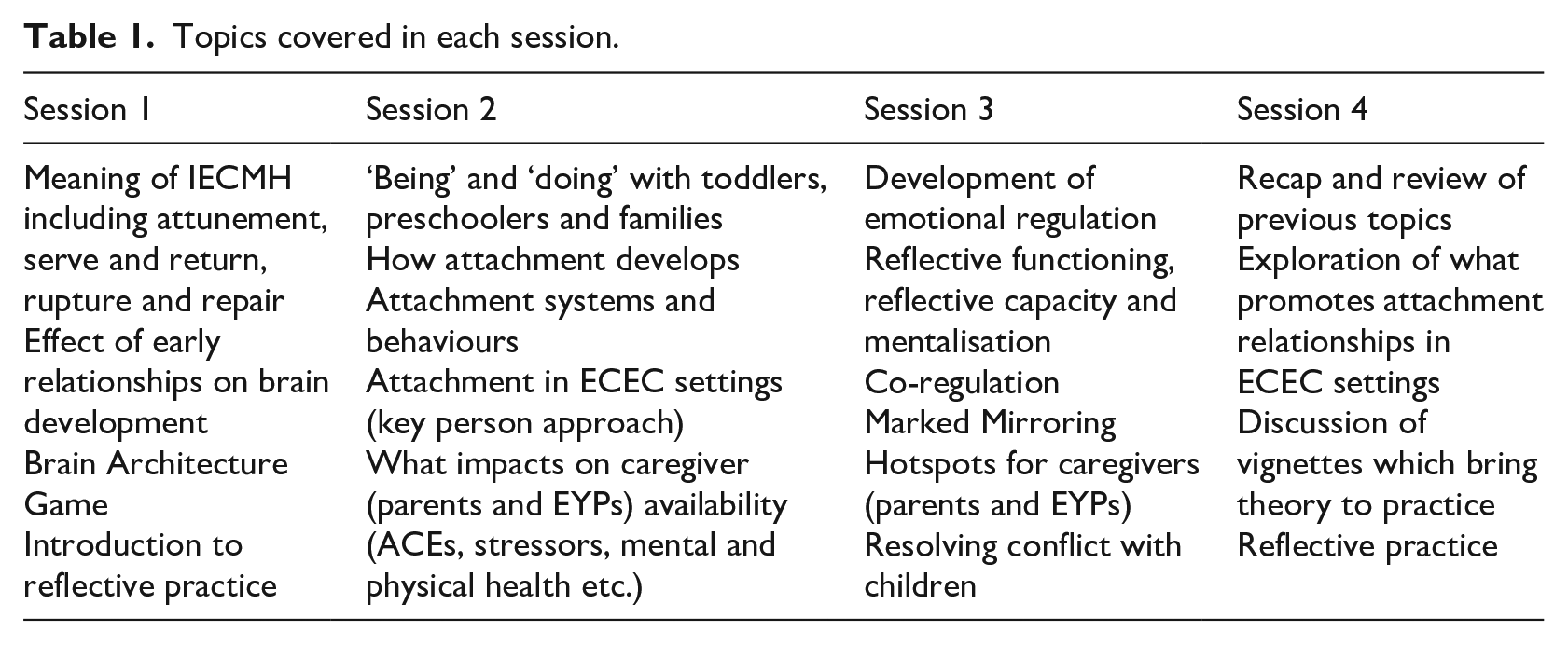
Training was structured into four sessions, 1 month apart. Mentoring was conducted by the Early Years Mentor following Session 2 and Session 4 (Table 1). Each centre received a resource pack aligned to the training (Martin et al., 2022). Facilitators emphasised reflective practice and incorporated reflective breakout discussions in each session. The dual approach of training sessions and onsite mentoring was designed to support implementation of IECMH concepts and skills. Mentoring aimed to encourage participants to meaningfully engage with and explore their relationships with children, to understand how relationships could be nurtured to support children’s learning and development. Video analysis further encouraged reflection on daily interactions.
Topics covered in each session.
A 2021 evaluation of the pilot of this programme yielded important initial results regarding the value of IECMH training for building capacity in practitioners working in a socio-economically deprived area (Martin et al., 2022). This study aimed to explore the impact of subsequent training rounds delivered to EYPs in ECEC settings.
Methods
Study design: A mixed-methods case study approach was adopted (Creswell and Plano Clark, 2011) comprising pre- (baseline) and post-training (follow-up) questionnaires, and quantitative pre- and post-training observations of child-EYP interactions.
Timepoints: Round 1 took place between September and December 2021. Round 2 took place between November and March 2023–2024.
Sample: Participants for the study were recruited from Early Years Centres involved in the Let’s Grow Together programme. Early Years Practitioners (EYPs) who participated in the IECMH Training Programme were invited to join the study. Participation in the research was voluntary; it was not mandatory for all practitioners who availed of the training. Twenty-two participants were recruited for the research, 15 participants from round 1 and seven from round 2. Nineteen participants were EYPs with a minimum of NFQ Level 5 in Early Childhood Education and Care, and the remaining three were qualified primary school teachers working in Early Start Pre-School Programmes.
Settings: Participants from seven early years settings participated in the research. Two settings participated in round 1 and an additional five in round 2.
Tools: Baseline questionnaires contained 40 questions; 32 closed-ended and eight open-ended questions. Follow-up questionnaires contained 40 questions; 30 closed-ended and 10 open-ended questions. Baseline questionnaires captured baseline knowledge of IECMH concepts, work experience, academic qualifications and levels of engagement with children and parents. Follow-up questionnaires captured perceived IECMH knowledge acquisition and implementation of new IECMH skills and learning. Follow-up questionnaires were completed after the final mentoring session. The baseline and follow-up questionnaires were developed by Let’s Grow Together’s IECMH team to measure changes in knowledge and practice. To ensure the reliability and validity of the questionnaires, a validation process was undertaken. This process included piloting the questionnaires with a sample group to identify and rectify any issues before their full implementation, including testing for face and content validity. The pilot study was published in 2022 (Martin et al., 2022).
Child Caregiver Interaction Scale (CCIS): Independent observations of child-EYP interactions were conducted by a member of the research team with experience of ECEC practice. Interactions were measured using CCIS Revised Edition (Carl, 2012), a validated non-invasive observational measure which assesses the quality of caregiver interactions with children from birth to 5 years. Based on the National Association for the Education of Young Children’s (NAEYC) Developmentally Appropriate Practice position statements, it consists of 14-items across three domains: (1) emotional (tone of voice/sensitivity, acceptance/respect for children, enjoys and appreciates children and expectations for children); (2) cognitive/physical (health and safety, routines/time spent, physical attention, discipline, language development, learning opportunities, and involvement with children’s activities); and (3) social domain (arrival, promotion of prosocial behaviour/social emotional learning, and relationships with families). Each item is presented as a seven-point scale with detailed criteria at four anchor points: 1 (inadequate), 3 (minimal), 5 (good) and 7 (excellent). Independent assessment of EYP practice using CCIS, over a 3-hour period, provided pre- and post-measures to evaluate programme impact.
Data analysis
Questionnaire data: Data from paper questionnaires were manually entered into Microsoft Excel for initial collation. Quantitative questionnaire data were then imported into SPSS (version 28), a software programme for statistical analysis used in social sciences, for analysis. Qualitative questionnaire data were analysed using Braun and Clarke’s (2006, 2021) six-step reflexive thematic analytical approach. NVivo (version 12), a software programme for organising and analysing qualitative data was used to support the process. Qualitative questionnaire responses were read multiple times to ensure familiarity with the dataset. A coding process resulted in the identification of themes within the data which were then reviewed and defined. Participant quotes were selected to illustrate key themes that emerged through engagement with the dataset. Findings were then organised thematically and presented in the write-up.
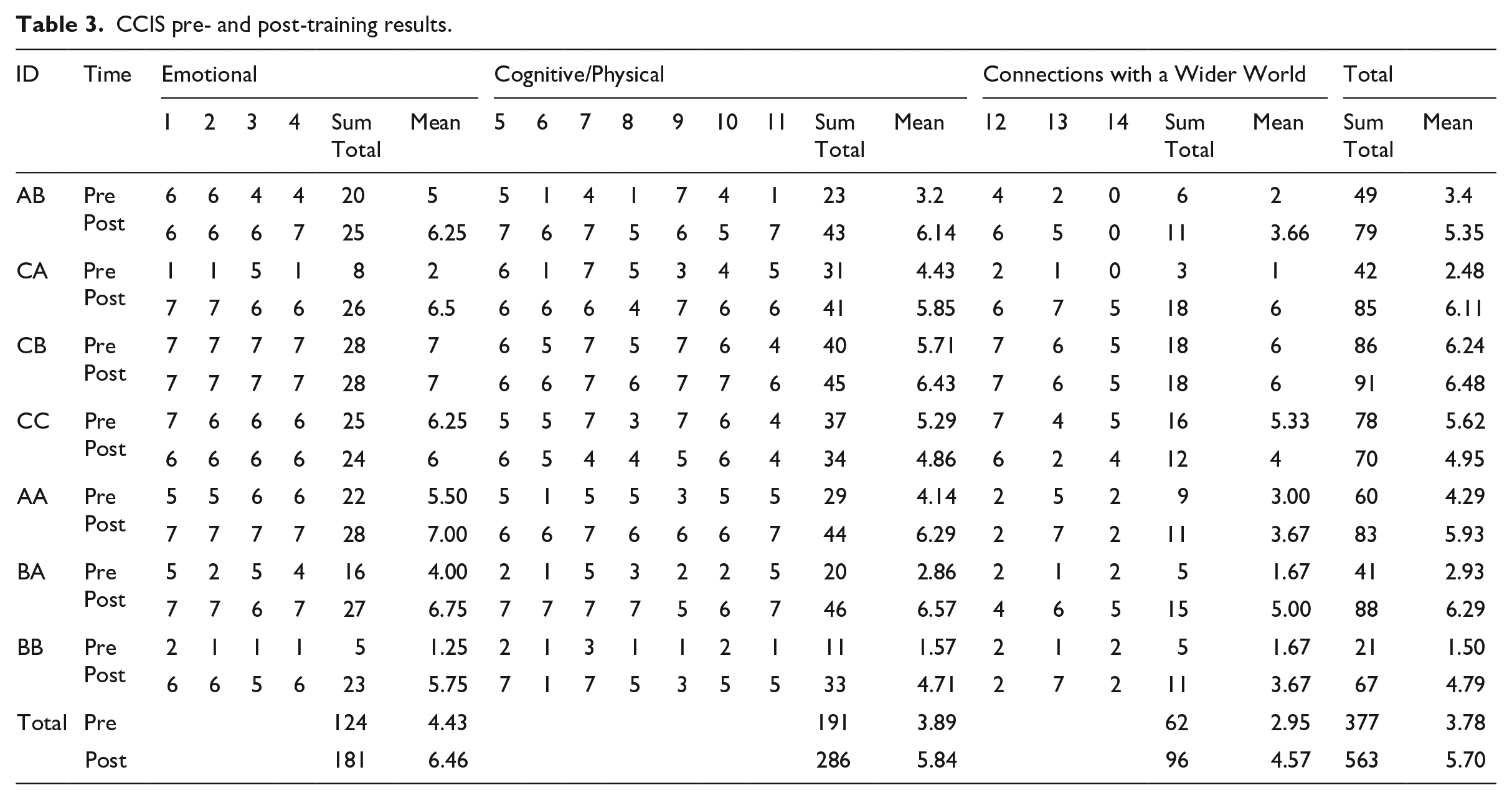
CCIS data: Data generated from paper CCIS observations were manually entered into Microsoft Excel. Pre- and post-intervention scores were calculated and collated for each participant, and descriptive statistical analysis was used to calculate mean scores. Scores were input into table format and are presented below in Table 3.
Reporting: JARS–Mixed Methods Article Reporting Standards (Levitt et al., 2018) were used to structure the reporting of findings. Quotes from round 1 participants are denoted by A-xx, and quotes from round 2 participants are denoted by B-xx.
Ethical considerations: Ethical approval was granted by the University College Cork (UCC) Social Research Ethics Committee in 2020, with an amendment approved in 2023. Prior to training, early years practitioners (EYPs) were informed about the study and gave their voluntary consent to participate. This voluntary nature of participation was clearly communicated. Separate consent forms were developed for EYPs and parents. Although children were not directly involved in the research and no data were collected on them, they were present during observations, making parental consent necessary. A key ethical consideration was ensuring that individuals, settings, and families could not be identified. All sensitive information was anonymised, and strict confidentiality protocols were maintained throughout the research process
Results
Participant characteristics
All participants completed pre- and post-training questionnaires. Years of experience working in ECEC ranged from less than 1 year to over 10 years. Eleven of the participants had worked in ECEC for more than 10 years, and 15 had worked for more than 7 years.
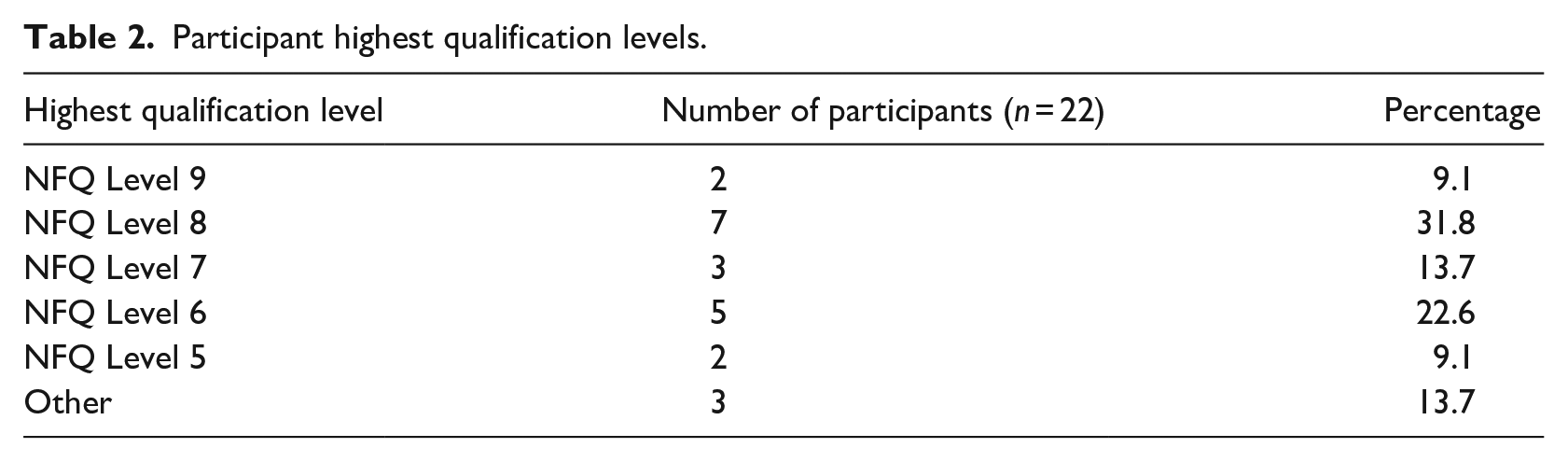
Nine of the 22 participants reported achieving a third-level undergraduate degree or above (Level 8 and Level 9), higher than the national level of 17% (Pobal, 2022). Three participants, two from round 1 and one from round 2, were primary school teachers working in Early Start settings with preschool aged children, possibly contributing to higher-than-average education levels among participants (Table 2).
Participant highest qualification levels.
CCIS pre- and post-training results.
Sixteen participants worked directly with parents/caregivers, four participants did not work directly with parents/caregivers; and two participants did not provide a response. When asked how often they work directly with parents/caregivers, 15 participants reported working with parents/caregivers daily and two participants reported working with parents/caregivers weekly. The remaining participants either did not work directly with parents/caregivers or did not respond to this question. One participant reported receiving Infant Mental Health training prior to this IECMH training.
Child Caregiver Interaction Scale (CCIS) results
Baseline and follow-up observations
Seven EYPs, three from round 1 and four from round 2, were observed in practice using CCIS Revised Edition (Carl, 2012) at pre- and post-training timepoints.
Four participants worked in centre-based programmes, and three worked in a school-based programme. Four participants worked with preschool-aged children, and three worked with toddlers aged between 1 and 2 years. One participant had over 20 years of experience working with children, one had 15 years’ experience, three had over 10 years’ experience, one had 9 years’ experience and one had less than 1 year of experience. One participant had a QQI Level 9 qualification, and six participants had Level 5 and 6 qualifications in childcare. At the time of observations, the number of children present ranged from eight to 19, with between two and five staff present.
Emotional domain
At baseline, the average score for participants was 4.43. Individual participant average scores ranged from 1.25 to 7. Post-training observation session scores showed the average score increased to 6.46. The range was smaller than pre-training, with average scores from 6 to 7.
Cognitive/physical domain
At baseline, the average score for all seven participants was 3.89, and individual participant average scores ranged from 1.57 to 5.71. Post-training observation session average scores increased to 5.84, with a range from 4.71 to 6.57.
Connections with a wider world
The average observation session score at baseline was 2.95 and individual average scores ranged from 1 to 6. Post-training observation session scores increased to 4.57, with a range of 3.67–6.
Total scale
At baseline, the average total score was 3.78. This increased to 5.70 at follow-up, with a range of 4.79 to 6.48. While there were increases in knowledge of IECMH concepts for all participants, the greatest improvements in practice were observed among two specific cohorts; EYPs with no prior exposure to Let’s Grow Together capacity building programmes such as mentoring, and newly qualified EYPs working in the sector for less than 1 year. Total scores in these categories increased from 2.48 to 6.11, and 3.4 to 5.35 respectively.
Pre- and post-training questionnaire results
Impact on child development knowledge and ECEC practice
At baseline, regarding knowledge of social-emotional developmental stages and milestones from infancy to pre-school, two participants rated themselves as ‘extremely knowledgeable’ and seven rated themselves as ‘very knowledgeable’. An increase was observed at follow-up with those describing themselves as ‘extremely knowledgeable’ increasing to six, and those describing themselves as ‘very knowledgeable’ also increased to nine (see Table 4).
Developmental stages and milestones.
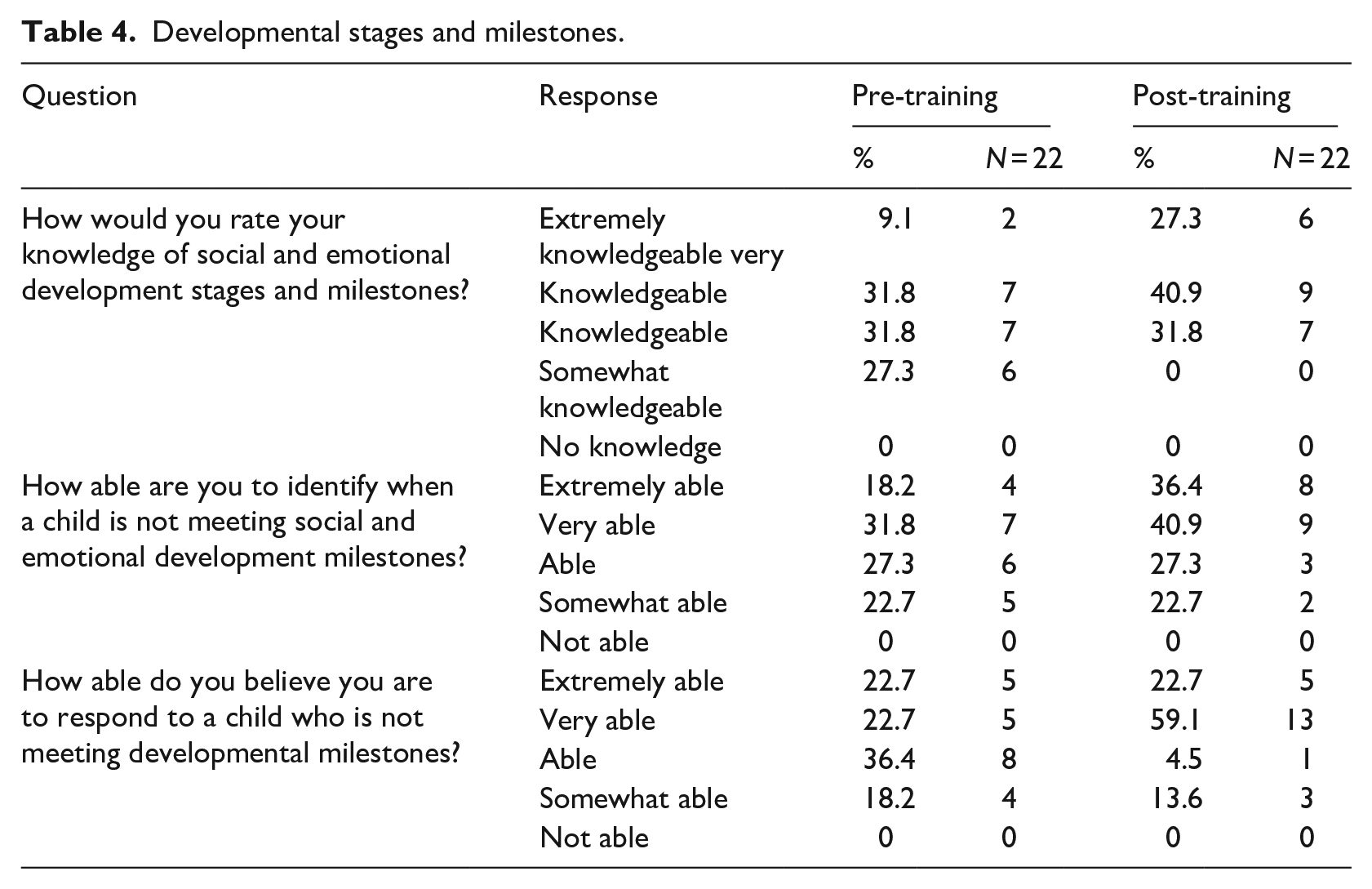
Regarding EYPs’ perceived ability to identify social-emotional milestones and risks for children in their care, participants describing themselves as ‘extremely able’ to identify when a child is not meeting their social-emotional developmental milestones increased from four at baseline to eight at follow-up. The participants who described themselves as ‘very able’ also increased from seven at baseline to nine at follow-up (Table 4). At follow-up, participants who reported feeling ‘extremely able’ to respond to a child not meeting their developmental milestones remained the same at five, however participants who reported feeling ‘very able’ increased from five to thirteen.
Similarly, participants who reported feeling ‘extremely confident’ to respond to children’s emotional well-being increased from five at baseline to eleven at follow-up. The proportion of participants who reported feeling ‘very confident’ was the same at baseline and follow-up.
Relationships
Supporting children’s relational health
A significant increase was noted in participants’ confidence in their ability to identify difficulties experienced by children when developing relationships with others. At baseline, four reported feeling ‘extremely able’ and this increased to nine at follow-up (see Table 5).
Supporting children’s relational health.
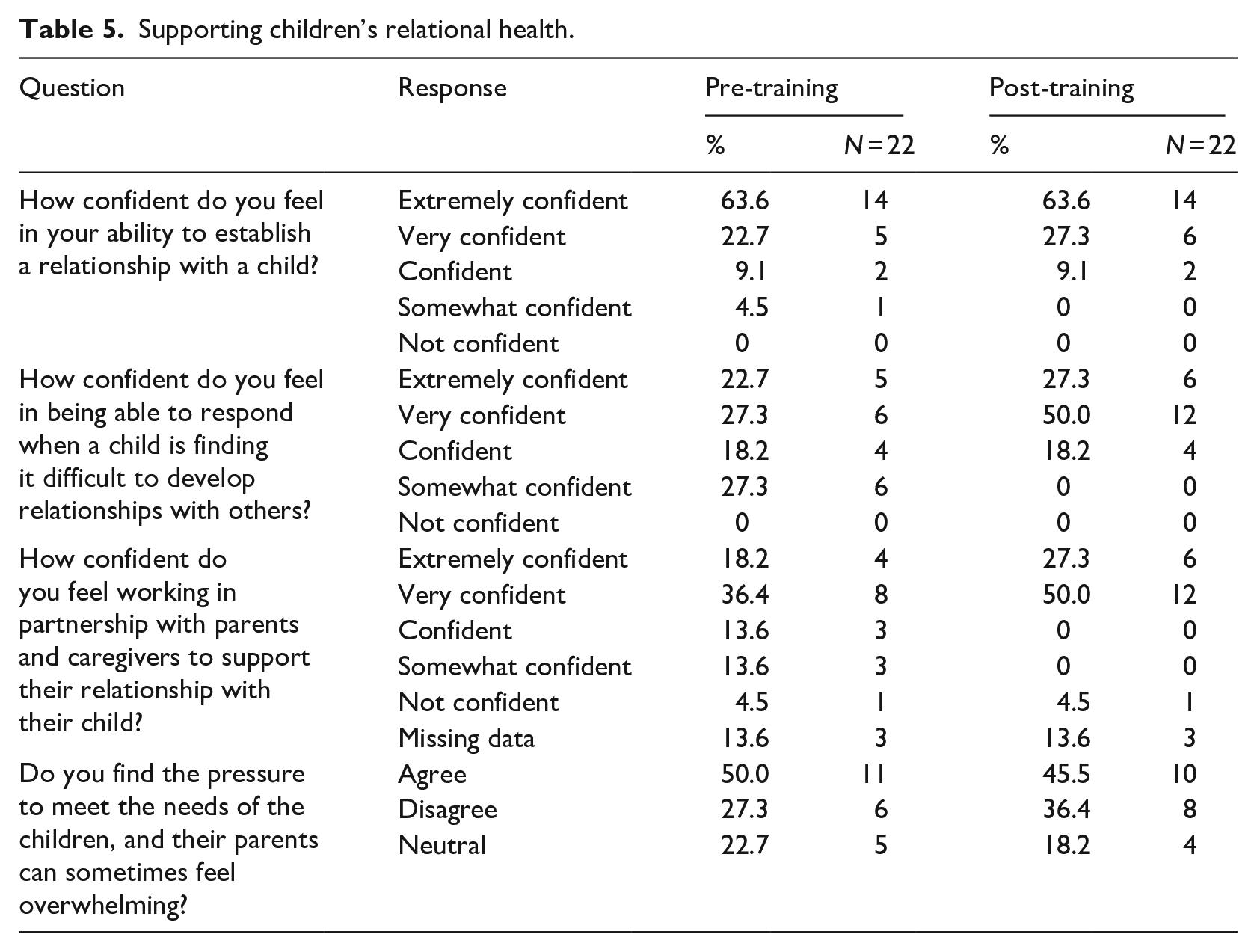
At baseline, five participants felt ‘extremely able’ to respond to situations where a child was identified as having difficulties developing relationships with others, while six felt ‘very able’, four felt ‘able’ and six reported feeling ‘somewhat able’ to respond. At follow-up, the number of participants who reported feeling ‘extremely able’ to respond increased to six, and those feeling ‘very able’ increased to 12 (see Table 5).
Qualitative questionnaire data provided deeper insights into participants’ views on the importance of supporting children’s relational health to form secure attachments. At baseline, participants emphasised the role of attachment in children’s social, emotional, and cognitive development, with one stating, ‘[Attachments] give children a secure base to explore, learn and develop a sense of self and overall well-being’ [Participant A1]. They also highlighted the impact of early attachment on future relationships, noting, ‘It is important that relationships are formed and nurtured from birth. . .[supporting] them throughout their life in having happy healthy relationships’ [Participant A2].
At follow-up, participants used more nuanced language to describe the importance of attachments for child development, such as, ‘They get the tools they need to develop through their different stages with confidence. . .This helps their social, emotional, and language skills’ [Participant A4]. They also reiterated the significance of early attachments for lifelong outcomes, with one participant stating, ‘Strong relationships that are formed in the early years have a great impact on their sense of self, development, and in forming future relationships’ [Participant A2].
Supporting EYP-child relationships
At baseline, 14 participants felt ‘extremely confident’ in their ability to establish a relationship with a child, and follow-up results were similar. When asked about attributes they believe a young child can develop because of a strong relationship with their EYP, participants mentioned a wide variety of attributes such as ‘Confidence, self-assurance, independence’ [Participant B1], and ‘good self-esteem, a feeling of belonging’ [Participant B2]. At follow-up, participants added to attributes they believe a child can develop, ‘Resilience, regulation abilities, trust, a sense of security and belonging in the world’ [Participant A3] (see Table 5).
At baseline, when asked about how regularly they shared observations of their interactions with children with children themselves, four participants reported ‘always’ sharing their observations, and this increased slightly to five at follow-up. No participant reported ‘rarely’ or ‘never’ sharing their observations with children at baseline or follow-up timepoints indicating that participants already viewed this activity as important.
Working in partnership with parents and caregivers to support their relationship with their child
Significant increases were observed in participants’ reported confidence working in partnership with parents and caregivers to support their relationship with their child. The proportion of participants who reported feeling ‘extremely confident’ increased from four to at follow-up, and those reporting feeling ‘very confident’ increased from eight to twelve (see Table 5). At baseline, when asked how regularly they shared observations of interactions with children with parents and caregivers, four participants reported sharing observations with parents and caregivers. This increased to seven at follow-up. There was a slight decrease in the number of participants who found the pressure to meet the needs of both children and their parents overwhelming. Eleven participants agreed with statement at baseline, and this reduced to 10 post-training.
Supporting children’s well-being
Observing and responding to children’s emotionally dysregulated behaviour
Increases were noted in participants’ perceived ability to identify risks to children’s emotional well-being, with four participants reporting being ‘extremely able’ at baseline increasing to nine at follow-up (see Table 4).
Participants’ confidence in responding to children’s emotional well-being also increased, with five reporting being ‘extremely confident’ at baseline, increasing to 11 at follow-up.
All participants reported observing children’s emotionally dysregulated behaviour in their practice. At baseline, when asked about factors that may contribute to their reaction to a child’s emotional dysregulation, several participants named their emotional state as a key factor, ‘My background, my current state of emotions, other children in the room’ [Participant A2]. Participants also mentioned how the behaviour of the child could influence their reaction.
At follow-up, participants were found to elaborate further, ‘How I’m feeling myself on the day. My previous experiences, pre-conceptions. . .’ [Participant B1]. Participants also referenced the importance of non-verbal cues they are sending children, ‘My body language or facial expressions if I am feeling stressed’ [Participant B5]. Participants also spoke to children’s developmental stage and the importance of taking the child’s emotional state into account, ‘Your awareness of children’s mental health and where they are at developmentally’ [Participant A1].
Observations and reflective practice
Reflective practice and sharing observations with colleagues
Most participants reported no prior experience with reflective practice, such as journalling or supervision. Among those who had previous exposure, both referenced ‘observations’ as a core tool: ‘Reflect on learning through observations and supervision’ [Participant A2].
When asked about the usefulness of reflective or learning journals in daily practice, four participants rated them as ‘extremely useful’ and five as ‘very useful.’ At follow-up, participants increasingly valued supervision in supporting reflective practice: ‘Yes, I feel like it is a huge support having reflective practice supervision’ [Participant A2]. One participant emphasised its role in meeting children’s needs: ‘Yes, reflective journalling is imperative in childcare to be able to meet children’s needs’ [Participant B1].
At baseline, most participants reported regularly sharing observations with colleagues. The number of participants who reported ‘always’ doing so increased from 10 to 14 at follow-up. No participants reported ‘rarely’ or ‘never’ sharing observations at either timepoint (see Table 6).
Observations and reflective practice.
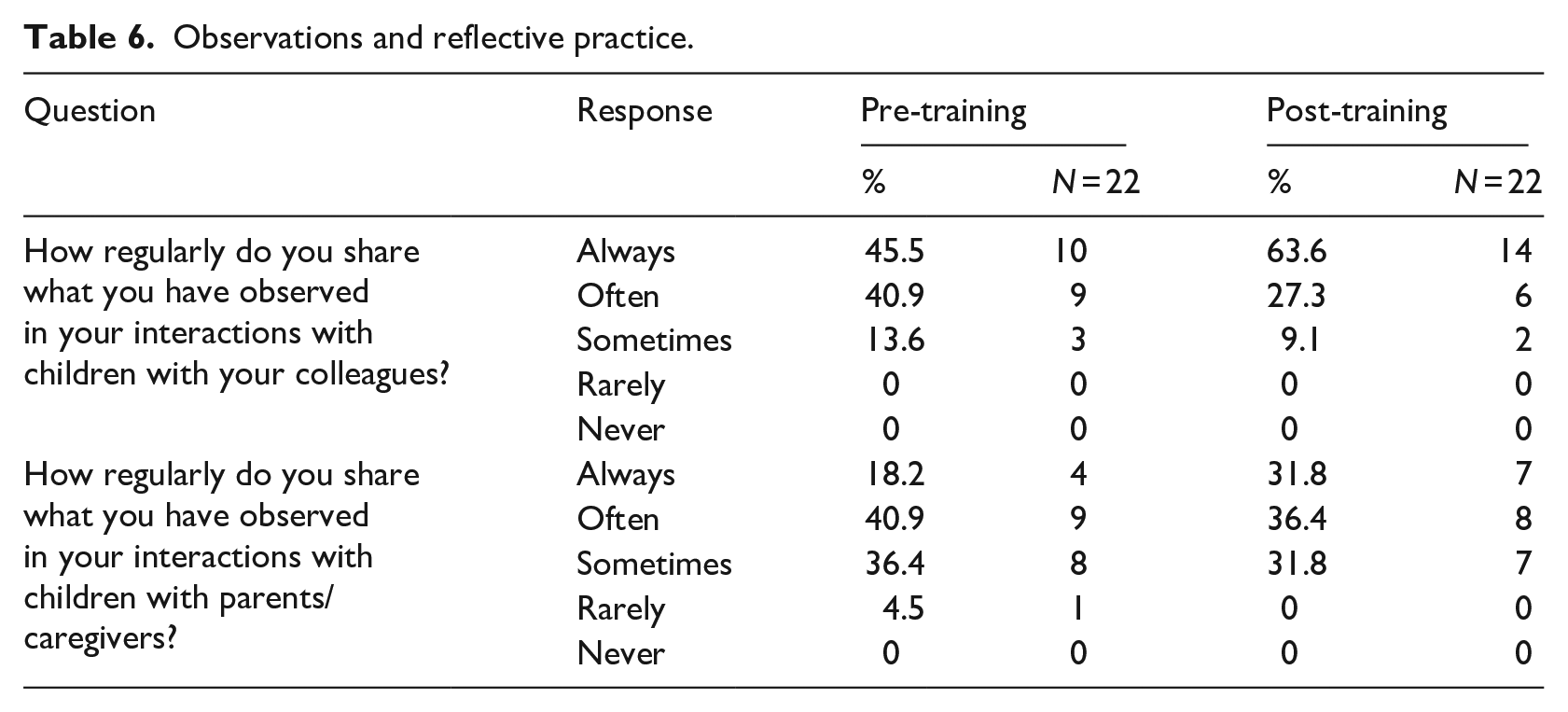
When asked to rate the importance of sharing observations, 18 participants initially said it was ‘very’ or ‘extremely’ important, while one said ‘important’ and three said ‘somewhat important.’ After training, 21 rated it as ‘very’ or ‘extremely’ important, and one as ‘important.’
At baseline, participants stressed that sharing observations helps support children and understand their needs. As one noted, ‘I feel it vital to share observations. . .they help me to support the children and understand their needs’ [Participant B9]. Others valued gaining different perspectives and learning from colleagues. At follow-up, participants highlighted the role of shared observations in reflective practice and team cohesion, such as ‘learning experience—to see certain things in action colleagues may not have picked up’ [Participant B7] and encouraging ‘meaningful discussion. . .between teams’ [Participant B6].
EYP self-regulation and self-awareness of socio-emotional well-being
When asked prior to training if, during interactions with children, they considered how their own feelings may influence the interaction, six said they did consider the impact of their own feelings on the interaction. At follow-up, this increased to 12. At baseline, five participants reported ‘always’ considering the impact of their own emotions on interactions with parents and caregivers, this increased to seven at follow-up. Shifts were also noted in those reporting they ‘never’ consider this, shifting from two at baseline to no participants at follow-up.
Participants were asked about the benefits of considering their feelings when interacting with parents and caregivers. At baseline, they emphasised the importance of maintaining professionalism, setting boundaries, and not letting emotions influence interactions. As one participant noted, ‘It is important to remain professional. . .not be emotional as your own emotions might influence. . .but at all times be empathetic and caring’ [Participant B6]. They also highlighted the need for empathy, giving time and building connections with families. At follow-up, participants recognised the significance of reflective practice, acknowledging how their feelings impact interactions rather than suppressing them. One participant shared, ‘It helps me. . .acknowledge how I’m feeling before interacting with parents and caregivers’ [Participant B6]. Others stressed the importance of considering their emotions for overall well-being, with one stating, ‘This is very important to be able to keep my self-esteem and worth’ [Participant B2].
Discussion
This study demonstrates the effectiveness of a tailored IECMH training programme, combined with mentoring, in enhancing the skills and practices of early years practitioners (EYPs). The results confirm the value of such training in equipping EYPs with the knowledge and capacity to support children’s emotional regulation and relationship-building, thereby improving learning environments. Despite many participants having extensive ECEC experience, training increased their understanding of social-emotional development and strengthened their ability to support children in this area. The mentoring component was highly valued, offering opportunities for reflection that led to improvements in key areas of practice. By centering relationships, the training also enhanced EYPs’ collaboration with colleagues, parents, and caregivers, ultimately benefitting children’s well-being. These findings highlight the programme’s potential to positively influence both EYP-child and parent/caregiver-child relationships and foster children’s social-emotional development.
Increased confidence in supporting parents and caregivers
EYPs reported increased confidence in working with parents and caregivers to strengthen their relationships with children. The frequency of sharing observations with parents and caregivers also rose. This is significant, as strong EYP-parent/caregiver partnerships – characterised by reciprocal communication – positively influence children’s social-emotional development and later academic success (Murphy et al., 2021; Silver et al., 2023). Such partnerships facilitate mutual knowledge exchange and smoother transitions between home and ECEC settings, contributing to a more holistic experience for children. However, some participants continued to report challenges in responding to parents’ needs and balancing the pressures of supporting both children and families. Overall, the training enhanced EYPs’ confidence, though complexities in parent-practitioner relationships remain.
Improvements in practice and knowledge
There was a marked increase in self-rated knowledge of social-emotional developmental stages and milestones. Participants’ perceived ability to identify social-emotional milestones and risks for children improved significantly. CCIS results supported these self-reports, aligning with existing research that shows IECMH training strengthens EYP-child interactions through increased knowledge and skills (Albritton et al., 2019; Silver et al., 2023; Spielberger et al., 2024). High baseline scores coupled with significant post-training gains suggest that even experienced practitioners benefitted meaningfully. The most substantial improvements were seen among EYPs new to the field and those with no previous involvement in Let’s Grow Together capacity-building programmes, underscoring the training’s particular value for those with limited prior exposure to IMH principles.
A recent U.S. study also found that IECMH-trained EYPs created environments that better supported social-emotional development, applied developmentally appropriate practices and adopted more holistic, child-centred approaches (Spielberger et al., 2024). This highlights the broader potential of IECMH training to positively shape children’s experiences through enhanced early years environments.
Enhancing relational health and emotional regulation in children
Participants’ confidence in identifying difficulties experienced by children in developing relationships increased significantly and their ability to respond to situations where children have difficulties developing relationships also improved. Fewer reported witnessing emotionally dysregulated behaviour post-training, suggesting either a reduction in such behaviour or a shift in how it was perceived. With enhanced understanding of social-emotional development, EYPs may have reinterpreted children’s behaviour and adjusted their responses accordingly. Participants also became more aware of how their own emotional states influence children’s regulation. This is crucial, as EYPs’ perceptions of behaviour shape their interactions and responses (Yoder and Williford, 2019). High-quality EYP-child interactions are linked to better social, emotional, and educational outcomes; conversely, negative perceptions of emotionally dysregulated behaviour can hinder relationship-building. These findings highlight the training’s success in improving EYPs’ capacity to support relational health and emotional regulation – factors that can buffer children from the effects of trauma and adversity (Williams, 2023).
Conclusion
This study demonstrates successful building of EYP competencies and confidence in IECMH concepts and application to practice. There are gains in EYPs’ perceived ability to understand and interpret young children’s social-emotional developmental stages and their confidence and competence in supporting parents to reduce stress around dealing with emotional dysregulation and separation anxiety. IECMH training provided EYPs with a common language through which to share observations, build cohesion among teams and to further support children’s relational health. The Early Years Mentor was central to the success of the training with EYPs valuing this relationship for meeting training objectives. Overall, this study provides evidence of the effectiveness of an IECMH training programme for supporting and enhancing EYP skills and practices and for realising associated child-level outcomes.
Footnotes
Acknowledgements
We extend our sincere gratitude to everyone who contributed to the evaluation of the impact of the Infant and Early Childhood Mental Health (IECMH) Training for Early Years Practitioners (EYPs) within the Let’s Grow Together! Infant and Childhood Partnerships CLG. We are especially thankful to the Early Years Practitioners and the settings that participated in the IECMH training.
Author’s note
The organisation where the research was conducted, Let’s Grow Together, is named in the paper.
Declaration of conflicting interests
The authors declared no potential conflicts of interest with respect to the research, authorship, and/or publication of this article.
Funding
The authors disclosed receipt of the following financial support for the research, authorship, and/or publication of this article: This work was supported by Let’s Grow Together! Infant and Childhood Partnerships CLG.
Data availability statement
The data that support the findings of this study are not available maintain to confidentiality and privacy.
Ethical approval and informed consent statements
Ethical approval was obtained from the University College Cork (UCC) Social Research Ethics Committee in 2020, with an amendment in 2023. Prior to training, EYPs indicated their willingness to participate in the research. Participation was voluntary and this was clearly communicated. Separate EYP and parental consent forms were developed. While they were not involved in the research and data were not collected on children, they were present during observations and therefore parental consent was required. A key ethical issue was ensuring specific people, settings and families were not identifiable, and all sensitive information were anonymised. Strict confidentiality protocols were adhered to throughout the research.
