




Abstract
Globally, two in five children under the age of five are at risk of not reaching their full developmental potential. Investing in early childhood is essential to uphold every child’s right to survive and thrive. Nurturing care interventions have proven to be an effective means of improving early childhood outcomes. However, there is limited knowledge on how to enhance the integration and implementation of these interventions. This article explores interventions that enhance nurturing care during early childhood development, utilizing the RE-AIM framework review study design. The findings indicate that these interventions are a valuable investment in children’s health, well-being, education, and personal development, and they are highly effective in shaping children’s overall development.
Keywords
Introduction
Globally, two out of five children under the age of five are at risk of not reaching their developmental potential (Jeong et al., 2022). The early years of a child’s life are a critical developmental stage, essential for their overall growth and well-being. As the United Nations Children’s Fund (UNICEF) states, “Investing in early childhood is necessary to uphold the right of every child to survive and thrive.” In sub-Saharan Africa alone, 66% of children are at risk of poor early childhood development (ECD) (Jeong et al., 2021). Additionally, the 2030 Sustainable Developmental Goals (SDGs) recognize ECD as a significant development phase for children (Proulx et al., 2022). Specifically, SDG4 aims to ensure “inclusive and equitable quality education and promote lifelong learning opportunities for all” (Statistics South Africa, 2023: 66). “Early childhood development” (ECD) is defined as “children’s cognitive, physical, language, motor, and social and emotional development broadly spanning from birth to age 8” (Jeong et al., 2022: 2). Investing in ECD can be a powerful economic strategy, particularly in low-income countries, with the potential to yield significant national benefits (Likhar et al., 2022). For ECD to be adequate, nurturing care is essential.
The Nurturing Care Framework (NCF) was specifically developed to address the ongoing need for quality education and nurturing care (Camarata et al., 2022). It serves as a roadmap that translates children’s rights into action (Black et al., 2021). Nurturing care is defined as “care in which the health and nutritional needs of the child are met, he/she is protected from all kinds of threats, his/her continuous development is supported by giving appropriate stimuli, and the child is provided with opportunities for early learning with emotionally supportive interaction offering responses needed by the child” (Cimen and Karaaslan, 2022: 3). Young children’s most influential experiences come from the nurturing care provided by parents, caregivers, other family members, and community-based services (Proulx et al., 2022), as environmental and social conditions and experiences influence development (Black et al., 2021). Early experiences, such as interactions with parents/caregivers, health and nutrition, and a loving, stable, and safe environment, play a critical role in shaping children’s capacity for development and learning (Sargsyan et al., 2022). For that reason, support is needed to provide nurturing care for children. It is essential to inform parents, caregivers, and other individuals involved in the child’s life about nurturing care to help them understand the child and the opportunities accessible and available for children (Cimen and Karaaslan, 2022). Nurturing care interventions are an effective way to improve ECD outcomes (Jeong et al., 2021).
To promote holistic child development, early childhood interventions such as responsive caregiving, safety and security, and early learning are included in the NCF (Sargsyan et al., 2022). Early interventions aimed at improving responsive parenting and caregiver practices, as well as enhancing ECD services, achieve better results and are more cost-effective (United Nations Children’s Fund (UNICEF), 2023) Multiple sectors play a role in supporting child development, with healthcare settings often identified as the entry point for early intervention efforts to promote nurturing care and development (Draper et al., 2023). However, there is limited knowledge on how to enhance the integration and implementation of interventions within healthcare services (Jeong et al., 2021) and extend these interventions beyond healthcare settings (Draper et al., 2023). Thus, this article explores interventions that enhance nurturing care during early childhood to promote children’s survival and optimal development.
Methodology
Study design
To explore interventions that enhance nurturing care during ECD, this study utilized a RE-AIM framework review. The RE-AIM framework comprises five components, namely: Reach (R), Effectiveness (E), Adoption (A), Implementation (I), and Maintenance (M).
Inclusion criteria
The inclusion criteria for this study were defined by the following key restrictions: (1) studies published between 2011 and 2021; (2) written in English; (3) available in full-text format and peer-reviewed; (4) openly accessible; (5) used various research methodologies, including qualitative, quantitative, and mixed methods; (6) study populations focused on children aged birth–6 years; and (7) the primary focus was on interventions that enhance nurturing care during early childhood. Studies which did not meet these seven criteria were excluded.
Search strategy
The search strategy for this study was adapted from the Preferred Reporting Items for Systematic Reviews and Meta-Analyses (PRISMA) (Moher et al., 2009). Electronic database searches were carried out across several platforms, including Academic Search Complete, ERIC, PsycArticles, PubMed, and Sage Journals Online, covering the timeframe from 2011 to 2021. A comprehensive search was carried out using suitable keywords and search terms organized into Boolean strings. Filters were subsequently applied to enhance the search results, limiting the publication period to 2011–2021, the language to English, and the inclusion of peer-reviewed articles with full-text availability.
Search terms
The following Boolean strings, incorporating operators such as “and” and “or,” were entered into the databases for the search:
“Interventions” AND “enhance nurturing care” AND “early childhood development”
“Interventions” AND “improve” AND “nurturing care” AND “early childhood development”
“Early intervention” AND “enhancing” “nurturing care” AND “early childhood development”
“Nurturing care” AND “early childhood” AND “interventions”
“Interventions” OR “enhance nurturing care” OR “early childhood development”
“Interventions” OR “improve” OR “nurturing care” OR “early childhood development”
“Early intervention” OR “enhancing” “nurturing care” OR “early childhood development”
“Nurturing care” OR “early childhood” OR “interventions”
Method of review
The review process began with a preliminary screening of the titles and abstracts of potential studies. For abstracts aligned with the study’s objectives, the full texts were retrieved for further examination. The eligibility of these full-text studies was then assessed using the RE-AIM critical appraisal tool, which evaluates five key components of the RE-AIM framework. Any disagreements during this process were thoroughly discussed until consensus was reached.
The RE-AIM appraisal tool was chosen for its ability to measure the effectiveness of interventions at both individual and community/ecological levels (Holtrop et al., 2021). This framework is particularly well-suited for the present study as it enhances understanding of access, awareness, and appropriateness of intervention strategies (Glasgow et al., 2019) and plays a crucial role in evaluating program impact and sustainability (Kwan et al., 2019). The appraisal tool divides the evaluation into five components—Reach, Effectiveness, Adoption, Implementation, and Maintenance—ensuring a comprehensive review of all aspects of the studies. Each study was rigorously scored according to these five dimensions of the RE-AIM framework.
Data extraction and analysis
Data were extracted from all included studies using a custom-designed data extraction sheet. The following key information was collected from each study: author, geographical location, study aim, problem statement, study design, population/participants, sampling method, sample size, data collection methods/instruments, and the RE-AIM components—Reach, Effectiveness, Adoption, Implementation, and Maintenance. To achieve a comprehensive descriptive understanding of the findings, a meta-synthesis analysis was conducted on the extracted data.
Ethical considerations
Permission to conduct this study was granted by the Human and Social Sciences Research and Ethics Committee (HSSREC) at the University of the Western Cape (UWC). To ensure academic integrity and avoid plagiarism, all information used in this study was obtained through bona fide academic channels, with appropriate referencing to acknowledge and credit all contributors (Wager and Wiffen, 2011).
Process of results
The preliminary database searches yielded 4602 potential titles, from which 4492 duplicate records were removed. This left 156 titles to be reviewed and assessed. Of these, 110 titles were identified as potentially relevant for inclusion. The abstracts of these 110 studies were then screened using predefined inclusion and exclusion criteria. Of the 110 studies, 51 met the criteria and were further evaluated. The full texts of these 51 studies were subsequently assessed for eligibility using the RE-AIM framework appraisal tool.
Following this rigorous appraisal process, 10 studies were deemed eligible for inclusion in the current study. Each of these studies underwent a thorough critical methodological evaluation based on the five components of the RE-AIM framework: Reach (R), Effectiveness (E), Adoption (A), Implementation (I), and Maintenance (M). Both a primary and secondary reviewer independently assessed these 10 studies, confirming that they met the methodological requirements for inclusion in the study.
Figure 1 provides a summary of the screening process at each level of review.
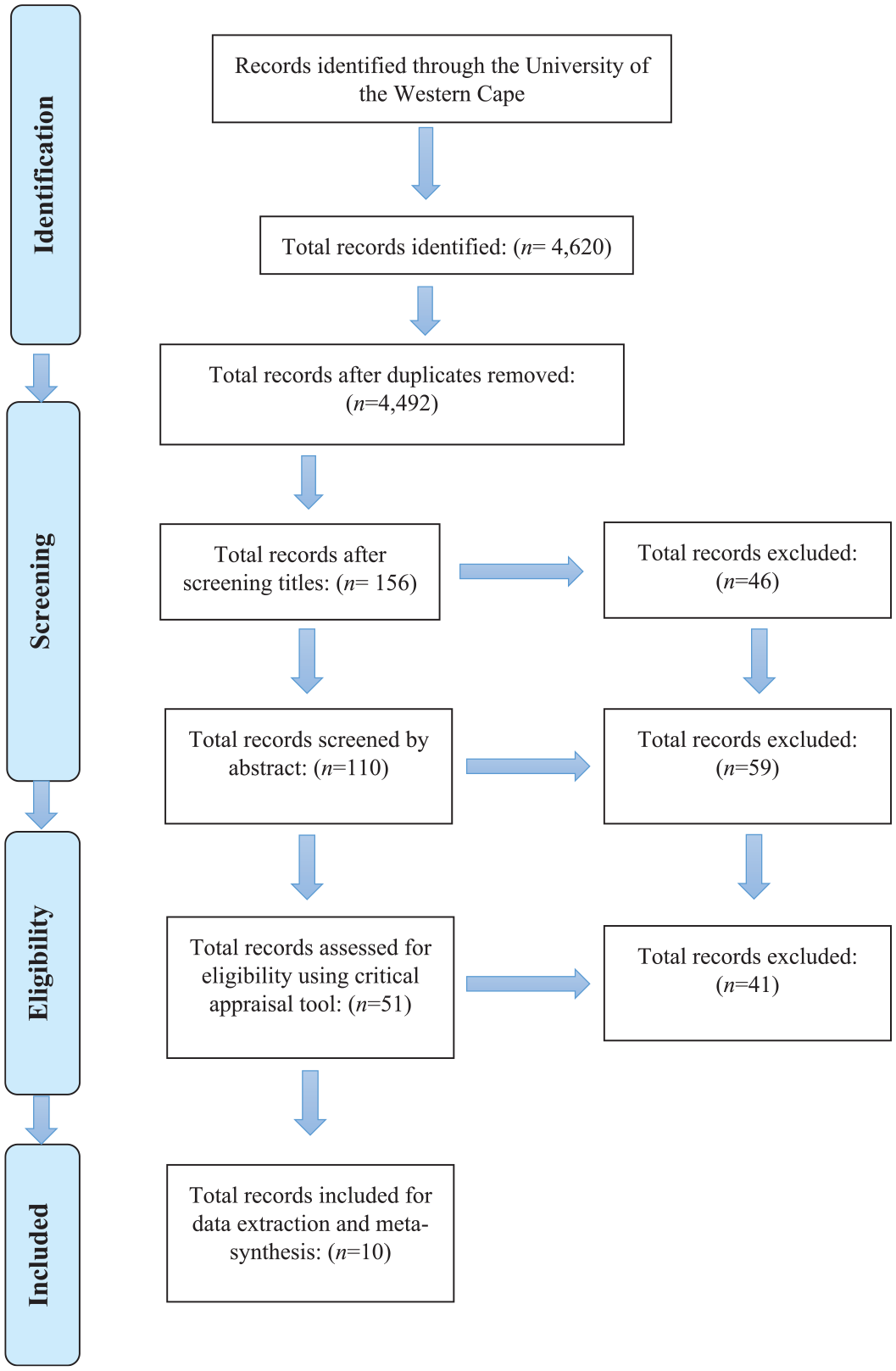
Levels of review and results.
General description of studies reviewed
The 10 included studies comprised a variety of study designs: (n = 2) quantitative, (n = 1) qualitative, (n = 1) mixed method, (n = 1) quasi-experimental longitudinal, (n = 1) pilot cohort, (n = 1) randomized control, (n = 1) non-randomized intervention-control, (n = 1) cross sectional, and (n = 1) pre-test and post-test methodologies. The populations represented in these studies included children in the ECD stage, parents, caregivers, ECD teachers, and social workers. The most commonly used sampling methods were convenience and purposive sampling.
A variety of data collection methods were employed across the studies, including interviews, home visits, and classroom interventions. Geographically, the studies were conducted in diverse locations: United States, Sweden, Rwanda, Ireland, Kenya, Lebanon, Jordan, Armenia, Honduras, and South Africa. The primary objective of these studies was to explore, examine, and describe interventions that enhance nurturing care during ECD. A general description of the studies, their methodologies, and the RE-AIM components are presented in Appendices 1–3.
Reach
In relation to Reach, the included focused on interventions aimed at enhancing nurturing care during early childhood development, primarily targeting children and their parents or caregivers (Barboza et al., 2021; Betancourt et al., 2020; van Eeden and van Vuuren, 2017). The participants ranged in age from birth to 6 years, ensuring that the interventions were directed at the appropriate developmental stage. This focus on ECD made the studies particularly relevant to the current research.
The interventions were largely administered at preschools or ECD centers (Byington and Kim, 2020; Landry et al., 2014; Urke et al., 2018), where classroom assessments included reading, oral language development, and teacher observations. The number of participants reached by these interventions varied, with some studies impacting hundreds of children (Byington and Kim, 2020; Kent et al., 2020; Rosales et al., 2019). The broad reach of these interventions is a significant advantage, as it maximizes the number of children who can benefit from the nurturing care strategies.
Effectiveness
In relation to Effectiveness, the study examined interventions designed to enhance nurturing care for the overall development of children. The included studies highlighted that a lack of nurturing care during ECD increases the risk of inadequate cognitive development. Participants reported that the knowledge gained from these interventions improved their parenting practices, enabling them to create a more nurturing environment for optimal child development (Barboza et al., 2021).
The studies also assessed the effectiveness of these interventions, noting significant improvements in the instructional practices and interactions of ECD teachers with children (Byington and Kim, 2020). Classroom interventions led to substantial gains in skills and social interactions among children (Landry et al., 2014), and interventions that focused on psychosocial stimulation showed that children’s development was more likely to be on track (Urke et al., 2018). Effective communication with participants was identified as a key factor in the success of the interventions, with participants demonstrating improved knowledge and attitudes about ECD throughout the course of the intervention (Betancourt et al., 2020). Overall, the interventions were found to be both beneficial and effective for children and their parents/caregivers (Barboza et al., 2021; Lakkis et al., 2020; Rosales et al., 2019).
Adoption
In relation to Adoption, the included studies indicated that all interventions were conducted by professionals who received specific training prior to implementing the interventions (Barboza et al., 2021; Byington and Kim, 2020). These professionals included early childhood teachers, preschool teachers, local school district personnel, childcare teachers, social workers, and trained coaches. In most interventions, ECD teachers either served as facilitators or assisted the trained program facilitators (Lakkis et al., 2020). Additionally, trained researchers were involved in supporting and delivering the interventions.
The interventions were implemented in various settings, with a significant number conducted in group environments, while others involved one-on-one sessions with a parent and child for observational purposes (Kim et al., 2021; Lakkis et al., 2020; van Eeden and van Vuuren, 2017). The most common group settings were classroom-based interventions, although some interventions were carried out through individual home visits (Barboza et al., 2021; Betancourt et al., 2020; Kent et al., 2020; Urke et al., 2018).
Implementation
In relation to Implementation, the interventions that focused on home visits primarily aimed to strengthen positive parenting by offering psychosocial support and connecting families with additional community services to enhance nurturing care and support optimal child development (Barboza et al., 2021; Betancourt et al., 2020; Kim et al., 2021). Group interventions were designed to improve family functioning, reduce caregiver conflict, promote resilience, and enhance parent-child interactions (Kent et al., 2020; Rosales et al., 2019).
In classroom settings, the interventions concentrated on equipping children with early language and literacy skills, as well as fostering social and emotional development (Byington and Kim, 2020; Lakkis et al., 2020). During workshop and group sessions with parents, they were equipped and encouraged to use skills such as reading, storytelling, and playing with their children (Urke et al., 2018; van Eeden and van Vuuren, 2017).
Maintenance
In relation to Maintenance, of the 10 included studies, five reported on follow-up assessments after the interventions (Betancourt et al., 2020; Kim et al., 2021; Landry et al., 2014; Urke et al., 2018; van Eeden and van Vuuren, 2017). Remaining studies did not specify follow-up details. Studies with planned follow-ups stated intention to review the effectiveness of the given interventions.
Discussion
The aim of this study was to explore and examine interventions that enhance nurturing care during early childhood. The 10 included studies demonstrated that such interventions positively contributed to overall child development and improved family functioning. Most of these interventions targeted middle- to low-income families and communities (Barboza et al., 2021; Betancourt et al., 2020; Byington and Kim, 2020; Lakkis et al., 2020; Urke et al., 2018; van Eeden and van Vuuren, 2017), recognizing that children in low-income environments could be at risk of not reaching their full developmental potential if nurturing care and knowledge are lacking.
The availability of resources plays a crucial role in a child’s development (Urke et al., 2018), making it essential to provide interventions for families that need information and greater understanding of nurturing care. The ability to reach a broad participant base was a significant strength of these interventions. The studies collectively reached over 1000 participants (Byington and Kim, 2020; Kent et al., 2020; Rosales et al., 2019), highlighting the importance of wide-reaching interventions to foster positive changes in nurturing care during ECD.
Children are the future, so it is essential to ensure they reach their full cognitive potential (van Eeden and van Vuuren, 2017). The implementation of nurturing care and ECD intervention programs is scarce, particularly in poor and vulnerable communities (Lakkis et al., 2020). For this reason, these interventions are a critical investment in children’s health, well-being, education, and personal development. Interventions are more effective when they are appropriately adopted, implemented, and tailored to the participants’ needs.
Interventions that recognize and foster collaboration between children, parents, ECD teachers, and other stakeholders tend to be more successful (Barboza et al., 2021; Byington and Kim, 2020). The interventions in the 10 included studies demonstrated significant effectiveness in shaping children’s development. By adopting and implementing these interventions during ECD, the studies provided access to essential resources and improved outcomes for both ECD and parenting (Betancourt et al., 2020).
The 10 reviewed studies employed a variety of methods in their interventions, including observations, storytelling, interviews, group discussions, classroom interactions, and home visits (Barboza et al., 2021; Betancourt et al., 2020; Byington and Kim, 2020). These diverse methods were shown to help enhance nurturing care while keeping participants engaged and motivated to learn and participate. Ensuring that parents and caregivers can apply the skills and methods learned from the interventions at home (Betancourt et al., 2020) is crucial for the sustained impact of the interventions. This ongoing application will contribute to the enhancement of nurturing care during early childhood, which should ultimately benefit children cognitively, socially, and economically in the future.
Conclusion
This study highlights the critical need for the adoption and implementation of specific interventions to enhance nurturing care during early childhood. Establishing appropriate support structures for these interventions is essential to help children reach their full developmental potential. Future research should focus on the long-term benefits of these intervention programs, with an emphasis on conducting more frequent follow-ups to ensure that children continue to have access to necessary resources after the interventions have concluded.
Footnotes
Appendix
RE-AIM framework data extraction sheet 3.
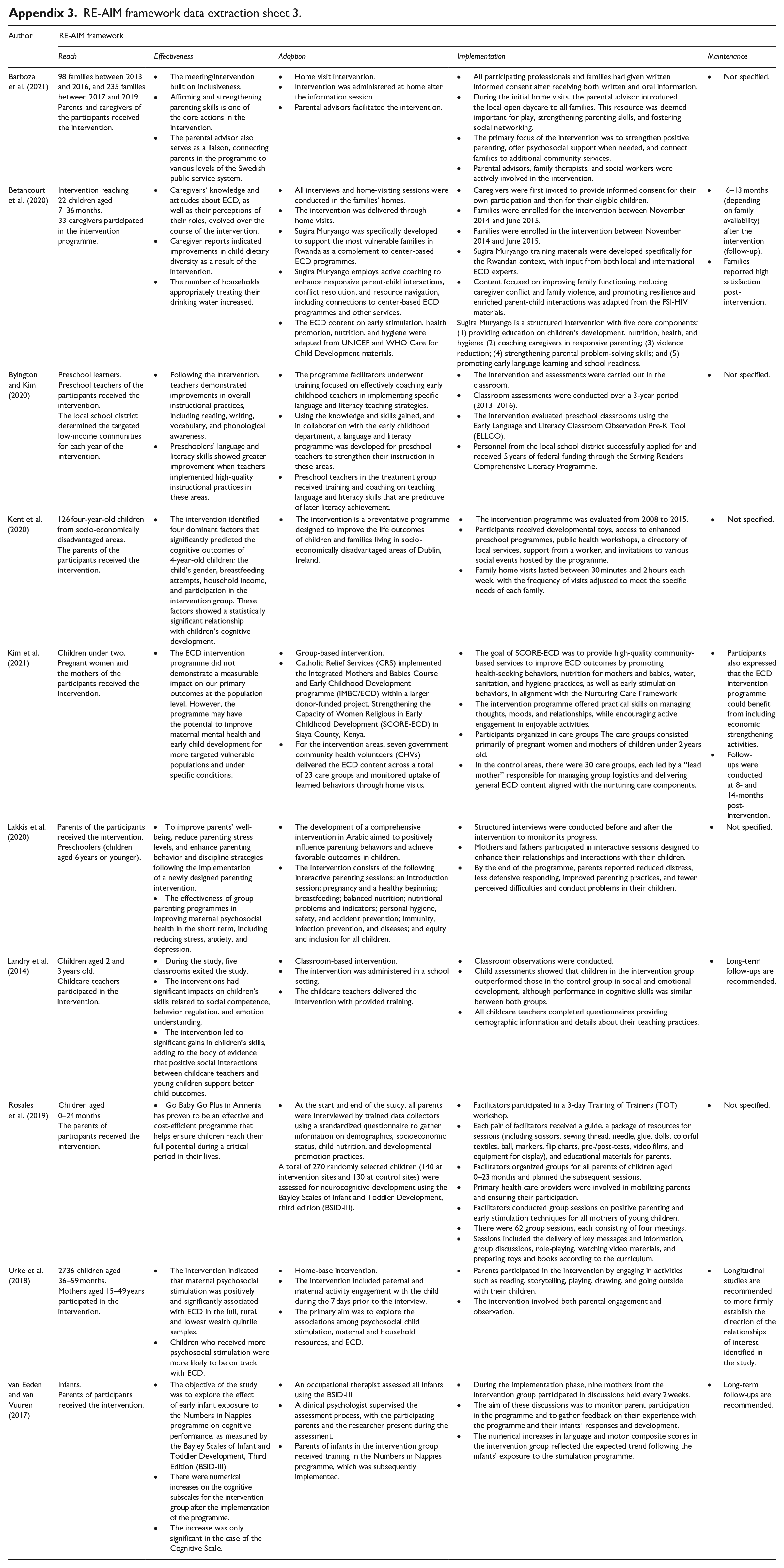
| Author | RE-AIM framework | ||||
|---|---|---|---|---|---|
| Reach | Effectiveness | Adoption | Implementation | Maintenance | |
| Barboza et al. (2021) | 98 families between 2013 and 2016, and 235 families between 2017 and 2019. Parents and caregivers of the participants received the intervention. |
• The meeting/intervention built on inclusiveness. • Affirming and strengthening parenting skills is one of the core actions in the intervention. • The parental advisor also serves as a liaison, connecting parents in the programme to various levels of the Swedish public service system. |
• Home visit intervention. • Intervention was administered at home after the information session. • Parental advisors facilitated the intervention. |
• All participating professionals and families had given written informed consent after receiving both written and oral information. • During the initial home visits, the parental advisor introduced the local open daycare to all families. This resource was deemed important for play, strengthening parenting skills, and fostering social networking. • The primary focus of the intervention was to strengthen positive parenting, offer psychosocial support when needed, and connect families to additional community services. • Parental advisors, family therapists, and social workers were actively involved in the intervention. |
• Not specified. |
| Betancourt et al. (2020) | Intervention reaching 22 children aged 7–36 months. 33 caregivers participated in the intervention programme. |
• Caregivers’ knowledge and attitudes about ECD, as well as their perceptions of their roles, evolved over the course of the intervention. • Caregiver reports indicated improvements in child dietary diversity as a result of the intervention. • The number of households appropriately treating their drinking water increased. |
• All interviews and home-visiting sessions were conducted in the families’ homes. • The intervention was delivered through home visits. • Sugira Muryango was specifically developed to support the most vulnerable families in Rwanda as a complement to center-based ECD programmes. • Sugira Muryango employs active coaching to enhance responsive parent-child interactions, conflict resolution, and resource navigation, including connections to center-based ECD programmes and other services. • The ECD content on early stimulation, health promotion, nutrition, and hygiene were adapted from UNICEF and WHO Care for Child Development materials. |
• Caregivers were first invited to provide informed consent for their own participation and then for their eligible children. • Families were enrolled for the intervention between November 2014 and June 2015. • Families were enrolled in the intervention between November 2014 and June 2015. • Sugira Muryango training materials were developed specifically for the Rwandan context, with input from both local and international ECD experts. • Content focused on improving family functioning, reducing caregiver conflict and family violence, and promoting resilience and enriched parent-child interactions was adapted from the FSI-HIV materials. Sugira Muryango is a structured intervention with five core components: (1) providing education on children’s development, nutrition, health, and hygiene; (2) coaching caregivers in responsive parenting; (3) violence reduction; (4) strengthening parental problem-solving skills; and (5) promoting early language learning and school readiness. |
6–13 months (depending on family availability) after the intervention (follow-up). • Families reported high satisfaction post-intervention. |
| Byington and Kim (2020) | Preschool learners. Preschool teachers of the participants received the intervention. The local school district determined the targeted low-income communities for each year of the intervention. |
• Following the intervention, teachers demonstrated improvements in overall instructional practices, including reading, writing, vocabulary, and phonological awareness. • Preschoolers’ language and literacy skills showed greater improvement when teachers implemented high-quality instructional practices in these areas. |
• The programme facilitators underwent training focused on effectively coaching early childhood teachers in implementing specific language and literacy teaching strategies. • Using the knowledge and skills gained, and in collaboration with the early childhood department, a language and literacy programme was developed for preschool teachers to strengthen their instruction in these areas. • Preschool teachers in the treatment group received training and coaching on teaching language and literacy skills that are predictive of later literacy achievement. |
• The intervention and assessments were carried out in the classroom. • Classroom assessments were conducted over a 3-year period (2013–2016). • The intervention evaluated preschool classrooms using the Early Language and Literacy Classroom Observation Pre-K Tool (ELLCO). • Personnel from the local school district successfully applied for and received 5 years of federal funding through the Striving Readers Comprehensive Literacy Programme. |
• Not specified. |
| Kent et al. (2020) | 126 four-year-old children from socio-economically disadvantaged areas. The parents of the participants received the intervention. |
• The intervention identified four dominant factors that significantly predicted the cognitive outcomes of 4-year-old children: the child’s gender, breastfeeding attempts, household income, and participation in the intervention group. These factors showed a statistically significant relationship with children’s cognitive development. | • The intervention is a preventative programme designed to improve the life outcomes of children and families living in socio-economically disadvantaged areas of Dublin, Ireland. | • The intervention programme was evaluated from 2008 to 2015. • Participants received developmental toys, access to enhanced preschool programmes, public health workshops, a directory of local services, support from a worker, and invitations to various social events hosted by the programme. • Family home visits lasted between 30 minutes and 2 hours each week, with the frequency of visits adjusted to meet the specific needs of each family. |
• Not specified. |
| Kim et al. (2021) | Children under two. Pregnant women and the mothers of the participants received the intervention. |
• The ECD intervention programme did not demonstrate a measurable impact on our primary outcomes at the population level. However, the programme may have the potential to improve maternal mental health and early child development for more targeted vulnerable populations and under specific conditions. | • Group-based intervention. • Catholic Relief Services (CRS) implemented the Integrated Mothers and Babies Course and Early Childhood Development programme (iMBC/ECD) within a larger donor-funded project, Strengthening the Capacity of Women Religious in Early Childhood Development (SCORE-ECD) in Siaya County, Kenya. • For the intervention areas, seven government community health volunteers (CHVs) delivered the ECD content across a total of 23 care groups and monitored uptake of learned behaviors through home visits. |
• The goal of SCORE-ECD was to provide high-quality community-based services to improve ECD outcomes by promoting health-seeking behaviors, nutrition for mothers and babies, water, sanitation, and hygiene practices, as well as early stimulation behaviors, in alignment with the Nurturing Care Framework • The intervention programme offered practical skills on managing thoughts, moods, and relationships, while encouraging active engagement in enjoyable activities. • Participants organized in care groups The care groups consisted primarily of pregnant women and mothers of children under 2 years old. • In the control areas, there were 30 care groups, each led by a “lead mother” responsible for managing group logistics and delivering general ECD content aligned with the nurturing care components. |
• Participants also expressed that the ECD intervention programme could benefit from including economic strengthening activities. • Follow-ups were conducted at 8- and 14-months post-intervention. |
| Lakkis et al. (2020) | Parents of the participants received the intervention. Preschoolers (children aged 6 years or younger). |
• To improve parents’ well-being, reduce parenting stress levels, and enhance parenting behavior and discipline strategies following the implementation of a newly designed parenting intervention. • The effectiveness of group parenting programmes in improving maternal psychosocial health in the short term, including reducing stress, anxiety, and depression. |
• The development of a comprehensive intervention in Arabic aimed to positively influence parenting behaviors and achieve favorable outcomes in children. • The intervention consists of the following interactive parenting sessions: an introduction session; pregnancy and a healthy beginning; breastfeeding; balanced nutrition; nutritional problems and indicators; personal hygiene, safety, and accident prevention; immunity, infection prevention, and diseases; and equity and inclusion for all children. |
• Structured interviews were conducted before and after the intervention to monitor its progress. • Mothers and fathers participated in interactive sessions designed to enhance their relationships and interactions with their children. • By the end of the programme, parents reported reduced distress, less defensive responding, improved parenting practices, and fewer perceived difficulties and conduct problems in their children. |
• Not specified. |
| Landry et al. (2014) | Children aged 2 and 3 years old. Childcare teachers participated in the intervention. |
• During the study, five classrooms exited the study. • The interventions had significant impacts on children’s skills related to social competence, behavior regulation, and emotion understanding. • The intervention led to significant gains in children’s skills, adding to the body of evidence that positive social interactions between childcare teachers and young children support better child outcomes. |
• Classroom-based intervention. • The intervention was administered in a school setting. • The childcare teachers delivered the intervention with provided training. |
• Classroom observations were conducted. • Child assessments showed that children in the intervention group outperformed those in the control group in social and emotional development, although performance in cognitive skills was similar between both groups. • All childcare teachers completed questionnaires providing demographic information and details about their teaching practices. |
• Long-term follow-ups are recommended. |
| Rosales et al. (2019) | Children aged 0–24 months The parents of participants received the intervention. |
• Go Baby Go Plus in Armenia has proven to be an effective and cost-efficient programme that helps ensure children reach their full potential during a critical period in their lives. | • At the start and end of the study, all parents were interviewed by trained data collectors using a standardized questionnaire to gather information on demographics, socioeconomic status, child nutrition, and developmental promotion practices. A total of 270 randomly selected children (140 at intervention sites and 130 at control sites) were assessed for neurocognitive development using the Bayley Scales of Infant and Toddler Development, third edition (BSID-III). |
• Facilitators participated in a 3-day Training of Trainers (TOT) workshop. • Each pair of facilitators received a guide, a package of resources for sessions (including scissors, sewing thread, needle, glue, dolls, colorful textiles, ball, markers, flip charts, pre-/post-tests, video films, and equipment for display), and educational materials for parents. • Facilitators organized groups for all parents of children aged 0–23 months and planned the subsequent sessions. • Primary health care providers were involved in mobilizing parents and ensuring their participation. • Facilitators conducted group sessions on positive parenting and early stimulation techniques for all mothers of young children. • There were 62 group sessions, each consisting of four meetings. • Sessions included the delivery of key messages and information, group discussions, role-playing, watching video materials, and preparing toys and books according to the curriculum. |
• Not specified. |
| Urke et al. (2018) | 2736 children aged 36–59 months. Mothers aged 15–49 years participated in the intervention. |
• The intervention indicated that maternal psychosocial stimulation was positively and significantly associated with ECD in the full, rural, and lowest wealth quintile samples. • Children who received more psychosocial stimulation were more likely to be on track with ECD. |
• Home-base intervention. • The intervention included paternal and maternal activity engagement with the child during the 7 days prior to the interview. • The primary aim was to explore the associations among psychosocial child stimulation, maternal and household resources, and ECD. |
• Parents participated in the intervention by engaging in activities such as reading, storytelling, playing, drawing, and going outside with their children. • The intervention involved both parental engagement and observation. |
• Longitudinal studies are recommended to more firmly establish the direction of the relationships of interest identified in the study. |
| van Eeden and van Vuuren (2017) | Infants. Parents of participants received the intervention. |
• The objective of the study was to explore the effect of early infant exposure to the Numbers in Nappies programme on cognitive performance, as measured by the Bayley Scales of Infant and Toddler Development, Third Edition (BSID-III). • There were numerical increases on the cognitive subscales for the intervention group after the implementation of the programme. • The increase was only significant in the case of the Cognitive Scale. |
• An occupational therapist assessed all infants using the BSID-III • A clinical psychologist supervised the assessment process, with the participating parents and the researcher present during the assessment. • Parents of infants in the intervention group received training in the Numbers in Nappies programme, which was subsequently implemented. |
• During the implementation phase, nine mothers from the intervention group participated in discussions held every 2 weeks. • The aim of these discussions was to monitor parent participation in the programme and to gather feedback on their experience with the programme and their infants’ responses and development. • The numerical increases in language and motor composite scores in the intervention group reflected the expected trend following the infants’ exposure to the stimulation programme. |
• Long-term follow-ups are recommended. |
Declaration of conflicting interests
The authors declared no potential conflicts of interest with respect to the research, authorship, and/or publication of this article.
Funding
The authors disclosed receipt of the following financial support for the research, authorship, and/or publication of this article: This study was funded by the University Capacity Development Grant (UCDG) Staff Support at the University of the Western Cape (UWC).
