




Abstract
Firms in East Africa face highly uncertain environments, fueling environmental dynamism, changes in industry structures, and enhanced competitive dynamics. In order to understand the opportunities and challenges within such an environment, extant theory argues that firms need to develop scanning capabilities. However, since the effect of environmental characteristics on the development of firm capabilities in lower income countries is unclear, we analyze how different environmental characteristics drive or hamper such capabilities. We focus specifically on scanning capabilities that allow firms to respond swiftly to changing needs by monitoring their environment. We include four environmental characteristics: environmental dynamism, heterogeneity, formal and informal competition. We investigate this in Kenya, Tanzania, and Uganda, from which we mustered a sample of 440 manufacturing firms. Our main results indicate that environmental dynamism and informal competition have a paralyzing effect on the development of firms’ scanning capabilities in East Africa, which implies that environmental characteristics may hamper rather than help the development of firm capabilities.
Introduction
Firms in lower income countries have faced economic liberalization and transitions toward market-based structures over the last decades (Dixon et al., 2010; Malik and Kotabe, 2009). Whereas economic liberalization has often stimulated economic growth and created opportunities for new products (Zahra et al., 2006), it has also fueled market dynamism, changes in industry structures, and enhanced competitive dynamics (Kim et al., 2010; Luo, 2003). Indeed, as Peng et al. (2007) argued, “while firms in rich economies do experience some environmental dynamism […] the scale and scope of such dynamism pale in comparison with the comprehensive changes of the ‘rules of the game’ experienced by firms in [developing countries]” (p. 206). As markets change and industries become increasingly dynamic, firms need to adjust their existing routines and invest in capabilities to scan their changing environment (Karna et al., 2016; Peteraf et al., 2013; Teece et al., 1997; Wright et al., 2005).
Scanning capabilities are widely viewed as a crucial step for aligning strategies with the external environment, which is expected to enhance firm’s performance in dynamic environments (Daft et al., 1988; Garg et al., 2003). Managers have little time to focus on the broad range of environmental stimuli (Boyd and Fulk, 1996) and also suffer from cognitive constraints to fully grasp their changing environment (Cyert and March, 1963). In highly unstable environments, it is difficult to obtain an exhaustive understanding of the environment and such an environment has a negative impact on the performance of firms (Fredrickson and Mitchell, 1984). This renders effective scanning a critical asset of executive judgment, strategy development, and firm performance. Indeed, “scanning may represent a dynamic capability for the firm” (Garg et al., 2003: 726).
The role of scanning capabilities may be even more pronounced in lower income economies (Fainshmidt et al., 2016). Due to a variety of economic, political, cultural, and demographic characteristics that stimulate environmental uncertainty, the competitive environment is more unpredictable in lower income countries. For instance, local firms in lower income countries are strongly affected by the existence of a large informal sector, which often stifles the development of these firms by creating additional uncertainties (cf. George et al., 2016; Iriyama et al., 2016).
In addition, lower income countries are known for persistent governmental intervention in the economy—although it is often obscure how, when, and in what way firms are affected by such policies (Austin, 1990). Political conflicts may also emerge rapidly and growing economies can disintegrate without much notice (Zoogah et al., 2015). Due to these uncertainties, managers in lower income countries may find themselves bewildered by a dashboard steadily overwhelming them with new information. An uncertain economic landscape renders valuable capabilities that allow firms to adapt swiftly to unforeseen circumstances (Fainshmidt et al., 2016: 8). The external environment may exert a strong force and provide the stimulus for firms to develop new capabilities (Schilke, 2014b). More specifically, scanning capabilities are considered to be highly advantageous for understanding the environment and for stimulating firm performance in dynamic environments (Garg et al., 2003).
We acknowledge the importance of internal learning mechanisms, managerial experience, and organizational routines for driving the development of firm capabilities (Schilke, 2014b; Zahra et al., 2006; Zollo and Winter, 2002). Previous studies on capabilities in emerging or transitioning economies have focused mainly on such internal mechanisms to drive the development of firm capabilities (e.g. Filatotcheve et al., 2000; Malik and Kotabe, 2009; Peng et al., 2007; Uhlenbruck et al., 2003). Yet, we argue that in a resource-scarce environment characterized by change, unpredictability, and uncertainty, these may not be the main drivers to develop new capabilities. In this article, we explore whether environmental characteristics can also be the drivers of scanning capabilities in three Sub-Saharan countries in Africa (cf. Dixon et al., 2010). We build on insights developed in the contingent resource-based view (RBV). Although the RBV suggests that firm resources drive competitive advantage (Barney, 1991), their value strongly depends on the environmental context (Lippman and Rumelt, 2003). The contingent RBV has highlighted the role of environmental conditions in the use of resources and capabilities, but mainly to argue under which conditions these can become more or less valuable (Aragón-Correa and Sharma, 2003; Brush and Artz, 1999; Sirmon et al., 2007). We focus on environmental conditions that drive firms to develop new capabilities.
In doing so, our study makes three contributions. First, many empirical studies (e.g. Acar and Zehir, 2010; Chatain, 2011; Terjesen et al., 2011) focus on a single external factor, and mainly show how environmental dynamism spurs the development of new capabilities (e.g. Schilke, 2014a). Although dynamism generally creates uncertainty in a firm’s environment, it is not the only factor that incentivizes firms to develop capabilities. We also include a range of other environmental characteristics, such as the nature of competition in an industry, the type of market structure, and the degree of competition, that also determine some of the most problematic dependencies that organizations are confronted with, and play a role in the unfolding of environmental uncertainty (Hrebiniak and Snow, 1980: 751).
Second, the presence of the informal economy provides another source of competition and uncertainty for African firms (George et al., 2016; McCann and Bahl, 2017). In fact, the informal economy may lead to an excess of environmental uncertainty due to its high volatility, which renders a search for information almost impossible (cf. Newman, 2000). In a way, the dashboard that assists firms to search for new information becomes practically useless due to the high degree of environmental uncertainty, which could even have a paralyzing effect on the development of a firm’s capabilities.
Third, our study is situated in a unique context. The variety of their environmental characteristics (Makino et al., 2004) makes African countries interesting for studying the relationship between the environment and firm capabilities. African firms are, in general, confronted with very high levels of uncertainty, which may lead these firms to benefit the most from developing scanning capabilities. Indeed, we need to be more attentive to the context in which theories are used and “Africa offers great potential as a context for management research” (George et al., 2016: 389). Taking into account the fact that Africa has underdeveloped market institutions that create substantially unique business environments (referred to as the institutional difference hypothesis by Ofori-Dankwa and Julian, 2013: 1422) will help not only academics to further develop their theories but also practitioners who often have to rely on knowledge developed in a Western context, while being confronted with fundamentally different environmental challenges (Nkomo, 2015).
Hence, we analyze how different environmental characteristics drive or hamper the development of scanning capabilities. We focus specifically on environmental scanning capabilities that allow firms to respond swiftly to changing needs by monitoring their environment (cf. Boyd and Fulk, 1996; Day, 1994; Teece, 2007). This capability reflects the extent to which a firm observes and monitors other actors (such as competitors, suppliers, universities, and so on) and is aware of its broader environment. This awareness provides the firm with crucial information about locally residing knowledge that could be valuable (Danneels, 2008) and allows it to scan and monitor customers’ needs (Teece, 2007). Our results show that contextual factors influence firms to develop scanning capabilities. More specifically, the results from our study indicate that environmental dynamism and informal competition hamper the development of scanning capabilities. Hence, firms that face higher levels of dynamism have a significantly lower level of scanning capabilities than firms active in an industry featuring lower levels of dynamism. Similarly, firms that perceive high degrees of informal competition develop fewer scanning capabilities compared to firms that perceive less informal competition. The results highlight the adverse effect of the African context’s high degree of uncertainty on a firm’s development of scanning capabilities.
Theory and hypotheses
Environmental uncertainty
The environment in which a firm competes has long been recognized as a key influencer of its performance (Porter, 1990). Environmental characteristics exert a strong impact on a firm’s strategic options (Dess, 1987) and represent important sources of uncertainty (Andersson and Tushman, 2001; Huff, 1982). Environmental uncertainty has been defined as the inability to “accurately assess the external environment of the organization or the future changes that might occur in that environment” (Dickson and Weaver, 1997: 405). The literature on environmental uncertainty identifies three salient dimensions of which two are related to uncertainty: 1 dynamism and complexity (Dess and Beard, 1984). Dynamism refers to the (in)stability of an industry and is often related to the unpredictability of environmental changes (Dess, 1987). Complexity refers to the heterogeneity in an industry and is related to the range of environmental activities and competition within an industry (Dess, 1987). These key constructs have been used extensively in previous studies (Bakker and Knoben, 2015; Chen et al., 2017; Keats and Hitt, 1988).
For the purpose of our study, we add another component that fits closely with the nature of our research context: the existence of a large informal sector (International Labour Organization (ILO), 2009). Competition in lower income countries consists of both formal and informal competition. The informal sector in lower income countries consists predominantly of small firms that are not formally registered and operate outside of the formal institutional boundaries (Webb et al., 2013). Informal firms do not pay taxes, employ undocumented workers, or engage in counterfeiting, bootlegging, selling unregulated pharmaceuticals, among others (Iriyama et al., 2016; Webb et al., 2013). The size of the informal economy in Sub-Saharan Africa has been estimated at roughly 74%, in terms of employment (ILO, 2009). The informal sector has emerged partly out of an economic necessity that has forced the unemployed to create their own jobs (Austin, 1990). In addition, bureaucratic procedures in Africa have also forced entrepreneurs into the informal sector. For example, Grosh and Somolekae (1996) point out that from 6000 applications for commercial premises in Botswana in 1990, only 56 were processed in the same year. Lengthy administrative procedures have spurred the growth of informal firms. The absence of legislation as well as ambiguity of institutions has also favored the proliferation of the informal sector (Webb et al., 2013). As such, the informal sector is highly volatile (Restrepo-Echavarría, 2014). We argue that informal firms can pose competitive threats to formal sector firms and are an important source of environmental complexity because their actions remain largely underground and invisible (Feige, 1990; Meagher, 1995; Restrepo-Echavarría, 2014).
Environmental uncertainty, and specifically differences therein, incentivizes firms to develop flexible capabilities and strategies. These arguments find their substance in recent developments in the RBV which have emphasized the need to incorporate the context in which the firm is operating (Aragón-Correa and Sharma, 2003; Brush and Artz, 1999; Priem and Butler, 2001; Sirmon et al., 2007) to clarify the conditions under which resources become more or less valuable. The contingent RBV has pointed out that unfamiliar environmental contexts may cause information deficits that affect the way firms manage resources (Klier et al., 2017: 305). Building on these insights, we argue that environmental uncertainty may give firms incentives to develop new capabilities because the need to have strong capabilities in uncertain environments may be higher compared to environments that are easy to understand (Teece et al., 1997).
Uncertain environments challenge firms to develop capabilities because its changes can be sudden and pose serious threats to their survival (Zahra et al., 2006). For instance, a volatile environment characterized by change provides a firm aware of its changing environment with an incentive to reconfigure its resource base in order to stay competitive. We argue that in a volatile and unpredictable industry, a firm will be more inclined to develop capabilities to scan its environment in order to monitor new information about possible disruptions (Boyd and Fulk, 1996; Day, 1994). The intensity and frequency of change in the economic context provides further incentives to develop new capabilities (Schilke, 2014a). Volatile contexts’ demand changes in firms’ asset structure and orientation in order for firms to tap into new demand curves (Fainshmidt et al., 2016). On the basis of this line of reasoning, we formulate our hypotheses in the next section.
Environmental dynamism
Environmental dynamism refers to the volatility in the environment in which a firm operates, which is presented by the deviation from the growth trend in the industry (Dess and Beard, 1984). Dynamism consists of two dimensions, the quantum of change and the rate of change (Miles et al., 1974). The quantum of change refers to the magnitude of change within the environment: the bigger the magnitude of the change, the more uncertainty this generates for the organization (Bakker and Knoben, 2015; Koka et al., 2006). The rate of change refers to how frequent change occurs (Bakker and Knoben, 2015; Koka et al., 2006). Although the quantum and rate of change are caused by different mechanisms, both aspects result in uncertainty due to the instability in the environment (Bakker and Knoben, 2015). It is this instability that creates an incentive for firms to develop capabilities in order to deal with uncertainty. In an environment characterized by volatility, firms have to respond to this dynamism in order to stay competitive (Aldrich, 1979; Zahra et al., 2006).
Firms in lower income countries have been faced with rapid changes that have resulted in increased levels of environmental dynamism (see Dixon et al., 2010; Kim et al., 2010; Luo, 2003; Malik and Kotabe, 2009; Peng et al., 2007). However, in emerging markets, there is often an absence of information about the broader environment, which is partly due to a variety of institutional voids that limit the amount of available information regarding the business environment (Khanna et al., 2005). For instance, emerging markets often lack adequate market structures and financial capital, which make transactions within and across firms rather uncertain (Bradley et al., 2011). Sawyerr (1993) also indicated that in lower income countries, there is generally an absence of technology to systematically scan the environment. In highly unstable environments, however, this is a critical function for firms in order to deal with uncertainty (Ofori-Dankwa and Julian, 2013).
A dynamic environment reduces the potential value of the resource base and a firm’s competitive position (Drnevich and Kriauciunas, 2011; Li and Liu, 2014; Wang and Ang, 2004). In such a dynamic environment, flexibility is key (Tallon, 2008) and capabilities grant a firm the flexibility to adjust its resource base in order to deal with instability and uncertainty (Chmielewski and Paladino, 2007; Eisenhardt and Martin, 2000; Helfat et al., 2007; Winter, 2003). In an environment characterized by change and instability, firms would be well advised to closely look for alternations in the environment in order to be able to respond adequately (Boyd and Fulk, 1996). More stable environments demand a lower concern for the development of capabilities to scan the environment. If no changes occur, it is easier to understand the environment and less necessary to monitor it closely.
Therefore, firms operating in a highly dynamic industry are spurred to develop scanning capabilities in order to adequately respond to changes in their environment (Li and Liu, 2014). In other words, dynamism creates a need for firms to develop capabilities that allow them to scan their environment in order to be better able to deal with instability and uncertainty in the market (May et al., 2000). Hence, we propose the following hypothesis:
H1. The higher the level of dynamism within a firm’s environment, the higher the level of that firm’s scanning capabilities.
Environmental complexity
In lower income countries, environmental complexity is created by three factors: heterogeneity, formal competition, and informal competition. Heterogeneity refers to the dissimilarity of inputs and outputs required by an industry (Boyd, 1990). Formal competition refers to the density of formal firms within the same industry (Boyd, 1990). Informal competition refers to competition from predominantly small firms that are not formally registered, do not pay taxes, and employ undocumented workers (Iriyama et al., 2016; Webb et al., 2013). We expect that all three factors influence the need to develop capabilities, but in different ways, as we will explain below.
Heterogeneity creates complexity because in a more heterogeneous industry where firms require many different inputs and produce a broad variety of outputs, obtaining resources is more complicated compared to industries with few inputs and outputs (Dess and Beard, 1984: 57). Such a heterogeneous industry is characterized by many interactions and inter-organizational connections (Chen et al., 2017). This raises a challenge for a firm to make the right strategic decisions (Dess and Beard, 1984) because it is more difficult and costly to scan and monitor the environment (Boyd, 1990). Such an environment creates an incentive for firms to develop scanning capabilities to collect relevant information and reduce uncertainty. Furthermore, the variety of organizations that a more heterogeneous environment offers to interact with means that it will probably afford more sources with information relevant to the firm (Dess and Beard, 1984). A more diverse pool of resources will push the development of scanning capabilities because this will help the firm to identify and select valuable resources.
A more homogeneous environment is relatively easy to understand and thus offers fewer incentives to actively scan and monitor the environment (Boyd, 1990). In such environments, firms tend to draw on a small pool of well-known information sources (Bakker and Knoben, 2015). The more heterogeneous an industry becomes, the higher its rate of unpredictability. In such an environment, firms need to develop broader search strategies (Terjesen and Patel, 2017). Hence, we expect that
H2. The higher the level of heterogeneity within a firm’s environment, the higher the level of that firm’s scanning capabilities.
A second component of complexity is competition (Dess and Beard, 1984), which refers to the degree to which resources are either evenly distributed or concentrated within the industry (Aldrich, 1979). At very high levels of competition (perfect competition), there are an infinite number of firms and all these firms have a small market share. This creates an environment that is easy to understand and where all firms are price takers, which in turn breeds less uncertainty (Scherer, 1980). At the other end of this range of competition, there is an environment in which concentration is very high, which in turn nurtures a monopoly in the most extreme cases. In such an environment, it is easy to understand the environment and know your competitors, which results in little uncertainty. Moderate levels of competition will breed more uncertainty because there are numerous competitors, which makes it difficult for a firm to have all the information. Most environments are not characterized by either perfect competition or a monopoly. In Africa, competition has increased due to market liberalization and trade flows. Therefore, we focus on concentration levels between moderately and highly concentrated markets. Within this range, we expect higher degrees of competition to create a more imperious need to develop scanning capabilities.
The key argument is that higher competition creates higher uncertainty because it makes the environment increasingly difficult to understand. It makes competitors more difficult to identify, and thus it complicates how to deal with them and how to create value for clients when faced with rising competition (Sirmon et al., 2007). In such an industry, it is more ambiguous what kind of information is needed to maintain or develop a competitive advantage (Sirmon et al., 2007) and change the resource base accordingly. Therefore, it becomes more difficult to monitor the environment and select the information useful for the firm. Furthermore, it creates a market in which firms continuously seek new opportunities in order to stay competitive because there is more rivalry (Acs and Audretsch, 1988). The speed and accuracy of firms’ adaptation within such an industry is crucial (Adler et al., 1999). Finally, a more competitive industry offers an even higher chance of losing customers (Lusch and Laczniak, 1987; Wilden et al., 2013), which makes it more valuable to monitor customers. This provokes a need to develop scanning capabilities in order to be flexible and deal with this uncertainty and rivalry (Auh and Menguc, 2005; Sirmon et al., 2010; Wilden et al., 2013). On the basis of these considerations, we formulate the following hypothesis:
H3. The higher the level of competition within a firm’s environment, the higher the level of that firm’s scanning capabilities.
The third component of environmental complexity is competition from the informal sector. Compared to the formal sector, the informal sector is rather large and highly competitive (Murphy, 2002). The informal sector is often characterized as one in which legal processes can be circumvented and market opportunities can be exploited faster (Iriyama et al., 2016). However, the formal and informal sectors are closely linked to one another. For example, firms in the formal sector often use informal firms as subcontractors (Austin, 1990). Even large firms frequently supply informal firms with capital, equipment, or merchandise. Informal firms are often part of a complex socio-economic network compromised not only of suppliers, competitors, and customers but also of moneylenders, and a wide range of public and private institutions (Bromley, 1978: 1168). Informal firms are also competitors of formal firms due to their lower overhead and labor costs (Maloney, 2004). For instance, in Venezuela, small-scale furniture builders were set up in “rudimentary facilities,” allowing them to charge much lower prices compared to retail furniture outlets; they even advertised directly through newspaper adds. As a result, these small-scale informal entrepreneurs rapidly grew to become an important competitive force in the furniture industry (Austin, 1990: 137).
Since informal entrepreneurial activities may undermine and “crowd-out” formal business activities (Mathias et al., 2015), the informal economy presents firms with a formidable challenge (Austin, 1990: 141). Whereas in the formal economy competition is often known, rivalry from the informal economy consists of many firms that are mainly unknown (Mathias et al., 2015). It is exactly this unpredictable and especially unobservable nature of informal competition that creates a high degree of uncertainty for firms in the formal sector. The actions from informal competitors remain largely underground and invisible (Feige, 1990; Meagher, 1995; Restrepo-Echavarría, 2014), turning the search for information into an almost impossible task (cf. Newman, 2000). This is mainly due to the existence of ambiguity in cause–effect relationships: it inhibits firms’ ability to undertake the necessary activities to scan the environment (cf. Lant and Mezias, 1992). Ambiguity, as such, complicates the relationship between strategy and performance (see also March and Olsen, 1976) or, in our case, the development of capabilities that may enhance firm performance. Hence, we expect that high degrees of competition from the informal sector will have a negative effect on the development of scanning capabilities by making information search almost impossible. We formulate the following hypothesis:
H4. The higher the degree of competition from the informal sector within a firm’s environment, the lower the level of that firm’s scanning capabilities.
Data and method
To test the relationship between environmental characteristics and scanning capabilities, we used data of firms in the manufacturing sector in Kenya, Tanzania, and Uganda. We chose these countries because they constitute a relatively coherent group of countries in East Africa. These three East African countries have been united in the East African Community of which they are the original members. The East African Community strives for economic integration among its members (see http://www.eac.int for more information). Another commonality is that all three countries are former British colonies, which implies a comparable institutional background. Moreover, similar surveys have been conducted within a similar time span in these countries, which makes it possible to merge their information within a single dataset. We chose the manufacturing sector because particularly in lower income countries, manufacturing is an important sector. It has been a sine qua non of structural economic change and development ever since the Industrial Revolution, yet in Sub-Saharan African countries, the manufacturing sector has been shrinking or is stagnant (Bigsten and Söderbom, 2006).
Data
To test our theoretical expectations, we used data from different surveys collected by the World Bank and input-output tables taken from “Global Trade Analysis Project” conducted at Purdue University. This resulted in a unique dataset to test our ideas. We used the World Bank Enterprise Surveys from 2007 and 2013 and a newly developed Innovation Capabilities Survey from 2015, all conducted in Kenya, Tanzania, and Uganda. The Enterprise Surveys have been developed by the World Bank to collect harmonized data among lower income countries. The goal of the survey is to get an overview of a broad range of topics, such as finance, corruption, infrastructure, crime, competition, and performance. The Enterprise survey data have featured in a number of previous published studies (e.g. McCann and Bahl, 2017). We used the Enterprise surveys of 2007 and 2013 to measure dynamism, formal and informal competition. To measure heterogeneity, we used input-output tables constructed by the “Global Trade Analysis Project” conducted at Purdue University in 2007. We used the recently launched Innovation Capabilities Survey of the World Bank to measure our dependent variable, the scanning capability of a firm. The aim of the Innovation Capabilities Survey of 2015 is to get a better understanding of the innovative activities and capabilities of manufacturing firms. The Innovation Capabilities Survey is a follow-up of the Enterprise survey, which puts to our disposal exceptional data about firm capabilities in these three countries.
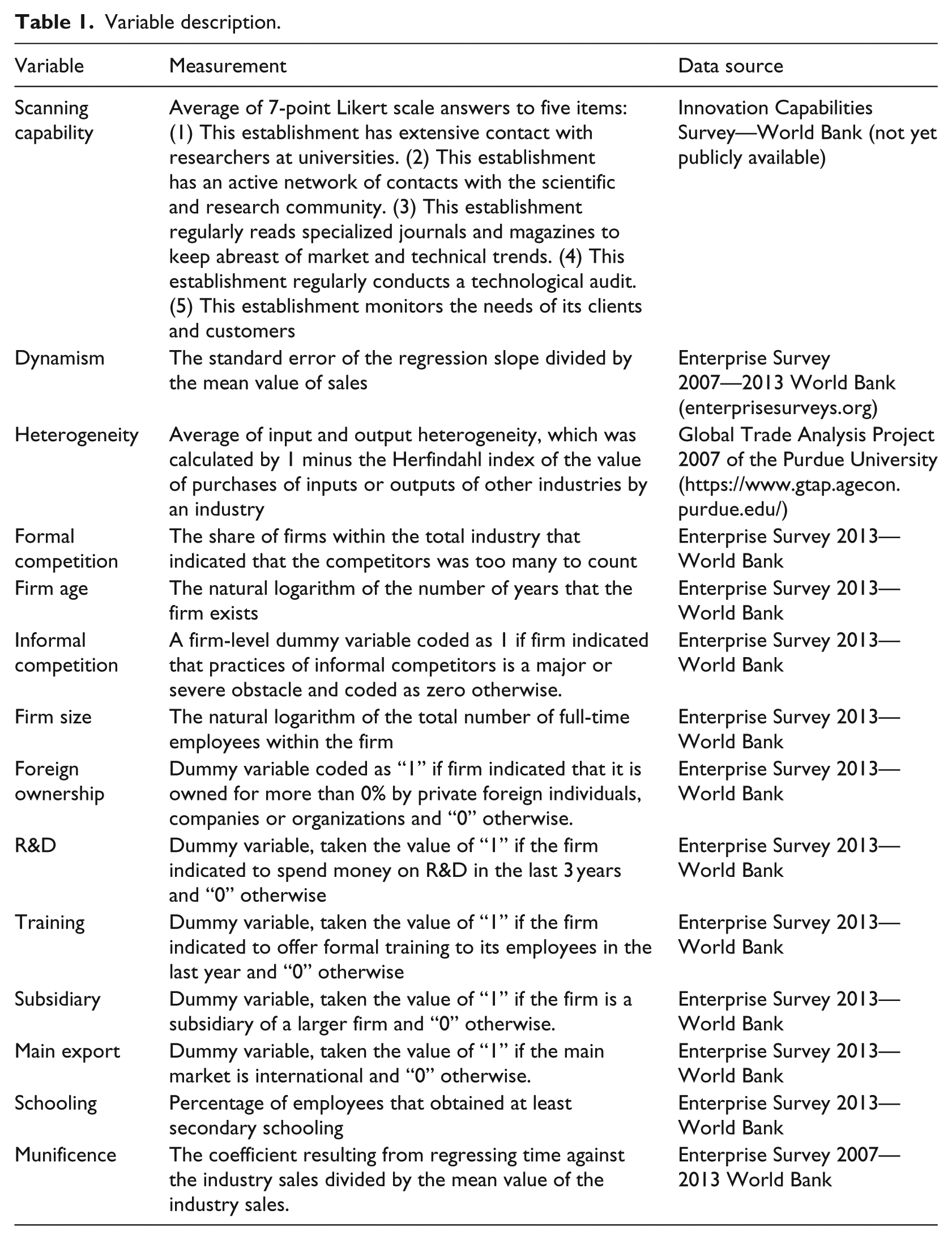
The World Bank uses stratified random sampling as sampling methodology. The strata for the Enterprise Survey have been based on firm size, business sector (manufacturing and services), and geographic region within a country. 2 The sample for the Innovation Capabilities Survey is a subsample of the Enterprise Survey sample and is drawn from manufacturing firms only. This increases the comparability of firms within our sample. A total of 440 firms were surveyed for our sample: 191 from Kenya, 113 from Tanzania, and 136 located in Uganda. Although the dependent variable has only been measured in 2015, which makes it impossible to conduct a panel data analysis, there is a 2-year interval between the surveys. The advantage is that our dependent variable was measured 2 years after our independent variables, which introduces a time lag to diminish the chance of reverse causality. Moreover, we avoid potential problems related to common method bias by using separate sources of data for our dependent and independent variables (Podsakoff et al., 2003). For a concise overview of all the variables and data sources, see Table 1.
Variable description.
Dependent variables
Firm scanning capability
We measured a firm’s scanning capability by assessing the degree to which the establishment agreed with statements regarding the firm’s own scanning and monitoring activities. The response was measured with a 7-point Likert scale, ranging from “completely disagree” to “completely agree.” Several different statements from previous studies were used to measure scanning and monitoring. We used three items from Danneels’ (2008) environmental scanning scale. We combined these items with two items related to selection. One item indicates whether a firm monitors its clients’ and customers’ needs; one item is concerned with the monitoring of technology within the firm, based on Radas and Božić (2009). The items altogether denote the firm’s ability to scan and monitor information that it finds valuable because it indicates whether a firm is aware of the knowledge/technologies that are relevant for the market and whether it fits within the firm (see also Table 1). The average of the scores of all these items together indicates the level of scanning capabilities of a firm. The reliability of the scale is α = 0.71 which conforms to the accepted level of at least 0.70 (Nunnally, 1978).
Independent variables
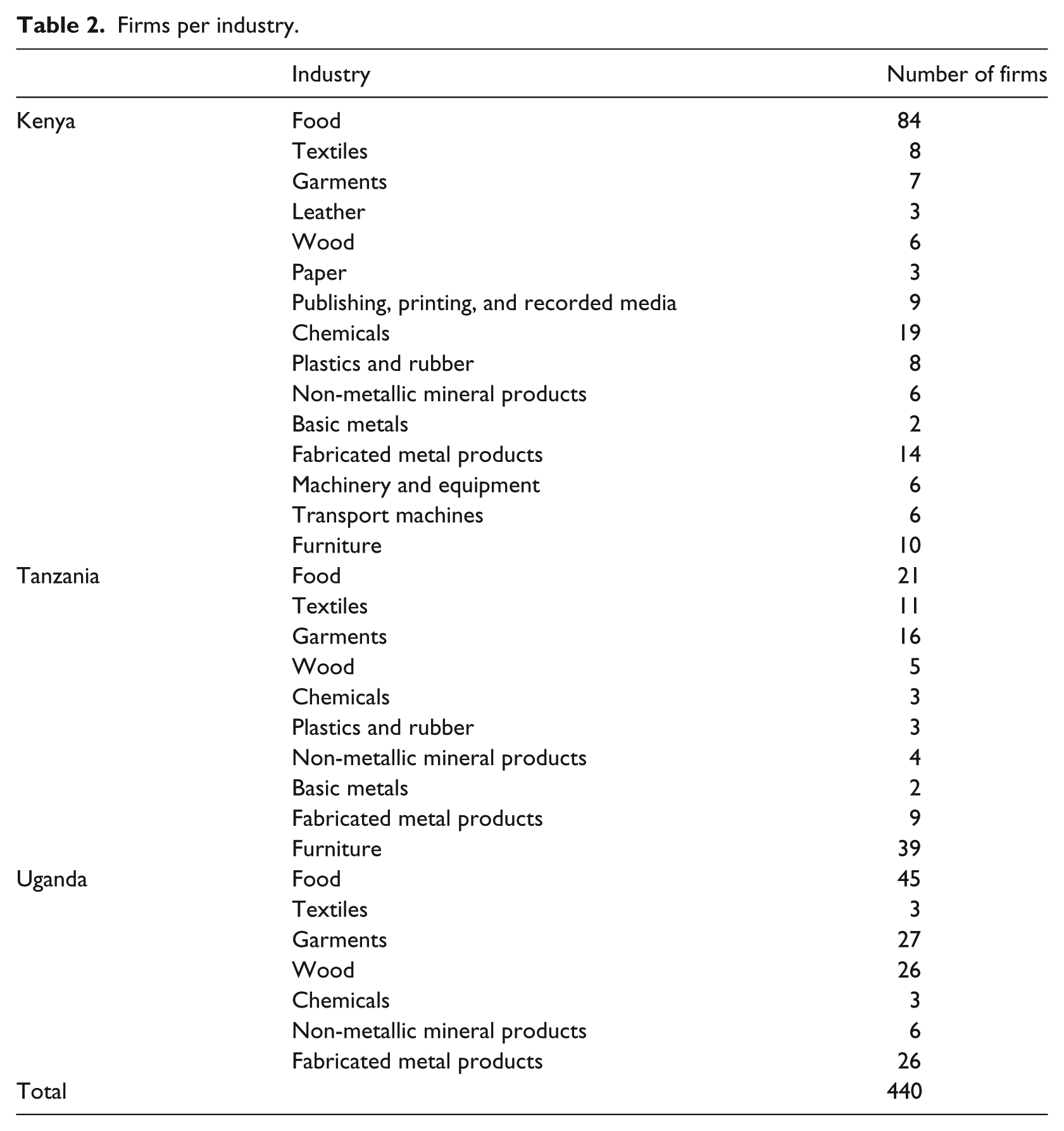
Data about the environment in our sample were aggregated from the Enterprise Surveys of 2007 and 2013 and input-output tables and linked to the primary survey data about scanning capabilities, as presented in the Innovation Capabilities Survey (2015). In addition, we used probability weights to calculate our variables, as the sample is a stratified sample instead of a random sample. This means that all members of the population are grouped along different categories (firm size, business sector, and geographic region within a country). The probability to be selected differs between the different groups. Therefore, probability weights should be used to take care of the varying probabilities among different categories in order to make inferences about the population of non-agricultural private firms at the industry level. Our dataset consists of variables for firms and industries. All the firms within our sample belong to the manufacturing sector, but there are different industries within the manufacturing sector (see Table 2). Therefore, firms within the same industry were assigned the same score on the industry variable, yet differed in their score regarding firm-level characteristics and the dependent variable (i.e. scanning capability). This implies that our data have a multi-level structure with firms nested in industries. In the data analysis section, we will explain how we dealt with this data structure in our analyses.
Firms per industry.
Dynamism is measured as the fluctuation of industry sales around the trend growth. So to measure dynamism, we first needed a measure of the trend growth within the industry for which we used the measure of munificence. We estimated the munificence for each industry in each country separately using the Enterprise Survey of 2007 and 2013. In both surveys, firms were asked to indicate their sales for the last fiscal year and three fiscal years ago. We used the sales information from these four different data points in time. For instance, for Uganda, we used sales data of 2002, 2005, 2009, and 2012. We aggregated this information to the industry level and estimated the growth in sales per industry between these four data points. Specifically, munificence is measured as the coefficient that results from regressing time against the industry sales divided by the mean value of the industry sales. We then calculated the standard error of the regression slope. The next step was to divide this standard error of the regression slope by the mean value of sales (Bradley et al., 2011; Dess and Beard, 1984). The higher the score on dynamism, the higher the volatility within that industry. This measurement is similar to the ones used in previous studies (e.g. Goll and Rasheed, 2004; Nielsen and Nielsen, 2013).
In Tanzania, the garments industry has the lowest score on dynamism, while wood and furniture have the highest. The garment industry is not so volatile, which seems logical because garment seems to be an industry that produces goods that consumers always need. Therefore, demand in this industry is relatively predictable. The wood and furniture industry is much more volatile. This reflects that wood and furniture are products that are more sensitive to changes in the economy. Consumers might be more inclined to save on furniture than on basic goods such as clothing. Therefore, it seems logical that wood and furniture are more dynamic industries than garment.
Heterogeneity is the extent to which industries require many different inputs and outputs (Dess and Beard, 1984). We used input-output tables constructed by the Global Trade Analysis Project at Purdue University in 2007 for the three countries and distinguished among different industries, on the basis of those mentioned in the Innovation Capabilities Survey of 2015. We first calculated the Herfindahl index for input and output heterogeneity. The Herfindahl index is calculated as follows
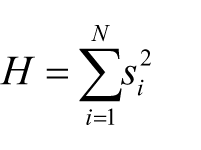
where si is the share of input (or output, respectively) i in the industry and N is the number of total inputs (or outputs). In other words, the Herfindahl index is defined as the sum of squares of the value of inputs and outputs stemming from other industries used by one industry. Thus, considering for instance input heterogeneity, if in one industry the input comes from two different sources and each input has a share of 50%, the Herfindahl index equals 0.502 + 0.502 = ½.
In line with previous research (i.e. Bakker and Knoben, 2015), we calculated the final score for both measures by taking 1 minus the Herfindahl value to ascertain that a higher score indicates a higher level of heterogeneity. Given that in- and output heterogeneity are highly correlated, we took the average of both scores to arrive at our single measurement for heterogeneity.
A good example of an industry that scores high on heterogeneity is the machinery industry in Kenya. Most industries rely in some sort on machinery, which explains the high score on output heterogeneity because the output of the machinery industry is sold to different industries. The high score on input heterogeneity indicates that the industry uses a great deal of different inputs to produce the machinery. An industry that has a low score on heterogeneity is the leather industry. The input in the production process of making leather is quite homogeneous and the output heterogeneity of leather products is much lower compared to machinery. This indicates that leather products find their way to only a handful of other industries, while machinery is used in most industries.
Formal competition refers to the density of firms within the same environment (Boyd, 1990). Although previous research has relied on the total number of firms that exists within an industry, this sort of database is not available in the context of lower income countries. We had to construct our own variable to proxy formal competition. We constructed a proxy variable that indicates which amount of firms within an industry indicated that the number of competitors were too many to count. If a firm indicated that the number of competitors was too many to count, we coded it as one. We then computed the share of firms within the total industry that gave this answer and used it as our proxy for formal competition, as it gives an indication about the concentration within an industry.
The furniture industry in Uganda has the highest score on this variable, suggesting that there is a large fauna of competitors crowding this industry. This score reflects all the small shops that sell furniture along the same street, which indeed represents high competition. The transportation sector in Kenya has the lowest score on this variable, which means that most firms in this sector did not emphasize a very large amount of competitors and that the industry is quite concentrated. This suggests that firms in the Kenyan transportation sector can easily oversee their competitors.
Informal competition refers to the informal competition that a firm faces. Ideally, we would have used an aggregated measure for this type of competition as well. However, informal competition often does not follow traditional industrial classifications (Mendi and Costamagna, 2017). As such, we lacked a basis to aggregate firm-level perceptions. Therefore, we decided to use a firm-level perception measure. Specifically, firms were asked to indicate whether “practices of competitors in the informal sector were an obstacle to the current operations of this establishment?” If firms indicated that it was a major or severe obstacle to the firm, we coded the variable as “1” and “0” otherwise.
Control variables
In addition to the main independent variables, we controlled for the following firm-level factors: firm age, firm size, foreign ownership, R&D, schooling, and training. We also included munificence as an industry-level control variable and used country dummies to capture macro-level differences.
Age
The age of a firm has been indicated as a factor that influences the development of scanning capabilities (Helfat and Peteraf, 2003). Older firms are less flexible (Hansen, 1992) and will therefore react more slowly to changes in the environment. Firm age was measured as the natural logarithm of the number of years that the firm has existed, which was determined by inquiring about the establishment year of the company and subtracting this from the year in which the survey was performed.
Size may influence the development of scanning capabilities and the way in which the firm deals with its environment. Larger firms have more resources to develop and change their routine. This may influence the need for external resources available within the environment (Barnett, 1997). We measured size as the natural logarithm of the total number of full-time employees within the firm.
Foreign ownership
In order to construct this control variable, we used answers to a question about the percentage of the company that is owned by private foreign individuals, companies, or organizations to construct the control variable. For the control variable “foreign ownership,” companies whose answers had provided any value greater than 0% were assigned a “1” and “0” otherwise. We controlled for foreign ownership because firms in lower income economies often greatly benefit from technological knowledge available from their international headquarters and research labs (Isobe et al., 2000), which endows them with a better opportunity to develop scanning capabilities and deal with the external environment.
R&D gives the firm the capacity to generate and process knowledge as well as to absorb external knowledge (Cohen and Levinthal, 1989; Rothaermel and Hess, 2007). This influences a firm’s ability to develop scanning capabilities and to rein its environment. Therefore, we included a dummy variable, which took a value of “1” if the firm indicated having spent money on R&D during the last 3 years.
Schooling is used as a proxy for the human capital endowments of a firm. We measured the level of schooling of a firm by the share of employees who completed high school. Specifically, the question “What percentage of your full-time workers has completed their high school?” has been used. The resulting variable ranges between 0 and 100 by design.
Training enhances learning and increases the general skills and abilities that employees have, which is crucial for the development of scanning capabilities (Easterby-Smith and Prieto, 2008; Felin et al., 2012; Sirmon et al., 2007; Zollo and Winter, 2002) and the ability of a firm to deal with its environment. Therefore, we include a dummy variable based on the question: “In the last fiscal year did your company offer formal training programs to your full-time permanent employees?” Companies that answered affirmatively were coded with “1,” all other companies with “0.”
Subsidiary
A subsidiary of a larger firm will have a limited range to make its own choices because the headquarters will influence its decisions. Therefore, its urge to scan the environment for new opportunities will decrease. Hence, we included a dummy variable, which was coded “1” if the company was a subsidiary and “0” otherwise.
Export signals if the main geographical market of the firm is the international market. Since exporting to the international market is another channel that a firm could use to gather information, we included a dummy variable that took a value of “1” if the main market to which a firm sells its products is international and “0” if it is local or national.
Munificence
Following Boyd (1990), we measured munificence as the coefficient resulting from regressing time against the industry sales divided by the mean value of the industry sales. As explained in our measurement of dynamism, we estimated the munificence for each industry in each country separately using the Enterprise Survey of 2007 and 2013. In both surveys, firms were asked to indicate their sales for the last fiscal year and three fiscal years ago. We used sales information from these four different data points in time. For instance, for Uganda, we used sales data of 2002, 2005, 2009, and 2012. We aggregated this information to the industry level and estimated the growth in sales per industry between these four data points. This procedure is in line with the method that has been used in previous studies (e.g. Bradley et al., 2011; Dess and Beard, 1984; Goll and Rasheed, 2004; Nielsen and Nielsen, 2013).
Country dummies
We included country dummies to account for any country-specific effects and used Uganda as a reference category.
Data analysis
We estimated regression models taking the scanning capability as dependent variable. Since the dependent variable is normally distributed, we used ordinary least squares (OLS) regression techniques to estimate our results. As noted earlier, our data have a multilevel structure with firms nested within industries. As a result, the estimated standard errors could be biased due to correlations of errors between firms within the same industries. We accounted for this potential bias by relying on clustered standard errors at the industry level. The practice of clustering standard errors is one of the most common methods to deal with nested data (Huang, 2016) and has frequently been applied in similar cases (e.g. Barasa et al., 2017; Haenssgen and Ariana, 2017). Finally, all the independent variables are standardized, such that we can compare the effect sizes of the coefficients.
Results
Table 3 shows the pooled descriptive statistics, correlations, and variance inflation factor (VIF) scores. As indicated by the correlations (maximum correlation of −0.499) and low VIF scores (well below 10; O’Brien, 2007), multi-collinearity is not a concern in our analyses. The descriptive statistics indicate that only 8.2% of our firms are foreign owned, 26.2% conduct R&D, and 37% provide training to their employees. A remarkable 45.5% of firms in our sample point to the informal sector as a major or severe obstacle. This is a higher percentage than the one found in previous studies. For instance, McCann and Bahl (2017) indicated that, on average, informal competition is a minor to a moderate obstacle in Eastern Europe and East Asia. In all, 44.8% of the firms in our sample indicated that the number of formal competitors was too many to count, which implies that they experience intense formal and informal competition.
Descriptive statistics, VIF scores, and bivariate correlations.
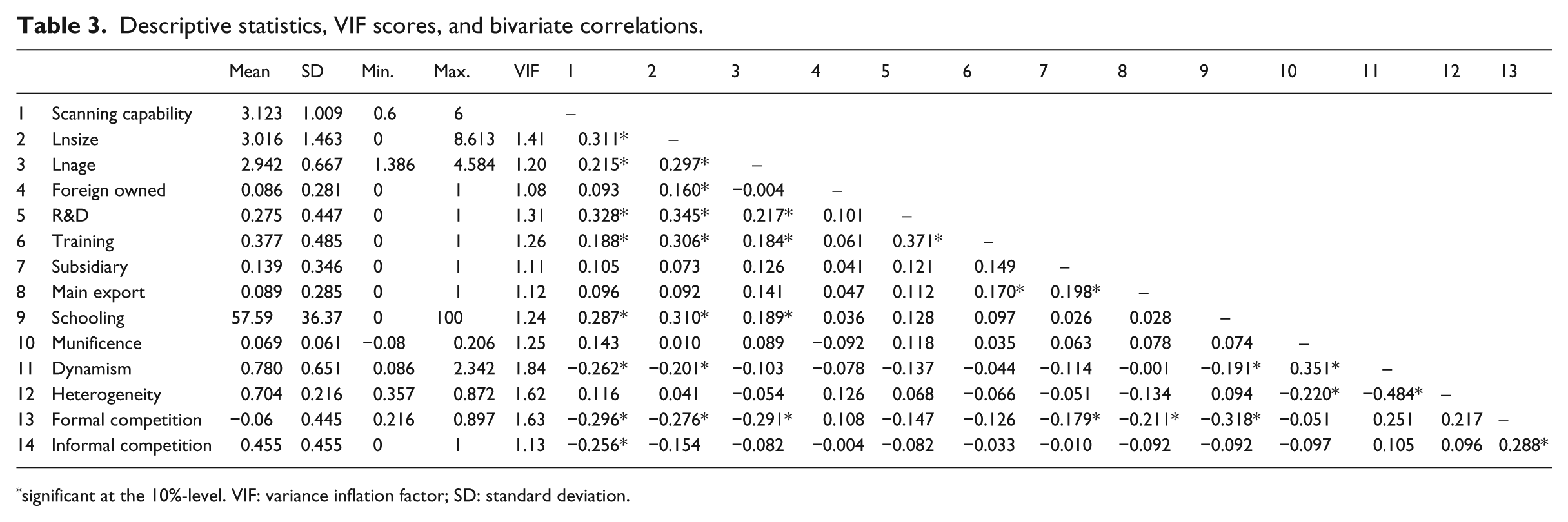
significant at the 10%-level. VIF: variance inflation factor; SD: standard deviation.
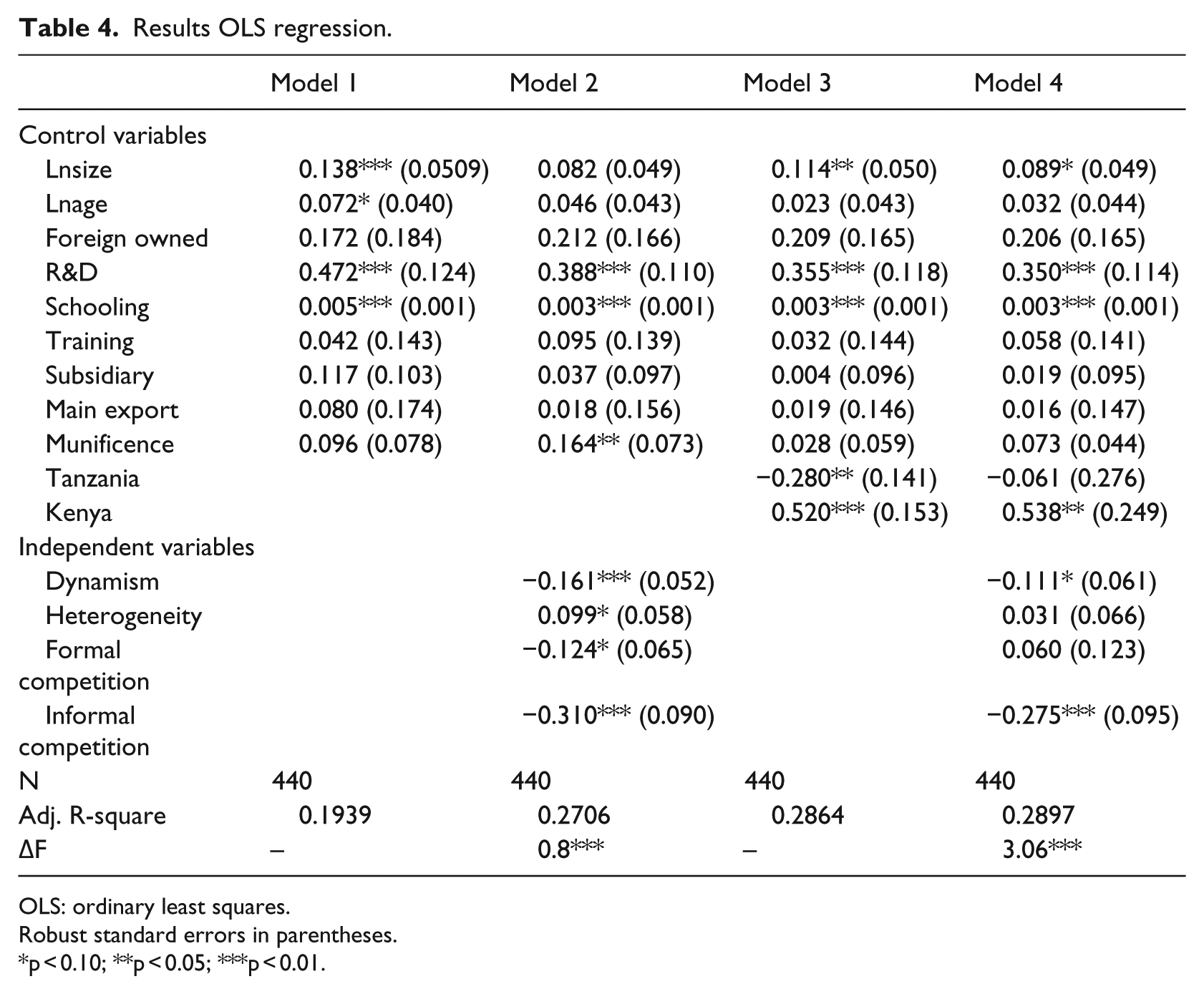
Table 4 reports the results of our OLS regression analysis performed to test our hypotheses. We estimated four different models. First, we estimated a baseline model (Model 1), including the control variables only. In the second model, we added the direct effects of the industry-level characteristics (Model 2). Models 3 and 4 are identical to Models 1 and 2 except that we re-estimated the models with country dummies. The models that include the hypothesized variables (Models 2 and 4) have a better fit than our models with controls only (Models 1 and 3). This also holds for the models with country dummies (Models 3 and 4) compared to the models without country dummies (Models 1 and 2), which indicates that the hypothesized variables and the country dummies significantly increase the explanatory power of our model. For the interpretation of our results, we focused on Model 4, which has the best fit.
Results OLS regression.
OLS: ordinary least squares.
Robust standard errors in parentheses.
p < 0.10; **p < 0.05; ***p < 0.01.
With regard to the control variables, the industry variable munificence has a positive but statistically insignificant relationship with scanning capabilities. This suggests that a relative abundance of resources available to firms does not trigger higher levels of scanning capabilities. On the contrary, several firm internal factors that do have a positive and significant relationship with scanning capabilities are R&D (b = 0.350, p < 0.01), schooling (b = 0.003, p<0.01), and size (b = 0.089, p = 0.035). These results point at the importance of internal factors for the development of scanning capabilities. Size gives a firm the resources to develop a scanning capability, while R&D and schooling give it the capacity to generate and process knowledge and to absorb external knowledge (Cohen and Levinthal, 1989; Rothaermel and Hess, 2007), which influences a firm’s ability to develop scanning capabilities.
Regarding the effect sizes of significant firm characteristics, the effect of size, schooling, and R&D seem substantial. R&D has a large coefficient of 0.350. However, we should take into account that this is a dummy variable, indicating that a step from the minimum of zero to the maximum of one increases the level of scanning capabilities by 0.350. Schooling has a coefficient of 0.003 but has a range of 0−100. So across its entire range, the magnitude of its impact is comparable to that of R&D. Size has a coefficient of 0.132, but the full range of size runs from 0 to 8.613. Thus, the effect size of the full range is 8.613 times the coefficient, which results in a size of 1.137. This is even larger than the effect size of R&D and schooling, but the estimate of size is less significant. In short, all three variables significantly influence the level of scanning capabilities of firms, with size having the largest impact. In the discussion section, we will get back to the importance of these firm internal drivers of scanning capabilities.
In Hypothesis 1, we hinted at a positive relationship between dynamism and scanning capabilities. This hypothesis is not supported by our analysis. Instead, we found a significant negative relationship between dynamism and scanning capabilities (b = −0.111, p = 0.070). Thus, it appears as if firms faced with higher levels of dynamism would have significantly lower levels of scanning capabilities compared to firms active in an industry with lower levels of dynamism. This suggests that dynamism dissuades a firm from building scanning capabilities. The uncertainty related to dynamism has a paralyzing effect on firms facing highly dynamic environments instead of motivating them to develop scanning capabilities. The magnitude of the effect is such that over its entire range, dynamism has a negative effect on scanning capabilities of −0.255. This negative effect is sizeable but smaller than the effects of the firm internal variables. This indicates that the dis-incentive to develop scanning capabilities generated by highly dynamic environments can be overcome by firm-internal drivers.
In order to test whether the environment in East Africa is more dynamic compared to rich countries, we benchmarked the level of environmental dynamism in Uganda, Kenya, and Tanzania against the level of environmental dynamism in Poland. We chose Poland because it is one of the richest countries for which the World Bank collects similar data. This gave us the opportunity to have exactly the same measure of dynamism in a more developed country. The comparison shows that the mean level of dynamism in Poland is 0.548, which is considerably lower than the mean level of dynamism in our sample (0.786). The highest level of dynamism in Poland is 1.070, whereas in our sample, it is more than double (2.342). This supports the notion that the level of dynamism is indeed higher in the context of the East African region. Higher levels of dynamism no longer spur the development of capabilities, but rather seem to paralyze a firm by discouraging the development of its capabilities.
Hypotheses 2 and 3 both relate to the complexity of the industry in which the firm is active. Heterogeneity refers to the different inputs and outputs an industry employs, while concentration refers to the competition within an industry. We expected a positive relationship between heterogeneity and the level of scanning capabilities (Hypothesis 2). In our third hypothesis, we expected that the higher the level of formal competition within an industry, the higher the level of scanning capabilities, thus a positive relationship. Although both do have a positive relationship with our scanning capability variable in Model 4, these are insignificant. In Model 2, the relationships are marginally significant, but there are country-specific effects that influence the results.
In Hypothesis 4, we expected to find a negative relationship between informal competition and scanning capabilities. Our results strongly support this hypothesis. The coefficient is highly significant and negative (b= −0.275, p < 0.01). This result holds in Model 2 with country dummies and Model 4 without country dummies, indicating that informal competition has a robust hampering effect on the development of scanning capabilities of firms. Given that informal competition is measured with a dummy variable, its coefficient covers its effect over its entire range. This negative effect is very similar in size to that of dynamism but smaller than the effects of the firm internal variables. Again, this indicates that the dis-incentive to develop scanning capabilities generated by highly competitive environments can be overcome by firm-internal drivers.
Discussion
In this article, we studied the importance of environmental characteristics as drivers of scanning capabilities of firms in East Africa. We expected that certain environmental characteristics push firms to develop scanning capabilities, while others might actually paralyze them. We tested these hypotheses in East-Africa and found strong empirical support that environmental characteristics hamper rather than support the development of firm capabilities
An elucidation of the contextual factors that spur or hamper firms to build scanning capabilities is theoretically important because it addresses long-standing questions about the success of organizations dealing under different environmental conditions. Scanning capabilities are of crucial importance for the growth and viability of organizations. Although we do not test this relationship directly, scanning capabilities are widely viewed as a crucial step in the overall effort to align strategies with the external environment, which is expected to enhance a firm’s performance in dynamic environments in the long run (Daft et al., 1988; Garg et al., 2003). Building on the contingent RBV, we assert that the value of scanning capabilities strongly depends on the environmental context (Lippman and Rumelt, 2003). Whereas the contingent RBV has mainly highlighted the role of environmental conditions in the use of resources and capabilities, our focus was on environmental conditions that drive firms to develop new capabilities.
Understanding how different characteristics of the environment influence the development of scanning capabilities is vital for enhancing our understanding of organizational survival. It is particularly interesting to study this in East-Africa because its competitive environment is extremely challenging (George et al., 2016) and external factors are even more salient in this region due to the more volatile environmental setting (Ofori-Dankwa and Julian, 2013). Our study revealed some surprising findings, which are probably related to the region where it was carried out. In line with scholars who have studied this context before (George et al., 2016; London et al., 2010; Ofori-Dankwa and Julian, 2013), we concur that “Westernized approaches are ill-suited to the unique environments” in which firms in lower income countries or base-of-the-pyramid markets operate (Arnould and Mohr, 2005: 271). The Sub-Saharan region lags behind the rest of the world in terms of infrastructure, governance systems, and financial institutions, which makes it extremely difficult for firms to operate in these conditions (Ofori-Dankwa and Julian, 2013). We see that the African context impacts on the development of firms’ scanning capabilities in two important ways.
First, surprisingly and in contrast with what we expected, the relationship between dynamism and scanning capabilities turned out to be negative. Previous studies have indicated that very dynamic or “high velocity” markets are characterized by blurred boundaries, high degrees of ambiguity, nonlinear changes, and uncertainty (Eisenhardt and Martin, 2000: 1111). In these markets, dynamic capabilities depend on “situation-specific new knowledge,” which “occurs by engaging in experiential actions to learn quickly” and use “prototyping and early testing to gain new knowledge quickly” (Eisenhardt and Martin, 2000: 1111–1112). However, in our study, higher levels of dynamism did not spur the development of scanning capabilities but, on the contrary, had a negative effect on developing firm-level capabilities.
Under conditions of extreme dynamism, “the level of understanding that can be obtained via comprehensiveness might be so low as to render comprehensiveness futile as a basis for initiating adaptive responses” (Heavey et al., 2009: 1295). Comprehensiveness normally provides knowledge and helps escape doubt in uncertain situations (Fredrickson, 1984). However, highly unpredictable environments are at “the edge of chaos” (Davis et al., 2009: 439), a perilous edge where it is extremely challenging for firms to survive. Firms may realize that the number of opportunities that can be successfully executed under these circumstances drops significantly, due to chaos (Davis et al., 2009: 439). This may trigger a paralyzing reaction from firms that face a highly dynamic environment, which means that such a high-velocity environment will seriously hamper the development of new capabilities. Combining this insight with those of studies done in Western contexts, where traditionally a positive relation is found, suggests that over its entire range, there is an inverted U-shaped relation between uncertainty and the development of (scanning) capabilities. However, most studies (including our own) observe only part of that effect. More cross-country studies covering both lower and higher income nations would be fruitful to study these over-arching effects of uncertainty.
Second, the relationship between informal competition and scanning capabilities was negative, as we expected. Informal competition is a highly salient contextual factor in lower income countries (Iriyama et al., 2016; McCann and Bahl, 2017). For instance, Iriyama et al. (2016) showed that informal competition pushes Indian information technology (IT) firms into corruptive activities in order to counter the competitive threats from informal firms. McCann and Bahl (2017) demonstrate in a cross-sectional study in 30 countries in Eastern Europe and central Asia how the threat of informal competition leads firms to actively engage in new product development activities to maintain a competitive edge. Our results are strikingly different. We find that high degrees of informal competition do not lead to proactive scanning behavior to anticipate changes in the environment and respond competitively. Instead, they lead to lower levels of scanning capabilities.
This negative relationship is the result of the uncertainty created by the informal sector and, more importantly, by the underground and unobservable nature of informal competition (Feige, 1990; Meagher, 1995; Restrepo-Echavarría, 2014). This invisibility in combination with uncertainty seems to hamper the development of scanning capabilities. Therefore, local African firms may find it difficult to recognize information from the informal sector and use it to their benefit (Cohen and Levinthal, 1990). Yet, our results also provide some promise for African firms. The ability to scan a firm’s environment and use knowledge from suppliers, customers, competitors, or external agencies partly depends on the degree of schooling. Schooled employees are better able to absorb, transform, and exploit this knowledge compared to a workforce without any schooling (cf. Cohen and Levinthal, 1990). Similarly, investing in R&D is another alternative means to develop scanning capabilities. R&D has proved to be an important component of innovation-based strategies in African firms (Goedhuys, 2007). Even in resource-scarce environments, investing in R&D seems promising (Barasa et al., 2017). Hence, investing in firm-level factors, such as schooling and R&D, might offer an alternative to develop scanning capabilities that allow firms to develop new products and services or to exploit new technologies (Baptist and Teal, 2014), regardless of the dis-incentives to develop such capabilities from a firm’s environment.
To summarize, higher levels of dynamism and a high degree of informal competition may present firms with too much uncertainty, which may lead to their paralysis. Indeed, as Newman (2000) explains by comparing them to individuals subjected to ever-increasing environmental uncertainty and stress (Staw et al., 1981), firms’ overexposure to uncertainty and external search might become overwhelming. Similarly, Karabag and Berggren (2014) argue that competitive intensity in emerging economies may show a negative relation with productivity, which suggests that “excessive competition discourages firms to invest in production expansion or capital equipment which would boost their productivity” (p. 2218). Informal competition and extreme dynamism in lower income countries may create an adverse situation that induces stress and limits firms’ ability to change even as performance decreases (cf. Su and Si, 2015). Indeed, too much uncertainty may lead to a loss of control and trigger rigidity (Staw et al., 1981) in firms, thus pushing them to fall back on routine behavior (Kennedy and Fiss, 2009), instead of taking an active stance to develop scanning capabilities to monitor the environment and swiftly adjust to unforeseen circumstances. The rapidly changing context of lower income countries suggests that competition may be temporarily increased due to institutional transitions (Peng, 2003). The shift from relational to market competition may have had an effect on firms’ ability to develop new scanning capabilities. Future research could include a variety of institutional pressures that have forced firms to engage in market-based competition to better understand the relationship between environmental uncertainty and firm behavior in lower income countries. Another direction for future research could involve focusing on the performance implications that this shift toward market-based competition may have for firms in developing countries.
In spite of the contributions of this research, there are also several limitations. First, we did not have the possibility to formally control for endogeneity and empirically establish causality. We were able to introduce a time lag between our dependent and independent variable, which limits the problem of reverse causality. However, in order to formally tackle the problem of endogeneity and establish causality more formally, we should use a panel data analysis or an instrumental variable approach. Unfortunately, a proper panel data set is not (yet) available and a suitable instrumental variable was not available either in the dataset. Future research could empirically investigate these issues once such data become available.
Second, our argumentation is centered on the main direct effects and does not consider interactions among them. Since this is one of the first studies to analyze the role of uncertainty upon scanning capabilities in lower income countries, we focused specifically on these main effects. Future research could analyze whether curve-linear or synergetic effects are at play as well: it could be that certain variables reinforce each other’s effect and have an even stronger paralyzing effect on firms.
Third, due to data limitations, we sometimes had to rely on proxies as measures of certain concepts, such as formal and informal competition. Although these measures indicate the level of competition, future research could use more precise measures should more data become available. The same argumentation holds for certain firm-level variables, such as R&D and training. Giving our dataset, only dummy variables could be constructed. However, future research could collect data that more precisely describe the amount spend on R&D and training.
To conclude, our study clearly shows that contextual factors influence firms to develop scanning capabilities. In the particular context of Africa, environmental characteristics hamper the development of scanning capabilities. The results highlight the adverse effect of the high uncertainty in the African context due to dynamism and competition of the informal economy. Our study also illustrates that we need to be careful in using Western management concepts in an African context, for these may not be able to capture the essence of doing business in Africa.
Footnotes
Declaration of Conflicting Interests
The author(s) declared no potential conflicts of interest with respect to the research, authorship, and/or publication of this article.
Funding
The author(s) disclosed receipt of the following financial support for the research, authorship, and/or publication of this article: The authors gratefully acknowledge the financial support provided by the UK’s Department for International Development (DFID, grant number PO5639). The funding agent had no involvement in study design; in the collection, analysis, and interpretation of data; and in the writing of the report.
