



Abstract
Preload is important for the performance of bolted connections, especially for high strength bolt like slip-critical blind bolt (SCBB). There have been relatively few studies focused on detecting the looseness of blind bolts prior to this research. This article proposes a method based on the acoustoelastic effect to monitor the change in the preload in the bolt and detect the relaxation from the initial preload. The technique is suitable for such blind bolted connection because it only needs to connect with one side of bolted connection, unlike some other bolted connection monitoring methods. Considering that for SCBB, the traditional acoustoelastic technique cannot be applied because it needs the unstressed state of the bolt as baseline. The relationship between looseness of bolt load and change of travelling time is deduced. The measuring objective is then changed to the looseness of bolt load, instead of the bolt load itself. The practical processes of calibration, real-time monitoring and periodical detection are proposed, considering the application on real construction site. The tests on different configurations of SCBBs prove the reliability of the ultrasonic technique based on change in time-of-flight.
Keywords
Highlights
An ultrasonic technique that can do both real-time monitoring and periodical detection on bolt preload looseness is proposed, especially for blind bolted connection with tor-shear type of bolt shank.
The linear relationship between the looseness of bolt load and the change of TOF is derived theoretically and proved in experiments.
The processes of calibration and detection are given specifically, which is suitable for SCBBs on real construction site.
The experimental verification considers broad ranges of configurations, proving the reliability of the technique.
Introduction
Considering hollow section column possesses significant structural and architectural advantages, 1 various blind bolts, which can be easily installed from only one side (the outer side of the column), have developed recently. The tightening mechanisms include expanding sleeves, threads or folding spacers.2–7 Among the various blind bolting systems currently available, the slip-critical blind bolt (SCBB) is one of the very few that can achieve the same pre-tension as the conventional high strength bolts (Figure 1). 8 Appropriate pretension is critical for the safety of bolted joints with SCBBs, and even for the safety of whole structure.9–12
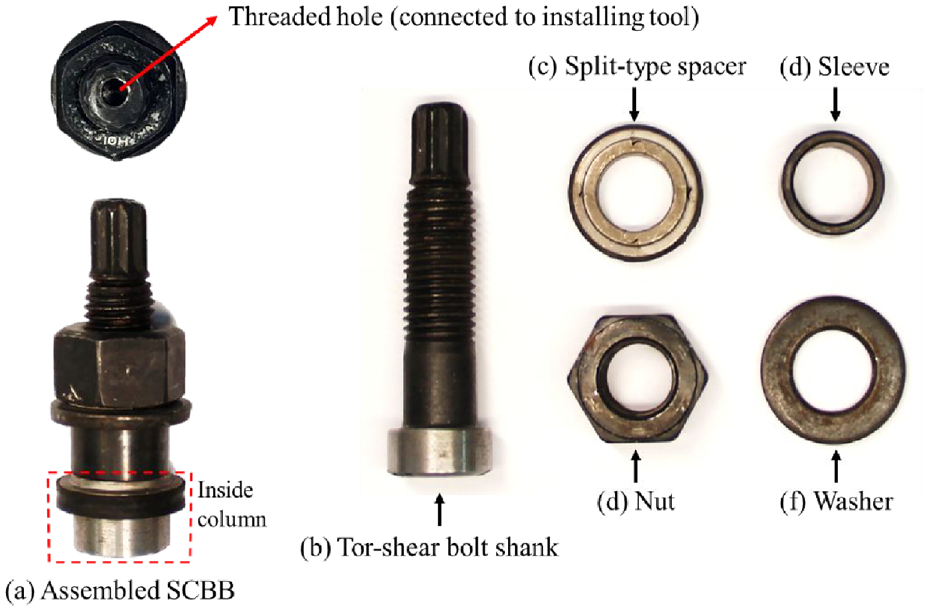
Components of SCBB assembly. 8
For high strength bolts, especially the slip-critical type, preload plays an essential role in their mechanical performance. It can strengthen the reliability of the connection and influence the performance of the connection.13–15 However, some inadvertent operations during installation or cyclic loads commonly cause the looseness of preload in bolts, which may fail to provide the sufficient clamping force required for the joint integrity and then lead to a catastrophic failure of the whole structure.9,16 Many techniques have been developed to measure the pretension of bolts in situ, including vision-based method,17–19 fibre Bragg grating technique, 20 piezoelectric active sensing method21,22 and so on. 23 Most vision-based researches on the bolt looseness use loosening angle as monitoring objectives. But at the early stage of bolt looseness, 30% loss of preload in bolt shank could only cause less than 0.5° of rotational angle of nut. 24 It is difficult to precisely define the rotation angle which is close to 0 based on vision. Fibre Bragg grating technique and strain gauge technique require to insert sensing material in stressed area of bolt, which not only increases the cost but also damage the bolt. For the piezoelectric active sensing method, two piezoceramic transducers should be arranged at different sides of connection, respectively, as actuator and sensor, so the method is obviously not suitable for blind bolted connections. Some latest researches used sound signal to measure the clamping force or detect the looseness of the connections.25–27 Based on the signals induced by percussion, the methods based on convolutional neural networks (CNNs) or bidirectional long short-term memory have been proved to be effective to classify the damage features.26,27
Among these techniques, ultrasonic guided waves in solid media have played an important role in non-destructive testing. 28 Acoustoelastic effect-based methods, which use ultrasonic wave to measure the stress in bolt shank based on acoustoelasticity theory, have advantages of simplicity, low cost, rapidity and practicality. It only needs one piezoelectric (PZT) sensor to release the wave and receive the reverse wave. Moreover, many researchers found that the measurement accuracy of this method is affected by complex factors, including temperature, 29 bolt size, 30 stress distribution, 31 discreteness of the thickness of the coupling layer, 32 the non-uniformity of the material, 33 etc. It is still worth exploring how to reduce the effect from environment or material and improve the operation of measurement not only in laboratory but also on real construction site.
Most of researches used change of time-of-flight (TOF) to indicate the velocity of ultrasonic wave, which is defined as the time difference between the reflecting waves in the first-round trip and the second-round trip.29,34,35 The value of TOF is estimated as the length of period between the emission of the ultrasonic wave and reception of ultrasonic echo. Mostly, also in this research, the peak point of the maximum amplitude characteristic wave in the primary echo signal is used to represent the reception of ultrasonic echo. 29 For the short bolts (M8 × 37 mm), experiments and simulation were conducted to measure the pretension in bolt shank by TOF method.36,37 With reasonable and effective process control, the method can achieve positive measurement accuracy. The TOF method has been also proved to have the potential and the suitability for evaluating the service stress levels in the prestressed seven-wire steel strands. 38
Few research results, concerning the measurement of preload looseness in blind bolt, have been reported. In this article, targeting at SCBB with the tor-shear bolt shank, an ultrasonic technique of preload looseness measurement is developed based on acoustoelastic effect. The TOF method is not used to measure the stress directly like before, but applied to detect the looseness instead. Unlike the traditional TOF method, this study uses the bolt’s tightening state with undamaged pretension, as the initial state, or baseline. That means there is a clear difference between this research and most studies using TOF. The relationship between looseness of bolt load and the change of TOF is derived first and proved by the experiments. After the calibration, both real-time tests and periodical detection are carried on for different configurations of bolts. The influence of bolt size and grip length is investigated. A detecting procedure suitable on real construction site is proposed. The measurement accuracy of the technique is assessed according to the test results as well.
Theoretical background
This article uses longitudinal wave to do the measurement, which is more sensitive to the applied stresses in materials.38,39 The relationship between TOF transmitted by longitudinal waves, which propagate in the same direction as the applied stress, and applied stress is derived as following based on acoustoelasticity theory and Hooke’s law.10,29,40,41
Although some researchers found the stress distribution at the beginning and end of a loaded shank is different from the middle part, the measurement errors caused by that can be ignored. 33 The clamped part of the bolt shank (lc in Figure 2) is assumed to be subjected to a uniform uniaxial stress σ. And the length of bolt shank after loading l(σ) can be calculated as Equation (1).

in which l0 is the original total length of bolt shank and E is the Young’s modulus of the bolt material.
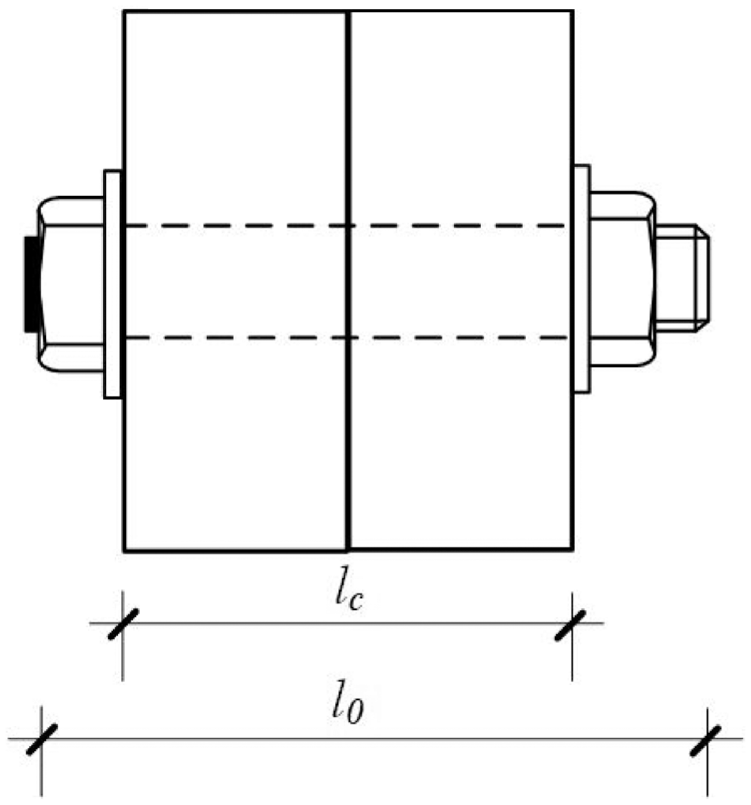
Stressed condition of bolt shank.
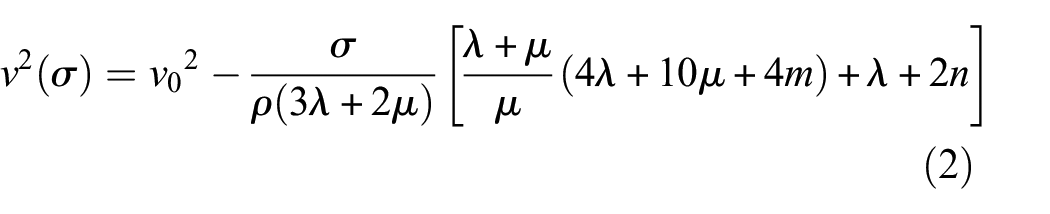
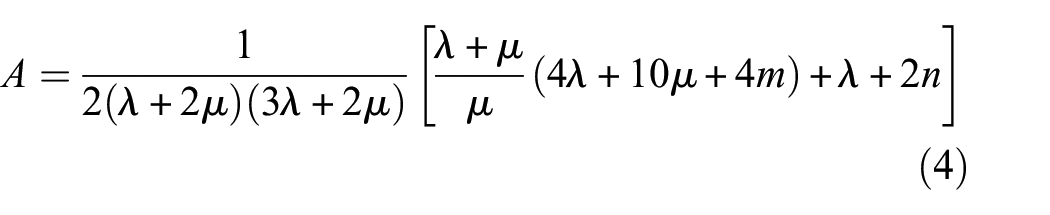
Considering that the bolt shank is made of a homogeneous and isotropic material, the velocity of longitudinal acoustic wave after loading v(σ) changes from the velocity of unstressed state v0. According to acoustoelasticity theory, the velocity is related to the stress state, the second-order elastic constants (Lamè constants) λ and μ, and the third-order elastic constants (Murnaghan constants) m and n, and the density of material ρ, as shown in Equation (2). And the equation can be simplified as Equation (3), in which A is the acoustoelastic constant.

The time that the wave in unloaded state t0 and loaded state t(σ) can be calculated, respectively, by Equations (5) and (6).


By substituting Equations (3) and (5) into Equation (6), the loaded TOF can be calculated as Equation (7). Because Aσ << 1, the equation can be estimated as Equation (8). Then the change of the travelling time caused by stress Δt(σ) can be calculated as Equation (9). K is the calibrated constant, which is the key to decide the relationship between σ and Δt(σ). Once K is calibrated in the laboratory, the stress in bolt can be monitored by measuring the TOF in the practical application:




In this study, the bolt shank of SCBB has been designed as tor-shear type. Tor-shear high strength bolts are applied in steel structures widely. 42 For the traditional bolt, like the hexagon head bolts, 43 the wrench only twists the nut to apply torque during the tightening procedure. But the bolt shank is likely to rotate following the nut, which will lead the bolt fail to achieve enough preload. The problem can be solved using another wrench to fix the bolt head. But the bolt head of blind bolt cannot be touched because it is in a closed section. The tor-shear type bolt shank can avoid such situation. The particular wrench for tor-shear bolt has a small sleeve inside the nut sleeve. The inner sleeve will twist the tail end of bolt shank in another direction. When the tail end is twisted off, the pretension reaches the expected value and the installation is completed, as shown in Figure 3.
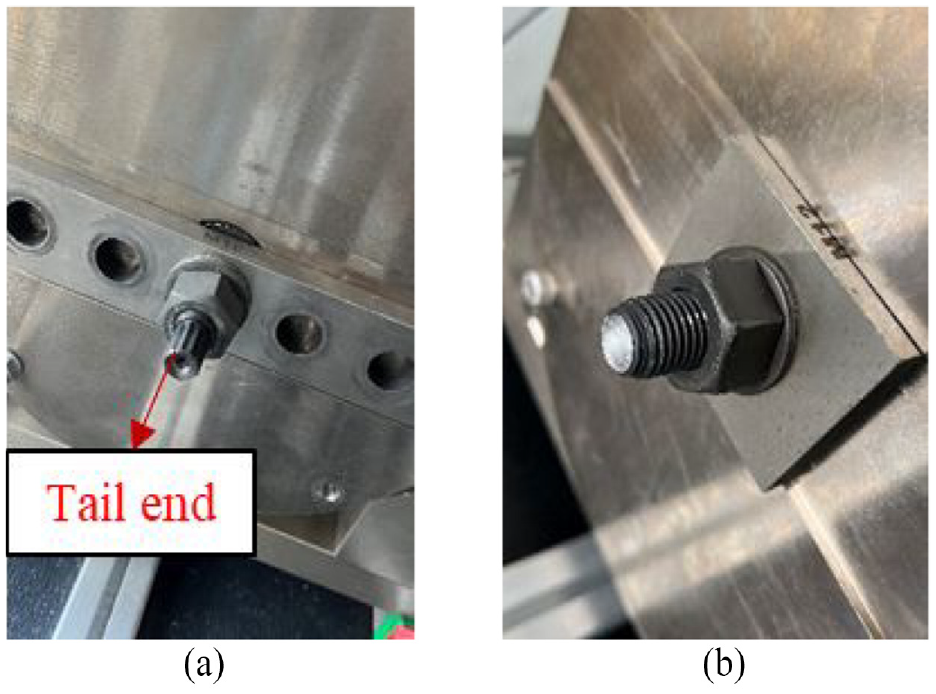
Tor-shear type high strength bolt (a) before and (b) after tightening.
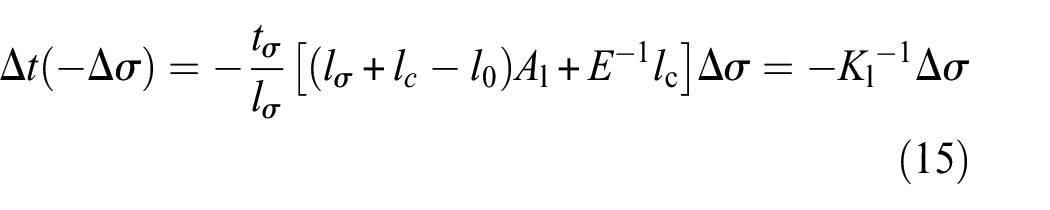
Considering that the sensor could be installed only on the end of bolt shank after the twist-off of tail end, the initial state of the bolt is tightened instead of unstressed. The measuring objectives would be the looseness of stress instead of stress itself. The length of bolt shank with looseness of stress Δσ can be calculated as following.

in which lσ is the initial length of bolt shank with full preload. The velocity of longitudinal acoustic wave after looseness v(−Δσ) can be calculated as Equation (12). Al is the acoustoelastic constant for looseness detection. vσ is the initial velocity of longitudinal acoustic wave in bolt shank with full preload.



Then the change of the travelling time caused by looseness of stress can be calculated as Equation (15), which is the difference between Equations (14) and (6). tσ is TOF in the initial state. AlΔσ << 1 is also assumed. Kl is the calibrated constant for looseness of stress. After the calibration of Kl, the looseness of stress in bolt can be monitored by the change of TOF, which is applied in this study.

Calibration
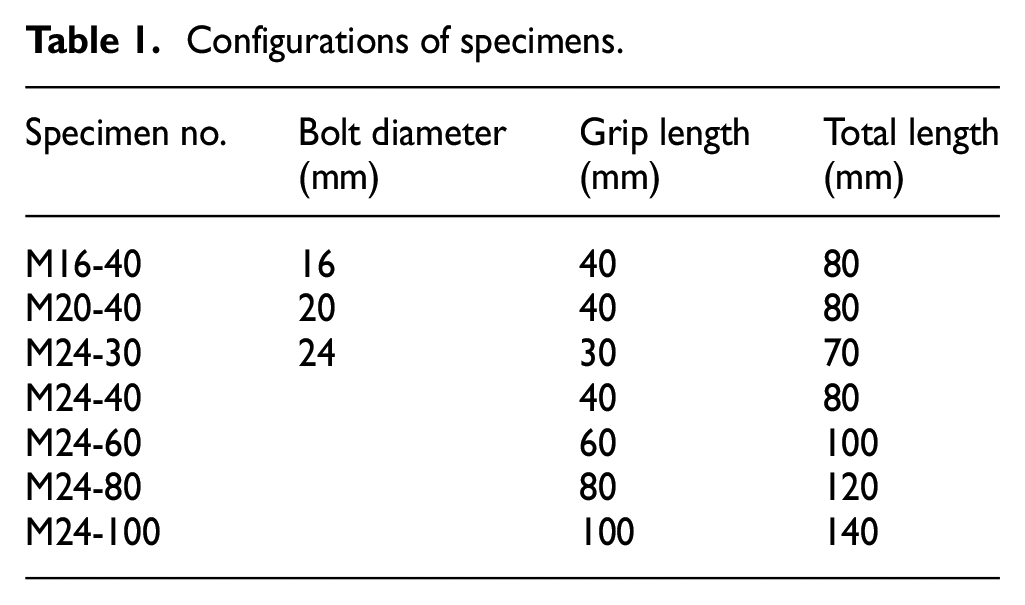
Based on the theoretical analysis of the previous text, the calibrated objective is to get the relationship between the change of TOF and the looseness of bolt pretension. Six groups of SCBBs are calibrated and tested in this study. The variables of bolt size and grip length are controlled to investigate their influence. The configurations of specimens are listed in Table 1. Each group has totally five specimens, three of which is for calibration. Another one is for real-time monitoring test and the last one is for periodical detection test.
Configurations of specimens.
The test setup is shown in Figure 4, which is composed mainly of bolt load controlling system, signal generator and data acquisition system, oscilloscope, and data storage system. The PZT sensors are used to produce ultrasonic waves and receive the echo signal. A ring-shaped pressure sensor with a range of 20 t is applied to achieve the precise pretension in bolts. The bolt load controlling system applies torque to the bolts to change the force. The loading rate is about 10 kN/min. It is worth mentioning that on real site, this method only needs to bring the signal generator and data acquisition system, which is the small box in Figure 4(b) to detect the looseness of the bolts.
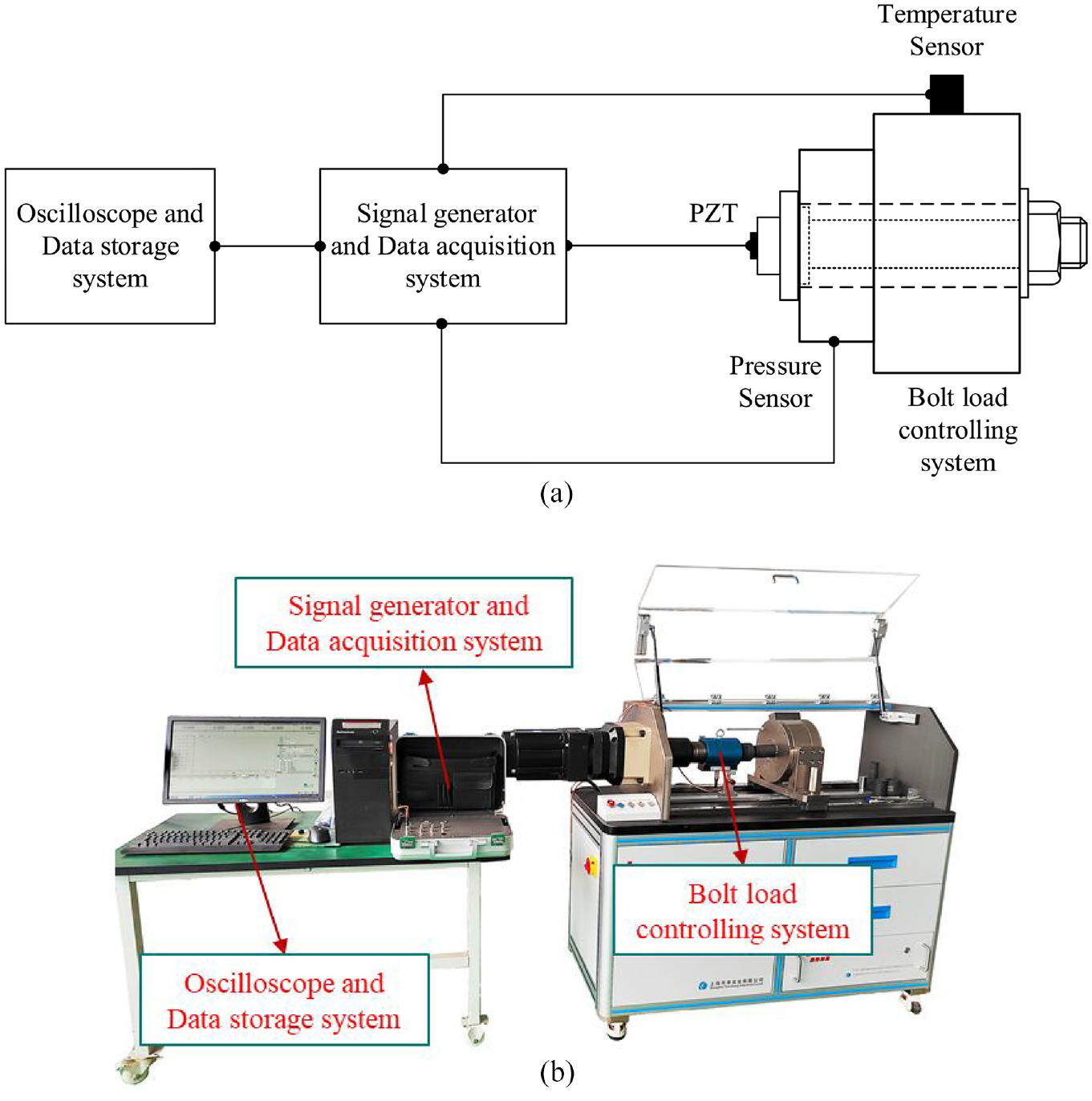
Test setup. (a) Layout of instrumentation and (b) test setup on site.
During the calibrating and real-time monitoring procedure, the PZT sensors were installed on the bolt heads alternatively because the bolt load controlling system needs to connect with the nut of SCBB for the continuous loading. The detecting probe cannot connect with the PZT sensor if it is installed on the bolt end. The flow chart of calibration and real-time monitoring is shown in Figure 5. For the stable reflection of wave, the fracture surface of nail end would be polished after the tightening for each test. The surface is required to be smooth and parallel to the emission surface. Every configuration of bolts calibrated third times for achieving a reliable value of calibrated constant for looseness of bolt load. Only one PZT patch is needed to be cost for the measurement of each bolt. The probe is reusable and suitable for all the bolts. The dimensions of PZT are 5 mm in both length and width, and 0.2 mm in thickness. The mechanical resonant frequency is 7 MHz. The static capacitance of PZT sensors is 500 pF and the electromechanical coupling coefficient is 0.44. The excitation frequency of the probe is 7 MHz.
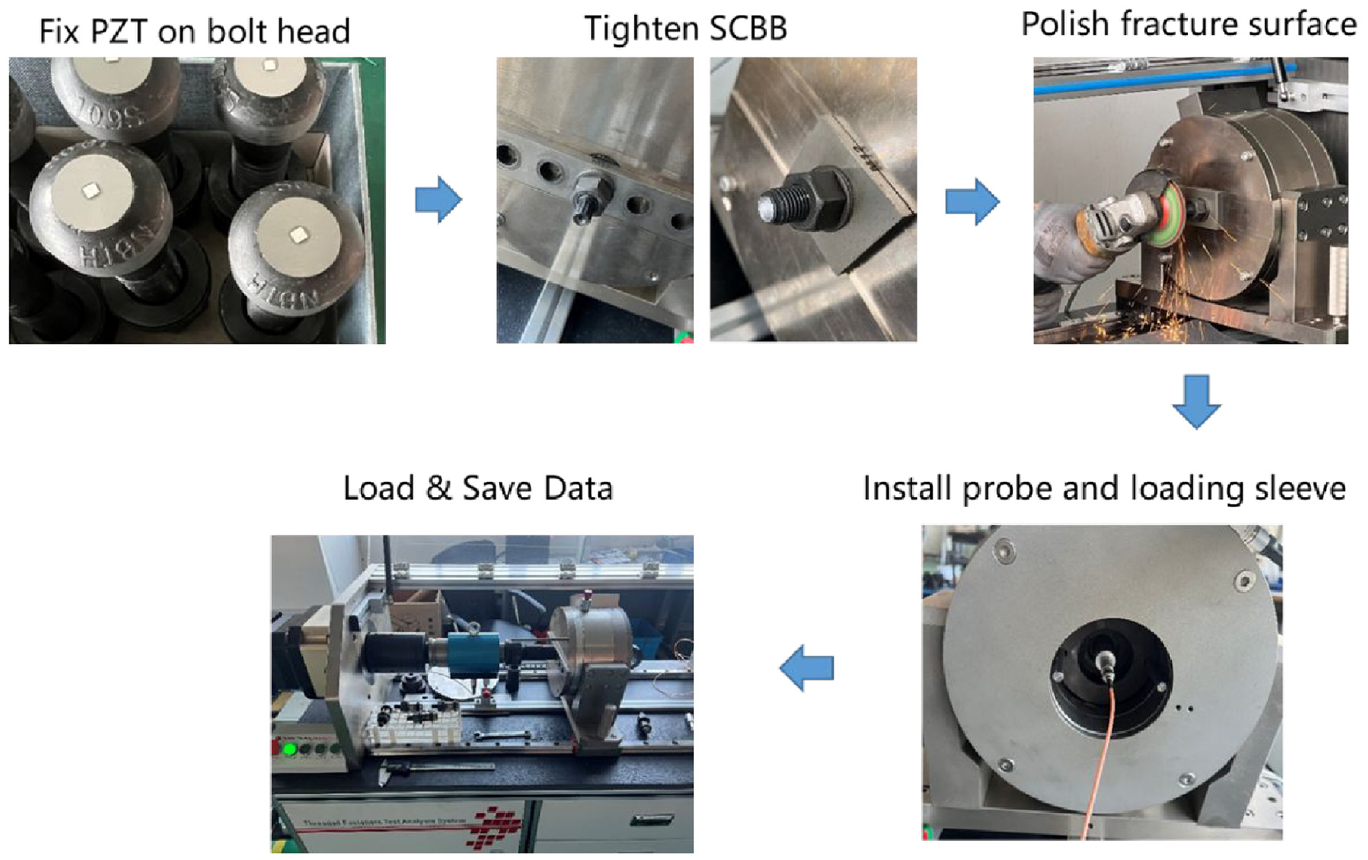
Process of calibration and real-time monitoring.
The results of calibrations are shown in Figure 6. The looseness of bolt load and change of TOF have remarkable linear relationship. The calibrated constants are ranged from 1140 to 2250 kN/μs, which are taken as the average values of three samples in the groups. It increases with the enlargement of bolt size and decreases with the rise of grip length.
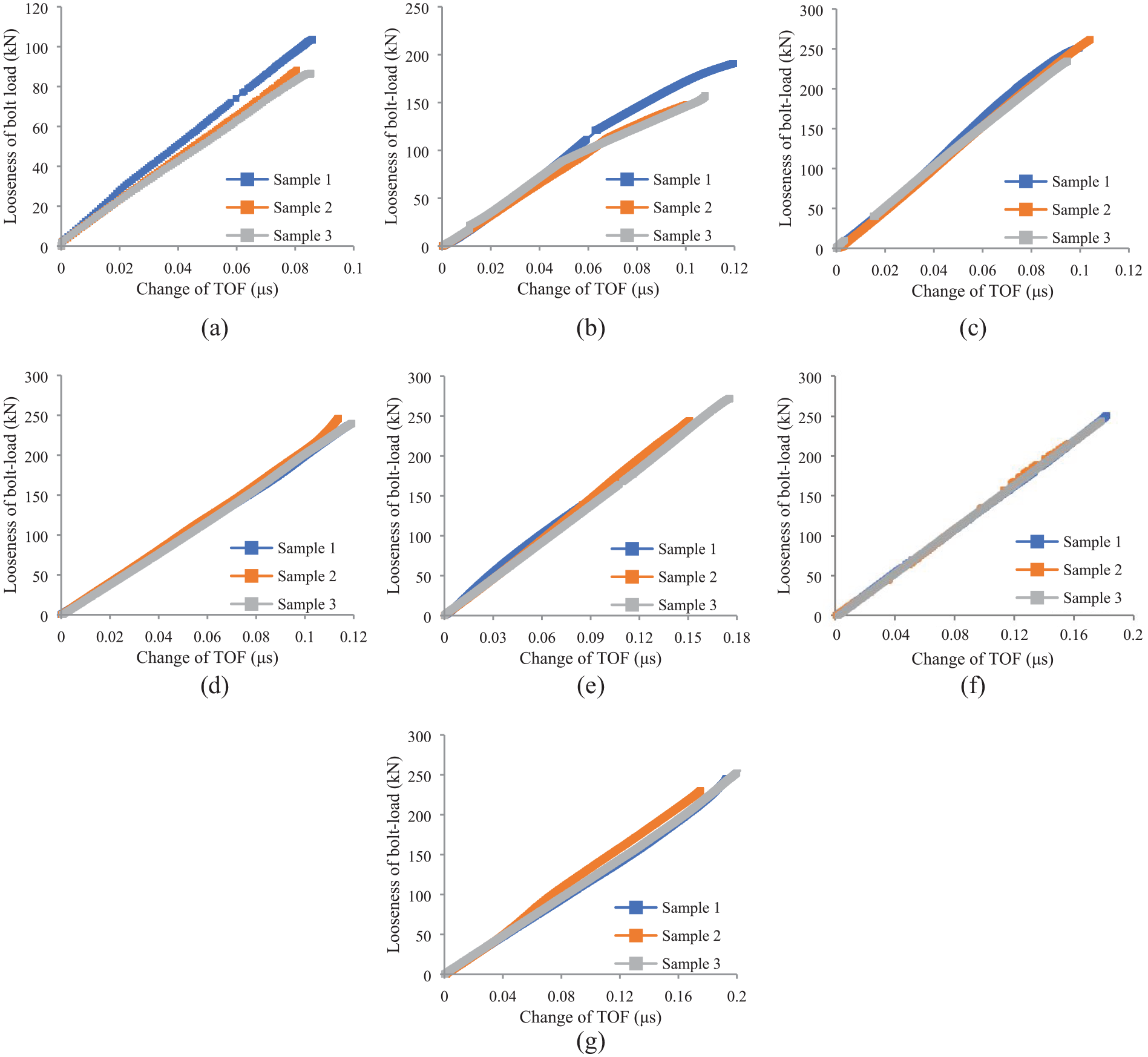
Results of calibration. (a) M16-40, (b) M20-40, (c) M24-30, (d) M24-40, (e) M24-60, (f) M24-80, and (g) M24-100.
Experimental verification
The calibrated constants are used for the measuring values in this section. The measured values are compared with the precise forces achieved by the pressure sensor in the set-up. Under ideal condition, the resolution of TOF measurement is 0.5 ns. According to the calibrated constants, the minimum measurable preload change should be in range of 0.57–1.13 kN.
Real-time monitoring of bolt pretension
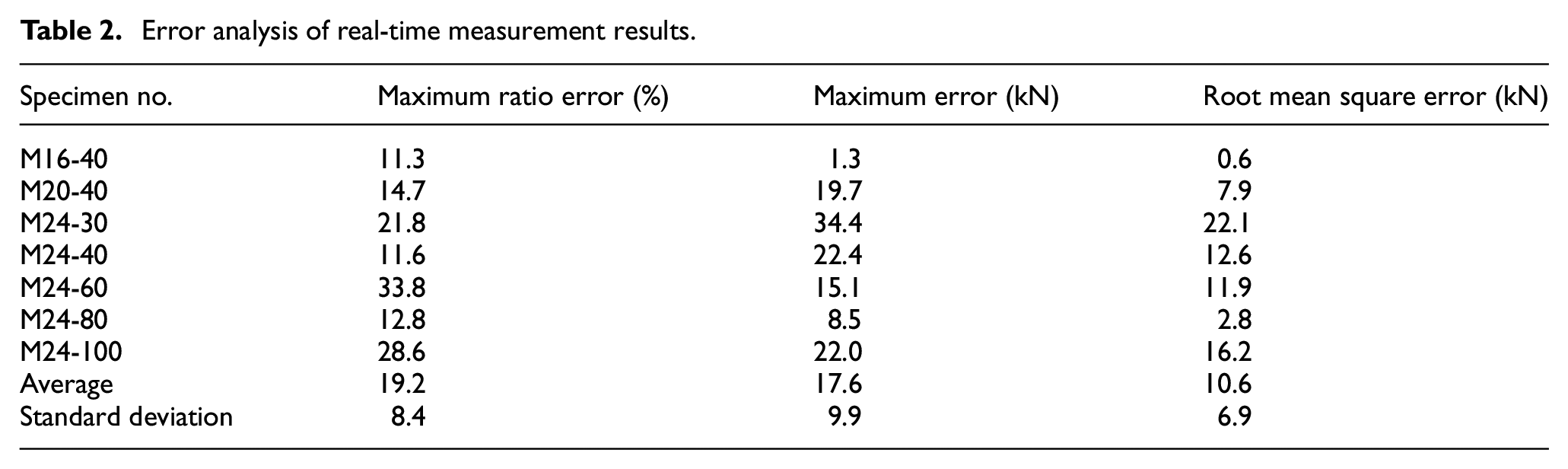
The real-time monitoring process is same as calibration, which is shown in Figure 5. The results of real-time monitoring are shown in Figure 7, covering the whole procedure of pretension looseness. Error analysis of real-time measurement results is summarized in Table 2. During the tests, the condition of polished fracture surfaces was found having significant influence on measurement results. The average maximum error is 19.2 kN and the average root mean square error is 11.9 kN, indicating the good agreement between measurement and true values.
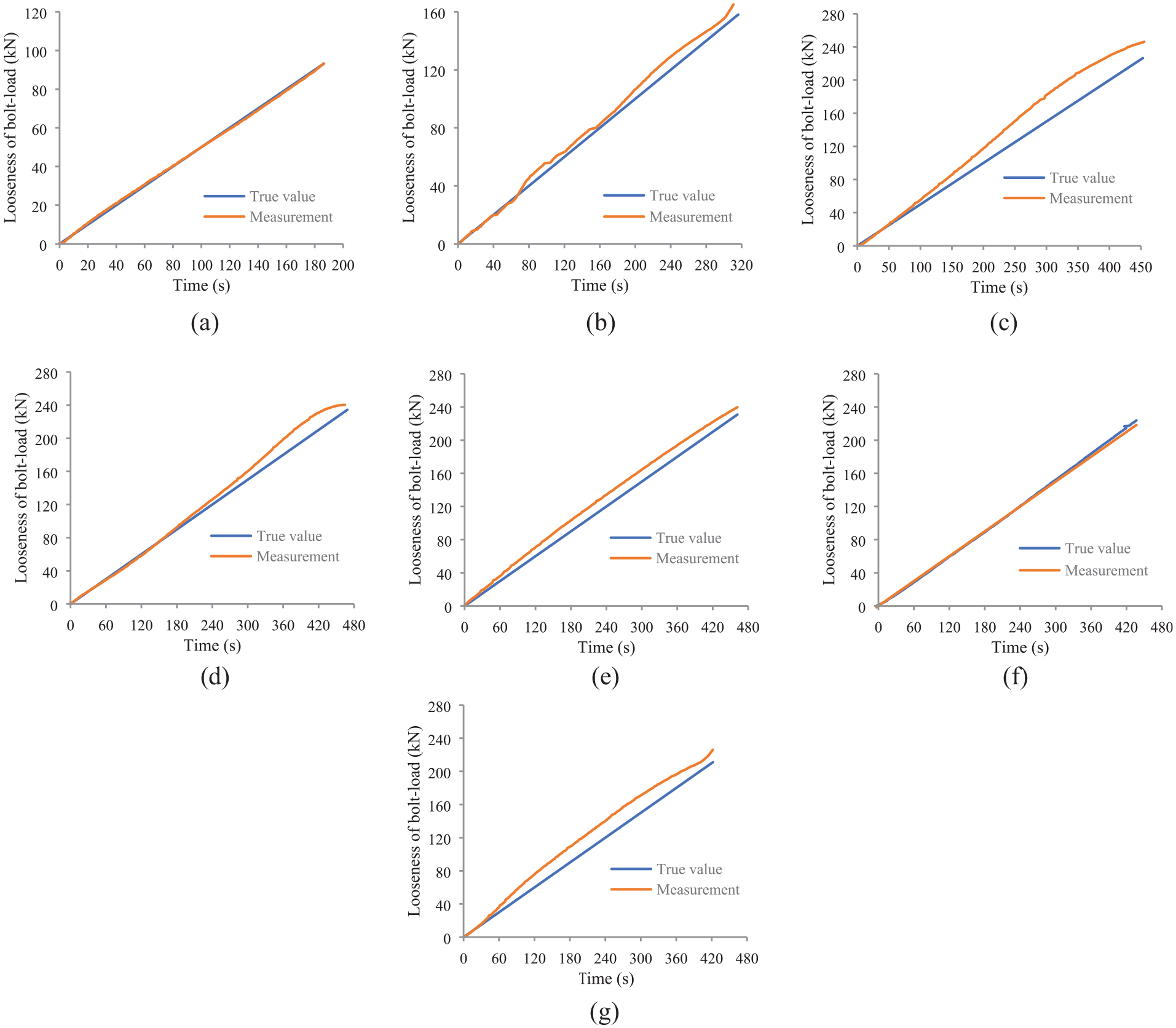
Results of real-time measurement. (a) M16-40, (b) M20-40, (c) M24-30, (d) M24-40, (e) M24-60, (f) M24-80, and(g) M24-100.
Error analysis of real-time measurement results.
Periodical detection on bolt pretension
The periodical detection process is different from the others. In these tests, the loading sleeve for changing bolt load could be removed during the measuring action. So, the PZT sensors were installed on the bolt end and the ultrasonic probe was connected with them when the loading sleeve was removed. The whole process could be applicable in real structural health monitoring (SHM) situation for SCBBs. The flow chart of periodical detection process is shown as following. Actually, the measurement method can be adopted for bolted connections in general, not only specific to the SCBBs. The procedure would be even simpler if the bolts are not blind or tor-shear because the step of polishing could be omitted and the PZT sensors could be installed on any one of bolt head and bolt end (Figure 8).
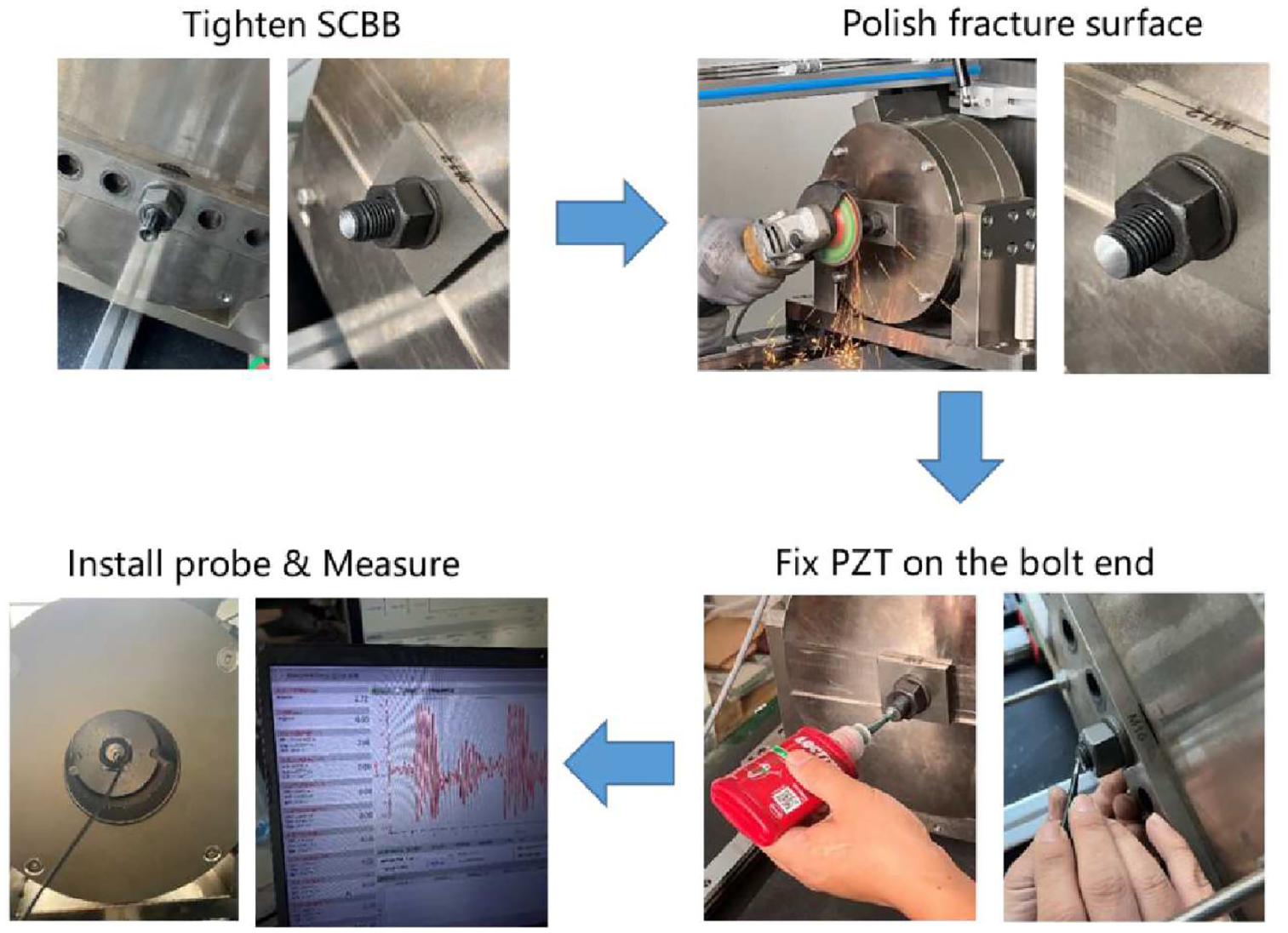
Flow chart of periodical detection.
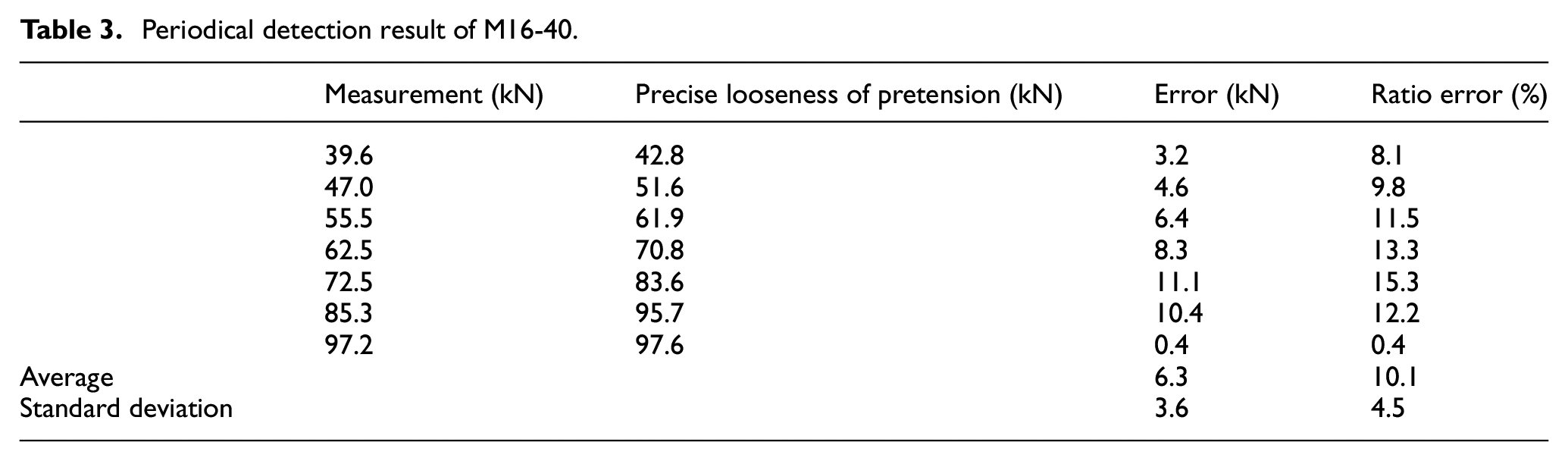
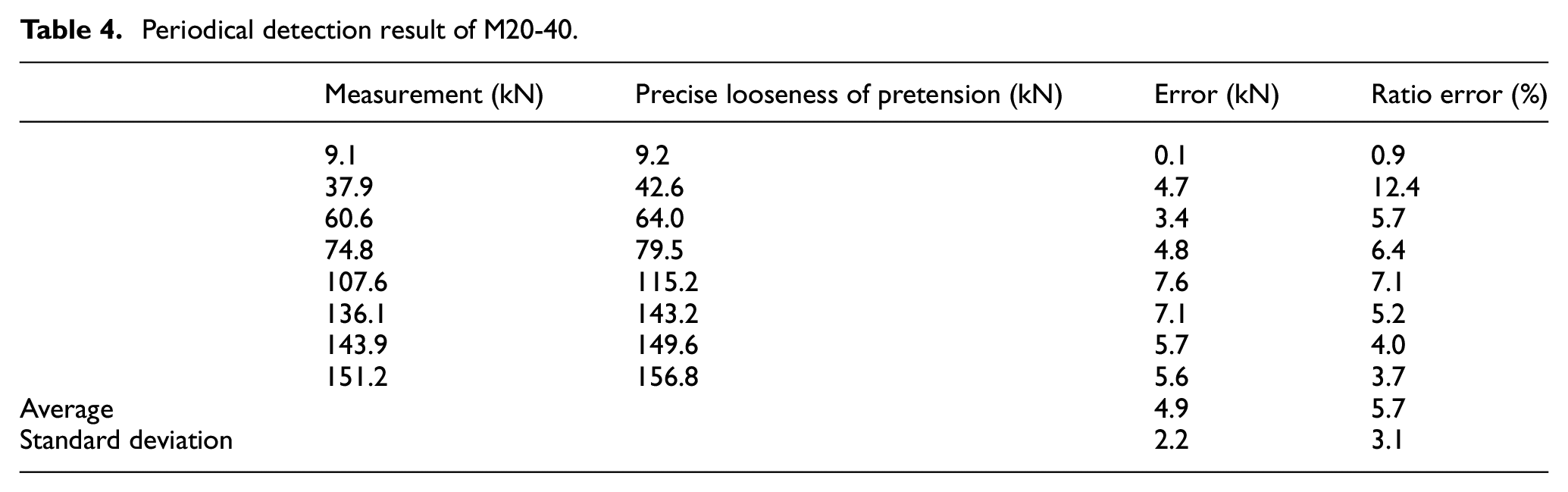
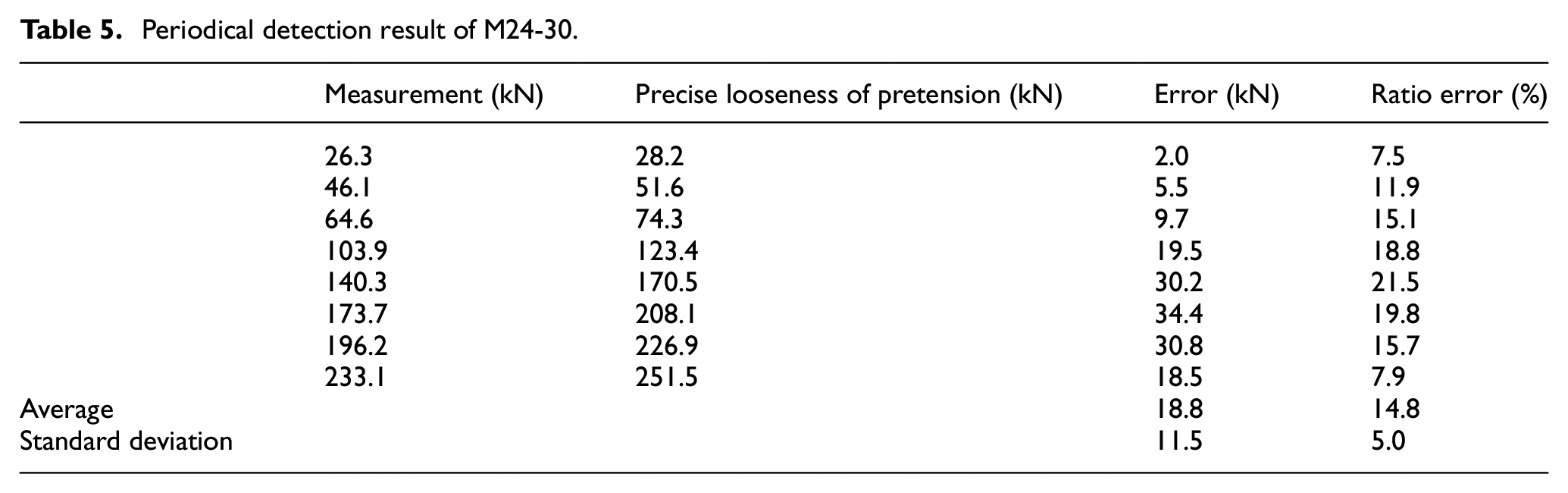
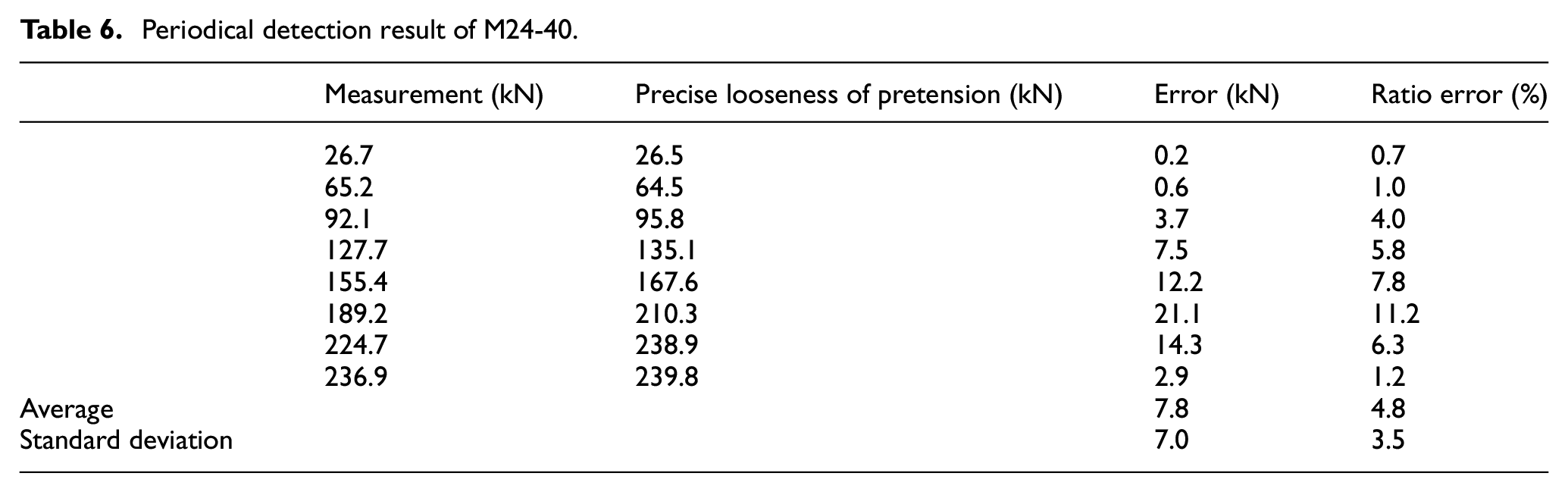
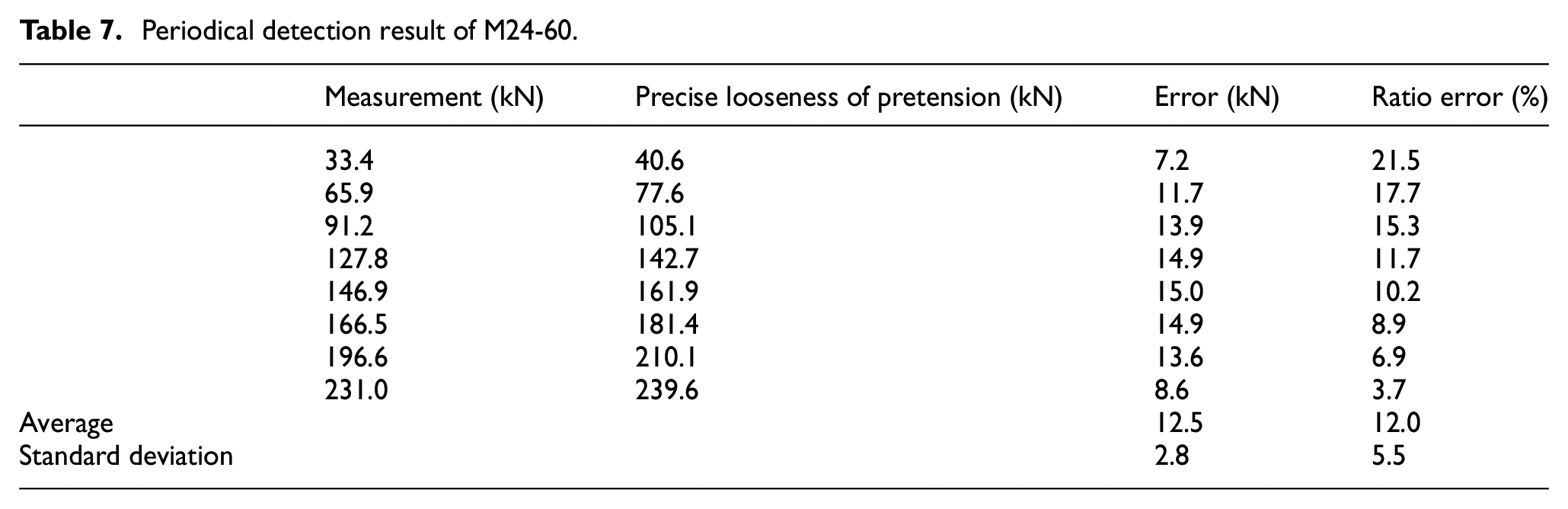
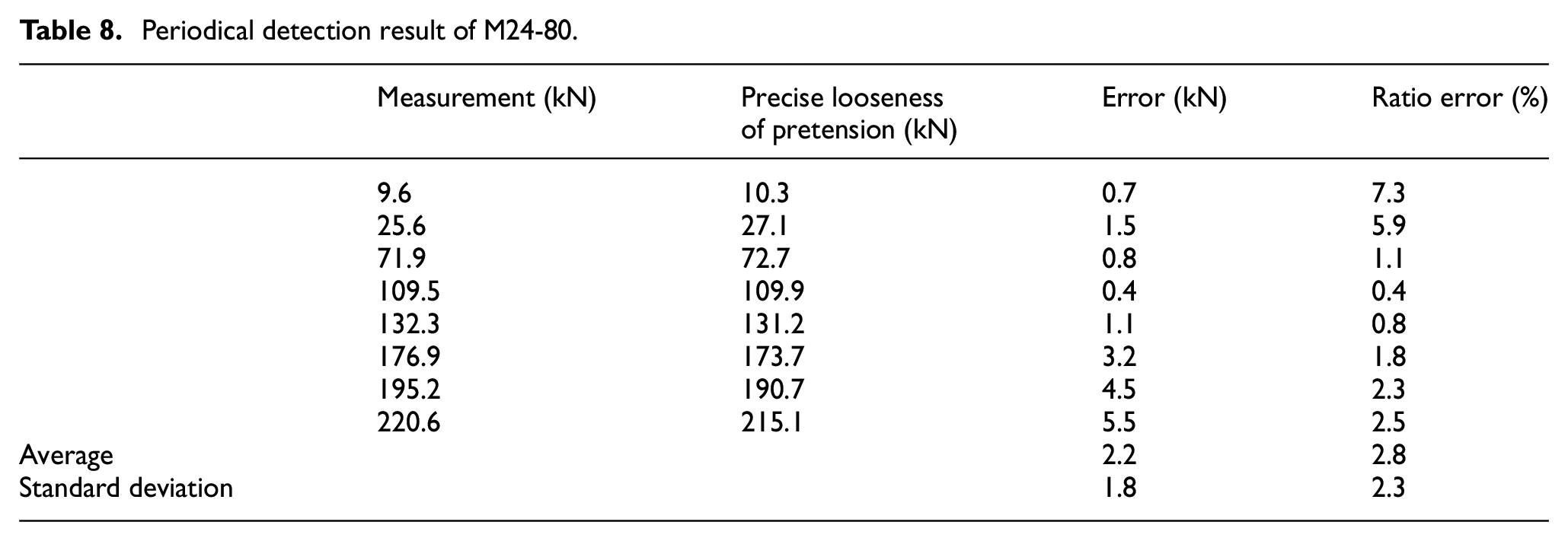
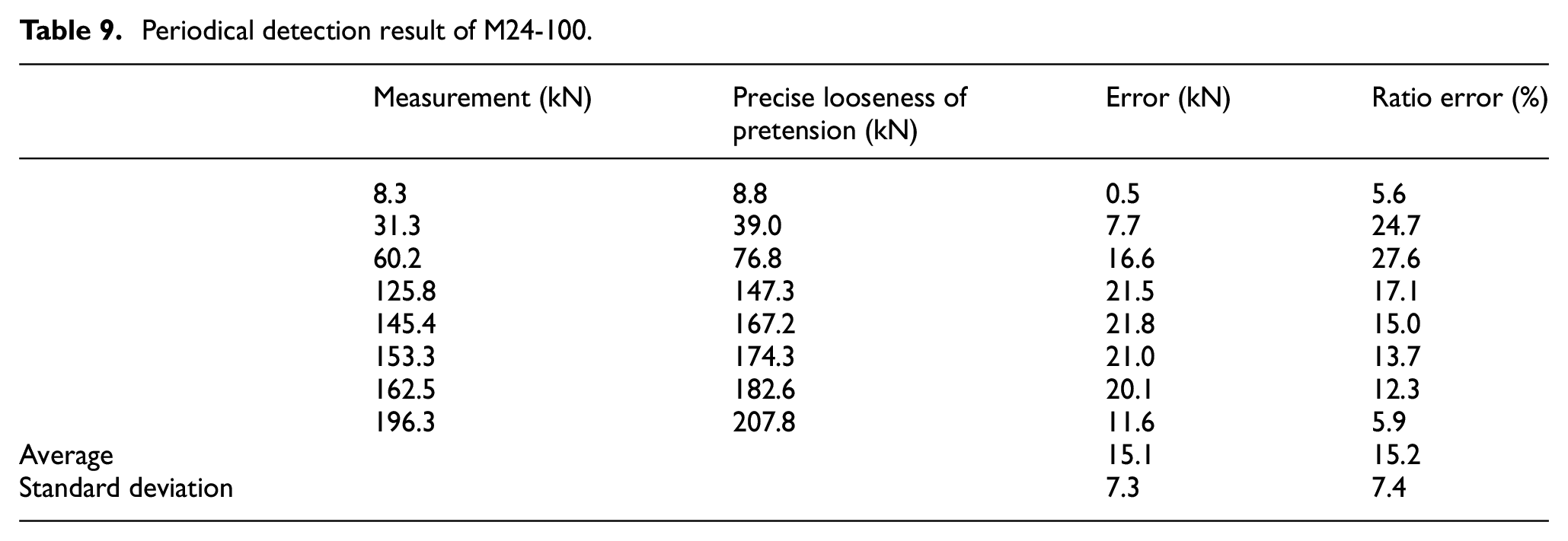
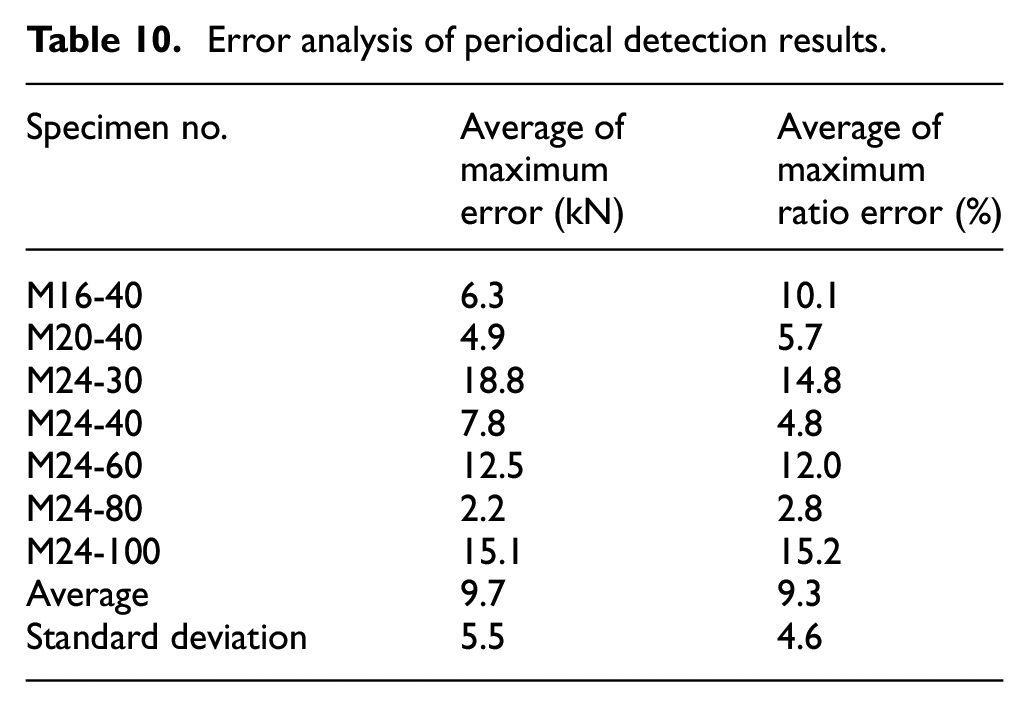
Figure 9 compares three ultrasonic echo waves under different levels of looseness in test M24-100. With the increase in bolt load looseness, the position of ultrasonic echo wave moves forward. The phenomenon implies that the change in TOF relates with the looseness of bolt load. The detection results of different specimens are shown in Tables 3–9. Table 10 analyses the error of all the periodical detecting tests. The average maximum error is 9.7 kN. There is no sign that bolt size and grip length have great influence on measurement accuracy.
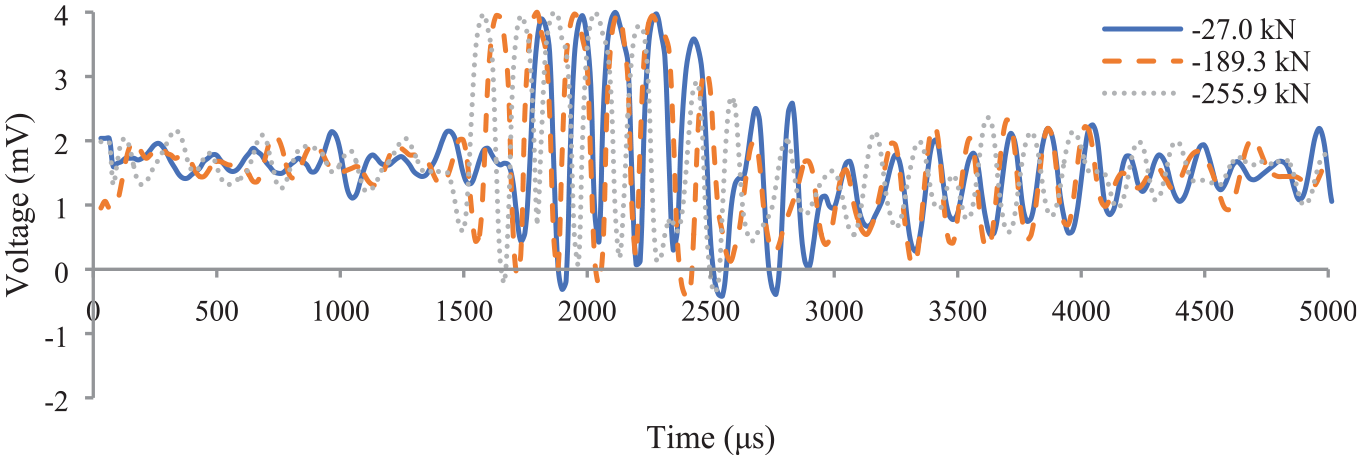
Comparison of ultrasonic echo waves in test M24-100.
Periodical detection result of M16-40.
Periodical detection result of M20-40.
Periodical detection result of M24-30.
Periodical detection result of M24-40.
Periodical detection result of M24-60.
Periodical detection result of M24-80.
Periodical detection result of M24-100.
Error analysis of periodical detection results.
Concluding remarks and future work
Bolt preload is a critical factor in bolted connections. Monitoring bolt preload has been a significant challenge, particularly for high-strength SCBB preload loosening. In this article, an ultrasonic technique has been developed for measuring the bolt load looseness in SCBBs with tor-shear bolt shanks. The TOF-based technique is being utilized to detect looseness in bolts instead of measuring the stress directly. The theoretical derivation showed the linear relationship between the looseness of bolt load and the change in TOF, which was also proved by calibration results and the echo waves achieved in the detection tests. By experimental verification, the ultrasonic technique based on the change of TOF was found to be able to measure the looseness of bolt load in SCBB with various configurations. Bolt size and grip length had no obvious effect on measurement results for either real-time monitoring or periodical detection. The processes of calibration, real-time monitoring and periodical detection were designed for not only in the laboratory, but also on real construction site. The proposed technique has the unique ability of measuring the bolt load looseness of SCBBs in steel structures with acceptable errors. It also can be applied for general bolted connections. Moreover, the detecting device is portable, which makes it more possible to be applied on real site. Overall, this study proffer contribution to the non-destructive preload looseness detection of bolted connections, especially blind bolted connections.
In the future, the ultrasonic echo data will be used for looseness detection based on deep learning. The damage information in the ultrasonic echo waves will be dug based on CNNs. Future work will also involve optimal placement of the monitored SCBBs in real structure and SHM based on looseness of bolts. It is worth exploring how to assess the health of the whole structure when part of bolts in it have varying levels of preload looseness.
Footnotes
Declaration of conflicting interests
The author(s) declared no potential conflicts of interest with respect to the research, authorship, and/or publication of this article.
Funding
The author(s) disclosed receipt of the following financial support for the research, authorship, and/or publication of this article: The financial supports from the National Natural Science Foundation of China (NSFC) with Grant Nos. 51820105013 and the Top Discipline Plan of Shanghai Universities-Class I with Grant No. 2022-3-YB-18 are gratefully acknowledged. Further testing support from Shanghai Tiancheng Industrial Co. Ltd., China is also gratefully acknowledged.
