



Abstract
Affecting preservice teachers' pedagogical intentions and future behavior is a challenging goal of teacher education. It may be accomplished by purposefully changing their beliefs. The aim of this study was to investigate whether lesson videos, compared to an argumentation-based video format, can evoke stronger and more positive emotional reactions and whether these reactions in turn result in higher changes in beliefs, attitudes, and intentions. We measured student-oriented teaching beliefs, attitudes, and intentions of N = 129 preservice teachers before and after the intervention. As a treatment check, we also quantified their emotional reaction (arousal and valence) to the intervention. Results of indirect effect models revealed that watching lesson videos led to higher emotional arousal and, overall, higher emotional arousal was related to more positive change in beliefs. However, change rates of teaching beliefs, attitudes, and intentions were the same for the lesson video and the expert talk video group. Emotional valence had no effect on change of beliefs, attitudes, or intentions. This study adds empirical evidence to theoretical claims concerning the effects of emotions on changing teaching-related beliefs.
Introduction
One of the main challenges for teacher education is to prepare preservice teachers (PSTs) to employ scientifically approved concepts in practice. Novice teachers are often reluctant to implement the knowledge they acquired at university, which is known as the “Transfer Problem” (Korthagen & Kessels, 1999). Teachers may also hesitate to adopt unfamiliar practices advocated by new scientific results or curricula (Levin, 2015) because of beliefs about teaching, for example that these approaches will be uneffective in practice (Broekkamp & Van Hout-Wolters, 2007). Teachers' beliefs about teaching is an important topic, because these beliefs are thought to influence their decisions on how to teach and therefore affect their lesson planning (see Gill & Hardin, 2015), their teaching behavior in the classroom (see Fives, Lacatena, & Gerard, 2015), and the learning outcomes of their students (e.g., Souvignier & Mokhlesgerami, 2005; Staub & Stern, 2002). Thus, changing PSTs' beliefs about teaching during teacher education is an essential goal for affecting instructional practices (Fives et al., 2015; Leavy, McSorley, & Boté, 2007). Hence, intentionally changing PSTs' beliefs may be considered even more important than conveying expert knowledge (Tillema, 2000).
Teaching-related beliefs begin to develop from the first educational experiences onwards and can therefore be quite entrenched when entering teacher education programs (e.g., Fives et al., 2015; Levin & He, 2008). Preconceptions about teaching may bias acquired expert knowledge in a way that inclines PSTs to favor knowledge that is consistent with their beliefs (e.g., Fives & Buehl, 2012; Wideen, Mayer-Smith, & Moon, 1998). Therefore, logical argumentation may have little effect on teaching-related beliefs (Nespor, 1987). In accordance with this point, PSTs' conceptions tend to be quite resistant to change during teacher education (e.g., Kagan, 1992; Richardson, 2003; Wideen et al., 1998), and when changes do occur, they are mainly superficial (e.g., Richardson, 2003).
As an alternative to exposure to logical argumentation, a promising approach could be to design teaching environments in a way that exerts positive emotional reactions, which could more effectively change beliefs within the university setting (e.g., Ashton & Gregoire-Gill, 2003; Nespor, 1987). This could be implemented by providing students with lesson videos that promote positive examples of relevant teaching approaches. Accordingly, the aim of this study was to analyze the extent to which lesson videos in teacher education evoke intense and positive emotional reactions in PSTs and whether this effect in turn changes beliefs, attitudes, and intentions.
Teaching-Related Beliefs, Attitudes, and Intentions
Teacher education should involve changing PSTs' teaching-related beliefs, attitudes, and intentions (e.g., Fives et al., 2015). Generally, beliefs are individual judgments on the truth of propositions (e.g., Pajares, 1992; Richardson, 2003). Fishbein and Ajzen (1975, p. 131) defined beliefs as the “subjective probability of a relation between the object of the belief and some other object, value, concept or attribute.” Beliefs are non-consensual, because they are based on personal experiences and differ from knowledge, which is built on fact, logical arguments, and expert consensus (Pajares, 1992; Richardson, 2003). Beliefs are cognitive constructs (e.g., Gill & Hardin, 2015) and are assumed to be influenced by emotions (e.g., Ashton & Gregoire-Gill, 2003; Frijda & Mesquita, 2000). We drew on Ajzen's theory of planned behavior (TPB) (1991; see Figure 1) when operationalizing beliefs, attitudes, and intentions (dependent variables). The behavioral intentions construct is defined as the readiness to perform a specific behavior (e.g., performing certain teaching practices), which is assumed to be the direct antecedent of the intended behavior. Attitudes reflect the extent to which objects, persons, or behaviors are evaluated positively or negatively. The behavioral beliefs construct reflects the extent to which a behavior is believed to lead to a specific outcome. Perceived behavioral control is the subjectively estimated likelihood that – under anticipated circumstances – a specific behavior can be performed. The control beliefs construct is the subjective probability of a certain obstructive or promotive occurrence in relation to a specific behavior. The subjective norms construct is the perceived social pressure to perform a specific behavior. The normative beliefs construct represents subjective perceptions of relevant stakeholders' expectations concerning a specific behavior.
Interconnections and Definitions of TPB Constructs According to Ajzen (1991).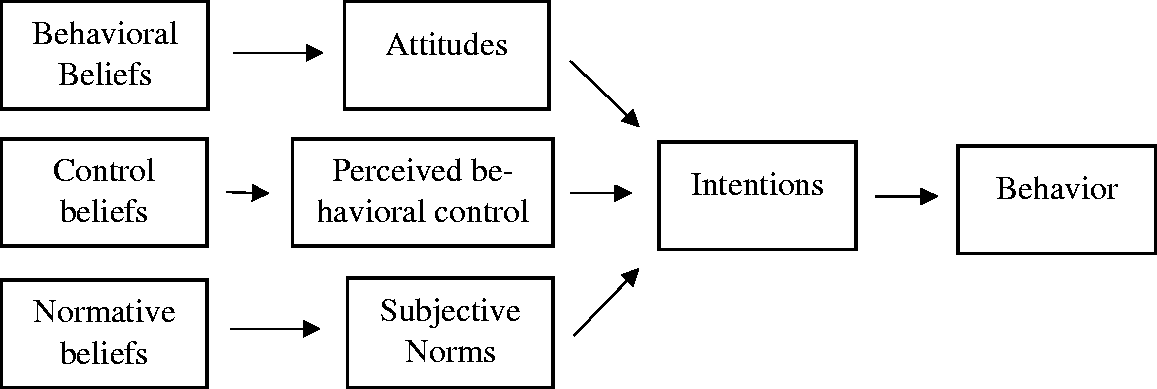
The TPB is an integrated theory on the effects of beliefs and attitudes on intentions and behavior (Ajzen, 1991). According to this theory, behavioral beliefs, control beliefs, and normative beliefs predict attitudes, perceived behavioral control, and subjective norms respectively, and each in turn predict behavioral intentions (see Figure 1). Behavioral beliefs are direct predictors of attitudes because the stronger the belief that a certain behavior is associated with positive or negative outcomes, the more the behavior will be evaluated as generally positive or negative. Control beliefs are antecedents to perceived behavioral control, because the greater the perceived likelihood that potentially obstructive or promotive instances will occur in relation to a specific behavior, the smaller or bigger the perceived likelihood that this specific behavior can be performed. Normative beliefs directly predict subjective norms because the stronger the belief that certain relevant stakeholders expect the performance of a specific behavior, the bigger the subjective social pressure to perform that behavior.
Each of the TPB constructs can refer to any defined behavior, which allows for a more differentiated and broader perspective on PSTs' teaching-related beliefs, attitudes, and intentions concerning effectiveness, workability, and relevant others' expectations. Teaching intentions will be used as a proxy measure for behavior, because PSTs cannot show their intended behaviors until they are in service. Teaching-related behavioral beliefs address the question of teaching effectiveness (e.g., Fives et al., 2015). In the same context, control beliefs and perceived behavioral control directly or indirectly assess obstructive instances, which may occur in relation to teaching practices. Normative beliefs and subjective norms directly or indirectly assess relevant stakeholders' expectations in teaching.
Research on teaching-related beliefs, attitudes, and intentions is in line with TPB assumptions (Ajzen, 1991). Even though the attitudes construct has received less research attention than beliefs, attitudes have also been shown to affect teaching behavior (see Richardson, 1996). Furthermore, studies have found that teaching-related behavioral beliefs (effectivity beliefs) influence teaching intentions via attitudes (e.g., Lumpe, Haney, & Czerniak 1998; MacFarlane & Woolfson, 2013).
Emotion
Given the importance of emotions in affecting changes in beliefs (e.g., Ashton & Gregoire-Gill, 2003; Frijda & Mesquita, 2000; Nespor, 1987), we first provide a definition of emotions and then discuss the perceptual and cognitive determinants of emotional responses. Emotions are interpreted affect (appraisal) and therefore have a clear conscious cause. Moods can be delineated from emotions by not having a conscious cause. An informative overview on affective constructs is provided by Gill and Hardin (2015). Affect and thus emotions can be conceptualized on the orthogonal dimensions of arousal and valence (Feldman Barrett & Russell, 1998). Arousal falls along a high–low intensity continuum, and valence falls along a positive–negative continuum.
According to Frijda's laws of emotion (2017), emotional arousal is assumed to be a function of the reality of the situation perceived. As it pertains to teaching, lesson videos may be perceived to be more real than expert talk videos on teaching, which in turn could evoke more intense emotional responses.
Lazarus's (1991) appraisal theory proposes that the valence of an emotion is based on primary and secondary appraisals that arise in relation to relevant personal goals and perceived coping ability. A PST's goal, for example, might be to become an effective teacher, or to minimize learning or teaching-related efforts. Primary appraisals assess the situation as potentially having a positive or negative impact on personal objectives. If the primary appraisal is negative (e.g., the perceived situation implies that the PST will require high skill and effort to become an effective teacher), a secondary appraisal determines whether the available resources will suffice to neutralize the potential negative interference or to even create a goal-congruent positive result. In the latter scenario, a challenge appraisal with a resulting positive emotion will arise. Otherwise, a threat appraisal with a resulting negative emotion will arise. Ashton and Gregoire-Gill (2003) and Gregoire (2003) applied appraisal theory to their teacher belief change models, which suggest that confronting PSTs with disproof of their current beliefs results in cognitive conflict between unmatched expectations and perceptions. This discrepancy then is perceived as a potential threat to their professional identity (negative primary appraisal). In a secondary appraisal, personal resources are seized, which may result in a challenge or a threat appraisal, accompanied by a positive or negative emotional valence respectively.
Emotion Affects Beliefs
PSTs' beliefs may be resistant to logical argumentation (e.g., Nespor, 1987; Richardson, 2003). Therefore, rational or purely cognitive approaches to changing teaching-related beliefs have been criticized (see Gregoire, 2003). Achieving sustainable change in PST beliefs during teacher education programs are generally difficult and tend to be superficial (Lim & Chan, 2007; Richardson, 2003; Tillema, 2000). Empirical studies have shown that beliefs acquired during teaching preparation programs can be neutralized after taking up a teaching position (Muller-Fohrbrodt, Cloetta, & Dann, 1978; Zeichner & Tabachnick, 1981). Furthermore, interventions designed to change PSTs' beliefs based on logical argumentation and reflection without field experiences have failed to change beliefs (Richardson, 2003; Tillema, 2000). Lim and Chan (2007), for example, found no significant enhancement in PSTs' constructivist beliefs through a course designed to familiarize PSTs with multimedia packages arranged to apply constructivist principles. Given the lack of evidence in support of cognitive approaches, theoretical work has turned to emotion-based approaches as an alternative way of changing PST beliefs (e.g., Ashton & Gregoire-Gill, 2003; Nespor, 1987).
A first strand of theory emphasizes that positive and negative emotions may serve as information on the relevance of an experience. Perceived relevance may motivate and guide systematic reflection on existing beliefs. Research has specified that emotion serves as information on the general importance of an experience (Clore & Gasper, 2000) or on the perceived degree of being personally affected (Frijda & Mesquita, 2000). Similarly, Ashton and Gregoire-Gill (2003) and Gregoire (2003) suggested that emotions may motivate and guide reflection processes. According to Ashton and Gregoire-Gill (2003), emotions with both positive and negative valence may trigger systematic processing of the experience, resulting in permanent conceptual change. Furthermore, intervention studies that investigated approaches aimed at affecting PST beliefs showed that reflective processes are particularly relevant for belief change (e.g., Hart, 2002; Olson & Jimenez-Silva, 2008; Yerrick & Hoving, 2003). We conclude that according to this first strand of theory the intensity of an emotion (arousal) is more relevant to belief change than its valence, because positive and negative emotions may serve as information to motivate and guide belief change that is consistent with previous experiences. Psychophysiological research supports this view. For example, Sharot and Phelps (2004) found that emotionally arousing stimuli were more deeply memorized compared to non-arousing stimuli.
A second strand of theory that addresses the effects of emotions on belief change assumes that emotions become part of memories linked to experiences (Nespor, 1987; Spiro, 1982). Hence, during an experience, the emotion is stored next to other perceived aspects in memory. When the experience is recalled, the attached emotion affects the recall in a way that promotes the missing information to be constructed according to the positivity or negativity of the emotion. Furthermore, aspects of the memorized experience that are incongruent to the valence of the stored emotion are likely to be suppressed. Therefore, the emotional valence may color the perceived effectiveness or the workability of teaching practices. We conclude that according to this second strand of theory the valence of an emotion may be more important than its arousal, because the positivity or negativity of an emotion can color experiences.
Gill and Hardin (2015) stated that few empirical studies have investigated the effects of emotions on beliefs. Their reviewed studies, (e.g., Forgas, 2000; Frijda & Mesquita, 2000) had not investigated this phenomenon in relation to our understanding that beliefs form under affective circumstances. The investigations of Forgas (2000), for example, focused on the effect of induced moods on interpretations of videotaped social interactions. Moods, however, compared to emotions, have no conscious cause (see Gill & Hardin, 2015). Frijda and Mesquita (2000) reported only anecdotal evidence of how affect can influence beliefs concerning political issues, personal relationships, addiction, and religion. We conclude that more experimental research is necessary to clarify causal claims between emotions and belief change.
Lesson Videos
Classroom experiences undoubtedly have great emotional potential, but they can also have an unintended conservation effect on beliefs, which means that these experiences can erase intended belief changes that were achieved earlier within the university setting (Leavy et al., 2007; Richardson, 2003; Tillema, 2000). Lesson videos, however, can more consistently show teaching practice in a positive light. Thus, they are unlikely to produce conservation effects when their content is controlled accordingly. Richardson (2003) claimed that lesson videos may function as a substitute for classroom experiences because of their immersive quality.
In accordance with Frijda (2017), lesson videos might also have the potential to trigger a high intensity of emotions by displaying real teaching situations. When a positively displayed content evokes high emotional arousal, the intensity is assumed to boost the positivity (valence) of the emotion. The valence of an emotion, however, could also be affected positively or negatively by appraisals arising from the video content in relation to relevant personal goals and perceived coping ability (Lazarus, 1991). Furthermore, researchers have claimed that watching lesson videos is a powerful way to challenge teaching-related beliefs (Richardson, 2003; Richardson & Kile, 1999; Yerrick & Hoving, 2003). In comparison, videos of expert talks about teaching (e.g., by university professors, school principals, and experienced teachers) may be perceived as considerably less related to real teaching situations and may thus result in a lower emotional intensity and a less positive valence.
To summarize the reviewed studies, lesson videos might be an appropriate intervention to affect teaching-related beliefs, attitudes, and intentions. Lesson videos may trigger reflection about teaching effectiveness, feasibility, and others' expectations. In this study, we tested whether PSTs' teaching-related beliefs, attitudes, and intentions changed as a function of watching lesson videos vs. expert talk videos and whether this change was caused by emotional arousal and valence during the intervention.
Hypotheses
We tested whether the two treatments would affect a different level of emotional arousal and valence: Compared to the expert talk video group, we predicted higher arousal and more positive valence for the lesson video group (H1: Direct effects [a]). We investigated the effects of emotion on TPB variable change rates: We assumed that emotional arousal and valence would have a positive effect on teaching-related beliefs, attitudes, and intentions (H2: Direct effects [b]). We contrasted the change rates of the TPB variables between the two groups: Compared to the expert talk video group, we expected the lesson video group to more positively change teaching-related beliefs, attitudes, and intentions (H3: Total effects). Most importantly, we estimated the indirect effects of the treatments on TPB variable changes via emotions: We assumed that the lesson video group would cause higher emotional arousal and valence, which in turn would lead to higher change rates in teaching-related beliefs, attitudes, and intentions for the lesson video group (H4: Indirect effects).
Method
Participants
Our sample comprised 129 PSTs (79% female; 79% bachelor and 21% master's students) who were studying at a university in western Germany and were enrolled in educational psychology classes during the winter semester of 2016/17. The average age of the participants was about 22 years (M = 22.28 years, SD = 2.45) at pretest with an average study duration of five semesters (M = 5.09, SD = 3.23). Students received a compensation of 10 euros for voluntary participation.
Interventions
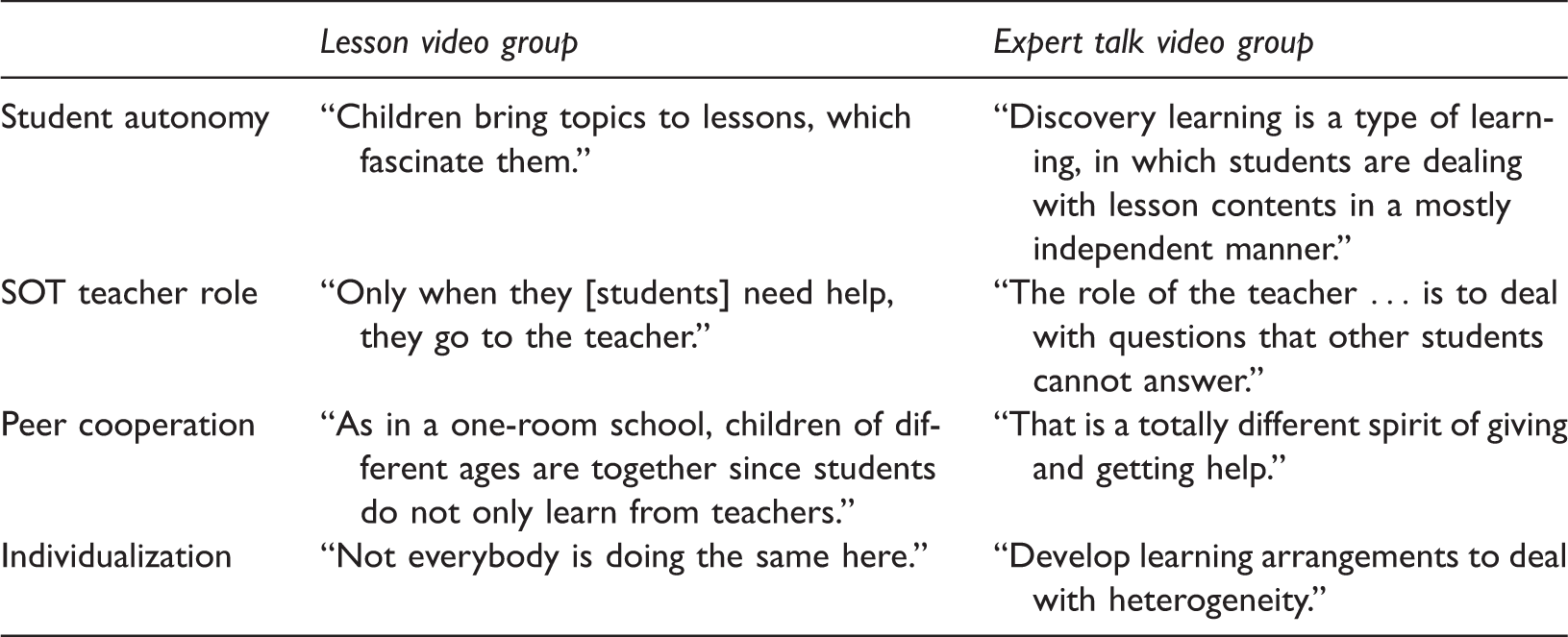
Our goal was to compare two different practically applicable interventions aimed to change PSTs' beliefs. Both video interventions (lesson vs. expert talk) showed features of student-oriented teaching (SOT) presented in a positive light. SOT is characterized by the following four constituents: (a) student autonomy, (b) peer cooperation, (c) individualization, and (d) the role of the teacher in providing learning environments and individual support (Grell, 2001). According to this approach, students' interests, questions, impulses, and actions determine the way of learning. Supporting students in this endeavor implies that teachers support them in discovering and solving problems that stem from the students' ideas and initiatives. Students are assumed to bring various levels of knowledge, ideas, and learning strategies to the classroom, which they communicate and develop within peer groups and thus, work on problems with differing degrees of difficulty. Therefore, SOT is strongly related to constructivist learning theories and beliefs. It was found that teachers' constructivist beliefs were negatively related to the learning gains of particularly low performing students in reading strategies (Behrmann & Souvignier, 2013). Nevertheless, most of the research on teacher beliefs has shown that teachers' high-constructivist as opposed to direct-transmissive beliefs are positively related to higher learning progress in math (Dubberke, Kunter, McElvany, Brunner, & Baumert, 2008; Peterson et al., 1989; Staub & Stern, 2002), reading strategies (Souvignier & Mokhlesgerami, 2005), and reading fluency (Egloff, Förster, & Souvignier, 2019). Therefore, we consider it practically valuable to foster positive beliefs on SOT.
The videos were compiled by the first author. Video lessons were downloaded from public online video platforms. The only exception was lessons used from video documentation published by Kahl (2004). Both 65-min video interventions started with a 15-min introduction, showing the same set of expert talks from university professors (79% of the time) and animated presentations (21%) that addressed the theoretical foundations of SOT (constructivism, cooperative construction of knowledge, and individualization). The remaining 50 min were specific to each experimental condition. In the lesson video condition, participants watched videos from seven German schools, which consisted of student-oriented lessons as well as teacher and student interviews. The video content spanned all grades (K-12) and featured a journalist's off-screen commentary on different forms of open discovery and problem-based learning, which are specific variations of SOT. In the expert talk video condition, 11 video clips showed mostly expert talks by university professors (26%), a school principal (12%), experienced teachers (32%), and K-12 students (8%), as well as animated presentations about applied SOT (23%).
Examples of Statements Referring to the Features of SOT from Both Intervention Groups.
Procedure
Participants were asked to complete an online or printed questionnaire (on average 24 days before the intervention), which captured pretest measures of TPB variables. Then, we proposed several dates within a one-week frame to watch videos about SOT. Participants were not informed about the two different conditions (lesson vs. expert talk videos) and were randomly assigned to one of the conditions in a way to progressively build experimental groups of equal size. During the video interventions, participants were asked to rate their emotional state on the two continuums of emotional arousal and valence. Participants were briefly introduced to the concepts of arousal and valence before the first rating by explaining resulting combinations of emotional states such as excitement (high arousal and high valence) and boredom (low arousal and low valence). The first measurement point (T1) was immediately before the intervention. The next two measurements (T2–3) were set at 5- and 15 min during the introductory part. The remaining measurements (T4–8) were administered during the 50-min specific part of the intervention following a 10-min interval, and then the last measurement (T8) was set after the end of the videos. The participants then immediately completed a printed questionnaire, which captured posttest measures on TPB variables.
Measures
Theory of planned behavior variables
The questionnaire was structured in a way that after providing demographics, participants read a definition of SOT. Next, they were asked to imagine being a fully qualified teacher in the year 2021 and to rate their SOT-related beliefs, attitudes, and intentions (seven scales in total). All items were rated on 7-point scales and constructed according to Ajzen (2002), who provides construction rules for TBP questionnaires. For building single items, we decided to select SOT-relevant aspects according to a deductive-rational approach (Hough & Paullin, 1994). Behavioral aspects were deducted from the theoretical constituents of SOT theory to ensure content validity of the scales. These constituents are interrelated (e.g., student autonomy affects the teacher's role, etc.) and are not very concrete as far as behavior is concerned. Therefore, out of the behavioral spectrum of these four constituents, we chose six more concrete behavioral aspects, which are that the teacher is supporting/letting …
… students' autonomous way of learning … students mainly work in groups … students choose their own learning contents … students work at their individual speed of learning … students have a lot of peer discussions … students learn in accordance with their own abilities. In addition, teaching in a student-oriented way was used to create a “roundup” seventh behavioral aspect.
These seven aspects were used to build seven items of each of the intentions, attitudes, perceived behavioral control and subjective norms scales. We did this to build different scales that refer to the same behavior (SOT).
Intentions is the readiness to perform SOT. A sample item is: “As a teacher I will support my students' autonomous way of learning: very unlikely–-very likely.”
Attitudes addresses the general judgment of SOT. A sample item is: “Basically I think that supporting students' autonomous way of learning is: very good—very bad.”
Perceived behavioral control is the subjective feasibility of implementing SOT. A sample item is: “If I want to, supporting my students' autonomous way of learning will be easy for me: very unlikely—very likely.”
Subjective norms is the anticipated social pressure to perform SOT. A sample item is: “Individuals/institutions, whose opinions are important to me, expect my teaching to support my students' autonomous way of learning: very unlikely—very likely.”
Behavioral beliefs is the subjective likelihood of potential outcomes of SOT. For the construction of the behavioral beliefs items, we chose the following 11 potential positive outcomes:
student learning gains student motivation student wellbeing teacher wellbeing student learning transfer student social competences student self confidence student creativity student permanence of learning gains teacher–student relationships student–student relationships
A sample item is: “How likely are the following outcomes if you teach in a student-oriented way? The learning gains of my students are improved: very unlikely—very likely.”
Control beliefs is the subjective likelihood of the occurrence of potentially obstructive instances that could prevent the performance of SOT. For the construction of the 11 items, we chose the following obstructive instances:
insufficient student abilities insufficient student motivation insufficient student social behavior too much preparation effort for the teacher inadequate material resources/premises at school colleagues are not willing or able to give support too much learning content/not enough teaching time school administration is against it insufficient academic teacher preparation too many students in class classroom management gets impaired
An example item is: “Given that you would like to perform student-oriented teaching in your class, how likely is the occurrence of the following potentially obstructive instances? Student ability is too low to teach in a student-oriented way: very unlikely—very likely.”
Normative beliefs is the subjective likelihood that relevant stakeholders in teaching would expect them to perform SOT. For the construction of the seven items, we chose the following stakeholders:
colleagues school administration ministry of education students students' parents university lecturers students' potential employers
An example item is, “The opinions of which of the following individuals or institutions on how I should teach are more or less important to me? The opinions of my colleagues: relatively unimportant—relatively important.”
Means, Standard Deviations, and Independent Samples T-Tests of TPB Variable Pretest Measures as well as Means, Standard Deviations, and Internal Consistencies of Pre- and Posttest measures.
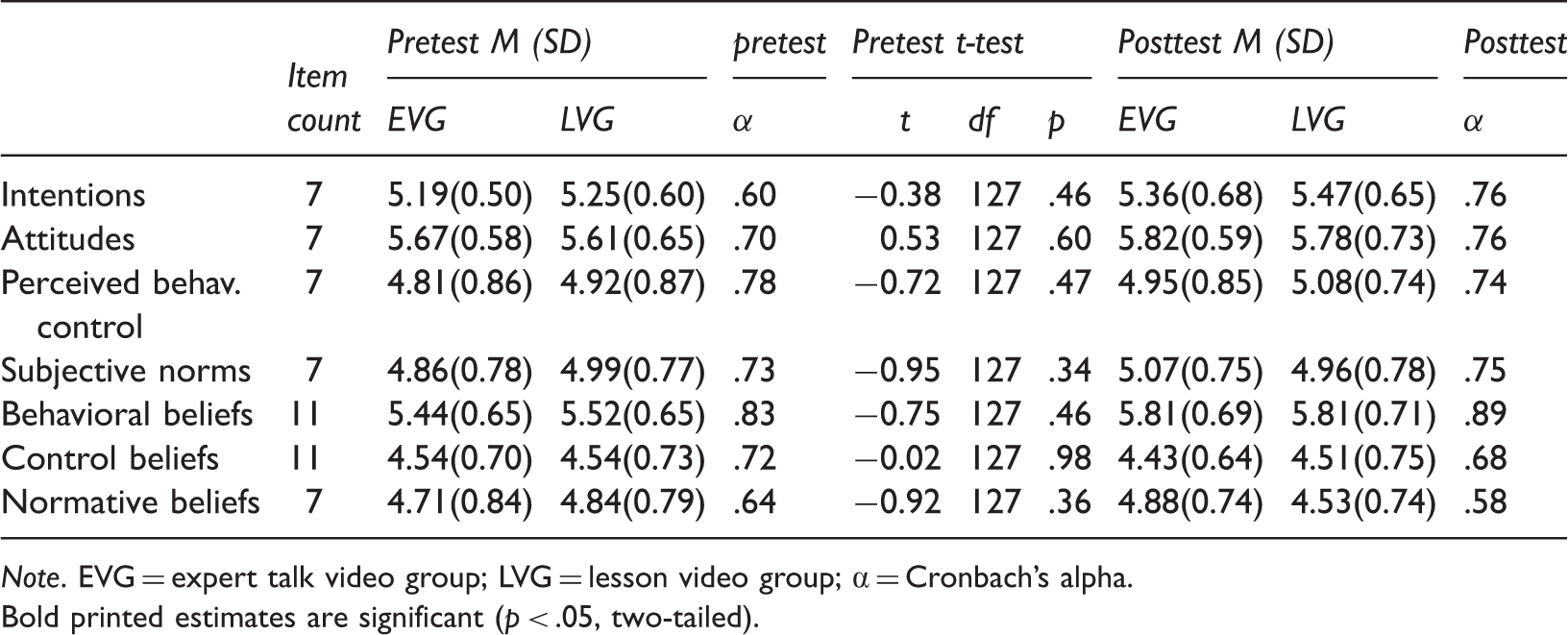
Note. EVG = expert talk video group; LVG = lesson video group; α = Cronbach's alpha.
Bold printed estimates are significant (p < .05, two-tailed).
Emotion variables
Participants' emotional arousal and valence were rated using the affect grid (Russell, Weiss, & Mendelsohn, 1989). At each of the eight measurement points, PSTs placed an X in the quadrant, indicating their arousal on the vertical axis (anchors: emotionally aroused—emotionally not aroused) and valence (anchors: unpleasant—pleasant) on the horizontal axis. For further orientation additional anchors were placed in the respective corners of the affect grid (stress, excitement, boredom, and relaxation). Both emotion variables were rated on 6-point scales. The first measurement points (T1) of arousal and valence were used as a measure before the intervention (AroBI & ValBI). The sums of T2 and T3 were used as emotion measures of the 15-min introduction part (AroID & ValID). The sums of T4 to T8 were used as emotion measures of the specific 50-min part of the intervention (AroIV & ValIV).
We did not consider change in emotion while progressing from the pre-intervention (AroBI & ValBI) or from the introductory part of the intervention (AroID & ValID) to the specific part of the intervention (AroIV & ValIV) because emotions are generally transient (Forgas, 2000). Therefore, current emotional states are mainly independent from preceding emotional states. This was confirmed by the finding that AroIV and ValIV were found to be uncorrelated with AroBI, ValBI, AroID, and ValID (p > .05, see Table 3). Because of transience in emotion, we regarded the mean over all points of measurement during a specific part of the intervention as the most representative measure for emotional reactions during a specific intervention part.
Data Analysis
Missing data
There were very few cases of missing data in the data set. Data coverage was complete for all variables, except for change rates in attitudes (98% coverage), emotion variables before the intervention (AroBI & ValBI; 98%), emotion variables during the introductory part of the intervention (AroID & ValID; 99%), and emotion variables during the specific part of the intervention (AroIV & ValIV; 99%). Full information maximum likelihood was used to deal with missing data.
Descriptives, group comparison before the group-specific part of the intervention, and variable intercorrelations
For each of the seven TPB variables, scores were calculated for pre- and posttest measures by summing all items of each scale. We then computed independent sample t-tests (two-tailed) at pretest and found no differences between groups, as expected (see Table 2).
Intercorrelations, Means, and Standard Deviations of Group-Unspecific Variables Included in the Indirect Effect Models.
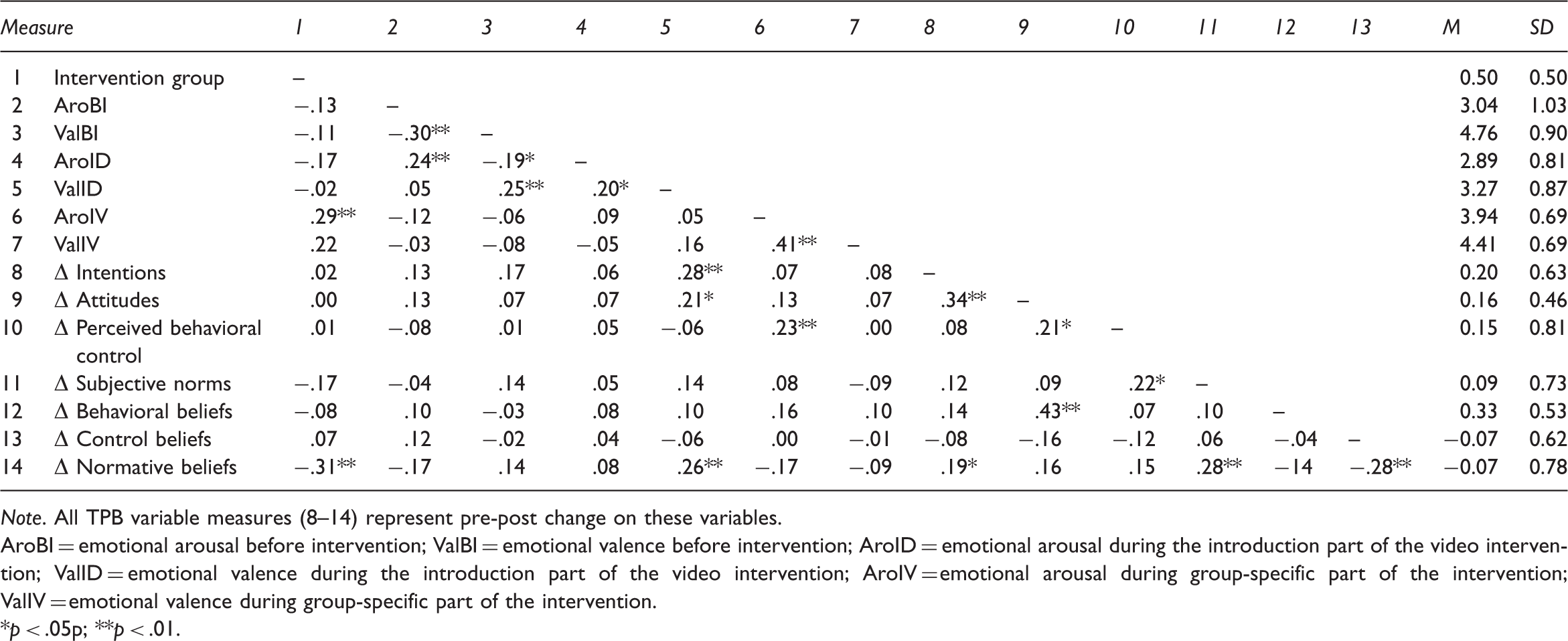
Note. All TPB variable measures (8–14) represent pre-post change on these variables.
AroBI = emotional arousal before intervention; ValBI = emotional valence before intervention; AroID = emotional arousal during the introduction part of the video intervention; ValID = emotional valence during the introduction part of the video intervention; AroIV = emotional arousal during group-specific part of the intervention; ValIV = emotional valence during group-specific part of the intervention.
*p < .05p; **p < .01.
Group-unspecific emotion and TPB change variable means, standard deviations, and intercorrelations are displayed in Table 3. The TPB variable change correlations indicate a change pattern consistent with the TPB. For example, significant positive correlations between change in attitudes and behavioral beliefs and between change in subjective norms and normative beliefs were found. Change in control beliefs was negatively related to change in perceived behavioral control, but the result was unexpectedly nonsignificant. The negative tendency was also in line with TPB, because the theory assumes that the more that occurrences of potentially obstructive instances are expected the lower the anticipated feasibility. Change in intentions was significantly correlated only with change in attitudes, which indicates a weaker relation with change in perceived behavioral control and subjective norms. The mostly positive means of the TPB variables' change are indicators of the effectiveness of our video interventions.
Inferential statistics
To test our hypotheses, we used path modeling in Mplus 8 (Muthén & Muthén, 2017). First, we applied a relatively simple model to test whether the type of video intervention had an effect on the emotion variables during the specific part of the intervention (H1), which can also be interpreted as an implementation check. The group factor was entered as a dummy-coded independent variable (1 = lesson video group, 0 = expert talk video group). Having applied z-standardization to the dependent emotion variables, the resulting parameters can be interpreted as effect sizes (Cohen's d). This simple model deliberately had zero degrees of freedom, which makes it impossible to interpret its model fit indices.
Secondly, all other hypotheses (direct [H2], total [H3], and indirect effects [H4]) were tested using indirect effect models (MacKinnon, Lockwood, Hoffman, West, & Sheets, 2002) for each of the TPB variables. Therefore, the respective TPB variable change was entered as a criterion variable. We determined the direct effects of emotional arousal and valence during the specific part of the intervention as predictors of TPB variable change (H2). In Mplus, when using the indirect effect model, the total effect parameter of group as a predictor of TPB variable change is estimated by default (H3). We also computed the indirect effects of the group factor as a predictor of TPB variable change via emotional arousal and valence during the specific part of the intervention (H4). The indirect effect is the product of the direct effect of the group factor as predictor of the emotion variable (path a) and the direct effect of that same emotion variable as predictor of TPB variable change (path b; MacKinnon et al., 2002). Indirect effects were directly tested (e.g., MacKinnon, 2008). The direct test has several advantages over the often-used stepwise approach by Baron and Kenny (1986). When using the direct test approach, the existence of a total effect is not a necessary precondition to continue the indirect effect analyses (Hayes, 2009). This precondition could have led to an unjustified amount of type II errors resulting in lower statistical power (MacKinnon et al., 2002). Furthermore, the direct test of indirect effects has been shown to maintain appropriate control over the risk of a type I error (MacKinnon et al., 2002). We used a bootstrapping procedure of 5000 samples to estimate 95% confidence intervals for all effects, because the distribution of product terms (relevant for indirect effects) is only asymptotically normal (e.g., MacKinnon, Lockwood, & William, 2004; Shrout & Bolger, 2002). In accordance with the bootstrapping procedure, we confirmed the effects when zero was not within the range of the confidence interval, which we report alongside parameter estimates. All models showed a very good fit to the data (see Table 5). Alongside the direct and indirect effects, we included correlations among the emotion variables, which resulted in a better model fit. In the same model, we also controlled for the effects of emotion variables measured before the group-specific part of the intervention (AroBI, ValBI, AroID, and ValID) on TPB variable change. The indirect effect model is depicted in Figure 2. Group factor- and emotion variables during the specific part of the intervention (AroIV and ValIV) were entered as in the simple implementation check model described above. Emotion variables before the group-specific part of the intervention (AroBI, ValBI, AroID, and ValID) and TPB variable change rates were also entered as z-standardized. Thus, the total effect parameters of group as predictors of TPB variable change rates can be also interpreted as effect sizes (Cohen's d), which is not possible for indirect effects. There were very few cases of missing data. In the following, when we use the terms emotional arousal and emotional valence we refer to AroIV and ValIV only.
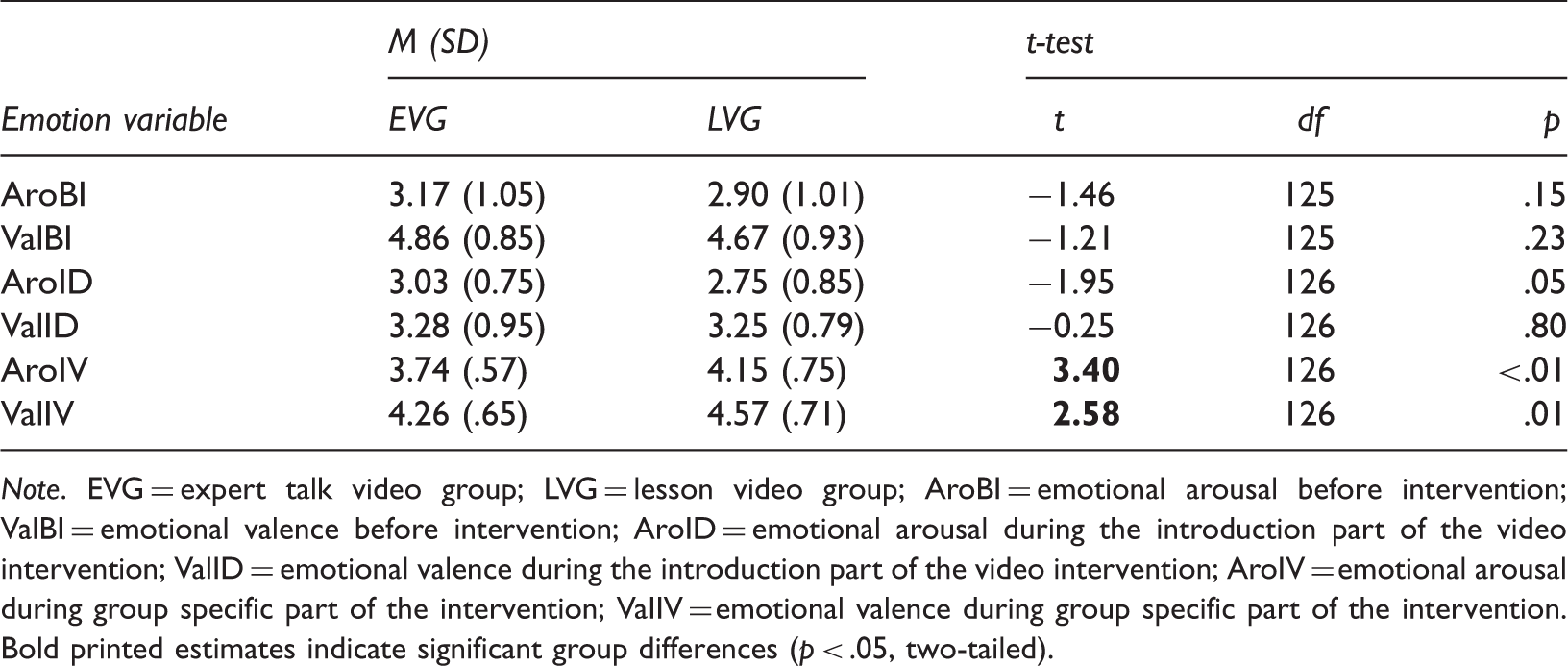
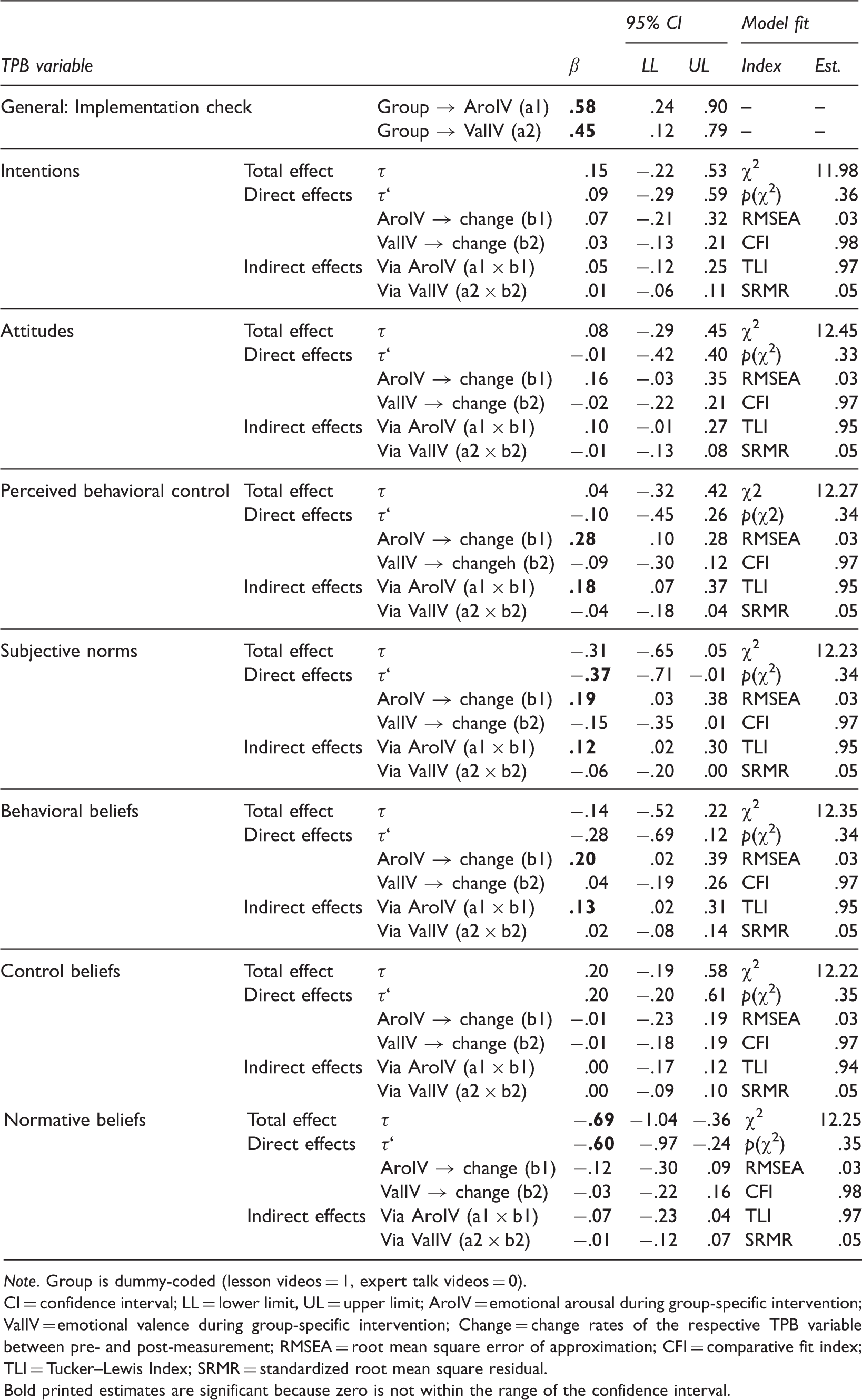
Path Diagram of the Indirect Effect Models. Means, Standard Deviations, and T-Tests of Group Differences with Effect Sizes of Emotion Variables. Note. EVG = expert talk video group; LVG = lesson video group; AroBI = emotional arousal before intervention; ValBI = emotional valence before intervention; AroID = emotional arousal during the introduction part of the video intervention; ValID = emotional valence during the introduction part of the video intervention; AroIV = emotional arousal during group specific part of the intervention; VaIIV = emotional valence during group specific part of the intervention. Bold printed estimates indicate significant group differences (p < .05, two-tailed). Summary of Total, Direct, and Indirect Effects of Group (Lesson Video vs. Expert Talk Video) on TPB Variables. Note. Group is dummy-coded (lesson videos = 1, expert talk videos = 0). CI = confidence interval; LL = lower limit, UL = upper limit; AroIV = emotional arousal during group-specific intervention; ValIV = emotional valence during group-specific intervention; Change = change rates of the respective TPB variable between pre- and post-measurement; RMSEA = root mean square error of approximation; CFI = comparative fit index; TLI = Tucker–Lewis Index; SRMR = standardized root mean square residual. Bold printed estimates are significant because zero is not within the range of the confidence interval.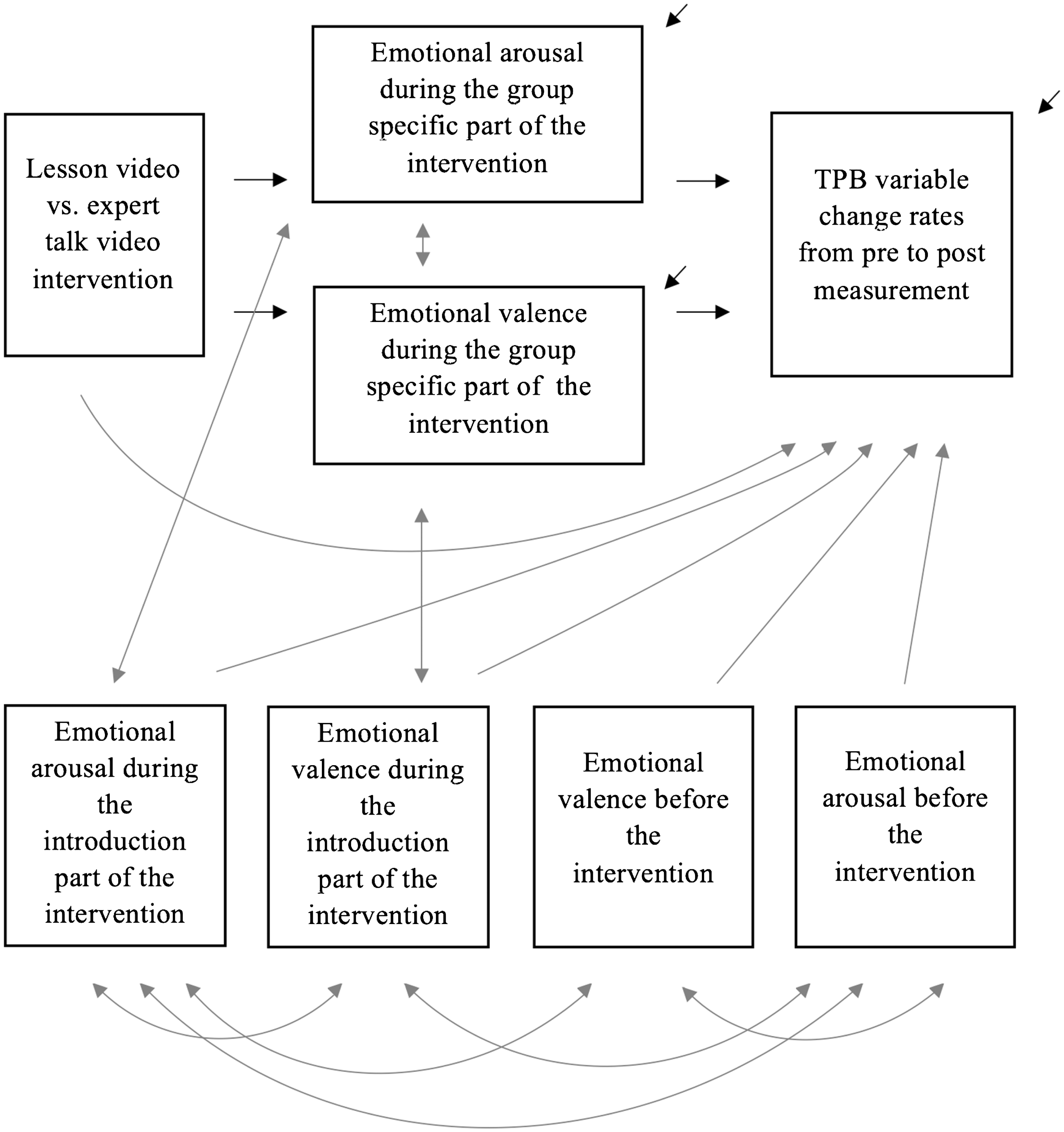
Results
Direct Effects (H1): Type of Video Format as Direct Predictor of Emotion Variables
Emotional arousal and valence were higher for the lesson video condition compared to the expert talk video condition (see Table 5). Since parameter estimates of the dummy-coded group variable can be interpreted as an effect size (Cohen's d), a medium effect (.58) was found for arousal and a small to medium effect (.45) for valence (see Table 5).
Direct Effects (H2): Emotion Variables as Direct Predictors of TPB Variable Change Rates
We found positive direct effects of emotional arousal as predictors of change rates in behavioral beliefs, perceived behavioral control, and subjective norms. There were no effects, however, on change rates of control beliefs, normative beliefs, or intentions. Furthermore, we found no effects of emotional valence as predictors of any of the TPB variables' change rates (see Table 5).
Total Effects (H3): Group Differences in TPB Variable Change Rates
Change rates in TPB variables were mostly similar between both groups (see Table 5). The only significant total group effect was negative for normative beliefs. Thus, the change rate for the lesson video group was more negative compared to the expert talk video group, which can be inferred in combination with the negative normative beliefs change mean (see Table 3).
Indirect Effects (H4): Type of Video Format as Indirect Predictors of TPB Variable Change via Emotion Variables
We found indirect effects of the type of video format as a predictor of change rates in behavioral beliefs, perceived behavioral control, and subjective norms via emotional arousal. Given the opposite signs of the direct (group as predictor of TPB change rates) and indirect effects in all three of these models, we interpreted them as inconsistent moderation models (MacKinnon et al., 2002). In our case, we found positive indirect effects via emotional arousal, which suggests that in comparison to the expert talk video group, the lesson video group appeared to result in higher arousal, which in turn was related to a greater increase in change rates of behavioral beliefs, perceived behavioral control, and subjective norms. Direct effect parameters of the type of the video intervention as a predictor of TPB variable change rates, however, were negative. There were no indirect effects concerning intentions, attitudes, control beliefs, or normative beliefs. Furthermore, no indirect effects were found for emotional valence on any of the TPB variables (see Table 5).
Discussion
We applied path models to test for direct, indirect, and total effects of the two video-based interventions (lesson vs. expert talk video) on changes in teaching-related beliefs, attitudes, and intentions via emotional arousal and valence. Except for normative beliefs, there were no group differences in TPB variable change rates.
In support of our hypotheses, we found that in comparison to the expert talk video group, the lesson video group appeared to result in higher emotional arousal, which in turn was related to higher change rates in behavioral beliefs, perceived behavioral control, and subjective norms. Discordant with our hypotheses, we found no effects of emotional arousal on intentions, attitudes, control beliefs and normative beliefs. In addition, emotional valence was more positive in the lesson video group but had no effects on any of the TPB variables' change rates.
We can conclude that even though similar TPB variable change rates were found, emotional arousal had an effect on change in some TPB variables. Emotional valence, however, had no effect on change rates. We discuss the interpretation of these findings in the following section.
Interpretations of the Results
As intended, watching lesson videos caused higher emotional arousal and valence than watching expert talk videos. Excitement is likely to arise when a positive content is perceived to be real (Frijda, 2017).
As expected, higher levels of emotional arousal during the specific part of the interventions were positively related to change in behavioral beliefs, perceived behavioral control, and subjective norms. This finding is consistent with the first strand of the theory (e.g., Ashton & Gregoire-Gill, 2003; Frijda & Mesquita, 2000) outlined in the section Lesson Videos, which claims that the intensity of positive or negative emotions serves as information on the relevance of an experience. A higher perceived relevance may motivate and guide elaboration processes on linkages and dissonances between explicit teaching-related beliefs and the experiences made through the presented videos.
Contrary to predictions, emotional arousal had no effect on control beliefs and normative beliefs. We thus assume that arousal, which was higher in the lesson video group, had no effect on belief change concerning the subjective probability of occurrences of obstructive instances in SOT. This result could have been influenced by obstructive instances that occurred in the lesson videos but were not addressed in the expert talk videos. Concerning normative beliefs, the lesson videos did not address relevant stakeholders' expectations to teach in a student-oriented way. Furthermore, arousal unexpectedly had no direct effect on teaching-related intentions and attitudes which was maybe because they are not beliefs, but instead represent the readiness to perform specific behaviors and the general evaluation of specific behaviors (Ajzen, 1991).
Finding no effects of emotional valence on any of the TPB variable's change rates deviates from the second strand of theory outlined in the section Lesson Videos. We conclude that either the positive coloration of experiences is ineffective in changing beliefs or the experienced positive valence through the videos was not attributed to SOT.
Given the finding that change rates in TPB variables were found to be equal in the lesson and expert talk video groups (except for normative beliefs), we must reject the assumption that lesson videos (as an emotion-based format) more positively affect beliefs, attitudes, and intentions as compared to expert talk videos (as a logical information-based format). This finding contrasts with the theoretical assumption that logical argumentation manifested in input-oriented teacher education is inferior to practical teaching experiences (e.g., Richardson, 2003).
Surprisingly, a clear drop in normative beliefs was found in the lesson video group but not in the expert talk video group. This finding may have occurred because teachers in the lesson video group described their SOT approaches as exceptional and new. This could have caused the perception that colleagues, parents, students, and other relevant stakeholders do not regularly expect SOT to be applied in classrooms.
In accordance with results regarding hypotheses 1 and 2, we found significant indirect effects. Thus, higher arousal in the lesson video group (path a), may in turn, have led to a more positive change in behavioral beliefs, perceived behavioral control, and subjective norms (path b). Nevertheless, these indirect effects need to be interpreted with care because there were no significant total effects from the type of video intervention on change in these variables. Thus, different participants could be behind paths a (direct effect of the group factor as predictor of the emotion variable) and b (direct effect of the emotion variable as predictor of TPB variable change). This means that there might have been a different source of emotional activation, which was not caused by the video interventions. However, in the indirect effect models we controlled for emotion variables before the specific part of the intervention. Furthermore, both interventions were conducted in the same way except for the type of videos presented during the specific part of the intervention. Inconsistent mediation models do not necessarily indicate that indirect effects do not exist. Rather it is possible that two existing effects may have worked in opposition to each other (MacKinnon, Krull, & Lockwood, 2000). We assume that the total effect of the type of video intervention as a predictor of TPB variable change may be 1) a result of emotional activation, which was higher in the lesson video group, but at the same time 2) a result of the amount of logical argumentation, which was higher in the expert talk video group. Logical argumentation may have led to a potentially short-term positive effect for the expert talk video group, which worked in opposition to the effects of higher emotional activation in the lesson video group. The effects of emotional arousal of the lesson videos may have been too weak to form a sweeping force to exceed the effects of the logical argumentation of the expert talk videos.
Limitations
A limitation of this study follows from the low internal consistency of the normative belief scale (α = .58). Hence, results referring to our measurement of normative beliefs should be interpreted with care.
Unfortunately, nothing can be said about the real-life behavior of students, whose beliefs concerning SOT have been changed. Thus, nothing can be said about the effects on participants' future teaching behavior.
Another limitation of this study was the lack of a follow-up measurement. We therefore do not know whether the effects of the expert talk video group were superficial and therefore temporary as compared to the effects of the lesson video condition.
In addition, we need to be careful when generalizing the results of this study beyond beliefs about SOT. Other beliefs about teaching (e.g., beliefs concerning very specific teaching behaviors) could be affected by lesson videos via emotional arousal differently than we found in our study.
Conclusions, Research Recommendations, and Practical Implications
The total change rates of PSTs' beliefs, attitudes, and intentions in the lesson video group did not differ from the change rates in the expert talk video group (except for normative beliefs). Nevertheless, we did find indirect effects of the type of intervention via emotional arousal on behavioral beliefs, perceived behavioral control, and subjective norms change rates. Based on the results of this study we cannot infer that showing lesson videos is superior to showing expert talk videos in changing beliefs, attitudes, and intentions. Future studies may examine whether the belief change potential resulting from emotional activation through lesson videos may be increased by giving some time for guided reflection after the intervention. This was done in partly successful intervention studies where participants were involved in real teaching situations (Hart, 2002; Olson & Jimenez-Silva, 2008; Yerrick & Hoving, 2003). Furthermore, follow-up measures of beliefs may bring clarity on whether the effects of showing lesson videos on belief change (emotion-based change) may be more pervasive and, therefore, longer lasting as compared to the effects of showing expert talk videos (logical argumentation-based change). Nevertheless, we can already conclude that teacher educators who intend to change PST beliefs about teaching should consider purposefully evoking emotional reactions in relation to the learning content. Showing lesson videos clearly evokes emotional reactions in PSTs. The valence of the emotion, however, appears to be irrelevant for belief change. Thus, when changing beliefs is intended it in may be of advantage if learning is emotionally intense, but it does not necessarily need to be fun.
Footnotes
Declaration of Conflicting Interests
The author(s) declared no potential conflicts of interest with respect to the research, authorship, and/or publication of this article.
Funding
The author(s) received no financial support for the research, authorship, and/or publication of this article.