



Abstract
Recent years have witnessed a surge in classroom-based pedagogies aimed at targeting student engagement. This paper seeks to report on the design, delivery and small-scale evaluation of a final year undergraduate module in developmental psychology. Adopting a range of innovative teaching/learning methodologies, the author sought to support student engagement across the module. Using a scaffolded approach to module delivery, four discrete teaching methodologies were employed: ‘lectorial’ design, the jigsaw method, in-class presentations and an online discussion forum. Such strategies were chosen due to their strong alignment with the six ‘engagement indices’, as put forward by the Irish Survey of Student Engagement (ISSE). Following module completion, student feedback was obtained using the Student Course Engagement Questionnaire (SCEQ) and additional Likert scale questions. Based on descriptive and inferential analysis of findings, student feedback is presented, with implications for practice outlined. Limitations of the small-scale evaluation are also noted, offering potential avenues for future research.
Keywords
Student Engagement: An Overview
Student engagement in higher education is widely recognised as an essential factor in enabling the development of key personal and professional capacities. Decades of research have illustrated the direct link between student engagement and predictors of learning and personal development, including critical thinking, problem-solving, collaborative work and communication skills, to name but a few (e.g., Carini, Kuh, & Klein, 2006; ISSE, 2014, 2015a, 2015b; Zhao & Kuh, 2004). A review of the literature illustrates how student engagement has become increasingly researched, theorised and debated in recent years, highlighting the complex and multifaceted nature of the construct (Kahu, 2013). As a result, disparity is evident within the literature in terms of defining student engagement and its dimensionality (e.g., Fredricks & McColskey, 2012; Reschly & Christenson, 2012). Nonetheless, there is a growing consensus among researchers that engagement is a multidimensional construct, which includes behavioural, emotional and psychological components (e.g., Finn & Zimmer, 2012; Maroco, Maroco, Campos, & Fredricks, 2016; Sinatra, Heddy, & Lombardi, 2015). Through this perspective, Coates (2010) outlines how the concept of student engagement serves to integrate two main ideas. First, it is concerned with ‘students’ involvement with activities and conditions likely to generate learning’ (Coates, 2006, p. 4). Second, it focuses on conditions beyond the student, including ‘the policies and practices that institutions use to induce students to take part in these activities’ (Kuh, 2003, as cited in Coates, 2010, p. 3).
Engagement Indices, as Sourced from ISSE (2015a, p. 93)

From an Irish perspective, the ISSE provides insight into the experiences of students across 30 different institutions, with more than 19,800 respondents in 2014 and 27,300 respondents in 2015 (ISSE, 2014, 2015a). Such findings have informed practice and policy at national levels and continue to facilitate self-reflection, evaluation and related changes within institutions. Based on recent work in this area, lecturers in higher education institutions are now being urged to focus on the teaching/learning strategies employed within their own discipline, with an aim of creating high-quality learning environments for all (ISSE, 2015a). Consequently, this paper outlines the adoption of a range of innovative strategies aimed at supporting student engagement in a final year undergraduate module in developmental psychology. The report aims to describe the module with reference to module outline, theoretical framework employed, module design and delivery and module assessment. Following this, related student feedback will be presented, as sought through both the SCEQ (Handelsman, Briggs, Sullivan, & Towler, 2005) and additional quantitative questions. Based on this feedback, a critical reflection on the module will be outlined, with reference to practice and potential avenues for future research.
Module Outline
This module was designed for a final year undergraduate elective in developmental psychology, involving students from two programmes: Bachelor of Education in Education and Psychology (N = 33) and Bachelor of Arts: Psychology (N = 2). All 35 students had previously engaged in a prerequisite module – Developmental Psychology I – in the second year of their studies. That module had focused on theories of learning and development, with particular emphasis on infancy, childhood and early adolescence. In contrast, this final year module aimed to focus on psychological theories, research and applications of developmental psychology throughout a person’s lifespan, with emphasis on the periods of adolescence, adulthood and ageing. In adopting a life course approach to development and ageing, the author sought to extend prior understanding of child development by exploring the four domains of development (physical, cognitive, emotional and social) from the cradle to the grave (Berk, 2014). The author also aimed to bridge the gap between theory and practice in order to focus on cutting-edge Irish research in the field and to explore topical issues in today’s society through a psychological lens.
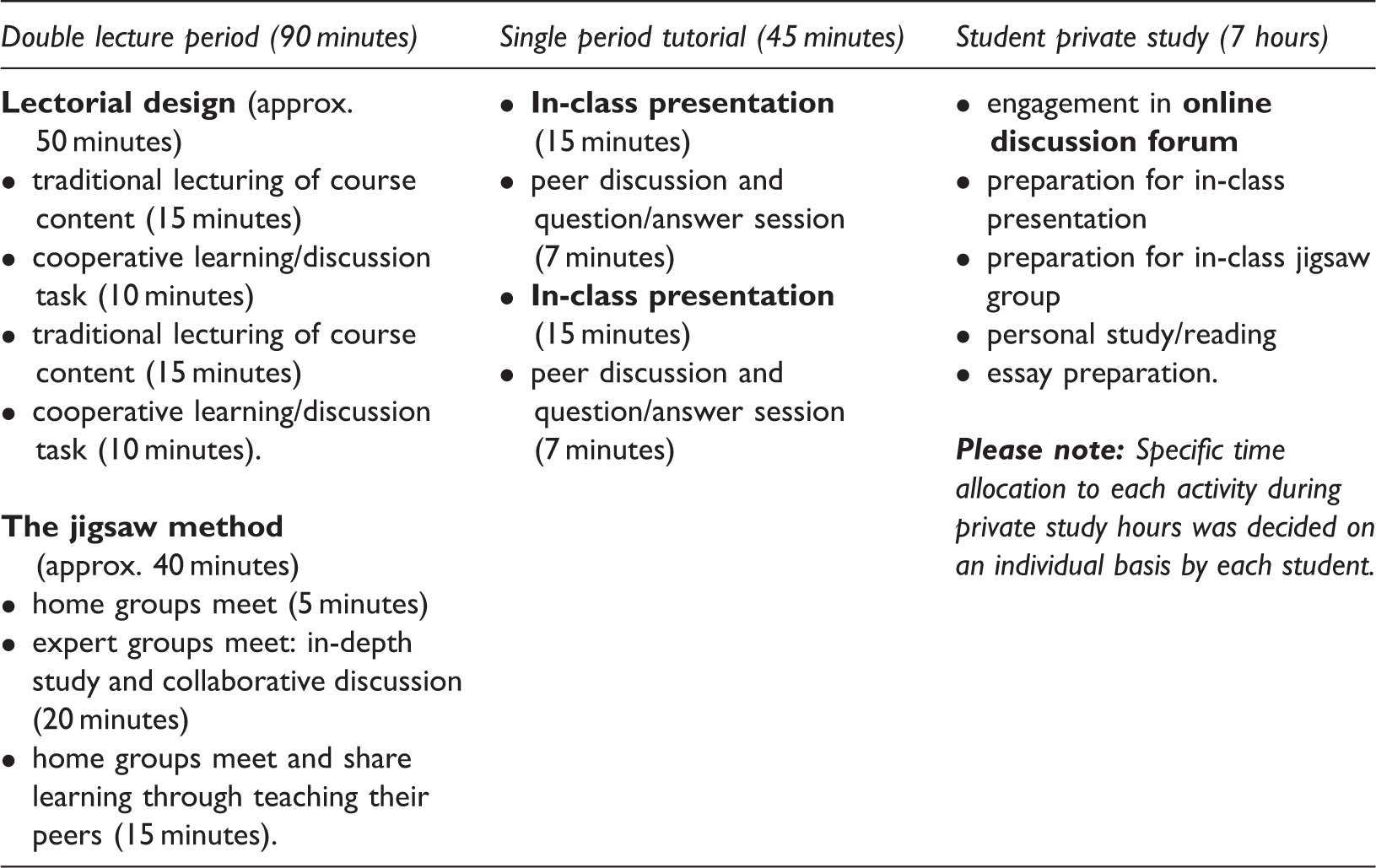
This module formed a six European Credit Transfer and Accumulation System (ECTS) credit module, comprising 36 contact hours over a 12-week semester. This was divided weekly into a double lecture period (90 minutes) and a separate single period tutorial (45 minutes). Students were required to devote an additional seven private study hours weekly to the module across the semester.
Theoretical Framework
Reflecting on literature in the field of student engagement (e.g., Lawson & Masyn, 2014; Reyes, Brackett, Rivers, White, & Salovey, 2012), the author sought to move away from didactic approaches of module delivery. Rather, the desire was to create a learning environment in which the lecturer was viewed as someone who facilitates, guides and mentors learners towards higher cognitive and metacognitive levels. Accordingly, social–cultural theory, as proposed by Lev Vygotsky (1978), was adopted as a relevant overarching theoretical framework to support module design and delivery. Fundamental to this theoretical approach is the concept of ‘scaffolding’. Herein, learning is thought to be guided by others through the provision of temporary support, contingent to learners’ needs (Stone, 1998; Van de Pol, Volman, Oort, & Beishuizen, 2015). According to Vygotsky, learning first takes place on a social (inter-psychological) level, before moving to an individual (intra-psychological) level. The role of the educator is therefore viewed as one who co-constructs knowledge with the learner (apprentice) and scaffolds the development of his/her higher-order cognitive processes (Vygotsky, 1978).
In a recent systematic review of research in this domain, Van de Pol, Volman, and Beishuizen (2010) highlighted three key characteristics of scaffolding which serve to foster independence in the learner. These are contingency, fading and transfer of responsibility (see Figure 1, reproduced with permission from Van de Pol et al., 2010). The first process, contingency, refers to responsive, tailored or calibrated support, in which assistance must be adapted to the current level of the student’s performance, or at a slightly higher level. Following this, fading occurs, meaning the gradual withdrawal of scaffolding from the learner. Finally, transfer of responsibility occurs, during which the learner assumes increased control over the learning/task. Through effective implementation of scaffolded teaching approaches, the learner is deemed to ‘internalize the support structure associated with the scaffolding, and, in the end, scaffolding is no longer needed as the learner can provide his or her own support’ (Stone 1998, as cited in Van de Pol et al., 2010, p. 275).
Conceptual model of scaffolding (reproduced with permission from Van de Pol et al., 2010, p. 274).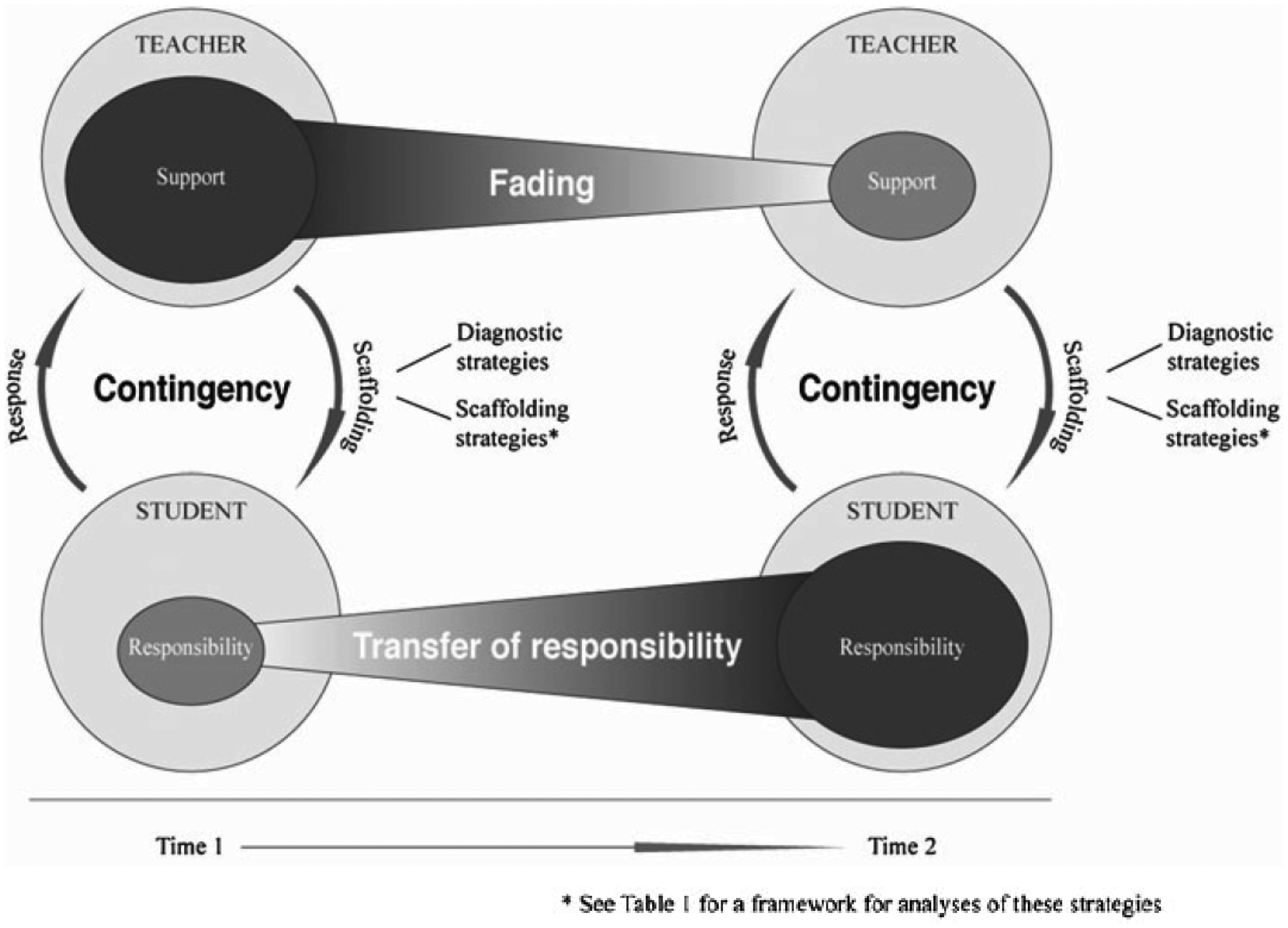
Previous research has highlighted the positive relationship between scaffolded teaching approaches and student engagement, such that scaffolded approaches serve to engage and motivate learners and facilitate the use of interactive, collaborative learning approaches (Hardjito, 2010; Stone, 1998).
Module Design and Delivery
Sample Weekly Overview of the Module
Lectorial Design
The teaching approach adopted for module delivery was ‘lectorial’ design, defined by Cavanagh as: ‘a combination of lecture and tutorial to emphasise their interactive nature’ (2011, p. 25). The key feature of lectorial design is the inclusion of segments of traditional lecturing blended with activities designed to actively engage students in their learning (Cavanagh, 2011). Lectorials are typically structured with two or three cooperative learning tasks interspersed between some traditional lecturing, with activities changing every 10 to 15 minutes. Research highlights how a variety of teaching methodologies help to sustain student attention, increase engagement and promote higher-order learning (e.g., Moravec, Williams, Aguilar-Roca, & O’Dowd, 2010). Reflecting on literature in this area, the use of lectorial design was considered to facilitate the incorporation of all six ‘engagement indices’ including academic challenge, active learning, student–staff interactions, enrichment of educational experiences, a supportive learning environment and work-integrated learning (ISSE, 2014, 2015a, 2015b).
The Jigsaw Method
The first collaborative teaching strategy employed was the jigsaw method (Aronson et al., 1978); see Figure 2. This strategy is built on principles of active learning, collaborative acquisition of content material and interactive explanation of same. Students in a class are divided into teams that are coined ‘home groups’. Each member of a home group then chooses one subtopic of the entire content material. ‘Expert groups’ are then formed, where students studying the same subtopic come together. Following in-depth study, ‘experts’ return to their ‘home group’ and share their learning with ‘novices’ in the area. This teaching/learning strategy has been described as a highly effective, cooperative learning technique, illustrated by research showing that its external structure fosters autonomous and self-regulated learning among participants (e.g. Hanze & Berger, 2007; Souvignier & Kronenberger, 2007). By adopting this teaching strategy, the lecturer aimed to engage students actively in the module and draw on the engagement indices of academic challenge, active learning and a supportive learning environment, in particular (ISSE, 2014, 2015a, 2015b). Over the course of the module, cutting-edge research articles and psychology-related case studies formed the learning focus within the jigsaw groups, with lecturer support provided, as required.
Pictorial depiction of the jigsaw method with home and expert groups (adapted from Frey, Fisher, & Everlove, 2009).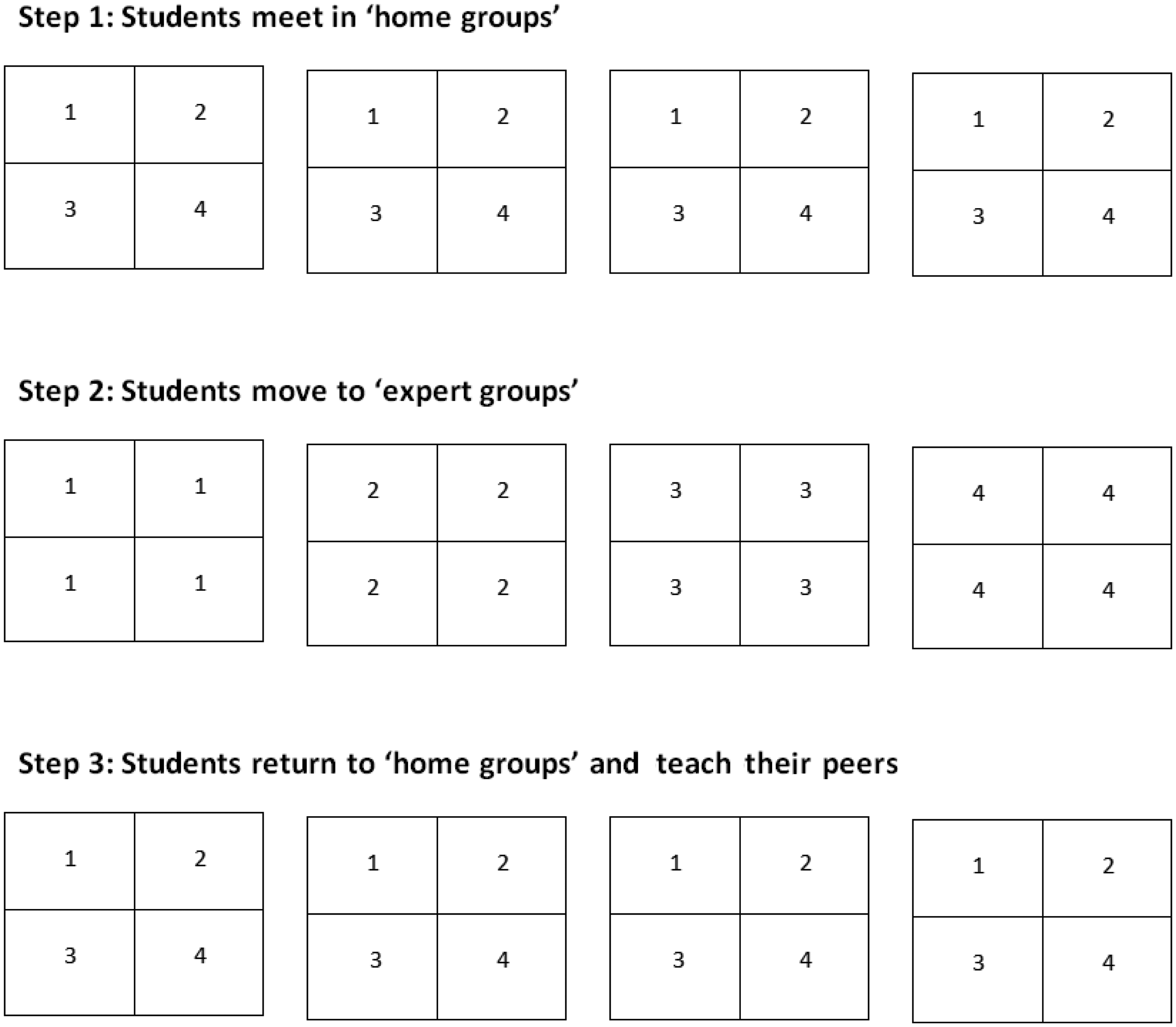
In-class Presentations
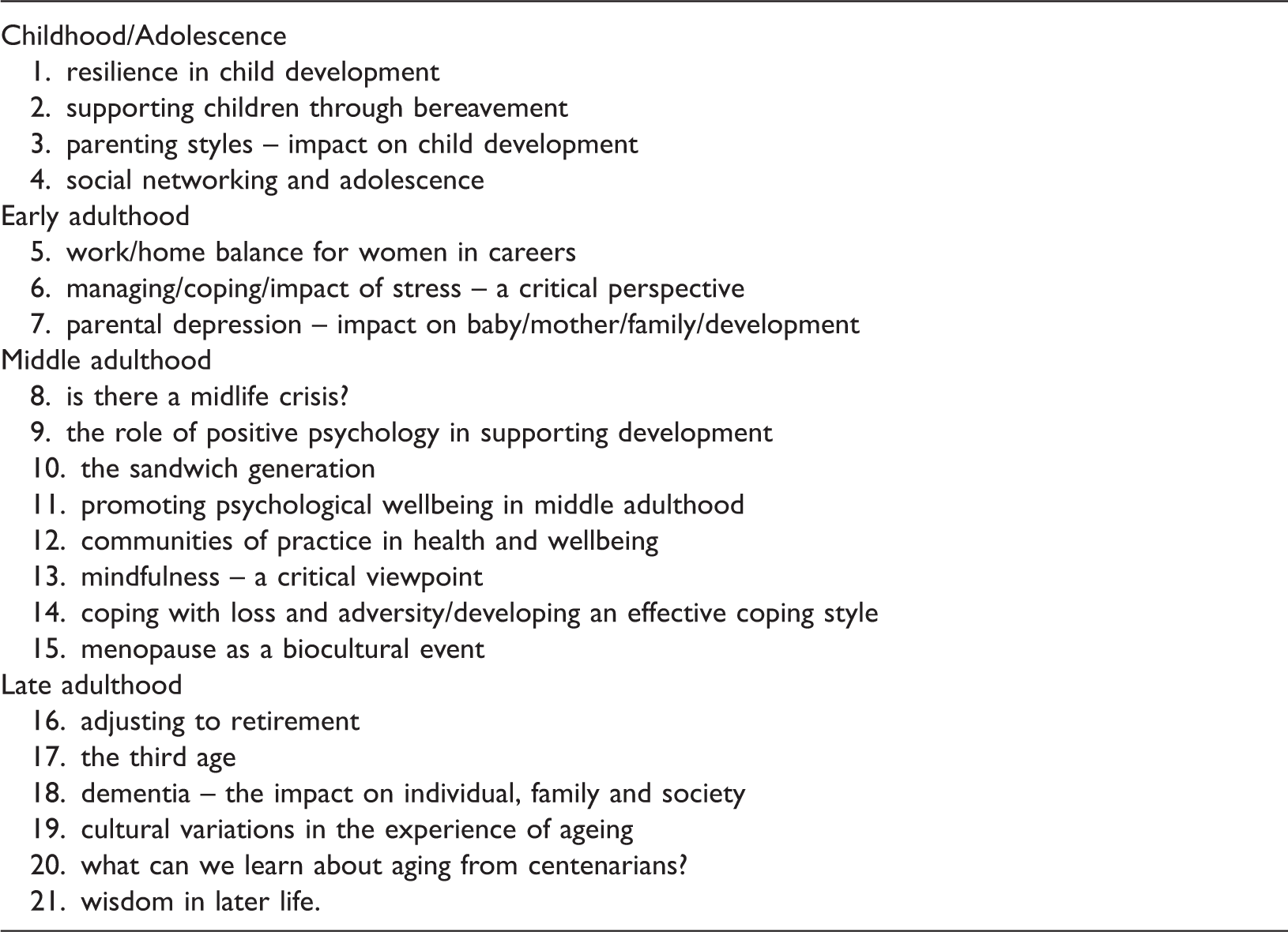
Sample Presentation Topics for the In-class Presentations
Online Discussion Forum
To extend learning beyond the classroom, an online discussion forum was created on the class virtual learning environment webpage (in this case, ‘Moodle’), drawing on the engagement indices of academic challenge, student–staff interactions (through online interactions), the enrichment of educational experiences and a supportive learning environment (ISSE, 2014, 2015a, 2015b). At first, articles used within the jigsaw groups were sourced by the lecturer from highly reputable peer-reviewed journals and uploaded online. Students were required to read the articles prior to class in preparation for the ensuing jigsaw work. Between classes, discursive questions were posted by the lecturer online to which students were required to respond by incorporating learning from the article, additional academic reading and related peer posts. As the weeks progressed, students were required to self-source articles under pre-selected themes. Informed by scaffolding theory, lecturer control was faded and responsibility ‘transferred’ to the learners (e.g., Van de Pol et al., 2010; Vygotsky, 1978). Students were then required to share sourced materials with classmates via the online platform and engage in collaborative discussions related to the same, with lecturer input and monitoring, where required.
Module Assessment
Research highlights the direct link between learning outcomes, teaching methodologies and assessment, such that assessment is often viewed as the bridge between teaching and learning (Wiliam, 2013). Accordingly, module assessment was divided into three discrete elements: attendance and course participation (10%), in-class presentation (30%), and essay (60%). Marks were awarded for attendance and course participation to highlight the importance placed on face-to-face and online active student engagement. To support presentation focus and design, students were provided with a grading rubric on the first day of semester. An individual marking component was also included in the grading of presentations to reduce social loafing and increase individual accountability (Johnson & Johnson, 2003). Finally, students were required to compile an end-of-term essay for the module. It was envisaged that the essay would serve to synthesise students’ learning across the module, with a particular focus on critical thinking and linkage of theory with practice.
Module Evaluation: Instrument
On the final week of semester, students were invited to provide module feedback. Ethical clearance was first obtained from the institutional ethics committee. All students were invited by an independent researcher to participant in the research and willing participants completed informed consent forms. Students were assured of full anonymity and anonymised data was not released to the module lecturer until all grades had been submitted to the college examination board.
Data was primarily collected through use of the SCEQ (Handelsman et al., 2005). This is used as a reliable, valid and multidimensional measure of college student course engagement, and is comprised of 23 statements relating to student engagement which are subdivided into four discrete factors: skills engagement, emotional engagement, participation/interaction engagement and performance engagement. These factors recognise the academic, emotional, social and behavioural aspects of student engagement. All student engagement factors have shown good internal reliability in previous research, ranging from .76 to .82 (Handelsman et al., 2005). Cronbach’s alpha in the present sample was .94 for skills engagement, .81 for emotional engagement, .70 for participation/interaction engagement and .89 for performance engagement, indicative of excellent internal reliability (Nunnally, 1978). Cronbach’s alpha for the entire engagement scale was .94. The first factor, labelled ‘skills engagement’, consists of nine items that represent student engagement through practising skills. Sample items include ‘making sure to study on a regular basis’, ‘putting forth effort’ and ‘being organised’. The second factor, labelled ‘emotional engagement’, consists of five items that represent student engagement through involvement with class material. Sample items include ‘applying course material to my life’, ‘thinking about the course between class meetings’ and ‘really desiring to learn the material’. The third factor, labelled ‘participation/interaction engagement’, consists of six items that represent student engagement through class participation and interactions with peers and class lecturers. Sample items include ‘raising my hand in class’, ‘participating actively in small-group discussions’ and ‘helping fellow students’. The fourth factor, labelled ‘performance engagement’, consists of three items that represent student engagement through class performance levels. Sample items include, ‘getting a good grade’, ‘doing well in the tests’ and ‘being confident that I can learn and do well in the class’. Based on the 23 statements, students were required to rate the extent to which the behaviours, thoughts and feelings describe their level of engagement within the module. Responses were rated on a scale of 1–5, where 1 = not at all characteristic of me, 2 = not really characteristic of me, 3 = moderately characteristic of me, 4 = characteristic of me and 5 = very characteristic of me. Stemming from student ratings, a mean overall engagement score was obtained for the students, in addition to a mean engagement score for each of the four engagement factors (minimum = 1, maximum = 5).
Extending the SCEQ, a number of questions were added to the questionnaire. These consisted of demographic questions (i.e., gender, age, programme of study) and one particular additional question, aimed at seeking specific feedback related to the teaching strategies employed across the module. Based on a ten-point Likert scale (where 1 = did not facilitate engagement and 10 = highly facilitated engagement), students were asked to respond to the question: ‘How much did each of the teaching/learning strategies support your engagement in the module?’ Student ratings were requested with reference to each of the four methodologies: lectorial design, jigsaw method, in-class presentations and the online discussion forum.
Sample
Thirty-one of the 35 students undertaking the module completed the questionnaire (response rate = 89% of the total class cohort). All respondents were in their final year of the Bachelor of Education in Education and Psychology degree programme. With regard to gender, 87% were female and 13% male, within two age groups: 17–22 (n = 27; 87%) and 23–30 (n = 4; 13%).
Findings
SCEQ
Based on the 23 statements in the SCEQ, the total mean engagement score was 3.42 (SD = .73), with observed values ranging from 2.13 to 5.00.
The mean score for each of the four engagement factors in the SCEQ was then calculated across participants (i.e. mean for statements within skills, emotionality, participation/interaction and performance). Figure 3 indicates that mean engagement levels ranged across the four factors from 3.25 (SD = .97) for performance engagement to 3.50 (SD = 1.00) for skills engagement, as rated on a scale of 1–5. Non-parametric analyses (Friedman’s ANOVA) indicated that there was no difference in mean engagement levels between the four factors, χ2 (3) = 3.54, p = .315. This indicates that all students were equally engaged across skills, emotionality, participation/interaction and performance.
Distribution of ratings of student engagement across the four engagement factors, as rated by final year Developmental Psychology students using the SCEQ (Handelsman et al., 2005).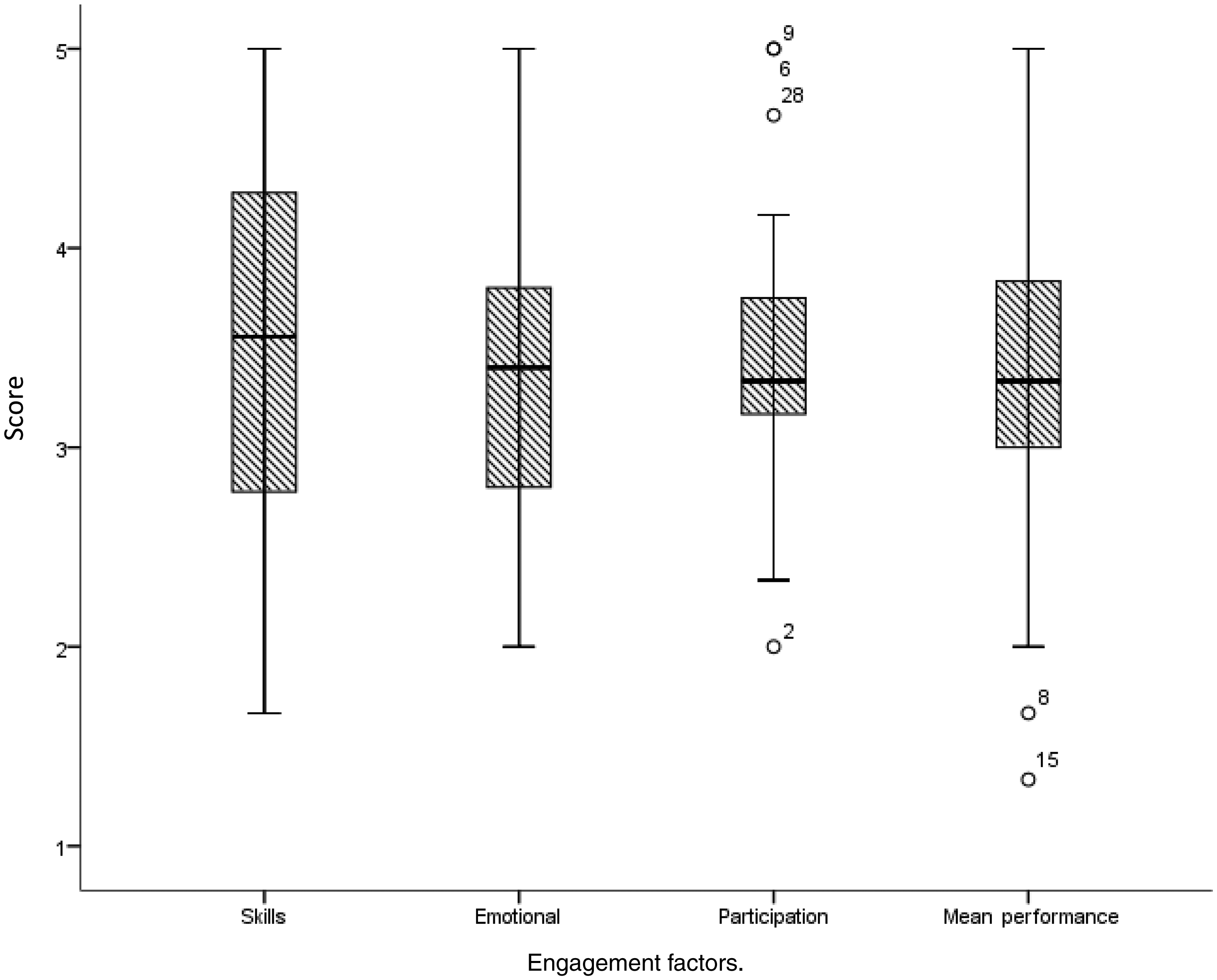
SCEQ – individual question analysis
Skills engagement
In order to examine the specific questions of the SCEQ and how they supported engagement, analysis was undertaken on the individual question level for each subscale. The median response to each individual item was compared to the overall median for that subscale. The median for skills engagement was 3.55 (range = 3.33). The median response for one item of this scale was less than 3.00: ‘looking over class notes between classes to make sure I understand the material’, indicating that this factor was rated as least effective by students in facilitating skills engagement. Six items had a median response of 4.00, namely, ‘putting in effort’, ‘doing all the portfolio tasks’, ‘listening carefully in class’, ‘being organised’, ‘taking good notes in class’, and ‘coming to class every day’, indicating that these were rated as the most effective methods in facilitating skills engagement.
Emotional engagement
For emotional engagement, the median for the overall subscale was 3.40 (range = 3.00). All items on this subscale had a median response of 3.00 or greater, with three statements with a median response of 4.00: ‘participating actively in small-group discussions’, ‘helping fellow students’ and ‘using the online forum to review assignments or tasks or to ask questions’.
Participation/Interaction engagement
For participation/interaction engagement, the median for the subscale was 3.33. As with the emotional subscale, all individual items had a median response of 3.00 or greater. Three items had a median response of 4.00: ‘participating actively in small-group discussions’, ‘using/looking at the online forum to review assignments or tasks or to ask questions’ and ‘helping fellow students’.
Performance engagement
For performance engagement, the overall subscale median was 3.33. All three items of this scale had medians of 3.00 or above. Just one item had a median of 4.00: ‘being confident that I can learn and do well in the module’.
Teaching/Learning strategies
Descriptive Statistics Outlining Student Responses to the Question: ‘How Much Did Each of the Teaching/Learning Strategies Support Engagement in the Module?’ as Rated on a Scale of 1–10

Discussion
This paper sought to report on the design and delivery of a final year undergraduate module in developmental psychology aimed at supporting student engagement. Using a scaffolded teaching/learning approach to module delivery (Van de Pol et al., 2010; Vygotsky, 1978), four discrete teaching/learning methodologies were employed across the module: lectorial design, the jigsaw method, in-class presentations and an online discussion forum. Such strategies were specifically chosen as they were deemed to align strongly with the six ‘engagement indices’, as put forward by the ISSE (2014, 2015a, 2015b). Employing the SCEQ (Handelsman et al., 2005), student feedback was sought across four engagement factors: skills engagement, emotional engagement, participation/interaction engagement and performance engagement. Additional quantitative ratings were also obtained to ascertain students’ perceptions of the effectiveness of the teaching/learning strategies in supporting module engagement.
Student Engagement at the Sub-skill Level
An analysis of findings from the SCEQ illustrates that the total mean engagement score was 3.42 (SD = .73), with observed values ranging from 2.13 to 5.00. Based on mean scores for each of the four engagement factors on the SCEQ, results illustrated that there was no significant difference in student ratings across the four factors, indicating that students’ level of engagement for skills, emotionality, participation/interaction and performance showed statistical equivalence. As both the total mean engagement score and mean factor ratings across the four domains all emerged comfortably above the mid-point of the scale, such findings illustrate positive feedback with regards to student engagement in the module. Specifically, it can be concluded that module design and delivery served to foster student engagement across all engagement domains, with positive ratings emerging as the average response across the cohort. On the other hand, however, the lack of comparative data across related modules and studies brings the magnitude of the findings into question. In this regard, the degree to which the adopted teaching approaches supported or enriched student engagement relative to other modules and teaching approaches remains unclear. Undoubtedly, future research is required to ensure robust conclusions can be drawn from the data. Here, the use of control groups and comparative samples would help to facilitate such analysis.
Nonetheless, a review of student ratings across each of the four engagement factors offers greater information on the activities that influenced student engagement. Despite the fact that student ratings across all engagement factors were equivalent, analysis at the individual question level revealed some interesting differences. Specifically, by comparing individual question responses to overall median student ratings within that domain, information is gleaned on the specific aspects of the module that served to support student engagement. Considering skills engagement, results indicated that ‘putting in effort’, ‘doing all the portfolio tasks’, ‘listening carefully in class’, ‘being organised’, ‘taking good notes in class’ and ‘coming to class every day’ were rated as the most effective methods in facilitating skills engagement (all medians of 4.00). On the other hand, ‘looking over class notes between classes to make sure I understand the material’ was rated as least effective. It is likely that the incorporation of attendance within the grading of the module served to support student engagement in this way, such that students recognised the importance of regular skills practice within class time for enhancing skills engagement. In addition, it may be the case that the lack of a mid-semester assessment for the students negatively impacted on this factor; previous research indicates that regular assessments act as an incentive for study (Boud & Falchikov, 2007). In the light of this finding, the inclusion of more regular assessments in the module may serve to facilitate more consistent study (and engagement) by the students across the semester.
Reflecting on participation/interaction engagement, results indicated that ‘participating actively in small-group discussions’, ‘helping fellow students’ and ‘using the online forum to review assignments or tasks or to ask questions’ were deemed particularly effective in supporting engagement within this subscale (median response of 4.00). Reflecting on the teaching strategies employed across the module, it is evident that peer support and interaction were at the heart of each selected teaching strategy. It is likely that use of an array of collaborative teaching/learning strategies both within and beyond the class context served to foster this social interaction and support among the cohort.
Considering both emotional engagement and performance engagement, it is interesting that students deemed all items effective in facilitating engagement within these domains. In terms of emotional engagement, Handelsman et al. (2005) highlight how the focus is placed on personal and/or emotional involvement with class material. Throughout the module, the lecturer had the insight to create direct links between research, theory and practice to ensure that the real-life context of developmental psychology was evident for the students in order to support their emotional connection to the material. It is likely that the emphasis on work-integrated learning and weekly presentations served to support students’ emotional engagement consistently across the module. In terms of performance engagement, it is suggested that this factor correlates strongly with ‘extrinsic motivation and performance goals rather than learning or mastery goals’ (Handelsman et al., 2005, p. 187). Throughout the module, students were provided with regular feedback on their performance, particularly in relation to their in-class presentations and contributions to collaborative exercises. Research has illustrated the importance of prompt feedback in undergraduate education where it is deemed a key means of supporting student engagement (e.g. Chickering & Gamson, 1987; Kuh, 2009). Moving forward, it would be interesting to establish if a more formal mid-semester assessment would serve to impact on student engagement and improve ratings further within this domain.
Teaching Strategies and Student Engagement
Beyond the SECQ, the use of the additional Likert scale questions provided insight into the perceived effectiveness of the teaching strategies employed across the module to support student engagement. An analysis of findings clearly indicates a statistical difference in median student ratings across the factors, with lectorial design deemed the most effective strategy in facilitating engagement. This teaching approach, involving cooperative learning tasks interspersed between some traditional lecturing, is viewed as a strategy to facilitate interaction and support student motivation and engagement (Cavanagh, 2011; Wittwer & Renkl 2008). It is likely that the quick changeover between teaching methods when using this approach served to sustain student attention and reduce opportunities for disengagement.
Beyond lectorial design, in-class presentations were rated as the second most effective strategy for supporting student engagement. By working in pairs and basing presentation titles on topical issues in society, this teaching strategy was underpinned by a host of the ‘engagement indices’ including academic challenge, active learning, enrichment of educational experiences and work-integrated learning (ISSE, 2014, 2015a, 2015b). It is likely that the relevance of chosen topics to the students’ lives, alongside the use of the question/answer session post-presentations, helped students to engage with the material and internalise it.
The third most effective activity was that of the online discussion forum. Notably, however, the range of ratings across students within this factor was most varied in nature, pointing towards the diverse perceptions among students regarding the effectiveness of this technique in supporting engagement. Although students were required to engage in the online forum on a weekly basis, specific guidelines regarding the level or extent of engagement were not issued by the lecturer. As a result, an analysis of online Moodle activity showed wide variance across students ranging from minimal levels of online activity to high levels of critical peer interaction and feedback. Again, further research is required to gain insight into the specific aspects of the online discussion forum that were deemed to facilitate and/or hinder student engagement with the module. When viewed in comparison to mean student ratings from the other teaching methodologies, it is questionable whether student feedback points to a greater preference among students for face-to-face as opposed to virtual interactions when considering their engagement. This is a particularly interesting finding of the research and one which requires greater exploration.
Finally, the jigsaw method was rated as the least effective strategy in facilitating student engagement, with wide variance evident across participant ratings. Reflecting on this finding, it is questionable whether this strategy was more favoured by strong, dominant students and less favoured by weak or shy students. Research highlights how cooperative learning is learner driven so, at times, may be disadvantageous for both shy students as well as dominant students who favour competition-based learning. Addressing this issue, Kardaleska (2013, p. 56) highlights the potential of individual student support and group roles to support more effective learning within the group, stating: Teachers must make sure that students with poor study skills do not present an inferior report to the jigsaw group. To avoid dominant and bright students becoming bored they should be assigned roles such as leaders of the group, although this role should be assigned on a rotating basis.
Practical Implications
Reflecting on this module and related student feedback, it is evident that lectorial design was particularly favoured by students when it comprised traditional lecturing blended with tutorial-style activities (Cavanagh, 2011). By adopting this teaching approach, the lecturer was afforded scope to incorporate a host of collaborative teaching/learning strategies within the module in an effort to engage students actively in their learning. Additional findings from students in relation to student engagement also suggest general positivity regarding the collaborative approaches adopted within the classroom, with findings suggesting a stronger preference among students for face-to-face collaborative learning strategies as opposed to virtual approaches.
Moving forward, the author recognises the need for additional research in order to gain greater insight into the effectiveness of teaching/learning strategies to support student engagement within higher education. In particular, further studies employing the SCEQ would be particularly useful to allow comparisons to be drawn across cohorts of students and across modules. In addition, lecturers should be encouraged to reflect on the ‘engagement indices’ when designing modules to ensure that matters pertaining to student engagement are placed at the core of module design and delivery. Similarly, the use of the scaffolding framework, as proposed by Van de Pol et al. (2010), should be prioritised by lecturers when selecting modular teaching approaches, with the aim of increasing student independence and autonomy in higher education study. Coupled with the use of ongoing, evidence-based reflection, lecturers must be encouraged to strive for optimal levels of student engagement, not just at the macro, systemic level but also at the micro, classroom level. Lecturers must continue to obtain student feedback and engage in reflective practice to ensure that a process of continuous learning and professional development underpins high-quality teaching and learning for all (Schön, 1983). In this way, student engagement can be placed at the heart of all academic activities. As stated by Taylor and Parsons (2011, pp. 5–6): Educators must continue to seek to understand and apply specific, well-considered, if not agreed upon, strategies that support student engagement in learning both in and beyond the classroom … If we fail to change our pedagogy, curriculum, and assessment strategies, we fail our students.
Footnotes
Declaration of Conflicting Interests
The author(s) declared no potential conflicts of interest with respect to the research, authorship, and/or publication of this article.
Funding
The author(s) received no financial support for the research, authorship, and/or publication of this article.
Author biographies
• the role of the special needs assistant in the education system
• the role of assessment in teaching and learning
• supporting and enhancing student engagement
• the use of precision teaching in mainstream and special education
• inclusive practices in education – a systemic approach
• the role of the educational psychologist in schools and organisations
• positive behaviour support
• lifelong learning and development.