




Abstract
The MAP (Model Advisement Procedure) is a comprehensive, systematic approach to developmental student advisement. The MAP was implemented to improve advisement consistency, improve student preparation for internships/senior projects, increase career exploration, reduce career uncertainty, and, ultimately, improve student satisfaction with the post-graduate preparation offered by the program. The MAP structures each advisement session with a set of advisement questions, handouts, activities to complete between advisement sessions, and a place to record information for future advisement sessions. The present report is intended to describe the development of the MAP and the resources it offers. Further, we report on preliminary post-implementation assessment of the new advisement procedures. Although the effects were largely non-significant, the results indicated that students’ career exploration was more likely to be the result of the encouragement of advisors after the implementation of the MAP. Moreover, narrative data indicate that students are pleased with the new advisement procedures and the information/tools provided to them.
Psychology is one of the most popular majors across colleges and universities in the USA, conferring over 117,298 baccalaureate degrees in 2013–2014 (U.S. Department of Education, National Center for Education Statistics, 2015, Table 322.10). Yet, data suggest that only a minority of students (25%) will obtain a graduate degree in the field (American Psychological Association, 2014) or remain in fields related to psychology without graduate training (20%; Halonen, 2011; National Science Foundation, 2010). As a result, psychology faculty members are being asked to educate majors with very divergent post-graduate plans. In this challenging environment, career advisement is crucial (American Psychological Association, 2013; Halonen, 2013).
Farmingdale State College is a medium-sized campus of a large state university system. As a college of “applied science and technology,” a significant component of the mission of the institution is to ensure that graduates are prepared for rewarding careers without additional post-graduate education/training. As a result, the Applied Psychology Program offers a concentration in Industrial/Organizational Psychology. The program is designed to accomplish two parallel goals: (a) to prepare students, wishing to complete their education at the Bachelor’s level with the knowledge and experience to enter satisfying, entry-level careers in human resources (HR); and (b) to provide the theoretical knowledge, analytical skills, and exposure to effective writing necessary for work and graduate school success. Commensurate with the expectations of a Bachelor of Science Degree in Applied Psychology and the current requirements of entry-level jobs in the area of Industrial/Organizational Psychology, all program graduates must successfully complete either an internship or an applied research project in their senior year.
Although we have developed a relatively unique program concentration with a clear career path, our students are reflective of national data that indicate great diversity in psychology majors’ motivations, interests, and career aspirations (Borden & Rajecki, 2000; Halonen, 2011). In addition to those seeking careers in HR, students in our program wish to pursue Master’s and Doctoral degrees in almost every sub-discipline of the field (e.g., clinical, Industrial/Organizational, neuropsychology, guidance counseling, mental health counseling, and social work). Moreover, some students are clear that, while psychology will be their major field of study in college, they have no interest in a career in the discipline. These students have diverse goals including other graduate education (e.g., medicine, law, physical therapy), or Bachelor’s-level careers in such varied areas as criminal justice, business, and education. Still other students begin college with only vague notions of where their degree in psychology might lead. Typical academic advisement allows advisors to probe students’ career goals and recommend commensurate courses. However, given the diversity of interests and possible career options, the American Psychological Association (APA) and others suggest that, to be successful, psychology majors need more: they need deliberate, systematic, comprehensive career planning (American Psychological Association, 2013; Borden & Rajecki, 2000; Dunn, McCarthy, Baker, Halonen, & Hill, 2007). The Model Advisement Procedure (MAP) was designed to be this kind of developmental career planning tool.
Students in the Applied Psychology Program are required to participate in academic advisement every semester. Results from our first Graduate Exit Survey revealed that 100% of students in our first graduating class were satisfied with the academic advisement they received, their mandatory internship/senior project experience, and their preparation for either graduate school or entry-level employment (depending on their goals). However, when graduates were questioned only two years later, perceptions had changed: the percentage of students who felt that the internship/senior project sequence was helpful in preparing them for employment success had decreased to 69.6% and only 65% believed that the Applied Psychology Program helped them achieve their career goals. This information was disturbing given that our alumni survey data indicated that students were enjoying objective success in terms of high employment and graduate school acceptance rates. The survey revealed that, of 57 graduates, 40% were enrolled in graduate school, 72% were employed full- or part-time, and 37% of those who were employed were in field relevant positions. It appeared that our students were similar to those surveyed by Borden and Rajecki (2000): although they were largely employed, they were either unsatisfied with their employment or failed to see the connection between their college education and their employment.
The desire to address these concerns coincided with the implementation of college-wide academic advising software that reduced the need for course-selection advisement. The department recognized, in this new software, an opportunity to rethink the purpose and content of student advisement. We redesigned our advisement procedures to follow a developmental model (Creamer & Creamer, 1994; Crookston, 2009) that emphasizes self-reflection and career counseling. We envisioned an advisement process that encouraged and enabled students to develop greater clarity about their post-graduate plans and be better prepared to execute them. Moreover, we envisioned an advisement plan capable of meeting the needs of all of our students, no matter their ultimate career outcome.
We developed a comprehensive MAP of students' four years in the Psychology Major. The MAP was designed to do the following: (a) orient students to the goals/philosophy of the program and the concentration in I/O; (b) outline courses to take and when to take them; (c) provide opportunities/assignments to explore psychology as a profession; (d) provide opportunities for self-reflection and values exploration in relation to career; (e) provide career investigation/development resources; (f) trouble-shoot career decision-making problems; (g) initiate internship planning; (h) guide the preparation required for graduate school; and, finally, (i) provide resources regarding subfields in psychology, non-psychology careers, and the skills valued by employers. The MAP structures each advisement session with a set of course/career/graduate school questions for students to answer, handouts, activities to complete between advisement sessions, and a place to record information for future advisement sessions (see MAP, Appendix).
Resources included in the MAP materials include the following: a program display and course planning guide; a document entitled “What Can You Do With A Major in Psychology?”; the Oregon Vocational Interest Scale (Pozzebon, Visser, Ashton, Lee, & Goldberg, 2010); a list of relevant career, job search, internship, and professional society/organization websites; an assignment to explore O*NET (the US Department of Labor website); one of several publically available “Work Values” inventories, including one available online through the US Department of Labor “Careeronestop” website (Virginia Department of Education, nd); Skills Valued By Employers (Appleby, 2000); a document listing all of the graduate psychology programs in greater New York, New Jersey, and Connecticut; Avoiding the Kiss of Death in Graduate School Applications (Appleby & Appleby, 2006); and a guide to requesting letters of recommendation. Every student is given each document as developmentally appropriate and as needed, given their post-graduate career plans. Students who continue to struggle with their career choice by the second semester of sophomore year are directed to take the Career Decision Making Difficulty Questionnaire (CDDQ; Gati, Krausz & Osipow, 1996; Gati, Osipow, Krausz, & Saka, 2000) and/or make an appointment at the college career center for additional counseling. Finally, the MAP makes early internship planning an integral and deliberate part of advisement.
Implementation of the MAP was both a major undertaking and a relief to faculty. They were given greater responsibility for appropriate advisement across students with many different goals. However, they were also given the collective resources and wisdom of the department to engage in comprehensive advisement driven by students’ needs. Ultimately, faculty members were better equipped to mentor all students, not only those following a familiar/traditional path to a psychology career.
Our goals for the implementation of the MAP were to improve advisement consistency, improve student preparation for internship/senior project, increase career exploration, reduce career uncertainty, and, ultimately, improve student satisfaction with the post-graduate preparation offered by the program (whether graduate education or employment).
In order to determine whether the MAP is effective in improving students’ preparation and planning for life after college, we implemented a set of assessment tools to be administered to all students before mandatory advisement each semester, as well as a year-end focus group.
Method
Participants
Population
All Applied Psychology majors at Farmingdale State College, enrolled in the fall 2014 (N = 123) and spring 2015 (N = 120) semesters, were asked to participate in an assessment of the MAP. Fourteen majors graduated or left the program after the fall 2014 semester and 11 transfer students entered in spring 2015; 109 students were enrolled both semesters. Enrollment and student demographic data is collected in the fall semester of each year. At baseline, in fall 2014, 93 (75.61%) Applied Psychology majors were women; 30 (24.39%) were men. Eighty-one majors reported their ethnicity as White (65.85%), 21 Hispanic/Latino (17.07%), 10 Black (8.13%), five Asian (4.07%), three Bi-Racial (2.44%), and three (2.44%) were non-residents of the USA.
Finally, the majority of Applied Psychology majors are commuter students who work at least part-time while attending school full-time. In fall 2014, 118 majors (95.93%) were enrolled full-time and with only five (4.07%) part-time.
Sample
Frequency Percentages of Participating Students by Class Standing
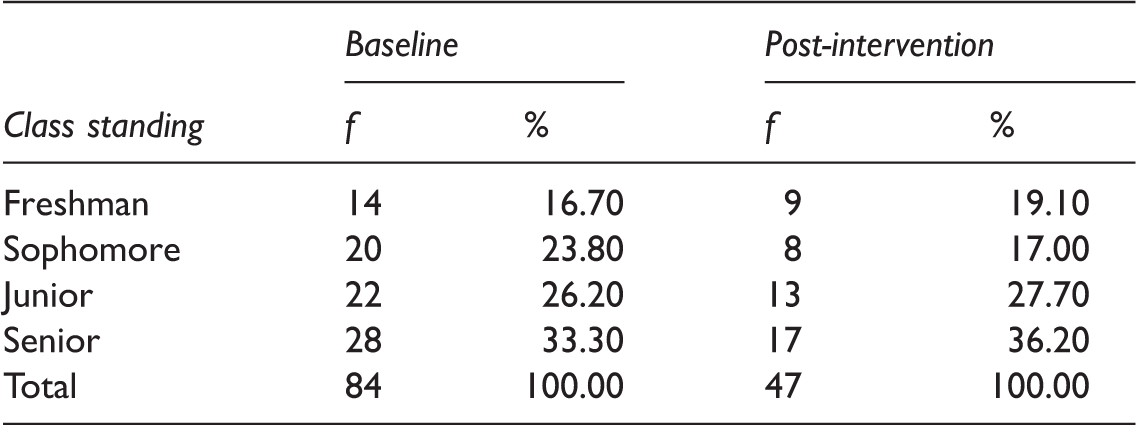
In addition to the objective assessment of students’ knowledge, experience, behaviors, and perceptions, the department conducted a voluntary focus group in order to probe students’ perceptions and concerns about advisement. The focus group was conducted at the end of the school year (during the final exam period) after students had experienced two rounds of advisement. Unfortunately, the timing may have made it difficult for students to attend. The sample size for the focus group was five students.
Materials and Measures
Sample Items from Select Measures Used in the Assessment
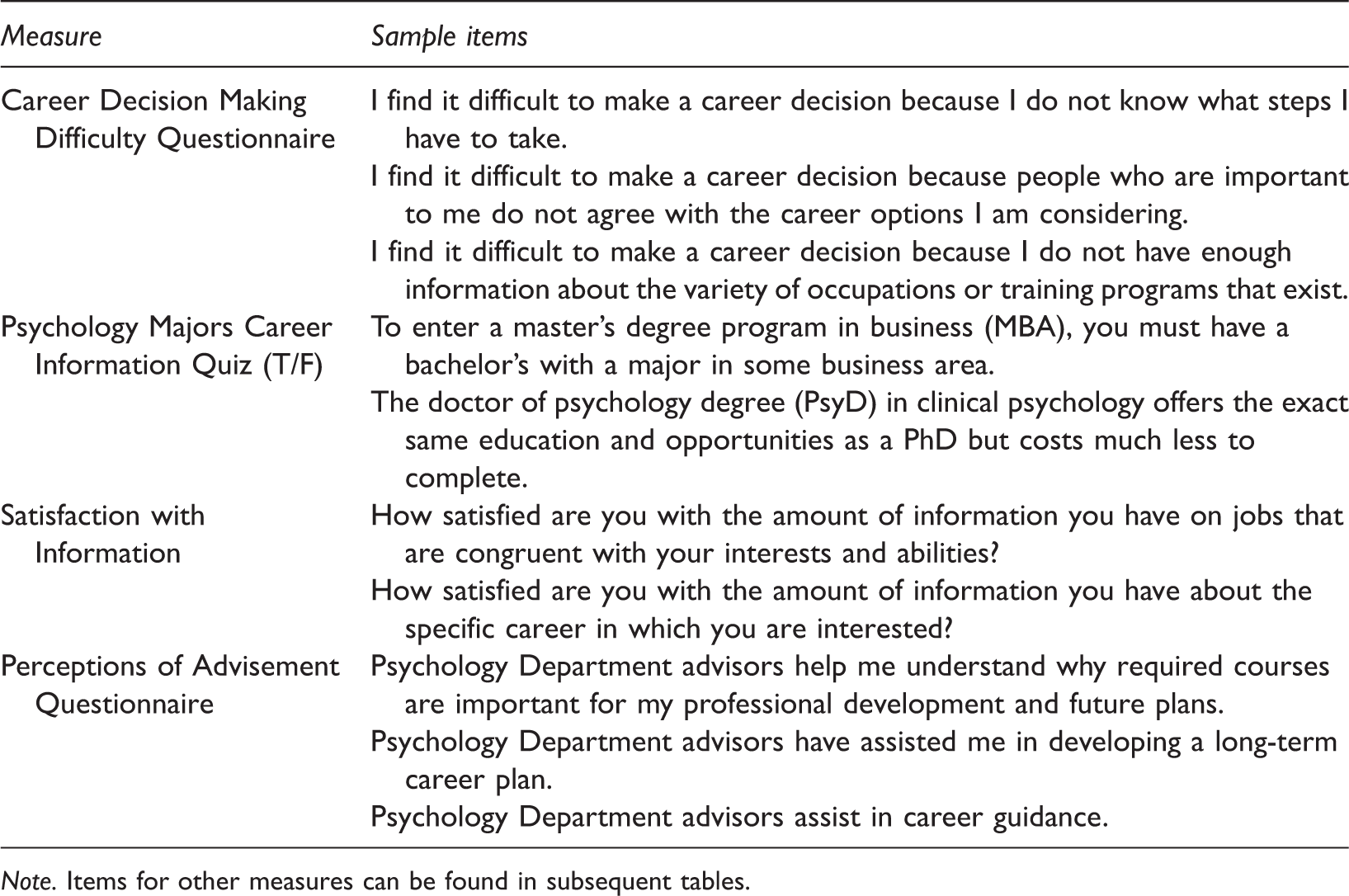
Note. Items for other measures can be found in subsequent tables.
Career certainty
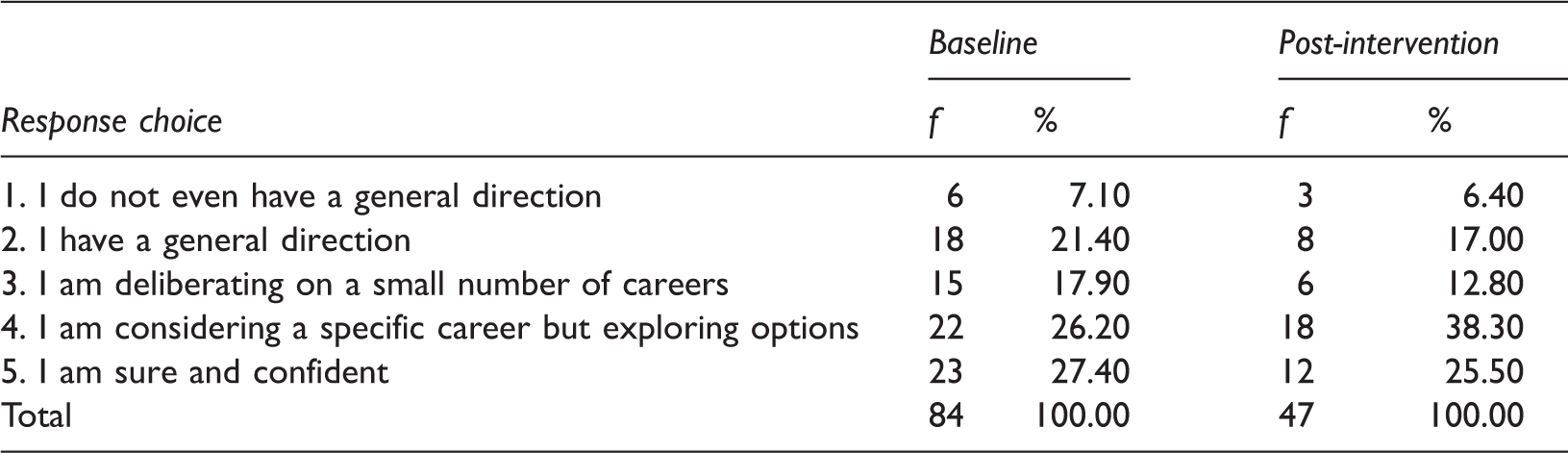
Participants first completed a career certainty measure, reporting their level of certainty on a five-point scale ranging from 1=I don't even have a general direction to 5 = I am sure and confident of the occupation I want. Those students who reported a low level of certainty (1 or 2 on the five-point scale) were directed to an adapted version of the CDDQ (Gati et al., 2000) to identify the factors contributing to their indecision. The questionnaire included 16 items that load onto one of two dimensions: difficulties due to a lack of information or difficulties due to inter/intrapersonal conflict. Each item was rated on a nine-point scale rating from 1 = Does not describe me well to 9 = Describes me well.
Level of information
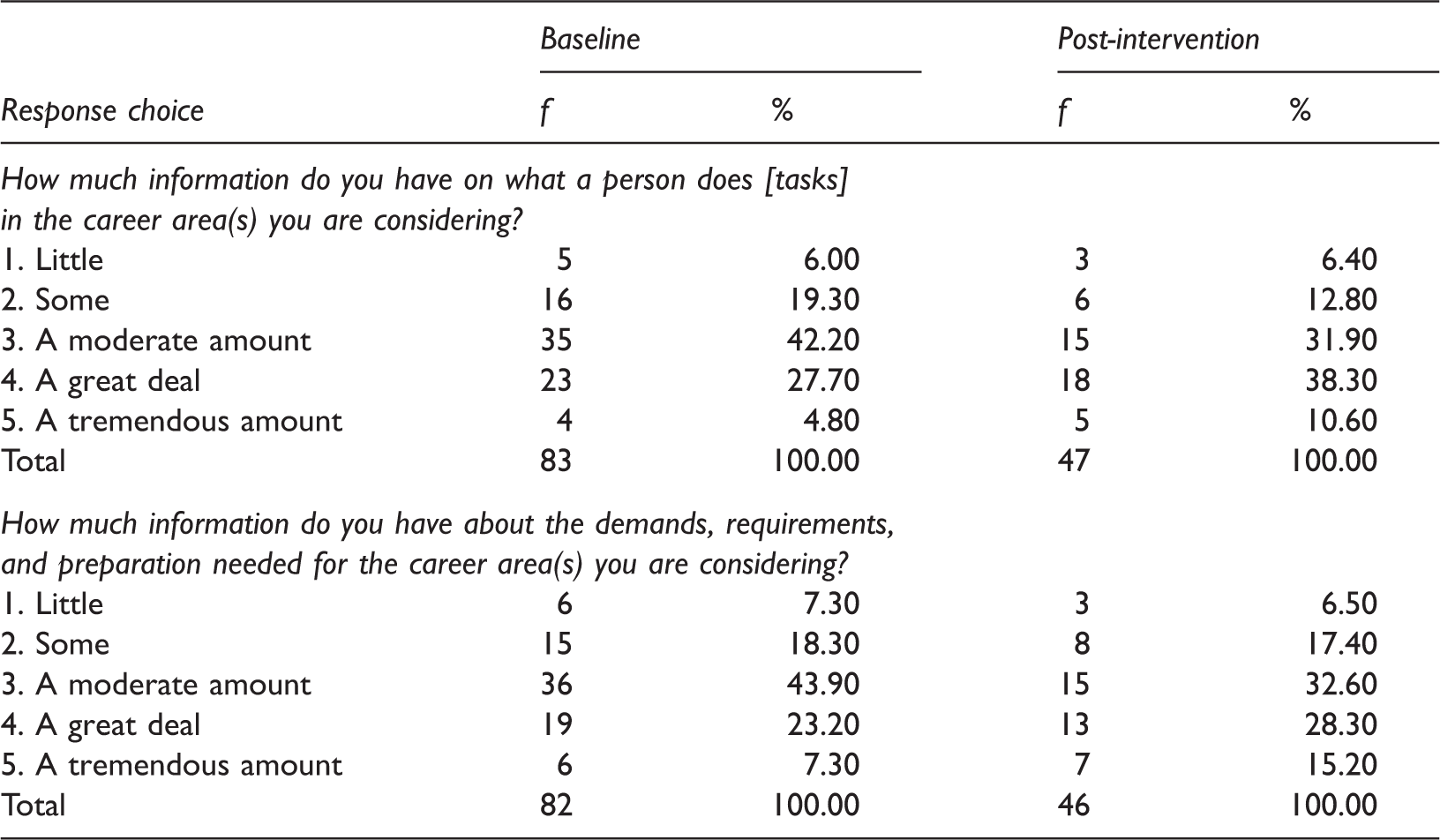
Four measures were used to assess students' current level of career-relevant information. Participants first completed a two-item measure to assess the amount of information they have about the demands, requirements, and preparation needed for careers that they are considering. These items were measured on a five-point scale from 1 = Little to 5 = A tremendous amount. The second measure assessing level of information was the Psychology Majors Career Information Survey adapted from Thomas and McDaniel (2004). The nine-item survey assessed students' perceptions of the amount of general information they have about graduate school and career options in the field. All items were answered on a five-point scale from 1 = Strongly disagree to 5 = Strongly agree. To obtain an objective assessment of knowledge, participants completed the Psychology Majors Career Information Quiz also adapted from Thomas and McDaniel (2004). The quiz included eight true/false questions about graduate school and career options in the field and was scored as the total number of questions correct. Finally, students reported their satisfaction with the amount of information that they have about career options that may be well suited to their interests and abilities using a five-point scale from 1 = Very dissatisfied to 5 = Very satisfied.
Career exploration
Students reported the extent to which they had engaged in different career exploration activities (e.g., attended a career fair) over the past three months using an eight-item adapted version of the Career Exploration Survey (Stumpf, Colarelli, & Hartman, 1983). All items were answered on a five-point scale from 1 = Not at all to 5 = A great deal. Students were also asked to indicate what had prompted them to engage in career exploration behaviors (e.g., prompted during an advisement appointment).
Perceptions of advisement
Lastly, students completed a 21-item measure reporting their perceptions of various aspects of the advisement process. This questionnaire was adapted from Aellig, Dickson, Dwyer, and Francis' (2008) instrument to assess academic advising. Ratings were made on a five-point scale from 1 = Strongly disagree to 5 = Strongly agree.
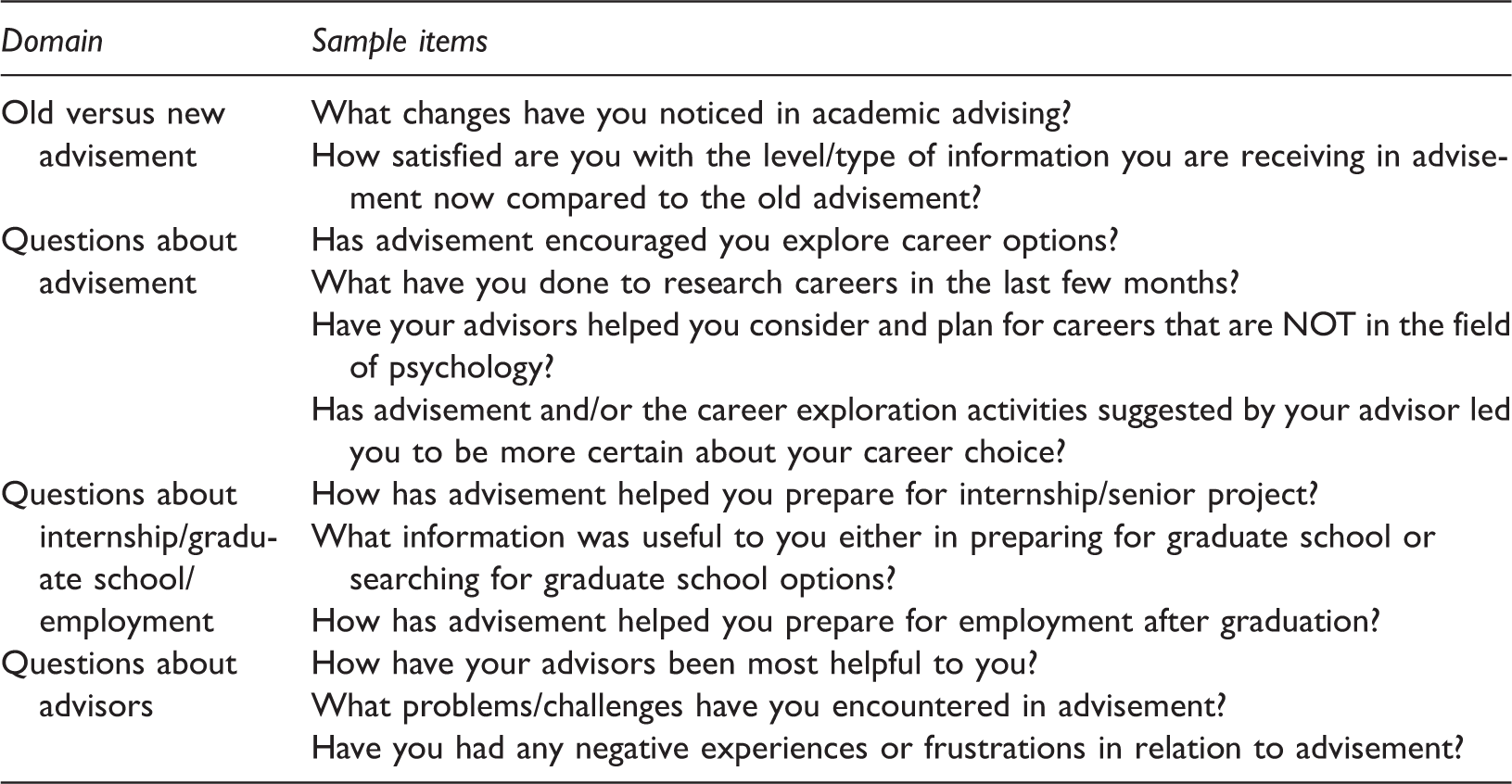
Focus group
Sample Focus Group Questions
Design and Procedure
To assess the utility of the MAP, the department developed a longitudinal assessment procedure to be implemented each semester, to track improvements in student preparedness over time. All Applied Psychology majors were asked to complete the online assessment prior to their scheduled advisement appointment. Baseline data were collected prior to the introduction of the new advisement procedures in the fall 2014 semester. The first set of post-intervention data was collected in the spring 2015 semester, after one implementation of the MAP. The same measures were used for both administrations and data analysis examined changes across the two time periods. To ensure anonymity and encourage candid feedback, no identifiable information was collected. Thus, although some students participated in both administrations, a repeated measures analysis was not possible. Focus group narrative data were obtained after students had undergone two semesters of the new advisement procedures.
The MAP is a menu of interventions to be offered, appropriate to student needs, during student advisement each semester. While we predict major long-term changes as the effects accumulate over four years of intervention, we expect relatively small, incremental changes between individual semesters.
Results
Mean changes across time periods were examined using independent sample t-tests. Chi-square analyses were also used, where appropriate, to examine percentage differences. Overall, consistent with expectations, only minor differences were noted between administrations—yet given the nature of some changes, it does seem that they may be attributed to the MAP.
Career Certainty
Frequency Percentages of Student Responses on the Career Certainty Measure
Means, Standard Deviations, and t-Test Results for Career Decision Making Difficulty Questionnaire Dimensions
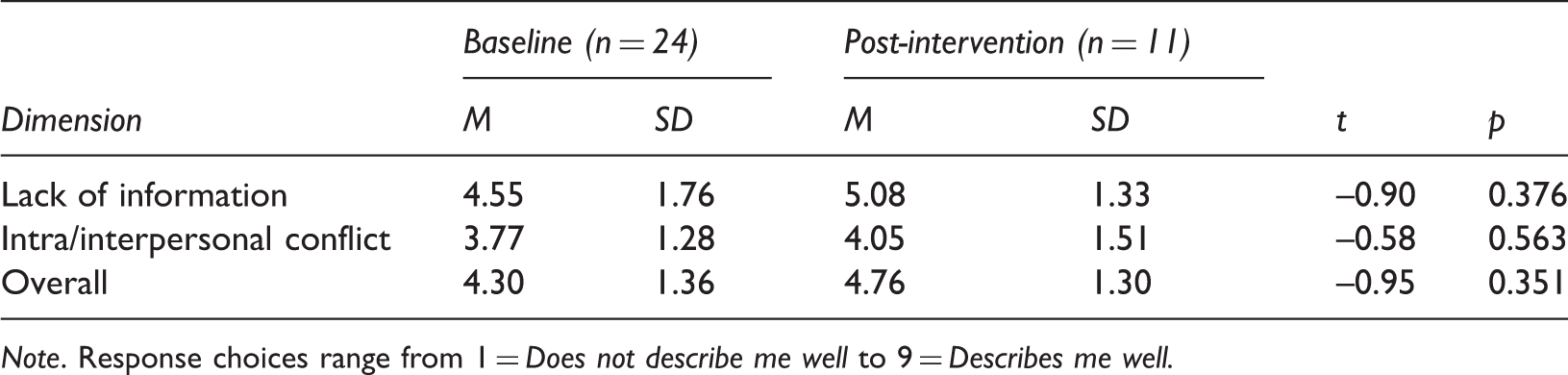
Note. Response choices range from 1 = Does not describe me well to 9 = Describes me well.
Level of Information
Frequency Percentages of Student Responses on the Two-Item Level of Information Measure
Means, Standard Deviations, and t-Test Results for the Psychology Majors Career Information Survey
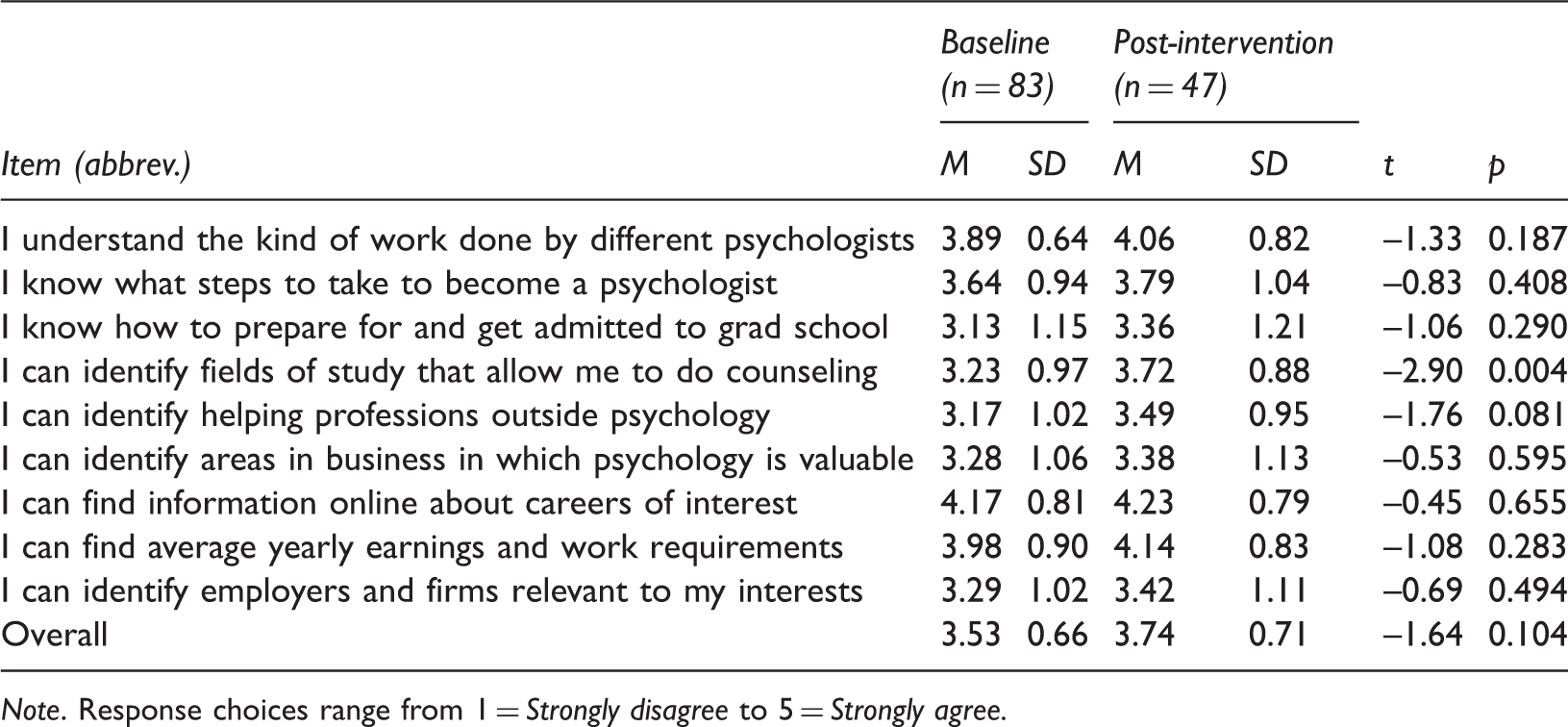
Note. Response choices range from 1 = Strongly disagree to 5 = Strongly agree.
As students reported a moderate level of career-relevant information, it follows that they were moderately satisfied with the level of information that they possess. When asked to rate their satisfaction on a four-item measure, average scores were moderate at baseline (M = 3.47, SD = 0.85) and post-intervention (M = 3.51, SD = 0.77), with no significant difference across periods, t(128) = –0.29, p = .775.
A range of performances was found on the objective, eight-item Psychology Majors Career Information Quiz measuring knowledge related to educational requirements and the type of work performed in certain professions. Performance was above average at baseline (M = 5.80, SD = 1.43) and post-intervention (M = 6.02, SD = 1.39), with no significant improvement over time, t(129) = –0.87, p = 0.387.
Career Exploration Activities
Means, Standard Deviations, and t-Test Results for The Career Exploration Activities Measure
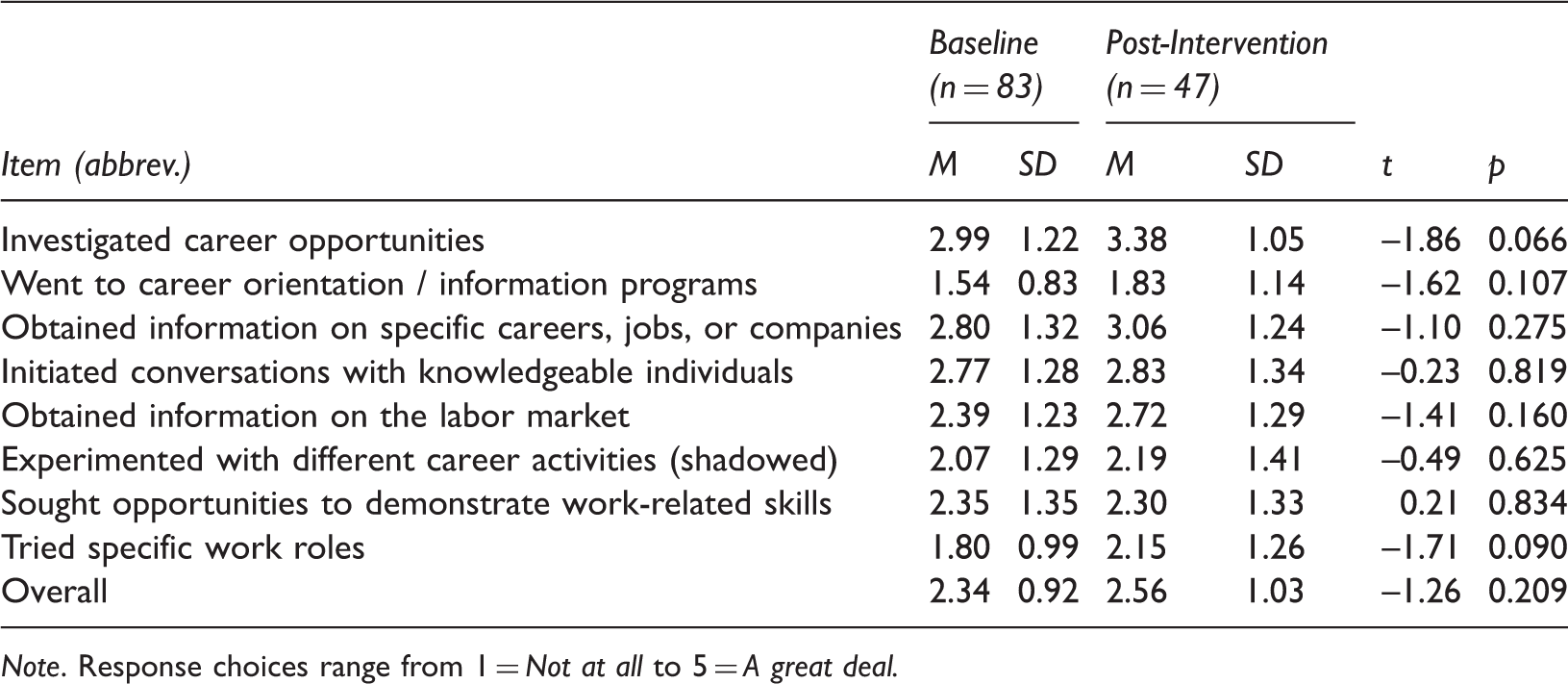
Note. Response choices range from 1 = Not at all to 5 = A great deal.
In an effort to increase career exploration activities, students are provided with resources to investigate career opportunities as part of the new advisement procedures. While there was not a significant increase in these behaviors post-intervention, students did acknowledge that they were prompted to engage in career exploration activities during their advisement appointments. A significant increase was noted in the percentage of students who reported that their career exploration was the result of information provided during academic advisement from baseline (4.80%) to post-intervention (17.00%), χ2(1, N = 130) = 5.33, p = 0.021.
Perceptions of Advisement
Lastly, students completed a 21-item questionnaire reporting their perceptions of various aspects of the advisement process. On average, students reported positive perceptions of advisement at baseline (M = 3.91, SD = 1.07) and post-intervention (M = 4.04, SD = 0.65), t(128) = –0.74, p = .464. A significant improvement was found for the item, “The Psychology Department advisors treat me with respect,” with average ratings increasing from M = 4.18 (SD = 1.25) at baseline to M = 4.57 (SD = 0.54) post-intervention, t(128) = –1.99, p = 0.049. Average ratings for all other items remained consistent across time periods.
Focus Group Feedback
Data collected in a focus group were overwhelmingly positive. Students in the group reported that the new advisement procedures made them think about post-graduation opportunities, gave them tools to prepare for careers/graduate school, fostered more meaningful relationships with Psychology Department faculty, and improved their perceptions of advisement. While the positive feedback may be, in part, a function of self-selection and demand characteristics, the feedback is consistent with objective findings and illustrates individual positive experiences. Illustrative quotes include the following.
Career /graduate school opportunities and preparation. • …They [advisors] talk a lot about potential jobs when you are in advisement so when you get home you want to look more into that so you kinda' know what you want to do by your senior year. After the MAP it made me look more at it because I was forced to fill papers out. I don't know what I want to do, so it did encourage me to look more into careers. Before they did it (implemented the MAP), it wasn't a thought in my head. • I'm a junior and they definitely gave me all the tools to look into graduate school…sites to look at…it's just up to me to actually do it—to see where I want to go in my career. They gave me the right tools. They gave me packets and websites to go on…now I just need to decide exactly where I want to go.
Relationships with faculty. • We developed a relationship more than just advising…she (the advisor) really goes in-depth with everything. She's always checking on me and asking me, even outside of advisement, how I am. She knows everything.
Discussion
The MAP is an important new tool implemented to improve the career development of undergraduate psychology students. While most analyses yielded insignificant results, there were some small positive changes and positive perceptions after only two semesters of use. One important factor contributing to the limited findings was sample size. The number of students consenting to inclusion in the research was very low. Students who did not consent were able to avoid additional questions, which may have served as an incentive to withhold consent. Future administrations will require students to complete the entire assessment tool and then provide research consent. Moreover, in future analyses, as sample sizes increase, we will examine differences between upper- and lower-division students. Much of the focus of the MAP is post-graduate preparation. As such, it may be that there is a disproportional impact on upper-division students for whom post-graduate planning is more relevant.
The most important area of impact that we have found thus far is that advisement seems to have encouraged active career exploration. The percentage of students who reported that their career exploration activities were prompted by advisement tripled after implementation of the MAP. This result supports our belief that deliberate, strategic, specific, suggestions from a trusted faculty member have great potential to increase career-focused behaviors. This is very encouraging and absolutely one of the most desirable outcomes for the new procedures.
While there were few significant results after the first implementation of the new procedures, we learned several important things that make us hopeful about the long-term impact. Firstly, students who are struggling with career decision-making are largely doing so because they lack information. Secondly, when students are encouraged to seek specific information and engage in specific exploration behaviors during advisement, they do, in fact, engage in career-directed exploration. These deficits in information and exploration are precisely what the MAP is designed to remedy. Finally, our results indicated that students have positive impressions of their advisors and the advisement they are receiving. Although not a primary goal, this last factor is likely to improve advisors’ ability to impart information and change behavior.
Our responsibility as undergraduate psychology faculty is to facilitate the career preparation of all students—regardless of their ultimate profession. Undergraduate students use psychology as a vehicle to enter myriad careers. They enter our programs because they are fascinated by what we teach. But all too often we find that those who do not go on to graduate school in psychology are unhappy and fail to recognize the connection between their jobs and their undergraduate education. Our programs nurture an important set of communication, analytical, ethical, and self-management skills that are highly prized by employers. As faculty, we must find ways to make sure that students realize the value of the skills they acquire and recognize how they might be useful in many careers. The MAP encourages both self-reflection and extensive career exploration. It helps ensure that students seek and utilize the information they need to make career choices that fit their values, abilities, and skills. Moreover, and just as important, the model gives faculty resources to nurture the career development of all students. Although the MAP is still a work in progress and the full impact will not be known for several years, initial feedback is very good. We look forward to additional rounds of advisement and the accumulation of student exposure to the model. We are particularly eager to examine changes in career outcomes as students complete four years of career advisement. We expect to find significant improvements in perceptions, preparation, and post-graduate outcomes.
Footnotes
Declaration of Conflicting Interests
The author(s) declared no potential conflicts of interest with respect to the research, authorship, and/or publication of this article.
Funding
The author(s) received no financial support for the research, authorship, and/or publication of this article.
Appendix
References
Supplementary Material
Please find the following supplemental material available below.
For Open Access articles published under a Creative Commons License, all supplemental material carries the same license as the article it is associated with.
For non-Open Access articles published, all supplemental material carries a non-exclusive license, and permission requests for re-use of supplemental material or any part of supplemental material shall be sent directly to the copyright owner as specified in the copyright notice associated with the article.
