




Abstract
The aim of the present study was to introduce a general theoretical model of scientific competencies in higher education and to adapt it to three social sciences, namely psychology, sociology, and political science, by providing evidence from expert interviews and program regulations. Within our general model, we distinguished and specified four building blocks of scientific competencies: input, operations, and output, as well as personal characteristics. We defined input as content students are exposed to in their respective domains, operations as cognitive processes stated by Anderson et al. (2001), and output as content students create as a result of applying operations on input. We considered scientific competencies to be the constructive use of operations on input and the creation of output thereby. Furthermore, we considered personal characteristics that are relevant for competency acquisition and for working in a scientifically competent manner. In the present article we provide main results for the four building blocks of scientific competencies in psychology, sociology, and political science. Furthermore, we discuss limitations of our current model such as the necessity to determine criteria to further clarify what the constructive use of operations on input looks like in the different cycles of higher education.
Scientific Competencies in the Social Sciences
As a result of the Bologna Process, there is an increased demand for competency-based teaching and learning in higher education. Among others, the European Ministers Responsible for Higher Education stated in 2009 that “the number of people with research competences should increase” (p. 4). This demand is closely connected to an obligation for institutions of higher education to rewrite curricula in a competency-based manner and to ensure that scientific competencies are taught.
Despite these requirements, most disciplines still lack theoretical clarity about the nature of such scientific competencies. Therefore, the aim of the present study was to introduce a theoretical model of scientific competencies in higher education and to adapt it to three social sciences, namely psychology, sociology, and political science, by providing evidence from expert interviews and program regulations.
General Model of Scientific Competencies
Competencies are context-specific cognitive dispositions which are required to successfully cope with situations and demands in specific domains (Klieme & Leutner, 2006). To describe and structure building blocks of scientific competencies in social sciences, we drew on established theoretical models and applied them to our context. As a general framework, we adopted the Structure-of-Intellect Model (Guilford, 1967), which distinguishes between Input, Operation, and Output. One advantage of this model is that because of its high level of generality it can be applied to virtually any kind of cognitive competency.
Within the input–operations–output framework, we defined input as content students are exposed to in their respective domains. Regarding operations, that is, the question of how the input is processed, we drew on Anderson et al. (2001), who distinguish among 19 cognitive processes belonging to six classes, namely Remember (i.e., retrieving relevant knowledge from long-term memory), Understand (i.e., constructing meaning from instructional messages), Apply (i.e., to carry out or use a procedure), Analyze (i.e., breaking down material into its constituent parts and determine how the parts relate to one another or an overall structure), Evaluate (i.e., making judgments based on criteria and standards), and Create (i.e., putting elements together to form a coherent or functional whole). We defined output as content students create as a result of applying operations on input. Within our framework, input and output both constitute content. Whereas input is provided to students, output has to be created by students. In addition to the input–operations–output framework, we considered personal characteristics related to acquiring scientific competencies and working in a scientifically competent manner.
Students with distinct personal characteristics apply cognitive operations on input and thereby generate output. Their scientific competencies can then be assessed by analyzing this output with regard to the degree to which operations are applied constructively to input. For an overview of our general model of scientific competencies in higher education, see Figure 1.
Overview of the General Model of Scientific Competencies in Higher Education.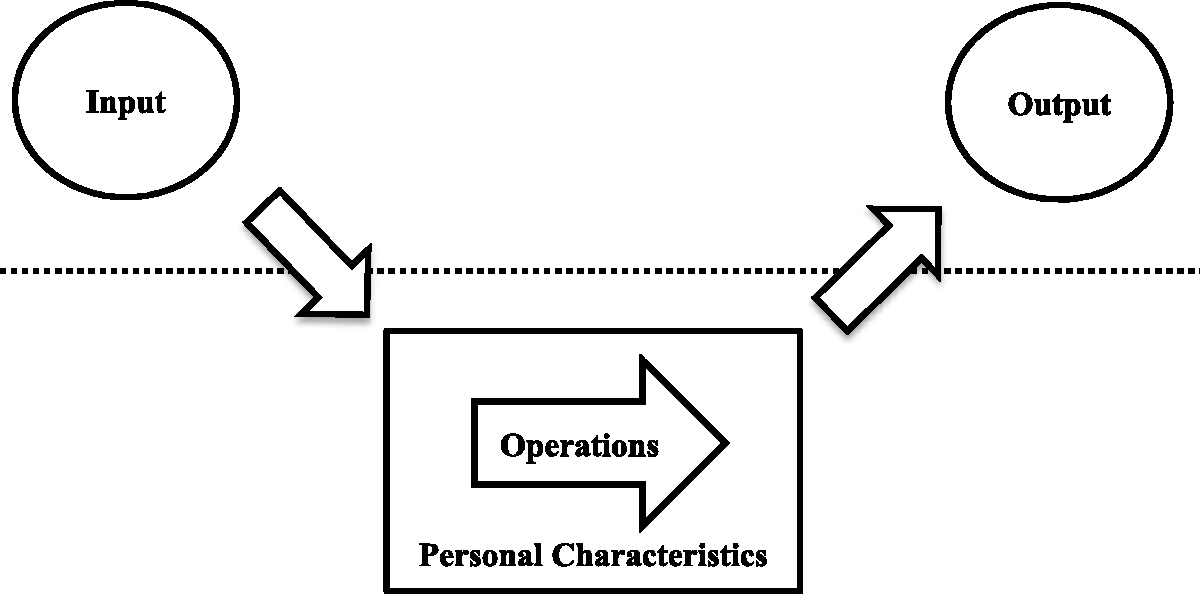
Research Questions
In adapting our general model of scientific competencies to the three social sciences of psychology, sociology, and political science, the research questions at hand are the following:
Which inputs within the domains can be identified as “common ground” for all three cycles of higher education? Can the predefined categories of operations by Anderson et al. (2001) be filled with typical examples from the three domains? Do typical examples of output in higher education in the three domains exist and can they be categorized? Which personal characteristics relevant to competency acquisition and competency use in the three domains can be identified? Which differences with respect to input, operations, output, and personal characteristics within and across the three domains can be identified?
To answer these research questions, we used two methodological approaches: We conducted expert interviews and we inspected program regulations to substantiate and describe the four building blocks of scientific competencies: input, operations, output, and personal characteristics.
Method
Expert Interviews
Overview of Interviewed Experts and Sections Covered
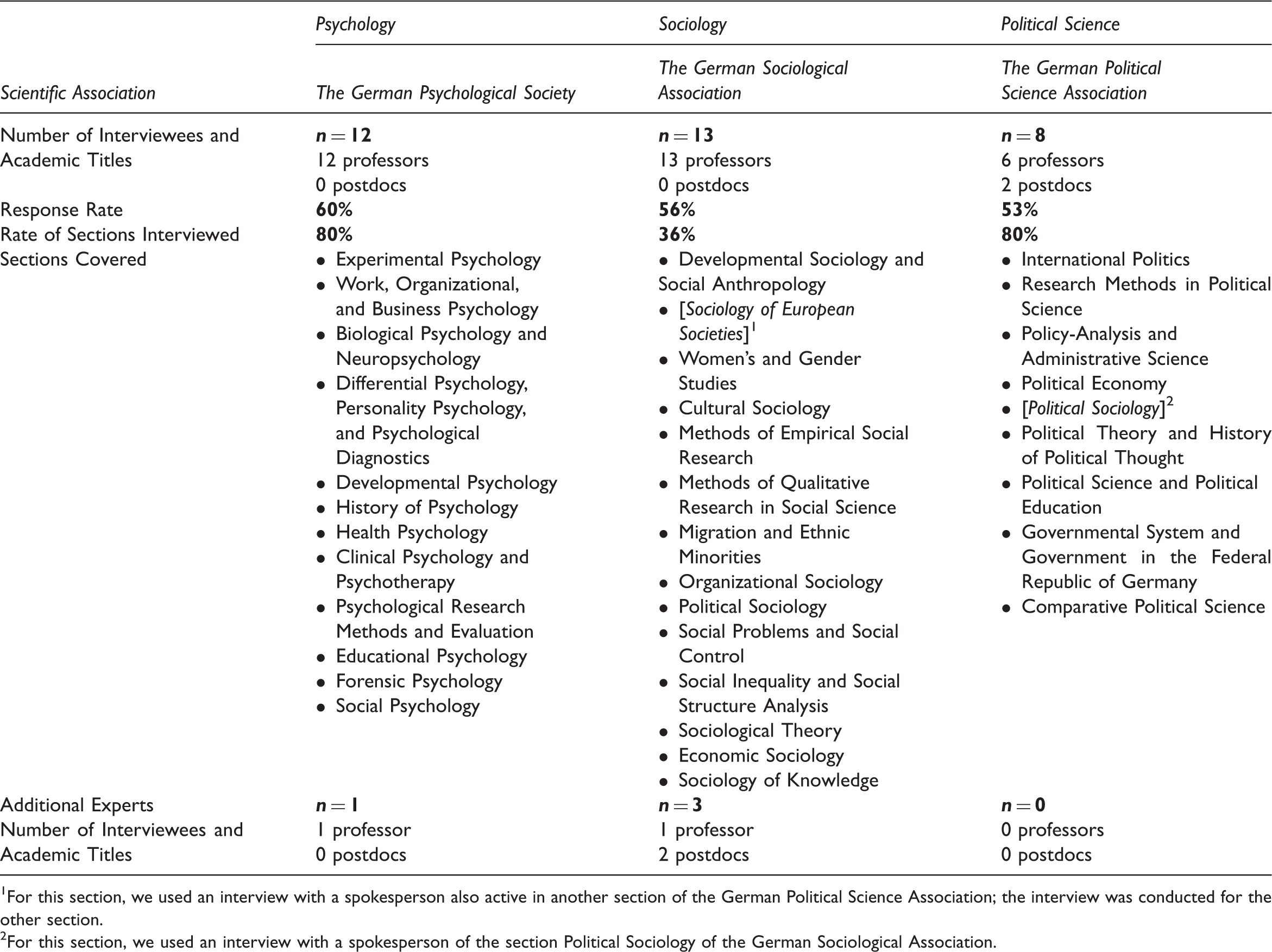
For this section, we used an interview with a spokesperson also active in another section of the German Political Science Association; the interview was conducted for the other section.
For this section, we used an interview with a spokesperson of the section Political Sociology of the German Sociological Association.
Interviews were semi-standardized and conducted via telephone or via e-mail with an electronic questionnaire. Because our participants were recruited out of a sample that is usually very busy, we allowed them to choose the approach they preferred to ensure the highest possible response rate. Interviews consisted of three parts: First, according to the Critical Incident Technique (Flanagan, 1954), we asked participants to define diagnostic situations in which they would be able to observe scientific competencies. Second, we asked questions regarding subjective definitions of scientific competencies as well as facets and levels of competencies. Third, we asked about possible strategies for assessing scientific competencies.
Program Regulations
As program regulations, we considered regulations that specified study content in the different domains and during the different cycles of higher education. Typically, module handbooks represent such program regulations with a scope that is restricted to the respective institutions of higher education. Module handbooks specify the modules students ought to pass during their course of studies in order to graduate. Within these handbooks, study content usually is arranged thematically and consecutively. However, module handbooks and the modules described therein differ with respect to their degree of abstraction from one institution of higher education to another.
Overview of Inspected Module Handbooks and Universities Covered
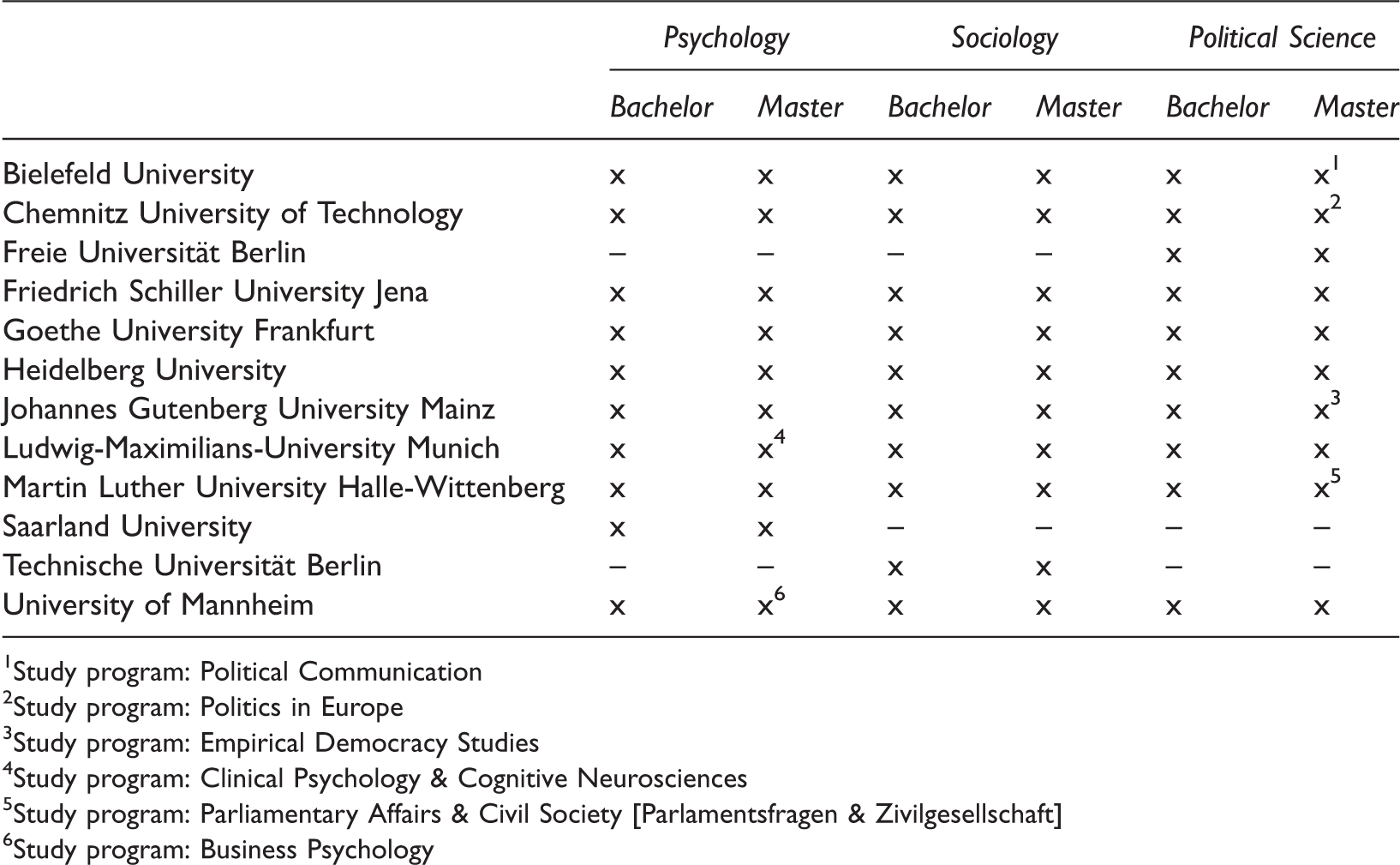
Study program: Political Communication
Study program: Politics in Europe
Study program: Empirical Democracy Studies
Study program: Clinical Psychology & Cognitive Neurosciences
Study program: Parliamentary Affairs & Civil Society [Parlamentsfragen & Zivilgesellschaft]
Study program: Business Psychology
Regulations for the third cycle of higher education (doctoral programs) did not specify study content the way module handbooks did for the first and the second cycle of higher education. Therefore, we inspected “A Framework for Qualifications of The European Higher Education Area” by the Bologna Working Group on Qualifications Frameworks (2005) to supplement our model.
Data Analysis
We employed a two-step approach to data analysis: first, we transcribed all interviews. Considering interviews via telephone contrary to interviews via electronic questionnaire, there were differences in length of the interviews, with interviews via electronic questionnaires being substantially shorter. However, there were hardly any differences in qualitative content. Second, following Mayring (2007), we summarized and, if necessary, paraphrased interview and regulation content. We then used the information extracted to answer our research questions. To identify input, output, and personal characteristics, we inductively developed subcategories from the interviews and regulation content. We then reassigned all pieces of relevant data to the respective categories (namely input, output, or personal characteristics) and the newly developed subcategories. To find typical examples of operations, we deductively assigned interview content to the predefined categories of Anderson et al. (2001).
As stated above, input was defined as content to which students are exposed to. To continue this line of reasoning, we used information stemming from the program regulations that specified study content covered in various degree programs. For the first two cycles of higher education, we specified input as the content of the module handbooks in the domains of psychology, sociology, and political science. Since input can either be shared or be unique within domains (i.e., across different universities) and across domains, one task was to define a “common ground of input” for each domain and across domains. We considered modules as shared if they were mandatory in seven or more out of the 10 universities under investigation per study program. We did not count bachelor or master theses as modules, since they were equally mandatory in every domain and every study program. In addition, from a theoretical point of view, the theses themselves can be seen as output. On a more fine-grained course level, we differentiated on the basis of subject matter as well as methodological repertoires.
To identify examples of operations, outputs, and personal characteristics, we used information originating from the expert interviews. We also used both sources of information to determine similarities and differences within and across domains.
Results
Input
Overview of Shared Modules in the First and Second Cycles of Higher Education and Number of Universities Under Investigation (nuni) Offering this Module 1
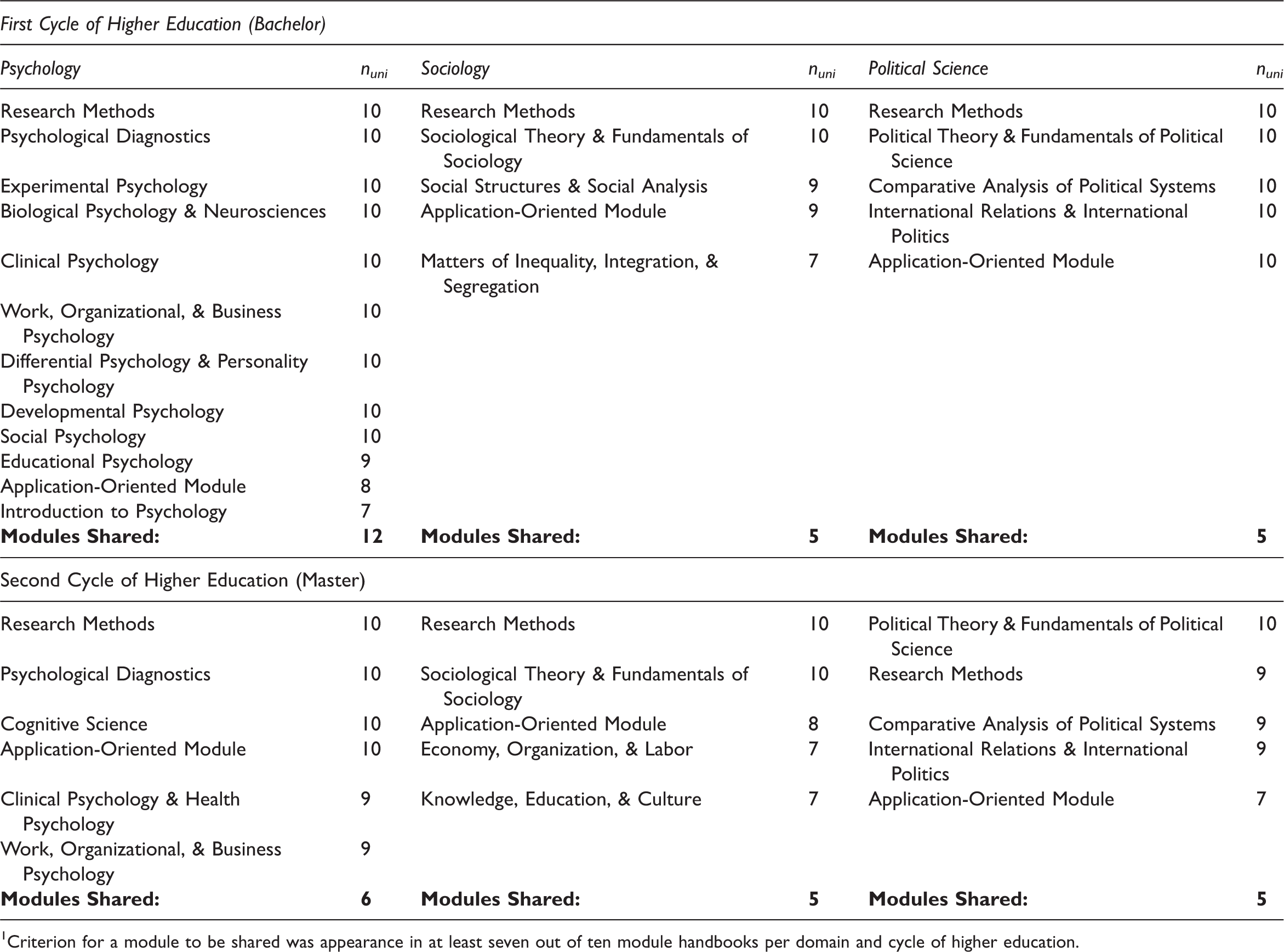
Criterion for a module to be shared was appearance in at least seven out of ten module handbooks per domain and cycle of higher education.
For the third cycle of higher education, input could not be defined as easily as for the first and the second cycles, since specific input descriptions were lacking across the universities investigated. Similarly, the Framework for Qualifications of the European Higher Education Area (Bologna Working Group on Qualifications Frameworks, 2005) merely refers to “fields of study” (p. 68) but does not specify the respective fields.
On a more fine-grained course level, subject matter was rather domain specific, such as courses in clinical psychology in the domain of psychology, courses in social inequality in the domain of sociology, or courses in comparative political research in the domain of political science. However, in some cases similar subject matter occurred in different domains: political sociology, for example, could be subject matter in sociology and political science; social psychology could be subject matter in psychology and sociology.
Methodological repertoires, such as research methods or quantitative data analysis, showed more overlap across the three domains. Courses in descriptive statistics and inferential statistics, especially, were common in all three domains. However, some methodological courses such as psychological diagnostics and evaluation were standard in psychology but unusual in sociology or political science. On the other hand, courses about qualitative data analysis were widespread in sociology and political science but scarcer in psychology.
Operations
Cognitive Processes (Anderson et al., 2001) and Examples from Expert Interviews

Comparing the three domains of psychology, sociology, and political science, there were no qualitative differences with respect to the operations required for delivering output that satisfied the requirements of scientific competencies. For an overview of examples from the different domains, see Table 4, right column.
Output
Examples of Written and Oral Output from Expert Interviews
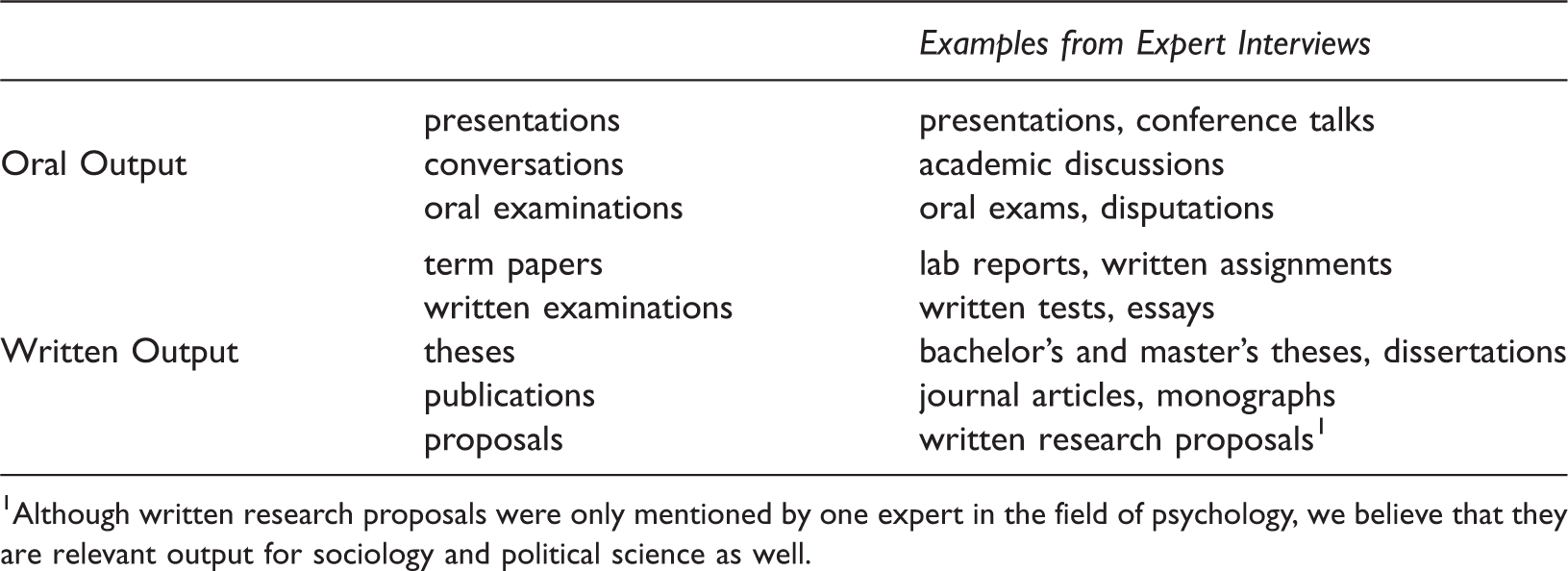
Although written research proposals were only mentioned by one expert in the field of psychology, we believe that they are relevant output for sociology and political science as well.
Among the three domains, we found consensus in almost all of the aforementioned outputs. Only one output example was mentioned just once, in an interview with an expert in psychology (“written research proposal”), though we believe that this is an output relevant for sociology and political science as well.
Personal Characteristics
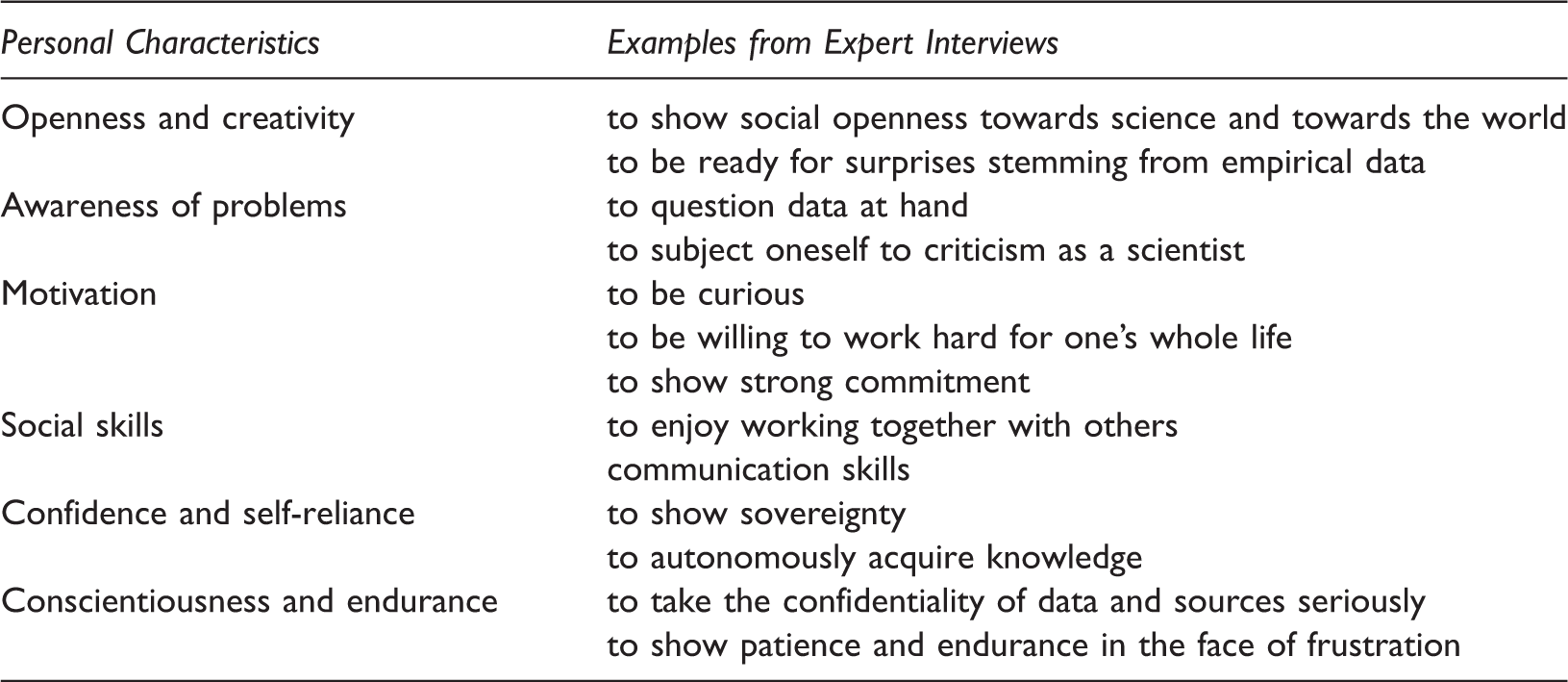
Examples of Personal Characteristics from Expert Interviews
Discussion
The aim of the present study was to introduce a theoretical model of scientific competencies in higher education and to adapt it to three social sciences, namely psychology, sociology, and political science, by providing evidence from expert interviews and program regulations. For an overview of the adapted building blocks of scientific competencies in the social sciences, see Figure 2.
Overview of the Building Blocks of Scientific Competencies in the Social Sciences.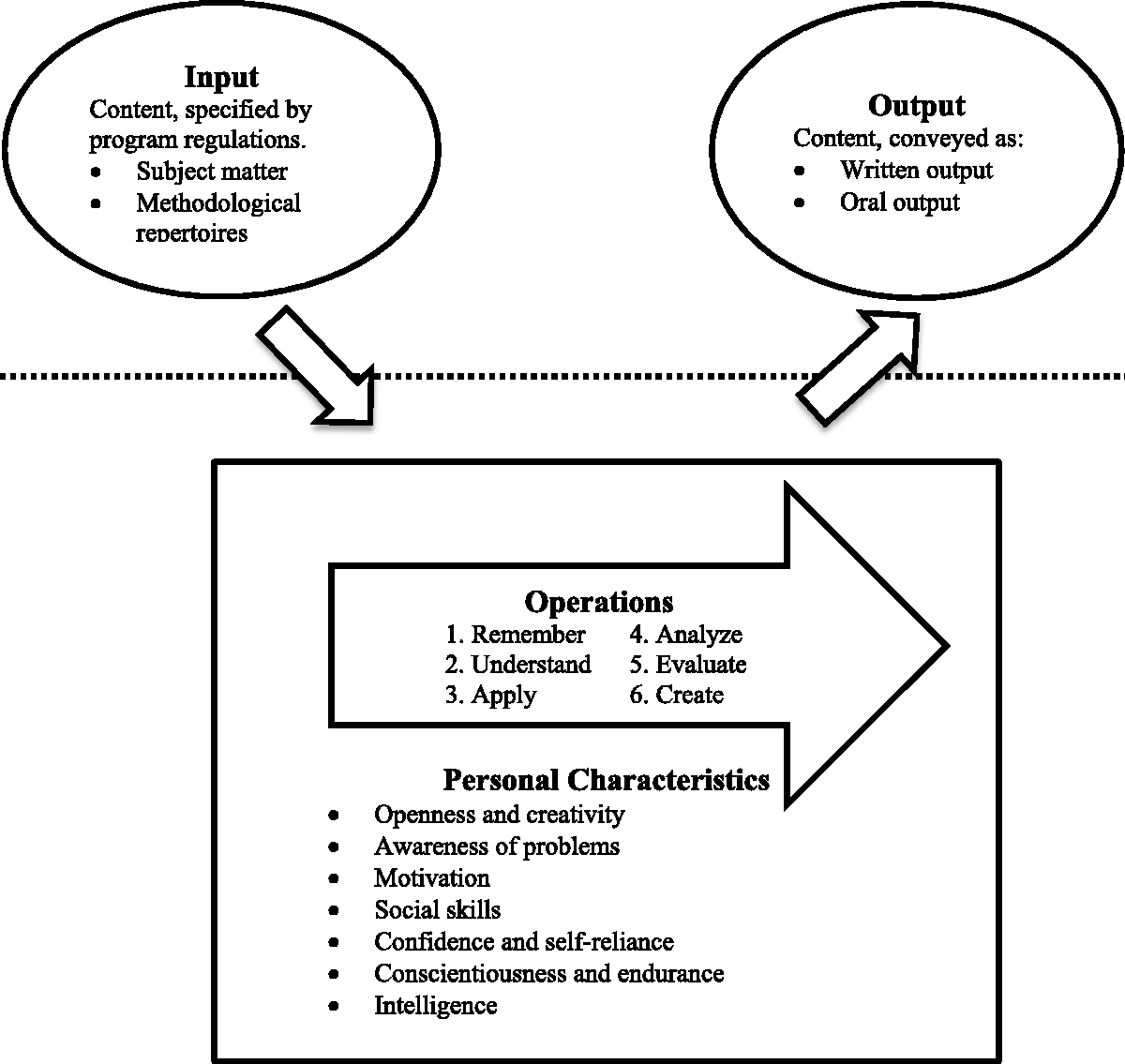
With information stemming from program regulations, we specified a “common ground” of input that is shared within domains for the first and the second cycles of higher education. For the third cycle of higher education in the three domains, defining shared input was not possible due to the high degree of specialization. For the first two cycles, we found that the domain of psychology is more standardized (e.g., has more shared modules) across different universities than sociology or political science. This is more pronounced for the first cycle than for the second cycle of higher education. We also distinguished subject matter from methodological repertoires. Results indicated differences across the three domains especially regarding subject matter. The three domains differed less in their methodological repertoires, particularly when it came to descriptive and inferential statistics.
The predefined categories of operations could be filled with typical examples from all three domains. In addition, the cognitive processes required to successfully transform input into output did not differ qualitatively across the three domains. However, many pieces of process-related information should be seen as conglomerates of certain cognitive processes, as stated by Anderson et al. (2001). For example, interviewees often mentioned “being able to conduct an empirical study” as a crucial scientific competency in the social sciences. Here, the use of many different processes is necessary to succeed: information must be gathered (4.1 differentiating, 4.2 organizing), remembered (1.1 recognizing, 1.2 recalling), and understood (2.1 interpreting throughout 2.7 explaining), hypotheses must be stated (6.1 generating), research designs must be planned (6.2 planning), statistical analyses must be calculated (3.1 applying, 3.2 implementing), results must be discussed (5.1 checking, 5.2 critiquing), and new knowledge must be created (6.3 producing) – to name only a few of the necessary and often iterative steps to apply when conducting an empirical study.
Output in higher education refers to content and can typically be broken down into oral output, with the subcategories presentations, conversations, and oral examinations, and written output, with the subcategories term papers, written examinations, theses, publications, and research proposals. However, as opposed to input which we specified by program regulations, output content is heavily dependent on the respective lecturer: Academic freedom allows lecturers to autonomously define the content (within the boundaries of the modules) and the requirements to pass. Therefore, output is not as determinable as is input. In line with this reasoning, output can involve the reproduction of existing content, the creation of new content, or a mixture of both—depending on the operations applied on the input. Except for research proposals, there were no differences across all three domains. Some output (i.e., theses) was the same across the different cycles.
Regarding personal characteristics, we identified openness and creativity, awareness of problems, motivation, social skills, confidence and self-reliance, as well as conscientiousness and endurance, as important for competency acquisition and use. We did not find any differences across the three domains in personal characteristics relevant for competency acquisition and use. Even though not mentioned by the interviewees, we included intelligence as an important individual characteristic because intelligence is the general mental ability to acquire new competencies (cf. Neisser et al., 1996).
Implications
We considered scientific competencies to be the constructive use of operations on input and the creation of output thereby. Whereas we defined input as the content of the module handbooks, input can be more than a “common ground” of shared modules: students are able to choose subjects, classes, and themes, and hence optional input within or beyond the core curriculum. In choosing optional input, not only operations but also personal characteristics (e.g., motivation, openness, and creativity) might play a crucial role.
The operations students use and the way they communicate the generated output should depend not only on their ability to apply operations constructively on input, but also on their personal characteristics – for example, the desire to invest more or less (cognitive) effort (e.g., conscientiousness and endurance). Therefore, our model highlights the importance of two major learning outcomes of higher education: the competency to constructively use operations on input, and the competency to appropriately communicate the thereby generated output.
Taking a closer look at the different cycles of higher education, the development and consolidation of scientific competencies during those cycles should happen through practice under different degrees of student autonomy. As the Framework for Qualifications of the European Higher Education Area (Bologna Working Group on Qualifications Frameworks, 2005) points out: In the first cycle of higher education, close supervision should be provided, whereas in the second cycle supervision should be reduced and students are supposed to work more autonomously. When completing the third cycle, students are supposed to have contributed to extending the frontiers of their field.
Limitations and Future Directions
A large portion of the data we gathered to substantiate our models is specific to the German academic system. Further research should investigate whether data from different countries are compatible with the data at hand. One focus should be on comparability of domains across different countries. In addition, possible differences in subject matter and methodological repertoires should be further investigated: one question would be whether in the social sciences there are different half-lifes (i.e., periods during which content is up to date) of subject matter contrary to methodological repertoires.
Despite our efforts to represent the different domains with experts and program regulations, interviews as well as documents varied substantially in their respective degree of generalization and consensus. Analyzing data qualitatively, for example, paraphrasing information and inductively developing categories always meant reducing complexity whilst being faithful to the respective sources.
In addition, the distinction between input and prior knowledge at different times during the course of one’s studies should be taken into account: input from one point in time can become presupposed knowledge at a later point in time. This presupposed knowledge might be crucial for further competency acquisition. Therefore, specifying presupposed knowledge for different cycles might prove useful, especially if competency acquisition is seen as an iterative process.
Our general framework distinguishing input, operations, output, as well as personal characteristics as building blocks of scientific competencies highlights the structure and multidimensional nature of scientific competencies in psychology, sociology, and political science. Nevertheless, further efforts should focus on the specification of criteria to assess what constructive use of operations on input and the thereby created output should look like in different cycles of higher education. Output content could then be specified within a Tyler-Matrix (Tyler, 1950). To this end our model can only be the first step in a series of research activities to further clarify and validate the nature of scientific competencies in the social sciences as described in our model. Our further efforts will focus on the development of tests assessing scientific competencies in different cycles of higher education as described in our model. After this preliminary work has been conducted, interventions could be derived to facilitate long-term acquisition and consolidation of scientific competencies in the social sciences.
Footnotes
Acknowledgements and Funding
This research was supported by Grants 01PK11008A and 01PK11008B from the German Federal Ministry of Education and Research. Thanks to Keri Hartman for proofreading an earlier version of the manuscript.