



Abstract

Reviewed by: Lucy Zinkiewicz, School of Psychology, Deakin University, Australia
SEM micrograph of the MgO particles.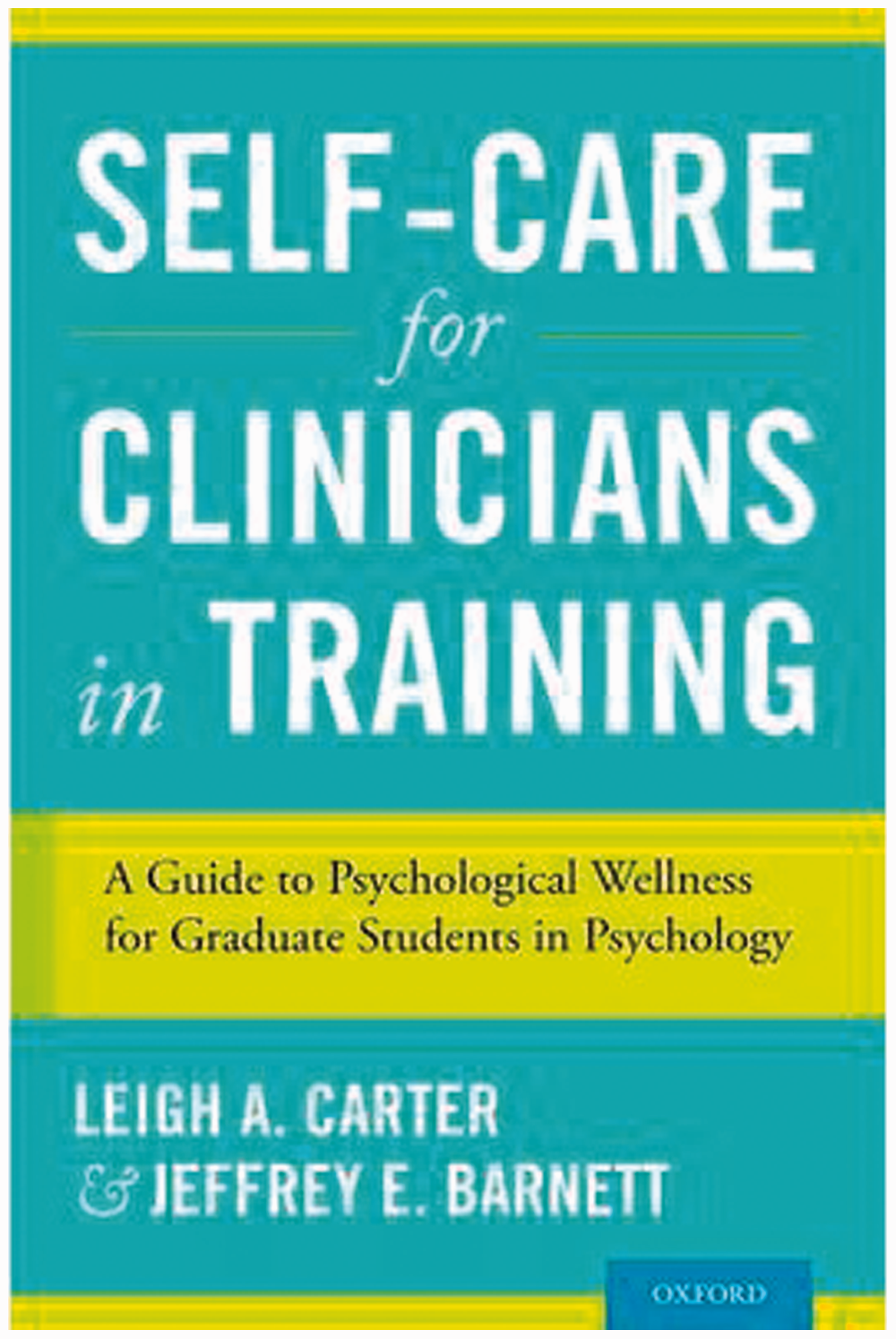
Self-care for Clinicians in Training: A Guide to Psychological Wellness for Graduate Students in Psychology is aimed at postgraduate students in psychology, with a particular emphasis on those training to become clinical or counseling psychologists. The authors take a preventative focus – they seek to help trainees learn to manage the competing stressors associated with coursework, clinical experience, research, and perhaps even a personal life (!), and keep these from resulting in stress-related illness, burnout, vicarious trauma, impacts on clients, ethical breaches or exit from the profession.
The book has three main sections: beginning the self-care journey (assessing for risk factors, warning signs and symptoms); establishing lifestyles of self-care (practices, strategies and plans); and fostering networks of self-care.
Part 1 contains four chapters: on exploring sources of distress; recognizing and addressing problems of professional competence; exploring whether a trainee is at risk of burnout; and risks of clinical work with trauma. I found this part particularly useful, as it is very specific to the professional psychology experience, and not material that you might find in generic stress- and time-management books. For example, the text refers to research showing the high levels of distress experienced by psychologists, the particular challenges experienced by psychology trainees, and cites studies that have identified risk factors for burnout in psychologists. There are also personal examples from the authors’ professional experiences and discussion of hypothetical case examples where trainees are at high risk.
Most usefully, and unlike most other books aimed at those involved in clinical training programs, Part 1 (and following parts) contain a range of self-completed checklists (e.g., Vicarious Trauma and Secondary Traumatic Stress Checklist), tools (Are You at Risk for Burnout?), and reflection activities, with these formatted to allow for easy copying. I'd very much recommend all trainees work their way through these chapters, and complete the tools, early in their clinical experience, and use these to develop or enhance their self-care practices.
Part 2 focuses on developing these self-care practices, and is made up of six chapters: on developing work–life balance; getting a mentor; goal and expectation setting and time management; developing a self-care plan; getting started with self-care; and graduate students’ stories of their own self-care practices. This part is unsurprisingly more similar to generic time- and stress-management books, though the authors do their best to locate it in the clinical training context, once again using hypothetical case examples as well as real trainees’ contributions. I most valued the sections where the authors discussed unhealthy cognitions that sabotage self-care, such as unrealistic expectations of being the ‘perfect’ graduate student, inability to say ‘no’ and set boundaries, all-or-nothing thinking, and procrastination. Hopefully reading these sections will increase trainees’ awareness that it is not just their clients who engage in such unhelpful thoughts! There are additional checklists, tools, and reflection activities, and examples of tools completed by hypothetical trainees (e.g., Weekly Balance Action Plan, A–B–C Priority Lists, Personal Values Statements, Self-Care Action Plans). These completed tools are useful models of practice; however, it is questionable how good practice it is that Josie’s Weekly Planner (p. 70) shows her relying on 6 hours’ sleep most nights – not my idea of self-care.
The final part, Part 3, Fostering Networks of Self-Care, has only two chapters, on caring for ourselves and one another, and creating a culture of self-care in one's graduate program, and both are very valuable. Chapter 11 focuses on the need to get feedback from peers in relation to how you're travelling, as challenging as this is, but also how important yet tricky it is to intervene with peers who are exhibiting professional competence problems. The authors provide some practical tips on talking with peers in such a situation. They go on to introduce the idea of competence constellations – networks of peers and colleagues, supervisors and professional associations – for continual competence assessment, and explore how to build such networks, providing some activities to work through.
Chapter 12 focuses on what trainees as well as program staff can do to change the culture of professional programs in order to foster self-care among trainees, and in fact everyone in their academic units. I would urge program staff to have their students (and all program staff) anonymously complete the checklist evaluating the self-care culture of their program, and reflect on what is revealed. I suspect many of us may find it quite challenging to our own self-concepts as responsible educators and professionals.
The text is written by a recently completed doctoral candidate in clinical psychology (Carter) and a practising psychologist, educator and supervisor who has published extensively and does training on self-care, promoting wellness, burnout prevention, ethics and professional practice (Barnett). Each author at times describes specific personal experiences that relate to the focus of a chapter, with descriptions of past failures (these examples are useful reminders that self-care is a skill that most of us are not instinctively good at). Chapters on successful self-care (such as Chapter 10) are interesting, but can make the reader feel lacking if they suspect that they are not doing a good job of self-care.
While I was a little surprised, and disappointed, to see that a book published by OUP assumes an American readership, and refers to US organizations and their professional frameworks, this is a minor qualm expressed by a non-US reader. In general this book is likely to be very useful as a recommended text for students in all professional training programs. Psychology academics working on such programs may also find it thought-provoking, especially those who like me are poor at ‘practising what they preach’!