




Abstract
I first met Shôn in October 1973. I had just started Part III of the Cambridge Mathematical Tripos – a post-graduate course that was retrospectively awarded a Masters’ Degree in Mathematics. After a summer job working with Ted Broadbent on aircraft noise at the Royal Aircraft Establishment in Farnborough, I had decided do a PhD in Aeroacoustics. I asked Sir James Lighthill for advice and he told me that he was now focused on biomechanics but a new professor had recently arrived in the Cambridge Department of Engineering and that I should ask him. I made contact with Shôn, saw him in his office that afternoon, and he agreed to supervise me for a PhD. As quickly and simply as that, I was on a path that for me was transformational, not only an exciting research future, but the start of my transition from mathematics into engineering. Throughout my career, Shôn continued to be a major influence on me as he has for many others.
John Eirwyn Ffowcs Williams, known to all his friends as ‘Shôn’, was born 25 May 1935 into a Welsh-speaking family in Llangadog, Wales. Eirwyn means ‘snow white’ because it snowed on the day he was born, a rare event in May – even in Wales. His father Abel was a preacher, poet and writer. His mother Elizabeth died in 1940, and Shôn would later recount that he and his two brothers ‘had a lovely time running wild with dad looking after us’. Following his father’s remarriage, Shôn was sent aged 10 to a boarding school, the Great Ayton Friends’ School, far away in North Yorkshire some 2 days’ journey from his home. Shôn spoke almost no English when he joined the School. He soon learnt, though he subsequently tended to speak Welsh with a Yorkshire accent.
Shôn spent happy holidays with his extended family of aunts, uncles and cousins in North Wales, helping them on their farms and showing a precocious interest in engineering. At an early age, he built go-karts from oranges boxes that he and his brothers raced down the Welsh hills. At just the age of just 10 or 11, he dismantled his uncle’s milking machine ‘to see how it worked’. By lunch time he realised that it was essential that it was reassembled and working in time for the evening milking. The deadline was met!
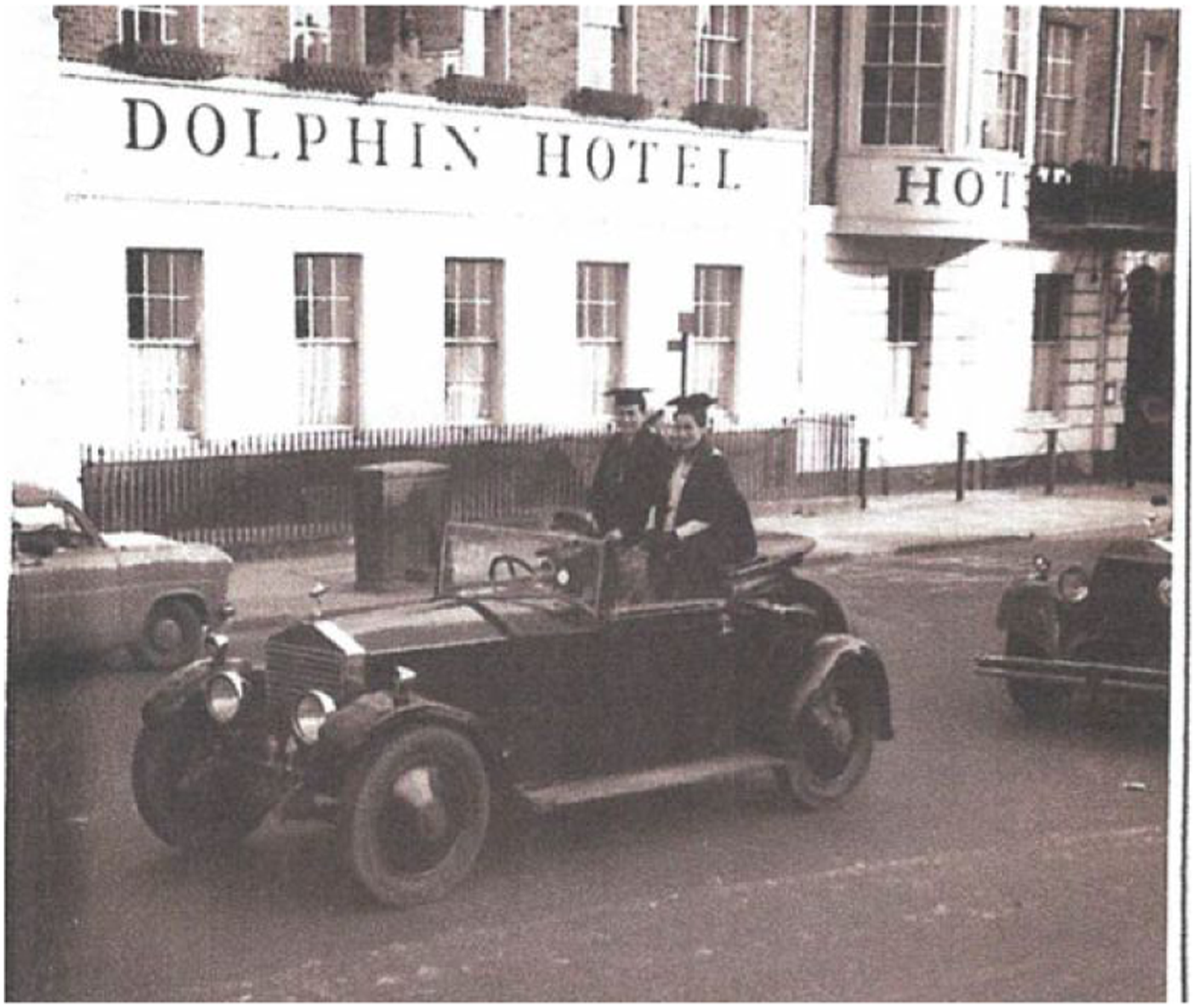
After leaving school at 16, Shôn became an Engineering Apprentice at Rolls-Royce Ltd in Derby, England, choosing Rolls-Royce because ‘Rolls-Royce were the best engineers and [he] wanted to be an engineer’. While working at Rolls-Royce, Shôn continued his studies at Derby Technical College (now part of the University of Derby). In 1955, he won the Spitfire Mitchell Memorial Scholarship, which funded him to go to the University of Southampton. His time at Southampton was transformational (Figure 1). He took the Aeronautical BSc degree in just 2 years graduating in 1958, obtained a PhD in 1961, was President of the Students’ Union (1957–58) (Figure 2), and met his future wife Anne Beatrice Mason. They married in 1959 and went on to have three children Awena (born 1966), an adopted son Aled (1970) and Gareth (1980). Shôn at the Southampton University circa 1956. Shôn in his first Rolls-Royce! The president and vice president of the Southampton University students’ union in the union’s Rolls-Royce at the student rag 1958.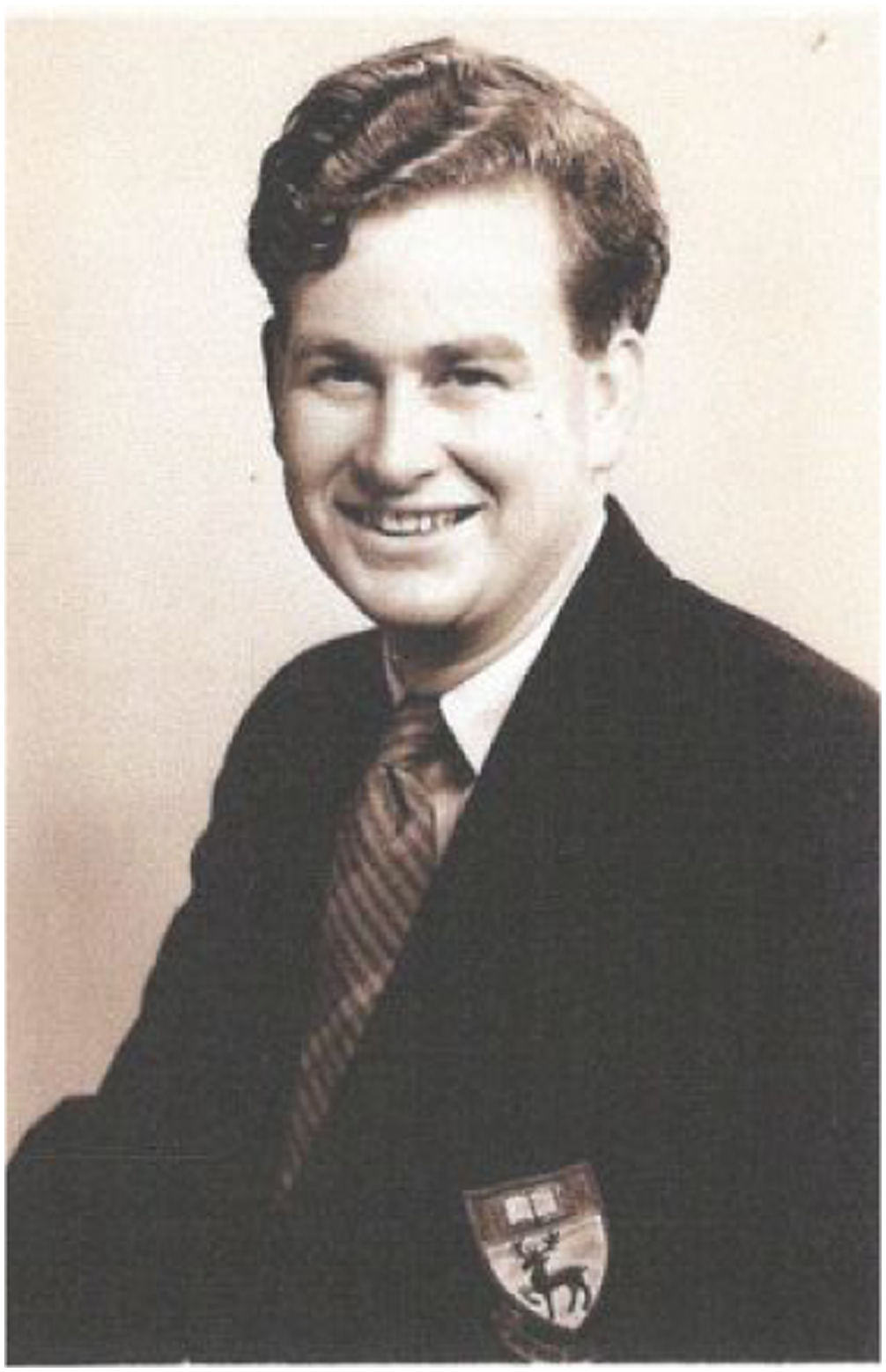
Shôn’s undergraduate project
1
submitted for his BSc Degree in Aeronautical Engineering was on ‘Investigations into the turbulent structure of a jet’ (see Figure 3). It describes pressure and hot-wire velocity measurements of the mixing region of a turbulent jet. The intention was that his PhD, supervised by Welsh aeronautical engineer Professor Elfyn John Richards, would be on more detailed turbulence measurements aimed at measuring the sources of the noise in a high-speed turbulent jet. Jet noise was becoming increasingly important as high-velocity turbojets were beginning to power commercial aircraft and Richards wanted to test out Lighthill’s recently published theory
2
by measurements of the cross-correlations of the turbulent quadrupoles. However, as Shôn studied Sir James Lighthill’s papers, he became more interested in improving the understanding of the noise through modelling advances. He showed how the aircraft’s forward motion and the high-speed convection of the turbulent eddies in the jet modified the intensity and directivity of the generated sound, correcting an error in Sir James Lighthill’s
2
paper. The error was subtle, due to a reduction in the effective correlation volume of the turbulent eddies due to the variation in retarded time over an eddy whose convection speed is non-negligible in comparison with the speed of sound. Sir James supported and agreed with Shôn’s conclusions and communicated his paper describing this work
3
for publication in the Transactions of the Royal Society. They became close friends. The paper demonstrated what became characteristic of Shôn’s style - it addressed a technologically important problem, presented detailed mathematics but also gave a clear physical description of the underlying reason for the result, and backed up the theory by a comparison of its predictions with experimental data. The cover of Shôn’s final year project for his BSc degree.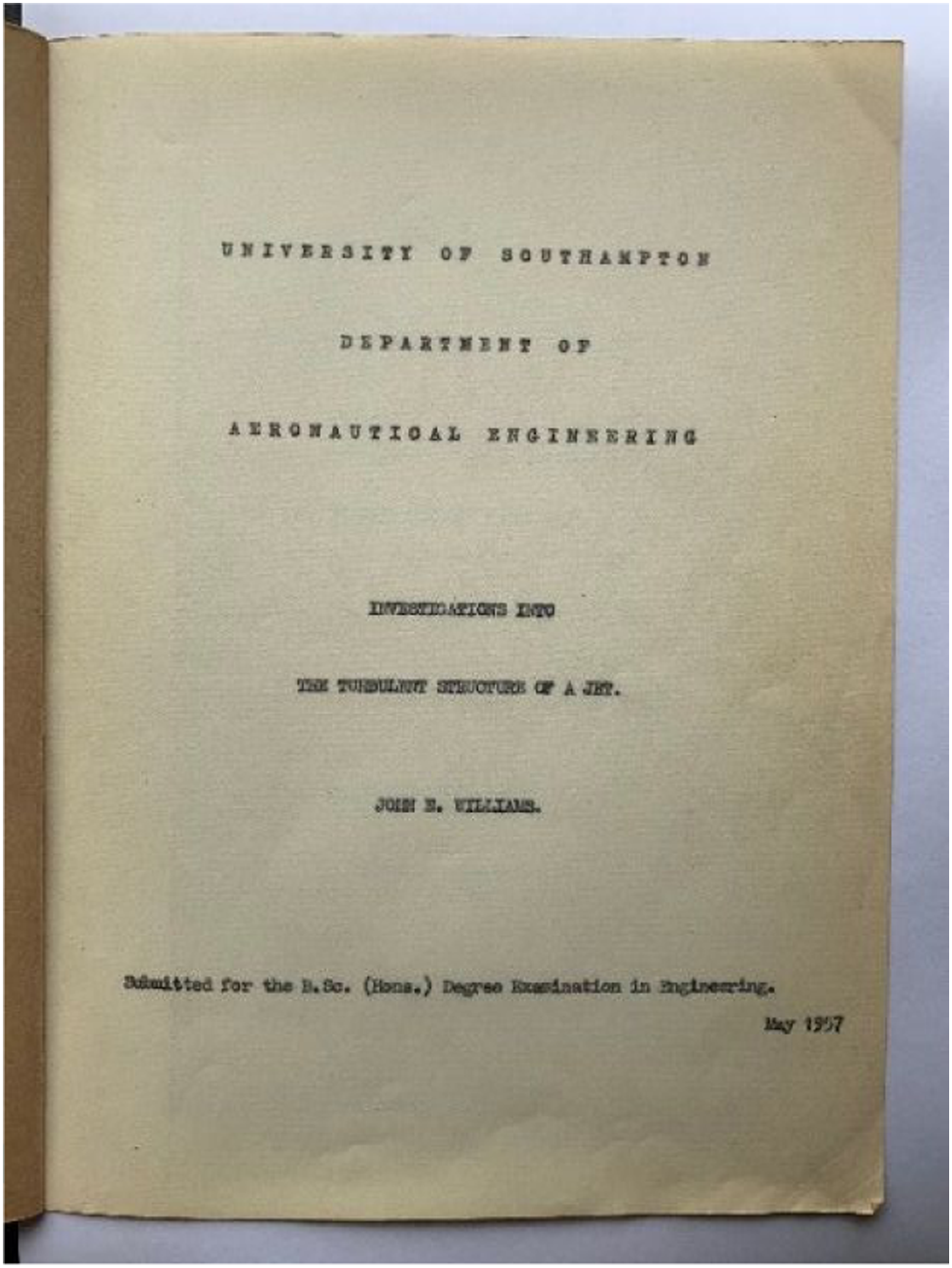
After leaving Southampton, Shôn continued his research in high-speed jets as a Research Fellow in the Aerodynamics Division of the National Physical Laboratory (1960–62) in Teddington, England and at Bolt, Beranek and Newman Inc (1962–4), Cambridge Massachusetts. At BBN his research covered all speed ranges, from the noise of hypersonic rocket jets to the turbulent boundary layer flows over submarines, whose pressure fluctuations could interfere with the SONAR system.
Shôn and Anne returned to the UK in 1964 with Shôn becoming a Reader in Applied Mathematics at Imperial College London. Shôn was looking forward to collaborating with Sir James Lighthill, who took up post as the Royal Society Professor at Imperial at the same time. Shôn’s field of research was Aeroacoustics. Shôn said in a lecture 1 he delivered to the Emmanuel Society in Cambridge on 31 August 2002 ‘What I do is Aeroacoustics; or, Aeroacoustics is what I do, is a better way of expressing the freedom and fun I’ve had doing it. I’ve never felt constrained to restrict my attention to any formal definition of the subject; definitions should not be taken too seriously because too often the most important things are on a subject’s outer edges, in loosely-defined space between subjects, being neither one thing or the other. It is extremely useful to have a definition loose enough to accommodate these interdisciplinary gaps. So for me the subject has grown as I have got on with doing exactly what took my fancy, any continuity coming from my consistent curiosity about how and why fluids move unsteadily, and my fascination with important problems caused by unsteady flow.’
So Shôn viewed aeroacoustics as a branch of fluid mechanics, with the sound a byproduct of unsteadiness in the flow perhaps due to turbulence or another flow instability. In many of the noise generation problems he studied, the source flows were virtually unaffected by the noise they produce, since the energy in the radiating sound field was many orders of magnitude smaller than the kinetic energy of the source flow. Lighthill’s theory
2
showed how the sound field generated by a turbulent flow in unbounded space could be expressed in terms of integrals of the flow field over the source region. While at BBN, Shôn extended that approach through repeated uses of Kirchhoff’s theory to the sound generated by turbulence near moving surfaces. He proudly showed the pages and pages of detailed working to Sir James Lighhill who told him ‘Of course, all these things can be done more easily if you use generalised functions!’- Lighthill had recently published his book
4
on generalised functions. So Shôn, working with student David Hawkings, started again and produced an extremely elegant paper
5
deriving what has come to be known as the Ffowcs Williams-Hawkings (FW-H) equation. This expresses the far-field sound from moving surfaces in terms of volume quadrupoles, and integrals of pressure and velocity over the surfaces. The equation is very general - the surfaces can be flexible, rigid or even just ‘control surfaces’ in the fluid - and it is very powerful in the right hands. No doubt some papers in this Memorial Volume will illustrate the versatility of the technique. Use of the Ffowcs Williams-Hawkings equation has become ubiquitous as a means of predicting the noise from helicopter and propeller blades, turbomachinery, and many other applications where determination of surface pressure and velocities is a fundamental part of preliminary aerodynamic design. The FW-H equation enables the sound field to be readily calculated from this information. Figure 4 from the presentation given by Feri Farassat at the ‘Shonfest’, held in Cambridge in 2002 to mark Shôn’s retirement from the University, gives Feri’s not-too-serious summary of the impact of the FW-H equation. Slide from Feri Farassat’s presentation at the ‘Shonfest’ 2002 Emmanuel College, University of Cambridge.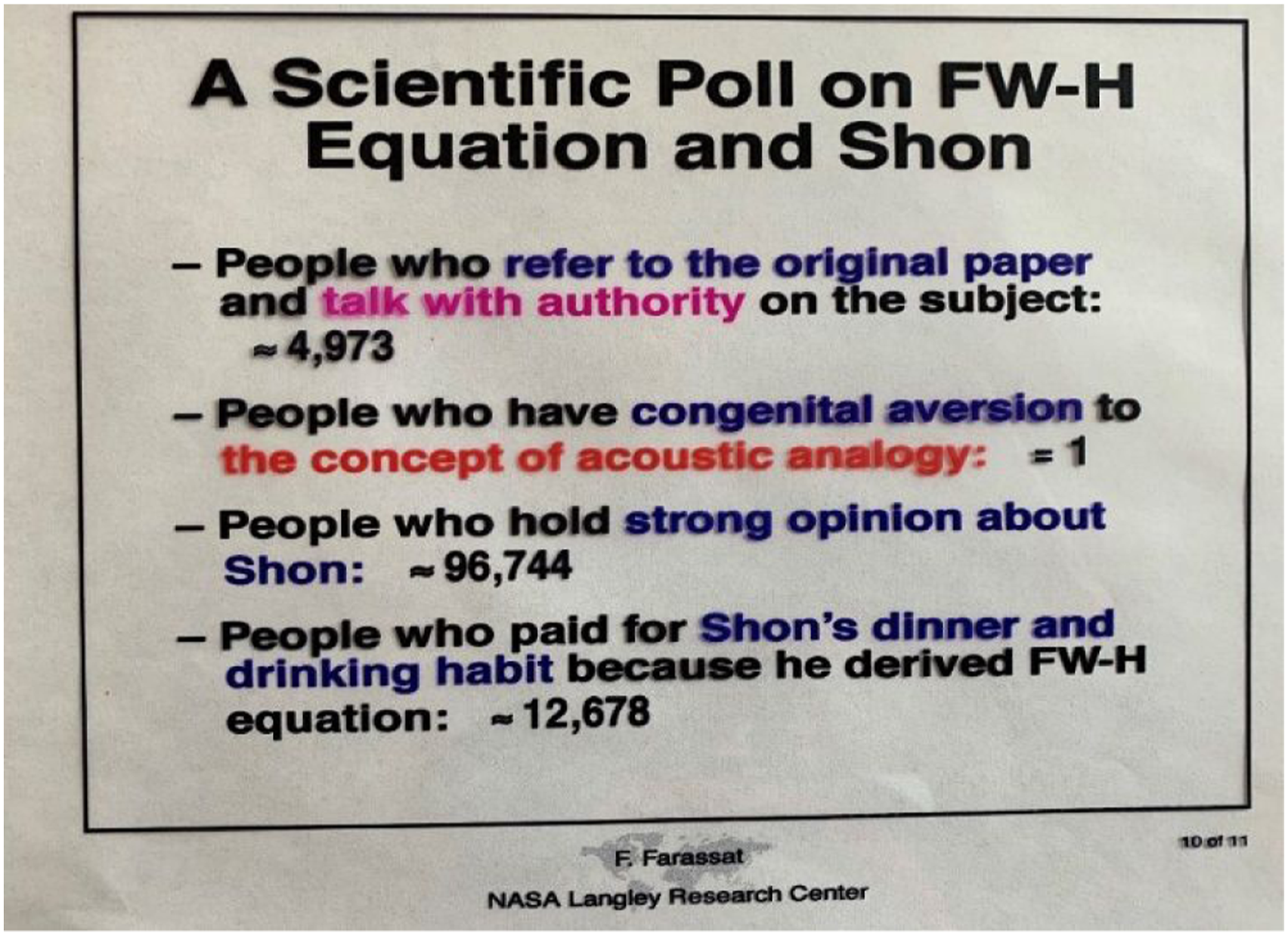
In 1966 David Crighton joined Shôn as research assistant and PhD student. David initially wanted to study turbulence, but, with Shôn’s belief that ‘turbulence is a word we have for flows that can’t be understood’, David was persuaded to study the consequences of turbulence instead. He was sponsored by the US Office of Naval Research to work on underwater acoustics. Sound travels long distances underwater and SONAR is used to detect submarines by passively listening to the sounds they generate as they move through the oceans. Submariners would sometimes emit a screen of bubbles to mask their presence, thinking that the bubbles would scatter sound and conceal their noise signature. But the analysis of Crighton and Ffowcs Williams 6 showed that the high compressibility of the air bubbles could lead to strongly radiating monopoles in the inhomogeneous mixture not present in water alone. These, together with a dramatic decrease in the speed of sound in a bubbly liquid, could greatly enhance the sound generated by the turbulence – by some 50 dB for a 1% air/water concentration and by 70 dB for a 10% concentration. So rather than a cloud of bubbles disguising the noise of a submarine, it dramatically increased it. In their enthusiasm to share this interesting result, Shôn and David had submitted their paper to the Journal of Fluid Mechanics before receiving clearance to publish from the US Navy. The paper was in press before they heard from their sponsors informing them that their ‘results were classified, [to] return all working documents to America; and that [they] should refrain from discussing the subject with foreign nationals.’ The sponsors were not amused, when Shôn told them that he regarded them as foreign and terminated the correspondence. David said it took many years for him to rebuild his relationship with the US Navy. It is not clear that Shôn ever did!
Concorde was the first commercial aircraft to fly supersonic, able to reduce the journey time from London to New York to just under 3 h. But the design of its engines, powered by turbojets with afterburners needed at take-off, was inherently very noisy. Sir Stanley Hooker of Rolls-Royce (known as SGH and a major figure behind the Olympus engine that powered the Concorde) believed that the noise of a supersonic aircraft had to be better understood and reduced if that exciting project was to be viable. As Shôn said in his Emmanuel Society Lecture ‘That was a problem SGH did not believe the industry or the national experimental establishments could handle – and the problem may actually be insoluble. He brought in academic help, hoping that a new approach might be found and before long I found myself directing the new research programme. That was a marvellous example of exciting and good industrial/academic collaboration because the problem to be solved had such huge national importance.’ In 1969 Shôn became the Rolls-Royce Professor of Theoretical Acoustics in the Department of Mathematics at Imperial College, Director of the Concorde Noise Research Unit and Executive Consultant to Rolls-Royce. Shôn led attempts to reduce the noise, but it was really too late in the project to make radical design changes, and the ejectors and mixing lobes tested were only able to have a marginal effect. The main improvements came through enhanced operations, such as a very rapid initial climb.
In 1972, Shôn moved to Cambridge as the inaugural Rank Professor of Engineering, taking the Concorde Noise Research Unit with him. Abbreviated by its initials CNRU, it became known over time as the Cambridge Noise Research Unit. The CNRU was too large to be accommodated in the Department of Engineering’s main buildings on Trumpington Street and was housed instead in a separate building at 22 Trumpington Street, sharing the building with the Wolfson Industrial Unit. This is where I worked for my PhD, sharing an office with Andy Kempton and Michael Purshouse (Figure 5). Being more senior, Michael Howe was upstairs in an office on his own.
Shôn became Head of the Division of Energy, Fluids and Turbomachinery in the Department of Engineering at Cambridge University in 1973, a position he held for nearly 30 years. One of the first challenges he met as Head of Division was to stabilise the future of the Science Research Council (SRC) Turbomachinery Lab. This Laboratory had been set up in a new building in West Cambridge by Sir John Horlock, who became its first Director. The building and large-scale equipment had been funded by the SRC, but by 1974 this pump-priming funding had finished and Sir John had left Cambridge to become Vice-Chancellor at Salford University. Shôn was able to call on his contacts with Rolls-Royce to negotiate their long-term support and the Laboratory, renamed the Whittle Laboratory from 1973, has gone from strength to strength, recruiting some great people and becoming internationally recognised for the quality and relevance of its research.
Shôn used to say that his main achievement was to persuade very good research students to tackle important but interesting problems. To his many PhD students, he was an inspiring supervisor, who brought his enthusiasm, curiosity and creativity – and sense of fun - to every project. If the results we showed him were unexpected or detailed analysis was proving challenging, Shôn would say ‘This calls for a cigar’ (this was in the days when smoking in offices and indeed public places was ubiquitous) and enlightenment would follow. I remember one occasion when Shôn was on an extended visit to MIT and I was to meet up with him at an underwater acoustics meeting in Washington DC. I received an urgent SOS: Shôn had run out of cigars! Cuban imports into the US were banned at that time and he could not restock locally. ‘Please bring cigars with you’. On my arrival in the US, customs officers found the large box of Havana cigars in my luggage, and looked at me quizzically when I explained they were for private consumption. After further questioning and more raised eyebrows, they let me – and the cigars – through. Shôn in his office in the Department of Engineering at Cambridge with (from left to right) Steve Furber, Andy Kempton, me and Michael Purshouse
2
, circa 1976.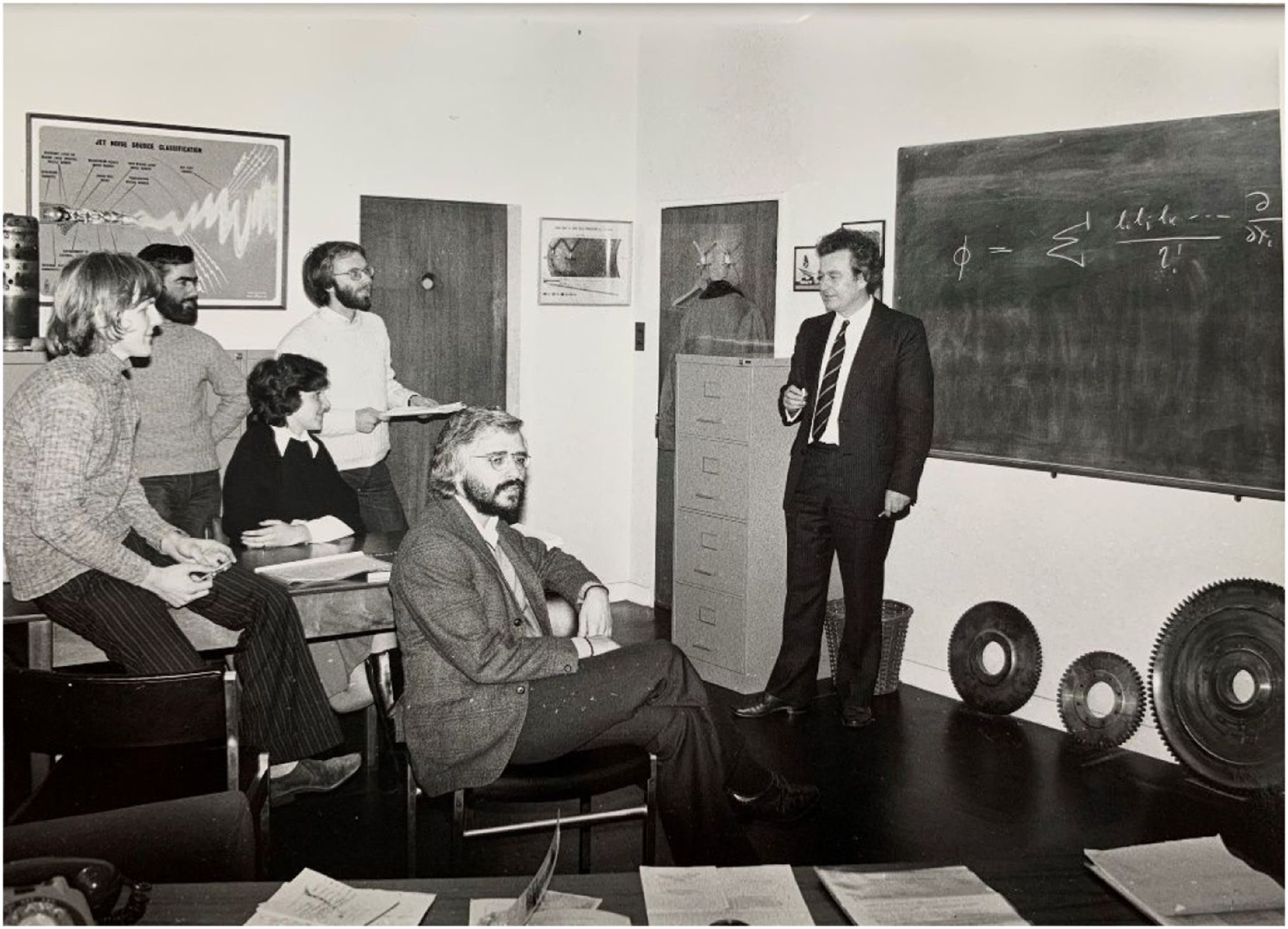
The research Shôn led was wide ranging, and his former students have gone on to have leadership roles across university disciplines that include mathematics, engineering, computer science and biomechanics, and in technological industries that range from automotive and aviation, to electronics and chip design, to bioengineering and ship building (Figure 6). Steve Furber is an excellent example of that interdisciplinarity. After Batchelor and Master’s degrees in mathematics (1974, 1975), Steve started research for a PhD in Engineering supervised by Shôn. Cambridge zoologist Weis-Fogh had recently observed that hovering wasps exploited a new form of aerodynamic lift (at least ‘new’ to aerodynamicists, not new to wasps!) enabling them to fly with ‘an aerodynamic performance superior in some respects to anything previously known’. This new form of lift was produced when two surfaces interact unsteadily with each other: the wasps start with their wings vertical (like a closed book held vertically upright, pages above its spine), they then open their wings (like opening the book) and the air rushes in, they then split their wings away from their body (equivalent to splitting the book down its spline), resulting in two separate wings each with a circulating flow around them, producing lift without shedding any vorticity. Steve and Shôn investigated whether this mechanism could be used to enhance the performance of turbomachinery. A theoretical analysis gave promising results, and Steve then embarked on an experimental investigation. He asked Shôn whether he could use his own computer as the data logger. Shôn agreed, enquiring which make of computer it was, but this really was Steve’s Shôn with me and his former PhD student Naotaka Hirami. who went on to have a distinguished career at Mazda (in Japan 1985).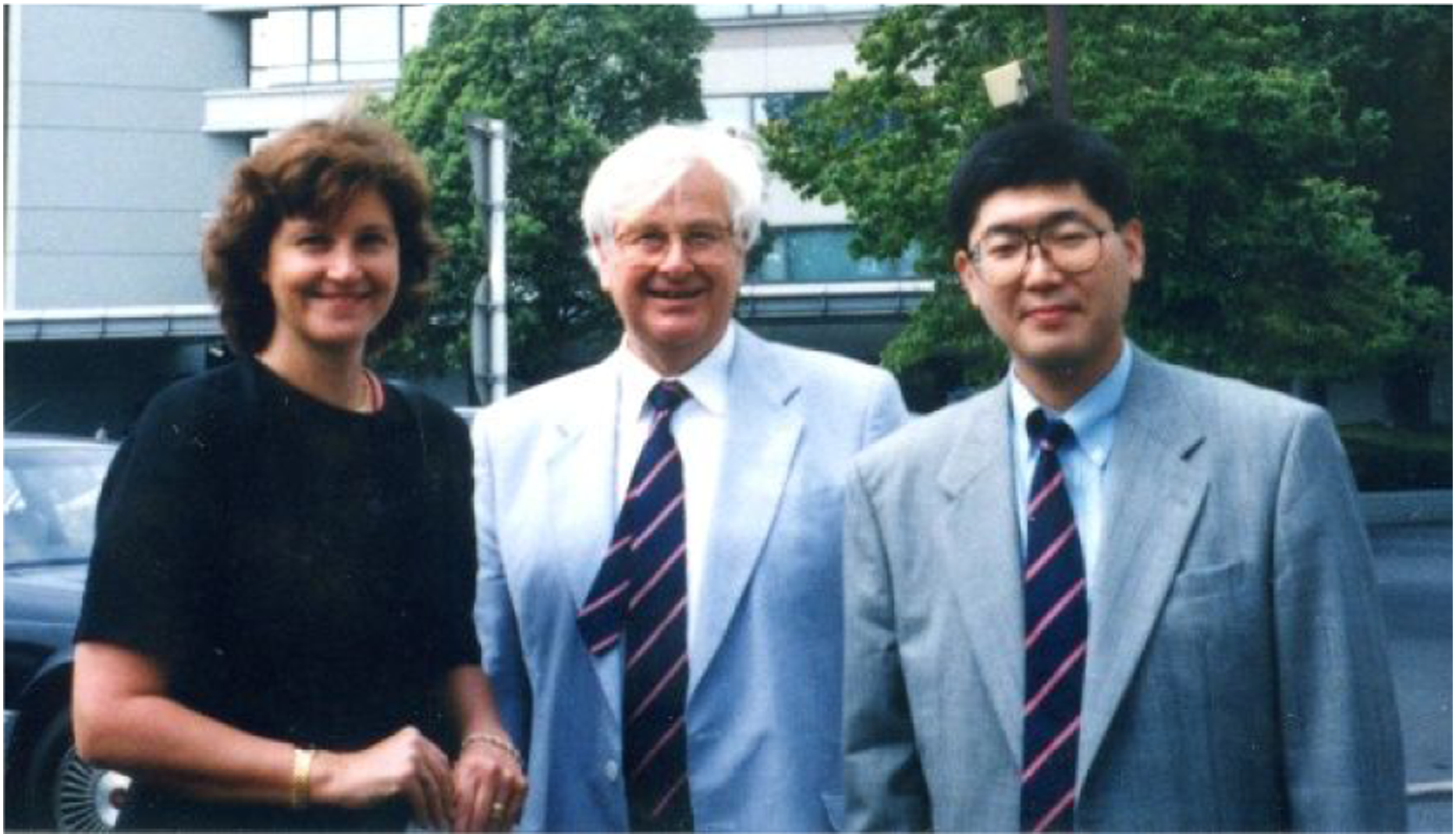
In 1975 the Department of Engineering at Cambridge marked one hundred years since its creation, and Shôn was in charge of the celebrations. The highlight was a visit by His Royal Highness Prince Philip, Duke of Edinburgh. As Prince Philip toured the laboratories, he was shown the ‘owl’ - a device that demonstrated the workings of the acoustic telescope (Figure 7). By measuring phase differences, the acoustic telescope could detect the direction of a sound wave. The ‘owl’ illustrated this analysis by then turning its head in the direction of the incoming sound. Prince Philip was encourage to call out to the owl, which he did - but nothing happened. Knowing that the owl responded best to pure tones, Shôn whistled and the owl immediately turned in his direction. The whole celebration and one hundred years of achievements of the Department were summed up by the Cambridge Evening News under the headline ‘Owl snubs Duke’. They reported the owl episode in great detail – and nothing else. The then Head of Department was not amused! Shôn showing HRH Prince Philip The Duke of Edinburgh the ‘owl’, researcher John Billingsley is in the foreground.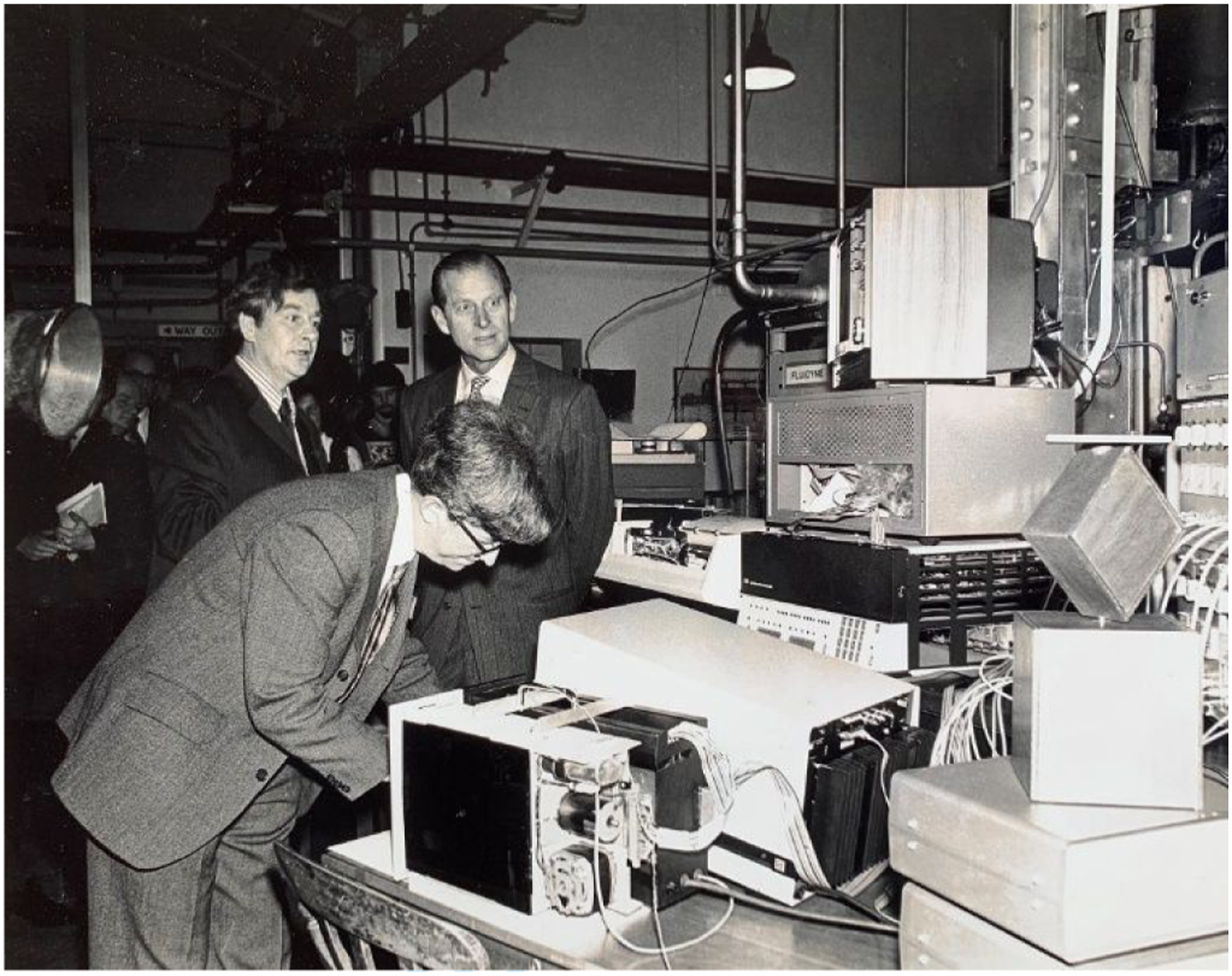
Shôn was a lively and enthusiastic lecturer. The film Aerodynamic Generation of Sound 7 made by Shôn and James Lighthill remains to this day one of the clearest introductions to aeroacoustics. James and Shôn also made a film together, jointly explaining the Rijke tube, as an example of how teaching mathematics is easier if a lecture is shared. I am not sure about easier, but they certainly demonstrate that it can be very amusing. Their lecture has been published verbatim 8 and starts with Sir James introducing Shôn ‘He is the Rolls-Royce Professor of Theoretical Acoustics’ and Shôn responding with ‘The most comfortable chair in the world, I am sure!’. Shôn’s style suited advanced undergraduates and graduate students, who really appreciated learning from someone at the top of their field. When Shôn and I introduced a final year module on aeroacoustics into the undergraduate engineering degree at Cambridge, we found there was no appropriate course book and so produced copious course notes. After several iterations these were published as a book Sound and Sources of Sound. 9 Shôn was in his element lecturing to senior scientists and engineers. While still at Imperial College, he led an activity aimed at teaching modern analytical methods in acoustics to Admiralty scientists engaged in SONAR work. The course was repeated in the early 1980s when I joined the team. Over a period of a year, Shôn, David Crighton, Frank Leppington and I would travel to AUWE (the Admiralty Underwater Weapons Establishment) Portland once a month for a day of lectures and discussion. We gave lectures on mathematical techniques and provided notes to support those lectures. The audience knew far more about the practical aspects of SONAR systems than us, and we had lively discussions and Q & A sessions. These lectures formed the basis of research collaborations with AUWE and their supply chain. The lectures were repeated many times in Europe and across the US as a concentrated 5 day course, when as Shôn 10 writes ‘again many good friends were made and fruitful collaborations were born’. Manfred Heckl later joined the lecturing team, and in 1992 the course notes were published as a book. 11
Sam Mason, at one time Head of SONAR at AUWE, was keen to have an intensive external research effect on the unsteady flows and vibrations that could interact with SONAR systems and affect their performance. Security classification made it difficult to carry out this research in a university environment. Shôn had seen in the US the benefits of having professional scientists and engineers focused full-time on research and development over an extensive period, and this led him to become an early Cambridge entrepreneur. In 1979, together with Jack Lang, he founded the successful start-up company Topexpress Ltd, which carried out software development, research and consultancy. The UK Ministry of Defence was a major customer, particularly AUWE. Topexpress was able to recruit some very talented people and also provided consultancy opportunities for Cambridge academics. As has become typical of the Cambridge phenomenon, there was a healthy exchange of people between the company, the University and its Colleges, with many Topexpress alumni going on to found their own spin-out companies. Some great research was done. Topexpress fought off a hostile takeover bid, but this made the whole company – and long-term employees owned shares in the company alongside Shôn and Jack - realise what a valuable asset they had. They began to look for a more synergistic sale. In 1987, Topexpress was sold to the shipbuilder VSEL Consortium plc. VSEL specialised in building submarines and Topexpress essentially became their advanced research lab. Shôn subsequently joined the Board of VSEL as a non-executive director. He wrote ‘I liked the involvement there and found, in fact, that it interfered less with my own research than the administrative duties I’d been used to in the University’.
Shôn’s university-based research continued to thrive. He helped to make ‘anti-sound’, whereby suitably phased sound is introduced to cancel unwanted noise, a practical option. Moreover, he realised the power of feedback systems involving acoustic waves to stabilise aeromechanical systems. Unstable aerodynamic systems are susceptible to small amplitude perturbances such as acoustic waves, and sound often forms part of the feedback loop leading to a self-excited oscillation. In these systems, flow perturbations generate sound waves which, perhaps after reflection from the boundaries of the system, perturb the system further. If the acoustic energy gained in the sound generation exceeds that lost at the boundaries, small amplitude disturbances grow until limited by nonlinear effects – or the system breaks! Shôn recognised that the suitably phased introduction of additional sound could break this cycle of growth. Moreover, if the active control was introduced while the amplitude of the perturbance was small only a small amount of actuation would be needed to stabilise the system and to keep it operating stably.
Shôn’s PhD students Phil Dines 12 and Maria Heckl 13 demonstrated this in the control of the instability of a laminar flame burning on a gauze in a tube. A flame in a tube can be unstable, with acoustic waves perturbing the flame and altering the rate of heat release, and that unsteady combustion generating further acoustic waves. Phil and Maria used a photomultiplier (Dines) or microphone (Heckl) to detect the phase of the flame oscillation, phase shifted that signal and used it to drive a loudspeaker. The control was very effective given a reduction of some 35 dB. It is hard to deliver high power through loudspeakers, but unsteady combustion itself is a very powerful sound generator. Pat Langhorne, Nick Hooper and I 14 applied the same approach to a high-powered turbulent flame which we had been using to model and understand an instability of an aircraft engine’s afterburner, known as ‘reheat buzz’. By the suitably phased modulation of the fuel, we were able to control the instability. Our work had been supported by Rolls-Royce who, with financial support from the Ministry of Defence, went on to successfully apply the same technique to a full-scale RB199 engine undergoing ground testing in an atmospheric engine test bed at DERA Pyestock. That successful demonstration was immediately classified and it was only possible to report it some 12 years later. 15
On sabbatical at the MIT Gas Turbine Laboratory in 1984, Shôn postulated whether the same approach might be able to control the instabilities, rotating stall and surge, which set fundamental limits to gas turbine compressor operation. Shortly afterwards, Shôn and his family went on vacation, but Shôn took with him background reading on these instabilities supplied by MIT colleagues. Ed Greitzer of MIT reports ‘He returned the next week with several pages of analysis that clearly illustrated the concepts and showed the potential for compressor stabilisation. Those pages, the resulting extended discussions with Shôn, and his enthusiasm and interest, gave a new direction to our research and sparked a decade of exciting and productive work on active and structural dynamic instability control, at MIT, Cambridge, NASA, and industry. The realisation of the need for teaming across disciplines to address these so-called ‘Smart Engine’ issues also changed our approach to research. It was a privilege to work with Shôn and it is a pleasure to acknowledge his contributions to this collaborative voyage of discovery.’
Shôn also enjoyed the interdisciplinary nature of the Cambridge community, which sometimes took him into completely different areas of research. An approach from clinicians, who hoped that ‘anti-sound’ might eliminate the annoyance of snoring, led Shôn and his PhD student Lixi Huang to investigate the mechanisms that cause snoring. There are several. Anti-sound was not going to be effective, but preventing the sound source was possible, at least in the laboratory. The surgeons - and their patients - were ready to try out the engineers’ suggestions. The first intervention was to drill a small hole in the soft palate to reduce its tendency to flutter due to pressure differences on its two sides. It worked brilliantly – and continued to work even after the hole had healed and closed up! The remaining scar had stiffened the palate sufficiently to prevent flutter. This led to a minimally invasive procedure whereby a surgical laser beam was used to cause scarring and to change the dynamics of the soft palate. 16 This was a huge step forward because before Shôn and Lixi’s work the surgical solution was an auvulopalatopharyngoplasty, a dramatic operation involving removal of much of the soft tissue in the palate.
Shôn loved driving fast cars. Initially these were Italian, Alfa Romeo and Lancia, but the Porsche later became his car of choice. He enjoyed their excellent engineering and the test of his driving skills. He always appreciated excellence in engineering, and I think he took particular pleasure that his 1927 Rolls-Royce – a 70th birthday present – climbed up the steep off-road track to his hill-side Welsh home as well, if not better, than modern cars. Shôn listed his Recreations in Who’s Who as ‘friends, vintage cars and thinking’. Shôn and Anne were great hosts and always made friends, colleagues and students from around the world welcome at their home. Cars and friends came together in their legendary ‘Oyster parties’ when Shôn would meet the fishermen at Colchester in the morning and at high speed bring crates of oysters – still dripping from the sea - back home for convivial lunches that extended throughout the afternoon.
In 1977, for his many achievements in establishing the field, Shôn was awarded the AIAA Aeroacoustics Medal, followed by the Rayleigh Medal from the Institute of Acoustics (1984) and the Silver Medal of the Société Française d’Acoustique (1989) and the Royal Aeronautical Society’s Gold Medal in 1990. He received the Doctor of Science (ScD) degree from the University of Cambridge in 1986 and was a Fellow of the Royal Aeronautical Society, the Institute of Mathematics and its Applications, the Institute of Physics, the Acoustical Society of America and the AIAA. Shôn was elected to Fellowship of Royal Academy of Engineering in 1988, receiving their Sir Frank Whittle Medal 2002 for ‘outstanding and sustained achievement’, the citation referring to his ‘lifelong dedication to understanding the properties of sound, which has enabled huge innovation in international transport’. He has held Foreign Honorary membership of the American Academy of Arts and Sciences since 1989 and was elected an International member of the US National Academy of Engineering in 1995.
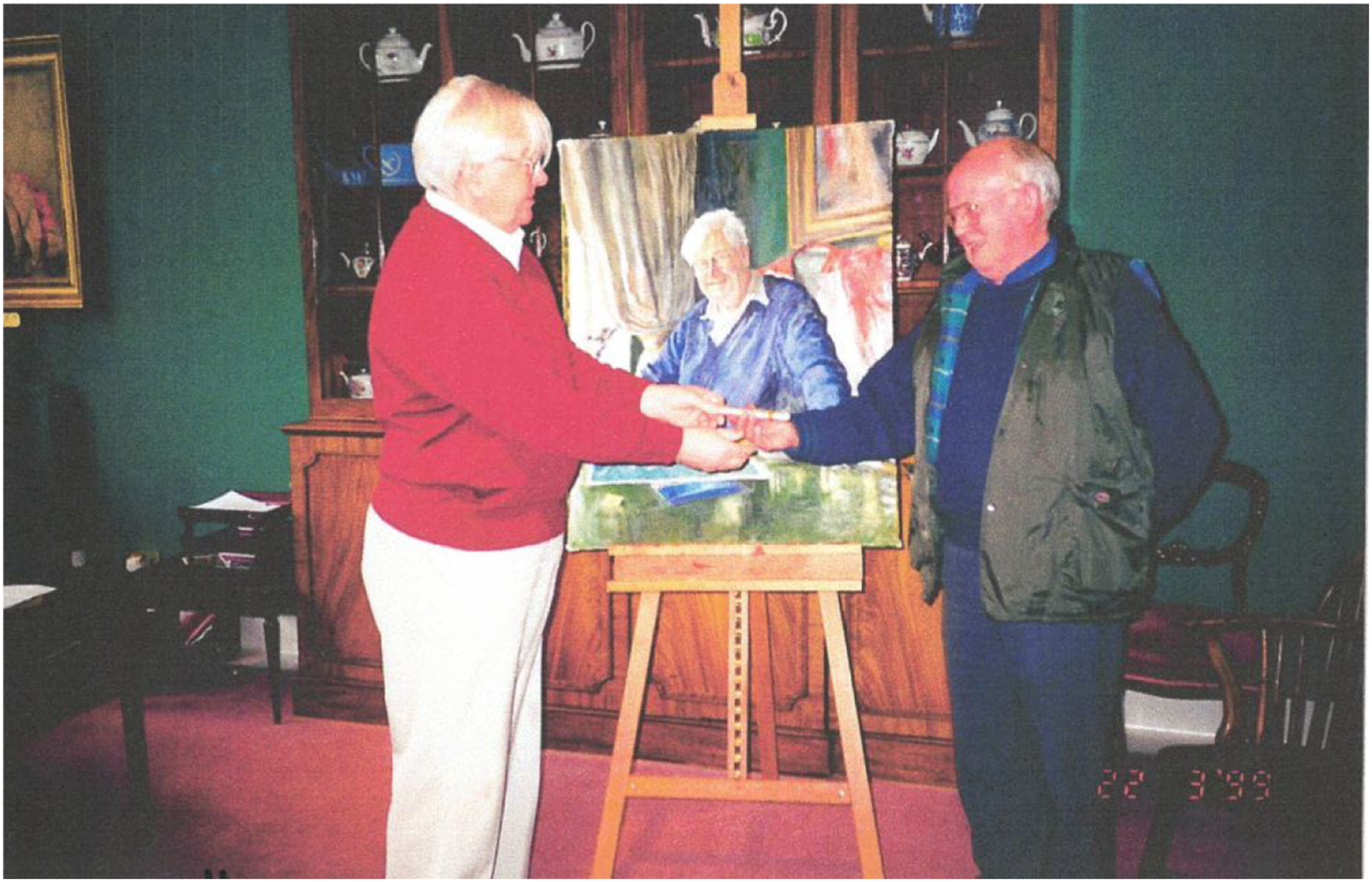
Shôn had been a Fellow of Emmanuel College, Cambridge since his arrival in Cambridge in 1972. He enjoyed the community of the College, which included playing bowls after a very pleasant lunch. In 1996, he accepted the invitation to became the Master and in his words it ‘changed [his] life completely’. Shôn and Anne with schoolboy son Gareth, and their dogs, moved into the Master’s Lodge to succeed Lord St John of Fawsley, a very different character. As Shôn was to say ‘The College dominated our life, my interest then being much more to ensure the College’s academic success than in my own work’. He was a hard-working, convivial, much-loved Master and, together with Anne, made the Master’s Lodge a welcome place for Fellows, staff and students. He placed particular emphasis on inclusive admissions, high academic standards, and on generating a community spirit across the College. The College enjoyed his lively company and thrived under his leadership (Figures 8 and 9). Shôn and other Emmanuel Fellows in the parlour after a dinner in the college. Shôn making a presentation to the retiring College Head Gardener, Mr Grubb. The presentation was in the Master’s Lodge and a recently completed portrait of Shôn is just behind them, with his favourite early Worcester tea and coffee pots in the background. Gathering of aeroacousticians at the ‘Shonfest’ held in Cambridge 2002. to mark Shôn’s retirement from the rank professorship.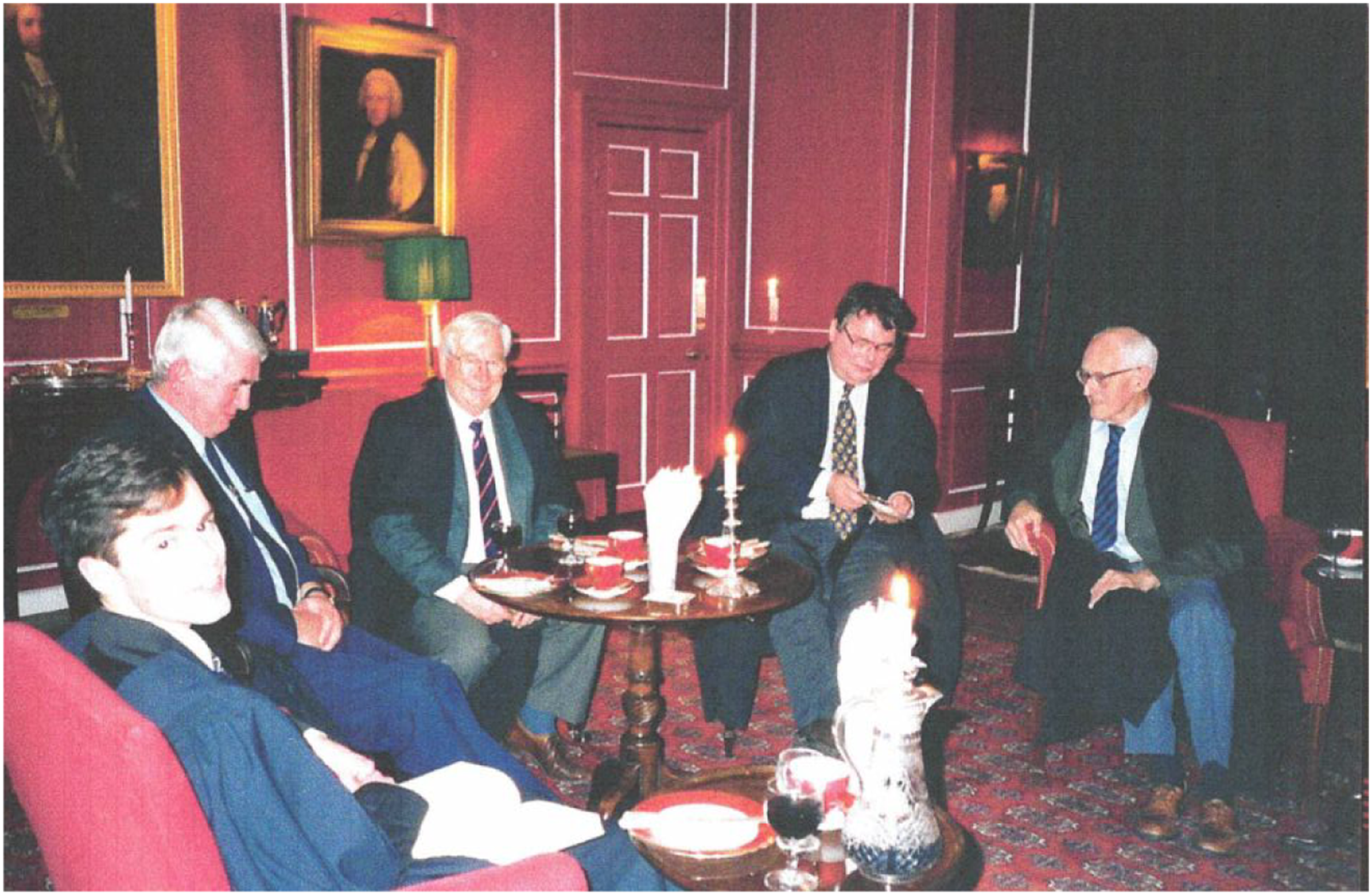
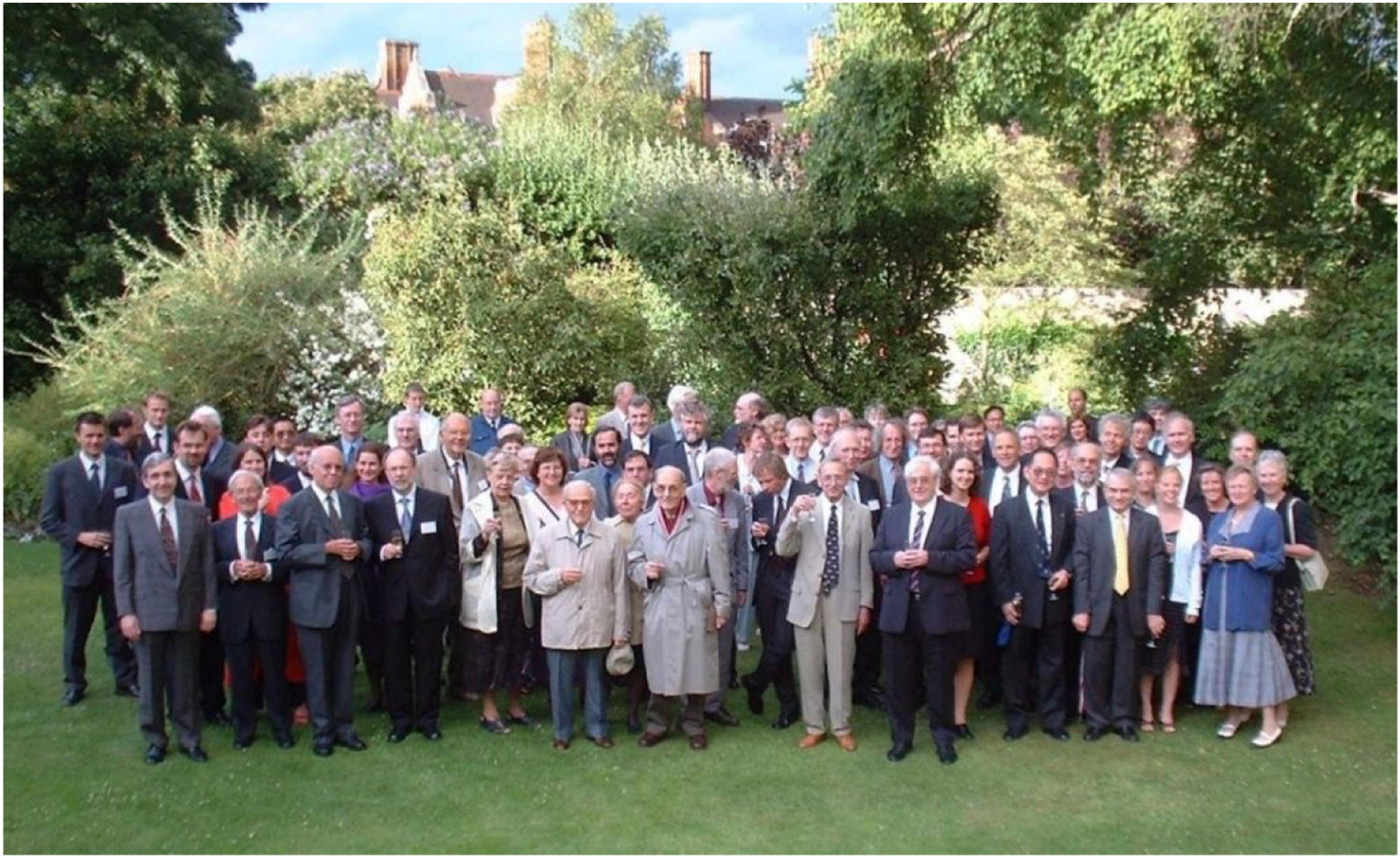
When Shôn retired in 2002 (Figure 10), he was the longest-serving professor in the University of Cambridge. Following his retirement, Shôn and Anne moved to his family’s home in Eglwysbach (Figure 11). They played an active role in the local community which included Shôn becoming Chairman of the local agricultural show. They were delighted when Gareth and his wife Ewa joined them in North Wales where Gareth, a keen cyclist, runs a cycle shop and tackles challenging mountain routes. Large-scale gardening in Wales, Shôn driving his tractor where he said he did all his thinking.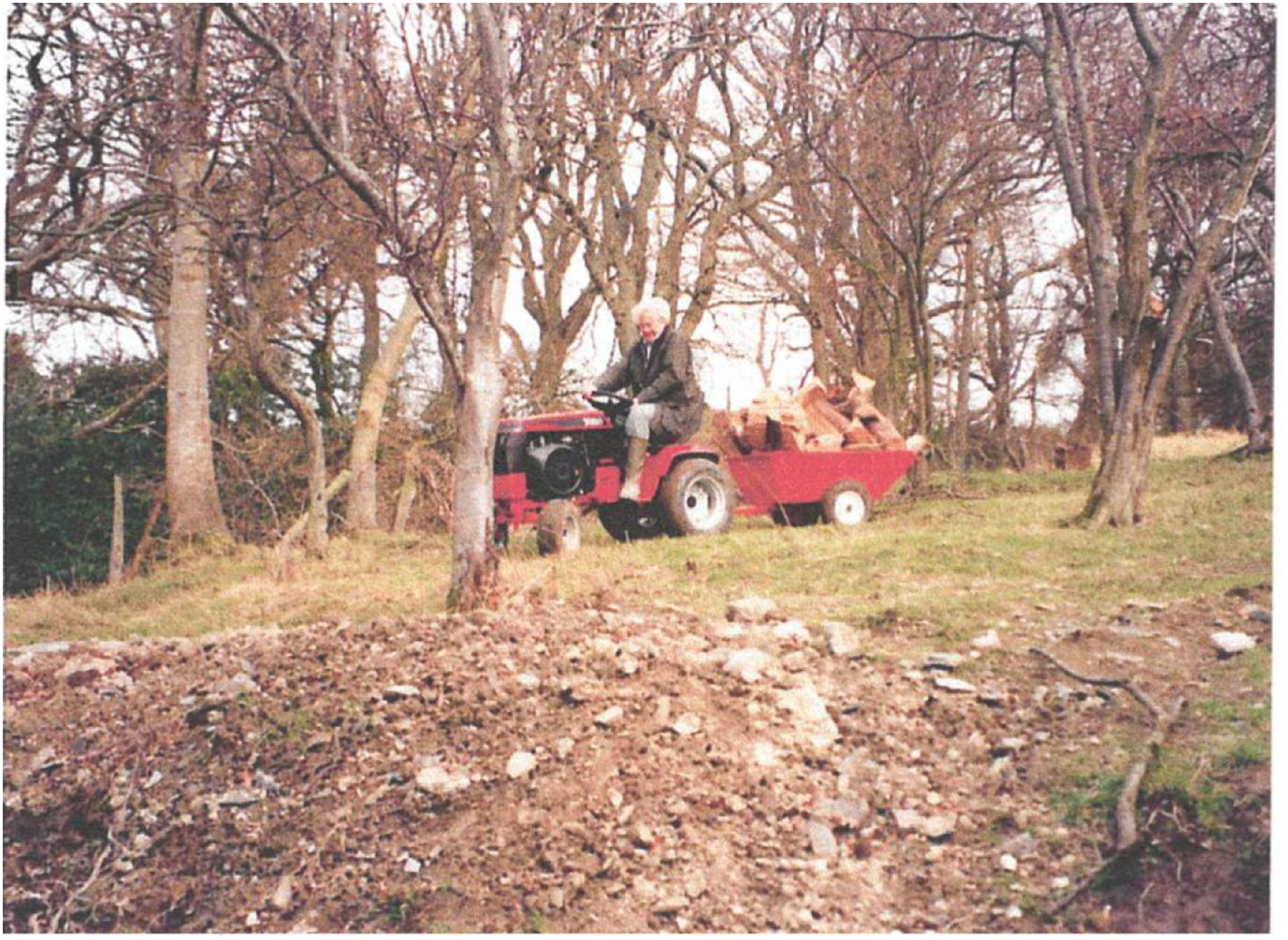
The aeroacoustics community came together to celebrate - slightly late - Shôn’s 80th Birthday through a Special Session ‘Professor Shôn Ffowcs Williams and Aeroacoustics’ at the 22nd International Congress on Sound and Vibration, Florence, Italy, 12–16 July 2015. Many of Shôn’s former students (and their students), colleagues and collaborators from around the world were there to join the celebration (Figure 12). Four academic generations of Aeroacousticians. Shôn, me, my former student Aimee Morgans and Aimee’s former student Simon Illingworth (Florence, Italy, July 2015).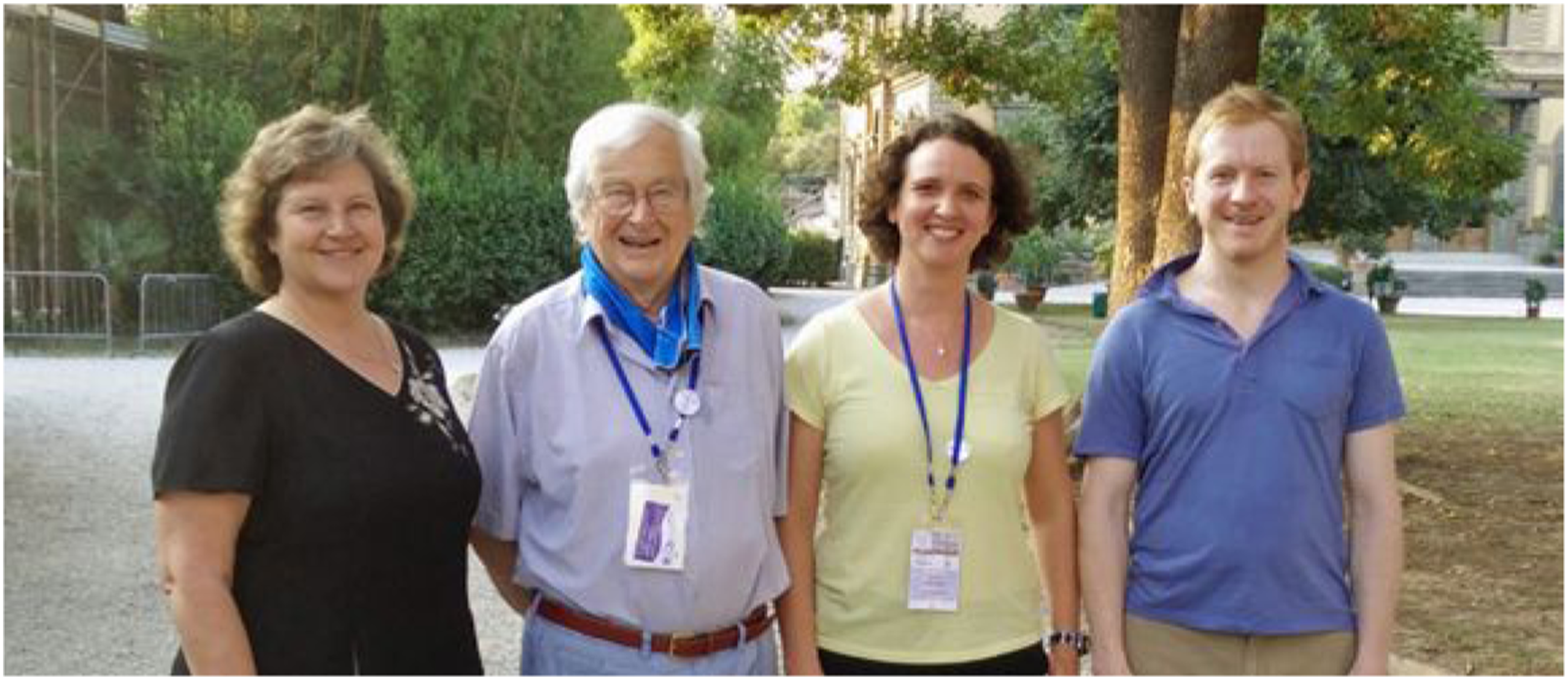
Over the last 3 years, following unsuccessful surgery, Shôn suffered from kidney failure and his and Anne’s activities came to be defined by his need for dialysis in hospital three times a week. He never complained though it took a terrible toll and there were several emergency calls to paramedics in the middle of the night and several stays in hospital. Throughout all this, he maintained his sense of humour - even teaching some of the nurses in the Renal Unit about flutter and the aeroacoustics of snoring! He died of a brain haemorrhage on 12 December 2020, aged 85.
Shôn Ffowcs Williams is survived by his wife Anne, son Gareth, daughter- and son-in-law, Ewa and Andrew, and grandchildren Ieaun, Ella and Hania (Figure 13). His daughter Awena, a psychiatrist, predeceased him in 2012. He is greatly missed by his family and his many friends around the world. He will be remembered as someone who had a profound effect on all those he met and who readily transmitted his enthusiasm that ‘it is fun to do research on real things’. Shôn and Anne relaxing at their home in Wales.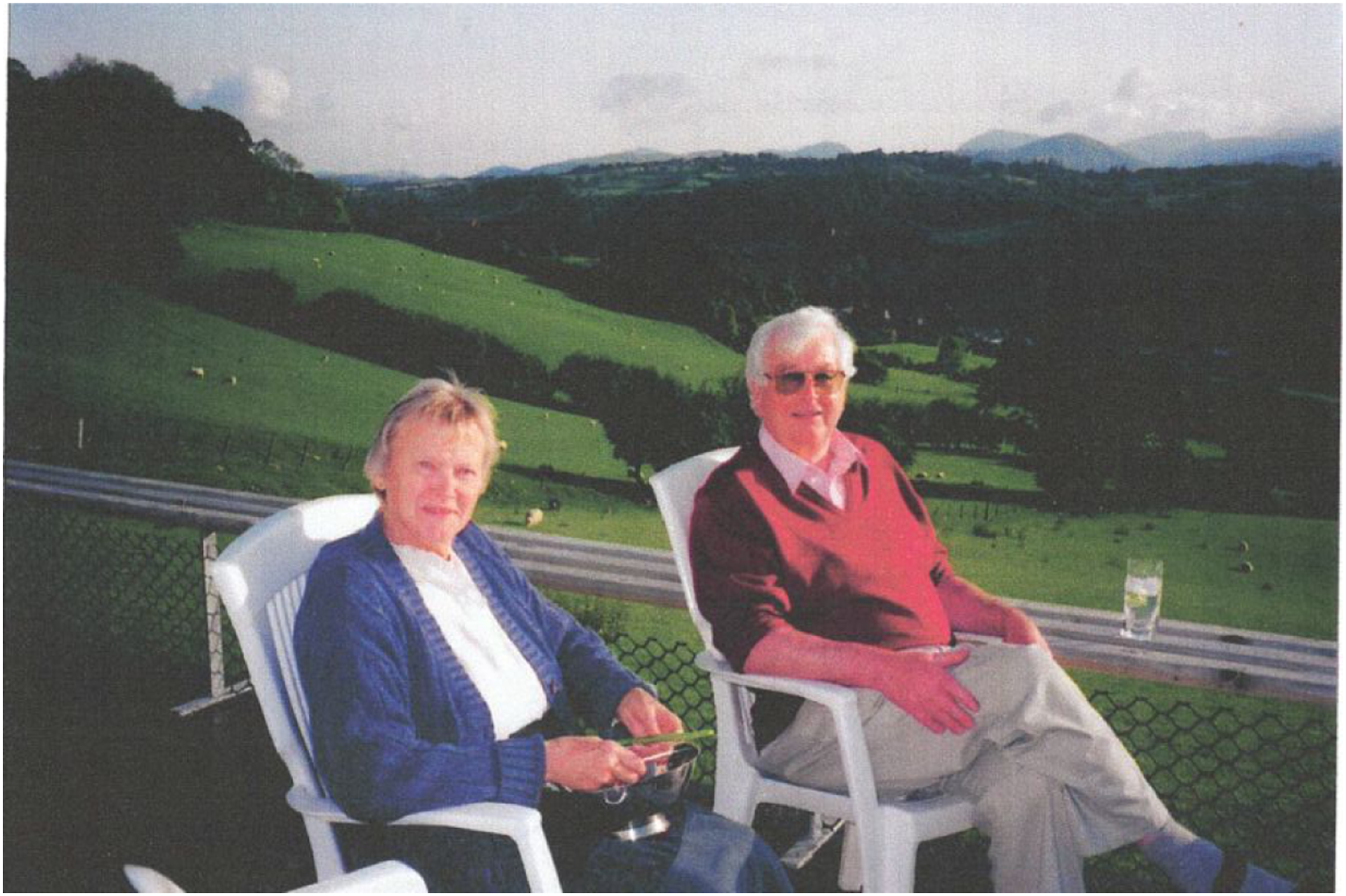
Prizes and awards
Chartered engineer (CEng)
Fellow of the Royal Aeronautical Society (FRAeS), the Institute of Physics (FInstP), the Institute of Mathematics and its Applications (FIMA), the Institute of Acoustics (FIOA), Acoustical Society of America, and of the Institute of Aeronautics and Astronautics (FAIAA) 1977 AIAA Aeroacoustics Award 1984 Rayleigh Medal, Institute of Acoustics, 1986 Doctor of Science (ScD) University of Cambridge 1988 Fellow of Royal Academy of Engineering 1989 Silver Medal, Société Française d’Acoustique 1989 Foreign Honorary Member, American Academy of Arts and Sciences 1990 Gold Medal, Royal Aeronautical Society 1992 Honour Prof., Beijing Inst. of Aeronautics and Astronautics 1995 International member of the US National Academy of Engineering, 1997 Per Bruel Gold Medal, ASME 2002 Sir Frank Whittle Medal, Royal Academy of Engineering 2003 Honorary Doctor of Science, Southampton University 2004 Aeroacoustics Award, Confederation of European Aerospace Societies 2011 Emeritus Honorary Professor, Wales Institute of Mathematics and Computational Sciences 2012 Fellow of the Royal Society for the Encouragement of Arts, Manufactures and Commerce (FRSA) 2012 Fellow of the Learned Society of Wales
Footnotes
Acknowledgements
I am very grateful to Anne Ffowcs Williams for her help in preparation of this paper and for providing the photographs in Figures 1, 2, 5, 7–9, 11 and 13.
Declaration of conflicting interests
The author(s) declared no potential conflicts of interest with respect to the research, authorship, and/or publication of this article.
Funding
The author(s) received no financial support for the research, authorship, and/or publication of this article.
