



Abstract
The present study investigates the application of a novel nonlinear bistable mechanism to the oscillating-body wave energy converter (WEC) under irregular wave conditions. The numerical simulations of the linear and nonlinear WEC devices are performed with the hydrodynamic analysis software AQWA and coding program MATLAB. Firstly, the hydrodynamic model of the WEC buoy is validated. Then, a parametric analysis on the energy conversion of the nonlinear WEC is conducted concerning the properties of power take-off (PTO) devices and wave parameters. The findings reveal that each parameter has a significant influence on the nonlinear WEC’s performance under irregular waves. Therefore, the parametric study should be carried out to determine the device parameters, which ensures that the nonlinear WEC outperforms the linear WEC under the specific environmental conditions. Moreover, it is found that the WEC with the proposed bistable system could absorb more power at the low-frequency region, which addresses the issue of efficiently capturing low-frequency wave energy.
Keywords
Introduction
Because of serious environmental pollution and huge consumption of fossil fuels, the world is paying increasing attention to the sustainable development. 1 For sustainable development, the exploitation of ocean renewable energy has become a key issue. Wave energy is considered to have more potential than wind, tidal and solar energy. 2 This is because the waves have a higher energy density and the all-day availability. The WEC devices have been developed in various types, such as oscillating water columns, overtopping devices, oscillating-body WECs, bottom-hinged WECs and multi-module interconnected WECs. 3 Among these WEC devices, the oscillating-body WEC is more promising due to its low construction and installation costs, and simple energy conversion mechanism. The nature of the energy conversion for an oscillating-body WEC is to drive the PTO system by relative motion about a fixed or floating reference. Generally, a direct drive or a hydraulic device is utilized to fabricate the PTO system for an oscillating-body WEC. For this case, a linear system with one spring and one damper could be considered as the PTO device.
The excitation frequency of waves has a significant influence on the linear oscillating systems, so the desired power capture efficiency is not achieved in real sea conditions. Therefore, to optimize the absorption performance of the oscillating-body WECs, some researchers have investigated the geometrical and physical properties. Ruezga and Canedo 4 conducted an investigation on the improvement of linear WEC’s performance by adjusting the shape of a reference cylindrical buoy. The essence of the study was to make the buoy’s resonant frequency same with the dominant frequency of incident wave. Berenjkoob et al. 5 conducted an analysis on how the physical properties of two mooring configurations impact the energy conversion of a two-body oscillating WEC. They found that the tension leg system increased the relative motion of this two-body device, which resulted in the enhancement of energy conversion of the WEC. Al Shami et al. 6 assessed the effects of degrees of freedom (DoFs) of an oscillating-body WEC on its capture absorption. The focus was to strengthen the power harvesting efficiency of WEC at low frequencies of waves. In addition, some other researchers also conducted the analysis on the control strategies to improve the WEC capture performance. Different control strategies were developed, including declutching control, 7 latching control, 8 and model predictive control. 9 However, as implied in the reference, 10 their effectiveness for enhancing the energy conversion efficiency of WEC was dependent on a precise forecasting of wave elevation. The control performance was unsatisfactory if there existed a prediction deviation.
In the past years, the nonlinear mechanisms have gradually been explored to optimize the power absorption efficiency of oscillating-body WECs. Compared with the linear systems, multi-stable mechanism is the feature of the nonlinear systems. The vibration energy harvesting was initially investigated based on the stability mechanism by Tseng and Dugundji. 11 Currently, one widely used stability mechanism applied to WEC devices is the bistable mechanism. It is also called the negative stiffness or snap-through mechanism, which bears some unique features: (1) its potential function has two wells; (2) its forms of motions include inter-well, chaotic, and intra-well oscillations; and (3) negative stiffness is the result of the inter-well motion. Zhang and Yang 12 adopted a bistable system to evaluate the absorption performance of a heaving WEC and concluded that it could enable the WEC device to absorb more power under low-frequency excitation forces. Xiao et al. 13 adopted magnets and coils to implement a bistable device for an oscillating-body WEC, exploring the effects of the mass ratio, spring parameter, and stable equilibrium position on the power absorption efficiency. After a bistable PTO system was installed in an oscillating-body WEC, Wu et al. 14 evaluated the effects of the PTO damping, the geometry dimensions, and the system stiffness. Zhang et al. 15 introduced the compact magnetic bistable device aimed at enhancing the power harvesting of an oscillating-body WEC, which was composed of two permanent coaxial magnetic rings with identical field direction. Li et al. 16 introduced an innovative snap-through mechanism, including four oblique springs and a damper, and implemented it in an oscillating-body WEC. Schubert et al. 17 explored a three-DoF submerged oscillating-body WEC with the bistable structure under irregular and regular wave conditions. The snap-through system was implemented through an adjustable magnetic device, which allowed for the examination and parameterization of a variety of potential profiles. Liu et al. 18 developed an improved nonlinear snap-through mechanism with a lower potential well, which enhanced the frequency bandwidth and the capture width ratio (CWR) of an oscillating-body WEC. In the study, 19 the objective was to elucidate the impact of the bistable mechanism on the point-absorber WEC’s effective bandwidth with the perturbation methods, which were employed to explore its complex motion subjected to harmonic wave forces. Jin et al. 20 conducted an investigation into an array of buoys with a nonlinear snap-through mechanism, of which the aim was to achieve both energy extraction and attenuation of ocean waves at the low-frequency region. To improve the power harvesting of an oscillating multi-body WEC device, a nonlinear bistable structure was proposed by Wang et al. 21 Zhou et al. 22 applied an adaptive bistable PTO system (rack-pinion-lever-spring) to an oscillating-body WEC, which addressed the issues of low absorption performance and narrow bandwidth of conventional WECs. Lu et al. 23 designed an innovative oscillating-body WEC with a mechanical motion rectifier (MMR) and a bistable device to investigate its power absorption performance under regular wave conditions.
The development of innovative WECs capable of efficiently capturing low-frequency wave energy holds significant importance. In the present study, a novel bistable PTO system for the oscillating-body WEC is introduced with the aim of effectively harnessing wave energy at the low-frequency region. Then, a parametric study of the WEC with the snap-through system is conducted, regarding the significant wave heights, as well as the parameters of the springs and damper in the PTO system. The reminder of this paper is organized as: Section 2 develops the mathematical models of the oscillating-body WEC with the linear and nonlinear PTO systems under irregular waves. The hydrodynamic model of the WEC buoy is validated in Section 3. Section 4 presents the results and discussion of the parametric study of the nonlinear WEC, regarding the power absorption performance. Some key findings are summarized in Section 5.
Theoretical background
Figure 1 illustrates a linear and nonlinear oscillating-body hemispherical WEC. The radius
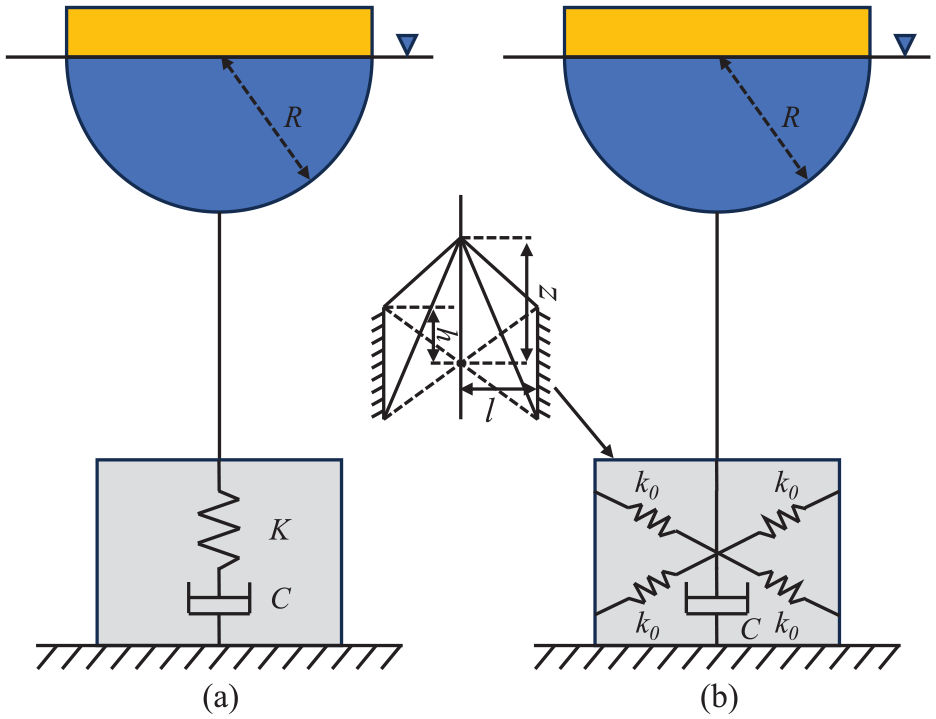
Schematic diagram of an oscillating-body hemispherical WEC with: (a) a linear PTO device and (b) a nonlinear PTO device.
The oscillating-body WEC only has the heave DoF
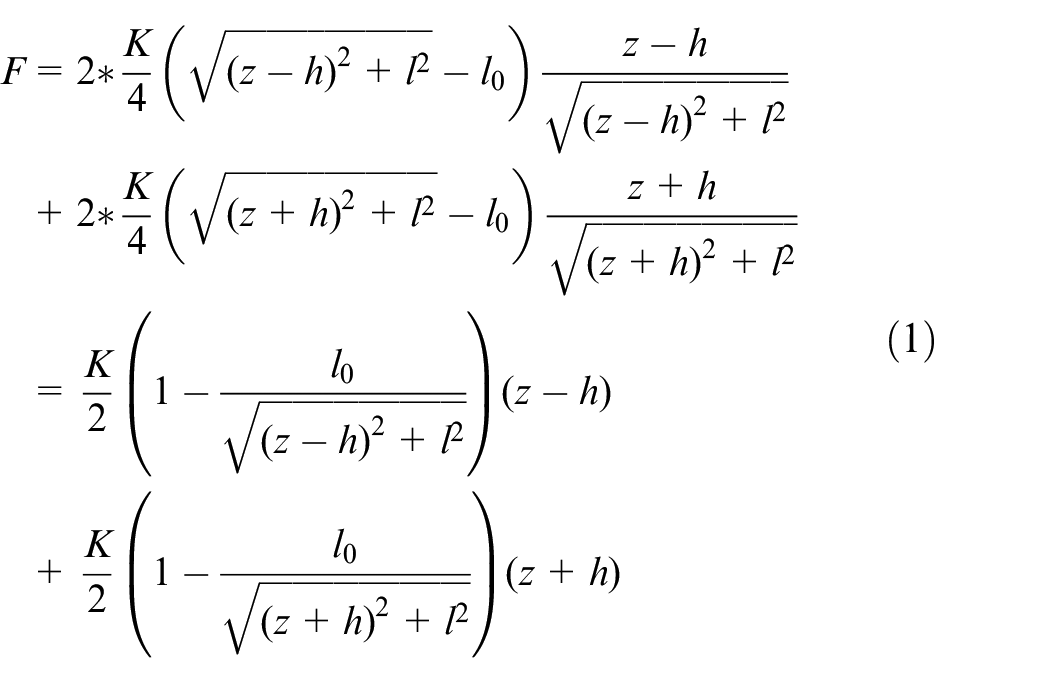
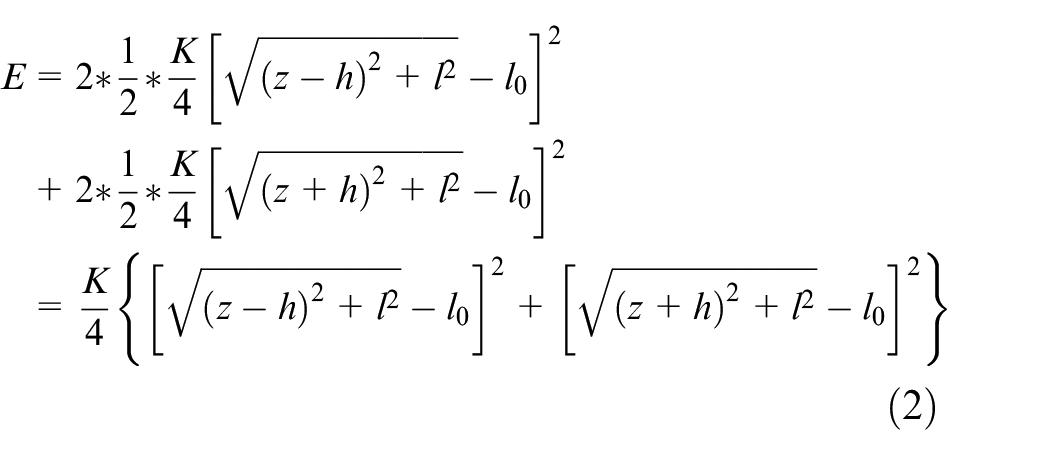
In the present study, a nonlinear parameter
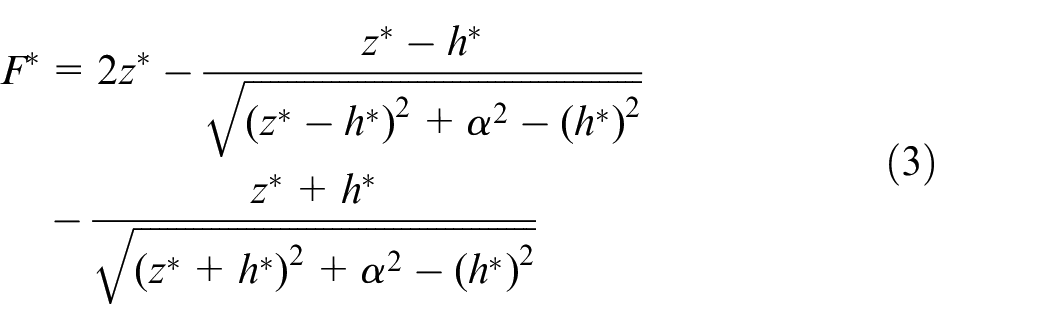
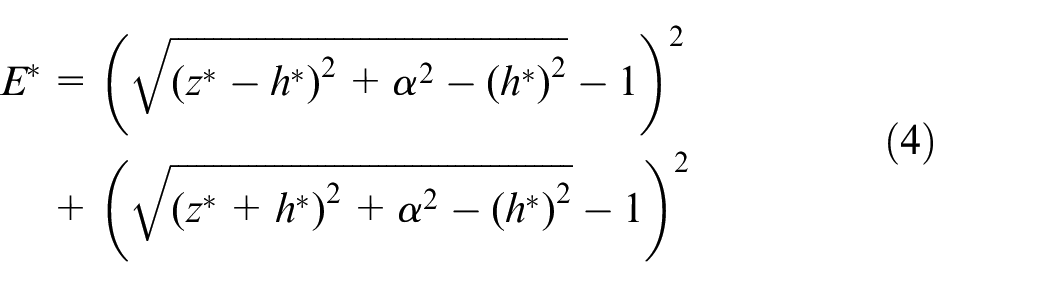
where
According to equations (3) and (4), Figure 2 shows a diagram of the potential energy and restoring force of the bistable PTO device versus the heave displacement with a dimensionless form. Since the focus of the present study is to explore the energy conversion of the WEC with a bistable device, the nonlinear parameter
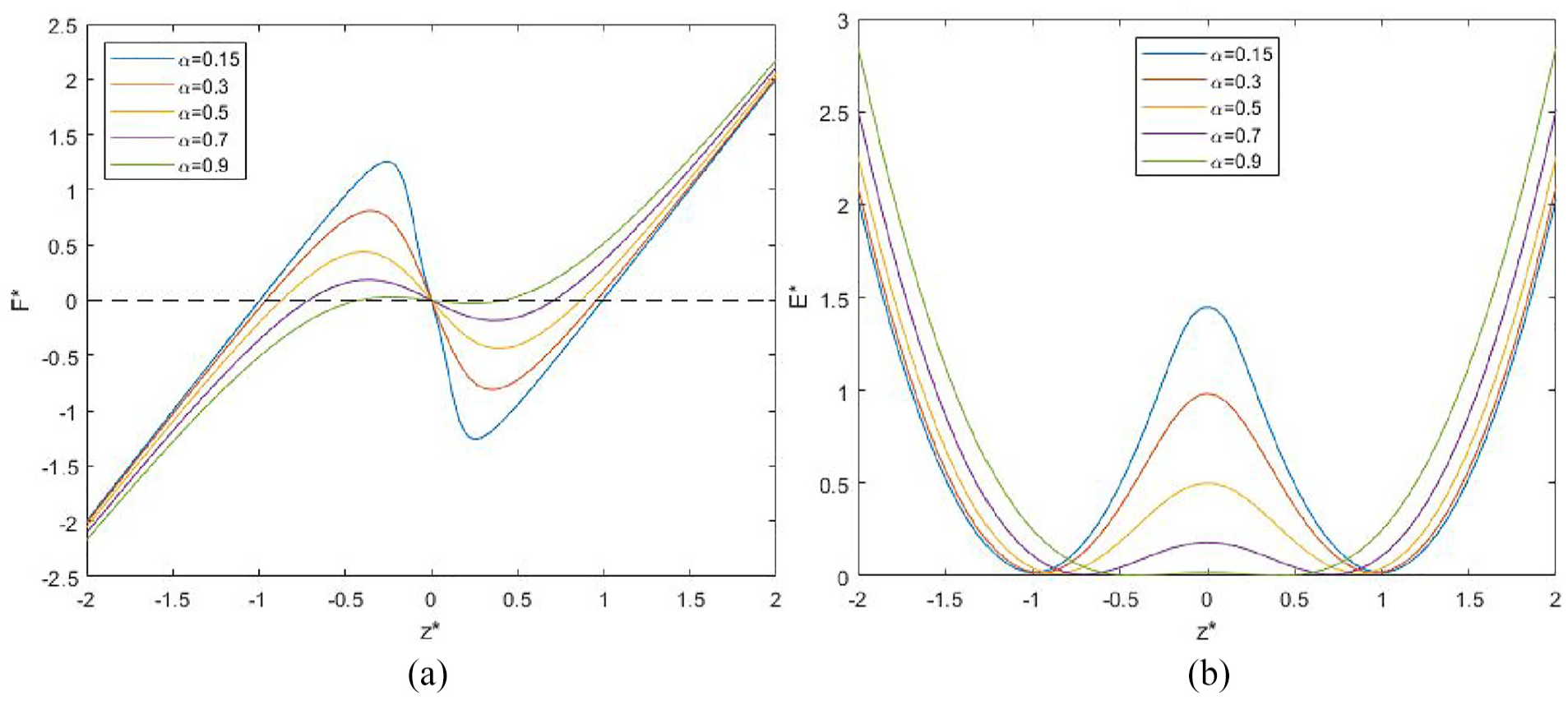
Dimensionless analysis with the heave displacement: (a) restoring force and (b) potential energy.
From Figure 2(a), it can be observed that for 0 <
For an oscillating-body WEC with a linear PTO device, its motion equation can be defined as,
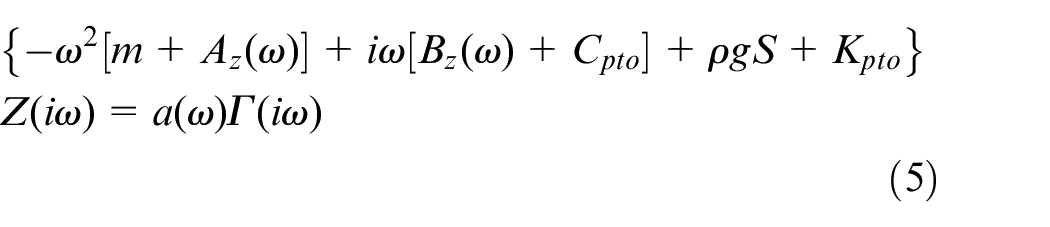
where

Evans
24
derived the mean captured power of the linear WEC at the circular frequency of
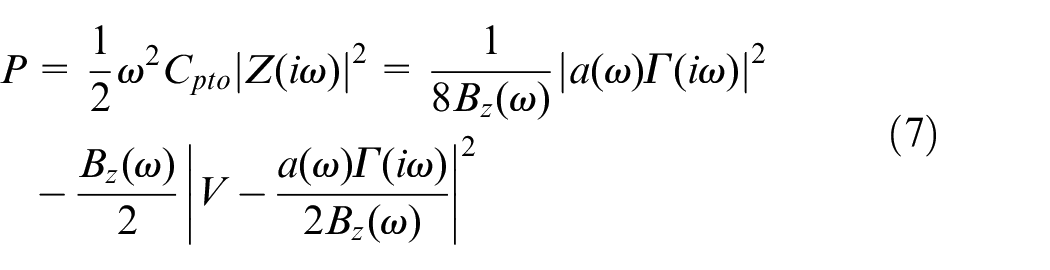
where


Equation (8) indicates that the optimal power absorption occurs at the resonant condition. Equation (9) suggests that to absorb the maximum power,
In the present study, the irregular waves are simulated through the JONSWAP spectrum, which is expressed as, 26
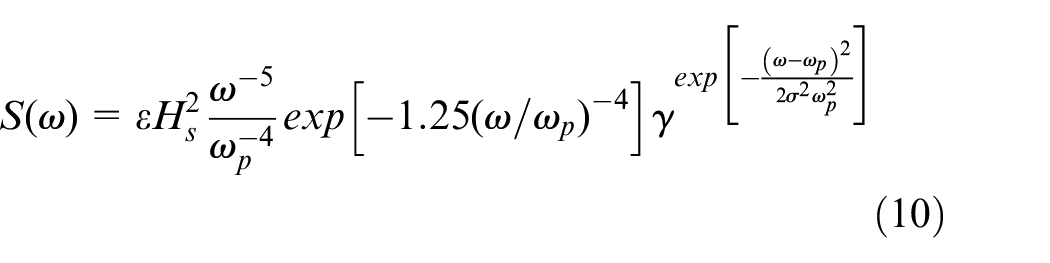
where

And

Furthermore, the irregular wave consists of multiple regular components. Wherein, the amplitude of the

where
Therefore, the wave excitation forces of the WEC buoy under irregular wave condition are expressed as:

where

The frequency-domain simulation is not appropriate for the analysis of the nonlinear systems under irregular wave conditions. Therefore, the time-domain simulation is utilized to analyze the performance of an oscillating-body WEC with the snap-through device. The heave motion equations of the nonlinear and linear WECs can be formulated as equations (16) and (17), respectively 28 :
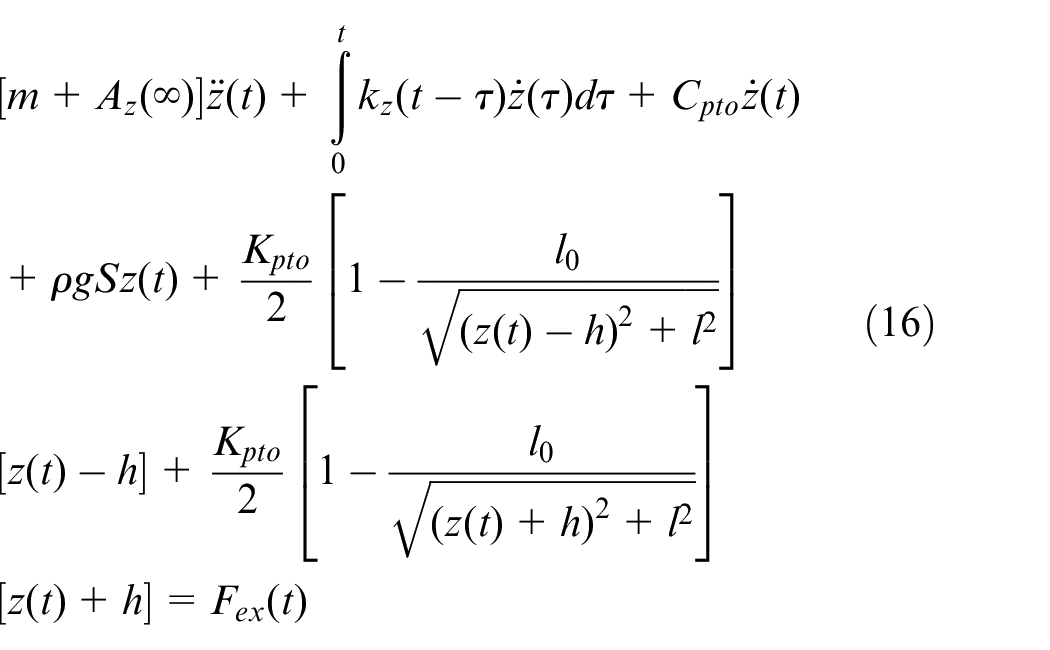
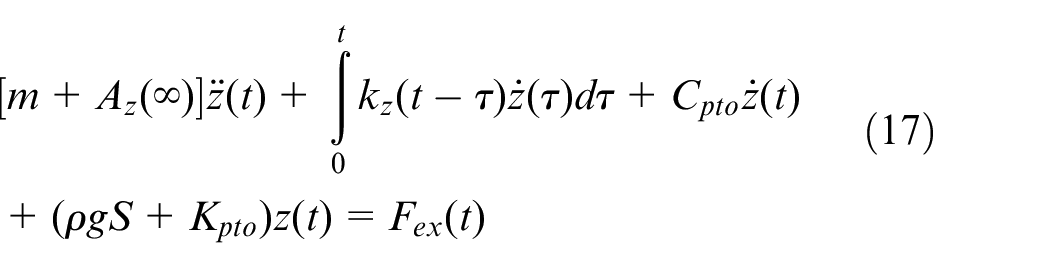
where

Before solving equations (16) and (17), the trapezoidal method is adopted to discretize the integral part,
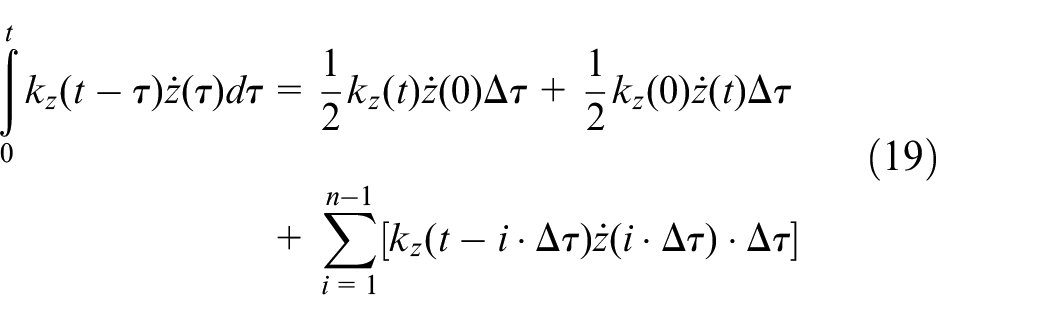
where
Then, equation (19) is substituted into equations (16) and (17), respectively,
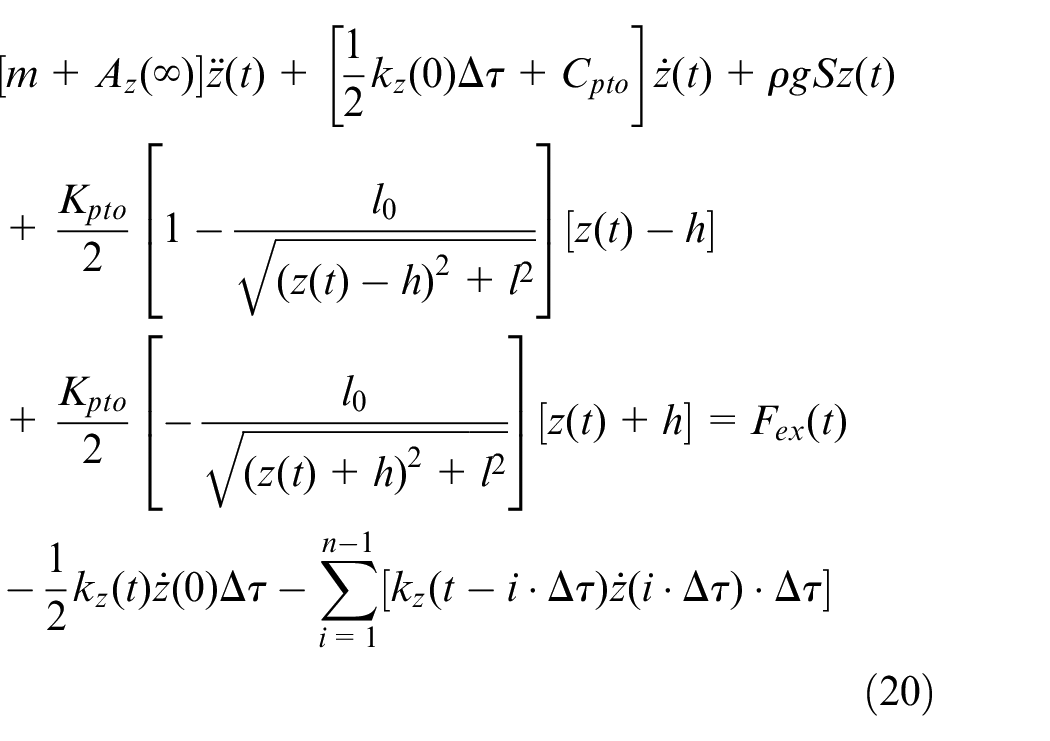
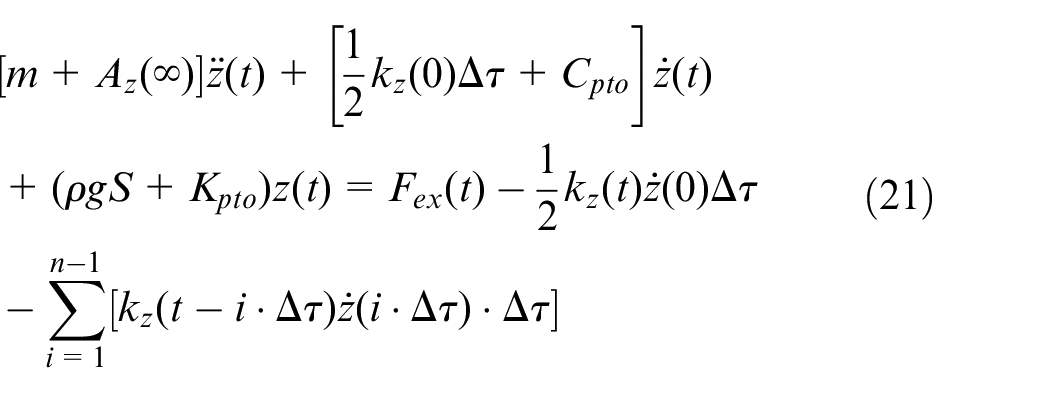
For the convenience of solution, equations (20) and (21) are organized as:
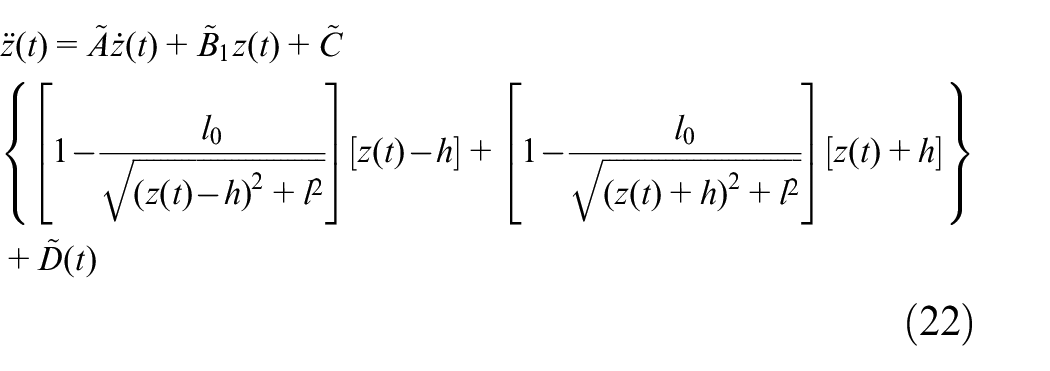

where,




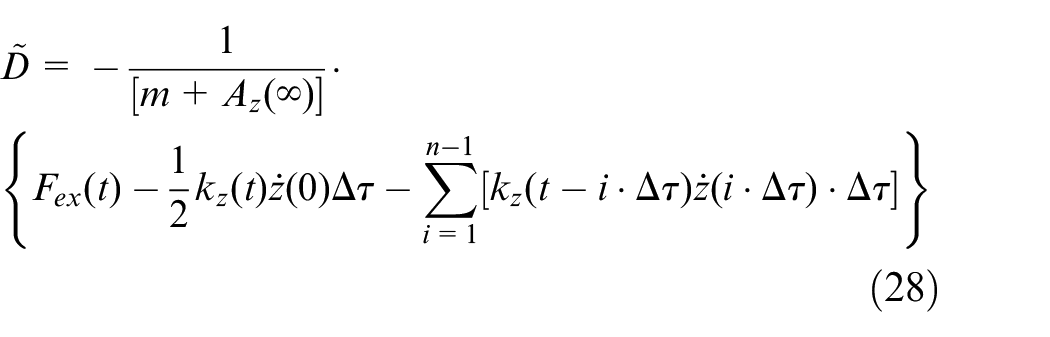
Furthermore, assuming
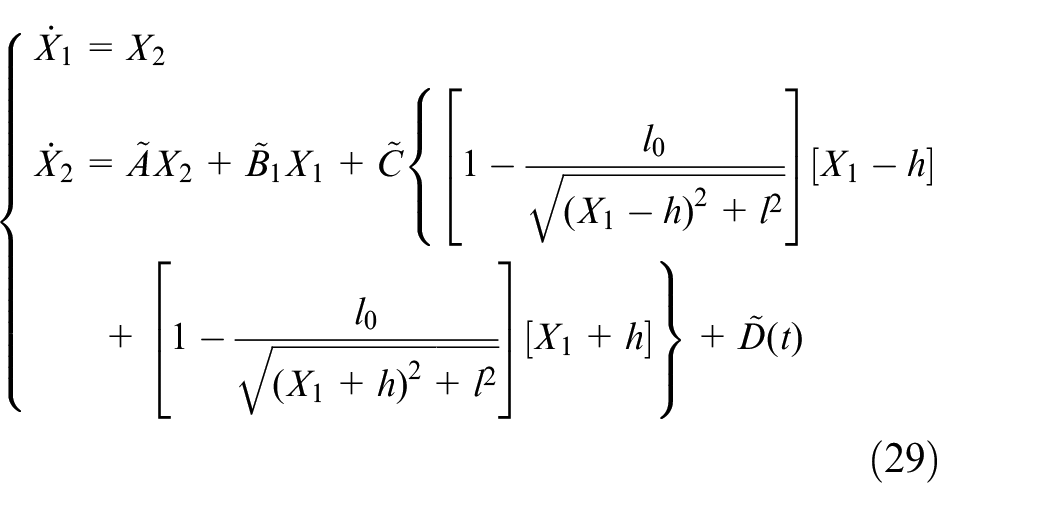

Finally, due to the fact that equations (28) and (29) are the first-order differential equations, they could be resolved with the fourth order Runge-Kutta method. After solving the motion equations of linear and nonlinear WECs, the mean captured power can be derived as,

where
The present study is conducted with AQWA and MATLAB. In AQWA, the linear potential theory 29 and boundary element method (BEM) 30 are utilized to calculated the hydrodynamic coefficients of the buoy. In MATLAB, the motion equations of the linear and nonlinear WECs are firstly resolved, and then their captured power is obtained.
Validation of the WEC buoy’s hydrodynamic model
To make the present study reliable, the validation of the WEC buoy’s hydrodynamic model is carried out. The Buoy’s surface is discretized into 18,024 panel elements, which is then simulated in the frequency-domain module of AQWA. First of all, the mesh convergence of the WEC model can be verified with the Near-field and Far-field methods.
31
As shown in Figure 3, the surge steady drift forces agree well under these two methods. Then, Figure 4 illustrates the Buoy’s hydrodynamic coefficients in the heave DoF, including the wave excitation force, radiation damping and added mass. Hulme
32
presented the results of the latter two objects of the heaving hemispherical buoy under the deepwater condition. The results of the wave excitation force are obtained based on the radiation damping and Haskind’s relation. It can be inferred from the figure that the hydrodynamic model of the buoy is validated. Furthermore, based on equations (8) and (9), the frequency-domain simulation obtains the Buoy’s natural frequency and the optimal damping (
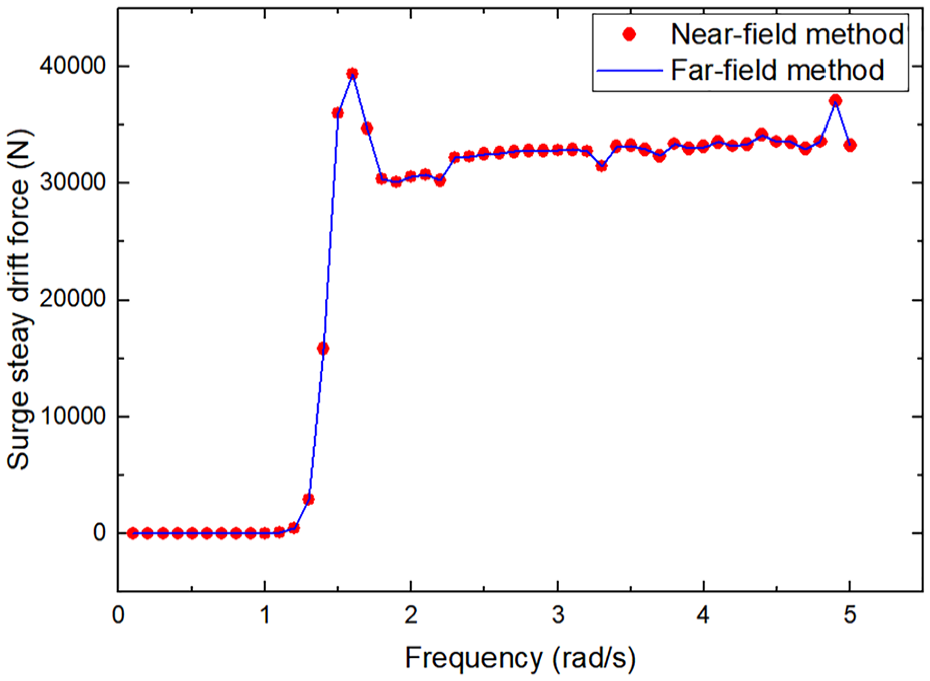
Comparison of the surge steady drift forces between the near-field and far-field methods.
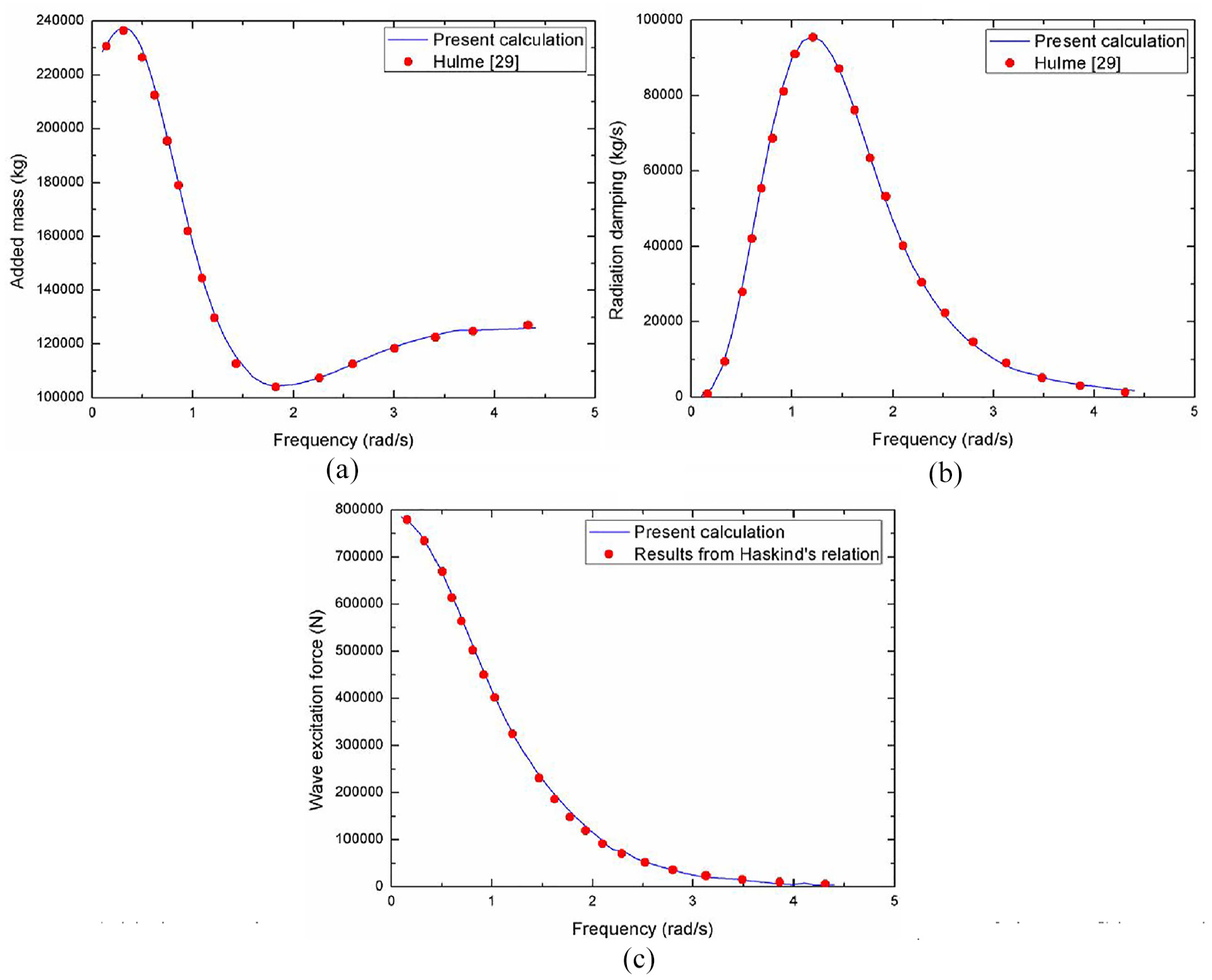
(a) Added mass, (b) radiation damping, and (c) wave excitation force coefficients of the WEC buoy with the heave DoF.
Results and discussions
The time-domain approach is employed to analyze the performance of a linear WEC and a nonlinear WEC with the bistable PTO device. Then a parametric analysis of the energy conversion of the nonlinear WEC is conducted, with respect to the nonlinear parameter
Nonlinear parameter
The nonlinear parameter
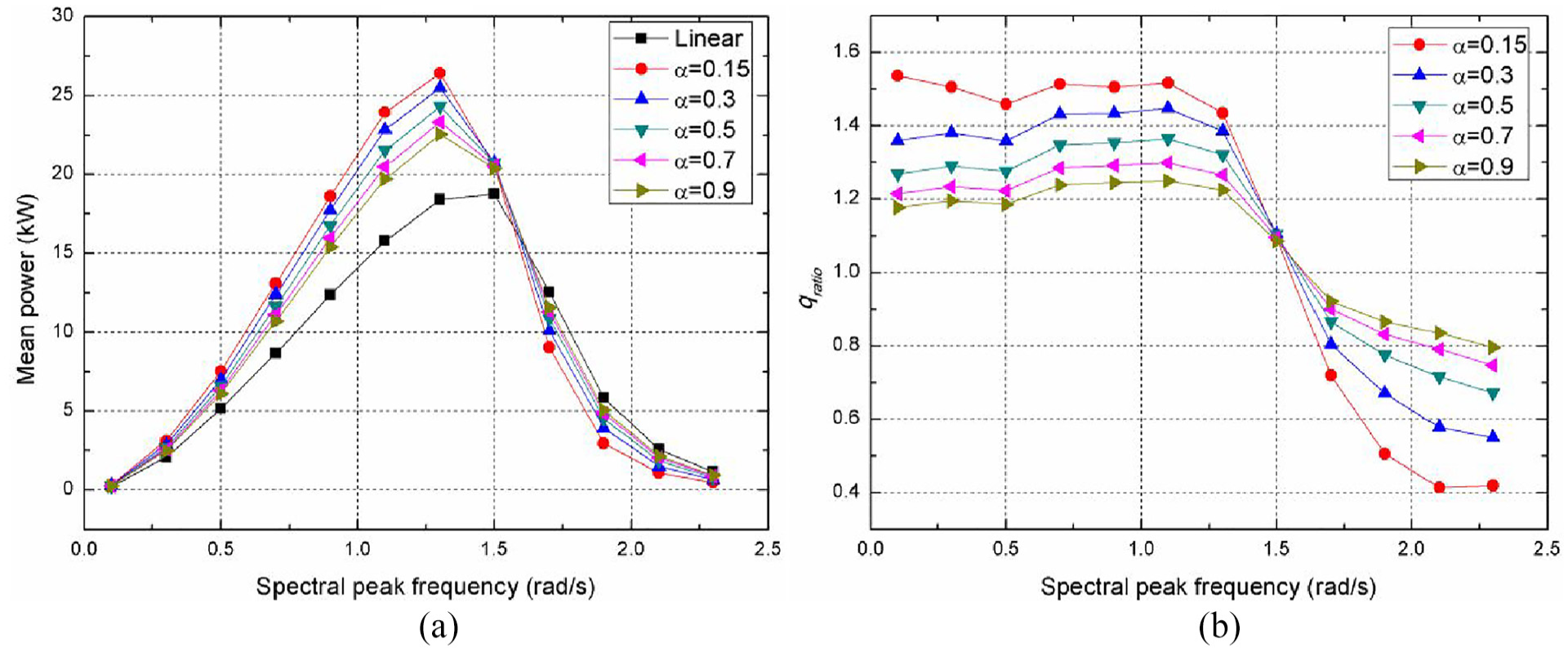
Power absorption performance of linear and nonlinear WECs: (a) mean power and (b)
Figure 5(a) shows that the linear WEC captures the most power when
Significant wave height
When the airy wave theory is utilized to analyze a linear WEC, the captured power has a proportional relationship against the square of wave amplitude or height. The irregular waves are obtained by the superposition of multiple regular components, indicating that the captured power of the linear WEC also shows proportionality against
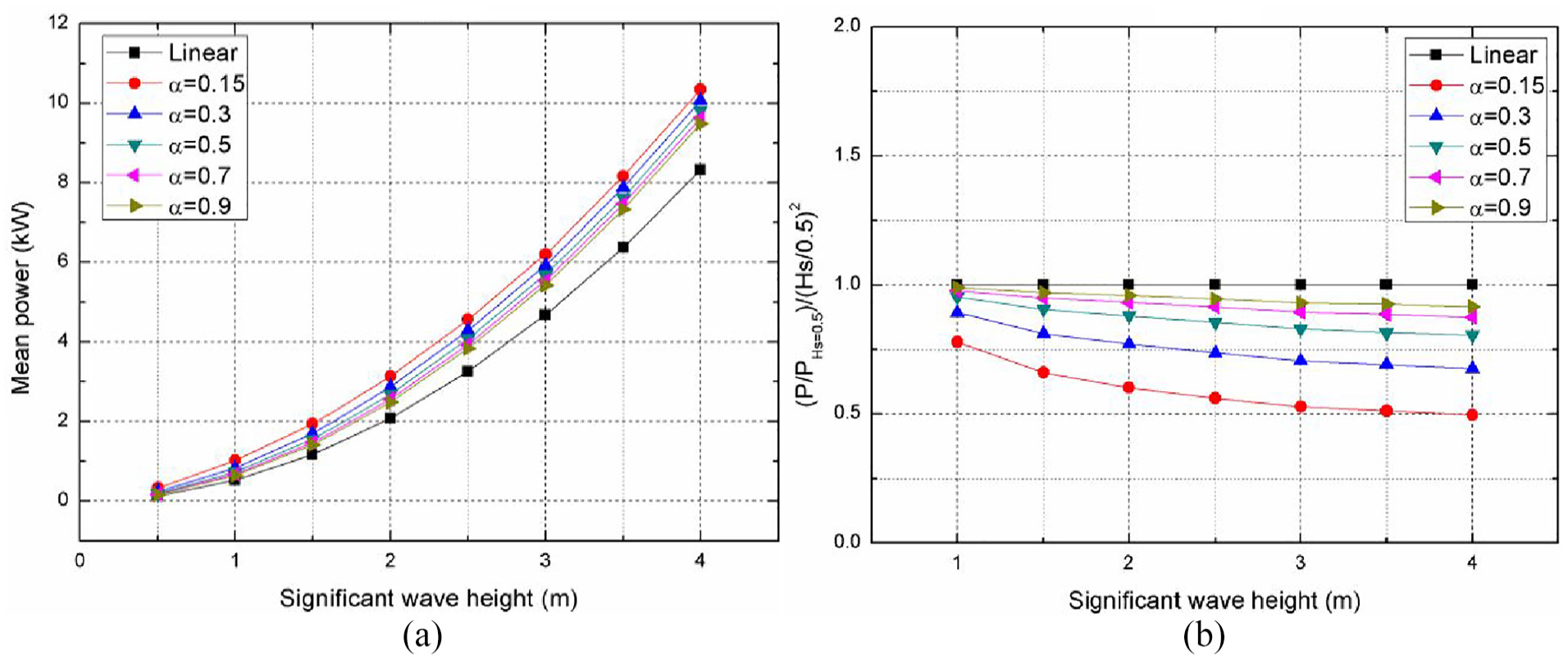
Power absorption of linear and nonlinear WECs under various
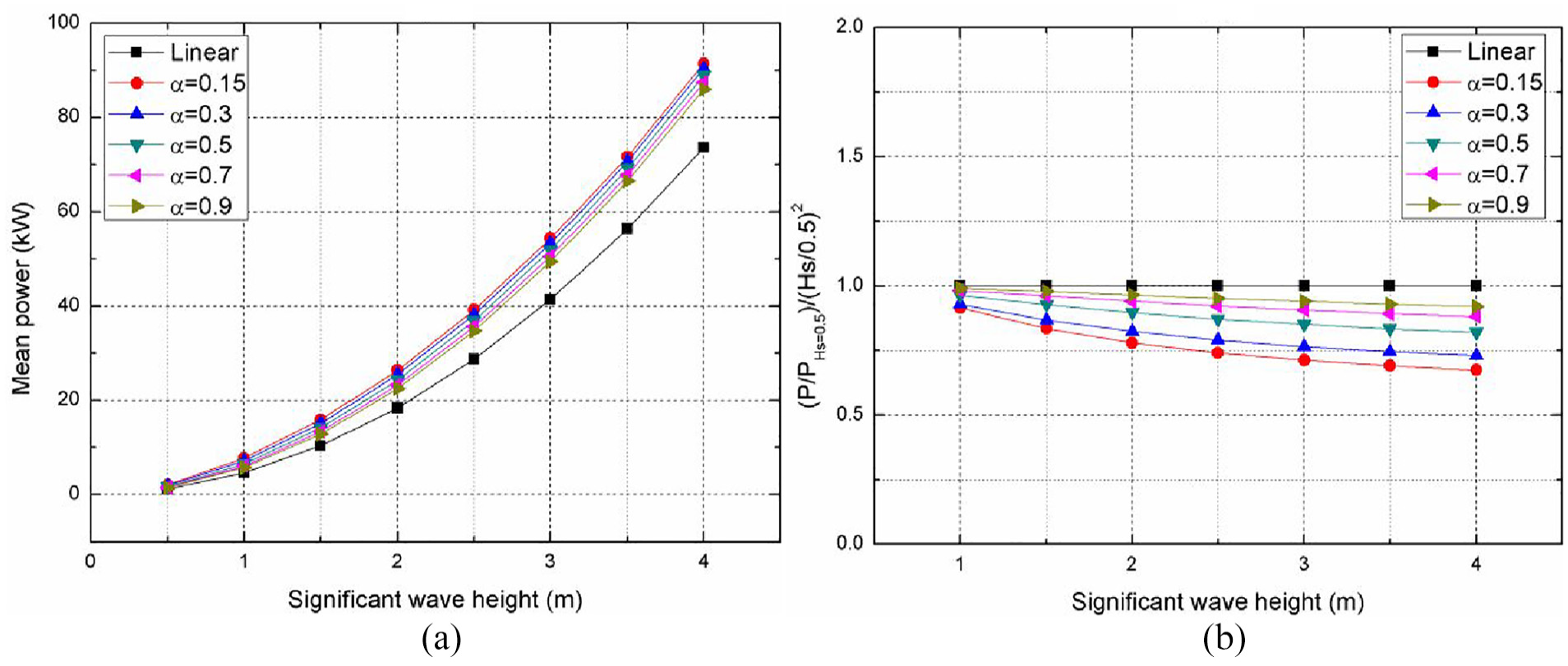
Power absorption of linear and nonlinear WECs under various
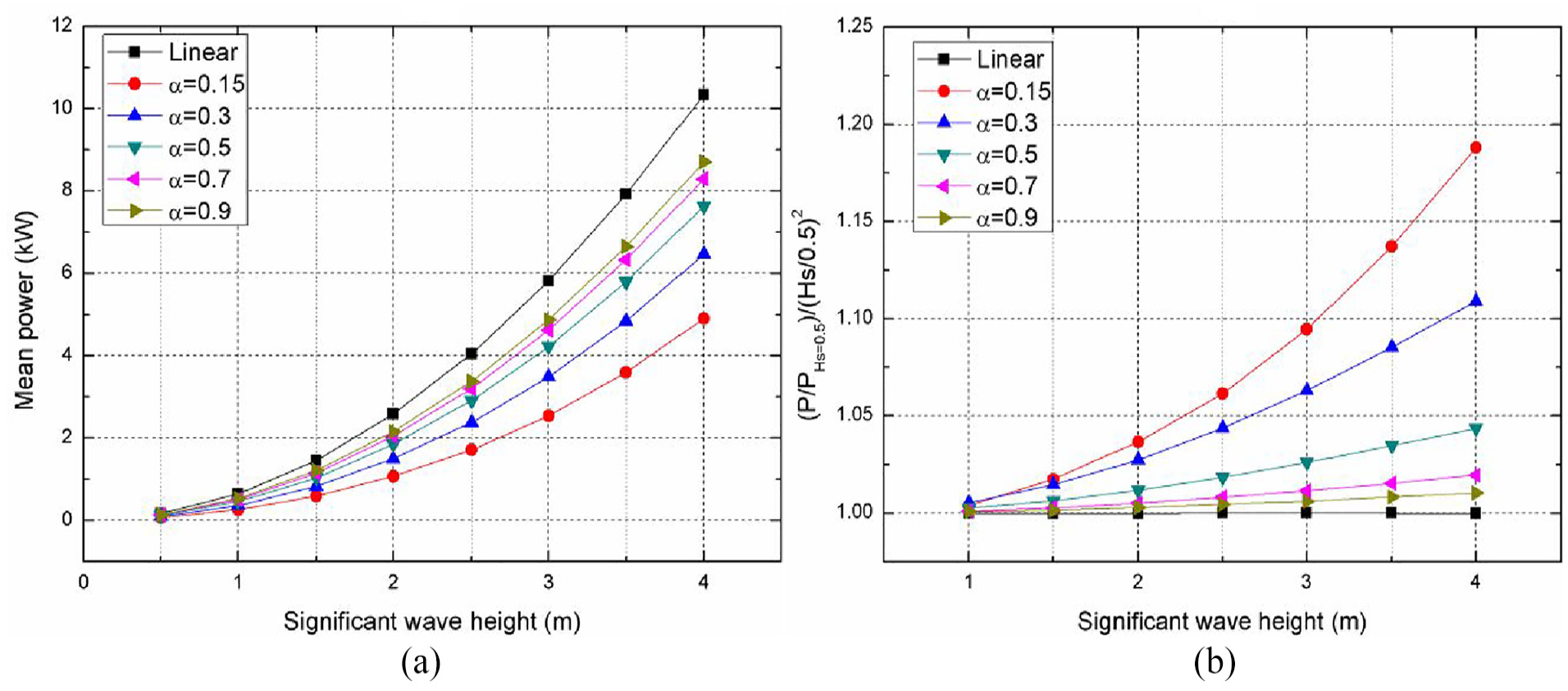
Power absorption of linear and nonlinear WECs under various
The relationship between the absorbed power of the WEC with snap-through system and the square of
Original length
of the spring
As indicated in Section 2, the negative stiffness of the WEC with snap-through device is dependent on the nonlinear parameter
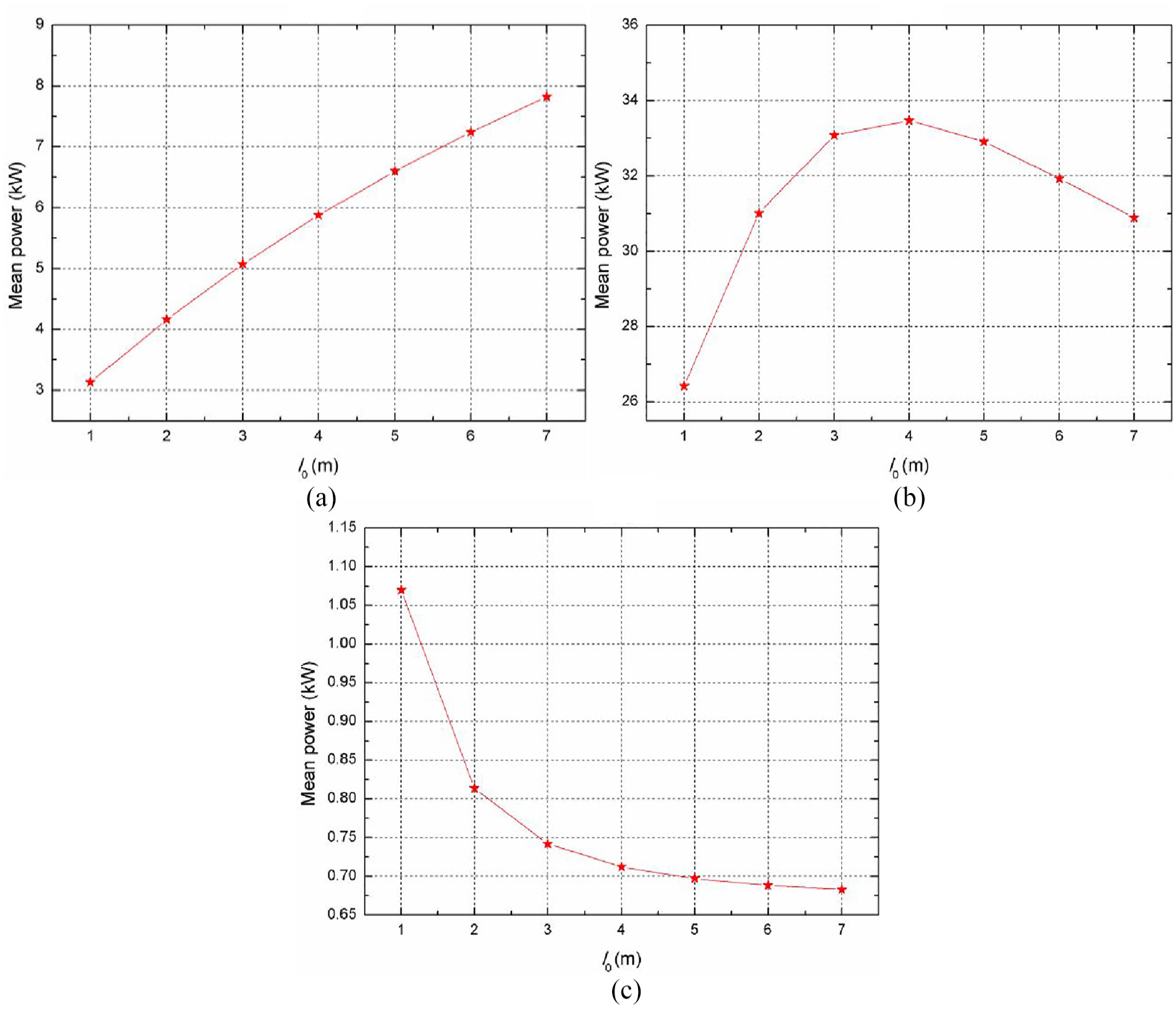
Mean absorbed power of the nonlinear WEC with various
From Figure 9, it can be observed that the variation trend of mean absorbed power of the nonlinear WEC regarding the spring’s original length
Oblique distance
of the spring
From Figure 9, it can be inferred that the spring’s original length
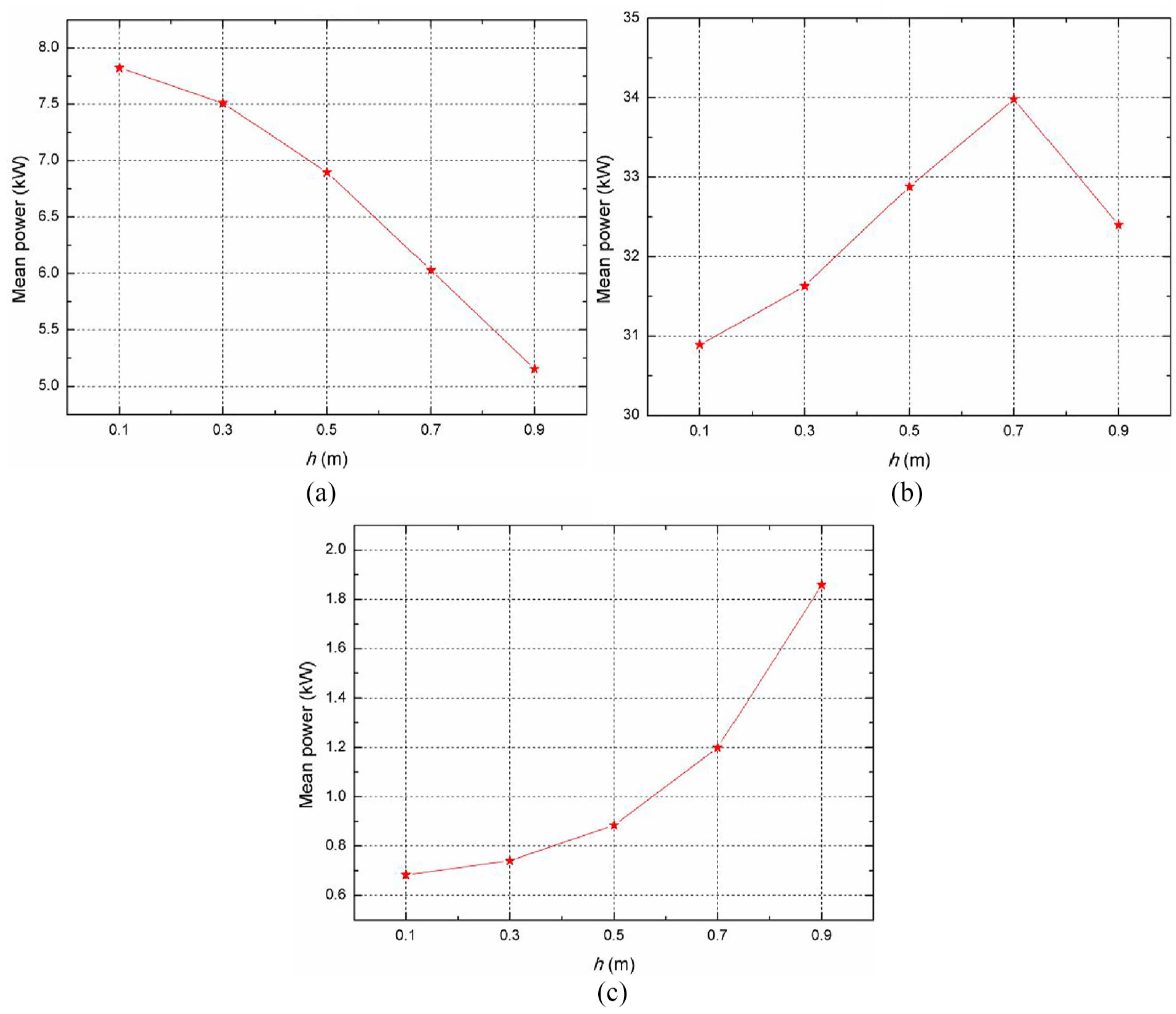
Mean power absorbed by the nonlinear WEC with various
From Figure 10, it can be seen that regarding these three spectral peak frequencies, the oblique distance affects the power absorption performance in different ways for the WEC with negative stiffness. The mean captured power of the WEC has a decreasing trend with the value of
PTO damping coefficient
The PTO damping coefficient adopted in the above analysis is the optimal for the linear WEC under the regular waves. However, its impact on the nonlinear WEC possibly differs from those on the linear one. Therefore, multiple damping coefficients (0.5
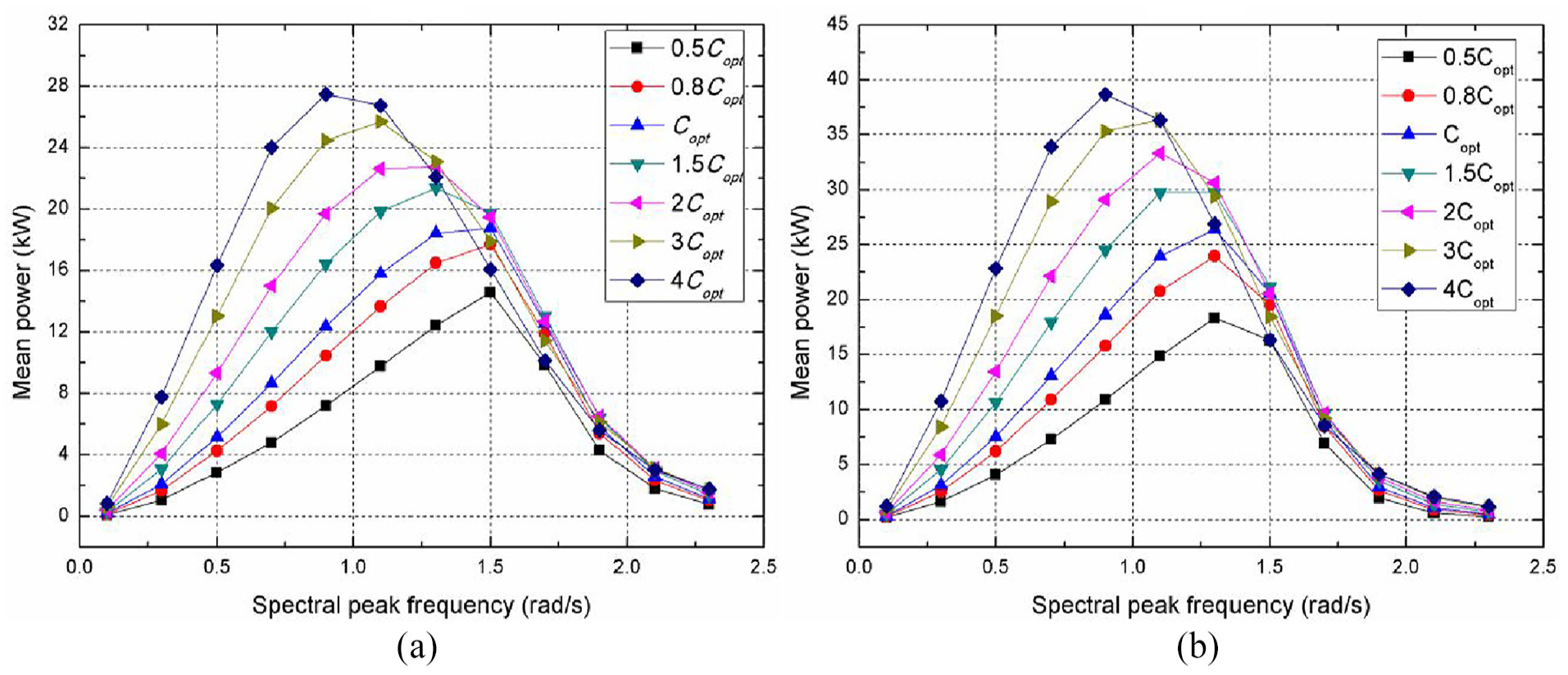
Mean absorbed power of the linear and nonlinear WECs with various PTO damping coefficients: (a) linear and (b)
From Figure 11, it is inferred that the variation of PTO damping coefficient results in a similar impact on the power absorption of the linear and nonlinear WECs. The optimal frequency remains constant with a value of 1.5 rad/s, when the PTO damping coefficient is not larger than
Conclusions
The present study focuses on the energy conversion performance of the oscillating WEC with a novel snap-through device under irregular waves. A parametric study on the nonlinear WEC is conducted concerning the nonlinear parameter
(1) The WEC with the snap-through system shows a better power harvesting performance than the linear WEC, under the irregular waves with
(2) The nonlinear WEC with a smaller nonlinear parameter
(3) In terms of
(4) The original length
(5) The impact of the PTO damping coefficient on the power harvesting of the WEC with snap-through system mirrors that on the linear WEC. With the increase in the PTO damping coefficient, the maximum power of the WEC becomes larger and the optimal frequency decreases.
Finally, there is no experimental data available to compare with the numerical results of this study. Therefore, some experimental tests will be conducted on the proposed bistable WEC in the near future. Meanwhile, the WEC shape will also be optimized to improve the power output.
Footnotes
Acknowledgements
The first author would like to thank Siqi Wu for the continuous support on his research.
Declaration of conflicting interests
The author(s) declared no potential conflicts of interest with respect to the research, authorship, and/or publication of this article.
Funding
The author(s) received no financial support for the research, authorship, and/or publication of this article.
