



Abstract
The radiation noise generated by cavitation has been extensively studied for underwater target recognition, but there are few reports on the related mechanism of the cavitation noise of ship propellers that attract attention in the field of hydroacoustics. In this paper, the RANS equations of the underwater propeller wake field are constructed, and numerically solved by combining the cavitation model and the turbulence model. The power spectrum is used to analyze the signal of the numerical calculation results of the propeller wake pressure. The feature estimation and extraction are carried out to obtain the characteristic values of the specific characteristic parameters. These eigenvalues not only reflect the flow field characteristics but also the geometric parameters and working conditions of the propeller. Therefore, two models are established around the relationship between them. Firstly, these eigenvalues are used for regression analysis in multivariate statistics to obtain a statistical model reflecting the characteristics of propeller cavitation wake. Secondly, the relationship between the propeller skew angle and the low frequency linear spectrum amplitude is obtained by using the power spectrum diagram. In this paper, the processing results of the experimental data of the cavitation water tunnel with controllable parameters and the radiation noise data of the actual target are used to verify and supplement each other with the processing results of the feature model.
Keywords
Introduction
Rotating ship propeller, the blade tip speed is often tens of meters per second. This high-speed rotation causes obvious local pressure drop in the seawater around the blade, which makes the blade tip, and even the blade surface near the hub often have strong cavitation. A simple acoustic ship model was proposed to study the physical process of cavitation noise generation by Wittekind and Schuster. 1 The tip vortex cavitation noise, including the primary and fully developed vortex cavitation and surface cavitation, was studied by using the hydrofoil experiment with elliptical plane shape. 2 In addition, the propeller works in the wake field of the ship, and the hull lines and appendages are not centrally symmetric, so the wake field of the ship has obvious circumferential inhomogeneity. In this way, the relative velocity and pressure of the periodic rotating blade and its contact with the non-uniform wake have periodic changes, so that the intensity of cavitation also occurs corresponding periodic fluctuations. Finally, the rotation of the blade near the propeller area of seawater also caused the blade frequency hydrodynamic pressure pulsation field. Under the action of this fluctuating pressure, a large number of bubbles in this region make forced volume pulsation with the periodic change of flow field environmental pressure. Therefore, the collapse and rebound of a large number of transient cavitation in the propeller blade area cause strong radiation noise, which has the characteristics of high frequency continuous spectrum. With the rotation of the propeller, the periodic forced vibration of a large number of bubbles also causes radiation noise and has the characteristics of low frequency linear spectrum. The pressure fluctuation characteristics of wake field and cavitation noise are also modulated by the propeller rotation beat, and the low frequency linear spectrum characteristics generated by the two are similar.
Radiation noise from propeller cavitation has been studied extensively in recent years.3–8 Sharma et al. 3 was verified that the leading type of cavitation was tip vortex cavitation, and accompanied by leading edge suction side plate cavitation. The noise generated depends on the advance coefficient, cavitation number, propeller geometry and other parameters. Sakamoto and Kamiirisa 7 studied the complementarity between viscous CFD and semi-empirical formula, proposed and verified a practical calculation method for predicting cavitation noise of near-field propeller.
Experimental measurement noise has been used to study propeller cavitation, but due to many limitations of the experiment itself and limited available data, these studies still cannot fully meet the needs of practical engineering design. Therefore, many researchers prefer to use numerical methods to study the cavitation flow around the propeller. The numerical method with solving Reynolds Average Navier–Stokes (RANS) equations were one of the common methods to predict propeller cavitating flow.9–13 Zhu 9 has proved that there was a correlation between the pressure numerical signal of the simulated wake field obtained by the RANS equation and the actual measured noise signal. And the basic characteristics of the actual propeller noise can refer to the basic characteristics of the pressure numerical signal of the wake field. Wu et al. 12 carried out numerical study on cavitation flow around a marine propeller to explore the internal relationship between sheet cavitation and radiation noise. Bai et al. 13 used the Ffowcs Williams-Hawkings (FW-H) equation to numerically study the cavitation noise induced by the sheet cavity and the tip leakage vortex cavity (TLVC), and obtained the correlation between their radiated noise. Wang et al. 14 and Cheng et al. 15 proposed to solve the Rayleigh-Plesset equation combined with Euler-Lagrangian method for numerical calculation, and achieved good results.
Propeller cavitation has become a research hotspot in the field of fluid mechanics. There are many related works, but the radiation noise caused by cavitation was rarely involved. Although some scholars used statistical theory to study the cavitation noise of propeller, they did not combine the specific characteristics of propeller. And because the cavitation formation mechanism has not been fully revealed, the calculation of propeller cavitation noise based on spherical cavitation theory is difficult and challenging. Based on the work of Zhu et al.,9,10,17 the further research in these paper were carried out to study the relationship between propeller cavitation noise and propeller operating parameters.
Theories and models
The characteristics of propeller wake include the characteristics of flow field structure and important physical parameters such as pressure pulsation in the flow field. The characteristics of wake field structure mainly include the distribution characteristics of axial velocity and vortex in multiple axial cross sections and longitudinal axial planes. Setting unsteady numerical calculation parameters of propeller cavitation wake in whole basin, and obtaining numerical calculation signal x(i) of propeller cavitation wake pressure fluctuation. The numerical calculation of propeller wake pressure pulsation using modern computational fluid dynamics professional numerical calculation software to build RANS equations of the underwater propeller wake field, and combined with the turbulence model and cavitation model to solve the RANS equations, so as to obtain the relevant information of the volume fraction of the vapor phase around the blade surface of the underwater propeller and the pressure pulsation in the wake field.
Constructing RANS equations
In this paper, the cavitation phenomenon of propeller was studied by using the vapor-liquid mixing uniform two-phase flow model method. The flow field was introduced into the cavitation model by the phase transition rate in the phase transition process. The flow field density is composed of the mixed two-phase flow of the vapor and liquid, which is a function of the volume fraction of the vapor phase. Assuming that the mass fraction of the vapor phase is

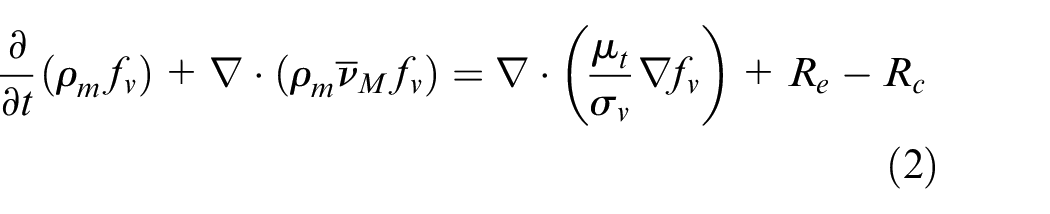
Where
The vapor-liquid mixture flow is taken as a flow, and then the governing equations can be written as the mass and momentum conservation of the mixture flow, such that

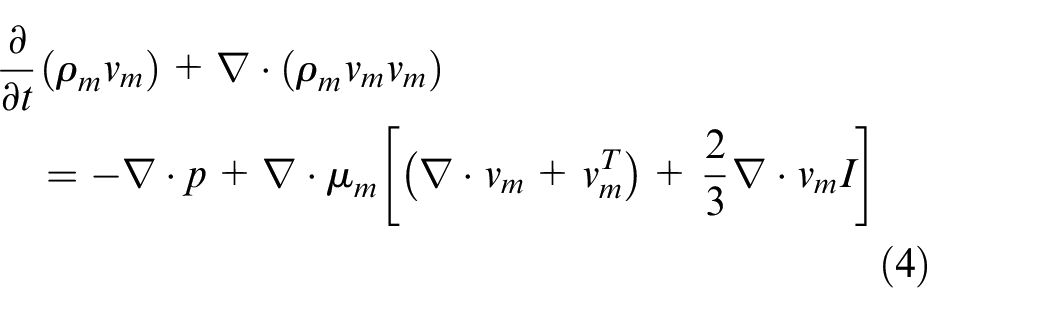
Where
Cavitation model

When pressure

Where
Turbulence model
When calculating the Reynolds-averaged Navier-Stokes equation, the turbulent model should be used to close the Reynolds stress term. As another important factor affecting the numerical results of cavitation flow, each turbulence model has different advantages for the simulation of propeller cavitation flow. Common turbulence models include the Standard
In the SST
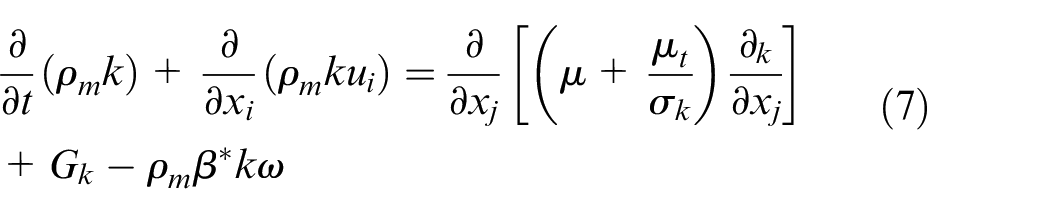
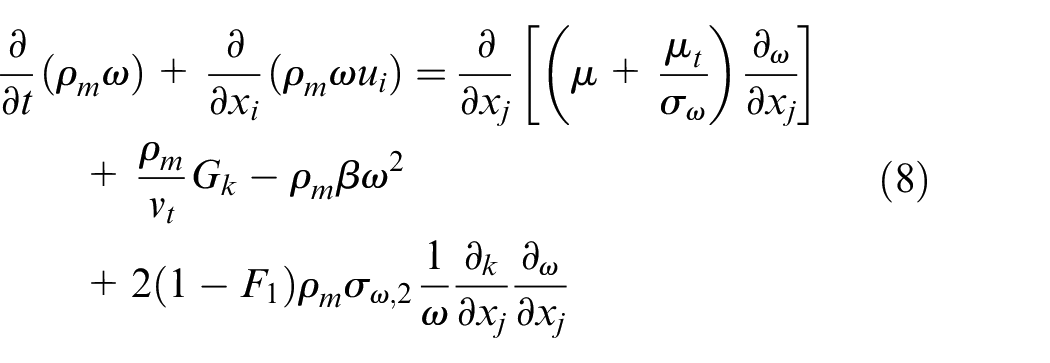
Where
Numerical calculation
Firstly, the flow grid around the propeller was established, and the number of grid cells is 5 million. Then the digital model of the propeller was imported into the GAMBIT meshing software for meshing, and the meshing method adopts the unstructured meshing method. Secondly, the mesh model was imported into CFD fluid calculation software, and then the initial conditions were input into CFD software, including inflow velocity
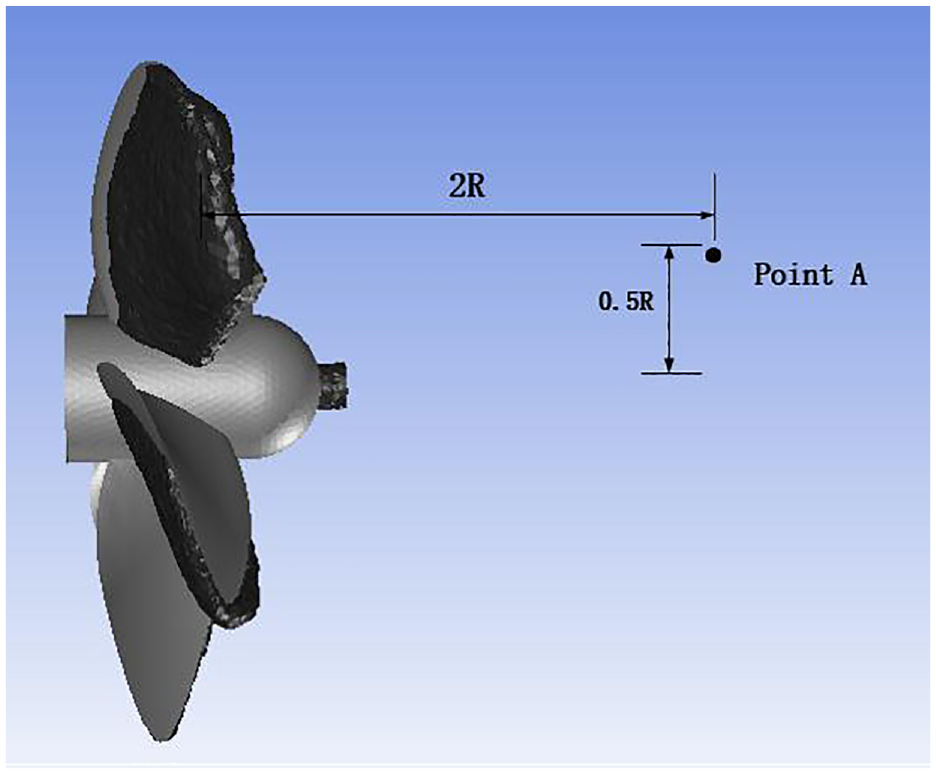
Pressure pulsation detection point.
In this paper, the types 4381, 4382, 4383, and 4384 propellers of the DTMB series were used, Figure 2 shows the geometric appearance of the four types of propellers and the cavitation of the propeller under the same cavitation conditions. And Table 1 shows some physical parameters of four types of propellers. Keep the propeller speed
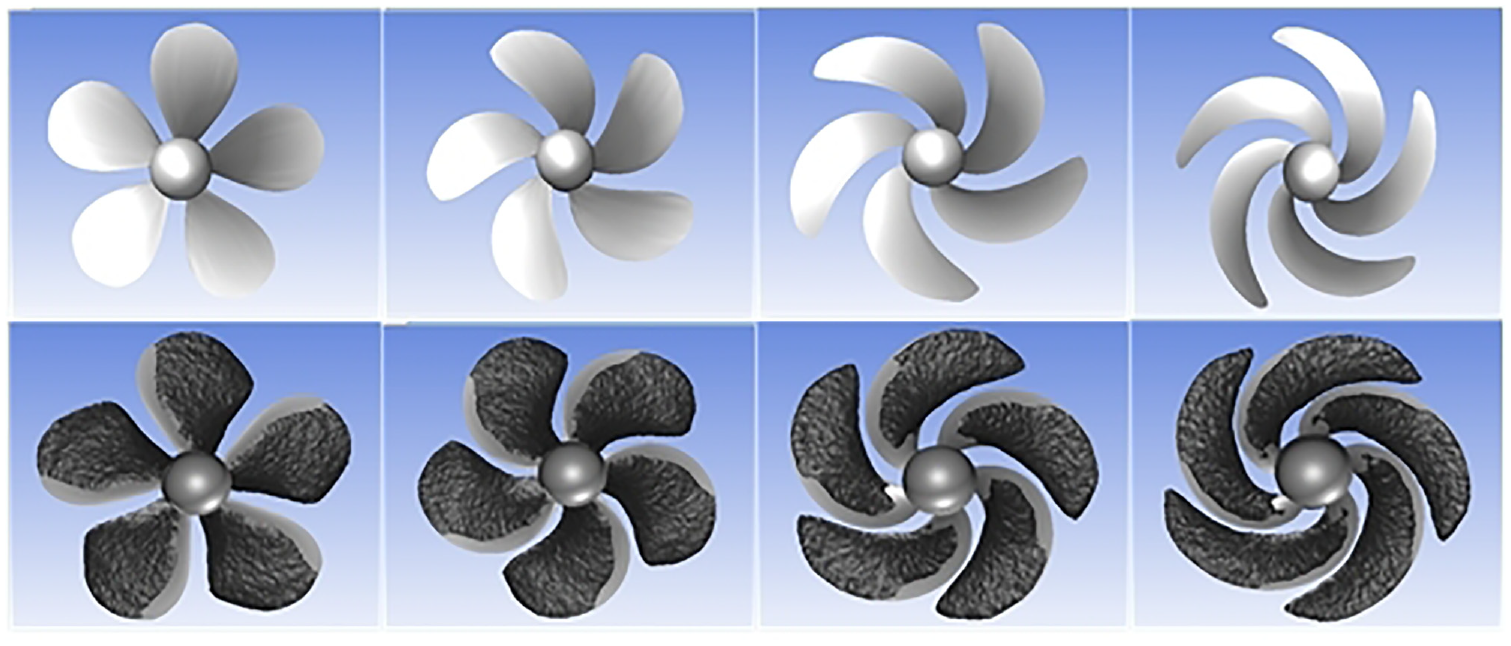
DTMB series propeller models.
DTMB series propeller geometric shape parameters.

The numerical calculation results (part of the data) of DTMB series propellers under two working conditions are shown in the pressure pulsation waveform at point A in Figure 3. The five wave crest curves regularly show the characteristics of five-blade propeller. The flow field in this region is also affected by hub vortex, tip vortex, and blade wake, and the characteristic information of wake field is significant and comprehensive. The pressure fluctuation signal also contains abundant spectrum information, which is related to propeller characteristic information.
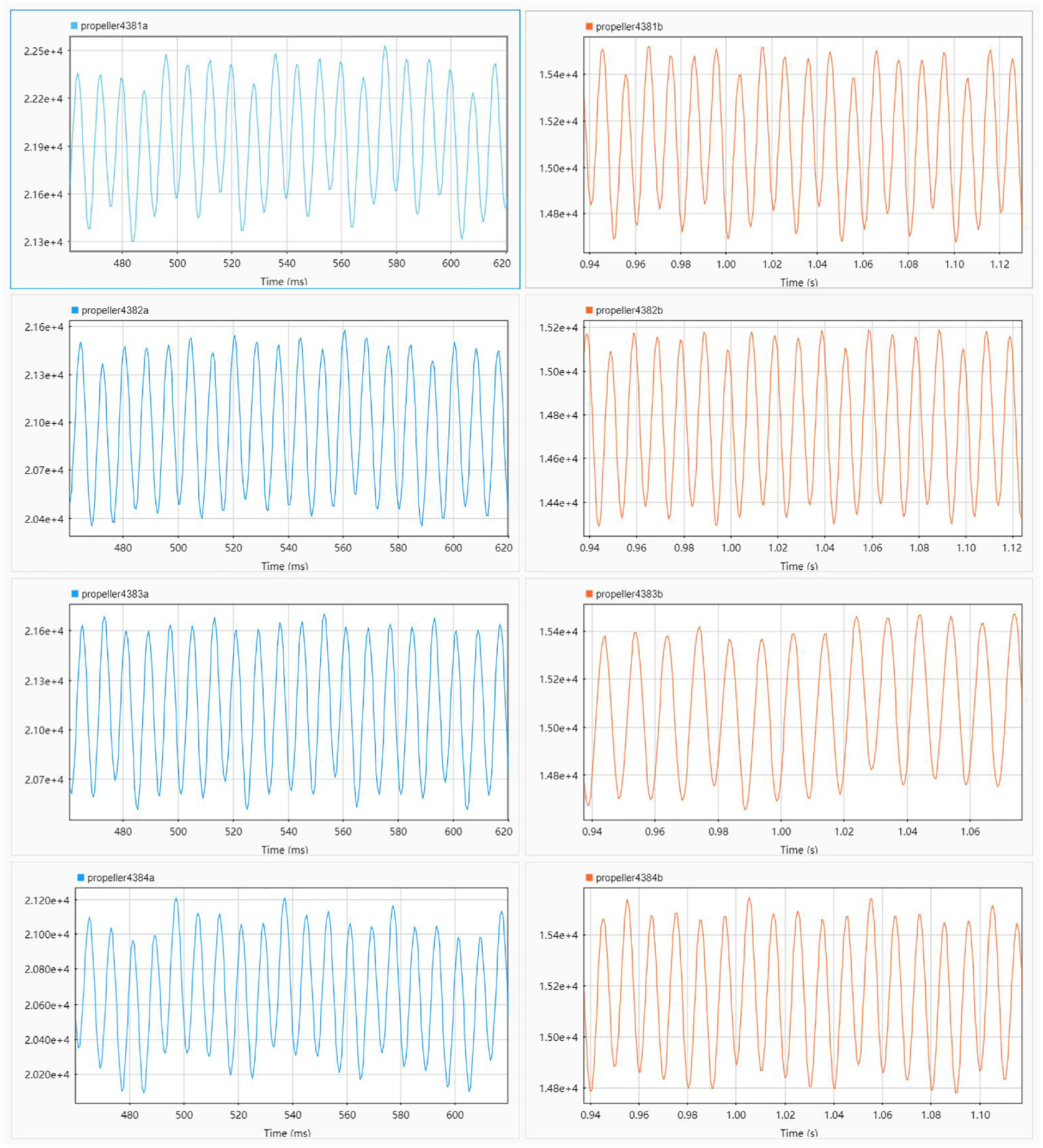
Pressure fluctuation waveform of point A.
Feature extraction
The dimensionless pressure pulsation value

Flow chart of periodic diagram method.
The power spectrum of periodic graphs is estimated as follows:

The demodulation spectrum adopts the absolute value method. The absolute value of the collected signal
The obtained pressure pulsation signal
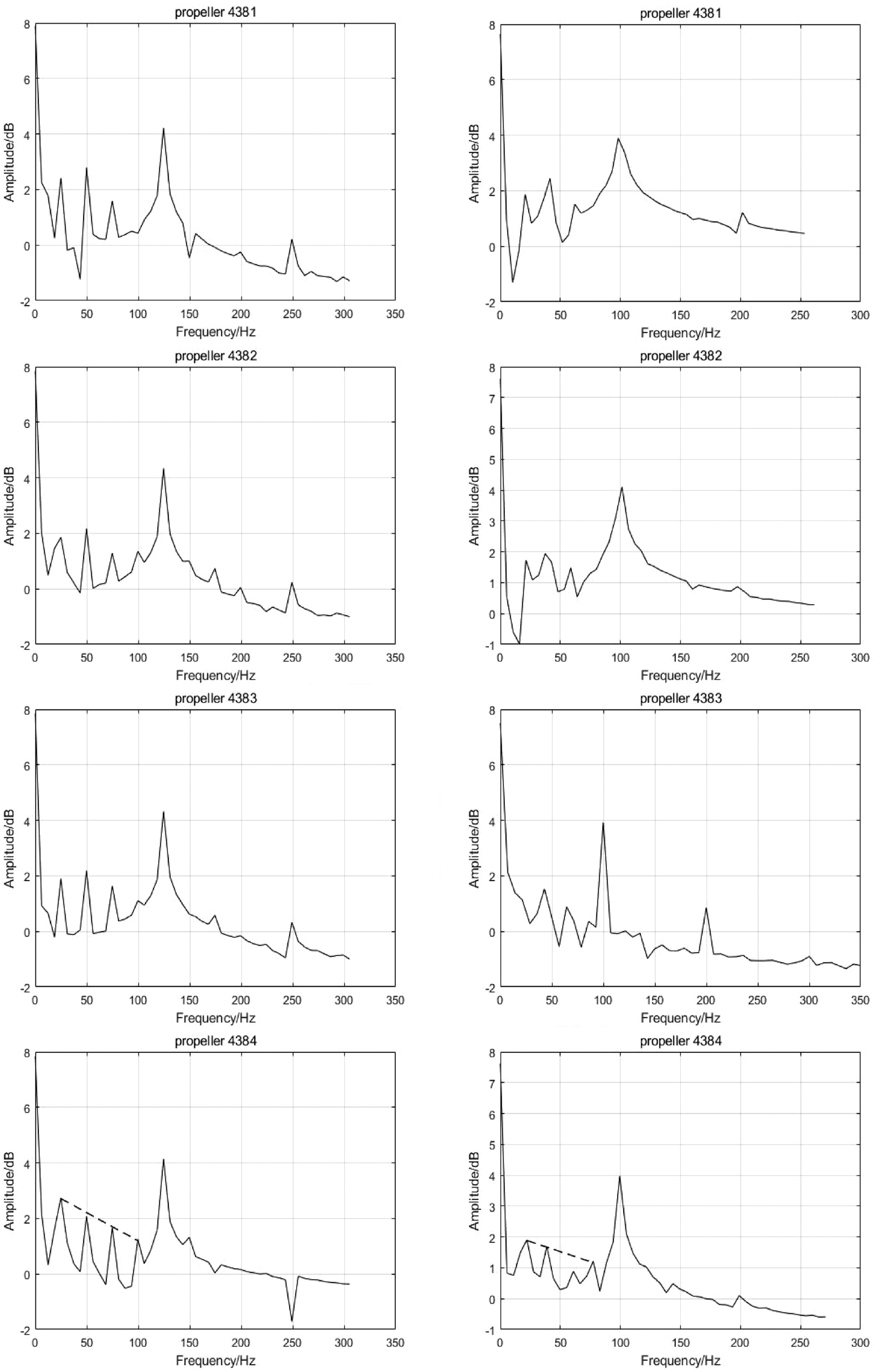
Power spectrum diagram.
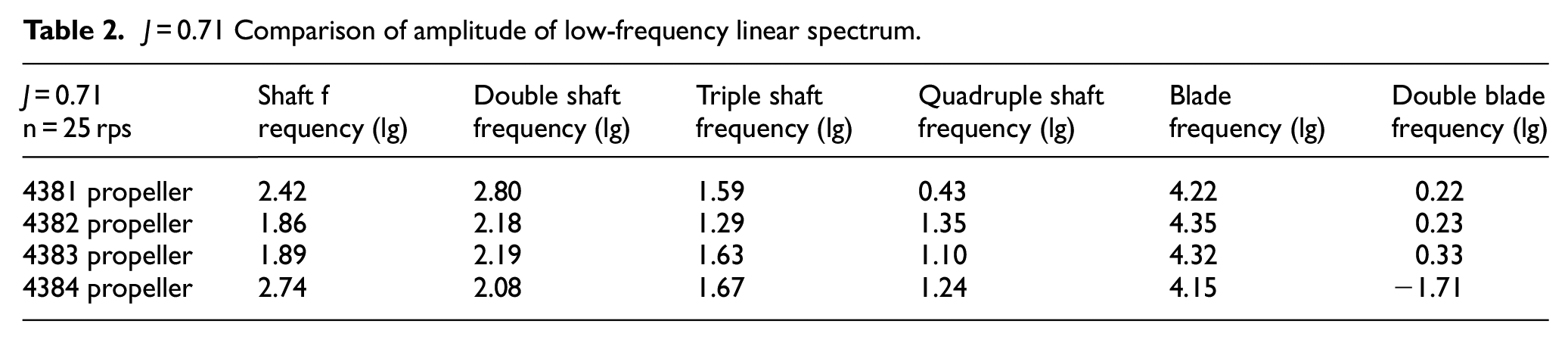
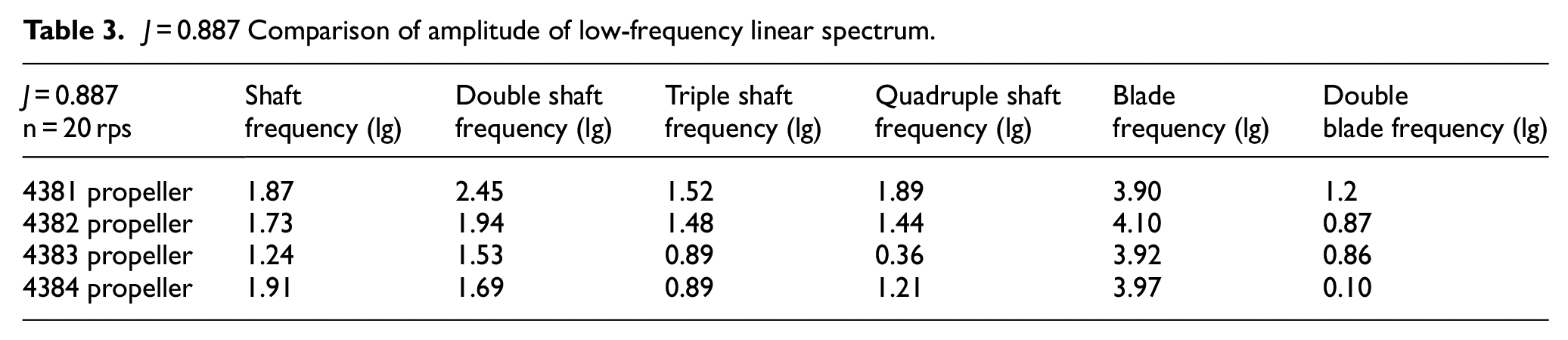
In this paper, the power spectrum of propeller cavitation under five advance coefficients (0.71, 0.789, 0.887, 1.014, 1.183) was analyzed. Tables 2 and 3 are the spectrum amplitude of pressure pulsation calculation signal line when the advance coefficients are 0.71 and 0.887. Through the analysis of the data, it is found that the amplitude of the linear spectrum of the double blade frequency changes significantly with the change of the propeller advance coefficient, while other shape parameters such as the angle and size of the propeller cannot see obvious changes, and the correlation is small. Then, the relationship model between the amplitude of the double blade frequency and the advance coefficient is analyzed. Table 4 shows the change of the linear spectrum amplitude of the 4382 propeller under five kinds of advance coefficients.
J = 0.71 Comparison of amplitude of low-frequency linear spectrum.
J = 0.887 Comparison of amplitude of low-frequency linear spectrum.
Double blade frequency amplitude of 4382 propeller.

Modeling analysis
Regression analysis
Various characteristic parameters reflecting the characteristics of the cavitation flow field of the propeller were extracted from the power spectrum. Then the correlation between them is analyzed by comparing with the corresponding operating parameters of the propeller and the geometric shape parameters of the propeller, so as to establish the characteristic relationship model from the characteristic parameters of the propeller target to the characteristic parameters of the cavitation flow field. The characteristic relationship model includes the relationship model between the key geometric shape parameters of propeller such as blade number, diameter, skew angle, and disk-to-plane ratio and the fine characteristic parameters of cavitation flow field, including a characteristic relationship model between propeller operating parameters such as advance coefficient and cavitation number (including ship speed, propeller speed, and reference pressure) and fine characteristic parameters of cavitation flow field is included. This paper uses two models to analyze the regression curves between them.
Model 1
The linear spectrum amplitude extracted from the power spectrum was used as the dependent variable

The confidence interval with significance of 95% is made, and the regression model curve was fitted. The above model is used to predict the characteristics of propeller linear spectrum amplitude, and then the noise modulation related characteristics are referred and guided.
The confidence interval calculation method is as follows:

In the formula,
Using the data in Table 4, a polynomial regression analysis is made for the advance coefficient and the amplitude of the double blade frequency linear spectrum. The first model takes the advance coefficient as the independent variable

As shown in Figure 6, the real curve is the curve fitting of the regression model, and the range between the two imaginary lines is 95% confidence interval
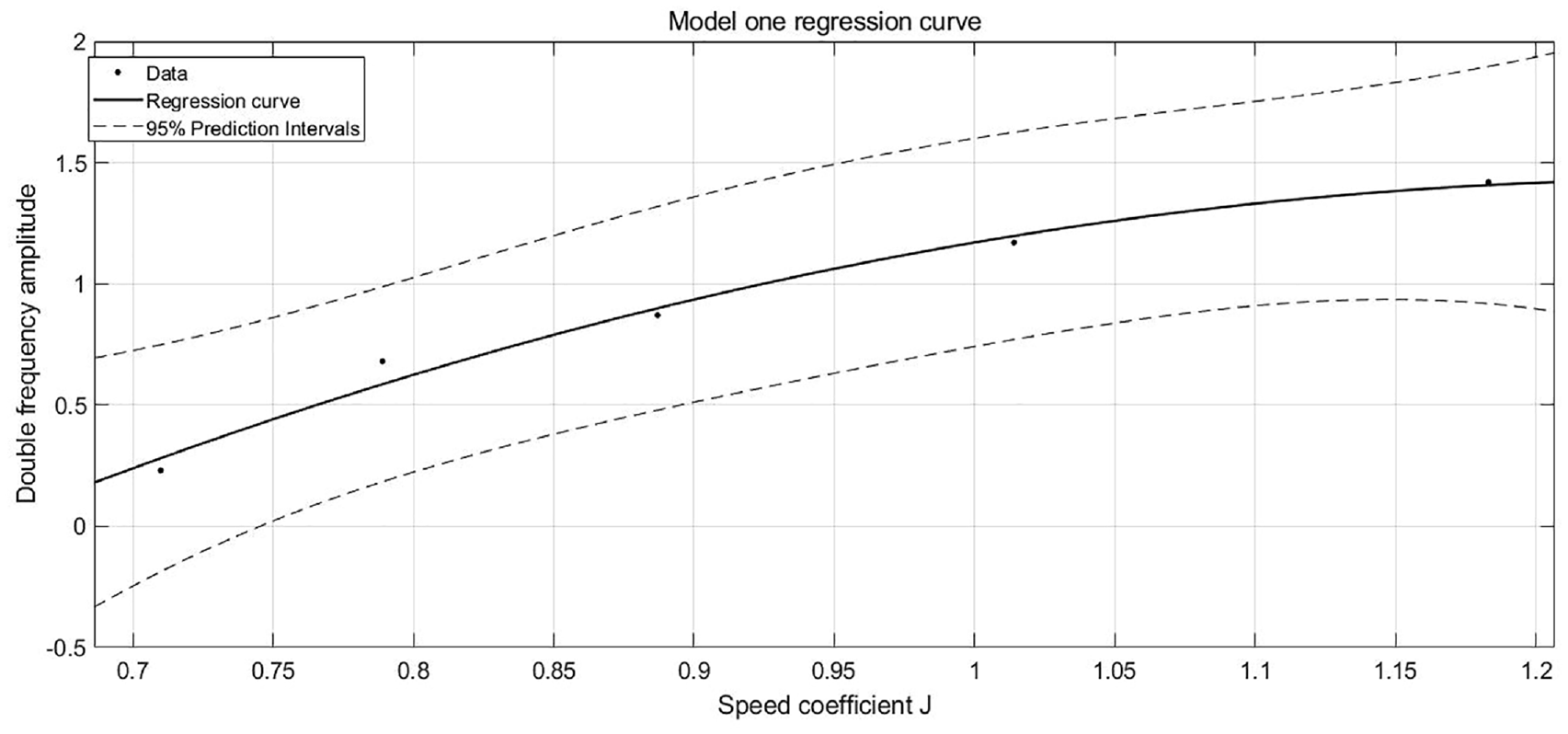
Model 1 regression curve.
The regression model can predict that the amplitude of the double blade frequency corresponding to the advance coefficient of 0.946 is 1.0531. The amplitude of double blade frequency increases gently with the increase of the advance coefficient. The Model 1 can be used to predict the amplitude of double blade frequency of five-blade propeller.
Model 2
Taking the propeller working condition parameters or propeller geometry parameters as dependent variable

The confidence interval with significance of 95% was made, and the regression model curve was fitted. The above model can be used to estimate and judge the characteristics of propeller working condition parameters or propeller geometric shape parameters, and then the linear spectrum amplitude can be used to refer and guide the characteristics of propeller working condition or propeller geometric shape.
The second model takes the double blade frequency amplitude as the independent variable

As shown in Figure 7, the real line is the curve fitting of the regression model, and the range between the two imaginary lines is a 95% confidence interval of significance
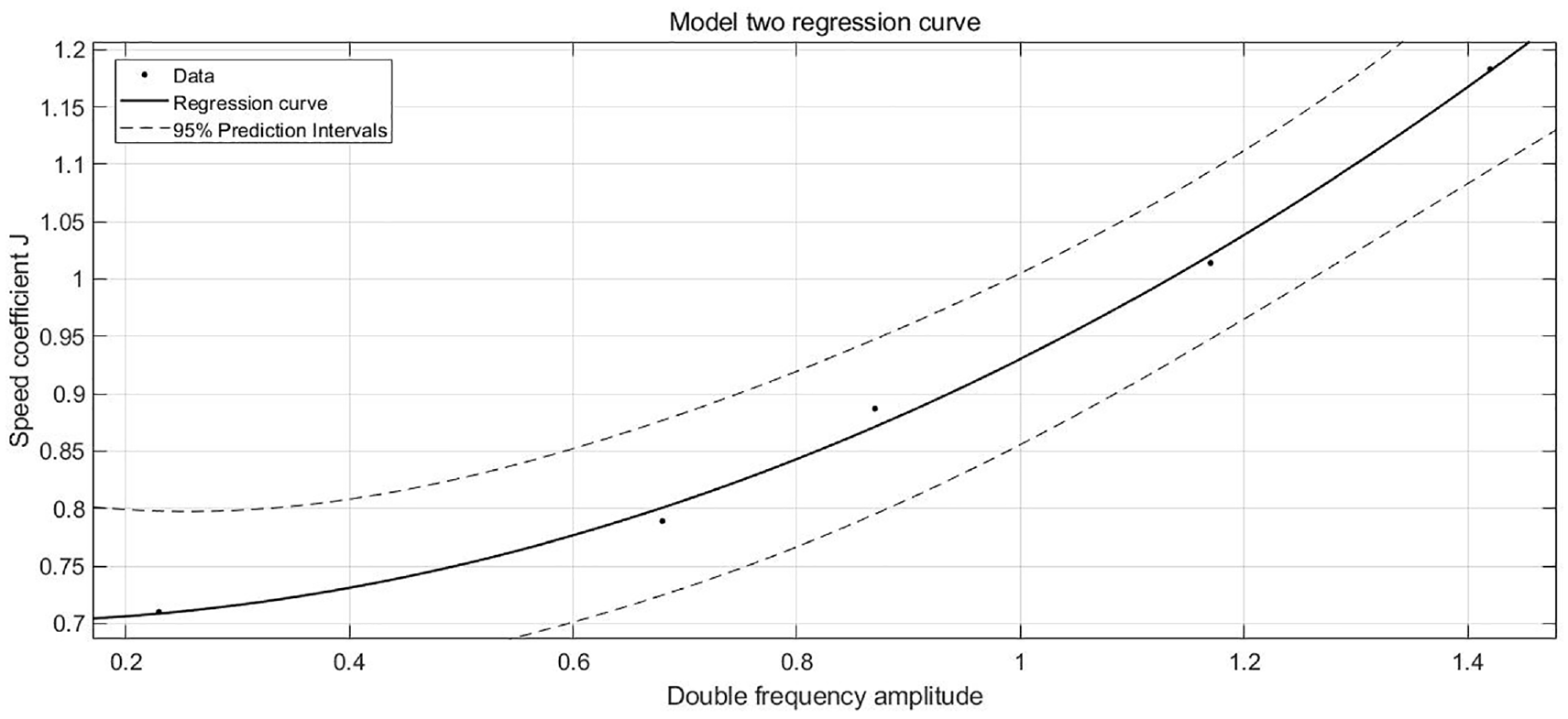
Model 2 regression curve.
Skew angle analysis
The propellers of ships are divided into non-skew propeller, low skew propeller and high skew propeller. And the wake field characteristic information of propellers with different skew angles is also different. Long et al. 21 used large eddy simulation to simulate the cavitation flow around the traditional propeller and the highly skewed propeller. And the results show that the vortex structure and cavitation phenomenon of the traditional propeller and the high skew propeller were very different. Therefore, this paper wants to establish a model that can predict the skew angle of the propeller through the relevant information of the cavitation wake field. And correctly predicting the propeller skew angle is conducive to ship target recognition.
In this paper, the amplitude values of shaft frequency, double shaft frequency, triple shaft frequency and quadruple shaft frequency obtained by power spectrum analysis and the known propeller skew angle types were used for judgment and analysis, as shown in Figure 4. It is found that when the propeller is a high skew propeller (the skew angle is higher than 100°), the amplitude of the low frequency linear spectrum has a linear decrease with the increase of frequency. When the propeller is low skew propeller or non-skew propeller (the skew angle is less than 100°), the double shaft frequency linear spectrum is obvious, and the amplitude of the low frequency linear spectrum does not linearly decrease with the increase of frequency.
For the power spectrum of five-blade propeller, the low frequency linear spectrum amplitude approximately linearly decreases with the increase of frequency, that is the linear spectrum amplitude satisfies the following formula.
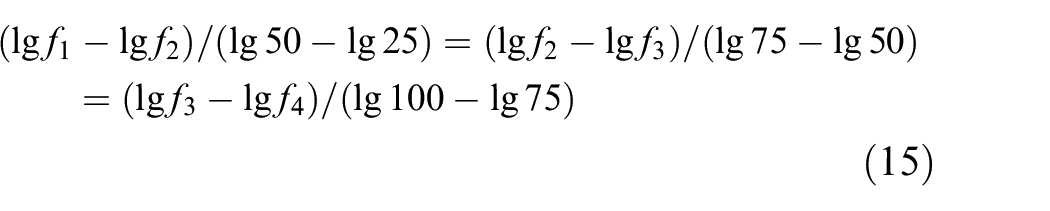
Then the propeller is judged to be high skew propeller. On the contrary, when the linear spectrum of the double shaft frequency is obvious, it is a low skew propeller or a non-skew propeller. In which the
For the power spectrum of four-blade propeller, the low frequency linear spectrum amplitude approximately linearly decreases with the increase of frequency, that is the linear spectrum amplitude satisfies the following formula.

Then the propeller is judged to be high skew propeller. On the contrary, when the linear spectrum of the double shaft frequency is obvious, it is a low skew propeller or non-skew propeller. In which the
The DTMB series propellers used in this paper are all five-blade propellers. Therefore, combined with the data in the table, the skew angle formula (15) is substituted. The results show that the 4384 propeller with high skew angle satisfies the skew angle formula, that is, the amplitude of low-frequency linear spectrum of power spectrum (shaft frequency, double shaft frequency, triple shaft frequency, and quadruple shaft frequency) decreases linearly with the increase of frequency. The 4381 propeller without skew angle and the 4382 and 4383 propellers with low skew angle do not meet the skew angle formula, and their double shaft frequency spectrum is obvious.
Measurement noise analysis
In order to verify the rationality of the skew angle formula, the propeller noise signal in the flume experiment is analyzed in this paper. The propeller used in this test is E779A, it is a four-blade low skew propeller. The parameter setting of the collected propeller noise signal as follows: the sampling frequency is about 200 kHz, the inflow velocity is 3.25 m/s, and the fluid pressure is 113 kPa. The noise signal of propeller speed from 11 to 29 rps is collected in the experiment, where 11–25 rps is non-cavitation noise signal and 25–29 rps is cavitation noise signal. Therefore, we collected noise signals at propeller speeds of 15 and 28 rps for analysis.
The power spectrum analysis of the noised signal is carried out, and the low frequency information is extracted. As shown in Figures 8 and 9, the amplitude of each shaft frequency and the amplitude of multiple shaft frequencies are very prominent, of which the amplitude of the double shaft frequency is the largest, and the amplitude of the one shaft frequency and the triple shaft frequency and the double blade frequency are similar. Table 5 lists the amplitude of each shaft frequency, then combined with the skew angle formula for calculation. Formula (17) is the skew angle formula of propeller speed


Low-frequency linear spectrum amplitude of four-blade propeller.

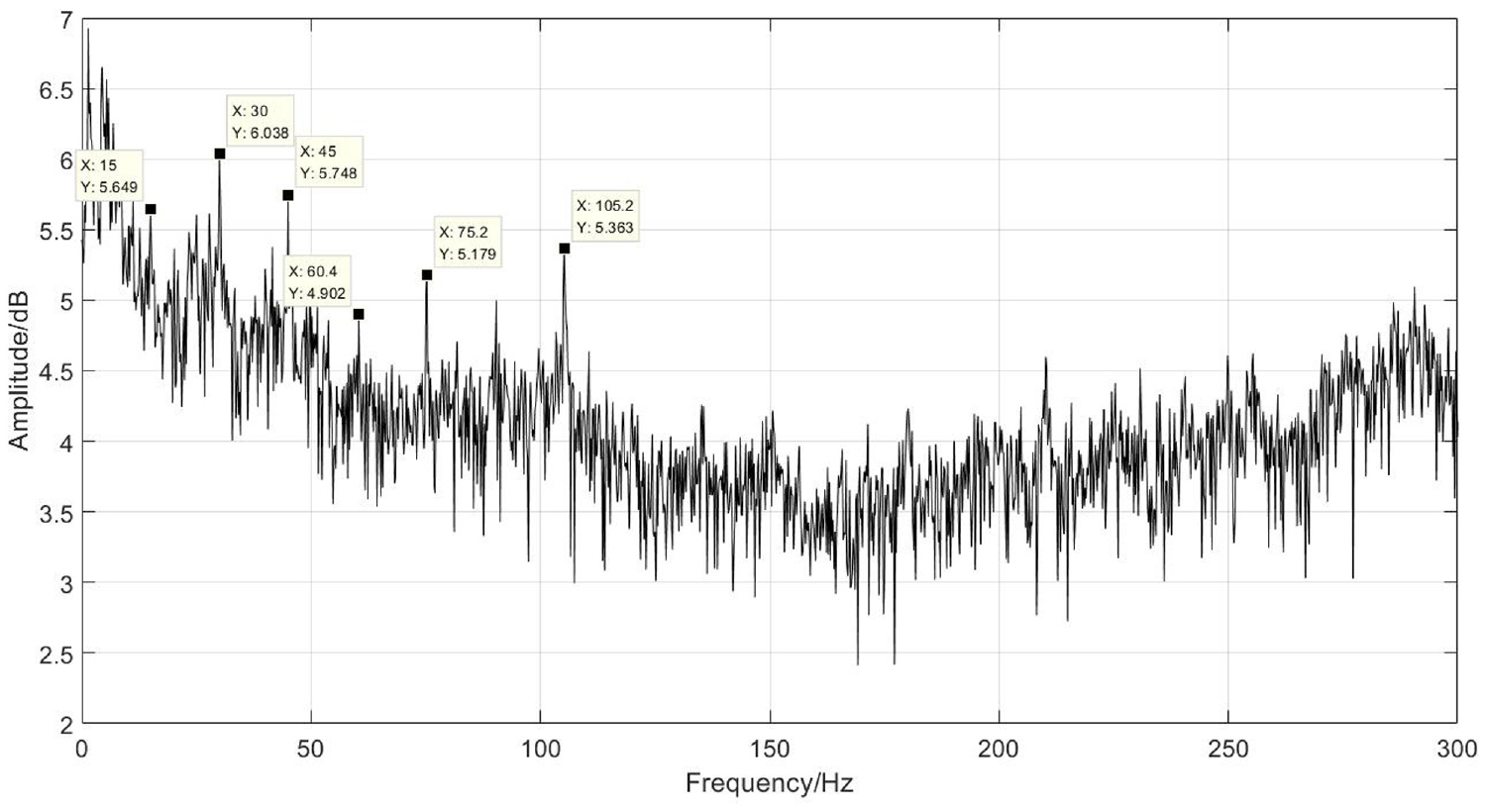
The measured noise power spectrum of N = 15 rps.
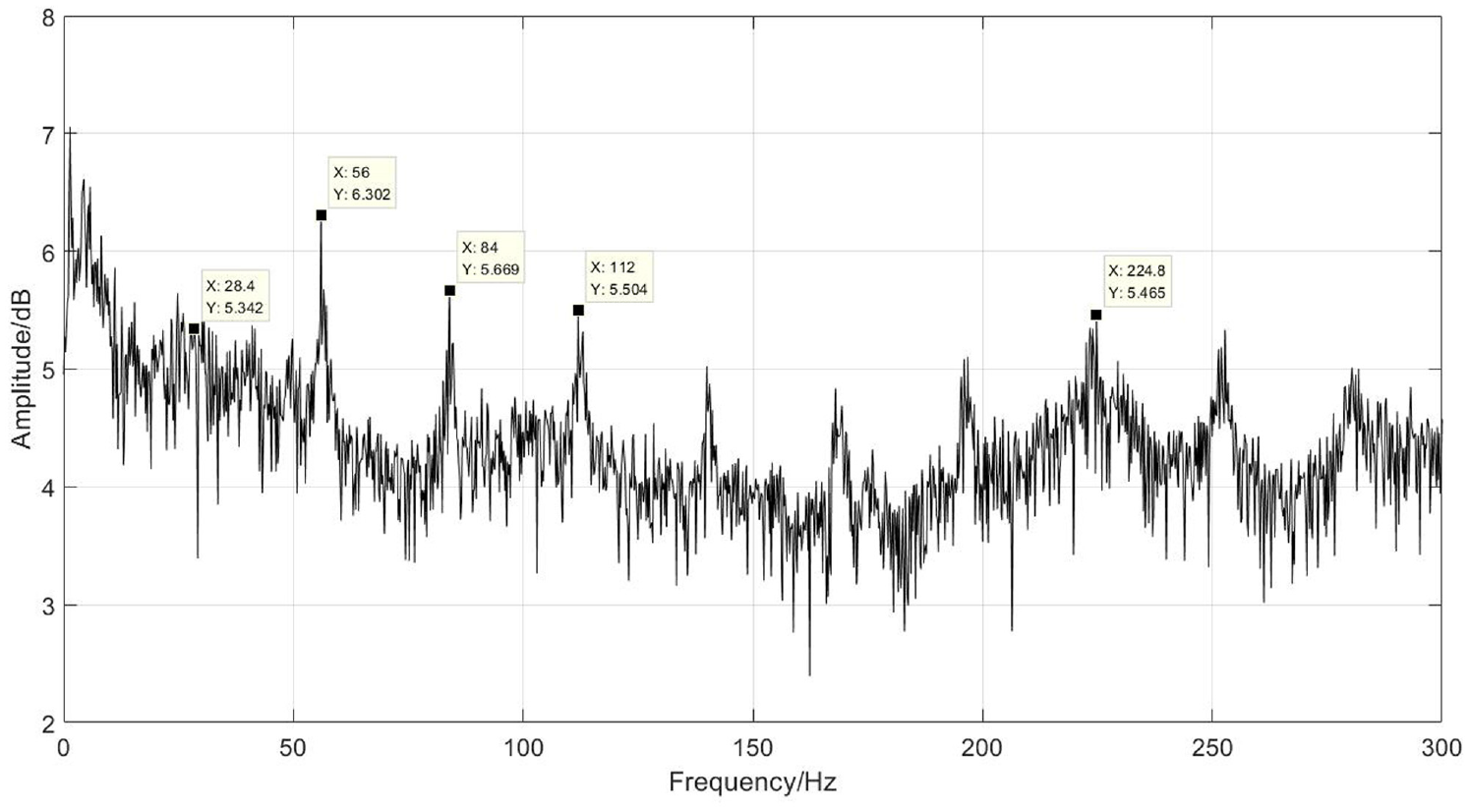
The measured noise power spectrum of N = 28 rps.
The calculation formula is not equal at both ends, so it is judged that this propeller is a low skew propeller or a non-skew propeller. This result is consistent with the physical parameters of the experimental propeller.
Conclusion
In this paper, the multivariate statistical modeling method of fine characteristics of propeller cavitation wake is studied. The double model is successfully applied to establish the relationship curve between the amplitude of double blade frequency and the advance coefficient, as well as the analysis of propeller skew angle. The following conclusions are obtained:
The pressure fluctuation signal characteristic model of multi-domain cavitation flow field is constructed, and the mapping relationship between characteristic parameter space of cavitation flow field and propeller and flow field parameter space is clarified. Compared with the traditional statistical analysis and extraction method based on propeller noise samples, the regression model is obtained by numerical calculation of cavitation flow field, power spectrum feature extraction and multivariate statistical modeling method. Through Model 1, the advance coefficient can be used to predict the characteristic of the double blade frequency amplitude of the propeller, and then the noise modulation related characteristics can be referred. Through the correlation analysis of the double blade frequency amplitude obtained by the power spectrum analysis and the propeller advance coefficient, it is concluded that the advance coefficient increases with the increase of the double blade frequency amplitude, and then the relevant information of the propeller is obtained.
Combined with the skew angle formula and the linear spectrum amplitude, it can be judged whether the propeller is high skew propeller or low skew propeller or non-skew propeller. The DTMB series propellers studied in this paper are five-blade propeller, of which 4381 propeller is non-skew propeller, 4382 and 4383 propellers are low-skew propeller, and 4384 propeller is high-skew propeller. Finally, the experimental verification proves that only 4384 propeller conforming to the skew angle formula are high skew propeller, while the other three types do not conform to the skew angle formula, and their double shaft frequency spectrum is obvious, so they are low skew propeller or non-skew propeller.
In this paper, the relevant research results in the fields of modern fluid mechanics, cavitation dynamics, statistics, and signal processing are introduced, which reflects the interdisciplinary nature of multidisciplinary and multidisciplinary, and has important application value and application prospect.
Footnotes
Declaration of conflicting interests
The author(s) declared no potential conflicts of interest with respect to the research, authorship, and/or publication of this article.
Funding
The author(s) disclosed receipt of the following financial support for the research, authorship, and/or publication of this article: This work was supported by the Key Research and Development Projects of Anhui Province [No. 2022107020012].
