




Abstract
This article investigates how mobilities for teachers’ professional development within Erasmus+ KA1 projects may have affect teachers’ professionalism and identity. A multiple case with two Dutch teachers in context was conducted drawing on interviews, biographical narratives, and focus group data, to explore if and how these continuing professional development (CPD) experiences influence shifts in identity, professionalism, and engagement with school culture. A key finding reveals that mobilities foster deep pedagogical reflection and a reimagining of European teacher identity with participants reporting a connexion between personal and professional growth. However, the full success of Erasmus+ as a CPD instrument seems to hinge on its ability to move beyond isolated experiences and become part of a broader school-wide strategy for improvement. The study contributes to ongoing debates about the role of biographical narratives, mobility, and reflective practice in shaping a possible concept of a ‘European teacher’ and sustaining meaningful professional growth.
Keywords
Introduction
This study aims to look at Erasmus+ Key Action 1 (KA1) projects and how teachers participating in them may be affected by mobilities for professional development purposes. It therefore addresses the research question:
The European Commission (2025) states that Erasmus+ KA1 projects for school education are European Union-funded initiatives that support the international mobility of school staff for purposes of learning and professional development. These projects aim to enhance the quality of teaching and learning by enabling teachers, school leaders, and other educational staff to participate in structured courses, job shadowing, or teaching assignments abroad. By fostering transnational collaboration and the exchange of best practices, KA1 projects are expected to contribute to the internationalisation of schools and support strategic goals such as inclusion, digital transformation, and the promotion of common European values within education systems.
Erasmus+ mobilities for teacher professional development have become a priority for the European Commission, and this has impacted schools’ own organisation of the professional development of teachers. That said, while there is an abundance of literature concerning teachers’ CPD, review of existing literature reveals a paucity of academic studies specifically addressing Erasmus+ short-term mobilities for teacher professional development. To help mitigate the void in literature, the article situates its empirical findings within the broader policy and institutional context provided by official Erasmus+ reports and documents. Existing research predominantly focuses on the everyday management of these projects within specific national contexts (e.g. Erasmus+ Lithuanian NA, 2019). Beyond operational analyses, data from the European Commission (European Commission/EACEA/Eurydice, 2021) and the OECD (2020; 2025) have provided statistical overviews of Erasmus+ initiatives, though these largely lack a qualitative, in-depth examination of their pedagogical and professional development outcomes.
Scholarly and research interest in Erasmus+ projects has focussed on higher education (Nada and Legutko, 2022); lifelong learning (Bourdon, 2014); students’ and educators’ linguistic and cultural preparedness (Welzer et al., 2013); and good practices in teacher education (De Castro and Garcia-Peñalvo, 2022). More recently, a growing body of literature has focussed on the emerging rationale behind Erasmus+ KA2 Teacher Academies (Galvin et al., 2024), and potential avenues for research on teacher education they might generate.
In our study, the intricate interplay between teachers’ professional biographies, the European dimension in education, and school culture serves as the foundation to understand Erasmus+ KA1 projects dedicated to the professional development of teachers (Martins et al., 2024). These projects, in turn, are embedded within the broader framework of the European Commission’s Erasmus+ programme. This study, firmly situated within the wider discourse of teachers’ continuing professional development (CPD), provides a nuanced perspective on how these interrelated factors collectively shape teacher growth and pedagogical practices within a European educational context.
The current study was conducted in the context of secondary education in the Netherlands. The focus on the Dutch context is particularly relevant given the high percentage of teachers engaged in professional development and the widespread interest of teachers in the Netherlands in European or international mobility programmes. In fact, official reports, that is, the Teaching and Learning International Survey of 2024 (TALIS; OECD, 2025), state that 87.3% of teachers in the Netherlands participate in professional development activities, specifically structured events such as courses, seminars or workshops. This is a notably higher participation rate than the EU average of 83.3% (OECD, 2025), in spite of engagement in CPD not being compulsory for teachers in the Netherlands, as it is in some other EU countries (OECD, 2025). A recent Dutch framework for competences required for the teaching profession (Algemene Onderwijsbond et al., 2024) highlights the need for a holistic approach to teacher education focussing on themes such as inclusion. Within its professional competence framework, it stresses the need for ongoing investment by the teachers’ professional development, namely in the development of an integrated professional vision and the use of research and theory to improve practice. In turn, TALIS data indicate that the majority of Dutch teachers recognise and actively integrate the competencies acquired through CPD into their instructional approaches.
As findings from the 2018 TALIS (OECD, 2020) indicate, a similar trend exists with regard to Dutch teachers’ engagement in European mobility projects for CPD purposes, namely Erasmus+ and its predecessor, Comenius. 2018 TALIS records a total participation rate of 12.6% of teachers from the Netherlands (OECD, 2020, Table II.4.20), which is above the EU average. Given that participation in these initiatives remains entirely voluntary, this data suggests a widespread interest among Dutch teachers in engaging with European educational experiences through Erasmus+.
Theoretical framework
To address the question of the role of Erasmus+ KA1 mobilities in teachers’ CPD, we draw on the analytical framework proposed by Martins et al. (2024), as a lens through which to understand how such mobilities shape and enhance teachers’ professionalism, as well as their professional and personal identities. Within this framework, three key theoretical dimensions emerge, forming an interconnected yet dynamic relationship (see Figure 1), namely (1) Teacher biography and respective narrative construct, (2) Europe and teachers, and (3) School context and culture. This theoretical model is asymmetrical, reflecting the complexity and varying degrees of impact that these experiences exert on different aspects of teacher development. The first dimension emerges as a central axis, encapsulating how educators internalise, adapt, and reconstruct their professional and personal selves through participation in Erasmus+ mobilities. CPD serves as both a backdrop and a driving force, embedding teacher professional and personal growth within a broader European agenda of pedagogical innovation, transnational knowledge exchange, and cross-cultural conversation. Each of the model’s dimensions is explored further below.
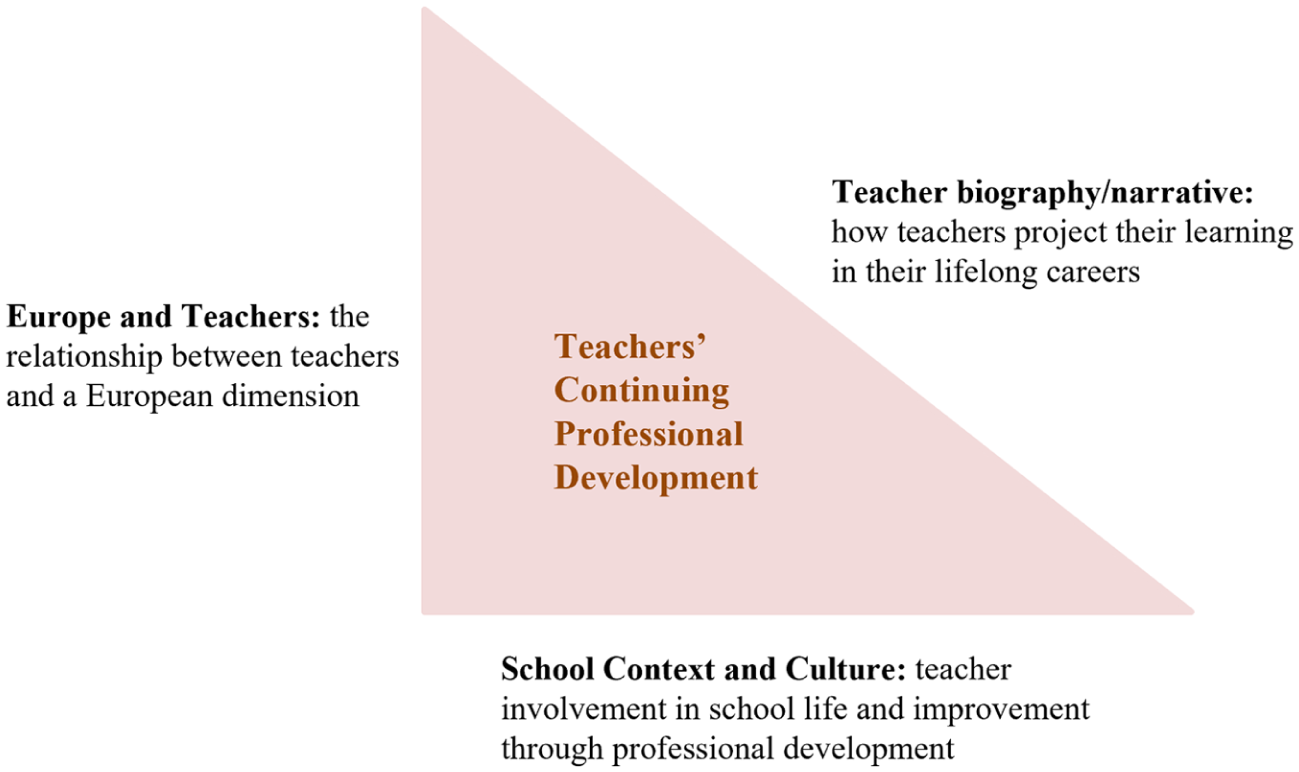
The theoretical structure (Martins et al., 2024).
In empirical terms, the model is applied by mapping teachers’ biographical narratives and interview data onto the three analytical dimensions, allowing for a layered interpretation of how Erasmus+ KA1 mobilities are experienced and enacted. Teachers’ accounts are first examined through the lens of biography and narrative construction, foregrounding moments of identity affirmation, disruption, or reorientation linked to mobility experiences. These narratives are then situated within the European dimension of the model, capturing how participants articulate emerging senses of European belonging, pedagogical alignment, or transnational professional purpose. Finally, these biographical and European orientations are read in relation to the school context and culture, illuminating how collegial relations mediate the translation of mobility learning into sustained professional practice. Taken together, the model enables an integrated yet non-linear analysis of CPD, sensitive to both individual meaning-making and contextual constraint.
Looking at the central focus of the structure, that is, teachers’ continuing professional development, regardless of how CPD is approached (Mitchell, 2013; Sachs, 2016) and analysed in terms of its mechanisms (Day, 2002; Nóvoa, 2017), there is widespread agreement that it is a process of continual professional evolution (Day, 2002; Evans, 2008; Mitchell, 2013; Sandholtz, 2002; Sachs, 2016; Alves, 2020). This understanding underscores the dual role of CPD as, on the one hand, an individual process of professional and personal transformation, and on the other, a contribution to broader educational innovation and systemic change (Evans, 2008; Sachs, 2016) which takes place in schools.
Schools, their culture and context, on their part, have been argued to play a pivotal role in shaping the conditions for the implementation of CPD (Martins et al., 2024), with school culture functioning as both enabler and constraint (Deal and Peterson, 2016). Kaplan and Owings (2013) argue that the values, norms, and professional expectations that permeate the school environment significantly influence how teachers engage with CPD and incorporate it into their practice. Kovacs (2019) highlights that in innovative school contexts, CPD is perceived as integral to teachers’ professional identities, with Erasmus+ participation regarded as a vehicle for both pedagogical enrichment and intellectual renewal. Similarly, Day (2002) affirms that sustained professional learning is central to school development and innovation, reinforcing the imperative for long-term engagement with CPD as a driver of institutional advancement.
Having said that, it is important to focus on teachers, where it should be said that personal and professional narratives are central to how educators understand their roles (Vitanova, 2017) and result in an effect of professional development on their biography and professionalism. Skerrett (2008) encapsulates this relationship by asserting that formative life experiences shape the teaching self and serve as major determinants of the teaching experience, while work contexts strongly influence how educators come to define their professional identities. Within this framework, CPD experiences act as transformative events, enabling teachers to redefine and reconstruct their professional biographies in response to new educational realities (Vitanova, 2017).
The interconnection between biography and professional self-concept is best understood through narrative inquiry, in which storytelling, reflective engagement, and professional self-definition mutually inform one another (Moore, 2009). Tsui (2007) extends this argument, suggesting that teachers’ professional identities are continuously shaped through the iterative process of reflection and pedagogical adaptation, with narrative constructions serving as a vital mechanism for self-exploration and professional reinvention.
This emphasis on reflection as a critical element of CPD situates narrative construction at the heart of professional learning, reinforcing the argument that professional growth is inherently introspective and dialogic (Vitanova, 2017). Taylor (2013) characterises narrative construction as a powerful vehicle for professional self-discovery, not only offering a unique mode of CPD engagement but also serving as a structuring force in career progression and pedagogical evolution. The multifaceted nature of professional identity (Tsui, 2007; Vitanova, 2017) necessitates a conceptualisation of teacher professionalism as fluid, adaptive, and dynamic (Beauchamp and Thomas, 2022; Kayi-Aydar, 2019). This notion aligns with the German concept of Bildung, which describes a continuous process of intellectual, personal, and professional development (Henricsson, 2020; Schratz, 2014).
The reciprocal relationship between CPD, professional identity, and agency suggests that professional learning is not merely a technical skill-building process, but a broader exercise in self-definition and pedagogical repositioning (Beauchamp and Thomas, 2022). Sachs (2016) highlights that professionalism is enacted through pedagogical choices and teacher agency, reinforcing the argument that CPD not only refines practice but also shapes professional worldviews. This is particularly relevant within Erasmus+ KA1 mobility projects, which encourage teachers to engage in cross-cultural exchanges, experiment with alternative methodologies, and actively participate in European educational discourse. Reflection remains at the centre of this transformative engagement, enabling teachers to bridge personal biography, professional identity, and classroom practice (Day, 2002; Korthagen, 2005).
Gao’s (2021) autoethnographic account depicts the shaping of identity, agency, and professional trajectories of transnational scholars, positioning mobility as a gateway for intellectual, professional, and personal growth. Gao’s analysis echoes Bense’s (2016) notion of professional identity reconstruction following teacher mobility, and highlights the challenge of professional acculturation, where teachers must navigate unfamiliar norms and adapt to new school cultures. Okken and Coelen (2022) focus on the potential of teacher mobility for professional learning. They observed teachers’ enhanced cultural awareness, as well as transformative impact on teaching philosophy, professional identity, and classroom behaviour.
Within the broader context of identity formation and the teachers’ development, the notion of a ‘European teacher’ (Schratz, 2014) becomes a geographic designation but above all a larger intellectual and pedagogical identity. It is, in turn, shaped by engagement with European educational frameworks, transnational collaboration, and shared pedagogical values. In considering the role of European transnational mobilities in professional development, this raises the question of European teacher professionalism. While significant progress has been made in aligning national teacher education policies with European priorities, the question of whether teachers do feel European teachers to a certain extent or not remains unresolved, reflecting deeper tensions regarding the extent to which educators identify with European professional networks (Schratz, 2014).
Method
Research design and procedure
Research method and instruments
The research, whose ethical collection and working of data was approved by the higher education institution of the authors of this study, took a qualitative multiple case study approach, enabling in-depth exploration of the phenomenon under investigation – namely, teachers and their professional development – within the setting in which the phenomenon naturally unfolds (Shkedi, 2005; Yin, 2018). This methodology is aimed at exploring in-depth descriptive data, rather than breadth (Hancock and Algozzine, 2006; Yin, 2018). Case study research is empirical investigation focussing on specific phenomena within their contextual realities (Anderson and Arsenault, 2005), while also acknowledging the complex, situated, problematic relationships inherent in such studies (Stake, 2006). Multiple case studies allow for a more nuanced and comprehensive analysis of the phenomenon (Shkedi, 2005), while still aiming for depth of understanding, multidimensionality and particularisation rather than a holistic or global perspective (Stake, 2006). As Woodside (2010) puts it, case studies look specifically into ‘participants’ self-perception. . . of their own thinking processes, intentions and contextual influences’. (p.1).
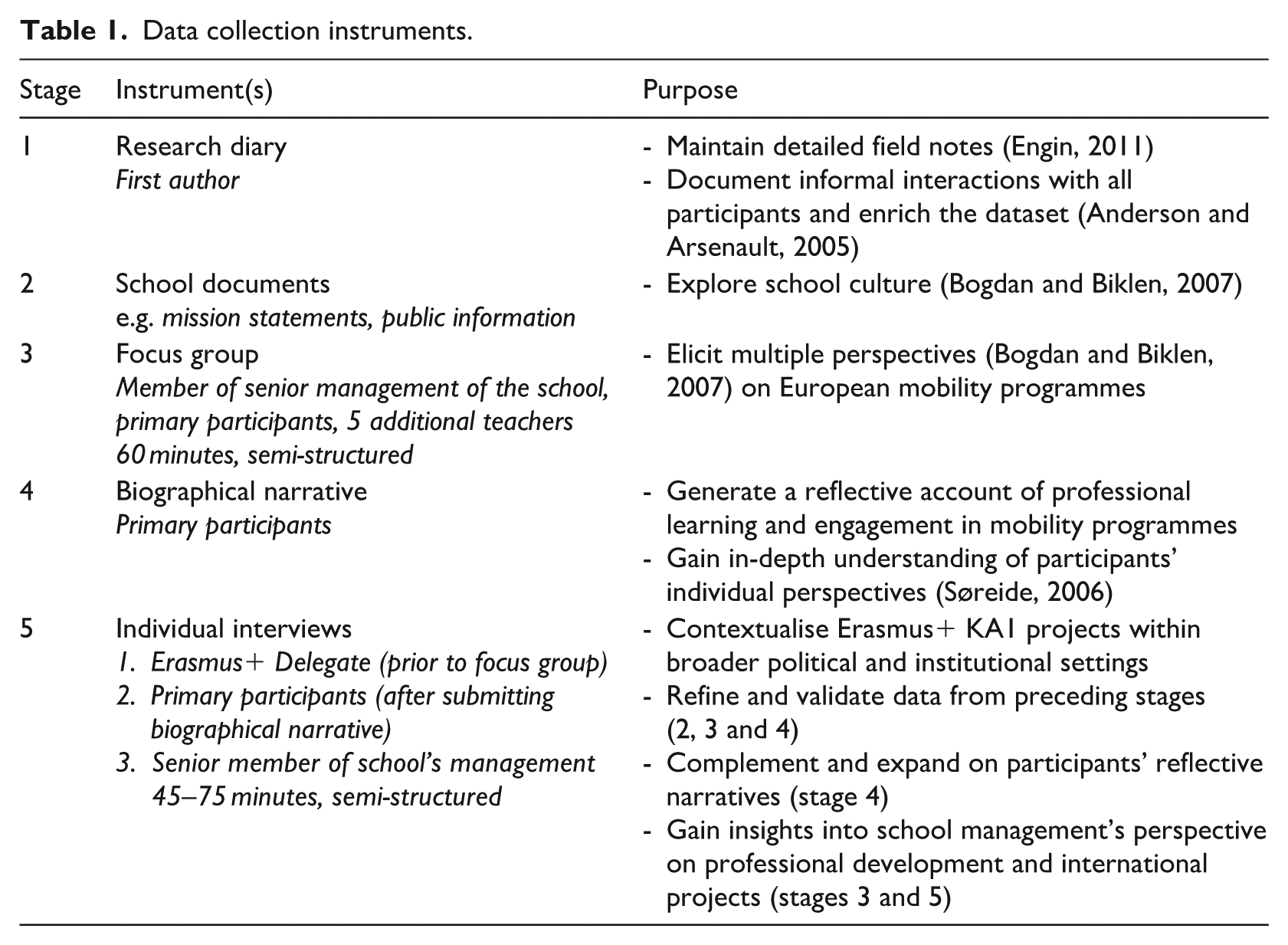
In the current study, two cases were examined: those of two teachers from a single school, who had engaged in Erasmus+ KA1 professional development mobilities. We sought to study teachers who had extensive teaching and professional development experience and had also participated in Erasmus+ mobilities for CPD. The two participating teachers, who aligned with this profile, were contacted through the authors’ professional network. Our aim was to explore the real life (Creswell and Poth, 2018) CPD trajectory of the two primary participants. Data were gathered from these two teachers as well as from other stakeholders (the member of senior management and five other teachers from the school, and a representative of the Dutch National Erasmus+ Agency (Nuffic), and school documents, for the purposes of data validation and contextualisation. The five additional teachers were colleagues who had participated in Erasmus+ KA1 mobilities. One of them was the school’s Erasmus+ coordinator. Data were collected using five distinct instruments, as outlined in Table 1. The focus group and interviews were audio recorded and subsequently transcribed verbatim (Hennink, 2014). However, quotes from these recordings do not include hesitation so as to ease reading of the data.
Data collection instruments.
Procedures
Before collecting data, all participants were extensively informed of the aims of the study and how they were expected to participate. All of them signed an informed consent. The data themselves was collected by one of the authors of this article with the language of communication in all stages being English.
The initial phase of the study was an interview with a delegate from Nuffic – the Dutch National Agency responsible for Erasmus+. This stage enabled a general contextualisation for later stages in the study, as well as providing important information regarding the ethos of Erasmus+ KA1 projects for school education and their importance for schools and the CPD of teachers.
Written biographical narratives were collected from the two primary participants (Jantje and Mingus 1 ) via email, within a month of their agreeing to participate in the research. proposed and collected via e-mail. Participants were provided with structured guidelines to facilitate their reflections and written accounts. In addition to some background information (years of experience and subject(s) taught), participants were asked to address describe and critically reflect on the impact of (1) their experiences of CPD since completing initial teacher education, (2) their mobility experiences under the Erasmus+ KA1 programme, including their personal and professional perspectives on Europe before and after the mobilities, and (3) potential implications of CPD and transnational mobility projects for teaching and non-teaching practices, as well as broader school life.
The focus group was held while the two primary participants were developing their biographical narratives, with both of them also participating as part of the discussion group.
The results from the focus group and the biographical narratives fed into the structure of the individual interviews with Jantje, Mingus and the member of the school’s senior management (Juliette). For both the interviews and the focus group discussions, pre-established thematic blocks were devised to ensure a structured exploration of key issues. The order and interconnected triangulation between each segment can be seen in Figure 2. The semi-structured discussion and interviews focussed on perceptions of Erasmus+ projects, the interplay between schools, teachers, and the National Erasmus+ Agency, and broader reflections on teacher identity. A central theme of discussion concerned the conceptualisation of the ‘European teacher’ and whether, and in what ways, Erasmus+ mobility experiences have contributed to its formation.
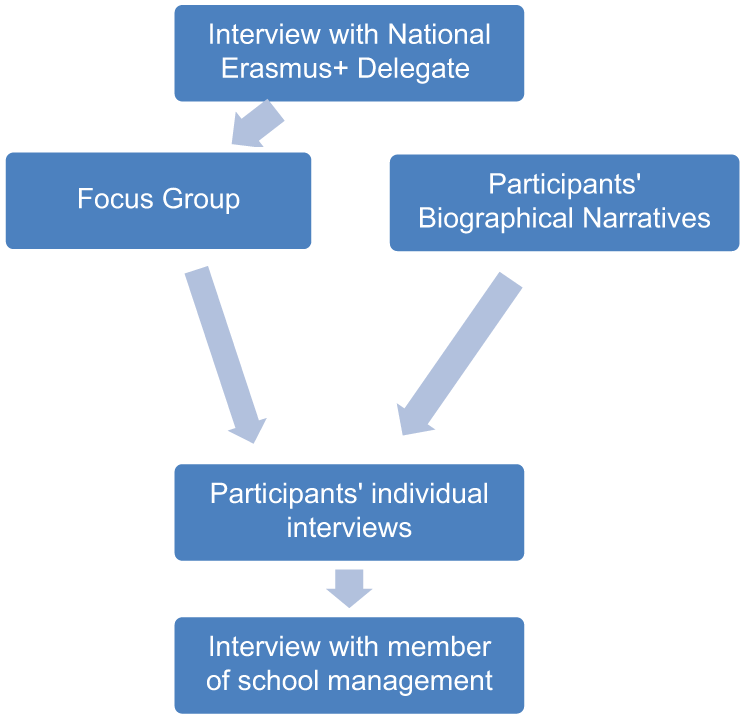
The relationship and triangulation process between the main data collection phases.
The participants and their context
The school
Both primary participants worked in the same secondary school, situated in a fairly affluent suburb of a big city in the centre of the Netherlands. As an accredited bilingual school, the school is required to adhere to a national standard (Nuffic, 2019), which includes offering 50% of the curriculum through Content and Language Integrated Learning (CLIL) in English, curricular and cross-curricular attention for global citizenship and personal development, and collaboration with international peers (Mearns et al., 2023). The standard also stipulates that teachers should undergo professional development related to these areas (Nuffic, 2019). The ethos of the school in question is largely based on providing children and families with opportunities for social, cultural and financial development with many different initiatives related to contacts with international contexts and, prior to the covid-19 pandemic, student mobility with partner schools worldwide.
The participants
Jantje
Jantje is an arts teacher with 29 years of experience, having started as a volunteer teacher in art school, later going on to teach in Amsterdam and earning her diploma in teaching in 2012. She has been teaching at her current school, now doing part-time, for 25 years, and began delving into CLIL when the institution decided to embark on bilingual education in 2003. She has participated in multiple international projects involving both teachers and students, not only in Europe, but across the world. In her biographical narrative, she confessed to being passionate about intercultural experiences in education.
Mingus
Mingus qualified as a teacher of social studies and social sciences in 1991 and has focussed on higher levels of secondary education. Early in his career, he started working in leadership roles within education in and out of schools. By the end of the 1990s he was building professional development regarding bilingual education. In 2009, he assumed the position of teacher educator at a university graduate school of teaching, a position he has maintained while still teaching his subject within secondary bilingual education. He has participated in two Erasmus+ KA1 mobilities through job-shadowing.
Data analysis
Data analysis was undertaken by one of the authors of this study and followed a structured coding process, conducted in NVivo 15, resulting in the development of a coding framework tailored to the dataset. Initially, open coding was applied, serving as the preliminary phase during which raw data were processed (Price, 2010a). This was succeeded by axial coding (Wicks, 2010), wherein data were reorganised to highlight connections both within and across emerging categories. Finally, selective coding was conducted (Price, 2010b), enabling the refinement and integration of subcategories to identify overarching themes and central issues within the study. At this stage, relationships between specific (sub-)codes were examined to derive richer data analysis (Table 2). While the research did not seek to formulate a new theoretical framework or generate generalisable conclusions, this analytical structure provided a systematic means of understanding the intricate details of the specific cases examined.
The relationship of codes for analytical purposes.
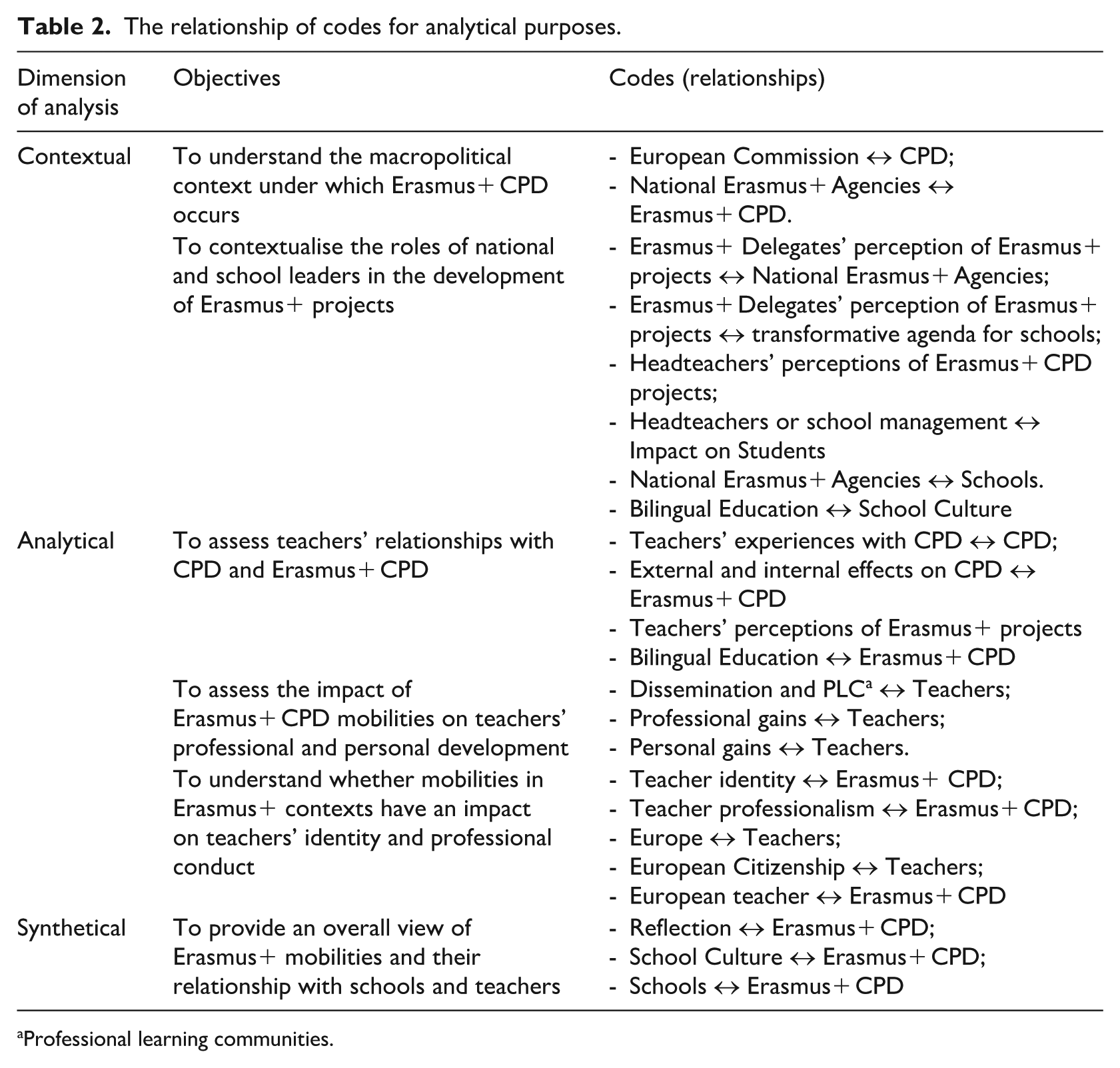
Professional learning communities.
Consequently, distinct dimensions of analysis were devised, each corresponding to specific research objectives. This process resulted in 24 coding relationships and a total of 254 specific references. Given the extensive volume of references, referring to them selectively where relevant, while also drawing inferences that contribute to the study’s overarching aims was seen as appropriate. This methodological approach ensured a rigorous yet coherent interpretation of the qualitative data, enabling a structured and meaningful analysis, also achieved by pairing codes and/or sub-codes.
Findings
Bearing in mind the organisation of codes and data as shown in Table 2, the findings follow the same logical process and is accordingly divided into three sections. The first of these looks at the context of the participants, their participation in Erasmus+ projects and how the school and indeed the national Erasmus+ projects perceive this initiative. The second analyses the deeper implication of the projects on the participants and their school contexts. The last one, the synthesis, offers a predominant view of how the participants interact with the project and its implications moving forward.
Contextual dimension
In all dimensions, including the contextual, the main sources for the findings were those produced by Jantje and Mingus. Other data have been used where they complement or contrast what was said by the two participants.
Administrative burden is a recurring theme in the participants’ narratives. Both teachers reveal a concern regarding the volume of documentation, the rigidity of Brussels-based platforms for the development and submission of Erasmus+ proposals, and the overall bureaucratic workload. This was echoed by the Erasmus+ national delegate, who explained that, while school leaders and Erasmus representatives value the mobility experiences, they often express frustration with the tediousness of the administrative processes that support them. In his words: ‘the experience. . . was very positive about the mobilities. . . but very frustrated with the administration process’ (Interview_Erasmus). As far as this professional working at Nuffic is concerned, increased competition for funding further complicates the landscape: ‘there is more money asked than we can give out (. . .) schools get disappointed and lose interest’ (Interview_Erasmus).
Despite these obstacles, Mingus saw mobility projects as a context for a transformative experience. For him, the opportunity to engage in job-shadowing deepened his understanding of European interconnectedness: ‘Job shadowing has enriched my image of Europe. I have become more aware of the shared history of countries in Europe’ (Biographical_Narrative_Mingus). He elaborated that visiting schools in Norway and Spain had allowed him to contextualise education historically and socially. Mingus’s reflection underscores the value of physical presence and lived experience: ‘[to] not only read about Norway or Spain, but to actually be there and to walk around in those places (. . .) made a big impression’ (Interview_Mingus).
At the school leadership level, Juliette provided further insight into how Erasmus+ differs from regular CPD. She noted that typical professional development focuses narrowly on subject matter, while Erasmus+ supports ‘development of our teachers. . . they bring new experiences, new ideas. . . we can use in our school, or we can tweak a little bit so that it fits our school’ (Interview_Juliette). More significantly, she argued that ‘everything starts with pedagogy. . . and that’s sometimes forgotten’ (Interview_Juliette) in regular CPD, highlighting Erasmus+ as an opportunity to reconnect with the broader mission of teaching, along with the essence of the common know-how in the teaching experience.
While all teachers participating in the focus group widely valued job-shadowing, in her personal interview, Juliette admitted that her school might underuse the full range of Erasmus+ opportunities: ‘Perhaps we are not really aware of the possibility [of structured courses] [. . .] ‘perhaps we should change that. . . [. . .]stimulate more also for the courses’ (Interview_Juliette). Furthermore, when asked whether Erasmus+ had been used to drive innovation or address institutional challenges, she believed it had not.
Analytical dimension
In this dimension, Mingus, through his biographical narrative, reflected upon the development and mutation of teacher professionalism as a result of participating in Erasmus+ job-shadowing mobilities, which had an implicit impact on his identity within a community: ‘The context of a school is my professional habitat, and what happens in schools is somehow also very intimate. People interact with each other and in a situation of learning people are opening up to share ideas, which requires trust. So I felt privileged to be welcomed in both schools and so be part of their community for a few days.’ [Biographical Narrative_Mingus]
During his interview, he emphasised that encounters with difference can promote openness: ‘I learned more about other European countries. . . their sense of humour, the cultural differences’ (Interview_Mingus). Yet he also confessed the impact of these experiences can be difficult to sustain. In keeping with this point-of-view, one focus group participant remarked that ‘you go for one week. . . and you get inspired. . . and then the difficulty is to keep that inspiration going’ (Focus_Group). Mingus echoed this, going on to describe his job-shadowing experience as ‘a very relaxed way of learning. . . it kind of felt like a holiday, due to the absence of professional pressure or obligations’ (Interview_Mingus).
Another issue raised was whether the knowledge acquired through Erasmus+ KA1 mobilities could be sustainable in the long-run for school development and improvement. On this, Jantje observed that initiatives often depend too heavily on individual teachers: ‘It would be wise to institutionalise projects. . . so they stay available when individual teachers leave’ (Biographical_Narrative_Jantje). Time constraints in schools further complicate sustainability. Also, several teachers in the focus group discussed that peers frequently have to undertake mobilities during school holidays, with little time or support for dissemination.
An emerging theme across several interviews was the evolving conception of what it means to be a teacher within a European framework. Erasmus+ mobilities prompted educators to reflect not only on their practices but also on their professional identity as part of a broader, transnational community. In the focus group, a participant mentioned: ‘the experience there and, my opinion it, is a great initiative. It’s, I found it impressing and shall I tell about it, or is it just. . . What it does with you is that, you see that colleagues operate from different cultures, from different state of mind. You see it in a school is a thing on its own with its own culture. And, and you, you invite it to that. You see things that you understand, but you see also things. My God, how, how can it happen? So there’s a sort of admiration.’ [Focus Group_the Netherlands]
Similarly, in her interview, Jantje captured this transformation by noting: ‘I think I’ve become more aware of what I want to be and what my values are. . . through pedagogy and through being very honest with my students about my goals and what their goals are’ (Interview_Jantje).
Both Mingus and Jantje expressed that the experience of navigating different cultural and educational systems reinforced a sense of Europe as a promoter of opportunities for teachers to strengthen their professionalism. As Mingus described it, ‘Job shadowing has enriched my image of Europe (. . .) I think job-shadowing as an option for teachers is very valuable (. . .) it can have an inspiring effect on teachers’ (Biographical_Narrative_Mingus). Jantje further articulated this alignment, stating: ‘So they [Erasmus+ projects] added up to that idea about building bridges and being open to what other people think and want and make (. . .) being a world citizen or a European. I strongly believe in European values. We have to work together now’ (Interview_Jantje).
Conversely, Mingus questions what being a teacher in a European context means, as well as his own identity as a citizen: ‘it would be a good thing if our education, and I try to also to put that into practice in my own, work to be less Eurocentric. So yes, we live in Europe. I live in Europe. But, I’ve become more aware also of that our, our self-image. At least that’s true for the Netherlands (. . .) so being a teacher, a European teacher, I think it’s important to be critically aware of that, to be humble, not to be that, that we have all the answers. We have a perfect education. We have all the knowledge. Because I don’t think that’s true.’ [Interview_Mingus]
Synthetical dimension
In this final dimension, Jantje stated, ‘You’ve been in a different situation, so you can look at your own practice in a different way (. . .) from yet another perspective’ (Interview_Jantje). For this teacher, this reflective dimension was particularly potent when teachers stepped out of familiar routines and into other European school contexts, where observation and dialogue offered what she called a ‘helicopter view’ (Interview_Jantje). Mingus similarly highlighted the reflective space provided by job-shadowing, saying, ‘I had time to think about a lot of things. . . having seen it first-hand is very valuable’ (Interview_Mingus).
These reflections were not only personal but often extended to a deeper engagement with the school’s pedagogical and social role. At the level of school culture, Juliette noted that her organisation encouraged openness and teacher autonomy: ‘There isn’t a lot of hierarchy (. . .) our teachers take our students really seriously. They are very involved’ (Interview_Juliette). For this teacher, this ethos aligned naturally with the values promoted through Erasmus+, especially when projects encouraged contact with diverse social realities. As Juliette observed, ‘There’s not a lot of diversity [in our school], and that’s not a problem, but (. . .) that’s a main reason why organising these exchanges is so important’ (Interview_Juliette).
However, the view of how Erasmus+ becomes part of institutional change for the school varies. For Juliette, these mobilities do not always translate into systemic change. When asked whether Erasmus+ had been used to drive school innovation, she responded, ‘We don’t have a lot of projects (. . .) no, I don’t think so’, (Interview_Juliette). At the same time, staff members expressed a desire to align Erasmus+ more closely with school development plans. As one focus group participant put it, ‘We have to rethink (. . .) what do we want? What are our objectives for teachers, for students, for the school as a whole?’ (Focus_Group_the Netherlands). In her biographical narrative, Jantje highlights the value of Erasmus+ projects for schools. She expresses the opinion that teacher learning developed through Erasmus+ KA1 mobilities should be ‘institutionalised’ through efficient dissemination and implementation of learning: ‘I do think that Erasmus projects are a great starting point for schools. It would be wise to institutionalise projects in schools, so they would stay available when individual teachers would leave’. (Biographical Narrative_Jantje). In other words, this participant seems to wish for CPD projects experienced by individual teachers to have a greater impact on schools.
Discussion and conclusion
This study’s research questions focus on how teachers’ Erasmus+ KA1 mobilities for CPD can be understood in a broader panorama of lifelong professional learning (See research questions in ‘Introduction’, question 1), how their professional biographies are shaped (question 2), whether there is a shift in professionalism and identity in a European context (question 3), how reflection post-mobility can serve as the root for identity shifts (question 4) and how teachers use their international learning to support school improvement (question 5). Drawn from a case study of two teachers in context, findings indicate these mobilities for professional development purposes do shape how teachers perceive their place in Europe, both professionally and personally. Data also suggest that Erasmus+ KA1 mobilities are both deeply personal and embedded within broader systemic structures of teacher professional development. In line with the growing body of scholarly work suggesting that CPD is both an individual and collective process, simultaneously tied to lifelong learning and institutional change (Day, 2002; Sachs, 2016; Alves, 2020), such projects emerge as not only a policy instrument fostering educational cooperation, but also a transformative space. Through these projects, teachers reconfigure their professional identities, pedagogical beliefs, and relationship with Europe and its educational community.
Teachers in this study repeatedly described their Erasmus+ experiences as opportunities for reflection, both introspective and professional. The metaphor of a ‘helicopter view’, exemplifies the kind of critical distancing that allows teachers to reassess their pedagogical practices. This resonates with Korthagen’s (2005) view that meaningful CPD must progress inward – from competencies to identity and mission – placing reflection at the centre of sustainable professional learning.
At the intersection of biography and practice, participants in this study highlight ways in which the fostering of teacher agency and the broadening of professional horizons may be attained through Erasmus+ mobilities, the identity shift proving their professional biography becomes central to the transnational narrative of teacher education (Terhart, 2022). Their realisation that mobilities have extended their understanding of Europe demonstrates the extent to which, as far as they are concerned, mobility projects cultivate not just technical skills but also a renewed sense of belonging to a transnational educational community. More specifically, their testimonies provide evidence that Erasmus+ does more than support CPD: it can play a role in shaping the contours of the European teacher identity, anchored in openness, critical dialogue, and a shared pedagogical responsibility beyond national borders (Schratz, 2014). The participants’ experiences mirror Illeris’s (2009) conception of learning as situated across multiple, interdependent spaces – personal, professional, and social, as the teachers appear to develop a stronger connexion with the ideals of European cooperation, mutual learning, and intercultural understanding. Also, the notion of the ‘European teacher’, explored in this study through teachers’ accounts, supports, to some extent, Schratz’s (2014) argument that professional identity in Europe is increasingly shaped by cross-border collaboration, shared educational values, and cultural fluidity.
A key tension emerges, however, between the personal transformation of teachers and the limited institutional uptake of these changes. While teachers like Jantje and Mingus reported renewed perspectives, their school often lacks the mechanisms to embed and disseminate these insights. This finding supports Sachs’s (2016) argument that professionalism is enacted through institutional cultures and pedagogical choices, not merely through individual actions. As such, the success of Erasmus+ as a CPD instrument seems to hinge on its ability to move beyond isolated experiences and become part of a broader school-wide strategy for improvement. This aligns with Deal and Peterson’s (2016) and Kaplan and Owings’s (2013) discussion that professional learning benefits from a supportive school culture to yield long-term benefits, which was only partially evident in this study.
Finally, our study reaffirms the role of reflection and storytelling as powerful tools for professional development (Kamali and Anderson, 2025). Participants’ biographical narratives, illustrate how deeply Erasmus+ mobilities can shape teachers’ pedagogical worldviews and sense of purpose. These findings echo the work of Moore (2009), Skerrett (2008), and Taylor (2013), who stress the power of narrative in teacher learning and professional self-discovery.
Anchoring the discussion in the tri-partite framework proposed by Martins et al., 2024 (see Figure 1) clarifies how change unfolds across its three interconnected dimensions. Teacher biography and narrative emerges first: participants rewrote their professional stories after mobility, as shown by Jantje’s new ‘bridge-building’ ethos and Mingus’s critical stance on Eurocentrism. Those biographical reconstructions immediately activated Europe and teachers, expanding the educators’ self-positioning as ‘European teachers’ and echoing the transnational ideals embedded in Erasmus+ policy. Yet, when these freshly minted identities met School context and culture, their influence was filtered by existing structures; an open organisational climate let ideas surface, but the lack of systematic dissemination channels blunted long-term adoption.
Viewing the data through this lens underscores the framework’s asymmetrical, cascading logic: robust assessment requires the three dimensions to move in sync. Mobility that transforms biography (Dimension 1) but stalls at the school gate (Dimension 3) remains personal, not institutional. Conversely, whole-school initiatives without narrative reconstruction risk superficial compliance. Policy and practice should therefore integrate structured post-mobility debriefs, peer mentoring and professional-learning communities into the Erasmus+ lifecycle, ensuring that shifts in teacher biography and European outlook are translated into sustainable school-level innovation.
In conclusion, Erasmus+ KA1 mobilities serve as a form of CPD that blends intercultural engagement, reflective practice, and professional renewal. For the Dutch teachers involved in this study, these experiences led to shifts in identity and pedagogy. The study’s transferability is constrained by its narrow scope: two volunteers from a single, relatively affluent bilingual school. Furthermore, reliance on self-reported narratives, without classroom observation or evidence of student impact, introduces social-desirability and self-selection biases, as participants were already enthusiastic about internationalisation. Moreover, the analysis captures only short-term effects; it does not track how professional, or identity shifts endure over time, nor does it compare outcomes with teachers who either lack mobility experience or engage solely in virtual Erasmus+ formats. An additional limitation is language: as all participants were using a second language, some nuances may have been lost.
To strengthen external validity, larger comparative studies spanning socio-economically diverse schools and multiple national contexts are needed, building on evidence already available for Portugal (Martins et al., 2024). Longitudinal designs could follow teachers from pre-departure through several post-mobility years to assess the durability of change. Mixed-methods approaches that integrate interviews, lesson observations, pedagogical artefacts, and pupil outcome data can illuminate how mobility-acquired knowledge diffuses into classroom practice and affects learning. Investigations into institutional dissemination mechanisms – such as professional-learning communities and peer mentoring – would contribute to understanding how individual gains translate into sustained school-level innovation. Finally, equity-focussed research could examine who accesses these opportunities, what barriers exist for teachers in less-privileged disciplines or contexts, and whether virtual mobility widens or narrows participation.
Ultimately, the findings of this study allow for a more precise understanding of how and under what conditions Erasmus+ KA1 mobility can function as a catalyst for deeper professional learning. The evidence suggests that well-designed mobility does not operate primarily as a mechanism for the acquisition of discrete skills, but rather as a biographical and reflective precursor in teachers’ professional trajectories. In this sense, mobility emerges as a form of professional learning that is fundamentally reflective and identity-oriented, enabling teachers to integrate personal meaning-making with professional growth within a European educational horizon.
At the same time, the study sheds light on the complex and non-linear construction of a European teacher identity. Rather than confirming a singular or unproblematic sense of ‘being European teachers’, participants’ narratives reveal a reflexive positioning characterised by openness, ethical awareness and critical engagement with difference. For them, Erasmus+ mobilities supported a heightened sense of belonging to a transnational professional community, while simultaneously prompting questioning of Eurocentric assumptions and an increased awareness of educational plurality. The European teacher identity that emerges here is therefore neither normative nor uniform, but dialogic and evolving, rooted in shared pedagogical responsibility and sustained intercultural encounter rather than symbolic affiliation alone.
Crucially, the sample and design of this study also illuminate the limits of individual transformation in the almost absence of institutional alignment. While teachers reported significant professional and identity shifts, the translation of these gains into sustained school-level development remained partial and uneven. This reinforces the argument that the long-term impact of mobility depends on coherent school cultures, structured opportunities for reflection and dissemination, and broader strategies for professional development. As such, sustaining and scaling the transformative potential of Erasmus+ requires coordinated research that move beyond episodic participation, ensuring that access to high-quality mobility is broadened and that its benefits are embedded institutionally, so that they may ultimately serve all educators and, in turn, all learners.
Footnotes
Declaration of conflicting interests
The authors declared no potential conflicts of interest with respect to the research, authorship, and/or publication of this article.
Funding
The authors received no financial support for the research, authorship, and/or publication of this article.
Ethical considerations
The research underlying this article was approved by the Ethics Committee of the Institute of Education, University of Lisbon.
Notes
Author biographies
 ). Her research interests have focussed on higher education, lifelong education, the transition to work of higher education graduates and the professional development of teachers.