




Abstract
This study examined students’ school engagement in relation to their migration status and their parents’ educational level across diverse school contexts with different density levels of migrant students. Altogether 1146 students (Meanage = 13.65 years old) from seven schools in Finland, Scotland, and Sweden participated in the study. We obtained information about students’ school engagement and their demographics through a self-report survey. Results showed that migrant students demonstrated higher levels of control and relevance of schoolwork and future aspirations and goals, compared to their native peers. Students’ school engagement in migrant-medium schools (29%–33% students are migrants) was the lowest compared to that in migrant-dense schools (64%–77% students are migrants) and migrant-sparse schools (6%–10% students are migrants). Students whose mother’s educational level was higher reported higher levels of future aspirations and goals and family support for learning. Regardless of the density level of migrant students, schools depend on sufficient resources so that every student can engage in school.
Keywords
Introduction
Large-scale migration has recently led to many migrant children entering schools in the receiving countries, which has increased the density level of migrant students in many European countries over the last decade (Veiga et al., 2023). This created a critical need for adaptation of both school practices and migrant students to their host countries, which is often reflected in their school engagement (Zhang et al., 2023). In evaluating the degree of adaptation on both sides, one must examine a number of factors, such as school environments and pedagogical practices that facilitate the relationships between students, the density of migrant students (Tajic and Lund, 2023), the resources available to the schools, and the socioeconomic status (SES) of the migrant families (Molin-Karakoc and Ikola, 2024).
As a proximal context, schools are important for the inclusion of migrant students because schools are often the first cultural institution in which migrant students socialize beyond their families (Chiu et al., 2012). When students are actively involved in learning and in the broader school context (encompassing aspects such as peers, teachers, and schoolwork), they appear to do well academically (Tajic and Lund, 2023; Wang et al., 2019). In turn, success at school is one of the prime indicators for students’ positive future adaptation. It is therefore essential to understand migrant students’ school engagement, since this can reveal their short-term adaptation to schools and give indications of their longer-term adaptation to the host society (Dollmann et al., 2023; Lund and Lund, 2016).
In the family-school mesosystem, the school and family are the contextual factors with the greatest influence on students’ relationship with learning. School contexts are critical for creating engaged environments for all students, while a favourable family environment can promote students’ engagement in the school (Martínez et al., 2021). Together, schools and families facilitate students’ opportunities of achieving successful learning outcomes at the school and subsequently functioning well in society. Family characteristics influencing students’ school engagement include SES (Chiu et al., 2012). Migrant students often attend schools located in socioeconomically disadvantaged neighbourhoods (OECD, 2023). Meanwhile, the residential density of migrant families in a given neighbourhood can impact on a family’s ability to cope with the environment. This density varies considerably across municipalities in many European countries. For instance, in Scotland, Glasgow and Edinburgh have been the most popular destinations for international migration, sharing over 57% of the migrants during 2021–2022 (National Records of Scotland, 2024). Migrant students of 15-year-old comprise less than 5% of students in Finland and more than 20% in Sweden (OECD, 2023). Yet, most migrant settlements are concentrated in the capital area of Finland, while big cities in Sweden, such as Malmö, Gothenburg and Stockholm, are dense with migrants. This unbalanced density of migrant settlement in a nation introduces systematic bias for understanding results from country-level analyses because the country-level masks significant variations at the school level. That is, no given school will necessarily represent the diverse migration densities within an entire country; nor should the diversities in individual schools be overlooked in comparative studies (Van Den Broeck et al., 2023). Thus, the school context–not the national context–is the critical site for understanding integration and school engagement.
The varying density of migrant populations in different schools within a host country motivates us to focus on the school contexts with different density levels of migrant students (hereafter: diverse school contexts). This approach offers a contextual lens for understanding students’ engagement in relation to migrant status and SES within schools as the critical sites for integration and learning. Moreover, the present study was conducted as part of a larger TEAMS project (Teaching that Matters for Migrant Students: Understanding Levers of Integration in Scotland, Finland and Sweden), which indicated that school level may be more relevant as a site to student engagement than the national policy contexts. Consequently, in this study, we investigated how students’ school engagement differs between students’ migration status and across their SES in schools that differ with regard to density of students with migrant background.
Multidimensional school engagement
Students’ school engagement refers to the level and quality of students’ involvement with or participation in school activities (Wang et al., 2019). It encompasses daily interactions between students and their contexts in school, including interactions with teachers, students, and schoolwork (Fredricks et al., 2004). School engagement is manifested in how students think, feel, and act in terms of schoolwork (for a recent meta-analysis, see Wong et al., 2024) and it is a key indicator of migrant students’ current adaptation in the host country and their future success (Martin et al., 2022; Parviainen et al., 2021). Students reporting lower levels of school engagement are likely to achieve less in learning (Chase et al., 2014), present more behavioural problems (Li and Lerner, 2011), and have higher probabilities of dropping out of school (Fall and Roberts, 2012). Conversely, students who are more engaged in their school appear to achieve better scores in standardized tests (Wang and Eccles, 2013), have more prosocial behaviours (for a review, see Zaff et al., 2017), and manifest higher proportions of school completion (Fall and Roberts, 2012).
School engagement is a multidimensional construct, with multiple constructs (for a recent systematic review, see Martin et al., 2022). However, there is no consensus on the number of dimensions that constitute engagement (Veiga et al., 2023). Reviews of different measures of school engagement (Fredricks et al., 2004; Korpershoek et al., 2020) point to the involvement of psychological, emotional as well as academic dimensions in the construct that are responsive to the contextual features. For example, Korpershoek et al. (2020) claim that the sense of belonging to the school community is part of the basic psychological needs that are also conceptually similar to emotional engagement that is vital for students’ engagement and achievement in school in general and for migrant students in particular. In line with our objectives of capturing holistic impact on students’ engagement, we selected Appleton et al. (2006) scales that enable us to capture these essential aspects of engagement: (1) psychological engagement that draws on concepts surrounding students’ emotions and their interpersonal responses to their families, teachers, peers, and school. It involves learning and attitudes to learning (Appleton et al., 2008), and it encompasses, for instance, the students’ affective responses to parents in relation to learning, and their emotions towards the content of the learning (thus, psychological engagement includes three sub-constructs: teacher-student relationships, peer support for learning, and family support for learning), and (2) cognitive engagement referring to students’ involvement, effort, and participation in learning practices (Appleton et al., 2008), and involving, for instance, students’ self-regulatory strategies and learning approaches towards their schoolwork. Cognitive engagement consists of two constructs: control and relevance of schoolwork, and future aspirations and goals. Indicators of psychological and cognitive engagement are ‘central to improving the learning outcomes of students, especially for those at high risk of educational failure’ (Appleton et al., 2006: 438–439), while schooling is a ‘primary acculturative context’ for migrant students and school success is an important indicator of positive adaptation in the host country (Motti-Stefanidi and Masten, 2013). In other words, how engaged migrant students psychologically and cognitively are in school influences and reflects how well they are adapting to the host country. Because constructs of psychological and cognitive engagement are particularly sensitive to challenges of social and academic adaptation that migrant students encounter, the present study focussed on cognitive and psychological constructs together comprising five sub-dimensions mentioned above in a framework of school engagement (Appleton et al., 2006).
School engagement in relation to migration status and SES
According to the migrant optimism hypothesis, voluntary migrants utilize migration as an effective approach aiming at upwards mobility (Pomianowicz, 2024). They put tremendous efforts towards advancing their SES in the host country via education. SES includes three forms of fundamental capital (Bourdieu, 1986): social capital (i.e. social networks and connections), economic capital (i.e. financial wealth) and cultural capital. Cultural capital refers to education, knowledge, skills, disposition, and cultural know-how and it ‘may be institutionalized in the form of educational qualifications’ (Bourdieu, 1986: 267). The key insight from Bourdieu (1986) is that cultural capital is largely inherited through family socialization. For instance, parents transmit to their children important cultural knowledge, attitudes towards learning and language skills. These forms of cultural capital serve as essential resources influencing children’s educational success (Barglowski, 2019). Accordingly, in this study, students’ inherited cultural capital was explicitly framed as parents’ educational level, one of the indicators of SES.
Migrant parents who fail to achieve the goals of upwards mobility for themselves potentially transfer their expectations to their children (Teney et al., 2013). Hence, migrant parents typically report high aspirations for their children (Cebolla-Boado et al., 2021). By internalizing parents’ expectations and aspirations, migrant students cultivate their own beliefs in being successful through education. This is partly because migrant students seek to fulfil their parents’ wishes, and it is also because migrant students often gain benefits from the useful resources offered by inherited cultural capital (Bourdieu, 1986) in migrant families (Feliciano and Lanuza, 2017). Thus, migrant students tend to experience significant family support and expectations in learning (Packwood, 2022) and show higher ambitions and expectations for the future than their native peers (Pomianowicz, 2024). In this study, two sub-constructs of students’ school engagement investigated are family support for learning as well as future aspirations and goals.
In the family context, SES is crucially related to students’ diverse levels of school engagement (Veiga et al., 2023). Overall, more obstacles are reported by migrant than by native parents in terms of the engagement of their children at school (Lin and Lu, 2016), with migrant parents also reporting more school dropouts by their children (Archambault et al., 2017). Disadvantaged family contexts contribute to migrant students being less engaged at school than native students (Veiga et al., 2023). On average, within OECD areas, students from lower SES backgrounds are present in greater proportion among migrant students than among native students (OECD, 2023). This SES disadvantage at the family level appears likely to be a clear risk factor for students’ engagement, with migrant students from low-SES families being associated with greater levels of disengagement at school (Motti-Stefanidi et al., 2015). Family characteristics, including the parents’ educational level (Lin and Lu, 2016) and the family structure and dynamics, are not identical for migrant and native students. In general, migrant parents have fewer years of education, which is an aspect often associated with a lower SES than that of native families (Antony-Newman, 2019).
School engagement in diverse school contexts
Migrant students are often concentrated in specific areas of the host country. More importantly, some schools may contain a higher density of migrant students than other schools in the same municipal area. Migrant students in early adolescence (11–14 years old), for example, often attend schools in socioeconomically disadvantaged neighbourhoods (OECD, 2023). This may reflect ethnic segregation in particular neighbourhoods. The so-called ‘white flight’ phenomenon often has roots mainly in SES. Relying on their social capital (i.e. social networks and connections) to learn about (and get access to) preferred neighbourhoods and schools, families with higher SES have the financial means and housing/mobility options to (re)locate to neighbourhoods they perceive as higher status, while lower-SES families (including many migrant households) remain concentrated in less affluent areas often due to lack of sufficient social and economic capital in this regard. It amplifies school segregation, with the parents of native background refusing to send their children to migrant-dense schools.
Supportive relationships with both peers and teachers have been found to buffer migrant students’ feelings of exclusion (Ialuna et al., 2024; Tajic and Lund, 2023). Although the prevalence and the processes behind delinquency do not differ between migrant students and native peers or students between school contexts (schools with high density (54%–65%) and with lower density (11%–25%) of migrant students (Svensson et al., 2012), students’ peer relationship is found to be different in diverse school contexts (OECD, 2023). Because migrant and native students study in the same context, peers may offer valuable learning support (Altermatt, 2007; Li et al., 2019). Peer support for learning can assist students to learn sophisticated competencies and thus strengthen their learning (Jelas et al., 2016). However, a recent study has shown no difference in peer support for learning between migrant and native fifth graders in Finland (Niskala et al., 2025). In migrant-sparse schools, there may be less learning support from peers for migrant students; by contrast, migrant students may experience more learning support from peers in migrant-dense schools (Schachner et al., 2018). In this study, we investigated students’ peer support for learning, one of the sub-constructs in school engagement, in three school contexts with different densities of migrant students (i.e. migrant-dense, -medium, and -sparse schools).
In addition to peer support for learning, teacher-student relationships, another sub-dimension of school engagement, is positively associated with academic achievement among migrant students (Tajic and Lund, 2023). This dimension of school engagement is particularly relevant for facilitation a sense of belonging in schools, which is shown to be associated with the academic results and reduced inequalities, since feelings of acceptance and other wellbeing indicators are essential for engagement in learning, especially for students at risk of marginalization (Slaten et al., 2016). For migrant students, positive teacher-student relationships are vital in cultivating better school engagement (Lund, 2015), higher levels of self-esteem (Agirdag et al., 2012), and mastering goal orientations (Thijs and Fleischmann, 2015).
Objectives
The present study examined students’ school engagement in schools with different densities of migrant students, in relation to migration status and the parents’ educational level, across seven schools in Finland, Scotland, and Sweden. The main contribution of this study is to shed light on the targeted phenomenon at the school level. This allows us to investigate how the density levels of migrant students in school (i.e. migrant-dense, -medium, and -sparse schools) are related to school engagement associated with SES. We used parents’ educational level as students inherited cultural capital to reflect SES. The research questions addressed in this study were as follows:
How much, if at all, does students’ school engagement differ in terms of their migration status and across schools with different densities of migrant students? 1.1 How does migrant students’ school engagement differ from that of their native peers? 1.2 To what extent does students’ school engagement differ across schools with different densities of migrant students?
How does students’ school engagement vary across schools with different densities of migrant students and parents’ educational levels?
Methods
Participants and procedure
In total, 1146 students from seven schools in Finland, Scotland, and Sweden participated in this study between 2021 and 2022 (Meanage = 13.65 years old, SDage = 1.10; females n = 498, 43.46%; migrants n = 402, 37.5%). Table 1 is a brief description of the seven school sites included. Students completed a 20-minute online survey on their school engagement, while providing also background information (age, gender, migration status, and parents’ educational level). Participation was voluntary and anonymous. Participants’ positive consents were obtained after information on the study had been given to each school. The study protocol was approved by the Ethics Committees of the participating universities (University of Edinburgh, University of Jyväskylä, University of Stockholm), and by the relevant education authorities in each country.
Description of seven school sites.
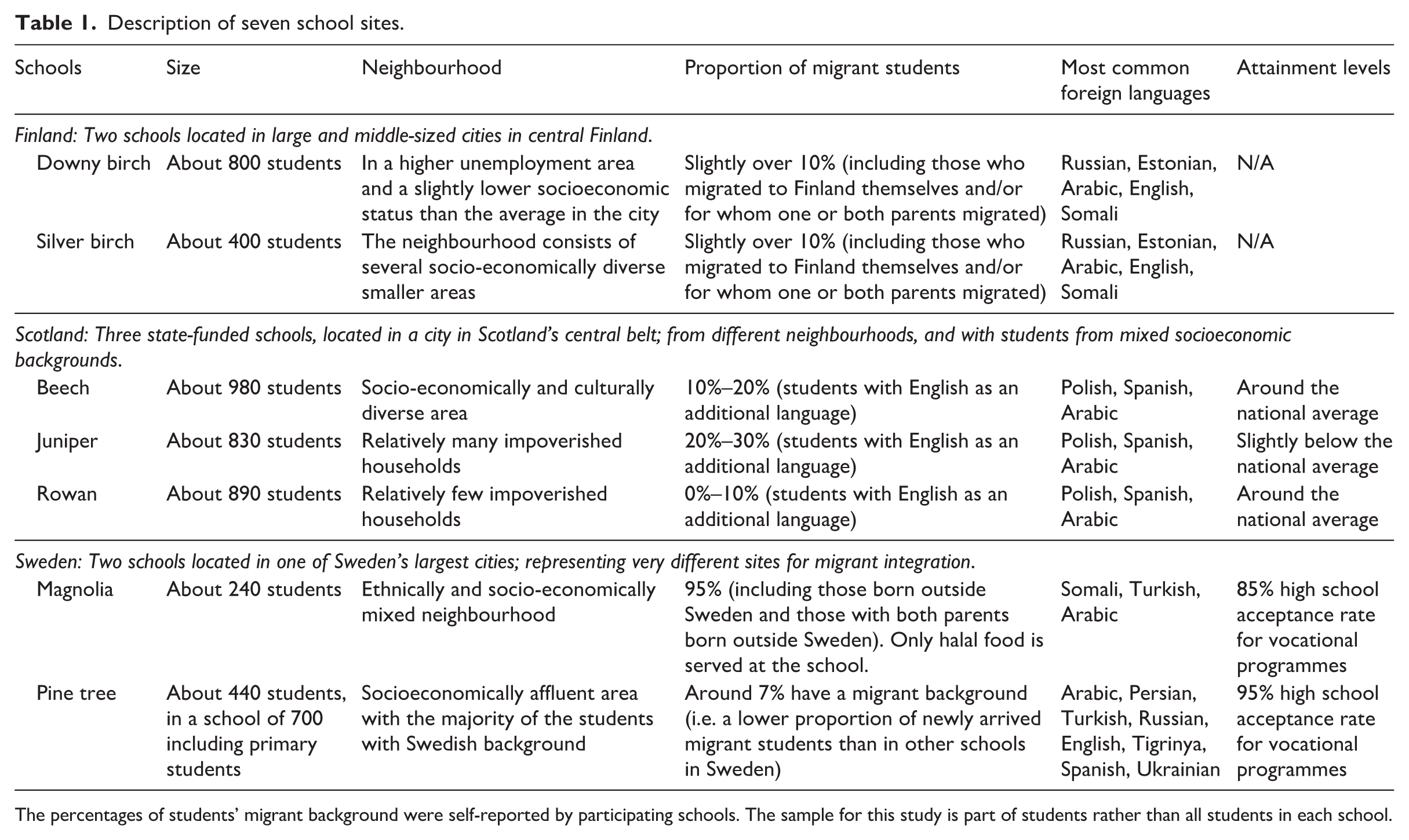
The percentages of students’ migrant background were self-reported by participating schools. The sample for this study is part of students rather than all students in each school.
Measures
Students’ school engagement was assessed via 33 items on cognitive and psychological dimensions directly from Appleton et al. (2006), using a Likert-type scale from 1 (strongly disagree) to 4 (strongly agree). Extrinsic motivation, one of sub-dimensions of cognitive engagement in Appleton et al. (2006), was excluded in this study due to its compromised reliability (e.g. Virtanen et al., 2018). The five sub-constructs of school engagement in Appleton et al. (2006) were applied: (1) teacher-student relationships (alpha = 0.89) via nine items (e.g. ‘Overall, adults at my school treat students fairly’), (2) peer support for learning (alpha = 0.87), via six items (e.g. ‘Other students at school care about me’), (3) family support for learning (alpha = 0.78), via four items (e.g. ‘My family/guardian(s) are there for me when I need them’), (4) control and relevance of school work (alpha = 0.83), via nine items (e.g. ‘The tests in my classes do a good job of measuring what I am able to do’), and (5) future aspirations and goals (alpha = 0.81), via five items (e.g. ‘I plan to continue my education following high school’). Higher scores in the items indicated a higher level of engagement.
The survey also inquired about the students’ migration status (students were categorized as migrants if they were born abroad, or if both of their parents were born abroad), their age, gender, and their parents’ educational level (i.e. university education, secondary school education, primary school education). Note that the students’ SES was based solely on the parental educational level.
To understand the combined effect of the students’ migration status and the migrant student density in schools, three school contexts were created in addition to a binary (low vs high) division of the proportion of migrant students in each school (e.g. Svensson et al., 2012; Tarabini et al., 2019) based on students’ migration status reported in our survey: migrant-dense schools (63.60%–76.47%), migrant-medium schools (28.77%–32.74%), and migrant-sparse schools (5.97%–9.46%). Table 2 shows the composition of each school group.
Classification of three school contexts based on density levels of migrant students (Ns/ percentages) in our data.
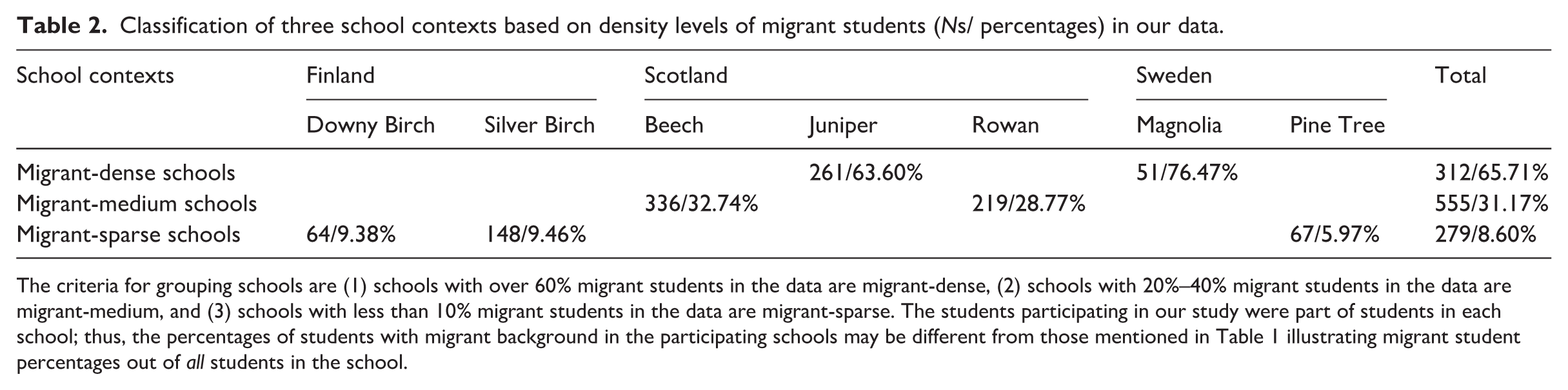
The criteria for grouping schools are (1) schools with over 60% migrant students in the data are migrant-dense, (2) schools with 20%–40% migrant students in the data are migrant-medium, and (3) schools with less than 10% migrant students in the data are migrant-sparse. The students participating in our study were part of students in each school; thus, the percentages of students with migrant background in the participating schools may be different from those mentioned in Table 1 illustrating migrant student percentages out of all students in the school.
Analytical strategy
We mainly utilized the psych package (version 2.3.3; Revelle, 2023) in R 4.3.1 (R Core Team, 2023) for data analyses. To answer the research question 1.1, t-tests were performed to compare students’ school engagement in terms of their migration status. The t value indicates whether the difference between migrant and native students is significant in the means of school engagement. We applied one-way ANOVAs and Welch’s tests to compare students’ school engagement across three school contexts with different densities of migrant students for answering the research question 1.2. The F statistic in ANOVAs reveals whether there is a significant difference in means of school engagement among three school contexts (for details of three school contexts, see the last paragraph of ‘Measures’ section and Table 2). We answered the research question 2 using two-way ANOVAs to compare students’ school engagement across diverse school contexts and parents’ educational levels.
To control for Type I error when conducting multiple one-way ANOVAs, the Holm correction (Holm, 1979) was applied to compute the adjusted target p-value instead of the Bonferroni correction, on the grounds that the Holm correction is less conservative than the Bonferroni correction. This means that it is better able to identify differences that actually exist (Field et al., 2012) and hence, is more powerful than the Bonferroni correction (Aickin and Gensler, 1996).
Results
Descriptive statistics for school engagement and parents’ educational level
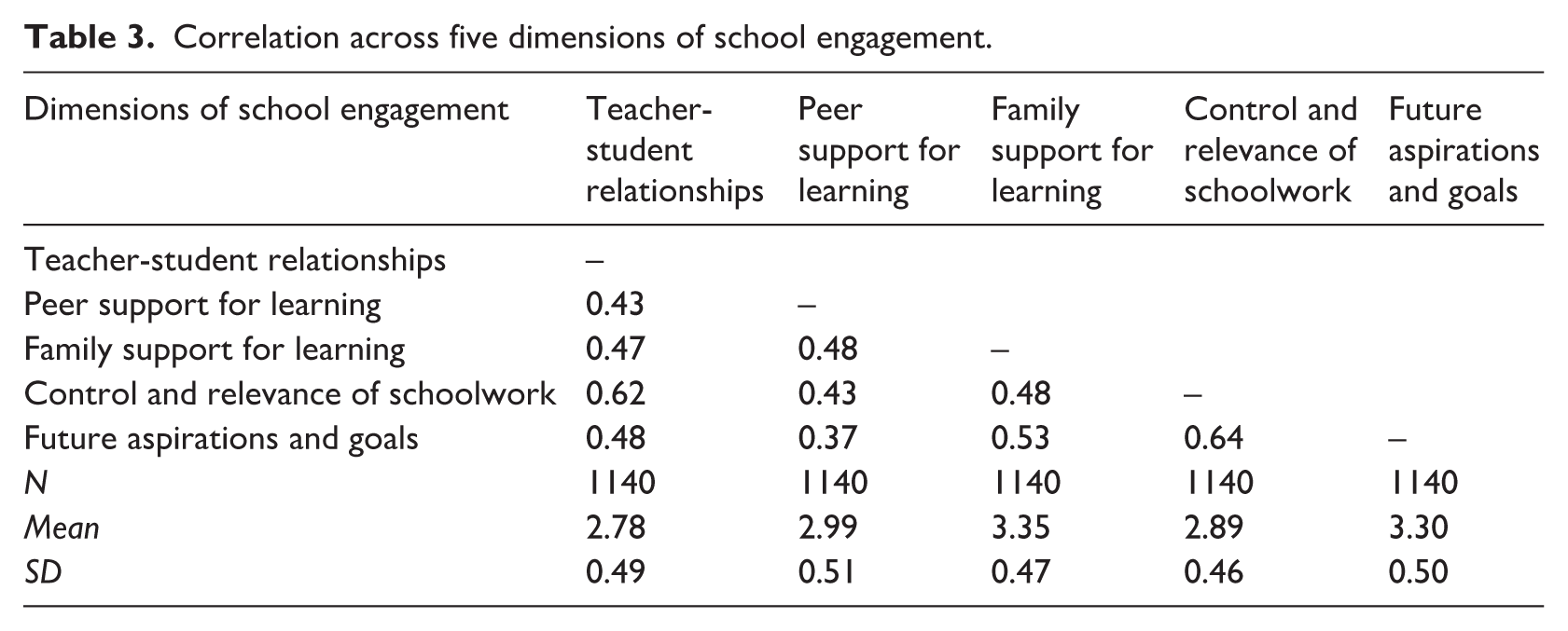
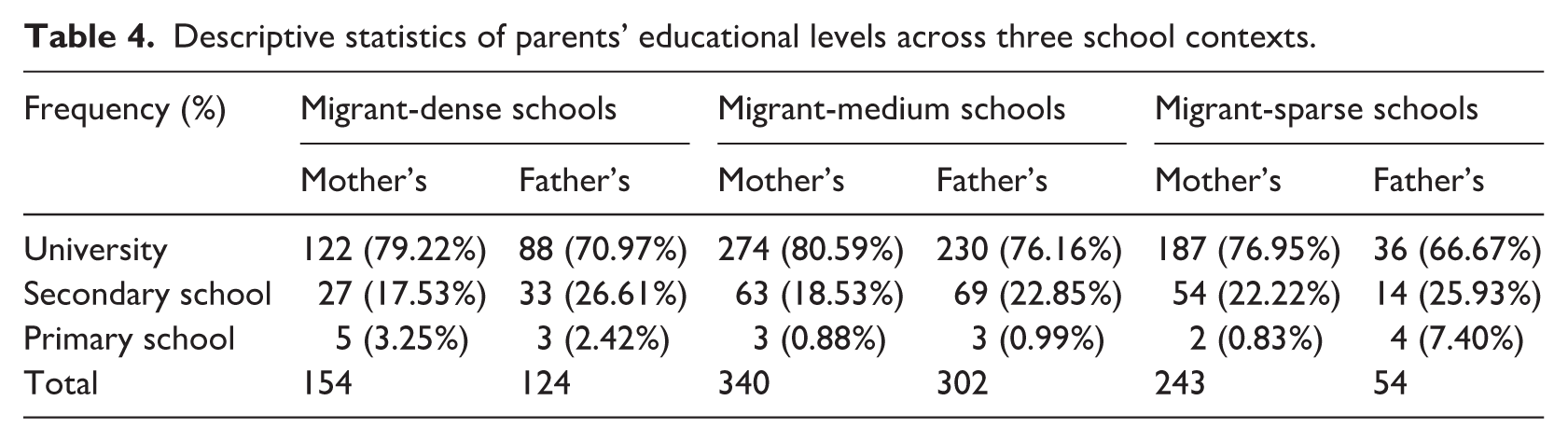
The correlations between the five dimensions of students’ school engagement investigated varied, although most of the correlations were high (>0.40). The highest correlation was between control and relevance of schoolwork and future aspirations and goals. The lowest was between peer support learning and future aspirations and goals. Table 3 presents all the correlations between dimensions. Table 4 shows the descriptive statistics of parents’ educational levels across three school contexts. Students’ migration status was significantly associated with their mother’s (χ2(2) = 9.65, p < 0.01) and father’s educational level (χ2(2) = 9.18, p < 0.05) respectively.
Correlation across five dimensions of school engagement.
Descriptive statistics of parents’ educational levels across three school contexts.
Students’ school engagement between migration status and across school contexts
As compared to their native counterparts, migrant students reported higher levels for control and relevance of schoolwork and for future aspirations and goals. Table 5 shows results of the t-tests between migration status.
T-tests on school engagement dimensions between migration status.
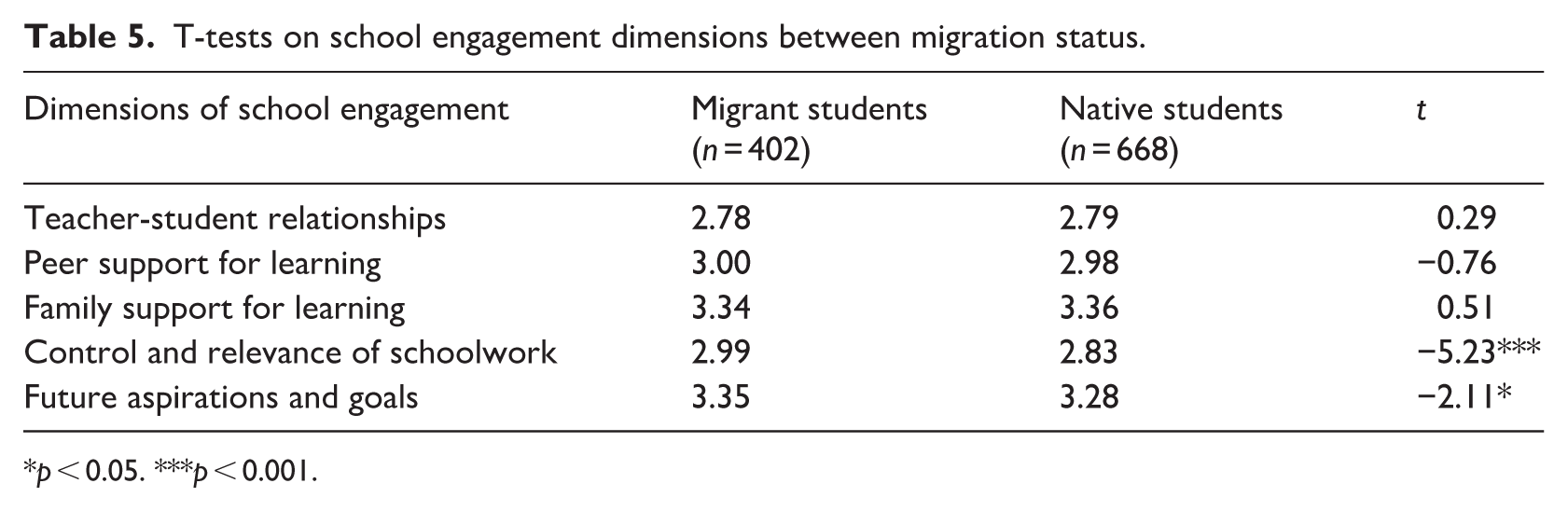
p < 0.05. ***p < 0.001.
As shown in Table 6, students (including migrants and natives) in migrant-medium schools showed the lowest levels for all the school engagement dimensions investigated, with the differences being statistically significant compared to both migrant-dense and migrant-sparse schools. By contrast, those in migrant-sparse schools reported the highest values in every dimension except for control and relevance of schoolwork (see Table 6). Post-hoc tests (Tukey and Bonferroni) revealed significant differences between migrant-dense and migrant-sparse schools, and also between migrant-medium and migrant-sparse schools, with regard to teacher-student relationships and family support for learning. A significant difference was found in control and relevance of schoolwork between migrant-dense schools and migrant-medium schools. With regard to peer support for learning, the three school density levels differed significantly from one another. There were significant differences regarding future aspirations and goals between migrant-medium and migrant-dense schools, and also between migrant-medium and migrant-sparse schools.
One-way ANOVA results for students’ school engagement dimensions (including migrants and natives) across three school contexts.
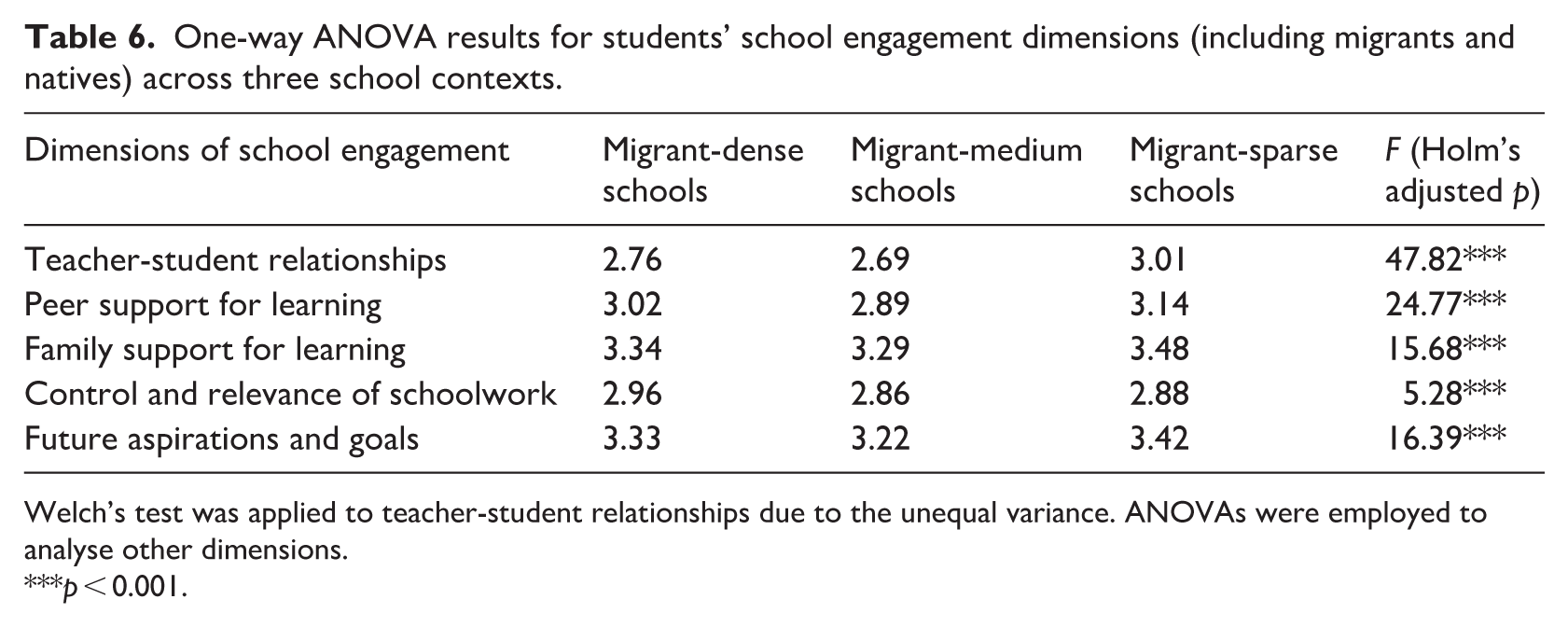
Welch’s test was applied to teacher-student relationships due to the unequal variance. ANOVAs were employed to analyse other dimensions.
p < 0.001.
We further compared students’ school engagement between migration status with reference to the school migration density (dense, medium, sparse). In migrant-dense schools, school engagement was not significantly different between migrant and native students. However, in migrant-medium schools, migrant students reported higher levels than natives in teacher-student relationships, control and relevance of schoolwork, and future aspirations and goals. Similarly, in migrant-sparse schools, migrant students were more engaged than native peers regarding control and relevance of schoolwork. Table 7 shows the figures for each migration density level.
Differences between migration status over diverse school contexts.
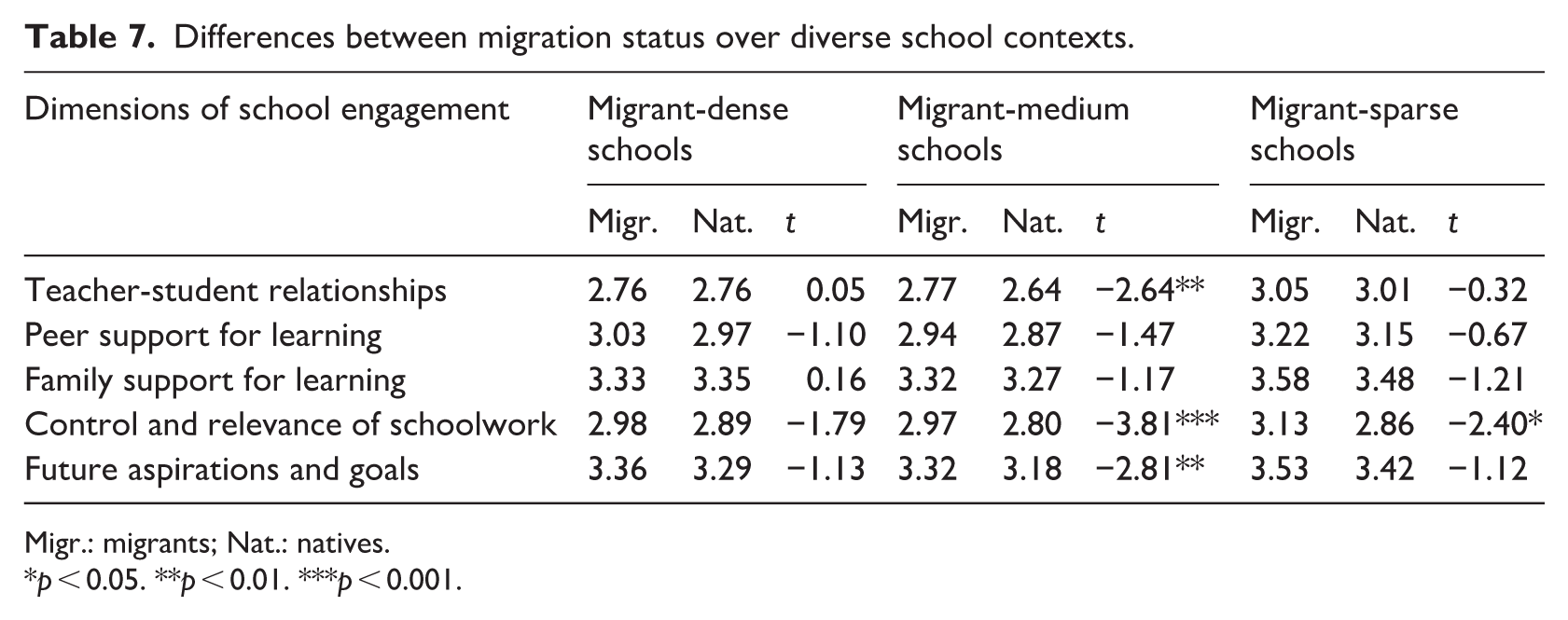
Migr.: migrants; Nat.: natives.
p < 0.05. **p < 0.01. ***p < 0.001.
To examine whether the patterns found in migrant-dense, -medium, and -sparse schools were independent of national contexts, we performed two tests. Firstly, one-way ANCOVAs and pair-wise adjusted mean comparisons were applied to compare each school engagement dimension across three school contexts controlling for country. The results showed the same pattern that students in migrant-medium schools demonstrated the lowest level in all five dimensions of school engagement after controlling for country. Second, we ran one-way ANOVAs and Welch’s tests within three Scottish schools (Scotland had both migrant-medium and migrant-dense schools) to test if migrant-medium schools had lower school engagement locally. Significant results were found in control and relevance of schoolwork (F (2,807) = 4.66, p < 0.01), peer support for learning (F (2,487.64) = 9.56, p < 0.001), and future aspirations and goals (F (2,807) = 5.91, p < 0.01). Migrant-medium schools exhibited lowest scores in these dimensions of school engagement in post-hoc tests. Consequently, it can be interpreted that the main pattern found in three school contexts (i.e. students in migrant-medium schools showed the lowest level of school engagement) was independent of country context.
Students’ school engagement across parents’ educational levels and school contexts
Results of two-way ANOVAs with parents’ educational level and school contexts as functions in school engagement showed that diverse school contexts demonstrated significant function in teacher-student relationships (F (2,726) = 38.63, p < 0.001 when mother’s educational level was included, F (2,469) = 17.96, p < 0.001 when father’s educational level was included). Similarly, diverse school contexts exhibited statistically significant function in peer support in learning (F (2,726) = 16.82, p < 0.001 when we included mother’s educational level, F (2,469) = 7.34, p < 0.001 when we included father’s educational level. Furthermore, diverse school contexts played a significant role in control and relevance of schoolwork when we added the mother’s educational level as a function in addition to diverse school contexts (F (2,726) = 3.98, p < 0.05). Both diverse school contexts (F (2,726) = 12.97, p < 0.05) and mother’s education level (F (2,726) = 13.53, p < 0.05) showed significant functions in future aspirations and goals. Finally, mother’s educational level demonstrated a significant function in family support for learning (F (2,726) = 10.00, p < 0.05). These findings suggested that density of migrant students in schools is likely to be a stronger function than the parents’ educational level with regard to most of school engagement dimensions except family support for learning. Tables 8 and 9 show the results of school engagement across three school contexts and parents’ educational level respectively.
Two-way ANOVA results of school engagement across mother’s educational level and school contexts.
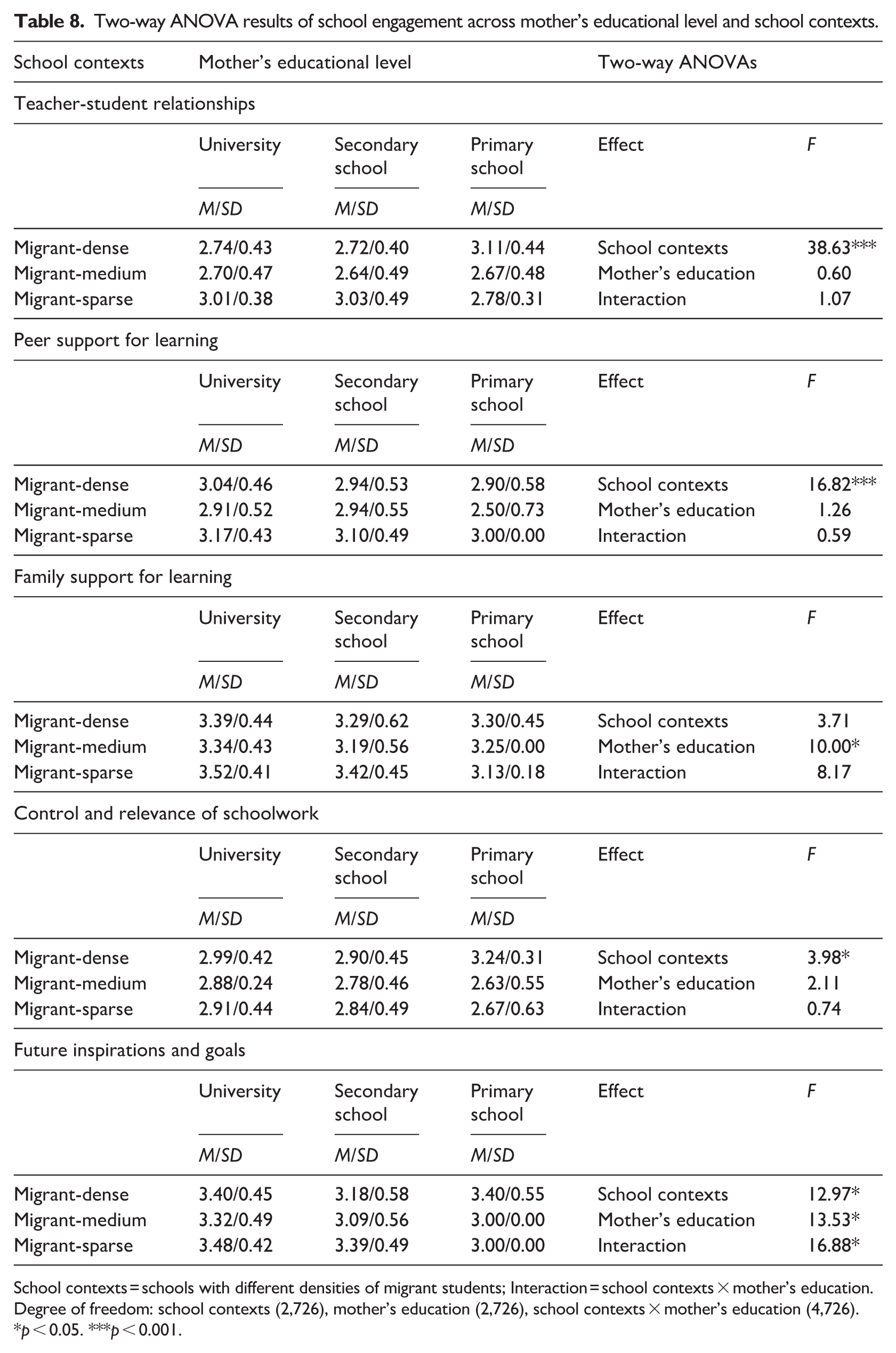
School contexts = schools with different densities of migrant students; Interaction = school contexts × mother’s education. Degree of freedom: school contexts (2,726), mother’s education (2,726), school contexts × mother’s education (4,726).
p < 0.05. ***p < 0.001.
Two-way ANOVA results of school engagement across father’s educational level and school contexts.
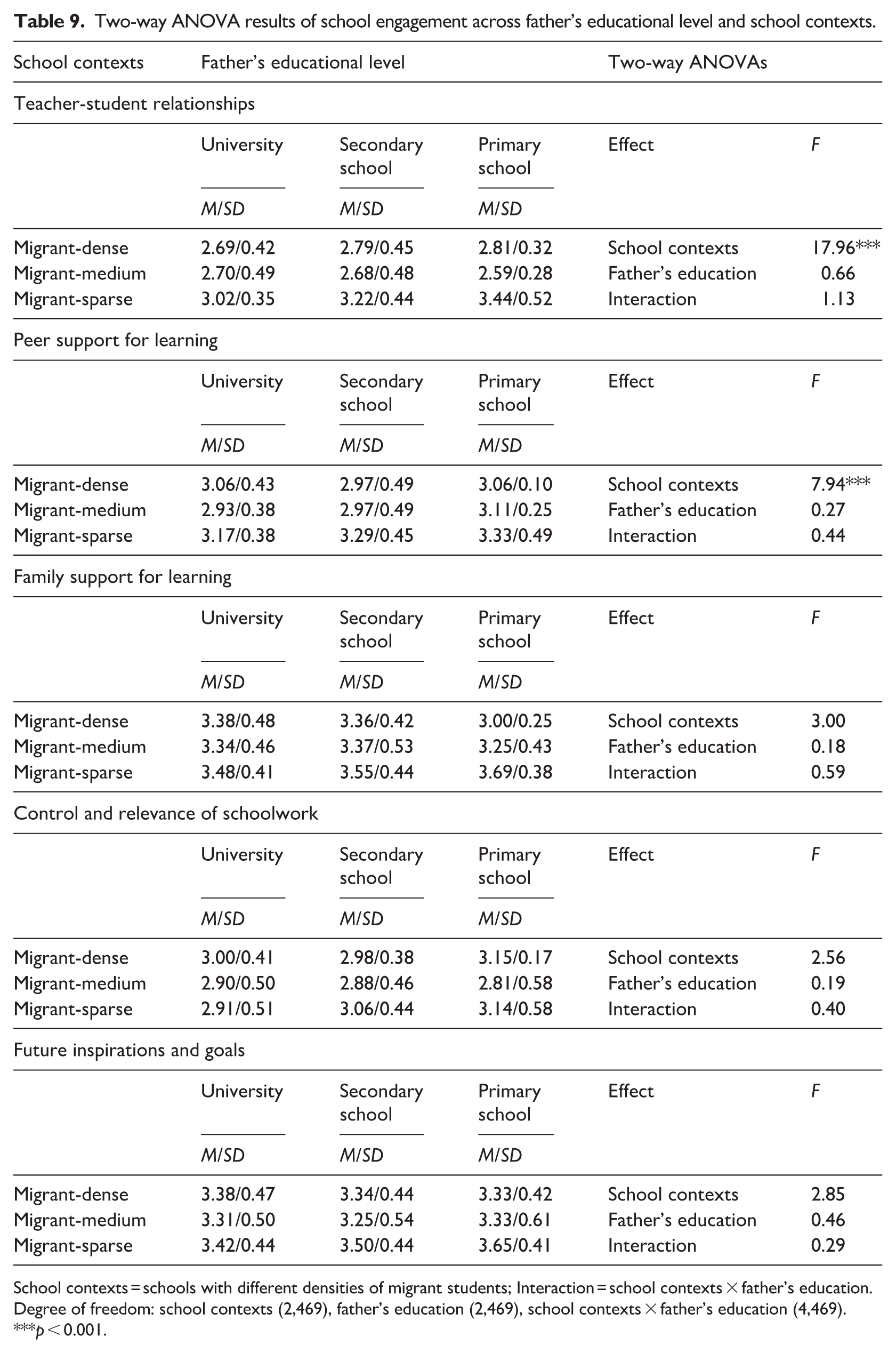
School contexts = schools with different densities of migrant students; Interaction = school contexts × father’s education. Degree of freedom: school contexts (2,469), father’s education (2,469), school contexts × father’s education (4,469).
p < 0.001.
Discussion
This study investigated (1) to what extent students’ school engagement differs between migration status and across schools with different densities of migrant students, and (2) how students’ school engagement varies in terms of their parents’ educational level. We found that schools with a medium density of migrant students (schools where 29%–33% of students were migrants) exhibited the lowest levels in all five dimensions of school engagement investigated. This is an important finding in this study. The result can, to some extent, be elaborated in connexion with the school cultures and practices that would resource teachers’ support for migrant students. Pantić et al. (2024) highlighted the importance of teachers’ collaborative social networks to exercise their relational agency in support of migrant students. They found higher levels of collaboration in support of migrant students among teachers, specialists, and other educators in migrant-dense schools, indicating that collaboration around migrant support as a common feature within the working community is largely driven by the demographics of the student populations. In contrast, in migrant-sparse schools, support for migrant students tends to be implemented often through specialists designated (e.g. second language teachers, special educators). Collaborative social networks in migrant-dense schools are often effective in giving almost all students the necessary support, which may be particularly consequential for migrant students. This could explain why, in our study, migrant-dense schools showed no significant difference between migrant and native students with regard to school engagement. Migrant-medium schools may fall into a ‘space between’, having neither the resources to meet students’ needs through specialists nor adequate collaborative/supportive social networks in the broader school community. From the complementary qualitative data reported in other studies of the same research project (Lund et al., in review), we may interpret these differences in the light of local school cultures that in practice is less engaged in a multicultural inclusive school culture as well as a scarcity of specialized resources in these migrant-medium schools in Scottland (both of migrant-medium schools are in Scottland) where the demands from migrant students are growing in terms of the need for support. In these ‘in between’ schools, teachers find themselves caught between the barriers students encounter and lack of resources they could access to mobilize support, while falling short of developing practices that treat diversity as a norm in the more migrant-dense contexts. In these conditions, teachers in migrant-medium schools–who are expected to respond to linguistic and cultural diversity of students–may encounter role overload with insufficient capacity to scaffold school engagement for migrant students. On the other hand, the ‘space between’ that migrant-medium schools fall into can also potentially cultivate school culture that has not yet adapted to the increasing presence of migrant students. Here, adaptation is often a labile set of norms (Grzymala-Kazlowska and Phillimore, 2018), expectations and practices about migrant students that sits between the specialist-driven responses in migrant-sparse schools and the routinized and collective practices in migrant-dense schools. Adaptation means not only formal policies but everyday routines. For instance, distributed responsibility for newcomer support and normalized expectations about language development and assessment. These practices may be institutionalized (e.g. standing agendas for cross-professional case work through internal teacher collaboration networks) in migrant-dense schools. However, in migrant-medium schools, adaptation may be piecemeal or even contested, potentially associated with inconsistent teacher-student relationships. Consequently, sufficient targeted resources and cultivation of migrant-adaptive school culture (Tajic and Lund, 2023) may support students in migrant-medium schools to engage in school.
In comparison with migrant-sparse schools (schools where 6%–10% of students were migrants), students (including migrants and natives) in migrant-dense schools (schools where 64%–77% of students were migrants) showed lower levels in terms of teacher-student relationships, peers support for learning, and family support for learning. This suggests that students (including migrants and natives) in migrant-dense schools might have less chance of experiencing social relationships with family, peers, and teachers that would support their learning. Previous studies may partially explain this finding. That is, students’ school engagement is likely to be highest in schools located in high-SES neighbourhoods where the density of migrants is often low. High-SES schools often have a range of high-quality resources for teachers to systematically support students’ involvement in the school, in addition to strong social relations with parents and neighbourhood stakeholders, with positive effects on students’ engagement (e.g. Ackert, 2017). Nevertheless, our result is, to some extent, related to the finding in Plenty and Jonsson (2017) that migrant students in migrant-sparse classrooms report more social exclusion than those in migrant-dense classrooms. Migrant students in migrant-sparse contexts may have fewer social opportunities to interact with their native peers or with their teachers, who are likely also to be natives. Migrant students would then be at risk of failing to express themselves in the native vernacular, along with difficulties in achieving recognition and possible discrimination (Motti-Stefanidi et al., 2021). More limited social interaction with peers and teachers could hinder migrant students’ school engagement and learning in migrant-sparse classrooms.
Students’ school engagement in general, and particularly their relationships with teachers and peer support for learning, may vary in schools and classrooms with different densities of migrant-background students. However, in all schools, promoting inclusion and school engagement benefits from attention to teachers’ pedagogical collaboration, leadership, and how the school culture–with its values, practices, and perceptions–supports the social and academic needs of all students (Evans et al., 2020; Manninen et al., 2022). Strengthening students’ school engagement may require a deeper understanding that students’ integration into the school community is a reciprocal process of adaptation, in which teaching practices and support measures aimed at fostering a sense of community taking students’ diverse backgrounds into account (Tajic and Lund, 2023).
When the effect of school contexts was included, students whose mother’s educational level was higher still exhibited higher levels in future aspirations and goals and in family support for learning. Particularly, family support for learning was the only engagement dimension that was solely related to the level of mother’s education. These findings are in line with Motti-Stefanidi et al. (2015), indicating that belonging to a low-SES family is an explicit risk factor for students’ school engagement. Among various contextual factors, family is the most influential for students’ learning and school engagement (Martins et al., 2022). It appears that parents at a lower educational level tend to place a lower value on academic success and education, and may consequently give less support for children’s learning (Antony-Newman, 2019). Thus, students with parents at a lower educational level would tend to have lower level of school engagement.
Our study has several implications. Comparative research on migrant students’ school engagement has, traditionally, focussed on country-wide contexts. Nevertheless, our findings imply that school contexts with diverse densities of migrant students matter for students’ school engagement. Furthermore, studies on school contexts relative to school engagement have mainly applied a binary (low vs high) division of migrant student densities (e.g. Svensson et al., 2012; Tarabini et al., 2019). We investigated schools with an additional medium density of migrants, and found that these schools reported the lowest level of school engagement. These findings indicate that schools are particularly important for providing comprehensive support for school engagement tailored to the needs of their students, including migrants among them.
There are several limitations in this study. Firstly, we focussed on merely five sub-constructs in the cognitive and psychological dimensions of school engagement from the framework of Appleton et al. (2006). Secondly, the sample sizes (in terms of student number in schools of similar densities of migrants) were not equal (see Table 2), leading to certain cancelling out effects. For example, students in the Magnolia school reported the highest value for teacher-student relationships (M = 3.06) across seven schools; however, taken together with the Juniper school (M = 2.70), migrant-dense schools (Magnolia and Juniper) showed merely a medium level (M = 2.76) in teacher-student relationships across three school contexts. In addition, our data were imbalanced in structure in terms of country and school contexts. That is, Finnish schools contributed to only migrant-sparse schools, while migrant-sparse school is absent in the Scottish sample. Accordingly, some effects of school contexts may be confounded with country effects because there is no variation in some cells (i.e. no migrant-medium or migrant-dense school was from Finland; no migrant-sparse school was from Scotland; migrant medium schools were Scottish schools). Thus, one cannot directly disentangle effects of country and school contexts with such imbalanced data structure. For instance, one cannot statistically distinguish effects of Finnish policy from the migrant-sparse school effects in Finland. Thirdly, the parents’ educational level we utilized represents only one indicator of the students’ SES. To obtain more comprehensive information on SES, future investigations should include additional SES indicators, for example, parents’ income, occupation and their social connections. Further, it is important to go beyond the SES factor in considering the nature of students’ diverse backgrounds, since failure to consider intersectional factors may hinder one’s understanding of how possible exclusion or engagement is constructed, addressed, discussed, and assessed (Jalušič and Bajt, 2021). Finally, while our study confirms that the differences in school engagement can, to some extent, be related to the density level of migrant students, it is also important to interpret these findings in light of the complementary data about specific school practices reported in other studies from the same research project (TEAMS project-Teaching that Matters for Migrant Students: Understanding Levers of Integration in Scotland, Finland and Sweden).
Schools in many European countries are becoming more and more culturally diverse. Practitioners and policymakers need to be aware that support for both migrant and native students is crucial for school engagement (Schachner et al., 2019). For their part, researchers need to go beyond broad country or regional contexts and take into account the school contexts (Van Den Broeck et al., 2023), including diverse densities of migrant students in schools. Hence, policymakers and researchers should consider in more detail the nature of individual school contexts when focussing on migrant integration in schools.
Footnotes
Declaration of conflicting interests
The authors declared no potential conflicts of interest with respect to the research, authorship, and/or publication of this article.
Funding
The authors disclosed receipt of the following financial support for the research, authorship, and/or publication of this article: This work was funded by TEAMS project (Teaching that Matters for Migrant Students: Understanding Levers of Integration in Scotland, Finland and Sweden), Joint Nordic-UK Research Programme on Migration and Integration, NordForsk, 2020-2024 (grant number: 94935). Shupin Li was funded by the Finnish Cultural Foundation (grant numbers: 00220614, 00250005).
Ethical considerations
Participation was voluntary and anonymous. Participants’ positive consents were obtained after information on the study had been given to each school. The study protocol was approved by the Ethics Committees of the participating universities (University of Edinburgh, University of Jyväskylä, University of Stockholm), and by the relevant education authorities in each country.

Data availability
Data will be made available on request.