




Abstract
This study investigates the identity formation of first-generation students during their transition to university in the Czech Republic, while also reflecting the impact of COVID-19-related distance learning. Drawing upon qualitative interviews (N = 25), the study explores their relationship with their studies. The findings, presented as identity trajectories, highlight how the formation of the student identity is based upon the interaction of multiple factors. The first trajectory represents students who resist the student identity, the significant reason is that they see being a student in opposition to being an adult. The second trajectory encompasses various student journeys: Some experienced significant shifts from their initial approach to studying, including those who overcommitted and burned out, some became distracted and found it hard to focus and still others found themselves unprepared for the demands of university scholarship. The final trajectory depicts students who smoothly adjusted, facilitated by disciplinary interest and lecturer support. Interestingly, the experience of COVID-19 played an unpredictable role, weakening learning engagement for some but providing time to focus on studies for others, shifting their identity trajectories. Overall, the study underscores the importance of tailored drop-out prevention interventions that acknowledge the diverse pathways through which students navigate their identity formation.
Keywords
While access to higher education for historically underrepresented groups has increased in recent decades, there is still a need to explore how these students manage the process of transitioning and progressing to graduation. More specifically, in the Czech Republic, where this study was conducted, the number of first-generation higher education students ranges from 53.7% (bachelor’s level) to 50.6% (master’s level); in non-structured masters programmes the representation of first-generation students is only 33.8% (Hündlová and Šmídová, 2020, graph 27: 36). This high presence is partly due to a specific historical context, where the changes from elite to universal tertiary education took only 15 years following the political changes of 1989 (Kohoutek et al., 2021; Prudký, 2010). Regardless, the experiences of students within the educational system are understudied in the local context in spite of a high rate of academic failure among university students in Czech tertiary education (CZSO, 2023a). First-generation students (FGSs) are not progressing proportionately to the higher levels of tertiary education, and the lower representation in non-structured programmes, which include medicine or primary education, suggests disciplinary differences. These observations call for a nuanced analysis of their experience and the barriers they encounter, which could both highlight specific obstacles FGSs meet as well as amplify problems faced by students in general.
Building on research exploring the lived experiences of FGSs (for instance, Engle and Tinto, 2008; Lehmann, 2007; Reay et al., 2005, 2009; Yee, 2016), our focus is students’ identities in transition (Crafter et al., 2019). We are interested in how FGSs develop their student identities in the process of becoming university students during their first few years, including, for some in our sample, the impact of measures to prevent the spread of COVID-19. The focus on student identity formation is based on our aim to identify relevant psychological components in becoming a (university) student, which is valuable as current research suggests it has an impact on student engagement, performance, well-being and attrition (Mavor et al., 2017).
We aim to understand critical moments in student identity formation that influence their engagement and success rates, particularly among FGSs. Our study is exploratory in nature; thus, we formulated broad research questions, asking what the experiences of FGSs are upon entry and during their first years at university as well as how they reconstruct their student identities in this time. By focusing on the transition to university life, we avoid a deficit view of these students and highlight the complex factors that influence academic progress. Using data from two projects involving 25 respondents, we assess the initial university experience and explore the factors influencing identity formation. In the following literature review, we will provide an overview of the current research on FGSs, present our theoretical framework encompassing identities in transition and discuss the Czech context.
Specific challenges first-generation students face
Compared to their continuing-generation peers, 1 a higher percentage of first-generation students leave university before graduating (Engle and Tinto, 2008; Forrest Cataldi et al., 2018; House et al., 2020; Ishitani, 2003; Schelbe et al., 2019). While successful academic and social integration is considered an effective way to reduce the number of students leaving higher education without a degree (Tinto, 1975; Vlk et al., 2017), FGSs tend to experience difficulties with integration (Grayson, 2011; Martinez et al., 2009; Rubin, 2012; Soria et al., 2013; Soria and Stebleton, 2012) and might experience academic acculturation stress due to the lack of valued cultural capital (Bourdieu and Passeron, 1990; Jenkins et al., 2013).
In addition to facing the typical challenges associated with the transition from secondary to tertiary education, they may face other problems related to their socioeconomic situation (Stevenson and Clegg, 2011) or caring responsibilities (Jehangir, 2010, Quinn et al., 2019). Work and family commitments, often combined with fewer financial resources, limit the opportunities for these students to participate in university life (Martin, 2012; Rubin and Wright, 2017). FGSs from working-class backgrounds are more likely to have part-time employment while at university (Reay et al., 2005), and the amount of time spent at work (Martinez et al., 2009; Seay et al., 2008) increases the likelihood of not completing a degree.
FGSs may struggle to find enough time to study (Katrevich and Aruguete, 2017; Pratt et al., 2019), complete fewer subjects and earn fewer credits per semester (Pascarella et al., 2004), have less contact with teachers and rely more on themselves (Chang et al., 2020; Hicks and Wood, 2016; Yee, 2016), and have difficulty understanding and adapting to the demands of higher education (Collier and Morgan, 2008). FGSs were also reported to make less use of student accommodations (Núñez and Cuccaro-Alamin, 1998). They report a lower sense of belonging in university (Rubin, 2012), which affects social and academic adjustment, the university experience and academic performance (Ostrove and Long, 2007). Studies have found their level of social engagement remains the same (Rubin, 2012) or even decreases over time (Grayson, 2011); inadequate social integration can lead to poorer academic performance (Rubin et al., 2019), mental health problems (Rubin et al., 2016) and lower levels of satisfaction with studies (Martin, 2012). Due to the lack of social support and academic acculturation stress, they may experience more stress and depressive symptoms (Jenkins et al., 2013, Jury et al., 2017). Overall research into mental health concerns is inconclusive (Smith and McLellan, 2023); however, the tensions that affect well-being do, in general, lead to lower satisfaction with studies and a greater tendency to drop out (Ketchen Lipson and Eisenberg, 2018).
To summarize, FGSs represent an internally diverse group that deserves more specific attention. While the main thrust of the research, as described above, is focused on how their status contributes to experiencing problems upon entering university, they also represent a group that could provide meaningful feedback regarding the need to change organizational practices within tertiary education. This would allow not only the accommodation of a more diverse student body but also the ability to improve the systems, to support all students more effectively. In our paper, we focus on the psychological aspects of identity formation among FGSs as they relate to their participation in tertiary education and, thus, complement the sociological perspective prevailing in current research.
Identity formation from a developmental perspective
Early on, Erikson (1968) recognized the importance of change in acquiring identity, arguing that adolescence is essential for achieving a stable and coherent identity. However, this experimentation phase is prolonged with longer education. New university students are usually expected to enjoy an ‘in-between’ developmental phase of emerging adulthood, a period typically only recognized in some cultures that allow for a prolonged entry into adulthood (Arnett, 2000, 2004). The search for identity during emerging adulthood is characterized by experiences of instability, self-orientation, halfway feelings and the exploration of new possibilities and opportunities. A common tendency during this period is to postpone important decisions and commitments until the individual ‘feels’ it is right (Arnett, 2004; Thorová, 2015). While this developmental phase as such has been named to reflect the observed experience of extended identity-related exploration, it is also inevitably a reminder of its end goal, bringing with it increased pressure to take decisions that commit these young adults toward independent adult roles, such as deciding on a career path or entering a committed relationship.
Psychologists such as Erikson typically put the individual front and centre, but it is also important to grasp the broader context in which the individual is situated. Social constructivism emphasizes that identity formation is an ongoing process marked by fragmentation and multiplicity. This perspective highlights that psychological experiences are situated within dynamic social contexts, allowing us to better understand how individuals navigate their identities within educational and social environments (Burr, 2003). Transitory situations, such as becoming a university student, can be understood as the ‘experience of changing’ (Gorgorió et al., 2002: 24). Transitions ‘invariably involve changes to self-identity born out of uncertainty in the social and cultural worlds of the individual’ (Crafter and Maunder, 2012: 10). Their nature is ambiguous and might include conflicting demands. Transitions remind us that identities are never finite – they are in a constant state of becoming through social practices (Holland et al., 1998). Development occurs at the intersection of the psychological and the social through reciprocal transactions between a person and the world. When people are confronted with significant changes that challenge the way they are used to acting and thinking, they enter a state of disequilibrium that can lead to the development of new skills, ways of understanding and identities (Zittoun, 2022). Schools and education systems play a crucial role in shaping identities (Mavor et al., 2017), and this is particularly evident during student transitions (e.g. from high school to university), with personal and identity transformations arising from these new challenges (Hussey and Smith, 2010; Warin and Dempster, 2007).
The transition to university, however, is challenging and has the potential to harm well-being. The transition is even more demanding when it involves an experience of discontinuity in group memberships (Iyer et al., 2009), which non-traditional students, such as FGSs, are more likely to experience. Successful acquisition of new social identities resulting from group memberships associated with being a student positively affects the sense of belonging and personal control, self-esteem and other basic psychological needs, which reduces the incidence of depression (Greenaway et al., 2016). Social identities motivate certain types of behaviour that lead to academic success or failure (Cruwys et al., 2017). For example, when students adopt social norms based on a deep approach to learning, this typically contributes to better academic outcomes (Bliuc et al., 2011a, 2011b; Smyth et al., 2015).
Therefore, a key factor in successfully integrating into higher education is the construction of a new identity(ies) associated with being a university student (Whitehead and Wright, 2017). Perceived compatibility between old and new identity(ies) and membership in multiple groups increase the likelihood of identifying with a new group of university students based on several shared aspects, such as student community, institutional identification and identification with a particular discipline. Those from lower social class backgrounds, which is more likely to be the case for FGSs, are less likely to be members of multiple groups and to find the university student identity compatible with their existing identities, consequently making them less likely to form a group-based social identity as a university student (Iyer et al., 2009). The perceived incompatibility between class origin and study environment negatively affects the identification process as well as the academic performance and motivation to complete university studies (Matschke et al., 2022). In other words, the experience of a cultural mismatch between family values and the values of academic institutions (Chang et al., 2020; Phillips et al., 2020) or simply the feeling of not belonging leads to questioning one’s chances of academic success (Jetten et al., 2008, 2017; Walton and Cohen, 2011).
In summary, our study advances a framework that integrates research on (a) the specific experience of diverse FGSs; (b) the development of identity as a complex, situated and ongoing process; and (c) research that explores the relationships between academic identities and the impact on student achievement and well-being. We have argued that transitions, even when desired, pose challenges due to the potential for discontinuity in both individual and group-based identities. We apply this framework to examine the early experiences of FGSs in university settings, situating our analysis in the Czech educational system, which we will describe in the next section.
Context of the study: First generation university students in Czech higher education
In this part, we will first address the situation of FGSs within Czech higher education, followed by a review of key information about how the COVID-19 pandemic impacted the student population in the country, a period during which part of our research was conducted.
Access to tertiary education in the Czech Republic requires the completion of secondary education with a successful matura (exit exam), and the Czech educational landscape has been shaped by the need for students to successfully complete this crucial step and continue their education on the tertiary level (Hloušková et al., 2022). This focus on continuity reflects societal values regarding academic achievement. In contrast to Germany and Austria, where individuals often interrupt their educational pathways and later return, the Czech Republic tends to see students continuing their studies without interruption (Unger, 2023). Approximately 75% of secondary school students complete the matura, granting them eligibility to pursue higher education (CERMAT, 2021; CZSO, 2023b). Each year, around 60% of these graduates continue their studies at the university level (MoEYS, 2022).
Higher education in the Czech Republic has transitioned into a universally accessible phase (Kohoutek et al., 2021; Prudký, 2010), resulting in a more diverse student body, including many who are the first in their families to attend university. According to Hündlová and Šmídová (2020, graph 27, p. 36), FGSs account for slightly over half of all bachelor’s and master’s programme enrolment. Additionally, 47% of FGSs choose to enrol in full-time studies. A quantitative analysis of graduates by Korečková and Šmídová (2020) further reveals that 66.1% of students are first-generation, with 47.7% having parents who completed a matura and 18.7% whose parents did not. Among master’s degree graduates, 48.9% are FGSs, comprised of 38.9% with parents who have a matura and 10% without. Similarly, for doctoral degree graduates, 39.2% are FSGs, with 29.9% having parents who completed a matura and 9.3% without. The Eurostudent survey (Hündlová and Šmídová, 2020) also highlights that 11.9% of students face financial difficulties. In their 2021 review, Münich and Kořínek emphasize that students from lower socioeconomic backgrounds often struggle within the higher education system, typically lacking the targeted support that benefits their more privileged peers in the Czech higher education system.
Before moving on to our data, let us briefly review the impact of the COVID-19 pandemic on Czech higher education. Like most countries worldwide, the Czech Republic faced school closures and a shift to distance learning. According to UNESCO (2021), schools in the Czech Republic were closed for 46 weeks, significantly longer than the EU and OECD averages. Data collected by the Ministry of Education from 23,000 students and nearly 5000 academic staff revealed that the pandemic had a substantial negative impact on student well-being. Students reported a loss of motivation, a decline in the quality of their work and a reluctance to engage actively in the academic environment. In terms of effectiveness, about 60% of academics rated student performance in distance education worse than in traditional education (Duspivová, 2021). These challenges were especially pronounced for FGSs, who were already facing numerous hurdles. The pandemic introduced additional restrictions, uncertainty, isolation and economic stress, which, as foreign studies have shown, can reduce mood, disrupt rest patterns (Copeland et al., 2021) and trigger psychosocial stress, leading to concentration problems, anxiety, insomnia, decreased productivity and interpersonal conflicts (Vinkers et al., 2020). Our research also revealed that for several students, the lockdown influenced the development of their identity trajectories, underscoring the pandemic’s profound impact on both academic performance and personal growth.
Methods
In this article, we present one of the first investigations of FGS in the Czech higher education system. In researching their experience becoming university students, we recruited 25 respondents for two projects, with data collected by the second and fourth authors. The research sample was selected using snowball, self-selection and simple purposive sampling methods, which are common and appropriate for qualitative research (Miovský, 2006). Contacts with the authors’ classmates were first exploited, both from their current and previous institutions. Advertisements were additionally posted in student Facebook groups seeking participants who were full-time bachelor’s students with non-university-educated parents.
Interviews with participants were semi-structured and conducted in 2018, 2019, 2020 and 2021. The fourth author conducted one interview with each participant and also asked them to draw a simple trajectory of the ‘ups and downs’ between finishing high school and the moment of the interview, while the second author did two interviews with each participant (the time interval between interviews was one to 2 years). The common focus of the interviews was the students’ experiences during the first years of their studies at the bachelor’s level (e.g. ‘How was the transition between high school and university for you?’, ‘What did you expect from studying at university and to what extent were your expectations fulfilled?’, ‘How do you rate your studies so far?’, ‘What do you consider to be the turning points during your university studies and why?’, ‘How do your family and friends perceive your university studies?’, ‘How do teachers approach you?’, ‘What kind of support and from whom is it provided to you?’). Depending on the participant’s year of study, some interviews had to go back retrospectively to the first 2 years of undergraduate study. The interviews of the fourth author and the second round of interviews of the second author also addressed the impact of the COVID-19 pandemic on the participants’ studies. The length of the interviews ranged from 30 to 120 minutes, depending on the richness of the participants’ statements. Due to the COVID-19 pandemic, some interviews took place online. Before each interview, the respondent was familiarized with the purpose of the research and the preservation of anonymity throughout the entire scope of what was said as well as the possibility to withdraw from the interview/research if they felt the need, thus achieving the voluntary nature of their participation.
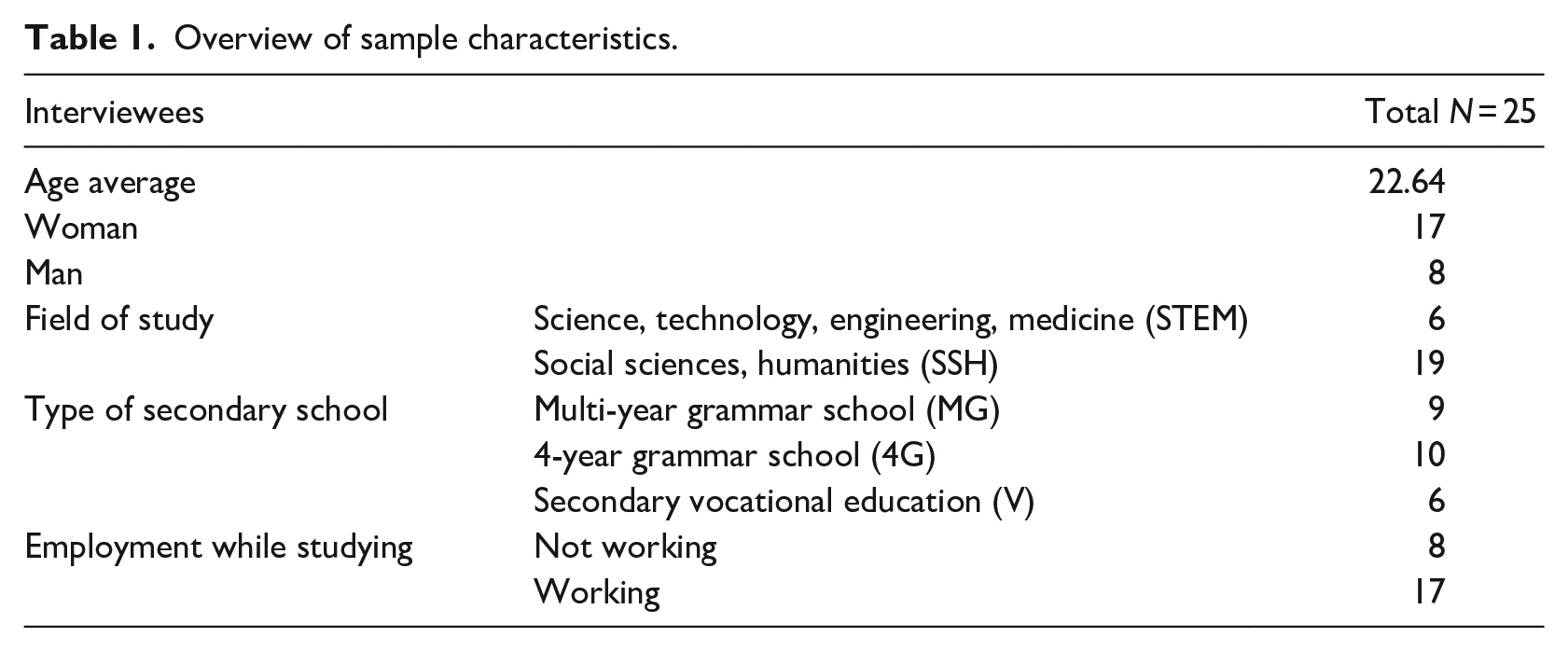
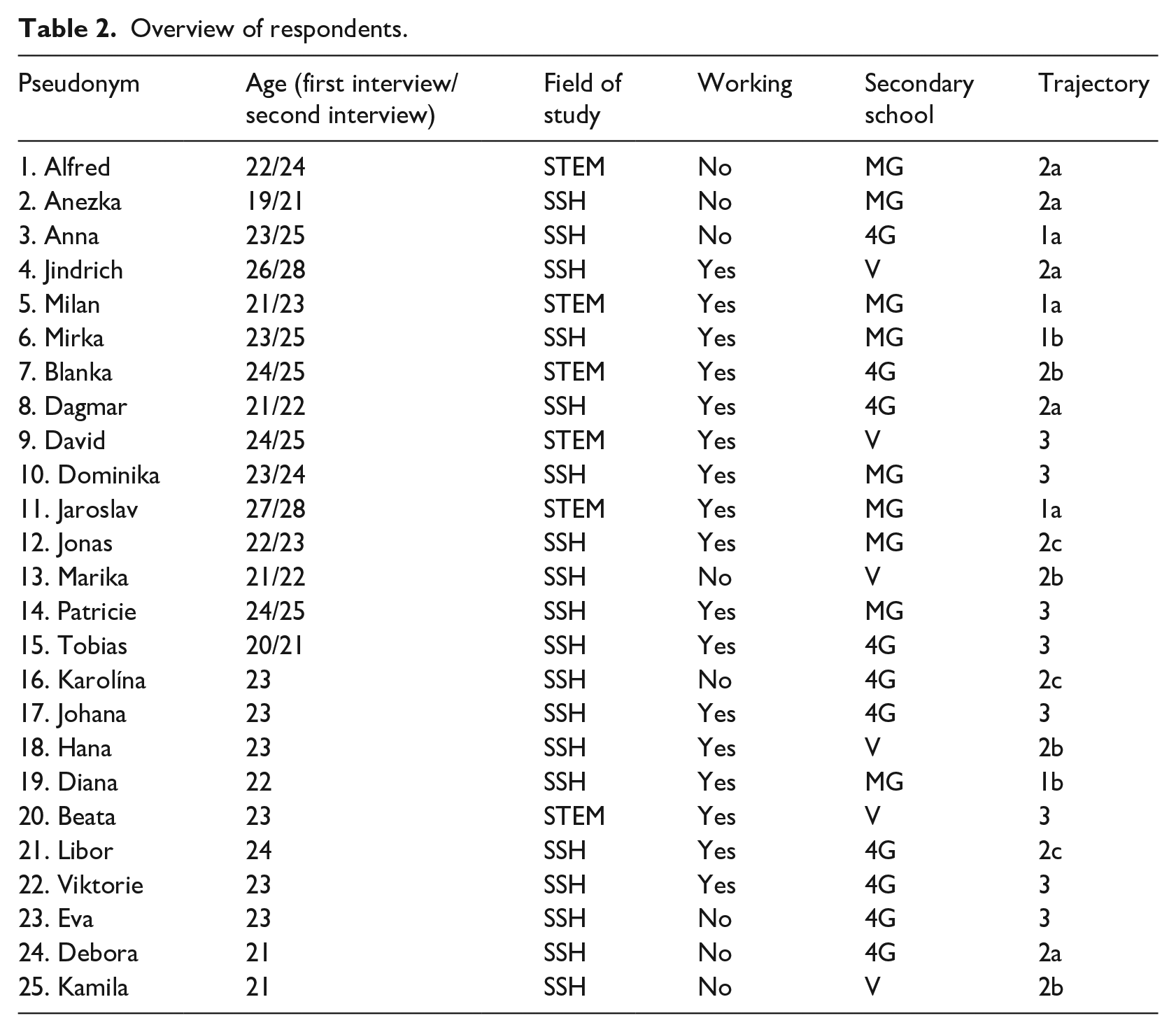
All students were the first in their families to attend university, and their socioeconomic status varied from blue-collar, lower-middle class to middle class. The respondents came from a variety of disciplines, with the majority from the social sciences and humanities fields (SSH), but also from science, technology, engineering and mathematics (STEM). The 25 students were attending public universities and studying in the first to fifth year of their bachelor’s degree or a long non-structured master’s degree (medicine and law); the age at the time of the interview was from 19 to 27. Previous high school education included a majority having attended a multi-year or 4-year grammar school (gymnasium). Most of the participants had at least part-time regular work. All the necessary details are presented in Tables 1 and 2.
Overview of sample characteristics.
Overview of respondents.
A reflexive thematic analysis was applied to conduct the study (Braun and Clarke, 2013, 2021). The initial coding relates to various aspects of a student’s experience, including study practices (choice of field, critical moments, surface/deep approach to studying, evaluation of their programme, willingness to continue studying, available study support), future career plans (current work, plans for professional work – field, career values) and the role of study in their lives (importance of having a university degree – personally, in their family, in their peer networks). We also looked specifically into whether there was a change in these areas. Based on common characteristics, we identified code groups and developed three distinct identity trajectories that emphasize the key ways in which FGSs identify with their study programme and studying in general.
The following text presents these trajectories as key results. The qualitative nature of our study allowed us to explore the diversity of student experiences, thus demonstrating the breadth of their identity reconstructions in the transition to university. Determining whether any of these trajectories are more common or, ultimately, rather marginal would need to be determined by larger samples.
Results
The study aimed to explore the diversity of students’ orientations toward their programmes of study and their lives as students as well as how these evolved alongside their notions of adulthood. Additionally, the study aimed to investigate the intersectionality of these trajectories with the unique experience of being a first-generation student. The following section presents a brief overview of each trajectory, followed by a schema that visualizes the analysis (Figure 1). In the next part, a detailed analysis of each trajectory is provided, including excerpts from the interviews.
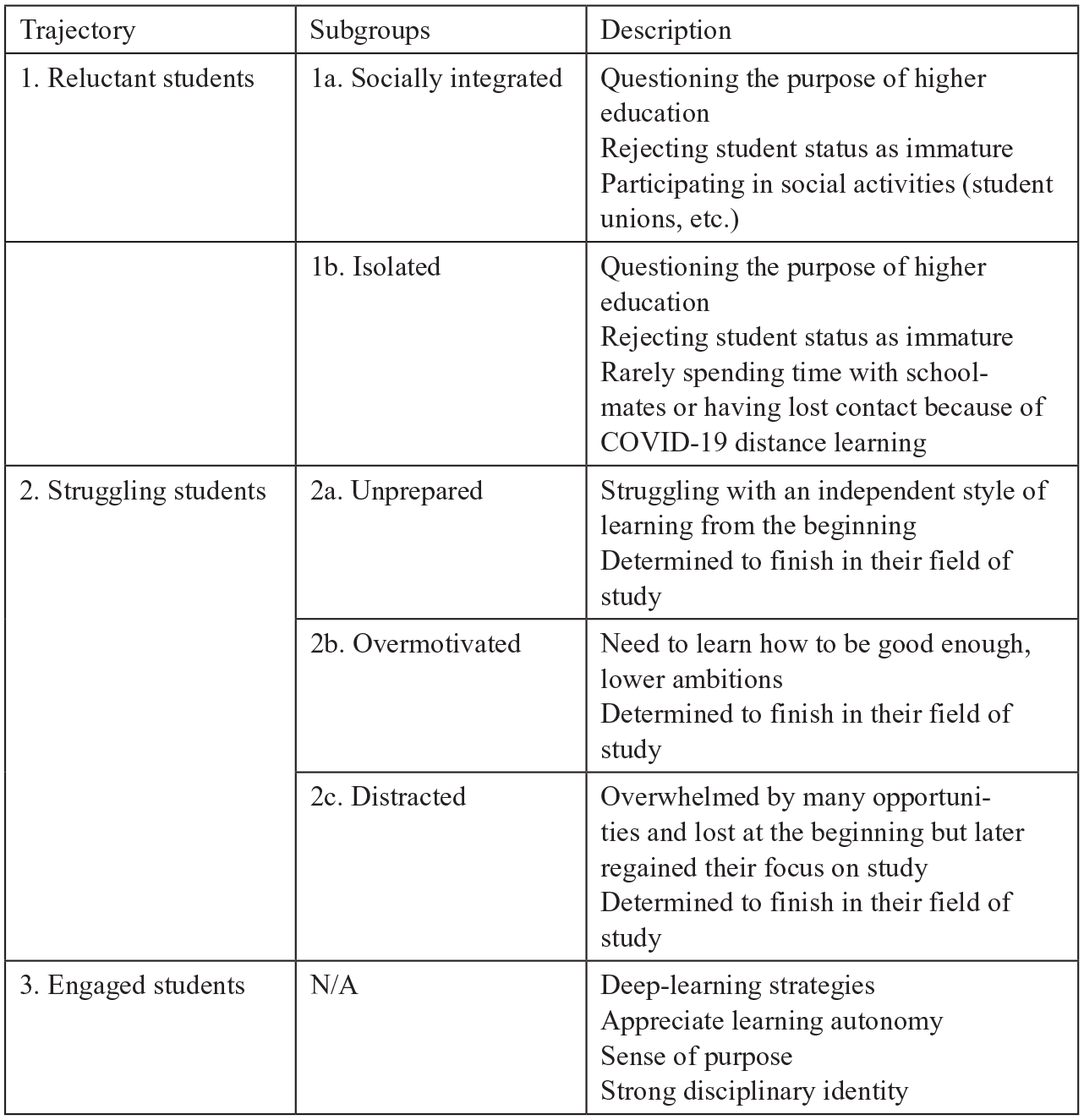
Overview of identity formation trajectories.
The first trajectory pertains to individuals resisting the creation of a meaningful student identity. The second includes students who have struggled to adapt to student life and who have intensively reconstructed appropriate student identities that would be meaningful for them. The third trajectory includes engaged students who seamlessly integrate into a university student role. Overall, these three trajectories are changeable, representing processes in which student identities are constantly evolving – student relationships to academic pursuits and subsequent identifications undergo transformation and evolution throughout an academic programme.
Thus, these trajectories are by no means fixed, and they may develop differently throughout a student’s academic journey. The way they develop can be adjusted through the provision of support and an active effort to integrate the students. Nonetheless, looking at how these identity trajectories develop, we can spot critical moments that potentially lead to either dropping out, diminished performance and lowered performance expectations, or a decline in well-being. This nuanced understanding could facilitate the provision of targeted and tailored support, anticipating critical moments in student academic journeys.
While it is obviously not the only factor and broader intersectional analysis is needed in further research, empirical evidence points to the increased vulnerability of FGSs in dropout rates and lower educational attainment, especially if they struggle financially. Our dynamic approach, which focuses on the trajectories of identity development is valuable in providing comprehensive support to students. In particular, we aim to overcome a deficit perspective toward first-generation or working-class students, avoiding the simplistic categorization of these students as having special needs. We also aim to avoid unnecessary emphasis on differences between students that may not be as pronounced in their everyday lives.
Reluctant students: Navigating resistance in student identity formation
Those who resisted the student identity devalued higher education and its pursuit. For them, studying, emblematic of being a student, lacked intrinsic value. Instead, employment and financial independence were regarded as more meaningful. Ironically, these students equated studying with idleness, unknowingly alluding to the leisure origins of ‘scholé’. 2 They perceived studying either as a time-wasting exercise or as a mere obligation, particularly when necessary for professional licensing.
These reluctant students failed to grasp the potential benefits of education and the intrinsic value of studying. This perspective may stem from a strong work ethic ingrained in families lacking university education, especially those from working-class backgrounds (Field and Morgan-Klein, 2013; Nairz-Wirth et al., 2017). It also aligns with a broader Czech emphasis on work and self-sufficiency that equates, above all, to having an interesting job that is meaningful and living independently of your parents (CVVM, 2024). Our respondents did not experience an emphasis or concrete discussion about education’s impact within their familial context, leading to a vague perception of its utility.
The subgroup ‘socially integrated’ represents students who were actively involved in both formal and informal student groups yet exhibited lower engagement with academic pursuits, such as Milan (STEM, 21): ‘I’m a lazy student. It’s not so necessary to study here or sit with books. I do the things I have to. I don’t volunteer for extra credit or such things’. Despite potential involvement in peer relations and even discipline-related associations, their participation appeared to impact studying norms minimally, with limited evidence of heightened engagement or deep learning. Instead, they often resorted to cramming and rote memorization, facilitated by their social integration, which enabled access to vital information. The next quote underscores the perception of schooling as a hindrance, with alternative activities deemed more valuable uses of time. In contrast, expanding one’s social network is portrayed as the primary benefit of academic pursuits:
What does studying at university mean to you?
If there is something in it for me. . .? Well, what it means for me, hm, [is] lost time in the mornings, but also many new people. So, more or less, the social relations. (Jaroslav, STEM, 27)
This student in fact distanced himself from being a student, something he felt had already been overcome upon finishing high school. He emphasized the need to do practical ‘hands-on work’, and when thinking about his possible direction within his chosen profession (medicine), he considered becoming a surgeon, emphasizing the physical aspects of work: ‘For sure, something linked to surgery, working with my hands, not thinking, inquiring, writing; I want to work with my hands’.
However, the focus on social relationships allowed him to be an active member of the community, joining student clubs as long as those were not theoretically or scientifically oriented. In this way, student social life presented some relief from the paid work he identified with, but there was no space left for work in terms of studying.
The second subgroup ‘isolated’ shared this reluctance to adopt the student identity as someone actually engaged in studying but, in this case, it was exacerbated by loose relationships with peers in the programme. Balancing work and academic demands led to questioning the significance of studying for personal development. Additionally, work commitments and an independent lifestyle contributed to weaker relationships with fellow students, negatively affecting study habits, as described by Mirka: We have a nice flat, not a dormitory with shared bathrooms . . . But I do think that part of my problems in school happened because I live, let’s say, a normal life. I live with a partner. We have a flat. We have commitments. We already bought a car . . . And I think that people living in dormitories have a closer connection to their schoolmates, and they obtain information more easily. (Mirka, SSH, 23)
Uncertainty regarding the significance of education and practical barriers can contribute to the possibility of dropping out, as in this case. This student’s involvement in her studies was difficult and rather superficial from the beginning. Her reduced engagement, coupled with limited social integration, heightened the risk of academic failure. She exemplifies a potential problem among FGSs who may prioritize work over studies. Moreover, a lack of support from parents or peers in their academic endeavours might also exacerbate this gravitation toward work.
The isolated subgroup also includes students whose disengagement from studying was primarily circumstantial and possibly temporary, stemming from the measures implemented during the COVID-19 pandemic. Initially committed, these students anticipated developing new social connections and experiencing student life at the university. However, the shift to remote learning during the pandemic led to struggles as the loss of face-to-face interaction with teachers and peers resulted in social isolation at home. The absence of study demands and clear feedback from teachers, coupled with uncertainty regarding the activities of other students, exacerbated their disorientation. This disruption from the typical university routine left them disheartened, prompting them to seek alternative activities available to them, such as work or family responsibilities, to compensate for the lost full-time study opportunity.
But then COVID started, so it was kind of like a turning point. All of a sudden, we didn’t really know what was going to happen. The way those teachers approached it was that not everyone switched immediately to distance learning, and, actually, only one teacher out of about 7 subjects gave us online instruction. So, there was a period of time that I filled mostly with work, and I don’t really know how the second semester went. (Diana, SSH, 22)
This subtype implies that multiple factors interact to shape each student’s identity- forming trajectory. While a first-generation or working-class background may incline individuals toward prioritizing work-related identification over studying, the quality of education they receive also plays a pivotal role. During the initial lockdown period, the sudden shift to low-quality distance education altered the trajectories of some students as it deprived them of support and a sense of belonging within the student community, leaving them to navigate their academic journey alone.
In examples of reluctant students, as illustrated here with the cases above, there is a prevailing notion that achieving a higher education degree is a social expectation rather than a necessity they want to achieve in their lives; here there is a belief that work can be found without a degree and, therefore, it is not as necessary. This attitude may alleviate pressure on students, but it also facilitates a quicker path to dropping out should they encounter challenges and lack the resources to deal with them. From a developmental perspective, these students increasingly embraced an adult identity marked by economic independence. Primarily identifying as a student was seen as immature or unsatisfying, with a work identity offering a more appealing alternative. Although some of these students appeared disengaged in their studies, they showed responsibility for their work commitments. This drive for economic independence was likely shaped by their socioeconomic backgrounds. For some, it was a necessity due to limited parental support, whereas for others, it provided valuable skills and a lifestyle beyond what parental contributions allow. In their case, work represented the desired economic mobility that studying could not yet provide.
Pathways through challenges in learning: Struggling student trajectories
The second trajectory in the development of a student identity encompasses various struggles, ranging from difficulties in meeting university demands or adapting to new learning styles and requirements to instances of overexertion followed by exhaustion and attempts to establish a more balanced approach. Additionally, some students initially lacked focus and became involved in numerous activities, leading to significant setbacks, such as failing key exams or expulsion. Despite the diversity within this category, what unifies it is the significant shift in how students approach studying and their active engagement in reconstructing their student identity in response to substantial challenges encountered at the outset of their studies.
The first subgroup ‘unprepared’ comprises students who quickly recognized a disparity in their learning skills compared to their peers. This experience may have been unfamiliar to them, especially if they previously excelled in high school, including being at the top of their class. However, in the university setting, increased competition and the nature of more selective programmes posed greater challenges. Tasks that were once easily attainable in high school now appeared daunting, particularly as university programmes require more self-directed study and independent work, which these students found challenging to adapt to: I categorize myself as one of the weaker students, and I think it is because before I went through school without effort, and, suddenly, I needed to learn how to study. And I still don’t know how, and it’s difficult. (Dagmar, SSH, 21) I somehow managed at the gymnasium without really learning. That was a mistake. I haven’t learned how to study . . . The first year at the university was so . . . I didn’t know what approach I should have had so that I could have managed, and I almost didn’t make [it through] the first year. (Alfred, STEM, 22).
These examples portray the changes induced by the transition and, perhaps, the unexpected loss of status – while in both examples the students managed well during high school, university brought radical change and they had to find a way to change their approach to learning. In this we see both characteristics exemplified in this trajectory: There was a struggle they experienced, could not continue as before and it was not easy for them. However, their adoption of a university student identity is a strong base, because what they want to change is how they learn, to learn how to study better, how to do so more effectively, with good results. They were not looking for shortcuts, they were ready to invest their energy.
The second subgroup ‘overmotivated’ represents the students who were excited about starting at university, even overmotivated and they felt they needed to do the absolute maximum in their first year. They studied so hard that they found themselves exhausted during the early phases of their studies and concluded that they needed to reconsider: I needed to learn that you do not need to study all day and that one really does not need to go crazy. (Blanka, STEM, 24) I was really trying hard at the beginning. I was like that at the gymnasium, be good at everything. I really wanted to manage everything . . . And, lately, not that my grades went down, but I more or less changed my approach . . . that it’s ok if I, for instance, get a lower grade, that I would manage that. It was not like that for me in the first exam period. (Kamila, SSH, 21)
These examples illustrate a strong student identity characterized by initial high motivation to excel in studies, aiming not just to pass but to achieve top grades, ultimately resulting in burnout for the student. Subsequently, both reflected the need to readjust the kind of students they wanted to be and opted to pace themselves, extending the study period to complete crucial exams or making peace with grades that were not at the top of the class. Reflecting on those learning journeys, students recognized that their initial expectations of studying were perhaps overly idealistic compared to their more current approach, which included prioritizing more relaxation and adopting a less stringent attitude.
Another student in this subgroup was dedicated to a specific, narrowly defined work area included in her study programme and took all the subjects related to it, burnout came during the pandemic. She complained that once the universities closed, she could not see the broader meaning of her studies, in part because of the loss of the opportunity to get a job in the chosen field of study and due to offline pre-recorded lectures; she could not get direct teacher feedback and evaluations of how she was doing in her studies. This frustrated and unsettled her, as we can see in the following paragraph: So, everything changed. It changed that I can’t go to school. It changed that they laid me off from work. It changed that I lost my contacts. And the enthusiasm that I had for that school changed, like, that I really feel these things do not satisfy me . . . I get no inner pleasure at all from the fact that I’m studying or . . . some . . . some kind of satisfaction that I’m moving on or somehow growing or improving my skills, that’s missing there at the moment (Marika, SSH, 22).
As a result, Marika lost interest in getting more involved in her studies. She began to approach her studies and future work more instrumentally, as a means to a university degree and a good salary. The experience gained because of the COVID-19 restrictions at the university forced her to reconstruct both her student identity and future professional identity, now characterized by distancing. As with others, examples from distance teaching during the lockdown are rather good examples that show how the reconstruction of identity works as an interplay between a variety of factors. Here, even a strong motivation and interest in the field could not prevent the student identity from being weakened when the ‘field’ ceased to be there: no other students and professors, just a talking head on a computer.
The last subgroup ‘distracted’ were students who got caught up in the many new opportunities, including social activities, related to university but also those related to their newly gained independence, like the possibility of travelling. For this subgroup, it was difficult to handle all of these opportunities and not lose track of study-related demands. Yet the risk of losing their student identity made them realize its importance. Thus, major problems, such as having to leave school, helped them muster the energy and use the experience to improve their study ethics.
[Speaking about the reasons he was kicked out of the school and re-entered the same programme] So, my time was filled with . . . partially school, then the student union, and work, and a girlfriend and . . . So, I had so many things during the week, and I was not able to put together a weekly plan with enough time for school. (Jonas, SSH, 22)
Another example is a student who started studying from a distracted position, simultaneously working and thus aiming for a rather superficial learning approach. However, in her case, COVID-19-related measures led to the loss of her job, and she found it created the space for her to focus on her studies: I don’t know when the rules will be loosened. I don’t know when I will have money again, but as it concerns school, it seems to be I’m more determined to finally really focus. And the distance learning really hurts, my back, my head. I’m less social because of all of this, but I do not care that much. (Katerina, SSH, 23) I don’t want to trivialize the situation, but it did help me. Because when I needed to study, I knew others were not going out, they were not enjoying life, we all have to be at home. So, I was less all over the place. (Anna, SSH, 25)
Examining these three subgroups collectively, it becomes evident that each represents students who may require specific support in their academic journey, especially at the beginning of their studies. Although they initially identified with both the institution and their field of study, they encountered various challenges that prompted them to reassess their student identity. Whereas some, as illustrated in the examples of the third subgroup, may become more focused and committed as a result of these challenges, the experiences of the first two subgroups suggest that encountering difficulties early in their academic pursuit may lead to lowered expectations and reduced engagement in their studies; while the student identity is still important, it is allowed to occupy lesser space in the structure of who they are. We argue therefore that the idealized model of an independent, self-managed student is not readily available to everyone, not only because of their skills and understanding of priorities but also because of other demands, such as the necessity to work or the quality of instructional support. While a certain amount of struggle is integral to the learning process and cognitive engagement, it is essential to consider whether certain negative experiences can be excessively detrimental and should be prevented with more individually tailored support offered, particularly in the early phases of an academic year or linked with major disruptions, such as those represented by lockdowns.
From a developmental standpoint, this group of students appear situated within the emerging adulthood phase, characterized by a transition toward greater independence and preparation for future commitments yet still open to receiving some support from parents or spouses and not entirely self-reliant. They still tended to emphasize their commitment to studying as an important preparatory phase for future independent professional work.
Engaged students: Tracing the trajectories of student involvement
The final trajectory encompasses students who we have categorized as engaged. In our study, these students are positively challenged, striving for a deep learning approach (Biggs, 1999) as a principal study practice and exhibiting strong identification with their field of study.
These students enjoy independent study, recognized as a pivotal practice at the university level. They appreciate tasks with less structure, seizing opportunities to select materials or delve into greater detail when interest arises. They value the autonomy provided and have the motivation, skills and time to explore it, overall appreciating learning autonomy: Studying at the university is more entertaining than high school. Now I have free time, and I don’t need to go to school all the time. And, in my free time, I can study at home, which I like better. (Tobias, SSH, 20)
To a certain extent, the alignment between their approach and expected practice at the university is enabled by their interest in their field of study, an interest that was either already developed during high school or acquired early in their academic journey.
One of the first disciplines was anatomy, and I just loved it, and I had related subjects in high school. So, from the beginning, I was probably the best in the class. So my self-confidence skyrocketed. (David, STEM, 24)
A pivotal role in the development of their study aspirations is frequently played by their tutors: Well, I always thought of this particular field as horrible. I had no idea. I was just thinking, ‘That’s terrible, I don’t want to do this.’ And suddenly, it got me, and I see myself doing a doctorate in this particular field. . . I think that I was just lucky to have teachers thanks to whom I really got so excited about the field. (Patricie, SSH, 24)
However, even the pandemic situation could have contributed to the creation of spaces for engaged learning. In the paragraph below, there is an example of a student who, despite online teaching during COVID-19 lockdowns and some negative sentiments, was able to devote herself to her studies and found some positive challenges that helped with study immersion. Not only did she use technology to, for instance, participate in more classes because it was possible to record sessions, but she also appreciated the broadened learning opportunities: I do miss going to the student’s club. I miss tons of activities. Yes, they try to do stuff online, and there are also pros, like, we have lectures by professors who, like, left to the US for five years, and suddenly they are available online. (Dominika, SSH, 24).
These examples each show moments in which students experienced something extremely positive – feelings of being in the right place, belonging, experiencing success. These kinds of moments contributed to strengthening the engaged student identity. Students who were attuned to what the field wanted them to do were able to have their particular discipline become an even stronger part of who they are.
Not only did these students exhibit a keen interest in their discipline, they also attributed intrinsic value to education, perceiving it as an essential phase in their profession. Education was regarded as a pathway to a desired future state where they envision themselves as fully self-sustainable and embarking on their professional careers. It appeared that student identity and future professional identity not only complemented each other but also worked in synergy. This stands in contrast to the portrayal in the first trajectory, where student identity was depicted as being in conflict or even mutually exclusive from the identity of an independent worker.
The examples provided above indicate that some students are on a trajectory more closely aligned with the expectations of the university environment. However, it would be overly simplistic to attribute this merely to superior cognitive abilities. Our interviews revealed a complex interplay of factors influencing the transition to university life beyond individual skills. These included identification with the discipline, recognition of the importance of study facilitated by lecturers and the capacity to dedicate time to study – a privilege not accessible to all students, both psychologically and practically.
From a developmental standpoint, students within this group often exhibit greater acceptance of the nuances associated with being in this ‘in-between’ phase of their lives as students, where not achieving independence in all of life’s domains is still considered not only acceptable but appropriate for their life stage. Some of our respondents resided with their parents and acknowledged that they do not earn their own income or that their earnings constitute merely a modest contribution. Being in a state where they psychologically permit themselves to concentrate on their studies also facilitated their development into focused and autonomous learners. While we cannot assert that this dynamic applies universally, we aim to highlight this potential connection for further exploration.
Discussion and limitations
The study provides a comprehensive analysis of the transition to university education and the development of student identities in first-generation students, drawing on multiple perspectives and empirical evidence. By examining three distinct trajectories, we identified subtle challenges and implications that have a significant impact within the educational context.
The first trajectory reveals student reluctance to embrace a student identity due to concerns regarding its perceived immaturity and lack of the practical relevance of their education. This cohort challenged traditional educational assumptions, emphasizing the necessity for institutions to explicitly demonstrate contributions of their programmes. These findings resonate with Lehmann’s (2009) observations on the experiences of FGSs from working-class backgrounds, highlighting the intricate relationship between socioeconomic factors and educational aspirations. This is further echoed in the research of Kocsis and Pusztai (2020), who argue that students leaving school due to work commitments not only face practical challenges, such as time conflicts, but also grapple with the perception of themselves as independent individuals. The identity-related dimension of work for FGSs underscores the need to comprehend the complexity of the conflicts they encounter and emphasizes the broader necessity for societal reflection on the overall status and significance of education – FGSs otherwise might see work as an already accessible and sufficient vehicle for social mobility.
The second trajectory emphasizes the various challenges that students face when adjusting to university life, also explored by scholars such as Holliman et al. (2018). This trajectory aligns with the observation that disengagement is linked to lower completion rates, emphasizing an apparent need for an extended adaptation period for some of the newcomers and the crucial role of proactive support in ensuring successful transitions. This practice is not consistently applied across the Czech student population despite legal obligations; due to institutional autonomy, there is variability in support services, meaning some students may not receive the assistance they require. Academic counselling centres offer essential services but students must initiate contact to benefit from them (Kucharská and Janyšková, 2022). The trajectory also highlights the stressful nature of transitions but suggests the potential for positive life changes through inner reorientation (Crafter et al., 2019). Above all, this trajectory highlights the challenges faced by FGSs and those from non-academic backgrounds who may not have access to the necessary resources to develop required learning strategies.
Lastly, the engaged and, perhaps from the perspective of educators, ideal trajectory represents students who exhibit strong discipline identification and a clear sense of purpose in their studies. This aligns with previous research that stresses the positive correlation between discipline identification and academic success (Bliuc et al., 2011b; Grozev et al., 2024; Smyth et al., 2019a, 2019b). Grozev et al. specifically emphasize how spending time with faculty has a positive impact. By creating a supportive learning environment that fosters discipline identification, universities can cultivate a sense of belonging and purpose essential for student engagement and retention. It is imperative for academic institutions to consider factors that lead to more academically positive outcomes, such as quality of teaching, the development of learning skills and the active support of student belonging, specifically for groups that enter university with doubts about their identity compatibility, like FGSs, working-class students and other previously less represented student groups.
Interestingly, each trajectory involves students who underwent distance learning due to the pandemic, which had varied impacts on their identity development influenced by individual, interpersonal and institutional characteristics. The importance of support, particularly during the first two semesters, became critical as the pandemic heightened mental health concerns among students (Schneidrová and Kopřivová Herotová, 2022). Despite the generally negative perceptions of COVID-19’s impact on mental health, some positive outcomes were noted. Bork-Hüffer et al. (2021) found that many students appreciated certain aspects of online learning and wished for its continuation alongside traditional face-to-face education. Given the increasing number of students working for various reasons, we argue that such hybrid learning models could facilitate a balance between study and work, thereby maintaining engagement with the institution.
However, we acknowledge several limitations of our study. Primarily, our focus solely on students may limit the depth of our analysis. Future research should consider including the perspectives of academic tutors, both from secondary schools and universities, to gain a more comprehensive understanding of the effects of transitioning to university. The pivotal role of lecturers in providing extra attention to incoming students has already been highlighted (Vengřinová, 2023). Nonetheless, the role of lecturers in the process of transition is vastly understudied; one of the scarce studies conducted in the Czech Republic is a report by Šmídová et al. (2020). The authors review stereotypes by some lecturers who attribute failure to the low academic potential of the students and do not foresee changes in the support system. This is possibly the remnants of the transformation from an elite to a universal educational system and might present systematic barriers that an increasingly diverse student body faces despite widening access. Students in our first and second trajectories might be particularly sensitive to doubts about their abilities if expressed by their lecturers, whereas students in the third trajectory suggest how positively lecturers can influence student engagement.
Additionally, further exploration of intersectional analyses, particularly concerning students from difficult financial backgrounds as well as gender inequalities in the Czech Republic, could provide valuable insight into the unique challenges faced by different student demographics. Finally, none of the students in our study were identified as having special needs regarding their bodily abilities. Future research should aim to involve all student populations to ensure a more inclusive understanding of the transition process.
Conclusions
To conclude, our study illustrated that becoming a university student is a complex phenomenon entangled in dynamic processes. We highlighted the role of psychological identification and the subjectively defined content of being a student, as well as how this can be influenced by other factors on the part of the institution, such as learning conditions or relationships with tutors, but also the students’ environment, such as the importance of work over studying. While we maintained that FGSs could find themselves in a unique position and possibly be more significantly influenced were they not to develop a strong student identity, it is also clear that students, in general, would benefit from a deepened understanding of the processes of student identity development during the transition to university studies.
Experiencing transitions can significantly reshape one’s self-perception (Crafter et al., 2019). Our focus on the identity formation of first-generation university students emphasizes the interactional nature of this process. Being the first in the family to attend university adds a unique dimension to their experience, but it can be expressed in numerous ways, as the breadth of the three trajectories – reluctant students, struggling students and engaged students – suggests.
The COVID-19 pandemic has further complicated the development of student identity, particularly through remote learning and social isolation. While some students faced amplified challenges, others found reduced distractions beneficial for focused learning. This underscores the need for adaptive support systems to mitigate disruptions and enhance student well-being and academic success.
The findings highlight the need to consider the multiple factors that influence the transition and student identity development of FSGs, stressing the importance of creating inclusive environments that foster belonging among students, faculty and academic disciplines. To better understand student identity, it is important to maintain a holistic perspective that recognizes the various influences that shape their experiences and processes of identity re-constructions. This approach can help create educational environments that empower all students to thrive academically, personally and professionally.
Footnotes
Data availability statement
Due to the nature of this research, participants of this study did not agree to their data being shared publicly; accordingly, supporting data are not available.
Declaration of conflicting interests
The author(s) declared no potential conflicts of interest with respect to the research, authorship, and/or publication of this article.
Funding
The author(s) disclosed receipt of the following financial support for the research, authorship, and/or publication of this article: This publication was supported by the Cooperatio Program provided by Charles University, in the research area SOC – General Education and Pedagogy and Psychological Sciences, implemented at the Faculty of Education of Charles University.
