




Abstract
The COVID-19 pandemic has forced governments worldwide to produce solutions to the abruptly interrupted work in education. School systems appear to have responded rapidly, creating home schooling and online educational environments, where teachers and students would interact with safety. In this paper, we attempt a synthesis of Sen’s capability approach, Bourdieu’s theory of capital and Bernstein’s framework in order to theorize the relationships between home and school conditions and practices, and to analyse the data of the 2nd Survey of Schools: ICT in Education (a survey conducted in 2019 on behalf of the European Commission collecting data regarding digitalization in education and digital technologies in learning in the European Union). The survey is complemented by a second set of indicators provided by Eurostat to further investigate the availability and functionality of household space per family in selected European countries. We find significant differences in important social and environmental conversion factors, likely limiting children’s capability to benefit from digital schooling. The most important differences are found in regard to parents’ familiarity with information and communications technology use, while inequalities in environmental factors, such as overcrowded housing, are also existent. Overall, there are large inequalities within and between countries in Europe, which need to be addressed by policymakers.
Introduction
The COVID-19 pandemic has placed all countries around the world in front of unprecedented challenges leading to ‘new normalities’ in nearly every field of social life. Education is one of the fields most widely and deeply affected. The spread of coronavirus disease in 2019 has caused school closures in more than 190 countries, affecting over 90% of the world’s student population (United Nations Educational, Scientific and Cultural Organization (UNESCO), 2020). Thus, the COVID-19 pandemic has forced governments worldwide, and in all European countries in particular, to produce viable solutions to the abruptly interrupted work in education. School systems appear to have responded rapidly to this crisis, literally overnight, creating home schooling and online educational environments, where pedagogic work would continue, and teachers and students would interact with safety. The use of digital technologies and their globalizing implications are not new in education, but the COVID-19 pandemic has generalized their use in education practices. As Tesar (2020) argues, in some ways the pandemic was ‘a mere accelerator of the processes that were put into motion some time ago, rather than a radical change maker’ (556). The processes that Tesar refers to are related to the growing globalized impact of market logic in framing education discourse and organizing school and academic practices. Indeed, a variety of ideas originating from this logic – such as those of greater parental involvement (with no concern for the inequalities that this might entail); individual responsibilization, which frames individual parents as solely responsible for a range of outcomes, including their children’s academic achievement and economic futures (Nygreen, 2019); or the idea of comparing online with face-to-face teaching in terms of their cost-effectiveness – have become prominent during the COVID-19 period.
Since it is highly unlikely that we will be able to ‘put the genie back into the bottle’, one has to start thinking what are the challenges which the ‘new normality’ – namely home schooling through online teaching – poses regarding the ‘new’ inequalities, on top of the old and known ones, that learners may experience. 1 It has been widely argued by researchers and often admitted by politicians that the pandemic has exacerbated educational inequalities (Armitage and Nellums, 2020; Blundell et al., 2020; Cullinane and Montacute, 2020; Doyle, 2020). For example, the mere closure of schools, as has been shown in the case of the regular school vacations, seems to disproportionately affect students from lower socioeconomic strata (Alexander et al., 2007; Lavy, 2015; Stewart et al., 2018). Extrapolating these findings, one may reasonably predict that the diminishing of school life entailed by the virtual-only contact of students with teachers and schools will increase the divide between advantaged and disadvantaged students, worldwide. Furthermore, as prominent economists have shown, the economic losses of learning losses will be higher for disadvantaged students, resulting in higher income polarization in the coming decades (Hanushek and Woessmann, 2020).
On that basis, we need to start exploring empirically the nature and the extent of the new inequalities so as to better understand them and be able to design thoroughly documented and socially just education policies. This is even more pressing as we are moving to a ‘post-COVID-19’ world, without actually knowing to what extent the ‘new normality’ of online teaching and learning will become a permanent feature of formal education systems.
Thus, the aim of this paper is to identify and provide evidence on the new educational inequalities potentially caused by the COVID-19 pandemic. We shall do this by examining data from selected European countries representing different levels of information and communications technology (ICT) integration in their school systems. Specifically, we analyse the data of the 2nd survey of schools: ICT in education, a survey conducted on behalf of the European Commission (2019). It covered the twenty-eight countries of the European Union (EU28), Norway, Iceland and Turkey and aimed to provide data regarding digitalization in education and digital technologies in learning across the participating countries. The survey data are complemented by a second set of data provided by Eurostat (2019) to further investigate the role of the availability and functionality of household space per family member in a group of selected European countries.
With regard to the data of the 2nd survey of schools: ICT in education (European Commission, 2019), we are focusing in particular on the role of the families – as shaped by dominant public discourses and the present situation – in supporting the online education provided to their children at home. We focus on the role of the family because in the period of only online teaching during the successive (in many countries) school closures, the burden of education falls largely on parents. Parents have not only to provide their children with access to proper digital resources, but also and most importantly to help and encourage them to use such resources effectively for school purposes as well as protecting them from online threats and other abuses. Traditionally, the school–family relationship, and more specifically the extent to which the cultures of these two sites of socialization converge or diverge, and its implications for social reproduction has been the focus of a large number of studies in the field of the sociology of education (e.g. Epstein, 2018; Lareau and Cox, 2011; Musgrove, 2012). However, this relationship, under the conditions of home restriction imposed by the COVID-19 pandemic, has been further complicated, generating new research interest.
As far as the nature of the new inequalities is concerned, researchers and policymakers have to think beyond the classical way of looking at resources with the false assumption that they will be accessed by all in similar ways with similar outcomes. Without underestimating the issue of the family access to digital resources, we need to move beyond that and analyse the multiplicity of factors and the generative mechanisms of educational advantage and disadvantage. Digital inequalities between individuals and social groups in terms of access to technologies, but also and more importantly in terms of their capacity to profit from their use of technology, have been well documented in the education research literature (Hargittai, 2010; Yates et al., 2015).
In order to approach the question of how digital inequalities emerge from the socioeconomic position of the family in particular, we use the theoretical lens of the Sen-Bourdieu analytical framework first developed by Hart (2012) to aid understanding of social justice in relation to widening participation in higher education in England, but also used by other scholars as well (e.g. Bowman, 2010; Lemistre and Ménard, 2019; Pham, 2019). This is a novel perspective since most of the studies investigating the lack of disadvantaged families’ capability for using digital technologies to support their children’s learning tend to draw only on Pierre Bourdieu’s theory of cultural capital and habitus or to be mostly descriptive without a clearly defined theoretical framework (Angus et al., 2004; Hollingworth et al., 2011; Schofield-Clarket al., 2005). Into this latter category fall some studies which, focusing on the notion of parental mediation, examine how it is shaped by the sociocultural context of the family (Clark, 2013; Valcke et al., 2010). Parental mediation refers to the diverse practices through which parents try to manage and regulate their children’s experiences with digital media. According to Livingstone et al. (2011, 2012), parents of higher socioeconomic level and education adopt a more active mediation style consisting of practices such as talking about internet content and online activities, sitting nearby while the child is online and actively sharing the child’s online experiences. In contrast, parents of lower socioeconomic background and education tend to adopt a more restrictive mediation role (setting rules that limit time spent online and location of use, as well as content and activities).
While recognizing that the aforementioned studies are significant contributions to the study of educational inequalities, we shall argue in the next section, that the theoretical combination proposed in this paper creates a stronger base for research. Specifically, as will be discussed in the next section, Sen’s and Bourdieu’s conceptualizations strengthen the theoretical framework adopted in this study as they help to address the limitations identified in each of the two theories. In particular, Sen’s approach, which requires a weighting of the determinants of capabilities that can account for freedom of action, strengthens the non-deterministic understanding of Bourdieu’s theory of (forms of) capital. Sen’s theory pays attention to the role of personal and environmental factors in the reproduction of inequalities which tend to get neglected in Bourdieu’s work. Conversely, the latter helps overcome one of the serious shortcomings of Sen’s approach, namely that freedom can be assessed independently of any issues related to power (Lemistre and Ménard, 2019). To put it differently, using Bourdieu’s categories of capital allows to utilize Sen’s approach to educational capabilities in relation to social reproduction and non-reproduction, and to respond to one of its main concerns which relates to ‘inequalities of access to resources and interpersonal variation in the use of these resources’ (Lemistre and Ménard, 2019: 957). This framework has been further enriched by using elements of an older, but very relevant to our analysis, Bernsteinian framework. This framework examines the inter-relationships between home and school cultures and the roles (social identities) taken up by students as a result of the kind of inter-relationship formed between the two cultures (Bernstein, 1977). In particular, Bernstein’s contribution helps to specify the more general theoretical statement of Bourdieu regarding the relationship between the match or mismatch between familial and school habitus, by linking this issue to the two orders of meaning (instrumental and expressive) shaping the school context, and therefore affecting educational processes, practices and pedagogic interactions. The next section discusses how the Sen-Bourdieu framework as enriched by the Bernsteinian framework can be applied to our empirical data so as to trace and make sense of some of the new inequalities caused by the COVID-19 pandemic.
A synthesis of Sen’s capability theory, Bourdieu’s theory of capitals and Bernstein’s framework for analysing home–school inter-relationships
Our theoretical framework draws on Amartya Sen’s (1985, 1999) capability approach and Pierre Bourdieu’s (2006) forms of capital to shed light on the way home–school relationships work for students; that is to say, how they create conditions for them to appreciate ideas, resources, experiences, etc. in ways that will bring them educational advantage, or, conversely, could limit their ability to take up resources and participate in school processes, thereby exacerbating educational inequalities (Pham, 2019). The Sen-Bourdieu framework is further enriched by a Bernsteinian model, useful for providing a refined theoretical language for describing the dynamics of school–family relationships and the social positions (roles) formed on the basis of differentially structured relationships.
More specifically, in Sen’s (1985, 1999, 2009) capability approach, commodities may be converted into capabilities (well-being freedom) and then into functionings (well-being achievement). Sen (1999) argues that the evaluation of well-being, inequality, poverty and justice should focus primarily on people’s capabilities to function. Functionings are various combinations of ‘beings and doings’ of a person, such as working, reading, writing, being physiologically and psychologically healthy, being educated and so on (Robeyns, 2003). Thus, for Sen, it is important to focus on people’s real opportunities to achieve functionings, which he defines as a person’s capabilities. In other words, capability is a potential functioning, and all the person’s capabilities together form a capability set, which represents their real or substantive freedom to be and do the things that they value (Robeyns, 2011). Sen’s approach attempts to bring the agency back in, as it seeks to understand people’s opportunities to achieve well-being; that is, how individual people differ in their ability to convert means into valuable opportunities (capabilities) or outcomes (functionings) due to a large variety of combinations between the various conversion factors they experience (Sen, 1992).
Bourdieu’s concepts of forms of capital, habitus and individuals’ dispositions to act in a given field help to analyse the social constraints limiting freedom of choice. According to the Sen-Bourdieu framework, therefore, providing the means to students by way of additional resources (in the form of various kinds of capital), although important, may not necessarily reduce educational inequality. Rather, in order to understand contributing factors to educational inequality, we have to understand the contexts in which certain forms of capital can act, or not act, to convert a person’s resources to real opportunities and/or freedoms to conduct the life they value (capabilities). In other words, there exist certain contexts which may amplify the educational outcomes of existing differences in families’ capital (i.e. differences in income, wealth or parental education) or, conversely, narrow down the consequences of these differences. For example, in a context of absence of adequate social provision services, the effects of existing differences between families on the educational achievement of their children might be amplified. Reversely, the educational consequences of such differences might be narrowed down in contexts shaped by a strong welfare state.
These contexts constitute positive conversion factors when they are conducive to transforming resources into real opportunities (capabilities) and negative ones when they hinder the relevant transformational process. Conversion factors can be distinguished into three categories, namely personal (e.g. personality traits, physical strengths or handicaps), social (e.g. social norms, familial habitus, political climate) or environmental (e.g. climate, pollution, geographical characteristics) ones. In this paper we will mainly focus on social conversion factors related to the way parents can act as positive agents in the proper use of online teaching during the extended school closures and remote academic instruction during the pandemic as these are the most relevant ones for the topic under investigation. We will rely for this aspect on data drawn from the 2nd survey of schools: ICT in education (European Commission, 2019). In addition, we shall examine some environmental factors related to household living conditions utilizing relevant data provided by Eurostat, which could limit a family’s capability to turn online education into real educational opportunities, thereby increasing educational inequality.
The usefulness of this approach in empirical research has been demonstrated in many studies showing that the democratization of access to ICT resources does not solve the problems of the digital divide since the divide is caused by differences in a variety of factors (such as culture, education, literacy, opportunity) structured by social power and socially influenced dispositions to act (Angus et al., 2004; Diogo et al., 2018; Lemistre and Ménard, 2019).
In our research the functioning of ‘being a proper student attending online school lessons’ is related to: (a) real opportunities provided to students to act in this way in their home context; and (b) the extent to which students and their families value this identity. The first aspect is adequately described by the Sen-Bourdieu framework, while the second is illuminated by the Bernsteinian extension.
Bernstein (1977) proposed a framework for describing various social roles students could take up as a result of the extent to which families’ priorities, in turn shaped by their position in the social hierarchy, converge or diverge from those of school. These roles are crucial since they determine the way a student is engaged in the school process and benefits from it (cf. Edgerton and Roberts, 2014). According to the Bernsteinian framework there are two inter-related complexes of behaviour that the school is attempting to transmit to the students. The first complex is related to the appropriate ways of working and behaving at school (appropriate conduct, character and manner), which in the theoretical language of Bernstein is the expressive order of the school (what Bernstein (1990) later called regulative discourse), while the second refers to school knowledge (facts, procedures, practices, judgements) which in the language of the theory is called the instrumental order of the school (later renamed as instructional discourse). The expressive order of the school is what binds together the school community as a whole and in periods of rapid social changes (as is the case with the COVID-19 pandemic) it is the expressive order, much more than the instrumental one, that is disrupted, becoming more unclear and ambiguous. Furthermore, ICT, beyond its value as an aid in the learning process, also represents a new vision about what a school of the 21st century should look like. Therefore, the expressive (or regulative) dimension of the pedagogic discourse is currently globally dominant, regulating education policies and practices, as well as their evaluation (e.g. Muller and Hoadley, 2010). For these reasons we shall henceforth concentrate on the expressive order. Families can be classified according to their understanding of the means through which the expressive order is transmitted and their acceptance of its ends (its goals). For example, a family can both understand the way its children should work for meeting the school’s demands in the period of online teaching following the outbreak of the COVID-19 pandemic (M+) and accept the goal of this process as expressed by school authorities (e.g. to continue the learning process without disruptions through the use of ICTs) (E+). In this case the family’s context can act as a positive conversion factor, leading students to be highly involved in the learning process even in conditions of virtual schooling (see Table 1). On the other hand, a family could accept the ends of schooling (i.e. to continue the learning process without disruptions, or the chance students have to develop a comprehensive digital culture transforming the crisis into opportunity) (E+), without, however, understanding the ways its children should work so as to respond to the new demands posed by and through the online teaching (M-). In this second case, family is a potential negative conversion factor for the particular students. It is clear that to the extent that these conversion factors are in interaction with a family’s socioeconomic and cultural characteristics, they will affect the processes of social reproduction or non-reproduction of educational inequalities during the interruption of face-to-face academic instruction.
The family’s effect on pupils’ involvement in the educational process.
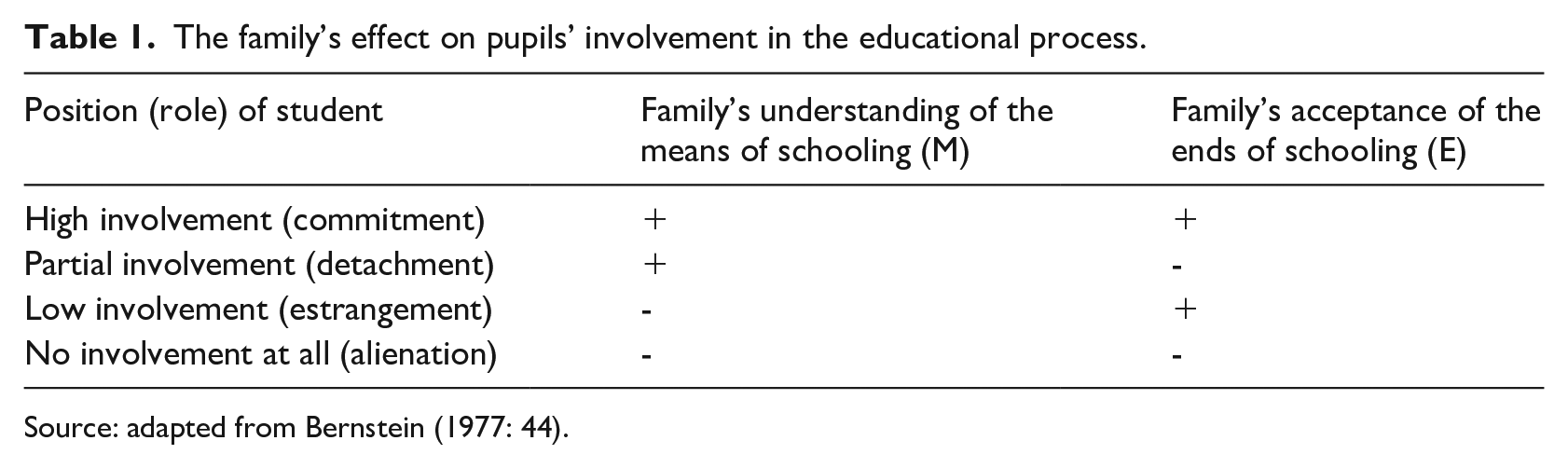
Source: adapted from Bernstein (1977: 44).
The synthetic theoretical framework informing our analysis is shown in Figure 1.
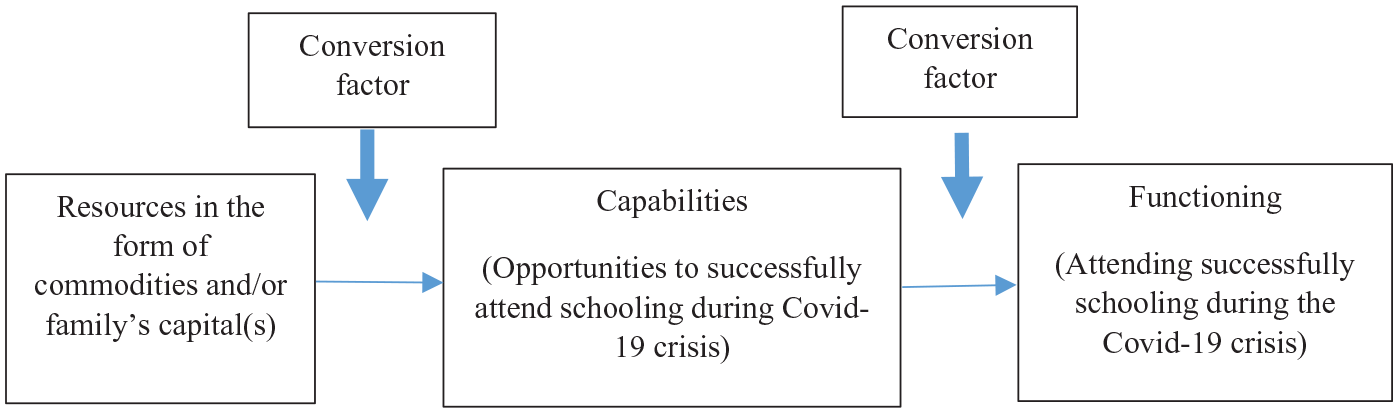
A schematic representation of the synthesis of Sen’s capability theory, Bourdieu’s theory of capitals and Bernstein’s model of home–school inter-relationships.
The proposed synthetic theoretical framework allows for the identification of real learning opportunities and experiences for students coping with the ‘new normality’ of home schooling through online teaching in the conditions created by COVID-19, though the usefulness of this framework is not limited to the understanding of the circumstantial factors affecting how families and students cope with the present conditions. This way of analysing educational inequality goes beyond inequality in other forms of capital (e.g. income or wealth inequality) and examines what students and parents perceive as opportunities that they can reasonably exploit and benefit the most from online schooling. This is important because, even when resources are provided to all – which often is not the case – not everyone (individual, member of a family and social group) will perceive these as opportunities to take up and, ultimately, utilize them in equal measure. Overall, this framework may be useful in highlighting mechanisms of social reproduction (or conditions that might explain non-reproduction) of educational inequality during and after the experience of extended school closures and online learning which should be factored in, in the present and future research or policymaking efforts.
Methods and data
Our empirical approach aims to assess quantitatively a set of conversion factors that might affect the successful attendance of school during the COVID-19 crisis, placing emphasis on how these factors vary across countries and social groups in a sample of European countries. Variations in these conversion factors can be understood as sources of educational inequality affecting students’ prospects during the pandemic and beyond it. The theoretical concepts deployed in the previous section are operationalized – that is, translated into measurable variables – by using two secondary sources of information: the 2nd survey of schools: ICT in education (European Commission, 2019) and a set of publicly available indicators which are derived from the European Union survey on income and living conditions (Eurostat, 2019). The reliance on secondary data analysis has certain advantages and disadvantages, with the former increasingly gaining more attention in social studies in the last decades (Bulmer, 1980). Besides the apparent advantages of transparency, reproducibility and replication in research, all well documented in the literature (see e.g. MacInnes, 2020), the use of secondary data in our particular context enables a timely empirical investigation of the impact of school closures on education inequality, which otherwise would have been very demanding in terms of time and resources. Furthermore, the utilization of two data sets enriches our analysis with further insight being gained from the second dataset. Specifically, we employ EU-SILC indicators to explore environmental factors: information which is missing from the ICT in education survey, although it should be noted that the two sets are independent and therefore not directly comparable. 2
The main objective of the ICT in education survey 3 was to provide detailed information related to access, use and attitudes towards the use of technology in education by surveying head teachers, teachers, students and parents in a wide sample of EU countries (including Norway, Iceland and Turkey). The school sample was based on a two-stage stratified cluster sample design. At the first stage, a sample of schools was selected from each International Standard Classification of Education (ISCED) level. After school selection, and depending on whether permission was granted by head teachers, an automated process randomly selected the teachers and classes to be invited to participate. Parent invitation letters containing access to the parent survey were sent via the students in the selected classes. The collection of data took place between the end of 2017 and the beginning of 2018 with the exact dates differing slightly between countries. It should be noted that the survey contains complex information on schools, teachers and parents, though the research scope of our paper focuses on the parent sample. It should also be noted that the datasets of the ICT in education survey are available online (European Commission, 2019), making this study easy to replicate and/or extend for future research.
In total, 19,038 parent questionnaires were collected from 31 countries. However, for certain countries, the number of completed questionnaires was too low to derive reasonably reliable estimates and therefore countries with small sample sizes were not included in our analysis. Table 2 presents the countries included in our sample and the corresponding number of parent questionnaires. Overall, 16,600 parent questionnaires were included in the analysis with the country samples ranging from 462 parent questionnaires (Portugal) to 2652 (Latvia).
Sample size.
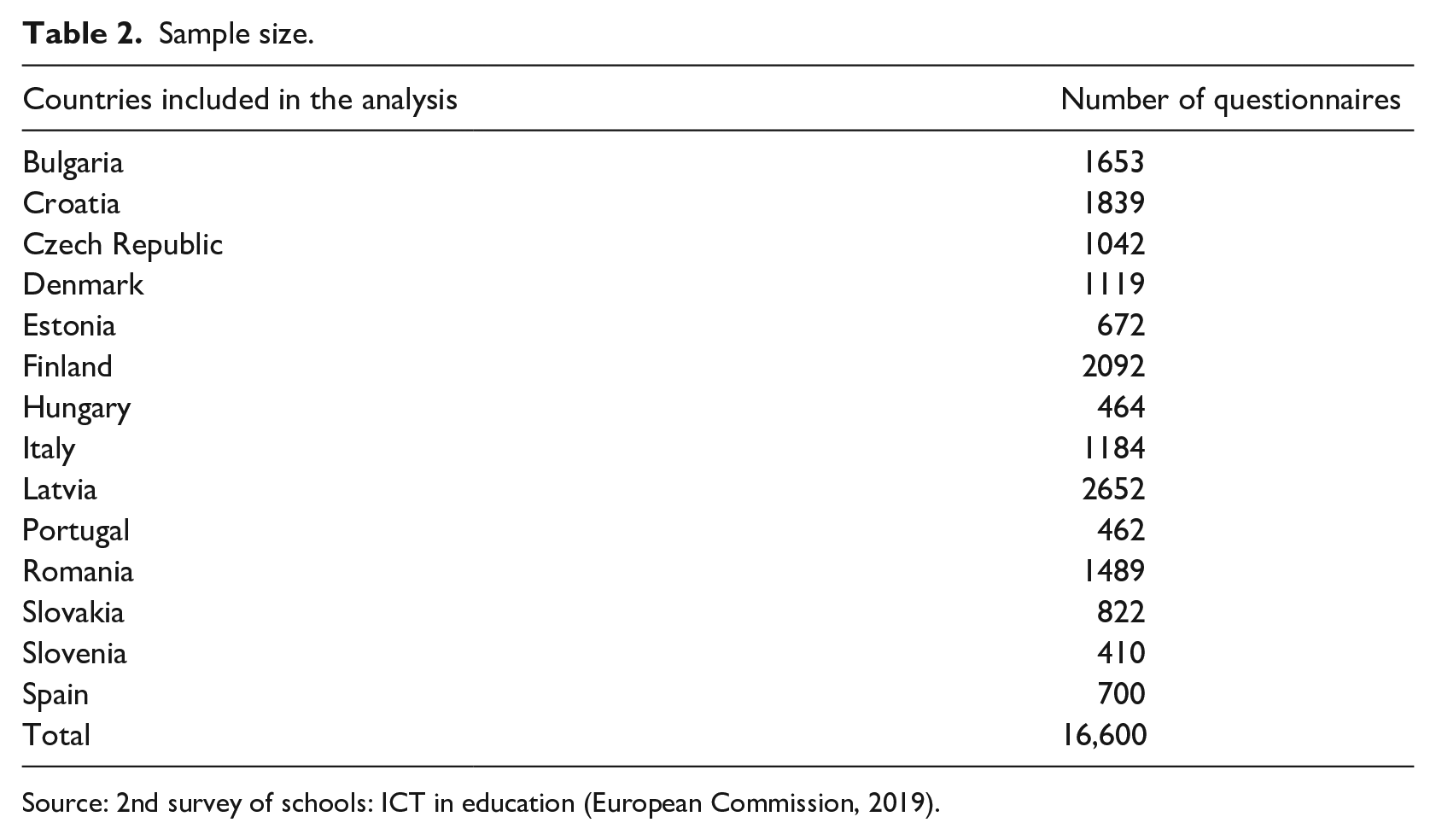
Source: 2nd survey of schools: ICT in education (European Commission, 2019).
Although the ICT in education survey offers a very wide range of information, our focus is on measuring conversion factors that affect the real opportunities provided to students to attend digital school, analysed through the lens of the Sen-Bourdieu framework and its Bernsteinian extension, as presented in the first part of the paper. In the analysis, the following composite variables were considered: (a) parents’ familiarity with the ICT use; (b) education-related ICT uses; (c) parents’ rules for using ICT at home; and (d) parents’ views on the usefulness of using ICT in school. The way these composite variables correspond to the two conversion factors, namely: (a) family’s level of understanding of the means; and (b) family’s acceptance of the ends of home schooling during the COVID-19 pandemic, is presented in Table 3.
Operationalization of the conversion factors of family’s level of understanding and acceptance of home schooling during the COVID-19 pandemic.
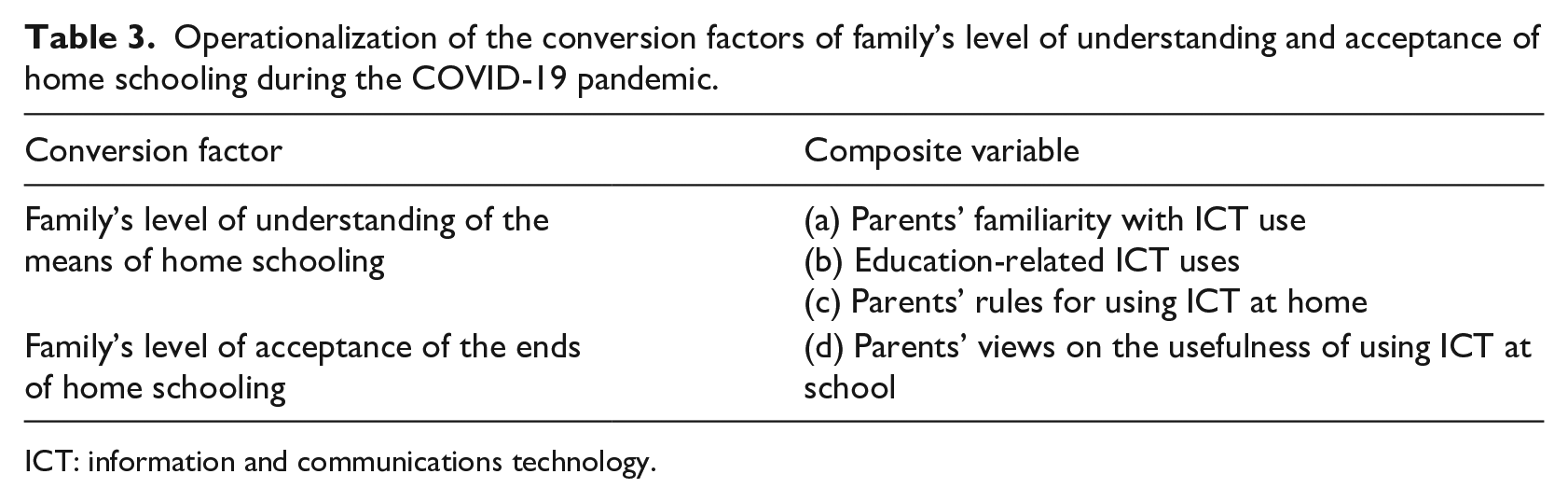
ICT: information and communications technology.
Thereafter, mean scores of these variables are used to identify differences within and between countries as well as any substantial differences related to the socioeconomic status of the family. Due to the lack of appropriate socioeconomic information at the family level, the educational level of the parent is used as proxy. This methodological choice can be justified by the fact that in most countries the economic capital of the family is strongly associated with its cultural and educational capital (e.g. Checchi, 2006).
The empirical analysis is enriched with the use of indicators derived from EU-SILC. EU-SILC collects comparable cross-sectional data at the household and individual level. Eurostat calculates a wide set of social, economic and demographic indicators which enable updated cross-country comparisons and which can be freely downloaded via the Eurostat online database. We utilize this source of information to assess a number of environmental conversion factors which in combination with the other conversion factors examined in the study may restrict or expand children’s capabilities. These indicators include: (a) proportion of population living in households self-reported to suffer from noise by poverty status; 4 (b) overcrowding rate by poverty status; and (c) severe housing deprivation rate by income quintile.
The overcrowding rate is defined as the percentage of the population living in a household that does not have at its disposal a minimum of rooms equal to: one room for the household; one room by couple in the household; one room for each single person aged 18 and more; one room by pair of single people of the same sex between 12 and 17 years of age; one room for each single person between 12 and 17 years of age and not included in the previous category; one room by pair of children under 12 years of age (Eurostat, 2019). The severe housing deprivation rate is defined as the percentage of population living in a dwelling which is considered as overcrowded, while also exhibiting at least one of the following housing deprivation items: leaking roof, no bath/shower and no indoor toilet, or the dwelling considered too dark. These indicators can be construed to describe environmental factors which have been shown to affect cognition, learning outcomes and motivation to study (see among others Clark and Stansfeld, 2007; DeJoy, 1983; Goux and Maurin, 2005;) and in this sense also influencing the family’s understanding of the means and acceptance of the ends of home schooling in the era of COVID-19 pandemic (e.g. families living in such conditions may develop negative attitudes toward home schooling).
Empirical results
Social-/family-related conversion factors
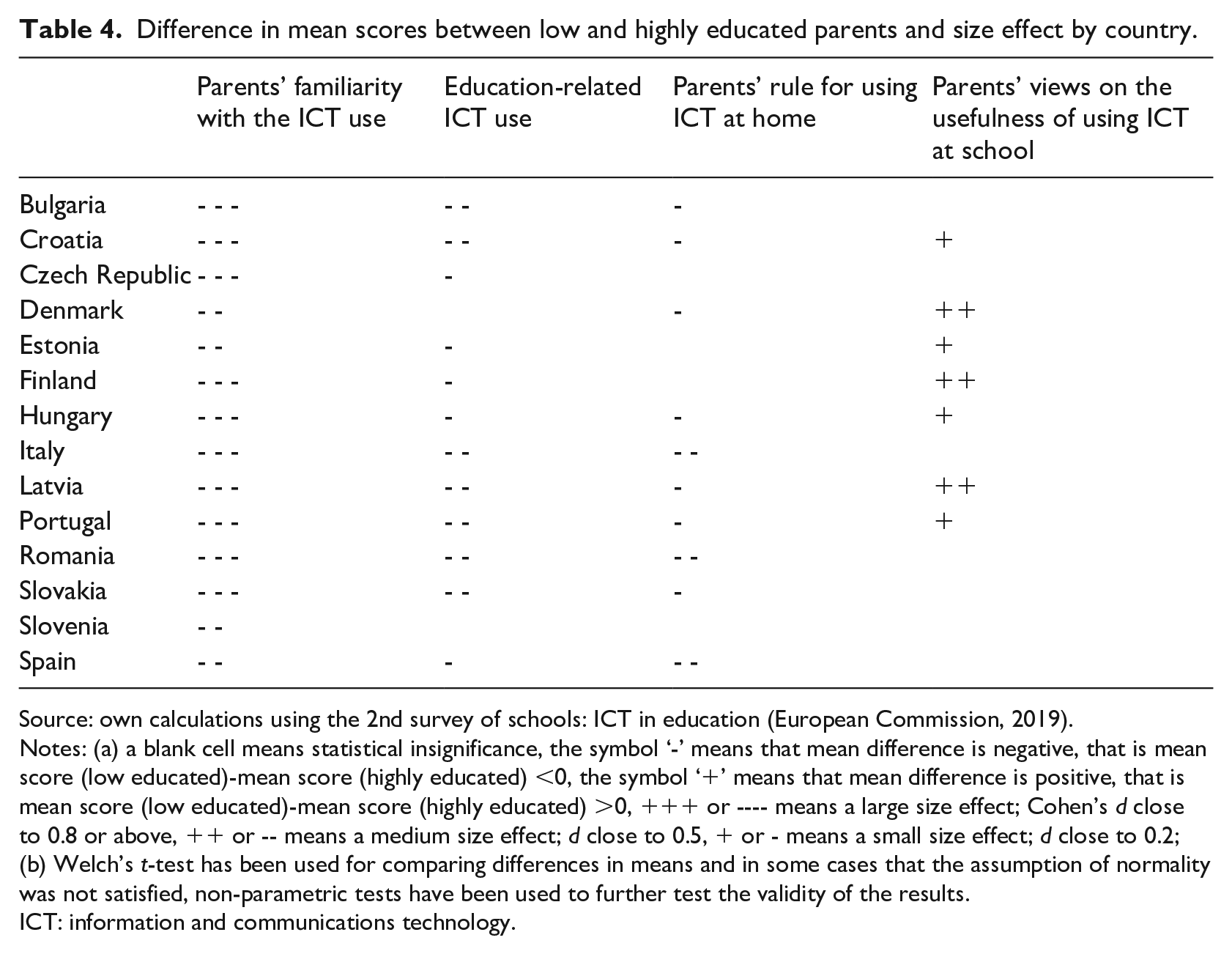
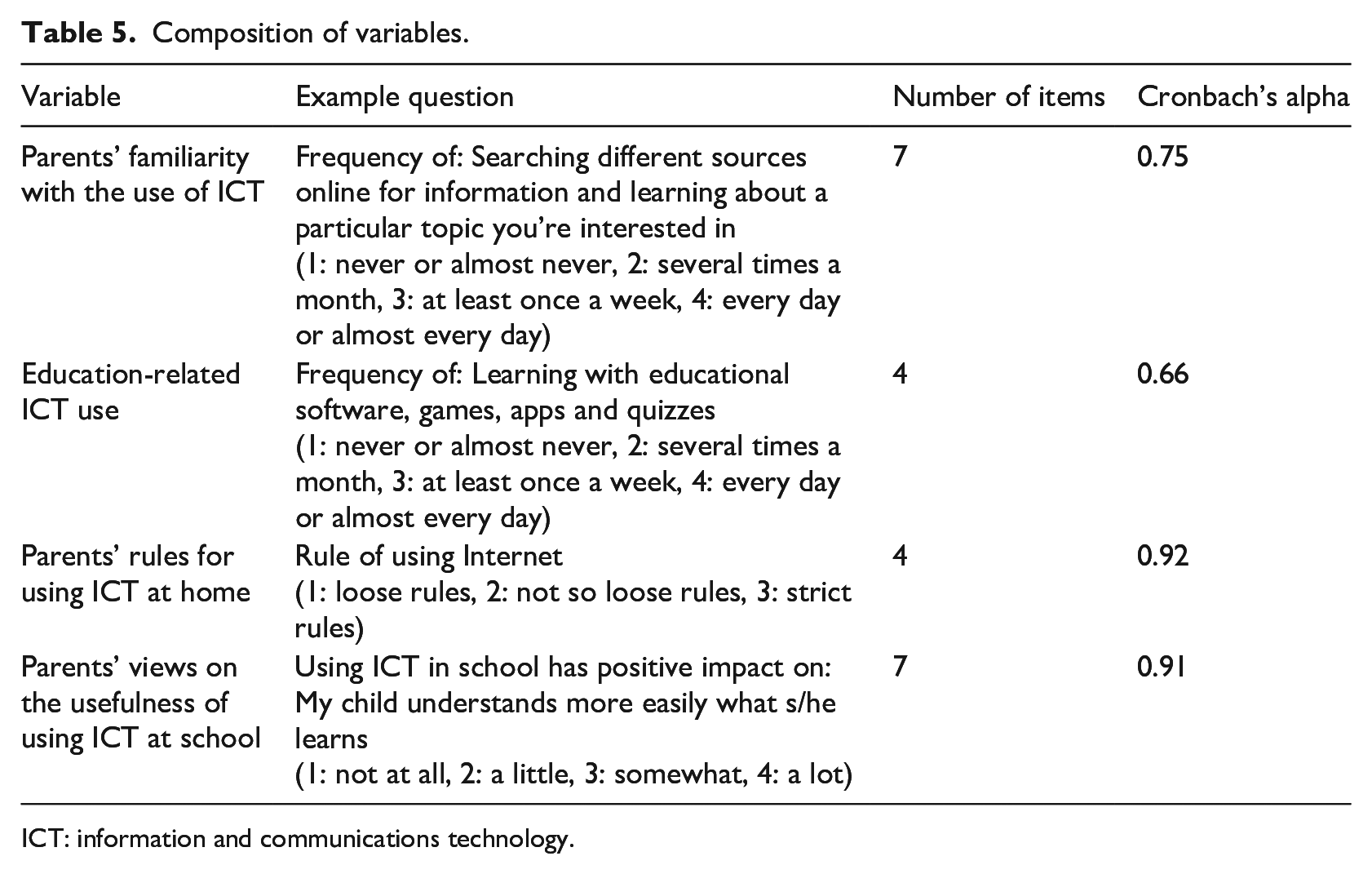
In Table 4 we have estimated the difference in the mean scores of the composite variables of Table 5 by parental education by country. Parents have been classified into two groups according to their educational level: low (ISCED levels 0, 1, 2 and 3; that is, up to upper secondary level) 5 and high (ISCED levels 6, 7, 8; that is, bachelor or above).
Difference in mean scores between low and highly educated parents and size effect by country.
Source: own calculations using the 2nd survey of schools: ICT in education (European Commission, 2019).
Notes: (a) a blank cell means statistical insignificance, the symbol ‘-’ means that mean difference is negative, that is mean score (low educated)-mean score (highly educated) <0, the symbol ‘+’ means that mean difference is positive, that is mean score (low educated)-mean score (highly educated) >0, +++ or ---- means a large size effect; Cohen’s d close to 0.8 or above, ++ or -- means a medium size effect; d close to 0.5, + or - means a small size effect; d close to 0.2; (b) Welch’s t-test has been used for comparing differences in means and in some cases that the assumption of normality was not satisfied, non-parametric tests have been used to further test the validity of the results.
ICT: information and communications technology.
Composition of variables.
ICT: information and communications technology.
One important finding from the processing of data shown in Table 4 is that highly educated parents are more familiar with ICT use across almost all European countries, with the size effect being large in most countries, with the exception of Denmark, Estonia, Slovenia and Spain (medium effects). The second variable, measuring the prevalence of education-related ICT use in the family, reveals again higher values for highly educated parents but the differences are, this time, not so large. In particular, medium-size effects are observed in most countries with the exception of Czech Republic, Estonia, Finland, Hungary and Spain (small effects) and Denmark and Slovenia (negligible findings).
The third variable concerning parents’ rules for using ICT at home reveals even milder effects. In general, it can be said that highly educated parents report stricter norms regulating children’s access to digital equipment, although the difference in the mean scores are in most cases either low or negligible (e.g. Czech Republic, Estonia, Finland, Slovenia).
Finally, the last panel of Table 4 presents results regarding parents’ views on the usefulness of using ICT at school. This is an interesting variable as it can be understood to capture the degree to which the ends of the expressive order of digital schooling are accepted by parents. The results can be characterized as counterintuitive since they do not reveal differences in favour of highly educated parents across countries as one might have anticipated. On the contrary, in Croatia, Denmark, Estonia, Finland, Hungary, Latvia and Portugal, parents with a low level of education appear to be more favourably inclined towards digital technologies, while in many other countries the difference in mean scores is negligible (for example, in Bulgaria, Italy, Romania, Slovakia), indicating a relatively similar attitude towards ICT, on average, between the two groups. This finding merits more investigation as it is open to various interpretations. It might imply the wider acceptance of ICT as an educational resource in modern digital societies or it might reflect a relative ‘conservatism’ of highly educated parents in regard to the educational benefits of new technologies that further implying a preference over more traditional forms of teaching, or even a more refined view of the conditions under which digital technologies can be productively deployed for teaching and learning purposes. These arguments are plausible, but, in order to test them, more refined empirical evidence should be utilized.
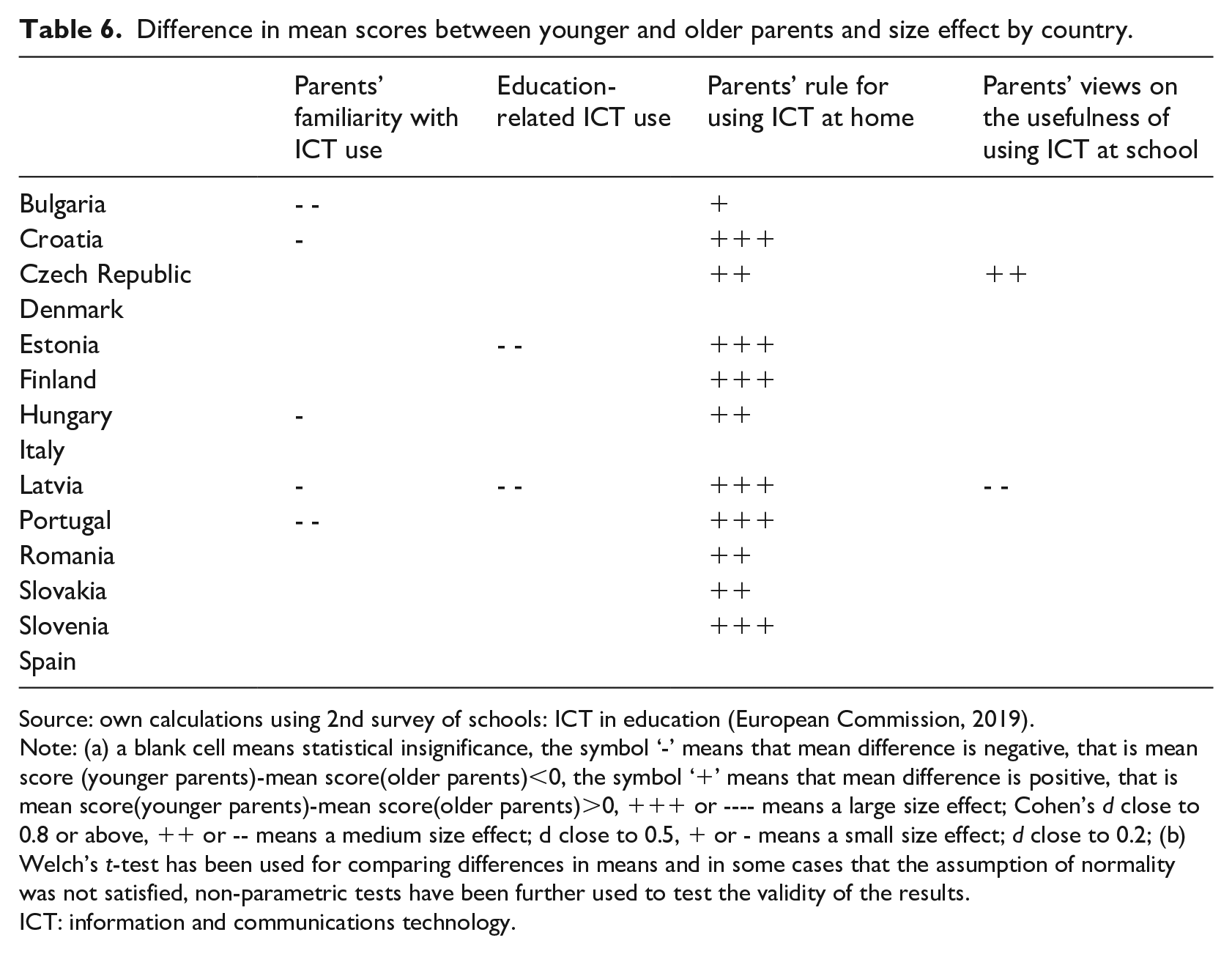
In Table 6, the same symbolisms and format as in Table 4 are followed (see also the corresponding notes below the two tables). In contrast to the findings in Table 4, in the majority of countries we do not find evidence that the two groups of parents differ substantially on average. Specifically, education-related ICT use and parents’ views on the usefulness of using ICT at school do not produce statistically significant results, with the exception of a few countries (Estonia, Latvia, Czech Republic and Latvia). Furthermore, in a few countries in the sample, older parents appear to be somewhat more familiar with ICT use. But the most interesting result is recorded with respect to parents’ rule for ICT use at home. Specifically, it is observed that, in the majority of countries, younger parents are more austere than older ones in regulating ICT use at home. Within this group of countries, in some cases the effect is large (Croatia, Estonia, Finland, Latvia, Portugal and Slovenia).
Difference in mean scores between younger and older parents and size effect by country.
Source: own calculations using 2nd survey of schools: ICT in education (European Commission, 2019).
Note: (a) a blank cell means statistical insignificance, the symbol ‘-’ means that mean difference is negative, that is mean score (younger parents)-mean score(older parents)<0, the symbol ‘+’ means that mean difference is positive, that is mean score(younger parents)-mean score(older parents)>0, +++ or ---- means a large size effect; Cohen’s d close to 0.8 or above, ++ or -- means a medium size effect; d close to 0.5, + or - means a small size effect; d close to 0.2; (b) Welch’s t-test has been used for comparing differences in means and in some cases that the assumption of normality was not satisfied, non-parametric tests have been further used to test the validity of the results.
ICT: information and communications technology.
Environmental conversion factors
In this section we utilize EU-SILC-based indicators in order to investigate a number of environmental conversion factors that emanate from specific dimensions of spatial inequalities at the household level. In particular, based on our conceptual framework, the availability and appropriateness of space within the household is a crucial conversion factor in enhancing children’s capability for getting the most out of home schooling. To provide a simple example: a family might have access to some forms of capital (e.g. cultural or social capital) as well as the appropriate skills, willingness and attitudes to utilize them. Yet an overcrowded, unfit and noisy space, where two, three or more students are simultaneously struggling to actively participate in a digital classroom, may not only hamper their learning potential, but also may influence family’s acceptance of the ends of schooling, thereby compromising the whole effort.
Figure 2 investigates this line of argumentation by reporting the overcrowding rate by poverty status by country. In simple terms, this composite indicator measures the percentage of people living in dwellings with not enough rooms. Overall, the evidence of Figure 2 reveals large disparities as the overcrowding rate reached 15.5% in 2018 in EU28. This figure varies considerably between countries reflecting wider factors such as high income inequality, rising housing costs, spatial segregation and inadequacies in housing policy (Council of Europe Development Bank, 2017).
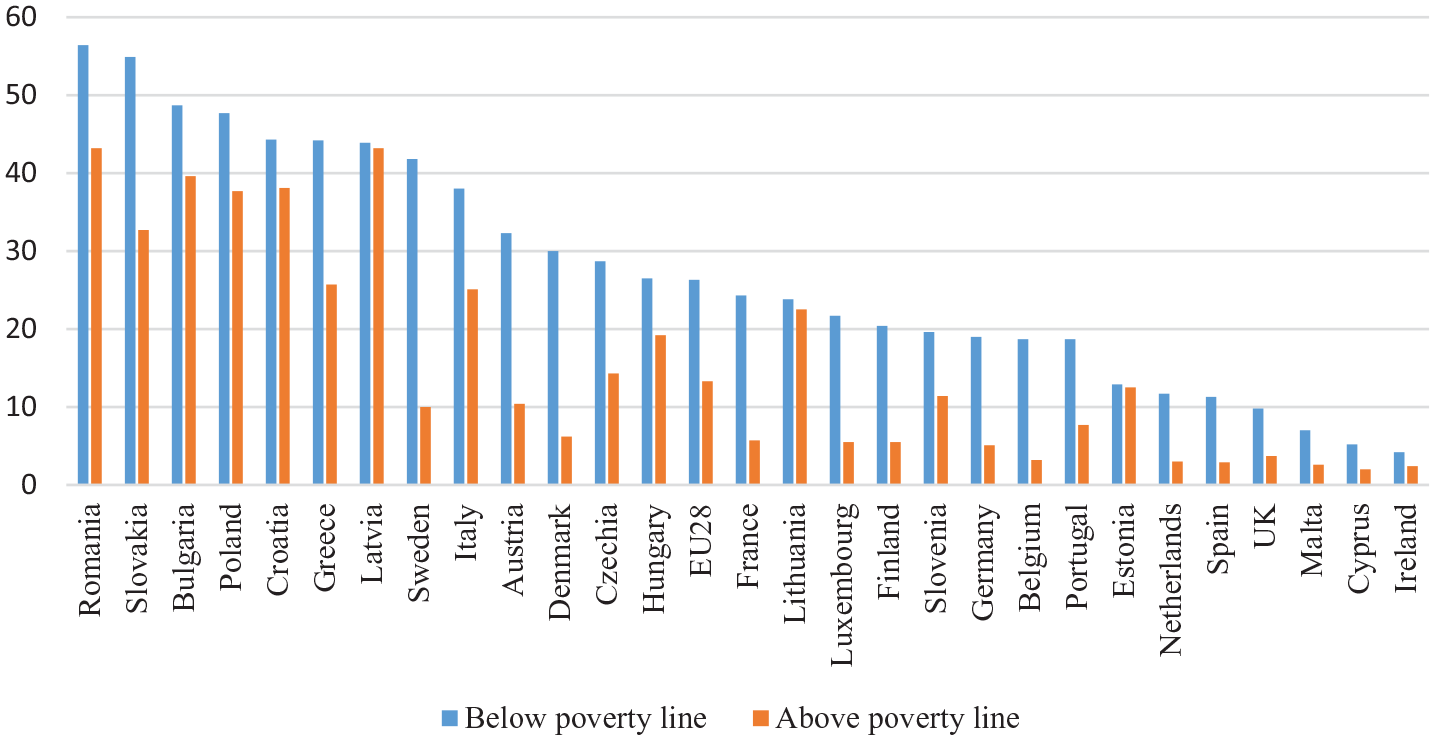
Overcrowding rate by poverty status by country, 2018.
The highest overcrowding rate is observed in Romania, where about half of the population lives in overcrowded dwellings. In Latvia and Bulgaria the related figures are also very high, standing at 43.4% and 41.6%. On the other end of the spectrum, in Cyprus and Ireland, only 2.5% and 2.7% of the total population face overcrowding problems. The data further show large disparities between poor and non-poor households (which are depicted in Figure 2 by comparing the height of the blue and orange bars). For example, in Sweden and Denmark (two high-income countries also characterized by strong welfare states) the overcrowding rate reached 40% and 30% among the poor, respectively, compared to 10% and 6.2% for the non-poor. This means that relatively high housing costs crowd out low-income families from housing of high quality, suggesting the existence of ‘hidden’ inequalities even in countries which are considered to be actively pursuing egalitarianism. The Baltic countries (Latvia, Lithuania, Estonia) constitute an impressive case of low housing inequality as the overcrowding rate does not differ significantly between poor and non-poor households and, at least in the case of Estonia and Lithuania, the rate is also lower compared to the EU28 average.
Figure 3 sheds light on another relevant environmental conversion factor by measuring the proportion of households suffering from noise by poverty status and country. The negative impact of loud noises on learning (i.e. impairing reading comprehension and memory, decreasing motivation, and other factors) is widely accepted in the literature (see e.g. Clark and Stansfeld, 2007). ‘Undoubtedly, it is a general hindrance to cognitive development in contemporary urban environments, affecting any mode of learning, including home schooling. Therefore, the evidence presented in Figure 3 is alarming as it shows a high proportion of households suffering from noise, which appears to be more intense in many high-income countries such as the Netherlands, Germany, France, Luxembourg and Denmark, while it is milder in Poland, Italy, Bulgaria, Estonia and Croatia. The data also show that noise pollution affects disproportionately low-income households. For example, in the Netherlands 37.4% of households below the poverty line reported suffering from noise compared to 25.5% of households above the poverty line. In Denmark, the difference is even larger for poor and non-poor households (32.3% vs 16.1%). Yet there are also a few cases defying the general pattern such as Greece, Romania and Lithuania, where the incidence of households suffering from noise is more frequent among non-poor households.
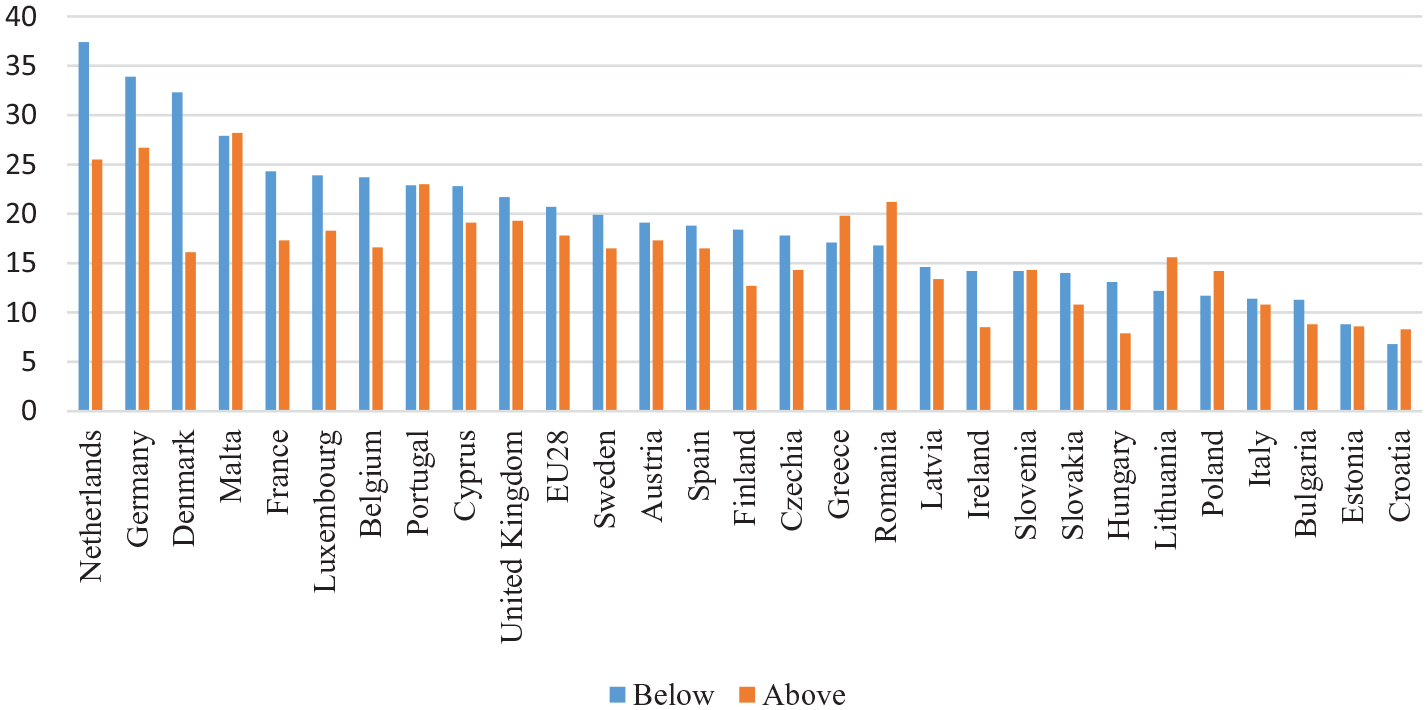
Population living in households considering that they suffer from noise by poverty status by country, 2018.
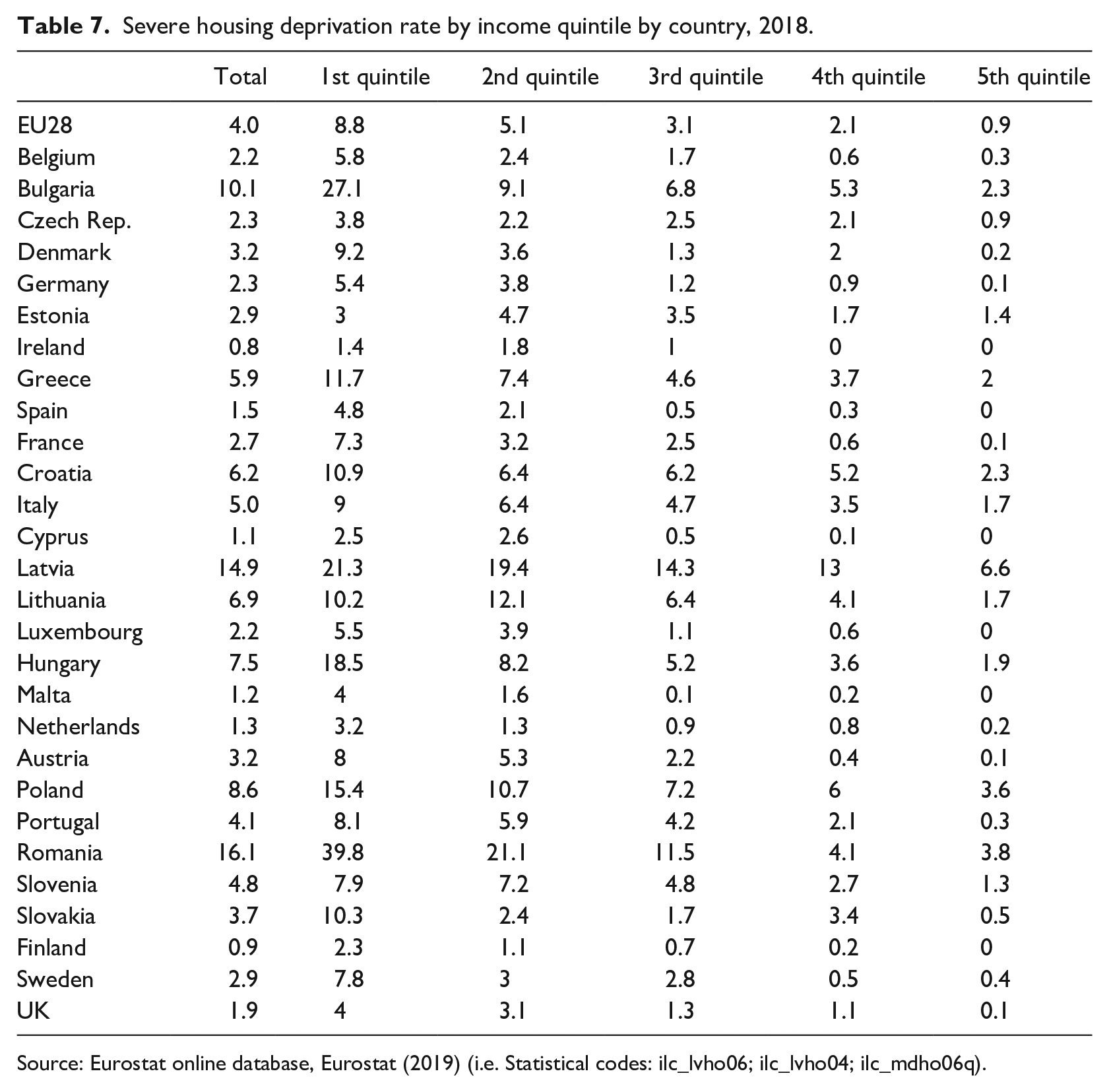
Finally, in Table 7 a more complex dimension of spatial deprivation is examined by using the severe housing deprivation rate by income quintile (thus, this time, shedding light on the entire income distribution). The housing deprivation rate takes into account not only whether a dwelling is overcrowded, but also if it is marred with a leaking roof, lacking a bath/shower or indoor toilet, or being too dark. Evidently, all these factors are not conducive to home schooling or, in general, any form of learning and therefore constitute negative environmental conversion factors.
Severe housing deprivation rate by income quintile by country, 2018.
Source: Eurostat online database, Eurostat (2019) (i.e. Statistical codes: ilc_lvho06; ilc_lvho04; ilc_mdho06q).
Again, the data reveal a wide range of spatial inequalities within and between countries. The average severe housing deprivation rate in EU28 stood at 4% in 2018. Yet the rate differs substantially across income quintiles ranging from 8.8% in the first quintile (poorest one) to a negligible 0.9% in the fifth quintile (richest one). There are large disparities among countries, too. The severe housing deprivation rate is notoriously high in Romania (16.1%), Latvia (14.9%) and Bulgaria (10.1%), while it is very low in Ireland (0.8%), Finland (0.9%) and Cyprus (1.1%). In between stand countries such as Denmark (3.2%), Germany (2.3%), Sweden (2.9%) and Estonia (2.9%). The rate, expectedly, differs between quintiles in all countries; still, these differences in some countries are very large. For example, in Bulgaria and Romania, the rate reaches 27.1% and 39.8% respectively for the poorest quintile. In Hungary the rate drops abruptly from 18.5% in the first quintile to 8.2% in the second one. Estonia is an interesting case as the rate does not differ substantially among the three first quintiles, implying a low level of housing inequality; a finding also emanating from the evidence of Figure 3.
Conclusions
Results
In this study the theoretical framework of Sen-Bourdieu was utilized and further enriched with Bernstein’s conceptualization of the inter-relationships between family and schooling in terms of families’ understanding and acceptance of the means and ends of schooling, to investigate the topic of home schooling through online teaching. Two sources of secondary data, namely the ICT in education survey and a set of EU-SILC derived indicators, were employed to provide evidence on the potential effects of the pandemic in education inequality in Europe.
We find the existence of significant differences in important social and environmental conversion factors which disproportionately affect students from weaker socioeconomic backgrounds, most likely limiting their capability to benefit the most from digital schooling. In general, the most important differences were found in regard to parents’ familiarity with ICT use and conditions of overcrowding within the household. Significant disparities might be also observed in regard to other factors, but for specific countries. There are also large cross-country differences as some countries exhibit relatively more uniform attitudes towards ICT, while at the same time are not characterized by severe inequalities in environmental factors (an example is Estonia). On the other hand, there are countries characterized by alarming levels of sources of educational inequality (examples are Bulgaria and Romania). We do not find any compelling results in relation to parental age (except that younger parents are more austere regarding ICT regulation), but these findings should be interpreted with caution as the age difference in the examined cohorts is not so large, while the lack of detailed data on parental age (the survey does not report the exact age of the parent) does not allow for a different specification of the age groups in order to check for more substantial generational differences.
Limitations
A basic limitation of the study is that the empirical analysis is based on secondary data. Of course, this methodological choice has its own distinct advantages. Firstly, the data used in the study are available online, enabling the replication or further analysis of the results by other researchers. Secondly, the cost of large-scale surveys is prohibitive for most researchers (especially for cross-country studies which demand the collaboration of networks of research teams). Analysis of secondary data saves precious time by avoiding extremely arduous processes of data collection (including the establishment of validity and reliability), literally unfeasible for individual researchers. This is a particularly important advantage in the context of the current pandemic, where developments are very rapid and, consequently, the need to inform policymakers and the academic community is, undoubtedly, urgent. Still, it is important to acknowledge that primary data always, and by default, fit better to the research purpose of any study. Accordingly, we do not claim that the operationalization of the proposed conceptual framework is flawless and the set of conversion factors which were empirically assessed is exhaustive. This would have demanded a research design directly stemming from the theoretical framework. To mention an obvious example, the data did not include the necessary information to assess with accuracy the socioeconomic status of the family (data on family income and/or parental occupation), rendering the variable of parental education the only alternative proxy.
Policy implications
In terms of policymaking, we postulate that the pandemic has triggered permanent effects on educational systems which are going to exacerbate inequalities if they go unnoticed by policymakers or, hopefully, they may help ameliorate educational inequalities if construed as windows of opportunity. Needless to say, these inequalities are structural features of contemporary societies, but it is the case that they are now becoming more visible and therefore addressing them is more pressing.
Most educational systems have reacted rapidly to the pandemic by switching to home schooling through online teaching (Gouëdard et al., 2020). In many countries, there have also been efforts to improve access to digital resources at the school level and, sometimes, at the family level (Schleicher, 2020). Yet the question of the actual opportunities of children to benefit the most from these resources and technologies has been largely neglected. In this sense, the theoretical and conceptual framework used in this study can orientate related research efforts as well as assist in the formulation of appropriate policies, as the empirical findings point to certain areas in need of immediate intervention. For example, to compensate for the relative lack of parents’ familiarity with ICT, policymakers should consider initiatives that improve guidance and technical support to families of low socioeconomic backgrounds during distance learning. Towards this direction, certain ideas have been already suggested. Doyle (2020), for example, suggests that message reminders are a feasible and inexpensive way to boost parental engagement in home schooling at least in the medium term. In regard to environmental factors, policymakers should consider improving physical access to digital technologies; for example, by providing access to public facilities under appropriate social distancing and hygiene conditions (see e.g. Beaunoyer et al., 2020). Last but not least, the significant cross-country disparities that are observed in our data highlight the importance of mobilizing EU funding mechanisms in a targeted way.
Future research
The conceptual framework which was deployed and operationalized in our study provides a promising avenue of future research through adding new constructs to the proposed theoretical framework and/or elaborating on the existing ones by exploiting richer sources of information. These could include efforts to explore further and deeper the personal, social and environmental conversion factors which might contribute to or limit children’s capabilities, and to understand how these factors interact in various educational contexts. Shedding light on new forms of educational inequality in a more digitized and less equal era is undoubtedly a fruitful and uncharted area for educational research.
Footnotes
Declaration of conflicting interests
The authors declared no potential conflicts of interest with respect to the research, authorship and/or publication of this article.
Funding
The authors received no financial support for the research, authorship and/or publication of this article.
