




Abstract
Research ethics reviews are an integral component of the research process in education, but little is known about educators’ perceptions of and experiences with this process. This exploratory study examines educators’ perceptions of and experiences with the reviews of research ethics and, in this way, it contributes to a better understanding of this significant but often challenging research component. The study is based on the integration of quantitative findings from an online survey and the thematic analysis of open-ended responses. The research findings have revealed a distinct pattern of the participants’ responses related to the issues in the ethics review process concerning purpose, ambiguity, and process-related matters. The study also found that a significant number of educators face difficulties during the preparation of their applications. Analysis of the open-ended responses has provided some insights that enhance the findings of the survey by contributing to a deeper understanding of the researchers’ experience with and attitudes toward research ethics. The results of this study indicate the complexity of the research process and the need for comprehensive preparation and an efficient support system that will facilitate rather than hinder the quality and efficiency of research in education.
Keywords
Introduction
The dominant rhetoric in education emphasizes the vital role of research-based and evidence-based teaching practices and policies for improving the quality of education. There is also a growing concern about ethical issues in social research that is particularly visible in the domain of qualitative and visual research (Oancea, 2016). However, researchers and policy analysts rarely explore the conditions for conducting empirical research in education, and the obstacles which researchers face during their engagement in these issues are always present in the complex and multi-faceted research work in education (Borg, 2010; Hemsley-Brown and Sharp, 2003; Kitchen and Stevens, 2008; Poggenpoel and Myburgh, 2005; Shkedi, 1998).
There is general agreement among scholars that the ethics review process in the social sciences, medicine, and education represent an important (Carr, 2015; Scherzinger and Bobbert, 2017) yet laborious (Dehli and Taylor, 2006; Silberman and Kahn, 2011) and often challenging (Lewis, 2008; Sikes, 2013) component of empirical studies in education. According to Punch and Oancea (2014) and Oancea (2016), ethical issues are always present in educational research that includes human subjects, particularly when the research involves children or other vulnerable groups. Punch and Oancea (2014: 58) see research ethics as an integral component of all phases of research in education:
Ethics is the study of what are good, right or virtuous courses of action; applied ethics focuses this study on particular and complex issues and contexts. Research ethics is a branch of applied ethics focused on the specific contexts of planning, conducting, communicating and following up research.
The increasingly pervasive ethics review regulations enforced by Institutional Review Boards in the USA, Research Ethics Boards in Canada, Human Research Ethics Committees in Australia, and Research Ethics Committees in the UK (Dingwall, 2012; Israel, 2017; Schrag, 2010; Wassenaar and Slack, 2016) are challenging for many researchers. Even experienced researchers face difficulties since this practice is relatively new and not inherent to the field of educational research (Dingwall, 2008, 2012; Emmerich, 2013; Librett and Perrone, 2010; Lombardo, 2017). An extensive body of evidence, mainly in the domain of biomedical research, emphasizes that ethical aspects of studies involving human participants are highly relevant, but the procedure is quite lengthy and very expensive (e.g. Shoenbill et al., 2017).
Many other studies provide evidence that illustrates failures in the institutional ethics review process. Dingwall (2008, 2012) claims that ethical regulation and ethics reviews are a threat to research in social sciences since they reduce the rights of researchers and erode trust between them and research participants. Similarly, Librett and Perrone (2010) claim that ethics reviews have significantly affected ethnographic research and lead to serious consequences for both the research participants and the production of knowledge. A number of other authors noted that training for responsible conduct of research (RCR) is mainly focused on the development of knowledge and skills, but that it rarely offers well-defined content about the ethical evaluation process and even less frequently tries to examine or influence the attitudes toward research ethics (Kalichman and Plemmons, 2015; Kehagiaet al., 2012; Malouff and Schutte, 2005). In addition, several scholars claim that ethics reviews based on the biomedical model constrain research work in social sciences (Israel and Hay, 2006), prevent research, and silence debate about sensitive research topics (Scott, 2008).
A recent systematic literature review of studies evaluating the work of institutional research boards (Abbott and Grady, 2011) found significant random variations regarding the efficiency, consistency, and time required to review a study. A considerable number of researchers also expressed concerns regarding the bureaucratization and formalization of the research ethics review process and the impact of such approaches to the quality of research in education (Hammersley, 2009; Scott and Fonseca, 2010).
A review of the literature (Anderson et al., 2012) confirmed that most studies related to research ethics reviews are conducted in the biomedical research domain, while studies of ethics review processes in education and social sciences are underrepresented. The review of the literature conducted in this study also shows that most studies related to research ethics reviews are conducted in the biomedical research domain. By contrast, studies of ethics review processes in education are underrepresented even in the area of social sciences. For example, a large-scale study conducted by the Stakeholders Acting Together on the Ethical Impact Assessment of Research and Innovation (SATORI) mentioned education only as a form of training for researchers but that does not deal with the specific issues related to ethics reviews of research studies in education (Jansen et al., 2017).
This is highly important since the ethics review process is a mandatory component of educational research that affects a large number of researchers and significantly influences the entire research process. Furthermore, the ethics review process involves a large number of reviewers who devote a considerable amount of time and energy to this integral component of empirical studies in education. More comprehensive studies of research ethics practices are also needed to account for the fact that different national regulations influence research in education as well as the review process. Different interpretations of the purpose and scope of research reviews often lead to different practical solutions that are not always in the best interest of research participants and/or researchers (Nicholls et al., 2015; Schrag, 2011; Wassenaar and Mamotte, 2012).
Following the 2015 conference in Budapest, the European Educational Research Association (EERA) Council initiated an institutional study to examine researchers’ experiences with and attitudes toward research ethics reviews in education. Therefore, the central research questions in the current exploratory study were:
How do education researchers perceive and experience the ethics review process and are there any regional differences?;
What are the main difficulties that researchers face during the ethics review process?
What solutions do researchers perceive as helpful in dealing with challenges in their research practice?
The main objective of this article, which is a part of a wider study that examines the ethics review process in education, was to provide a basic description of education researchers’ perceptions of and experiences with the research ethics application process in order to initiate a discussions and a more comprehensive, in-depth studies of the identified practices in the ethics review process. The analysis is based on a relatively short online survey that was designed to provide a description of some central issues in the ethics review process, and all questions from this survey are included in the analysis.
The results from this study are expected to contribute to a better understanding of the issues related to the practice of research reviews in education and the development of measures that can help to improve this mandatory and demanding component of educational research. Keeping in mind the complexity of the research process and the wide specter of ethical implications in educational research (Oancea, 2016), the main argument of this study is that the facilitation of a comprehensive understanding of theory, which is behind procedural codes of academic and professional research studies in education, is a vital precondition for preparation, assessment, and, consequently, positive experience of researchers in these activities.
Methods
This study applied a combination of exploratory mixed methods approaches (Creswell and Plano-Clark, 2007). An online survey of the 2015 European Conference on Educational Research (ECER) participants and EERA Council members was applied to assess the ethics review process in education. The online survey was developed after an extensive literature review (Ferraro et al., 1999; Kehagia et al., 2012; Liddle and Brazelton, 1996; Lidz et al., 2012; Malouff, and Schutte, 2005; Morris, 2015; Plemmons et al., 2006) with input received from the EERA working group members (Raykov et al., 2016) who were delegated to assess the ethics review process in education.
Since the mission of EERA is to ‘further high-quality educational research,’ issues related to reviews of educational research were identified as an essential component of the research process. The aim of this study was to contribute to a better understanding of the ethics review process and improvement of the quality and efficiency of research work in this domain. Based on the initial literature review, a draft version of the online survey was developed and researchers involved in this group were engaged in the refinement of or modifications to the initial draft, based on their expertise and experience and taking into account national regulations and disciplinary perspectives. This rationale relied on the assumption that collaborative interdisciplinary studies can improve the quality and reduce the potential biases of monodisciplinary individual research studies.
All members of the working group were involved in the review, modification, and development of new questions that are deemed relevant for the ethics review process in education. The members of the EERA Council working group also participated in the initial presentation of the research findings during the 2016 EERA central session at the 2016 ECER in Dublin that was chaired by G Head and P Zgaga (Raykov et al., 2016). In addition to Likert-type scales, yes/no answers, and multiple-choice responses, the survey contained a small number of open-ended questions related to the participants’ experience with the research ethics process and a group of basic work-related characteristics. Specifically, open-ended questions were related to practical experience with the research ethics process and the participants’ perception of the benefits as well as suggested solutions for the perceived challenges.
Participants
The target populations of this survey were the participants in the 2015 ECER. In total, approximately 2500 participants involved in various types of research in education were invited to take part in this study, which was conducted between February and March 2016. In total, 516 participants (21%) responded to the EERA Office invitation to participate in this voluntary and anonymous online survey. The responses were obtained from researchers from 40 European countries (n = 362) and 16 countries outside Europe (n = 96), including 224 researchers with experience in applying for research ethics, 104 institutional ethics review board members, and 188 educators without direct experience with the research ethics review applications process. All participants in this study were invited to participate in this voluntary institutional study approved by the EERA Council. They were provided with information about the purpose of this study and informed that their submission of the online survey was required as an indication of their consent to take part in the study.
Data analysis
The quantitative data analyses used in this study were determined by the research objectives and the type of collected data. Exploratory techniques (percentages and means) and data visualization were applied to describe the practice of the ethics review process in education. The analysis also included a bivariate comparison of the average amount of time that is required to obtain the ethics approval (t-test) in institutions that use electronic submissions and paper-based submission systems. Additionally, the study used factor analysis procedures from the SPSS package (IBM SPSS Statistics, IBM Corp., USA) to determine the factors behind the observed variables. Exploratory factorization was performed with different extraction (principal component and principal analysis factoring) and rotation (varimax and promax) methods to examine the structure of the observed variables and to check the stability of the obtained results (Field, 2009). The internal consistency of the items was determined through the standard Cronbach’s alpha, which is the most commonly used reliability measure (Cortina, 1993; Field, 2009) that is also appropriate for Likert-type scales (Gliem and Gliem, 2003).
This study is primarily quantitative, with open-ended questions providing some contextual data to help with the interpretation of the findings. The qualitative data analysis is based on a thematic analysis (Clarke and Braun, 2013; Saldaña, 2009) of the open-ended survey responses related to the perceived challenges in the review process and the suggestions that the participants provided for improvement of this process. This analysis was supported by a Maxqda (VERBI Software GmbH, Germany) software for computer-assisted qualitative data analysis (Kuckartz, 2014). Both open-ended questions were imported into Maxqda, and thematic analysis was used as a suitable technique for this type of data as the ‘most commonly used method in the field of quantitative content analysis’ (Kuckartz, 2014: 65). As suggested by Braun and Clarke (2006) during the initial phase of this analysis, the qualitative material was reviewed through several iterations and initially systematically coded. Collating codes based on inductive, data-driven approach were organized into potential themes and finally integrated into themes (Clarke and Braun, 2013; Nowell et al., 2017 ) related to the research question that was focused on the participants’ experiences and suggested solutions for improvement of the ethics review process.
Results and discussion
This study showed (Figure 1) that most of the institutions (87%) that participated in this study have an ethics committee. A slightly smaller number, approximately three-quarters, 78% of the participants, reported that their institution has an ethics committee that deals with all disciplines. However, a smaller number of the participants reported that their institution has a specific ethics committee for social sciences (41%) and a similar number reported that their institution has an ethics committee for educational research (40%).
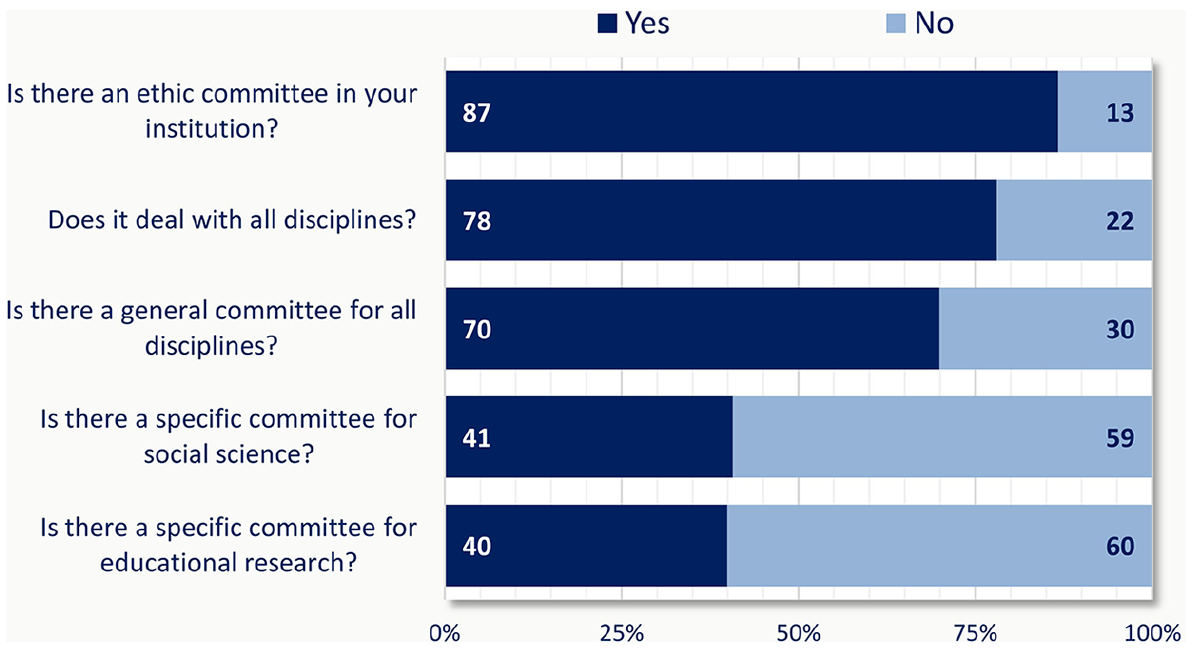
Existence of ethics review boards in research institutions.
Overall evaluation of ethics reviews of educational research
The aim of the first research question in this study was to examine how education researchers perceive and experience the ethics review process. Regarding the overall researchers’ experience with the ethics review process, the majority of the participants (63%) described their experience with the institutional ethics research boards as positive or mainly positive, approximately one-quarter of the participants reported mixed, both positive and negative experiences (27%), while approximately one in 10 (11%) reported a negative or mainly negative experience with institutional research boards.
Regarding the general attitude toward research ethics reviews (Figure 2), most participants believe that ethics guidelines are useful for increasing the researchers’ sensitivity to ethical issues (91%) and that research boards’ decisions are reasonable (84%). More than three-quarters of the participants (80%) know how to find information about ethics reviews, while a similar number believe that the ethics board’s decisions are made and delivered to the researchers within a reasonable time period (77%). In addition, more than two-thirds of the participants believe that the ethics review process works well (71%) and that ethics applications are easy to understand (67%).
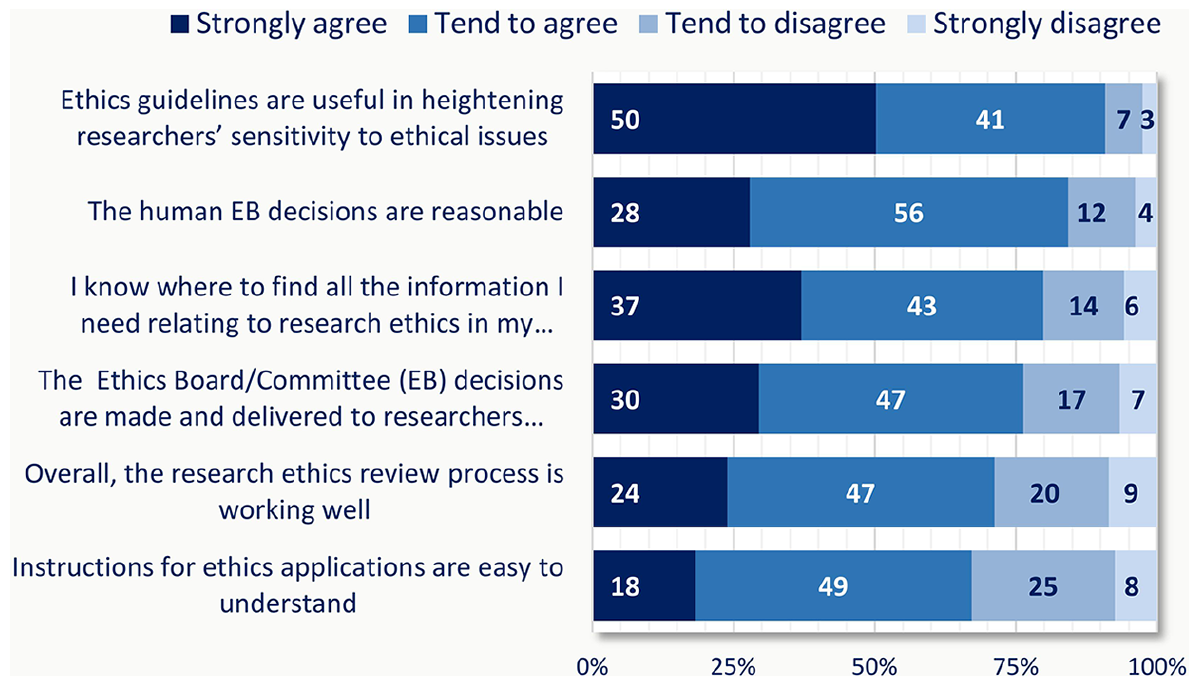
Overall evaluation of ethics reviews of educational research.
In addition to the overall positive perception of the ethics review process, further analysis showed (Figure 3) that most participants perceive ethics reviews of educational research as meaningful. The great majority believe that research ethics reviews increase the researchers’ awareness of ethical issues (95%), help them avoid misconduct (92%), and increase their compliance with ethical requirements. A slightly smaller number, but still a great majority of participants (80%), agree or strongly agree that research ethics reviews improve the quality of research.
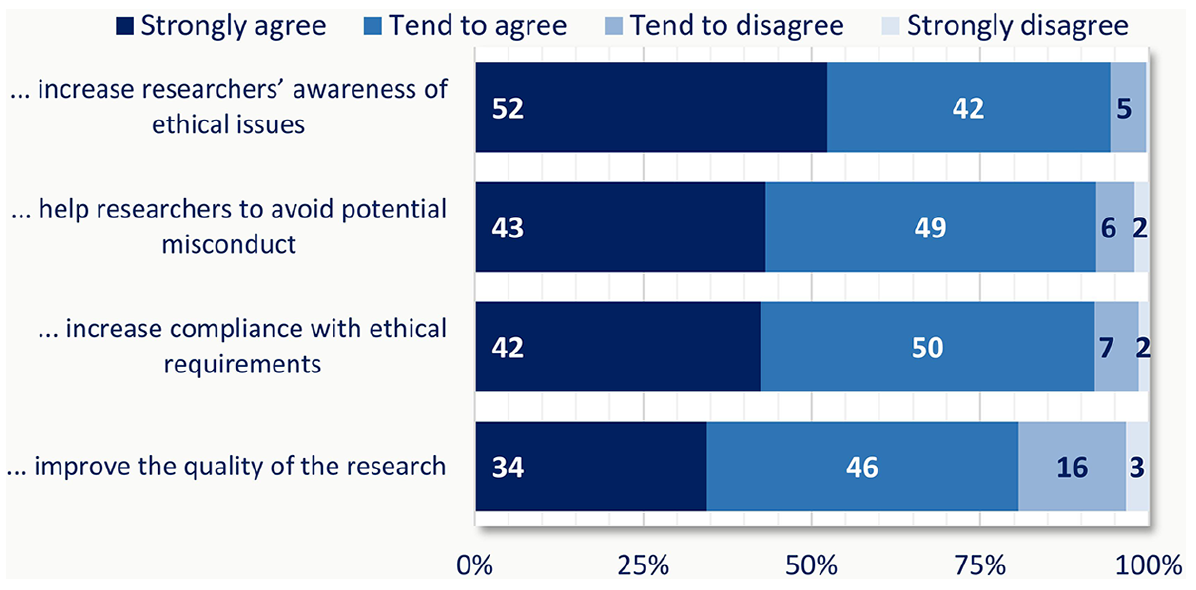
Meaningfulness of ethics reviews.
Regional differences
Despite the considerable sample size, the analysis of regional differences was not feasible due to a relatively small number of participants from different countries. An exploratory comparison was conducted only between the participants from European (n = 362) and ‘other,’ non-European countries (n = 96); however, the results from this analysis should be considered as indicative rather than highly reliable.
The results indicate that a similar proportion of European participants and participants from other (non-European) countries need considerable assistance with the development of their ethics applications. This analysis also indicates that European researchers report less frequently than researchers from other countries that mandatory research reviews influence the selection of the research topics for their studies. However, this study also indicates that researchers from other countries more often report that they receive adequate assistance during the preparation of their applications and more often have the opportunity to use an online system for submission of their ethics applications.
Furthermore, the researchers from other countries more often report the existence of ethics committees in their institutions, and the presence of committees that deal with all disciplines, as well as the existence of general and specific committees for educational research. This analysis suggests that European researchers in education design their research studies according to strong democratic tradition, but the study also indicates that a considerable number of researchers need additional help but relatively rarely receive it. Further, there are indications that the ‘infrastructure’ for ethics research studies in education is unevenly developed.
Among the participants from both groups, European and ‘other,’ non-European countries, researchers identified similar common themes regarding challenges in the research review process. These included: (a) time-consuming demands to prepare research applications and obtain approval; (b) work and criteria applied by institutional research boards or committees; (c) bureaucratic, non-transparent procedures; and (d) difficulties with some specific methodological approaches. A smaller number of participants in ‘other,’ non-European countries mentioned administrative barriers imposed by educational institutions or administration.
By contrast, researchers from European countries identified a number of themes which were not common among the responders from ‘other,’ non-European countries, including: (a) the benefits of the preparation of ethics reviews that outweigh the disadvantages; (b) concerns that research reviews prevent research of some ‘sensitive’ topics; (c) concerns with the lengthy or unnecessary forms and procedures; (d) unclear guidelines and criteria; (e) inappropriate review protocols often based on a biomedical model; and (f) the need for the development of a genuine ethical awareness instead of a formalized technical approach to ethics-related issues in educational research. However, due to the relatively small number of participants and the exploratory nature of this study, findings related to the regional comparisons warrant further research designed to answer this question specifically.
Concerns about the efficiency of ethics reviews
Despite the majority of researchers having a positive experience with ethics reviews, further analysis that was focused on the second research question demonstrates that a considerable number of participants experience some difficulties that they face during ethics review process. Many researchers indicated that ethics reviews are not delivered to them within a reasonable time (24%), do not think that the ethics review process works well (29%), and believe that instructions for ethics applications are challenging to understand (33%). Also, approximately one-third of the participants believe that research ethics reviews are delaying (40%) or preventing (31%) important research studies (Figure 4). Additionally, as the same figure shows, almost 20% of the participants feel that ethics procedures are an inconvenience in the life of research projects.
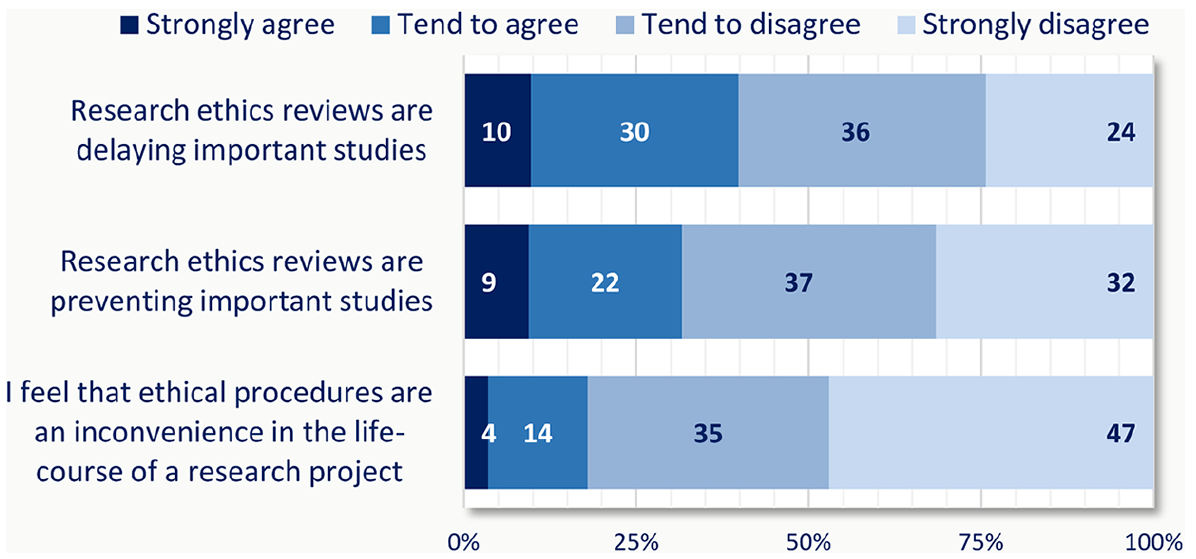
Concerns about the efficiency of ethics reviews.
In addition to the expressed concerns, a considerable number of the participants (11%) reported that mandatory research reviews strongly (to a very great or great extent) influence their selection of research topics and a third (33%) indicated that these reviews ‘to some extent’ influence their choice of research topics and variables.
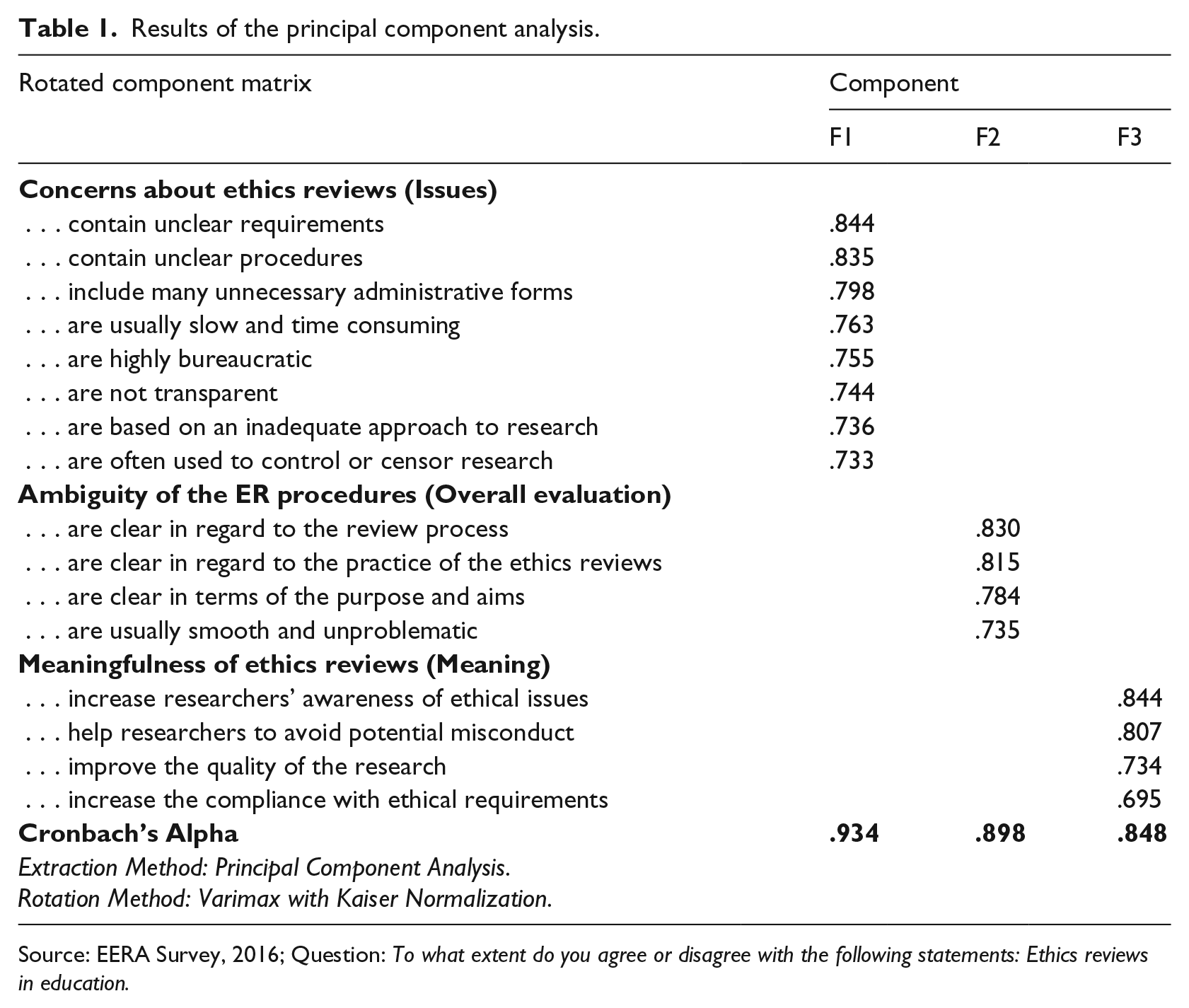
The principal component analysis (Table 1) was applied to determine the structure of the participants’ attitudes towards ethics reviews in education and a reliability analysis was applied to determine the internal consistency of the identified factors. This principal component analysis identified three factors, which explain 72% of the total variance. The first component explains 33% of the total variance and mainly describes issues related to the ethics review process. This component is highly saturated with items that indicate unclear requirements or unclear ethics review procedures, while the other items are related to the length of the review process and the number of administrative forms required for ethics reviews. The internal consistency of the items that define this component was very high (Cronbach’s alpha = .934).
Results of the principal component analysis.
Source: EERA Survey, 2016; Question: To what extent do you agree or disagree with the following statements: Ethics reviews in education.
The second component is saturated with items related to the evaluation of the ethics review process, and includes items that evaluate ethics reviews with respect to the process, practice, and aim of ethics reviews. More than 70% of the participants believe that the ethics review process is clear but approximately half of the participants (49%) disagree with the statement that ethics reviews are usually smooth and unproblematic. The internal consistency for the items that define this component was very high (Cronbach’s alpha = .898).
The third principal component identified in this study is related to the meaning of the ethics reviews in education. This factor is saturated with items that express the benefits of ethics reviews. Most of the participants in this study (95%) believe that ethics reviews increase researchers’ awareness, help them avoid potential misconducts (92%), increase compliance with ethical requirements (92%), and improve the quality of research (80%). The internal consistency of the items that define this component was also very high (Cronbach’s alpha = .848).
In addition to the principal component analysis with varimax rotation, the factorization of the same data was applied using the maximum likelihood method; the oblimin rotation showed almost identical results. The internal consistency for the identified factors was above .80, which is considered a very good consistency for all three scales. The three sets of items that make up the identified components have high internal consistency and can be used for a brief and relatively reliable evaluation of the ethics review process.
Ambiguity of ethics review procedures
Further analysis related to the second research question shows that almost three-quarters of the participants (71%) perceive research reviews as satisfactory regarding the clarity, practice of ethics review boards, and purpose of ethics reviews (Figure 5) but almost half of participants (49%) do not think that this process is smooth and unproblematic.
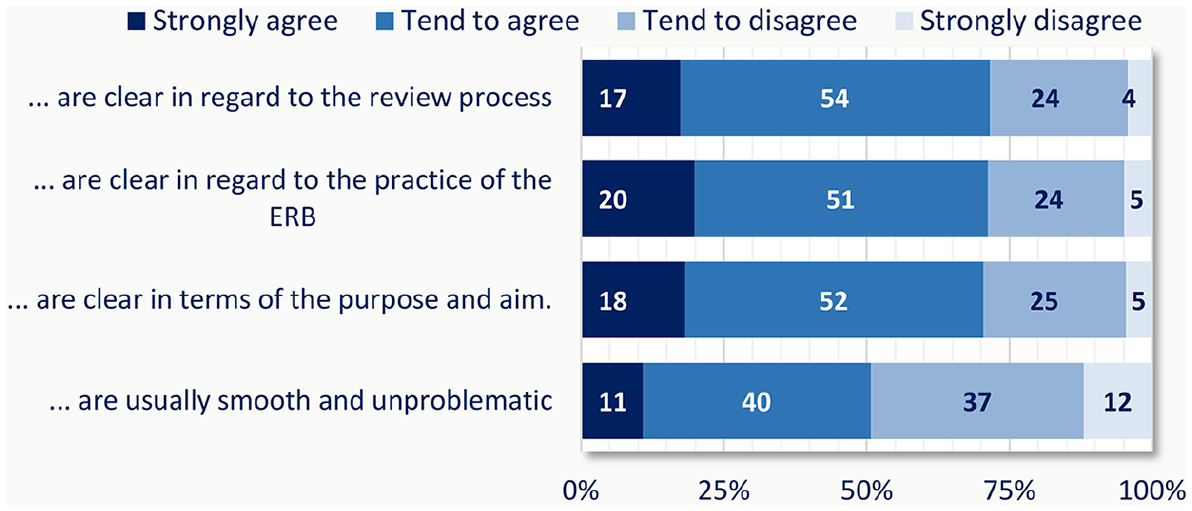
Ambiguity of ER procedures.
Concerns about ethics reviews
In contrast to the relatively positive perception of the meaning and purpose of research ethics reviews, a significant number of the participants identified some issues in this process (Figure 6). Approximately half of the participants believe that ethics reviews are highly bureaucratic (53%), usually slow and time-consuming (50%), and include many administrative forms (48%). Approximately one-third of the participants believe that the research ethics process entails unclear requirements (36%) and unclear procedures (33%). A slightly smaller proportion of the participants, approximately one-quarter, believe that research ethics reviews are often used to control or censor research (29%), that research ethics reviews are not transparent (28%), and are often based on an inadequate approach to research (28%).
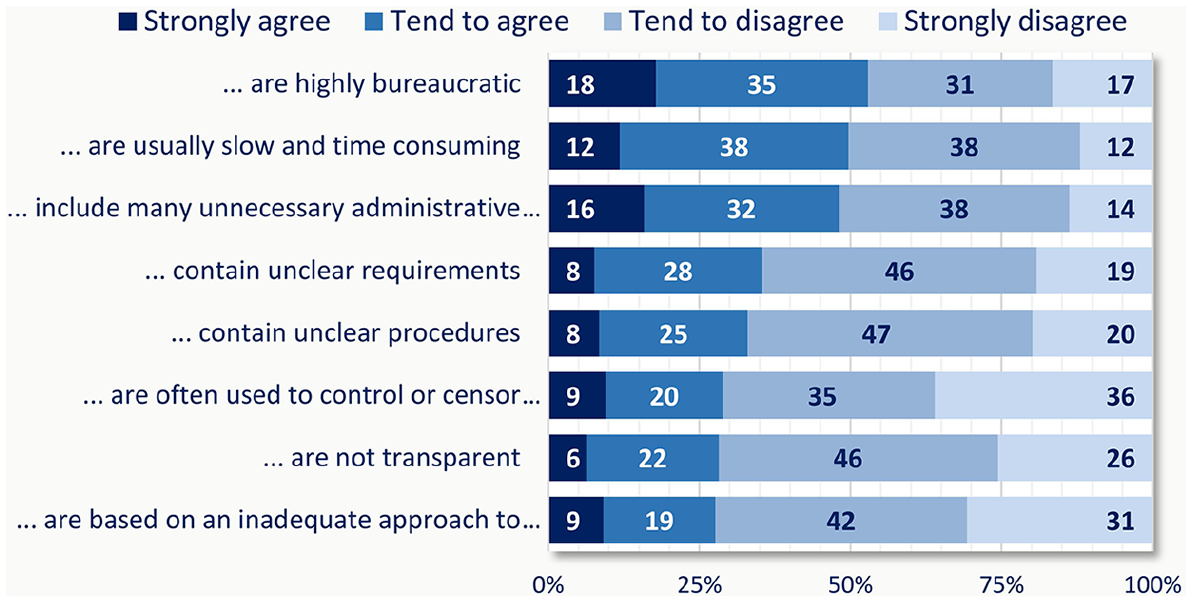
Concerns about ethics reviews.
The study provides support for claims (Bell and Elliott, 2014; Dehli and Taylor, 2006) that ethics reviews influence the scope and methodological approaches to research through auto-censorship and self-disciplining. According to the literature, it seems that some researchers avoid sensitive research topics and research methods that involve interventions or participant observations in order to more easily comply with the institutional ethics review requirements (Butler, 1998). The identified tendency among researchers to comply with the requirements of ethics reviews sometimes leads graduate students to avoid high-risk or ‘hot’ research topics through self-monitoring (Bledsoe et al., 2007). A consequence of the challenging ethics review process is identified through a tendency of faculty members to direct their students to undertake ‘low-risk, and consequently low-impact, research’ to avoid the ‘obstacle of ethics review’ (Wynn, 2017: 219). Also, challenging ethics review procedures have in some cases been attributed to ‘halting undergraduate research or evading ethics review, regarding it as meaningless bureaucracy divorced from actual ethical thinking’ (Wynn, 2017: 180).
Perceived need for assistance
Results from the study showed that almost two-thirds of the participants (62%) believe that there is a need for greater assistance with the development and submission of ethics review applications. In addition, the study also found (Figure 7) that only a small number (35%) of the participants always or usually receive assistance, while a greater number (42%) rarely or never receive adequate assistance during their preparation of ethics review applications.
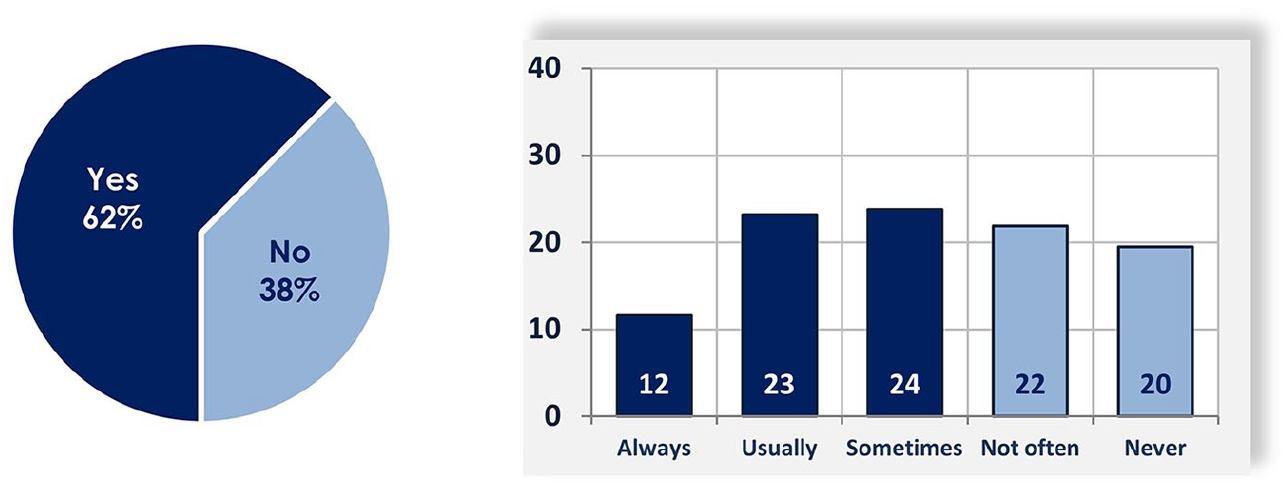
Received assistance during the ethics review process (%).
The results indicate that there is a need for more efficient support for researchers during the application process. Also, it is reasonable to expect that research methods courses and opportunities for additional specialized training would be beneficial to a large number of researchers. Additional research training opportunities would also be helpful to the students involved in research studies that require ethics reviews.
The length of the ethics review process
The study found that ethics reviews in education require a relatively long period of time to complete. Approximately half (54%) of the participants receive approvals within one month from the day of submission, while an additional one-quarter (28%) receives approvals five to eight weeks after submission. However, one in five (18%) researchers receive approvals after two or more months. This aspect of the application process indeed requires solutions that can expedite the review process and the completion of research in general.
The study also showed that just under half (45%) of the participants have the opportunity to use an online system to submit their applications for review, even though the online application submission system significantly expedites the ethics review process. Results showed that the average approval time for the participants who have the opportunity to use an online application system is 5 weeks on average (mean = 5.5 weeks), compared to the participants using standard printed forms, who receive their approvals in more than 8 (8.5) weeks, and this difference is statistically significant (t = 3.43, df = 208, p < .001). The comments related to the length of the ethics review process indicated a negative perception of this aspect of the application process. Many participants describe the length of the application process as ‘very long,’ ‘too long,’ ‘[takes] months,’ and ‘weeks and sometimes months.’
Our study demonstrated that attitudes toward ethics reviews are closely associated with the perceived efficiency of ethics review boards (r = .594, p < .01), and it is not surprising that more than half (54%) of behavioral and social scientists believe that the ethics review process impedes their research, and that difficulties associated with the ethics review process outweighed its benefits (Gray et al., 1978). Studies of time in the domain of medical and behavioral research indicate an even longer period of time for the approval of ethics applications as well as significant variations of the time required for approval (Gray et al., 1978; Silberman and Kahn, 2011).
Analysis of open-ended responses
Our analysis of the open-ended responses that was focused on our third research question provides some indications about the challenges that the researchers face during the ethics application process, but also their ideas about the possible solutions to some of the identified difficulties.
Our analysis of the open-ended answers on the question related to the challenging aspects of research ethics reviews in education found that the most common challenges are related to the time required for completion and approval of applications, the scope of reviews that goes beyond ethics-related aspects of research, and the lack of expertise of board members. Also, a considerable number of the participants perceive ethics reviews as bureaucratic or non-transparent and a number of participants also indicated that ethics reviews in some cases prevent ‘sensitive’ research. A smaller number of participants also reported difficulties with unclear forms and guidelines, lack of understanding for qualitative research studies, and stated that ethics reviews in education are often based on the biomedical model which is not suitable for research studies in education, and that rapid reviews are more appropriate for low-risk research.
Qualitative data analysis of the participants’ responses to open-ended questions is mainly consistent with the survey findings and indicates that many researchers perceive the ethics review process as time-consuming and that the ethics procedure can delay research.
For example, several researchers emphasized time-related issues by stating that ‘ethics permission takes a long time’ (#140) and that they ‘take a long time and require too much paper work’ (#114), as well as that they ‘tend to be slow and far too bureaucratic’ (#371) and ‘can constrain research’ (#235). The slow process is often attributed to unnecessary duplication and the organization of ethics review procedures that additionally delay this process:
The time it takes to complete applications and time to get applications approved. A lot of unnecessary duplication. If one misses a monthly submission date, it takes a whole month before a new application can be submitted. Sometimes not approved based on nonsense, such as the omission of certain biographical details or board members’ ‘feeling’ that another research method would be more appropriate. (#88)
One of the frequent concerns among the participants in this study is that the scope of reviews goes beyond ethics-related aspects of research. Several researchers believe that review boards often get involved in methodological and design-related issues that are not their mandate. For example, a researcher stated that ‘sometimes the EB gets too involved in research methodology which is NOT their role’ (#166) while another shared their concern about ‘ethics review boards questioning methodological aspects of research projects’ (#92). A researcher also said that ‘often the comments in the review refer to the research design and do not actually address the ethical issues which may arise’ (#354) and that ethics review should remain ‘within the sphere of ethics and not straying into questions of methodology’ (#375). Some researchers also mentioned issues related to the differences related to theoretical and methodological approaches and the ‘discrepancy in research paradigms among board members’ (#364).
A frequent concern that the participants in this study indicated is the experience and the expertise of board members. For example, a researcher mentioned that ‘we are conducting educational studies, but the members of the ethics committee are composed of people from medical departments’ (#428) while other participants indicated that ‘usually ethics committee members have only limited expertise of new approaches’ (#480) and that ‘reviewers do not always understand the specific contexts of researchers of different kinds’ (#384). In addition, some participants think that ‘sometimes, the evaluation of the research has been done by the people who are not expert in that field of study’ (#119) and some believe that ‘reviewers often bring their own research biases to the methodology they don’t understand’ (#184).
Many participants also consider that the ethics review process is often bureaucratic and non-transparent. For example, a participant suggested ‘more discussions with the research ethics office about the main topics in educational research’ (#260) while another recommended the ‘possibility to discuss ethical issues in depth before finalizing and submitting project proposal’ (#451).
Bureaucratization and formalization of the ethics review process, together with the perceived control, have also been perceived as limitations to researchers’ academic freedom and as an obstacle to the exploration of some “sensitive” research topics. Some researchers believe that ethics reviews are ‘preventing good research from happening based on fearful protectionist decisions’ (#211) while other researchers believe that this process leads to ‘self-censorship of researchers’ (#109) and ‘can conform people to the requirements of the political correctness too much (sic)’ (#329).
Similarly, several participants indicated that ethics reviews influence the selection of research topics. For example, one participant stated that ‘[r]esearchers have learned to avoid doing “ethically sensitive” research but choosing “convenient” topics’ (#77) while another indicated that this also affects students’ choices: ‘Students/researchers now choose “easy-to-do” projects in order to circumvent ethics delays’ (#309). These findings are consistent with some previous studies which argue that the ethics review process is a threat to research in social sciences (Dingwall, 2008, 2012), constrains research work (Israel and Hay, 2006), prevents research, and silences debate about sensitive research topics (Scott, 2008).
Regarding the third research question that was focused on the solutions that researchers perceive as helpful in dealing with challenges in their research practice, the participants provided several suggestions related to the guidelines and simplification of the required forms, training and individual guidance with formative feedback, and the need for genuine understanding of the philosophical foundation of research ethics.
Concerning perceived helpfulness for assistance from research ethics office staff, several participants indicated that clear guidelines and simple or clear forms coupled with the description of the application process would be helpful to maximize the efficiency of their work. Our participants suggested things such as ‘annotated exemplars’ (#304) and ‘applicable guidelines, templates for some routine procedures’ (#499). One participant stated that a combination of quality guidelines and appropriate guidance is probably the most valuable form of support: ‘Provision of clear guidelines with examples of good practice and someone to help interpret these where someone needs further clarification’ (#281). Furthermore, many participants consider that the guidelines need to provide explicit instruction on how to ‘pass’ through the ethics application process (‘needs some transparent guidelines on what is considered a passable or unpassable application’ (#200). Instead of a deeper understanding, some researchers are interested in the ‘recipes’ that can help them satisfy the ethics review process requirements: ‘examples provided of successful ones and unsuccessful ones so we can see what (may be considered as) issues’ (#232).
A number of the respondents consider that research training can mitigate some of the difficulties that researchers face during the application process. In addition to research training seminars and workshops for students, some participants proposed training for staff members: ‘Education about ethics for staff and students would be helpful’ (#185). Regarding the content of training, the participants suggested relatively focused sessions closely related to the requirements of the ethics review process: ‘Training on the different issues that need to be considered and the level of detail required in any review’ (#265).
One of the frequent themes identified in this study related to individual guidance through communication with ethics board members. This type of suggestion was identified as a preference for formative evaluation rather than the administrative assessment of research ethics applications. Our participants formulated their suggestions regarding the most valuable support during their preparation of ethics review applications in several ways, including ‘preliminary reading and quick advice’ (#287), ‘open consultation hours’ (#211), or ‘an initial discussion before the completion of forms’ (#360).
Researchers who participated in this study have several ideas about the ways in which to communicate with the board members and how to improve the quality of such communication through the provision of appropriate formative feedback. The following are some examples of such suggestions:
‘An allocated board member to give pre-submission feedback on applications.’ (#364) ‘Researchers also indicated that it is useful for their work on preparation of their ethics applications when ‘… the chair is both approachable and knowledgeable.’ (#298)
Several participants also emphasized the need for individual assistance with their ethics applications. Instead of general forms of assistance, many researchers indicated their need for ‘concrete suggestions for concrete research settings’ (#141) or ‘an initial review of research proposal draft especially the methodology sections’ (#425). In addition to the different forms of seminars and workshops, responses such as the one above indicate a preference for receiving feedback during the application process. As one of the participants stated, ‘it is really important to allow the applicant to get formative feedback on their application and to be able to negotiate their intentions’ (#255).
The main notion from this analysis is that the participants demonstrate an eager need to learn, obtain the required information and support, and have their voice heard during the process rather than to have their applications judged in a bureaucratic manner.
This analysis also found that a considerable number of the participants are focused mainly on compliance with the requirements of the research ethics boards. Some participants consider the following as important: ‘Information about the criteria’ (#501) and assistance ‘with complying with all the criteria required in the forms’ (#4). Research training is also perceived as a way to help researchers to comply with the requirements; for example, ‘explaining to new researchers what exactly is required in each section of the application form’ (#22). In addition, regarding compliance with the ethics board requirements, one participant stated the need for ‘assistance with complying with all the criteria required in the forms’ (#488) and another participant considered it useful to have ‘examples of things to do and not do’ and ‘forms that have been completed well and poorly’ (#349).
A number of participants indicated that institutional research ethics boards or committees could provide support to improve and clarify the requirements and expedite this process: ‘The committees could check the applications and provide feedback before the official submission’ (#88), or there should be ‘an allocated board member to give pre-submission feedback on the applications’ (#364). The results suggest that feedback-driven ethics review procedures are perceived as especially important for researchers in the early stages of their career development, as indicated by suggestions for ‘peer led (support) within institutions’ (#493) and ‘orientation directed specially for the novice researchers’ (#139).
In contrast to the focus on compliance with the ethics board requirements, a number of researchers who provided their comments relating to the challenges of the ethics review process emphasized the complexity of research ethics and the need for genuine understanding the philosophical foundation of research ethics. As one participant stated, there is a need for information ‘about ethical issues that go beyond consent and confidentiality’ (#74). Some participants understand that the purpose of the research ethics review process is a way to promote professional and ethical research practice: ‘Devising and supporting processes that promote awareness of ethical issues in research, rather than simply filling out forms for the purpose of compliance’ (#41). In-depth understanding of the philosophy of research ethics is perceived as the only way to deliberate freely and conduct ethical research: ‘philosophical foundation of ethics is needed; ethical deliberation is not a simple matter’ (#96). Open-ended responses are consistent with our survey results that demonstrate researchers’ awareness of the importance of understanding and applying the principles of research ethics in practice. Several participants in this study emphasized that the main problem related to ethics reviews is are formalized requirements rather than on the core ethical issues. One of the participants argued against a routinized approach to research reviews of educational research: ‘There is a major problem that ethics reviews encourage a distorted conception of what ethics is and how it is a factor in human life more generally’ (#84). Similarly, another participant emphasized that ethics reviews need to facilitate a deeper understanding of research ethics and that the focus of these reviews should be on ‘developing broader understanding and discourse about educational ethics and ethics in education, as well as how these relate to the ethics of conducting particular types of educational research’ (#365). As another participant suggested, the focus of the ethics review should ‘emphasize that ethical research is NOT about a bureaucratic process but about an ethical approach to interaction with others’ (#121).
Despite the well-known issues related to the high workload of the review board members, the variations regarding the length of the review process suggest that there is potential for more efficient work on the part of ethics boards. This study suggests that electronic submission systems and a more appropriate classification of low- and high-risk applications can expedite the review process and improve the experience of researchers. This research also suggests that in the social sciences the review process should be efficient since most research can be classified as low risk (Nicholls et al., 2012). According to the same group of authors, there is a need for further research and data on the impact of benefits and cost of the research ethics review.
Summary of findings and conclusions
The main objective of this article was to examine perceptions of and experiences of researchers in education with the research ethics process to contribute to this research field since most of the studies in this domain are focused on the biomedical research domain (Anderson et al., 2012; Jansen et al., 2017; Kalichman and Plemmons, 2015). Regarding the researchers’ perceptions and experience with the ethics review process, survey results have revealed a distinct structure of attitudes toward the ethics review process consisting of issues concerning the purpose, ambiguity, and process-related matters.
In contrast to the majority of studies that examine ethics review process (e.g. Abbott and Grady, 2011; Hammersley, 2009; Scott and Fonseca, 2010), our survey results indicate that most researchers have a positive experience with the ethics review process, recognize the role and meaning of the ethics review process, and perceive reviews as helpful in avoiding research misconduct, and that most of them believe that ethics reviews are useful for increasing researchers’ sensitivity to ethical issues in educational research.
However, similar to several previous studies in this domain (Dingwall, 2008, 2012; Israel and Hay, 2006; Scott, 2008), our study also found that a sizeable number of the survey participants face some difficulties during the ethics review process including often unclear and restrictive requirements that influence the selection of their research topics, delay their research studies, and diminish the efficiency, quality, and autonomy of their work. The study has also found that a significant number of educators face difficulties during the preparation of applications for ethics reviews due to the ambiguous requirements that have often reduced the efficiency and quality of their work. The study demonstrates a strong negative correlation between attitudes toward the ethics process and experienced difficulties in this process, and, similar to some previous studies (Gray et al., 1978), indicates that the negative experience can overshadow intended outcomes.
One objective of this study was to contribute to the efficiency of the ethics review process by gathering researchers’ suggestions for the improvement of this increasingly pervasive mandatory practice in the domain of education. Our survey results indicate that shorter evaluation time for ethics review applications, a transparent process, and clear instructions for the preparation of applications hold the potential to improve researchers’ experience of the ethics review process. The results of this study indicate a notable variability in the development of the institutional capacity for ethics reviews, as well as some indicative regional differences. One such example is the relatively rare application of information technology for the management of ethics review applications, which could potentially increase the efficiency of the review process.
Our analysis of the open-ended responses found that the most common challenges that researchers face during the application process are related to the length of time required for completion of applications, to the scope of reviews and the expertise of board members, to bureaucratic or non-transparent process, and to the lack of academic freedom as an obstacle to the exploration of some ‘sensitive’ research topics.
The survey findings indicate that almost two-thirds of the participants, who applied for ethics clearance, reported that they needed support during the development of their applications, but only a smaller number received it. Analysis of the open-ended responses also suggests some solutions that researchers perceive as helpful in dealing with challenges related to the ethics review process. The identified themes of the participants’ responses to open-ended responses related to solutions that can improve review process indicate that many researchers prefer clear guidelines and simplified forms of the application process, as well as research training and guidance, as ways to mitigate some of the challenges of the research review process. One of the dominant themes identified in this study is the researchers’ need to communicate and discuss their applications with ethics board members. This form of support is identified as a preference for formative evaluation, rather than summative administrative assessment of the research ethics applications. Our analysis has also found that many researchers demonstrate a keen interest in a more profound understanding of the issues related to the philosophical foundation of research ethics in education.
The identified patterns of the participants’ attitudes toward the research ethics process and the solutions identified through thematic analysis provide some suggestions for the organization of the review process, including capacity building, organization of this process, and a model of communication between researchers and the ethics board members. As indicated by some participants, ethically acceptable research in education requires broader understanding of research ethics, including the professional duties and codes of research practice, the ability to identify even hard-to-anticipate consequences of research actions, and the development of ethical judgment to choose the most virtuous research practice of educational research. In short, as Oancea (2016: 43) stated, it is not sufficient ‘to achieve technical compliance . . . but also (it is necessary) to develop . . . personal understanding of ethical principles and contexts’ or, in short, to facilitate the full understanding and application of deontological, teleological, and aretaic principles applied to research in education.
As a highly complex process, knowledge creation through research in education needs to satisfy several legal, professional, and methodological demands that require extensive preparation as well as the support and assessment that go beyond technical aspects of research ethics. Also, there is an evident need for further research of the ethics review process in the domain of education, and the provision of evidence that can support a ‘discursive, democratic and ethical dimensions of the relationship between research, the public, and policy’ (Oancea, 2007: 21) as well as the protection of professional power and academic freedom of researchers. The results of this study are expected to initiate discussions about the organization of the ethics review process, to inspire more comprehensive studies in this domain, and to contribute to new initiatives that can address some of the identified issues in this domain.
Footnotes
Declaration of conflicting interests
The author(s) declared no potential conflicts of interest with respect to the research, authorship, and/or publication of this article.
Funding
The author(s) received no financial support for the research, authorship, and/or publication of this article.
