




Abstract
In European post-socialistic countries or more commonly known as Central and Eastern Europe (CEE) countries, regardless of their differences and specifics, the common communist and post-communist legacies in the field of educational sciences are still recognisable. The aim of this article is to explore research activity in the educational sciences in 15 CEE countries: 11 EU member states and 4 from the former Yugoslav Republic in the period from 1996 to 2013. The purpose of this research is to recognise the specificity and dynamics of subject and content issues, and development of methodological approaches in the educational science research. The sample consists of abstracts of 2,395 papers by CEE authors published in 265 journals indexed in Scopus between 1996 and 2013. Content analysis was applied, where the abstracts were grouped into specifically created categories describing the content and methods of the paper and analysed on the basis of two criterion variables – CEE and non-CEE or international journals. The χ2 test showed that the field of educational sciences in 15 European post-socialist countries changed over time in terms of quantity, content and methods, becoming more expansive and diverse, which is recognisable in papers published both in international and in CEE journals.
Keywords
Introduction
European post-socialistic countries, usually called the Central and Eastern Europe (CEE) countries, have gone through significant structural, economic and social changes since their independence in the 1990s and the transformation of their social order. As a result of their common socialist legacy, the CEE are often discussed as a group of countries, but most of them have their own peculiarities (Proteasa et al., 2017; Tarlea, 2017). In this respect, Radó (2011) emphasises that explaining social processes on the basis of the common heritage of post-socialist European states is no longer a promising and founded approach. Other authors do not entirely agree with his opinion. According to Dobbins: [t]he higher education (HE) systems of CEE have been influenced by a bewildering array of internal and external forces of change in the past 25 years: the introduction of market economies and democracy, the renewal of the academic profession, public sector reforms and, not least, the Europeanization and internationalization of HE have penetrated to the core of pre-existing governance arrangements and regulatory frameworks. (Dobbins, 2017: 684)
Kwiek (2012) stressed that the influence of the socialist social structure in the countries concerned is still recognisable, especially in terms of the relatively poor interest of decision-makers in scientific research and educational reforms, which is negatively reflected in the competitiveness and international visibility of the scientific achievements of the region. Although post-socialist higher education systems have different roots, communism standardised those (Kováts et al., 2017) by tight state control, bureaucratisation and the role of communist ideology in the governance of higher education affairs (Antonowicz et al., 2017). Kováts et al. (2017) stressed that after the change of regime, the allure of European integration put many post-socialist countries on a similar path, even if the pace of change was different in some countries. These arguments justify our selection of CEE as a group of countries with the common historical legacy that influences the Europeanisation process of educational sciences. The published results concerning research issues of educational sciences of CEE countries, as a group of more than 10 EU member states with related historical and socioeconomic legacies, are relatively low (Lindblad, 2014).
Either way, conclusions about the specificity of any science, including educational sciences, can be made by analysing scientific papers published in academic journals which have a significant role in any scientific discipline. Journals offer scientists a forum for communicating scientific achievements, ideas, discussions, exchange of information and accumulation of knowledge gained within a particular field (Eğmir et al., 2017; Nolen, 2009). Journal articles are a suitable source of empirical analysis of research output, as they reflect results, emergence and impact of research (Aman and Botte, 2017). The methods, goals, content and other components of papers published in journals indicate the significance of certain research topics, the dominance of certain scientific and theoretical paradigms, as well as other aspects of scientific activity. A suitable research method for the scientific discipline itself is content analysis, understood as a research method of the objective, systematic, qualitative and quantitative description of the meaning, content and intentions included in a particular communication message (Prasad, 2008). A content analysis of scientific journals is an important indicator of the current knowledge and empirical practice in a scientific community.
In this article, the educational sciences are considered as a scientific discipline that enriches the practice of learning and teaching with a wide corpus of specific knowledge, developing and forming educational theories and methods (Kalantzis and Cope, 2012) with the aim of contributing to the quality, effectiveness, innovation and purposefulness of educational practices and policies (Wubbels, 2016). The aim of this article is to examine research activity in educational sciences of 15 CEE countries that share a common historical legacy, with the purpose of understanding the specificity and dynamics of subject and content issues, and the development of methodological approaches in the discipline. We shall also try to establish whether that is indeed the case by analysing the abstracts of papers of scientists from post-socialist countries published in peer review journals indexed in the Scopus database from 1996 to 2013. The analysis aims to find the answers to two research questions:
Have there been changes in the subject issues and methods of scientific papers in the field of educational sciences by scientists from 15 European post-socialist countries over time and, if so, how are they manifested?
Have there been changes in the subject issues and methods of scientific papers in terms of whether their papers were published in international (non-CEE) journals or in domestic (CEE) journals?
The research tests the hypothesis that the field of educational sciences in 15 European post-socialistic countries has changed over time in terms of quantity, subject issues and methods, becoming more expansive and diverse, which is equally recognisable in papers published in international and in CEE journals. The hypothesis arises from the conclusions in recent literature that indubitably show ongoing progress in educational sciences in modern societies (Manzon, 2018; Manzon and Bray, 2008).
According to the available literature sources, this research is one of the first to deal with the content analysis of articles from 15 European post-socialist countries, published in peer review educational sciences journals indexed in the Scopus database.
Literature review
Literature in the field of educational sciences points to the very complex and multidimensional nature of the connection between research and education (Németh, 2017; Osler, 2013), which is reflected in the difficulty in defining clear and measurable research quality indicators in the field. Keiner and Hofbauer (2018) highlight a diversity of research on education in European countries, including different speeds and directions of research on education, as well as epistemologically different forms and modes of knowledge, different disciplinary cultures, cognitive textures and languages, different concepts and methodological standards and criteria for scientific quality, etc. It is obvious that the concept of educational sciences, due to its complexity, is not coherent in Europe. Differences in approaches to the educational sciences and research can cause conflicts among a variety of disciplines (De Corte, 2018), as well as among different scientific paradigms and fields of research on educational phenomena (Fritzell, 2006). These difficulties are highlighted in the book Disciplines of Education: Their Role in the Future of Education Research (Furlong and Lawn, 2010) where the authors elaborate that structural, historical and institutional factors affect all scientific fields in different ways, but in education their impact is quite profound. However, ‘educational sciences are strongly articulated to international debates on education and they have to justify their assumptions and findings, often still embedded in local traditions, in taking into account discourses coming from outside’ (Hofstetter and Schneuwly, 2002: 19).
Kalantzis and Cope (2012) position educational sciences as a metadiscipline, i.e. the discipline of all disciplines, since knowledge and education are the foundation stone of all sciences. In general, research of education has various forms and directions. Elken and Wollscheid (2016) differentiate between focus on pupils and teachers, and subject and content issues and processes. According to Research Review Pedagogics and Education Science conducted by QANU (2013: 17): [r]ecurrent themes of the educational research are: effects of learner characteristics, educational interventions, and school and contextual factors on preschool and school learning and learning at the workplace; diagnosis and education of children and other people with various kinds of disabilities; classroom interaction; teaching and learning in specific curricular domains; teaching and teacher education; educational technology and educational assessment; educational innovation and school leadership.
Berliner (2002), in his commentary on educational sciences, points out that it is the most complex field of the social sciences since educational processes are affected by a very large number of mutually connected circumstances and conditions that indubitably diminish opportunities for generalising the findings of research. At the same time, research in educational sciences over the past decades has experienced a strong expansion, where scientific knowledge of education has become the foundation for planning educational policies and effective educational practice (Fritzell, 2006). Still, socioeconomic research shows that society affects education more than education affects society, although ‘education is regarded as a relatively autonomous system, the outcomes of which should have a decisive effect on the direction and dynamics of social development’ (Pastuović, 2012: 50). All of these claims are in favour of the interdisciplinary nature of educational sciences. According to Terhart (2017: 924), interdisciplinary fields are rather fluid, they are open to impulses from outside (politics, administration, society) or inside the academic world (newly entering disciplines, theories, etc.) and give rise to new specialisations. There is constant theoretical and methodological import and export, and a blending of problems and themes. Although many scientific disciplines participate in the implementation of education, and educational sciences are interdisciplinary by nature, the strong interdependence between society and education constitutes a foundation that justifies the consideration of educational sciences as a field of the social sciences (Bellmann and Su, 2017).
Some of the following research could illustrate the complexity and diversity of the field of educational science. On the basis of a content analysis of 758 papers published in 6 journals from 2003 to 2007, Nolen (2009) concluded that there was consensus on the subject matter and content of educational psychology. Little et al. (2011) analysed the content of the journal School Psychology International from 1990 to 2011 and concluded that the content of the published papers was not sufficiently in line with the usual classifications of the subject of school psychology, since more than a third of the papers published related to topics that are not represented in the classification specified.
The most frequently used keywords in education research, according to Çiftçi et al. (2016), are teacher, student, education, primary education and learning. They used a sample of 7,681 articles published in 32 different journals. The authors focused on scientific publications in the educational sciences in Turkey from 2005 to 2014. Aussems et al. (2011), in their research on quasi-experiments in various social sciences (criminology, sociology, psychology, education), by analysing the content of journals published in 2002 and 2003, concluded that quasi-experiments were mostly used in educational sciences, while somewhat less in criminology, and very rarely in psychology and sociology. The authors also demonstrate a significant share of research in educational sciences based on convenience samples, especially in terms of the verification of educational methods, reducing the possibility of generalising the findings obtained in the pre- and post-testing of research participants.
Among the significant research concerning educational sciences development, mainly comparisons of two or more CEE countries are in papers by Antonowicz et al. (2017), Antunes (2016), Dakowska (2017), Dobbins (2017), Dobbins and Kwiek (2017), Grimaldi (2015), Kováts et al. (2017), Kushnir (2016), Proteasa et al. (2017) and Tarlea (2017). In general, it is possible to conclude that social changes, democratisation and the new political direction that marked education in European post-socialist countries in the late 1980s and early 1990s are also evident in educational sciences. In that regard, for Walterová (2008), the 1990s are linked with the strengthening of the significance of comparative studies in Czech journals that deal with educational problems, innovations and trends. They were mostly descriptive in character, however, and they mostly dealt with the structure of higher education. At the time, the topics of research mostly arose from projects aimed at problems in the national educational system or projects initiated from within the international community. Popov (2008: 272, 273) writes about the disintegration of the communist regime in Bulgaria that significantly contributed to changes in all spheres of civic life in Bulgaria. He states that the ‘subsequent years, in education, just like in other sectors, were filled with hopes, contradictions, and disappointments’ and that the impact on education was characterised by ‘freedom, confusion, and powerlessness’.
Although Bulgarian researchers at the time experienced freedom as they could independently choose the whats, hows and whys of their research, they still had to face financial difficulties just as in the previous period. Popov (2008) mentions academic mobility as the basic characteristic of education and educational sciences in that historical period, which was visible in the strong international component of papers published in the domain.
Kuźma (2008) is of a similar opinion. He states that the transition from the socialist to the capitalist social structure in Poland had two mutually opposing effects, or tendencies, on education. The first relates to support of the: [n]ational educational system based on tradition and patriotism, expansion of the national heritage and culture, returning to traditional Christian values. The other tendency, known as liberalism, favours European integration processes, international contacts, supranational education and systems of research based on European human values. (Kuźma, 2008: 280)
In Croatia, changes in education began later than in other transitional countries, while the shift in the direction of the development of the national curriculum from a traditional, content-oriented curriculum to a curriculum oriented towards pupils’ achievements and the development of competences necessary for life and work in modern society is still pending (Baranović et al., 2013).
However, Keiner and Hofbauer (2018) agreed that there is not a lot empirically and systematically collected knowledge about scholarly discourses and research practices in the field of educational science because of a lack of evidence about conditions and practices of educational research knowledge production, distribution and reception within the CEE countries in a comparative perspective.
Research method
Defining the sample
The sample for this research is part of a larger, specially created database to investigate the scholarly communication, visibility and development of social sciences research in 15 European post-socialistic countries. The sample was extracted from the dataset of bibliographic records of articles (n = 35,501) by authors from 15 European post-socialistic countries published in peer review social sciences journals (n = 2,726) indexed in the Scopus database in the period 1996–2013. Among the countries analysed, 11 are members of the European Union (Bulgaria, Croatia, the Czech Republic, Estonia, Hungary, Latvia, Lithuania, Poland, Romania, Slovakia and Slovenia), and 4 of them (republics of the former Yugoslavia) have the status of candidate country for EU membership (Bosnia and Herzegovina, Serbia, Montenegro and Macedonia).
The Scopus database has been chosen because it is the largest searchable citation and bibliographic source of literature for multidisciplinary scientific literatures (Bar-Ilan, 2007; Chadegani et al., 2013; Falagas et al., 2008; García et al., 2011), which is continually expanded and updated including retroactive inclusion of sources and citations. Scopus is more appropriate for the bibliometric analysis of social sciences than the Web of Science (WoS). As argued by Abadal et al. (2015), Archambault et al. (2009) and Moed et al. (2013), Scopus offers, thematically and regionally, a more balanced representation of journals and possesses credible journal selection procedures and adequate bibliometric indicators. According to Grančay et al. (2017), the CEE social scientists rely heavily on publishing in national regional journals, and they warn of the high instability of these journals in the WoS. Recently, Scopus has become a database that makes the scientific work in CEE countries more visible, in comparison with other international sources. Furthermore, we have taken into account that papers indexed in Scopus count as relevant in career promotions as well as in international university rankings.
The period 1996–2013 has been used to define the project era within which this research was carried out. The ending year is 2013, because the project proposal was applied for in 2014.
For the purposes of this research, we adapted the Croatian classification of social sciences, which is based on the OECD Frascati Field of Science (FOS) 1 classification, containing the following scientific fields: economics and business, educational sciences, information and communication sciences, law, political science, psychology, sociology, and three multidisciplinary fields: social sciences, social sciences and humanities, and social sciences and other fields (OECD, 2007). Social science journals (n = 2,726) were reclassified by experts for each scientific field on the basis of a detailed insight into the purpose and problems specific to each of the journals analysed.
The sample for this research, 2,395 papers (or the share of 6.7% of the total sample for all social sciences), was published in 265 journals. With regard to the research questions, journals were divided into two groups: domestic or journals published in one of the 15 CEE countries (hereafter CEE journals); and the second group, international or non-CEE journals. The reason for the division of journals into CEE and non-CEE groups is the assumption that the domestic peer-reviewed journals prefer to publish more on local and national research topics in relation to the non-CEE journals. The CEE journals group consisted of 13 educational sciences journals from 6 of the 15 CEE countries: Lithuania, Poland and Slovenia 3, Croatia 2, and Czech Republic and Serbia 1 journal, which published a share of 48.6% or 1,163 papers. The group of international educational sciences journals consisted predominantly of European journals, with 60% or 151. Journals from the US, Australia and Canada are followed by a share of 34%, and the rest were dispersed among worldwide countries. The share of published papers in the group of international journals was 51.4% or 1,232 papers.
Checking the summaries for the purpose of content analysis showed that the abstracts of 228 or 9.6% papers did not show any connection between the paper and educational sciences. The research in those cases was conducted on a sample of students or students in some other scientific field, and the papers related to the elaboration of topics in some field of education (e.g. ICT, medicine, economics, geography, history), without an elaboration of the educational process itself. Such papers were excluded from further analysis. The research, therefore, was conducted on a sample of 2,167 paper abstracts, 48.2% (or 1,044 papers) were published in CEE journals and 51.8% (or 1,123) in international journals.
The analysed papers were also grouped by the time of publication, divided into four periods. The first period includes papers published from 1996 to 2004. It covers a nine-year period, while the remaining three are divided into three-year periods. The reason for the non-uniformity of the periods is the fact that in the first period only 10% of the papers were published. Since 2004, after the eight CEE countries became fully fledged members of the EU, there is an evident increase in the number of published papers. That fact might also have had an impact on the opportunities for publishing papers in international referenced and recognisable journals (Kuźma, 2008; Popov, 2008; Walterová, 2008). Furthermore, all EU candidate countries were obligated to fulfil the European Commission’s request concerning some scientific and education standards. The other three periods were grouped as follows:
papers published from 2005 to 2007 (9.1% or 198 of the total);
papers published in the period of 2008 to 2010 (33.0% or 716 papers);
papers published from the period of 2011 to 2013 (47.4% or 1,028 papers).
Data processing and code scheme
The analysis of abstracts was based on the processing of their content, where each abstract was treated as a single coding unit (event). The coding of the abstracts for the purpose of qualitative content analysis was performed by subject specialists in educational sciences. The coding scheme was prepared according to the literature review (e.g. Osler, 2013; Plomp, 2013; Wubbels, 2016) and tested at the pilot-sample. The following final coding scheme was developed:
The main topic of the paper: (a) the general educational topic (e.g. development of the model and methods of learning and teaching, pedagogical and didactical theories, teachers or pupils characteristics etc.); and (b) the specific teaching subject (e.g. mathematics, geography, history, languages and other).
The stage of education: (a) early and preschool education; (b) primary education; (c) secondary education; (d) tertiary education; (e) lifelong education; and (f) several stages of education.
The main thematic orientation of the paper: (a) the process and outcomes of learning and teaching (includes learning and teaching, designing education and the curriculum, inclusion of diversity in education, ICT in education, assessment and grading, teaching specific educational content, lifelong education and development); (b) organisation and effectiveness (educational institution management, organisation of the systems and institutions, effectiveness of institutions, quality assurance, users of education, innovation, professional career and guidance, education, competences, and other features of the teacher and other educational workers); and (c) education and society (the effects of education on society and of society on education, the social role of education, educational systems and policies, inequality and segregation).
The type of the paper: (a) theoretical paper; (b) review paper; (c) empirical paper; (d) presentation; and (e) other type of paper.
The empirical papers were further analysed according to the methodological approaches: (a) a qualitative method; (b) a quantitative method; and (c) a mixed method.
The manner of collecting data: (a) questionnaires, tests, data etc.; (b) analysis of documentation, literature, texts etc.; (c) interviews and focus groups; (d) action research; (e) case studies; (f) observation; (g) quasi-experiments; (h) experiments; and (i) mixed methods.
The type of the research sample: (a) convenience sample; and (b) representative sample.
All the results are shown at the descriptive level. The hypothesis was tested by calculating the statistical significance of the Chi-square (χ2) test using SPSS software.
In order to classify the data in as much detail as possible, each abstract was examined through reading and re-reading according to each specific research question. In order to avoid as much as possible the subjectiveness of the process of coding, the exact statements by papers’ authors (in terms of applied methodology, the purpose of papers, etc.) were followed. When it was not possible to code aspects of the particular abstract, the category ‘unknown’ was implemented.
Findings and discussion
The content of educational sciences
To gain an insight into the research content of educational sciences of 15 CEE countries, 3 thematic categories were created: the main topic of the paper, the stage of education and the main thematic orientation of the paper.
From an analysis of 2,167 abstracts in the field of educational sciences, it follows that most papers cover general educational topics, while slightly over one-third of papers target specific teaching subjects (Table 1). The analysis of specific teaching subjects was found to dominate the papers in geography. That it is not surprising since Slovenian journal Geografija v Soli (259 papers) is covered by the research sample. Maths comes second, followed by various language subjects. Subjects dedicated to nature and biology and technical subjects follow, as well as papers covering medical subjects. Other subjects in the scientific opus of educational sciences are covered significantly less, which is also due to the topical orientation of the journals in which the papers were published.
The share of general topics and specific teaching subjects in the CEE educational sciences papers.
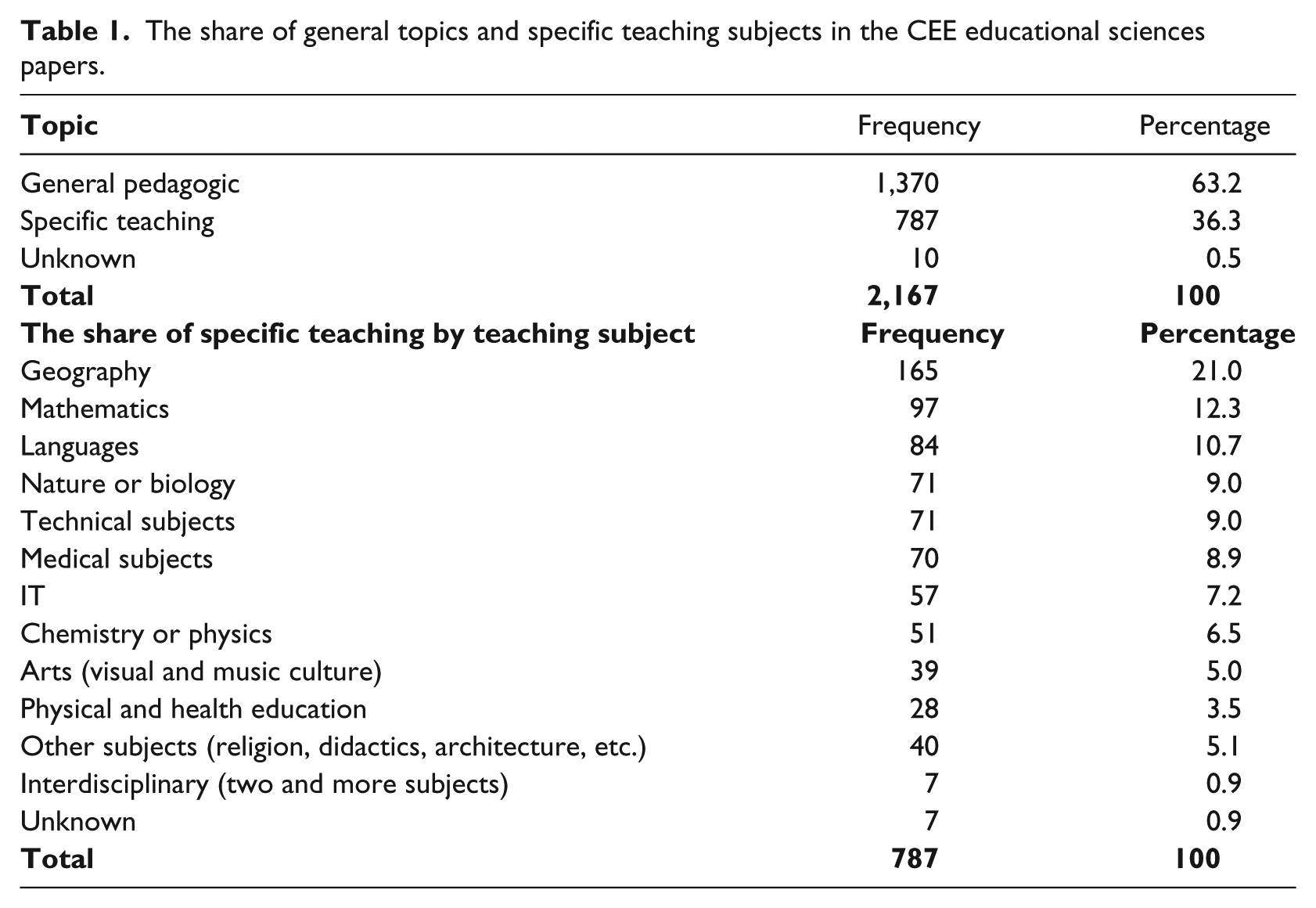
Our findings are similar to the results of the analysis of the articles published in International Journal of Instruction from 2008 to 2017 (Eğmir et al., 2017), as well as with the results of other previously conducted research (e.g. Keiner and Hofbauer, 2018; QANU, 2013).
It was not possible to ascertain from the content of the abstracts of slightly over one-third of the published papers which stage of education they related to, while nearly one-third of the published papers were devoted to higher education (Table 2). Papers relating to primary and secondary education followed. Early and preschool education, lifelong education and a focus on various stages of education were much less represented in published papers. An interesting difference between the analysed papers was that tertiary education receives significantly more attention than other stages of education (especially in the comparison of articles devoted to lifelong learning or early and preschool education). This could be connected to the fact that lifelong learning and early childhood education and care have only recently been gaining significant attention and importance within European policies (Milotay, 2014; Vuorinen and Watts, 2013) and there are now better funding possibilities to conduct research in these areas of educational science.
Representation of the stage of education in the CEE educational sciences papers.
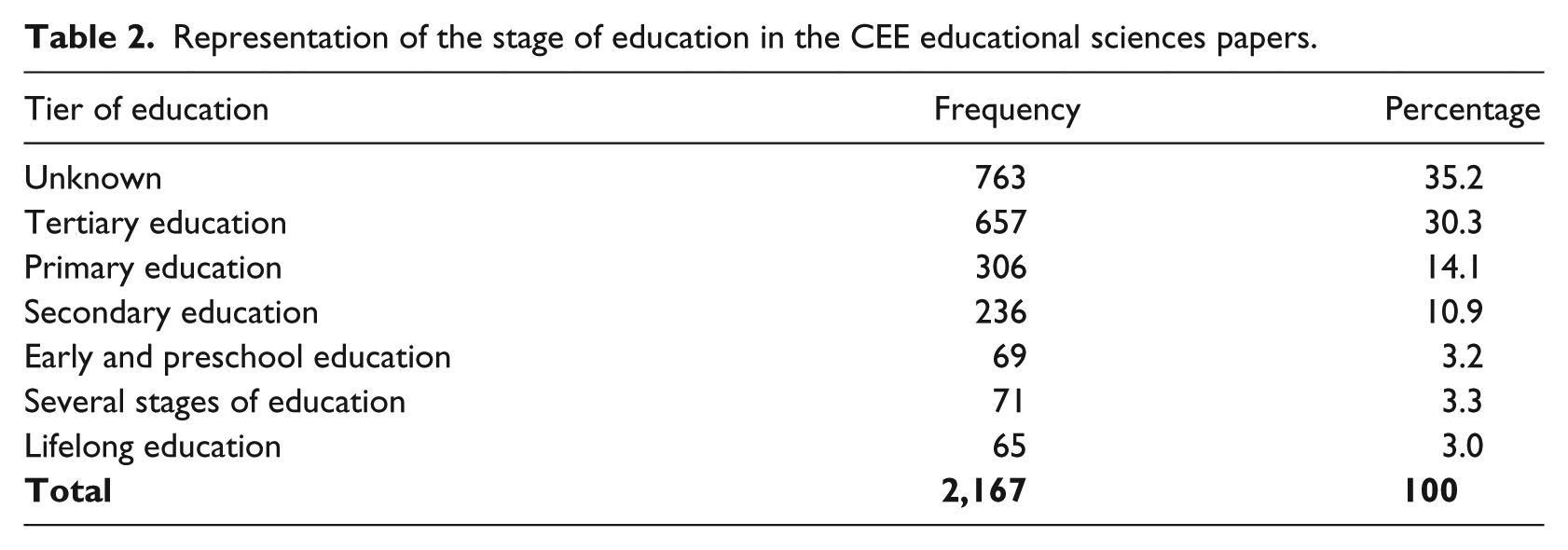
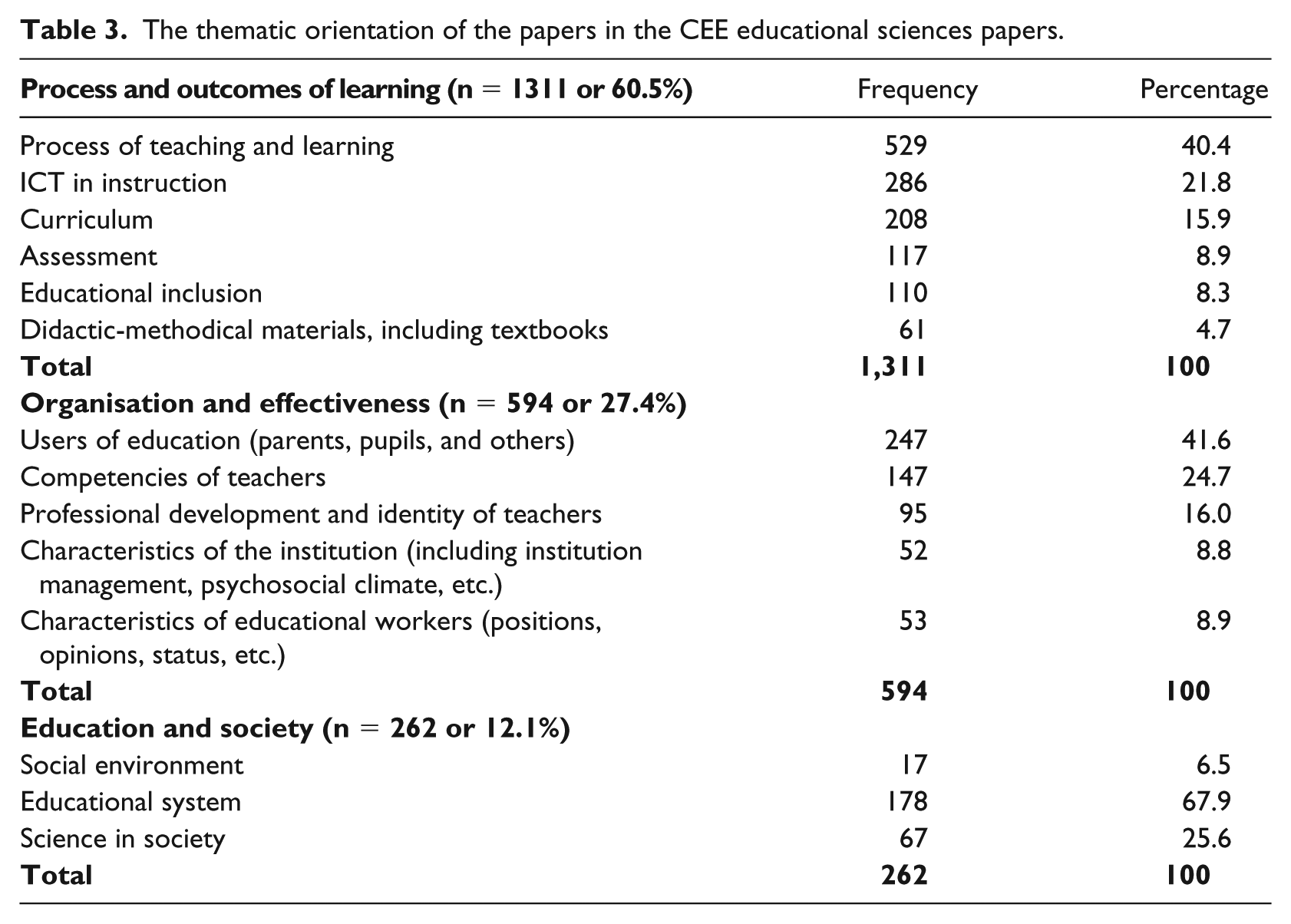
Table 3 shows the representation of topics in papers according to the Wubbels division (2016). It follows from the data that most papers are dedicated to the process and outcomes of learning and teaching, while somewhat less than one-third of papers are aimed at organisation and effectiveness. At the same time, only slightly over 10% of the papers relate to the relationship between education and society. It follows from the data that in the theme process and outcomes of learning, themes relating to the teaching process prevail, and one paper in five is devoted to the application of ICT in education. All other topics are represented to a significantly lesser extent (curriculum, valuation, inclusion, didactic and methodical materials). In the group of papers relating to organisation and effectiveness, most papers are directed at pupils and their abilities, positions, and mental, social and physical characteristics. One paper in four is dedicated to the competencies of teachers, while other topics are less represented. In the unit science and education, analyses of educational systems prevail, and they consist mostly of analyses of development and change in the system in different periods. Obtained data are in line with Kwiek’s (2012) claim that the communist legacy, but also the post-communist legacy of the first decade of transition period (the 1990s), matters as universities in the region are more teaching-focused than involved in traditional research-based knowledge production. This influence is visible over a longer period of ten years.
The thematic orientation of the papers in the CEE educational sciences papers.
In order to gain an insight into the changes in the content of scientific production in educational sciences in the countries analysed, the statistical significance of the described characteristics of papers in the four time periods was tested via the Chi-square (χ2) test (Table 4).
Differences in the content of the CEE educational sciences papers in the four time periods.
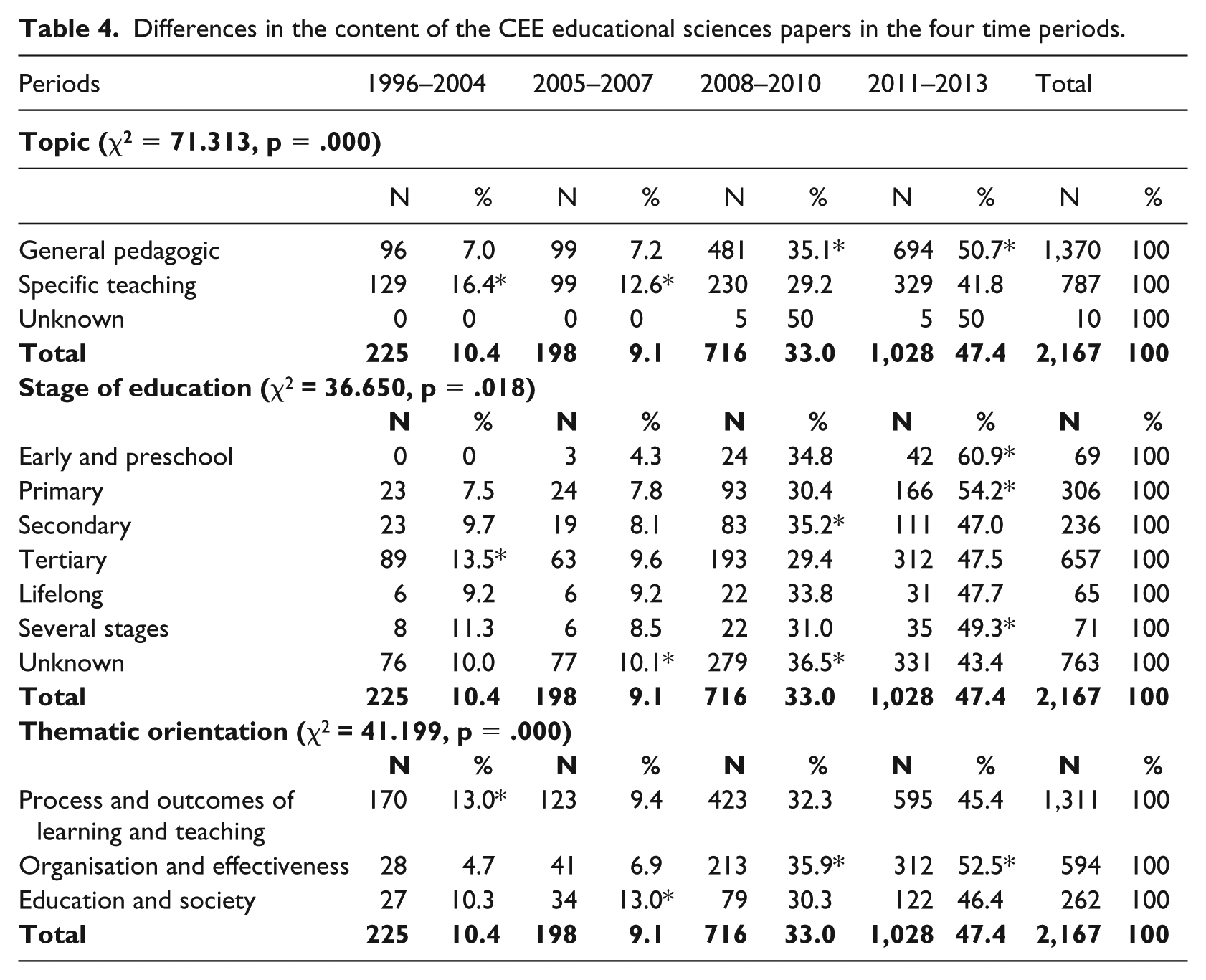
The analysis of the dynamic of research activity during the four periods shows that the productivity of CEE scientists in educational science has increased from 2008 onwards and that the most productive period began in 2011. The significant increase in the number of papers after 2008 could be explained by the fact that Scopus started to index a large number of CEE educational science journals. Generally, the productivity of CEE scholars increased in the period from 2011 to 2013. Based on the value of the χ2 test, it is possible to conclude that over time all content-related characteristics of the papers experienced statistically significant changes. The greatest changes in the scientific opus analysed occurred in the main topic of the papers studying general or specific teaching subjects, because there has recently been a growing number of papers in educational sciences that are oriented towards pedagogic topics, started with 2008. An increasing number of papers in the field of early and preschool, as well as in primary education, occurred in the period from 2011 to 2013. The number of papers that include several stages of education (e.g. longitudinal research) also increased in that period. A greater interest in research into secondary education appears in the period from 2008 to 2010.
In terms of the main themes of the papers, the number of papers dealing with organisation and effectiveness rose from 2008 onwards. Previous periods had seen an increase in the number of papers dealing with process and outcomes of learning and teaching (until 2004) and education and society (from 2005). The identified general and specific teaching subject themes of analysed papers illustrates the complexity of education as a phenomenon and the richness of scientific production in educational science that allows the specialisation and professionalisation of research in a given domain, indicating the evolution of education as scientific discipline (Hofstetter and Schneuwly, 2002).
Testing the differences in the content of papers analysed in respect of the journal in which they were published showed that there were no statistically significant differences in the content of papers published in CEE journals or other international journals. The absence of differences in the content of published papers in CEE and international journals might be a result of the process of Europeanisation of educational systems in CEE countries that is most visible in the area of higher education (Antunes, 2016; Dakowska, 2017). This is bearing in mind that during the socialist era of these countries, publishing in renowned foreign journals was virtually inconceivable (Grančay et al., 2017).
The presentation of findings from our research regarding the content analysis demonstrates clearly that analysed educational sciences papers of CEE scholars covers a wide range of different content, with prevalent orientation in general pedagogical topics (especially themes about process and outcomes of teaching and learning). The diversity of dominant content and thematic orientation is more visible after 2008. This might be due to the large increase in the number of published papers, but also due to the interest of CEE research into different aspects of education and educational research. The described trends in the content of educational sciences in CEE countries will probably result in an increase in the total quantity of papers directed to education and society published in the near future, since they are still underrepresented in the total scientific opus in educational sciences.
The methodological approaches of educational sciences research
In order to gain an insight into the methodological approach used by scientists from European post-socialist countries in educational sciences research, the abstracts were analysed in light of the type of paper (whether it was theoretical, a review paper, research paper or presentation, essay, discussion, etc.). The distribution of papers based on this criterion is shown in Figure 1.
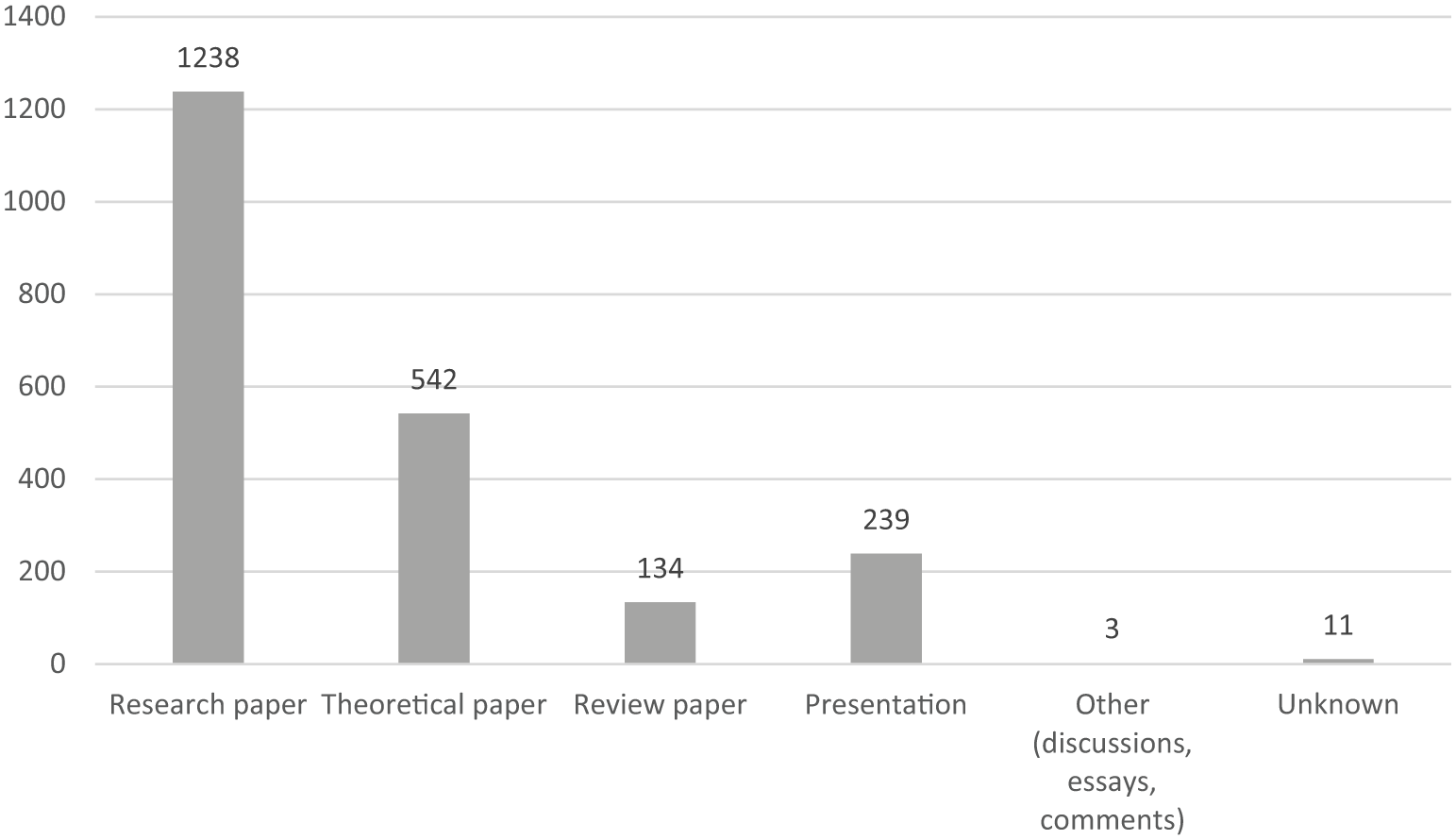
The types of CEE educational sciences papers (n = 2,167).
It is clearly visible that research papers prevailed. They accounted for more than half of all papers published (57.7%), which means that a major part of the scientific activity was oriented towards original scientific papers based on empirical research. A quarter were of a theoretical character, which indicates a certain interest in theoretical analyses from various aspects of educational sciences (e.g. descriptions of the characteristics of education in certain countries or historical periods, elaboration of various teaching and learning methods, theories of learning and teaching, possibilities for using ICT in instruction, etc.). Some 11% related to presentations of the curricula, didactic models in subjects, interdisciplinary or field learning and teaching, learning methods for individual subjects, etc. Reviews accounted for 6% of the total number of papers published, and they related to the presentation of research in certain fields of education (e.g. changes in educational systems in certain countries, risk analyses in educational systems of two or more countries, differences in educational achievements, possibilities for using ICT in instruction, the effectiveness of various methods of learning and teaching, etc.). The share of other types of papers was negligible, and there were also a few abstracts that did not permit the identification of the type of paper concerned.
Of the total of 2,167 papers published in the field of educational sciences in the period from 1996 to 2013, scientists from 15 European post-socialistic countries published 57.2% (or 1,238) scientific papers based on original empirical research. In that sample of papers, research based on the quantitative method prevailed (54.8%), while 25% of research was conducted through the use of the qualitative methodological approach. Only 8.6% included a combination of qualitative and quantitative methods (mixed method). It was not possible to conclude which method of research was presented in the papers in 11.6% of the abstracts (Figure 2).
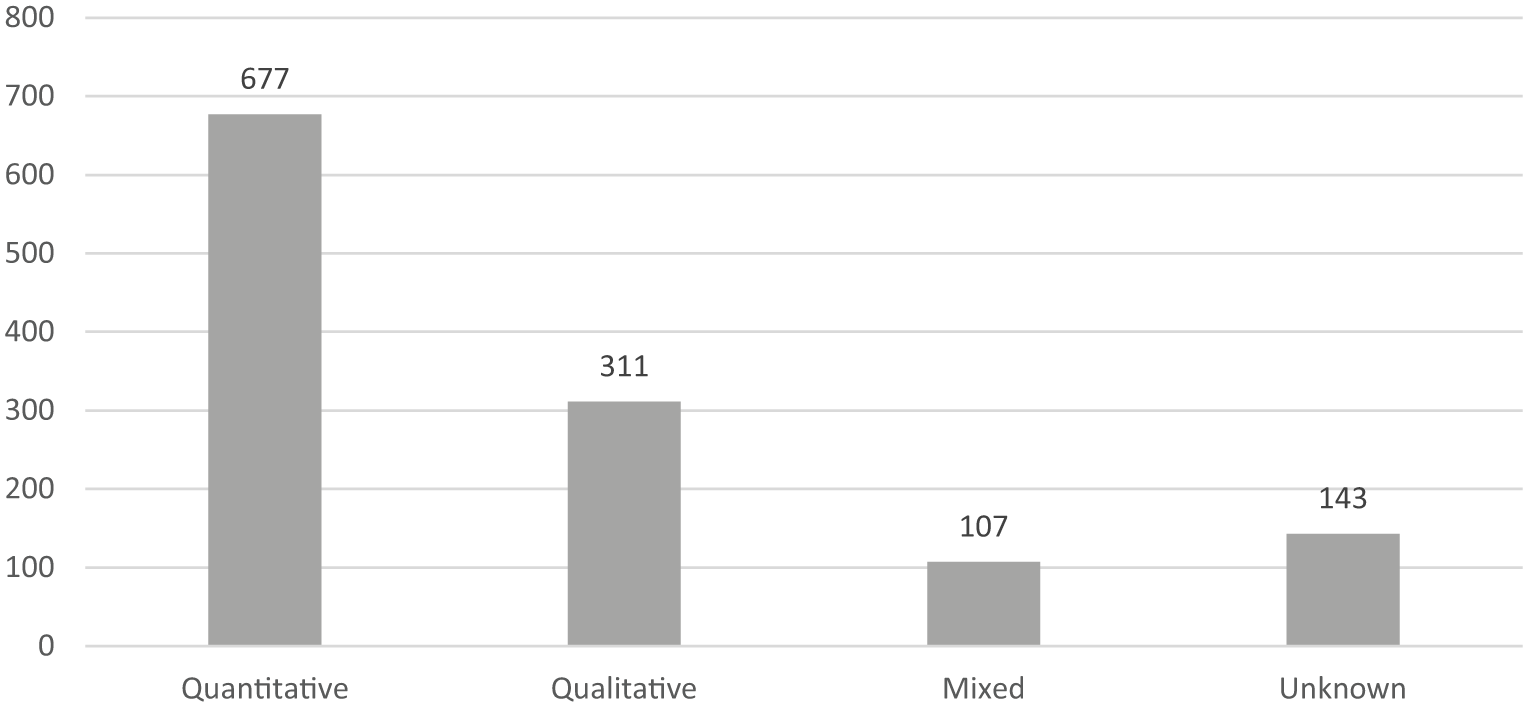
The methods used in the research in CEE educational sciences papers (n = 1,238).
These results are in line with the analysis of the studies published in International Journal of Instruction from 2008 to March 2017, which showed that studies in the field of education mostly employ quantitative methods and prevalence of scales and data collection as the tools of research. However, in that analysis, purposive or random sampling techniques were dominant (Eğmir et al., 2017).
In view of the prevalence of research based on the quantitative method, it is not surprising that research in which data were collected via questionnaires, scales, polls, tests of knowledge, or statistical and other data (such as the results of PISA) outside the research itself were significantly represented. Quasi-experiments and analyses of the content of documents and literature were also somewhat more significant, while all the other methods in the sample were represented to a significantly lesser extent. Nearly 25% of the research was conducted on a representative sample, while no conclusion concerning this issue could be drawn from the abstracts in 41.2% of cases (Table 5). Aussems et al. (2011) also found that the quasi-experimental designs were not used very often in 18 social science journals that they investigated. Ertl et al. (2013) compared six leading journals of education in Germany and England in the period 2001 to 2009. They found a higher proportion of non-empirical articles (often using a historical approach) in the three German journals and a higher proportion of articles drawing on primary empirical data in the three English journals.
The manner of collecting data and the type of the research sample in the CEE educational sciences papers.
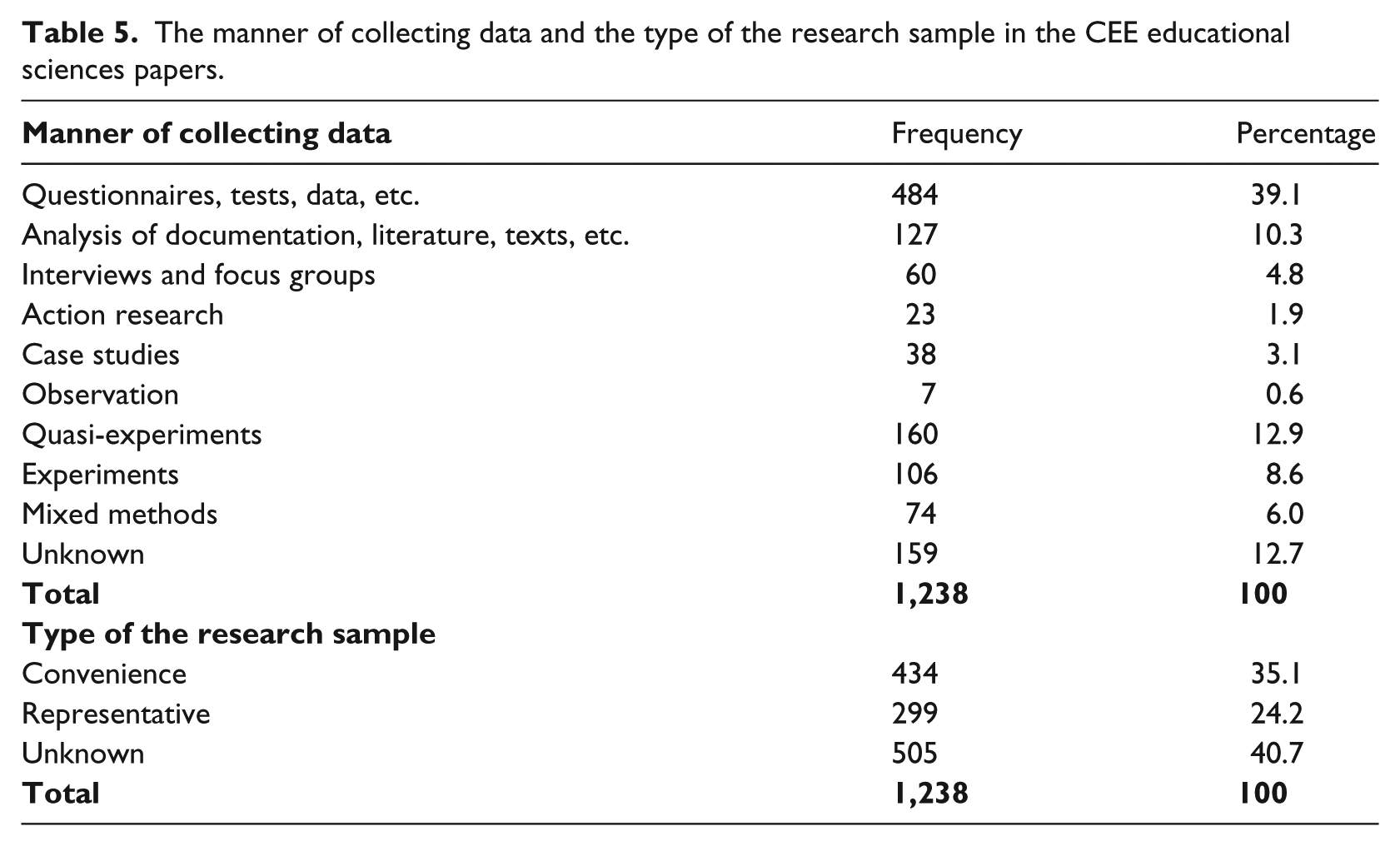
Data on the research sample were visible in 89.1% (1,102) of the abstracts. According to them, the most frequent sample of respondents included children or pupils, and students. They accounted for 54% of the respondents. They are followed by teachers (on their own or in combination with other educational workers) who were the source of data in 17.1% of all the scientific research. The share of all other sources of data (e.g. parents, experts in the field of the research, courses and study programmes, etc.) was below 10%. In general, research was usually based on only one group of respondents (88.3%), while research in which hypotheses were examined in two and more of sources of data (e.g. teachers and pupils, teachers and parents) were significantly rarer (11.3%). The prevalence of convenience research is highlighted in previous research and analysis (e.g. Antonowicz et al., 2017; Walterová, 2008).
Table 6 shows whether or not changes occurred in the methodological approaches of educational sciences research prepared by CEE scholars over time.
Differences in the methods used in scientific research in the CEE educational sciences papers in the course of four periods.
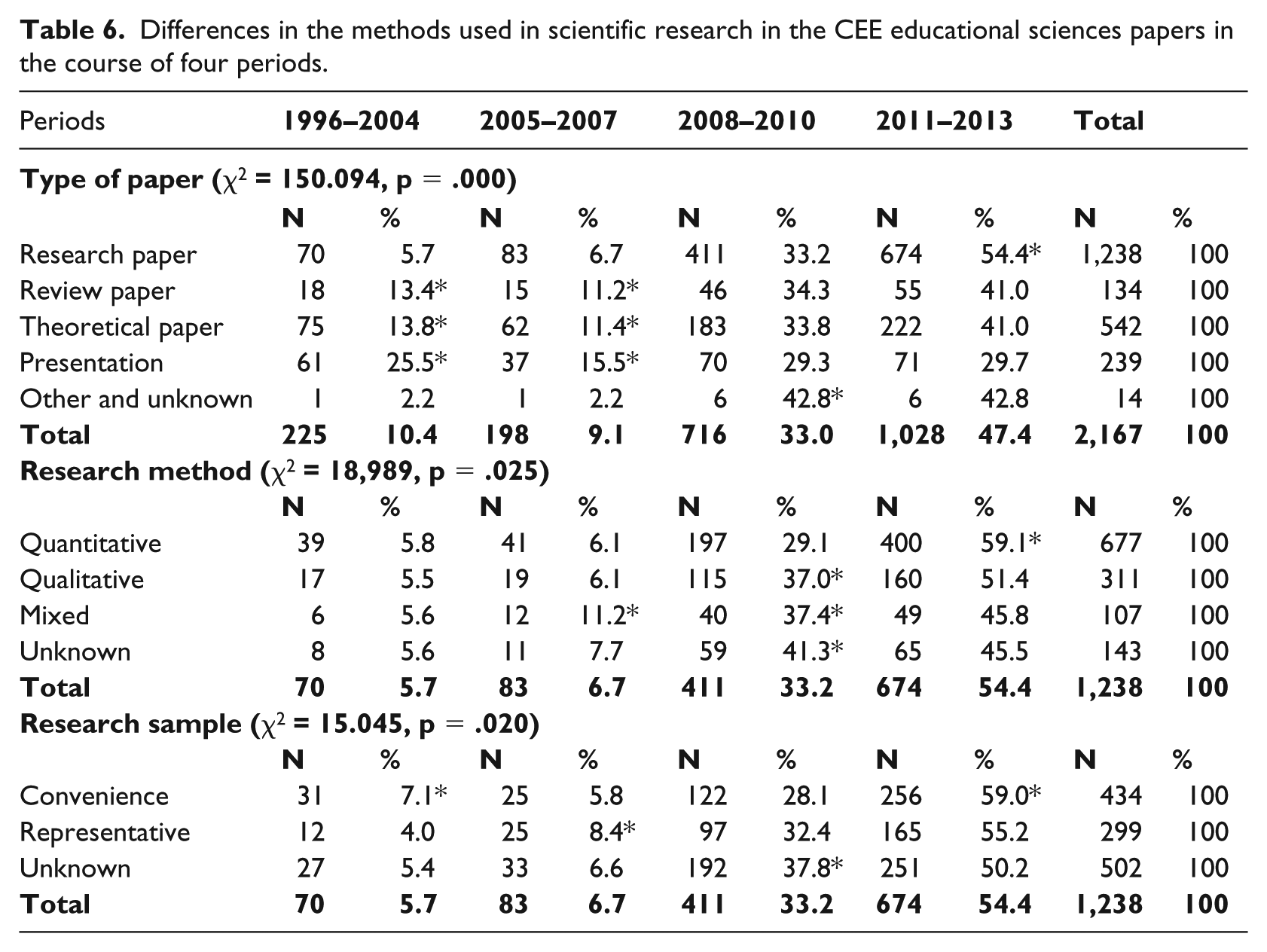
It clearly follows from the results displayed that in the period before 2008, presentation, review and theoretical papers in educational sciences prevailed in educational institutions. On the other hand, from 2011, there were significantly more empirical papers in the CEE educational sciences. Çiftçi et al. (2016) also concluded that the highest number of empirical articles were published in 2012 in the field of educational sciences and teacher education in Turkey (from 2005 to 2014). Differences in the methods used in scientific research in educational sciences over time were statistically significant but less pronounced than when it came to the content and methods used in all papers published in the period analysed. There were no differences in relation to the periods of publication of the papers and the size of the sample and sources of data on which the research was based, but differences did exist in the case of the applied research method and the type of sample. In the earliest analysed period, scientific papers based on the qualitative methodology and convenience research samples were statistically more significant in terms of prevalence, while the period from 2008 to 2010 was characterised by a higher representation of the qualitative methodology and combined methodology based on representative samples. In the latter period, abstracts from which it was not possible to recognise the research method or the sample on which it was conducted also stand out. The period 2011 to 2013 was characterised by papers using quantitative methods and representative samples.
An analysis of the differences in the methods used in the research in the field of educational sciences in view of whether they were published in CEE or international journals did not yield any statistically significant differences. The lack of differences in the methods of papers published in CEE and international journals indicated the globalisation of educational sciences that transcends regional borders (Dobbins and Kwiek, 2017; Lindblad, 2014). Also, the lack of significant differences among journals in the sample illustrated a comparable quality of CEE educational journals and international journals. If there is a significant difference in the visibility of these journals measured by the number and type of citations obtained, it should be determined by bibliometric analyses.
Conclusion
This research is one of the first to gain insight into the state of research in educational sciences in CEE countries. Scientists from 15 European post-socialistic countries published 2,167 papers in 252 journals in the field of educational sciences, as covered in the Scopus database in the period from 1996 to 2013. In this research, we analysed the abstracts of those papers in order to understand the specificity of educational subject and content issues, methodological approaches used in the research, dynamics, and specificity of the development of this scientific discipline in the CEE region. We found that the field of educational sciences in the analysed sample has changed over time in terms of quantity, content and methods, becoming more expansive and diverse, which is equally evident from papers published in CEE journals as well as in international journals.
The changes manifested themselves first and foremost in the great expansion of published papers that increased five-fold from 2008 to 2013. The significant increase in the number of papers after 2008 could be explained by the indexing in Scopus of a large number of CEE educational science journals, as well as the fact that most countries from the sample became EU member states in 2004, which might have had a direct impact on the opportunities for publishing papers in international referenced and recognisable journals.
Although educational sciences are still mostly directed at the learning and teaching process and outcomes, especially in higher education, as of late there has been a trend in expanding topics to relations between society and education, and organisation and effectiveness. Early and preschool education, as well as lifelong education, is still relatively neglected in the opus of educational sciences, as is the case with different teaching subjects (with the exception of geography, mathematics and languages).
Although slightly more than half of the published papers were based on original scientific work, in the field of educational sciences other types of papers (especially theoretical papers, review papers and presentations) were relatively frequent. The predominant focus on the quantitative data collection methods, primarily by testing opinions, positions, competencies, abilities and other characteristics of teachers, children, pupils and students, is a feature of contemporary research in educational sciences. All other parts of the educational process were less represented, as we rarely encountered them in the research representative samples that would allow for valid generalisations of the research findings. In the research opus of educational sciences, convenience samples prevailed. Research that included various methods and various groups of respondents was particularly scarce, although this would give a better quality insight into the research field.
Judging by the findings of this research, changes in education and educational sciences are still taking place today, and they are becoming more diverse and more universal, crossing national, regional and other geographical borders and areas. According to Grimaldi (2015: 59): [i]n Europe we are undoubtedly living a troubling present where education and research policies are veering towards instrumental ends and spaces of autonomy for European Educational Research are becoming increasingly narrow. At the same time, we need to recognize that we, as educational researchers, live, explore and co-shape our field.
Integrating CEE in a stable European space for education research (Lawn, 2014) is unavoidable. But, according to Kwiek (2012: 123): [t]he transformation of universities may take much longer, and the gradual convergence of both higher education and research systems in the two parts of Europe (West Europe and CEE) cannot be taken for granted without thoughtful changes in both university funding (in terms of both modes and levels) and governance. Central European universities desperately struggle to remain in the global academic centre, but their gradual decline to the academic peripheries cannot be excluded.
Even though it is obvious that the field of educational sciences in 15 European post-socialistic countries has changed over time in terms of quantity and subject issues, there is still room for the further improvement in its content. This improvement should involve more interdisciplinary research that compares different teaching subjects, as well as all specific themes that belong to the explanation of the connection between education and society.
Although this research was conducted on a sample of abstracts from all papers published in the field of educational sciences in journals indexed in the Scopus database in the period from 1996 to 2013, it does not include the totality of scientific production in 15 post-socialist countries in the observed period, since books and papers published in other journals were not analysed. Further, the data are based on the content analysis of the abstracts, among which there were a certain number that, in view of their content, did not allow for the categorisation of the papers based on the selected variables. Further, this article does not have a comparative component that would include a comparison with other, Western European and non-European, authors. Therefore, the results obtained may justifiably be interpreted only as an overview of the situation of educational sciences in the countries of CEE, without generalisation in terms of the state of educational sciences on the global scale.
Footnotes
Declaration of conflicting interest
The authors declare that there is no conflict of interest.
Funding
The author(s) disclosed receipt of the following financial support for the research, authorship, and/or publication of this article: This work was supported by the Croatian Science Foundation (grant number IP-2014-09-9351).
