




Abstract
European universities responded in different ways to the ‘refugee crisis’ of 2015. Some subscribed to the agenda of higher education (HE) as a universal human right, while others stressed different long-term benefits of offering access to it. Yet, the unprecedented sense of moral urgency that guided immediate declarations of support and subsequent actions has largely remained unaddressed. With the crisis becoming a new reality for many countries, HE has a role to play in the social inclusion of refugees, even in countries that were not attractive destinations for refugees in the past.
In this article, we provide an overview of the reasons why HE institutions supported refugees, and present the results of an empirical study of Poland and Austria during the 2015–2016 academic year. We then evaluate those first responses utilizing parts of Ager and Strang’s framework of integration, and discuss issues of institutional readiness, capabilities and the public role of HE stemming from this comparison.
Our findings suggest that reasons such as acknowledgement of basic rights, or utilizing social capital are insufficient to explain and understand strong integrative support measures. We propose that refugee support by HE institutions is both better understood and promoted through the language of hospitality.
Introduction
The biggest refugee wave arriving on European shores since World War II surprised Europe. Rather than this being a temporary situation that could be solved through emergency measures, it became clear that the so-called Syrian ‘refugee crisis’ constituted a new reality that required a strategic response. Unlike past instances of forced political migration, this time, the country from which people were fleeing was a regional champion of higher education (HE), with reputable institutions and a tertiary participation rate of over 25%. ‘Syria’s lost generation’ of highly skilled refugees was estimated at between 90,000–110,000 university-eligible youth (Redden, 2015). This meant that about half of those who would normally study in Syria reached several European countries (Streitwieser et al., 2017) with a clear demand for HE, and relative deprivation compared to the middle-class life they had led before the war in their country (Lorisika et al., 2015: 9). Both support for migrants in Europe, and hopes for the post-war reconstruction of Syria, however distant, required the involvement of HE institutions (Campaign for the Public University, 2015; European University Association, 2015). Throughout late 2015, universities across Europe declared various ways in which they intended to welcome, support and facilitate the integration of refugees.
The immediacy, scale and scope of this response were unprecedented. Historically, support from the HE sector for refugees and migrants both in host countries and in conflict zones has been limited. It mainly focused on the well-known cases of Nazi Germany, communist eastern Europe or Cuba, with a small subset of the most talented students and academic staff who fled political prosecution being offered a place in Western universities. For various reasons, only 1% of refugees globally enter HE. Syrian refugees, on the other hand, in entering the new countries and their economies were physically present at the metaphorical doorstep of European universities and motivated to complete HE (Brewis, 2015; Walden, 2015). Unlike pre-university education, European universities have the infrastructure in place to deal with international students and the experience to do so, which furthe facilitated an early response to the crisis at some scale. Despite organizational, and sometimes political difficulties, three rationales allowed a new level of dedication: economic, humanitarian and social good agendas.
First, there is a pronounced economic argument for utilizing the potential of incoming refugees and assisting in fully developing their skills. A highly educated workforce can then either fill skills gaps in host countries (Streitwieser et al., 2017), or form a basis for post-war reconstruction of a developed home country (Bonfiglio, 2014; Dryden-Peterson, 2010, 2011: 53). While this is certainly an important consideration for a long-term perspective, given the global competition for talent and an ageing population in Western countries who also want to attract the most ‘desirable’ refugees, that is, those who are middle class and educated, this was not so relevant in the emergency response of 2015, and especially in the cases of Poland and Austria, which are the foci of this article.
The most pronounced reason for support is humanitarian responsibility, supported by international regulations. The personal and public benefits of HE were cited by UNHCR when it named tertiary/higher education as a basic human right (Crea and McFarland, 2015; UNHCR, 2012). While completion of primary and secondary education is considered a human right, Art. 26 of the Universal Declaration of Human Rights states that ‘Higher education shall be equally accessible to all on the basis of merit’ (UN General Assembly, 1948) and, accordingly, HE was long considered a luxury rather than an essential need for a displaced person. However, two important distinctions that typically excluded HE from refugee support have been challenged. Under current circumstances, the separation of humanitarian aid and development programmes became especially problematic. HE is always a long-term affair with far-reaching effects, yet it can also offer immediate and medium-term benefits for both individuals and hosting countries (Cremonini and Fanner, 2016). Theoretically, the distinction between humanitarian refugees and economic migrants is also increasingly contestable (Bonfiglio, 2014; Holmes and Castañeda, 2016: 17–18), even though it plays an important role in the political rhetoric of the ‘moral deservingness’ of support.
Publicly stated humanitarian responsibility is often combined with the empathy of academics or a history of institutional support under similar circumstances in the past. Moreover, even a simple declaration of willingness to support refugees improves the public image of a university as an ‘engaged’, ‘value-driven’ and compassionate institution, something that university leaders across Europe might want to create for a variety of reasons.
Finally, the shift from immediate aid to long-term development requires a mix of social good arguments (Cremonini and Fanner, 2016). These can be referred to as agency, integration or reintegration (Bonfiglio, 2014), and might include:
The individual wellbeing of refugees – providing a daily structure, giving them the ability to think about the future and helping them to cope with their transitory situation, empowering them and providing psycho-social support for rebuilding their lives (Arnold et al., 2015; Crea and McFarland, 2015; Magaziner, 2015).
The prevention of radicalization – due to social inclusion and better perspectives (Bubbers, 2015).
Socio-cultural arguments – promoting tolerance, cosmopolitanism, diversification of the student body and academic staff, and other internationalization goals normally connected with internationalization strategies (De Wit, 2016; Morrice, 2013: 667).
This article addresses the question of how initial responses to the refugee crisis by HE institutions in two countries map on to a framework of civic integration, focusing primarily on HE seen as a social good. Given the immediate social tensions that already surrounded refugees in 2015 and which have only increased since, HE institutions in Poland and Austria responded to the challenge with the aim of integrating newcomers as future citizens, and promoting the message of inclusion in their societies. Our argument is that the concept of hospitality is a useful framework for understanding motivations, but also the limitations, of institution- and sector-initiated responses to the refugee crisis.
In the first section, we adapt the framework of integration proposed by Ager and Strang (2008) for dealing with refugees in HE institutions, and describe the methodology of our study conducted in Austria and Poland. The next two sections describe the results, both the initial declarations of support in the autumn of 2015 and their implementation by the end of the 2015–2016 academic year. In the third section, we evaluate the support for the adapted framework, discuss the impact of national and institutional characteristics on capability and readiness, and the execution of support in both countries. Finally, we propose to view these first responses through the lens of hospitality, in the sense of voluntarily accepting and welcoming strangers into society.
Framework of integration through HE
A framework of successful integration
Responses to the refugee crisis have a double aim: providing immediate relief as well as integrating refugees into the HE system, and into society. HE has a two-fold outcome for refugees: entering HE supports the integration of refugees, while at the same time a high level of integration facilitates the completion of studies. When refugees are seen less as passive recipients of help and more as potential contributors to their new societies, the question of integration must be addressed.
The definition of integration of refugees is contested, lacking an agreed theory or model (Castles et al., 2002; Robinson, 1998). It requires constant development and adaptation from both the host community and newcomers alike (Nash et al., 2006) and, thus, can neither be defined as assimilation, nor the coexistence of different populations (Expert Council for Integration, 2015). Integration is a normative concept, usually based on human rights ideas, citizenship and agency. It is achieved when refugees become fully able to exercise their rights and responsibilities as citizens, as well as benefiting from equal opportunities (Expert Council for Integration, 2015; Phillimore and Goodson, 2008). In practical terms, integration programmes are a means whereby refugees can overcome typical barriers they face in their willingness to integrate further. Such barriers are, for example: failure to recognize overseas qualifications; lack of skills in the host country’s language; lack of social connections; or negative attitudes of employers (Morrice, 2007: 156). Other forms of discrimination may be experienced, such as racism and religious discrimination.
In order to conceptualize integrative measures by HE institutions, we utilize the framework developed by Ager and Strang (2008), which consists of core domains of integration based on studies of successful immigration (see Figure 1). While rights and citizenship build the foundation of integration, it cannot be practically achieved if the facilitators of language and cultural knowledge, and safety and stability are absent. Among factors generating instability for refugees are short-term accommodation, insecure tenancies and certain forms of dispersal strategy (Ager and Strang, 2008: 184). Social connections with people from the same ethnic background (social bonds), with the host community (social bridges) and with social services in the host country (social links) further contribute to, and are necessary for achieving integration on the level of markers and means. Markers and means include employment, housing, health and education.
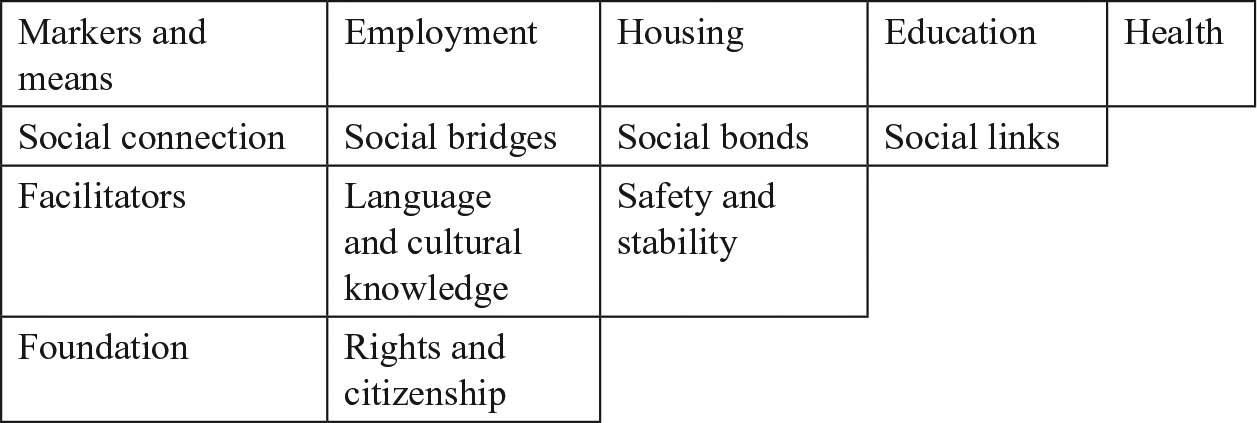
A conceptual framework defining core domains of integration (Ager and Strang, 2008).
European examples of good practice with regard to facilitators and social connections
We adapted Ager and Strang’s (2008) framework of integration to classify responses to the refugee crisis from the HE sector into two groups: facilitators and social connections (see Figure 2). Since HE is just one of the markers and means of integration, and since we acknowledge the lack of consensus about what the foundation of integration actually is, in the following part we discuss facilitators and social connections in HE using examples of good practice from Europe. 1
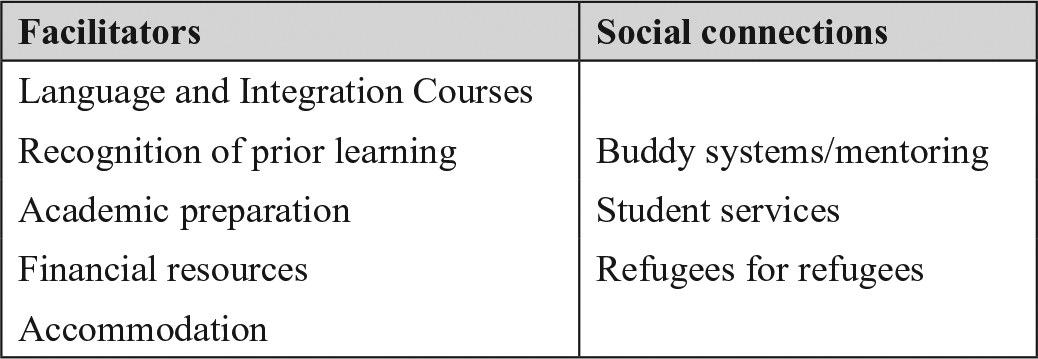
Core domains of facilitators and social connections necessary for access to HE for refugees and for their completion of studies (adapted from Ager and Strang, 2008).
Language and integration courses
Language courses are, in many cases, the first and most important type of support that universities offer across Europe. Poor language skills are one of the most common practical barriers to integration for refugees (Morrice, 2007: 156). Universities that engage in supporting activities but do not address language courses often do not have the expertise to provide such courses. On the other hand, several universities in the UK offer fee waivers and scholarships but do not officially offer students English courses. It can only be speculated that they expect refugees to already have the required level of language, or that they would receive internal support from student services to improve their English language skills.
Recognition of prior learning and facilitated admissions procedures
Recognition of prior learning (RPL), including degrees and qualifications, especially when refugees lack documents, constitutes a practical issue for access to both HE and employment. 2 Certain institutions around Europe addressed this issue with facilitated admissions procedures. For example: universities in Sweden and Germany seek individual solutions through interviews and exams; and the University of Strasbourg set up an additional reception desk for refugee students to assist with enrolment. In contrast, other institutions in countries such as the UK, Spain and Italy insist on refugees meeting the same entry requirements as local students.
Academic preparation
Academic preparation includes all the types of courses refugees can attend as guest students (i.e. without being enrolled in a degree programme). For example, single-learning activities for asylum seekers have been provided by the University of Bologna since January 2016 and refugees lacking documents are allowed to attend courses as guest students in Turkey.
Academic preparation serves the most obvious function of providing orientation and guidance with regard to the host country’s HE system and also reintroducing refugees to HE after they have experienced a gap in their education. While the lack of information on free courses commonly poses a problem, once refugees take part in activities they are more likely to find support for accessing degree programmes. Such activities also offer important opportunities for social connections, and benefit the health and wellbeing of refugees. Structuring their day around courses provides refugees with purposeful activities which help to boost their confidence and self-esteem (Korac, 2003; Morrice, 2007; Young-Powell, 2016).
Financial resources
Financial resources – or rather the lack thereof – are a recognized issue hindering refugees from accessing HE. Scholarships and/or tuition fee waivers are available to refugees in several countries across Europe, including, for example, Germany, Sweden, the UK and Turkey.
Alternatively, recognized asylum seekers might be able to obtain part-time employment to help them to afford their studies. In Germany, refugees are allowed to work without asylum status if they are enrolled as international students. Universities could potentially assist refugees in their search for a job or even offer them positions. While efforts are made to connect refugees who are academics with universities (e.g. Umeå University, Council for At Risk Academics), we are not aware of any initiatives that help students find (part-time) employment.
Accommodation
The importance of accommodation for providing safety and stability was mentioned earlier on. Depending on the country, universities can offer low-cost or even potentially free student housing to refugees (as happens in Turkey, Spain and the UK), which also addresses their lack of financial resources. In contrast, refugees in Germany are obliged to reside in their administrative district, some of which do not have universities. The time taken to do a costly commute is another barrier to accessing HE for refugees but, at some German universities, this has been addressed by sponsored public transport tickets (Informationsverbund Asyl und Migration e.V., 2017).
Social connections
Social connections are an important source of informal learning, not only for acquiring knowledge and skills but also for obtaining access to certain services. Universities can provide social connections through buddy systems/mentoring (social bridges), student services (social links) or through platforms which enable refugees to connect with other refugees (social bonds). However, social connections can also emerge through most of the other aforementioned support measures.
Methodology
Study design
Ager and Strang argue that the foundation of all support measures lies within a human rights framework. However, we argue that a purely rights-based framework provides only limited explanatory power to account for this variety of measures, with an important role played by hospitality offered by institutions and individuals. In order to gain a better understanding and highlight the relationship between integration, rights and hospitality, we undertook a study of declarations with regard to the refugee crisis and the actual first responses of universities to it in two countries.
Our study can best be classified as a comparative analysis of emerging system policy towards refugees at a national level using documentary sources and surveys (Tight, 2012). Its aim was to describe and analyse the declarations made, the subsequent execution of support, the display of capabilities and readiness, and other intervening factors in both countries during the academic year 2015–2016. A further goal was to evaluate these against the benchmark of integration and the concept of hospitality.
The analysis also draws on information provided by governmental agencies and independent organizations concerned with HE, individual institutions and international bodies (such as the European Universities Association (EUA)), triggered to deal simultaneously with physical migration flows and devise initial agreements on international solutions to the crisis. The motivation and scope of hospitality within HE were especially interesting where there was little support or understanding from wider society and the government. While the offer of HE from Middle Eastern countries, and online degree provision are important for many reasons, they fall outside the scope of our study. We focused on attempts to integrate refugees into European society, which remains the core operational definition of hospitality in our study. Therefore, we examined traditional HE institutions in two countries.
Selection of cases
Poland and Austria offered two examples of sector-initiated immediate support for refugees along with limited political and social support and, thus, allowed us to single out the hospitality provided by HE as a sector and evaluate it against our adapted framework. In choosing Poland and Austria for the case studies, contributory factors were as follows: the similarity of their initial responses despite their different locations on the migration track; little international coverage of their actions; and access to data open to informed scrutiny (and not always public). In the autumn of 2015, rectors’ conferences (the highest level inter-university bodies in Austria and Poland) and individual universities declared and initiated a wide range of actions to make HE institutions more hospitable towards the current wave of refugees. Varying forms and levels of support were offered, with no government support given at all in the case of Austria) and only a little as far as Poland was concerned (later withdrawn) in a deteriorating political climate. Thus, credit should be given to the responses of these universities (as well as academies, polytechnics, etc.), which were operating out of considerable institutional autonomy (according to the EUA), despite the fact that they were dependent on government funding to a large degree.
The most important difference between the two countries is that Austria was both a transit and a destination country for a considerable number of refugees. In contrast, in Poland, the change of government and the total disorganization of the quota system for the relocation of refugees in Europe, agreed in the autumn of 2015, led the country to not accepting any refugees and this has continued to date. When Polish universities declared and initiated actions to welcome refugees, they were unaware of the outcome that would transpire with regard to their acceptance. These circumstances allow us to compare hospitality in two similar (in principle) HE sectors, which were, however, exposed to different developments and, ultimately, ended in offering hospitality towards refugees at both ends of the scale: (1) only declared; and (2) widely implemented.
Procedures
The study is based on two types of data. The first category includes a descriptive account of the support declared in both countries between June and November 2015, primarily based on official lists provided by international and national organizations. This can be classified as a context analysis of institutional declarations of support, drawing from English-, German- and Polish- speaking documentary sources, such as institutional internet resources (the websites of international organizations and universities, and official social media channels) as well as newspaper, magazine and journal articles. Where appropriate, sources in other languages and covering different European countries were consulted for comparative purposes.
The second type of data was obtained during email exchanges and phone surveys with universities, and organizations concerned with HE in April 2016. The data were examined by the two authors in order to interpret both initial declarations and their further implementation in more depth. Institutions received a short questionnaire, in which they were asked questions about their implemented and planned support for the refugees, including numbers of students involved as well as their own perceived success and difficulties in terms of support The questionnaire was written in both German and Polish, and adaptations were made to address the specifics of support in both countries. Senior management representatives of universities in 16 out of 21 institutions in Austria, and 16 out of 23 in Poland responded. Additionally, rectors’ conferences in both countries were contacted with a similar set of questions. All sensitive information has been anonymized.
Furthermore, in Poland, we approached the government, the offices of international organizations dealing with these kinds of issues and conducted follow-up phone sessions with the most interesting universities. This procedure allowed us to obtain authorized responses from the institutions. Estimating the strength of support in Poland also required combining four sources listing different institutions. 3 No similar difficulties were experienced in Austria.
Although we focused on direct support offered to refugee students, various forms of indirect support, including donations, academic conferences and public outreach activities such as workshops and anti-xenophobia open letters, have also been identified and discussed where appropriate.
Poland
Initial support (late 2015)
Poland has over 120 public HE institutions, and 1.4 million students, with generally low internationalization of both staff and students. Since the 19th century, Polish migration has been dominated by outflows, with considerable groups of educated Poles seeking (successfully) refuge in Western Europe, North America and Australia, among other places. Opening universities to refugees was not simply a response to an existing demand for several reasons: current refugees do not consider the country an attractive destination; Polish is not as widely taught as other foreign languages, such as English or French; and the country accepts almost no asylum applications.
At the peak of the refugee crisis in September, when the true size of the tragedy became clear, public attention was captured by the quota of refugees that Poland would have to accept in the immediate (timeline unspecified) future due to EU negotiations. Public universities, largely autonomous and having curricular support and housing resources at their disposal, were quick to react. The rectors of AGH University of Science and Technology and the University of Warsaw, and the Minister of Science and HE jointly announced small packages of support (for 30 refugees in total), including holistic sets of measures: a place in the study programme, as well as language courses and scholarships. There was also a promise to award universities more control over RPL (addressing the issue of a lack of documents), and an appeal to the whole sector to follow suit. Both the character and speed of reaction were unprecedented.
Over the next 7 weeks, 25 universities declared some form of support, most of them public. From 40 institutions (31 of them public), 8 offered an integrated approach (study place, language course and accommodation/scholarship), but only 5 out of 16 major research universities were involved. While many institutions focused on forms of support rather than the number of people, at least 250 refugees would have been accommodated. A multi-layered picture of institutions, sources of knowledge and the forms of support declared can be found in Table 1.
Support declared by Polish HE institutions towards the refugees.
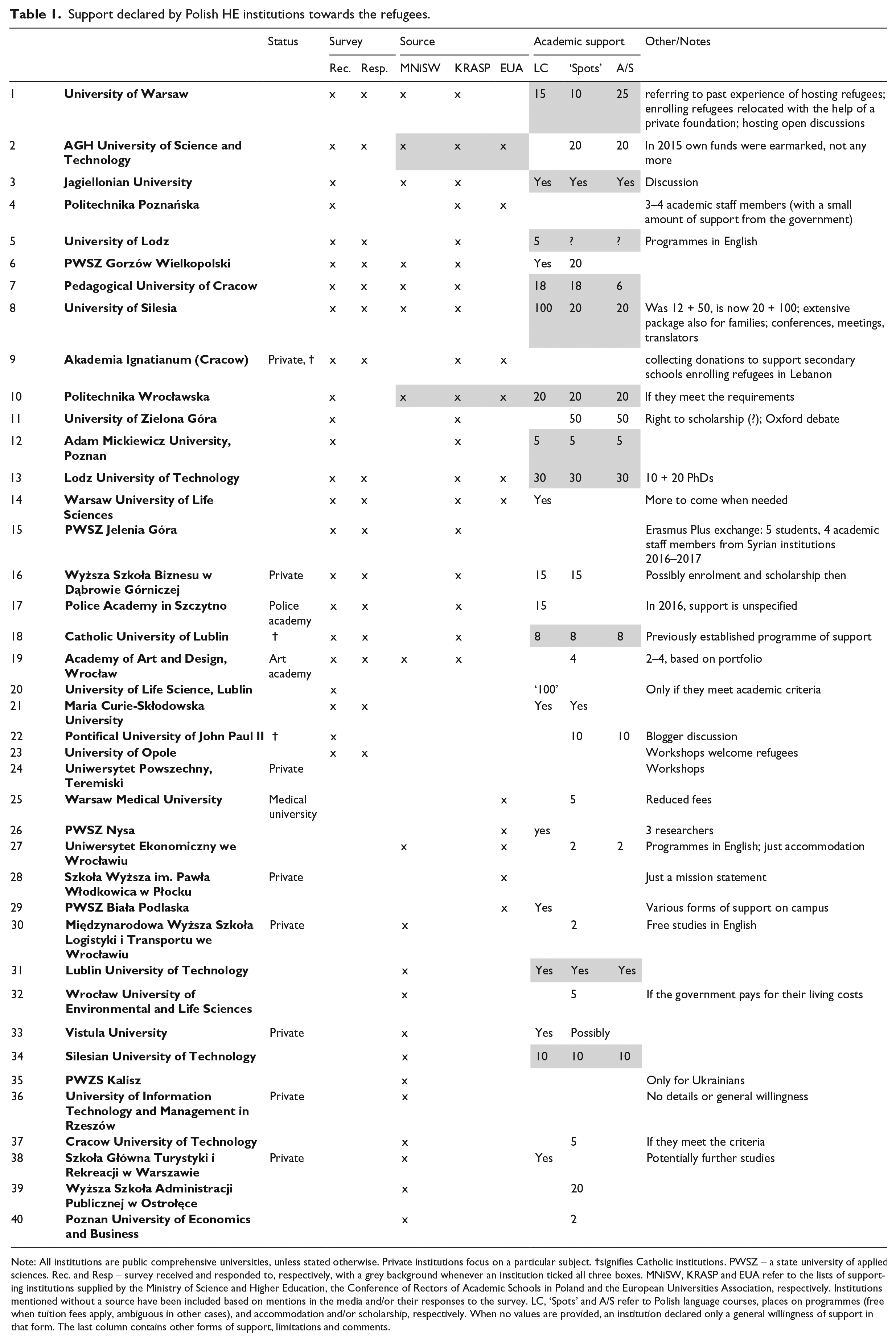
Note: All institutions are public comprehensive universities, unless stated otherwise. Private institutions focus on a particular subject.✝signifies Catholic institutions. PWSZ – a state university of applied sciences. Rec. and Resp – survey received and responded to, respectively, with a grey background whenever an institution ticked all three boxes. MNiSW, KRASP and EUA refer to the lists of supporting institutions supplied by the Ministry of Science and Higher Education, the Conference of Rectors of Academic Schools in Poland and the European Universities Association, respectively. Institutions mentioned without a source have been included based on mentions in the media and/or their responses to the survey. LC, ‘Spots’ and A/S refer to Polish language courses, places on programmes (free when tuition fees apply, ambiguous in other cases), and accommodation and/or scholarship, respectively. When no values are provided, an institution declared only a general willingness of support in that form. The last column contains other forms of support, limitations and comments.
Most often the declaring parties were rectors, who normally have a small fund at their discretion that they can utilize in case of such an emergency. Their general readiness was often hidden from the public eye: only 11 institutions were covered by the media; only 7 released any information on their website; and just one turned to social media to make an announcement. Most of the institutions did not state any reason for the support. 4 Some of the declarations were cautious and vague.
Actions taken and further developments (as of May 2016)
Soon after the beginning of the academic year, the initial momentum disappeared, giving way to smaller-scale and often creative responses by the most determined institutions. The primary reason was the new right-wing government. Together with other Visegrad Group (Czechia, Slovakia, and Hungary) countries, the Polish authorities fiercely and successfully opposed the implementation of a quota system, often using the false argument that Poland had already accepted one million refugees from the Ukraine. 5 Terrorism further eradicated social support for helping refugees. While academic circles issued open letters against xenophobia (October) and a further one defending bullied and attacked international students (April–May), as well as organizing some forms of indirect support, direct forms of support were largely put on hold.
Sixteen out of the 23 universities contacted responded to our questions, as did the government (providing its own list), the rectors’ conferences and relevant international agencies. All institutions repeated or elaborated on their declarations of support. They provided a more detailed picture of their original intentions, listed parties involved in each organization and shared their somewhat limited knowledge of the legal differences between refugees and international students. The majority remained passive due to the fact that no refugees were entering the country and because any actions would be postponed until such time as refugees did arrive and were granted official refugee status.
There were exceptions. While our study was dominated by large institutions with considerable resources, initiatives launched by two smaller institutions are worthy of closer inspection: the vocational university in Jelenia Góra successfully applied for an EU-funded Erasmus Plus exchange with academics and students who were still in Syria; and another university in Biała Podlaska developed civic engagement programmes in a nearby detention centre. These initiatives prove how small-scale, low-cost types of support that are less dependent on governmental decisions can capitalize on institutional willingness where it truly exists.
Refugees admitted to the University of Warsaw in October who were resettled by this private institution suggest another issue: two students out of the four admitted dropped out during the first semester because they were offered better social conditions and prospects in Germany. It seems likely that, unless forced by policy measures to stay in Poland, many newcomers will follow their lead.
Since the decision not to admit refugees was made at governmental level, we cannot know what the implementation of hospitality would have looked like. We can, however, review the proposed forms of support in terms of our model of integration, generalizing at the country level (see Figure 3).
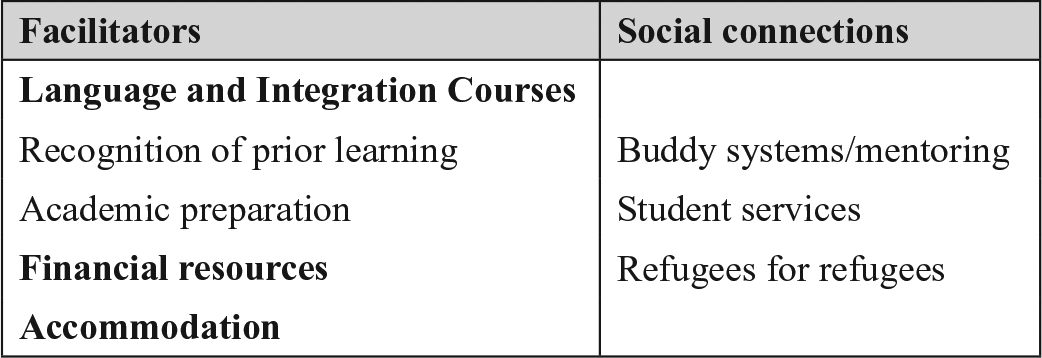
The adapted integration framework.
A somewhat cautious note behind Polish declarations can be credited to status (legally recognized refugee) and academic preparation (Poland has selective HE) considerations. Both factors would, from a practical point of view, postpone the actions by at least a year from the time of accepting refugees, and further limit the type of refugees that would be able to benefit from the schemes. Although Polish HE has been experiencing a long-term demographic downturn, questions of security and quality assurance (QA) affect the ways in which Polish universities are prepared to welcome refugees. 6
One of the themes that emerged in our study was lack of experience in dealing with refugees. This can explain why social connections have not been addressed by Polish institutions. However, it also reveals a complicated relationship between internationalization and integration. While international (non-EU) students in Poland remain the only group subjected to tuition fees, legally recognized refugees are treated as Polish citizens in terms of access to HE. Few of the institutions contacted offered a ‘free study place for recognized refugees’, which is a contradiction in terms. Asked if they planned to give any preference to refugees, or take any particular affirmative action with regard to them, all the institutions interviewed and the government as well fiercely denied that this would be the case. 7 It might be concluded that Polish institutions were not entirely aware of what doing anything extra for the refugees would mean for them procedurally. This also shows how a purely rights-based response might stop short of actually alleviating the problems of refugees.
Refugee students are sometimes called ‘home international’ students. This means that although they have equal rights to home students, they would still require special attention (as international students do). International students are an increasingly valued resource for any university, and refugee students also bring with them a set of additional challenges and costs. There is, too, ‘a world of difference’ (Streitwieser et al., 2017) between students with refugee background and students freely choosing HE abroad, when it comes to their motivations, capabilities and needs.
Austria
Initial support (late 2015)
In the 2015–2016 academic year Austria had 381,079 students at 33 universities (of which 21 are public). The country provides a different picture compared to Poland. Like Germany and Sweden, Austria had to face the refugee crisis not only as a major transit country but also as a host country. In 2015, 89,098 applications for asylum were issued in contrast to 28,064 in 2014 (SEM Staatssekretariat für Migration, 2015). It also received more first-time asylum applications per one million inhabitants than Germany in 2015; only Hungary and Sweden had more (Eurostat, 2016a).
Refugees who have been officially recognized and refugees granted asylum share the same rights as Austrian citizens and are, thus, eligible to study. 8 However, the granting of those rights is not sufficient to enable refugee students to access and, ultimately, complete HE. Barriers such as language and finances severely disadvantage refugees in HE.
The government has not addressed these issues and did not provide any monetary incentives to support refugees in HE. Nevertheless, public universities decided to do so. While institutions in Austria depend primarily on governmental funding, they are also autonomous in implementing their policies (similar to Poland). This autonomy enables universities, especially their lower levels, to react somewhat flexibly and spontaneously (Bovens et al., 2001; Gornitzka et al., 2005), as was also the case in the refugee crisis.
In June 2015, the Austrian rectors’ conference (Uniko) decided to start an initiative called MORE to support refugees. Through the initiative, Uniko responded to their humanitarian responsibility and acknowledged the social capital of refugees, especially those from Syria. MORE was launched in September 2015 and involved 16 public universities. By March 2016, all 21 public universities had joined the scheme, as seen in Table 2.
Austrian public universities participating in the MORE initiative.
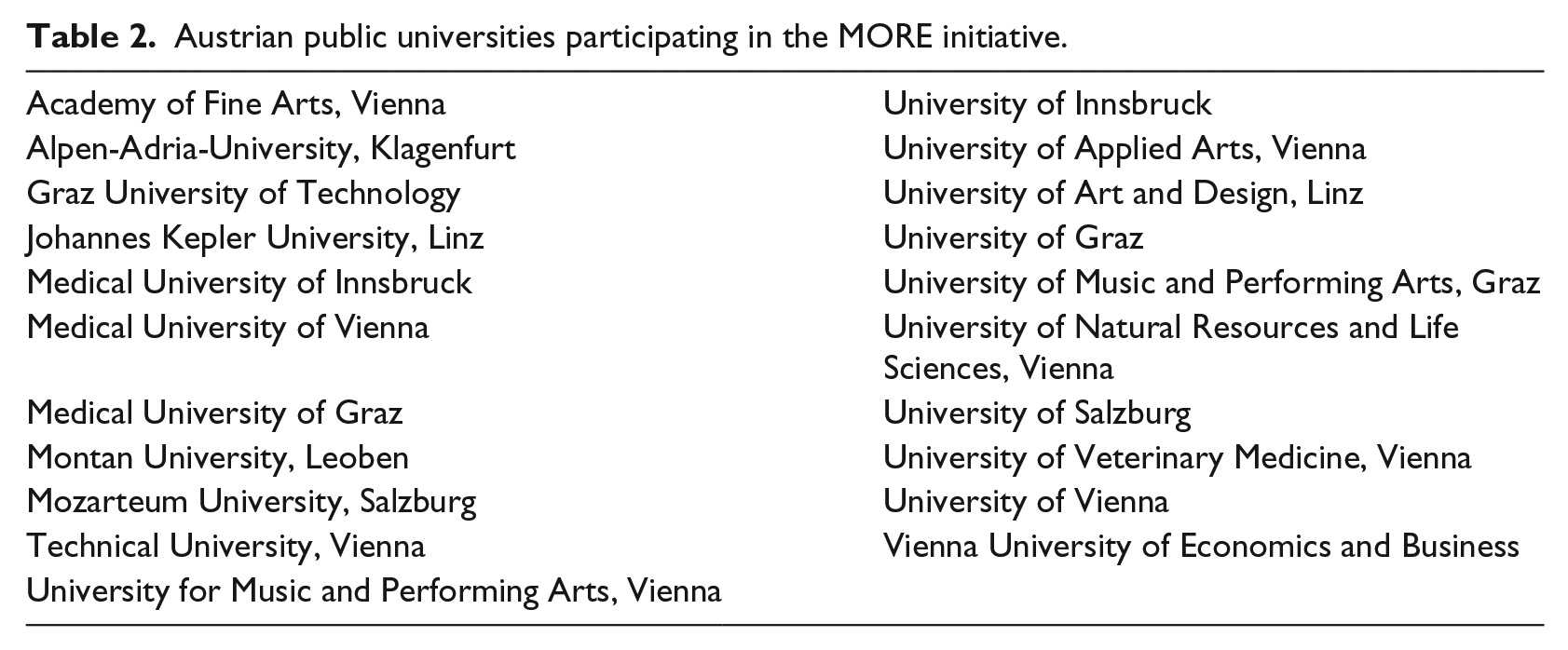
Under the MORE initiative each university aims to offer between 15 and 100 places for refugee students. MORE aspires to being accessible and transparent: information is available on Uniko’s website in German, English and Arabic; and in German and English on various institutional websites. In contrast to other countries, MORE is open to not only recognized refugees and those with asylum status, but also to asylum seekers.
The programme aims to support and prepare refugees for entering a degree programme. In many instances refugees cannot provide recognized documents and lack the required level of language to be admitted to a university. Thus, universities decide individually on alternative entry requirements for refugees, and the MORE initiative at each institution will assist refugees to fulfil those requirements.
The initiative also includes German language courses, access to the library, a student union fee waiver (€18.50) and a buddy system in which local students assist refugees in academic and everyday life. Where possible, support for travel and course material expenses is provided through donations. Finally, Uniko plans to introduce MORE-Perspectives to connect academic refugees with universities, and a platform called No Border Academy in which refugees with a degree create courses for other refugees. Apart from MORE, various universities also engage in further supportive activities, such as research into the refugee crisis, workshops, concerts and childcare.
Actions taken and further developments (as of May 2016)
During the winter term of 2015, 740 refugees participated in the programme, and the demand is increasing. MORE exemplifies good and hospitable practices on many levels as it recognizes the need to support refuges beyond providing access to a degree programme. The initiative covers the majority of facilitators and social connections needed for successful integration (see Figure 4). Universities consider German classes, the buddy system and access to courses (as elements of structure in a refugee’s day) as the most important pillars of the initiative.
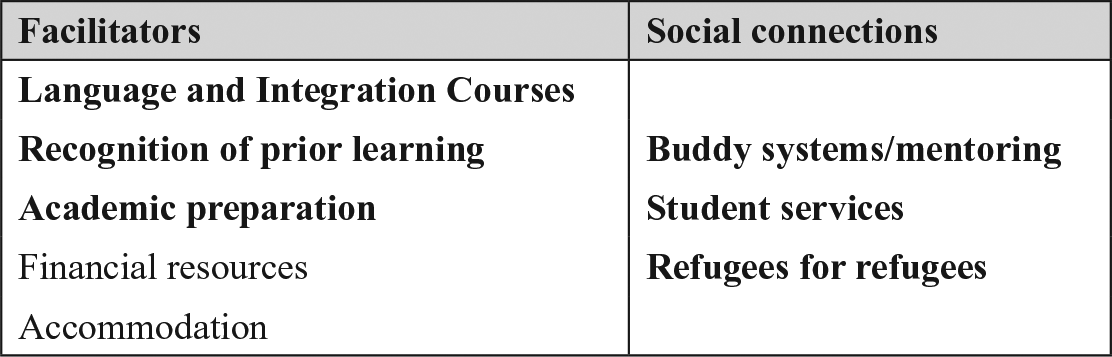
The adapted integration framework.
Guidance provided by Uniko enabled Austrian universities to widely implement a holistic approach suitable to institutional capacities and needs. MORE constitutes a well-organized programme as each university has its own MORE coordinator and they all meet up regularly to discuss and share experiences. The Austrian example reinforces the call for further communication and cooperation between universities (potentially beyond borders) to be as inclusive as possible, and to potentially prevent suffering in the process.
On the one hand, the initiative proved to be efficient as it was implemented within a short time frame with a small number of people using existing resources and donations to cater for 740 students. On the other hand, its sustainability is called into question by various institutions as it is unclear if individual efforts from staff and volunteers will maintain it, and if resources will suffice. In particular, according to one university, donations used for travel expenses (127 refugees received packages of €50 through MORE) are likely to run out in the future. Refugees usually cannot choose the location of their accommodation, so an expensive commute will prevent many from attending universities. Institutions expressed the need for governmental support to remove some of the burden from universities and other civic institutions.
Aside from these concerns, several other issues might impede the long-term success of MORE. At several universities, only a handful of refugees out of a total of 740 will soon be entering a degree programme. Institutions report that many refugees sign up for MORE but never attend the courses. There could be various reasons for this, commuting costs, for example (see above), or in the case of asylum seekers, low morale. Alternatively, it might be that the approach to HE is different and unfamiliar: Lorisika et al. (2015) mention ‘a longstanding tradition of Syrian refugees’ enrolling but not attending regularly or only after several years of other activities. One university suggested that, potentially, more support is needed for these people, which is prevented by a lack of resources.
Those students who eventually enter a degree programme face another difficulty: students are denied to receive the minimum collateral (approximately €837.76) which is paid to job seekers with no income and no capital, as it is assumed that studying is incomaptible with working. While students can apply for a study allowance (the maximum allowance is €679), they are likely to struggle financially. The long-term development of the programme is difficult to predict.
Discussion: Evaluating first responses in Poland and Austria
Common lessons
Austria and Poland provide two examples of how universities can assume a more strategic role in supporting refugees beyond immediate aid. Activities detected in our study include formal education, support for learning (what we classified as facilitators and social connections) as well as awareness-building on and off campus. This might be framed as HE taking ‘full range of its purposes’ (Zgaga, 2009), in a tradition of engaged universities that address pressing social issues.
This should not be so surprising. Recent studies confirm that the public benefits of HE are greater than private ones (McMahon, 2009), and in extending a helping hand towards otherwise well academically prepared refugees, universities are supporting the general wellbeing of a population. Their willingness to take on the politically uneasy task of offering support and speaking on behalf of refugees in their countries suggests that they perceive the task of securing and strengthening democratic inclusion as part of their agenda (Marginson, 2011) in a heartening example of institutional leadership representing a broad understanding of a third mission.
While vocational education might offer a quicker (financial) return on investment and, therefore, might be a better pathway for integrating the refugees, almost all support in Poland and Austria came from the university sector. Reasons include both tougher regulation and social perception of wages but, given the role of tertiary attainment in producing the middle class, it can also be considered an issue of social justice in education not to deny refugees the good that we want for almost everybody else. If we are reading this correctly, in Poland and Austria universities act as if HE was one of the public goods that ‘come close to having the status of a human right, that seem essential to quality of individual life, or that are fundamental to increased social welfare’ (Newfield, 2016). The apparent lack of rights language in both countries is also worth noting.
The range of promises made by senior management and sector representatives depended on capabilities, readiness and background factors, including the relationship between the sector and the government, as did later actions. In their first responses, both countries displayed their ability to coordinate, effective exchange of good practices and public visibility of their actions in creating what can be judged as an effective response to the situation of refugees. Achieving a hospitable approach to integration requires coordination, diversity of responses and transparency. This should be understood both from the perspective of the system and that of the end user. Given its urgency, the Austrian response should be treated as a good practice of coordination and transparency, while Polish responses (if implemented) would prove to be a valuable lesson in diversity.
Collaborative vs individual reactions
Austrian universities collaborated to create a systemic response, while Polish universities both offered and communicated their support on an individual basis. Limited experience with non-traditional students, pillarization of governmental responses and generally low stakes in Poland contrast with the more efficient, but at the same time limited mainstreaming of refugees into HE in Austria. Since the Austrian government was never involved, both the organizational and financial burden of the MORE initiative was borne by the HE sector. The outgoing Polish government gave the refugee crisis some attention. However, the new one showed no interest in the topic and, subsequently, ignored the talks with the rectors’ conference, leaving Polish institutions in limbo as to what to do with already declared support. While the previous government facilitated RPL procedures, no further guidance has been offered by either the new government or the rectors’ conference.
Aside from international politics, previous experience, the physical presence of refugees and the general attractiveness of a country as a destination all contributed to these different patterns. While Poland lacked all three, the problem had to be dealt with hypothetically, and there was less perceived benefit of collective action. The lengthiness of asylum procedures and declining media support for the HE sector after the start of the new academic year in October 2015 downplayed the importance of a coordinated response in Poland. Finally, as universities were approaching the election in a popular vote by representatives of faculty, staff and students election of rectors at public universities in spring 2016, the window of opportunity for taking potentially unpopular decisions was rapidly closing.
Differences in the scope of support and the dynamics of coordination clearly point towards the role of university autonomy in affecting the results of socially beneficial actions. The permeability of a university’s borders can be demonstrated by the fact that the presence of refugees (Austria) or the intervention of the government (Poland) and sector organizations (both) led universities to adapt flexibly to new circumstances (Clark, 1983; Olsen, 2007). The formal autonomy of Austrian public universities came at the expense of performance-based funding (Friedrich, 2013), limiting the resources universities could flexibly allocate for emergencies – in this case, support for refugees. The Polish example is more complicated: first, the government granted universities more autonomy with regard to strict RPL procedures, so that they could more flexibly support refugee students; however, after a change in government, the response became more individual. In the case of Austria, top-down (sectoral) initiatives were fuelled by shop-floor (university) experience, which might explain the success of the MORE initiative. In Poland, individual responses lacked a clear division of roles, and resulted in more diverse and intuitive declarations, but with no real leverage to turn them into actions of autonomous actors.
How integrative was the support?
In terms of generating synergy between HE and integration, Austria and Poland are different in a less straightforward manner. While it is difficult to directly compare declarations with actions, there are some important patterns emerging with regard to how both countries conceptualized the support and whether it might be a way of achieving social integration.
Comparing Austrian and Polish declarations of support for refugees, we conclude that Polish HE addressed some of the facilitators (financial resources, accommodation, and language and integration courses), but failed to address others (RPL, academic preparation). All declarations identified social connections. Following on from this, if the declarations had been put into practice they would have fallen short of achieving social inclusion of the refugees.
In contrast, the Austrian MORE programme went beyond most ordinary facilitators (language courses, scholarships) and addressed academic preparation as well as building a network of social connections for refugees. These measures not only help refugees to prepare for academia, but provide much-needed stability in refugees’ lives, boost their self-esteem and build up their resilience (Korac, 2003; Morrice, 2007; Young-Powell, 2016).
Such positive effects also stem from the close connections refugees build with MORE coordinators, other academic staff and local students. These close relationships allow for individual (though time-intensive) adaptations and solutions, so empowering refugees. Only through these measures and close connections do refugees become fully able to exercise their rights (to education), and have equal opportunities rather than being marginalized. Thus, the MORE initiative holds greater potential for integration as such empowerment is the core notion of what integration is all about (Expert Council for Integration, 2015; Phillimore and Goodson, 2008).
Studies show that many integration measures (usually under government control) remain insufficient as they neglect social aspects that drive local integration (Ager and Strang, 2008; Korac, 2003; Morrice, 2007). Policy interventions and state-controlled measures fail to recognize refugees as social actors. Refugees report that these measures often do not correspond to their needs and goals; a lack of power and voice in the process lead to feelings of humiliation (Korac, 2003). Policy interventions might then degrade actors who already lack favour, rather than empower them – an example of unintended consequences that frustrate the original purpose of action (Baert, 1991; Boudon, 1977; Merton, 1968). HE institutions that operate in direct proximity of refugees might be better able to address their needs than centralized programmes, provided they have a thorough understanding of how the concept of integration applies to their activities.
Missing links
Both countries could improve academic preparation for and access to HE in the case of refugees. This might be addressed by transparency tools (European Qualifications Framework (EQF), European Credit Transfer and Accumulation System (ECTS), RPL, QA schemes) that promote internationalization (mobility, internationalization at home, capacity building and partnerships) (Lorisika et al., 2015: 12–13), scaling up the MORE-like initiatives or implementing new forms of academic support. Teacher education, like teaching in general, received little interest in the institutional responses to the refugee situation, although it is through relationships with other students and teachers that integration might happen.
In the near future, universities might also address the question of influencing society in general. This might include countering the growing anti-immigrant sentiments by providing opportunities for contact with the refugees, engaging in public discourse and presenting a more balanced view on costs and opportunities for welcoming refugees into society. European universities have grown to be safe spaces for heterogeneity, creating spaces for academic argument rather than power.
Universities should engage more in public activities that stem from research and teaching, but they must go beyond that. They can provide education, awareness and academic debate to a much wider audience. Far from expecting universities to solve all the problems generated by the refugee crisis, we still believe there is something even small, low-budget peripheral institutions can and should do in the wake of recent circumstances.
Universities have the expertise and capacity to engage in public outreach as a means of creating such awareness. A practical approach could involve, for example, opening up art workshops with refugees to the public, organizing diversity weeks or open debates. Efforts to counter fears and prejudices are also part of integration (Expert Council for Integration, 2015) and, therefore, should be considered by universities.
Hospitality: Why universities went the extra mile
Having described and analysed the responses in two countries, we would now like to explain why we believe hospitality played a critical role. In the cases of Poland and Austria, measures empowering refugees did not stem from either a purely economic or rights agenda. Instead, these measures acknowledged refugees as strangers with a specific background that need to be welcomed, i.e. introduced to society and made to feel at home. Refugees are recognized as disadvantaged social actors who needed more support than just being granted their rights, and more than just being able to overcome practical barriers. As discussed above, introducing measures required something more than an emotional reaction that might have driven clothing drives and fundraising events in late summer 2015. Our argument is that these primarily grassroots forms of support can only be fully understood through the lens of hospitality.
We define hospitable practices within HE as all forms of support that facilitate or contribute to the wellbeing (Perumal, 2015), empowerment (Healey, 2014) and social inclusion (Marci, 2013) of those perceived as strangers, in this case, refugees (but, theoretically, also migrants, non-traditional students etc.). Hospitable practices acknowledge refugees as individual actors with particular experience, skills and talents that can be integrated into the host society, and which can enrich it (Healey, 2014; Marci, 2013; Wilson, 2010). Hospitality, as an act of welcoming ‘those who are strangers’ (Sutherland, 2006), urges us to move beyond the mere acknowledgement of an abstract right to education, including HE, towards thinking about overcoming vulnerability and marginalization of definitive groups of people and individuals through hospitable practices within HE. Based on Wilson (2010), we also argue that a purely rights-oriented agenda at the level of states risks neglecting the experiences and skills of refugees as they become passive recipients of rights. In the rights approach, unprotected persons need to identify themselves as being entitled to rights and, thus, are dependent on the state to realize rights for them and eventually accredit them with these. Refugees are viewed through the lens of their legal identity, rather than their more humane characteristics. The concept of hospitality, however, facilitates developing ethical responses to refugees that go beyond protecting them from harm, into building relationships concerned with wellbeing.
The pitfalls of rights approaches also affect the inclusion of refugees in education, as Spreen and Vally (Spreen and Vally, 2012) demonstrate by employing the 4A typology (availability, accessibility, acceptability, adaptability) to discuss challenges refugee children face in South African education. These challenges also apply to refugees in HE. Despite granting refugees the equal right to access HE, they remain in a disadvantaged and vulnerable position, as became clear in our case studies. Buddy schemes and similar systems, as used in the Austrian initiative, are probably the most important with regard to addressing such vulnerability. However, buddy schemes and social support require volunteers, thus going beyond a rights-based response to one of universal moral duty.
Hospitality also offers strategic benefits, as it places the responsibility to act on the institution and its leadership in the host country. Protecting guests is a duty of the host. Furthermore, hospitality recognized the importance of actors other than the state (Perumal, 2015). While universities cannot fully replace government agencies, they could – besides other measures discussed earlier – speak out on behalf of safety and against xenophobia (as they did in the two countries studied).
Public institutions relying primarily on governmental funding could have easily excused themselves from any support unless given additional resources. In Poland and Austria they did not. The two countries have also not elaborated on the reasons for straining their capacities to support refugees. The fact that the declarations of support seemed natural reactions, and were differentiated as hospitality does not explain the baseline response for either institution. It required goodwill extending beyond good leadership, in the spirit that regardless of our capacities, there is always something we not only can do, but should do.
Seen this way, Poland and Austria framed integration within hospitality (in the language of ‘refugees welcome’) rather than conceptualizing integration as utilization of refugees (for the society or economy). Despite challenging political climates, universities offered morally and strategically more than adequate responses to the new realities, recognizing especially that the fact of hospitality changes both sides of the relation: the guest and the host. Such an approach, over time, can facilitate mutual integration in a way that a pure economic, rights or social good agenda cannot. Acknowledging the role of hospitality can also change the debate around supporting refugees from one of emphasizing their defensive positions of austerity to one of an active exchange of good practices and small steps against the odds. 9
However, hospitality also entails tensions between the host society and those who enter it: the force to welcome and the force to deny access. Jacques Derrida elaborated on what he called ‘hostipitality’: the impossibility of and the danger with regard to unconditional hospitality, as noted in the ambiguity of a Latin word hospes that refers to a host, a stranger and an enemy (Derrida, 2000; Lawlor, 2016; Lubiak et al., 2010). Two years later, the support for refugees throughout Europe is increasingly framed in terms of national security or economic development. Universities are in a special position for examining these challenges as a social fact, but they also have a public role to play as those who acted in respect of hospitality in the first place.
Limited resources, QA aspects, the role other actors play in enabling social inclusion and deteriorating political climates globally, can further reduce the support offered. What is not yet clear is what lesson, if any, has been learned from this initial phase and whether universities really want to be good hosts. Such questions extend far beyond Poland and Austria.
Footnotes
Acknowledgements
An earlier version of this article was presented at the EURASHE workshop in May 2016. The authors would like to thank Aaron Casley, Philipp Friedrich, Bernadette Ludwig, Barbara Oomen, Sarah Stockdale, Sanne Thierens and two anonymous reviewers for their helpful comments on various aspects of the draft. Finally, this work would not have been possible without cooperation from relevant sector organizations and universities in Austria and Poland, to whom the authors express their gratitude.
Declaration of conflicting interest
The authors declare that there is no conflict of interest.
Funding
This research received no specific grant from any funding agency in the public, commercial or not-for-profit sectors.
