




Abstract
Despite the transformation it introduced in theories of democratic representation, the so-called ‘constructivist turn’ left unchallenged the epistemology that had characterised traditional accounts: the questions at stake in current debates on representation are still mostly elicited by a ‘passive’ image of representation as ultimately the phenomenon of being represented by others. Nowhere has the focus explicitly been placed on the experience of representing others. This article proposes a recalibration of current constructivist accounts of representation by introducing what I term the representative standpoint, an epistemological perspective which discloses neglected aspects of the nature and the value of democratic representation. In particular, I suggest that from the representative standpoint, we are able to configure representation as the periodic motion between two spaces: the square, where the representative meets with their constituents, and the circle, where the representative meets with the representatives of other constituencies. The essence of democratic representation lies precisely in the constant moving back and forth between these two spaces. I finally suggest that, configured in these terms, representation may be acknowledged and valued also for providing liberal democracies with an in-built device for a kind of civic education, the beneficiaries of which are the representatives themselves.
Keywords
In the past couple of decades, the concept and the practice of representation have been at the centre of a lively debate in democratic theory, leading to a profound transformation of the understanding of the phenomenon and its value. Two recent theoretical developments in particular inform the argument I wish to advance here. One is the democratic ‘rediscovery of representation’ (Urbinati, 2000: 760, 2006: 5) – the reaffirmation and the defence of the irreplaceable value of representation to democracy in the face of growing popular disillusionment with the performance of representative governments. The other is the so-called ‘constructivist turn’ (Disch, 2015: 487) in theories of representation – the idea that representation functions more creatively and dynamically than traditional normative theories of representative democracy have assumed (Disch, 2015: 488; Disch et al., 2019).
The literature generated around and between these developments has touched upon a number of historical, conceptual and normative questions, covering a diverse range of sub-topics (Wolkenstein, 2021). In spite of the degree of innovation introduced and the diversity of perspectives explored, there is one thing that this literature seems to have left consistently unchallenged: the epistemological posture that had characterised the standard account. Indeed, the implicit concern behind the many questions scrutinised in these discussions has invariably been elicited by a ‘passive’ understanding of the problems posed by democratic representation, as if at its core was ultimately only the fact that we, as democratic citizens, are destined (doomed, for some) to be represented by others. Even Michael Saward's concept of representation as claim-making (Saward, 2006), which explicitly foregrounds the active role of the ‘maker’ of representations, does so in the context of a defence of what he terms the ‘citizen standpoint’ (implicitly conflated with the standpoint of the represented) as the perspective from which democratic theory should preferably operate (Saward, 2006, 2010). Rarely, in these debates, has the focus explicitly been placed on representing others, the democratic experience of standing, acting, speaking and listening for others, and seldom has democratic representation been looked at from the perspective of the representatives. 1 In light of this, I propose here a recalibration of current constructivist accounts of representation by introducing what I term the representative standpoint, an underexplored epistemological perspective which I claim reveals neglected aspects of the nature of democratic representation and its value for democracy.

Saward's four audience/constituency configurations.
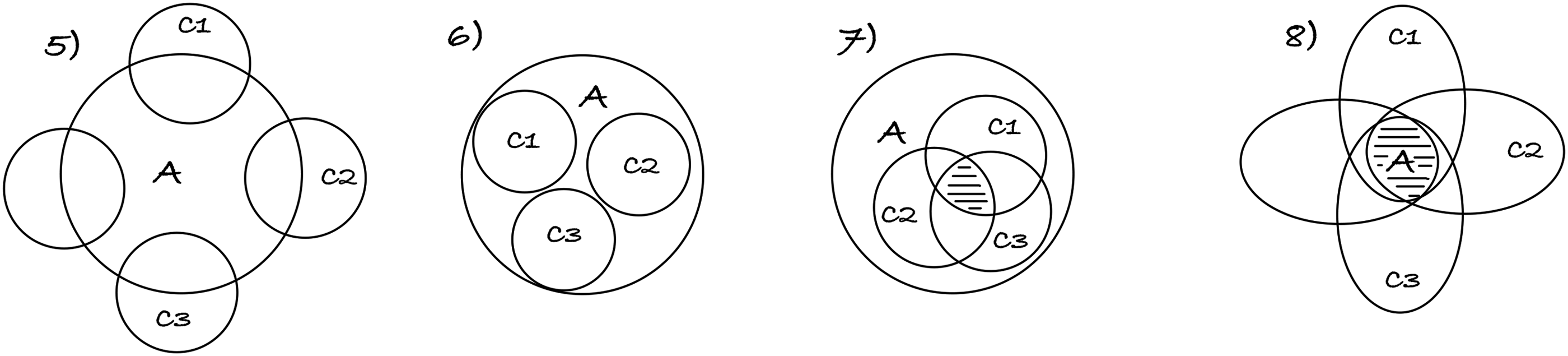
Four further audience/constituency configurations featuring multiple constituencies.
In particular, I suggest that from the representative standpoint, we are able to explicate more clearly than has been possible so far in what sense it can be said – as Jane Mansbridge has recently – that representation is recursive (Mansbridge, 2019), namely that it ‘requires a movement back and forth between consultations with constituents and deliberations with other legislators’ (Melissa Williams quoted in Mansbridge, 2019: 305). Here, I configure such recursiveness as the periodic motion between two spaces – intended both as conceptual and real spaces, and relatable to instances of both formal and informal representation: the square, where the representative meets with their constituents, and the circle, where the representative meets with the representatives of other constituencies. I call a square any actual town square, any local party branch, any visit paid to constituents and any conference call: literally any virtual or actual place where a representative – be it a municipal councillor, an MP, Greta Thunberg or the young chief of a scout patrol – meets with the ‘others’ they represent. In contrast, I call a circle any council, assembly, parliament, summit, commission, WhatsApp group or any place, virtual or material, where citizens representing others meet other citizens representing in turn other ‘others’. I claim that it is precisely the constant moving back and forth between these two spaces that constitutes the essence of the experience of representing others, as well as a condition – maybe not sufficient but necessary – for representation to be democratic. I will finally suggest that, when configured in these terms, representation may be acknowledged and valued also for providing liberal democratic societies with an in-built device for a kind of civic education, the beneficiaries of which are the representatives themselves.
In the first of four sections, I retrace the core themes in the democratic rediscovery and constructivist views of representation and conclude by offering a synthetic image of the ‘new conventional wisdom’ these have established. In the following one, I intervene in the epistemology of such new wisdom, and borrowing from the language of standpoint theories, I introduce the tool of the representative standpoint. The third section advances a descriptive analysis of the process of representation as it appears from the representative standpoint: the periodic motion between a ‘square’ and a ‘circle’. Finally, turning to how the representative standpoint could modify current understandings of the educative function of representation, I sketch ‘a normative hypothesis’: understood as a continual motion between squares and circles, the experience of representing others exposes the representative to an opportunity of ethical transformation that, where seized, would positively impact the functioning of democratic societies. I conclude by hinting at possible policy-relevant implications of this view.
The ‘new conventional wisdom’
What representation is to democracy is a crucial question both in everyday political life and for the development of contemporary democratic theory. This is unsurprising, given that at the heart of this question is no less than the very nature of democracy. What is puzzling, indeed, about the juxtaposition of representation and democracy is that whereas the former necessarily presumes and preserves a division within the people (the division between the represented and representatives), the latter must be able to appeal to the people's unity for its defining claim to make sense: that it is with the demos that supreme authority ultimately belongs.
With roots in the early experiences of liberal parliamentarism, this puzzle has lent itself to being approached as an object of historical investigation, and the idea of representation these investigations shaped contributed in turn to shaping the non-historical side of the debate. Pierre Rosanvallon's ‘history of the political’ (Rosanvallon, 2006: 34) stands out as one of the most influential contributions to the historicist literature on the phenomenon. Indeed, his invitation to think of democracy not simply as something that ‘has a history’ but more radically as something that ‘is a history’ (Rosanvallon, 2006: 38) succeeded in presenting the relationship between representation and democracy as an open, contemporary concern.
This understanding, on its own, constitutes a fundamental achievement. In fact, the ‘uneasy alliance’ (Pitkin, 2004) between representation and democracy has not always been looked at in this critical spirit. It is emblematic that Hanna Pitkin's seminal The Concept of Representation (Pitkin, 1967) leaves the relationship of representation to democracy unquestioned. Pitkin herself, 40 years later, acknowledges having taken this relationship ‘for granted as unproblematic’, since, [i]t seemed axiomatic that under modern conditions only representation can make democracy possible. That assumption is not exactly false, but it is profoundly misleading, in ways that remain hidden if one treats it as an axiom and asks only technical rather than fundamental theoretical questions. (Pitkin, 2004: 336)
These, very succinctly, are the intellectual and material circumstances surrounding the democratic rediscovery of representation and the constructivist turn this entailed. Indeed, crucial to these theoretical developments in empirical and normative democratic scholarship is precisely a ‘break from abstract normative theorizing that idealizes participatory and so-called “direct” forms of democratic practice’ (Disch, 2015: 489) and the consequent recognition that representation is, in fact, an intrinsic element of what makes democracy possible and desirable.
The core belief behind the normative claim that political representation is intrinsic to democratic government – the claim that democracy, without representation, is simply not democracy – brings us back to the ‘puzzle’ introduced above, when we said that what representative democracy threatens to tear apart is the collective personhood, so to speak, of the people and, therefore, its capacity to will and be sovereign. As a matter of fact, what the proponents of the democratic rediscovery of representation throw into question is precisely whether the people – ‘democracy's political subject’ (Disch, 2011: 104) – exist at all prior to being brought into presence, that is, prior to being represented into political existence. It is with this emphasis on the essential unifying-creative function it fulfils in making the political subject of a democracy, then, that representation comes to be regarded as neither supplementary nor compensatory but as nothing less than ‘the essence’ itself of democracy (Näsström, 2006: 330).
The question of ‘the making of the represented’ is the central theme also in constructivist theories of representation – intimately related to the democratic rediscovery of representation although generally based more distinctively on phenomenological rather than historical observation. Key to constructivist approaches is the view that representatives and represented are not linked ‘by a static “correspondence”’ but are instead ‘in a dynamic process of mutual constitution’ (Disch, 2015: 489). Such a way of conceptualising representation clashes with the prevailing normative view that accompanies the so-called ‘standard account’ of representation, a typical expression of which is famously well captured by Mansbridge's category of ‘promissory representation’ 2 (Mansbridge, 2003: 515). In fact, the normative theory projected by promissory representation loses traction when it comes to judging representation as the political practice that, to paraphrase Rosanvallon, brings the people into being (Rosanvallon, 2006: 37). 3 Moreover, at the same time as it dismantles the old normative standard, the constructivist view also threatens to dismantle the ground for a new one, as the complicity of the representatives in the construction of the standpoint from which they should be judged – the circularity, we could say, it establishes between the subject and the object of the normative activity – risks resulting in a ‘normative dead-end’ (Disch, 2015; Severs and Dovi, 2018).
Now, it is true that from the perspective disclosed by the historicist literature that inaugurated the democratic rediscovery of representation, the standard model is ‘outdated’, whereas for the theorists of the constructivist turn, that model was ‘misconceived from the very beginning’ (Disch, 2015: 489). It can be also said, nonetheless, that the critiques of the standard model these theoretical developments brought about do converge and are in fact complementary – democracy can be said to be essentially representative because representation is to some extent a constructive practice – and that they, together, succeeded in informing a ‘new conventional wisdom’ (Saward, 2014: 732) about the practice and the meaning of representation in contemporary democracies. Without the ambition to provide a comprehensive review of the debate, I shall synthesise the conceptual and normative ‘expansion’ the new conventional wisdom brought to our understanding of representation by suggesting three trajectories along which this expansion operates, precisely: a spatial, a temporal and an agential trajectory.
With regard to space, representation used to be thought of as an irremediably territorial notion, a ‘topographical category’ (Disch, 2019: 165). This is no longer the case, as the new conventional wisdom now accounts for the many ways in which political and democratic representation transgresses territorial boundaries. Mansbridge's model of ‘surrogate representation’ is an instance of this sort. 4 With its focus on transnational institutional representation, Andrew Rehfeld's ‘general theory of political representation’ (Rehfeld, 2006) constitutes another step in this direction, contributing in particular to freeing our understanding of representation from confinement to the national context. But the most radical account in this sense is probably Saward's. His notion of the representative claim indeed reveals the in fact ubiquitous character of democratic representation, inviting us to address spatial concerns away from the idea of ‘territory’ and towards notions like ‘situation’ and ‘context’ (Saward, 2014: 725).
Moving to the temporal dimension, representation used to be a primarily past-oriented notion. Timewise, the past provided the only instance of the non-present: it was the past time that representation was expected to and judged for making present again. Here, too, Mansbridge's work is of crucial importance in shaping the new wisdom. Her ‘anticipatory representation’ is a model in which the representative addresses their responsiveness and accountability to future electors (Mansbridge, 2003: 515). The orientation to the future that underpins anticipatory representation is indeed a common element across constructivist scholarship. The emphasis this places on the ‘inescapably figurative moment in the emergence of a democratic constituency’ (Disch, 2011: 108) and the rejection of the idea that representation ‘simply reproduce[s] […] a fullness preceding it which could be grasped in a direct way’ (Laclau, 2005: 115) are clear appeals to the future time as a legitimate referent of democratic representation. We could say, then, that the new conventional wisdom accounts for a future-oriented dimension of democratic representation that the traditional model lacked: the future too provides a possible instance of the non-present, and it is also future time that representation should be judged for making present anew.
Finally, agency-wise, before its constructivist revision, the study of democratic representation was rigorously restricted to institutional agents, mostly to elected representatives. The new wisdom, instead, succeeded in ‘register[ing] the proliferation of ‘lay’ and ‘informal’ representatives who operate beyond the parameters of electoral institutions and their accountability mechanisms’ (Disch, 2015: 489). This led to a progressive reconsideration of the centrality of elections to representative democracy. As Urbinati observed, if elections alone qualify representative government as democratic then it is hard to find good arguments against the critics of contemporary democracy who […] set out from time to time to unmask the role of the people as a ‘mere myth’. (Urbinati, 2011: 25)
At the same time, I shall add, if elections alone qualify democracy as representative, then it is hard to account for the ‘myriad actors [who] make claims to speak for others’ (Saward, 2014: 725), especially when these are heard, accepted and acted upon, as happens to be the case in contemporary democracies. Moreover, as it expands the understanding of who is a democratic representative, the new wisdom simultaneously ‘disclose[s] representation's capacity […] to create as subjects of representation previously excluded groups or entities that can only be imagined, such as future generations, microscopic species, and ecological processes’ (Disch, 2019: 178; Saward, 2006), expanding our understanding of who (or what) can be the democratic represented. It is in this sense that it can be said that the new conventional wisdom foregrounds representation as ‘a multi-actor system’ (Mansbridge, 2003: 519), as ‘an overall process of what might be called “continuing representation”’ (Mansbridge, 2003: 521), placing increased attention on the systemic features of the phenomenon – which Pitkin herself had signalled – and displaying a less exclusive concern for the quality of the dyadic relationship between the representative and their constituents.
Expanding the epistemology of representation: the representative standpoint
I said that under the impulse of constructivist scholarship, representation underwent a remarkable, multidirectional expansion of its conceptual and normative dimensions. I shall note now that, trivial as it sounds, our conceptual understanding and normative evaluations of any given phenomenon are importantly dependent on the perspective we adopt in observing it. Epistemological questions of this sort, however, have not been the object of much explicit concern in the debate reviewed above, and, as a result, the new conventional wisdom leaves intact the implicit epistemology of the earlier tradition. In other words, the general ‘expansion’ prompted by constructivist scholarship did not go as far as to reveal and remove the epistemological constraints that informed traditional theorising.
There is one important exception, however, to this general neglect, which is found in the context of Saward's discussion of the political theorist's fitness to make valid ‘first-order judgments about the democratic legitimacy of representative claims’ (Saward, 2010: 146). Contesting the idea that the political theorist ‘is in a superior position to the ordinary citizen’ (Saward, 2010: 145) when it comes to similar judgments, Saward identifies the citizen standpoint as the perspective from which judgments about the legitimacy of representative performances should ideally be cast. The notion of the citizen standpoint has subsequently gained traction in the literature (Disch, 2015: 488; Severs and Dovi, 2018: 310). To be clear, at stake in this literature is not the standpoint of ‘passport-carrying nationals’: the concept of ‘citizen’ deployed here should be taken in its broadest sense of a democratic actor (Disch, 2019: 164), encompassing, for instance, also members of dominated groups – including refugees and sans-papiers. More recently, indeed, the citizen standpoint has played an important role in efforts to highlight the normative relevance of ‘power relations’ and ‘hegemony’ in response to the weakening normative purchase of the concept of legitimacy (Disch, 2019: 164; Severs, 2020; Wolkenstein, 2021: 9).
Now, while growing in popularity, the use of the citizen standpoint has so far remained confined to the discussion of the normative impoverishment that constructivist theories of representation are charged with having engendered. If disentangled from normative concerns, however, the idea of the citizen standpoint has the potential to derive much more from the standpoint epistemology it invokes. In other words, I suggest that there is more than a precious insight into the theorist's fitness (or unfitness) to make legitimacy claims that the notion of the citizen standpoint can offer to the study of representation. As Sandra Harding explains in a classic formulation, standpoint theories argue that the social world […] provides a kind of laboratory for ‘experiments’ that can enable one to observe and explain patterns in the relations between social power and the production of knowledge claims. (Harding, 1997: 384 emphasis mine)
Though rarely with explicit acknowledgement – this is the point I want to raise here – democratic representation has long been observed and described from a citizen standpoint. There are at least two reasons why this might have been the case. One is that all political theorists, with few exceptions (Hannah Arendt famously being one), also regard themselves as citizens and their own default standpoint is therefore very often that of the citizen; the other is the implicit assumption that citizens – as major stakeholders – experience representation from a privileged epistemic position. What I wish to question, to be clear, is not this assumption but rather the default conflation of the citizen standpoint with the standpoint of the represented that seems to accompany it and which, to a significant extent, also informs much of the public discourse on democratic representation.
Despite the unsolvable puzzle discussed above about the breach that representation rends (and bridges) in the unity of the people and the consequent ambiguity around the representative belonging or being alien to the people (Pizzorno, 2017: xv), both the represented and the representatives are always unquestionably also citizens. I suggest then that it would be accurate to refine the idea of the citizen standpoint, introducing the notion that it comprises, in fact, two distinct standpoints: the standpoint of the citizen-represented and that of the citizen-representative. So refined, the idea of the citizen standpoint is an even more insightful tool, as it allows us to question the position from which we theorise about representation by uncovering the tension at its core between the perspective of the represented and that of the representative. I call the latter the representative standpoint.
There is an obvious objection, however, that borrowing, even only nominally, from the toolkit of standpoint methodologies will certainly raise. Having its roots in Marxist and Feminist epistemology, standpoint theories rely on the categories of domination, exploitation, oppression and on the core claim that in acquiring the standpoint of dominated, exploited and oppressed social groups, an observer experiences reality in ways that challenge the common understanding of social relations and are therefore epistemically advantageous (Wylie, 2003). One risk of bringing the notion of a standpoint into debates on political representation, then, is that of an automatic situation of represented and representatives within the categories of domination and oppression, which would most probably lead us to understand the former as being dominated and oppressed by the latter. Whereas the value of a given standpoint is regarded as directly proportional to its marginality (a prevailing but not unchallenged view), a similar automatic inference would result in an a priori disqualification of the epistemic value of the representative standpoint. Indeed, if marginality is understood as distance from power, the representative standpoint would hardly strike anybody as a marginalised perspective.
It is true that the new conventional wisdom emancipated representation from the formalistic constraints of the traditional approach and that in doing so it debunked the necessary correspondence between roles of representation and formal positions of power. As Severs and Dovi acknowledge, ‘our representatives often are legislators […] but they also are leaders of social movements, party members, journalists, and citizens who publicly speak out against injustices’ (Severs and Dovi, 2018: 309). It is also true, though, that the temptation to depict representatives as ‘powerful’ and the represented as ‘vulnerable’ is still strong and still orients research towards the ‘different ways of being vulnerable to representation’ (Severs and Dovi 2018: 311).
Being vulnerable to representation, however, is not an exclusive ‘privilege’ of the represented: elected and non-elected representatives too are potentially vulnerable to representation. There is a kind of vulnerability that is implicit to the fact itself of representing others, such as the vulnerability that comes with the burden of assuming responsibility for one's impact on the lives of the represented – something that has been recently identified in empirical literature (Knops and Severs, 2019). But there is also the vulnerability to harm inflicted because of rather than by representing others: many representatives – mayors, municipal councillors, activists, leaders of political movements, members of parliament, journalists, etc. – have been persecuted, often by organised crime, and even killed as a consequence of their commitments to represent others (Daniele and Dipoppa, 2017). A great number of these stories sadly filled southern Italian recent history and still fills to this date daily chronicles in Mexico, just to mention notorious examples.
Moreover, in an era of media hyper-exposure, representatives are more and more exposed to less brutal but equally unjust forms of harm: they endure undue intrusions in their private lives and intimate networks (Korsell et al., 2020) and outright public shaming, and they are often the target of (frequently misogynistic and/or racist) abuse (Holm, 2020; Krook and Sanín, 2020; Kuperberg, 2021). In a post-truth scenario, their words and their actions are systematically twisted, they are disbelieved by default – victims, that is, of epistemic injustice (Fricker, 2015) – and their political and civic credibility is damaged, sometimes irremediably and too often for no good reason. A developing literature in political psychology is providing growing evidence of the impact of these and other ‘stressors’ (Flinders et al., 2020; Weinberg, 2011) on the mental health and performances of members of parliament, and the worries this raises may be extended to most experiences of democratic representation: global, local, formal or otherwise. Recent empirical studies are also foregrounding the specific challenges individuals experience following the end of a representative mandate – including loss of identity, the fracturing of social relationships as well as employment and financial stress (Nethery et al., 2022; Theakston, 2007). In the final section, I suggest that the experience of representing others, possibly also by virtue of the condition of civic solitude it forces in the lives of those who undertake it, comes with one legitimate privilege: the potential of an invaluable educative gain. Yet, it also always comes with the high risk of the irremediable loss of a part of the privileges held as citizens prior to engaging in the representation of others – a loss, a kind of vulnerability, still importantly overlooked both in public and academic discourses.
There is a more structural limit, however, to the substantive application of standpoint theory to democratic representation. The ‘citizen’, the ‘represented’ and the ‘representative’ are empty ‘shells’, worn, time after time, by particular individuals. It is difficult, in this sense, to disentangle the standpoint of the representative from the unique standpoint of the particular individual who undertakes the experience of representing others, from their specific engaged position, that is, within a social structure. The problem of situating the representative standpoint within the categories of domination and marginality is only one of the many that would emerge from dwelling longer on this aspect of the matter. All I want to suggest for the sake of the discussion that follows, however, is that in wearing the ‘shell’ of the representative, one gains a specific viewpoint that theorists should take into account when engaging in conceptual and normative analyses of democratic representation.
Between the square and the circle
As Bühlmann and Fivaz have noticed, ‘research about democratic representation is still guided by questions on the characteristics of the relationship between representatives and represented’ (Bühlmann and Fivaz, 2016: 1). One important way in which the representative standpoint can inform our theories of democratic representation is by intervening precisely on this point. Looking from the representative standpoint, indeed, we realise that the relationship between representatives and represented is not the only defining relationship involved in processes of democratic representation: there is a second fundamental relationship that should guide our inquiries as much, and this is the relationship among representatives.
We saw that the democratic rediscovery of representation emphasised the irreducible distance, or ‘gap’, that representation presupposes and preserves between the representative and the represented – a breach in the unity of the people, we said, that representation rends and bridges at the same time. We could say now that, looking from the representative standpoint, we see in fact two distinct such gaps that the process of representation preserves by bridging: one separates the representative from the constituents they represent, and the other separates them instead from the representatives of other constituencies. These gaps correspond in turn to two conceptual and material spaces, the significance of which is distilled respectively in the most distinctive institutions of a representative democracy (here also assumed as formal conditions of its legitimacy): free and fair elections and regularly convened parliaments.
I call these spaces the square, where representatives meet with their constituents, and the circle, where representatives meet with other representatives. At the heart of the mission of a representative, and thus at the heart of the experience of representing others, is a perpetual movement between these two spaces.
5
A conception of democratic representation with similar emphasis on such a movement is found in Melissa Williams’ early work. Back in 2000, Williams noticed that it makes sense, indeed, to characterize the role of the representative as requiring deliberation on two levels. Within the legislature, she must attempt to persuade other representatives to reconceive the public interest in way that takes account of the perspective […] of her constituents. But because deliberation requires that she also be open to revisiting her judgments in the light of others’ arguments, […] she must also engage in a project of persuading her constituents of the reasons for her judgments. At the same time, she must be open to the possibility that because of the pressures of legislative deliberation and its distance from the lives of her constituents, she should further revise her judgments in the light of her discussions with them. (Williams, 2000: 232)
The normative implication of Williams’ view, namely that ‘the representative's accountability requires a movement back and forth between consultations with constituents and deliberations with other legislators’ (Williams, 2000: 231), was recently taken up by Mansbridge in her account of a recursive model of representation. Distinctive of recursive representation is a communicative ideal demanding that ‘both citizens and individual representatives or political parties should hear one another, communicate well with one another, and change one another for the better through their interaction’ (Mansbridge, 2019: 305) and ‘based on an aspiration for iterative, ongoing communication between constituents and their representatives’ (Mansbridge, 2019: 299). Despite the explicit attention paid here to the ‘second level of deliberation’ implicated by the role of the representative – uncommon, to my knowledge, in the literature – the crucial aim for Mansbridge, as it had been for Williams, is to bring to the foreground yet further aspects of ‘the representative-constituent connection’ (Mansbridge, 2019: 299).
Resonating with these is the view of representation underpinning Wendy Salkin's recent normative analysis of informal representation (Salkin, 2022). Salkin identifies two sets of duties that she terms respectively democracy within and justice without. Duties from the former set are ‘inward-facing’, aimed at establishing relational equality between representatives and represented parties; duties from the latter are ‘outward-facing’, concerning how, when, where and before whom representatives should speak or act on the behalf of the represented. And yet, Salkin's focus too is restricted to the representative–represented relationship, since, though sometimes conflicting, both sets of duties are duties of the representative to the represented. It seems, then, that even when the recursiveness of the representative's role is explicitly acknowledged, the two levels of deliberation involved in it foregrounded and the tension between the duties these produce identified, it is still what goes on ‘within’ or ‘without’ the square that remains the exclusive focus of the theorists’ attention. No interest seems to be addressed explicitly to the circle and to the representative–representative connections that take place in it – questions that is hardly possible to overlook, instead, from the representative standpoint.
The following pages attempt a graphic analysis of the square, the circle and the motion bridging them, which builds on a fundamental piece of the constructivist toolkit (Disch, 2015: 492): Saward's distinction between audience and constituency. This distinction is crucial in Saward's conceptualisation of the representative claim. As he writes, ‘[a]ll claim-makers offer a construction of constituency to an audience’ (Saward, 2010: 49) and ‘representative claims can only work […] if audiences acknowledge them in some way, and are able to absorb, reject, or accept them, or otherwise engage with them’ (Saward, 2010: 48). Especially interesting for our purpose is that audience/constituency links can configure very different scenarios. Before taking a closer look at the four configurations of such links that Saward identifies, two things should be clarified.
The first is what is to be intended here by constituency. We have seen that the new conventional wisdom took democratic representation beyond the institutional and territorial constraints of traditional views. One aspect of this expansion involved questioning the centrality of elections in distinguishing between democratic and non-democratic forms of representation. Elections, nevertheless, remained crucial to the definition of other accessory concepts, such as that of constituency. Andrew Rehfeld's The Concept of Constituency, for instance, distinguishes between electoral and non-electoral constituencies but leaves the latter aside as irrelevant in representation analysis while ‘focus[ing] only on electoral constituencies because of their formal institutional role to structure political representation’ (Rehfeld, 2005: 36). Here, instead, I use the word constituency to indicate the body of citizens – the body of political actors, by no means reducible to the enfranchised population of a given territory – who entrust a representative with their support and their subscription without necessarily having cast a vote for them. Supportiveness, not the right to vote in a given district, is what I take to be the distinctive character of a constituency. This understanding of constituency, I believe, suits better post-promissory models of representation, which, while accounting for non-elected representatives, should aim to account for non-elective constituencies too.
The second thing to clarify is that in spite of the fact that the model I wish to outline here builds on Saward's work, we should not understand it as strictly corresponding to the framework of the representative claim, for two reasons. One is that the focus on the representative claim – the claim to speak for and about a constituency – leaves in the shadow the speaking to and the speaking with it. In fact, the act of speaking to actually seems to be relegated to the representative's interaction with the audience. The other is that, while hinting at a similar process in distinguishing between intended and actual audiences (Saward, 2010: 49), the framework of the representative claim does not cast sufficient light on the dynamics through which audiences may be transformed into constituency and vice versa. Both these questions, which bring the focus more closely on the most distinctive aspects of a constructivist understanding of the representative process – that is, the making of a constituency – are crucial, instead, to an account of representation that seeks to make legible what it means to represent others.
Let us now move on to Saward's four configurations of the links between the constituency and the audience of a representative (Figure 1; it is worth noting that the circular shapes used here are purely coincidental and not to be confused with the circle which is the focus of this article). All four configurations illustrate links between one constituency and the audience its construction is addressed to and, we shall see, can tell us something about the circle only to the extent that they cast light on its absence. These are described by Saward as follows: (1) the constituency is entirely contained by the audience, (2) the audience and constituency partially overlap, (3) the audience is entirely contained by the constituency and (4) the audience and constituency fully overlap.
In (1), a representative addresses an audience which contains its constituency. This is the case – for instance – of Greta Thunberg, the teenage environmental activist who claims to represent her generation but addresses such claims to an audience which includes and fully contains her generation while extending also to her generation's parents and virtually everybody. Configuration (2) captures the case of a constituency and an audience that partially overlap. This could be the case of hustings. Here, each candidate addresses their claim to an audience that is made up of a part of their constituency – say, supporters attending the event – but that also contains constituents of other candidates. In (3), we have instead the case of an audience which is only a part of a constituency. We could think of an instance in which a representative addresses a claim to a selected group or a particular category of his supporters: the most engaged, the elderly, the rich, the young, etc. Finally, figure (4) illustrates fully overlapping audience and constituency. This is a more and more recurrent configuration nowadays, the rally case. An instance of this happens every year in the Italian town of Pontida, where the League Party holds its annual gathering and where Matteo Salvini addresses an audience virtually coinciding with its constituency.
Having defined a circle as the space where the relationship among two or more representatives takes place, it is clear that in none of the four configurations above, we can expect to find a circle, since all of them deal with one representative only and the ways in which its performance links its constituency to its audience. All these configurations, then, tell us about possible forms of the representative–represented connection – that is, they all tell a story set in the square. And yet, we can gain from their observation some useful insight about conditions that may not be sufficient but are necessary for a circle to be produced. We see then that in (4) and (3), the circle has no chance to emerge: one necessary condition for it is that at least a portion of a representative's audience of a given representative is not also its constituency. Indeed, in an audience fully exhausted by a single constituency, there is no room for another constituency and for its representative, and thus no potential for a relationship among two or more representatives of different constituencies. It is only in configurations (2) and (1) that a circle could potentially emerge, because in both cases, not being exhausted by a single constituency, the audience could potentially overlap with other constituencies and ‘absorb, reject, accept or engage’ with claims made by other representatives who could, at that point, initiate a relationship with each other.
In order to make legible the conditions for the emergence of the circle, I have developed a further set of possible audience/constituency links (Figure 2), four extra configurations illustrating links between an audience and multiple constituencies: links that result from the simultaneous performances of multiple representatives (a necessary occurrence in a democracy). With the exception of cases (3) and (4), it is indeed very plausible, if not certain, that the same audience is addressed by more than one representative. I suggest this may happen in the following ways: (5) the audience may partially overlap with multiple non-overlapping constituencies, (6) the audience may fully overlap with multiple non-overlapping constituencies, (7) the audience may entirely contain multiple overlapping constituencies and (8) the audience may coincide with the intersection of multiple overlapping constituencies.
Figures (5) and (6) may illustrate the typical case of an electoral campaign. Here, representatives of different constituencies address the same audience in the hope of attracting spectators into their constituencies. While they all talk to the same audience – which may (6) or may not (5) contain the totality of the intended constituents – and while in doing so they may talk of each other, in these configurations, representatives do not talk to each other. In (7), multiple constituencies do overlap and share an audience which contains their intersection but is not exhausted by it. This is the case, for instance, in an open-door summit, council or debate among representatives of different constituencies, talking to each other for and about their constituencies, in front of a shared audience made up also of constituents from all represented constituencies. Finally, (8) illustrates the case in which the audience fully coincides with and is exhausted by the intersection of multiple constituencies. This would be the case of any representative council taking place behind closed doors, in which multiple representatives talk to each other, speaking for and about their constituencies, in front of an audience made up exclusively of representatives of multiple constituencies.
Since a circle is the space emerging from the relationship among representatives, we can exclude its presence in figures (5) and (6), where multiple constituencies coexist but do not overlap. It is instead in (7) and (8) that the circle is finally visible, corresponding to the dark areas in the drawing. In this space, which we could now define as an audience containing or coinciding with the intersection of multiple constituencies, representatives of different constituencies engage with each other's claims. It is only when representatives talk to each other, in fact, that the intersection of different constituencies is realised. In this sense, we could say that the circle, the space that is born out of these interactions, helps us understand Ankersmit's assertion that ‘[r]epresentative democracy [is] the political system best suited for achieving compromise’ (Ankersmit, 2002: 27) and account visually for what we saw is a crucial function of representation: that of unifying the people.
The emphasis that theory still places on the relationship between representatives and represented is paralleled by a seemingly complete neglect for this equally important part of the representative process, which has so far drawn focus away from how the relationships among representatives operate and from the normative scrutiny this requires. An immediate normative consequence of this view, for instance, is that in order to fulfil their unifying function, the representative should make their constituents present in the circle not only by lending them their voice but also by lending them their ears. The circle, in other words, is certainly where the representative speaks for their constituency, but just as importantly, it is where they also listen on its behalf to other representatives, who speak and listen in turn for their respective constituencies. Only if sufficient importance is attributed to this part of the process can we make full sense of Urbinati's claim that, ‘in democratic representation two rights converge: the right to an equal voice and the equal right to be heard, or the electoral right and the right to be represented’ (Urbinati, 2006: 41). In fact, the demand that representatives must make their constituents voice heard presupposes the demand that they also listen to other representatives and hear, in doing so, the voices of the constituents these in turn make present, ensuring that the representative's function ‘to advocate on behalf of their constituents’ is carried out ‘in ways that allow for the fair and peaceful resolution of political disagreements within a pluralist society’ (Dovi, 2007: 7).
We have so far considered the four extra configurations I developed as static snapshots, talking of each as sites of potential or actual appearance of the circle. I suggest, however, that what matters most in the experience of representing others is the dynamics of it – the periodic motion between the square and the circle demanded of the representative. I shall therefore ask the reader to invest their imagination now in ‘animating’ the sequence of snapshots just described. In doing so, we discover indeed that the circle results from the progressive approaching of constituencies to each other across a common audience, through a process that leads from (5) to (8). As importantly, though, for representation to fulfil its democratic function, the process must be one that also leads back from (8) to (5). 6 If we look at the return leg of the journey, we see a representative who, having been exposed to claims made by representatives of other constituencies, goes back to the square and to the relationship with their constituents. Only, they now no longer speak for them; they speak to them and about other constituencies. They now make the potential unity of the people, and its conditions, present to their constituency.
However, as Urbinati observes, ‘it is […] important to make clear that representation is a process of seeking unity not an act of unification’ (Urbinati, 2011: 45). It is crucial thus to stress that a key feature of the circle is its provisionality. Although instituted as a permanent space – a fact witnessed by the architectonic solidity of national parliaments and local legislative councils – the circle must indeed undergo a continuous process of formation and dissolution. Representatives meet with each other, then return to the square where they meet with their constituencies, then meet again and so on and so forth. It is in this way that we can make material sense of the claim that ‘a political representative […] needs to be constantly recreated and dynamically in tune with society in order to pass legitimate laws’ (Urbinati, 2006: 225).
Learning from representing others: a normative hypothesis
The aim of normative theories of representation can be (and has been) put in various ways: telling legitimate from illegitimate, hegemonic from non-hegemonic and democratic from non-democratic forms of representation; telling a ‘good’ democratic representative from a ‘bad’ one; spelling out explicit prescriptions by which democratic representatives should abide; and arriving at principles and ideals of representation to inform institutional design and policy-making. In concluding this discussion, I shall advance a normative hypothesis invited by my epistemological and descriptive premises – an intuition about the value of representation that future normative theorising could verify and develop in any of these directions but that here will remain no more than a sketch.
We have mentioned the concern, particularly felt among scholars of deliberative democracy, about the loss of normative capacity generated by the constructivist shaping of the new conventional wisdom – the so-called ‘normative dead-end’. In a recent intervention on the matter, indicating a possible way out of the ‘manipulation impasse’ in which, she argues, ‘the preoccupation with legitimacy lands deliberative critics of constructivism’ (Disch, 2019: 163), Disch submits that what ultimately ‘holds the wheels of [their] adjudicatory project’ (Disch, 2019: 163) lays in the distinction between education and manipulation. Indeed, she observes, ‘because it defines democratically legitimate representation by its educative function, deliberative legitimacy puts the representative in a “pedagogical” relation to the constituency’ (Disch, 2019: 164). I do not intend to assess here the deliberative ‘adjudicatory project’ Disch criticises, but the hypothesis I advance rests precisely on the acknowledgment of representation's educative function as an element of its value and, as such, as a possible criterion for its normative definition.
To begin with, however, I shall qualify the education at stake here in two important respects, first, by emphasising its ethical over its epistemic content. The ethical element in the ‘pedagogy’ of representation, indeed, is far from being a new concern in the literature. In fact, this has been a central point, for instance, in Ankersmit's and Urbinati's defences of representative democracy and in Mark Warren's various iterations of democratic participation (Ankersmit, 2007, 2013; Urbinati, 2009; Warren, 2008, 2018). To put it in Ankersmit's (rather brutal) terms, it is only when represented that people undergo the ethical transformation that turns them from ‘politically primitive[s]’ into democratic citizens (Ankersmit, 2013: 465). Here, then, I shall regard the educative function of representation as one that is not exhausted by the effective mutual exchange of ‘factually accurate’ (Mansbridge, 2003: 519) relevant information between parties or by the ‘mutually educative communication’ (Mansbridge, 2003: 519) that certifies virtuous deliberative processes but one that is also (and maybe more importantly) about the ethical transformation of the parties involved in the representative relationship.
Second, I shall qualify this education by reversing the perspective from which we commonly appreciate the ‘pedagogy’ at work in the representative relationship. Indeed, though constrained by the ‘deliberative injunction to mutuality’ (Disch, 2019: 164), the educative function of representation is generally thought of as addressed to the represented citizen: the intended beneficiary of this education or potential victim of a manipulative subversion of it. Looking from the representative standpoint, instead, we are forced to consider that the educational value of democratic representation may be also importantly expressed in a form of education the beneficiaries of which are the representatives themselves. The representative too, this means, is in the position to learn and possibly in a privileged position when it comes to acquiring certain specific ethical contents. It is also in this sense that thinking of representation as not only the phenomenon of being represented by others but also as the experience of representing others may cast some new light on the functioning and the value of representation in modern democracies and add further definition to the picture captured by the new conventional wisdom.
The hypothesis I advance here, then, is that in requiring the commitment to move constantly, back and forth, between the square and the circle, the experience of representing others exposes the representative to an invaluable yet often unseized opportunity for ethical transformation. Encoded in the recursive movement between squares and circles, this means, is a precious path of civic education that is currently underexploited in democratic societies. It could even be said that encoded in the experience of representing others is democracy's formative project par excellence. This is clearly a hypothesis to be verified, but if the intuition behind it were correct, it would follow that we have an interest (possibly a responsibility) in extracting and putting to use the educational potential of representation: by popularising, multiplying and fostering the experience of representing others, we may have a chance to affect a breakthrough in the quality of our democratic education and, in turn, in the quality of our democracies.
Acting upon the recommendation entailed by such a view would require identifying concrete strategies. Here, I shall sketch two complementary strategies – both aimed at popularising the experience of representing others and both hinging on the preliminary acknowledgment, in public discourse, of the potential civic transformation it encodes. The first consists in increasing the readiness, on the part of current or soon-to-be representatives, to seize the opportunity for ethical change offered by the experience of representing others. The second consists in increasing materially the number of citizens–representatives, i.e. citizens in the position of having to cover, back and forth and for a given amount of time, the journey between a square and a circle.
If embracing the ethical potential of the experience of representing others pertains to the free choice of the individuals involved, much nonetheless could be done in the public sphere to encourage such choice. With reference to the first strategy, then, I shall signal two possible tactics that may inform an agenda for action. One tactic is normative in a stricter sense, addressing directly the standards by which we judge our democratic representatives. I imagine a normative theory of representation able to account for the full spectrum of questions that the square–circle dynamic reveals, among which are what representatives owe to the represented, what they owe to each other, what they owe to themselves and how to harmonise these conflicting obligations. In preserving the quality of the representative dynamic, a similar theory would in turn preserve the efficacy of the experience of representing others as a ‘pedagogical device’. The second is a formative tactic, as it would consist in ensuring that people who undertake the experience of representing others, in particular when this happens in their youth, are prepared to embrace the ethical challenges they will be presented with. This tactic in turn could be pursued by providing the representative with specialised psychological guidance, for example, or more generally by institutionalising opportunities for the representatives to share the intimacy of their experience and make its educative action explicit in reflection.
Developing the second strategy is instead more properly a job for institutional, democratic and public policy designers. A significant increase in the number of people directly engaged in democratic representation could be achieved through radical forms of vertical jurisdictional layering, and more generally decentralisation, but also, in many cases, through relatively minor tweaking aimed at singling out and valorising the place of representation in existing democratic practices: long-standing practices of democratic representation in educational and work institutions but also experimental participatory practices developed within theories of deliberative democracy (e.g. deliberative polls, citizens juries and mini-publics). Although the relation between deliberative democracies and ideals of direct versus representative democracy remains contested (Landemore, 2020; Neblo et al., 2018; Warren, 2002), it is reasonable to state that latent within each of these practices of democratic participation are myriad instances of democratic representation: the recursive bridging of squares and circles. An effort to bring these to light would instantly expand the pool of citizens consciously engaged in democratic representation and with it the opportunities for acquiring certain ethical dispositions that democracy demands of them.
Conclusion
After retracing and synthesising the impact of constructivist scholarship on the current understanding of democratic representation, this article made three substantive claims: an epistemological, a descriptive and a (hypothetical) normative one. The resulting idea is the following: regarded from the representative standpoint, representation can be appreciated not only as the phenomenon of being represented by others but also – and just as importantly – as the experience of representing others. Understood in this sense, the practice of democratic representation consists of two distinct movements: one leading from the square to the circle and the other leading from the circle back to the square; that is, first, from a constituency provisionally unified by a successful representative claim to an audience of representatives of other constituencies that seeks unification and, second, from an audience of representatives now provisionally unified through negotiation back to a constituency to be re-unified creatively and so on, as in the continuous, systemic process that the new conventional wisdom identified but has so far neglected to describe. This periodic motion between the square and the circle – which, I hypothesised, encodes a path of potential ethical transformation – captures the essence and the value of the experience of representing others. Being crucial to the educational efficacy of the process, the quality of this dynamic is also a possible indication of a way out of the ‘normative dead-end’ to which the new conventional wisdom is believed to have led democratic scholarship. In the wake of the democratic rediscovery of representation, the view from the representative standpoint confirms that representation is an essential feature of democracy: not only, though, as the all-important artifice that allows the many to act and decide as one but also as democracy's own educative device, the depositary – in this sense – of its essence.
Footnotes
Acknowledgements
I am very grateful to Professors Matthew Clayton, Lisa Dish, Andrew Mason, Michael Saward, Eline Severs and Dr Leo Steeds for their generous and insightful comments on various drafts of this article. I also want to thank sincerely the two anonymous reviewers and the editors of this journal for the thoroughness of their engagement with my arguments, the precision of their critiques and the kindness of their tone.
Declaration of Conflicting Interests
The author declared no potential conflicts of interest with respect to the research, authorship, and/or publication of this article.
Funding
The author received no financial support for the research, authorship, and/or publication of this article.
