




Abstract
In four preregistered studies, we tested implications from a cooperation model that explains victim-blaming as a strategic move, as a way for people to avoid the costs of helping victims (who seem to be unpromising cooperation partners) without paying the reputational cost of being seen as ungenerous, reluctant cooperators. An implication of this perspective is that, if an individual is identified as a poor cooperation prospect to start with, people would be likely to blame that individual for his/her own misfortune, notably by suggesting that the victim was negligent. The four studies presented here support this interpretation, as participants attributed more negligence to an accident victim if that victim had been initially described as less prosocial, either because they denied benefits to others or because they created costs for others. These results are consistent with a familiar result, that people blame victims more if they feel (or want to be seen as) more socially distant from that victim. The present studies may offer a simple, cooperation-based account of this and other aspects of victim-blaming.
Introduction
Why Think of Victims as Negligent?
Victims of misfortune may be partly responsible for their own hardship—that at least is what we often assume when we blame victims, arguing that the unfortunate event would not have occurred if the victim had only taken a particular precaution and avoided unnecessary risk (Mulvey, Gönültaş & Richardson, 2020; Walster, 1966).
What leads people to attribute negligence to others? We often invoke negligence when people unintentionally cause harm to others (Nuñez, Laurent & Gray, 2014). Indeed, it seems plausible that people may be less than perfectly careful when considering the impact of their own behavior on others. After all, other peoples’ welfare is only one factor in people's decisions, and its influence may vary. But it is less clear what makes us think that an individual would be careless about their own interests, e.g., by taking unreasonable risks, risks which we think anyone who values their own welfare would have avoided. Why is negligence attribution a frequent component of victim-blame?
In the studies reported here, we consider a possible explanation in terms of the dilemmas posed by human cooperation.
Cooperation and the Dilemma of Others’ Misfortune
Humans are an exceptionally cooperative species, as their survival depends on constant and extensive exchange (Axelrod, 1984; Boyd & Richerson, 2006). Human cooperation, consisting of mutually beneficial interactions, requires both partner choice and reputation (André & Baumard, 2012). Partner choice implies that we should select the best prospects for cooperation—either the most competent individuals, or those most disposed to generous, mutually beneficial interactions (André & Baumard, 2011; Eisenbruch & Krasnow, 2022). Reputation means that an individual's opportunities depend on being seen as someone who extends to others fairly generous terms of exchange, which suggests a long-term horizon of interaction (Krasnow, Cosmides, Pedersen & Tooby, 2012; Sperber & Baumard, 2012).
In this cooperative context, a person's misfortune creates a dilemma for his or her social environment (Boyer, Chantland & Safra, 2024). On the one hand, a straightforward implication of partner choice is that we may want to avoid interacting with victims, as their hardship limits their capacity to bring us the benefits of cooperation. People who experience hardship may, because of that hardship, have less to offer to us than before. Also, their misfortune may suggest incompetence, so interacting with them would not be optimally beneficial. On the other hand, reputation management would require that we help victims, thereby burnishing our image as generous, dependable cooperators (Sperber & Baumard, 2012). Maintaining this reputation would also make it more likely that we will receive help when we in turn need it (Sugiyama & Sugiyama, 2003; Tooby & Cosmides, 1996).
Given the dilemma, any account of a person's misfortune that describes the victim as somehow responsible for their fate would be attractive, as it provides one with a reason to limit one's contribution to helping the victim, without paying the reputational cost of deserting people when they most need you. To put it simply, blaming the victim is a way to avoid material costs by signaling that the victim is not worthy of help. This may explain the familiar phenomenon of victim devaluation—misfortune makes victims less desirable as social partners, so that they are devalued (Boyer et al., 2024).
Solving the Dilemma: Negligence as Victim Responsibility
Negligence is particularly relevant here because describing the victims’ fate as a consequence of their negligence suggests that they bear at least part of the responsibility for their own misfortune. Negligence attribution is a complex phenomenon, as the intuitive associations between intention on the one hand, and responsibility and punishment on the other, seem to falter in cases of negligence, which force us to consider that an individual may be responsible for an outcome although they did not intend to bring it about (Cushman, 2008; Sarin & Cushman, 2024). A large empirical and theoretical literature examines the processes involved in negligence attribution (see, e.g., Alicke, 2000; Alicke, Buckingham, Zell & Davis, 2008; Nobes & Martin, 2022; Nuñez et al., 2014; Sarin & Cushman, 2024; Shaver, 2012).
This literature generally examines cases in which an individual's negligence creates misfortune for others, e.g., prescribing a medicine without inquiring about the patient's allergies. It shows that people do have a definite concept of negligent behavior, distinct from both accidental and intentional causation (Nuñez et al., 2014). But this does not mean that negligence attribution is straightforward. Indeed, in many circumstances in social life, it is not so clear, whether a behavior was negligent or not, especially so in the case of victim negligence. Consider the case of an old lady who was mugged at night. Was she negligent? Perhaps so, as the neighborhood is not entirely safe and the streets had poor lighting. But on the other hand, there were no prior reports of any muggings in that area, even at night.
We frequently adjudicate on these uncertain cases by invoking some general rule of conduct that the person should have adopted, e.g., that the old lady should have gone out during the day. Relative to that rule, negligence amounts to a “failure to think” (Sarin & Cushman, 2024) that may be judged reprehensible. However, as Sarin and Cushman point out, these supposedly general rules are only mentioned after the fact and often appear to be largely ad hoc. That is not surprising, as we can with hindsight imagine a long list of precautions not taken, many of which we would not have considered when engaging in a particular course of action, a variety of hindsight effect (Blank, Nestler, von Collani & Fischer, 2008; Fischhoff, 1975).
As the facts of the matter are often compatible with different interpretations (the victim failed to take some precaution, vs. the victim is not at all responsible), it seems likely that people may sometimes choose one version or the other depending on extraneous factors, for instance on their motivation to describe the victim as worthy of help. That is, one may be tempted to describe victims as negligent, to the extent that one is reluctant to help them.
Cooperation Prospects May Modulate Negligence Attributions
An implication of this perspective is that people would be even more disposed to attribute a victim's fate to their negligence (i.e., to engage in some form of victim-blame) when they have prior reasons to consider the victim as a poor cooperation prospect. For example, if the person who just electrocuted themselves when fixing their heater also happens to be some individual we did not see as a valuable prospective partner, we would (all else being equal) be even more disposed to see their misfortune as the consequence of negligence, reinforcing the notion that they “had it coming” and therefore deserve no help.
Note that there is no a priori reason to predict an association between (a) seeing someone as a valuable exchange partner and (b) describing their behavior as negligent. In principle, all sorts of contextual factors and general knowledge could influence the likelihood that we explain an accident as the result of negligence. The association we examine here is not a self-evident consequence of thinking about mishaps and negligence. It is in the context of the cooperation model that this association is predictable and possibly explained.
Outline of Studies
In the studies reported here, we examined this association between cooperation prospect and negligence attribution. There are of course many possible reasons for attributing some misfortune to negligence, including for instance disregard for reasonable precautions, e.g., “she tried to climb Everest without first training on easier climbs.” Our goal here was to evaluate the possible influence of one particular reason, to do with one's impression of the victim as a possible cooperator for mutual benefits. Specifically, we described a target individual in terms that made him or her a potentially positive cooperation prospect (e.g., they are helpful to others) or a negative one (e.g., they are selfish or exploitative). We then described a misfortune that befell that individual and asked participants to rate whether the victim's negligence caused that event. Importantly, the unfortunate scenario had no connection to the description of the person's cooperative potential. That is, there was no indication that the person met with an accident because of the behaviors related to the vignette.
We expected that participants would attribute more negligence to individuals who were first described as having poor prospects for cooperation (Studies 1–4), in accordance with a cooperation perspective on victim-blame (Boyer et al., 2024). We also expected that this effect would be explained by specific cooperation intuitions, and not just by a general positive or negative “halo” generated by our vignettes (Studies 3, 4). Finally, we considered not just target individuals who may be bringing (or denying) others some benefits (Studies 1, 2, 3), but also individuals who may refrain from (or engage in) creating costs for others (Study 4).
Study 1
Rationale
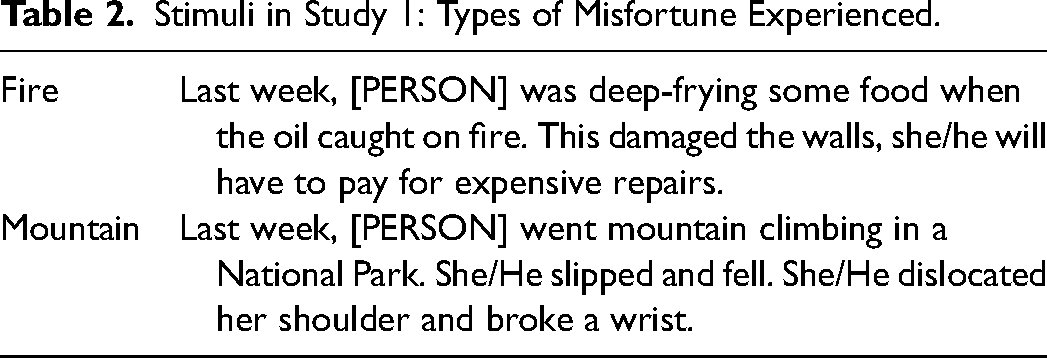
In this study, we directly tested the possibility that people attribute negligence to victims of misfortune when they have a prior impression that these people are not good cooperation prospects. Vignettes described individuals, in ways that suggested either good cooperation prospects (motivated to be helpful to others) or bad prospects (unhelpful individuals). We then described the misfortune that befell them (a kitchen fire, a mountaineering accident). We asked participants to rate the extent to which that misfortune could be attributed to negligence (the victim failed to take a precaution), wrong information (the victim was unaware of some detail of the situation), or external factors (equipment failure). We expected participants to attribute more negligence to the “bad” cooperation prospects.
Methods
Registration and Ethics
The study was preregistered at https://osf.io/3cek8/. The [local] IRB approved the study design. Data are available at https://osf.io/3cek8/.
Participants
We recruited 400 participants, all 18+ USA residents, from the Prolific.com platform. After excluding 40 inattentive participants (see below), there remained 360 participants, 186 women, 162 men, and 12 others, ages 19–75, M = 36. Ethnicity: 243 White, 27 Black, and 23 Latino.
Materials
Pretest of these materials is described in SOM, Section 1. We used two different stories, each of which was manipulated to present the target person as having either a prosocial or non-prosocial attitude, see Table 1.
Stimuli in Study 1: Initial Presentation of the Person. the Place-Holder [PERSON] was Replaced with a Masculine or Feminine Noun (Counter-Balanced).

These individuals were also described as experiencing either one of two kinds of misfortune, see Table 2.
Stimuli in Study 1: Types of Misfortune Experienced.
We then asked participants to rate the target individual's potential value as a cooperator, with two questions (1–7 Likert scales): [Coop1] “Would you like to have [PERSON] as a member of your team at work?” [Coop2] “Would you like to collaborate with [PERSON], e.g., to organize a picnic, a charity event?”
Finally, a set of specific questions probed the participants’ judgments (using 1–7 Likert scales) about the possible causes for the accident: (1) negligence, (2) external factors like faulty equipment, (3) victim's lack of accurate information, and (4) “computer issues”—this last, irrelevant question being used as an attention check. For instance, here are the questions concerning the mountain climbing incident: “In your opinion, how likely was this incident caused by: Negligence (people don't wear climbing harness, do not clip onto safety points/pegs, etc.) [followed by 1–7 Likert scale]; Wrong information (People overestimate a foothold, are misinformed about what knots are safe, etc.) [same scale]; Mechanical defects (brittle/breaking rope, defective equipment, etc.) [same scale].”
Design and Procedure
Our independent variables were cooperation attitude (helpful, unhelpful), story (car, pharmacy), and misfortune (fire, mountain), all between-subjects and counterbalanced. As dependent variables, we measured ratings of negligence, external factors, information, and computer issues. The Coop1 and Coop2 questions served as manipulation checks.
Procedure: (1) presentation of the target person with a description of their helpful/unhelpful attitude; (2) cooperation questions Coop1 and Coop2; (3) ratings of negligence, external factors, information, and computer issues; (4) demographic questions; (5) debriefing and thanks.
Removals
A total of 40 participants were removed for giving a rating of 5 (probably yes) or higher for the explanation that a computer issue was a source of the misfortune.
Results and Analysis
(1) Extraneous variables. Considering the main variable of interest, the attribution of negligence, there was a significant effect of gender (using the Wilcoxon rank test), W = 12,598, p = .005, and age, r(358) = −.13, p = .0144. Where females and older people were less likely to attribute negligence than males and younger people. However, the cooperation attitude conditions did not have significantly different gender or age distributions (p > .6) meaning that age and gender are unlikely to confound any of our analyses of interest.
(2) Creation of a cooperative impression variable. As responses to questions Coop1 and Coop2 were strongly correlated, Cronbach's α > .95, we combined them to make the Coop-impression variable and used it for subsequent analyses.
(3) Manipulation check. Did cooperation attitude (whether the person is initially presented as a cooperative person) create, as expected, an impression of cooperativeness? Yes. There was a significant difference in Coop-impression judgments between the helpful and unhelpful conditions, Welch's t(348.99) = 24.6, p < .0001.
(4) Main analysis. To account for potential confounds of misfortune type and story type on the condition of interest and cooperation attitude, we ran an initial three-way ANOVA using cooperation attitude, misfortune type, and story type as factors and the negligence ratings as the dependent variable. Cooperation attitude (the person is initially presented as helpful or unhelpful) F(1, 352) = 6.6, p = .011, and misfortune type (mountain accident vs. kitchen fire), F(1, 352) = 41, p < .001, had a significant effect on negligence ratings.
Given the lack of interaction with the cooperation attitude condition, we were justified in simplifying the analysis and running a planned independent samples t-test comparing the negligence ratings for the two values of the cooperation attitude condition (the person is initially presented as helpful/prosocial or uncooperative/non-prosocial). As predicted, helpful people were believed to be less negligent regarding the situation that led to misfortune than unhelpful people, Welch's t(353.44) = 2.075, p = .039 (two-tailed). This produced an effect size of 0.219 via Cohen's d.
The difference in negligence attribution between the two conditions (prosocial, non-prosocial) is illustrated in Figure 1.

Studies 1–4, a summary of negligence ratings (participants judge how likely it is that the victim was negligent), in two conditions, prosocial victim (lighter columns) and non-prosocial (darker columns). Error bars: SEM.
(5) Correlation between Coop-impression and negligence ratings. As predicted, the fact that a victim was rated by participants as uncooperative was positively correlated with attributing negligence as the cause of that persons’ misfortune, adjusted R2 = .011, P = .022.
(6) Exploratory analysis. We ran a series of t-tests on the effects of the cooperation attitude (the person is initially presented as helpful or uncooperative) on the ratings for information and external/physical factors, two possible causes for misfortune. This confirmed that the initial presentation of the person (helpful vs. uncooperative) had no significant effect on ratings of external factors (p > .9), or informational causes (p > .28), see SOM for detailed results.
Discussion
Results suggest that, once a person is presented as a “non-cooperator,” outsiders are more likely to attribute that person's misfortune to his or her own negligence. In other words, the attribution of negligence is influenced by factors unrelated to the situation, but relevant to further cooperation with that victim.
Further, the manipulation checks showed that people do consider the behaviors depicted in our vignettes (e.g., unwillingness to help a stranger or one-up-man-ship) as indicating whether a person is a good prospect for collaborative activities. There is a direct correlation between that estimate of further cooperation and attribution of negligence.
These results are consistent with a cooperation interpretation of negligence attributions, following which the statement that a victim was negligent may be a way to justify one's intuition that cooperation with the victim will not be profitable and that it is, therefore, imprudent to engage in or pursue cooperation with that individual.
Study 2
Rationale
This replication of Study 1 used different vignettes to describe the target individual as a potentially positive or negative cooperation partner.
Methods
Registration and Ethics
The study was preregistered at https://osf.io/3cek8/. The [local] IRB approved the study design. Data are available at https://osf.io/3cek8/.
Participants
We recruited 751 participants, all 18+ USA residents, from the Prolific.com platform. After excluding eight inattentive participants (see SOM section 3.1), there remained 736 participants, 408 women, 313 men, and 22 other, ages 18–80, M = 36.49. Ethnicity: 518 White, 225 non-White or prefer not to say.
Materials
We used two different stories to provide cues that the victim is a cooperator or non-cooperator (Table 3):
Stimuli (Vignettes Presenting the Target Individual) in Study 2.

All other materials (description of the misfortune, and questions to participants) were identical to Study 1.
Design and Procedure
Identical to Study 1.
Eight participants were removed for giving a rating of 5 (probably yes) or higher for the explanation that a computer issue was a source of the misfortune. Additionally, to combat response error, we initially enacted a preregistered exclusion criterion where 137 participants were removed for having negligence scores 1.5 standard deviations from the mean. However, we now feel it was imprudent, and thus the results shown here include these 137 participants. The analysis conclusion remains unchanged either way. See SOM Section 4 for an analysis that has the 137 participants removed.
Results
We performed the same statistical tests as in Study 1—see details of results and analysis in SOM, Section 3. In summary, the manipulation check proved positive, as there was a significant difference in Coop-impression judgments between the prosocial and non-prosocial conditions, Welch's t(728.15) = 36.4, p < .001.
An initial three-way ANOVA was conducted between the cooperation attitude (helpful/prosocial or unhelpful/non-prosocial), story type (coaching or snow), and misfortune type predicting negligence. Unlike in study 1, we found an interaction between the cooperation attitude and misfortune type, F(1, 735) = 4.505, p = .034, leading us to simplify the regression to a two-way ANOVA using cooperation attitude and misfortune type. Simple main effects per Welch's t-test revealed that for both the kitchen story, t(367.53) = 4.528, d = .47, p < .001, and the mountain story, t(366.91) = 7.17, d = .743, p < .001, unhelpful/non-prosocial individuals were rated more negligent than helpful/prosocial individuals. Altogether cooperation attitude produced an effect size of .554 via Cohen's d on negligence ratings. There was no significant effect of the prosociality variable on either “external causes” or “information” as possible causes for the misfortune. This result mirrors Study 1. The significant difference in negligence attribution between the two conditions (prosocial, non-prosocial) is illustrated in Figure 1.
Discussion
Results suggest that, as predicted, the initial presentation of the person as either prosocial or non-prosocial does have an effect on whether participants attribute that person's misfortune to his or her own negligence. In other words, the attribution of negligence is influenced by factors unrelated to the situation, but relevant to further cooperation with that victim.
Furthermore, the manipulation checks showed that people do consider the behaviors depicted in our vignettes (e.g., unwillingness to help a stranger or one-up-man-ship) as indicating whether a person is a good prospect for collaborative activities. There was a direct correlation between that estimate of further cooperation and attribution of negligence, even though the scenario in which they were initially presented as helpful had no connection to their misfortune.
Study 3
Rationale
The observed effect of cooperation cues on negligence attribution is consistent with the cooperation model of victim-blame. However, it may also be influenced by a more general “halo” effect, whereby attributing a positive or negative quality to an individual sometimes influences evaluations of that person on other dimensions (Forgas & Laham, 2016, p. 259). In familiar studies of such halo effects, participants tend to rate attractive targets as more likely to be good people (Dion, Berscheid & Walster, 1972), a tendency already present in childhood (Dion, 1973). Although there are many examples of such halo effects, they are limited in scope. For instance, people tend to judge that an attractive woman will be socially more pleasant than other individuals, but not that she will be a better parent (Dion et al., 1972). There is no general “halo” that would make any positive/negative trait of a person influence evaluations of that person on all other dimensions. In many cases, so-called halo effects depend on some prior implicit association or mental theory (Forgas & Laham, 2016, p. 269).
To measure the influence of a general positive/negative impression elicited by our cooperation cues, we ran a modified replication of Study 2. Specifically, we asked the participants to rate the target individual (victim of a misfortune) in terms of attractiveness and courage. We expected attractiveness ratings to be somewhat influenced by cooperation cues, as a previous study showed that people acting in a prosocial manner were judged more attractive than neutral or non-prosocial individuals (He, Workman, He & Chatterjee, 2022). By contrast, courage is not automatically associated with cooperation. Using both attractiveness and courage as covariates in our analysis of the effects of cooperation cues, we could measure the extent to which a specific (attractiveness) or general (attractiveness and courage) halo could have influenced our previous results. All other details of this study were identical to Study 2.
Methods
Registration and Ethics
The study was preregistered at https://osf.io/3cek8/. The [local] IRB approved the study design. Data are available at https://osf.io/3cek8/.
Participants
We recruited 602 participants from the Prolific.com platform, all 18+ US residents. After excluding twelve inattentive participants (see SOM Section 5.1.3), there remained 590 participants, ages 18 to 78, M = 36.93, among whom 299 identified as women and 282 as men, 366 as White-Caucasian.
Materials
Details of materials, etc. were identical to Study 2, except for the additional questions designed to elicit potential “halo” effects: [attractiveness] “Would you say this person is physically attractive?” (1–7 Likert scale between “totally disagree” and “totally agree”); [courage] “Would you say this person is courageous?” (same 1–7 Likert scale).
Design and Procedure
Both design and procedure were identical to Studies 1 and 2, except for the inclusion of the attractiveness and courage questions at the end of the experiment.
Results
We ran the same planned analyses as for Studies 1 and 2. See detailed results and analysis in SOM, Section 5.2.
First, the manipulation check showed that the materials (vignettes describing the target as prosocial or not) had the intended effect, a two-sample t-test showed a significant difference in the participants’ ratings of cooperation in the predicted direction, t(584) = 32.13, p < .001.
Second, our main analysis concerned the effect of Cooperation attitude (prosocial vs. non-prosocial) on ratings of negligence. A Welch's independent samples t-test of cooperation attitude on negligence ratings showed that non-prosocial target individuals were rated more negligent than prosocial targets, t(586.53) = 5.858, p < .001, two-tailed. This produced an effect size of 0.482 via Cohen's d. The difference in negligence attribution between the two conditions (prosocial, non-prosocial) is illustrated in Figure 1.
Third, we ran a planned ANCOVA to measure the effect of cooperation attitude on negligence, controlling for halo effects. Cooperation attitude was entered as a predictor while courage and attractiveness ratings were added as covariates. We found unhelpful/non-prosocial individuals were rated more negligent than helpful/prosocial F(1, 586) = 7.35, p = .007, even when controlling for attractiveness F(1, 586) = 0.11, p = .739, and courage ratings F(1, 586) = 25.74, p < .001. There was no significant effect of the prosociality variable on either “external causes” or “information” as possible causes for the misfortune, see SOM for detailed results.
Discussion
This study replicated the results of Study 2. Individuals described as non-prosocial were more likely than prosocial ones to be described as negligent, as having brought about their own misfortune. In this study, we also considered possible “halo” effects, by measuring the effect of the cooperation attitude manipulation on unrelated impressions, courage, and attractiveness. Controlling for such effects, there was still a significant effect of cooperation attitude (prosocial, non-prosocial) on attributions of negligence. This is consistent with the cooperation model of victim-blame and would suggest that the negligence attribution is affected by the participants’ impression of the victim as a potential cooperation partner.
Study 4
Rationale
In the above studies, we compared the effects of negligence attribution of the cooperation attitude variable, whether the victim of misfortune was presented as a prosocial or non-prosocial individual. This was operationalized as a contrast between individuals who provide help or benefits to others and those who prefer not to do so. But a cooperative attitude can also consist in refraining from imposing costs on others, or being a burden on friends or acquaintances.
So, in this study, we used two vignettes to elicit this contrast between costs and no-costs to others. As in Study 3, we also evaluated whether these vignettes created a “halo” of general impressions about the target individual.
Methods
Registration and Ethics
The study was preregistered at https://osf.io/3cek8/. The [local] IRB approved the study design. Data are available at https://osf.io/3cek8/.
Participants
We recruited 600 participants from the Prolific.com platform, all US residents over 18. After excluding five inattentive participants (see SOM Section 7.1.3), leaving 595 participants. Participants’ ages ranged from 18 to 81, M = 36.89, 261 males, 317 females, 17 other. Ethnicity: 397 White, 198 non-White.
Materials
The vignettes were chosen among materials pretested for effects on participants’ intuitions of cooperation attitudes, see SOM, Section 6. We chose the following stories (see Table 4).
Stimuli for Study 4, Presentation of the Target Individual.

The description of misfortunes and the questions to participants were identical to those used in Study 3.
Design and Procedure
Identical to Study 3.
Results
We ran the same planned analyses as for Study 3. See detailed results and analysis in SOM, Section 7.3.
First, the manipulation check showed that the materials (vignettes describing the target as prosocial or not) had the intended effect, a two-sample t-test showed a significant difference in cooperation ratings in the predicted direction, Welch's t(582.15) = 25.55, p < .0001. This produced an effect size of .61 via Cohen's d.
Second, our main analysis concerned the effect of Cooperation attitude (independent-prosocial, burdensome-non-prosocial) on ratings of negligence. A Welch's independent samples t-test of burden condition on negligence ratings showed that burdensome-non-prosocial individuals were rated more negligent than independent-prosocial individuals, t(573.13) = 7.437, p < .001. The difference in negligence attribution between the two burden conditions (independent/prosocial, burdensome/non-prosocial) is illustrated in Figure 1. There was no significant effect of the prosociality independent variable on either “external causes” or “information” as possible causes for the misfortune, see SOM for detailed results.
Third, we ran a planned ANCOVA to measure the effect of the cooperation attitude on negligence, controlling for halo effects. Negligence ratings were predicted by the burden condition while courage and attractiveness ratings were added as covariates. We found burdensome/non-prosocial individuals were rated more negligent than independent/prosocial F(1, 591) = 24.01, p < .001, even when controlling for attractiveness F(1, 591) = 5.06, p = .025, and courage ratings F(1, 591) = 27.48, p < .001.
Discussion
Results, again, suggest that a manipulation of the cooperation attitude (prosocial, non-prosocial) results in a difference in negligence attributions, as participants consider that negligence is more likely to be a factor in bringing about the misfortune of a non-prosocial individual. In this as in Study 3, we found that controlling for the covariates of courage and attractiveness, there was still a significant effect of cooperation attitude.
General Discussion
Summary of Results
In four studies, we observed the predicted effect of cooperation impression—a person is perceived as a good or bad prospect for cooperation—on participants’ intuitions that the target individual's negligence explained his or her misfortune. Specifically, when the target is perceived as a bad cooperation prospect, an impression that we checked after presenting the target, negligence is rated as a more likely explanation of their misfortune than when the person is seen as a good cooperator (Studies 1–4). This obtains, whether our description emphasized the benefits (Studies 1–3) or the costs (Study 4) of interacting with a target individual. By contrast, this difference in the target's cooperative attitude had no effect on the participants’ opinions about external factors that could have brought about the victim's misfortune, such as using defective equipment or having received inaccurate information (Studies 1–4). Finally, the effect of the victim's cooperative attitude on negligence could hardly be explained in terms of a generally negative or positive “halo,” as controlling the variables of attractiveness or courage did not account for the effect (Studies 3–4). Such “halo” effects are generally difficult to interpret—in our studies, there seemed to be some relation between cooperativeness and courage, for which there is no clear explanation. However, the main point of interest is that “halo” was not sufficient to explain the negligence ratings.
The Implied Psychology of Negligence
Negligence attributions are not random, in the sense that, given relevant information, people can easily agree on which situations constitute negligence, as opposed to intentional or externally caused outcomes (Nuñez et al., 2014). Adults and children agree that negligence is blameworthy (Nobes, Panagiotaki & Pawson, 2009).
The connection between negligence and blame requires additional background information. For instance, Shaver's normative model of blame (Shaver, 2012), in the framework of attribution theory (Kelley, 1973), emphasized the joint factors of causality (the agent did cause the outcome) and foreseeability (the agent knew that his/her behavior was likely to bring about such an outcome) as links from negligence to blame. Blaming also requires an evaluation of the agent's control of the situation (Monroe & Malle, 2017), what Alicke called “culpable control” (Alicke, 2000; Alicke et al., 2008). This might include control over one's thought processes, which is why people can be blamed for a “failure to think” (Sarin & Cushman, 2024).
As mentioned in the introduction, attributing someone a “failure to think” requires formulating the appropriate standard of precaution, which is very often constructed after the event and therefore can be largely ad hoc (Sarin & Cushman, 2024). As a consequence, the observer's estimation of negligence may be sensitive to extraneous factors, social norms, and individual motivations (Lagnado & Channon, 2008, p. 767). It may also be affected by the external observer's motivations. Sarin & Cushman (2024) for instance propose that negligence attribution serves a pedagogical function, by focusing people's attention on the ways in which cognitive control is desirable, even if difficult to maintain, in various situations. However plausible, this pedagogical interpretation may not be sufficient to explain why negligence attributions are more likely to be directed at poor cooperation prospects, as suggested by our results. In sum, our studies may add to the functional interpretation of negligence attribution, by contributing an analysis of the specific interests served by negligence attribution and blame.
Relevance to Victim-Blame
The motivation for these studies was a cooperation perspective on attitudes toward victims of misfortune, suggesting that describing a victim as responsible for their misfortune would allow people to limit their help to victims without compromising their cooperative reputation.
The present studies did not directly test that motivation for victim-blame, but they examined one of its direct implications. If it is clear that an individual is a poor cooperation prospect, that impression should motivate a higher propensity to blame them for their own misfortune. In our studies, this was operationalized as the victim being either unwilling to extend help to others, or willing to create costs for others, which participants did interpret as relevant to further cooperation with that person (see manipulation checks in all four studies), and which elicited higher ratings of negligence, in accordance with the cooperation model of victim-blame.
These results, however, leave open an ambiguity concerning the cognitive processes that lead from disregard for others to potential negligence. It might be that people just want to find defensible reasons to deny help, as we suggested. But disregard for others might also suggest that the victim is, for instance, a steep discounter who does not weigh the future consequences of their actions, which would also support negligence attributions. Further studies would be needed to test this possible inferential path.
These results are consistent with the broader literature on victim-blame. There are many possible reasons, beyond the direct costs and benefits mentioned in our studies, why one could see an individual as a promising or unpromising cooperation partner. For instance, many people tend to avoid interacting with individuals who seem clearly immoral, are already ostracized, or belong to despised or feared social groups (Kurzban & Leary, 2001; Neuberg & Cottrell, 2008). Consistent with our perspective, members of such groups are also typically blamed for their misfortune. For instance, misogyny predicts blaming female victims of sexual assault (Lambert & Raichle, 2000; Pedersen & Strömwall, 2013; van der Bruggen & Grubb, 2014) and homophobia predicts the same reaction for male victims (Davies, Rogers & Bates, 2008). Devaluation of smokers predicts blame for lung cancer (Bresnahan, Silk & Zhuang, 2013). In general, the literature on victim-blame reports greater motivation to blame as a function of perceived social distance from oneself (Correia et al., 2012; Grubb & Harrower, 2008). These results are consistent with a cooperation perspective on victim-blame. When one is unwilling to extend mutually beneficial interactions to some category of individuals, one also tends to blame them for their misfortune, similar to what happens in our studies of negligence attributions. So the present studies, despite their limited focus, may help us understand the more general phenomenon of victim-blaming as a consequence of the dilemmas involved in human cooperation.
Supplemental Material
sj-docx-1-evp-10.1177_14747049241297902 - Supplemental material for When to Blame Victims for Negligence: Noncooperators Are Deemed Responsible for Their Own Hardship
Supplemental material, sj-docx-1-evp-10.1177_14747049241297902 for When to Blame Victims for Negligence: Noncooperators Are Deemed Responsible for Their Own Hardship by Pascal Boyer, Eric Chantland and Lou Safra in Evolutionary Psychology
Footnotes
Acknowledgments
The authors are grateful to two anonymous reviewers and the Editor for many detailed comments and suggestions concerning the first version of this article.
Consent to Participate
All participants were recruited through the Prolific.com platform, and all agreed to a web-displayed consent form approved by the [local] Institutional Review Board.
Data Availability

Declaration of Conflicting Interests
The authors report no conflict of interest.
Ethical Approval
All studies were approved by Washington University's IRB, as specified in the Methods section of each study. As mentioned in the Methods sections, all studies were approved by the [local] Institutional Review Board.
Funding
P. Boyer's research was supported by a grant from the Templeton Religion Trust, GR0025846 “Misfortune and the persistence of wild religions.”
Templeton Religion Trust (grant number GR0025846 "Misfortune and Wild Religions").
Supplemental Material
Supplemental material for this article is available online.
References
Supplementary Material
Please find the following supplemental material available below.
For Open Access articles published under a Creative Commons License, all supplemental material carries the same license as the article it is associated with.
For non-Open Access articles published, all supplemental material carries a non-exclusive license, and permission requests for re-use of supplemental material or any part of supplemental material shall be sent directly to the copyright owner as specified in the copyright notice associated with the article.
