



Abstract
An influential evolutionary account of romantic jealousy proposes that natural selection shaped a specific sexually-dimorphic psychological mechanism in response to relationship threat. However, this account has faced considerable theoretical and methodological criticism and it remains unclear whether putative sex differences in romantic jealousy actually exist and, if they do, whether they are consistent with its predictions. Given the multidimensional nature of romantic jealousy, the current study employed a qualitative design to examine these issues. We report the results of sixteen semi-structured interviews that were conducted with heterosexual men and women with the purpose of exploring the emotions, cognitions and behaviors that formed their subjective, lived experience in response to relationship threat. Interpretative phenomenological analysis revealed four super-ordinate themes (“threat appraisal”, “emotional episodes”, “sex-specific threat” and “forgive and forget”) and unequivocal sex differences in romantic jealousy consistent with the evolutionary account. Self-esteem, particularly when conceptualized as an index of mate value, emerged as an important proximal mediator for both sexes. However, specific outcomes were dependent upon domains central to the individual's self concept that were primarily sex-specific. The findings are integrated within the context of existing self-esteem and evolutionary theory and future directions for romantic jealousy research are suggested.
Keywords
Introduction
Romantic jealousy is a complex of interrelated emotional, cognitive and behavioral responses to the threatened loss of a partner to a real or imagined rival and is recognized as one of the primary causes of marital discord, relationship failure, and even murder (Daly, Wilson, and Weghorst, 1982; White, 1981a). While romantic jealousy has usually been conceptualized in negative terms within monogamous relationships, an evolutionary perspective emphasizes its utility as a basic adaptive mechanism designed to protect the pair-bond and promote reproductive success (Buss, 2000).
Jealousy as an Evolved Sex-Specific Mechanism
According to one particular evolutionary perspective, perceived infidelity activates a sex-specific evolved psychological mechanism that has its origins in the sex-differentiated reproductive challenges centered on resource provision for progeny (Trivers, 1972). Accordingly, men are more sensitive than women to cues of sexual infidelity due to the threat from cuckoldry while women are more sensitive than men to cues of emotional infidelity due to the threat of loss of male parental investment resources (Buss, Larsen, Westen, and Semmelroth, 1992).
Studies of functional brain activity and behaviors evoked by jealousy, such as mate-guarding and reaction to self-esteem threat, provide supporting evidence for this evolved sex-specific jealousy mechanism by demonstrating its occurrence at the perceptual and early cognitive level (Goldenberg, et al., 2003; Kaighobadi, Shackelford, and Buss, 2010; Schutzwohl, 2005; Schutzwohl and Koch, 2004; Takahashi, et al., 2006). However, the main evidence underpinning this idea derives from forced-choice hypothetical infidelity studies involving participants choosing which scenario (sexual or emotional infidelity) they find most distressing (see Harris, 2003; Madran, 2008). While the predicted between-sex differences have been robustly replicated in student samples, they seem to be more variable when other populations are studied and when continuous measures of emotional evaluation are employed (e.g. DeSteno, Bartlett, Braverman, and Salovey, 2002; Green and Sabini, 2006; Voracek, 2001). Unsurprisingly, this has led to a fierce debate about the relative merits of forced-choice versus continuous measures of emotional evaluation (Edlund, 2011; Sagarin, 2005).
Alternative social-cognitive accounts propose a prominent role for cognitive appraisal in the elicitation of jealousy (Harris, 2003). It is argued that natural selection has shaped a universal jealousy mechanism, evolved from the attachment system (Miller and Fishkin, 1997), that is triggered in response to threats to any dyadic relationship. Accordingly, sex differences in romantic jealousy are viewed as arising from proximal mediating variables such as cultural norms (Hupka, 1991), self concept (Salovey and Rothman, 1991) and the economic division of labor (Wood and Eagly, 2002). That men find sexual infidelity more distressing may simply reflect, for example, the greater importance they place on sexual activity (see Harris, 2000). This social-cognitive approach is readily extended to non-romantic jealousy (e.g. sibling rivalry) and naturally accommodates variations in jealous reactions within, and between, the sexes. Given the mixed evidence, and rival accounts, it remains unclear whether sex differences in romantic jealousy actually exist and, if they do, whether they are in the direction predicted by the sex-specific evolved mechanism hypothesis.
Sex Differences: Substance or Spin?
Following Maccoby and Jacklin's (1974) seminal review, the psychological similarities of men and women have been accentuated, culminating in the “gender similarity hypothesis” (Hyde, 2005). However, the idea of negligible sex differences rests uneasily with accumulating evidence for sexually-dimorphic brain regions that create lifelong sex differences in physiology, learning, memory, social interaction, and stress responses (Cahill, 2006). While at variance with Hyde's (2005) small-to-moderate effect sizes, sex differences may have been underestimated by the practice of studying single rather than multi-dimensional trait-like aspects of behavior as effect sizes are greater when single measures are aggregated or assessed using multivariate statistics (Del Giudice, 2009; Lippa, 2006).
Moreover, negligible sex differences in experimental studies may not identify the psychological processes underpinning everyday behavior. For instance, while both sexes show similar overall interest in visual sexual stimuli (Rupp and Wallen, 2009), it is men who are overwhelmingly motivated to seek out pornography (Hald, 2006; Symons, 1979). Thus, a consideration of multi-dimensional aspects of behavior may reveal differences not discernible when investigating single dimensions, one at a time, in an experimental setting.
Methodological Problems in Romantic Jealousy Research
Romantic jealousy research also faces additional problems. How can researchers elicit the intense and aversive emotions that characterize jealousy? As noted earlier, typically a forced-choice methodology has been employed involving affective forecasting. While studies asking participants to predict their emotional reactions to future scenarios produce robust effects and facilitate the collection of large data sets from diverse populations (Green and Sabini, 2006; Sabini and Green, 2004), the technique is nevertheless prone to a variety of anticipatory cognitive biases. For instance, participants tend to overestimate the intensity and duration of their emotional reactions and underestimate the role situational factors play, particularly for adverse events (Wilson and Gilbert, 2005). Indeed, participants with experience of sexual relationships and actual infidelity produce significantly different responses in forced-choice paradigms than participants without such experience (Berman and Frazier, 2005; Buss et al., 1992; but see Edlund, Heider, Scherer, Farc and Sagarin, 2006). More importantly, the forced-choice format does not reveal the core meanings, assumptions, beliefs and motivations that have informed that choice as the participant has no opportunity to explain or elaborate on their reasons for that decision. This highlights the need for research to consider alternatives to affective forecasting and directly examine reactions to authentic jealousy-invoking situations.
Current Study
The current study sought to address these issues by investigating sex differences in romantic jealousy within a “cognitive ethological” framework (Kingstone, Smilek and Eastwood, 2008) that advocates studying naturally occurring behavior without the a priori assumptions implicit in forced-choice paradigms and simultaneously addresses the paucity of studies investigating real jealousy (Edlund, 2011). Accordingly a qualitative methodology was employed with the aim of capturing a sense of the multi-dimensional complexity of how adults experience and respond to actual relationship threats. A qualitative method is well-suited to explore such “emotional episodes” (Parrott, 1991) as themes important to relationship threat and romantic jealousy will emerge from accounts of how these threats were perceived, interpreted, and responded to. It was anticipated that this approach would not only provide insight into putative sex differences, but also address a criticism of the evolutionary approach that alleged adaptations are “ripped” from their context and treated artificially as isolated behaviors (de Waal, 2002).
Thus, three main questions were investigated: Do sex differences in romantic jealous actually exist? If they do exist, are these differences consistent with predictions of the sex-specific evolved jealousy mechanism hypothesis? Finally, what emergent proximate variables influence, or are influenced by, the expression of romantic jealousy?
Method
Procedure
In-depth, face-to-face, semi-structured interviews were conducted to explore experiences of romantic jealousy. Participants were recruited via an email sent to mature university students and acquaintances approached via the first author's social network. Participants were directed to a web page that reiterated our interest in personal experiences of romantic jealousy, provided further information, and invited participation. Interviews of 34–73 minutes duration were conducted with eighteen heterosexual adults in a private university office. The study was approved by the Research Ethics Committee and all participants provided written informed consent.
The interview schedule (Table 1) was designed to elicit descriptions of thoughts, feelings, and behaviors related to romantic jealousy but flexible enough to allow participants' own unprompted observations to come to the fore. Audio recordings of interviews were transcribed verbatim and identifying features altered to ensure confidentiality. Four interviews were followed up with brief e-mails to clarify certain points.
Questions and prompts for semi-structured interviews

Definition of Terms Used in the Analysis
Experiences of romantic jealousy fall into two broad types and this study employs the terms used by Parrott (1991). “Suspicious jealousy” refers to the phase when infidelity is only suspected or imagined and the relationship threat ambiguous while “fait accompli jealousy” is used when infidelity is known and the relationship threat unambiguous. These two phases do not necessarily co-occur as suspicious jealousy does not entail fait accompli jealousy, and fait accompli jealousy can occur in the absence of suspicious jealousy.
The evolutionary literature frequently refers to sexual versus emotional infidelity and we feel a definition of terms is useful here. In committed personal relationships, assumptions are made regarding exclusivity and priority of the partners in relation to others (de Silva, 1997). Sexual relations are an area in which exclusivity is usually expected and its violation is considered serious enough to be legally accepted as grounds for divorce in Western cultures. Consequently sexual infidelity refers to a relationship where sexual intercourse has taken place with a rival. Emotional infidelity, on the other hand, is not so well defined and variations exist in what should, or should not, be exclusive to the relationship. As such, emotional infidelity is more ambiguous but is understood to reflect the loss of exclusivity and priority in emotional aspects of the relationship (e.g., confiding in the rival rather than the partner, spending time with the rival that would normally have been spent with the partner, putting the rival's emotional needs above those of the partner, etc.).
Participants
From the eighteen participants recruited, one woman was excluded as she did not have personal experience of romantic jealousy and one male interview could not be used due to a corrupted audio file. The remaining sixteen participants (Table 2) comprised nine women (23–44 years) and seven men (28–56 years).
Brief details of participants

Analysis
The analysis was based on the principles and techniques of Interpretative Phenomenological Analysis (“IPA”; Smith and Osborn, 2003) that draws on the epistemological traditions of phenomenology and hermeneutic enquiry. Contrary to the quantitative approach in which the topic under study is objectively defined and examined according to pre-existing conceptual and scientific criteria, IPA seeks to explore an individual's subjective lived experiences and attempts to understand how they make sense of those experiences. The process is described as a double hermeneutic: The researcher is trying to make sense of the individual who is in turn trying to make sense of their experience (see Reid, Flowers, and Larkin, 2005, for a brief introduction). While the researcher attempts to “bracket” preconceptions and remain theoretically neutral during the analytic process in order to work with the data from the ground up, IPA emphasizes and embraces an active role for the researcher in the process of interpretation when theoretical concepts may be applied to the analysis.
As the IPA method is generally used to examine topics reflecting significant consequences for individuals (Smith and Eatough, 2007), it is particularly suitable for an investigation of romantic jealousy given the self-defining nature of interpersonal relationships and its significance for those threatened with relationship loss (Baumeister and Leary, 1995; Kiecolt-Glaser and Newton, 2001). Furthermore, semi-structured interviews not only provide a richer account than is possible with quantitative measures, it also allows considerable flexibility in following up interesting areas that might emerge during the interview.
In accordance with IPA methodology, the analysis involves a systematic process of coding and interpretation; that is, identifying themes or patterns in individual accounts. The methodology follows an idiographic approach, beginning with specific examples and gradually working up to a more abstract level. It is phenomenological in that it seeks an insider perspective of the experience and it is interpretative in its acceptance of the researcher's key analytic role, embracing the viewpoint that understanding requires interpretation. The analysis begins with the examination of a single case and then proceeds on a case-by-case basis. The initial analysis of a case involves repeatedly reading the transcript to gain an in-depth impression of that experience of romantic jealousy (data immersion). During this process the analyst looks for “meaning units” by identifying emerging themes, and the connections between these themes, that are implicit in the participant's narrative and the transcript is coded with key phrases reflecting these themes. A global list of emergent themes (with supporting interview extracts) is then organized to form super-ordinate themes. Once this has been accomplished for the first case, the researcher uses the generated themes to look for further evidence from the second case. However, the analyst remains vigilant for new themes. When these arise they return to previous cases to establish if these themes are present there. Thus, the process is a cyclical and iterative one and may involve rethinking themes and theme clusters. The central aim here is to increase sensitivity to the similarities and differences among participants in their accounts of romantic jealousy.
Finally, once all transcripts have been analyzed, a global list of emergent themes is developed using the data from all participants. These are finally clustered into super-ordinate themes that represent core aspects of the experience of romantic jealousy. It is at this point that marginal themes are excluded. Exclusion was not based on prevalence but on not being well supported by the interview extracts or the ability of the theme to inform other themes. Finally, the emergent themes were divided according to the participant's sex and comparisons subsequently made between the sexes.
Credibility
In order to enhance the methodological rigor and credibility of the analysis, we were attentive to the guidelines proposed in Elliott, Fischer and Rennie (1999) for the validation of qualitative research. A verification audit of the analysis was provided by the second author who independently reviewed a sample of eight transcripts in order to corroborate the first author's (a) initial coding of the transcripts, (b) interpretation of meanings implicit in the narratives and (c) compilation of global list of themes. It is important to note that in an IPA analysis we are interested in understanding the complexity and content of the constructs and beliefs central to the experience of romantic jealousy. Given this focus on meaning, the incidence or frequency of certain words, concepts, and themes in the interview transcripts were not objectively quantified (e.g., by counting). Indeed, from a qualitative viewpoint this would involve degrading the richness of the participant's experience. Accordingly, and in line with the epistemological stance of IPA, the interpretation of the interview transcripts did not involve quantification.
Results and Discussion
Four super-ordinate themes emerged from the analysis: “Threat Appraisal”, “Emotional Episodes”, “Sex-Specific Threat”, and “Forgive and Forget” (Table 3). The findings for each super-ordinate theme, with supporting interview extracts, are presented and considered in the context of extant literature and the implications for the research questions.
Super-ordinate and emergent themes

Threat Appraisal
A core explanatory concept of romantic jealousy that emerged from all accounts was one of threat appraisal. A useful theoretical framework that has previously been applied to romantic jealousy (e.g., Mathes, 1991; White, 1981a) is Lazarus's (1991) theory of emotion in which individuals engage in a primary and secondary appraisal process. Primary appraisal involves evaluating whether an event is irrelevant or has a positive or negative impact on an individual's well-being. If negative, an individual evaluates the extent of the threat and then engages in a secondary appraisal whereby courses of action are considered in order to counteract it. In the current study the appearance or possibility of a rival for the affections of a romantic partner, which triggered assessment of threat, was accompanied by feelings of unease. In the following extract, Seb describes his uneasiness in response to his wife's suspicious behavior:

The feelings of “lost control” described by Seb were repeatedly expressed in other narratives during both suspicious and fait accompli jealousy in response to relationship threat and resulted in behavior intended to regain control of the situation and prevent loss of the relationship. Even in the absence of suspicious behavior both sexes implicitly displayed a sense of ownership and manipulation of their partners directed at pre-empting relationship threat. Explicit in women's accounts were control strategies that attempted to elicit attention by inducing jealousy, sympathy, or simply by choosing partners over whom individuals felt they had “the upper hand”, as illustrated below:

The latter extract reveals how having full knowledge of the threat and being able to assess it accurately, even when the partner was acknowledged to be involved with a rival, restored a feeling of control and seemed to attenuate feelings of unease expressed during primary appraisal. This contrasts markedly with Seb's description above where the situational ambiguity, arising from a lack of knowledge of the situation and thus an inability to evaluate the nature of the threat correctly, resulted in the feeling of losing control.
In both sexes a behavioral tendency reported during suspicious jealousy was an information-gathering exercise that involved secretly reading a partner's emails and text messages or checking on a partner's whereabouts. Such clandestine surveillance activities seem consistent with a process of primary appraisal designed to assess the viability of the suspected rival and nature of their possible relationship with the individual's partner in order to evaluate the extent of the threat:

While information gathering was the prevailing response to relationship threat during suspicious jealousy, Marion's strategy was not to “rock the boat” as revealed below:

Here we get the sense of Marion's low self-esteem (discussed below) in that she felt fortunate at having acquired a mate at all and wanted to maintain the relationship, even in the face of suspected infidelity. This leads into a common factor that directly impacted on the degree of perceived relationship threat; the extent to which an individual believed their partner had a comparatively higher mate value. This perception seemed to result in feelings of chronic insecurity over the relationship even in the absence of suspicious behavior by the partner or the existence of an actual rival. Rupert, for instance, described his girlfriend as “so far out of my league it was madness” and expresses his insecurity over the relationship thus:
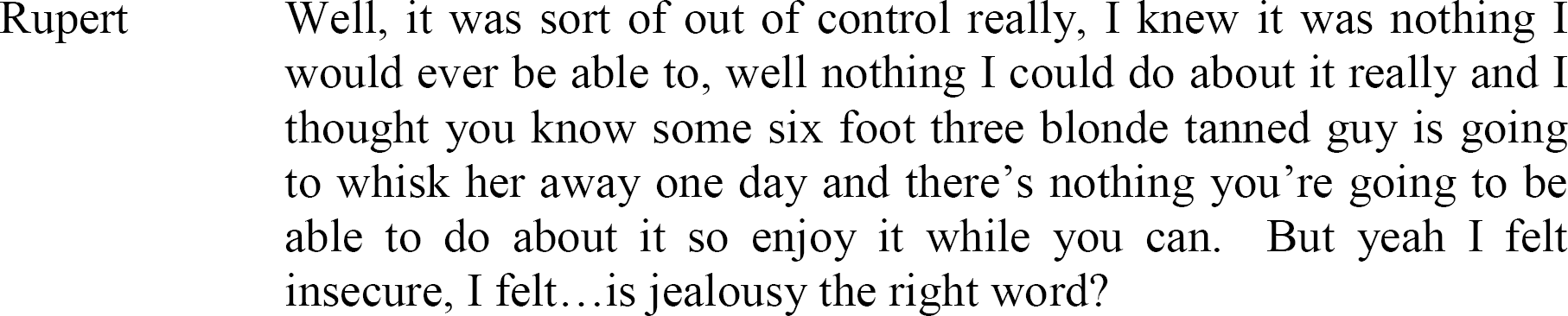
This extract contrasts noticeably with a later relationship in which Rupert felt secure about his partner and was seemingly unconcerned over situations where his girlfriend might meet potential rivals:

Similarly, Gemma who refers to her boyfriend as “out of my league”, describes her feelings of insecurity as follows:

The extracts from Gemma and Rupert illustrate how feelings of unease spring not from their partners' behavior per se but from the perception that their partners could attract a more superior mate. Consequently, they maintain a hypersensitivity to the qualities of potential rivals.
The process of appraising the viability of rivals as an indicator of the significance of relationship threat was reported in both male and female narratives and involved a process of social comparison – that is, they compared their characteristics to those of the rival. This is consistent with other research showing heightened jealousy when rivals are perceived to possess strengths in a domain central to one's own self concept (DeSteno and Salovey, 1996; Salovey and Rothman, 1991) and is exemplified in Becky's and Polly's accounts below:

While the social comparison process was common to men and women, the qualities that were considered the most threatening were sex-specific. Women's accounts were overwhelmingly concerned with an appraisal of the physical attractiveness of potential rivals, as exemplified in both Gemma's extract above and the fact that Polly perceived the relative unattractiveness of her rival as positive. Men's descriptions were more concerned with the physical prowess (e.g. “six foot three blonde tanned guy” in Rupert's extract above) and social status of potential rivals:
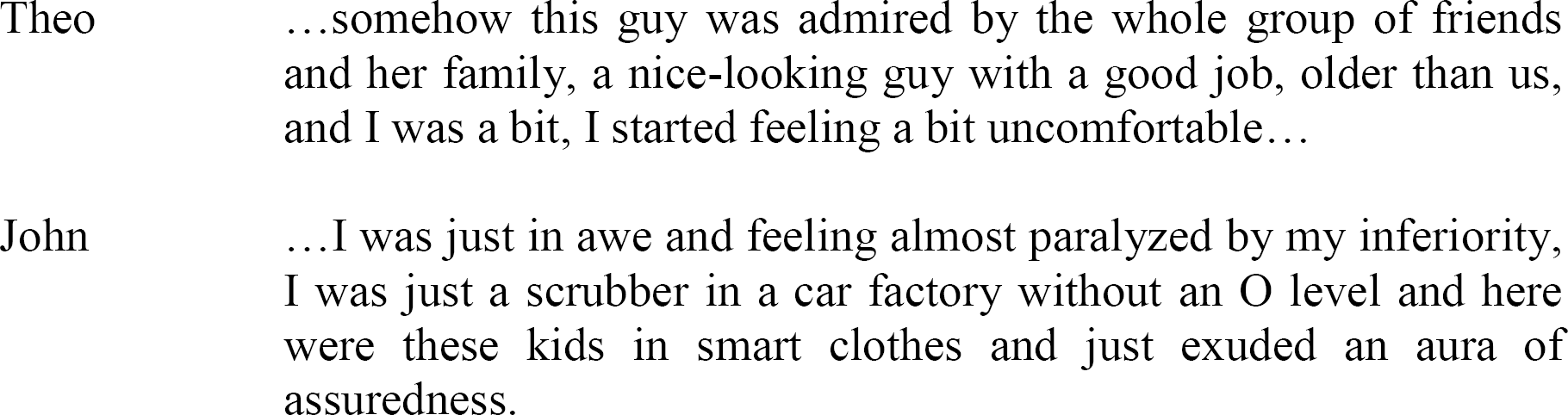
While mate value disparity and rivals' characteristics were context-specific, a personality characteristic that influenced both the propensity to experience jealousy and the intensity of that experience in both men and women was global self-esteem, as revealed in Marion's extract above and John's reference to his perceived “inferiority”. Similarly, Graham showed evidence for low self-esteem throughout the course of his interview and described himself as “very, very jealous” generally. The extract below portrays his hypersensitivity to the prospect of his girlfriends meeting other men:

Graham also ruminates and blames himself for a previous infidelity:

That threats to romantic relationships have such a de-stabilizing effect, perceived by men and women in the current study as a loss of control, illustrates the value of strong and stable personal relationships for good psychological health (Baumeister, DeWall, Ciarocco and Twenge, 2005; Kiecolt-Glaser and Newton, 2001) and serves to highlight the adaptive function that romantic jealousy plays in protecting those relationships (Buss, 2000).
The importance of self-esteem to jealousy in both sexes has been noted elsewhere (DeSteno, Valdesolo and Bartlett, 2006; White, 1981b), although not universally (Buunk, 1981; White, 1981a), and the underlying causal mechanism suggested is the loss of “formative attention”; defined as attention which sustains part of our self concept (Tov-Ruach, 1930). The formative attention received from a romantic partner is potentially highly influential in shaping our self concept, particularly when it enables movement towards an “ideal” self (Rusbult, Finkel, and Kumashiro, 2009). Thus, rejection in favor of a rival represents not just a loss of relationship benefits but a devastating blow to self-esteem arising from withdrawal of the formative attention that sustained, to a greater or lesser extent, the individual's self concept (Hinde, Finkenauer, and Auhagen, 2001; Zeigler-Hill, Fulton, and McLemore, 2011). The evidence that those with low self-esteem show greater physiological reactions to interpersonal rejection compared to those with high self-esteem (Ford and Collins, 2010), accords with the findings in the current study.
One specific evolutionary perspective on self-esteem is that it functions as an index of self-perceived mate value (Barkow, 1989; Wright, 1994). While the “sociometer hypothesis” conceptualizes self-esteem as a monitor to overall social exclusion, such that self-esteem will decrease in response to cues of social rejection (Leary and Baumeister, 2000), romantic rejection provides feedback specifically on the individual's potential mate value. In the current study, the connection between low self-perceived mate value, whether dispositional (low self-esteem) or situational (due to mate value disparity), and heightened jealousy is consistent with other findings (Phillips, 2010; Sidelinger and Booth-Butterfield, 2007). For example, married women report greater levels of spousal abuse and jealousy when their husbands have low self-esteem (Shackelford, 2001). While individuals with a low mate value relative to their partner benefit by being in the relationship, they incur a greater cost if the relationship ends. They are therefore motivated to maintain the relationship and heighten their sensitivity to cues indicating relationship threat.
The evolutionary perspective further proposes that the individual's mate value “tracking device” permits them to choose whether to adopt a short- or long-term mating strategy (Buss and Schmitt, 1993; Penke, Todd, Lenton, and Fasolo, 2007). For both sexes, related research indicates that positions of power (mediated by increased confidence) are positively related to infidelity and the intention to commit infidelity – that is, an interest in short-term mating strategies (Lammers, Stoker, Jordan, Pollman, and Stapel, 2011). It is also consistent with the evidence that men's mate value perceptions have a stronger effect on self-esteem for those unsuccessful in previous short-term relationships while those successful in short-term relationships show a better understanding of their own (higher) mate value (Back, Penke, Schmuckle, and Asendorpf, 2011; Penke and Denissen, 2008). This evidence clearly resonates with Graham's low self-perceived mate value, his description of previous infidelities, and a heightened sensitivity to relationship threat.
The tendency to appraise the viability of a rival, and consequently the extent of threat they pose, is rooted in intra-sexual competition (Buss, 2002) and the current study further points to the importance of threats to domains fundamental to the individuals' self concepts in the evocation of jealousy (Salovey and Rothman, 1991). This is evidenced, for example, by the focus on academic achievement by Polly and an outgoing personality by Becky. Moreover, women's preoccupation with the physical attractiveness of rivals, compared with men's preoccupation with the social dominance and physical prowess of rivals, matches similar findings reported elsewhere and accords well with evolutionary models proposing that individuals are aware of the characteristics sought by potential mates (Buunk, Solano, Zurriaga, and Gonzalez, 2011; Massar and Buunk, 2010; Park, Wieling, Buunk, and Massar, 2008). For example, physical attractiveness is an important cue to fertility in women and, for men, dominance and social status are important cues for the provision of parental investment (Buss, 1989; Symons, 1979). These characteristics thus establish the critical dimensions along which members of the opposite sex compete (discussed later in “Sex-Specific Threat”).
In sum, for both sexes a perceived threat to a romantic relationship resulted in a primary appraisal process that involved information gathering in order to assess the significance of the threat (Lazarus, 1991). The common set of factors important to the appraisal process included self-esteem, self-perceived mate value, mate value disparity, and potential rivals' characteristics. An overriding behavioural tendency to emerge in order to stem relationship threat was for individuals to attempt to control and manipulate their partners. While the general threat appraisal process of jealousy accentuated between-sex similarities, consistent with the social-cognitive account, the different weightings given to potential rivals' characteristics by men and women revealed between-sex differences in accord with the principles of the sex-specific evolved mechanisms account.
Emotional Episodes
Consistent with the definition of romantic jealousy as an emotional, cognitive and behavioral complex (White, 1981a), a large part of all narratives involved expressions of emotional responses to relationship threat. Depending on the exact circumstances, the emotions articulated were wide-ranging but broadly clustered into feelings of anger, sadness, and distress. This is consistent with the description of romantic jealousy as a “blended emotion” (Sharpsteen, 1991). Accounts of these emotional episodes, as they related to suspicious and fait accompli jealousy are described below.
Suspicious Jealousy
For both sexes, the primary appraisal of relationship threat invoked feelings of general unease and anxiety that became insidious and intrusive to everyday cognition, as illustrated by Mike and Louise below:
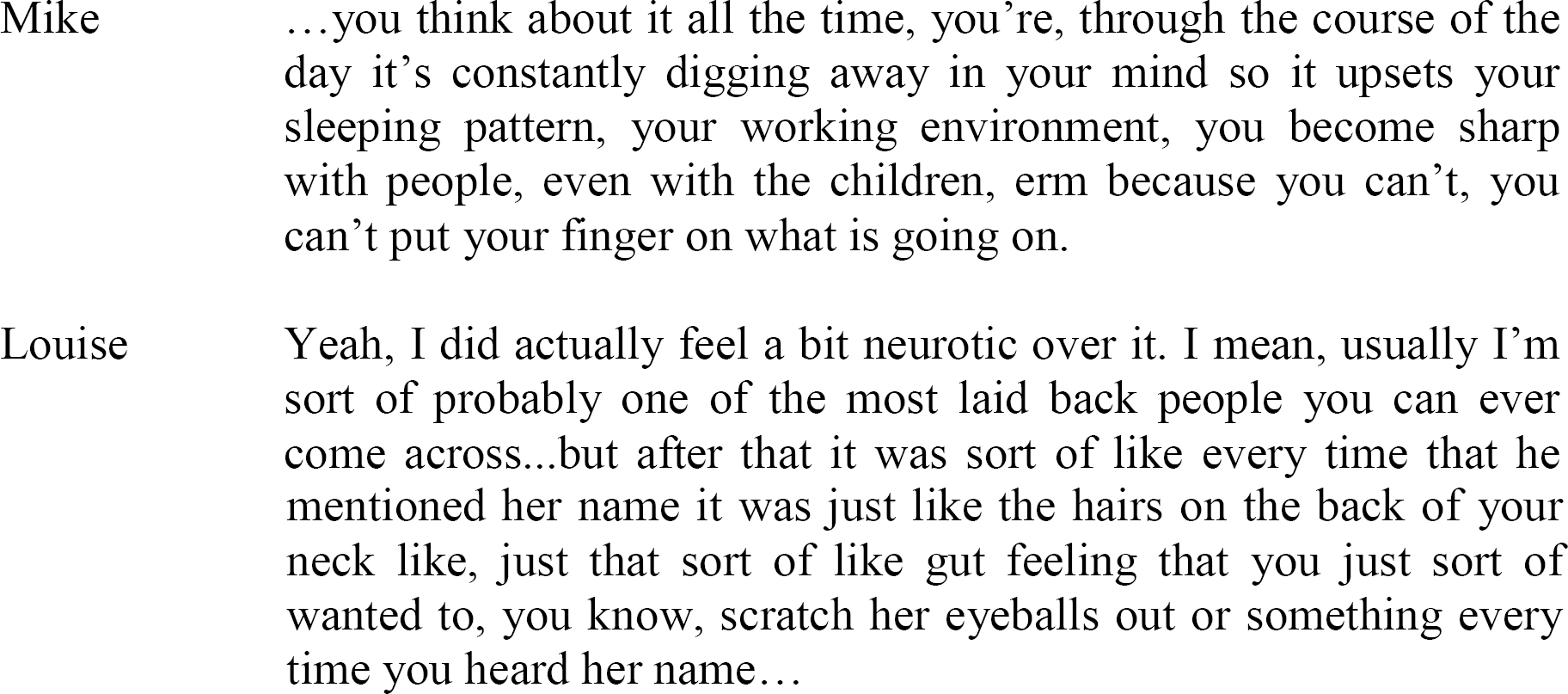
For Parrott (1991) this state of anxious insecurity represents “prototypical” jealousy and the resulting insecurity surrounding the relationship gives rise to experiences of suspiciousness, an inability to concentrate, ruminations and hypersensitivity. Some men expressed dislike of their partners during the suspicious jealousy phase, sentiments that were not expressed in any of the female accounts:

Fait Accompli Jealousy
On discovering that sexual infidelity had taken place, both sexes described initial feelings of nausea and shock turning to anger/distress.
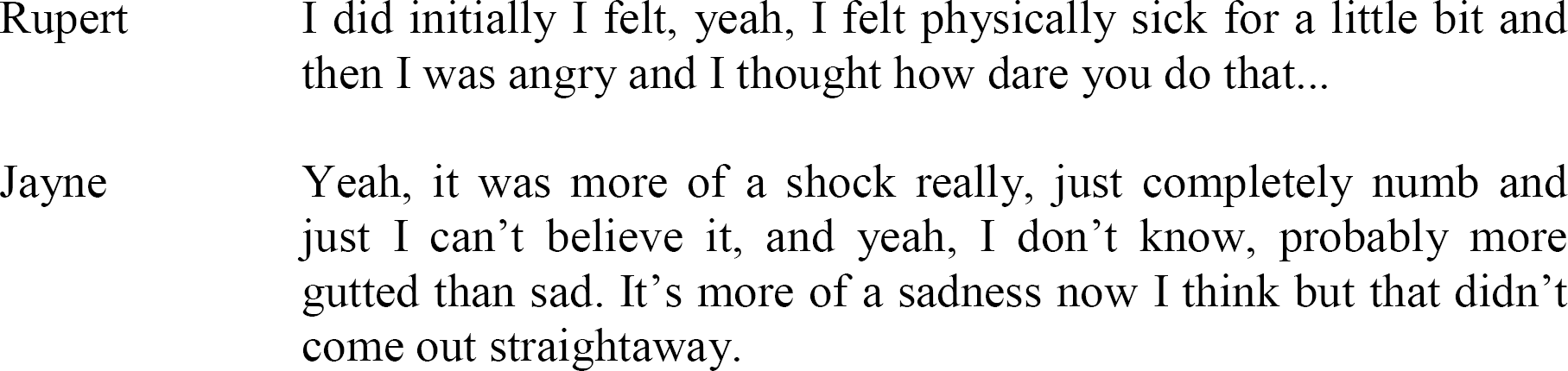
The descriptions of shock demonstrate the powerful emotional reaction invoked by the discovery of sexual infidelity and the emotional complexity of the experience is consistent with the characterization of jealousy as a blended emotion. Furthermore, thoughts of hatred and aggression directed towards the rival dominate all narratives:

Overall, male accounts of distress were more intense and their thoughts towards the rival more violent than those of females. However, only in female accounts was there evidence of direct verbal aggression/confrontation of rivals:
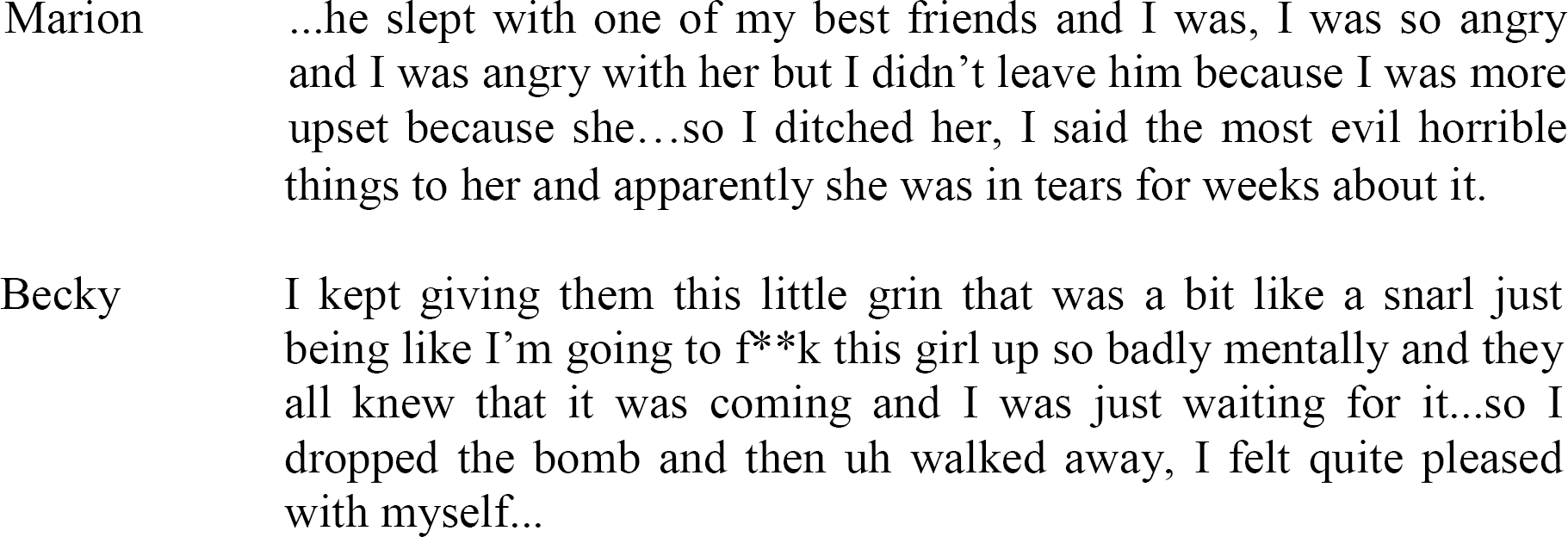
While male and female accounts describe as “devastating” the moment that sexual infidelity was discovered, a number of male narratives also indicated profound psychological disturbance:

For men, the dislike of their partner described during suspicious jealousy intensified following the fait accompli stage. In contrast, women did not directly express feelings of hatred towards their partner, but some described verbally and physically aggressive reactions towards them:

Christine's reaction is particularly noteworthy because it was in response to emotional rather than sexual infidelity and illustrates a recurrent theme in all women's accounts: the capacity for emotional infidelity to elicit the same emotional intensity as sexual infidelity, a theme discussed in more detail in “Sex-Specific Threat”.
As specific emotions can lead to particular behavioral expressions of jealousy or action tendencies (Guerrero, Trost, and Yoshimura, 2005), comparing reactive emotions should inform the debate over sex differences in jealousy and whether sexual and emotional infidelity give rise to different emotions (Sabini and Green, 2004). Certainly, studies of hypothetical infidelity report a greater propensity for anger and violence in men compared with sadness and social affiliation in women (Miller and Maner, 2008). Evolutionary accounts also point to the intensity of male sexual jealousy that leads to aggressive reactions (Daly et al., 1982; Leary, Twenge, and Quinlivan, 2006), although others report women experience greater jealousy than men (Becker, Sagarin, Guadagno, Millevoi, and Nicastle, 2004; Buunk, 1981; Shackelford, LeBlanc, and Drass, 2000).
In this study, the anxious insecurity expressed in response to suspicious jealousy was the same for both sexes, as was the behavioral response of surveillance and information gathering (described in “Threat Appraisal”). Interestingly, accounts of anger and aggression during fait accompli jealousy, previously proposed by evolutionary accounts to be a male-specific tendency (Daly et al., 1982), were also similarly expressed by both sexes. While men tended to have more violent thoughts, presumably reflecting a greater male propensity to undertake more dangerous forms of physical aggression (Archer, 2009), a number of women described how they reacted with verbal and/or physical aggression towards their partner, rival, or rival-associated objects—a form of behavior reported previously (Deweerth and Kalma, 1993; Paul, Foss, and Galloway, 1993). It has also been noted before that while men show greater physical aggression towards same-sex opponents, when it is directed towards opposite-sex partners the sex differences disappear or show a greater likelihood for women to react with physical aggression in response to relationship threat (Archer, 2004; Downey, Freitas, Michaelis, and Khouri, 1998). The goal here is to control a partner (consistent with discussions relevant to “Threat Appraisal”) rather than compete for resources as in same-sex conflict. That men in the current study did not employ physical aggression against their rivals may reflect a male tendency to direct their jealousy towards their partner rather than the rival. Alternatively, a lack of aggression towards rivals, or an admittance of such behavior, may be on account of the unacceptability of such behavior in this social group (Jewkes, 2002).
Contrary to Miller and Maner (2008), both sexes experienced sadness, with men exhibiting greater psychological distress, which accords with evidence that men produce higher ratings for “Homicidal/Suicidal” emotions in response to sexual infidelity than women (Shackelford et al., 2000). We interpret this greater distress with the male-only tendency to express dislike and hatred of their partner in both suspicious and fait accompli jealousy.
Female accounts of emotional infidelity were particularly complex and elicited the same emotional intensity as sexual infidelity, and were present during both suspicious and fait accompli jealousy. This trend, reported before (Pines and Friedman, 1998), may be due to women having more to be jealous about. For example, Buunk (1981) reports that the most negative aspects of female jealousy in open marriages concerned exclusion from the extramarital relationship, loss of exclusivity, and a feeling of inferiority compared with the rival. Similar concerns were expressed here and, again, were related to the emotional rather than sexual aspects of the infidelity. Indeed other researchers have concluded that it is differential responses to emotional infidelity that best discriminates sex differences in romantic jealousy (Becker et al., 2004; Penke and Asendorpf, 2008).
In summary, while there were many similarities in the emotions and behaviors described in male and female narratives of romantic jealousy, two particular between-sex differences emerged which are consistent with the sex-specific evolved mechanisms account. Firstly, while men and women were both distressed by sexual infidelity, women were uniquely distressed by emotional infidelity. Secondly, men generally showed more profound distress than women in response to sexual infidelity. These emotional episodes resulted in a male-specific action tendency to withdraw and terminate the relationship compared with a female-specific tendency of attempting to regain control of the relationship (discussed further in “Forgive and Forget”).
Sex-Specific Threat
While threat appraisal and social comparison were universal processes during cognitive aspects of jealousy, our analysis revealed between-sex differences in the nature of the threats that gave rise to the most intense feelings of jealousy. At a proximal level, the self-evaluation maintenance model hypothesizes that we are motivated to maintain and increase self-esteem and are particularly sensitive to threats to domains that are central to our self concept (Tesser, 1988). As discussed above (see “Threat Appraisal”) characteristics related to reproductive success in intra-sexual competition were differentially represented in men's and women's self concepts. Data extracts in support of the central domains that emerged for men (status and sexuality) and women (interpersonal emotional intimacy and physical attractiveness) are presented below.
Male Status
For men, sexual infidelity was viewed as potentially very damaging to their ranking with other men leading to loss of status and humiliation. The majority believed the sexual infidelity of their partner would be regarded by others as a personal “failure,” as illustrated below:

These extracts also illustrate a sense of bruised pride in that the infidelity was perceived, both by the individual concerned and the public at large, as a judgment on their ability to provide for their partner's needs. This feeling is accentuated by Seb's reaction during suspicious jealousy as he ruminated over the possibility that his wife was pursuing a relationship elsewhere:

Male Sexuality
The importance of sexuality to male self concepts was expressed in the majority of male narratives, evidenced by descriptions of being affected by intrusive imagery of their partners having sex with the perceived rival.

James was more explicit about the importance of sexuality for his self-esteem, describing how his partner's loss of interest in sex with him was “a comment on my virility” to which his behavioral response was that he “went out and slept with lots of women”.
Female Interpersonal Emotional Intimacy
The core theme in all female narratives was interpersonal emotional intimacy and accounts of suspicious and fait accompli jealousy were dominated by threats to emotional intimacy rather than sexual infidelity per se. Indeed, a partner's dishonesty was considered more threatening to the relationship than the behavior the dishonesty was designed to conceal. The following extracts illustrate how dishonesty was perceived to pose a threat to interpersonal intimacy:
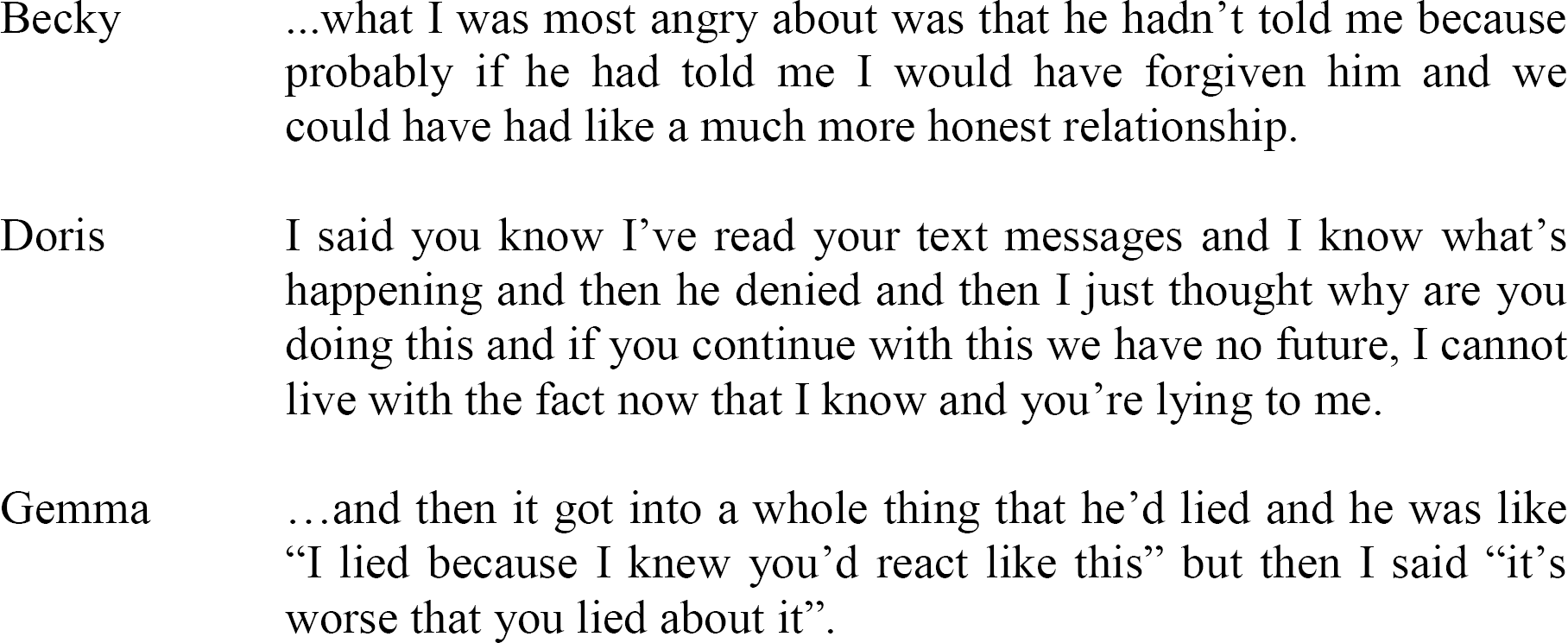
Conversely, men's narratives did not reveal any discomfort at cues to emotional infidelity even following direct interview questioning. When men felt concerned over their partner's contact with other men, it was on account of its significance as a cue to potential sexual infidelity rather than emotional infidelity per se. This is exemplified by the data extract in “Threat Appraisal” from Graham who did not like his partner to have male friends and Rupert's comment below in response to his partner's contact with her ex boyfriend:

An inability to control emotional exclusivity of their partner caused considerable jealousy for women, but not men, as exemplified in the extracts below:

Female Physical Attractiveness
A dominant theme in female narratives when confronted with relationship threat was the importance of physical attractiveness in appraising the viability of the rival during suspicious jealousy (as discussed in “Threat Appraisal”) or as an exercise of rival derogation during fait accompli jealousy. While a more physically attractive rival was associated with more intense feelings of jealousy, a less attractive rival was perceived positively, as illustrated in the following extracts:

Both Anisha and Marion were consoling themselves by making disparaging remarks about the perceived unattractiveness of their respective rivals during fait accompli jealousy while Gemma was describing her lack of concern over an unattractive friend of her boyfriend, despite her general feelings of insecurity over the relationship (see “Threat Appraisal”).
Cross and Madson (1997) argued that many sex differences in social behavior can be understood by male tendencies for independent and female tendencies for interdependent self concepts. Men with high self-esteem tend to individuate themselves by focusing on their perceived unique abilities while women's self-esteem seems to be more associated with maintaining social connections and a state of interdependence (Guimond, Chatard, Martinot, Crisp, and Redersdorff, 2006; Josephs, Markus, and Tafarodi, 1992). Related research shows that following participation in sport, elevated cortisol is related to the degree of competitiveness in men but social affiliation in women (Kivlighan, Granger, and Booth, 2005). Indeed, high self-esteem is evaluated more positively in men than women, as the less communal and more agentic qualities associated with high self-esteem are not typically perceived to be attractive in women (Zeigler-Hill and Myers, 2011). This fits well with the present findings, as female accounts emphasize the importance of interpersonal intimacy and concerns over emotional infidelity. It also accords with evolutionary perspectives that emphasize relationship importance for female inclusive fitness due to the requirement for male investment; this investment being threatened by emotional intimacy with a rival (Buss, 2000). Male independence and status ranking, on the other hand, originates from intra-sexual competition where signs of vulnerability leave men open to exploitation by other men in the dominance hierarchy (Archer, 1996; Puts, 2010; Symons, 1979).
The centrality of sexuality to men's self concepts is evident in studies of sexual desire (Baumeister, Catanese, and Vohs, 2001; Lippa, 2009). Men are more likely to engage in sexual infidelity, report more episodes of infidelity, and are more likely than women to rate sexual excitement as a justification for infidelity (Brand, Markey, Mills, and Hodges, 2007; Glass and Wright, 1992). Additionally, male conceptualizations of love are aligned with passionate rather than compassionate love and thus characterized by physical arousal and sexual attraction rather than close friendship (Fehr and Broughton, 2001).
Social-cognitive accounts cite socialization processes for the male propensity to seek sex as a validation of their masculinity (e.g. Gross, 1978), but the social learning of sex roles may additionally reflect differences in sexual motivation shaped by natural selection. Ultimate explanations for male sexuality and status seem unequivocal. In other species, male lifetime reproductive success varies widely and is positively associated with the number of mates, while for females there is little variance (Trivers, 1972). Accordingly, men may be more biologically motivated to promiscuity to maximize inclusive fitness with the importance of status ranking arising from intra-sexual competition for access to women (Archer, 2009; Buss and Schmitt, 1993). While women may pursue short-term mating strategies (Gangestad and Simpson, 2000; Lammers, et al., 2011; Pillsworth and Haselton, 2006), they do not seem so well adapted to casual sexual encounters and give more negative, and less positive, ratings than men for “one night stands” (Campbell, 2008).
In a recent meta-analysis of domain-specific self-esteem, women have lower self-esteem for physical attractiveness than men (Gentile et al., 2009). This concern with physical attractiveness, as perceived by others (reflected appraisal), resonates with the objectification of women (Fredrickson and Roberts, 1997). The cultural sexual objectification of female bodies is internalized (self-objectification) resulting in body monitoring and the centrality of these reflected appraisals to female self-esteem is a recurrent theme in the literature. For example, women who believed others found them attractive felt more confident and perceived themselves as more influential in social encounters (Nezlek, 1999), while spousal negative evaluations of married women's physical attractiveness is associated with low self-esteem and body dissatisfaction (Pole, Crowther, and Schell, 2004; Shackelford, 2001). In men, physical attractiveness encompasses sport competency and body power, and these are important for status with other men and, ultimately, intra-sexual competition. However, for women, only physical appearance is closely related to self-esteem (Avsec, 2006).
Ultimate explanations for the importance of physical attractiveness for female self-esteem can be traced to a male preference for female physical morphology and youthfulness that function as valid cues to female fertility and fecundity (Jokela, 2009; Rhodes, 2006; Singh, Dixson, Jessop, Morgan, and Dixson, 2010). As individuals are tuned to those traits in rivals that have the greatest impact on inclusive fitness, for example, physical attractiveness in women and status in men (Buunk and Dijkstra, 2004; Campbell and Wilbur, 2009), a cognitive bias toward physically attractive rivals in chronically jealous individuals (Maner, Miller, Rouby, and Gailliot, 2009) echoes Gemma's intense jealousy over other physically attractive women. On the other hand, while women are more likely to use “appearance enhancement” as a mate retention tactic, men are more likely to use “resource display” (Kaighobadi et al., 2010), which is consistent with the reciprocal tendency in male narratives for sensitivity to loss of status on account of the infidelity of their partners.
Thus, while the self-esteem literature offers viable proximal explanations for a universal mechanism of romantic jealousy in both sexes, domain-specific sex differences in self concepts seem to dictate what conditions are considered most threatening and cause the most intense jealousy (Goldenberg et al., 2003). That these differences are the same as those that would have promoted reproductive success in our ancestral past gives credence to the view that aspects of self-esteem serve as an index of self-perceived mate value (Barkow, 1989; Wright, 1994). These sexually-dimorphic self concepts are consistent with evolutionary explanations since they seem to have evolved on account of the sex-differentiated reproductive challenges that had the greatest impact on inclusive fitness in our ancestral past.
Forgive and Forget?
It is at the point when sexual infidelity becomes reality that descriptions of romantic jealousy differ markedly for men and women. Male accounts reflect anguish at the thought of their partner having sex with a rival, but all described the worst aspect of sexual infidelity in terms of lost trust and betrayal.

In all cases the loss of trust was catastrophic and, apart from John, sexual infidelity precipitated the end of the relationship. Mike, who perceived his partner as “unclean” following sexual infidelity, illustrates how reconciliation was attempted but failed due to the loss of trust.

In stark contrast to other men, John remained committed to his partner despite her repeated sexual infidelities. However, he does reflect on whether his continued commitment is on account of insecurity, low self-esteem, or idealization of relationships.

With this exception, the key behavioral tendency for men was to extricate themselves from the relationship, even while professing still to be in love with their partner.

Another male strategy was to punish their partners (e.g., spreading rumors) and to express extremely negative emotions towards them (e.g., hatred, loathing). Even John, who remained committed to his partner, describes his behavior towards her thus:

In women's accounts, while also reflecting a sense of betrayal on account of sexual infidelity, the worst aspect was not the sexual element but the damage to emotional intimacy, a recurrent theme exemplified by the following extracts:

Even Marion, who had turned a blind eye to the fact that her husband “wasn't getting as much sex as he wanted so he went elsewhere”, was devastated when she learned the relationship was “serious”—that is, emotional not just sexual. Doris actually expressed a sense of relief on discovering her partner's sexual infidelity since she was then able to explain the emotional gulf between them, a loss of emotional closeness that had perplexed her:

While the key strategy for men was to create distance between themselves and their partner, women remained ardently committed to the relationship:

In order to facilitate continued commitment to the relationship in the face of betrayal and forgive their partner, women seem to engage in a kind of dissonance-reduction exercise (Festinger, 1954) by downplaying the extent of the rival relationship and finding reasons for their partner's infidelity, including how their own behavior might have contributed to the infidelity:

While both sexes derogated their rivals, which is a recognized mate retention strategy (Buss, 1988), a prevailing strategy in women, but not in men, was to rationalize the infidelity by blaming the rival for their partner's transgression. This behavior seems consistent with the direct aggression aimed at rivals in women's narratives described in “Emotional Episodes”:

From a proximal viewpoint, given the importance of interdependence for female self-esteem (Reid, 2004), continued commitment to the relationship is not unexpected. It also accords with the evolutionary perspective on account of an ongoing requirement for male resources and protection since sexual infidelity per se offers no fitness costs to women (Buss et al., 1992). Blaming the rival for their partner's transgression may also be understood within an evolutionary framework. As the more limiting and valuable resource in human mating, women will be the more discriminating sex and will thus do the choosing in sexual partners (Trivers, 1972). In support of this conjecture, studies have emphasized the salience of women as the object of jealousy for both sexes, the rival for women and the partner for men (Paul et al., 1993; Schutzwohl, 2008). It has also been reported that where there are more men than women in the population, particularly in cities where women have more opportunity to meet and interact with other men, male-on-female intimate partner aggression increases (D'Alessio and Stolzenberg, 2010).
A proximal account of men's reaction to sexual infidelity has less explanatory power. Their independent self concept, and a disinclination to reveal intimacy to other men who share common “rules” of independent behavior, implies that romantic relationships provide them with relatively unique opportunities for emotional intimacy (Cross and Madson, 1997). This may help in understanding the deep sense of psychological wounding and distress men described in response to the sexual infidelity of their partners. However, this should also predict male distress in response to emotional infidelity, and continued commitment to the relationship on account of its uniqueness and value; outcomes at odds with the current findings.
A fuller understanding of men's romantic jealousy therefore requires integration with ultimate causes. Evolutionary accounts cite paternity uncertainty and the potential threat of cuckoldry as the ultimate cause for the male tendency to terminate a relationship following sexual infidelity (Daly et al., 1982). As in the current study, Shackelford, Buss, and Bennett (2002) found men had more difficulty in forgiving sexual infidelity and were more likely to end the relationship following it. While women are generally more forgiving than men (Miller, Worthington, and McDaniel, 2008), men's greater suspiciousness over future sexual infidelities may reflect an evolved cognitive bias designed to err on the side of caution given the greater potential costs of sexual infidelity to inclusive fitness for men compared with women. Indeed, it has been noted that men tend to overestimate the likelihood of future sexual infidelity (Goetz and Causey, 2009).
Notwithstanding ultimate causes of behavior, John's continued commitment to his relationship illustrates the importance of proximal mediators. Even the disturbing impact of his partner's sexual infidelity, which resulted in him investing in another man's offspring, was likely perceived by John as less damaging than the loss of a relationship crucial for his already low self-esteem. This fits with the findings, discussed in “Sex-Specific Threat”, that men low in self-esteem do not individuate themselves as much and maintain a self concept that is more interdependent than independent. From a functional viewpoint, we infer that on account of his low self-perceived mate value and probable lack of success in the mating market, John quite likely regarded his best or only reproductive strategy was to stay with his long-term partner (Penke and Denissen, 2008; Phillips, 2010).
In summary, clear sex differences in romantic jealousy were reported in reaction to relationship threat. While men and women were both distressed by sexual infidelity, men were devastated by the loss of trust caused by their partner's sexual infidelity and this precipitated the end of the relationship. In contrast, women were uniquely distressed over the emotional aspects of infidelity and remained committed to the relationship. This latter observation supports previous research that suggests between-sex differences in romantic jealousy are best discriminated by differences in distress at emotional infidelity. We conclude that the findings reported in the current study are broadly consistent with the predictions of an evolved jealousy mechanism.
Conclusions
The diverse experiences of romantic jealousy provided by participants in the current study simultaneously highlight the similarities and differences between men and women. Both sexes seem to show a remarkable similarity in the emotions and cognitions they expressed during the course of their experience with jealousy. These included the process of assessing the potential of relationship threat and the importance of self concept, social comparison, and mate value disparity in the appraisal of the viability of potential rivals. These accounts can be interpreted as representing common proximal processes underlying the experience of suspicious romantic jealousy. However, in the fait accompli phase, while both sexes were evidently distressed by sexual infidelity, men seemed more disturbed than women by their partner's sexual infidelity and were more likely to terminate the relationship. In contrast, women were uniquely distressed by the loss of emotional exclusivity (emotional infidelity), yet they sought to maintain the relationship even after sexual infidelity had occurred. These differences are not fully explained by social-cognitive accounts of romantic jealousy, but may be understood in relation to the ultimate causes predicted by a sex-specific evolved jealousy mechanism.
Taken together with the known associations between adult romantic jealousy, childhood sibling rivalry and attachment orientation (Buunk, 1997; Rauer and Volling, 2007; Sharpsteen and Kirkpatrick, 1997), the integration of evolutionary and social-cognitive accounts seems strongly indicated. Indeed, as the evolved jealousy model predicts relative rather than absolute between-sex differences, we propose that the between-sex differences in romantic jealousy originally proposed by Buss et al. (1992), and supported in the current study, may be conceptualized as arising from an interplay between two evolutionarily ancient systems, the attachment and the sexual reproductive systems.
One potential direction for studying the nature of between-sex differences—and, indeed, between-sex similarities—in romantic jealousy therefore might be to adopt a psychobiological approach that would attempt to tease apart the underlying biological mechanisms that were shaped by natural selection and mediate interpersonal relationships. For example, examining individual differences in the neuroendocrine system with its known association with reproductive and attachment-related behavior (e.g., testosterone, oxytocin) may provide clues to the intrinsic nature of romantic jealousy in both sexes (Brunetti et al., 2008; Carter, 1998; Insel, 1997; Johnson and Breedlove, 2010). As a suggested proxy mechanism, self-esteem and mate-value manipulations may also provide a fruitful paradigm given the difficulties of eliciting strong emotions in laboratory settings (DeSteno et al., 2006; Goldenberg et al., 2003).
In conclusion, we found evidence for between-sex differences in romantic jealousy that are consistent with the specific evolutionary account of jealousy proposed by Buss and his colleagues (1992). However, given that any behavioral phenotype is a result of epigenetic effects, a comprehensive explanation of romantic jealousy will be best achieved by an integration of proximate and ultimate causes of behavior. A consideration of the underlying neurobiological mechanisms in men and women may be a fruitful direction for future research in order to outline the intrinsic nature of between-sex differences in romantic jealousy.
We believe this research makes a unique contribution to the debate on the nature of between-sex differences in romantic jealousy. This is not only because the qualitative methodology captured the multi-dimensional and nuanced complexity of sex differences, but also because the findings are “free” of experimental artifacts and are grounded in real world behavior. The focus on the particular to inform the universal also represents a novel approach to test evolutionary theory. Our intention is to provide an ecologically-valid foundation for the formulation of testable hypotheses in future research.
Limitations
An obvious limitation of the current study is the reliance on a sample of self-selected adults who felt comfortable and confident enough to disclose their experiences in an extended interview. As with all forms of self-report, it is assumed that the way people articulate their experience broadly reflects their thoughts, feelings and emotions. While this may be less of a concern when participants complete a questionnaire comprising closed questions, it may be of greater concern in a qualitative enquiry where participants might struggle to express their thoughts, feelings and emotions. Furthermore, there could be various reasons why they could choose to conceal information in a face-to-face encounter that they might reveal within the anonymity of a questionnaire study—although the problem of social desirability is also relevant there. Nevertheless, we feel that the openness with which participants spoke about their experiences of romantic jealousy should provide some reassurance on this point.
Another issue relating to the sample concerns how “representative” it is of the population. Here we would argue that it is the representativeness of the participants' experiences that is of paramount importance because it is this that will influence the degree to which any insights can be translated back to the existing literature on romantic jealousy. In this connection we note that all our participants were required to have experienced romantic jealousy at some point in their life. Certainly, while a lack of relevant experience poses no participation concerns in affective forecasting studies, it is clearly incompatible with the purposeful sampling utilized here. Indeed, the one participant without experience of romantic jealousy was excluded from our analysis and this is consistent with the aims of IPA which strives to develop a detailed understanding of a particular phenomenon of interest (Smith, 2003). The scope for transferring or generalizing our findings is therefore influenced by how representative these experiences of romantic jealousy are and the degree to which these experiences permit an understanding within current conceptualizations of romantic jealousy. For the latter, we believe that by evaluating and accommodating the interpretations we have drawn in relation to the conceptual claims in the literature, our findings should be of theoretical interest and have implications beyond the particular sample studied here. The issue concerning the representativeness of the experiences of romantic jealousy described by our participants must await further investigations and is one that should be exploited by future studies.
We note that the jealousy-inducing situations described occurred at different time junctures, both in the participant's life and prior to the conduct of the interviews. It would certainly be worth exploring whether accounts expressed during a “hot” current experience of romantic jealousy differ from those that follow a “cool” longer term reflection on that experience. Thus, while the currency of IPA studies concerns the way in which people make sense of their experiences, the factors that are central to this sense-making process might, or might not be, comparable in both kinds of episode. Critical contexts for this “meaning making” might include the relative uniqueness of the experience and the particular junctures in the participant's life when incidents of romantic jealousy were experienced. When seeking to generalize our findings it is not the common or representative case that should be sought, but rather those cases that represent the broader, even if atypical, variations in that experience—that is, what kind of sampling would be required to push our understanding of the phenomena further? From this perspective, the study of the cultural diversity (or consistency) of romantic jealousy reactions (e.g., polygamous cultures, open marriages, short-term versus long-term relationships) would further help to distinguish romantic jealousy reactions that are underpinned by socially shared value systems from those that are of a more evolutionary nature. Are romantic jealously reactions still observed? If so, how does the “shared world of meaning” that culture represents moderate that experience? Are there between-sex differences that challenge, or are in accord with, current theorizing?
Finally, as researchers we have endeavored to bracket our own preconceptions of romantic jealousy and remain theoretically neutral in order to approach the data from the ground up. Realistically, however, our own life experiences (as a female doctoral candidate and a male academic, both middle-aged) and implicit conceptions of the world will have dynamically interacted with the data during the analytic process and we acknowledge that alternative interpretations of the data may be possible. We remain open to alternative interpretations that help us, and the scientific community, to transcend these personal limitations.