




Abstract
In 2023 and 2024, we engaged in a collaborative dance project in Cambois, England, a coastal village with a contested history. The research involved movement workshops with a community group responding to creative instructions called ‘scores’ that conceived and improvised novel relationships with the coast via seaweed. Informed by geographical thinking on dark ecologies and multispecies relations, we explored how spending time with, and attending to, seaweeds facilitated fresh perspectives on the Northumberland seascape and its contemporary and future challenges. The Secret Dance of the Seaweed envisioned how humanity might live better with, and care for, multispecies who are active in co-constituting subjectivities and worlds. This paper reflects on the conceptualisations emerging from three co-produced movement scores – draping, attaching, and shapes – that included embodied and sensuous improvisations, knowledges, memories, and imaginaries of seaweeds and the seascape. It speculates on how movement scores contribute to cultural geographers’ interests in creative writing and somatic prompts for knowledge production, as well as to collaborations between academia, artists, and communities for ecological research praxis and the critical creative possibilities of scores as multispecies method that braid socio-environmental thought and mutual entanglement.
Introduction
The Secret Dance of the Seaweed is a collaborative research project examining past and future imaginaries of human relationships with the seascape, through the lens of seaweed. Seaweeds have long provided multiple benefits to coastlines and their communities. 1 The Secret Dance of the Seaweed project addressed a disconnect between an extractive, resource-intensification approach to seaweed production and an expressive, sensory, post-humanistic seascape, through dance workshops. It brought together cultural geographer and dancer Veal, dance artist and local resident Huss, and an established group of six community dancers called the Tute Dance Group, between August 2023 and September 2024 in Cambois, North Blyth, England. One workshop took place in the Cambois Miners Institute, and one was conducted in the North Blyth riverbed. Workshops incorporated individual movement activities, improvisations, and show-and-tell. We, as authors, provided narrative, poetic, auditory, photographic, and embodied instructions, or ‘scores’, to support participants’ somatic explorations with the perceived slimy and smelly, unseen and uncanny world of seaweeds. After each workshop, we compiled ethnographic notes, and the community dancers shared reflections via email, which were then collated in an online document.
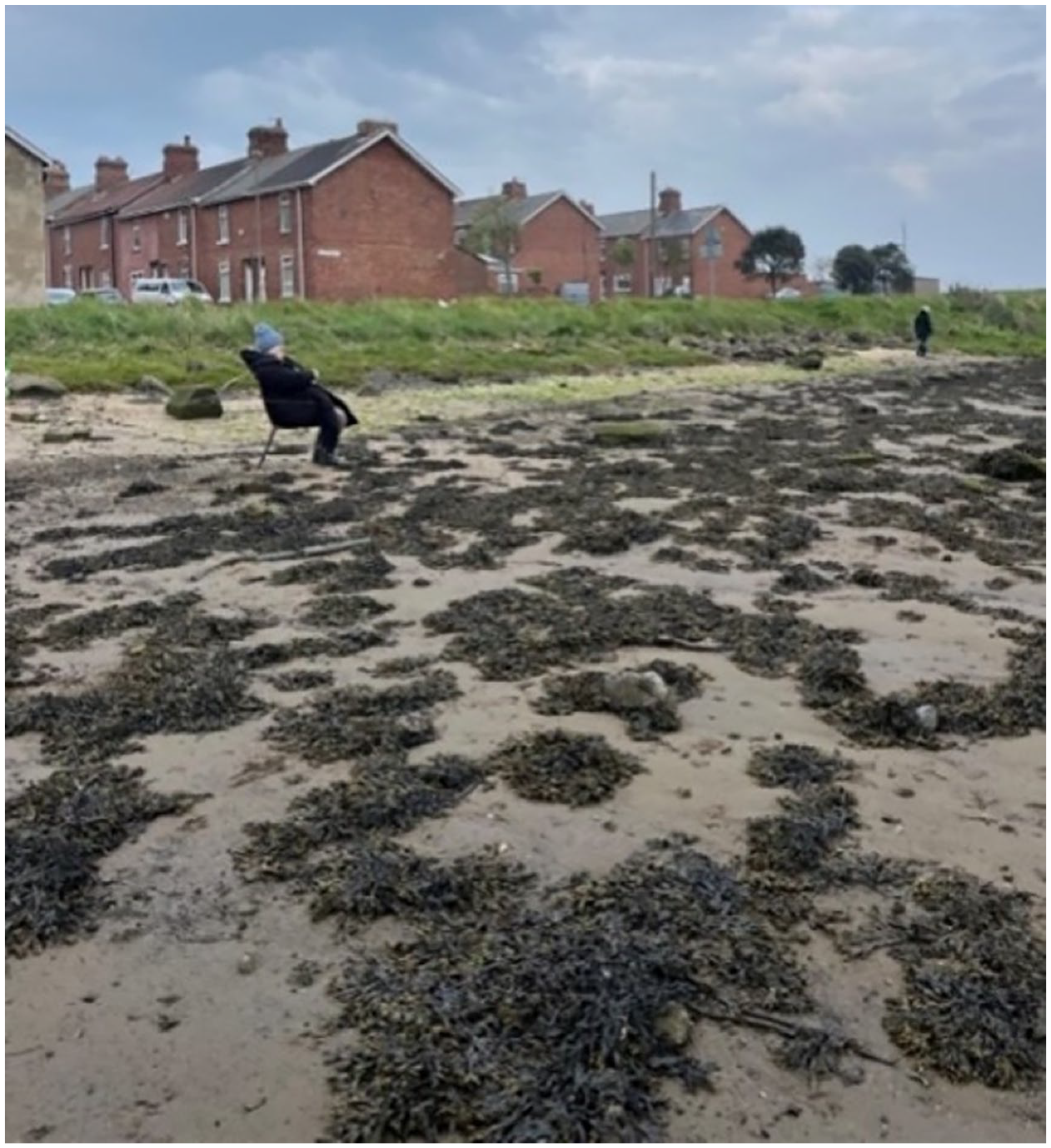
Cambois has an important but contested relationship with its coastline. A decline in fishing and shipbuilding, closures of smelters, and the offshoring of coal extraction in the 1960s have contributed to various socio-economic challenges for local communities. The Future of Coastal Communities (2022), 2 commissioned by the UK Government, identified a strong correlation between coastal towns and multiple deprivation (Figures 1 and 2). England’s Northeast coast exhibits many characteristics identified within this report, but the seascape is also ecologically rich in diverse natural and cultural heritage. UK artists are playing a vital role in interpreting, reimagining, and communicating society’s relationship with its rich cultural-ecological seascape assets and using their artworks to generate dialogue on coastal challenges, including climate change, coastal erosion, and the preservation of cultural identities. 3
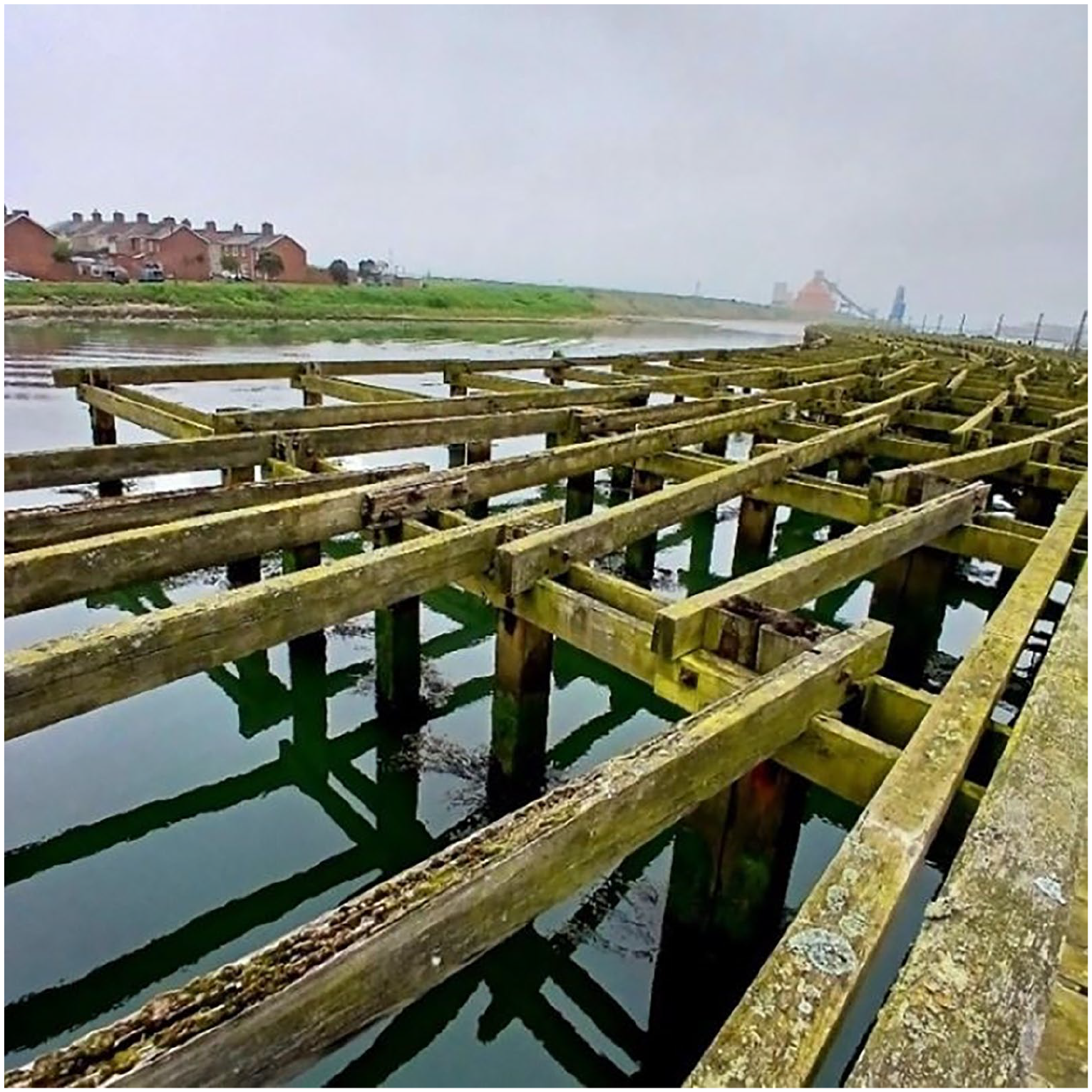
North Blyth seascape.
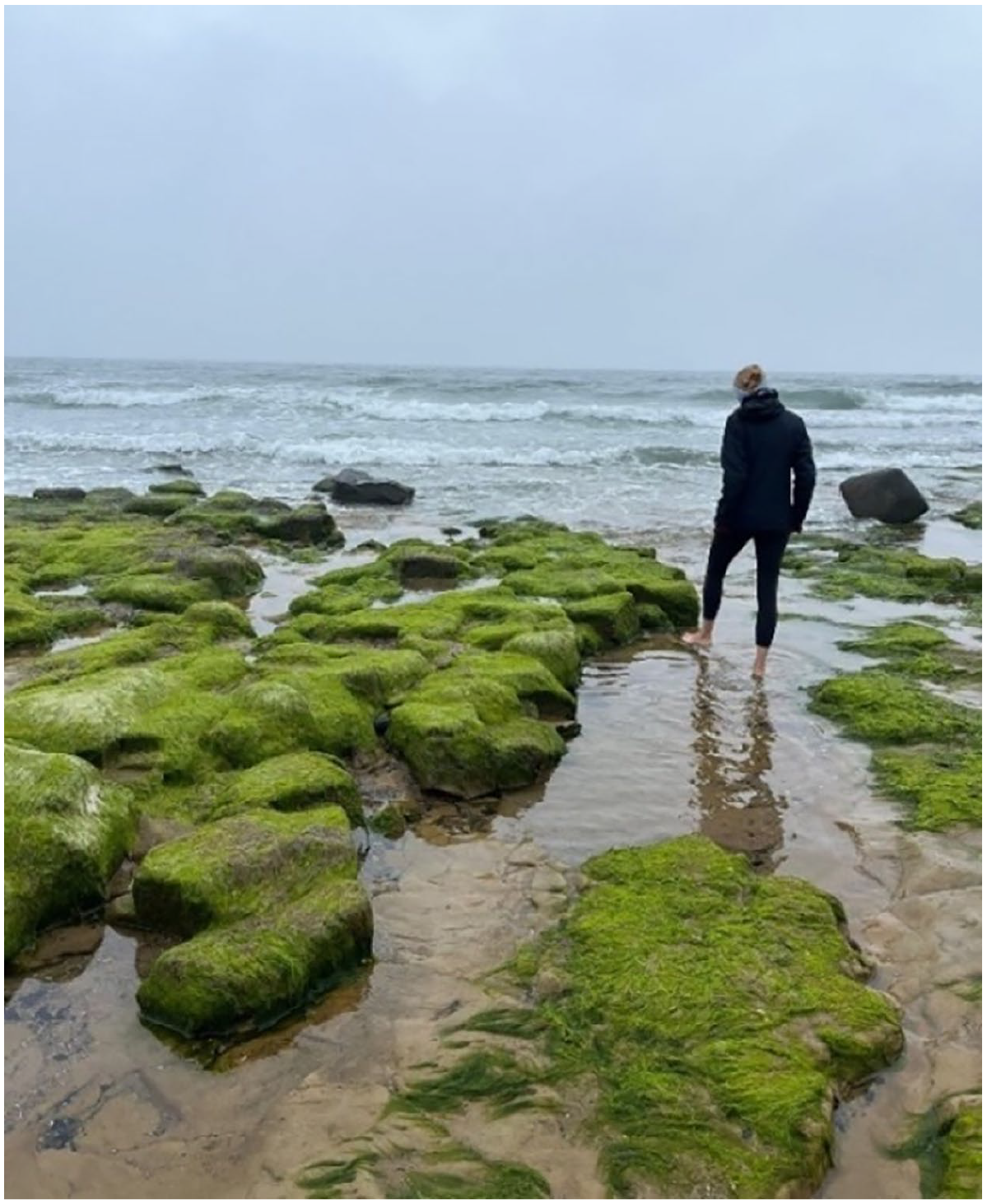
Attuning to seaweeds, Cambois Beach.
Artistic engagement with place and community resonates with longstanding research agendas in cultural geography, where collaborations between artists and geographers have provided a valuable approach to explore and communicate complex societal and environmental challenges. 4 As cultural geographers have taken up multispecies thinking, 5 many have deepened their partnerships with artists to develop new ways of interpreting the entangled realities of multispecies worlds, particularly the interdependence of human and nonhuman health. 6 Multispecies methods are gaining traction as research approaches that value and recognise other species as active participants in shared ecological, social, and political worlds. By amplifying nonhuman voices, these approaches challenge anthropocentric ways of knowing and open vital insights into more-than-human realities. 7 The Secret Dance of the Seaweed exemplifies this turn toward ecological entanglement, inviting multispecies narratives via movement scores and sensorial attentiveness and interweaving community dancers’ seaweed stories with broader discussions on rights for nature.
The project also aligns with a broader disciplinary shift toward creative and embodied approaches to research communication. Driven by dissatisfaction with conventional scientific writing and underpinned by performance and posthumanist thinking, cultural geographers have embraced diverse literary forms – autoethnography, speculative fiction, poetry, and scriptwriting – as integral to both research and dissemination. 8 Proponents like Eric Magrane 9 note that creative writing can deepen connections between people, landscapes, and more-than-human worlds. Experimental approaches have not been without critique, however, with calls for analytical rigor and cautions against self-indulgence. 10 Merriman 11 and Veal 12 have also identified an over-reliance on orthographic forms of creative writing that sideline non-verbal communication and have sought to address this gap through exploring performance and notation for improvising encounters with place. Bridging the writing-practice divide, The Secret Dance of the Seaweed actively advances geographers’ creative writing agenda by encouraging immersion in, and sensuous experiences and expressions with, the seascape through movement scores (Figure 3). It did so mindful of the hard-earned trust that artist Huss had built with the Cambois community.
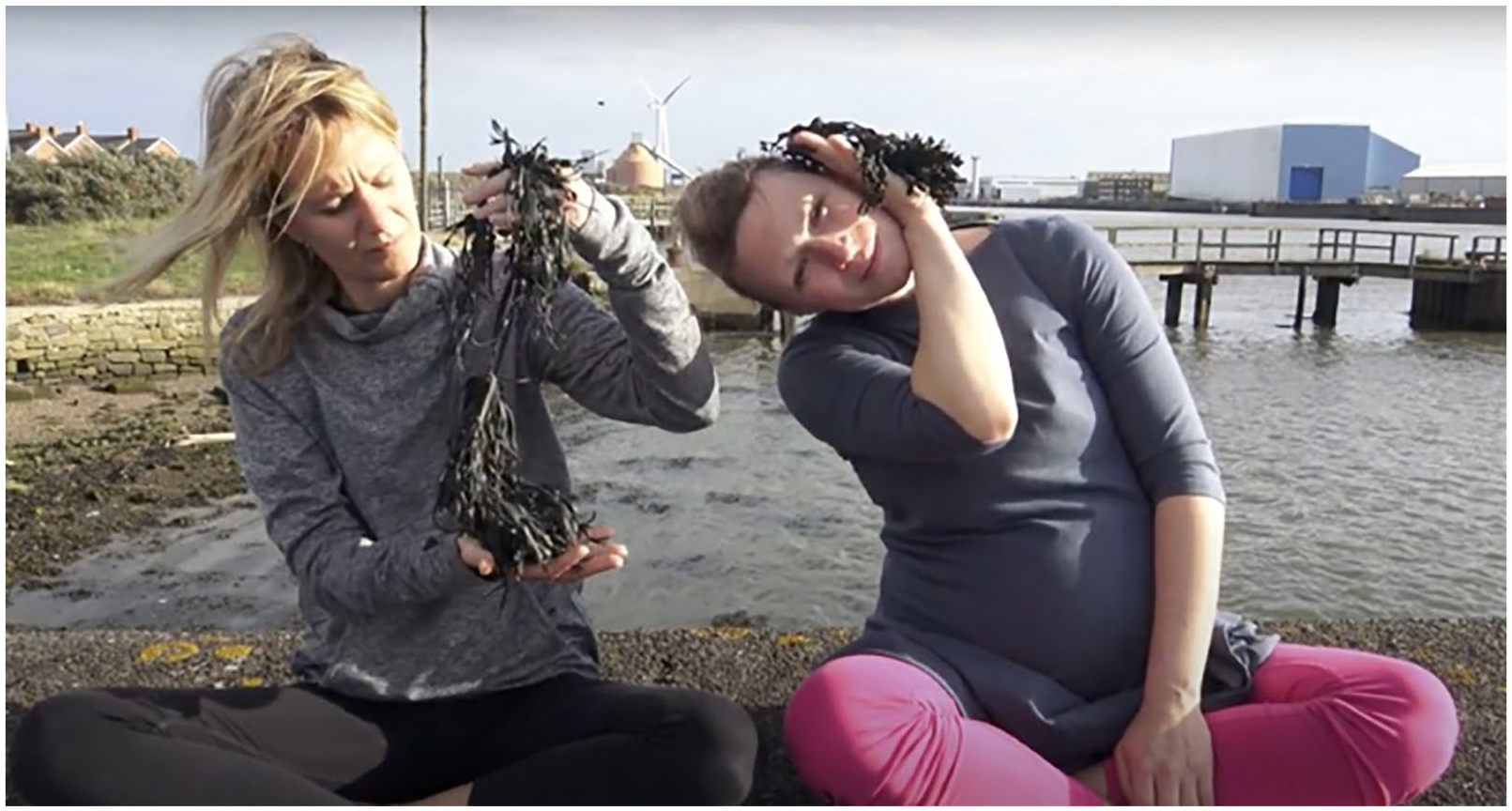
Exploring seaweed, North Blyth Pier.
Scores – Movement – Performance
In one of our many in-person research conversations, recorded online in the authors’ shared document for reflection and analysis, Veal asked Huss to describe a score. ‘A good score’, Huss replied, ‘is one that offers freedom to experiment but provides clear frameworks or “rules” for working. It allows enough space to authentically improvise new ideas but without leading to a sense of being overwhelmed. A bad score is overly prescriptive’. Within the performing arts, scores are adopted to drive the creative process. Unlike a music score, critiqued for imposing the composer’s ‘will’, dance scores act as guidelines. 13 They communicate in written, verbal, diagrammatical, or digitised form the information that provides the starting point from which action emerges. Scores are structured reference points and often have a pre-determined spatio-temporal context. Equally useful as archival records, scores capture the creative process. Whether enacted or documented, a score can open a multitude of yet-unrealised expressions and ‘happenings’. In its adoption and continued iteration, a score can rub against formulaic and hierarchical structures of making and place renewed emphasis on relational experimentation, site-specificity, and embodiment. 14
Below, we trace experimental responses to three movement scores about seaweeds during two workshops held in Autumn 2023. Three photographs were taken by Huss on the North Blyth riverbank and emerged as responses to site-led encounters between us, as authors, and the tidal flats, rocky shores, beach, and quay. They attend to the qualities, textures, mobilities and imaginaries of seaweed in and out of water. Draping, attaching, and shapes were decided upon for scores and informed the ‘final’ co-produced score (Figure 10) which drew on findings from the workshops, analysis, and participant reflections.
To support the photographic triptych, Veal provided a verbal summary of the project’s aim and the concept of the uncanny, as introduced by Timothy Morton 15 in his writing on dark ecology. Here, Morton extends a concept of the interconnectedness of all living and non-living things to offer a fresh perspective on environmental thinking, where the horror and intimacy of ecology are both articulated. 16 Six community dancers, along with both of us, then responded inter-/intra-corporeally, drawing upon perceptions, fears, and imaginaries of human-seaweed encounters and multisensory memories of connections to the seascape. Underpinning our creative approach was a questioning of how to inspire participants to engage in new encounters and conceptualisations of seaweed that moved toward conviviality – Donna Haraway’s term 17 to describe mutual care and respectful cohabitation.
Score 1: Draping
Standing barefoot in the Miners Institute, encircling a pint glass containing water brimming with green and brown seaweeds, the dance group began by responding to draping. We posed the question, how are seaweeds positioned by aqueous forces – suspended on the water surface or cascading over rocks, pilings, or discarded objects? At first, the dance group moved individually, restricting their movement explorations and expansion in the space. With arms, wrists, hands, and head falling heavily earthward, we and the dancers experimented with small circular shapes. Draping, as creative invitation, prompted careful attention to the seaweed’s liveliness – how it swayed and swirled under elemental forces or ebbs and flows, weightless and ethereal in water. Visceral experiences nudged our consideration of seaweed entanglements, reflecting the strands that twisted and twined, embedding themselves into the seascape’s natural and human-made geomorphology. As confidence grew, our stationary movements became more expansive. We stopped at moments to mentally note, experience viscerally, and reflect on our conceptual wanderings and interpretations of the lived world of seaweeds, before journeying onwards to the next pose. We edged together, conscious of other dancers’ draping positions and pulsations. Pose, sense, hold, attune, reflect, and repeat. Finally, we converged, draping next to a spontaneously encountered partner.
Draping movements led the group to reflect upon seaweed’s situatedness within the seascape and its relationship to coastal processes. One participant described seaweed as a space of dwelling and as ecologically rich, supplying a plethora of uses (food, shelter). Another dancer speculated on its role for climate resilience. Seaweeds ‘slow down coastal erosion by acting as a buffer against waves, produce 70% of oxygen, and are faster growing than trees’. Veal supported this discussion with knowledge about seaweed’s role as blue carbon capture and for marine biodiversity gain. We noticed how the quality of draping sparked childhood memories of seaweed encounters in situ: enlacing toes, dangling from bikinis, as we walked with loved ones and observed coal on the beach and seaweed walls with marine insects going about their daily lives. One participant recounted how she wanted ‘to get back to that memory’. We speculated on how a score can conjure powerful, visceral memories of place – the sound of waves and the feeling of playfully whipping siblings with seaweed lances. Sharing vernacular histories and cultural imaginaries informed our thinking on multispecies methods for cultural geographers and the direction of our future workshops engaging the dance group with the coast (Figures 4 and 5).
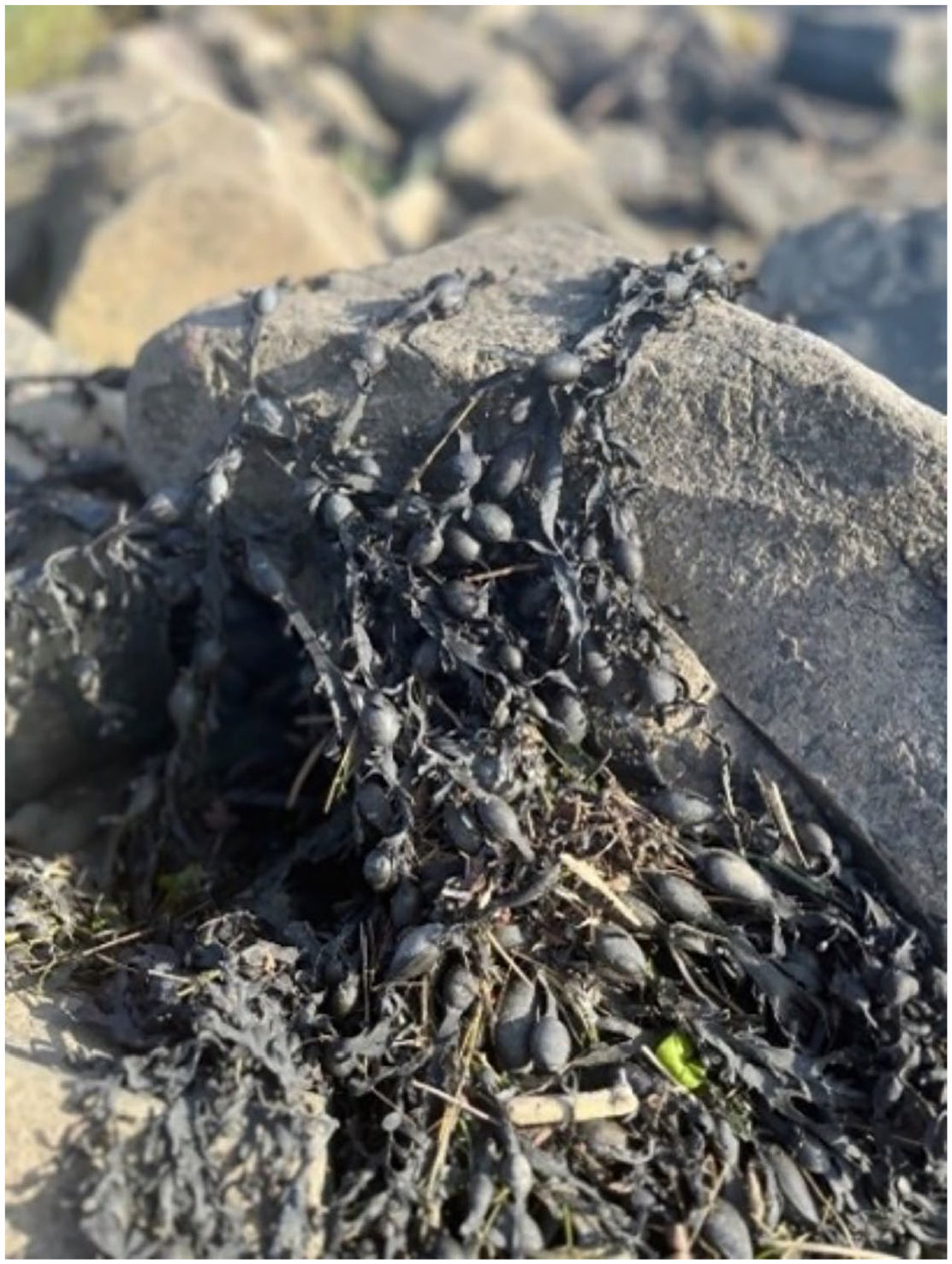
Score 1 draping.
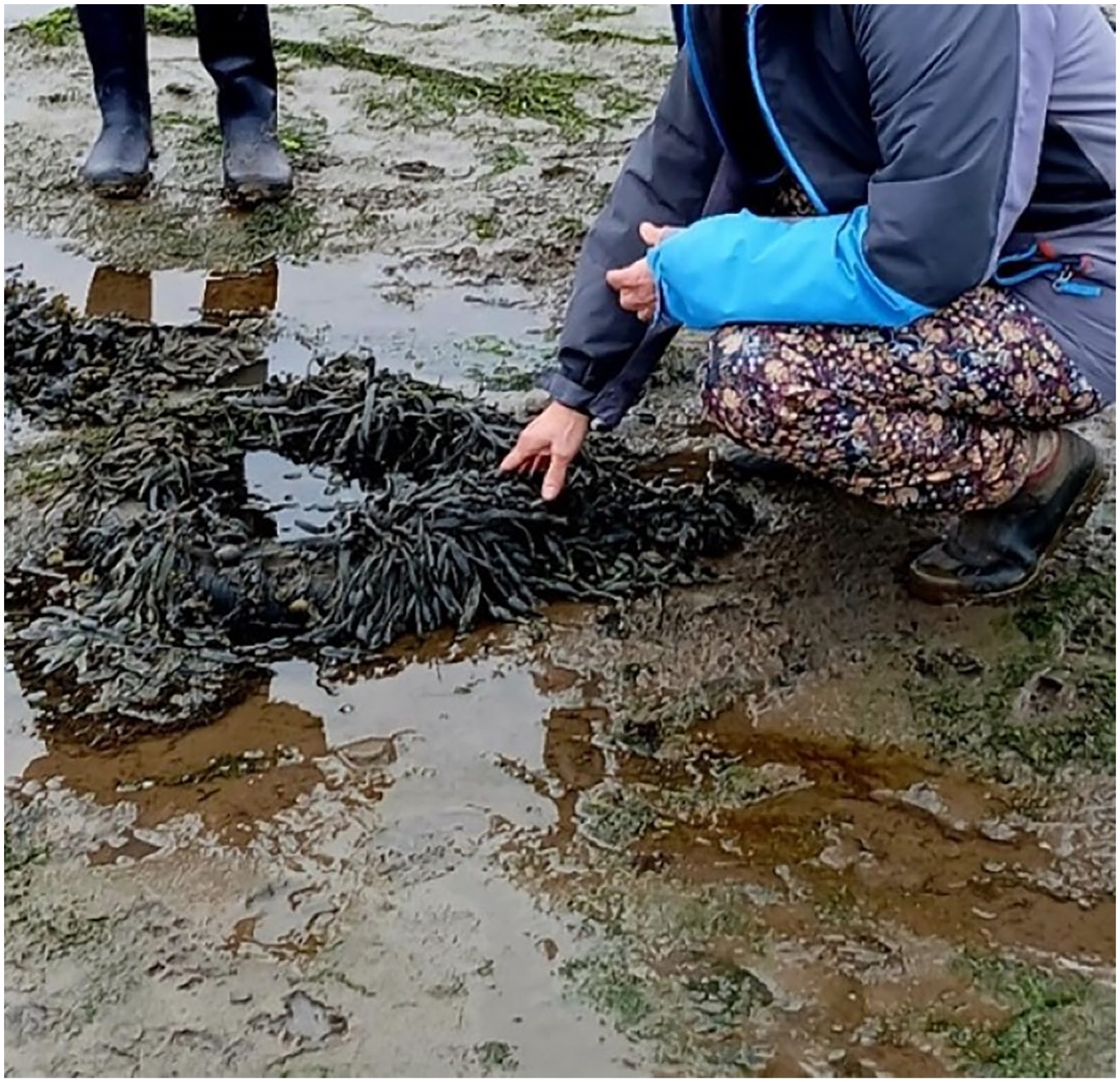
Draping and discarded object.
Score 2: Attaching
Attending to the lively qualities and mobilities of seaweed in water and on surfaces ignited interest in seaweed’s agency to attach through suckers onto marine substrates or bury roots into the seabed. To follow Ingold, 18 the seascape is ‘not a world of objects but a world in formation in which materials flow, mix and mutate’. Seaweeds are engaged in dynamic processes that co-constitute human life, whether via carbon storage, coastal buffering, or improving marine health. In the next iteration of movement, we brought our bodies into closer contact, grasping a foot, interlocking elbows, counter-balancing back-to-back. Finding our own rhythms, we improvised new spatial configurations. Score 2 also expanded the temporal parameters of improvisation to reflect our growing confidence in developing movement sequences. We improvised in duets, taking turns to initiate and respond to spontaneous, unrecorded cues that probed how conspicuously, but also invisibly, seaweeds gripped, wrapped, coiled, and stuck.
As the Tute Dance Group envisaged how seaweeds nestled into the earth-literal-seabed substrate, we, as authors, identified several themes pertaining to past-present-future and metaphorically related to seaweed’s malleable characteristics, particularly its quiet resilience. Waves crash, tides shift, yet seaweeds weather the storm. A second interconnected theme was rootedness to site (Figures 6 and 7). Holding seaweed, you notice its delicateness and its strength. We became captivated by one dancer whose feet rooted into the floorboards, while her upper body rippled forcefully, resolute and vulnerable. Later in the workshop, this participant described how seaweed was a useful visualisation tool for anchoring her body to life’s turbulences. ‘Life is not always easy’, she explained. ‘We need things to root ourselves down with, to hold on with’. The futures envisioned by the group reveal the shared experiences of humans/non-humans, how visceral experiences of holding on might be translated to human life to embrace the turmoil of social-ecological anxieties, and how seaweeds rooting in place reaffirmed participants’ own sense of place through igniting spatial memories, vernacular histories, and aspirations for Cambois’ future. Dancers’ perspectives conveyed a negotiated vision for a multispecies seascape that is both uncertain and potentially hopeful.
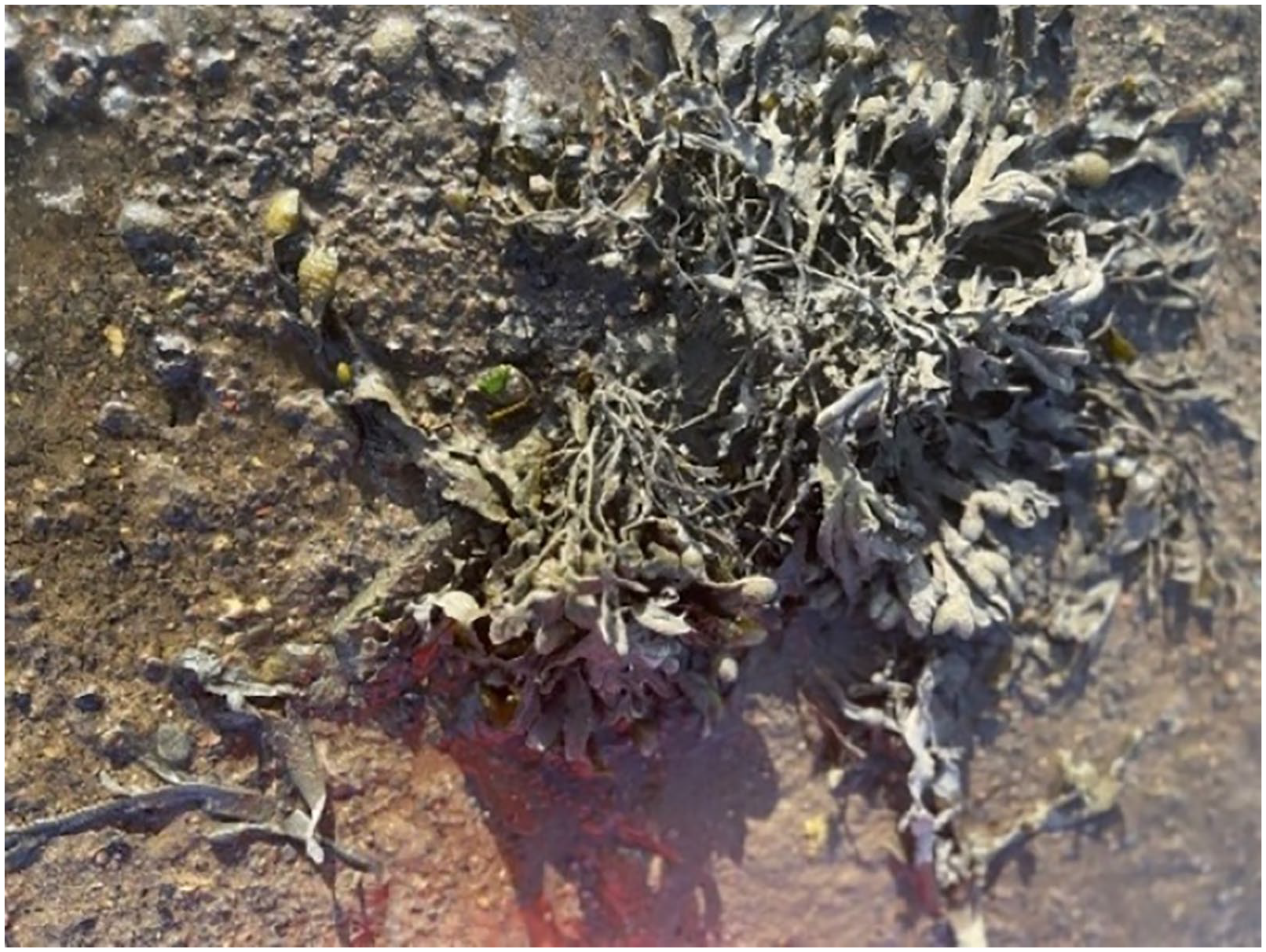
Score 2 attaching.
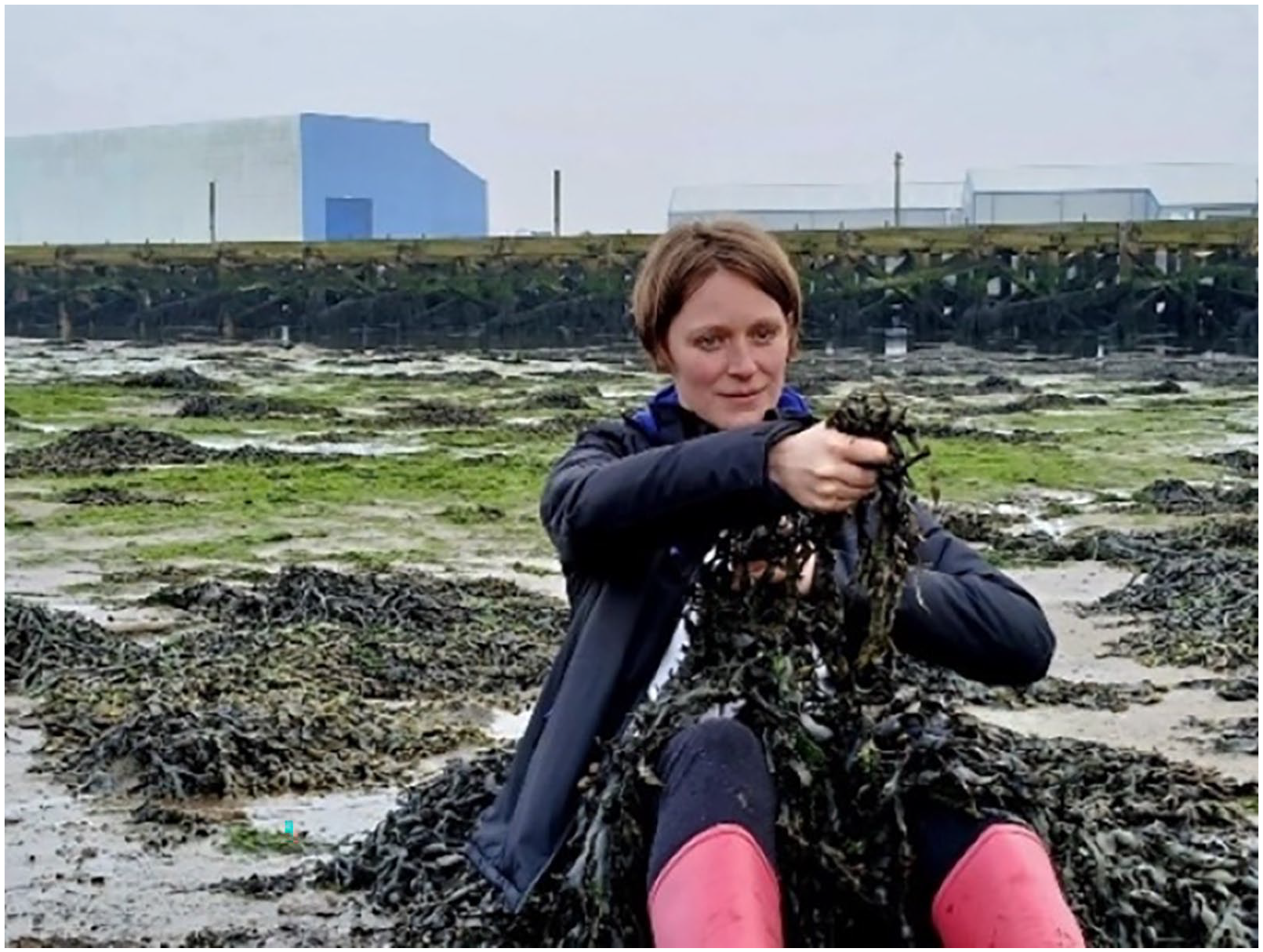
Site-specific encounters attaching.
Score 3: Shapes
With confidence high, the final score – shapes – invited participants to closely observe seaweeds: its form, patterns, contours, materiality, and structure. Once strange and uncanny, seaweed became knowable and less grotesque. With a license to improvise, our eight bodies moulded into one, forging entangled shapes – ribbon-like fronds of arms and legs, spines curled forward and back, and swaying movements ethereally emulating seaweed suspended on liquid tides. Shapes were forged across levels and in soft contact. Moments of stillness subsided as dancers transitioned and transformed their movements, seeking new embodied expressions and pulling the group into new modes of experimentation. As we made friends with seaweed, our inter-personal connections grew, trusting one another to sustain weight. Movement explorations were shared, as were the stories accompanying them.
Observation-cum-embodiment activities in the Miners Institute and in the North Blyth riverbed helped bridge participants’ understanding of seaweeds as living and fragile. Similarities between human and more-than-human were made, with one participant offering a verbal comparison between her fingers and seaweed strands. Fingers and hands were dominant motifs during improvisations with Score 3, as we reflected on how seaweeds feel to touch and their tentacle-like movements. In the riverbed, one dancer applied anatomical language to describe its structure: ‘veins and vessels’ that reminded her of ‘blood lines’ and the heartbeats of humans and Mother Earth (Figures 8 and 9). Another participant described her anxieties of treading on seaweeds: ‘I knew it was a living thing. I felt really bad stepping on it and making it pop open’. Whether through our feet or hands, each dancer became conscious of how they made contact with ecological worlds. New possibilities emerged to care for seaweed, the seascape, and one another. To follow Morton, the score compelled our compassion for co-existence, transforming our relationship to seaweed, from one of fear to intrigue and emerging respect.
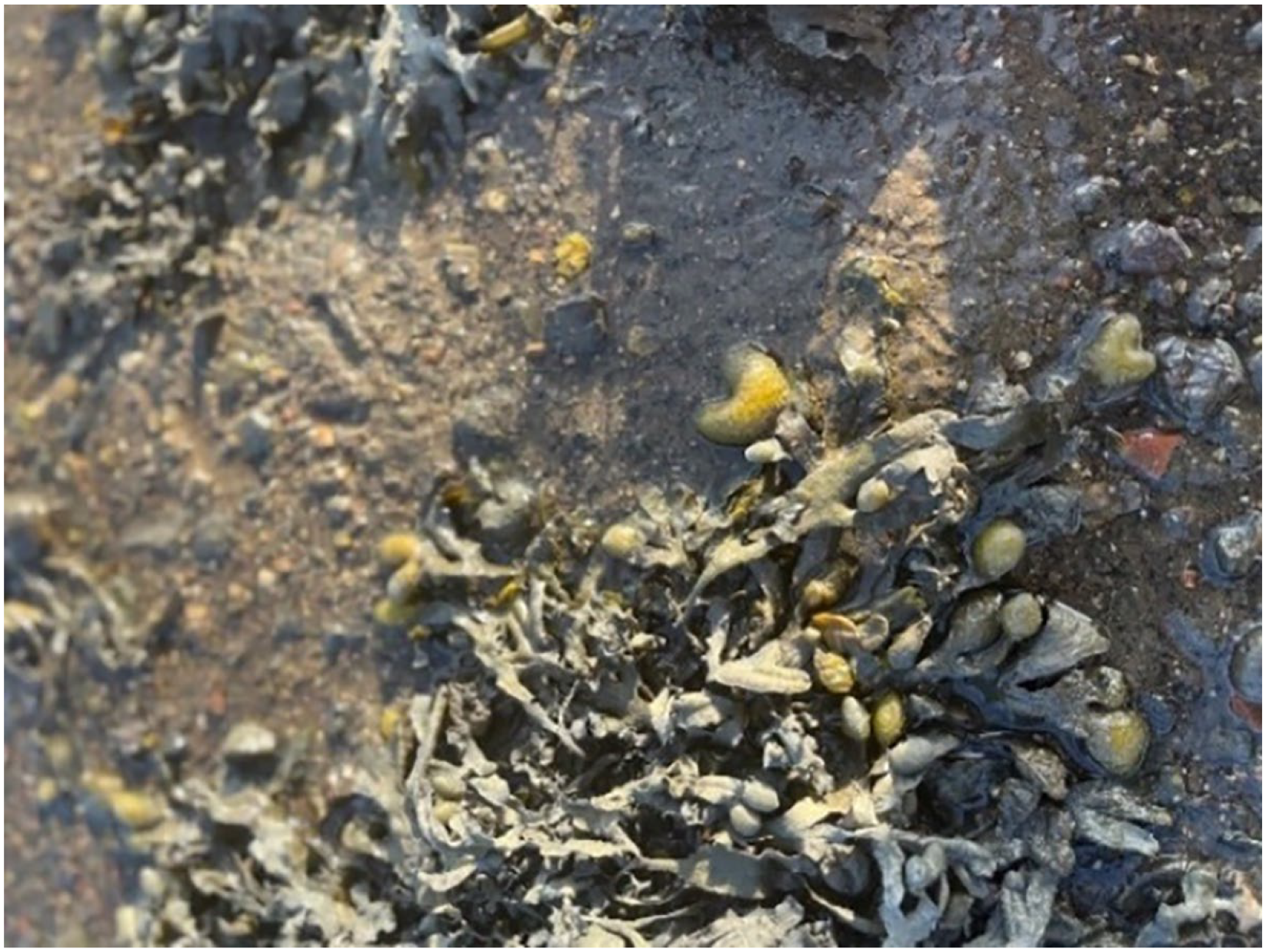
Score 3 shapes.
Care, seaweed, seascapes.
Conclusion
Seaweeds sit at an awkward juncture between their slimy, stinky, and uncanny qualities and their perceived beauty. Both conceptualisations are potentially problematic, as they enforce separation between human and nature, a way of thinking that is a major obstacle to addressing the calamities of the Anthropocene and ecological crises. 19 The Secret Dance of the Seaweed sought a different approach by encouraging us to spend time and develop embodied affinities with seaweeds through scores. Each was improvised and refined following workshop analysis and author discussions, into the final score presented below. We say ‘final’, knowing that a score is never finished but an open invitation with unrealised possibilities. Scores as multi-modal invitations and guidelines contributed new knowledge of lived experiences, memories, and connections to the coast and to practices for transforming ‘dark ecologies’ – whether horror, intrigue, or intimacy – into encounters of conviviality.
We put forward two propositions capable of advancing the intersecting literatures of performance geographies, multispecies relations, and critical seascapes. First, we leverage scores as more-than-textual nudges to think through experiential practices and provocations of conducting and recording research differently. Scores generated individually meaningful responses to research questions and foregrounded visceral modes of attending to others, human or otherwise. Second, scores can support cultural geographers doing multispecies research. Taking the example of seaweed, we suggest that scores helped illuminate the workings and dynamics of multispecies worlds and supported ecological, careful research praxis. Here, we refer to embedding ecological understanding of the landscape into research methodology, including the agency of multispecies worlds and the complex systems in which they operate, and to facilitating encounters that are respectful of living worlds and their fragility (Figure 10).
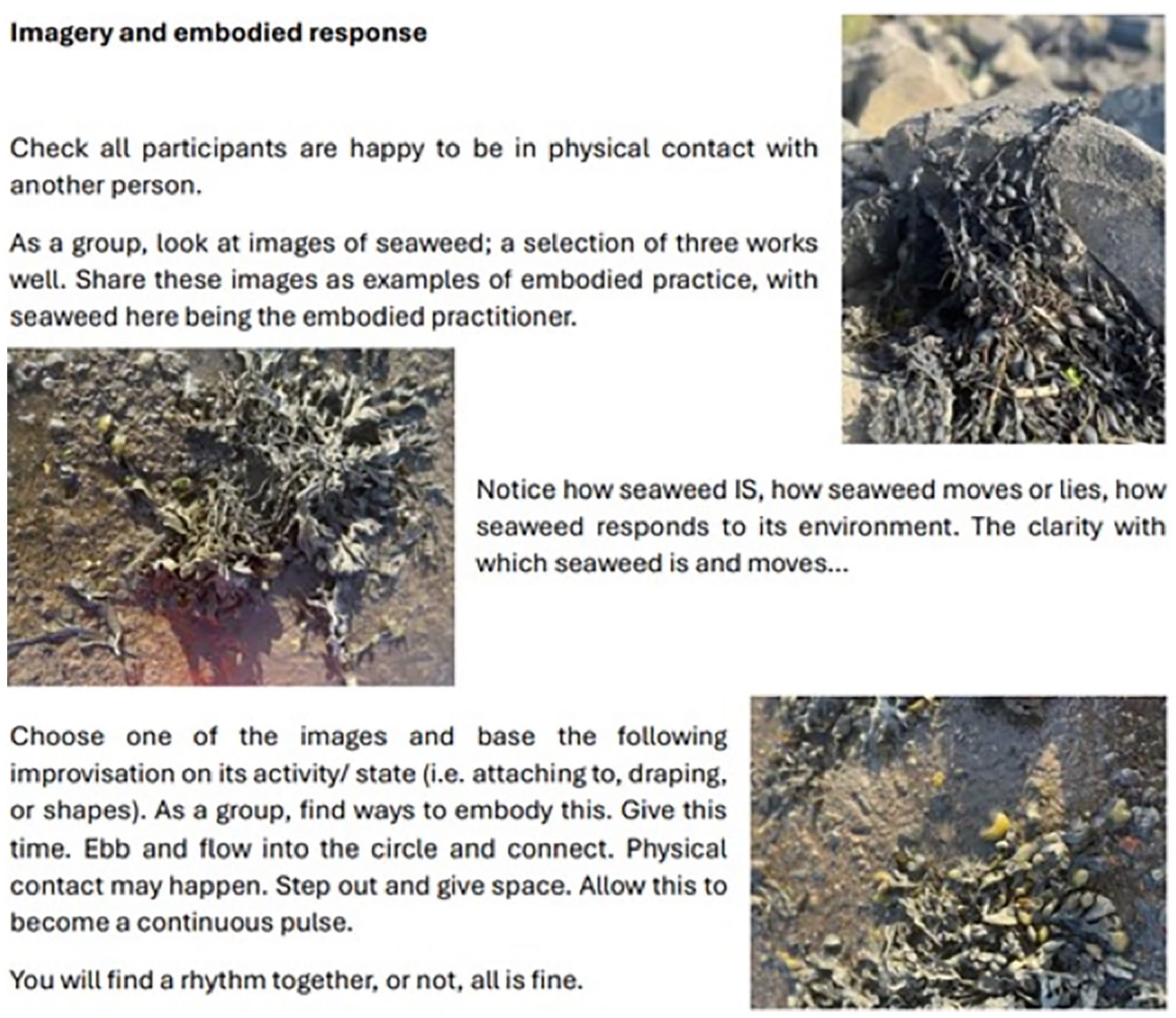
Movement Score 1: dark ecologies.
The ‘final’ score, available online (www.ncl.ac.uk/mediav8/apl/images/dance-of-the-seaweed/Scoring_The%20Secret%20Dance%20of%20the%20Seaweed_Huss-Veal_2024.pdf), is an invitation to cultural geographers and artists engaged with multispecies research, as well as to practitioners interested in reconceiving our coastlines. We encourage readers to take a moment with more-than-humans and the seascape, whether in research, practice, or teaching-related ecological activities. Despite growing interest in multispecies relations and performance geographies, methodological tools for embodied, affective, and ecologically attentive engagement with more-than-human coastal life remain limited. We offer movement scores as generative tools, open to adaptation, for experimenting with more-than-human methods, fostering ecological attentiveness, and deepening collective responses to the urgencies of coastal landscapes and multispecies worlds.
Footnotes
Acknowledgements
The authors would like to thank The Tute Dance Group for supporting this work. A special thanks to Prof. Maggie Roe for her ongoing advice and guidance. Thank you to Jeremy Bradfield and Luke Waddington for their creative contributions and willingness to experiment in this research space.
Funding
The author(s) disclosed receipt of the following financial support for the research, authorship, and/or publication of this article: The research benefited from the support of a Catherine Cookson Foundation Grant, and institutional support provided from The Newcastle University Centre for Research Excellence in Landscape and Performance Research Network.
