




Abstract
This article examines the iconography of blackness in the book covers of early Polish children’s literature. In doing so, it draws attention to textual practices that consciously or unconsciously reproduce the long-existing Eurocentric colonial/racial imaginaries of Africa and its people. This literature often depicts the inferiority of illustrated Black bodies, whilst highlighting the superiority of whiteness and Europeanness, as part of the global colonial/racial order. Such cultural productions, which contribute to the reproduction and dissemination of contemporary racism, are intertwined with the everyday experiences of people of colour in Poland.
Introduction
The trajectory that connects central European and other colonialisms is whiteness. Seeing themselves as Whites. . ., applying the racial category to others but not to themselves, central Europeans were able to basically imagine themselves into any colonial narrative . . . (Fisher, 2007: 84)
1
The 19th and early 20th centuries remain an important period marked by the emergence of the modern (mis)understanding of ‘races’ and their categorization. 2 The period prompted the establishment and popularization of displays of non-European bodies dubbed the ‘ethnic shows’ across Western Europe and the United States as part of the global colonial and racial order. This signification of white superiority was not limited to Western Europe and the United States. 3 Similar efforts were evident in Central and Eastern Europe (CEE) where aspects of Western imperialism – scientific rationality, cultural superiority and human classification – were embraced by CEE nations, not only as a way of experiencing and understanding the modern world, but also a way of asserting their Europeanness. 4
The field of cultural geography necessitates a critical reflection on methodologies and an awareness that cultural differentiation, material expressions of people and their spatial distribution often convey iconographic meanings. These meanings encompass racial classification and racist assertions. To this end, this article examines racist assertions regarding Africa and its people embedded within Polish children’s literature. It focuses on the transformation of human bodies into exotic forms, a theatrical makeup predominantly employed by white individuals to depict animalistic imagery or caricatures of Black people. 5 Examining children’s literature in Poland is significant for cultural geographers (and others) because literature represents a critical site of cultural production that reinforces and reproduces racial hierarchies and systemic racism. To explore how Africa and its people are portrayed in Polish discourses, particularly through illustrations that infuse blackness with exoticization, this article analyses three widely circulated texts published in Poland between the 19th and early 20th centuries.
Henryk Sienkiewicz and the Reproduction of white superiority
Henryk Sienkiewicz, a Polish writer, was awarded the Nobel Prize in Literature in 1905. His highly popular work, W pustyni i w puszczy (In Desert and Wilderness), remains a mandatory reading choice for many Polish children. The book’s enduring appeal is striking. Since its initial publication in 1911, it has undergone numerous reprints, been adapted into films in 1973 and 2001, and has significantly contributed to the cultural representation of Africa and Black people in Polish literature. The 1973 film adaptation, in particular, stands as the second most-watched Polish film in the country’s cinematic history, attracting nearly 31 million viewers between 1939 and 1989 alone. 6 The 2001 adaptation of the book is reported to have been one of the most viewed by young audience in Poland. 7 Set in the exotic backdrop of 19th-century Egypt, In Desert and Wilderness tells the story of Staś, a 14-year-old Polish boy, and Nel, an 8-year-old English girl, who are taken hostage by a group of Mahdists – a rebel faction opposing British colonial rule in Sudan. Staś, portrayed as a courageous teenage boy, endeavors to protect himself and Nel from the cruelty of the Mahdists, staunchly refusing their offer to convert to Islam. Throughout the book, Staś and Nel are accompanied by two enslaved characters, Kali (Staś’s servant) and Mea (Nel’s servant), whom Staś apparently liberated from the Mahdists. In the narrative, Staś and Nel represent the intelligence, benevolence and compassion associated with superior white Europeans, embodying the white saviour complex commonly associated with Africa.
Sienkiewicz’s portrayal of Africa and subsequent editions of the book abound with stories and imagery that juxtapose Christendom, whiteness and European civilization against the backdrop of an ‘uncivilized Africa’. The setting often comprises of dense forests, savannahs and exotic animals, providing the stage on which Staś and Nel frequently appear in typical colonial attire with safari helmets and shotguns. In contrast, the two enslaved black characters, Kali and Mea, are frequently depicted in subordinate positions, scantily clad, wielding simplistic primitive weapons such as bows and arrows and adorned with necklaces made of animal teeth. According to Sienkiewicz, perhaps these accessories are meant to signify Kali and Mea’s Africanness and the barbarism associated with their belief in a non-white and non-Christian deity.
In outlining the racial undertone in the book, Klobucka (2001) observes that, ‘. . .In Desert and Wilderness has been the primary source of a Polish reader’s awareness of Africa and its people’ and ‘it is very much a product of its colonialist time, complacently if unexceptionally racist and Eurocentric’. 8 Lamentably, this racialized iconography persists, as evident in the recent 2020 and 2022 editions’ book covers (see Figures 1 and 2). Both covers feature a savannah landscape dominated by a prominent elephant. In the foreground, Staś and Nel are depicted, whilst further back, the two Black African characters (Kali and Mea) are portrayed wearing clothing that reflects stereotypical and simplistic conceptions of ‘African life’.
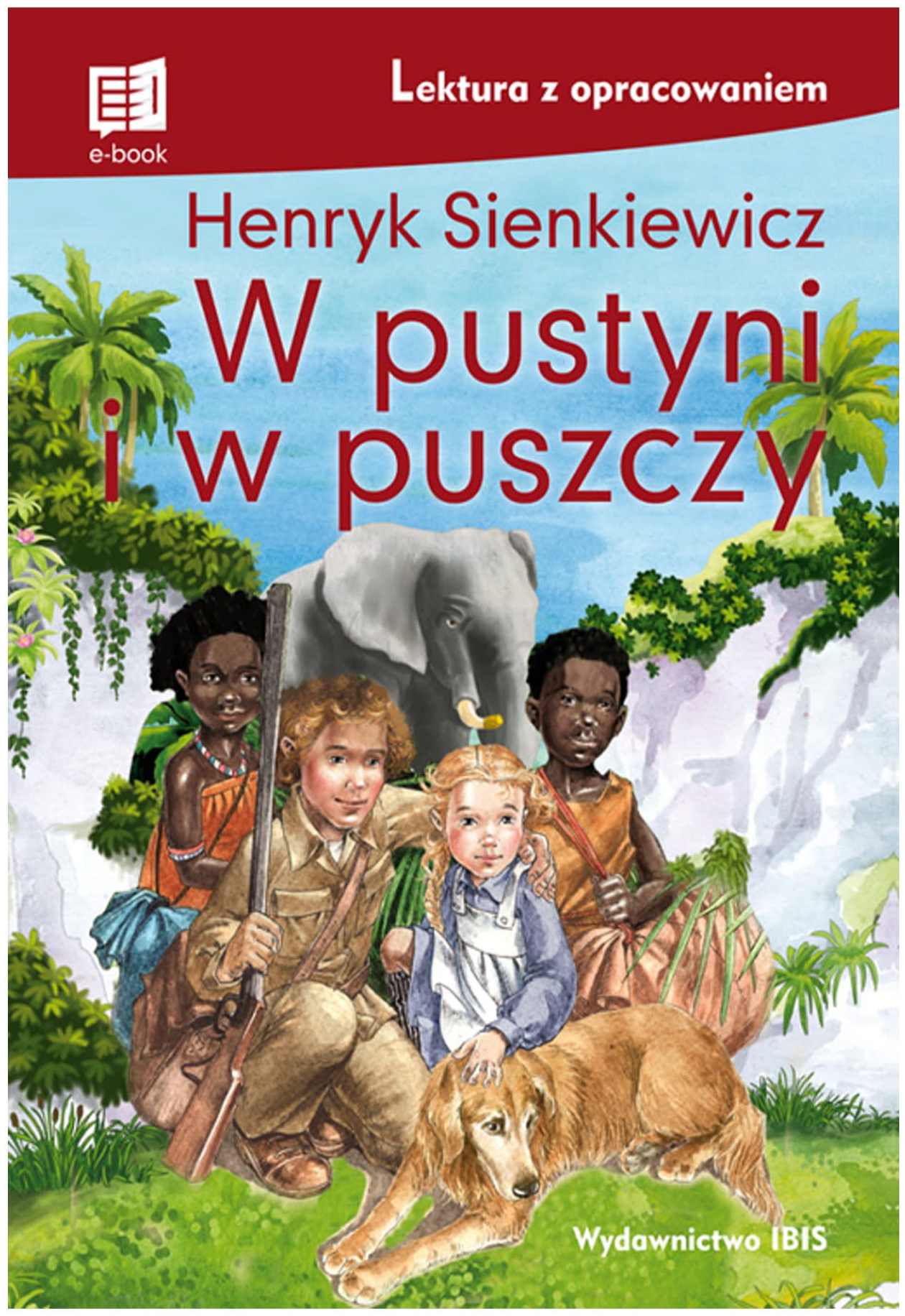
Front cover. Henryk Sienkiewicz’s W pustyni i w puszczy (In Desert and Wilderness), Ibis, Żychlin, 2020. Illustration by Magdalena Ałtunin.
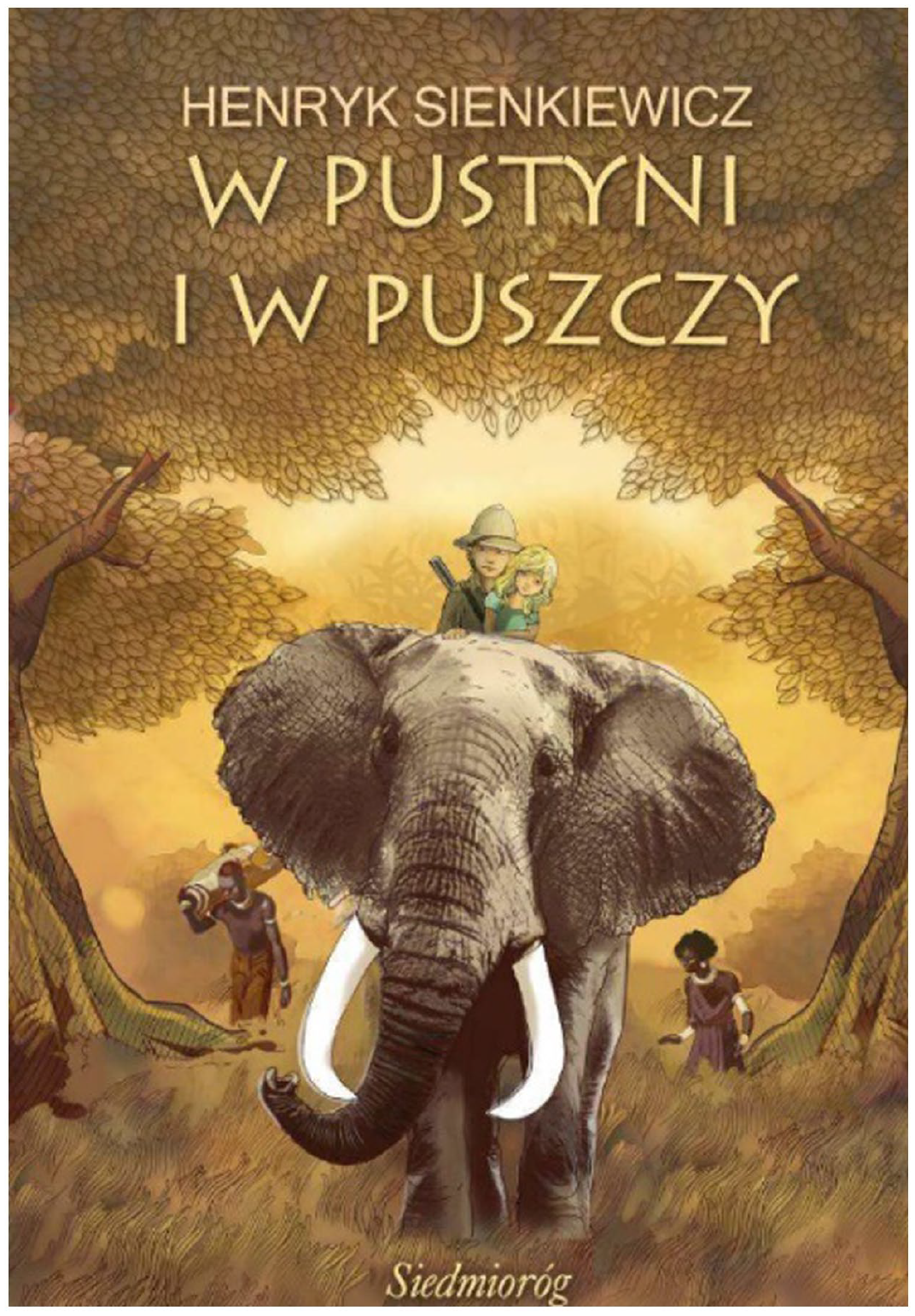
Front cover. W pustyni i w puszczy (In Desert and Wilderness) by Henryk Sienkiewicz, Siedmiogród, Wrocław, 2022. Illustration by Kamil Mackiewicz reproduced by Sylwia Malon.
Julian Tuwim and the Exoticization of Blackness
Julian Tuwim’s renowned poem, ‘Murzynek Bambo’ (Bambo, the Little Negro/Black), was first published in 1934. The poem narrates the story of a young African boy named ‘Bambo’, depicting him as a joyful child who harbours concerns about bathing due to his fear that his black skin may transform into white. Although the original intent of Tuwim’s poem remains a subject of debate, its portrayal of blackness is unambiguous. As Piróg (2010), Gralewicz-Wolny (2014) and Ohia-Nowak (2013, 2020) 9 have argued, the poem’s iconography has endured disconcertingly in Poland, where both adults and children recognize ‘Murzynek Bambo’ as a poem celebrating a cheerful boy. However, beneath the veneer of cheerfulness lies a depiction of the Black body as exotic, thereby establishing a fixed characterization of Black individuals within the Polish context. This is consistent with an incisive examination of one thousand reviews of African, Indian, Caribbean and Middle Eastern literature published in Poland between 1970 and 2010, where Gołuch (2018) interrogates the ways in which Polish literature and its reviewers often perpetuate similar exoticism associated with non-European others. 10
Indeed, ‘Murzynek Bambo’ exhibits a striking manifestation of its colonial origins and its construction of Africa and Black Africans. The poem’s early edition is accompanied by a visually captivating illustration resembling a vibrant lithograph. At its focal point, a boy is positioned amidst an exotic environment featuring palm plants and birds (see Figure 3). The portrayal of the boy adheres to a stereotypical racialized representation of blackness, characterized by an exaggerated head size, large white eyes and prominent red lips. These visual attributes contribute to a depiction laden with notions of ‘uncivilized’ and ‘primitive’ qualities. In a subsequent edition of the poem published in 2006 (see Figure 4), ‘Bambo’ is depicted wearing a skirt made of leaves and holding a tribal spear. His hand rests upon the shoulder of a monkey, which is depicted offering a banana, evoking an imagery that reinforces prevailing stereotypes of Africanness. Such representations easily permeate other depictions of blackness in contemporary Poland, 11 as illustrated in Figure 5.
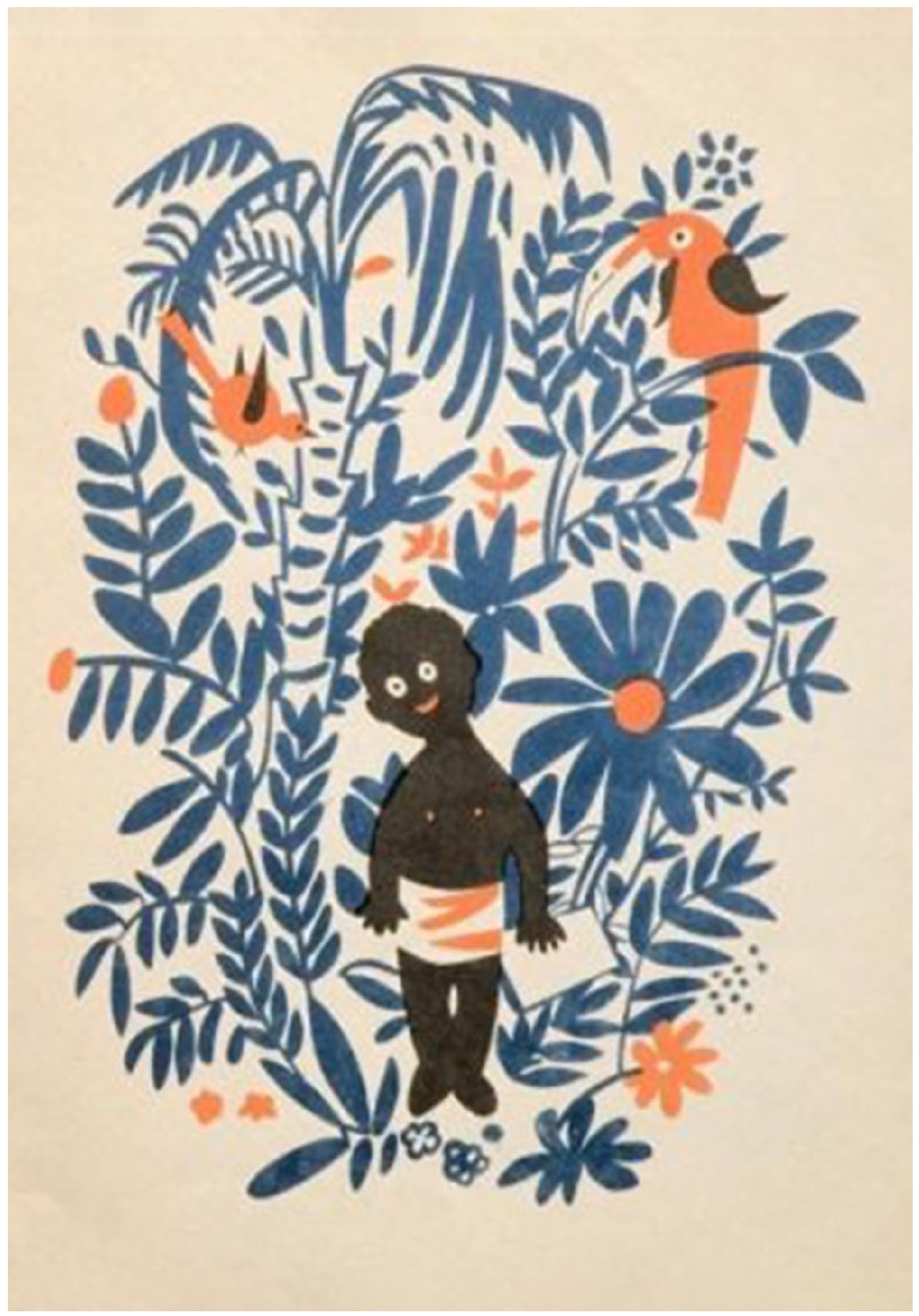
Julian Tuwim’s, ‘Bambo’, in: J. Tuwim, Słoń trąbalski, illustration by Ignacy Witz, Książka i Wiedza, Warsaw, 1949. Illustration by Ignacy Witz.
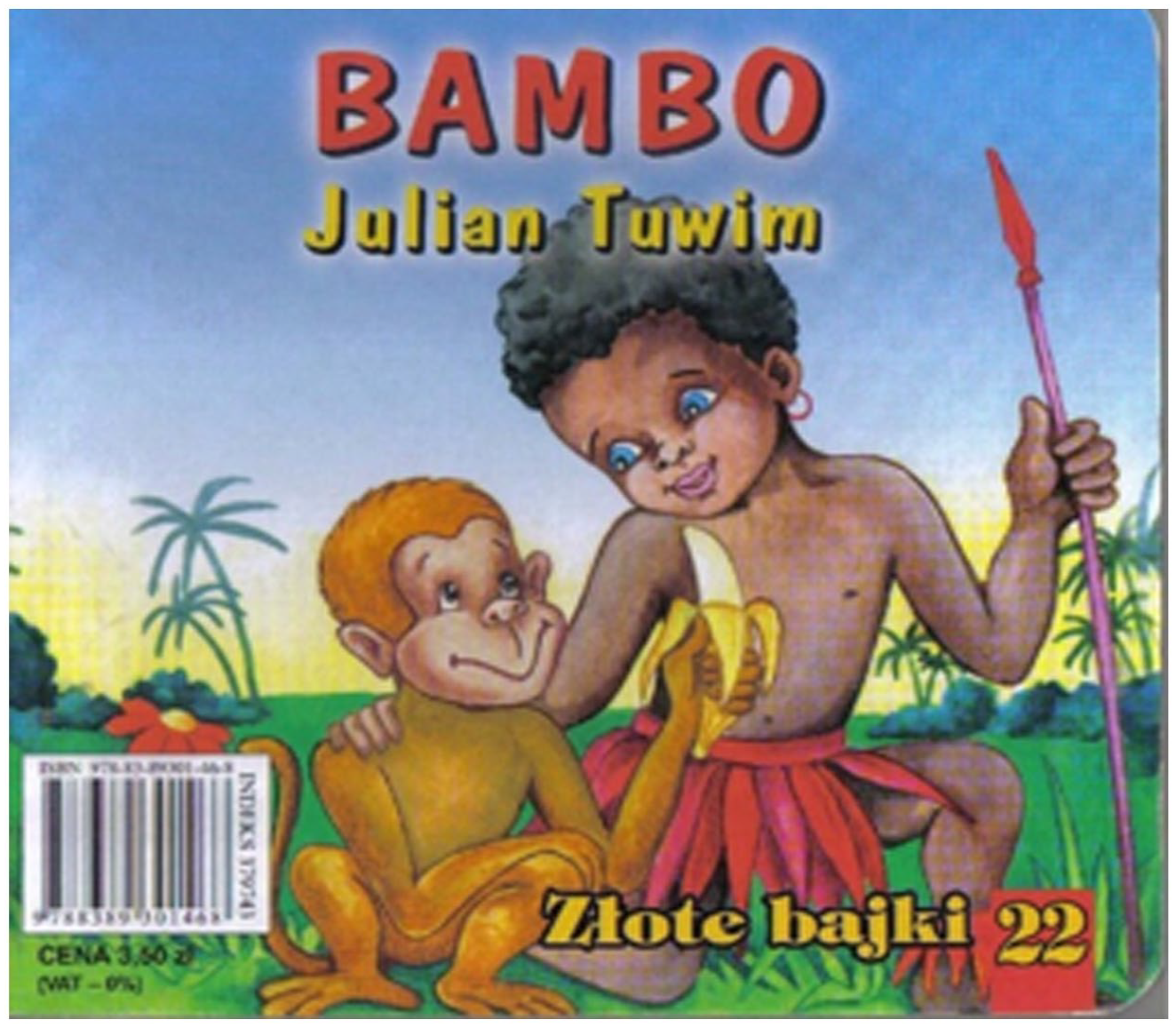
Front cover. Julian Tuwim’s, ‘Bambo’, Liwona, Warsaw, 2006. Illustration by Agnieszka Kraśnicka.
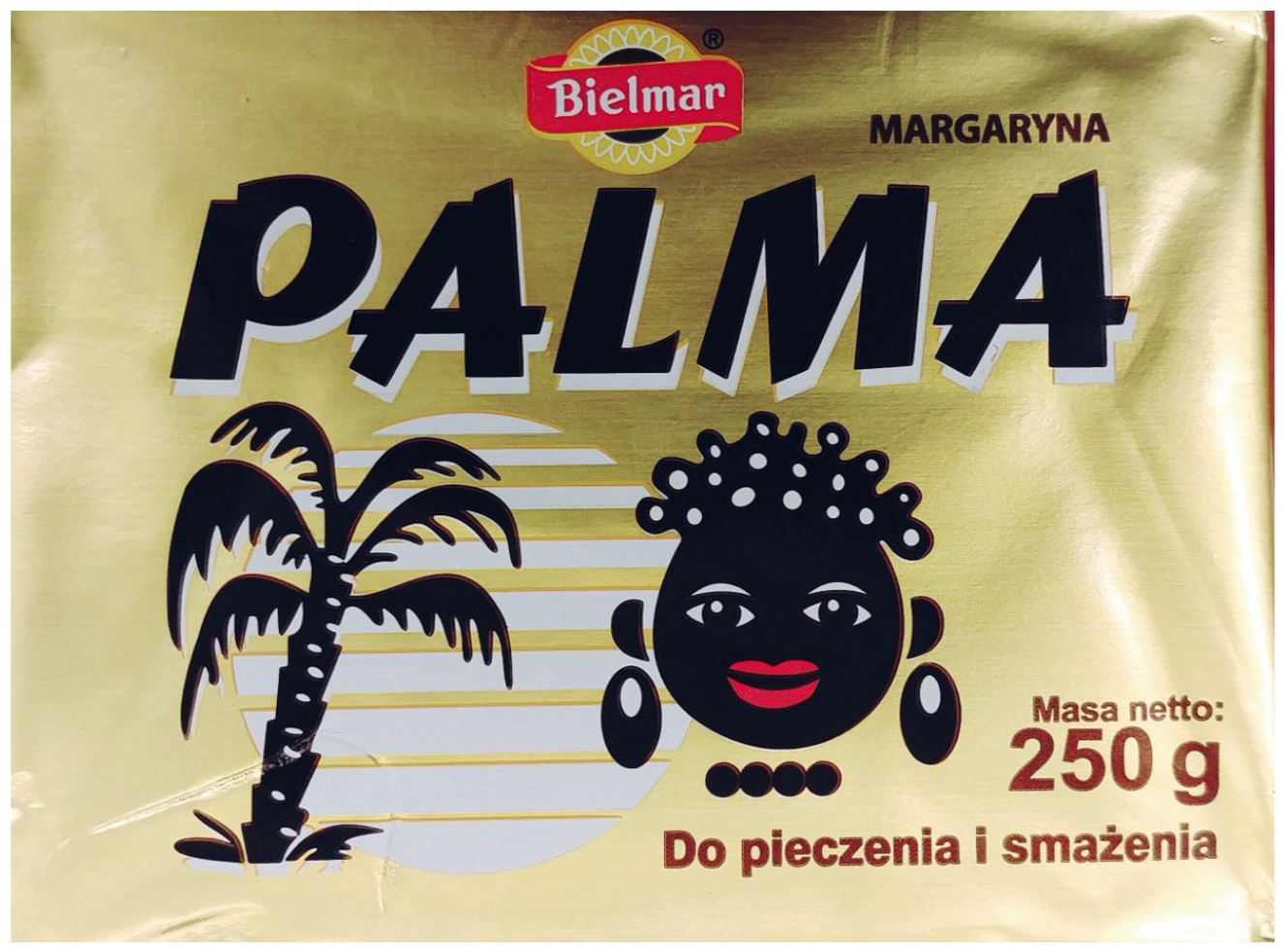
Packaging of Palma margarine in Poland, also called Palma z Murzynkiem (Palm with little Negro). Illustration by Maria Rymkowska.
Kornel Makuszyński and the Dehumanization of Blackness
Kornel Makuszyński’s literary contributions to literature have garnered significant recognition throughout Poland, establishing a prominent position within the corpus of Polish children’s literature predating the outbreak of the Second World War. Initially released in 1935 as part of a comic book series, Makuszyński’s work titled Małpka Fiki-Miki i słonik (Little Monkey Fiki-Miki and Little Elephant) revolves around the narrative of a Black boy named Goga-Goga and a young monkey embarking on a voyage from ‘Arabia’ to Poland. Throughout this captivating journey, both Goga-Goga and the little monkey traverse various cities and locales within the Polish landscape.
The character Goga-Goga, depicted by Kornel Makuszyński in Little Monkey Fiki-Miki and Little Elephant, embodies a prevalent and oversimplified representation of Black African characters within Polish children’s literature. Goga-Goga, as illustrated in Figure 6, exhibits the prominent traits associated with racialized blackface, featuring exaggeratedly red and enlarged lips juxtaposed against stark white eyeballs. This portrayal reinforces notions of deformity and savagery. Furthermore, Goga-Goga is consistently depicted either holding or being led by the little monkey, positioning the character as an entity that falls outside the realm of both human and animal, thereby suggesting an inherent dependence on external support for functioning. 12
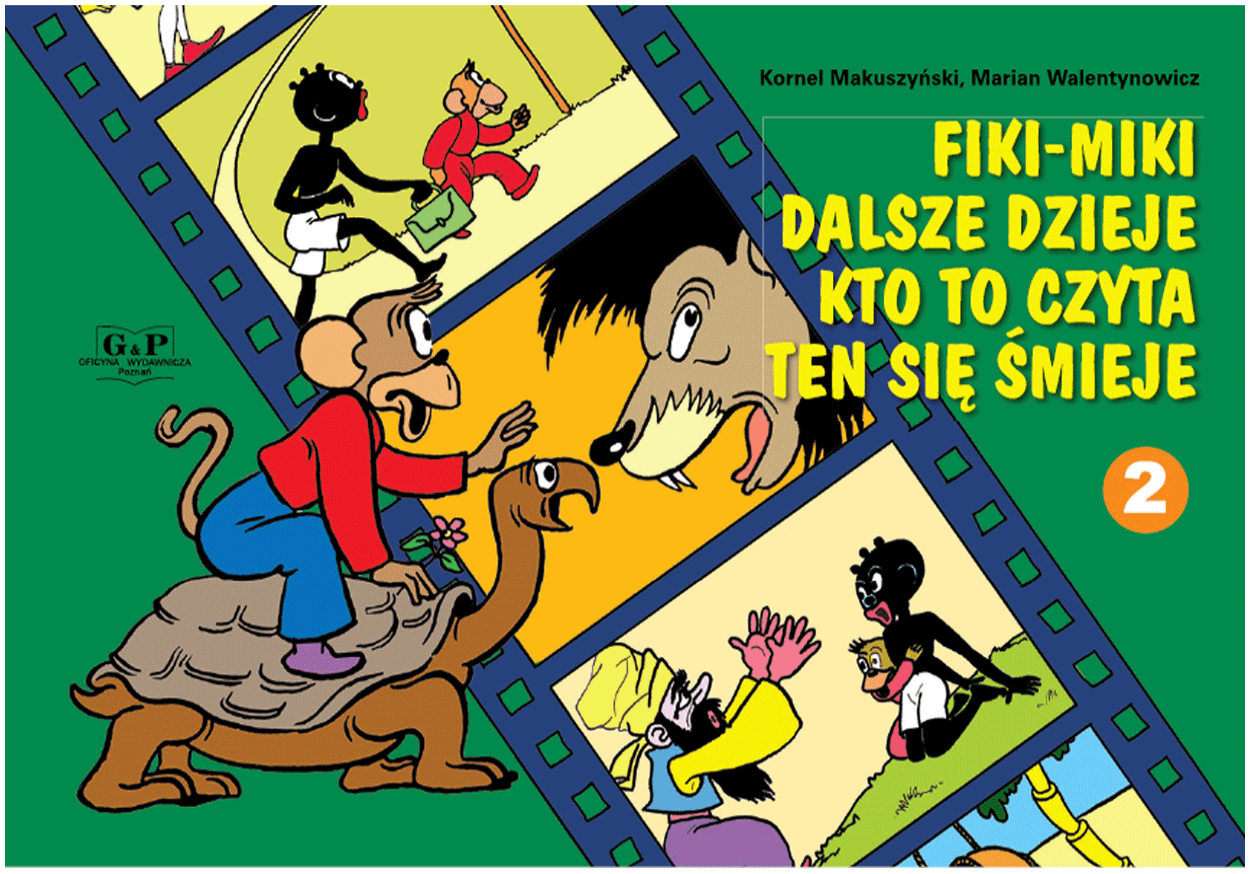
Front cover. Kornel Makuszyński’s Małpka Fiki-Miki i słonik (Little Monkey Fiki-Miki and Little Elephant), G&P Poznań, 2021. Illustration by Marian Walentynowicz.
Conclusion: why decolonize Polish children’s classics?
The compilation of textual excerpts and visual depictions presented in this article unveils the societal and structural racism ingrained within Polish children’s literature that revolves around the subject of Black Africa. The narratives and imageries disseminated through children’s literature occupy a significant realm of cultural creation, warranting the attention of scholars in cultural geography and other related disciplines where decolonization is currently absent. This issue holds particular urgency in Poland, where it is customary for early geography education for children to be predominantly influenced by racialized portrayals of the non-European world. 13 This process of knowledge production, despite its presumed educational intentions, frequently incorporates and shaped by diverse mechanisms and enactments of race and racial categorization.
Decolonization assumes particular significance in Poland, where cultural homogeneity often hampers constructive discussions about race in the teaching of geography as a key subject that shapes knowledge production. One compelling example can be observed in the theatrical renditions of Tuwim’s ‘Murzynek Bambo’ (see Figure 7), which have gained popularity in Poland. In such performances, teachers often paint their faces black, wear ‘afro’ wigs and employ a language purportedly mimicking an ‘African’ dialect. The stated purpose of such performances, as articulated by one head teacher during the International Children’s Poland event in 2021, is to foster awareness and promote tolerance among all children, irrespective of their skin colour, religion or culture. 14 However, this rationale fails to acknowledge or unintentionally disregards the racialized mechanisms and iconography intertwined with these performances. These peculiar and often controversial spectacles, alongside children’s literature such as Blaise Cendrars’ Murzyńskie bajeczki dla dzieci białych ludzi (Negro fairy tales for white People’s Children) (see Figure 8), are considered significant geographical fairy tales for white children. Consequently, early Polish geography textbooks contribute to a broader body of literature that portrays white individuals as the custodians of civilization whilst perpetuating the exoticization of non-European cultures.
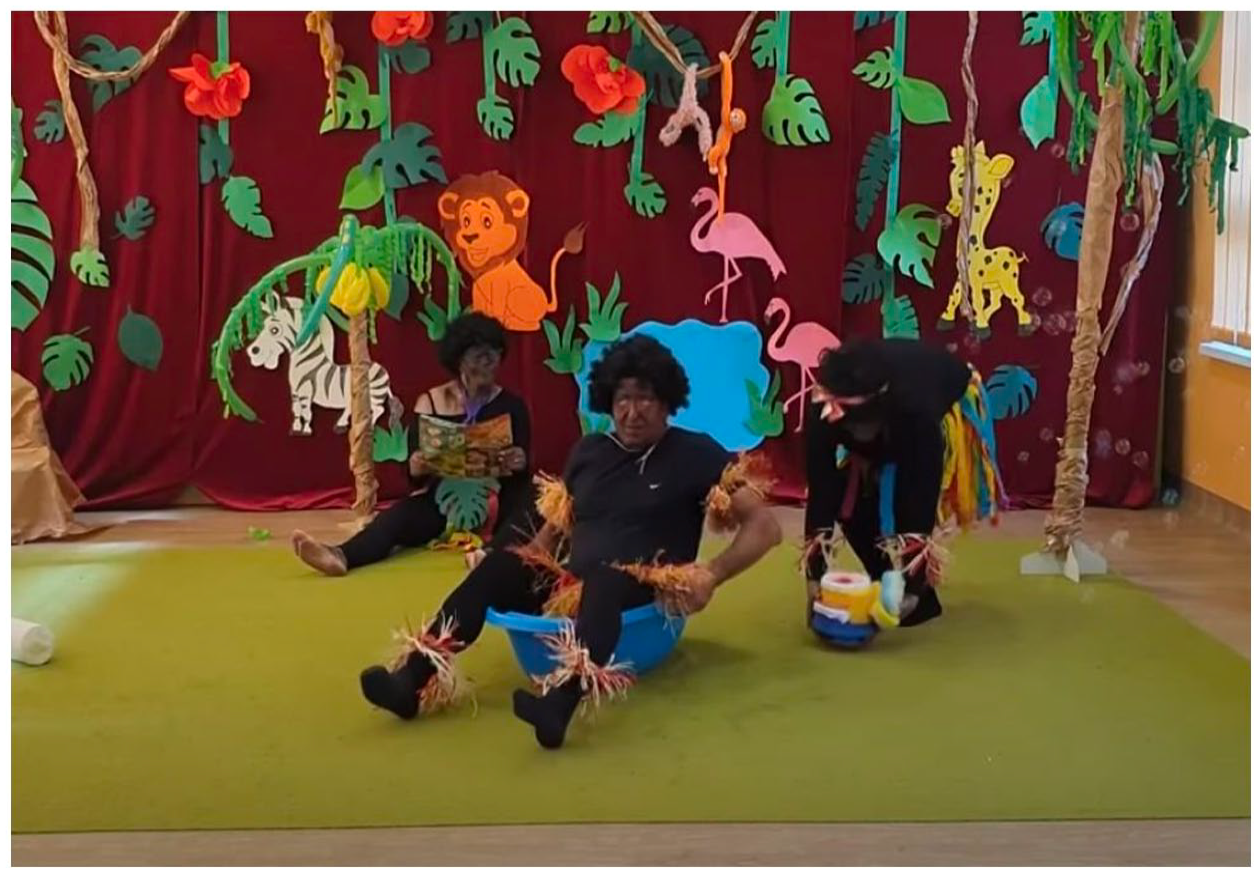
School teachers performing ‘Bambo’ in 2021.
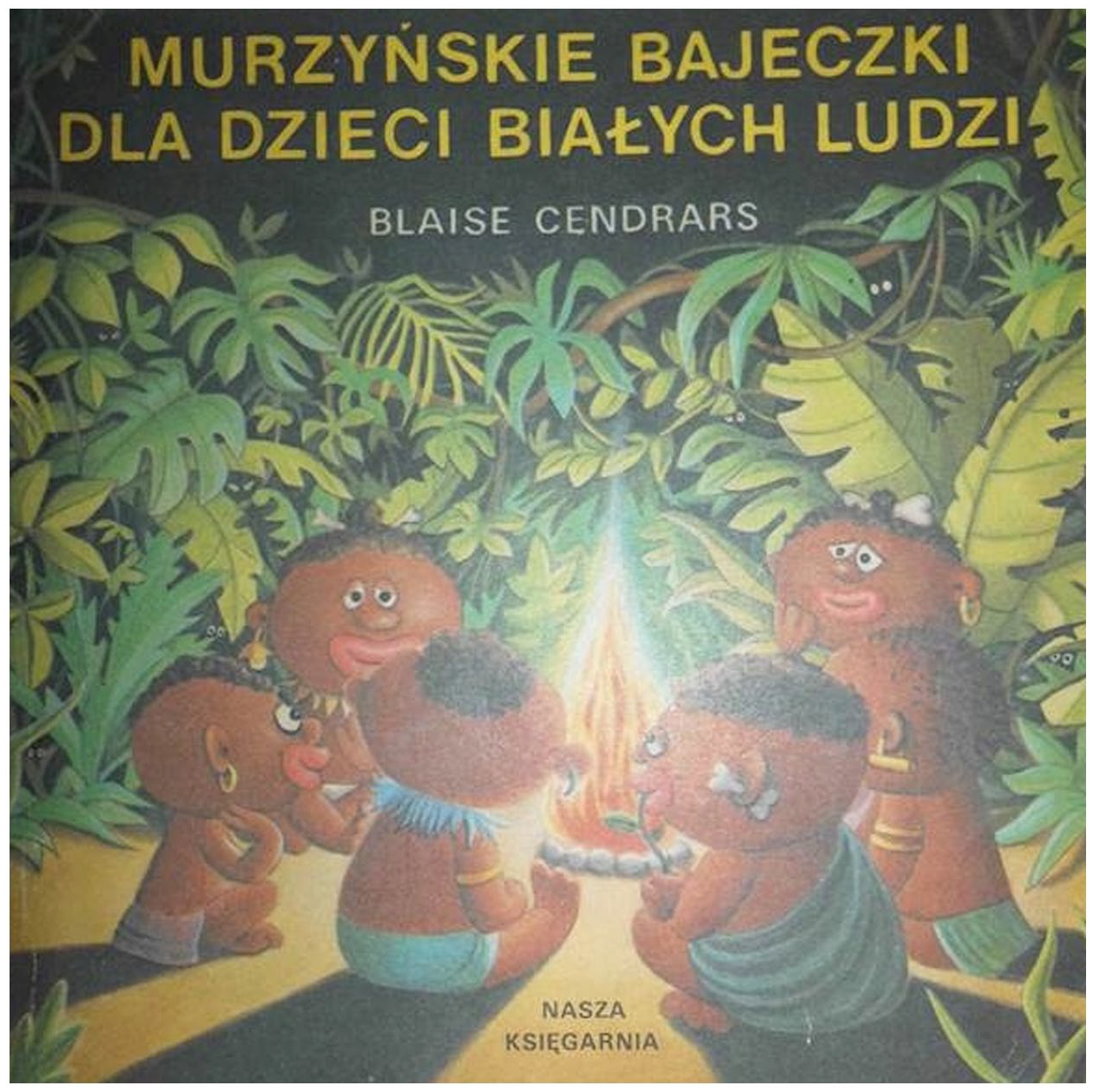
Front cover. Blaise Cendrars’ Murzyńskie bajeczki dla dzieci białych ludzi (Negro fairy tales for white People’s Children), Nasza Księgarnia, 1988. Illustration by Izabela Kowalska-Wieczorek.
We contend that such performances and texts shape dominant racialized narratives, which are reproduced in literature and other media forms, consequently influencing the understanding of blackness among Polish children and their perceptions of geographical spaces. The deconstruction of such cultural productions is vital to the process of decolonizing Africa and blackness within the field of cultural geography and beyond. 15
Footnotes
Acknowledgements
The authors express their profound gratitude to cultural geographies in Practice Editors, especially Caleb Johnston, for their encouragement and insightful engagement with this article. The authors also extend their thanks to Stephen Small for his invaluable support throughout the extensive exploration of the topic in this article.
Funding
The author(s) disclosed receipt of the following financial support for the research, authorship, and/or publication of this article: This work was funded by the Leverhulme Trust [grant number ECF-2020-080]; the University of Sheffield, UK; and Maria Curie-Skłodowska University, Poland.
