




Abstract
This article explores how sustainability is made present and visible in the life of residents in a new neighbourhood. Glass is enacted by design professionals and a Swedish municipality to create spaces for residents that fulfil sustainability objectives and put daily life on display. However, some practises developed by residents resist the intended uses of these spaces. Through a detailed case study of the proclaimed new role model neighbourhood of Vallastaden in Linköping, Sweden, we critically investigate the ontological politics of the residents’ everyday life, including their social life with neighbours, low-energy living, interactions with local small businesses, recycling habits and mobility habits. By attending to glass, we show how humans, non-humans, materials and technologies become part of everyday practises and help uncover the ontological politics of mundane life.
Introduction
Sustainability is a political concept infused with visions and aims about how to transform our societies towards environmental, economic and social sustainability, from the local level to a global scale. 1 Sustainability has been portrayed as locally connected to specific spatial contexts. It is seen as temporary with respect to technologies, materials and ideas enacted in certain time periods, and political with respect to ‘intentions, directions and visions’. 2 Homes and neighbourhoods are the local sites where many people live their everyday lives as part of households and communities, and these have therefore been political targets for different transformative activities. 3 Hopes are that transitions towards environmental sustainability can start at the level of everyday life through changes in modes of consumption regarding, for example, energy use for heating, cooling and transportation. In the same vein, neighbourhoods and city districts are seen as places where political ambitions could fulfil social sustainability aims. 4 The site presented in this article is the district of Vallastaden, recently built to be a state-of-the-art sustainable neighbourhood in the city of Linköping, situated in the countryside of southeast Sweden. The political ambition was to put Linköping on the map of exciting urban developments as a contrast to previous mundane, provincial construction projects. 5 For this re-invention of Linköping, politicians and local civil servants of Linköping municipality used urban planning, architecture and design to attract attention, urban dwellers and capital to the city. 6
Our own exploration of this proclaimed role model neighbourhood started with questions about how and why different aspects of sustainability were enacted in its creation. This way of approaching sustainability draws generally on a socio-material strand of literature that foregrounds practises in order to explore the ontological politics of a phenomenon. 7 Politics refers to situations and practises in which entities – human or non-human – are enacted to fulfil an objective. 8 What constitutes a political action or element is not predefined but becomes clear as events take place at an ontological level, and this can be revealed by focusing on which entities are made present and which are made absent in these events. Making actors, entities or phenomena absent or present regarding building design can have consequences for who will feel welcome in a neighbourhood and allow for some versions of sustainable actions over others. Mol 9 argues that research focused on ontological politics can reveal the multiplicities of everyday occurrences by paying attention to various forms of human and non-human involvement in defining and shaping the world. Politics is enacted in everyday life, with mundane material, creating relations and shaping phenomena, whereby socio-material configurations create everyday life. One of the appealing features of ontological politics is the ambition not to place certain experiences, understandings and ways of ordering above others, regardless of conventional hierarchies such as, for example, ‘experts’ versus ‘laypeople’. In a neighbourhood, such as our case study Vallastaden, the enactments of design and architecture in everyday life and practise are mostly carried out by the residents, when architects, planners, developers and builders have left the site. It is these enactments that the present paper attends to.
The study of practises has also been suggested by Jacobs and Merriman, who introduced the concept of practicing architecture to acknowledge architecture as a set of practises that involves humans, non-humans and our material world. 10 This approach ‘[. . .] includes material matter (walls, bricks, steel, asbestos, glass, stairs, corridors, rooms) as well as human mattering: meaning and judgement to be sure (love, hate and indifference), but also affect and atmosphere (the felt and the ambient)’. 11 Practises enact an endless variation of different combinations of elements that might be intentionally choreographed in time-space or emerge in unexpected versions. With practising architecture underpinning our idea of how to understand the relations between the ontological politics of sustainability 12 and the design and architecture of Vallastaden, glass emerged as one of the key elements around which different aspects of sustainability could revolve.
With the present study, we wish to contribute to the field of critical geographies of architecture 13 through an empirical investigation into glass as a socio-material element for enacting sustainability. With our analyses based in ontological politics, we bring to the fore how architects, designers and planners enact their powers to make their expectations of residents in the neighbourhood present through the use of glass and determine which practises preside the daily life of Vallastaden. Our aim is to explore how sustainability is enacted through glass and how it creates porous sites of tension 14 in a role model city district. We explore how glass in architecture and building design creates porous sites of tension 15 by acknowledging the many different, and sometimes conflicting, uses of glass: as a barrier although transparent, as a boundary although transgressive and as attracting attention and thereby encouraging intrusion into private spheres.
Background: Vallastaden – the city district of the future
The newly built city district of Vallastaden is located on the outskirts of Linköping, Sweden, a city of around 115,000 inhabitants. 16 The closest neighbours to Vallastaden are Linköping University’s main campus, some governmental authorities, a science park housing various IT companies and an open-air museum. The city district was planned with the political aim of being a role model neighbourhood for future urban development and housing. Several local stakeholders – such as the local council, municipal civil servants, municipally owned energy and housing companies and privately owned building service companies – were mobilised in the development. 17 Furthermore, citizens were invited to take part in visionary meetings in the early stages of planning Vallastaden. Ideas from these different actors inspired a vision of a sustainable city district, which in turn provided the foundation for a competition concerning the masterplan and design of Vallastaden. The architectural firm Okidoki won with its entry, Tegar. 18 The general conceptual idea of Tegar was to sell small land allocations to a variety of actors to achieve a modern and diverse cityscape. The building process was quick, and in 2017 the city district was showcased at a large urban development exhibition. In this first phase of development, about 1,000 dwellings were built in 5 years by 40 different developers. 19
The city planning process was carried out according to a new model, called the Vallastaden model. 20 This model had three basic principles: the masterplan was finished before the land was sold; the land was divided into small land allocations; and there was a focus on quality rather than price in the sale process. All interested developers had to submit an application showing how they fulfilled certain quality criteria that were set by the municipality’s urban planning office.
Critical geographies of architecture
Critical geographies of architecture has recently been presented as a body of academic literature following calls by, for example, Lees, 21 who states that the everyday use of architecture raises ‘[. . .] important new questions of everyday practise, embodiment and performance [. . .] to consider what it [the building] does. What takes place within (and without) the [building]? How are dominant (and not so dominant) social practises and relations performed?’ 22 Research from this perspective attends to the effect that architecture and design elements in buildings have on people, and how people through their everyday use or non-use of a building shape what the building is – that is, its ontology. This fundamental understanding of the architecture and design of buildings, or any other phenomenon in the world, is shared by scholars in science and technology studies, and the focus on practise is shared in particular by Law and Mol 23 and Mol. 24 This approach to exploring the built environment has been exercised by, for example, Llewellyn 25 and Jenkins 26 in addition to Lees’ own detailed empirical work on the Vancouver library. 27
Jenkins, 28 drawing on work by Latour 29 and Law and Mol, 30 contributes to critical geographies of architecture with a proposal to view buildings as complex and heterogeneous objects of permeability. This view acknowledges the ‘[. . .] relationship between a building, the spaces that surround it, the spaces it bounds, the people that use it, and the technological items that affect it [as well as] the interrelatedness of multiple materialities over time’. 31 With this approach to exploring and understanding buildings (the Paris, 11, Rue du Conservatoire), the focus is on relationships and connections between humans, non-humans, material, social interaction and space. The character or categorisation of elements 32 included in these relations and connections are not important, but the weaving and togetherness of entities are, although they are unstable and in constant flux. The focus of inquiry should be on how buildings are part of relations, rather than separate objects, and Jenkins 33 urges researchers to: ‘[. . .] examine the way in which the local engages and is inscribed with wider issues such as politics, social, cultural, and economic changes over time’. 34 Glass, for example, is obviously permeable with its quality of transparency, and might successfully be enacted to create relations between indoor and outdoor spaces.
In the same vein of viewing buildings as socio-materialistic, Jacobs 35 has explored how ‘a building is always being “made” or “unmade,” always doing the work of holding together or pulling apart’. 36 Jacobs answers Law’s 37 proposition to turn to the local and mundane, and acknowledge the ‘small, sensuous, specific, heterogeneous, [and] noncoherent’ 38 in order to understand our world. It is in the situated details and the mundane that we can grasp the bigger picture. This conception of buildings is also shared by scholars like Kraftl, 39 Jacobs and Merriman 40 and Edensor, 41 who have made significant contributions to the field of critical geographies of architecture. Kraftl 42 conducted a study on the simultaneously extra-ordinary and mundane residential building Hundertwasser-Haus 1 in Vienna. Built after the design of Austrian artist Friedensreich Hundertwasser, the building’s spectacular aesthetics and eco-friendly qualities attracted attention from tourists and professionals in architecture and design, parallel to the ongoing everyday life of the residents in this social housing building. Kraftl, 43 inspired by both Lees 44 and Jacobs, 45 asked what happens when a building ‘becomes other’ or a ‘failure’; 46 when a residential building is not only a home, but also a tourist attraction or ‘ecological statement’, and yet is not received as such by the residents or the public but continues to be a subject of controversy and disagreement. Residents of the Hundertwasser-Haus experienced how the building’s exhibitionist design led to practical limitations in everyday life, as did the interaction with the constant stream of tourists: ‘The playroom at the front is like a cage, like a zoo – and that’s got something to do with the fact that Hundertwasser wanted the playroom as an exhibition room for his things – yeah? . . . If Hundertwasser had really thought about people, then the playroom would have been properly inside the building, perhaps in the cellar’. 47 Hence, we can begin to understand the experience of living in a signature building – or the case of Vallastaden, an entire neighbourhood – that is designed for multiple purposes: it is simultaneously a home, a work of art, a tourist attraction and contested architecture. In the case of Vallastaden, we would argue that the neighbourhood is more or less always on display, showing its sustainability to visitors, while also functioning as a home and community for the residents.
While the empirical focus in critical geographies of architecture had previously been on individual buildings, 48 Kraftl 49 identified the need for a broader scope ‘[. . .] to foster critical debate about which elements of the landscape geographers are interested in, why, how those elements refer to [a] broader political ⁄ economic⁄ cultural process, and, indeed, what makes them what (we think, in our daily lives) they are’. 50 Kraftl 51 also encouraged geographies of architecture to be more critical and innovative in methodology, for example by looking at deeper aspects of practise, such as emotions and affect. Another contribution to a more critical approach, we argue, would be to engage more explicitly with the politics surrounding architecture – for example, regarding the sustainability and environmental dimensions of design and architecture, as addressed in this paper.
Drawing on current research and literature, our own work aims to acknowledge in particular the multitude of practises of creating, shaping, moulding, configuring and decorating associated with our buildings when inhabited. 52 In other words, we wish to bring such practises to the fore and make them visible.
Glass in focus
Previous studies focussing on particular materials include those that address, for example, bricks, 53 concrete, 54 stone 55 and windows. 56 Edensor, 57 in a study on stone in the city of Manchester, attends to ‘[. . .] multiple resonances from the past [that] enrich the everyday apprehension of the city, [and] honour the host of human and non-human agents that continuously make, remake, interact and engage with urban materiality’. 58 Through his investigation, Edensor explores the materiality of stone and how it is made absent and present in central Manchester. A building material such as stone could, he argues, act as a portal for an exploration of absences that are enacted when we include temporal dimensions in our studies.
Attending to glass, Carr et al. 59 have shown that, in comparison to other materials, residents put more emphasis on glass than the materials that surround it. Surfaces made of glass are more consciously part of interior decoration and become a part of indoor still life that includes curtains, blinds, pot plants and window lighting. Furthermore, with a scenic outdoor environment, windows can act as landscape paintings and complement wall-mounted artwork. In another study, Jacobs 60 examines windows as technology in action 61 and provides a definition of the window as ‘[. . .] the technology that establishes a distinction between inside and outside and manages it in terms of light, air, noise, comfort and safety’. 62 Windows can enable the outside to stay out, while also bringing it in. 63 Cosgrove 64 shows that windows can be enacted in the design and architecture of homes to compensate for limited outdoor space, creating pleasant outlooks from small indoor environments. Similarly, Jacobs et al. 65 make visible the relationship between residents, window and views by exploring practises in the 1960s residential ‘Red Road’ high-rise building in Glasgow prior to its demolition. They portray the window as a failed technology, since standards have moved away from single glazing and steel- and asbestos-framed windows and no longer provide the anticipated bird’s-eye views due to high-set horizontal designs. Residents of Red Road described how their interactions with and relations to the windows in their flats on floors 7, 14 and 23 were ‘[. . .] complex and ambivalent (an appreciated view, a place of memory, a difficult thing to clean, impossible to “properly” curtain, a hole that lets in draughts, unsafe)’. 66
Controlling windows is an important factor when creating eco-friendly houses, especially concerning their effects on sense of privacy and in preventing residents from opening windows during the winter. 67 In Sweden, both design- and engineering-oriented understandings of thermal comfort and the promotion of large south-facing windows have been questioned, with attention being drawn to the risk of excessive temperatures. 68 Extensive glazing in low-energy concepts such as passive houses may, for instance, jeopardise residents’ thermal comfort, especially in the summer. 69 Overall, glass and windows are associated with positive feelings as they allow natural light indoors and eye contact with the surrounding environment, and glass can also spark feelings of care and respect for tradition when old types of glass are used. 70 Furthermore, Burrell 71 shows that, while windows and front doors are meant to be trusted barriers to the outside world, in an unstable neighbourhood they sometimes fail to keep the domestic realm of the home distinct from the street outside. Windows and doors accordingly become microcosms of the larger struggles in the neighbourhood. 72
Steiner and Veel, 73 scholars in surveillance studies, have suggested that the large residential window, and sometimes even entire glass facades, could be viewed as ‘[. . .] a new aesthetic trend in contemporary urban residential architecture, one which can be called an aesthetic paradigm of perceived visibility’. 74 In an exploration of previous research, as well as literary fiction, they conclude that ‘[t]he easy access to monitoring our neighbours through the glass facades of contemporary housing architecture calls for a reconsideration of life in these settings [and] provides a productive approach to understanding the types of domesticity at work in contemporary architecture employing the material glass in extended ways’. 75 In another surveillance study, Liu 76 acknowledges transparency as a political value and a foundation of liberal democracies, stating that windows are ‘a powerful visual and fundamentally spatial metaphor’. 77 Metaphor or concrete matter, windows and glass facades are attractive for a range for reasons: their ability to create a porous barrier that can be managed with curtains and blinds to create more or less transparency; and the ability to open and close them to manage heat, ventilation and noise. Extensive glazing and the design of glass boxes for homes thus put private home life on display, turning it into public goods. 78
According to Sennet, 79 glass creates an illusion of permeability, but it is really used to exclude and conceal. Sennett states that ‘[t]he plate glass window walls used in modern architecture are another version of the boundary: though these windows permit sight within, they exclude smell and sound and prohibit touch’. 80 The permeability of glass brings a sense of inclusion of the outdoors while still acting as a boundary, and this is interesting to discuss in relation to architecture and building design. Jacobs and Merriman 81 propose the idea of liquidity of architecture, whereby there is more room for interpretation and a lack of imposed categories: ‘[. . .] neat distinctions between the interior and exterior of architectural forms are problematic, for while motives and technologies of shelter, insulation and securitisation frequently perpetuate a clear distinction between the interior and exterior of buildings, there are traditions of architectural design and thought which seek to problematise distinctions between the exterior/interior of buildings, or buildings and their landscape, and to think about the liquidity of architecture rather than the solidity of buildings’. 82 In this article, we focus on how glass sometimes aids in creating a more liquid architecture, while it in other settings creates exclusion.
In the case of Vallastaden, we attend to glass as a way to enact contemporary architecture as interwoven with the design of a sustainable city district, and as a portal 83 for our explorations. In the coming chapters, we explore how glass creates porous sites of tension in Vallastaden and the ontological politics these tensions bring with them in relation to the everyday lives of residents. First, however, we present a more detailed description of our research methods and data collection.
Method
We explore Vallastaden as a critical case study, 84 focusing on the many different relationships and practises involved in creating and re-creating the neighbourhood. Our explorations include interviews with 21 residents about their everyday lives. Observations from individual and joint walks and discussions in the neighbourhood are also part of our empirical material, as are documents from the spatial planning process. In addition, we study a Facebook group created by some of the residents of Vallastaden. This empirical material provides access to another type of space where living in Vallastaden is enacted. Together, the residents create an online space where they share thoughts, idea, struggles and complaints framed by the living conditions in Vallastaden. Written messages posted in the group were collected from this source (excluding any personal information such as names or addresses), and as the group is open for anyone to join, the material is openly accessible. When evaluating the information posted in the group, we therefore did not consider it to be sensitive or personal, and have therefore not contacted the group members for consent to participate in the study, as the risk to the participants is considered to be very low. 85
In our explorations, we noticed how glass was involved in several of the practises of Vallastaden, namely as part of the low-energy concept of passive house design, community buildings and winter gardens, and secondly in the general political vision of sustainability that can be put on display, facilitated by extensive glazing. The socio-material relations involved in creating and recreating sustainability in Vallastaden would fulfil the political aims of environmental, economic and social sustainability, and glass was enacted in all these dimensions of sustainability.
Glass creates porous sites of tension
The everyday on display
One of the immediate impressions one receives when walking through the streets of Vallastaden is how the ground-level views facilitate contact with what is taking place inside private homes, semi-private facilities such as felleshus and winter gardens, and commercial spaces such as restaurants. Felleshus are collective buildings built by neighbourhood associations comprised of all the residents in a block. They are planned to be spaces for informal gatherings or formal meetings and a place for neighbours to hang out and create new communities. They include overnight apartments for guests and rooms for meetings or dinner parties for up to around 20 people. With a streetscape characterised by narrow and pedestrian-friendly spaces between buildings, passers-by come in close contact with the life going on inside the buildings. In many cases, it is possible for the public to walk around and observe the ground-level premises from different angles. Due to the latitudes of Vallastaden, and the Nordic practise of using decorative lighting,
86
the inside is particularly exposed to the outside during the many dark hours of winter. At the same time, visitors on the outside are also watched and observed by residents, which becomes especially evident in relation to the field trips that take place in Vallastaden. This topic was brought up both in our workshops and in the residents’ Facebook group, where discussions with the municipality sometimes occurred: [Resident Astrid]: Is there a planned end to these field trips? [Municipal representative Annica]: Hi! No, no end date is planned. Inquiries keep coming, which of course we think is fun. Many people think Vallastaden is a very interesting district. Hope you are not disturbed by the field trips. We always tell visitors to think about the residents' privacy if, for example, they want to take photos. [Resident Astrid]: Hi, well not directly disturbed haha. I live on the ground floor, so sometimes it feels a little shady when a whole group of people walk by and look inside. But it is not so often [Municipal representative Annica]: Aha I understand [Resident Astrid]: Thank you very much! I don’t think the visitors themselves think about it and it’s probably not their intention 

 I will ask my colleagues to pay extra attention to groups lingering by windows so you do not have to feel looked at.
 87
87
The neighbourhood is open and accessible to all visitors, around the clock, all year round, and while the municipality considers Vallastaden a suitable field trip for national and international visitors, residents are willing to share their community grounds with visitors as long as their privacy is respected. Moreover, the continuous interest in visiting the neighbourhood could be described as a trickle compared to the flood of visitors that occurred during the 3-week exhibition in 2017. For the politicians who had invested prestige and taxpayers’ money in this event, the exhibition had to be a success. Both outside and inside spaces were open to visitors, and several spaces and features had been enhanced with home displays and a rare opportunity to visit homes, before the actual residents moved in. 88 The home displays were created by a wide variety of professionals, from interior decorators to researchers in energy systems.
Living life in a neighbourhood constantly on display brings the microcosm of the neighbourhood into the living rooms of the residents. 89 The windows at street level (as seen in Figure 1) fail as barriers between the private life of residents and the visitors’ gaze. 90 The home exhibition is enacted as part of Vallastaden’s identity and was, and in some ways still is, interwoven into the everyday life of the neighbourhood. The ontological politics of the very design of the homes, with windows at ground level right beside popular walking paths, enacts a weak barrier, allowing visitors to intrude too far into the private space of the home, according to some of our respondents as well as discussions in the Facebook group. These architectural design choices, which amplify the liquidity of architecture 91 to the continuous exhibition of Vallastaden together with visibility into the home, fail to protect the privacy of the residents. 92
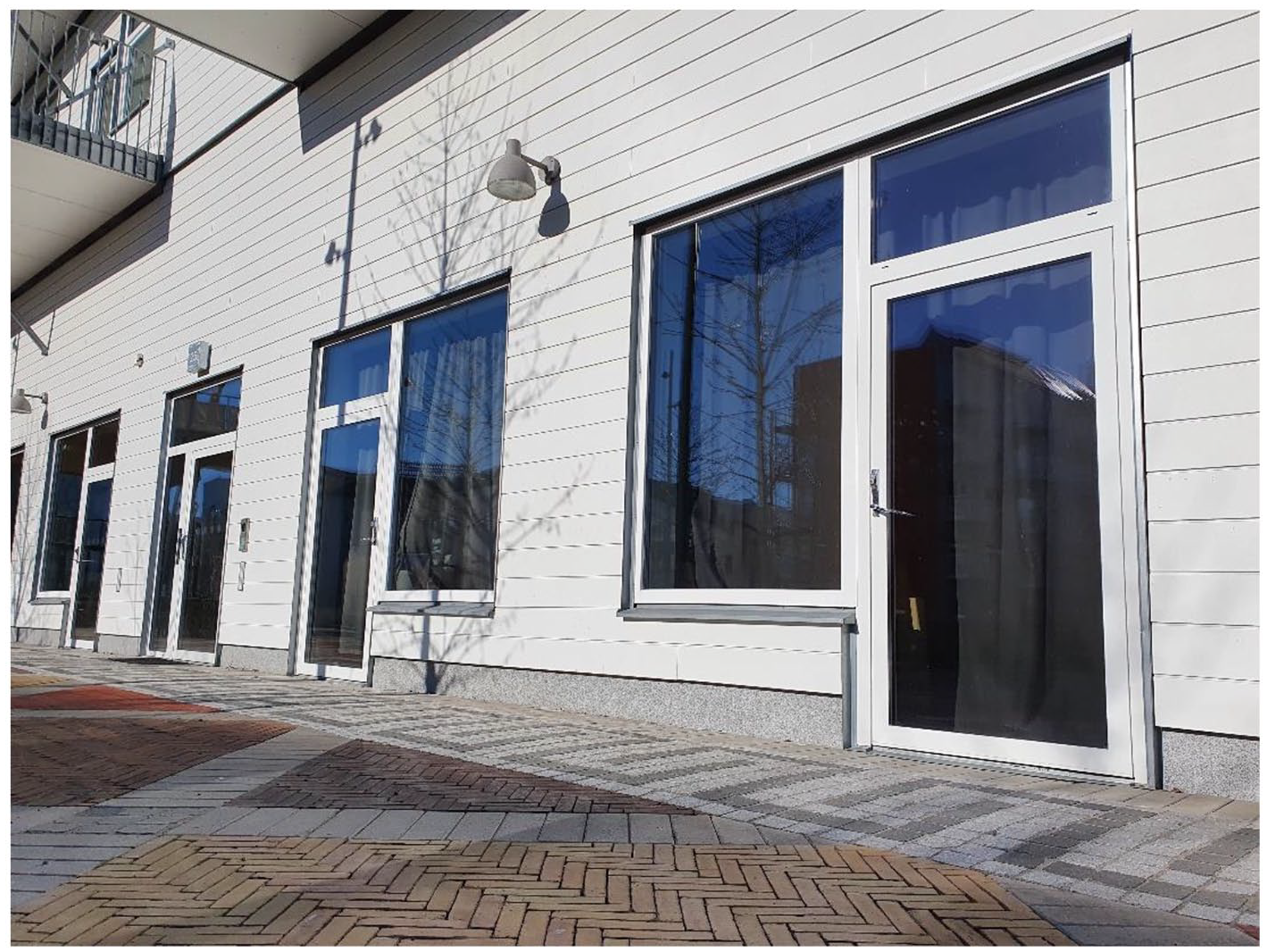
Passive house ground floor flats in Vallastaden. Image by Wiktoria Glad.
Also on display in Vallastaden is the aim to enact energy efficiency through sustainable architecture, an important aspect of marketing the neighbourhood, and this focus on energy and resource efficiency led to some homes being designed as passive or plus-energy houses. Ideally, passive houses are designed to minimise heat loss through the building envelope and make use of heat from internal sources, such as household appliances and heat from the sun through windows. 93 The central heating system would only be used for top-up during the coldest days of the year. The passive houses in Vallastaden provide an example of a specific way in which the implementation of environmental sustainability in the architecture and design affects residents – their thermal comfort at home. Thermal comfort has a profound effect on the ability to relax and feel at ease at home; it is part of the backdrop of daily activities. Building architecture acts as ‘[. . .] an attempt to stabilize affect, to generate the possibility of pre-circumscribed situations, and to engender certain forms of practise, through the design and the planning of buildings, including aspects such as form and atmosphere’. 94 However, in the case of Vallastaden’s passive houses, the degree of heat through the windows causes annoyance and concern among residents.
[Resident Ingmar]: Yes .. but it is very hot! [. . .] It is actually the case that if .. if we were to have children in this apartment in the future and we kind of want to stay here .. because we see no problem with the space when the child is small, it is no problem. But just when it gets so hot in the summer and if you would .. but then people have said that you might somehow get AC and have the attic where the cold comes down from above. So it's something we would have to decide on .. to sort of solve this problem because as it is now, you do not want a small child when it is 30 degrees in here. [Resident Ingrid}: No! It was really terribly hot here. [Resident Ingmar]: So no .. there is no easy solution.
95
As Ingmar and Ingrid discuss above, residents in Vallastaden’s passive houses are left to solve the problem of excess heat by themselves. In a similar vein to the residents of Red Road, 96 the solutions involve some tinkering 97 with the windows: trying to cover them with a blanket, putting up solar films on the glass surfaces or putting up heavy curtains to keep the heat from the sun out. One of the residents reflected on the fact that the most sensible thing to do would be to stop the ‘heat wave’ from even reaching the windows, but that would involve substantial investment by the residents. 98 The everyday tinkering required to create a liveable home environment, as well as the risks of bringing a child into an overheated home, are the result of architectural choices and the politics of building passive houses in Vallastaden. Displaying energy efficiency initiatives therefore comes with a certain ontological politics that risks excluding some groups, such as people with children or those unable to commit to the necessary tinkering or additional investments.
Combining commercial and private space
In Linköping municipality’s vision to provide a mixed-use city district that could be enjoyed around the clock and contribute to economic sustainability, commercial space would ideally be part of, and integrated into, what is primarily a residential neighbourhood. Similar to the idea of creating a compact city district with references to agrarian Sweden, commercial spaces should be small scale and boutique style, functioning as a visible street life feature in Vallastaden. 99 Most of the blocks in Vallastaden are a mix of rental flats, cooperatives in multifamily buildings and owner-occupied terraced or detached houses. One of the blocks is called ‘The Integral’, with several buildings designed by architects from SandellSandberg, one of the most renowned architectural firms in Sweden. On the ground floor along the major streets of Kunskapslänken and Selma Lagerlöfs gata, the buildings designed by SandellSandberg contain units known as bokaler. Bokaler combines the Swedish terms for housing (bostäder) and premises (lokaler) and can be interpreted as an expression of some of the guiding principles in current urban planning: sustainability, flexibility and mixed-use city planning. The concept was recently acknowledged by the Swedish National Board of Housing, Building and Planning. 100 In Vallastaden, bokaler (Figure 2) became one of Vallastaden’s unique features and a convenient way to fulfil several sustainability objectives with resource efficiency and spaces for economic and social activities. One of the other architects who designed a building in ‘The Integral’ block expressed his vision for Vallastaden as follows: ‘You can both live and work, maybe shop a little; everything is possible’. 101
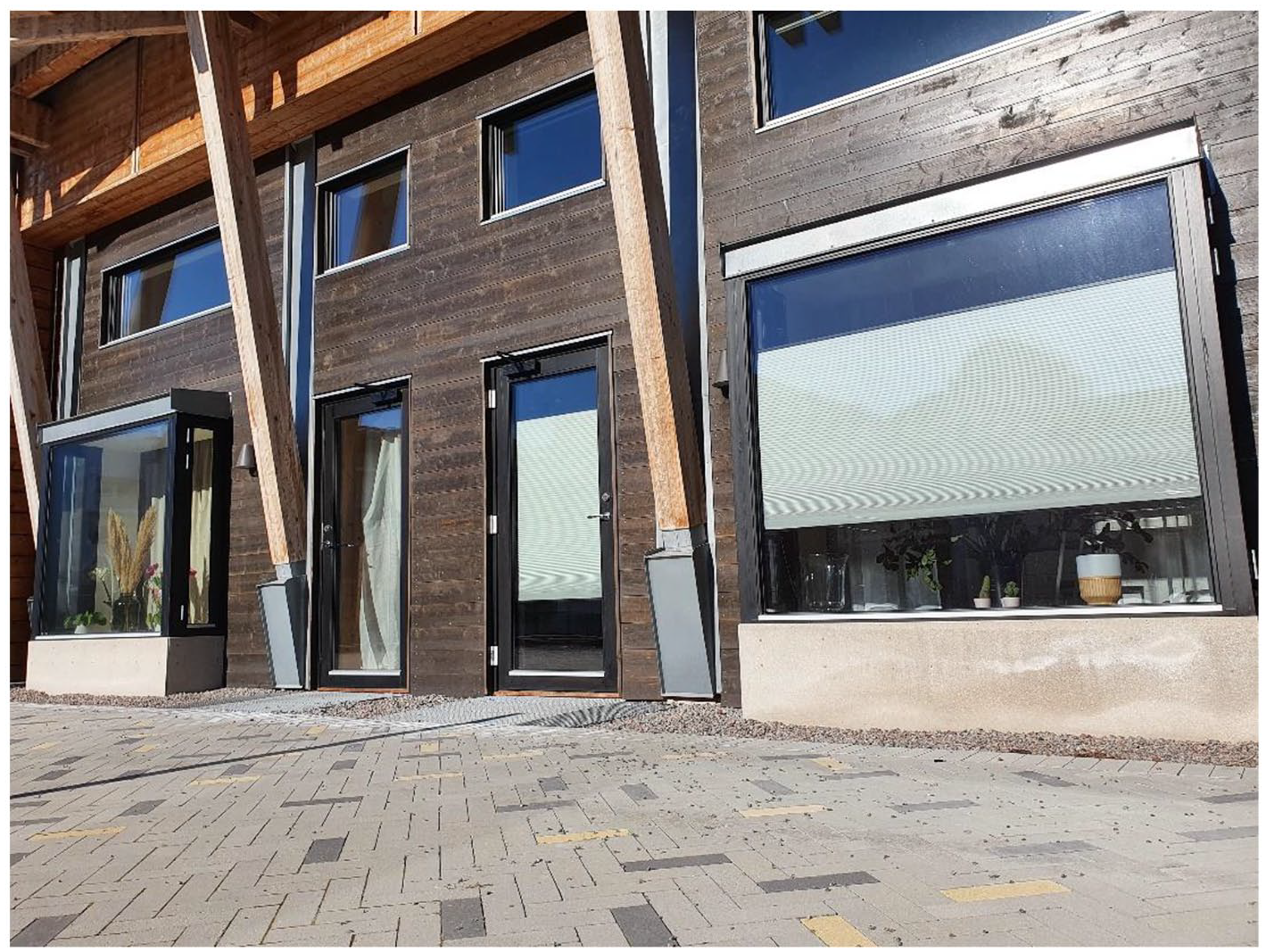
The concept of bokaler was developed to indicate a premise’s combined use as both a residential and commercial space. Image by Wiktoria Glad.
In practise, the bokaler concept became an issue, especially for the cooperatives in multifamily buildings, which have layperson boards with economic responsibility for the buildings. The bokaler turned out to be difficult to sell: [Resident Gunnar]: No, he had great difficulty with it. It was very empty and I can understand that, because there were two giant ones . because it was like a big window like this around the side and so I understand that no one wanted to live there. The transparency is insane as well. [. . .] Business and such may [be possible with a small space to] be able to sleep there I think but living [. . .] is probably a little harder. [Resident Greta] I think [the concept is] exciting. [But] nobody probably bought it.
102
The ideal tenants of bokaler are those looking to combine housing and business premises, realising the vision of Linköping municipality and the Swedish National Board of Housing, Building and Planning. Certain residents are thus desirable, while the rest are ‘othered’. 103 By making one version of a home present, other homes are necessarily made absent, since all versions of homes cannot exist at the same time (or at the same location). This is evident in the quotes from Gunnar and Greta, who explain that living in bokaler seems problematic due to the large windows. Thus, to make bokaler possible, other homes are othered, or in the words of Law and Mol: ‘The constancy of object presence depends on simultaneous absence or alterity’. 104 The ontological politics embedded in the version of the resident that is enacted through bokaler is based on a diffusion of the private and professional aspects of life. Making a private home absent in favour of a home that also invites work enacts the idea that the tenants’ work is inseparable from other parts of life. However, none of the bokaler in Vallastaden are used as intended. The tenants use them only as homes, and thus change the ontological politics of the home that the political and professional actors aimed to design into the buildings, where the large display windows create showcases of the tenants’ everyday lives and, as discussed in the previous chapter, invade the privacy of the home.
Glass thus fails to enact the fusion of home and commercial facilities, and while the residents can live in the bokaler as private homes, it comes with restrictions and a need for tinkering. Windows as a failed technology have been explored in Jacobs et al., 105 where the Red Road residents described their interactions with older windows placed high on the walls as ‘[. . .] complex and ambivalent (an appreciated view, a place of memory, a difficult thing to clean, impossible to ‘properly’ curtain, a hole that lets in draughts, unsafe)’. 106 While the windows in bokaler are new and have a different politics embedded in their design, the questions of safety (from overheating or breaking glass) and difficulties with cleaning and properly curtaining are similar in both cases. Exploring the failings of glass demonstrates the challenges in using windows to enact certain homes over others, while not attending to the needs of the residents.
Environmental sustainability imperatives on display
Ground-floor spaces designed for commercial activities are in some cases used as indoor bicycle storage rooms (Figure 3). Display windows cover much of the external walls of these spaces and fluorescent tubes create bright lights, making the double-decker bicycle racks highly visible to passers-by. Linköping municipality has in this way enacted sustainable mobility and they have promoted cycling for decades. In several parts of Sweden, cycling is a part of everyday life – an affordable means of transport and ideal for easy access in cities. In some respects, cycling is a symbol of Swedes’ stated love of nature and the outdoors. 107 In recent decades, cycling has become a central part of policies around transition to sustainable, fossil-free and climate-neutral future societies, thereby enacting an ontological politics where bikes are an environmentally-friendly choice.
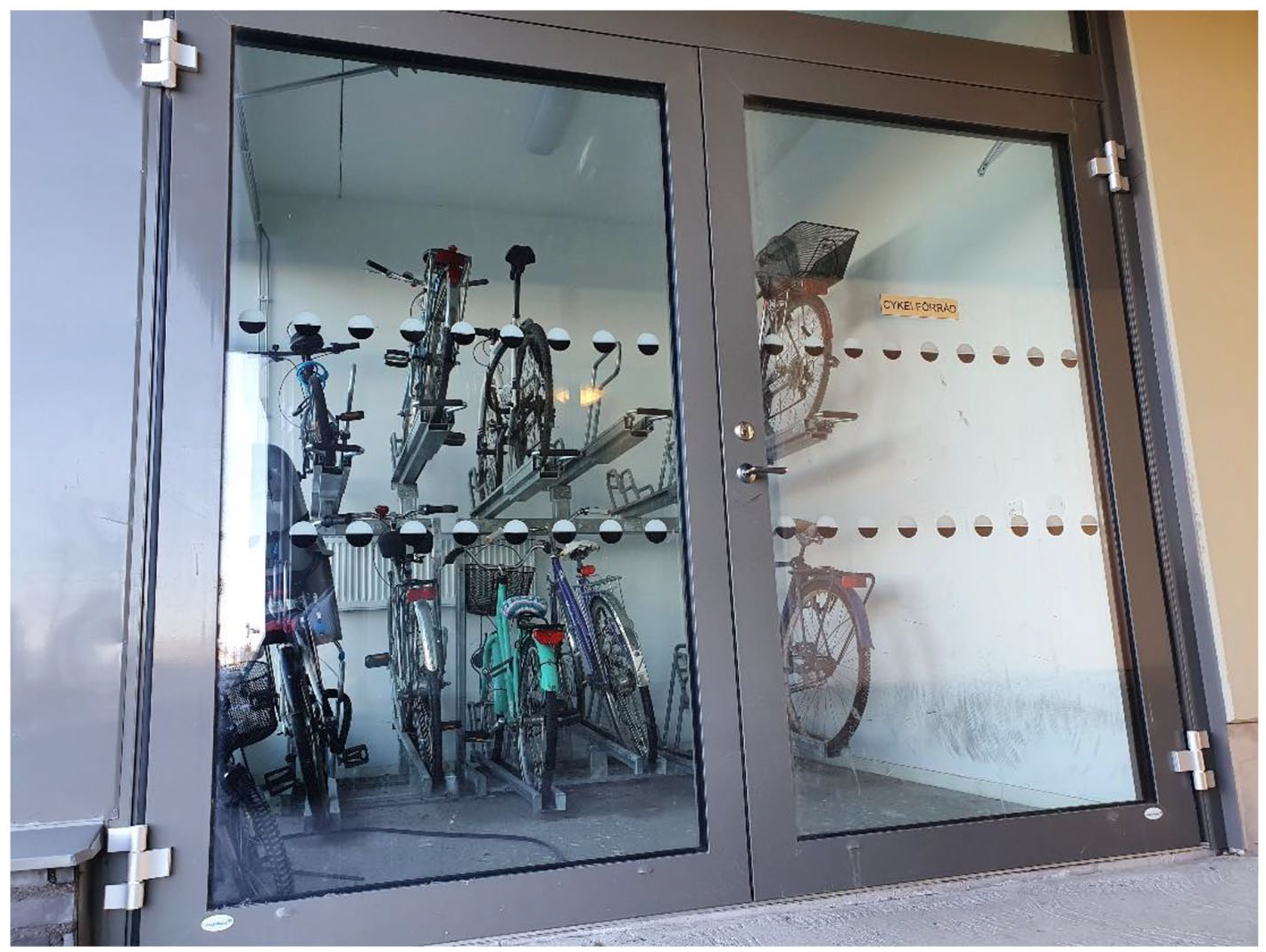
Double-decker bicycle storage room in Vallastaden. Image by Wiktoria Glad.
Cycling is promoted in various ways in Vallastaden, with infrastructure development, the construction of bicycle routes and secure and accessible storage. There is a political agenda behind the glass displays of bikes in Vallastaden and an imperative directed at residents through the exposure of the practise of cycling. The ontological politics enacted in the built environment is one of favouring bicycles over cars. While most cars (except carpool electric cars) are hidden away in peripherally located garages and roads, bicycles are centrally located and easily accessible. The enactment of the sustainability agenda also involves exclusion, as the narrow roads designed for walking and cycling are less accessible for people who need to use their cars, for example, due to disability or when moving house. Even though the glass walls of the bicycle storage do not in themselves restrict cars from driving in Vallastaden, their inclusion depends on the exclusion of cars. The two cannot coexist, as they come with different logics and prerequisites regarding what a city district should look like. The ontological politics enacted in the road infrastructure, car garages and cycle parking are intertwined and need to be understood in relation to each other, as presence is reliant on absence. 108
The display of the bicycles clearly shows which presence is preferred in Vallastaden, but nonetheless, some of the residents still feel that cars cause an inconvenience. The roads that circle around the central parts of the city district cut them off from the park located on the periphery and the noise of the traffic bothers some of the residents as it echoes between the high-rise buildings. Once again, the experiences of the residents can be discussed in light of using glass to enact political choices: there is tension between what is made present in the design and how the residents live their everyday lives.
Another area that Linköping municipality has emphasised as part of environmental sustainability is household solid waste. In collaboration with property owners, recycling facilities have been provided in many neighbourhoods, and different campaigns have encouraged citizens to recycle solid waste. In Vallastaden, the design idea of using glass to display desired environmental actions has also been implemented for solid waste. The neighbourhood’s recycling room is situated at the entrance to The Hive (in Swedish: Flustret), one of the peripherally located overground parking garages. This space is locked, and only residents with an electronic tag can enter the premises. During the 2017 exhibition and the many subsequent field trips to the area, the recycling room was included in the guided route. The design of this space included glass in several ways. The door leading to the recycling room from the parking garage is a glass door, making people and recycling activities visible from the outside and approaching visitors visible from the inside. This is partly a safety measure to provide a sense of security through visibility on either side of the door and avoid unwanted surprises. The recycling room also has windows to provide daylight in this secluded space on the outskirts of the neighbourhood. As a pedagogical tool for visitors, and to inform residents, the different materials – plastic, metal, paper, cardboard and glass – are displayed in glass containers above the relevant bin (Figure 4).
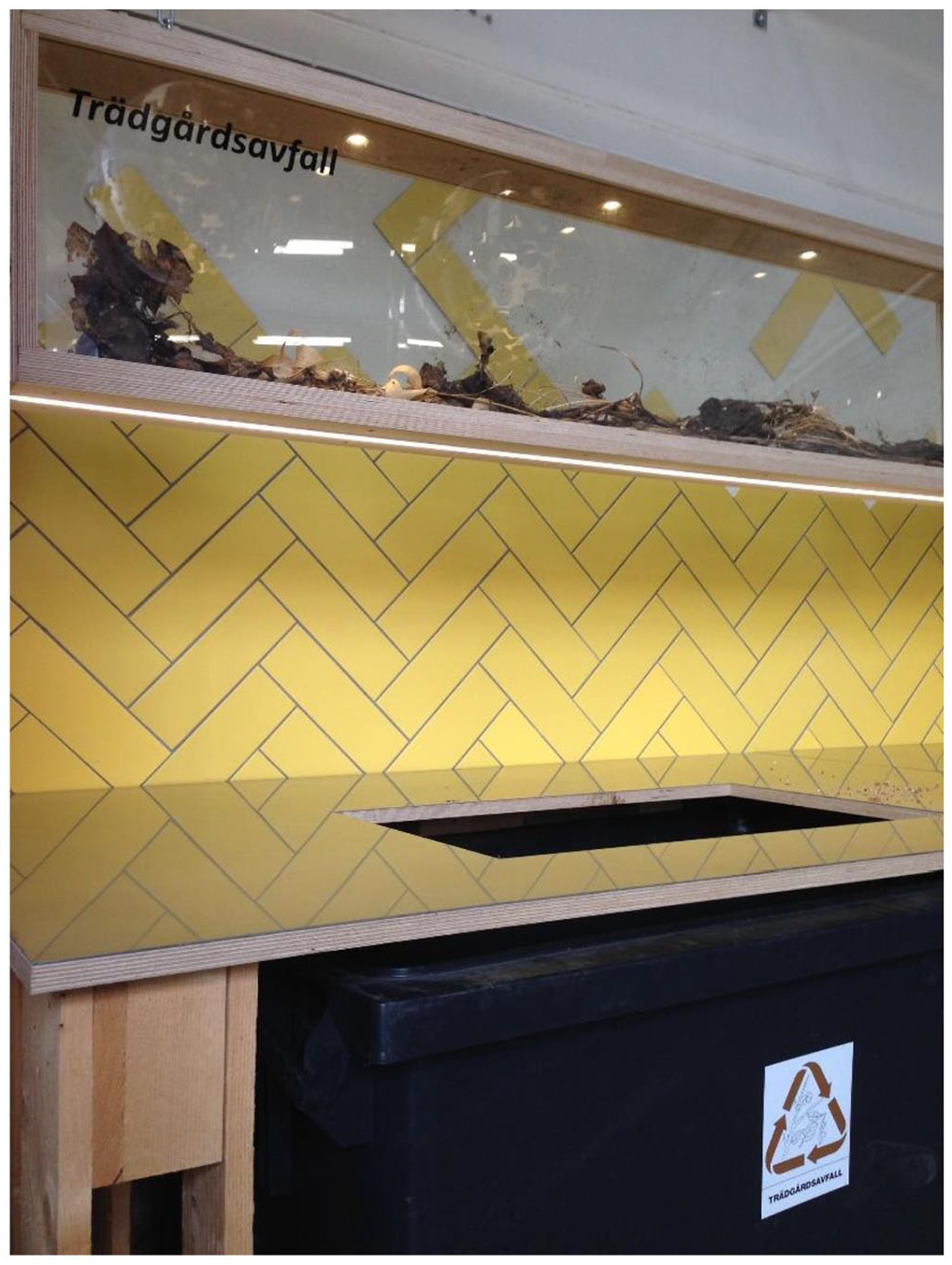
Recycling of compostable garden waste (Swedish: trädgårdsavfall). Image by Wiktoria Glad.
The questions of how to encourage citizens to recycle and how to promote certain recycling activities have been on the agenda of Swedish municipalities for decades. 109 Much faith has been placed in visual communication through pictures and words, which adorn many neighbourhood recycling rooms. Through clear, striking, visually attractive messages, it is expected that people can be encouraged to increase their recycling activities and to do so more accurately, putting the correct item into the correct bin. Still, household recycling activities are often portrayed as a challenge since poorly managed recycling, on the part of either individual households or property owners, causes annoyance and friction between neighbours. Overloaded bins, waste left on the floor and the smell of food residue can cause problems between neighbours. This is also the case in Vallastaden, and the intention behind using glass to clearly show which items should go in which bin has merely aesthetic and visual effects, rather than actual influence on residents’ behaviour.
Social sustainability made visible
As part of the sustainability agenda in Vallastaden, interested property developers made commitments during the planning stage. One of the optional commitments was to build a kind of glazed glass social space, a winter garden, which was an economic alternative to other commitments for developers. These winter gardens became popular in Vallastaden and were mostly built on rooftops (Figure 5), although occasionally on the ground floor (Figure 6). Residents spoke about the winter gardens being mostly unused and described them as empty, uninviting spaces, although non-humans sometimes found their way into them:
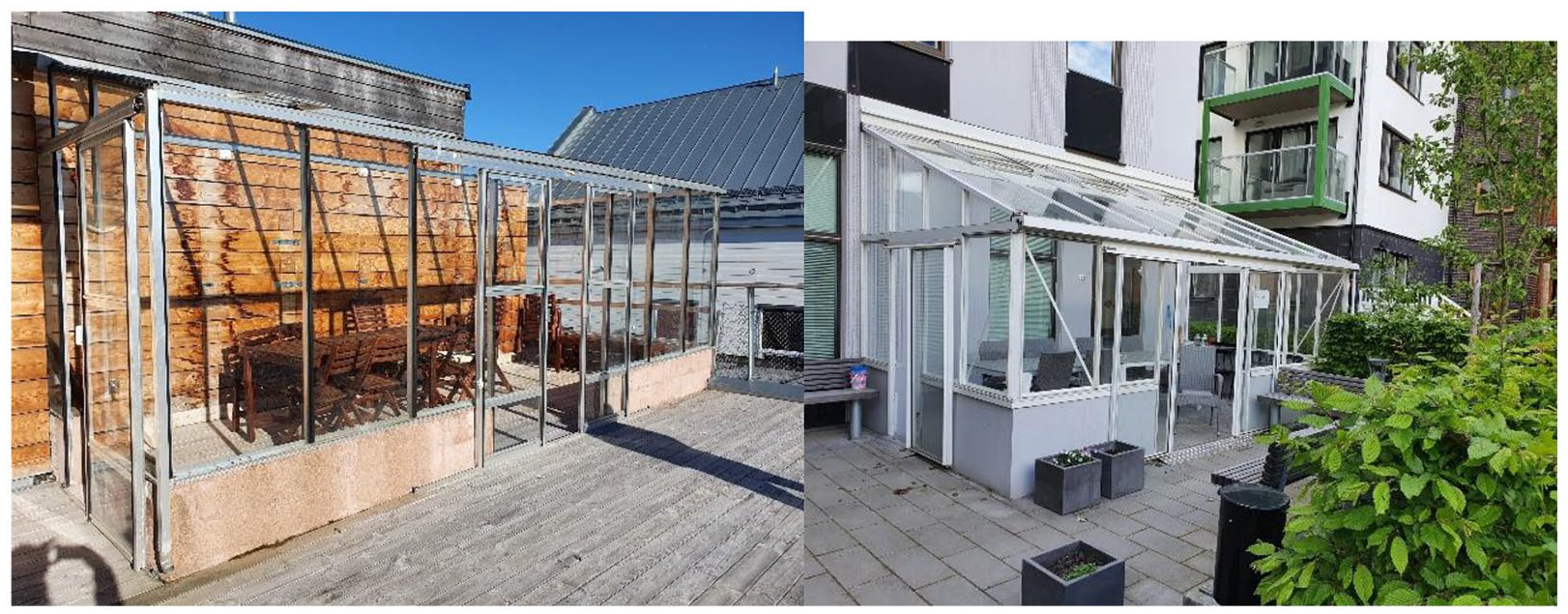
Winter gardens on a rooftop (left) and at ground level (right) with a sign that reads ‘Private’. Images by Wiktoria Glad.
[Resident Britt] Hey! There’s a small bird that has managed to get into the winter garden in the picture, but can’t get out. I don’t know anyone who lives in the building, but I’m certain that there is someone living there in this group who may be able to help it on its way  110
110
This message and an accompanying picture of a building with a glass-covered winter garden on the roof was posted in the residents’ Facebook group. Winter gardens are intended as a place for community and socialising with neighbours. The glazed windows allow for the sun to heat the space and for the residents to enjoy some thermal comfort even on slightly colder days. Residents are protected from wind yet can gaze out at the surrounding landscape, thus creating spaces with liquid architecture. 111
The winter gardens allow for meetings between residents in the building, erasing the boundaries between their private apartments. However, only residents can access the winter gardens, thereby excluding people who live elsewhere. Here a sharp boundary is enacted, as there are stairs and locked doors as well as high windows that separate residents in different buildings. These boundaries may, however, be open to certain types of visitors, such as the occasional lost bird that flies in through small window openings. The boundary can be crossed with the attributes of wings and small stature. However, not only does a boundary need to be crossed to come inside, it also must be crossed to go back out. For the bird, the space changes its shape and the boundary comprised by the windows can no longer be crossed; nor can the residents watching the bird from a distance cross this boundary. The Facebook page is used to reach other residents who might have access to the winter garden space and be able to help the bird find its way out. Through the design and location of the winter gardens (mostly on rooftops with access restricted to residents of the building in question), relations that include or exclude are created. Technology might present opportunities for challenging these boundaries and relations, thus enabling the residents to engage in spaces from which they are physically excluded. In other words, boundaries are constantly under negotiation, reminding us that they are enactments of world-making. 112
The joint efforts of Linköping municipal urban planners, spatial designers and building architects created a version of social sustainability where glazed spaces were prominent. Glass became a political material that would enable social aspects of sustainability, but only in controlled ways. Glass allows residents and visitors in Vallastaden visual contact through the surface and also enables some sound to travel through the single-glazed walls. However, this would not be sufficient to foster deeper social contact, since in the case of the winter gardens, direct interaction with visitors and who are excluded from these spaces is not possible. Considering the role model ambitions of Vallastaden, designs that enact inclusion and exclusion are highly political. For instance, a winter garden provides access to the residents of a particular building but successfully excludes the residents of other buildings and city districts. The spaces are, however, negotiable, as birds and neighbours have limited reach into the winter gardens, either by proxy or through the ability to get in (but not out) by themselves. The materiality of glass is thus vital in the enactment of social sustainability as it enacts soft boundaries which transform in different settings for different actors.
Another social sustainability initiative in Vallastaden concerns felleshus (Figures 7 and 8). Despite differences in the design details, most felleshus in Vallastaden look like huge greenhouses and are constructed with large amounts of glass in both the walls and the ceilings. They each contain a smaller building, which creates a building within a glass construction, a trend that can be seen in contemporary architecture. 113 The large windows and the lack of insulation mean that felleshus have both ‘indoor and outdoor areas’, as well as a section with regular walls and heating. This construction invites the residents to explore different activities: some felleshus have space for play, some have ping pong tables, while others focus on green areas with opportunities to grow plants or vegetables. The windows allow for a broader repertoire of activities due to the combination of indoor and outdoor qualities, although this design comes with constraints.
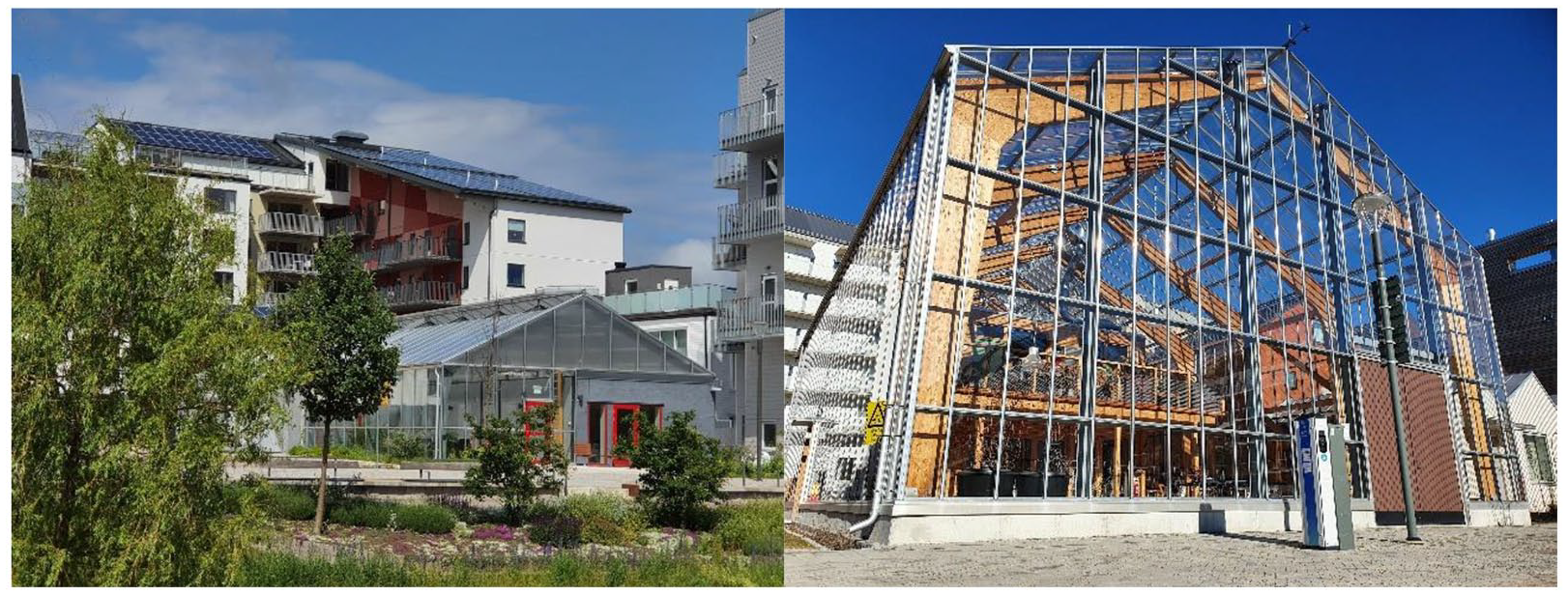
Two of seven existing felleshus in Vallastaden: The Inspiration (left) and The Integral (right). Images by Wiktoria Glad.
The noise reduction of glass walls is much lower than regular walls, and heated discussions have been raised in relation to the use of the felleshus. Noisy parties have bothered residents who live close to the felleshus, and many felleshus have had to invoke strict regulations regarding their use. The buildings are no longer available to rent for parties or external guests other than guests of the residents of the block. Glass walls and ceilings also involve significant commitments in terms of caring for the building, a responsibility that exceeds the usual level of responsibility for a private home. Moreover, the form of felleshus organisation requires at least some residents in the city district to take time to either clean the large glass ceiling and walls or make sure that someone else takes on the task. This time and effort has become part of living in Vallastaden and is an indirect effect of the idea of collectives as part of a social sustainability agenda. The responsibility of tending to a building that is not one’s home (or at least only an extension of one’s home) was enacted by the Linköping municipality early in the planning process, and the responsibility of maintaining the felleshus subsequently enacts ontological politics through the sustainability agenda into the residents’ everyday lives. This responsibility is handled differently for different felleshus. Some are active, have excellent accessibility for residents and are well cared for. The glass ceilings and walls are kept clean, and the interiors are free of dirt and clutter. Others, however, are not as well maintained, and the windows allow people passing by to see the (lack of) time invested in the buildings; and when there is a lack of care and concern for the building, there is also a failing on the part of the sustainability agenda. 114
Conclusions
In this article, we have explored how sustainability is enacted through glass and creates porous sites of tension in the proclaimed role model neighbourhood of Vallastaden. The ontological politics inscribed into the built environment is sometimes subtle; at other times, it more overtly encourages residents to act in certain ways. In Vallastaden’s case, the environmental, economic and social aspects of sustainability are all made visible with glass. The private sphere is on display, and the boundaries between public and private spaces are intentionally blurred. Kraftl 115 has previously shown the many challenges of living in a renowned building, with constant attention from visitors and tourists. Our research in Vallastaden reveals similar challenges for residents in a neighbourhood that is constructed as a showcase for novel urban planning and sustainability, parallel to its being a home and community for the residents.
With the proclaimed status of Vallastaden as role model for the world, glass was enacted to put certain versions of sustainability on display. Social activities and gardening as versions of social and environmental sustainability are displayed in the greenhouse-like community buildings of winter gardens and felleshus, while sustainable transport is showcased with ground-level bicycle storage rooms designed with extensive façade glazing. In the attempt by architects, designers and planners to make sustainability concrete and present in the everyday life of Vallastaden, glass proved to be a highly regarded and useful material. The use of glass has created porous sites of tension, 116 as it allows some interaction between the inside and the outside of a building while still retaining some socio-spatial integrity. 117 This follows the idea of buildings as ‘permeable objects’ 118 with questions about what is able to pass through from the inside to the outside and vice versa. It is of importance how glass is experienced when it is used at ground level; even if glass is considered a common and ordinary material today, its transparency (making the inside visible) and ability to reflect the sky, sun and surroundings remains a seductive feature. At the same time, glass can also make people feel exposed and vulnerable.
The use of glass has a variety of applications and allows for enacting sustainability in tangible yet flexible ways. Glass provides some access from the outside, and the surrounding neighbourhood will in some ways overstep the boundaries that glass nonetheless still provides. 119 In our case study, glass boundaries allow for visible access, but not physical presence for everyone. The seemingly harmless use of glass still acts as an example of the ontological politics of enacting boundaries, which are central in creating an inclusive and democratic society. The dual nature of glass allows for more flexibility and thus provides more ways to create everyday practises with looser boundaries while still maintaining exclusion. Hence, the residents’ tinkering 120 with glass surfaces influences the transparency, for both passers-by and the sun.
Thinking with ontological politics focuses on the connection between everyday life, political choices, boundaries and the built environment. As this article shows, sustainability in relation to glass comes in different versions and can be used to enact different ontological politics. The porous site of tension that arises through glass shows the multiplicity and complexity of enacting sustainability. Sustainability thus needs to be analysed by all involved actors with a sensitivity to the boundaries it creates. In this way, we can make visible the ways in which designers, governments and authorities influence peoples’ lives through the built environment without overtly displaying their powers.
Footnotes
Acknowledgements
We would like to thank all our research participants and we are also grateful for constructive feedback and suggestions from the editor and the anonymous reviewers.
Funding
The author(s) disclosed receipt of the following financial support for the research, authorship, and/or publication of this article: This research was funded by the Swedish Research Council Formas under grant number 201800057.
