




Abstract
A few years ago, I was diagnosed with rheumatoid arthritis and decided to keep a sort of diary of my experiences and thoughts. This essay is a collection of what I call “episodes” and uses writing and drawing to try to capture something beyond the surface impressions of living with a chronic condition. I present several episodes drawn from the collection that I have been keeping since 2018. In presenting these pieces, I explore the immediate, felt, and affectual geographies of a chronic disease, in an effort to understand the body, chronic disease, corporeal experiences, and the relationship between failure and medicine. The collection foregrounds how the doing of cultural geography is an affective, experiential journey through our bodies, spaces, and times.
Introduction
In 2018, I was diagnosed with rheumatoid arthritis - a chronic condition that causes pain, swelling, and stiffness in the joints. This condition leads to deterioration and severe damage of the joints. Shortly after this diagnosis, I tested positive for anti-cyclic citrullinated peptides (CCP), which is commonly produced in people with rheumatoid arthritis (RA). These autoantibodies target and attack otherwise-healthy tissue. In response to these diagnoses, I decided to keep a diary of sorts, a collection of episodes of my experiences of RA. Through this collection of episodes, I attempted to understand what was happening to the body, to my body; to explore the affects and effects of a chronic disease and corporeal experience; and to examine the relationship between bodily failure and medicine. In doing so, I have been inspired by a range of writing that seeks to capture something of the essence of daily life and lived experience. 1 I have attempted to follow only a couple of “rules”: episodes are to be no longer than 250 words, and they are not restricted to writing. My collection includes drawings as a way to capture what is beyond (my) verbal and written ability. The episodes are not presented in chronological order.
A small room in Uccle
It is a short walk from the tram stop to the rheumatologist’s office. The morning’s stiffness has lingered, leaving me reluctant to sit for the cross-city journey. The movement of the arm to press the button to stop the tram is a conscious, excruciating effort. The finger’s pressure on the hard plastic button sending shockwaves up and down. Descending from the tram is slow progress, keeping an eye out for supports and aware of other people’s gaze. My reward is a small white, windowless room with four simple chairs and a low table covered in pamphlets and magazines. To stand here is not a choice, lowering almost by the inch to reach the chair’s rigid plastic. A translucent door slides open. I must command myself to stand, slowly rising. Pausing once straight. Then bending slightly at the knees, arm stretched as far as possible to collect my bag from the floor. All the while, the diagnosis has started. Once inside the office, which has windows looking on a pretty walled garden, I remove clothes to lie on an examination table. I hope that the pain doesn’t show too much. I seem to want to remain impassive, not wanting to confront the changes within my world that are unceasingly approaching. Each joint is inspected, squeezed, manipulated, examined. I rank the difficulties of various tasks out of 10. Tying shoelaces, washing oneself, standing up from the toilet. It is in these sorts of rooms that one’s hopes and dreams are glimpsed and vanish in the blink of an eye.
Fiery, water joints
My hands and wrists are swollen, pudgy, and not my own. Each step brings a searing pain through the soles of my feet and through each joint from toe, to ankle, to knee, and ever upwards. Pain today is sharp, hot, and dagger-like with a ruthless precision. The gaps between and around my joints are like fire. Movement is constrained, effortful, and in staccato. A step, then a step, then a step. Short, detached, separated. The moments between, the fractions of stillness, are calmness. Fingers that do not want to bend and grip. But this morning, I want jam on my toast despite, in spite of, because of the difficulty in clasping the lid and turning. Simply turning the lid, twisting fingers, gripping the jar, and holding the knife. I want the jam, and the relief at completing a simple task brings forth a laughter and a sense that is close to joy.
Back to “normal,” whatever that is
Six small, round yellow tablets. A short, stubby white capsule. Taken with breakfast. Such an instruction seems to conceal the complex within the mundane. It takes several weeks for the medicine to work. And then, well, and then this is what “it” was before or what “it” will be from now on. I can do everything again with hardly any pain or stiffness during the night or in the morning or creeping fatigue that slowly deadens activity. Running, walking, typing, opening bottles, shaking hands. No swelling. No fire. In another 7 days, six small, round yellow tablets and a short, stubby white capsule. Back to normal, whatever that is or was. While I have returned to a sense of myself that I had before, I am not the same. I now can’t be without these tablets, this medicine. The popping of the silver foil, the caressing of the white pliable tray. I can do what I did, but can’t do, can’t be without. For as long as they work.
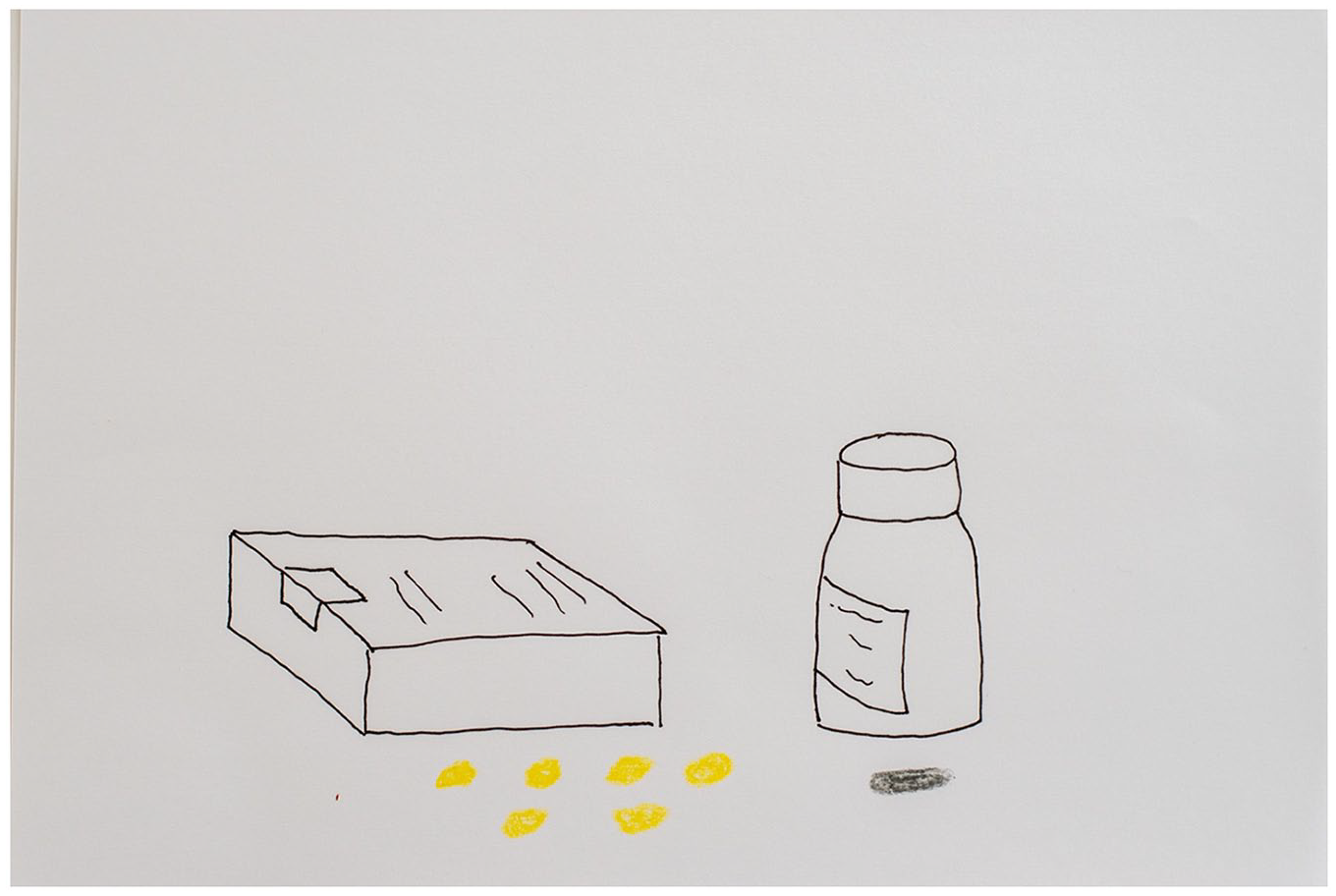
Pharmacology. Photo by Andrew Barnfield.
Prise de sang
Every appointment requires a blood test. I prefer the hospital near the old apartment. It is a single-story extension with a single white PVC door that opens onto a narrow space. A counter to the right, where I present my ID card and my form with the tests required, and seats to the left, where I am directed to wait. “M. Barnfield.” I smile, rise, and follow through a door to the right-hand side of the counter. Scarf and coat removed, sit in a reclined chair. Sleeve rolled up and a thin, belt-like strap is tightened around my arm. “Faites un poing, s’il vous plait.” I’ve come because of this man. This magician. The lightest touch on my skin for the strap, and an even lighter touch for the needle. It is a whisper, the gentlest flicker of sensation. I do not feel the needle as it enters the skin. Three vials are attached and filled. A small cotton wool pad is placed over the point of entry and taped with a single piece of white surgical tape. “Bonne journée.” And with that, I am out through the door. I see in the faces of others waiting an array of states and emotions. For me, it’s the single white door to air, to life.
A veil
Fatigue from inflammation is a fog that settles sometimes slowly, sometimes without any prelude. What started as a joke, “I’m done for the day,” has turned into something worrying, sinister even. It can be 7 pm, and I will be gone, asleep on the sofa or a zombie in a café. The will to action has gone, the fog has settled over me, a veil has descended. Is this what our final moments will be like, a slow veil that can’t be shaken off? A conversation is hard to sustain; interest vanishes. What started as a joke isn’t funny anymore (or so the song goes). Something isn’t quite right; something, a thing is missing, has been misplaced, has gone astray. I can feel it, sense it, and you can, too. I can grasp at it, can try to articulate this heaviness, weariness, drowsiness. Even after sleep, whatever this is, remains. Am I being restricted, or am I restricting you?
Rigid, encased
To wake is disturbing. It is as if I’ve been encased. I lie in bed, and it is dark, 2 or 3 am dark. I am rigid, encased, and it takes real effort to move. Real force and will and determination to move my arm from straight to bent. Real force and will and determination to move my knee from bent to straight. Real force and will and determination to roll over and onto my side. My body, my skeleton, this thing that senses the world, the flux, has turned to concrete. I must break it, crack it, snap it so that it doesn’t solidify, extinguishing movement for good. Each flex, extension, rotation, or lift is excruciating. Wiggling fingers or wriggling toes. At times both are close to unthinkable. In the morning, movement will take repetition, repeating small movements, then bigger ones, and then motion. It will take real force and will and determination.
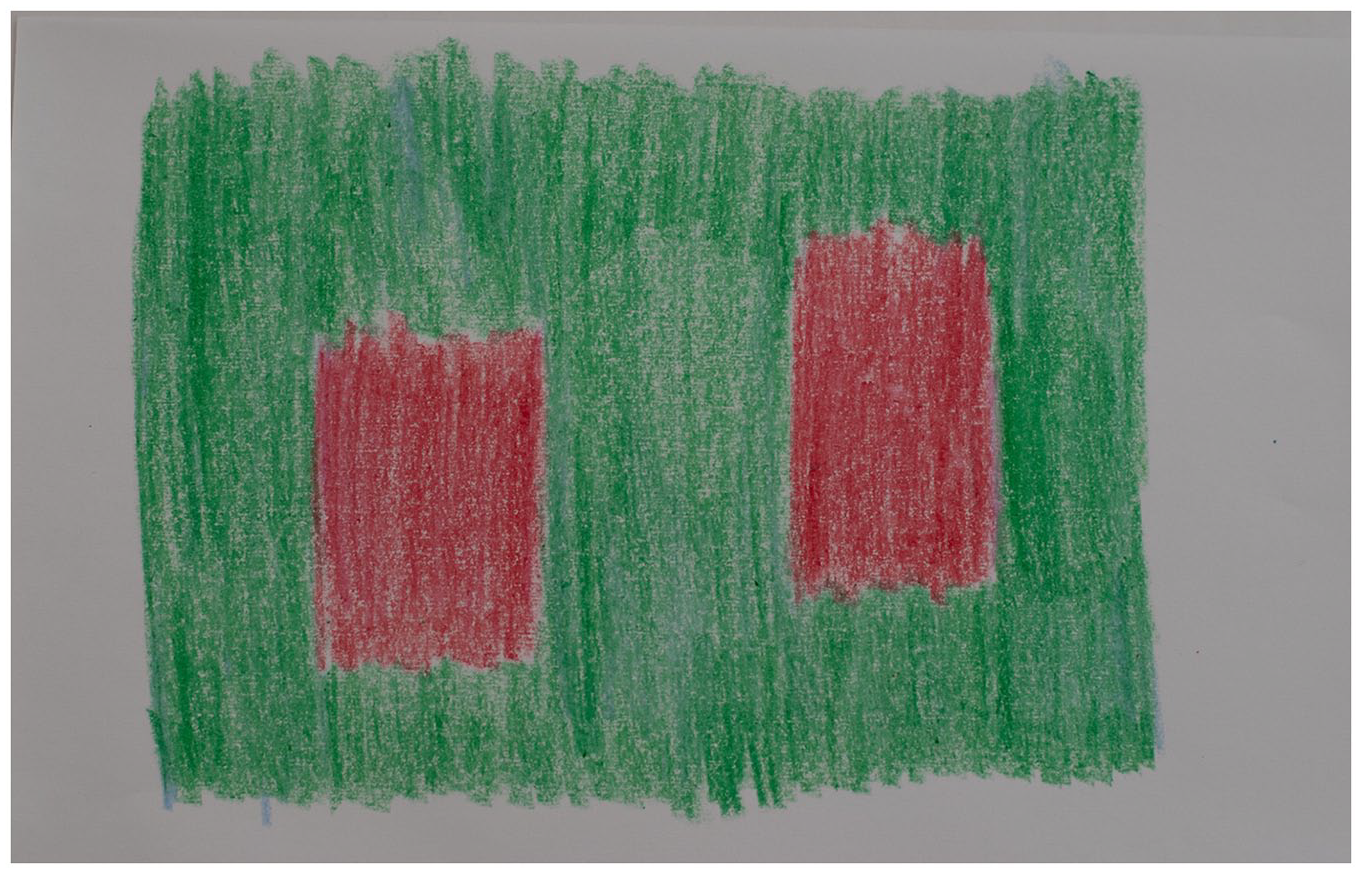
Scan. Photo by Andrew Barnfield.
White room, lights out
Ultrasound. A scan that uses high frequency sound waves to create an image of parts of the inside of the body. I am sent for an urgent ultrasound scan the day after my first trip to the rheumatologist. Diagnosis has been made; now deterioration needs to be observed. I sit across a hospital bed from a doctor. This is a clinical white room; the lights are dimmed. My hands are stretched out toward the doctor, palms up. The backs of my hands are resting on the cool, crisp linen surface. My hands ache, they are droning on and on. A gel is applied, and a probe moves over the surface of my hands, and pictures appear on a screen to the right of the doctor. Moments pass, pressure is applied and weakened. Keys are typed on a keyboard; a mouse is moved dextrously, and images are captured with such finesse and grace that I am left embarrassingly jealous. My clumsy-feeling hands lay before us, seemingly useless and made more so by the fluid movements of the doctor. The probe wire tangles on my finger delivering a lightening burst of pain up my arm. The darkness is calming, and the methodical scanning is hypnotic. I glance from hands to screen, screen to hands. I am unable to decipher the images or their interpreter.
What is it that a body does?
What can a body do? Deleuze poses such a question, utilizing the philosophy of Spinoza. We don’t know what a body does and cannot grasp all the functions and the physicalities. Holding things and moving about are both conscious and unconscious at the same time. Imbued with effects and affects that work on the border of our understanding. Picking up a spoon or fastening a button have become almost insurmountable obstacles. This much I know. I can observe the fingers, my fingers, stiff and swollen, unable to bend or flex in order to work a button through an eyelet. I can look down at my feet as I walk across the room, every step feeling like walking on broken bones with broken bones. Staggering, juddering, clasping at door frames, arms out like a tight-rope walker. These are new words, novel worlds. What is it that a body does? Despite it all, I still go running. After ten minutes of enduring painful step after painful step, a lightness settles down. The pain drifts to the far background. Speed and motion take over. The flow of movement, the drifting away from the boundaries of corporeal existence. Towards the doing that a body does.
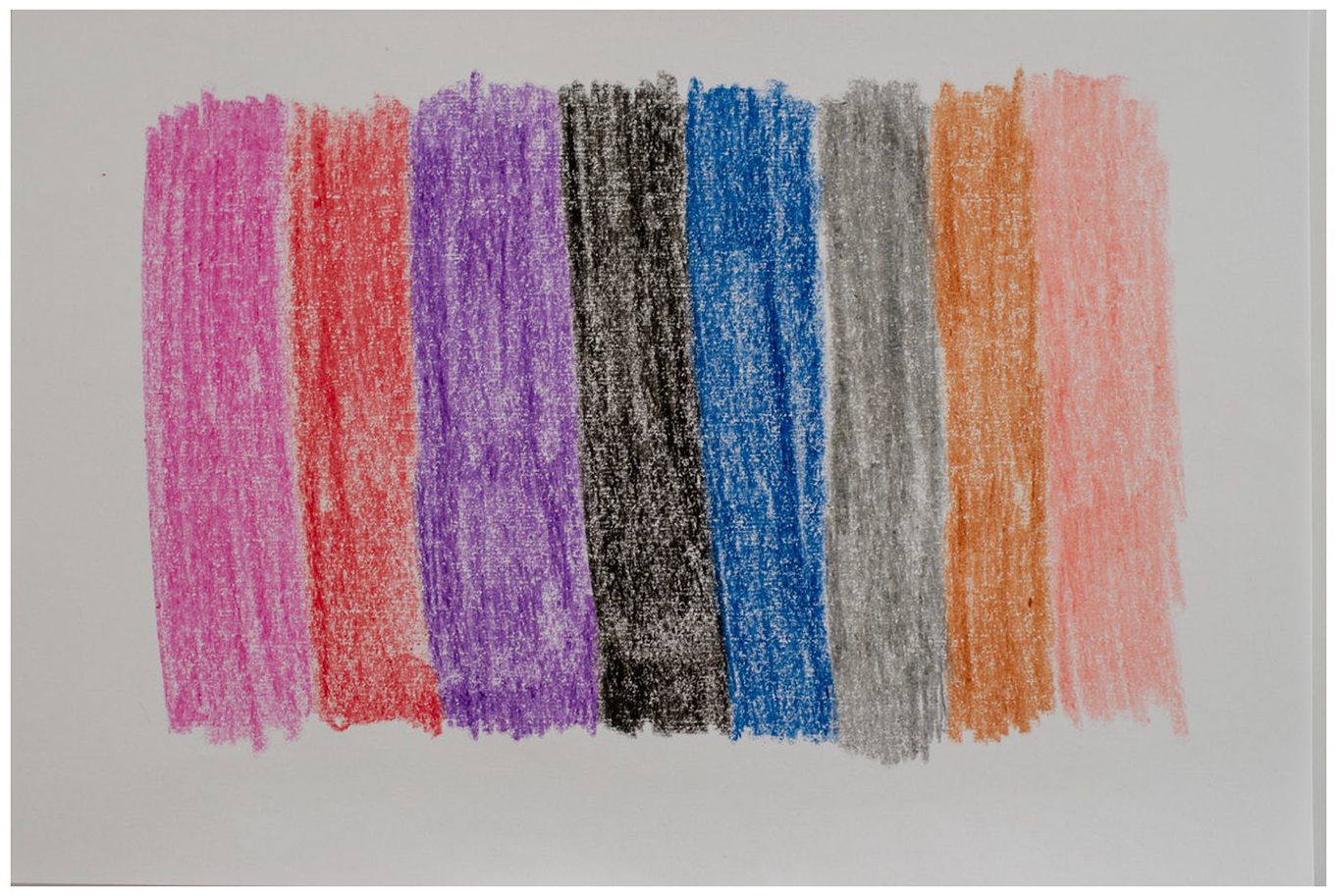
Movement/feeling. Photo by Andrew Barnfield.
Inflammation
In most circumstances inflammation is a good thing. The body reacting in a complex biological way to perceived dangers. In rheumatoid arthritis, it is not so helpful. By mid-afternoon, I have two swollen fingers, twice their normal size. They do not, cannot bend. The third and fourth knuckles on my left hand feel as if they are being forced apart, separated. The continuous sensation of splitting at the knuckles takes time to adjust to. This is a good description of chronic pain. A series of adjustments or attunements that are incorporated or imbricated into daily experience. Walking, and sensing the slightest restriction in movement as the early sign of inflammation. Constantly looking, feeling, sensing for signs. Studying the body for suggestions of impending restrictions, encroaching restrictions. Learning a new language that can only be sensed, felt, lived.
Dull, continuous ache
A chronic disease is not to some degree an interminable experience of pain. Rather, it is the stop-start interference with the taken for granted. This morning, I woke to a series of pains where last night there was none. The dull, continuous ache that has been a constant companion throughout the day drifts into the background and back into the foreground as the day wears on. This occasion, it is the left ankle. It is not the same sharp, stabbing, wince-inducing variety. Instead, this is the hum and burn. The type of pain that rumbles along, building in intensity, ebbing away and building again. It is like a vice that is tightening with heat. A dullness that isn’t a lack, an absence, but it is the thing, the presence.
Practicing cultural geographies
The collection of writing that I have been keeping since 2018 started as an effort to think through the corporeal, material, and practical experiences of living with a chronic disease. In doing so, it has accentuated how the doing of cultural geography is an affective, experiential journey through our bodies, spaces, and times that can handle the differences, the multiplicities. In looking to chronicle (or a better term would be to grasp at) these experiences, the need to think carefully about different ways of capturing experience and rendering them sensible is an important task of cultural geography and its approach to health and illness. This work encompasses different forms of writing, image-making, sound capture, and any other inventive form of chronicling something of the essence of daily life. In this case, the aim of the writing and the act of cultural geography are closely intertwined; the living with one’s body and attempting to understand of what it is (still) capable are endeavors that require being attentive to space, movement, feeling, and body. Corporeal experience may be the most immediate geography, but it is cultural geography that learns, teaches, and reveals all the same.
Footnotes
Funding
The author received no financial support for the research, authorship, and/or publication of this article.
