




Abstract
How do European Arts and Humanities (A&H) graduates contribute to their economies and societies? This paper aims to answer this challenging research question by analysing data from the 2018 pilot Eurograduate survey of graduates. The article explores the monitoring of employment dynamics and considers the labour market outcomes of A&H graduates compared to other graduate groups. Our analysis enables an understanding of the utilisation of A&H graduates’ knowledge and skills in the current employment market (job-qualification match) and more specifically, their contribution to legal, social and cultural occupations. The dataset variables enable an exploration of the multiple contributions made by A&H graduates to other aspects of contemporary society. Specifically, we examine graduates’ volunteering activity during and after their degree, alongside other forms of civic engagement, including political and social action. The findings contribute to the broader debate on the value and impact of A&H degrees beyond measurements of graduate earnings.
Introduction
The value of Arts & Humanities (A&H) education has faced significant examination in the last two decades. A 2010 European Commission (EC) report, ‘Unlocking the potential of cultural and creative industries’ recognised the need for skills development in creative and cultural subjects within Higher Education (HE) as a means to ensure future prosperity. However, there has been a notable shift within political discourse on the value of creative and cultural subjects and A&H education more broadly since this period (Bulaitis, 2020). Within the literature, falling rates of A&H student enrolments have led to concerns about the future health of these subjects. There is extensive international literature that has considered the impact of A&H degrees and their weak position within labour markets, with studies providing evidence from the UK (Augar 2020; Comunian and Brook, 2019), Australia (Daly et al., 2015), the USA (Kernan, 2014) and in Europe (Reimer et al., 2008). Some authors consider how funding for A&H subjects is decreasing (Kernan, 2014) and/or pressure to adopt neoliberal entrepreneurial frameworks (Foskett, 2010) is increasing. This debate has been taking place both in relation to A&H research and teaching (Hazelkorn, 2014; Benneworth, et al., 2016). The need to demonstrate the impact and value of A&H higher education to society and the economy has undoubtedly intensified. Monitoring systems that measure graduate outcomes across employability and earnings have been criticised with calls to better understand the overall value contributed by A&H graduates to society and the multiplicity of skills and spillover effects (Bate, 2011; Bulaitis, 2020). In this climate of increased accountability and the need to demonstrate the economic and social purposes of higher education (McArthur, 2011), graduate destinations and employment outcomes have become central in illustrating the value of undertaking a degree (British Academy, 2017; Britton et al., 2020) and funding universities in general. This has had a specific impact on the perceived importance of A&H higher education. With data questioning the overeducation (Barone and Ortiz, 2011) and lower employability outcomes of A&H graduates and neoliberal higher education policy strongly linking the value of a degree course with employment, there is a need to challenge the cuts of these subjects.
Some of these concerns might hinge more on how value is being limited to economic impact (and in fact, market returns through salaries) rather than broader ideas of value which consider how graduates contribute to societies in a range of modes beyond their salary and spending power. As Parker (2007) reflects, ‘[c]laims that are made about the nature and value of the Humanities must be of a kind that can, in the end, be persuasively supported by evidence’ (Parker, 2007, p. 125). This paper aims to seek evidence that when looking at A&H graduate pathways, special attention should be placed on their wide-ranging contribution to society beyond individualised accounts of economic worth.
The paper is structured in four parts. Firstly, through a detailed literature review, we discuss how the contribution of A&H to the economy and society has been measured and articulated in the current academic literature. While the particular dataset analysed for this paper does not include UK graduates, many of the literature and policy reflection originates from the UK. While other European-wide sources are included, it is recognised that UK policy and academic work has been at the forefront of neoliberal HE policies in the last two decades and thus relevant to this discussion. The second part provides details about the data and methodology used. We argue for the value offered by the use of the 2018 Eurograduate Pilot Survey (EPS) data (Maurer et al., 2021), which enables us to stretch our current knowledge in two ways: across Europe and beyond the more narrowly conceived measures of employability and labour market outcomes of other graduates’ surveys. In the third part, we closely explore the results and discuss key findings. These are articulated around three steps: firstly, a broader exploration of labour market dynamics for A&H graduates; secondly, considering their labour market outcomes in salary terms; and finally, considering more widely their participation and contribution to society. In the conclusion, we reflect on how the paper moves the current debate on the value of A&H degrees and could be taken forward in future research across Europe.
The rise of arts and humanities courses for the knowledge economy
Before we consider the literature on A&H graduates, it is useful to consider the changes in HE sectors across Europe and the various economic regimes that accompany different A&H courses. As Kyvik (2004) highlights, the sector has expanded greatly since the 1960s in response to an exponential growth in student numbers and changed needs of local and national labour markets. This expansion has taken different pathways, with some countries increasing the offer of non-university HEIs (especially for more professional training) and others integrating this in the framework of existing HEIs (Kyvik, 2004). As student enrolments have increased, HEIs have shifted towards a market-driven funding model by introducing some form of tuition fees, in the majority of countries a concept understood as the ‘cost-sharing’ effect (Johnstone, 2004). The UK was one of the first European countries to adopt tuition fees in 1999 but other European countries, including Italy, Spain, The Netherlands even Germany have introduced some form of private cost to the individual rather than the previous model of HE as a public good for the benefit of society (Cattaneo et al., 2020). In their paper which considers different European policy rationalisations for increasing graduate intake and tuition fees, Cattaneo et al. (2020) highlight the importance of graduates as a means of spurring economic growth and social development. They ask the question that if graduates are the ‘key determinants for the socio-economic development’ then HE policies, ‘should create the conditions to give people the right to education’ (p.13). The article applies Garritzmann’s (2016) dataset to compare different tuition-subsidy systems in 33 advanced democracies (OECD countries), covering more than 70 characteristics of the respective tuition-subsidy systems (p.12). Garritzmann divides advanced democracies into ‘four worlds of student finance’ which are labelled as: 1. low-tuition-low-subsidy regime - countries where tuition fees are low but with little available state subsidy or support e.g. continental Europe); 2. low-tuition-high-subsidy regime - countries with low tuition fees but high levels of state subsidy such e.g. the Nordic countries; 3. high-tuition-high-subsidy regime - high tuition fees but high levels of state support e.g. the UK; 4. high-tuition-low-subsidy regime - high-tuition fees but sparse public subsidies e.g. Japan, Korea and other Asias countries, as well as some Latin American countries (Garritzmann, 2016 in Cattaneo et al., 2020, p.12).
Thus, HE financial systems vary considerably. What is the impact of student tuition fees and the rising levels of student debt on A&H graduates? In the UK, data collected by the Higher Education Statistical Authority (HESA) has shown a decrease in the number of students undertaking Humanities subjects (Roberts 2021), and, following an exponential increase in student numbers on creative/media courses in the late 1990s, early 2000s, a stagnation in recent years (Comunian et al., 2020).
Looking across Europe, using Eurostat data (2021), we see that enrolment in A&H fluctuated between 2013 and 2019 (Figure 1). Despite an overall increase of HE enrolment during this period, enrolment in A&H subjects has declined. Source: Eurostat, 2021. Notes: We used Arts and Humanities as defined by the ISCED field of Education and Training. Graph covers data for the European Union 28 Countries.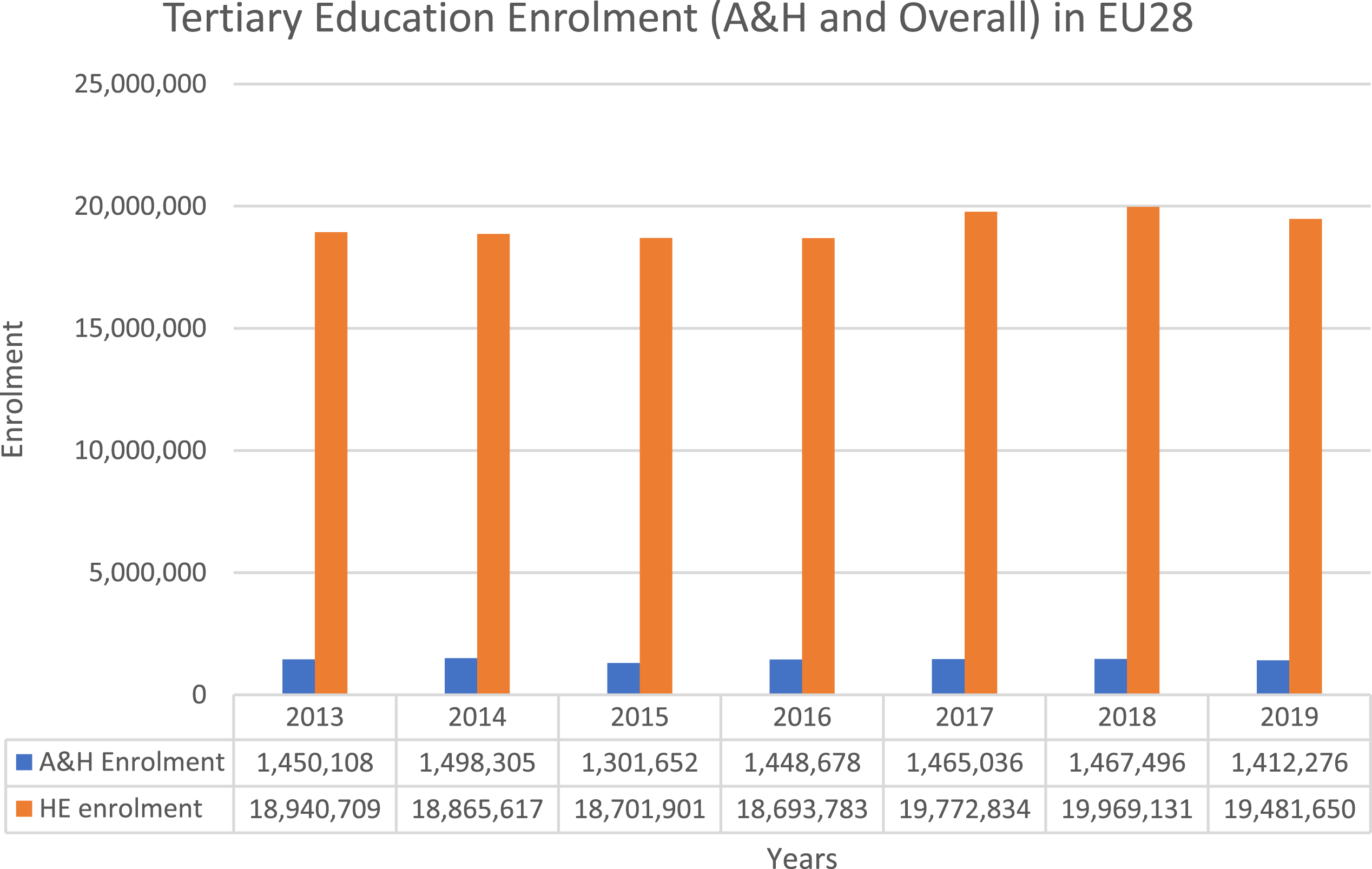
If we look in more detail at specific countries, we can recognise that this trend is not the same in each country. In Figure 2 we present the longitudinal enrolment data for the eight countries monitored in the EPS analysed for this paper. As it is clear, in some countries, A&H enrolment has drastically dropped (Austria, Croatia, Malta, Germany, Norway), while for others, it has been consistently increasing (Lithuania, Czechia, Greece). Source: Eurostat, 2021.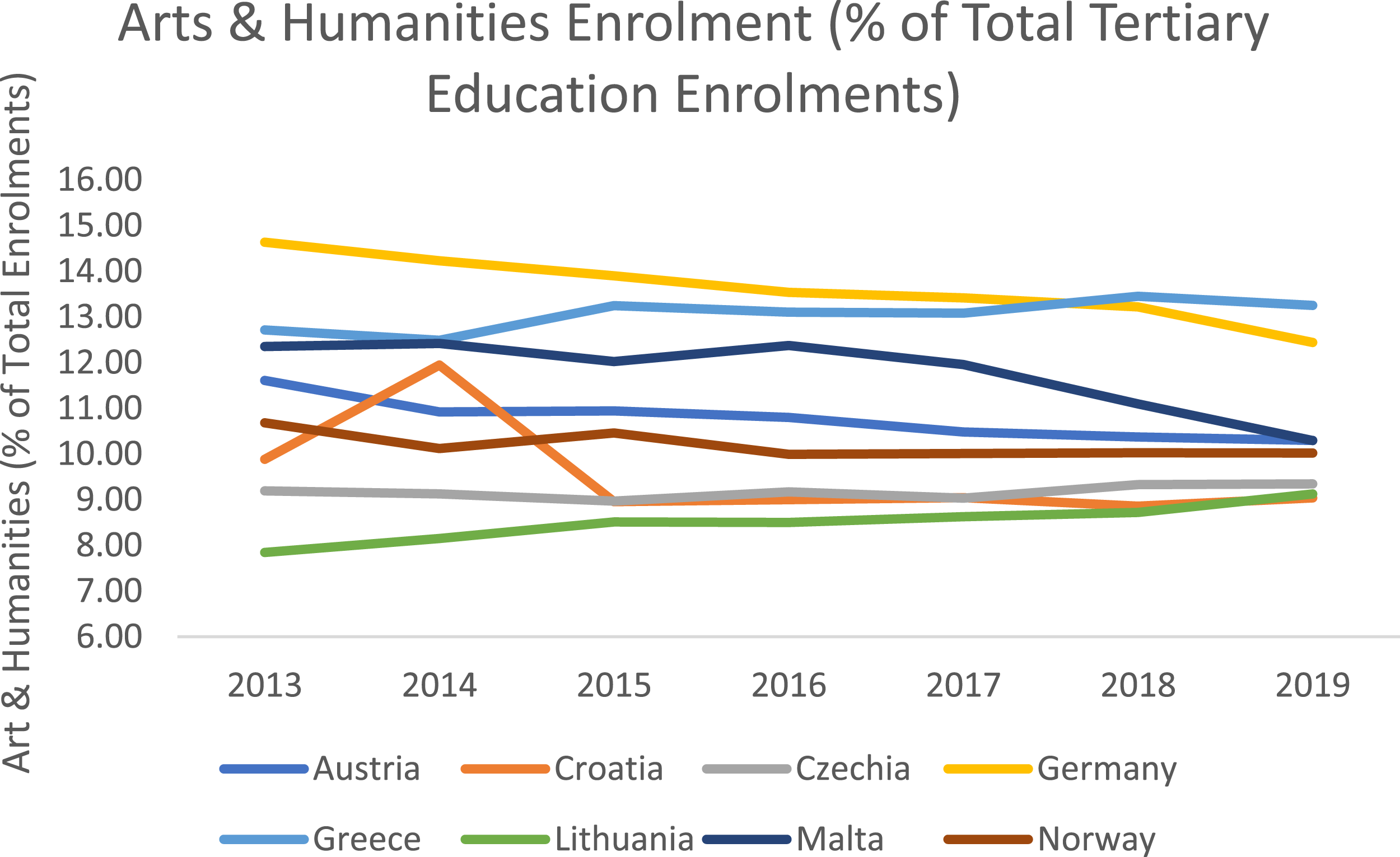
It is not possible within the scope of this article to cover the various changes in policy that might have taken place in these countries and across Europe. However, a study by UK think tank, the Higher Education Policy Institute (HEPI) indicates a political discouragement towards A&H courses in favour of STEM subjects (Roberts 2021). In the UK context, the political indifference to A&H courses and graduate opportunities appears to be linked to low economic graduate outcomes, despite data that suggests multiple opportunities and transferable skills developed through A&H subjects (British Academy 2017). Indeed, the skills identified in A&H graduates are similar to those projected as important in the 2010 EC report mentioned in the introduction to this paper as necessary for the development and sustainability of the knowledge economy. The political shift in value appears to be a response to economic rather than social factors.
Arts and humanities graduates’ employability and beyond
There are a range of studies that have tried to consider the specific dynamics and patterns of European A&H graduates’ employability and what affects their performance in the labour market (Comunian et al., 2014). In general, our knowledge of A&H graduates’ employability can be articulated under three key aspects: labour market outcomes and under-employment, considering both salary and sector-fit as important aspects; strategies for employability – including internships and HE/industry collaborations; and other forms of value and contribution. There is less available research on the third aspect.
As previously introduced, the discussion of A&H labour market outcomes needs to be placed into the broad context of neoliberal higher education systems but also increased policy pressure towards market growth. The UK Department for Education (2021) considers how the problem is not limited to A&H graduates and points out an overall mismatch between HE and the labour market with ‘only 66% of working-age graduates [… ] in high-skilled employment’ (p.6). The same report also proposes whether technical courses can lead to better career outcomes and average higher earnings compared to the earnings of graduates. This can be linked to an overall decrease in returns following the expansion of HE provision (Bernardi and Ballarino, 2014) but seems to problematically associate career aspiration with earnings rather than highlight the wider value of higher education attainment. Therefore, for example, the proposed interventions in the UK following the “Post-18 Review of Education and Funding” report (Augar, 2020) are based on the low economic returns of specific degrees and their non-viability financially with the higher education funding system (Comunian and Brook 2019). The emphasis in the UK is clearly employment outcomes based on economic merit becoming a unique measure of HE success. This emphasis is repeated in other national contexts such as in Australia, where there are similar calls for ‘job ready graduates’ (Grattan, 2020). In Europe, there are similar pressures, but these are complemented with other agendas on access, mobility and integration which enables a broader scope of higher education and its contribution to economic but also social development and European cohesion (European Commission/EACEA/Eurydice, 2018) with targets related not only to employability but also training and studying abroad.
Within the broader emphasis on employability, Reimer et al. (2008, p. 248) find that in European countries with larger numbers of university-educated individuals, A&H degree-holders suffer from a relative disadvantage in the labour market. This particularly applies to their unemployment risk, which is significantly higher even when controlling for occupational specificity, employment protection legislation, and aggregate labour demand. Research across different HE systems confirms these dynamics (Comunian et al., 2014; Allen et al., 2000) but unpacks further the specific challenges that these graduates face when entering the labour market. Lyonette et al. (2017) looking at the broader group of Arts, Humanities and Social Sciences Graduates (AHSS) find, ‘many AHSS graduates take time to settle into a ‘graduate’ job, often undertaking further study, and even when they do enter the labour market, their salaries may not be comparable with non-AHSS graduates’ (p.1).
Daniel and Daniel (2013) focus on the sub-group, ‘creative and performing arts graduates’ and reflect on the particular challenges they face. They consider the ‘inevitable tension between the broad range of theoretical strategies provided during study, and the need for a specific strategy for a particular situation in real world practice’ (p.140). This we can argue is a broader concern for graduates in A&H transitioning to the world of work (Comunian et al., 2014). This is reflected by industry consultations that often question the extent to which graduates are in fact properly equipped for the transition to work whilst highlighting the issue of skills-gaps and needs (Department of Education, 2020). Consequently, with A&H degrees and beyond, there is a growing emphasis on two trajectories for better transitions to the world of work: firstly, practices of work-integrated or work-based learning (Ashton, 2013); secondly, focus on entrepreneurship and entrepreneurial skills development (Toscher, 2019; Vázquez-Burgete et al., 2012). Another motivation put forward for this lack of labour market outcomes is a disconnect between A&H departments, degrees and employment. In response to this concern, the EC (2010) like many other national policy frameworks reviewed by Comunian and Gilmore (2016) puts forward the need for more partnerships between HE and external organisation but also the establishment of hubs, incubators and other interventions that facilitate the transition from education to work (Ashton and Comunian, 2019).
In response to these challenges there has been a growing discussion on how employability could be enhanced through internships, work-placements and other forms of work-based learning (Ashton, 2013). However, there is less focus on internships within the broader A&H field and much more within the narrow areas of creative arts. Daniel and Daniel (2013) suggest, within the limitation of their sample, that for creative and performing arts graduates there is sufficient evidence to argue for student internships. Salazar-Porzio (2015) talks about the opportunity of ‘civic learning’ offered by bridging the world of HE and museums for humanities graduates. Overall, the positive value of internships and similar models is acknowledged; however, for many, the issue remains of inequalities that some of these models – especially unpaid internships – promote (Phillipov, 2022).
Finally, there has been policy and advocacy interventions at various levels to argue for the importance of A&H education, beyond measures of employability however, the results and measures seem, at times, to have developed in an ad hoc manner, notably clustering together A&H and social sciences. A report from the British Academy (2017) presents a range of policy and advocacy reports that indicate the value of A&H education, including the observation, ‘the British Council in 2015, showed that over half of global leaders have either a social sciences (44%) or arts or humanities (11%) bachelor’s degree’ (p.11). The report also references a survey undertaken by NESTA showing that in the last UK General Election, ‘62% of the candidates had an AHSS background’ (p.11). Finally, they cited the 2015 Fast Stream and Fast Track Annual report stating that, ‘over 65% of the successful candidates in the Civil Service had an AHSS background (humanities (24.3%), economics (20.5%) and social sciences (20.4%)’ (p.11). The report also makes the claim that AHSS graduates ‘are active and engaged citizens’ (p.38) but does not fully substantiate the meaning of this engagement with empirical data.
Overall, this paper intervenes in the current literature on measuring A&H graduates’ contribution to society and the broader value of this education by recognising and measuring the cultural and socio-political contribution alongside the economic (Figure 3). While other studies have assessed these distinct contributions individually, we are able to critically bring them together through our analysis of the 2018 EPS. While comparable data might still be limited, the value of the paper is in highlighting that more can be done within national and European policy frameworks to collect data that measures these different contributions. A&H graduates contribution (source: Authors’ own).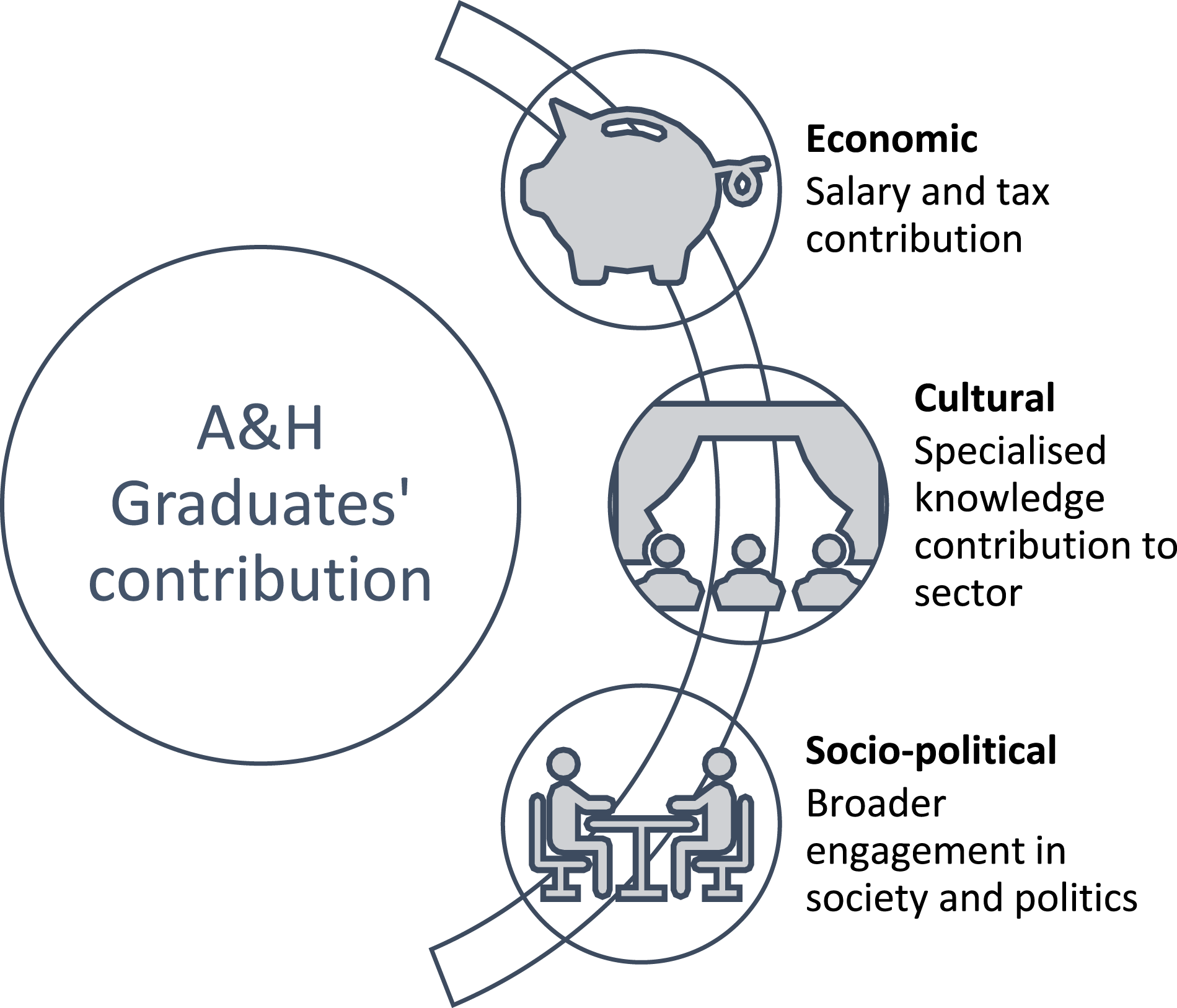
Data and methods
We make use of the 2018 Eurograduate Pilot Survey (EPS) (Maurer et al., 2021), funded by the European Commission, 1 which surveyed two cohorts of recent graduates in eight European countries (Austria, Croatia, Czech Republic, Croatia, Germany, 2 Greece, Lithuania, Malta and Norway). Cohort one graduated in 2012/2013 and cohort two 2016/17 and were surveyed at five (the mid-term) and one (the short-term) year/s post-graduation, respectively in 2018/2019. The aim of the pilot survey was to track graduates with a view to develop longer-term sustainable research of graduate outcomes as recommended by the European Council. Questions covered by the survey included both personal and course characteristics, transition to the labour market, labour market outcomes, skills and personality, mobility, well-being, participation in society and social outcomes. The study covered graduates across all ages, and all taught undergraduate and postgraduate programmes. Almost 140,000 graduates were invited to take part, with a final sample of 16,408 graduates (a response rate of around 12%), 5385 for cohort one and 11,023 for cohort two. For the purpose of this paper, we excluded individuals who did not provide answers to our questions of interest from our analysis, and as such have a final sample of 4268 and 8611 respondents in cohort one and cohort two respectively. Mühleck et al. (2021) also provide further description of the overall data collection and research design of the EPS 2018.
Variable description and summary statistics.
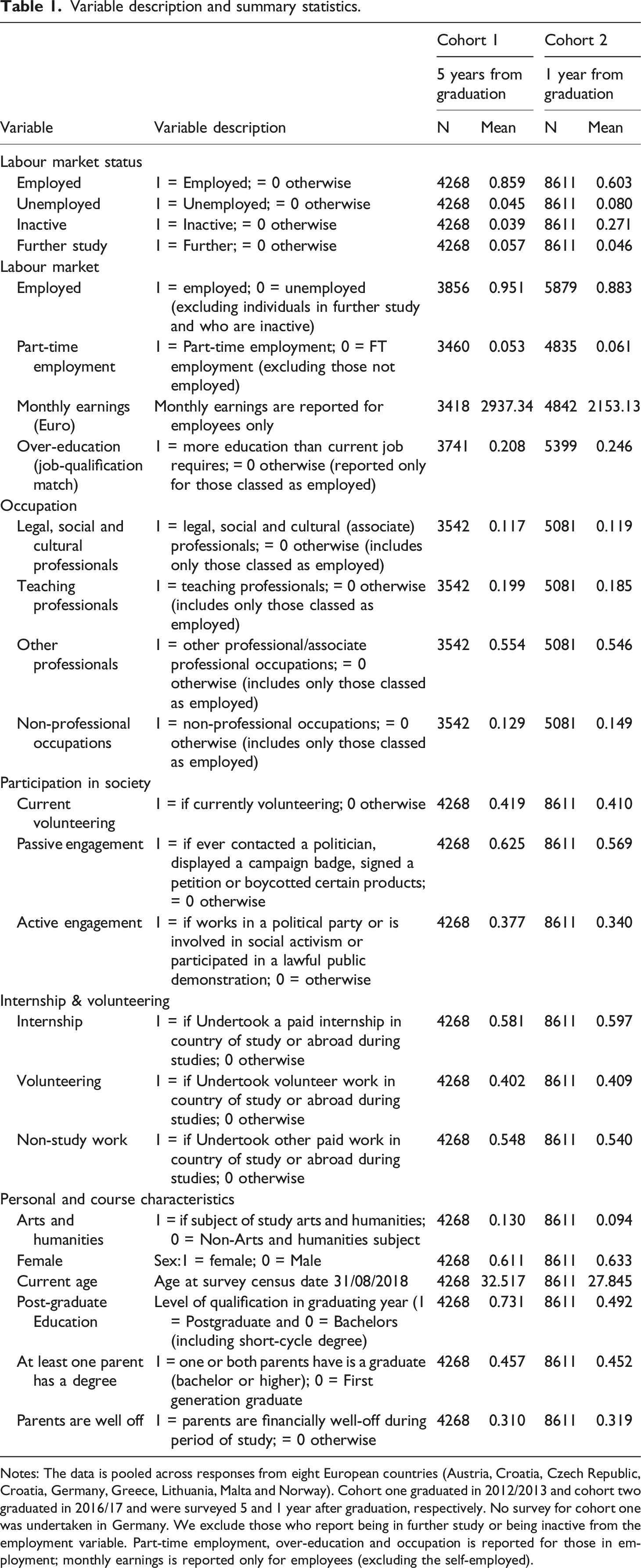
Notes: The data is pooled across responses from eight European countries (Austria, Croatia, Czech Republic, Croatia, Germany, Greece, Lithuania, Malta and Norway). Cohort one graduated in 2012/2013 and cohort two graduated in 2016/17 and were surveyed 5 and 1 year after graduation, respectively. No survey for cohort one was undertaken in Germany. We exclude those who report being in further study or being inactive from the employment variable. Part-time employment, over-education and occupation is reported for those in employment; monthly earnings is reported only for employees (excluding the self-employed).
We are interested in questioning the data to find out, firstly, how A&H graduates perform in the labour market in relation to employability and labour market status, including how their jobs match skills and sector of employment as well as earnings; secondly, how earnings are influenced by A&H graduates’ labour market status and sector of work; thirdly, the impact of undertaking internships, volunteering and other paid work during an individual’s studies on labour market outcomes. Finally, we move to look at participation in society and capture this by whether the respondent is currently volunteering and whether they are passively 4 or actively 5 engaging in society.
Overall, the data allowed us to expand previous research in this area of work in two directions. There is a strong demand for an EU-wide graduate study, and this survey offers a first opportunity (with some limitations due to its pilot nature) to expand some of the national studies and databases (see for example Comunian et al. (date) for the UK; Allen et al. (2000) for the Netherlands) in a European framework, ‘aiming at high quality data and high comparability across the participating European countries’. 2 Secondly, the 2018 EPS (Maurer et al., 2021) extends the coverage of a traditional graduate survey to a new range of desirable topics. Beyond the traditional focus on ‘Labour market relevance’, ‘skills’, ‘(international) mobility’ and ‘further studies’, the survey includes a section on ‘democratic values and citizenship’ which offers interesting insights. The survey research team reflects that, ‘higher education promotes engaged citizenship and democratic values, and thus contributes towards a higher level of social cohesion and trust’ (p.8). In particular the focus on ‘Active Citizenship’ within the questionnaire provides information on ‘the perception and evaluation of civic engagement in general, as well as on the individual willingness to get engaged and on the extent to which graduates are actively caring out voluntary work and other forms of civic engagement’ (p.9). We argue that this broader perspective on graduates’ contribution to society has the potential to reveal different patterns of engagement and contribution across different subject groups and expand the debate of the value of higher education beyond individual market outcome.
Results
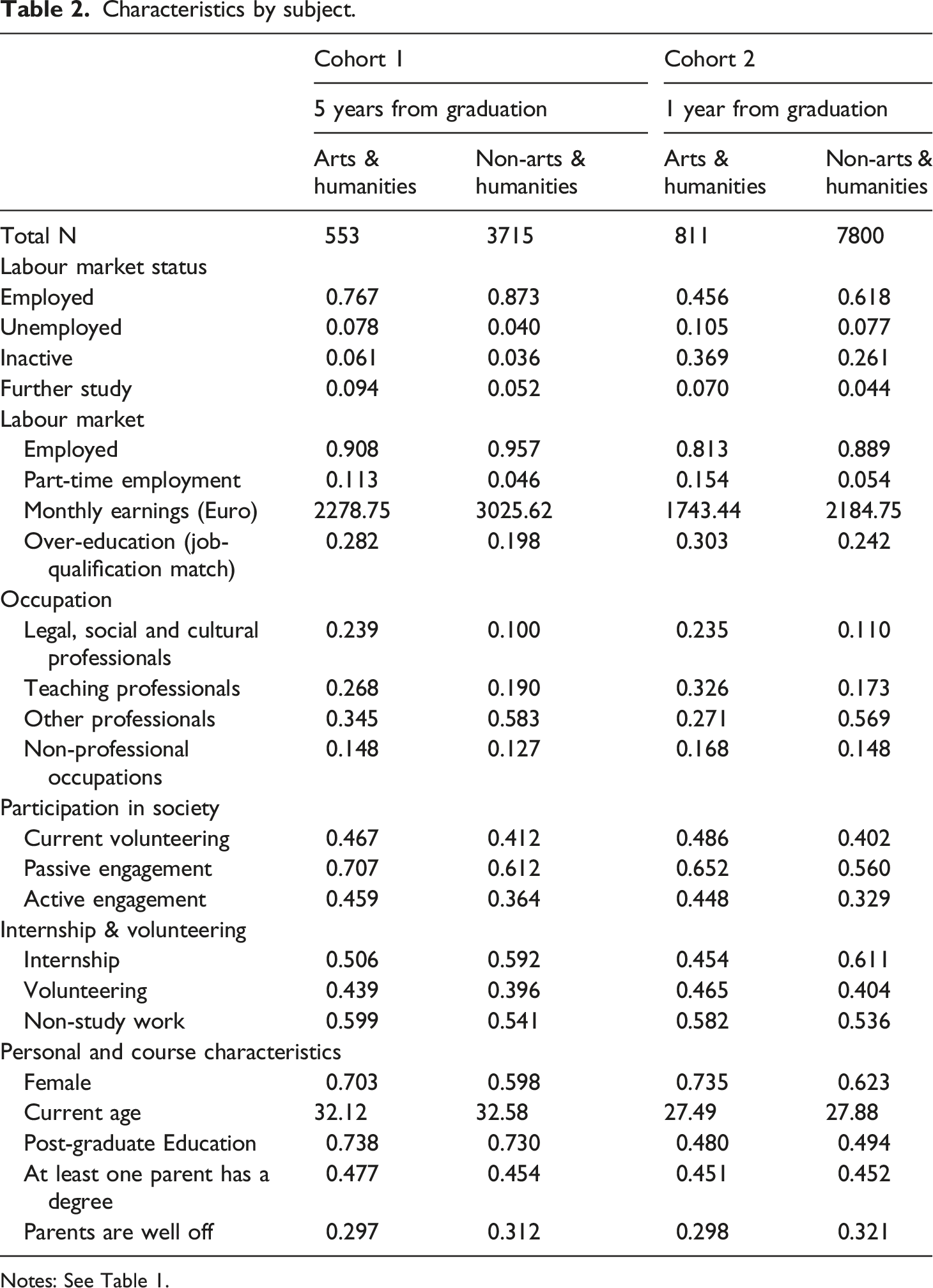
Characteristics by subject.
Notes: See Table 1.
During their studies, we see that A&H students are more likely to undertake volunteering and non-study related work – a trend across both cohorts - but are less likely to undertake internships. This seems consistent with arguments discussed in the literature about the value of internships to access employment (Baert et al., 2021) and with the overall difficulty of A&H graduates to enter the creative labour market. In reference to occupations, we see that A&H students are more likely than non-A&H students to enter teaching occupations followed by legal, social and cultural professional occupations (compared to other professional occupations). However, they are also more likely to enter non-professional (non-graduate level) occupations. Overall, we see that A&H graduates perform less well in the labour market but are more likely to participate in society.
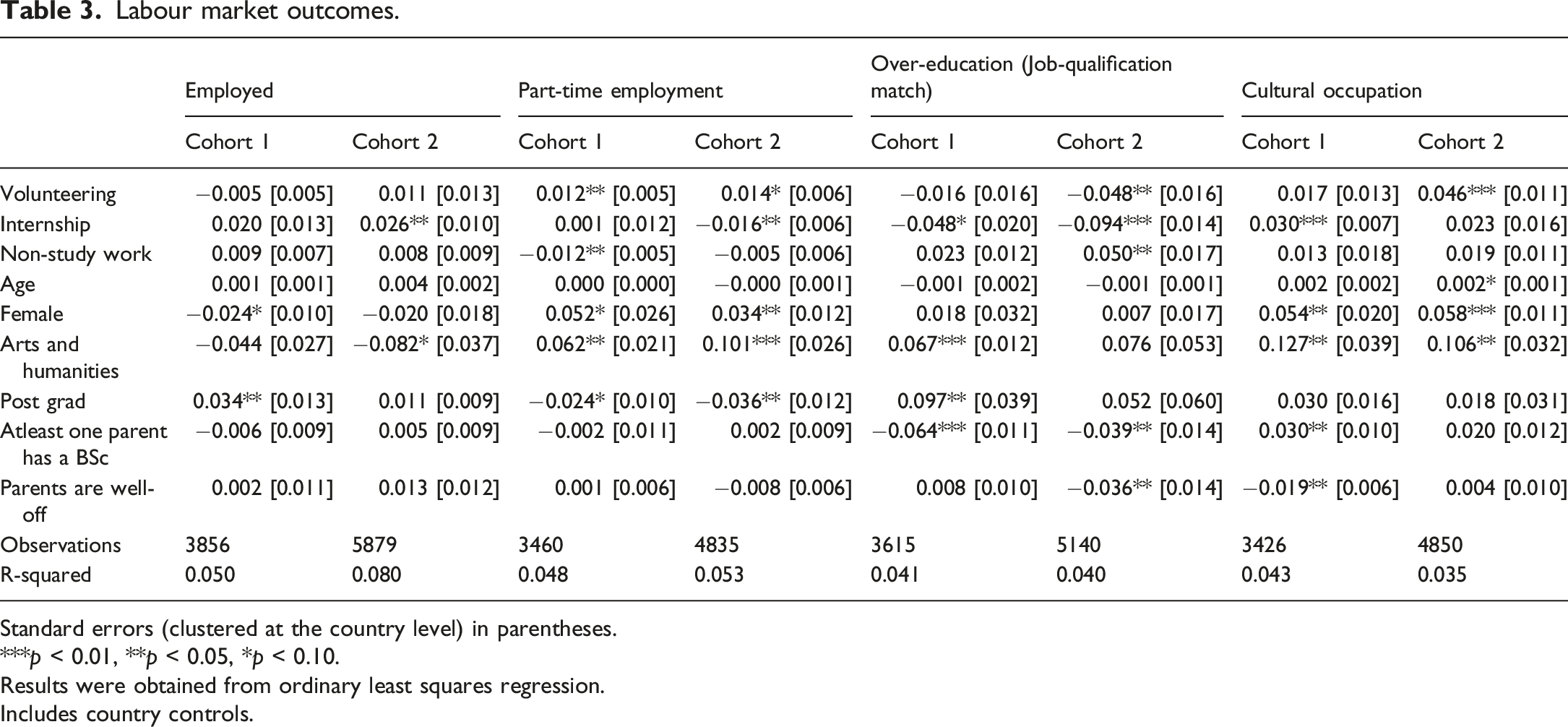
Moving from descriptive statistics to modelling what impacts graduate labour market outcomes, earnings and job-qualification match we can consider the impact of both personal characteristics, family background and the field of study. Furthermore, we are interested in the impact of internships, volunteering and other paid work on labour market outcomes. We estimate our outcomes of interest using ordinary least squares regression with standard errors clustered at the country level.
Labour market outcomes.
Standard errors (clustered at the country level) in parentheses.
***p < 0.01, **p < 0.05, *p < 0.10.
Results were obtained from ordinary least squares regression.
Includes country controls.
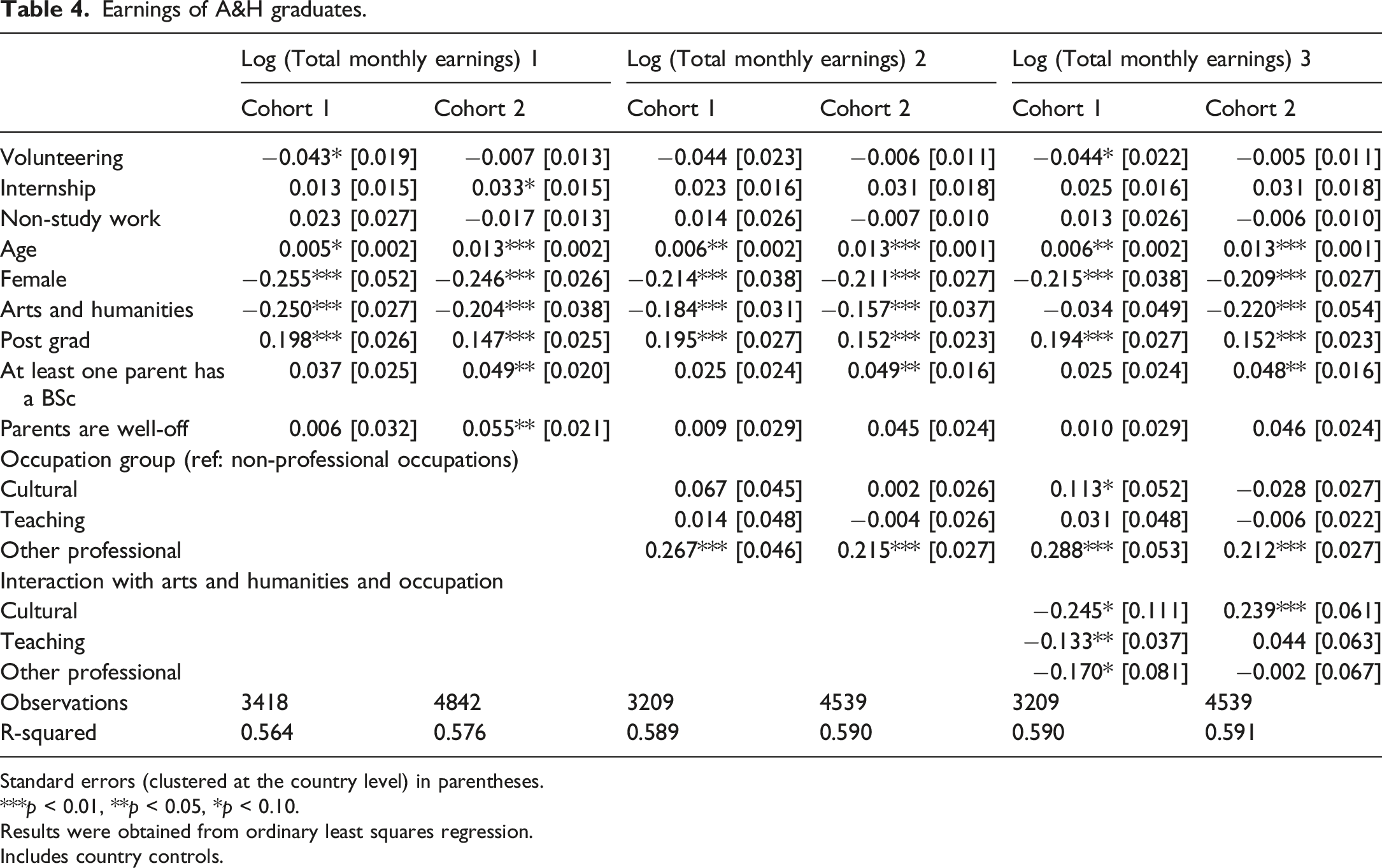
Earnings of A&H graduates.
Standard errors (clustered at the country level) in parentheses.
***p < 0.01, **p < 0.05, *p < 0.10.
Results were obtained from ordinary least squares regression.
Includes country controls.
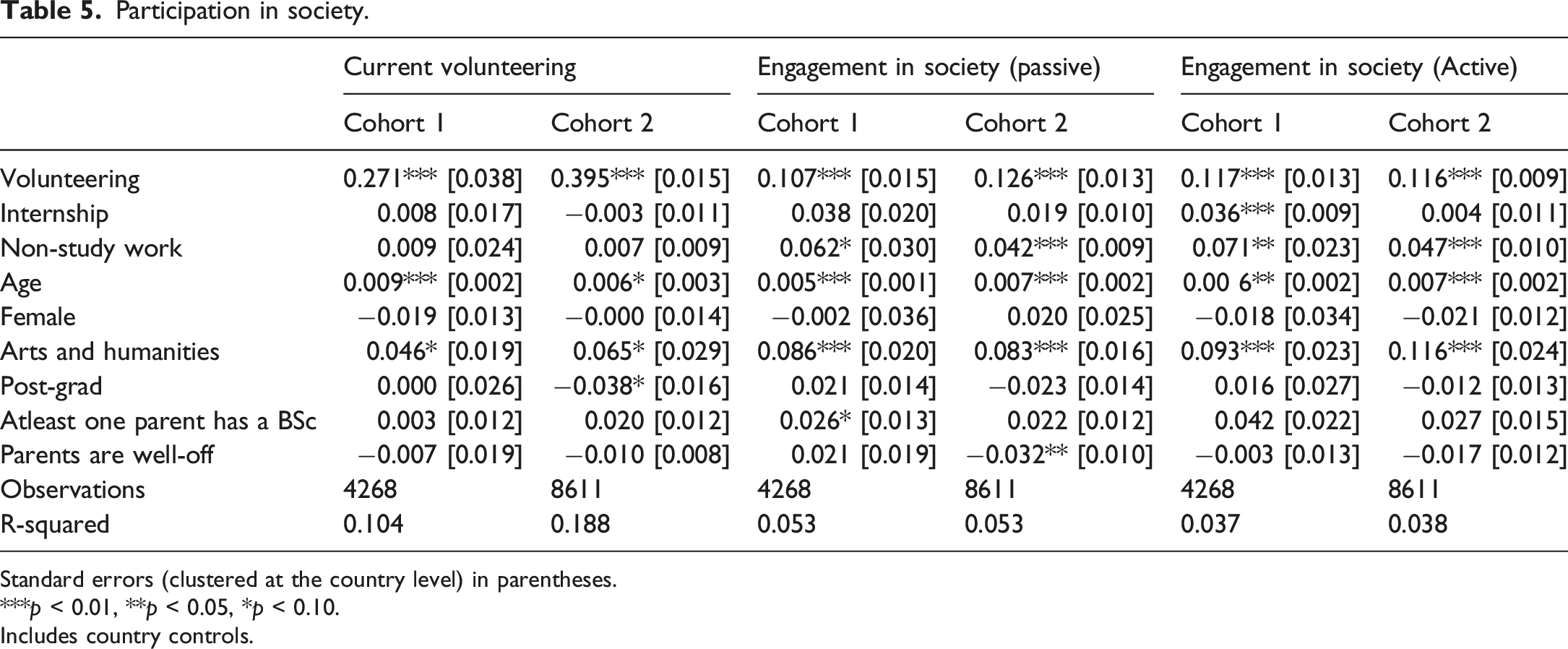
Participation in society.
Standard errors (clustered at the country level) in parentheses.
***p < 0.01, **p < 0.05, *p < 0.10.
Includes country controls.
Discussion and conclusions
The data presented in this paper provides an important reflection and addition to our current understanding of A&H graduates’ contribution to our society, alongside and beyond economic arguments. The paper has responded to Parker’s (2007) call for more evidence to be gathered on the value of A&H degree courses beyond the economic by, (1) evidencing the fact the A&H are contributing to society more broadly and (2) demonstrating the value of including broader measures than employment outcomes within graduates’ outcomes surveys.
In relation to (1), the results highlight that – as acknowledged in previous literature (Comunian et al., 2014) A&H graduates across the eight countries and cohort surveyed, perform less well than other graduates in the labour market. They are less likely to be employed and more likely to be in part time work. They have overall lower earnings and more likely to be over-qualified for the job they have. While in the longer term (5 years after graduation) their likelihood of getting a full-time job improve, their earnings penalty increases and so does their likelihood of being over-educated for the job they have. However, the value of their knowledge is rewarded more within legal, social and cultural occupations and this highlights the importance of clear pathways for recent graduates from HE to employment. The value of volunteering (in the short term) and internships (in the mid-term) are also clear in enabling access to legal, social and cultural occupations. While this data confirms what we expected, the value of using the EPS means we can – alongside employment outcome – question A&H graduates’ participation in society. Here we find that A&H graduates are more likely to volunteer and also more likely to engage with society, both passively and actively. When modelling European graduate’s participation in society, we try to question what influences this participation considering the impact of personal characteristics, family background and the field of study. Overall, we find that A&H graduates are more likely to participate in society as are those who volunteered whilst studying. They are more likely to be currently volunteering and overall, they are also most likely to engage in society passively but also actively.
In relation to (2), the paper argues for the value of the survey and its inclusion of broader social engagement and participation questions alongside the standard employability and employment outcomes mapped more commonly in other graduates’ surveys. Therefore, one important policy recommendation emerging from the paper is that unless there is a willingness and investment in measuring broader contributions of graduates to society, A&H graduates are destined to underperform in standard measure of employment outcomes. However, these social engagement and participation questions should not be used only to ‘redeem’ A&H graduates, they should be core to the commitment of research and policy to investigate the value of HE. Here, HE becomes an important phase in each student’s life, where they learn their role in society as being not solely future professionals but as critical and engaged citizens. In 2007 Parker called for the role of A&H to be able to address core complex phenomena in 21st-century Europe dealing, ‘with conflicting and incompatible paradigms, producing narratives of multi-faceted data that can address multiply-situated audiences – including those excluded by the rhetoric of ‘us and them’ or of power’ (p. 86). In this paper, we find that A&H subjects play a role in shaping the way these issues are actively discussed in society and, as the data we have analysed suggests, provides opportunities for active participation/engagement in wider social issues, beyond employment.
Footnotes
Declaration of conflicting interests
The author(s) declared no potential conflicts of interest with respect to the research, authorship, and/or publication of this article.
Funding
The author(s) received no financial support for the research, authorship, and/or publication of this article.
