




Abstract
This article examines the development, impact and integration of interdisciplinary approaches in British Higher Education Institutions. It evaluates how the concept of interdisciplinarity has become popularised over time and embraced by disciplines such as archaeology. It then explores the extent to which interdisciplinary approaches have impacted research agendas, first, by evaluating the interdisciplinary research calls from 2019 for seven UK-based research councils and then, at a discipline level, using archaeology as an exemplar. Overall, interdisciplinary research calls only accounted for, at best, 11.9% of a council’s budget. Interrogation of the funding requirements of four of the largest archaeological-research funders demonstrated that successful archaeology-themed grant applications are reliant on interdisciplinarity. The influence of interdisciplinarity on British University’s research and education agendas was examined through analysing the strategic plans of eight universities, followed by an analysis of the availability and potential benefits of interdisciplinary undergraduate and research programmes. This indicated that interdisciplinary approaches are interwoven into university’s research aspirations but displayed variation in relation to their educational goals, with only 20% of institutions offering specific interdisciplinary degree programmes. Despite this, the skillset and research outputs produced as a result of interdisciplinary collaboration were found to be highly valued, thereby suggesting that interdisciplinarity will increasingly feature in the research and education strategies of British universities.
Introduction
The use of, or claims of the use of, interdisciplinary approaches in educational settings have significantly increased in recent years (Fazenda, 1995; Horn and Ritter, 1986; Lenoir et al., 2001). However, its origins date back to the 19th century and the works of Herbart (1808, 1825), Spencer (1855), James (1890) and Bertrand (1898) who advocated for the use of integrated approaches in the education of school children in the hope that it would embed an appreciation of the interrelatedness of disciplines and their intellectual territories (Klein, 2006; Somr and Hrušková, 2014). Through the 1940s to the 1990s, particularly in the United States, the concept of integration was pushed further through the adoption of holistic education strategies, wherein teachers were expected to provide school children with a wider worldview through the use of problem-oriented teaching and a student-centred approach (Klein, 2006). In recent years, these approaches have been met with significant criticism, particularly by UK Government ministers, who have claimed that these approaches have led to poor discipline, poor knowledge gain, poor skills development, and in their view are wholly misguided for use with school-aged children (Gibb, 2017). Therefore, current educational strategies, for school children in the United Kingdom, have been moved towards teacher-led rather than student-centred instruction, with interdisciplinary or integrated content being placed into the background in favour of discipline-specific knowledge and skill gain (Department for Education, 2016; Gibb, 2017).
Conversely, in Higher Education Institutions (HEIs), generally, the adoption of interdisciplinary approaches appears to have continued, on the whole, to gain favour, largely due to the realisation that adherence to strict disciplinary or intellectual territories in both education and research strategies could ‘discourage inquiries and explanations that span across disciplinary boundaries’ and stifle innovation (Lattuca, 2001: 2). Moreover, in modern HEIs, the criteria that are used to classify an individual or group of individuals as belonging to a particular discipline, namely, similar methods, philosophies, theories and research foci, are gradually becoming unsuitable, for some academic fields, thanks to technological advancements and the expansion of and acceptance of increasingly diversified research areas and sub-specialisms (Guo et al., 2011). Although, often, this disciplinary fluidity does not become clearly apparent or appreciated until students and staff interact at postgraduate level, or when staff attend out-of-discipline research symposia (Donald, 2010: 36). Nevertheless, the extent to which interdisciplinary approaches have been integrated into the education and research strategies of British HEIs is, to date, relatively unknown, resulting in a lack of understanding of its influence and impact on researchers, students, and society at large.
Defining and identifying interdisciplinarity
Despite the apparent increase in the use of ‘interdisciplinary approaches’ in HEIs, the manner in which it is defined can and does vary, according to the agendas, philosophies and previous experiences of the academic institution(s), discipline(s), department(s), funding body(-ies) and scholar(s) involved (Applebee et al., 2000; Klein, 2006). Within this article, interdisciplinary research, education and commercial enterprises are regarded as those that require integrated inputs from multiple, distinct disciplines to seek a resolution to, or an understanding of, one key issue (Burns, 1995, 2002; Klein, 2006). Central to this definition is the recognition of unique disciplines, that are characterised and differentiated from each other by their historical heritages and by the distinctive philosophies, theories, methods and research foci that underpin their practice (Finkenthal, 2001; Klein, 1996; Salter and Hearn, 1996). Individuals, or groups of individuals, that share these common attributes can be clustered within a particular ‘discipline’ and, as a result, work within the remit of a particular ‘intellectual territory’ (Aram, 2004: 381; Becher, 1989). To be recognised as truly interdisciplinary, the research, education or commercial group must be composed of individuals or teams from different disciplines with distinctive intellectual territories. Moreover, the approach that they adopt must be one that is fused, with each developmental stage and output being reliant on the participation and assistance of all contributing members or ‘disciplines’ (Applebee et al., 2000).
When using these criteria to identify ‘evidence’ of interdisciplinarity, the field of archaeology stands out. It is defined as the study of the human past through the excavation, collection, recording, analysis and interpretation of the physical remains of human activity (Darvill, 2008: 22; Evis, 2016: 215). In order to understand the complexities and impact of human behaviour and activity through time, archaeologists have continually collaborated with practitioners from other disciplines, or adopted, adapted and applied the philosophies, methods and theories formulated in these disciplines to meet their own ends, and to tackle ‘big issues’, such as human origins, domestication, climate change and gender identity (see Fagan and Durrani, 2020; Johnson, 2019). This process shares many of the attributes associated with projects that would be classified as being interdisciplinary in nature, particularly in respect to the requirement for specialist input throughout the archaeological investigatory process, the fact that outputs are wholly reliant on the contributions of all participants, and that all team members work towards a shared goal (Applebee et al., 2000).
This continual adopt, adapt and apply process, from archaeology’s origins in the 18th century to present, has resulted in the formation of various subspecialities, each with their own distinctive intellectual territories, including forensic archaeology, aerial archaeology, classical archaeology, ethnoarchaeology and battlefield archaeology to name but a few (see Renfrew and Bahn, 2020). Consequently, the subspecialist composition of, and intellectual territories covered by, archaeology departments varies between and within HEIs, depending on the combination of subspecialists present, and in turn, leads to variability in the extent to which interdisciplinary approaches are utilised. In some archaeological departments, staff will be working on projects with a ‘narrow focus’, such as the investigation of a particular archaeological site. In this case, there will be a tendency, at least initially, to rely on the use of subspecialists from within the field of archaeology, due to the assumption that subspecialists are better placed to select and use the most relevant methods and theories from their base discipline (geology, chemistry, anthropology etc.) and apply them within an archaeological framework (Thomas, 2007). Moreover, as Roskams (2001), Greene (2002), and Aitchison (2017) highlight, these investigations are often conducted within a short timeframe and on a tight budget; therefore, any additional activities that are likely to require both time and money, such as the integration of independent disciplinary experts into a project, will be avoided. Alternatively, within the same department, or in another HEI, archaeologists may be working on ‘wide focus’, often grant funded, projects that, due to their complexity, require integrated inputs from multiple, distinct disciplines to seek solutions to the issue(s) being explored, one such example being the ‘Exploring the Easter E.g.’ project (Easter Origins, 2020; Irving-Pease et al., 2018; Sykes, 2017).
Research approach
As a result of the longstanding integration of interdisciplinary approaches into the research and education strategies of archaeology departments in British HEIs, this field, along with other overtly interdisciplinary degree programmes such as liberal arts, natural sciences and flexible combined honours, can be used as benchmarks for assessing the extent and impact of interdisciplinarity on British HEIs.
Using a comparative approach, the article first evaluates the extent to which interdisciplinary principles are advocated in national research agendas, by examining the research calls and research budgets of seven UK-based Research Councils, in 2019. It then explores the impact that the popularisation of interdisciplinarity can have on the research agendas of a discipline, using archaeology as an example.
To assess the level to which interdisciplinary goals have been adopted into the research and education strategies of British HEIs, the strategic plans of eight universities are reviewed for evidence of interdisciplinarity, followed by an analysis of the availability and potential benefits of interdisciplinary undergraduate and research programmes in British HEIs.
Research funding: Does interdisciplinarity matter?
Scholars such as Huutoniemi et al. (2010) and Carr et al. (2018) have highlighted that the concept of interdisciplinarity has gained momentum within research communities due to the increasing complexity of the problems being investigated. Research agendas are now often international in scope with the aim of bringing researchers together to tackle ‘big’ issues, one such example being the ‘Global Challenges Research Fund’ in the United Kingdom (GCRF, 2019). When agendas are focused on large-scale issues such as ‘Epidemics and Globalisation’, they pave the way for interdisciplinary collaboration as it is not possible to understand and address such large challenges without cooperation and input from a variety of different disciplines (Repko, 2008).
To examine the extent to which the principles of interdisciplinarity have become embedded within research cultures, scholars such as Song (2003) and Huutoniemi et al. (2010) have examined research proposal submissions in order to quantify the extent of interdisciplinarity. Song’s (2003: 129) analysis found that 54.56% of collaborative and 35.8% of individual research proposals submitted to the Korea Science and Engineering Foundation were interdisciplinary in scope. Whereas, Huutoniemi et al. (2010: 86) found that 40% of the sampled proposals submitted to the Academy of Finland were, to a certain extent, interdisciplinary. These findings add credence to the argument that interdisciplinary approaches are becoming integrated into research practice.
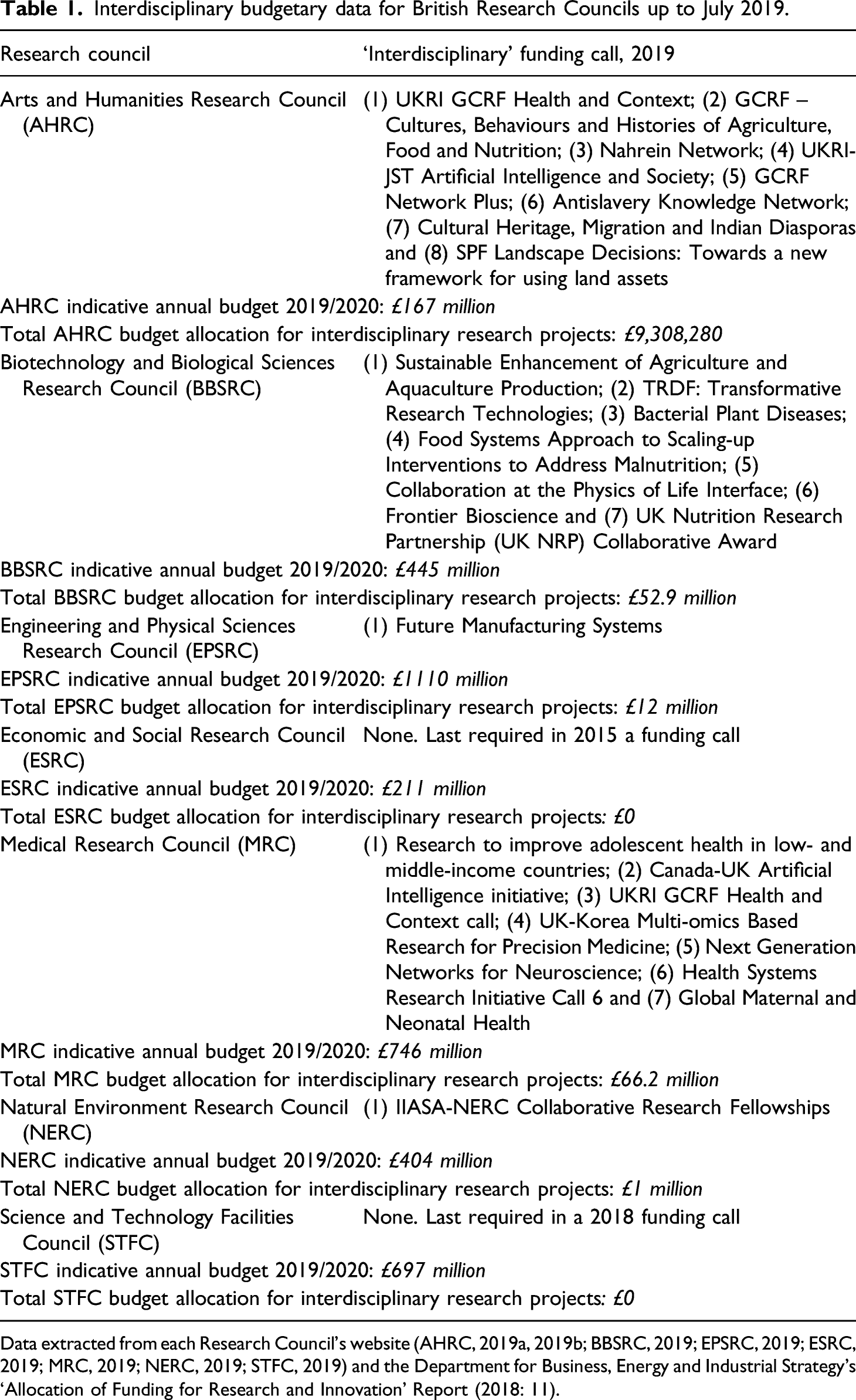
Interdisciplinary budgetary data for British Research Councils up to July 2019.
Data extracted from each Research Council’s website (AHRC, 2019a, 2019b; BBSRC, 2019; EPSRC, 2019; ESRC, 2019; MRC, 2019; NERC, 2019; STFC, 2019) and the Department for Business, Energy and Industrial Strategy’s ‘Allocation of Funding for Research and Innovation’ Report (2018: 11).
The data presented in Table 1 indicate that interdisciplinary approaches were required for funding calls in 2019 within five of the UK’s Research Councils. The AHRC advertised the most interdisciplinary funding calls (n = 8), followed closely by the BBSRC and MRC (n = 7), with the EPSRC and NERC advertising one each. Interestingly, both the ESRC and STFC had not requested interdisciplinarity in their funding calls up to July 2019. These results suggest that, on the whole, interdisciplinarity has become integrated into British research agendas.
To examine the extent to which interdisciplinarity has influenced the research foci of each of the UK’s Research Councils, the percentage of their annual budgetary allowances that have been allocated to interdisciplinary work have been determined (see Figure 1). It is evident that interdisciplinary approaches have had the most impact and influence in the BBSRC (11.9%) and the MRC (8.9%), followed by the AHRC (5.6%), with the EPSRC (1.1%) and NERC (0.2%) being barely influenced, and the ESRC (0%) and STFC (0%) not impacted at all. These findings suggest that the BBSRC and MRC are the Research Councils that recognise the benefits of interdisciplinarity most. This could also be inferred by the types of research calls that they are advertising (see Table 1); each call is tackling large-scale and complex issues, which as alluded to earlier, are best undertaken using an interdisciplinary approach (Repko, 2008). Nevertheless, what is perhaps most interesting is how these findings (Figure 1) compare to those of Song (2003) and Huutoniemi et al. (2010); unlike these academics, the findings of this article suggest that interdisciplinary approaches have had a minimal impact on the research agendas of British research funding bodies, as evidenced by the small budgetary allocations for interdisciplinary research projects. Research Councils’ budgetary allocations for interdisciplinary research, up to July 2019. Data sourced and adapted from Table 1.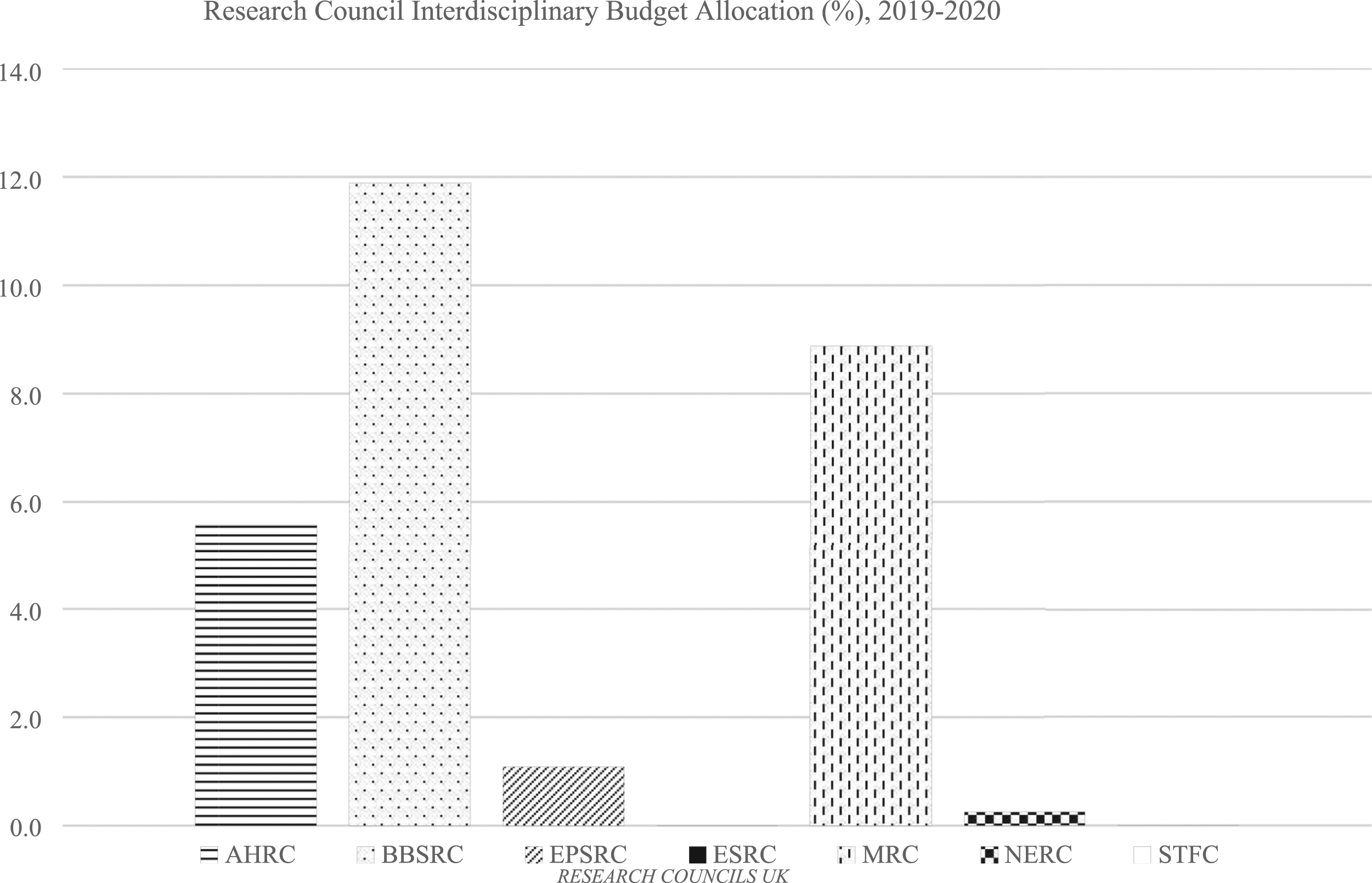
Interdisciplinary research in archaeology
Archaeological research projects, within Britain, are primarily funded by the AHRC, the British Academy, the Leverhulme Trust and the Wellcome Trust. As a result, in order to determine the extent to which archaeological research agendas have been influenced by the popularisation of interdisciplinary approaches, the funding requirements of these bodies must be examined.
Within the ‘Delivery Plan’ for AHRC (2019b), the Research Council continually refer to their engagement with interdisciplinary practices throughout, with Section 3.1.3 dedicated to ‘Interdisciplinarity for contemporary challenges’ and statements claiming that they have ‘led the way in supporting interdisciplinary research’ within the UK research network, despite the observations made in Figure 1 (AHRC, 2019b: 12). Similarly, the British Academy (2019) in their ‘About Our Work’ section highlight the fact they are particularly committed to ‘promoting the value of interdisciplinary research’. Likewise, within the Leverhulme Trust’s ‘Our approach to grant-making’ page (2019), the criteria that they use to prioritise work of outstanding scholarship includes several interdisciplinary requirements including that the research achieves more than the incremental development of a single discipline; the proposed research has relevance outside a single field and is able to excite those working in other disciplines; enables a refreshing departure from established patterns of working – either for the individual or for the discipline – and that it must transcend disciplinary boundaries. It is clear then that interdisciplinary approaches are central to the ideologies of these research funding bodies and are subsequently central to archaeological research agendas.
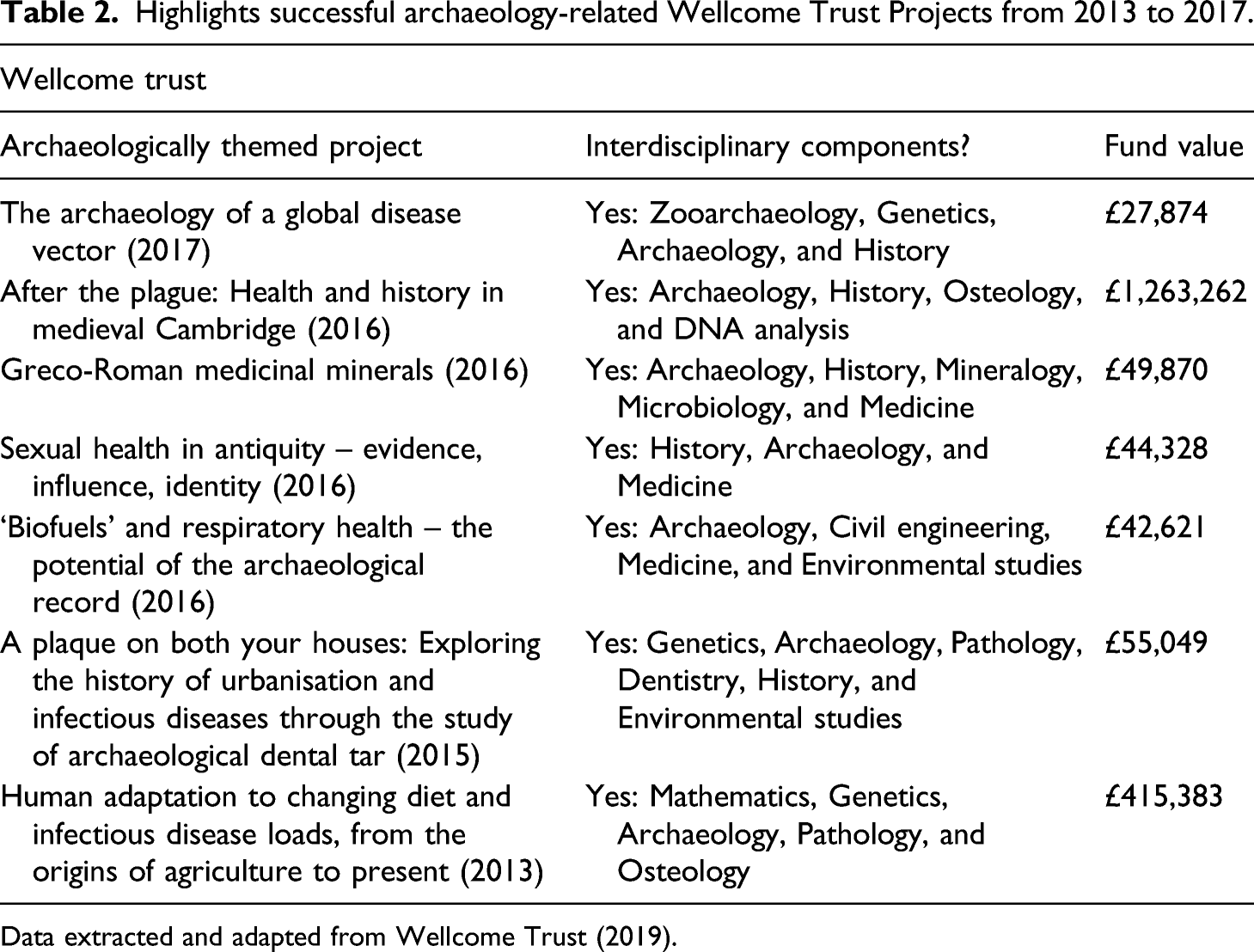
Highlights successful archaeology-related Wellcome Trust Projects from 2013 to 2017.
Data extracted and adapted from Wellcome Trust (2019).
These findings show that despite the data compiled in Figure 1 suggesting that interdisciplinarity has not had a major influence in the British research landscape, when research projects are archaeological in nature, this is not the case; if archaeologists wish to receive grants from these four research funding bodies, they must integrate interdisciplinary elements into their research proposals.
Education and research strategies in Higher Education Institutions in the United Kingdom: Is interdisciplinarity there?
Universities in the United Kingdom release ‘Strategic Plans’ on a regular basis, usually every 5 years, which outline their achievements to date, their 5-year aspirations or goals, and the changes that they will introduce that will enable them to achieve them. Through analysing these plans, the reader is then able to examine the education and research agendas and priorities of these institutions. Although, it must be borne in mind that the aspirational targets outlined in these plans may not be enacted, or enacted to a lesser degree than originally planned.
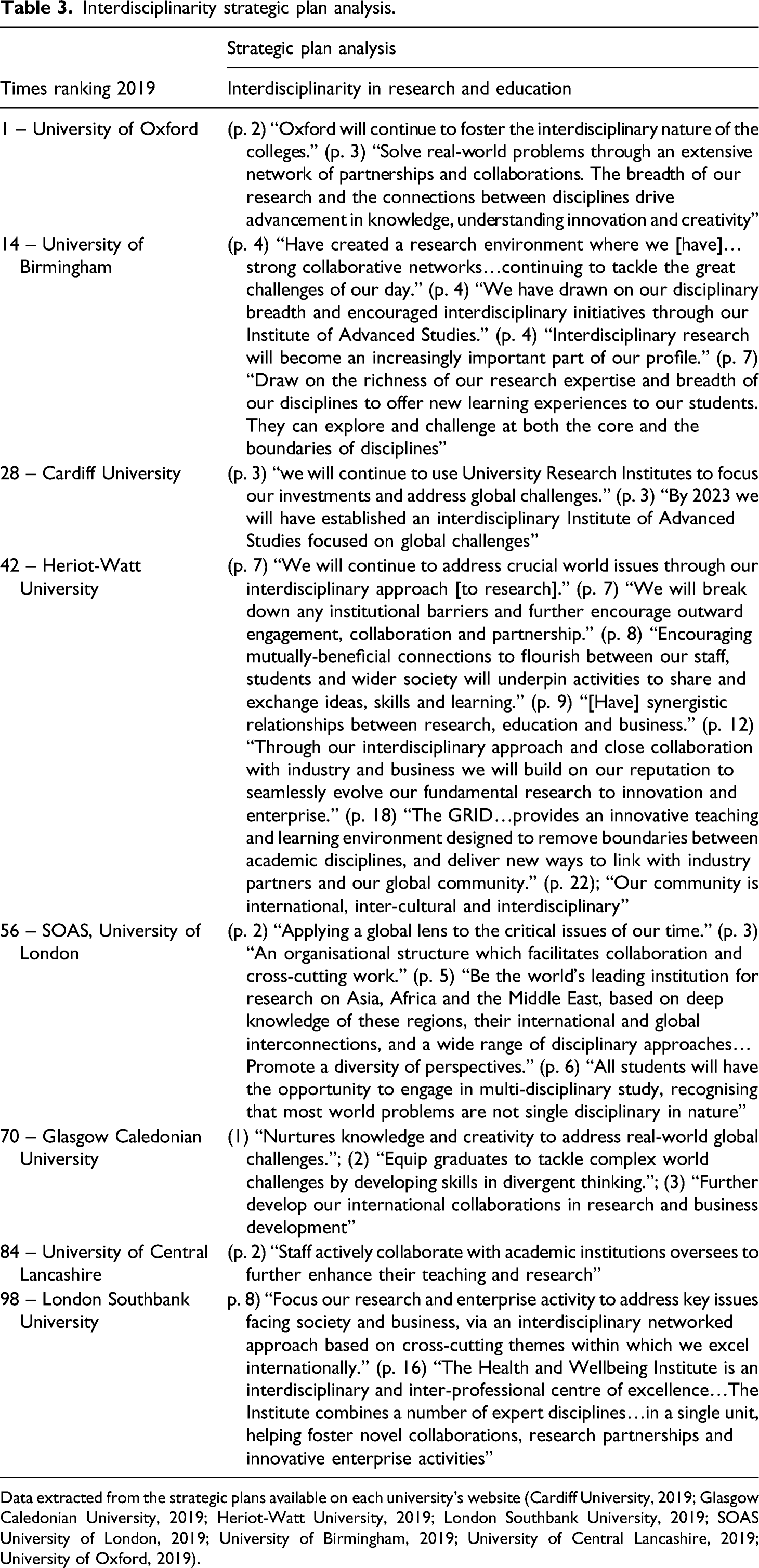
Interdisciplinarity strategic plan analysis.
Data extracted from the strategic plans available on each university’s website (Cardiff University, 2019; Glasgow Caledonian University, 2019; Heriot-Watt University, 2019; London Southbank University, 2019; SOAS University of London, 2019; University of Birmingham, 2019; University of Central Lancashire, 2019; University of Oxford, 2019).
It is evident that interdisciplinary objectives are interlaced into the strategic plans of all of the universities that were examined (Table 3). However, the extent to which it features varies significantly, with the University of Birmingham, Heriot-Watt University and SOAS University of London expressing numerous interdisciplinary aspirations, whereas the University of Central Lancashire had just one, stating that they wished to encourage international collaboration (Table 3), which, one could argue, does not represent interdisciplinarity, rather just an expansion of disciplinary networks, albeit on a global scale.
It is clear that interdisciplinary goals are most often associated with a university’s research agenda rather than their education agenda. This appears to be due to the fact that each of the universities wish to build upon existing research and enterprise collaborations, particularly those that are international in nature (Table 3). This observation correlates with the findings of Universities UK (2018a: 13) which found that over half of the UK’s research output is conducted in collaboration with institutions from overseas. The manner in which research interdisciplinarity was encouraged varied significantly (Table 3). The first approach, adopted by the University of Birmingham, Cardiff University, Heriot-Watt University and London Southbank University, was to create and invest in specialised interdisciplinary institutes. The second approach, followed by the University of Oxford and SOAS University of London, was to encourage the growth of in-house disciplinary diversity and, from this, develop interdisciplinary connections both internally and externally. The third approach, adopted by the University of Central Lancashire and Glasgow Caledonian University, was to foster international research collaborations in the hope that this will create new interdisciplinary insights. Interestingly, the key impetus for the inclusion of interdisciplinary aspirations in the strategic plans of the UK universities that were examined was to tackle ‘global issues’ that, by their very nature, are so complex that resolutions could not be formed by one discipline alone (Repko, 2008; Table 3).
The inclusion of interdisciplinary aspirations within the strategic educational agendas of the universities was minimal (Table 3). Only the University of Birmingham, Heriot-Watt University, SOAS University of London and Glasgow Caledonian University made reference to the inclusion of interdisciplinary, or in some cases, multidisciplinary, elements within their educational framework. This finding could lead one to imply that British universities, particularly at the undergraduate level, tend to be focused, at present, on supporting programmes that are discipline-specific (Parsons et al., 2012). Conversely, the introduction of and popularisation of research-led teaching into the educational landscape of British HEIs over the past decade could be argued to have negated the need for specific references to interdisciplinarity (CREST, 2012). As interdisciplinarity has become so intertwined with HEI’s research agendas, it will inevitably become imbedded within their educational practice.
Undergraduate degrees: Interdisciplinary integration
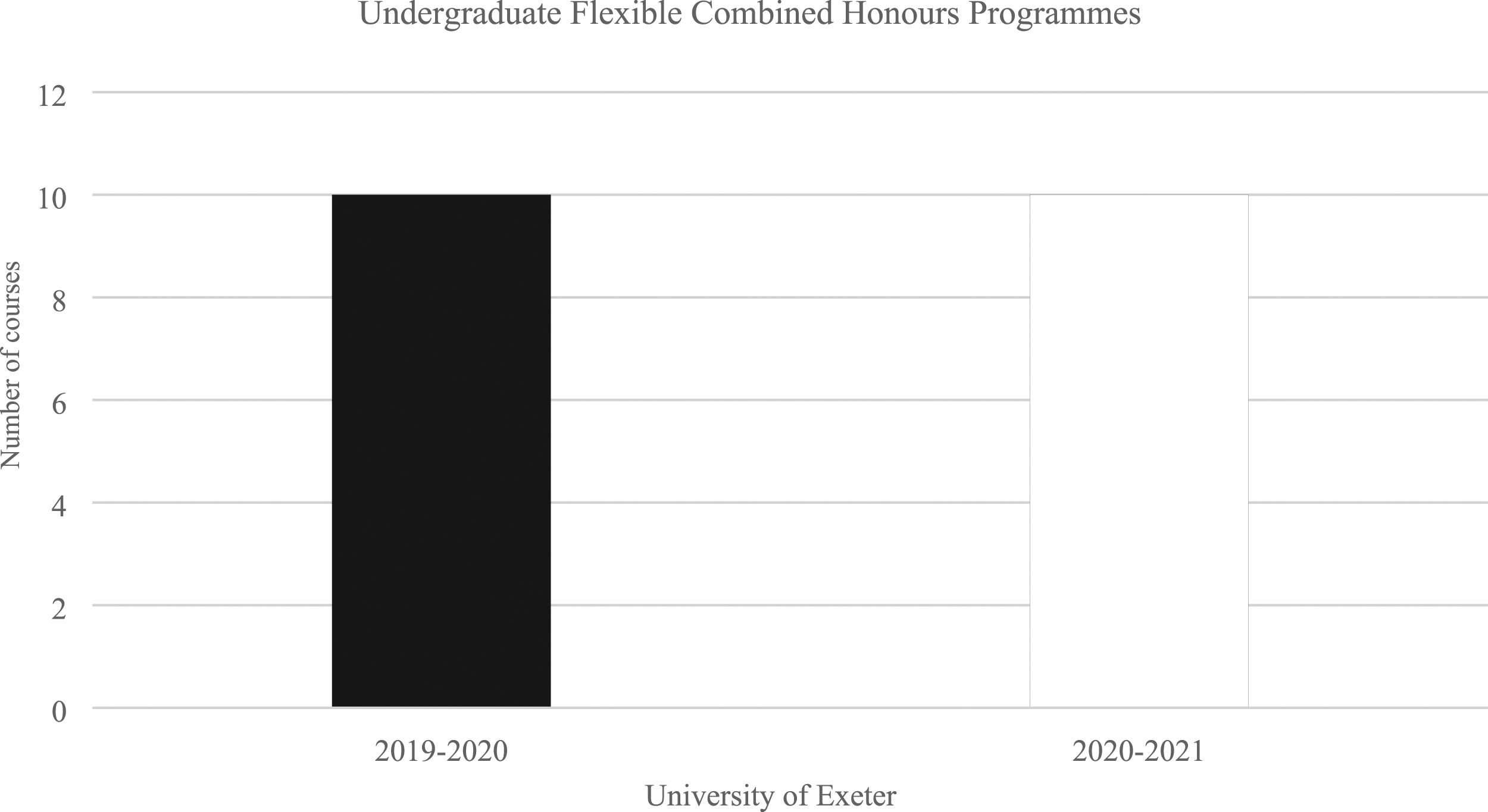
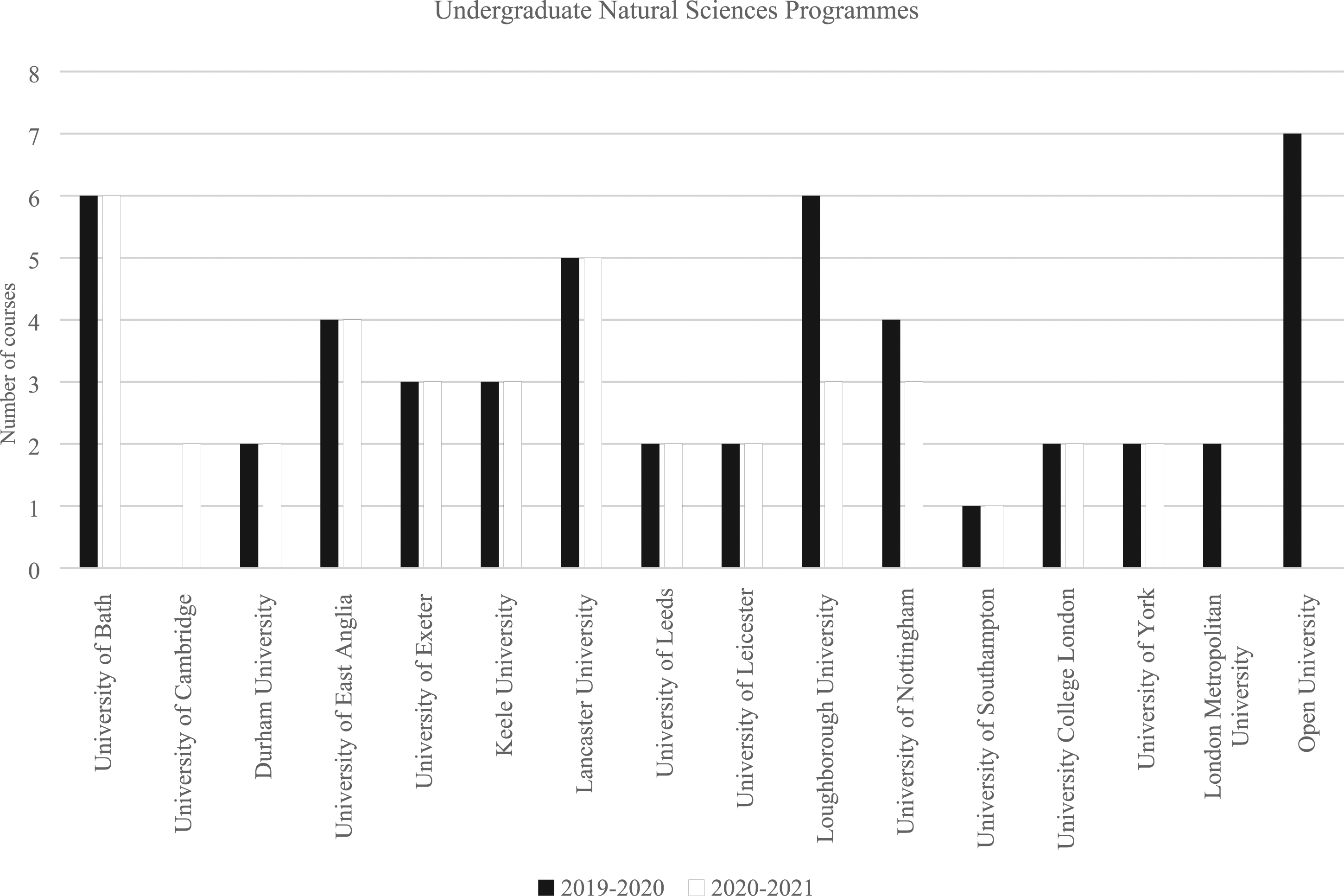
Although interdisciplinarity appears to be valued across British universities, at least at a strategic level, the impact that this has had on undergraduate students is often hard to gauge, particularly from an external vantage point. One route via which this can be assessed is the extent to which interdisciplinary degree programmes have been developed and invested in by universities. In 2019/2020, there were a total of 104 undergraduate degree pathways (43 Liberal Arts; 10 Flexible Combined Honours; 51 Natural Sciences) that could be classified as primarily interdisciplinary (Figures 2–4). However, in 2020–2021, this is set to decrease to 95 (45 Liberal Arts; 10 Flexible Combined Honours; 40 Natural Sciences) (Figures 2–4). When viewed at an institutional level, 20% of British universities have Liberal Arts programmes, 1% have Flexible Combined Honours programmes and 16% have Natural Sciences programmes. These data suggest that interdisciplinarity is not deemed to be especially significant to undergraduate education. Despite this, Durham University, the University of Exeter, Keele University, the University of Leeds and the University of Nottingham appear to be dedicated to integrating interdisciplinarity into their educational agendas through offering a range of interdisciplinary programmes (Figures 2–4). Whether the decision to do this is related to strategic aims or student demand remains unclear; however, the latter seems unlikely, given the sharp decline in student uptake of combined honours programmes seen in recent years, from 118,300 in 2007–2008 to 38,640 in 2016–2017 (−67.3%) (Universities UK 2018b: 19). Undergraduate Liberal Arts programmes in the United Kingdom, 2019–2021. Data extracted from UCAS (2019). Undergraduate Flexible Combined Honours programmes in the United Kingdom, 2019–2021. Data extracted from UCAS (2019). Undergraduate Natural Sciences Programmes in the United Kingdom, 2019–2021. Data extracted from UCAS (2019).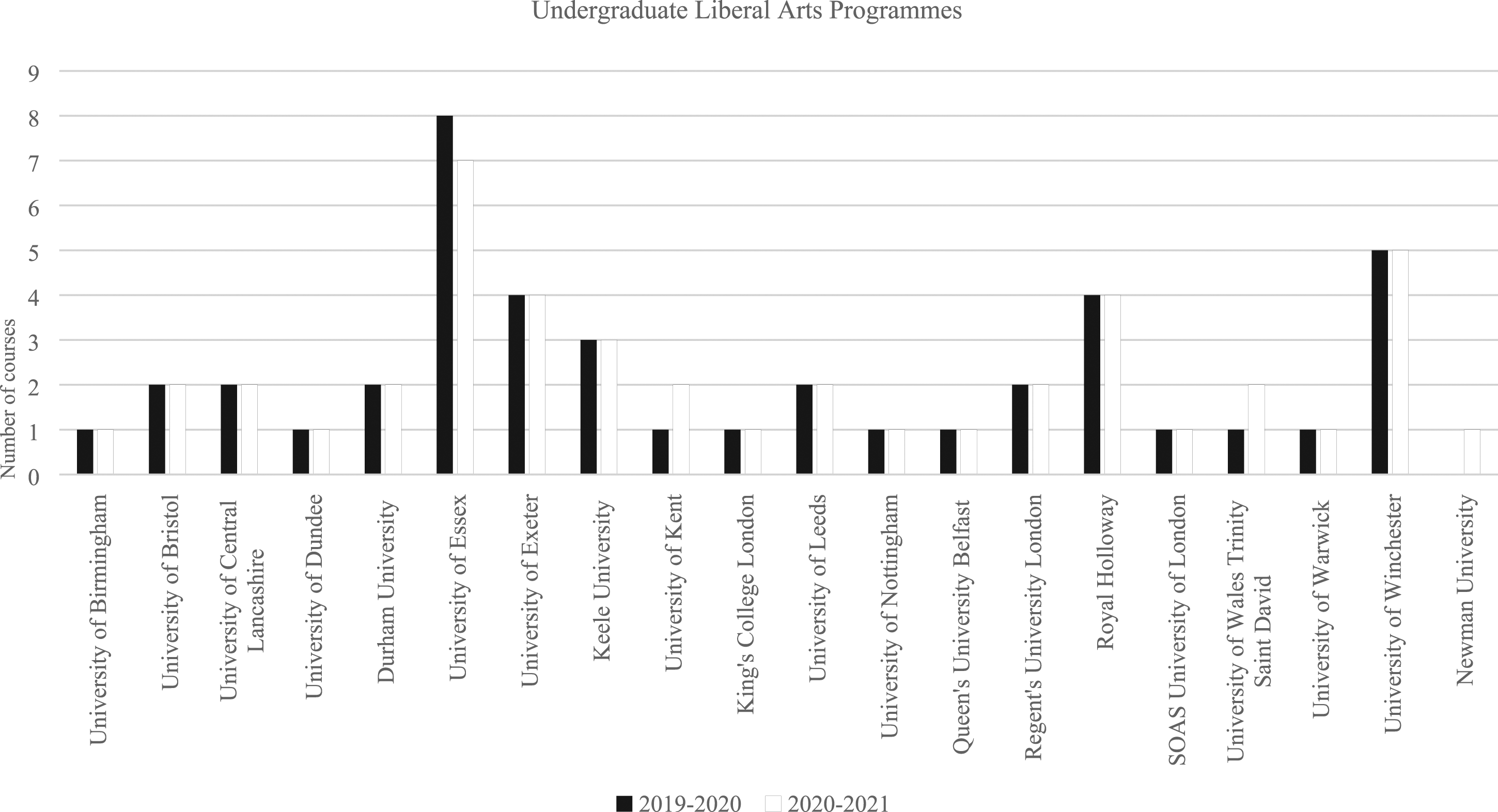
The localised impact of the promotion of interdisciplinarity, in British HEI’s research and education agendas, can be seen in the discipline of archaeology and its associated degree programmes. Since its inception, archaeologists have collaborated closely with external disciplines to investigate the history, behaviour and impact of humankind on earth. Initially, these collaborations were most often with scholars based in the humanities, but through time, and the acceptance and adoption of interdisciplinary approaches have become increasingly diverse calling upon the skills of a vast range of disciplines and specialists, such as astrophysicists and geneticists (Brace et al., 2019; Parcak, 2019; QAA, 2014). This is also why many students embarking on an undergraduate archaeology degree often choose to study archaeology alongside other disciplines and why there is often a wide variety of modules, in regard to topics, time periods, themes and methods, on offer in archaeology departments (QAA, 2014).
As a result of continual interdisciplinary exposure, whilst training, students gain an appreciation of the advantages, limitations and methods of various disciplines and their applicability to archaeological problems. If, however, students rely on gaining their interdisciplinary exposure by choosing a variety of subspecialist modules within an archaeology department, rather than exploring different disciplines outside of it, the exposure that they receive may be limited and constrained to those specialities’ archaeological applications. However, the overriding archaeological ethos of collaboration and challenge-based inquiry are characteristics that are, according to a number of British universities’ strategic plans, central to their future aspirations. Therefore, archaeology departments, their students, staff and degrees should be reflected on favourably within such institutions as beacons of interdisciplinarity, with the ability to contribute time-depth data to help develop solutions to ‘modern’ world issues, and the experience to assist with the formation of interdisciplinary institutes or programmes.
The impact of interdisciplinarity on students, researchers and society
The impact that interdisciplinary research and education strategies have had on students, researchers and wider society varies according to the extent to which its principles have been embraced. As research communities become ever more globalised, and with funders, both national and international, pooling their resources and specifying in their calls for the need for an interdisciplinary approach, researchers have been required to create and utilise interdisciplinary networks in order to remain active. The transition in the nature of funding calls has also been influential, most notably the change in focus from domestic to international issues, and the scale of the problems being addressed. This change, in the United Kingdom, was particularly notable post-2015 after the Government created the £1.5 billion GCRF to support challenge-led interdisciplinary research to help resolve ‘problems’ facing developing countries (GCRF, 2019). Arguably, it was due to the formation of this large fund, and the requirements for interdisciplinarity in other funds, that led to British universities integrating interdisciplinary approaches into their research agendas. Whatever the underlying intentions, the investment and transition into interdisciplinary work has been viewed favourably and has led to beneficial outputs that have helped a wide spectrum of society, including the elderly and disabled, through projects like FREEHAB (UKRI, 2019a) and cancer patients, through projects like the Proton Project (UKRI, 2019b).
The impact that interdisciplinary approaches have had on students and their education largely depends upon the extent to which interdisciplinary research has been transfused into them through research-led teaching practices (CREST, 2012). Alternatively, in institutions that have invested in interdisciplinary degrees, the impact that it has depends upon the structure of the programme. If it is not designed carefully, and students are able to choose different disciplinary modules across the university, that have not been designed with interdisciplinarity in mind, the students will not benefit; they will be left to synthesise the data and identify connections by themselves (Benson, 1982). Moreover, there have been criticisms that universities tend to create ‘hot topic’ modules or short courses to expose students to interdisciplinary approaches, but this can lead to surface-level learning and poor intellectual rigour as students are not given enough training in any of the contributing disciplines to engage with or understand the nuances of these fields (Marton and Säljö, 1976; Metzger and Zare, 1999; Nicol et al., 2017; Saunders et al., 2018). However, if done well, the students are provided with numerous transferable skills such as critical thinking, communication, teamworking, problem-solving, resourcefulness and resilience (McCune, 2010). These skills are highly sought after both within and outside of academia, thereby helping the students transition into and contribute to wider society (Prospects, 2019; Reed, 2019; Target Jobs, 2019).
Conclusion
Over the past century, recognition and appreciation of the benefits of interdisciplinary approaches have grown. Although not looked on favourably within primary and secondary education institutions in the United Kingdom, its integration and impact within UK higher education has been increasing. As universities have developed into global, rather than national institutions, the need for collaborative approaches to worldwide issues has grown. Subsequently, interdisciplinary research and education agendas have become interwoven within the strategic plans of UK universities, leading, in some cases, to the formation of specialised interdisciplinary institutes or programmes. However, the extent to which interdisciplinary approaches are valued and adopted varies significantly between universities and between research councils and is largely related to the scope of courses offered at the institution and the type of research that each research council focuses on. Nevertheless, given the transformative effect of interdisciplinary programmes on students and wider society, the trend towards interdisciplinarity will undoubtedly continue and eventually become imbedded within the strategic plans of all British HEIs.
Footnotes
Acknowledgements
The author would like to thank the anonymous reviewers whose detailed comments helped to improve this article.
Declaration of conflicting interests
The author(s) declared no potential conflicts of interest with respect to the research, authorship, and/or publication of this article.
Funding
The author(s) received no financial support for the research, authorship, and/or publication of this article.
