




Abstract
This study sought to examine the experiences of Black women essential workers and their perspectives on wellbeing and coping during the dual pandemics of COVID-19 and structural racism. We used a qualitative approach and purposive sampling techniques to interview 22 essential workers who identified as Black women. Research took place in a large southeastern portion of the United States. Data collection included a brief demographic questionnaire and individual interviews. Thematic and content analysis were used to identify themes and quantify the types of mechanisms used to cope with the pandemics. Four themes were identified to reflect these essential workers’ experiences coping with the pandemics: pervasive distress; varied responses to emergent events; mechanisms for survival; and the persistent obligation to remain strong. Predominant coping mechanisms included the use of social support, faith and spirituality, and increased food consumption. Despite concerns related to imminent threats to their health, widespread uprisings against police brutality, and shifts in caretaking responsibilities, these women’s narratives demonstrated a persistent obligation to remain strong. Moreover, contextual factors related to their roles as essential workers and caretakers, such as others’ reliance on them, contributed to the necessity for survival and their display of strength during such turbulence. These findings highlight the emotional toll essential workers experienced while managing their work-related responsibilities and navigating caregiving roles. Future research should focus on the development of culturally relevant coping strategies to mitigate unwanted effects from pandemic-related stress and dismantling systems of oppression to improve general wellbeing for essential workers and their families.
Introduction
As the United States (U.S.) grappled with response efforts to the emergent COVID-19 pandemic, Black Americans simultaneously experienced a climax of adverse events in a second ongoing American crisis, pervasive systemic racism. The murders of Breonna Taylor, George Floyd, and Ahmaud Arbery, among others, produced international civil unrest and national outpouring of outrage which had a mixed impact on Black Americans and other people of color (Silverstein, 2021). On the one hand, much of the nation appeared unified in disgust by racist police actions. On the other, Black Americans were suddenly called upon to be ambassadors in their workplaces, places that often put them at risk for COVID-19. Together, the dual pandemics induced negative health outcomes that disproportionately impacted the health and overall wellbeing of Black Americans.
Throughout the pandemic Black Americans consistently endured higher rates of COVID-19 infection (1.1x), hospitalization (2.4x), and mortality (1.7x) than white Americans (Center for Disease Control and Prevention, 2022). Disproportionate COVID-19 risk has been connected to structural racism and resultant inequalities, including disparities in health and healthcare access, lower wages, and overrepresentation in essential industries (Bailey et al., 2017; Coughlin et al., 2020; Gould and Wilson, 2020; Hawkins, 2020; Rogers et al., 2020; Tomer and Kane, 2020). Further, racial trauma is also known to negatively affect the health and wellbeing of Black Americans (Kirkinis et al., 2021). Despite our knowledge of the impacts of COVID-19 and racism on Black Americans, less is known about the experiences of and multilevel challenges faced by Black women employed in essential industries.
The treatment of state governments and industry toward Black women exemplify the essential–expendable paradox in which Black women are designated as essential and simultaneously treated as insignificant and dispensable (Williams et al., 2020). For instance, Black women faced an unequal division of caregiving and child care responsibilities as childcare facilities closed and social support sources were reduced (Moorman, 2021; Zamarro and Prados, 2021; Zamarro et al., 2020). Yet, businesses and governments rarely provided the necessary resources and support to help manage emergent responsibilities and cope with subsequent stress (Williams et al., 2020). In addition, Black women may have also felt pressure to portray strength and resilience even while internally struggling or suffering; this behavior may be the consequence of historical expectations to embody strength for their families even while experiencing discrimination and adversity (Allen et al., 2019; Kalinowski et al., 2022; Woods-Giscombé, 2010). Together, persistent social inequities and high levels of psychosocial stress compound Black women’s risk of adverse physical and mental health outcomes (Kalinowski et al., 2022). Importantly, it is imperative that Black women in essential positions be valued, listened to, and treated with dignity for racial justice to occur (Kinder and Ford, 2020). Certainly, furthering our knowledge of Black women’s experiences during the pandemics is critical to improving care for this underserved population.
Experiences of essential workers of color
Efforts to curb COVID-19, such as stay-at-home orders, had little positive effect on workers in essential industries. Essential workers—defined as positions considered vital to maintain critical functions and infrastructure of the nation—faced limited protections and increased risk of exposure (Hawkins, 2020; Rogers et al., 2020; U.S. Department of Homeland Security, 2020). Black and Latinx communities collectively comprised about 34% of workers on the frontlines (Tomer and Kane, 2020). Furthermore, it is estimated that only about 20% of Black Americans were able to work from home compared to about 30% of white Americans (Rogers et al., 2020). The physical health threats experienced by Black essential workers were compounded by the risk of experiencing psychological distress from concerns related to racist societal events and economic instability (Gaitens et al., 2021; Glynn, 2019; Snowden and Graff, 2021; Wilson, 2021).
Even while risking their health during the pandemic, Black women in essential positions still earned 11–27% less than white men (Wilson, 2021). Moreover, on average Black women are paid 64 cents compared to white males earning a dollar (Gould and Wilson, 2020). Pay discrepancies contribute to the economic instability of Black women and reflect racial injustice that devalues Black women’s work and lives even when in essential positions (Kinder and Ford, 2020). The pay gap is also problematic for family units, given that Black women are 3.6 times as likely as white women to head a single-parent household (Gould and Wilson, 2020), and about 68% of Black mothers are sole/primary earners for their families (Glynn, 2019). In addition, working mothers were burdened with a disproportionate increase in unpaid duties and childcare responsibilities, such as cooking, cleaning, and supporting their children’s virtual learning (Bateman and Ross, 2020; Power, 2020; Zamarro et al., 2020). For many parents and essential workers, these stressors resulted in worsened physical and mental health conditions, negative emotional wellbeing, grief, burnout, economic constraints, parenting stress, and concerns related to other competing demands within and outside of the home (Blake et al., 2020; Cuartas, 2020; Gould and Wilson, 2020; Griffith, 2020; Holmes et al., 2021; Latimer, 2021; Wu and Xu, 2020).
Strategies to cope
According to Lazarus and Folkman (1984), coping is the process by which individuals make evaluations of resources that will help them manage or avoid the negative effects of stimuli that are perceived as stressful. Individual-level coping strategies, defined as cognitive and behavioral responses to events and circumstances perceived as stressful (Lazarus and Folkman, 1984), offer individuals tools for survival and ways to find a path forward. Indeed, though systemic change may offer the most powerful counterstrike against persistent systems of inequality, Black Americans have historically used various strategies to cope with emergent stressors, including, but not limited to, relying on faith and spirituality, valuing themselves and positive self-image, drawing on ancestral strength, and relying on their social support systems (Brenner et al., 2018; Shorter-Gooden, 2004).
During the pandemic, essential workers have described relying on techniques like counting blessings, problem-focused coping, and social support to reduce stress (Latimer, 2021). However, little is known about the experiences of Black women essential workers, and how they navigated their choices for coping and healing during COVID-19. Due to the unique stressors facing this population (e.g., intersectionality of racism and sexism, pay gaps, role as primary breadwinner for family, frontline work during a global pandemic), there remains a need to explore and experiences of Black women essential workers to understand how they coped during the context of COVID-19, while navigating contexts of multiple oppressions. Therefore, the purpose of this study was to explore the experiences of Black women in essential positions coping with COVID-19, and amidst national discussions of race. Our research questions were as follows: (1) What stories are embedded in the experiences of essential workers during the dual pandemics? (2) What do these narratives reveal about their coping strategies?
Methods
Research design
Qualitative inquiry was used to capture in-depth information on the experiences of Black women in essential positions on the frontlines of COVID-19 and national discussions on pervasive racism. We employed a narrative approach and naturalist research paradigm, specifically constructionism, for this study. Narrative approaches emphasize the utility and power of the spoken word, therefore, collecting stories situated by time and place gives insight into lived and told experiences (Padgett, 2017). Constructionism posits that human phenomena are socially constructed and subjective, and challenges the notion that reality is immutable or research can be objective or value-free. Research was conducted in the southeastern portion of the U.S. Study procedures were approved by the Institutional Review Board at University of North Carolina at Chapel Hill.
Positionality and reflexivity
We begin this work by examining our own positionality, and the lens we used to examine these data. The first author identifies as a cisgender, Latinx woman. Both the second author (the lead interviewer) and the senior author identify as cisgender, Black American women. Authors three and four identify as a white American, cisgender woman and man, respectively. Data analysis was led by the first author and supported by the second author and the senior author. Given that we employed a constructionism paradigm, which recognizes the importance of subjectivity and reflexivity in research, regular consultations were held to examine the researchers’ role in knowledge construction (Padgett, 2017). Because the second and senior author could personally identify with the participants, due to shared racial and gender identities, a conscious decision was made to engage in meaningful conversations to reflect on their personal experiences, beliefs, judgments, and interpretation during data collection and analysis. The research team was mindful of threats of reactivity, meaning the researcher’s presence potentially distorting or affecting participants’ behaviors and beliefs (Padgett, 2017), and intentionally engaged in ongoing examination of their own power, positionality, and identities to help navigate power dynamics, rapport, and other aspects of the research process and analysis (Hamilton, 2020). Moreover, we engaged in ongoing discussions about how our respective social identities and positions in an academic institution influence our interpretation of these data, larger systematic issues related to power and oppression, and social constructions affecting participants, including racism and sexism.
Recruitment and sample
Participants were recruited using purposive sampling strategies, including convenience and snowball sampling. Potential participants were invited through partners at two community-based agencies, respectively focused on child welfare and health disparities, and a university email listserv. Participants were encouraged to refer individuals in their network to the study. Potential participants were given an information packet that included study procedures and the risks and benefits of participation. An eligibility screener was used to identify participants who met the following inclusion criteria: (a) age 18 or older; (b) English-speaking; (c) identified as a Black/African American; (d) identified as a woman; and (e) employed in an essential industry. In total, 42 potential participants were screened, of which 22 met the eligibility criteria and agreed to participate.
Demographic characteristics of women in essential industries (n = 21).
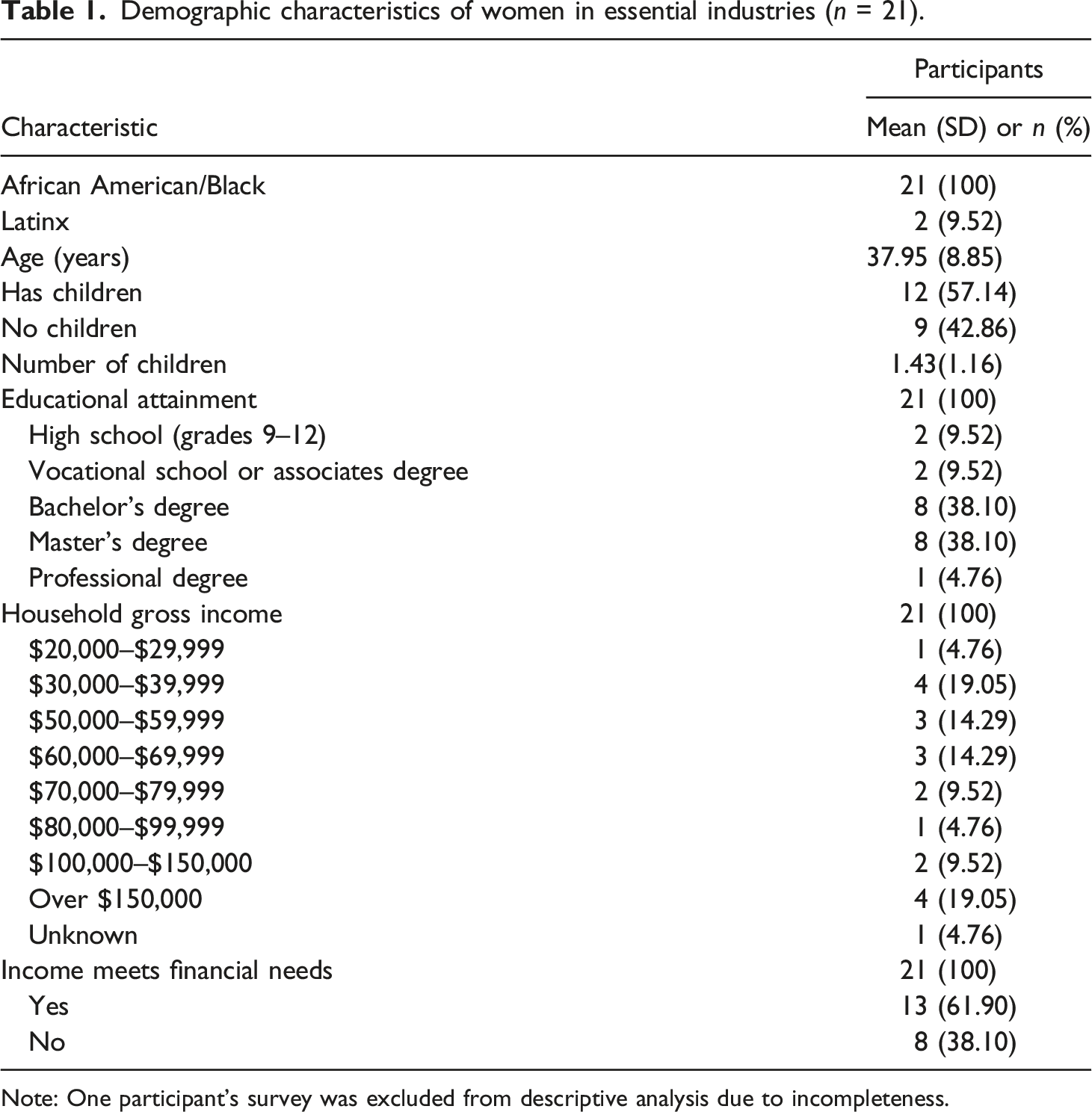
Note: One participant’s survey was excluded from descriptive analysis due to incompleteness.
Procedures
Given our narrative approach and constructionism research paradigm, we used a compatible dialectic methodology (i.e., interviews) to capture Black women’s experiences as an essential worker and coping amidst COVID-19 and national discussions about race. First, participants completed the informed consent process. Participants were then sent a brief, sociodemographic questionnaire via Qualtrics. We conducted individual interviews to collect stories about the participants, their experiences, and their assigned value and meaning (Hamilton, 2020; Padgett, 2017). We used a semi-structured interview guide to ask participants eight intentionally broad interview questions. For example, “What kinds of things did you and/or your family members use to help cope with these (COVID-19–related changes) changes?” and “What has it been like for you as an essential worker?”. The interviews continued until meaning saturation was reached, meaning no new information or insights emerged (Merriam and Tisdell, 2015).
Interviews were conducted between August and November 2020 via a secure, videoconferencing software, lasted approximately 45–90 minutes, and were audio recorded. Participants received a $35 Visa gift card as compensation for their time. Interviews were transcribed verbatim by a third-party transcription service and checked for accuracy by research team members. Field notes were written immediately following the interview to capture relevant contextual information.
Data analysis
The analytic process was guided by inductive strategies using thematic analysis and content analysis, two approaches of qualitative descriptive research used to analyze data and identify themes (Braun and Clarke, 2006; Vaismoradi et al., 2016). Thematic analysis was used given its epistemological flexibility and compatibility with a constructionist paradigm which aims to theorize the contexts and structural conditions that facilitate individual experiences (Braun and Clarke, 2006). Thematic analysis offered systematic procedures for generating codes then identifying patterns of meaning, and organizing themes from the data (Braun and Clarke, 2012; Braun et al., 2012). Content analysis is a method used to study phenomena that is more reflective of an individual’s organization of experiences (Smith, 2000). Therefore, we combined these analytical strategies to better understand emergent experiences and narrative stories.
Thematic analysis was guided by a six phase, recursive process (Braun and Clarke, 2006; Braun and Clarke, 2012; Clarke and Braun, 2013). First, to become familiar with the data, all transcripts were read at least twice by two research team members (Braun and Clarke, 2006). Reviewing the data enabled a preliminary identification of repeated words, recurring ideas, and potential themes (Merriam and Tisdell, 2015). Second, two researchers independently conducted open coding in Atlas.ti (version 8), a qualitative data analysis software, to generate initial codes and categories of information. The codebook, including codes, brief descriptions, and representative quotes, was developed in an iterative and cyclical manner, and disagreements were resolved within team meetings.
Third, several team meetings were held to interpret data and search for themes, or identify patterns of meaning, related to participants’ experiences (Braun and Clarke, 2012). Researchers then collated all relevant codes into initial themes (Clarke and Braun, 2013). Fourth, we reviewed preliminary themes by reading collated extracts of data to consider if themes were coherent and supported by the data (Braun and Clarke, 2006). Once a distinctive set of themes were identified they were reviewed in relation to the dataset, including transcripts and field notes. Field notes, as part of the dataset, were organized by the interviewer and provided insight into nonverbal expressions, inflections, and changes in tone, helping researchers make meaning of data. In phase five, as researchers began to define and name themes, subthemes were identified. Therefore, two researchers revisited the entire dataset to define the nature of the subthemes and ensure their relevancy. Lastly, once we agreed upon themes, our findings were written and revised in an iterative manner. Content analysis was used to quantify the number of participants using identified coping mechanisms (Smith, 2000).
Results
Pseudonyms, ages, and industries of essential workers (N = 22).
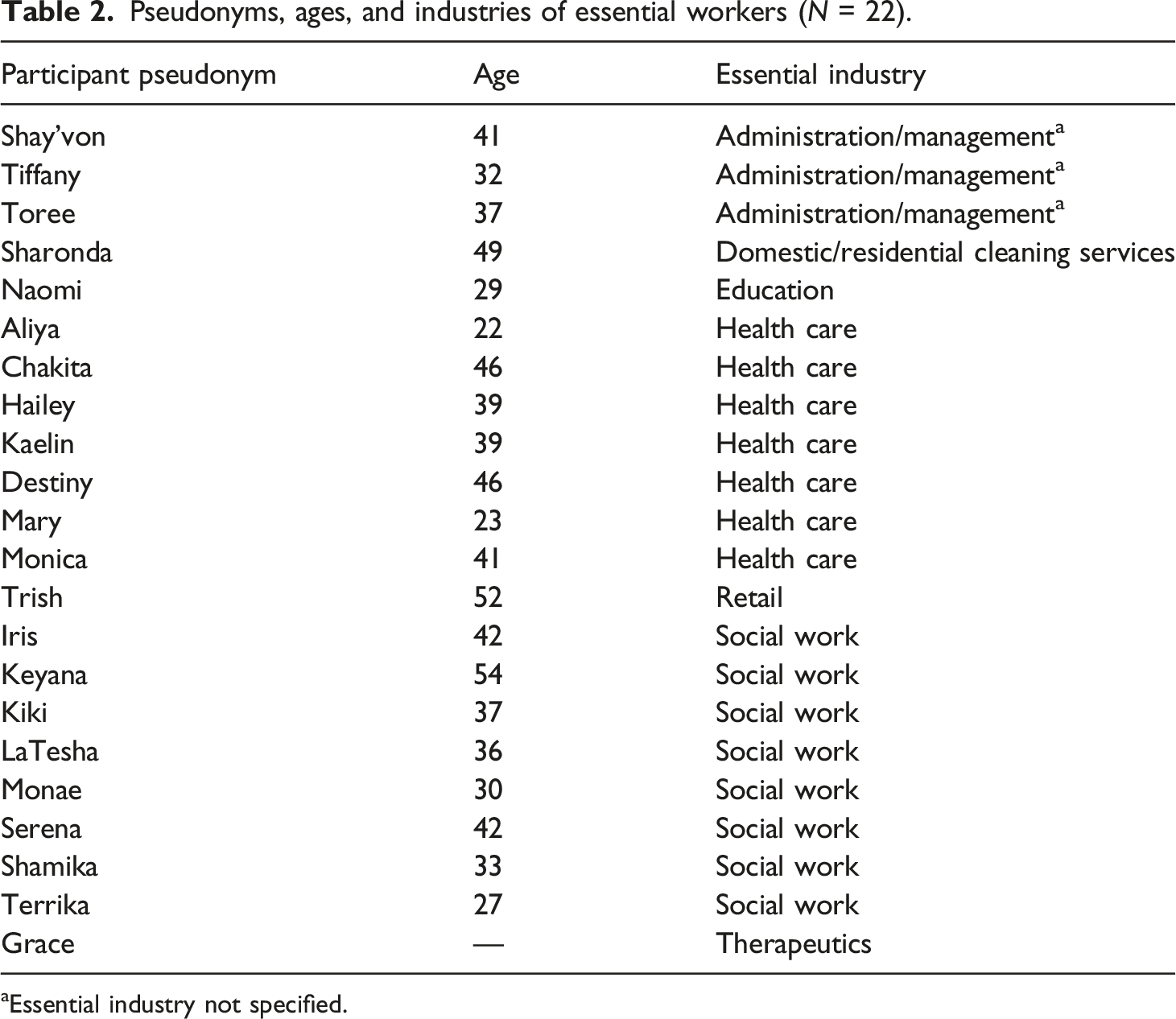
aEssential industry not specified.
Pervasive distress
Due to the COVID-19 pandemic participants faced sudden changes in responsibilities, increased pressures as caretakers, and a fear of the unknown that induced “a tremendous amount of stress” as described by Keyana, a 54 year-old social worker. Keyana also discussed how prior to the pandemic she was already “totally consumed” by work, but like other participants was tasked with new work protocols, supporting their children’s remote learning, and ensuring their families basic and emotional needs were met, among other responsibilities. Mary, a 23-year-old healthcare worker, discussed the challenges of adjusting to new COVID-19–related duties in the workplace and protocols in the community which, from her perspective, influenced negative attitudes among colleagues and created a stressful work environment. Destiny, a 46-year-old healthcare worker, described feeling stressed while supporting her mother—a gas station employee with a history of anxiety and panic attacks—in advocating for COVID-19 workplace protocols that upheld her mental health needs and safety, such as providing plastic face shields and plexiglass countertop barriers.
COVID-19 stress was only compounded by an acute awareness of historical and current structural racism and police brutality that resulted in emotional responses, pain, and feelings of helplessness. Terrika, a 27-year-old social worker, explained how the normalization of “a history of the abuse and trauma on black bodies” coupled with the contemporary display of “hate” and “violence” among political leadership exacerbated distress. She questioned, “…I feel like with the pandemic on top of that, it’s just like how much stress can we as a community take?” The stress of these pandemics impacted their emotional wellbeing as Black women in essential positions, and for some created emotional exhaustion. While discussing the Black Lives Matters movement and protests against racism, Toree, a 37-year-old office manager, stated, “And we’ve lived through that for some time before as well. And it’s difficult. I’m emotionally not available. I’m worn now and worn down.” The dual pandemics produced rapidly changing circumstances and challenging environments that affected these women’s health, emotional wellbeing, and the needs of and their responsibilities to family, friends, and workplaces.
Varied responses to emergent events
COVID-19 and violence against Black Americans affected perceptions of personal and family safety and brought a variety of responses that reflected how participants dealt with these events. Participants had varying responses that included avoidance, prioritization of work, reflection, and expression of emotions through tears. Responses were not mutually exclusive.
Avoidance
Some women intentionally avoided critical discussions or felt unable to process emergent events as they unfolded. While discussing the murders of Black Americans, Toree (previously introduced) shared, “This could have been me…how do you process? Because there were several folks who look like me. …that’s just too much emotionally to deal with right now. I can’t even process that. I cannot process the presidential [election].” Avoiding difficult race-based discussions or processing impactful political events might have partly served as a coping strategy and protective factor. Moreover, their avoidance reflected a noticeable need to refocus their energy on work, family, and other pressing matters that required their time, attention, and emotional bandwidth.
Prioritization of work
Another response was to focus on work. Their roles as essential workers served as a protective measure in some cases, but was also a part of their identity that required attention and energy. Naomi, a 29-year-old educator, described how the needs of the populations served were viewed as priority, above and beyond “political things or what’s going on in the outside world.” Terrika (previously introduced) felt it was necessary to limit critical dialogue about current events to preserve her energy for the clients she served. She noted, “you have to continue doing the work that you’re doing, and you can’t just take a day or time for your mental health.” Naomi (previously introduced) also described how in the absence of social activities, such as going to the mall or movies, work served as a distraction from “sitting at home with nothing, nothing to do” and helped ensure she was not isolated “because I’m always somewhere around somebody.” Prioritizing work was both an outlet to avoid processing difficult pandemic-related events and an opportunity to engage, support, and be in close proximity to others during a period when governments were enforcing social isolation and even curfews.
Reflection
The participants also discussed their explicit need to reflect on and process the moment alone, with their social support system, and in therapy. For instance, Destiny (previously introduced) shared, “…I feel like it’s still a good thing you’re able to just reflect when you have time to do so.” Shay’von, a 41 year-old administrator, discussed how she engaged in “a lot of communicating” and “talking with friends” to process pandemic-related events. Some women felt it was helpful to actively engage in discussions and reflection about critical events at different time points.
Expression of emotions through tears
Lastly, a handful of women explicitly expressed their emotions through tears, including one woman who cried in the interview. Kaelin, a 39-year-old healthcare worker, discussed the impact of violence against Black Americans, stating, “…they’re doing too much stuff to the Black males. …they’ve been doing it for a long time, but I’m just saying I cry. …that could be my [son].” Crying appeared to be a reflex to the emotional distress induced by police brutality and systemic racism. Naomi (previously introduced) shared, “I got through my spiel of just crying a lot…I literally went through a period of just crying, just randomly crying.” These women had a natural emotional response to countless stressors, responsibilities, and challenges faced in the home, at work, and in society. For some women, however, crying felt involuntary and episodic. Uncontrollable crying may have reflected their feeling overwhelmed, burnout, or other mental health challenges that had developed or were exacerbated during the pandemics.
Mechanisms for survival
Coping mechanism implemented by essential workers (N = 22) and representative quotes.
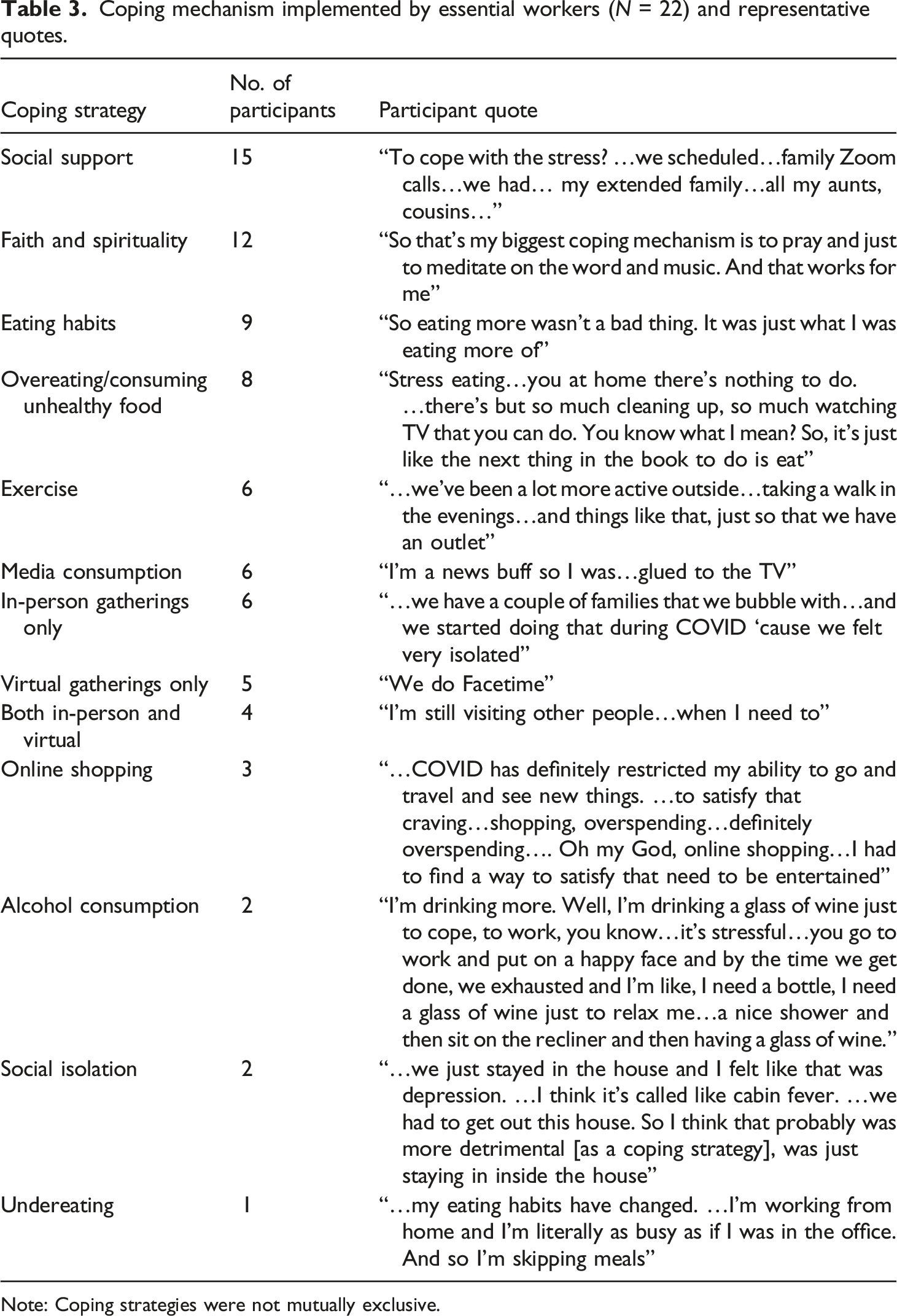
Note: Coping strategies were not mutually exclusive.
Social support
Connecting with social support systems was mentioned by 15 women which included in-person gatherings and/or virtual meetings with family and friends. The women expressed gratitude and appreciation for their social support systems which eased frustrations with social distancing restrictions, allowed them to decompress, and ultimately cope with the pandemic. Still, spending time with family also became tiresome. Mary (previously introduced) explained, “So, it’s been nice to spend time as a family, but then you also get kind of tired of each other.” One participant engaged in social networking to meet new people and build community via videoconferencing platforms. While interpersonal relationships and networks largely remained unchanged or were strengthened, one woman discussed ending friendships due to stark contrasts in personal values related to racism and discrimination. Monica, a 41-year-old healthcare worker, shared: I will say some of my relationships absolutely changed, altered or ceased, during those months. …I try to be a person that's very open to people. I feel like…we can agree to disagree. We can have…totally different perspectives, but racism is not something that's negotiable for me. I made quick judgment and decided that…I could no longer continue forward with some friendships. So, I did also have to mourn the loss and the disappointment of some of those relationships.
Faith and spirituality
Twelve women discussed their faith and spirituality as a coping mechanism. Grace, a speech language pathologist (age not reported), explains, “…my family and I, we are very spiritual. So, I would have to say our faith…just believing that God is going to cover us and protect us during this time.” Tiffany, a 32-year-old administrator, relied heavily on prayer both at home and in the workplace, so much so that her colleagues requested that she pray for them and their families. Attending church prior to the pandemic was frequently discussed, and virtual church services were recognized as an important opportunity to support their spiritual and mental health while social distance orders were in place. It was noted that the ease of virtual church services strengthened one participant’s church attendance. Terrika (previously introduced) shared, “…prior to the pandemic I was sort of hit or miss if I went [to church]. …I’ve started engaging more…since it’s been offered online.”
Increased food consumption
Nine women discussed changes in their eating habits, of which eight women began overeating or “stress eating” as described by Kiki, a 37-year-old social worker. Overindulging in food was described as a mechanism to relieve stress and (at times) boredom. The changes in schedules and obligations encouraged some to eat more frequently, while others ate less throughout the day then overate late at night. Keyana (previously introduced) explained, But I noticed that I would crave these things late at night. …I guess, because I hadn’t eaten all day or maybe you were stressed eating. …So it would be too late to be eating 11, 12 o’clock eating a bowl of cereal in the dark. That’s just not cool. That’s not something that I normally do, but I found myself doing that more often than not.
Only one woman discussed skipping meals altogether due to the high demands of work, homeschooling, and other responsibilities which she lamented was especially problematic given her health issues as a diabetic.
Intentionality of coping strategies
While we set out to understand what these women’s narratives revealed about their coping mechanisms, it became evident that the dual pandemics forced them to practice strategies for survival that were sometimes but not always deliberate. Serena, a 42-year-old social worker, discussed the intentionality of learning ways to cope with the pandemic by stating, “So, I had to learn healthy coping mechanisms for me to survive.” Aliya, a 22-year-old healthcare worker, intentionally communicated with family and colleagues, and engaged in therapy “to maintain sanity.” Shay’von (previously introduced) met with family and friends to put better boundaries in place because of their reliance on her for support. Still, there were times that these women implemented strategies that were less deliberate and not initially perceived as coping mechanisms. For instance, Aliya (previously introduced) also discussed her family’s newly developed habit of making large purchases then stated, “I don’t know if this has anything to do with—with stress relief” and moments later confirmed that the changes in shopping habits were a coping strategy.
Some women purposely resisted practicing coping strategies that may have harmful effects on themselves and their families. Kaelin (previously introduced) described herself as a former “binge eater” and shared how she relied on prior tactics learned in therapy to ensure that she did not “pick up another bad habit.” Further, participants also avoided certain coping strategies because of their responsibilities as parents and caretakers. For example, Toree (previously introduced) explained how she avoided alcohol to cope, stating, “…I thought about it, but…my kids can’t afford for both of us to be checked out.”
The persistent obligation to remain strong
Despite concerns related to imminent threats to their health, widespread uprisings against police brutality, and shifts in caretaking responsibilities, these women’s narratives demonstrated a persistent obligation to remain strong. Moreover, contextual factors related to their roles as essential workers and caretakers, including others’ reliance on them, contributed to the necessity for survival and their display of strength during such turbulence. Shay’von (previously introduced) described herself as the “go to person” among her family and friends, then explained that as current events were taking place, “Everybody’s looking at me as a woman of color. Like, oh, we just supposed to have the answers. I don’t have the answers for you. I don’t have the answers for me. All I can say is we’re going to get through it.” In discussing her role as an essential worker, Shay’von continued, “I feel as though it’s been a huge responsibility…. I know it comes with challenges and…I know I’m built for the challenges.” Though these women faced immense pressures across settings, they recognized Black women have historically and currently occupy a space in society that is essential yet undervalued.
When asked if women of color were deemed more essential than other groups, Destiny (previously introduced) responded, “We always have been… from the raising of other people’s kids, and trying to have our own and having them taken away from us, and having to manage lives, manage chaos, manage stress, prioritize other people’s priorities…. We’ve been essential.” Destiny highlights how Black women have historically been forced to prioritize other people’s children and needs while simultaneously facing the chaos and stress of being over-surveilled by the child protective services. Hailey, a 39-year-old healthcare worker, further explained Black women’s essential yet undervalued role by stating: I feel like… we turn into like the Mrs. Fix-it of everything. …we have this persona that is a good thing, but sometimes it's a bad thing of being strong and having that strength like that, we can bear all of these… burdens and these things. …it's great to be perceived as being strong, but at the same time… we have to have the opportunity to be vulnerable as well. …to express… our traumas and our pains and not just carry them on our back and keep it moving. …I get into… stereotypes about Black women and they talk about [them] as being angry and aggressive while I say to people jokingly sometimes, ‘Well it's because we carried all that stress, strife, and trauma on our back so it’s like yeah, I'm a pop off.’
It was perceived that even though society is reliant on Black women and their work, they remain burdened by over-surveillance, trauma, and stress. Participants elucidated how Black women are not afforded the opportunity to be vulnerable, which devalues their personhood and ultimately forces them to remain strong as a survival mechanism.
The women also acknowledged their family’s reliance on them as nurturers and primary earners influenced their will to press on. Tiffany (previously introduced) acknowledged, “…at the end of the day I still have to work because I’m a single parent of four children. So, I couldn’t just say, ‘Oh, I’m so stressed out. I have to just quit’.” Out of necessity, the participants learned how to survive while also serving others amidst the dual pandemics. Serena (previously introduced) shared, “But in the midst of all that, we learned how to be safe. You put…your gear up, you put on your armor, and you go out and do the job.” Thus, these women were forced to remain strong amidst uncertainty to fulfill their obligations as essential workers and to meet the needs of their families.
Discussion
Our findings tell stories of Black women in essential positions who were greatly challenged by managing emergent stress situated by personal, social, and historical contexts related to the dual pandemics (Creswell and Poth, 2018). These women’s stories highlight a pervasive distress and persistent obligation to remain strong due to increased responsibilities and a fear of the unknown. Their varied responses ranged from avoiding processing current events to actively taking time for reflection, all of which helped them navigate the difficult time. Further, these women engaged in coping strategies as a means for survival, most frequently including their social support systems (e.g., virtual gatherings with family and friends), faith and spirituality (e.g., attending virtual church services), and increased eating episodes (e.g., increase in snacking and late-night eating behaviors). The identified coping strategies were particularly salient given these women’s roles as essential workers, duties as caretakers, and cultural norms required strength amidst uncertainty.
Pervasive distress
Though participants felt honored at their designation as an essential worker, the psychological and emotional toll was not lost. Indeed, receiving the designation of essential worker on the frontlines has produced increased stress, fear, and a generalized climate of uncertainty and wariness (El-Hage et al., 2020). Further, evidence has confirmed the disproportionate impact of greater mortality risk among Black essential workers (Rogers et al., 2020). Our participants described that the stresses of their work and the impact of social events seemed to be cumulative, with several noting the pain inflicted on Black Americans was emotionally exhausting. Certainly, this pervasive distress is not without consequences, and for nearly two decades, scientists have been calling attention to the premature aging of African Americans, seen as a physiological response to the structural barriers, racism, and material hardships that often mark the experiences of Black Americans (Geronimus et al., 2001; Simons et al., 2021). In fact, Black Americans face greater negative health outcomes, including increased chronic disease due to exposure to chronic stressors (Benjamin et al., 2017; Steer et al., 2019), and morbidity (Geronimus et al., 2001).
Varied responses to emergent events
In our interviews we made room for the wide variety of ways that participants responded to their role as an essential worker and emergent events. Indeed, responses ran the gamut and several participants acknowledged the need to process their feelings in real-time, while others felt the need to focus more on tangible tasks (e.g., completing work responsibilities, caretaking). Historically, Black women assume caretaking responsibilities that may overwhelm their ability to voice a range of emotions and can lead to deprioritizing self-care (Beauboeuf-Lafontant, 2007). Often described as being psychologically androgynous, time and time again Black women are expected to embody self-reliance and independence, while concurrently navigating roles as caregivers and nurturers (Woods-Giscombé, 2010). As essential workers, participants were concurrently managing societal expectations to suppress emotions and to prioritize work (Allen et al., 2019; Woods-Giscombé, 2010). It was also noted that participating in this study was one of the first opportunities they had to acknowledge and process their emotions, possibly reflecting the influence of cultural pressures commonly affecting Black women to manifest strength and to suppress emotions (Woods-Giscombé, 2010).
Tools for coping
Participants relied on three predominant coping methods: spirituality, social support, and overeating. Historically, African American women have high rates of religious involvement (Chatters et al., 2008; Holt et al., 2014). Individuals that report high levels of religious belief or spirituality tend to report higher levels of positive coping (Holt et al., 2014). Additionally, overeating was also identified as a key coping strategy. Our participants reported feeling that they “over relied” on food to manage stress and adopted episodes of increased food consumption to self-soothe. Prior research has highlighted the reliance on food as a coping strategy in this population (Dressler and Smith, 2013; Jackson et al., 2010), and how it may increase risk for physical health conditions (Brewer et al., 2003). Successful interventions to reduce unhealthy coping behaviors must first recognize that the short-term benefits of releasing stress may outweigh some of the long-term physical health consequences (Jackson et al., 2010). Ultimately, the most effective method of improving forms of coping will be to create equitable conditions that improve the working, living, and quality of life for Black women essential workers and other marginalized populations (Jackson et al., 2010).
Despite facing numerous stressors and challenges, participants also acknowledged predominately relying on support networks. Social support has served as a critical tool for stress management among Black women, and may enhance perceived control and self-efficacy (Wolfe, 2004) and formal use of mental health services (Pickard et al., 2011). Further, social support may protect against depression amidst traumatic events and psychological distress (Lincoln et al., 2005; Nguyen et al., 2019; Steers et al., 2019). It is encouraging that our participants relied on their social networks to help them navigate the pandemics. Future research should examine if social support may protect against the use of maladaptive coping strategies.
Persistent obligation to remain strong
Participants consistently noted the obligation to exude strength, despite feeling overwhelmed by the multiple responsibilities of work, caretaking, and emotional processing. The obligation to be strong is a theme that has historically narrated the experience of Black women (Wallace, 1978). A “strong black woman” (SBW) might be characterized as a woman who, because of the necessity of survival, must suppress emotions, resist vulnerability, and manifest strength while embodying a determination to succeed and an obligation to serve others as breadwinners, caretakers, and nurturers (Beauboeuf-Lafontant, 2007; Woods-Giscombé, 2010). Internalizing SBW ideology, however, has been associated with numerous detrimental consequences, including limited self-compassion (Liao et al., 2020), emotional inhibition, eating for psychological reasons (Harrington et al., 2010), and excess weight (Beauboeuf-Lafontant, 2007). Though we did not explicitly measure the presence of SBW ideology in our participants, we did commonly note its presence in data analysis (e.g., perceived responsibility due to family members relying on them, choosing survival over emotional processing). Future research should further explore the development of interventions to help increase self-compassion and reduce maladaptive forms of perfectionism related to internalized SBW ideology (Liao et al., 2020).
Implications for practice
Our findings can guide intervention development for women of color who are essential workers and inform policymakers of trends that may be important as we reflect on the lessons of the pandemics and prepare for similar situations in the future. Indeed, understanding the ways these women maintained the wellbeing of themselves and their families, as well as ascertaining what outside supports are most useful during a pandemic are critical to inform service delivery and planning to support a group that experiences health and mental health disparities.
Collectively, these results also may cause a prolonged reflection on the role of multiple marginalized identities or intersectionality to further understand the plight of these participants. Indeed, intersectionality theory recognizes that multiple identities (e.g., race, class, and gender) operate either separately or in conjunction to determine risk of disadvantage and/or disparity (Burke et al., 2020; Crenshaw, 1991). These participants were at the nexus of multiple forms of oppression, occupying positions that increased the risk of COVID-19, and navigating this identity in a landscape where sexism and racism are often present. Often, facing stressors with more than one marginalized identity has the potential to heighten the consequences of a known stressor or disease (Burke et al., 2020). Social work clinicians may consider how to assess the unique needs of clients with multiple marginalized identities and how to treat them in a manner that is culturally relevant and responsive. Clinicians may also creatively consider treatment options that may wrap-around to better support these clients and work to advocate for more equitable living and working conditions.
Implications for research
We build on prior research that shows how Black women cope with oppression by relying on their faith and spirituality, and their social support systems (Shorter-Gooden, 2004). Critical attention, however, will be needed to aid Black women to shift from a stance of “coping” to healing (French et al., 2020). Instead of merely “surviving” an oppressive society, future interventions are needed to improve the critical consciousness of Black women and to aid them to be intentional and proactive about changing their relationship with their inner self and body (French et al., 2020). Ultimately, the construction of clinical interventions with tools that offer Black women a “new way of being” as a powerful counterstrike against gendered and racial oppression may be of most help to the liberation and healing of Black women (Thompson and Alfred, 2009). Though our participants readily identified coping strategies, tools for radical healing may be more elusive. Future research to identify mechanisms that dismantle systems of oppression and develop mechanisms that promote culturally relevant tools for health and wholeness are needed (French et al., 2020).
Limitations
The sample predominantly consisted of social workers and healthcare workers, all of whom lived in the southeastern U.S. Therefore, these findings are not necessarily transferable (Lincoln and Guba, 1985) to Black women in other essential industries or geographic regions. Last, analysis did not distinguish experiences or coping strategies by age or length of employment as essential workers, though differences may exist.
Conclusion
Our study highlights both the strengths of and the challenges faced by Black women in essential industries and examines their layered experience while living through the dual pandemics of COVID-19 and racism. Indeed, these essential workers were balancing the stressors of systemic racism while required to be on the frontlines serving the public during COVID-19. Participants felt both overwhelmed and responsible to exude strength as they navigated multiple work and caretaking responsibilities. The strength seen in our participants reflects a longstanding narrative held by Black women in the U.S. In sum, their identities and responsibilities reinforced an obligation to remain strong while prioritizing the needs of others, regardless of emotional wellbeing. To navigate these challenges, our participants engaged in multiple coping strategies, including using social support systems, spirituality, and increased eating. Future research must develop new pathways that will allow for radical healing, acknowledge the pain and oppression these women have faced, and develop interventions and policies that move beyond coping to foster hope for justice, wholeness, and freedom (French et al., 2020).
Footnotes
Acknowledgements
We thank the participating women who gave of their time and perspectives in support of this study. We also thank David Halpern and Kevan Schultz for their assistance with the initial organizing of these data.
Declaration of conflicting interests
The author(s) declared no potential conflicts of interest with respect to the research, authorship, and/or publication of this article.
Funding
The author(s) disclosed receipt of the following financial support for the research, authorship, and/or publication of this article: This study was supported by North Carolina Policy Collaboratory.
