




Abstract
Given the emphasis on communication in social work, the empirical study of social work interactions is an important area for research. By examining recordings of naturally occurring social interaction and analysing participants’ practices in close detail, conversation analysis (CA) provides rigorous resources for understanding the practical challenges and opportunities of professional intervention. Since the origins of CA in the 1970s, this approach has been used for investigating interactions in a wide range of institutional domains. Based on articles published in peer-reviewed journals in English, this scoping review maps the development of CA in social work research. The review gives an overview of the institutional contexts, professional groups and client groups that have been investigated using CA methods, as well as how their interactional practices have been examined. We show contributions of CA to understanding social work in terms of specific interactional practices, how practitioners accomplish challenging institutional activities in interactions and how theories and ideals about interactions relate to social work practice. The review highlights research gaps concerning clients’ resources for pursuing agendas, embodied conduct in social work, contributions to the cumulative body of CA research and implications for practice. We discuss these findings in relation to CA as a relatively new approach in social work research and the challenges which CA may need to address to become a more integrated part of social work research and practice.
Keywords
Introduction
Talk and interaction are ‘the backbone of social work’ (Hall et al., 2014: 2) and communication skills ‘lie at the heart of social work practice’ (Richards et al., 2005: 409). Thus, it might be expected that the influence of conversation analysis (CA) – a rigorous approach for systematically studying social interaction – would be significant in social work research and training. CA studies have shed light on the interactional work in many different institutional settings (Antaki, 2011) and have provided a basis for the development of communication training (e.g. Stokoe, 2014). Yet, social work has generally turned not to CA but to communication theory or humanistic psychology, focussing on idealised models of talk rather than practical realisations (DeMontigny, 2019). Although social work researchers sometimes investigate naturally occurring encounters, using observations and audio-recordings, these interactions tend to be analysed with frameworks that examine what the practitioner does according to predefined categories (e.g. Forrester et al., 2020).
By contrast, CA research examines how participants in interaction themselves produce and coordinate their actions in orderly ways by using a range of audible and visible resources (see Sidnell & Stivers, 2014, for an overview). This focus on participants’ own orientations to the meaning of their actions can improve our understanding of the complex dynamics as institutional guidelines, law and policy are realised in practice. In presenting CA as an alternative approach for investigating interaction in social work, Rawls et al. (1997: 135) conclude: ‘Instead of looking for the meaning of actions and utterances in private intentions and mental states, social workers need instead to look toward the immediate interactional surroundings for an understanding of the interactional relevance of behaviour and of our own contribution to that behaviour’. Promoting an ‘ethnomethodological turn’ in social work, DeMontigny (2020: 131) also suggests that work within this broader field – of which CA is an important part – ‘provides a pathway for both understanding and teaching effective social work through a reflective and reflexive turn’.
To advance the uses of CA in social work research and practice, there is a need for a better understanding of its contributions so far. Previous review studies have been important for demonstrating the contribution of CA in different settings, such as helpline interaction (Bloch and Leydon, 2019), online interaction (Paulus et al., 2016) or interview interaction (Roulston, 2006) and have also synthesised research about best practice in healthcare, for example, shared decision-making (Land et al., 2017) and communication with patients about behavioural change (Albury et al., 2019). The objective of the current study is to provide an overview of existing CA research in social work and closely related settings, examining what signifies this subfield and how it has developed. For research in social work and closely related settings, we ask a) when and where this research has been published and b) which professional fields and client problems have been studied. In a core sample of studies specifically focussing on social work practice, we also ask c) how the studies have been designed, d) what the foci and findings of conducted research have been and e) what implications for social work this literature has. By such means, this review sheds light on the benefits and challenges associated with applying a CA approach to social work and identifies gaps in the research conducted so far.
Methods
We examine articles that apply CA methods to interactions involving social workers and/or interactions that focus on social problems intimately linked to social work or that take place within social work-related settings. We draw on Arksey and O’Malley’s (2005) framework for scoping reviews, which is suitable for investigating multi-disciplinary fields as it provides a technique for ‘mapping’ literature that may address broader topics. Scoping studies typically aim to summarise the extent, variety and characteristics of conducted research in a heterogeneous field and identify patterns and gaps in the literature (Tricco et al., 2018). The analytic process is not linear, but iterative, organised in five stages that may be repeated where necessary: (1) identifying the research question, (2) identifying relevant studies, (3) selecting studies for analysis, (4) charting the data and (5) collating, summarising and reporting results (Arksey and O’Malley, 2005). Our work has been informed by the PRISMA extension for scoping reviews (Tricco et al., 2018); we consulted the checklist when designing the study and incorporated applicable checklist items at the reporting stage (non-applicable items included using a structured abstract, which conflicted with journal guidelines).
Eligibility criteria and search terms
The review focuses on published articles in peer-reviewed journals in English, until and inclusive of 2020. The delimitation in terms of language was made partly for practical reasons – despite the aggregated language skills within the author team, we would be unable to cover more than a dozen languages. This choice is also aligned with the objective to describe the formation of a cross-national subfield of research and is appropriate as the development of the field coincides with the increased focus on publication in English in academia more generally. The choice to study only articles in peer-reviewed journals has similar grounds. Although there is a significant amount of influential work in this field published as doctoral theses, book chapters or books (e.g. Baker et al., 2005; DeMontigny, 2019; Hall et al., 2006; Hall et al., 2014, Seltzer et al., 2001; to mention only a few), the language of this type of publications varies more based on the country of origin than peer-reviewed articles; including such sources only in English would therefore make the sample more biased in terms of country of origin. For similar reasons, we excluded ‘grey literature’, such as reports or government documents, which are important for social work but beyond the scope of this review. Finally, because CA as a term was not used before 1970, we included studies as early as possible, with the aim to shed light on the development of the field over 50 years (cf., Parry and Land, 2013).
To identify relevant studies, we searched Scopus, Web of Science, EBSCO, ProQuest and the EMCAWiki, using a combination of terms related to both CA and social work. We tested a wide range of search terms to ensure we would capture articles that were relevant to the study without delimiting the search field too much. As Arksey and O’Malley (2005: 23) argue, it is ‘important to maintain a wide approach in order to generate breadth and coverage’, suggesting that an initially comprehensive selection can be reduced in subsequent stages. We did not employ an alternative search strategy (e.g. hand-searching or consulting our networks for suggestions) since investigating the results of formal searches itself gives insight into the field’s formation and delimitation, in line with the purposes of our study.
To capture studies using CA, the criterion was that any of the terms ‘conversation analysis’, ‘discursive psychology’ (DP) or ‘membership categorisation analysis’ (MCA) would be used in the title, keywords or abstract, thus excluding broader terms such as ‘communication’ or ‘interaction’, which would generate a wide range of studies outside of our scope. The choice to include DP and MCA was motivated by the fact that articles at the intersection of these fields and CA are sometimes labelled not as CA (despite applying a CA methodology and contributing to the CA literature) but as DP or MCA. A case in point is a paper by Hepburn and Wiggins (2005), which was identified in our search despite being framed as DP rather than CA and was found to indeed conduct a CA investigation in conjunction with DP. Meanwhile, the term ‘ethnomethodology’ was not used as a stand-alone search term since it, like ‘communication’, generated an unmanageable number of articles beyond the scopes of our study. In the initial searches performed to ensure the relevance of different search terms, we checked the first 30 articles found using ‘ethnomethodology’ as a search term and concluded that these were either non-empirical, did not examine interaction in accordance with CA or (if they did) had already been captured by other search terms.
Similarly, what is seen as social work is not obvious, especially when looking at literature from many countries, in which the boundaries of social work as an academic and professional discipline may vary (a point we return to in the concluding discussion). For this reason, we adopted an inclusive approach to make sure we identified studies of social work that did not necessarily use the term ‘social work’ in the abstract, title or keywords (but might use other relevant terms, such as ‘child protection’, or ‘substance abuse’). We used a search string of social work-relevant words, including linguistic and grammatical variations, relating to various client groups (e.g. ‘unemployed’), social problems (e.g. ‘poverty’), professional practice (e.g. ‘foster care’) and theoretical concepts (e.g. ‘street-level bureaucracy’) (see the Appendix for a full list). The search string was developed by the authors and assessed by two social work experts to make sure we included a sufficient variety of social work areas. This procedure is in line with Arksey and O’Malley’s (2005) recommendation that experts and practitioners should be consulted to enhance the results and make them more useful to the field of practice.
Data charting and analysis
The performed searches resulted in 749 articles, after removing duplicates as well as records that were not articles, not in English or clearly unrelated to our scope. These data were then reduced and analysed in two steps (see Figure 1). The review process.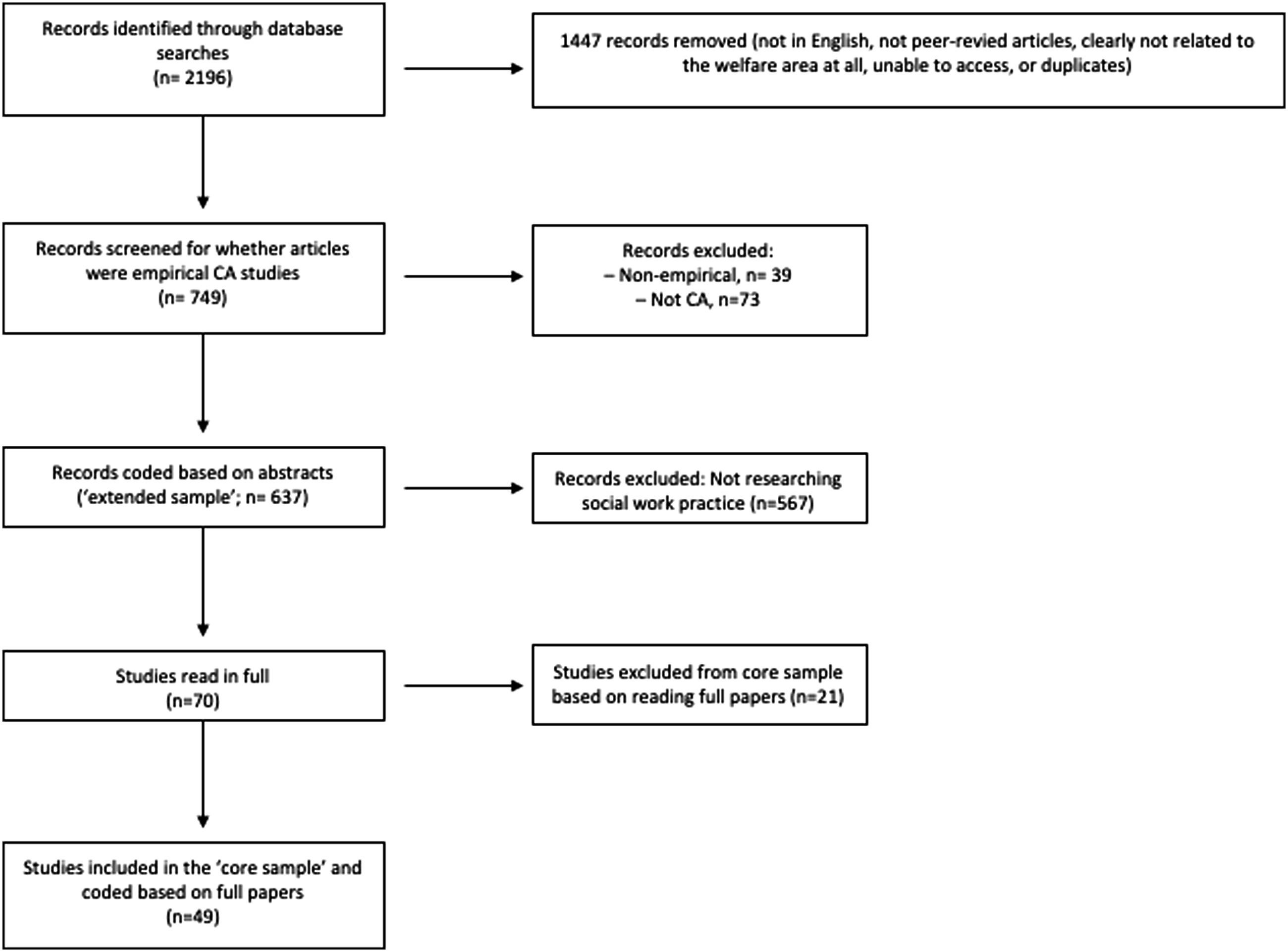
First, we read all abstracts and assessed whether the studies were empirical applications of CA – which 637 of the articles were – hereafter referred to as our ‘extended sample’. Note that articles labelled as DP or MCA – that were included in our searches – were also assessed for whether they used CA at this stage and those that did not were excluded. Abstracts were then coded for whether the studies investigated social work practice, what contexts were studied, etc. (see the Appendix for a list of codes). The process was collaborative in that the team jointly decided which codes for data extraction to use, based on our aims, and coded a first batch of ten papers together to verify that the coding scheme was relevant, and the assessments were aligned. We then divided the remaining articles between the team members and coded them individually, while meeting regularly to discuss difficult cases and ensure continuous alignment. The codes were used for descriptive, quantitative analysis of the extended sample to identify developments in the broader field of studies dealing with social work-related topics, that is, that investigate problems key for social work (e.g. substance abuse, intimate partner violence or learning disabilities) or closely related organisational settings or professions (such as public administration or care work in residential homes). Such studies contribute important insights to social work as a discipline and professionals in these settings are sometimes trained as social workers.
Second, we singled out the articles coded as specifically investigating social work practice (70 in total), which were read in full. We found that 21 of these papers did not, in fact, investigate social work practice, and the remaining 49 articles – hereafter referred to as our ‘core sample’ – were then analysed in depth, partly informed by Parry and Land’s (2013) method for systematic reviews of CA studies. Because our aim was to give an overview of the field rather than identify best practice, we used descriptive coding categories for data extraction suggested by Parry and Land (2013). This coding involved identifying research questions, commenting on data type and transcription, describing the institutional contexts under study, identifying CA phenomena analysed, checking how interactional details were treated and describing findings and practical implications (see the Appendix for a list of the articles in core sample, as well as their most important features). However, we excluded quality appraisal and aggregate analysis, in line with the methodology of scoping reviews (cf., Arksey and O’Malley, 2005). As with the extended sample, data extraction was done first jointly with a smaller set of five articles, upon which the codes were adapted and clarified. For example, while Parry and Land coded for CA phenomena, we coded for social work phenomena too. We continued individually where each team member read and coded a selection of the remaining papers. We used thematic analysis (Braun and Clarke, 2006) to identify recurrent patterns in the qualitative data (aim, phenomenon, findings and implications). These were first independently identified by three of the authors and then agreed upon by all authors.
Findings
Our findings indicate that CA has begun to establish itself as a subfield in social work research, but its influence is still limited. The analytic results are reported in five subsections. First, we give an overview of the broader development of the field. Second, we describe the institutional contexts: what professionals and client groups have been studied so far? In the third section, we discuss the design of the studies, and in the fourth, we report three themes in the foci and findings of articles in the core sample. Finally, we examine how these articles frame their implications.
When and where: An overview of the field and its development
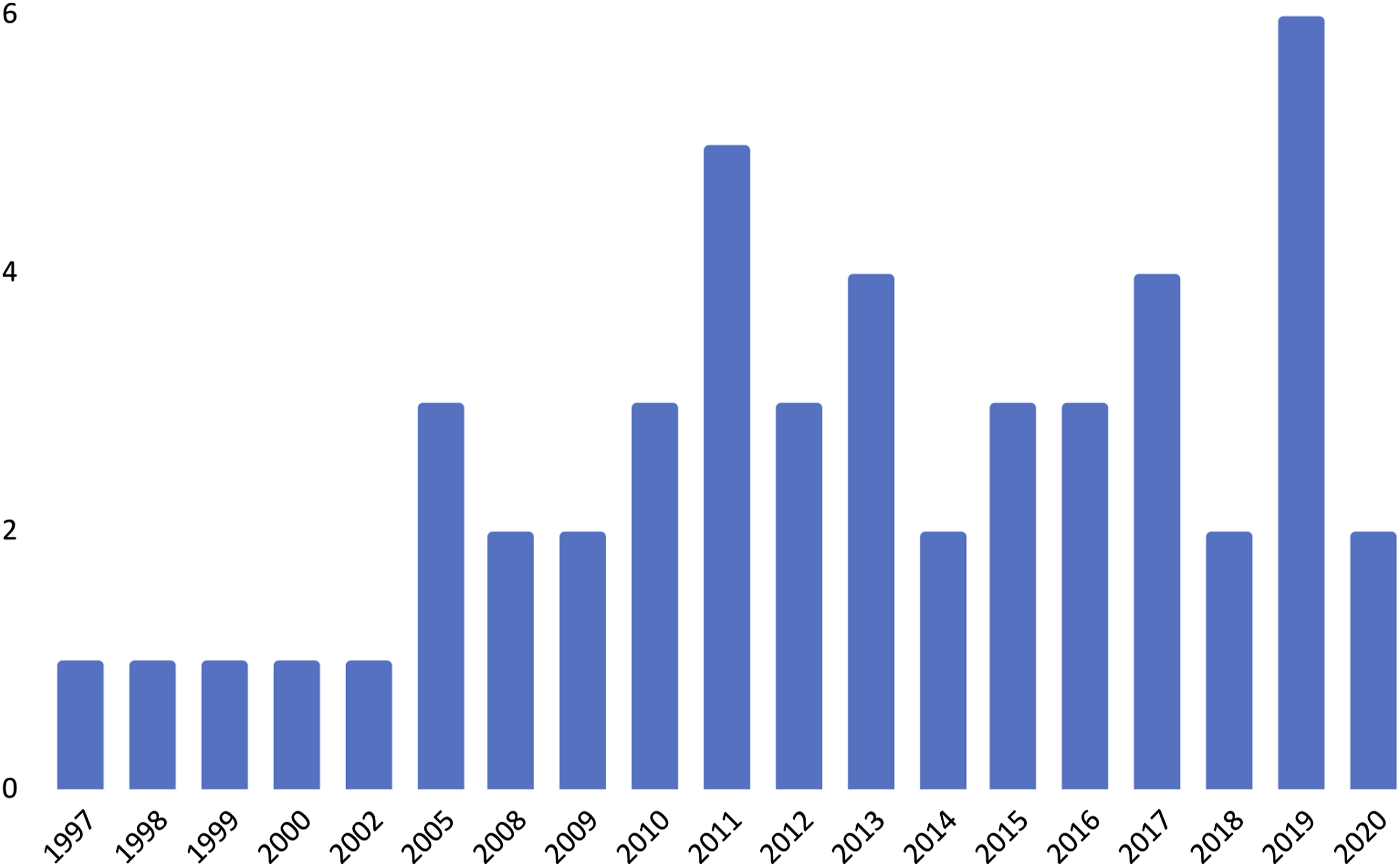
The number of studies using CA to examine social work settings has grown steadily since the 1980s but still constitutes a fairly small field. In the extended sample, the first article was published in 1983, whereas in the core sample, the first article appeared over a decade later (see Figures 2 and 3). It is thus only in the last twenty-five years that work applying CA to social work practice more specifically has been published in international journals. Articles per year in extended sample. Articles per year in core sample.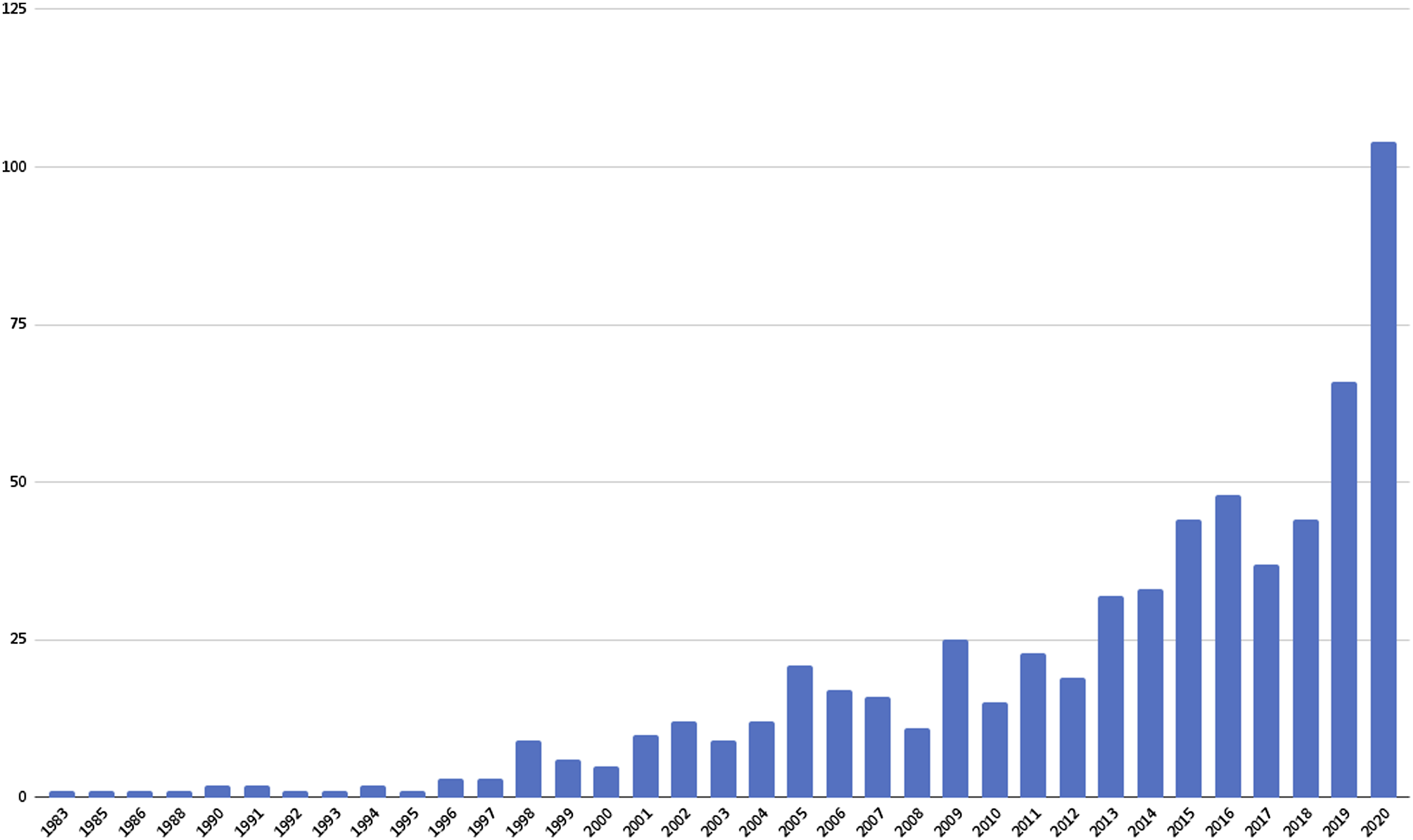
Corresponding to general patterns of CA publications, we found that most studies in our extended sample have been conducted in English-speaking and European countries, particularly the Nordics. Most studies (n = 93) were from the UK, followed by Sweden (n = 30), the US (n = 26), Australia (n = 22) and Finland (n = 18). It is, however, important to note that in most cases (n = 330), the country of origin was not specified in the abstract. Similar patterns are visible in the core sample (n = 49), with the UK being the most common country of study (n = 14), followed by the Netherlands (n = 7) and Denmark, Canada and Germany (n = 3, respectively).
We found more variation regarding publishing outlets, which speaks to the interdisciplinary character of both social work and CA (cf., Sidnell & Stivers, 2014: 3). In the extended sample, 276 different journals were represented, with those from the discourse field being most prevalent. Research on Language and Social Interaction was the most common source (n = 33), followed by Discourse Studies (n = 32) and the Journal of Pragmatics (n = 23). This is likely a consequence of the wide range of topics and fields captured by our searches, so that although many studies were published in journals focussing on specific fields of application (including social work, but also healthcare, public administration, etc.), no single journal gathered a large amount of CA studies. This was not the case in our core sample. In line with the more explicit focus on social work, about half of the papers were published in social work journals and just over a quarter in discourse journals. The most common source was Qualitative Social Work (n = 5), followed by the Journal of Social Work Practice (n = 4) and the International Journal of Child and Family Welfare (n = 3).
Whose interaction? Professional fields and clients’ problems
The range of professions featured in the extended sample illustrates the multiplicity of contexts where issues closely related to social work as a discipline are dealt with, and the fact that clients who meet social workers may have compound problems and often see professionals in related fields too (see Figure 4). Of the studies featuring a specific professional group, counsellors and medical doctors were most common (each featured in 8.5% of publications), followed by social care staff (8%). While only 4% of the studies specifically claimed to include social workers, it is important to note that these labels are based on the abstracts alone, and so categories such as ‘counsellors’ may include trained social workers. Professional groups in extended sample.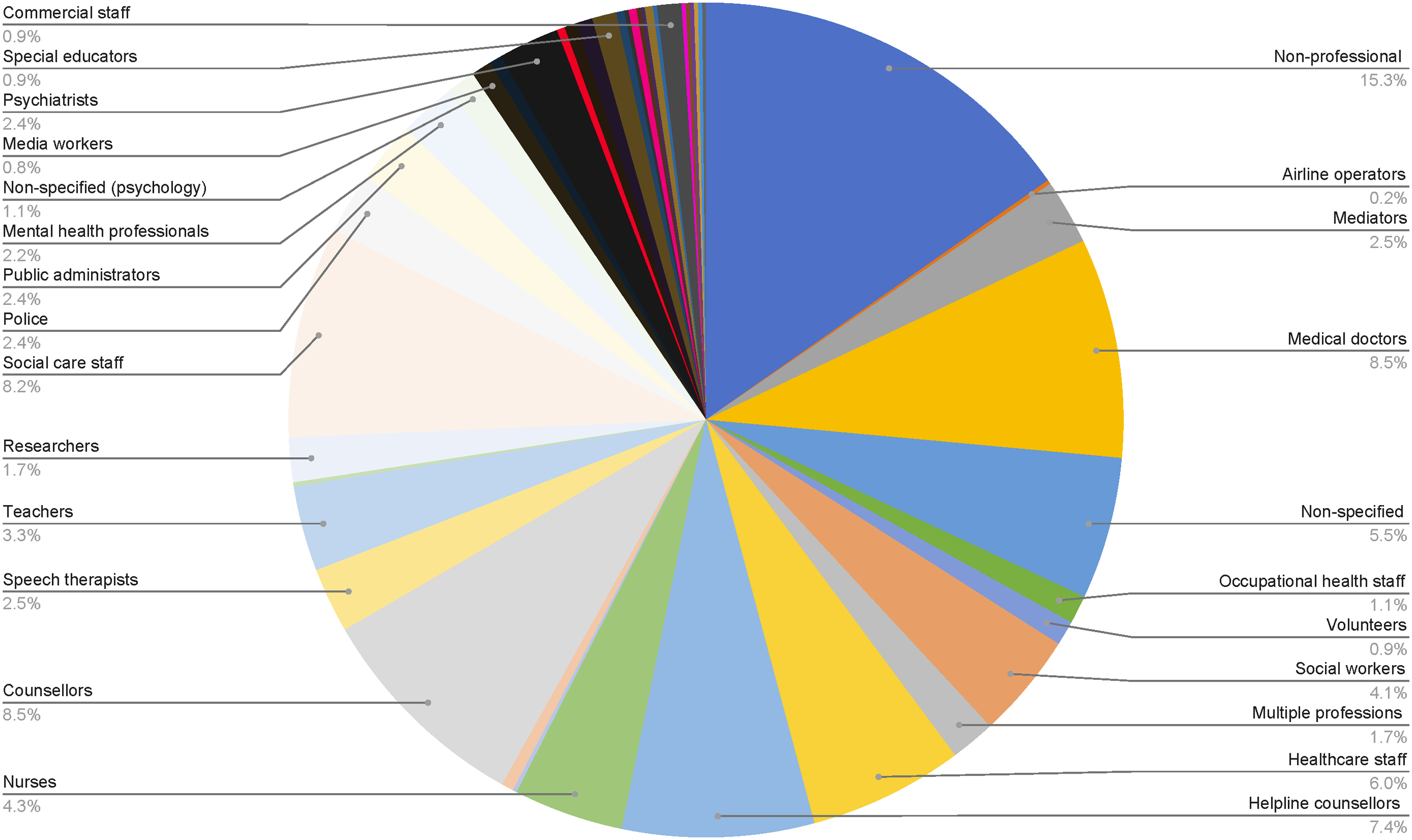
In contrast, the core sample included fewer professions (see Figure 5). Social workers were the largest group (47%), followed by counsellors (16%), public administrators (10%) and helpline counsellors (10%). The variation here speaks to how the terminology for describing professionals engaged in social work may vary (also depending on national context). The data came from a variety of settings, with social work with children and families in a therapeutic, statutory or helpline setting being most common, while we also found examples of unemployment units, mental health services and addiction treatment centres. Professional groups in core sample.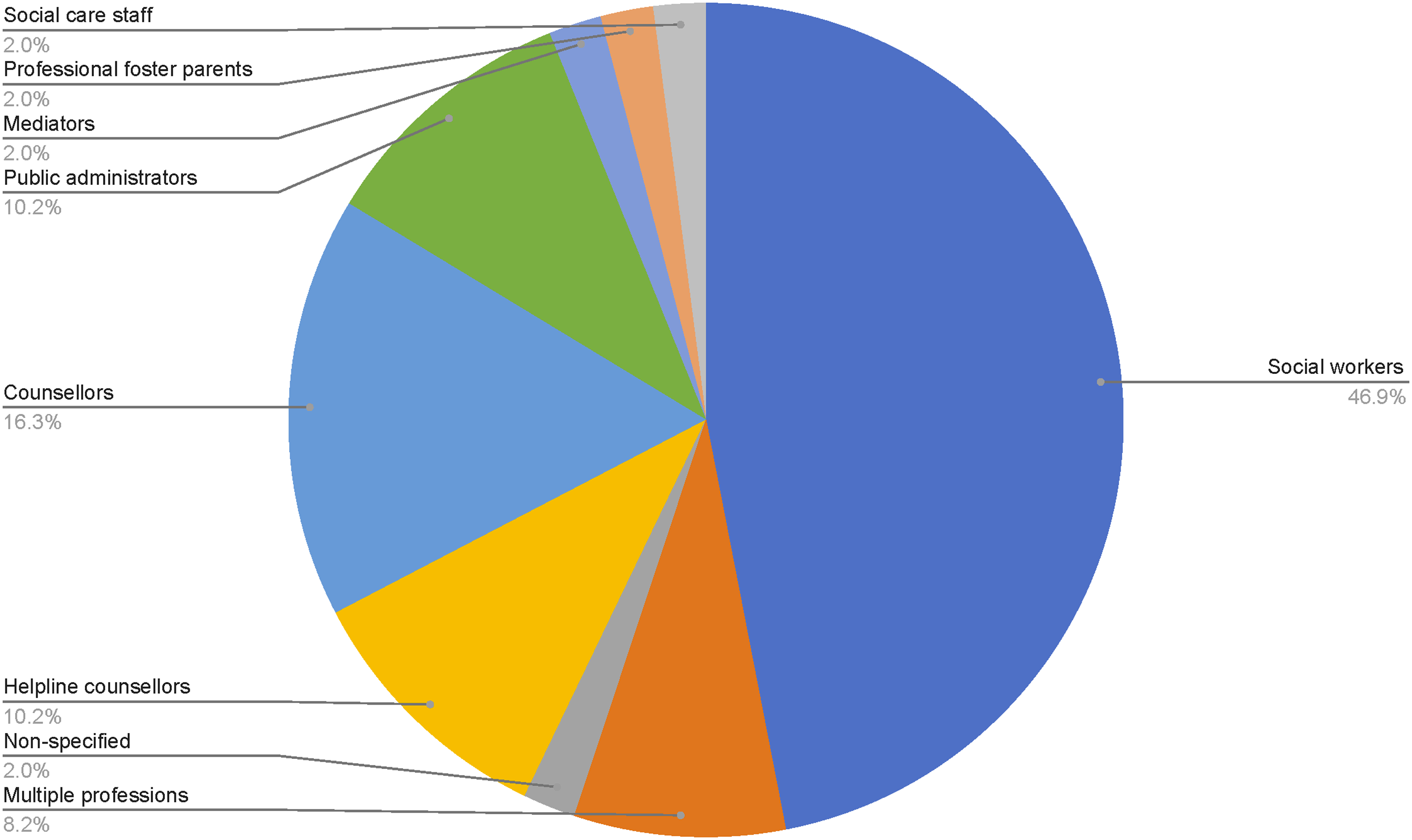
The extended sample included a wide range of featured clients (see Figure 6): the most common were people with learning disabilities (16%), people with mental illness (10%) and people with communicative disorders (7%). This reflects how our initial searches captured a large number of studies of encounters within healthcare and social care. In the extended sample, 18% of the studies focussed on children or youth, 7% on older people and the remainder either specified the clients as adults or did not mention age at all. Client groups in extended sample.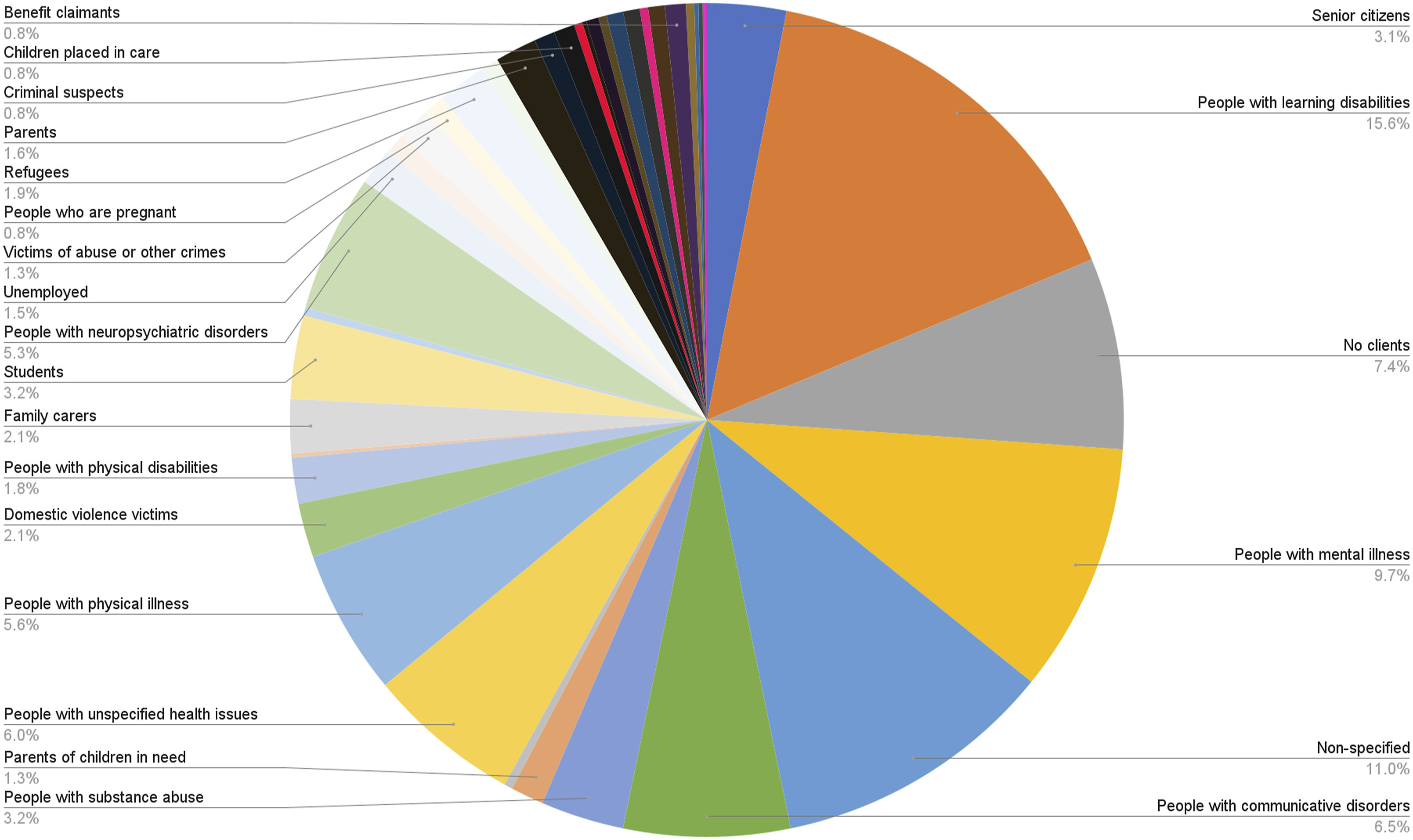
In our core sample, most studies (78%) examined interactions between professionals and clients and the largest client categories (see Figure 7) were people who were unemployed (10%), parents of children ‘in need’ (10%) and prospective adoptive parents (10%). If adding up all the parent categories (including prospective parents), they accounted for 29% of the studies, making encounters with parents the most studied. Meanwhile, we found no studies of social work encounters with, for instance, people who were homeless. Regarding clients’ age categories, most studies in the core sample were of interactions with adults – if age was specified – while 33% featured children or youth. Only one study categorised clients as ‘older adults’. The larger interest in children or youth, as compared to older people, was thus a more emphasised pattern in the core sample. Client groups in core sample.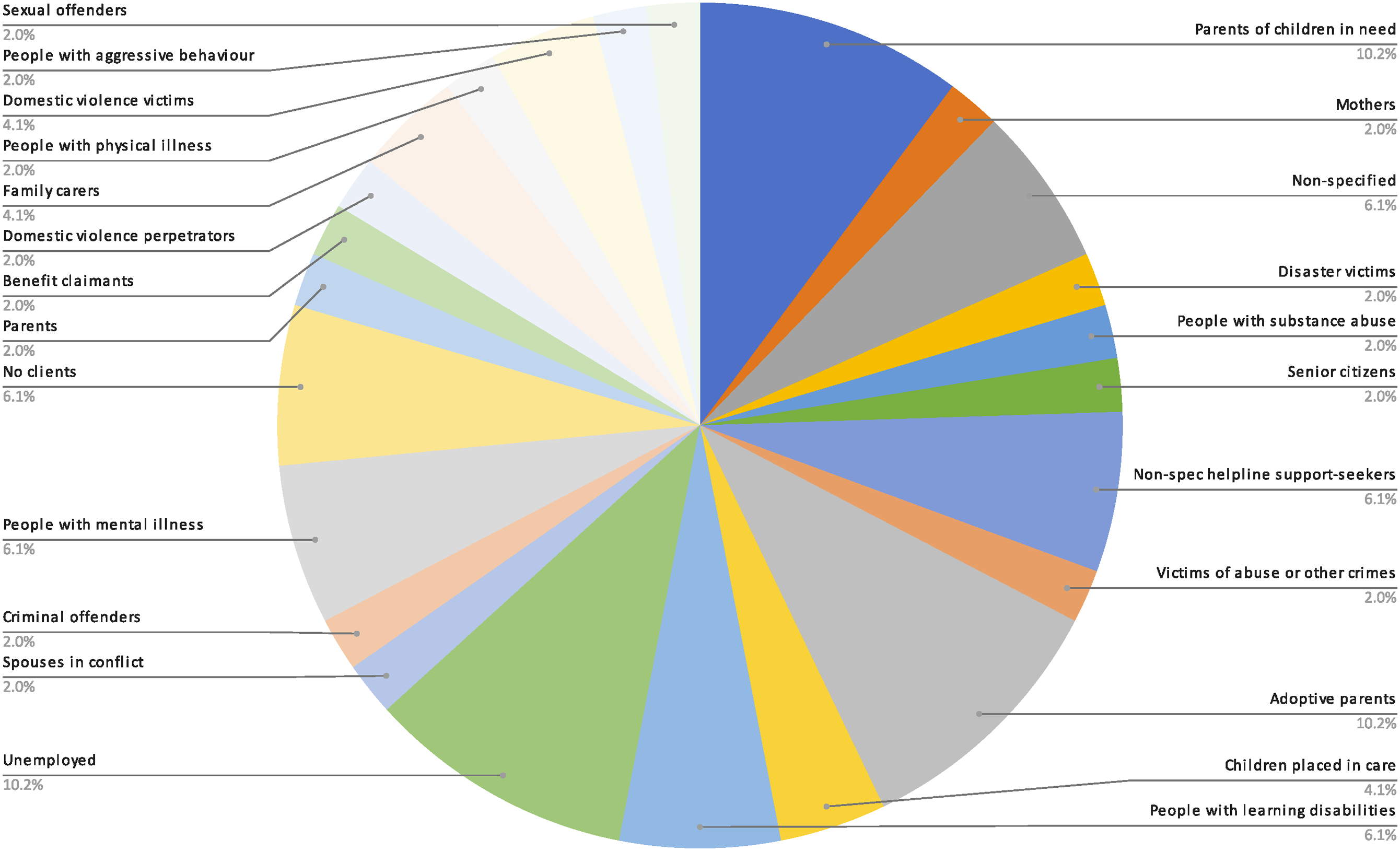
Study design: applying CA to contribute to social work research
Looking more closely at how the analytic approach was described in the core sample, we see that a vast majority of studies (about 90%) described using or being informed by CA. About half used CA by itself, but several combined CA with ethnomethodology or other approaches, such as discursive psychology, membership categorisation analysis or discourse analytical approaches. There were also a few articles that described the approach in a different way (e.g. ‘micro sequential analysis’ or ‘interaction analysis’).
Eleven of the articles were single-case studies, that is, analysed a single encounter, whereas most (n = 21) had what we call a multi-case design, that is, data included more than one encounter with analysis focussed on broader interactional patterns of institutional relevance. Seventeen of the articles were collection-based, examining the systematic use of a particular feature or action in a specific sequential context across the encounters. Analyses of deviant examples that could confirm patterns in such collections were rare (n = 5). Most studies (n = 42) were of face-to-face interaction, whereas seven studies were of mediated interaction such as telephone. Nevertheless, audio recordings dominated the examined studies (n = 34). In the studies of face-to-face data, 28 relied on audio recordings (sometimes with participant observation), meaning that it was not possible to include and analyse participants’ gaze, gesture or other visible forms of bodily conduct. It is not so surprising, therefore, that almost three quarters (n = 36) of the studies in our sample did not include any analysis of embodied elements.
Most of the articles described using a Jeffersonian approach to transcription (see Hepburn & Bolden, 2014) but the level of detail varied. Thirty one studies included detailed transcripts with linguistic and interactional details, timed gaps and pauses, and marked overlapping talk. In 23 studies, however, transcriptions included little information about delivery, and non-verbal features such as laughing or sighing were described rather than transcribed (e.g. noting that the participant laughs rather than capturing the quality of the laughter as, for example, HAHAHA or hehehe). Transcripts did not necessarily include line numbers and it was sometimes difficult to detect when an utterance was intonationally, grammatically or pragmatically complete (what conversation analysts call a turn-constructional unit, or TCU). Articles with data from languages other than English (n = 18) sometimes did not include the original language (n = 6), meaning that some linguistic and interactional details were inevitably lost in the data displayed. Only nine articles had a two-line transcript with the original language and the English translation matched line-by-line, and none had a third line displaying the original word order and specifying features such as particles (cf., Hepburn and Bolden, 2014:69). The analytic focus also varied. While CA studies commonly examine more than the topical or semantic content, attending also to grammar, prosody, etc., one fifth of the articles did not do this or gave little attention to such aspects. Finally, there was only one article that quantified the data.
In conclusion, many of the articles in the core sample can be understood as mainly contributing CA-based insights to social work research and practice, rather than developing the CA literature on interactional phenomena as such. This corresponds to the major outlets being social work journals rather than discourse-type journals, as discussed in the first analytic section. In the next section, we will discuss the focus and findings of the core sample in more detail.
Focus and findings: practices, activities and theory
In line with the central precepts of CA, studies in the core sample generally examined the interactional organisation of social work encounters in detail, attending to the sequentially organised, moment-by-moment unfolding of participants’ actions. There were three main themes in their analytical focus and findings: interactional practices, institutional activities and the relationship between theory and social work practice.
Identifying interactional practices
In CA, practices are defined as resources for doing things (Pomerantz and Fehr, 2011) and an important contribution of CA research is the cumulative identification and description of interactional practices. For instance, Pino (2017) has shown how participants in group therapy can use I-challenges – drawing on personal experience to offer an alternative view – to avoid overstepping their rights to know and assess another person’s situation. In our core sample, seven studies focussed on a specific practice. For instance, Paoletti (2013) examined how professionals used storytelling to discuss delicate matters, and Iversen (2019) studied how social workers used claims of understanding to respond to children’s resistance in interviews about their experiences of abuse. Another example was a study by Noordegraaf et al. (2008a) on how social workers asked hypothetical questions in interviews with prospective adoptive parents. They showed that by using the practice of ‘future talk’, social workers both tested the clients and helped them become better-prepared parents. Before the excerpt below (from Noordegraaf et al., 2008a: 321), the social worker (SW) had suggested that a future child might have a different personality than the parents, and asked in line 27 what that would mean for the mother (PAM): 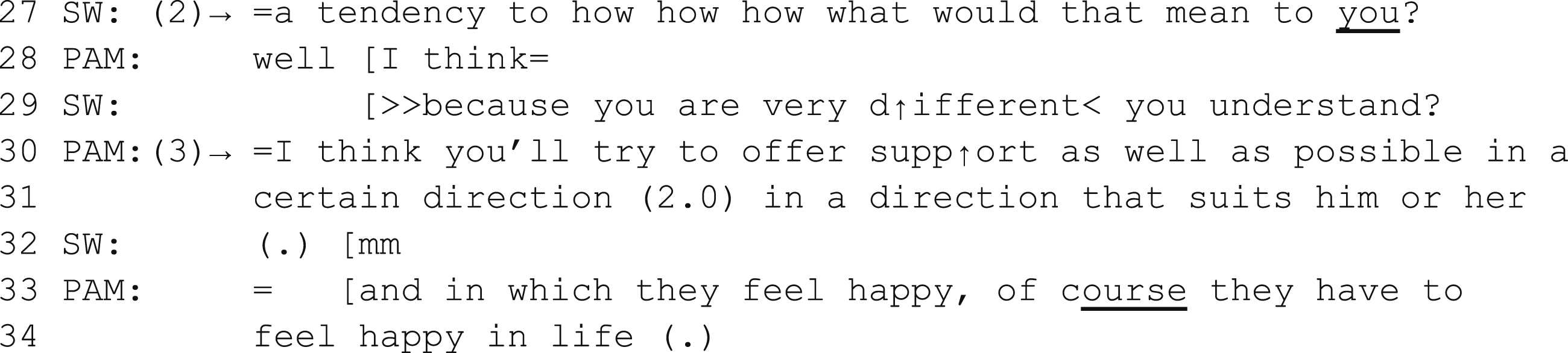
Noordegraaf et al. (2008a) pointed out how the social worker treated the mother as someone able to reflect on herself (line 27) and how the mother was quick to demonstrate her pedagogical skills (lines 30–31). Their analysis thus showed how practices relate to the social worker’s tasks but also that these practices may not necessarily work smoothly as ‘future talk’ brought out pedagogical talk rather than self-reflection. In the studies mentioned above, the analyses drew on findings about previously identified interactional practices to investigate how they worked in specific social work settings. We found no studies that identified new practices specific to social work.
Investigating institutional activities
Institutional activities can be understood as a set of practices that guide the formation and recognition of action in specific settings, often in the form of task-oriented phases, for example, ‘openings’, ‘history-taking’ or ‘documentation’ (Levinson, 2014). Twenty four studies described the complex organisation of institutional activities, involving participants’ mobilisation of diverse interactional practices. There was a fundamental concern about practical problems faced by participants and the studies primarily investigated how social workers accomplished challenging social work tasks (e.g. making treatment recommendations in multi-professional teams, Arminen and Perälä, 2002). To a lesser extent (n = 7), they investigated clients’ difficulties in pursuing their concerns, such as managing professionals’ assessment, documentation or decisions related to their case (e.g. Hepburn, 2005; Jørgensen, 2019). A study investigating how social workers accomplished difficult tasks was Koprowska’s (2017) article, which showed various practices used by social workers in child protection conferences to discuss parents’ strengths and shortcomings. For example, they used what Koprowska (2017: 115) called a ‘reference switch’ to include parents: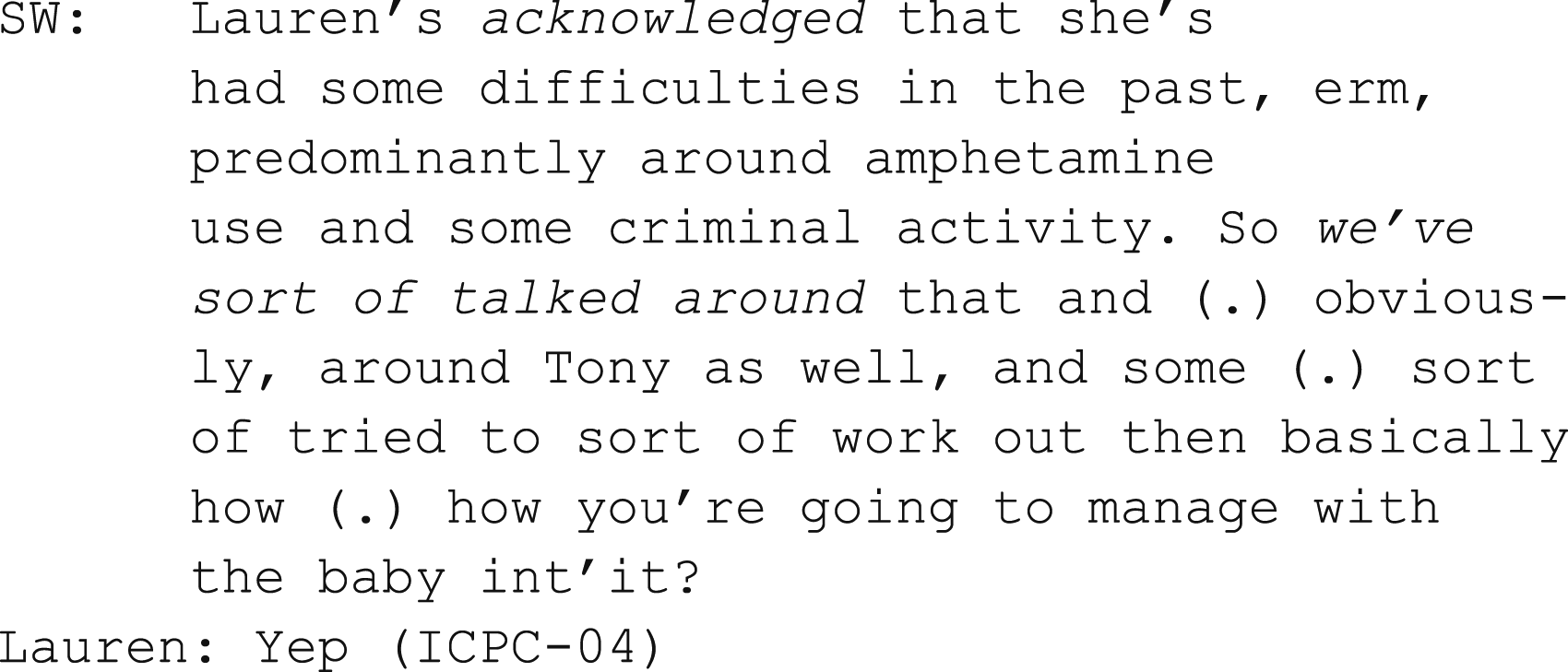
Koprowska (2017) noted the social worker’s use of several pronouns and argued that this was a way to display Lauren as able to talk honestly about herself: to move from being a listener to being an addressee. By unpacking the practices by which different activities were carried out, the studies showed how social work was done and how particular practices were used to manage specific challenges. Koprowska (2017) offered an insightful example by showing that reference switches were related to narratives portraying the parent as reformed or meriting support, because the social worker needed to address the parent in third person. In cases without such redemptive features, such practices were not used. In five studies, researchers followed a phenomenon from text to talk, or talk to text. For instance, the studies showed how social workers included and omitted aspects of clients’ talk in documents (Arminen and Perälä, 2002; Noordegraaf et al., 2009a), and how clients’ interactional conduct was used in texts as proof of their character or relationships (Noordegraaf et al., 2010).
Findings about social workers’ interactional practices, both with a focus on the practice and activity, addressed constitutive and often challenging aspects of social work, such as the tension between care and control, asymmetries between professionals and clients and the pursuit of institutional agendas.
Comparing theory and social work practice
A third theme in the studies was a focus on investigating what can be called a ‘micro-macro link’ (Schegloff, 1987) – the relationship between guidelines, theory or ideals and what actually happens in the interaction. In 19 studies, this meant identifying the differences between how social work ‘should’ be done, as described in guidelines or policy, and what social workers did in their encounters, whereas three studies pointed out good practice for reaching ideals. Studies that addressed the complexity of practices in relation to institutional ideals (e.g. client-centredness, Hepburn et al., 2014; self-determination, Pilnick et al., 2011; and active participation, Solberg, 2011a) would point out good practice for reaching ideals, failures to realise them or practices that went against general ideals of inclusion (e.g. unpacking how asymmetric relations were established in relation to normative standards of race and culture, see Lee and Horvath, 2014).
Using data from planning meetings where the views of young adults with intellectual disabilities and their parents/carers were in conflict, Pilnick et al. (2011) showed that the discourse of self-determination did not account for the parents’/carers’ central role in enabling choices. In the excerpt below (Pilnick et al., 2011: 317), the mother (MO-10) addressed Louise, who was the young adult: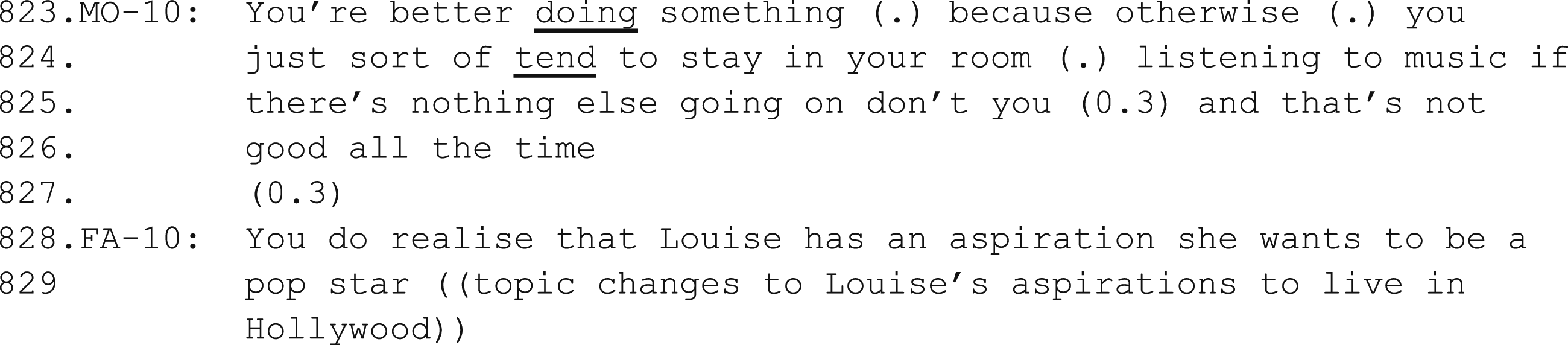
In their analysis, Pilnick et al. (2011) demonstrated that addressing Louise was not necessarily the mother’s only purpose, since she used the turn to raise a problem of Louise just staying in her room, which had not been brought up by Louise herself. In addition, when Louise did not answer, her father (FA-10) invoked her wishes (lines 828–829), which can be a way for parents to establish the unreasonableness of their children’s perspective. Thus, by showing how parents were involved in clients’ choices, Pilnick et al. (2011) drew attention to how an ideal of self-determination may be far from challenges that clients and social workers face in their everyday lives and social work encounters. Three studies also showed how institutional constraints relate to social order, for example, how morality and emotions may have unforeseen consequences in people-processing activities, such as granting a particular benefit or intervention (e.g. Velkovska and Zouinar, 2013).
Linked to these themes, the studies showed how social work was brought to life – how social workers and clients collaboratively did things. In this sense, the studies can be seen to open up the ‘black box’ of social work practice. This includes both descriptive studies, studies that identified best practice, and studies offering a critical examination of the relationship between theory or policy and practice.
Implications for Social Work
The publications in our core sample were generally cautious about making direct recommendations for practice. This makes sense, when one considers that ‘simplistic solutions do not carry weight’ (O’Brien, 2000) with practitioners, and the general strive to work against simplification in qualitative research (Clarke and Keller, 2014). Most of the papers (n = 33) had as their primary implication the provision of greater insight into the complexities and contingencies of practice, to make such practices more ‘visible’ and thus encourage practitioners to reflect on their own practice – for example, how particular conversational approaches generate different responses (Arminen and Perälä, 2002) or how group membership is established conversationally (Cashman, 2005). A subset of this group (n = 4) specifically sought to describe the differences between social work as described in policy, and how it operated in practice (e.g. Pilnick et al., 2011).
Two of the papers reported on attempts to implement CA findings with social workers directly by providing feedback on video-taped interactions with clients (Rawls et al., 1997) or give training sessions based on CA research (Kirkwood et al., 2016). Another paper argued that social workers could be helped by viewing their own filmed interactions but did not report on an actual attempt to do so (Hung et al., 2019). One of the papers (Noordegraaf et al., 2008b) focussed on implications for research, suggesting that by analysing conversational sequences in their local context, the findings might be more familiar or ‘real’ for practitioners.
Finally, and in what might be a sign of the inherent epistemic humility of CA, only seven papers identified direct implications for practice, for example, how a less demanding conversational style can be more helpful for people using services (Solberg, 2011a), how to give advice so that it is less likely to be resisted (Hepburn and Potter, 2011) or how social workers can work to ensure greater parental engagement (Koprowska, 2017; Symonds, 2020). Another four papers identified more general implications for practice, suggesting that CA can be applied to help social workers recognise good practice in different contexts (Hepburn et al., 2014), calling for more and better training (Lee and Horvath, 2014; Caswell, 2020) or highlighting the importance of grounding practice guidance on detailed understandings of what social workers actually do (Iversen, 2019). Overall, the studies highlighted the importance of context for social work practice, noting that communication strategies are related to the professional’s organisational or legal position and their institutional power, so that interactional practices that work in one context may not work in the same way in another.
Concluding discussion
This review shows that CA has begun to establish itself as a framework for social work research. The reviewed publications offer knowledge on how social workers draw on specific interactional practices in accomplishing social work tasks, as well as how this work relates to ideals and theories in social work. In this sense, the review demonstrates CA to be a useful approach for showing the details of how social work is done, which is an important contribution to a field that both relies on communication and is characterised by communicative challenges involved in addressing social problems.
Given the number and recency of CA studies in social work, it is not surprising that we find research gaps. The field is dominated by Western European countries, particularly the UK, but it is notable that 330 of the studies in our extended sample did not mention in the abstract the country in which the study was conducted. Since welfare organisations are nationally specific, this may make cross-national comparisons and generalisations more difficult. The client groups that have received most attention from CA researchers are family-related (children and parents) or involve people with learning disabilities or communicative difficulties. The focus on communicative disorders may be seen as surprising in a broader social work context, and likely has to do with CA’s focus on talk. Studies have so far focussed on how professionals accomplish challenging work tasks in interaction with clients but have to a lesser extent investigated clients’ practices for pursuing their concerns. While this calls for broader consideration of clients’ perspectives in line with emancipatory ideals in social work (cf., Wilson and Beresford, 2000), it illustrates CA’s usefulness for understanding and developing professional practice by facilitating reflection on alternative ways of responding to challenges that social workers encounter. However, we found that the CA research conducted in this area so far has been cautious about making recommendations for practice. This highlights the complexities involved in translating research findings for practitioners in instances where there might not be an easy way to solve a problem (although such recommendations might of course be made in other channels more geared towards policymakers or practitioners, not covered in our review). Caution in giving recommendations might also be grounded in the ethnomethodological focus on local context (Heritage, 1984), rendering decontextualized recommendations problematic. Since practice recommendations require a firm base of accumulated knowledge, it is likely that further expansion of the field will better facilitate such outcomes, similarly to the development of CA studies of medical practice (e.g. Barnes, 2019).
The reviewed studies tend to favour single- or multi-case approaches over building collections. Although ‘one is also a number’ (Schegloff, 1993: 101) and single-case analyses can be important for identifying and describing phenomena, this means that the benefits of systematic examination of practices, as well as large-scale analyses of collections in and across social work settings, remain largely unexplored. This contrasts with CA applications in medicine, which increasingly rely on datasets that allow for comparison and quantification (e.g. Heritage and Robinson, 2011; Sikveland et al., 2016). More collection-based studies of social work could thus facilitate recommendations for practice in the future.
Another methodological aspect relates to the type of data used: although most studies conducted so far have been of face-to-face encounters, they often rely on audio data. The field has thus to a little extent embraced the ‘embodied turn’ of CA (see Heath et al., 2010; Nevile, 2015). This might partly stem from ethical concerns about using video to capture the often sensitive situations prevalent in social work practice, but exceptions in social work (e.g. Monteiro, 2016) and examples from healthcare (Pino et al., 2017) show that such concerns can be managed. In addition to not displaying bodily conduct, we found that transcripts are often ‘light’ in terms of technical detail and often do not include the original language if other than English. Such simplifications may be relevant adaptations to make the analysis accessible for readers that lack CA expertise and may also be contingent on restrictions from journals but make it more difficult for readers to assess the quality of the analyses.
Given these methodological aspects, most studies conducted so far may be seen as primarily contributing to social work research and practice – with the potential to also inform policy change by showing how policy is navigated on the street-level (Caswell, 2020) – rather than informing and developing CA as a discipline. There is potential for contributing new knowledge about interactional phenomena to the CA literature on both institutional interaction (e.g. regarding professional-client asymmetry, guidelines and practice) and ordinary conversation (e.g. discussing delicate topics, emotion and morality). Such developments can also facilitate aggregate analysis, enabling practice recommendations based on CA findings.
Other issues identified in the review relate to our methodology, and we acknowledge the limitations tied to the aim and selection procedure. The choice to only include peer-reviewed articles in English may have skewed our sample towards English-speaking contexts and excludes studies relevant to social work published in books. Our overview, therefore, may not fully capture the use of CA, especially in countries where a significant part of publication is done through more nationally oriented channels. Relatedly, recommendations for policy or practice might be more prevalent in grey literature such as reports. In addition, searches and initial coding relied on how the papers themselves categorised the methods and object of study. Studies claiming to examine communication in social work without categorising the analysis in CA terms have thus not been captured, although some of them might employ a CA methodology (for instance, studies only labelled as ethnomethodological were not included in our searches). While this limits our overview of the field, it is also likely that vague connections to CA itself is a sign of CA’s relatively weak position in social work up to this point. To some extent, therefore, our results are indicative not only of the CA research done in the field of social work, but the extent to which such research is categorised as such. As CA becomes more established and CA terminology becomes increasingly recognisable, this would be expected to change. Finally, our descriptions of study findings lack quality appraisal (although we discuss issues related to quality, such as mode of transcription). As the field continues to grow, this will become increasingly relevant, and should be used as a selection criterion in future reviews.
In undertaking this review, a recurrent discussion among the authors was what ‘counts’ as social work. These discussions guided the development of inclusion and exclusion criteria but also more generally highlighted the complexity involved in answering the apparently simple question: is this social work or not? In part, this discussion arose from the fact that the authors are of various nationalities and have familiarity with different (European) models of welfare. The definitional complexity of whether social work should be seen as limited to encounters involving a qualified social worker or include any form of conduct (regardless of professional training) aimed at promoting social change, development and well-being among marginalised groups, also results from the decision taken in some countries to protect the title of ‘social worker’. In the UK, for instance, anyone could describe themselves as a social worker until 2000, after which it became a legally protected title that required registration with a government-mandated body. Thus, before 2000, ‘social work’ described what you did, whereas post-2000, it describes who you are as a professional. In the end, we did not seek to define social work in such fixed terms, which is reflected in the review results and discussion above. With a narrower definition of social work, the identified literature – our core sample – would have been smaller, and some of the tendencies that we found might have been more (or less) prominent.
Finally, the review has implications for social work research and for CA as a discipline. Our results highlight why social work interactions need to be studied in their own right, but also that social work researchers and practitioners can learn from CA studies in other institutional settings and may need to look beyond traditional social work outlets to recognise the cumulative knowledge that CA has generated. In short, we argue that social work research and practice could benefit from a fuller application of CA. Meanwhile, Peräkylä and Vehviläinen (2003:747) have argued that if CA is to impact research and practice of a professional field – such as social work – the analysts must ‘find the forums and practices for communication among researchers, professional practitioners and educators’ as well as become familiar with the interactional stocks of knowledge of that field. Conversation analysts doing research in this area would thus benefit from considering how to make their findings available to social work researchers and practitioners not trained in CA, to facilitate accessibility, recognition and impact.
Footnotes
Declaration of conflicting interests
The author(s) declared no potential conflicts of interest with respect to the research, authorship, and/or publication of this article.
Funding
The author(s) received no financial support for the research, authorship, and/or publication of this article.
