



Abstract
Career interview of Howard Williamson by Jonathan Evans
Preamble by Jonathan Evans
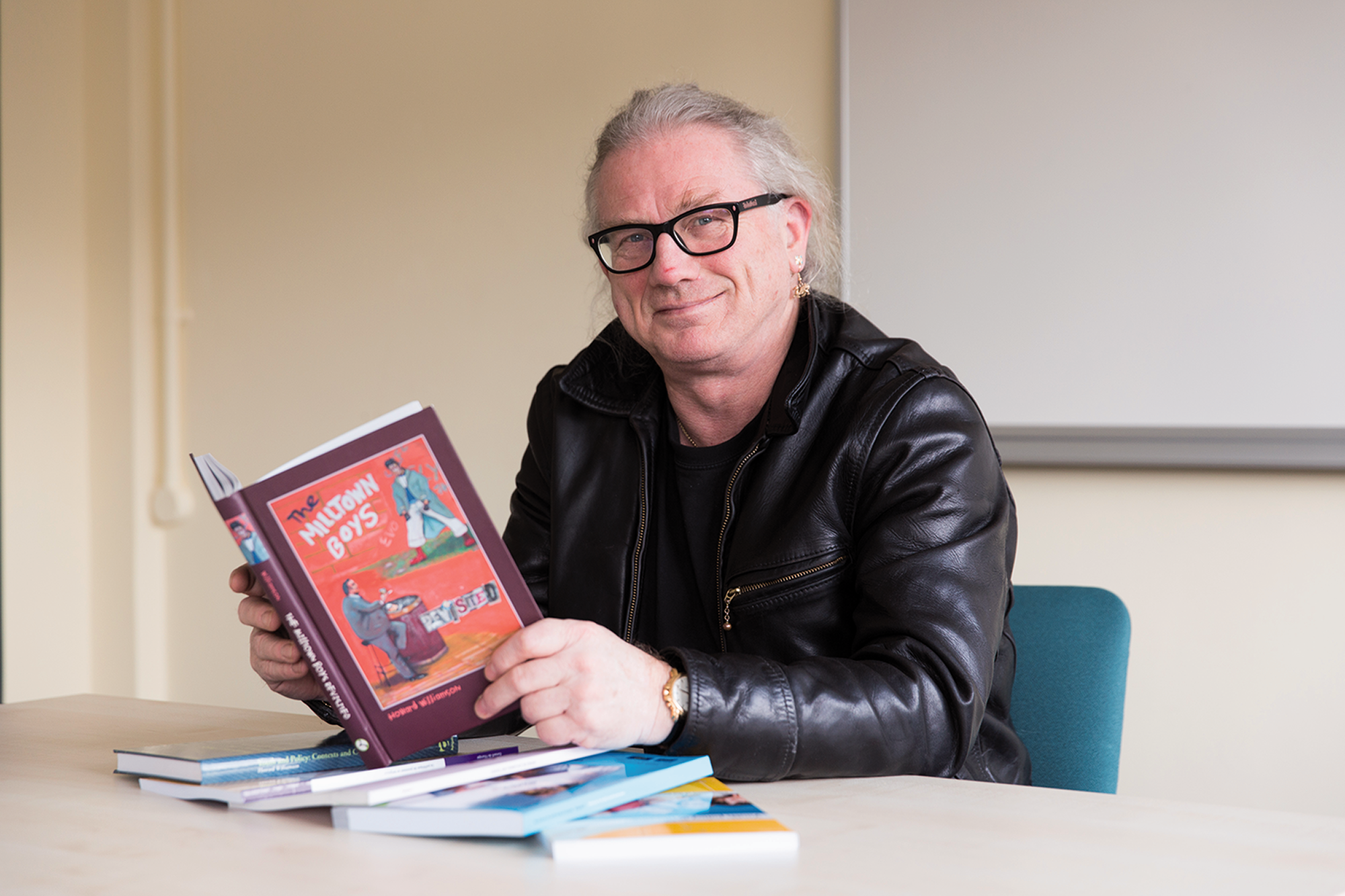
I first met Howard Williamson twenty-five years ago when I joined the Social Work Department at Cardiff University as a member of staff. Although Howard did not share my occupational background in social work and probation, we had a common interest in teenaged children and young adults; a group that became increasingly socially marginalised in the intervening period and, unless they offended, somewhat neglected by professionals. In his efforts to represent these young people, Howard has drawn not only on his own research but also the experience of being a youth work practitioner. His influence on youth policy has been felt well beyond his adoptive country of Wales, particularly at UK level and within the Council of Europe and its member states.
Howard and I agree on most things, but not everything. For the entertainment of the students, we would sometimes exaggerate our differences in lively debates. This career interview, prompted by the publication of the third study of the Milltown Boys, was a welcome opportunity to reflect on the work of Howard Williamson without playing to the gallery. Our initial interview, which we recorded, ran for a few hours, and generated over 35,000 words of transcript. It is hoped that the edited version captures the breadth and richness of the original interview.
Howard Williamson has undertaken important work in a long and varied career, but the Milltown Boys research project is a remarkable achievement. It depicts a group of boys coming of age in a disadvantaged neighbourhood, meets them in middle age, and revisits them in their sixties. Written in the tradition of the early Chicago School (Thrasher, 1927
1
), which has been ably delineated by Shaw (2011), the Milltown Boys project makes the case for investing in long-term life histories.
Dr Howard Williamson CVO CBE was educated at King Edward’s School, Birmingham. He studied Social Administration at Cardiff University and completed a PhD in Socio-Legal Studies. For the next 25 years he combined a sequence of contract research with youth work practice and youth policy work both within the UK and internationally. He was appointed Professor of European Youth Policy at the University of Glamorgan (now the University of South Wales) in 2005. He has held visiting academic positions in many parts of the world and is Organisational Secretary of the youth research committee of the International Sociological Association.
The focus of Howard Williamson’s professional practice, academic research and teaching, and policy engagement has always been ‘youth’, admittedly a contested concept though arguably spanning the teenage years and increasingly into young adulthood. His working life started just as post-war youth ‘transitions’ started to be fractured – becoming prolonged, more complex and reversible. Transitions to independent living, within family life and leisure, as well as to the labour market were becoming more precarious, producing greater risks of profound and protracted social exclusion. Within public policy, what might have once been considered as ‘benign neglect’ was now ‘malign indifference’: failing to act on non-participation in learning, on youth offending or youth unemployment was tantamount to the abandonment of a generation. The concept of ‘youth policy’ therefore became significant, especially in terms of its coherence and the extent to which it endeavoured to be ‘opportunity-focused’ rather than ‘problem-oriented’. Social work and youth work, alongside other professions engaged with this group of young people, have therefore had to grapple with numerous dilemmas concerning practice. Researchers, too, have needed to reflect on their approach to informing policy and practice. Young people’s futures will be blighted or blessed by the decisions that we take.
Jonathan Evans is a social worker and probation officer by occupational background. He is currently Professor of Youth Justice Policy and Practice at the University of South Wales and sits on the Wales Youth Justice Advisory Panel.
Briefly, I moved quite by chance to ‘Milltown’ (a pseudonym), in 1973, and met the ‘Boys’, a large, loose-knit group of young offenders who were 13 or 14 years old at the time. They became the focus of my doctoral studies between 1975 and 1978 and I subsequently wrote a book about them, Five Years (Williamson and Williamson, 1981). Twenty years later, I interviewed 30 of them again, for The Milltown Boys Revisited (Williamson, 2004). Twenty years after that, I interviewed 12 of them for The Milltown Boys at Sixty (Williamson, 2021).
The first was my non-school friends when I was a teenager. Most evenings I kicked a ball around in the park with other local kids, from the social housing on the other side of the village. When I was 14 the others, who were at a ‘secondary modern’ school, 2 started talking about leaving school quite soon. Nobody at my direct grant school 3 left at that age. Nearly everybody went to university, often Oxford or Cambridge. In contrast, my mates in the park were already contemplating other futures, on building sites and in supermarkets. That was their horizon compared to the infinite possibilities discussed at my rather ‘special’ school. The contrast was palpable.
The second thing was my father, a child care officer, dragging me round children’s homes, remand homes, approved schools and assessment centres in my posh school uniform; the kids in care or in trouble at first routinely provoked me. I had to learn to get by during the time my dad chatted with the officer-in-charge. Perhaps more critically, I learned so much from those kids. I learned that some children didn’t have parents, or at least didn’t have parents they could live with. I learned that some didn’t have much of an education. I learned that some had had some pretty awful – adverse – childhood experiences. They talked about a lot of things that I could not even imagine, and in language that I couldn’t possibly contemplate using. I think that shaped me quite a lot.
Then there was the paternalistic attitude of my school – ‘what were we doing for our poorer neighbours on our doorstep?’ I volunteered for ‘Care for the Elderly’. The short walk on Friday afternoons from my elegant school environment to the Victorian terraced housing of Balsall Heath in Birmingham was an unbelievable eye-opener. I visited an old lady and helped to build an ‘adventure playground’. In that way, too, I stumbled into community work and youth work. I helped with summer holidays for very disadvantaged children who had never seen the countryside. I was already in Young Oxfam where I learned about global issues of famine and corruption and overseas aid, and about domestic issues such as housing squalor in places like the Gorbals in Glasgow.
Those and other experiences alerted me to issues of inequality and injustice in Britain and the world.
Reading Social Administration at Cardiff was not self-evident. People look back and assume it was. But that was far from the case.
I was trying to be as anti-Oxbridge as I possibly could, given the school I went to. I applied to five different ‘ordinary’ universities, to do different subjects at each one! There was no rhyme or reason. Cardiff was my second choice but, after visiting and being interviewed, it was the most attractive for me. But the whole process had been almost like pinning a tail on a donkey.
My learning about the divisive educational system was a hugely powerful influence, particularly in terms of opportunity structures (or the lack of them) and that probably feeds right through into my contribution to Extending Entitlement (2000) 4 and a lot of the ‘opportunity-focused’ youth policy that I have advocated for within the Council of Europe and its member states.
I think I was also significantly influenced by labelling theory, through both reading Howard Becker (1963) and meeting Edwin Lemert (Lemert, 1972), who came to Cardiff – and I acted as his gatekeeper to the local juvenile court.
I did very little at university about youth work, strangely. In social work, the big issue was ‘which side are you on?’. Were Community Development Projects 5 transforming people’s lives or providing the sticking plaster over abject inequality and disadvantage produced by capitalist society? Did radical social work go soft as it became professionalised and state-funded (‘don’t bite the hand that feeds’)? Throughout were questions of power, control, and the distribution of resources and opportunity, highlighting the tensions when trying to overturn or alleviate inequalities.
I read a lot at university. Education and the Working Class (Jackson and Marsden, 1966), The Rise of the Meritocracy (Young, 1961) remain prominent in my mind - they drew me into a critique of social relationships and social stratification. I read The Drugtakers (Young, 1971), Folk Devils and Moral Panics (Cohen, 1972), and Cultural Studies 7/8 (Jefferson, 1975), the working papers that were the precursor to Resistance through Rituals (Hall and Jefferson, 1976). And I did sometimes get frustrated with the weight of the theoretical contentions without any apparent empirical base, supporting the view once expressed that the Marxist youth sociologists at Birmingham’s Centre for Contemporary Cultural Studies would perhaps have benefited from a little more fieldwork and a little less guesswork!
However, this youth culture literature about Teddy Boys, Mods and Skinheads was all very sexy and appealing – great for me to read – but it didn’t remind me of my mates in the park, the kids in the youth clubs where I had volunteered, and the young offenders on the streets of ‘Milltown’ (a pseudonym for the huge social housing estate where I lived) with whom I had just started to make contact! It was all about the ‘spectacular, deviant or bizarre’; there was little about ‘ordinary kids’, later brilliantly defined by Phil Brown (Brown, 1987) as those whose names are neither inscribed on the honours’ boards of their schools nor scratched into the desks. This majority, but often invisible, group is hard to engage and rarely studied – they can seem rather boring, in looks and lifestyle, and often don’t have a lot to say.
All that almost certainly helps to explain why, after 1978, I went into research on youth unemployment, rather than into exploring youth culture, though I certainly continued to be interested in punks and skinheads and bikers in my private (rock photography) and professional (youth work) life.
I learned from quite an early age to navigate between different worlds. I think you have to view it in terms of a number of contrasts. By the time I went to King Edward’s, I was living in a very nice three storey Victorian semi, but until then I had lived in council housing. At school, it was Jimi Hendrix, heavy rock; in the children’s homes, it was Jimmy Ruffin, soul and Motown. And I was a soccer player in a school where the only football was rugby football.
First of all, in my first year, any radical pretensions I may have had were dramatically deflated by a mature student who was a former steel worker. He put me in my place during a lecture boycott that he was determined to ignore.
At the end of that year, I moved to a flat in Milltown. I had no idea about the reputation of the area. But having always been a volunteer youth worker, one of the first things I did was to start helping out in a setting that masqueraded as a ‘youth club’. That was where I met the Boys.
My learning at university, therefore, was significantly outside of the formal curriculum. It was more about being in Milltown, hanging around the Students’ Union, getting involved in music, and still playing football. Having said that, I look back with great affection towards most of my lecturers. Geoff Mungham and Geoff Pearson, in particular, triggered my interest in youth cultures.
6
Yes, for many years I wove together a sequence of mainly youth-related research projects while I was also running a youth centre. Within the university, I was low status, yet simultaneously quite well known in youth work and youth policy circles, on account of my writing, voluntary work and public appointments. One colleague described me as being at the bottom of every occupational pile I was in, yet the combination was unique. I suppose I cultivated that ‘distinction’, even if I didn’t really know where it would ultimately lead.
In 1979, I had left Milltown for a research job at, of all places, Oxford. I was appointed by the legendary A.H. Halsey. ‘Chelly’, as he was known to colleagues, did two very important things for me. First of all, he invited/instructed me to present a ‘staff seminar’. Chelly was going to kick off the programme that year – on the small topic of ‘Family, Economy and Society’ (it was just after he had done the Reith Lectures) – and he asked me to go next. I was terrified. I talked about State Intervention and Youth Unemployment. My new illustrious colleagues were all phenomenally supportive and encouraging, which gave me a lot of confidence and reassurance - that I could hold my own with such people.
Secondly, Chelly recommended me for an international summer school, which was my first international experience. Within that exciting opportunity, inequality reared its head again. Most students were pretty wealthy and also usually young but there was a small group of around 20-25 more middle-aged students from Eastern Europe, supported by the British Council. Those students had no resources to go out in the evening. They stayed in the college with their own supplies of crisps and apfelkorn schnapps. I stayed with them. I learned so much from them about internationalism, communist youth movements, east German rock music – and what life was like ‘behind the Iron Curtain’. Less than ten years later, of course, it would no longer exist, but at that time it seemed so fixed, permanent and impenetrable.
I was at Oxford for four years and, when my contract ended, was then unemployed for almost a year. I had plenty to do without a job! I worked behind the bar and took the photos in a music venue. I’d met Ted Smallbone, who’d fought in the Spanish Civil War, and I’d embarked on recording and writing an ‘oral history’ of his life. I was a volunteer youth worker on three nights a week, and some weekends, and I was on the committee of Birmingham Young Volunteers, which had projects across Birmingham, but notably in Handsworth, which had riots or ‘uprisings’ around that time.
A lot of the young people in the youth club were also unemployed. We used to sign on together. For them, it was a very different experience. While I went upstairs to P.E.R. (Professional and Executive Recruitment), they queued downstairs to be grilled on their efforts to find work. I would often go in to join them on leatherette benches punctured with cigarette burns, as they waited for their names to be called. I watched them being dressed down, often shouted at, by Job Centre staff. I watched them completing endless forms and having to answer the same questions over and over again. I watched them look pointlessly at the cards that offered paltry wages for long hours that they knew they had almost no chance of getting, even if they made the effort to apply. It was a salutary experience and prompted the only song I have ever written: Dole Queue Blues.
I have always written, though it has been an eclectic mix of material. I wrote a magazine column for 30 years, on a topic of my choice, worthless in academia, but read by around 20,000 people. Those columns drew on a wealth of academic and experiential knowledge that I communicated to the wider field, though some colleagues discouraged me from writing them, suggesting my time would be better spent crafting articles for prestigious academic journals.
My more academic writing has been helped enormously by collaboration. I remain very grateful to academic colleagues (at Cardiff, Terry Rees, Gareth Rees, Ian Shaw and Ian Butler in particular) who helped me to turn what were robust research reports into reputable publications. I needed their reflective thinking to shape that work in different directions. I did not have the luxury of the time I needed to do it on my own. Only when I wrote The Milltown Boys Revisited (in 2001-2) did I find (or make) the real time I needed to produce a polished academic product exclusively on my own. And that was because, though still ‘only’ a contract researcher at Cardiff, I was recognised all over Europe and offered a full-time guest professorship in Copenhagen.
I’ve always collaborated a lot on research, with many different people. My first long-term writing collaboration was with Filip Coussée, as – over ten years – we planned and edited, with others, seven volumes on the history of youth work in Europe (https://pjp-eu.coe.int/en/web/youth-partnership/the-history-of-youth-work-in-europe-volume-1
I like to collaborate. I do like sharing and exchanging ideas at every stage of the research journey. Writing is enriched by different members of a team bringing their different strengths to the process.
I’ve never had wholehearted commitment to academia. My priorities have never been dominated by conventional academic ambitions and expectations. I carried on as a practitioner when everybody said I should give up, because I thought my life was like a game of Jenga – push too many bricks out at the bottom and my credibility at the top would topple over! Clearly, I have done enough in academia to have climbed the greasy pole, but it has been by no means the be-all and end-all of my working (and non-working) life. I’ve done a lot of other things that I believed in and wanted to do.
Not really. I’ve generally meandered through my life, doing a mosaic of things – reading, writing, music, football, youth work and so on - and taking opportunities for new experiences when they have presented themselves (or when I have created them). I’ve always endeavoured to fulfil any commitments to the very best of my ability, and that has tended to produce a virtuous circle of further requests and appointments.
My work-related activity gradually proliferated, in Wales, the UK, and in other countries, especially through the Council of Europe. Over 20 years, I co-ordinated most of the 21 Council of Europe international reviews of national youth policy and, most recently, I drafted the new Council of Europe youth sector strategy 2030. I feel very honoured to have been asked to leave that particular legacy.
I’ve always treasured the studies that involved ‘hanging around’ – ethnographies not just about young people, like Jay McLeod’s (2004) Ain’t No Makin’ It, but also classics like Elliot Liebow’s (1967) Tally’s Corner. I have been inspired by research that has engaged with young people, particularly those on the wrong side of the tracks, listening to them, learning about their lives, trying to understand their perspectives on the world, absorbing their thinking and their prejudices. I could never have been a statistician, distributing questionnaires and crunching the numbers. I wanted human contact. I wanted to hear human stories. I wanted to tell those human stories. I realised I could empathise with very diverse groups of people, precisely because of the background I’ve described, from spit and sawdust pub encounters to discussions with senior professionals or private sector executives. I could be very chameleon-like in my self-presentation and identity, which obviously included dress sense and use of language. I think I can transport perspectives and voices from different places to other places; I’m just the middle man in a way. I carry those messages to the audiences that want or need to be reached, whether it’s about youth crime, or drug-taking, or engagement in learning.
I’m most comfortable reading material on methods that connect with my own research interests and approaches. So I’ve always treasured Hammersley and Atkinson’s (1983) Ethnography: Principles in Practice, or Spradley’s (1980) The Ethnographic Interview, for example. When I was writing the oral history of Ted Smallbone, Toolmaking and Politics (Williamson, 1987), I devoured Paul Thompson’s (1978) The Voice of the Past, and George Ewart Evans’ (1987) Spoken History. I immerse myself in that sort of stuff. Observation, participation, interviewing is where I sit. I can’t think of doing it any other way.
I guess I’m a bit of a maverick academic, unless you view most academics in that way! I soak up different perspectives but then make up my own mind. Social research is tricky, messy, unpredictable. Textbook instruction rarely prepares you fully for it; rather, it engenders guilt that it is not being done ‘properly’. I still need those methods gurus, just as I need the theory exponents, to stand behind, or perhaps in front of me, to frame, contextualise and criticise what I do. They have an important place in a process, but their work needs to guide, not prescribe, my encounters in the field.
In The Milltown Boys at Sixty (Williamson, 2021), I have really tried to reveal the human relationships that anchor my kind of social science research; perhaps they betray a lack of ‘science’ but, without them, very little qualitative research would be possible, or at least it would not produce the deep diving and ‘thick descriptions’ that can flow from it. There are also numerous ethical questions that have become more prominent in recent years, not least moral obligations around mutuality and reciprocity.
Some may be critical of my approach, but if my research is considered to be relevant and meaningful to the policy environments I take it to, then that is what really matters to me. I have never had an institutional mandate in my policy roles, just an individual reputation – somebody with a capacity to reflect, analyse and argue, somebody able to translate practice experience and research knowledge into policy value.
I have often said that young people do not always make sensible decisions but they usually make decisions that make sense to them at the time. What I bring to the table are some of those thoughts in young people’s heads; the criteria that drive their decisions that can, to the outsider looking in, appear poorly-judged or even self-destructive. I think I come to ‘social research’ on young people in a very particular way. I want to capture young people’s experiences and their views of the world. I embed myself closely with them to try to achieve that end. And then I endeavour to produce a plausible representation of that. If others don’t find it plausible and wish to condemn it in other ways or for other reasons, that is their prerogative. I move on.
I have always been, or at least I think I have always been, in the business of illumination. One of the books I love is Geoff Pearson’s (1983) Hooligan – shedding ‘old light on new problems’ in relation to respectable fears about youthful violence. The idea of ‘illumination’ has always been at the heart of my lexicon – looking at things in a different light, considering something from another perspective, thinking differently, offering a different viewpoint. I’m an incorrigible devil’s advocate, pushing people to consider alternatives – an alternative political view, alternative evidence, an alternative solution. Seeing things through a different lens has been my stock in trade in academic life, in policy engagement and in youth work practice, even – quite literally – in my photography, where I would often not focus on the band but on the crowd
7
!
The Milltown Boys study was never planned as a project. It was an accidental encounter and then an intentional focus for my PhD. I’d known the Boys for a couple of years through my voluntary work at the local youth club. The door was therefore ajar. Rather tentatively, I explored the possibility of doing some research with them about their relationship with the youth justice system and I asked if I could go to court with them and visit them in custodial institutions.
My subsequent relationship with the Boys was maintained in only an ad hoc way. I finished my research. I moved away. And I wrote a private memoir of my time with the Boys that mutated, with a short update, into Five Years (Williamson and Williamson, 1981). It was essentially a story about how lives diverge. When I first met the Milltown Boys, their lives to age 13 had been strikingly uniform. By the age of 18, their lives had already diverged quite dramatically.
I never completely lost touch with the Boys. And sitting at various policy meetings in London in the late 1990s - discussing youth unemployment, young people who were ‘NEET’ (an awful acronym describing those not in employment, education or training), youth offending, substance misuse, and the ‘social exclusion’ of young people more generally – I thought about the Boys. They had been the first cohort of what I had later called ‘status zer0’ 8 youth, so I thought it might be worth exploring how they had fared in an age of ‘risk society’ and the need to develop ‘choice biographies’.
During 2000, I interviewed 30 of the Boys. What was striking was that the divergence I had hinted at when the Boys were approaching 20 had become compounded by the time they reached the age of 40. Not all of them maintained those early trajectories – there were some interesting cross-overs in the life courses – but, broadly, those who had had more promising starts had consolidated that direction of travel, while those who were already experiencing exclusion in their late teens continued to do so.
The most important conclusion concerned the intertwining of their private and public lives. What triggered turning points in their lives derived from many factors relating not just to jobs or offending (the public face of the Boys) but also to relationships with partners and/or children, their health, their housing situation and other things. I know it was a qualitative study, so it needs care to generalise, but the 30 respondents split crudely into three – a third doing pretty well, perhaps surprisingly well, a third doing pretty badly, still enmeshed in offending behaviour and a life on the edge, and a third somewhere in the middle.
Even that classification conceals all kinds of nuances within it. The research message from the Milltown Boys study over a lifetime is twofold. One is that you have to avoid these so-called longitudinal transition studies of youth that last just two or three years, because life does not stop changing and one simply cannot draw conclusions about life’s destinations through such a narrow lens. The other is that what happens in one sphere of life can profoundly throw you off the rails – or, indeed, get you back on track - in other spheres. These are the ‘fateful moments’ to which Giddens (1991) refers but their incidence and implications are almost impossible to predict, whether they be relationship breakdown or arrest by the police. ‘Wake-up time’ presents itself in myriad ways.
Those who have endorsed the new book suggest that it could transform youth studies, away from transitions to life histories, and from a single lens to a kaleidoscope, encompassing, in C. Wright Mills’ (1970) classic observation, both ‘private troubles’ and ‘public issues’. It is relatively easy to document the latter, the educational, employment and perhaps health and housing pathways of people. It is so much harder to penetrate the more private aspects of people’s lives that can be equally powerful in helping to shape and shift the next steps that those individuals are going to take.
The ‘norm of reciprocity’, about which I learned in an undergraduate module on the Sociology of Violent Conflict, has stayed with me throughout all aspects of my life. Giving something back is so important. Research is often dreadful in the sense of being just take, take, take. You steam in, ask some questions, gather your data – often from people with huge challenges and difficulties in their lives - and head off into the sunset to analyse and write it up. Respondents never hear from the researchers ever again. These days, more is said about feeding back to research respondents though I am still not sure how much is really done.
Sometimes that ‘in and out’ approach may be OK. There are times when research respondents divulge things to researchers precisely because researchers ‘don’t matter’. You can tell them precisely because it won’t come back to haunt you. Officialdom won’t know; your friends won’t know. There will be no repercussions, one way or another.
But there are other times when people can be almost crying out for help. Research methods textbooks talk a lot about getting through the door; they should talk more about getting out of the door. When you are offered that second cup of tea, it is often because respondents want to avail themselves of your presumed knowledge and expertise. Giving back can take many forms – just a listening ear for a few minutes, perhaps some words of ‘wisdom’ or maybe a more practical response.
With the Milltown Boys, it has been an ‘up and down’ kind of relationship, like most relationships, I guess. The last thing I had ever wanted the Milltown Boys to feel was that I had been exploiting them, one way or another. I would make sure I ‘gave back’, certainly any material benefits from the study, and more interpersonally in other ways. I have honoured that commitment throughout my relationship with the Boys. This is actually the central comment in one of the endorsements of the new book by one of the Boys: ‘We knew you didn’t care about money, we knew you were interested in us’.
Did I go native? Did I abandon scientific neutrality? In a way, I don’t care. If I had not established and developed a good relationship with the Milltown Boys, the longevity of my research on them would clearly have been impossible. They simply would not have wanted to know.
Yes, there has been a huge amount of emotional labour invested in this ‘project’. But there has also been an enormous amount of emotional reward. That the Boys have taken to me, and invite me to their social events and parties, always feels like an honour – a badge of recognition that I did sustain my commitment to them and give as well as take. It has been said that I achieved a ‘distant intimacy’ with the Boys; I rather like that.
I think there are two points I would like to make, both of which should push youth work and social work with young people closer together, rather than pull them conceptually apart.
First, I’ve written about effective youth work as being about ‘critical people at critical moments’. Youth work can be a lot of fun with young people but it can also be a lot of hard work and deadly serious, when the moment demands. I don’t want to set this against social work, because social work has far more regulatory conditions attached to it. Youth work still has the fluidity, freedoms and flexibility to provide the timely response, if it sees the need for it, and chooses to respond accordingly. At least that is what I did. Late at night, early in the morning, during the day, I ‘intervened’ in young people’s lives in myriad ways. I was able to respond there and then, not wait until Thursday, or make a referral. When young people had issues, I could help them to address them immediately. The ‘rapid response’, when needed or if requested, is valued enormously by young people.
And so I would prefer to change the question: it is not what youth work can teach social work, but about how professional practitioners engage and relate to those they are there to support, guide, advise and befriend. Hamstrung by, or sometimes hiding behind, bureaucratic and managerial fiat can paralyse their capacity to exercise judgement and be effective. That can apply in both social work and youth work and well beyond. Young people place their trust in different professionals for very different reasons. Trust is the essential ingredient in any, and every professional relationship; without it, in a spurious attempt to retain some level of control in their lives, troubled and troublesome young people will reveal as little as possible to those who are meant to help them. Conversely, with trust, a lot can be achieved. And that trust does not flow freely to youth workers and dries up with others. It is loosely distributed, for many reasons, across different professional groups. So those groups need the time and space to respond to those who trust them. And if they don’t, the trust evaporates. And if they don’t, the opportunity for early intervention, to nip things in the bud and turn things around, is lost.
The second point is that a lot of youth work is closer to social work than youth workers wish to admit. Youth workers usually want to resist being seen as providing a problem-oriented service. But a lot of youth work is in fact like that. And conversely, a lot of social workers know only too well that they have to try to develop relationships and win trust with young people if they are to respond appropriately, win credibility and make a difference. The distinctions may be narrower than we think.
I hope to be surprised by the impact of the Milltown Boys’ study in relation to qualitative studies, which need more honesty in the future about the nature of relationships, about emotions, about reciprocity. And the study also raises epistemological questions about ‘youth research’: what should we be looking at, and how? We need longer-term approaches that improve our understanding of turning points and staging posts in people’s lives. The interaction between multiple dimensions of people’s lives needs attention, not just solitary strands such as education or housing. There is a need for investment in qualitative research on life histories.
All of this is just a fragment of my commitment to developing the mosaic of opportunities and experiences, largely within leisure time, that constitute what I consider to be a ‘package of entitlement’ for young people. And if asked to pinpoint one singular achievement in my life I would point to having contributed to Extending Entitlement: supporting young people in Wales (National Assembly for Wales, 2000). The name came from my angry assertion that those shaping youth policy should not be trapped into focusing on problem teenagers – and their presenting problems of, for example, drugs, crime, pregnancy and dropping out of school – but instead thinking of the pathways and activities that enable young people to become ‘sorted out’ young adults. And when we start to think in this way, and draw a kind of road map of the things ‘sorted out’ young adults have had to get them there, by way of opportunities and experiences, we start to think about policy in quite a different way. Beyond purposeful schooling and positive family life, young people thrive and flourish through membership of youth organisations or clubs, having access to doing sports and playing music, meeting other young people through exchanges and mobility, being listened to and taken seriously when they have something relevant or important to say, knowing that technology is for learning and information as well as for fun, and so on.
No wonder parochial, localised young people with uninterested parents and schools that provide little by way of extra-curricular activities end up being aggressively territorial and often racist, homophobic and xenophobic. These traits are not inexplicable. They are completely explainable. Those kids are the ones who need my proverbial ‘arm round the shoulder and kick up the backside’, who need to be stretched with new ideas and new activities, but without panicking them and driving them into fight or flight. And, one more policy point, voluntarism may not be enough; it may take some level of compulsion, or at least very forceful persuasion, to broaden those horizons. They may well need to be dragged out of their comfort zones, because they will not step out of them of their own accord. What is not in question is that if public policy does not extend such possibilities to those kinds of young people, nobody else will. More fortunate kids will get a lot of this in other ways – concerned and well-resourced parents, committed teachers, inquisitive friendship groups, sometimes personal motivation and determination. There are chicken and egg questions here, but what is not in doubt is that many disadvantaged young people will fall by the wayside without such life chances. The Milltown Boys taught me that, long ago, and nothing since has disabused me of that perspective.
It is that thinking that was the basis of Extending Entitlement and, arguably, most of my youth policy advice and advocacy throughout Europe and beyond (Williamson, 2002, 2008, 2015 and 2017). As I said in my video
9
for the 3rd European Youth Work Convention in December 2020, youth work in short is about Space, Support and Stretch. Space for Autonomy. Support when the going gets tough, or is already tough. Stretch, to get young people out of their comfort zones. Those three things help to move young people forward in their lives, with great self-assurance, competence and confidence.
Last September, I co-edited a book called Approaches to Youth Participation in Youth and Community Work: a critical dialogue (Corney et al., 2020). I’ve also just co-authored a Compendium of Education Opportunities for Youth Workers (forthcoming). And I’ve co-authored About Time! (Williamson and Basarab, 2021) a manual reflecting on various dimensions of European youth policy, due for publication any time now.
There’s also all the work I did for the 3rd European Youth Work Convention, including my Cornerstone Challenges for Youth Work in the 21st Century (Williamson, 2020), which does address the pandemic, though now I’m critically reviewing the two European youth strategies in the context of post Covid-19 realities.
Then there’s obviously The Milltown Boys at Sixty, published in April 2021.
There are other things actively in the pipeline. I’m going to be co-editing a book on Youth Transitions in Post-Covid Times. I am writing A short history of rc34, the youth research committee of the International Sociological Association, as it becomes 50 years old.
I am writing, with James (Jim) Côté, an Advanced Introduction to Youth Studies. I’ve also been asked to consider editing a Handbook of Youth Policy, and I’m currently thinking about that. I’m also thinking of revisiting and partially re-writing Toolmaking and Politics; since it was published in 1987, the Soviet Union has collapsed and the Moscow archives have become available.
I think it is also worth saying that this European youth sector, and indeed youth sector in Europe, simply did not exist a generation ago. I have been part of it almost from the start and through my research, policy and practice, I have helped to shape it and to develop it. Now I am trying to share what I have learned and to pass on the baton.
What I have not mentioned at all, really, is the music and the sport, and my other leisure-time pursuits, like motorcycling and horse-riding. I do enjoy guitar playing, I’m very actively involved in local grass-roots football (despite losing 80% of the sight in my left eye coming up for four years ago), I’ve still got a motorbike and have always had one since I was 17, and I always have a couple of days each year on horseback in the Radnor Hills in Wales. Perhaps one day I might write something about local football and the commitment of those who make it all happen. Something a bit more academic about the identity of grass-roots football.
My mission, if I have had a mission, has been to influence an ‘extending entitlement’ agenda. It’s about trying to make sure that today’s equivalents of my mates in the park when I was 14, understand that there are wider opportunities than just getting a job stacking shelves in the local supermarket. It’s about making sure that they get a better deal, a wider set of perspectives and more prospective choices in their lives.
Footnotes
Declaration of conflicting interests
The author(s) declared no potential conflicts of interest with respect to the research, authorship, and/or publication of this article.
Funding
The author(s) received no financial support for the research, authorship, and/or publication of this article.