



Abstract
We present a scoping review of qualitative scholarly publications on sport and physical activity in secure custody facilities for young people published over a 22-year period, finding the literature remains geographically, substantively, and theoretically scant. We identify and assess predominant themes in the following four areas: (1) sport’s potential contribution to young persons’ rehabilitation and desistance; (2) the structure and organization of sport programs; (3) sport and coping with the experience of incarceration; and (4) other themes, including health outcomes and gender and race. Our scoping review provides a foundation for researchers and policymakers to advance knowledge about sport-based interventions in the lives of young people who are incarcerated.
Introduction
Evidenced by efforts to integrate sport into crime prevention programs from the United Nations (UN) (2019) and various national governments (e.g. Public Safety Canada, 2017; Thailand Institute of Justice, 2019; United Kingdom Government, 2019), recent years have seen increased policy interest in the role of sport and physical activity in the lives of young people involved in the justice system or deemed ‘at-risk’ of engaging in criminal activity. Simultaneously, researchers have produced scholarship on the possibilities and pitfalls of using sport in crime prevention or desistance programming (e.g. Coalter, 2007; Dandurand and Heidt, 2022; Ekholm and Dahlstedt, 2020; Hartmann, 2001; Jump, 2017, 2020; McMahon and Jump, 2018; Nichols, 2010 [2007]; Norman and Smith, 2022). Crime prevention policy and research recognizes the value of ‘tertiary’ interventions with people already in the criminal justice system (Brantingham and Faust, 1976; Public Safety Canada, 2017; UN, 2019). Yet, despite the potential value of custody-based programs to tertiary crime prevention; the fact that worldwide over 410,000 children are detained in pretrial detention and secure custody facilities each year (Nowak, 2019), as well as an unknown number of young adults; and an established body of literature on the potential benefits of sport and physical activity in adult prisons (e.g. Martinez-Merino et al., 2019; Martos-Garcia et al., 2009; Meek, 2014; Norman, 2017; Sabo, 2001; Woods et al., 2017), research on sport and physical activity interventions in spaces of young persons’ incarceration remains relatively scant.
Recognizing the limited body of literature on sport and young persons’ incarceration, and the need for an evidence base to inform both future studies and policy development, in this study, we present the findings of a scoping review of scholarly qualitative research on sport and physical activity among young persons in secure custody settings 1 published in English between 2000 and 2021. We find the literature remains geographically, substantively, and theoretically underdeveloped; and we report on predominant themes among the studies: (1) if and how sport might contribute to young people’s rehabilitation and/or future desistance from crime; (2) the structure and organization of sport programs, including conditions that may facilitate positive or negative experiences for participants; (3) how sport can help young people cope with incarceration and contribute to relationship-building with peers or staff; and (4) other salient themes, less prominently discussed, such as physical or mental health impacts, the relevance of institutional characteristics or policies, and the effects of gender and race on sport participation experiences. We conclude by critically assessing the body of literature and offering suggestions for how future research could deepen the scholarly understanding of sport and young persons’ incarceration by engaging with theories of social control, desistance, intersectionality, and sport and social development. In so doing, we seek to provide a foundation for the development of scholarship on the social meanings and outcomes of sport and physical activity in the lives of young people who experience incarceration.
Sport and the Incarceration of Young People
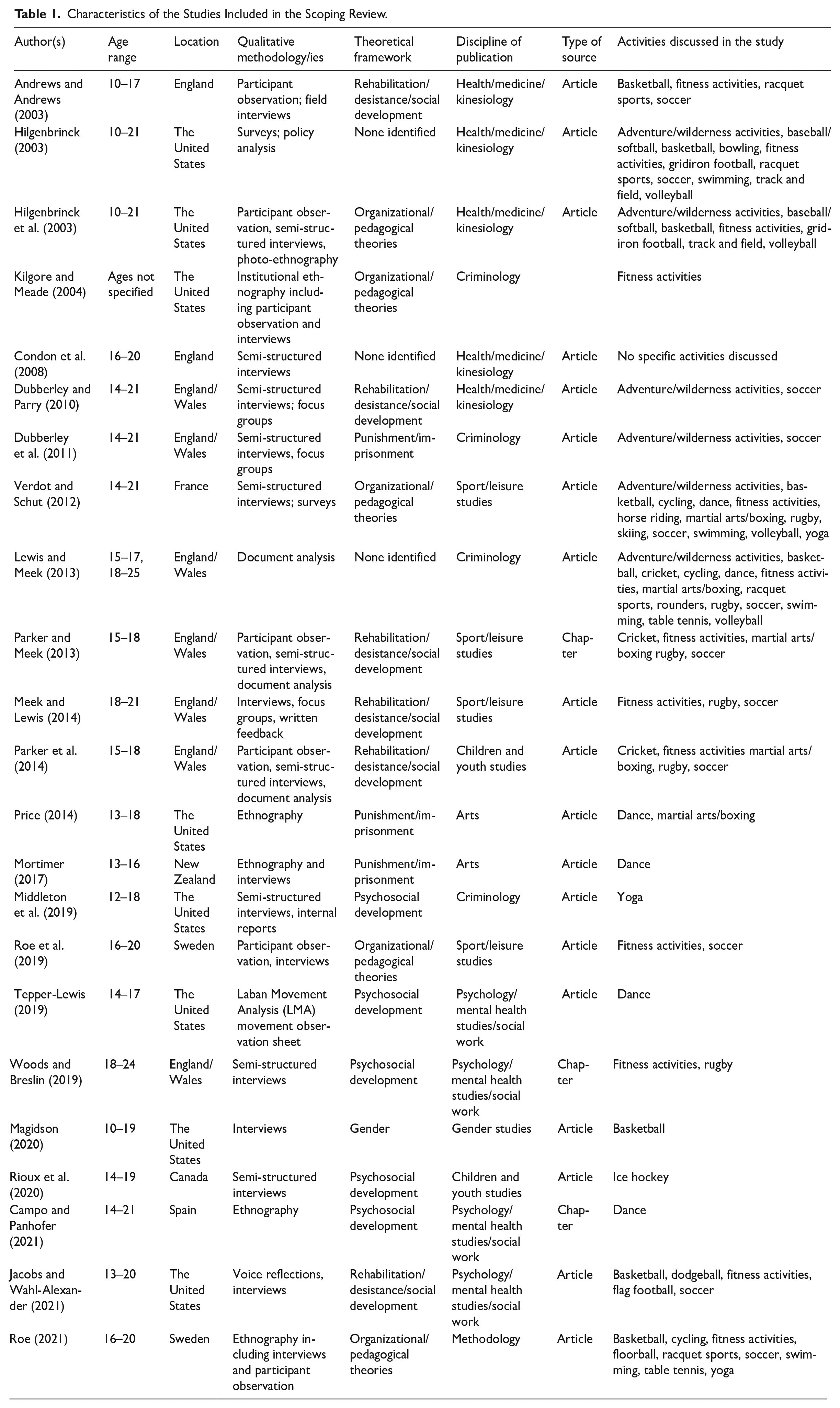
As Nichols (2010 [2007]) explains, writing about sport-based crime prevention initiatives aimed at young people, the terms ‘“youth,” “sport” and “crime” are all contentious things to define’ (p. 4) – and ‘incarceration’ or ‘custody’ could easily be included in his critique. As such, we took care in defining key terms prior to conducting the scoping review. The United Nations uses the phrase children deprived of liberty in the administration of justice (Nowak, 2019) to describe people below the age of 18 who are held in a closed or secure custody space while awaiting trial or serving a criminal sentence. While we operationalize incarceration in line with this definition (i.e. the deprivation of liberty imposed as a result of a criminal charge, conviction, or sentence), we found it more challenging to define young person or young people, as the literature on sport and young persons’ incarceration includes a focus on people who are no longer children (i.e. they are 18 years or older). In fact, the majority of studies in the current scoping review focused on institutions that imprisoned both children and adults, many to as old as 21 and some to as old as 25. These studies, then, reflect the reality that, in some jurisdictions, some young people who are no longer children are placed into young persons’ custody facilities rather than adult prisons (as mentioned in, for example, Bochenek and Delgado, 2006; Klatt et al., 2016; Parker et al., 2014). Rather than imposing a strict age limit on studies that are included, we followed the literature in accepting a broad understanding of young person or young people and provided the age range of each study in Table 1. Numerous other differences exist between jurisdictional approaches to young people and criminal justice, including the age of criminal responsibility and the philosophical approach toward the incarceration (or not) of young people. While these factors will undoubtedly affect the organization and delivery of sport programs for incarcerated young people, and are crucial considerations for future researchers on this topic, the literature reviewed in our scoping review does not permit a deep engagement with such differences – a limitation of both the existent literature and the analysis presented in this article.
Characteristics of the Studies Included in the Scoping Review.
We also acknowledge that our narrow focus on custody spaces ignores the many other forms of confinement experienced by young people worldwide. A recent United Nations report (Nowak, 2019: 12, 13), focused exclusively on children but relevant to understanding the impacts of confinement for all young people, recognizes that millions of young people globally are held, as a result of ‘a decision by a judicial or administrative authority’, in numerous types of institution, including ‘prisons, police jails, migration detention centres, psychiatric hospitals, orphanages, children’s homes, drug rehabilitation centres, [and] institutions for children with disabilities’. Recognizing that confinement in these diverse spaces negatively affects young people’s well-being and health (Nowak, 2019), as well as the shared experiences of harm across various carceral spaces (Moran et al., 2018), we note the need for future researchers to consider the impact of sport and physical activity in non-custody spaces that nonetheless deprive young people of their liberty.
We use ‘sport’ and ‘physical activity’ in their broadest sense, following Piggin’s (2019) argument physical activity encompasses ‘people moving, acting and performing within culturally specific spaces and contexts, and influenced by a unique array of interests, emotions, ideas, instructions and relationships’ (p. 8). In the context of incarceration, such a broad definition recognizes a wide array of physical practices may carry social significance in the lives of individuals and subcultures. Thus, we considered a broad range of physical activities beyond sport – including yoga, dance, and initiatives, such as the Duke of Edinburgh program, 2 that involved learning wilderness and camping skills – in our examination of sport and physical activity in young persons’ secure custody. Worldwide, sport and physical activity are valued daily activities in many secure custody facilities for young people and adult prisons (e.g. Andrews and Andrews, 2003; Martinez-Merino et al., 2019; Martos-Garcia et al., 2009; Meek, 2014; Norman, 2017; Ricciardelli, 2014; Roe et al., 2019; Sabo, 2001). The right of incarcerated individuals to participate in leisure opportunities and access outdoor spaces is enshrined in the United Nations’ Standard Minimum Rules for Prisoners and, specifically for children below the age of 18 who are incarcerated, in the Rules for the Protection of Juveniles Deprived of their Liberty. The latter resolution declares that ‘in keeping with the rehabilitative aim of residential treatment . . . opportunities for association with peers and participation in sports, physical exercise and leisure-time activities’ should be accommodated within the institutional environment (UN, 1990: Article 32).
As such, in many custody spaces globally, incarcerated young people completing their secondary schooling may participate in physical education classes as well as various physical recreation activities. However, conditions of confinement can vary widely and many young people worldwide ‘are held in detention settings that are inappropriate for their age and developmental stages, jeopardizing their prosocial development, and reintegration into society’ (Moore et al., 2016, 482). The need for supportive and enjoyable activities, including but not limited to opportunities for sport and physical activity, may be particularly acute for young people who are incarcerated, who may struggle to cope with the stresses of imprisonment (Lambie and Randell, 2013). The custodial environment can also exacerbate adolescent challenges, impeding the development of a non-criminalized self-identity or perpetuating peer-bullying (Cesaroni and Peterson-Badali, 2010).
Although there are significant differences within and between different institutions and correctional jurisdictions, and especially between systems of incarceration for adults and young persons, research on sport and physical activity in adult prisons remains relevant to unpacking the nuanced impacts and roles of such activities within young peoples’ custody spaces. Researchers examining sport and physical activity in adult correctional institutions have identified the social significance of these activities in an environment characterized by loss of autonomy and limited resources for constructing a sense of identity. In such a context, sport may contribute positively to the physical and mental health of prisoners as an outlet or coping mechanism (Meek and Lewis, 2012; Woods et al., 2017). In men’s prisons, activities such as fitness or weightlifting routines may enable prisoners to cultivate tough self-presentations and muscular physiques that enhance their place in the social hierarchy (Norman et al., 2021; Ricciardelli, 2014; Sabo, 2001). Moreover, administration may position sport and physical activity as an outlet of social control, either through the belief that it will occupy prisoners’ time and expend their energy or as a consequence for a lack of compliance (Martos-Garcia et al., 2009; Norman, 2017). Conversely, prisoners can engage (or not) in sport and physical activity as a form of ‘micro-resistance’ to their conditions of confinement, sometimes in physically violent ways (Martinez-Merino et al., 2019; Norman, 2017; Norman and Andrews, 2019). Researchers have also considered how physical activities, notably yoga, may be structured to permit prisoners to express emotions, such as sensitivity, empathy, or spirituality, which may not usually be condoned within a prison subculture (Griera, 2017; Norman, 2015). Recently, some studies have considered how sport and physical activity are vehicles through which some prisoners transform their understandings of prison space and time to cope with and assert control over unpleasant aspects of incarceration (Gacek, 2017; Norman and Andrews, 2019).
Similarly, insights are gleaned from the scholarship on sport-based crime prevention programs delivered to young people in non-custodial community settings. Here, some scholars focus on programmatic aspects, such as the methods of delivery (Smith and Waddington, 2004), the lack of evidence underpinning interventions (Coalter, 2007; Smith and Waddington, 2004), or the role of partnerships in program delivery (Morgan and Baker, 2021). Other researchers focused on sociological questions, like the possibilities for and limits to sport as a means for young people to develop an alternative identity to that of a ‘criminal’ (e.g. Jump, 2017, 2020) how interventions targeting certain populations and neighborhoods (often poor, urban, and racialized) contribute to social stigma (e.g. Ekholm and Dahlstedt, 2020; Hartmann, 2001; Kelly, 2012; Norman and Smith, 2022); and the need for sport activities to be structured to deemphasize problematic subcultural aspects of some sports such as hyper-competitiveness or violence (e.g. Ekholm, 2013; Nichols, 2010 [2007]). A consistent theme emergent from this scholarship is skepticism about sport’s potential to contribute to the prevention of or desistance from crime, often in contrast to the assumptions of sport advocates who see sport as an inherently beneficial activity that will socialize participants into socially dominant values, such as discipline, obedience to authority, or respect for others – assumptions that constitute the phenomenon Coakley (2015) refers to as ‘the great sport myth’ and Coalter (2007) labels the ‘mythopoeic’ view of the power of sport.
In this study, we conducted a scoping review of qualitative English-language publications on sport and physical activity in young persons’ secure custody facilities published over a 22-year period (2000–2021) to learn about the role of sport for incarcerated young people in their experiences of custody and rehabilitation and desistance processes. We structure the article such that we detail our method before presenting our findings. We conclude the article with a theoretical critique of the literature and an agenda for future research on this under-studied topic. The bodies of literature on sport in adult correctional institutions and in crime prevention initiatives, though distinct, have significant theoretical relevance for developing an understanding of social significance of sport and physical activity in young persons’ custody settings. As such, we revisit some of their key theoretical insights in the analysis section.
Method
Scoping reviews, broadly defined as a method to ‘map rapidly the key concepts underpinning a research area and the main sources and types of evidence available’ (Mays et al., 2001: 194), are used to establish the state of an academic field or disseminate knowledge about a body of literature to policymakers and practitioners. In this study, we follow Arksey and O’Malley’s (2005) influential five step framework to producing a rigorous and replicable scoping review, which involves (1) identification of the research question, (2) identification of potential studies for inclusion, (3) selection of studies for inclusion, (4) ‘charting’ of the data (i.e. thematic analysis and sorting), and (5) synthesis and reporting of findings. Herein, we present each step that we undertook.
Step 1: Following Arksey and O’Malley’s (2005) recommendation to ‘maintain a wide approach in order to generate breadth of coverage’ (p. 23) and recognizing that there is limited research on the social significance of sport in young persons’ custody settings, we identified our research question as what are the characteristics of and major findings in qualitative social science literature on sport (broadly defined) and the incarceration of young people (as defined in the literature)?
Step 2: We conducted a comprehensive search of three social science electronic databases: Web of Science, ProQuest, and Criminal Justice Abstracts. We developed keyword search terms based upon our knowledge of the literature on sport and youth justice and a scan of keywords from representative articles. 3 We intentionally included a wide range of terms, both to include as many relevant articles as possible and because studies use a diverse range of terms to refer to young persons’ custodial institutions, incarcerated young people, and sport or physical activity. We limited the search to English language sources published between 2000 and 2021, to ensure that we obtained a significant sample of articles while focusing on relatively recent developments in the literature. Our search yielded a total of 3255 sources, which was reduced to 2128 after the removal of duplicates.
Step 3: The first two authors manually scanned the title and abstract of each of the 2128 documents for adherence to the following three inclusion criteria: (1) sources be relevant to the research topic (i.e. focused on sport in custody facilities for young people), (2) sources be either a peer-reviewed journal article or book chapter, and (3) research includes a qualitative component. 4 The same two authors next undertook a rigorous review of the full-text of each of the remaining sources, as well as seven additional sources found in reference lists or through additional research, ultimately generating a sample of 23 relevant sources: 20 journal articles, and three scholarly book chapters. In Figure 1, we provide a flow chart detailing the selection process. Throughout the entire process, two of the authors worked closely to ensure that they agreed on the inclusion or exclusion of specific sources.
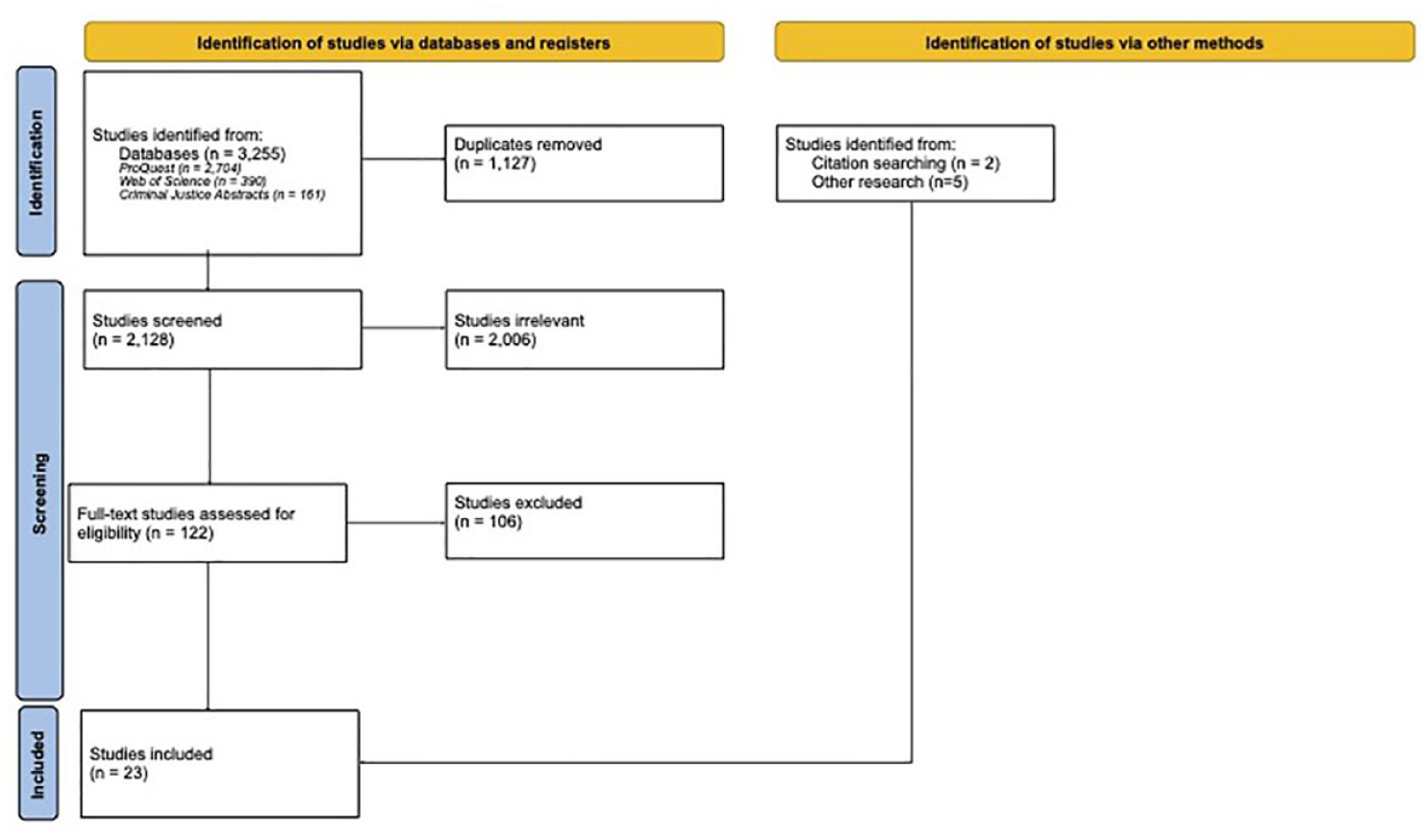
PRISMA flow diagram.
Step 4: The fourth step is ‘charting’ – ‘a technique for synthesizing and interpreting qualitative data by sifting, charting and sorting material according to key issues and themes’ (Arksey and O’Malley, 2005: 26). In practice, the first two authors independently read and coded each source, identifying general information and prominent findings reported in the readings. Specific information recorded for each source included:
Author(s)
Year of publication
Age range of young persons included in study
Location of study
Qualitative methodology/ies used
Theoretical framework (if identified)
Discipline of publication
Type of source (journal article or chapter)
Specific sports or physical activities analyzed or mentioned
Significant findings
Step 5: The final step involved ‘collating, summarizing and reporting the results’ (Arksey and O’Malley 2005: 22). We collated and summarized the descriptive findings for the first eight categories in Table 1, providing an overview of the major characteristics of each study. Determining the significant findings involved an interpretive thematic analysis of the sources. To ensure analytical consistency, we undertook a multi-step coding process inspired by Strauss and Corbin’s (1990) descriptions of open and axial coding – the former stage to widely identify codes in the data, and the latter step to organize these numerous codes into broader categories. To start, the first two authors independently open coded the findings of three articles and then compared and refined their codes to ensure consistency. Next, they coded each of the remaining articles, while meeting regularly to discuss potential refinements or additions to the established set of codes. The third author participated in confirming the dominant themes and developing the theoretical analysis of the findings. This ongoing process of collaborative analysis and reflection helped establish inter-rater reliability and resulted in a consistent identification of major emergent themes in the sources in our sample. Ultimately, we identified three dominant themes and several minor themes.
Results
Prior to presenting the dominant themes, we discuss the study characteristics, specifically the discipline in which sources are published, the locations in which research was conducted, the qualitative methodology/ies used, the theoretical framework(s) employed, and the types of sport or physical activity/ies identified in the data. We then discuss emergent themes from our sample of literature on sport and the incarceration of young people: (1) contribution to rehabilitation and/or desistance, (2) the structure of sport programs, and (3) coping with incarceration and building relationships, and (4) other salient themes. Within these themes, we identify and discuss prominent sub-themes.
Study characteristics
A full reporting of study characteristics can be found in Table 1. We identified disciplinary focus based upon the journal or, in the case of books and book chapters, the series in which the source was published. The disciplinary foci of the 23 sources are as follows: health/medicine/kinesiology (n = 5; 21.7%), sport/leisure studies (n = 4; 17.4%), criminology (n = 4; 17.4%), psychology/mental health studies/social work (n = 4; 17.4%), arts (n = 2; 8.7%), children and youth studies (n = 2; 8.7%), qualitative methodology (n = 1; 4.3%), and gender studies (n = 1; 4.3%). In terms of location of study, research for nine (39.1%) of the sources was conducted in England and/or Wales; eight (34.8%) studies were conducted in the United States; two (8.7%) studies were conducted in Sweden; and one study (4.3%) was conducted in each of Canada, France, New Zealand, and Spain.
Regarding methodology, interview-based and ethnographic methods were predominant. Ten studies (43.5%) relied primarily on semi-structured or focus group interviews, four of which solicited additional data through written feedback or surveys, voice reflections, or document analysis. In total, 10 studies (43.5%) used primarily ethnographic methods (e.g. participant observation), eight of which supplemented the approach with additional methods such as interviews or document analysis. The remaining three studies respectively used document analysis, a combination of policy analysis and surveys, and Laban Movement Analysis. The theoretical frameworks used in the sample were harder to ascertain. While some studies identified a clear theoretical framework, or at least discussed a paradigm in which their research was situated, others did not discuss a theoretical framework or did so only vaguely. Despite this challenge, we subjectively identified the theoretical frameworks of each study to the best of our abilities and created five broad categories of theory utilized: desistance and/or social development (n = 6; 26.1%); organizational and/or pedagogical (n = 5; 21.7%); psychosocial development (n = 5; 21.7%); punishment and/or imprisonment (n = 3; 13.0%); and gender (n = 1; 4.3%). Three studies (13.0%) could not be theoretically categorized given their theoretical ambiguity.
Finally, type of activities was determined by identifying any mention of physical activity provided to young people who are incarcerated in the study. We charted these activities to visibly document the range of physical activities considered, however briefly, in the literature to paint a broad picture of the diversity of activities with which young people who are incarcerated engage. In some instances, we created broad categories (e.g. fitness activities or racquet sports) to simplify the description of activities mentioned in the sample. 5 We identified 25 different sports or physical activities for incarcerated young people in the 23 sources, the most common of which were as follows: fitness activities (n = 13; 56.5%); soccer (i.e. association football; n = 12; 52.3%); basketball (n = 8; 34.8%); adventure or wilderness activities, dance, and rugby (each n = 6; 26.1%); and martial arts/boxing and swimming (n = 5; 21.7%).
Contribution of sport to rehabilitation and/or desistance
Nearly all sources (n = 20; 87.5%) discussed, the potential contribution of sport participation to young people’s rehabilitation or likelihood of desisting from crime upon release. Most studies focused on sport’s possibility for promoting social and/or behavioral changes among young people who are incarcerated by increasing their self-esteem, developing physical competencies and mastering athletic skills, or providing a realm where they could, in contrast to most aspects of their daily life in custody, feel empowered and have relative autonomy over their actions. Parker et al. (2014), summarizing findings from their study of a sport program in England, expressed these potential outcomes by noting that sport participation can provide young people in custody with opportunities for ‘alleviating boredom, channelling aggression, reducing psychological distress, improving self-concept and social-skills and supporting rehabilitation’ (p. 382). The literature thus shows sport can contribute to the broader social development of some young people who are incarcerated.
The literature also reveals young people who are incarcerated benefit from creating or imagining a new identity through sport, particularly when faced with stigmatizing labels such as ‘delinquent’ or ‘criminal’. For example, Dubberley and Parry (2010: 159) explained that Duke of Edinburgh participants were ‘acutely aware of having a “spoiled” or “discredited” identity, as a function of their criminal records’ and perceived their participation as helping ‘mend or repair damaged identities and facilitat[ing] re-entry into and acceptance by mainstream society’. Some programs enhanced the opportunity to forge a new identity by providing avenues to earn a certificate (e.g. a coaching or leadership certification), which both demonstrated that participants had acquired specific skills and could be used to improve employment prospects upon release. For young people who are incarcerated, these certifications may be ‘perceived . . . as conveying a range of positive attributes, including achievement, trustworthiness, effort and leadership’ (Dubberley and Parry, 2010: 159). Thus, through sport, some young people in custody may construct a new identity, look toward an alternative future, ‘expand [their] horizons of possibility, and broaden their perspectives on life’ (Roe et al., 2019: 12) – a clear benefit to their sense of self during their incarceration and, possibly, in their transition back to the community.
Sport programs appeared likely to contribute toward desistance from crime for young people who are incarcerated where they helped to build links to broader rehabilitation or resettlement programs, usually using sport as a desistance ‘hook’ to attract participants to engage with broader programming such as education or job training – similar to how some crime prevention programs seek to engage young people through sport (Nichols, 2010 [2007]). For example, staff with the Duke of Edinburgh program described it ‘as a “back door” route for the acquisition of basic educational skills’ (Dubberley and Parry, 2010: 158). Meanwhile, some programs attempted to create opportunities for young people to continue practicing sport or to find employment in the sport sector upon their release, with the goals of improving their opportunities for social mobility and decreasing their likelihood of reoffending. Exemplary here are studies on rugby and soccer ‘academies’ in young persons’ detention centers in England, which combined sport-specific training with broader educational and resettlement programming, including the opportunity to earn a coaching certificate (Meek and Lewis, 2014; Parker et al., 2014; Parker and Meek, 2013). The interventions included resettlement casework that sought to ‘establish positive working relationships between the academy participants and a network of professionals, to prepare and support each individual for a successful transition from custody to the community’ (Meek and Lewis, 2014: 98). Thus, connecting sport programs – which are desirable activities for many young people in custody – to a wider set of social interventions can engage young people in a broader process of rehabilitation or facilitate their preparation for community reintegration.
The structure of sport programs
Most studies (n = 20; 87.0%) considered how the structure of sport and physical activity programs affected how participants received these programs and, thus, the broader impact of the intervention on young people in custody. Studies that considered conditions for positive experiences highlighted aspects of programs such as empowering young people to have a sense of ownership or agency over their participation, including offering a diversity of activities from which to choose, and the value of caring and supportive staff. Other studies considered how sport programs might be explicitly structured to serve educational purposes (Roe, 2021; Roe et al., 2019) or to build awareness of participants’ experiences of trauma into the delivery of the activity (Middleton et al., 2019). Programs were understood to provide positive experiences, characterized by ‘an inviting atmosphere that de-emphasised competition’ (Roe et al., 2019: 11) in which ‘the major impetus for a successful lesson was the use and adoption of “fun” as a primary learning mechanism’ (Andrews and Andrews, 2003: 542).
In contrast, only a few studies deeply considered conditions for negative experiences by examining the potential downsides to sport participant for young people who are incarcerated. Middleton et al. (2019) reported girls in a California custody facility initially grew frustrated with a yoga program if they could not perform specific poses or were forced to participate. Andrews and Andrews’ (2003) observation in an English secure unit, likewise, identified that many young people have little interest in or experience with sport, yet those who struggle with self-esteem and emotional control can easily become frustrated by losing. The authors argue that ‘traditional sports potentially have a threatening structure and context for both delinquents and youths-at risk’ (Andrews and Andrews, 2003: 542) and that the competitive nature of sport programs must therefore be sensitively managed by staff. Reflecting here, Roe (2021) found that the delivery of sport in Swedish custody facilities could sometimes focus on simply occupying young people’s time and, thus, ‘occur haphazardly and without noticeable preparations or deliberation about what happened previously and where to go next’ (p. 272)
Another significant component of sport programs in custody facilities for young persons was the involvement of community-based personnel, organizations, or spaces. In some instances, custodial facilities partnered with outside personnel or organizations (e.g. volunteer coaches, a local sport club) to facilitate the delivery of sport programming or, in rarer cases, to create pathways for young people to continue sport participation upon their release. For example, in a Swedish custody center, the national soccer association, and a regional sport body ‘assist the program with an informal network for connecting students to sport clubs during their re-entry’ (Roe et al., 2019: 5). Similarly, the English/Welsh sport academies analyzed in several studies (Meek and Lewis, 2014; Parker et al., 2014; Parker and Meek, 2013) relied heavily on outside partnerships with community organizations and sport clubs, both to deliver programs and to provide opportunities for continued engagement by young people after they leave custody. Finally, in exceptional instances, young people may travel off-site for sport competitions or wilderness activities, providing novel experiences that may be hugely valued by participants. For example, Price (2014) analyzed a United States martial arts and theater program in which young people trained and rehearsed on a university campus and delivered the final performance at a local theater. The author argued exposure to these spaces, particularly in the public final performance, provide young people in custody with ‘an opportunity to transgress racial, social, and economic borders, allowing the cast to gleam, if only for a moment, a world of opportunities beyond the walls of carceral systems, be they the school or the prison’ (Price, 2014: 41). While these studies point to the potential for sport to be a conduit to experiences, relationships, and spaces beyond the daily routine of prison life, future researchers should be attentive to the diverse effects of different types of community involvement such as volunteer-led activity within the facility versus participating in a community space.
Coping with incarceration
Prevalent in many sources (n = 17; 73.9%) was a consideration of how sport and physical activity helped young people cope with detrimental impacts of incarceration. Studies identified occupying time or distracting from daily challenges as a notable benefit of participation. For example, for incarcerated young people in Sweden, ‘football and other exercise offered relief from “strains” and boredom. . . . [and were described] as a sort of free zone in relation to what could be a stressful, even hostile social environment at the institution’ (Roe et al., 2019: 10). However, Andrews and Andrews (2003) struck a note of caution when they observed that, while sport could allow young people to ‘enjoy momentarily a feeling of normality and escapism . . ., the sense of institutionalisation in the unit could rarely be escaped or ignored’ (p. 541). Thus, while sport and physical activity may provide some relief from the challenges of custody, the resultant sense of freedom may be both temporary and subordinate to the broader impacts of incarceration on young people.
Studies also identified sport programs as sites for building relationships with peers and/or building relationships with staff, with benefits for young people’s experiences while in custody. According to these studies, physical activity periods represented ‘an opportunity to make social bonds with other prisoners’ (Condon et al., 2008: 161), relationships which could provide ‘a means of peer support, which (could be) especially helpful off the pitch’ (Meek and Lewis, 2014: 103; see also Parker and Meek, 2013). Sport was also found to be a means for young people who are incarcerated and staff to foster positive social relationships. For example, the Duke of Edinburgh program ‘helped with the development of good relationships (between participants and staff) . . . [and] increased levels of trust on both sides of the relationship’ (Dubberley et al., 2011: 343; see also Dubberley and Parry, 2010). Similarly, in a study of dance in New Zealand young persons’ prisons, Mortimer (2017) argued that allowing ‘prison officers to participate in dance classes alongside youth could be a positive experience within the prison for both the prisoners and the officers, perhaps establishing positive relationships’ (p. 127). Sport activities thus appear to be a possible route for the development of relationships among young people in custody, as well as between young people and custodial staff.
Other prominent themes
We identified three other prominent themes, all of which were seen in less than half of the studies: health outcomes (n = 10; 43.5%), institutional characteristics or policies (n = 9; 39.1%), and the effects of gender and/or race on the sporting experiences of young people who are incarcerated (n = 5; 21.7%). Scholars discussing health outcomes typically focused on potential benefits of sport participation to young persons’ physical health, such as improved fitness and healthy behaviors (e.g. Condon et al., 2008) or mental health, including addressing experiences of trauma (e.g. Middleton et al., 2019). However, some researchers questioned the extent such positive health developments were sustainable. For example, Woods and Breslin’s (2019) examination of a rugby program in England found that while sport ‘led to a reported benefit on short-term hedonic mental well-being . . . overall results did not evidence lasting benefits’. Building on these findings, future studies should pay greater attention to the short- and long-term health effects of sport participation among young people in custody. Meanwhile, studies examining institutional characteristics or policies primarily identified various barriers to the effective operation of sport programs, such as limited infrastructure and financial resources (e.g. Hilgenbrinck, 2003; Verdot and Schut, 2012), institutional security concerns (e.g. Kilgore and Mead, 2004; Mortimer, 2017), or the challenges in engaging young people in long-term change when the facility population is in constant flux (e.g. Kilgore and Mead, 2004; Verdot and Schut, 2012). These findings provide insight into the challenges faced by practitioners attempting to develop and implement recreational programming for young people who are incarcerated.
Finally, only a handful of studies discussed how gender and race affected the sporting experiences of young people who are incarcerated, and none spoke to impacts of Indigenous identity. In terms of girls’ participation, two studies (Andrews and Andrews, 2003; Middleton et al., 2019) identified girls who are incarcerated had little experience mastering basic sport skills or those who suffered from insecurities about their body image can find physical activity frustrating or humiliating. Middleton et al. (2019), for example, observed that some girls became frustrated trying to learn challenging yoga poses, with some specific poses causing ‘discomfort and resistance . . . likely due to the pose’s physical exposure and the vulnerability associated with its shape’. Other studies, such as Magidson (2020), found, for adolescent boys, competitive sport or muscle-building activities can be used to perform aggressive masculinities that empower some and marginalize others: ‘physical strength and athleticism served as popular measuring rods for masculine identities and establishing a social hierarchy’ (p. 209). Andrews and Andrews (2003), however, explained such masculine performances could be easily destroyed when boys were confronted with frustrations or challenges in performing athletic tasks, indicating the fragility of the sport-based gender performances of some young people who are incarcerated. Discussions of the significance of race were even less frequent. Jacobs and Alexander-Wahl’s (2021) study at a United States custody facility offered one contribution in this area: the researchers found that Black volunteer coaches connected with the largely racialized population of young people through a shared sense of identity, whereas white coaches used their race as a point of difference that could be a source of humor or even an entrée to intimate conversations. However, beyond a handful of studies, the literature remains underdeveloped in its engagement with race, and sexuality.
Discussion
While offering valuable insights into how programs affect and are experienced by young people who are incarcerated, the literature on sport and in young persons’ custody facilities remains limited in its geographic scope, substantive focus, and theoretical depth and breadth. While our exclusion of non-English language sources may have led us to neglect research from other parts of the globe, the sample nonetheless suggests that research on this topic is limited to a small number of locations in the Global North and that there is a need for greater geographic breadth in future studies. Furthermore, few studies provided nuanced consideration of the jurisdictional approach to young persons’ incarceration, and then situated sport in custody facilities within this context, thus missing an opportunity to contribute to broader discussions about criminal justice for young people and the use of secure custody. Incorporating such considerations into future studies will both enrich the quality and strengthen the broader relevance of analyses of sport and young persons’ incarceration. Where possible, comparative studies that account for such variations between correctional systems will further enhance the literature.
Our scoping review also highlights major theoretical and disciplinary diversity in the existing research. While health- and sport-focused journal articles or chapters predominated, our sample also included multiple studies published in books or journals focused on criminology, psychology/mental health/social work, arts, or children and youth studies. We were surprised that just four studies (17.4%) were published in criminology venues, given that youth justice is an established area of focus within this discipline; it would appear that criminologists have given scant attention to the meanings and outcomes of sport programs for young people in custody. Similarly, and recognizing the subjectivity involved in our development of theoretical categories, the studies in the sample drew from a disparate range of theoretical frameworks. The three most common frameworks – desistance and/or social development, organizational and/or pedagogical, and psychosocial development – related broadly to the question of how sport programs might provide developmental opportunities to young people who are incarcerated and whether these might help them avoid recidivism after being released. Fewer studies drew from criminological or sociological theories that provide insight into the experiences of incarceration. Ultimately, the literature remains theoretically underdeveloped in comparison to broader bodies of literature on incarceration and development through sport, suggesting room for deeper theoretical engagement in future studies. Finally, we also note that discussion of race, gender, and ethnicity were limited. There is a need for research specifically on the sport experience of transgender or agender young people in custody, as well as for young people who are Indigenous.
While traditional competitive sports or fitness activities predominated, it was promising to find a variety of non-traditional sport activities – such as dance, yoga, and adventure/wilderness adventure programs – are offered in some young persons’ custody facilities in addition to mainstream sports or fitness activities. Sociological research on children’s sport has found that the competitive and rule-based structures of organized sport can frustrate adolescents who already feel alienated from mainstream social institutions (e.g. Coalter, 2007; Sugden and Yiannakis, 1982), while research in adult prisons has identified the value of alternatives to competitive or hierarchical physical activities such as yoga (Griera, 2017; Norman, 2015). Given the potential pitfalls of traditional competitive sport for young people who are incarcerated, it behooves scholars to more deeply develop an analysis of alternative forms of sport and policymakers to consider how they might engage vulnerable young people in choosing appropriate and appealing activities. That said, just as sport participation is not inherently positive, so too are the impacts of activities such as wilderness adventure contingent on their ability to serve as ‘a catalyst and a medium (for positive developmental experiences), rather than an end in themselves’ (Nichols, 2010 [2007]: 21). Thus, sport and physical activity programs for young people who are incarcerated must be approached with sensitivity, as an avenue to build rather than reduce capacities and ensure participants feel skilled, needed, and included. A particularly salient suggestion for policymakers is Lewis and Meek’s (2013) argument that staff should ‘engage in further prisoner consultation, and target specific groups (e.g. vulnerable prisoners or those less likely to engage in sport) in order to establish which activities would best promote participation and motivation’ (p. 5). Greater attention to the benefits and drawbacks of both traditional sport and alternative activities in the lives of young people who are incarcerated is warranted in future studies.
Studies focused on promoting social and/or behavioral changes were largely consistent with broader research suggesting that sport participation can, under particular conditions, contribute to young people’s development in these areas (e.g. Coakley, 2002, 2011; Fraser-Thomas et al., 2005). Coakley (2002), summarizing this large body of research, explained that young sport participants may achieve positive social outcomes if programs ensure they are ‘physically safe, personally valued, socially connected, morally and economically supported, personally and politically empowered, and hopeful about the future’ (p. 25). Many programs discussed in the sample appeared to meet at least some of these criteria, particularly where they featured caring staff and offered social and employment opportunities for young people leaving custody – a finding that overlaps with the findings on conditions for positive experiences and building relationships with peers and/or staff. These results are notable in the context of young persons’ incarceration, where staff can play a ‘vital role . . . in creating an organizational climate amongst youth in custody that will foster positive social interactions, a sense of stability, and a secure environment’ (Cesaroni and Peterson-Badali, 2010: 121). Our findings suggest that sport may be one means through which staff can perform such a role with the young people under their supervision. However, importance remains for future studies to be attentive to the problematic nature of ‘rehabilitation’ in criminal justice for young people, such as how discourses of rehabilitation and ‘child saving’ can conflict with the use of punitive sanctions in custody settings (Adorjan and Ricciardelli, 2018); such discussion were absent in the studies analyzed in this scoping review. Furthermore, whereas research on sport and crime prevention is increasingly endorsing the development and testing of theories of change (e.g. Morgan et al., 2020), the studies in our sample did not engage in robust discussions about theories of change underpinning sport programming for young people in custody.
The emergent theme of creating or imagining a new identity through sport requires deeper investigation and theorization. Research on criminal desistance highlights the significance of finding alternative labels to those of ‘criminal’ or ‘offender’ while developing narratives of ‘redemption scripts’ that account for criminal pasts and enable the construction of a non-criminal identity (Ward and Maruna, 2007), and such perspectives on desistance have informed studies on sport and desistance (e.g. Jump, 2017, 2020). Building on these findings, future research on sport and young persons’ custody could more deeply explore if and how the development of sport-based identities by young people who are incarcerated could contribute to the writing of such redemptive narratives. In this regard, a notable finding in the literature was the impact of programs that provided opportunities to earn a certification (e.g. coaching or refereeing) that could be used upon release, as such credentials can be significant for successful desistance efforts by former prisoners (Maruna, 2012) – creating needed and invaluable resume-building accomplishments that help to dissipate the impact of the criminalized label and stigma too often endured by justice-involved young people. Scholars of prison sport have expressed caution about the sustainability of prisoners’ sport-based identities carrying over after release (Woods et al., 2017), and sport-based programs for young people in custody should thus be sensitive to the sustainability of their participation upon release. To that end, studies that discussed building links to broader rehabilitation or resettlement programs highlighted several promising examples of sport-based interventions that engaged young people in ‘through-the-gate’ programming that provided the possibility for continued participation after leaving custody, often with the involvement of community-based personnel, organizations, or spaces. Further scholarly investigation on the sustainability of sport-based practices and identities in young people’s resettlement efforts, and the role of community-based actors in this process, is thus warranted.
While the literature addresses how sport may contribute to positive experiences for young people who are incarcerated, few studies provided critical analysis of conditions for negative experiences. This is a significant gap. Although many advocates of children’s sport participation ‘assume that it inevitably leads to multiple forms of development, including remediation for individuals perceived to need reformative socialization’ (Coakley, 2011: 309), a large body of sociological research demonstrates that sport can also encourage behaviors such as aggression, physical violence, and social exclusion (e.g. Coakley, 2011; Donnelly, 2011; Young, 2019). These critiques are echoed in both the prison sport and sport and crime prevention literatures, which show that sport can be a site where sport can be a site for aggression and physical violence, reinforcing unequal social relations, or reproducing problematic gender performances, particularly for boys and men (e.g. Martos-Garcia et al., 2009; Norman, 2017; Norman et al., 2021; Sabo, 2001). Given these critiques, we suggest future researchers explore the negative sport experiences of young people in custody or those who avoided participation altogether.
The findings on sport as a coping mechanism for young people who are incarcerated, while highlighting its importance in this regard, is another area that deserves greater theoretical and applied development in future studies. With regard to occupying time or distracting from daily challenges, researchers of sport in adult prisons have begun to examine how physical activity can be a vehicle through which participants gain a degree of control over their daily lives by reconstructing their sense of time and space in more pleasurable ways (Gacek, 2017; Norman and Andrews, 2019). These analyses, which draw from developments in the emergent field of carceral geography, contribute to theoretical understandings of sport engagement as a form ‘micro-resistance’ through which prisoners can assert a degree of agency in an otherwise disempowering social environment (Martinez-Merino et al., 2019). Furthermore, researchers understand these prisoner uses of sport to take place against the backdrop of daily social control experienced by prisoners (e.g. Martinez-Merino et al., 2019; Martos-Garcia et al., 2009; Norman, 2017; Norman and Andrews, 2019). Although several studies in the sample implicitly or explicitly indicated that sport could play a part in the social control of young people who are incarcerated (Hilgenbrinck, 2003; Hilgenbrinck et al., 2003; Lewis and Meek, 2013; Meek, 2014; Parker et al., 2014; Parker and Meek, 2013), for example, through its use as a reward for ‘good’ behavior, the implications of these finding were not theoretically unpacked in a significant way. As such, there is a need to more deeply develop such a theoretical analysis in young persons’ custody settings. More broadly, studies of physical activity as a coping mechanism for young people who are incarcerated could engage with the criminological literature on the ‘pains of imprisonment’ (i.e. the psychological distresses experienced as a result of depravation while incarcerated (Sykes, 1958)), particularly given recent extensions or critiques of the concept (Crewe, 2011), including for young people who are incarcerated (Cox, 2011).
Finally, few studies considered how aspects of young people’s identities affected their engagement with sport in custody settings. In terms of gender, exceptions included analyses of how gender influenced participation by girls in custody (Andrews and Andrews, 2003; Middleton et al., 2019) and boys (Andrews and Andrews, 2003; Magidson, 2020). However, the limited theoretical engagement with gender was surprising, particularly given researchers have devoted considerable to the gendered meanings of participation by prisoners in men’s (Martos-Garcia et al., 2009; Norman et al., 2021; Ricciardelli, 2014; Sabo, 2001) and women’s (Martinez-Merino et al., 2019; Martos-Garcia et al., 2009) prisons, and to intersections of gender and sexuality in the construction of exclusive or inclusive sport spaces in desistance programs (e.g. Jump, 2017). Furthermore, given that many of the interventions analyzed in our sample aimed to assist with re-entry, there is a particular need to recognize the fact young ‘males and females (in custody) vary in their perceptions and expectations of their transition home from the correctional system . . . (and that) gender differences in prior risk factors may influence the overall community reintegration process’ (Fields and Abrams, 2010: 265). Such considerations were minimal in the existent literature. Discussions of race were even rarer – and absent regarding Indigenous young people – and largely limited to descriptive insights of participants or coaches, while no discussion was given on the significance of sexuality to the sport experiences of young people incarcerated. This is a notable absence given the overrepresentation of racialized persons, such as Black or Indigenous young people, in many young persons’ custody systems (e.g. Lammy, 2017; Rovner, 2021; Statistics Canada, 2022). Even those studies that did consider gender or race tended to treat these distinctly, without consideration of how intersecting or relating forms of identity create or limit opportunities for meaningful engagement in sport for young people in custody. A deeper engagement with theories of intersectionality (as well as gender relations) in the lives of young people, as has been fruitfully employed in studies of young persons’ criminalization (e.g. Bernard, 2013; Fader and Traylor, 2015) and sporting experiences (Dagkas, 2016), would greatly enhance the literature. These efforts should be attentive to how intersecting forms of social identity – such as gender, race, social class, and sexuality – interact with specific sport activities and program designs to produce diverse experiences for participants.
Conclusion
The current scoping review examines English language qualitative studies, published over a 22-year period (2000–2021), on the topic of sport and physical activity in young persons’ custody settings. We conclude by reiterating that, despite sports value in the daily lives of many young people experiencing incarceration, there is relatively little in-depth research on this subject. That said, there is clearly a rich, if disparate, collection of studies that sheds light upon the experiences of young people in custody as they engage with diverse forms of sport in various global settings. We hope that the current scoping review – by mapping the existing research on the topic, identifying key findings, and critically analyzing significant gaps – will provide a foundation for future scholarship in this area. Future research, we propose, may seek to build upon the existent literature on the understudied topic, to then deepen the theoretical analysis and broaden the geographic scope of the literature. Furthermore, we argue there are relevant findings for policymakers or staff whose work involves young people in custody settings. Given how sport in young persons’ custody facilities is linked to topics such as rehabilitation, identity, and resettlement, there are compelling reasons for scholars to take the topic seriously and more deeply investigate the complex meanings of physical activity in these spaces of confinement.
Footnotes
Funding
The author(s) disclosed receipt of the following financial support for the research, authorship, and/or publication of this article: This research was supported by a research grant from the Social Sciences and Humanities Research Council of Canada.
