




Abstract
In 2018, the National Protocol on Reducing Unnecessary Criminalisation of Looked-after Children and Care Leavers was published in England. The protocol represented national recognition of the issue and called for local authorities to implement their own agreements. However, the protocol was given no statutory status, which immediately raised questions about its potential impact. Drawing on analysis of 36 local protocols from across England and Wales, this article explores the challenges and possibilities of using local agreements to divert children in care and care leavers away from formal justice systems contact.
Introduction
The unnecessary criminalisation of children in care is an injustice that has persisted over time and across jurisdictions (Carr and Maycock, 2019; McFarlane, 2018; Stanley, 2017). In 2016 in England, the Laming Review shone a spotlight on this issue and called for national leadership to address the problem. The Westminster government responded two years later in their cross-departmental publication, the National Protocol on Reducing Unnecessary Criminalisation of Looked-after Children and Care Leavers (Department for Education (DfE), Home Office and Ministry of Justice (MoJ), 2018). Official government recognition that those cared for by the state were at risk of unnecessary youth justice involvement might reasonably be seen as a sign of progress. However, the national protocol was given no statutory status, which immediately raised questions about how far such a document might lead to meaningful change on the ground. Notwithstanding these concerns, the national protocol did stipulate that key agencies in local areas should work together to develop local versions of the protocol appropriate to the needs of their area. Drawing on analysis of 36 local protocols from across England and Wales, this article explores for the first time some of the challenges and possibilities of using local agreements to divert children in the care of the state away from the youth justice system.
Protocols aimed at keeping children in care out of the youth justice system have considerable potential to make a difference to individual lives and could help to prevent children from picking up long-lasting criminal records in care that have an impact across the life course (Sands, 2016). These protocols are particularly important given that children in care have not benefitted from the dramatic decline in entrants to the youth justice system seen in other groups of children (Hunter, 2019). A specific focus on preventing the unnecessary criminalisation of children in care, which focuses on constructive responses to children’s behaviour, is also entirely consistent with the Youth Justice Board’s (YJB, 2021) promotion of a Child First agenda. Ultimately, this article argues that, to make a difference on the ground, local authorities must develop protocols that recognise the distinct needs of specific groups of children in care and care leavers, and move beyond a reliance on ‘one size fits all’. Moreover, there is an urgent need to critically consider the unintended consequences of different approaches to reducing criminalisation. That said, when well-developed, these protocols have huge potential to influence outcomes for care-experienced children. It is vital that ongoing training and resources are available to embed a long-term, sustainable commitment to preventing unnecessary criminalisation into practice.
Background and Context
In the last decade, the number of children entering the youth justice system in England and Wales has fallen dramatically, resulting in an exceptionally small youth custody population for the jurisdiction (Goldson and Briggs, 2021; YJB and MoJ, 2022). This was not due to an overt national policy agenda but was driven by the proliferation of diversionary schemes as well as pragmatic cost reduction measures (Goldson, 2020). The decline has also served to intensify existing inequalities within the system. For example, both care-experienced children and Black and minoritised children have not benefitted from the decline to the same extent as other children (see Hunter, 2019). Official data suggests that children in care are disproportionately likely to receive a caution or conviction, and that children living in residential care are particularly at risk of formal youth justice contact (Bateman et al., 2018). Moreover, these data are almost certainly an underestimate since it only includes children who have been looked after for at least 12 months (see Hunter, 2019).
The unnecessary criminalisation of children in care in England and Wales has drawn significant attention in recent years. In 2016, Lord Laming chaired an independent review into children in care in the youth justice system and found that ‘up to half of children and young people in custody at any one time are, or have been, looked after’ (Prison Reform Trust (PRT), 2016: 147). An accompanying analysis also indicated that children in care who come into contact with the police are more likely to be convicted (rather than receive a caution or conditional caution) than children in the general population (PRT, 2016). In his review of the youth justice system published the same year, Charlie Taylor concluded that responses to minor offending in children’s homes likely contribute to the over-representation of care-experienced children in the youth justice system (Taylor, 2016: 23). Meanwhile, the Howard League for Penal Reform (2016) also launched a programme of work on reducing the criminalisation of children in care, with a particular focus on police intervention in children’s homes.
The Laming and Taylor Reviews and the Howard League programme reinforced academic research demonstrating that children in care in England and Wales are criminalised for behaviour that would not elicit a youth justice intervention if it had occurred in a non-care setting (see, for example, Shaw, 2014; Taylor, 2006). Such in-care criminalisation has also been highlighted in research from other jurisdictions (see, for example, Carr and Maycock, 2019; McFarlane, 2018; Stanley, 2017), showing that the issue was one of international significance. This culmination of evidence brought much-needed policy attention to unnecessary criminalisation, including the lack of effective behaviour management strategies and an over-reliance on police intervention in some care settings.
In response to the Laming Review, the government published a cross-departmental National Protocol on Reducing Unnecessary Criminalisation of Looked-after Children and Care Leavers (DfE et al., 2018). 1 The protocol represents national recognition of the issue and provides a recommended framework for establishing monitoring and accountability processes, which consider the views of care-experienced children and young people. Taking inspiration from the South East Protocol (n.d.), it takes a holistic approach, engaging multiple agencies in the reducing criminalisation agenda. 2 The National Protocol focuses on behaviour management, de-escalation and dealing with incidents without police intervention. It encourages partners to recognise that both pre-care experience and care experience can have a negative impact on behaviour.
It is undoubtedly promising that the issue of unnecessary criminalisation of children in care has been recognised at the government level and the very existence of local protocols demonstrates at least some commitment to change. However, it is disappointing that the National Protocol has no statutory status. Without any legal requirement to implement a local protocol, or indeed uphold one, local authorities who are already struggling with workloads and straitened resources may be unable to engage with the National Protocol at all (Fitzpatrick et al., 2022). As McFarlane et al. (2019: 44) highlight in relation to the New South Wales Protocol (in Australia), unless these documents are adequately communicated and resourced, they have the ‘potential to be just another failed initiative’. However, there are some promising signs of a reduction in the unnecessary criminalisation of children in care. Research by the Howard League for Penal Reform (2021) indicates that children living in residential care are now three times less likely to be criminalised than they were in 2014. 3 Nonetheless, children in care continue to disproportionately receive youth justice cautions or convictions compared with children in the general population (DfE, 2021a), and criminalisation via external criminal and/or sexual exploitation is still very much a risk (Shaw and Greenhow, 2020).
The localised nature of protocols means that areas can implement agreements tailored to their specific needs; however, this can also lead to locally differentiated outcomes. While national rates of criminalisation appear to have fallen (Howard League for Penal Reform, 2021), significant variations in youth justice practices at the sub-national level mean there may be markedly different rates of criminalisation across local areas (Goldson and Briggs, 2021). Drawing on analysis of 36 local protocols, this article will explore the challenges and possibilities for such agreements and highlight the urgency of the reducing unnecessary criminalisation agenda. 4 These insights offer vital opportunities for both national and international learning, paving the way for other jurisdictions to develop their own agreements suitable to the needs of their populations.
Methods
The analysis presented in this article forms part of the Disrupting the Routes between Care and Custody project. The project examined the over-representation of care-experienced girls and women in the youth and adult criminal justice systems. In doing so, the research included interviews with 37 women in prison who spent time in the care system as a child and 17 girls and young women who had experienced both care and youth justice involvement. Interviews with 40 professionals who work with care-experienced women and girls in justice systems (including from prisons, children’s services, youth justice, the police, probation and the judiciary) were also carried out. The documentary analysis of local protocols presented here was undertaken to complement the interview data.
Changes to documentary analysis strategy
The methodology for gathering local protocols was the product of a changing research strategy due to low participant recruitment rates, exacerbated by the coronavirus disease (COVID)-19 pandemic and accompanying restrictions. Initially the Disrupting the Routes between Care and Custody project had established data sharing agreements with two local authorities to interview care-experienced girls (aged 10–17 years) who had youth justice contact, and with their permission, to carry out documentary analysis of their case files. However, the low number of girls currently in care and involved with youth justice in each local authority made recruitment extremely difficult. These difficulties meant it was not possible to access care files and so a documentary analysis of local protocols was carried out instead.
Data collection
Thirty-six local protocols were obtained through internet searches and/or direct contact with Youth Offending Teams (YOTs) across England and Wales by email and/or telephone between April 2020 and September 2020. Of 157 YOTs in England and Wales, 49 had a local protocol in place, 21 had a local protocol in development, 25 did not have a local protocol and 62 YOTs did not respond. 5 Contact took place during major disruption caused by the COVID-19 pandemic; some YOTs explained they were operating with ‘skeleton staff’ and so could not deal with requests and many did not respond at all. Thirteen of the largest providers of private children’s homes were also contacted to determine whether they had any protocols in place. Only one provider responded informing the team they were too busy to assist.
Documentary analysis of local protocols
The 36 local protocols were placed into the NVivo12 software for analysis. After an initial reading of all protocols, attribute values were created for each document including, for example, the primary focus of the protocol. An NVivo map was then used to develop an analytic framework for analysis. The map was used to create a node structure for coding protocols. After the first stage of coding by all four team members, the analytic framework was refined and finalised to include six broad themes and 40 sub-themes. Another round of coding was then completed and more in-depth cross-tab and matrix searches were carried out.
Discussion
Overview of protocols
In total, this project involved analysis of 36 local protocols gathered from across England and Wales, including agreements covering all regions of England and much of South Wales. Thirty-one of the local protocols focus on reducing unnecessary criminalisation of children in care and/or care leavers, whereas five focus on supporting children in care and/or care leavers already involved with justice systems. 6 Fifteen of the protocols were first established after the Laming Review (PRT, 2016), with eight of these being published after the National Protocol (DfE et al., 2018). 7 Ten protocols existed prior to the Laming Review and publication date is unknown for 11 protocols. Furthermore, analysis revealed that six protocols explicitly reference the National Protocol and two protocols explicitly reference the South East Protocol (n.d.). Of the 36 local protocols, 23 are final documents, nine are in draft form and, for four, it is unclear whether they are draft or final documents.
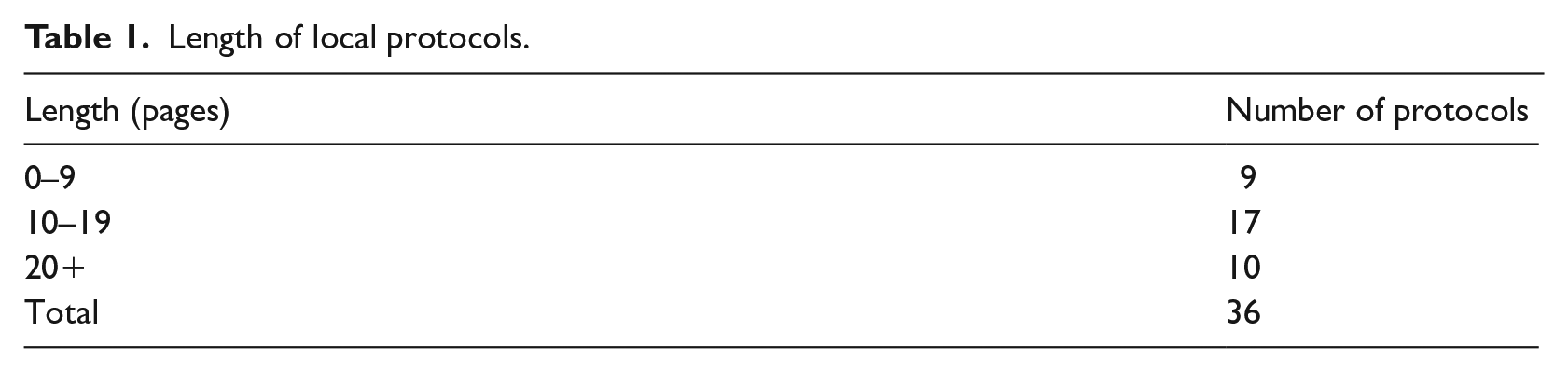
Analysis revealed that the protocols vary considerably in length (see Table 1) and scope. As such, there are stark differences in the level of detail provided, with some including basic outlines of approaches (either to reducing criminalisation or supporting individuals in justice systems) and others providing extensive contextual information including legislation, relevant literature and reference to good practice. However, a longer document does not necessarily mean a more effective protocol. For example, the North Yorkshire Protocol (2014) communicates clear information in just 10 pages, including underlying principles of reducing criminalisation and offering specific guidance on responses to incidents based on their seriousness. Moreover, shorter protocols may be more accessible to busy professionals who are already managing large workloads.
Length of local protocols.
As mentioned, five protocols focus on supporting children in care and/or care leavers already involved with justice systems. This is a welcome point of contrast to evidence suggesting that care leavers in justice systems can often feel abandoned by their local authorities (Coyne, 2015). The five protocols centre on outlining statutory duties towards children in care and/or care leavers, bringing together the relevant legislation in a concise document. In clarifying the roles and responsibilities of the relevant agencies working with children in care/care leavers in justice systems, all five documents aim to foster collaborative working and information sharing. Four of the five protocols have a particularly strong focus on safeguarding children and young people, for example, the Cheshire Protocol (n.d.) states that children in justice systems ‘may be at risk of harm and/or need additional support services’ and that ‘it is the responsibility of the YJS to identify these needs during the course of their intervention with families’ (Cheshire Protocol, n.d.: 5). However, safeguarding is mentioned in all documents included in this analysis.
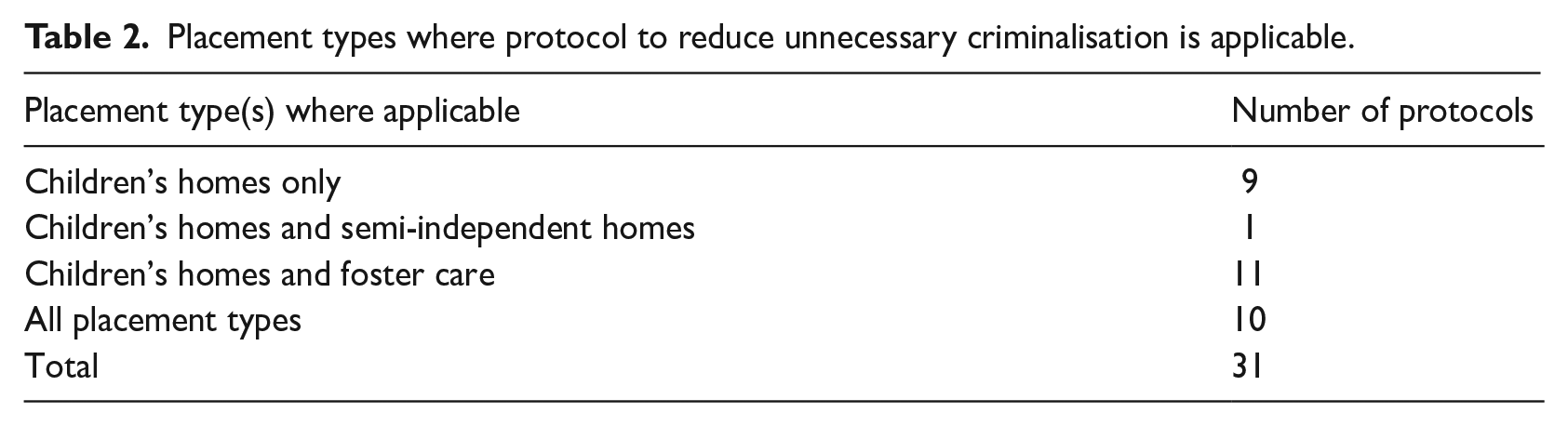
Of the 31 protocols that focus on reducing unnecessary criminalisation, there was much greater variation in scope and content. For example, there were significant differences in the types of placements covered (see Table 2). Just 10 apply to children in all placement types (i.e. children’s homes, foster care, kinship care and semi-independent placements) and most focus only on those in children’s homes and/or foster care. This means that children in kinship care or semi-independent placements are somewhat overlooked. In addition, three protocols explicitly state that they do not apply to placements managed by private care providers. In England, 80 per cent of children’s homes are privately managed (Ofsted, 2022) and so a potentially large proportion of children are not protected by those protocols. 8 Given ongoing concerns about the quality of privatised placements, including unregulated semi-independent placements (Competition and Markets Authority, 2022), this could be a significant omission. Moreover, analysis also found variation when it comes to the inclusion of care leavers. Just 11 of the protocols specifically apply to care leavers, with one of these only applying to care leavers up to the age of 18 years old. Given that the National Protocol includes care leavers, there is a risk that it is only being partially implemented at the local level.
Placement types where protocol to reduce unnecessary criminalisation is applicable.
Many of the protocols draw on additional material when communicating messages about reducing criminalisation and/or supporting individuals in justice systems. Of the 36 protocols, 30 reference specific legislation including laws pertaining to care provision, offending and data protection. Of the 36 protocols, 16 highlight the Crown Prosecution Service (CPS, 2020) 10-point checklist, which is designed to reduce prosecution of offences committed in children’s homes, while 19 of the protocols reference children’s homes regulations and standards.
Reference to specific groups
While the 36 local protocols differ in aims and scope, the vast majority take a ‘one size fits all’ approach to reducing criminalisation and/or supporting those already in justice systems. Analysis revealed that only six of the 36 protocols make specific reference to gender, with just two highlighting that care-experienced girls and young women are at an increased risk of criminalisation compared with non-care-experienced girls and young women. Girls in care have distinct needs compared with boys; gendered judgements, inadequate and/or harmful responses to victimisation, mental health concerns and/or trauma can all influence girls’ routes into justice systems (Fitzpatrick et al., 2022). Furthermore, the Laming Review (PRT, 2016: 22) specifically recommended that protocols should ensure that ‘the protection of children and young people in care from criminalisation is gender-sensitive’. Certainly, there is a danger that ‘gender-neutral’ approaches to justice will ‘inevitably prioritise the male majority’ (Fitzpatrick, 2017: 143). It is therefore concerning that the protocols analysed give little attention to gender, with most failing to acknowledge the role that gender can play in determining trajectories into and through the youth justice system (Sharpe, 2011).
Consideration of ethnicity is also noticeably absent from most of the protocols. Just four out of 36 protocols refer to ethnicity, with only two specifically stating that ethnic minority children may face distinct challenges in relation to criminalisation in care. 9 Black and ethnic minority children are over-represented in both care (DfE, 2021a; StatsWales, 2021) and youth justice systems (YJB and MoJ, 2022) in England and Wales, and account for almost half of all care-experienced children in youth custody (PRT, 2016). Moreover, research from North America and Australia indicates that minoritised children in child welfare systems have higher rates of youth justice involvement than White children (see, for example, Brownell et al., 2018; Colvin et al., 2020; Herz et al., 2021). There is still much to be learned about the intersections between care experience, ethnicity and justice systems contact in England and Wales (see Hunter, 2019) and the newly linked MoJ/DfE datasets offer an exciting opportunity to explore this using administrative data (Hunter, 2022b). However, there is some research to suggest that ethnic minority children in care, particularly those who identify as Black or mixed ethnicity, face a ‘double whammy’ of disadvantage, which places them at greater risk of criminalisation than their White counterparts (Hunter, 2022a). Such children face increased scrutiny and surveillance because of their care status and their ethnicity, which can push them into the youth justice system (Hunter, 2022a). It is of vital importance that any strategy to reduce unnecessary criminalisation of children in care, or to support care-experienced individuals in justice systems, is sensitive to the role of ethnicity and the specific needs of minoritised children.
The majority of the protocols (n = 31) do acknowledge that children in care are likely to be vulnerable, with many stating that approaches to reducing criminalisation and/or supporting those already involved with justice systems should take account of such vulnerability and provide ‘additional support and protection’ (Bristol Protocol, n.d.: 2). Over half of the protocols refer to children who have gone missing from care (n = 19). Police involvement in care placements is often related to missing incidents, rather than any offending behaviour (Howard League for Penal Reform, 2016). Children who regularly go missing from care are likely to be formally reported and have repeated police contact as a result (Colvin et al., 2020). This can serve to familiarise police with certain children and contribute to negative perceptions about them, which can influence their youth justice involvement (Hunter, 2019; McAra and McVie, 2010). It is therefore vital that carers understand the recording requirements and the impact of unnecessary police call-outs to ensure that police become involved only when absolutely necessary.
Most of the protocols analysed also refer to children who are victims of exploitation. Children in care are particularly vulnerable to Child Sexual Exploitation (CSE) (Jay, 2014) and Child Criminal Exploitation (CCE), including exploitation through ‘county lines’ drug dealing gangs (Home Office, 2018). Furthermore, children who go missing from care are at serious risk of being physically or sexually abused and exploited, although they are likely to be criminalised when they encounter the police (Shaw and Greenhow, 2020). The inclusion of exploitation recognises the frequent blurring of the boundaries between victim and offender, which can particularly affect children in care (Fitzpatrick et al., 2022; Shaw and Greenhow, 2020). Exploitation features in over half of the 36 protocols analysed (n = 19), with eight specifically stating that behavioural difficulties and/or missing incidents may be linked to experiences of victimisation. Ten protocols raise exploitation with regards to safeguarding and information sharing, but in other protocols, mention of exploitation is more peripheral. For example, the Nottinghamshire Protocol (2017) uses exploitation as an example of immediate risk of harm whereby police should be contacted straightaway. Given recent government strategies to address child exploitation (see DfE, 2017; Home Office, 2018), it is perhaps surprising that more protocols do not refer to the risks of criminalisation faced by children who are victims of CSE and/or CCE.
Exploring vulnerability further, a third (n = 13) of the protocols also mention children with mental health concerns with some generally referring to ‘mental illness’ (Wakefield Protocol, n.d.) and others referring to involvement with ‘mental health services prior to the incident’ (Kent & Medway Protocol, 2019), and/or those accommodated in ‘mental health provision’ (Manchester Protocol, 2019). Mental health needs are common among both children in care (McAuley and Davis, 2009) and children in youth justice systems (MoJ and YJB, 2021). Unmet mental health needs, inappropriate responses to mental health crises and unsuitable accommodation can all exacerbate the criminalisation of children in care (Fitzpatrick et al., 2022; PRT, 2016). Finally, eight protocols refer to children with disabilities, recognising that disability can also influence justice systems contact (Kirby, 2021). For example, the Berkshire Protocol (n.d.) asks staff to recognise ‘that unacceptable or challenging behaviour may be the result of illness, bullying, disabilities such as autism, ADHD or communication difficulties’. There is also some crossover between protocols that refer to children with disabilities and those that refer to children with mental health concerns with four protocols referring to both groups. It is vital that protocols take mental health and disability into account, to ensure that needs are met and to contextualise behaviours to prevent children and young people from getting into trouble.
Despite some reference to specific groups of children and young people, the 36 protocols overwhelmingly treat children in care and/or care leavers as a homogeneous group. In doing so, they fail to acknowledge the confluence of factors that can influence trajectories into justice systems. Any approach to reducing criminalisation must take account of the intersections of identities including gender, ethnicity, mental health and disability as well as experiences of victimisation. This will ensure that strategies most appropriately meet the needs of children in care and care leavers (Care Experienced Conference, 2019). The National Protocol (DfE et al., 2018) also falls short here; while the document acknowledges the importance of recognising individual characteristics like gender and ethnicity, the template for local protocols is generic and does not provide any obvious space for reference to specific groups.
Approaches to reducing criminalisation
When investigating the content of local protocols, it is important to consider the approaches to reducing criminalisation recommended within them. Restorative justice, whereby parties come together to address the harms resulting from an offence, is a common theme among the documents analysed; 31 local protocols are designed to reduce unnecessary criminalisation, with 30 referring to ‘restorative’ approaches. However, the level of detail provided about such approaches varies across protocols, with some explicitly outlining the processes involved and offering accompanying training (n = 9). For example, the Leicestershire Protocol (n.d.) has a flowchart of restorative justice including through reparation, letter of apology and a restorative conference. Others do not offer any information about what ‘restorative approaches’ entail. It is vital that staff understand exactly how to employ restorative justice and ongoing training is essential if protocols are to avoid becoming ‘just another policy document’ (McFarlane et al., 2019).
While restorative justice approaches can divert children away from formal justice systems contact, there should also be caution in applying practices designed for the majority to minoritised groups, such as girls. Österman and Masson (2018) highlight that gender has been largely neglected in research on restorative practices and that the vulnerabilities of girls and women, particularly in relation to experiences of victimisation, mean that reparation or an apology is not always an appropriate or safe option. However, Larsson et al. (2018) argue that restorative justice can benefit women in trouble when they feel genuinely heard, which is especially important for those with care experience (Fitzpatrick et al., 2022). Black and minoritised children may struggle to even access restorative justice, in part because of long-standing disproportionalities in justice systems which can affect trust (Hunter, 2019). Participation may also be hampered by a lack of Black and minoritised staff, as well as professionals having limited knowledge around the cultural needs of individuals (Sabbagh, 2017). Clearly, any restorative justice approaches to reducing criminalisation must consider the specific needs of children and young people.
Other methods of reducing criminalisation are also recommended within the protocols. Two-thirds of the 31 protocols (n = 21) classify behavioural incidents along three levels (e.g. high, medium and low risk), which determine the type of intervention required. All 31 protocols focus on the de-escalation of incidents to avoid formal systems contact. However, the protocols do differ in terms of contextual focus. Of the 31 protocols, 10 apply only to incidents that occur within the care placement itself, seven apply to incidents ‘in and around’ the care placement and eight apply to all incidents involving children in care and/or care leavers regardless of where they take place. This information was unclear for six protocols. As such children will be subject to varying levels of protection from criminalisation depending on the area in which they live. Similar issues are apparent for ‘out of area’ children (children placed outside of the boundaries of their local authority), who are mentioned by most local protocols analysed. Many of the protocols stipulate that children living out of area should be afforded the same protection as they would in their home local authority. While in theory this is welcome, variation in practice across local authorities (National Audit Office (NAO), 2019) and YOTs (Goldson and Briggs, 2021) means that reciprocal arrangements may be difficult to achieve in practice.
There is also wide variation when it comes to the agencies involved in reducing criminalisation. Some protocols consist of agreements between just the police and children’s homes, while others incorporate a range of services including care providers, police, YOTs, CPS, courts, health services and education providers, as recommended by the National Protocol. Such variation could lead to inconsistencies in practice across geographical areas. Furthermore, a small number of protocols (n = 3) explicitly state that they only apply to placements managed by the local authority, and not those run by private providers. The risk of unnecessary criminalisation is likely to be higher in private placements as staff may be duty-bound to follow profit-driven procedures, such as the need to obtain a crime number to make an insurance claim (Hunter, 2019). Given that the majority of children’s homes are now privately owned (Ofsted, 2022), the exclusion of private placements from some protocols is a significant blind spot.
A note of caution: Balancing the rights of children and communities
The analysis also revealed concerns about the use of police involvement within protocols. Seventeen of the 31 protocols require that staff within care placements (in particular, children’s homes) work closely with police forces in managing challenging behaviour. Some protocols stipulate regular visits by designated police officers for the purposes of gathering intelligence, identifying risk of offending and information sharing, including disclosure of non-serious incidents within placements. The involvement of local policing teams in decision making around incidents also features in some protocols, with the police being viewed as a source of advice and support. While both carers and police need to understand the context around incidents to make an informed decision about how to respond (Fitzpatrick et al., 2022; Firmin, 2020), we must be cautious of developing a culture of routine information sharing. Such practices could over-familiarise police with certain children, leading to labelling and targeted police action, as well as breaching children’s right to privacy. The National Protocol (DfE et al., 2018) makes clear that professionals should ‘use their judgement to share the
Almost all of the 31 protocols designed to reduce unnecessary criminalisation stipulate that carers keep records of incidents within placements. Record keeping is a key feature of Children’s Homes Regulations 2015, with the requirement to record responses to challenging behaviour, including the ‘measure of control, discipline or restraint’. However, in 15 local protocols, the recording of incidents centres on the behaviour itself, with the requirement that all incidents be recorded, regardless of seriousness, to develop ‘informed histories’ of children in care. The notion of informed histories also appears in the National Protocol, although it makes clear that the record should be ‘objective and non-stigmatising’ (DfE et al., 2018: 34). While it might intuitively seem appropriate to keep a record of incidents, the requirement to record all instances of challenging behaviour could be detrimental for children in care who are already dealing with stigma (Fitzpatrick et al., 2022). Indeed, ‘normal’ childhood behaviour could accumulate into a thick file of ‘incidents’ that would not be recorded for children living in a non-care context. This could also have a detrimental impact in respect of court appearances, where Magistrates often ask for details of children’s behaviour prior to sentence (Shaw, 2014). Therefore, protocols must ensure that records are kept only when necessary and that key contextual information is provided around incidents (Fitzpatrick et al., 2022).
In reducing youth justice involvement more generally, the YJB maintains a Child First approach, whereby individuals involved with youth justice are seen as children first rather than ‘offenders’ (YJB, 2021). The National Protocol itself recommends that local agreements be ‘child-centred’ (DfE et al., 2018: 10). However, Child First has proved to be challenging for practitioners on the ground who face competing concerns of managing risk and looking after the welfare of children (Day, 2022). Such an approach also presents problems for the application of local protocols. As McFarlane et al. (2019: 41) point out, the child-centred approach to local protocols ‘still presents the child as a nuisance and their behaviour as something that needs an intervention’ rather than focussing on structural factors, such as poor quality or inappropriate placements, which can create challenging behaviour in the first place. The recently published All Wales Protocol on Reducing the Criminalisation of Care Experienced Children and Young Adults (MoJ et al., 2022) offers an alternative approach, focussing on children’s rights and recognising duties under the United Nations Convention on the Rights of the Child. 10 The All Wales Protocol does not categorise behaviours into levels of severity: it shifts the focus from ‘incidents’ onto systems and their influence on well-being and behaviour. This is reflected in the fact that the protocol applies to care-experienced young adults up to the age of 25 (MoJ et al., 2022). The All Wales protocol also highlights the interaction between individuals and state systems as part of the process of unnecessary criminalisation. Arguably, this reframes the discourse from systems trying to find a way to deal with children and young people, to one where the state accepts culpability. As such, the All Wales Protocol could offer important learnings for other jurisdictions (including England and beyond) in developing and redeveloping their own protocols. However, the All Wales Protocol will require evaluation to assess its effectiveness in practice.
The application of local protocols in practice: Training and resources
While local protocols aimed at preventing unnecessary criminalisation of children in care and/or care leavers are very welcome in theory, there is a serious need for caution with regards to the content of protocols and how they might be applied in practice. The success of any such protocol is also entirely dependent on staff and partners having the necessary training and resources to implement it effectively (Fitzpatrick et al., 2022). When contacting YOTs about local protocols in their respective areas, some explained that protocols had ‘fallen by the wayside’ after changes in staff. This is disappointing but also unsurprising given there is no statutory duty to prevent unnecessary criminalisation. As McFarlane et al. (2019) note, protocols not only require effective leadership but also must be embedded and re-embedded in practice due to the high turnover in staff. Therefore, adequate resources are vital in ensuring that all partners receive ongoing training and support. Resources for monitoring are also important with the National Protocol asking local areas to measure the impact of agreements using local offending data (DfE et al., 2018: 29). Without robust local data, it will be unclear whether protocols have had any effect at all. It is vital that local areas are properly resourced to ensure that local agreements achieve meaningful change in practice, and that they do not become a tick-box exercise (Fitzpatrick et al., 2022).
Conclusion
The very existence of local protocols demonstrates an appetite for tackling the unnecessary criminalisation of children in care and care leavers and supporting those already involved with justice systems. However, we must ensure that agreements have the appropriate provisions to divert care-experienced children and young people and provide adequate support for those in trouble. The huge variation in scope and contextual focus of local protocols means that children and young people will not receive the same protections from area to area. The apparent lack of consideration for the needs of specific groups is also a serious cause for concern. Clearly, there are factors that influence children and young people’s involvement with justice systems that must be countered to make meaningful change on the ground. Perhaps most concerning, however, is the over-reliance on policing in some protocols whereby police involvement is baked into agreements. At best, this contradicts the spirit of reducing criminalisation and at worst, could result in more children being criminalised in the long term. We also need to be mindful of excessive record keeping and to ensure that information recorded is appropriate and non-stigmatising. The focus on behaviour is also troubling, presenting children as the problem instead of scrutinising the systems which produce their criminalisation. The All Wales Protocol offers a refreshing take on these issues, but ultimately, research is needed into the effectiveness of these agreements in practice. Notwithstanding any concerns about the content of local protocols, there is a need to ensure that those responsible for implementing and upholding agreements are properly supported, have ongoing training and the necessary resources. The unnecessary criminalisation of children in care is a pressing issue both nationally (PRT, 2016) and internationally (Carr and Maycock, 2019; McFarlane, 2018; Stanley, 2017). Therefore, learnings from this analysis have implications for children in care across the globe.
Current economic, social and political conditions mean it is now more important than ever that we get this right. The number of children in care in England has reached a record high, with the number of teenagers entering care rising disproportionately (DfE, 2021a). Mounting child poverty is key to understanding these patterns (Bennett et al., 2022), and the current cost-of-living crisis will only exacerbate existing inequalities. When children do enter care, they are now twice as likely to be housed in unregulated placements as they were 10 years ago (Foster, 2021). Despite known risks associated with these placements, not least in relation to youth justice involvement (see Children’s Commissioner, 2020), the government rejected calls to ban unregulated accommodation for 16 and 17 year olds (DfE, 2021b) arguably those most at risk or criminalisation. Moreover, essential youth services that can protect children and young people from justice systems involvement have been decimated under consecutive austerity-focused governments, with some areas faring worse than others (YMCA, 2020). All of this comes at a time when the MoJ and Her Majesty’s Prison & Probation Service expect an upturn in the youth custodial population, after a long-term decline (NAO, 2022). The planned closures of controversial Secure Training Centres have been put on hold as the number of children entering youth custody in England and Wales is expected to double by September 2024 (NAO, 2022). Court backlogs driven by the COVID-19 pandemic will only contribute to this (Criminal Justice Joint Inspection, 2022). Now is the time to be bold. We must protect children in care and care leavers by placing a statutory duty on local authorities to prevent unnecessary criminalisation and improve life chances. This is an urgent issue which requires urgent attention.
