




Abstract
This article explores the participation of young people in contact with criminal justice systems in the development of drugs interventions. Interviews were undertaken with 160 young people (aged 15–25) and 66 practitioners involved in the design, delivery and commissioning of drug interventions. We analyse the key challenges in involving young people in the development of interventions including structural, organisational and individual factors. We argue that these barriers can be overcome by fostering flexible models of participation and identifying the most meaningful and appropriate approaches for involving young people at different stages and in different initiatives which consider socio-cultural contexts.
Introduction
This article focuses on the participation of young people aged between 15 and 25 years, who are in contact with the youth justice and criminal justice systems, in the design and development of drug interventions in four European countries. 1 Despite various calls to give greater voice and power to young people in policy, practice and research development (Case, 2006; Case and Haines, 2015; Clinks, 2016; Grover, 2004; Harris and Allen, 2011; Prior and Mason, 2010), participatory approaches have only recently begun to feature in youth justice (Case et al., 2020; Creaney, 2014; Deakin, 2019; Smithson et al., 2020; Smithson and Jones, 2021; Youth Justice Board, 2016, 2019) and criminal justice service provision (Her Majesty’s Prison and Probation Service (HMPPS), 2021; User Voice, 2021; Weaver et al., 2019). Similarly, although drug policy has encouraged user involvement for adults in service design and policy development in some countries (Bjerge et al., 2016; Frank and Bjerge, 2011; Mold and Berridge, 2008; National Treatment Agency (NTA), 2006; Public Health England (PHE), 2015), this has not been routinely extended to young people (Brotherhood et al., 2013; Olszewski et al., 2010). Involving young people improves policy and practice, incorporates their unique perspectives and ideas and highlights issues that adults may have overlooked. They provide experiential knowledge of the problems facing young people and perspectives that are more reliable, relatable and relevant (McLaughlin, 2015). If young people are able to participate and contribute fully, they view programmes more favourably and are more likely to benefit from them (Dunne et al., 2017; Holdsworth et al., 2005) and if they are involved in design and development, they are more likely to use services (Harris and Allen, 2011; Kirby et al., 2003; Milbourne, 2009; Mycock and Tonge, 2012; Paterson and Panessa, 2008). However, it is important to point to the contested nature of participation as there is a tendency to view the participation of young people as inherently positive. As Cahill and Dadvand (2018) have argued, participation may or may not produce social good, but replicate and perpetuate inequalities which further segregate and stigmatise groups of young people.
Our target group can be defined as ‘seldom heard’ or a group that often do not have a collective voice in decisions that affect them and are not represented in consultations or participatory activities (Kelleher et al., 2014). The Carnegie UK Trust (2008) identified several factors which affect young people’s access to decision-making including class, geographical location, ethnicity, social networks, confidence, free time and proximity to adult decision-makers. Roe and McEvoy (2011) found that middle class, well educated, articulate young people were the most likely to participate in initiatives which affect them; while a number of groups, including young people who use drugs and those in contact with the criminal justice system, were seldom heard or viewed by practitioners as ‘difficult to reach’. The term ‘seldom heard’ is preferable to the stigmatising labels of ‘hard/difficult to reach’ or ‘hidden’/‘invisible’ populations implying that particular groups of young people are problematic or that service providers are not looking hard enough (Kelleher et al., 2014). Seldom heard young people are not a homogeneous group; they have complex, multi-dimensional identities which could include experience of care, drug and alcohol problems, offending, homelessness, poverty, school exclusion, unemployment, crime victimisation, trauma and learning difficulties. The intersections with class, race, ethnicity, immigration status, religion, sexual orientation and gender also need to be considered: Seldom heard groups may be seldom heard in multiple, overlapping and diverse respects and in respect of issues and needs unique to their situations, both on an individual and on a collective basis, at both the level of the individual and the level of the group in question. (Kelleher et al., 2014: 26)
The article draws on the findings of the EU EPPIC project (Exchanging Prevention Practices on Polydrug Use among Youth in Criminal Justice Systems). As part of this research, a set of quality standards was co-produced with practitioners to help improve the quality of interventions for drug experienced young people in contact with the criminal justice system. One of the quality standards stressed the importance of involving young people in the development of services: ‘Standard 7: Young people’s participation in designing and implementing an intervention is promoted and ensured as far as possible at every stage of the intervention’ (Graf et al., 2019: 20–21). The research demonstrated that practitioners in all the countries were committed to ‘operational engagement’ and individual participation (i.e. micro-level engagement between the professional and young person in the intervention and involving young people in decisions that affect them individually). We found that involving young people and working towards collaborative decision-making around individual goals and care plans were especially emphasised by practitioners, but also that the young people themselves valued relationships with professionals based on trust, honesty and empathy (Duke et al., 2021). Therefore, there was a focus on personal decision-making which operates at the micro level and involves decisions about their individual care and treatment. In contrast, ‘organisational engagement’ or ‘collective participation’ (see Lundy, 2018) which operates at the macro level and involves youth in the planning, design and development of services, did not stand out in the data in the same way. These two types of engagement and participation are entwined and reinforce each other (Kelleher et al., 2014; Public Health England, 2015; Sinclair, 2005). Although the practitioners and young people in the different countries felt that youth participation at the collective level was important, very few of the projects we examined through the EPPIC project had employed strategies to involve young people in organisational engagement or the strategic design and development of drug interventions that would benefit the wider group of young people. Drawing on qualitative interviews with young people and practitioners, this article explores the challenges and opportunities for the involvement of young people in contact with the criminal justice system in the development of drugs interventions in the United Kingdom, Denmark, Poland and Italy.
The article will address the following questions:
What are the key barriers and challenges in involving young people in contact with the criminal justice system in the development of drug interventions?
How can this group of young people be involved in the design and development of drug interventions?
Theoretical Framework: Conceptualising Participation for Young People in Contact with the Criminal Justice System
Youth engagement and participation in service provision are viewed as ethical imperatives and fundamental democratic rights under the United Nations Convention on the Rights of the Child which applies to those aged below 18 (United Nations, 1989). Under Article 12, the voices of young people need to be heard, considered and given due weight in all decisions that affect them. 2 For our target group, the Committee on the Rights of the Child General Comment No. 12 regarding the right to be heard in the development of prevention strategies (para 122, United Nations Convention on the Rights of the Child (UNCRC) (United Nations, 2009) and General Comment 24 which sets out children’s rights to participation in juvenile justice decision-making are also relevant (United Nations, 2019). The countries included in this study have emphasised Article 12 in their legislation and policy frameworks, but for young people in contact with the youth justice or criminal justice systems, this has mainly focused on personal decision-making at the individual level (see Duke et al., 2021), rather than in the wider design and development of policy and practice or collective participation. Within the drugs field, the perspectives and ideas of young people have been missing in the design and development of drugs interventions or policy across the four countries. In their policy mapping and review of interventions for young people’s addictive behaviours in the European Union (EU) Member States, Brotherhood et al. (2013) also found that young people themselves were rarely involved as stakeholders in the process of policy and practice development. Similarly, a thematic paper by the European Monitoring Centre on Drugs and Drug Addiction (EMCDDA) (Olszewski et al., 2010) pointed to the value of considering the varied perspectives and circumstances of young people when developing drug interventions.
In our study, the group of young people includes those aged between 15 and 18 years and those aged 18–25 who are transitioning to adulthood. Although different standards and laws often apply to these two age groups, many of the services our samples were drawn from tried to bridge the gap between child and adult services. Moreover, based on research evidence regarding the psycho-social maturation process of young people and the delays in navigating key youth to adulthood transitions (i.e. moving out of the parental home, finishing education and becoming employed), there is also increasing recognition that the period of young adulthood should be reflected in criminal justice laws and practices (see Pruin and Dunkel, 2015). The development of participatory strategies and frameworks in some countries has also embraced and included the voices of young people transitioning to adulthood up to the age of 24 (see Government of Ireland, 2021).
Since the publication of the United Nations Convention on the Rights of the Child (UNCRC), various models of youth participation have evolved over time and made important contributions in describing the various levels and types of participation using different conceptualisations and diagrams (see Cahill and Dadvand, 2018 for a full review). These include the ladder of participation (Hart, 1992, 1997), wheel of participation (Treseder, 1997; Treseder and Crowley, 2001), pathways to participation (Shier, 2001), typology of youth participation and empowerment (Wong et al., 2010), pedagogical political participation model (Andersson, 2017) and the P7 model which puts forward the following seven interconnected domains: purpose, position, perspective, power, protection, place and process (Cahill and Dadvand, 2018).
The original model put forward by Hart (1992, 1997) sees youth participation on a continuum from adult-initiated with no youth input to youth-initiated with shared decision-making with adults. Hart et al. (1997) argue that the bottom rungs (i.e. 1. manipulation, 2. decoration, and 3. tokenisation) can be considered non-participation. The greatest benefits are seen to come from a full participatory model at the highest rungs of the ladder (i.e. 4. assigned and informed, 5. consulted and informed, 6. adult-initiated, shared decisions with youth, 7. youth-initiated and directed, and 8. youth-initiated, shared decisions with adults). Indicators of strong participation link to how power is shared between young people and the organisation; for example, who initiates interventions, who runs them, who makes decisions, how feedback is sought from young people and incorporated and how informed young people are about programme goals.
A key critique of Hart’s ladder is that it does not acknowledge the socio-cultural contexts of participation (Cahill and Dadvand, 2018; Treseder, 1997; Treseder and Crowley, 2001). For our target group, different experiences of exclusion, marginalisation and the criminal justice system shape youth participation and engagement. It is important to consider the contexts and systemic issues affecting the participation of young people. For example, the view of young people as ‘at risk’, marginalised and without agency leads to interventionist youth policy agendas, so their capacity to participate and influence can be diminished (Bell et al., 2008; 26). Some models of participation tend to view youth as homogeneous with a little consideration of differences and diversity and no suggestions for those who are considered ‘at risk’, vulnerable, marginalised and constrained by their contact with the criminal justice system. As Cahill and Dadvand (2018) argue, how young people are positioned and different cultural traditions and hierarchies affect who is heard and who can participate, underlining the importance of developing ways to recruit and learn from the perspectives of those who may be marginalised and excluded. There is also a need to consider the importance of place and how the social and institutional settings influence the possibility of participation. For young people in carceral settings, access to safe and supportive spaces for participation can be problematic.
In addition, critique has emerged around Hart’s ladder as it assumes a linear progression from one stage to another, but the participation of young people is more dynamic, unpredictable and dependent on context. Participation should be viewed as an ongoing process rather than a one-off event (Cahill and Dadvand, 2018). Treseder (1997) converted the top five rungs of Hart’s ladder to a non-hierarchical wheel of participation. These different degrees of participation are considered equal and the type of participation will depend on the project, the nature of the tasks involved, the training the young people have had and how they want to engage and if they are ready to participate. This enables more flexibility for identifying the most meaningful and appropriate approach for involving different young people in different types of projects and takes into account socio-cultural contexts. Hart’s ladder implies a hierarchy of values and charts the progression of young people towards a more democratic ideal, but it does not specify how this progression occurs and what responses are needed by practitioners to aid this process. As other researchers have argued, the lower levels and mid-levels of the ladder can be just as valid and authentic and can lead eventually to meaningful participation (Cahill et al., 2015; Lundy, 2018). Young people should be given a choice to participate, and the degree of participation should be tailored to their needs. This is developed in Cahill and Dadvand’s P7 model which emphasises a balance between protection and participation and considers both the vulnerabilities and capabilities of young people.
Although these models help to describe the different levels and types of participation, they do not offer practical guidance on how participation can be conceptualised and implemented in practice. Lundy (2007) developed a model to help conceptualise Article 12 and aids for practitioners to implement a young person’s right to participate. Within her model, organisational structures and systems need to enable the following four elements: space, voice, audience and influence. First, a space needs to be created to ensure a safe, inclusive environment for young people to express their views. Second, they need to have a voice and facilitated to express their views freely in different and age-appropriate formats. Third, young people require an audience so that their views are listened to. Finally, their views need to have influence, given due weight in decisions and acted upon. Follow-up and feedback are required so that young people are told how their views were considered in the decision-making processes. In order to understand the possibilities for engaging young people in contact with the criminal justice system in the design and development of drug interventions, we are inspired by the conceptualisation put forward by Lundy (2007) and the critiques of the original models which have stressed the importance of the socio-cultural contexts in which participation occurs.
Methods
The overall aims of the study were to gather knowledge and exchange best practice on interventions to prevent illicit drug use or polydrug use among young people in contact with criminal justice systems; to develop a set of quality standards based on the European Drug Prevention Quality Standards, adapted to initiatives aimed at the target group; and to initiate a European knowledge exchange network for practitioners and stakeholders working with young people in criminal justice systems. This article draws on semi-structured interviews conducted in the United Kingdom, Poland, Denmark and Italy with 160 young people involved with, and 66 practitioners working across, the criminal justice, youth justice, social services and substance use treatment sectors.
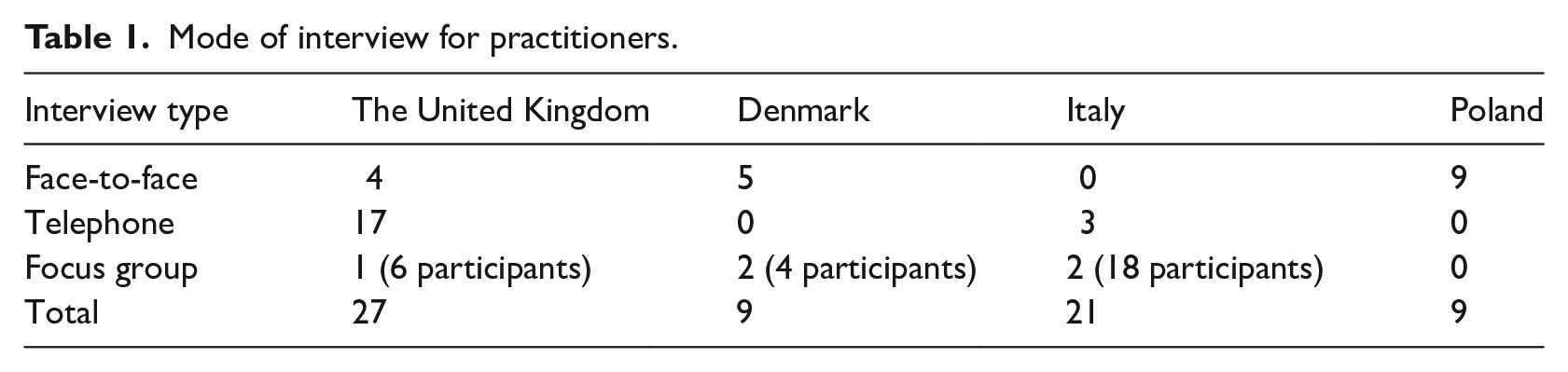
Common interview schedules were developed collaboratively with the research teams in the different countries. Drafts were commented on by the researchers and piloted with young people and practitioners in the different countries to ensure that cultural and contextual differences were considered. Focus groups, rather than interviews, were conducted with some of the practitioners due to their availability and the setting (e.g. shared offices) in the United Kingdom, Italy and Denmark. In Italy and in the United Kingdom, some practitioners were interviewed over the phone (see Table 1). In the interviews, young people were asked about their drug use and crime trajectories and their involvement in and ideas for drug interventions in the criminal justice system. The practitioners were asked about the methods they used to work with young people and the challenges they experienced in engaging and involving young people in criminal justice contexts. The issue of participation, particularly collective participation or organisational engagement, was not built into the original aims and objectives of the study and set of interview questions, but emerged as a key theme during data analysis. The findings presented here should be regarded as exploratory and indicative of an important issue that warrants further research.
Mode of interview for practitioners.
The young people and practitioners were selected from a broad range of interventions (including prevention, treatment and harm-reduction approaches) which aimed to prevent the onset or escalation of drug use for young people in contact with the criminal justice system (for more information, see Herold and Frank, 2018 and Rolando and Beccaria, 2019). In the United Kingdom, a range of practitioners were interviewed across youth justice, substance use treatment, social work and probation, as well as those involved in commissioning services (i.e. assessing local needs and planning and monitoring service provision). Young people were identified through drug and youth service providers based in England and Scotland and were either currently attending or had previous experience of attending a substance use intervention through a youth justice order or sanction. In Denmark, practitioners were interviewed from two selected interventions, one prison-based (remand) and one community-based, that work with our target group. Young people were subsequently recruited from these institutions, and also from other criminal justice institutions, including prisons, secure youth institutions and the Danish Prison and Probation Service which is responsible for the supervision of prisoners released on parole, on community sentence and electronic tags. In Poland, representatives of government agencies dealing with psychoactive substances and professionals from substance use treatment, probation services and non-governmental organizations were interviewed. Young people were recruited through two selected interventions, in a forensic psychiatry hospital and in drug treatment wards in prisons. In Italy, practitioners and young people were interviewed from a range of interventions, including a special section of a prison called ‘Attentuated Custody’ (ICATT) and a special unit of the local public addiction service (SerD) dedicated to young people. Table 2 provides the number of young people recruited from secure settings (i.e. detention centres and prisons) and community settings.
Recruitment settings for interviews with young people for each country.

The ethical principles and procedures of the European Commission (2013) and the Respect Code for Socio-Economic Research (Institute for Employment Studies, 2004) were followed. All participation was voluntary and based on informed consent. Confidentiality and anonymity were guaranteed to participants. Ethical approval was granted through the ethics committees and data protection agencies of the individual institutions involved in the research. In the United Kingdom, Poland and Denmark, young people in community settings were offered small incentives for participation (i.e. vouchers). Interviews and focus groups with practitioners lasted between 40 and 120 minutes and interviews with young people lasted between 30 and 100 minutes. All interviews were recorded and transcribed for analysis. A common coding framework was developed among research partners for use in the qualitative thematic analysis of data using NVivo or Atlas.ti. This was to ensure that the same codes were used to enhance comparability of the data between the research teams.
Due to the problems with access, the samples are not equivalent in the different countries in relation to setting, age, gender, family and immigration background. A limitation of the study is that we were unable to explore potential differences between different groups of young people or different types of services. Despite these differences in the samples, remarkable similarities were found in the ways that the young people viewed their drug use, their experiences of service provision, as well as their ideas for the development of drug interventions. The samples from the different countries were mainly male, aged between 19 and 25 (with the exception of the United Kingdom where the sample was younger), and did not have partners or children (see Table 3). The young people were more likely to come from an immigrant background in Italy and Denmark compared to those in the United Kingdom and Poland. The majority had been involved in minor crimes (e.g. theft, online fraud, burglary, possession of drugs and low-level dealing), but there were a few cases of more serious forms of crime including possession of an offensive weapon, attempted murder, human trafficking and violence causing death (see Rolando et al., 2021 for more detail on offending trajectories). Cannabis was the most used substance across the different countries and many young people used it frequently, often daily. After cannabis, the most used substance depended on the country and setting. In Italy and Denmark, cocaine was the most used drug after cannabis. In Italy, crack and heroin use were mainly reported by young people in prison or in secure settings. In the United Kingdom, a range of other substances were reported including ecstasy, cocaine, ketamine and a few reported using prescription drugs, crack and heroin. In Poland, the sample reported using mainly stimulants (i.e. amphetamines) and new psychoactive substances (NPS). Across the four countries, the young people gave a number of reasons for using drugs including pleasure, curiosity and boredom, but also as a way of coping with stress and trauma (see Rolando and Beccaria, 2019 for more detail on drug-using trajectories).
Sample description – socio-demographic data.
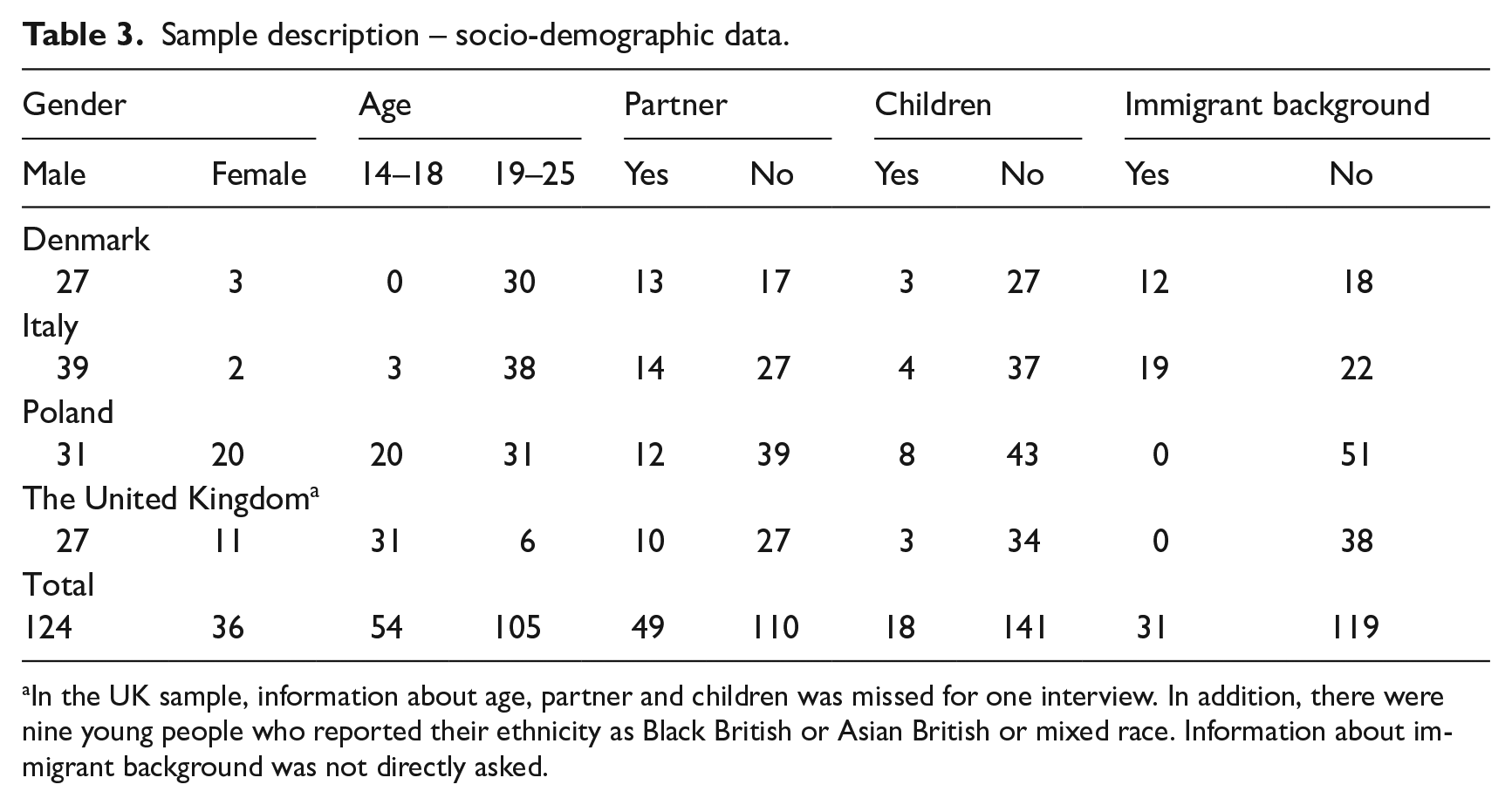
In the UK sample, information about age, partner and children was missed for one interview. In addition, there were nine young people who reported their ethnicity as Black British or Asian British or mixed race. Information about immigrant background was not directly asked.
Challenges and Opportunities for the Involvement of Young People
While most interventions in the study were working towards operational engagement or ensuring that young people were involved in personal decision-making about their own care and goals (see Duke et al., 2021), they did not routinely involve young people in wider organisational engagement or collective participation in the design and implementation of the service or initiative. However, there were a few examples of interventions that were working towards co-produced initiatives where young people shared in decision-making and helped in the delivery of the interventions. For example, in the United Kingdom, one organisation was explicitly a service user led organisation which focused on the lived experiences of the young people. There was clear evidence that the elements of Lundy’s (2007) model were captured in the development of this initiative. Young people were given a space or opportunity to express their views freely. They created specific co-production platforms for the most excluded young people who had experience of the criminal justice system. An extensive consultation with young people was conducted to understand what they wanted and needed from services. Using their ideas and input, they created an initiative to make services more accessible to young people through the use of peer support mentors who helped young people navigate through the different services they required. A crucial part of the organisation is that young people play important roles in designing and delivering the services and they have decision-making powers and influence about the direction of their work. Following Lundy’s model regarding influence and Cahill and Dadvand’s emphasis on position and power, the young people were key influencers as they were positioned as both advisors and deliverers of the services. As one of the founders explained, We ran a consultation and created a charity . . . the Board of Directors are split in half, so we’ve got 50% that are service users and 50% are non-service users . . . the service users come from a criminal justice, social care background, substance misuse and mental health . . . For us that’s really important if we are going to design a service for service user’s needs, so we can have that input. The other thing that we offer to our service users is that once a year they can be a part of our Board of Trustees to direct how we work and for them to gain experience as well. (UK_5_Practitioner_CJ)
3
Creating a sense of ownership of the service or intervention was viewed as crucial to ensure that young people had a stake in its development and met their needs. Participation was viewed as an ongoing process over time, rather than a singular event.
Another project in the United Kingdom was also created by young people, but only ran for 1 year due to lack of funding. It involved the design and development of a website examining drug supply and debt issues. Within this project, the young people initiated the project and were instrumental in defining its goals and purposes. As Cahill and Dadvand (2018) argue, ‘a sense of purpose can be strongest when collectively generated and shared with young people themselves’ (p. 248). Giving the young people responsibility and allowing them the time and space to develop their ideas at their own pace was seen as crucial to the design and development of the initiative: They really are part of the process and whatever they bring becomes central to it . . . In the first day and the first hours of the project, we are all at the mercy of [young] people just being willing to engage and bring something, because actually nobody knows what we’re going to end up with, nobody knew we were going to end up with a website. We just created that environment where everybody needed to contribute if they were going to see something that was worthwhile at the end of it. (UK_8_Practitioner_CJ)
Applying Lundy’s framework, a clear ‘space’ was created for young people to participate and their ‘voices’ and ideas drove how the project evolved. They clearly had ‘influence’ in shaping the project themselves. Although there was organisational buy-in and commitment at the beginning of the project, the project lacked resources and long-term funding to keep developing and maintaining the website. After the project was completed, there was a little follow-up and feedback with the young people due to lack of resources and staff capacity. The importance of the feedback process is emphasised in the Lundy model so that young people know how their views are taken into account or in this case, how the website was used and the impact that it had on other young people and practitioners.
However, these examples from the United Kingdom were the exception rather than the norm across the interventions studied in the four countries. As discussed earlier, practitioners were committed to involving young people at individual levels in collaborative goal setting. For example, in Italy, young people are involved in defining their own treatment paths, rather than actively engaged in the design and implementation of interventions, while in Poland, involvement of young people is focused on engaging them in the activities set by the practitioners. Similarly, in Denmark, there is generally an emphasis on including young people’s perspectives and employing ‘holistic’ approaches. However, in relation to the criminal justice system, these goals are often constrained by structural barriers and difficult collaboration between sectors (Herold et al., 2019).
The difficulties involving young people in the collective design and development of drug interventions related to a number of organisational and individual factors including resources, training and professional culture issues, and that the target group is often trauma-experienced and has complex and multiple needs which need to be prioritised first and foremost.
The Target Group: Complex and Multiple Needs
In all the countries studied, the young people had a number of complex and overlapping problems that they needed help to address including substance use, offending, homelessness, poverty, mental health issues, family and relationship difficulties, school exclusion, unemployment and child exploitation (i.e. in relation to drug dealing and county lines in the United Kingdom) (Duke et al., 2020; Frank et al., 2021; Herold et al., 2019; Rolando et al., 2021). Their narratives were often infused with experiences of trauma, disadvantage and deprivation. As one of the Italian practitioners explained, Their stories are actually about affective deprivation, losses, and lack of reference points. They are different, but listening to them, knowing them, they are actually similar. Usually these are stories that they find hard to tell. (IT_10_Practitioner_PSY)
Often, their drug use was linked to wider issues such as difficulties with their mental health and within their families. Practitioners gave examples of young people who had started to use drugs, particularly cannabis, as a form of self-medication for existing mental health issues and trauma that they were not receiving support for. For other young people, drugs were a means of coping with extensive family difficulties, such as parental substance use or domestic violence. Drugs were seen as a way of escaping these issues that may be outside of their control as these young people explained, . . . you might pick that habit up to fit in or whatever. But it also comes with all the other dramas outside of that, like some people take up drugs for whatever problems they’ve got at home . . . just to try and fade away and stuff like that. (UK_19_COM_M_18)
4
You try (to smoke hashish) and then discover that this makes you forget about other problems . . . This is more or less the aim of drugs, generally, to create an artificial happiness. (IT_ 02_PRI_ M_19)
The practitioners in all the countries described the substance use of young people as just one element in a wider web of problems dominating the everyday lives of their young clients. They considered drug use to be a symptom of other problems, rather than the primary problem. For this reason, abstinence from drugs was not the main goal of the intervention, because it was viewed as more important to help young people with other more urgent problems, such as their mental health: I think about their [drugs] misuse as a symptom, but with persistent effects. Because if they begin to relate to it, they will have to take a good look at other dimensions of their lives too. And for most of them, it’s messy. (DK_2_Practitioner)
During the course of a single intervention, it was not always possible for the young people to get help with all of the multiple problems they are experiencing which often caused frustration: My psychiatrist recommended that I first do addiction therapy, and then I have to deal with depression. Because the effects of depression and marijuana smoking overlap, I would rather deal with both matters at the same time. (PL_05_ALT_M_24)
Due to the complex range of problems experienced by young people, practitioners experience pressure to deal with a wider range of issues within their service provision: Pretty much our entire treatment cohort now, whether they are young offenders or not, emotional well-being is just horrific . . . Every client has a number of issues of which substance misuse is one of them. We’re not a substance misuse team anymore, we are an emotional wellbeing service with a specialism in substance misuse, because it’s around building these kids’ resilience back up again. (UK_12_Practitioner_SU)
Given their complex needs and lives, participation in the design and development of services may not be a top priority until they have had time to get help with their problems (Bell et al., 2008). However, at the same time, the idea that young people with drug and offending histories have chaotic and complex lives that inhibit participation further marginalises them in many ways. These attitudes and assumptions can become deeply embedded in organisational culture (Kelleher et al., 2014) and practitioners need to learn to acknowledge and value the important insights, knowledge and capabilities of young people. Moreover, the way in which youth services and interventions are structured where different parts of the system tackle different issues in the lives of these young people, may not facilitate – or perhaps even hinder – the possibility for engagement on an organisational level of young people who are ‘seldom heard’ and have no ‘collective voice’ or representatives.
Building a culture of participation: Methods, structures and resources
Similar to the work of Kelleher et al. (2014), some of the barriers to promoting participatory practice and building cultures of participation related to organisational issues, including the lack of knowledge, training and resources. For example, in the United Kingdom, practitioners emphasised that better collective participation and organisational engagement should be something to aim for, even though they found this difficult. From the perspective of professionals, methods or strategies of facilitating the participation of young people were needed: The thing that I always find hard, because obviously we want to really try and be informed by what the young people think in anything that we do, but getting them to say, finding a way of connecting with them, where they will give you feedback, sensible feedback, in a meaningful way, is really difficult. (UK_17_Practitioner_SU)
A similar problem was mentioned by Italian practitioners working in prisons where detainees are asked to think about what they want in relation to their own goals. They are not prepared for this approach, since it is often rare in the context of the criminal justice system: When they come here, they discover they have to stop and understand what they want. When questioned about what they want to work on or what they want to do, they are not prepared. (IT_10_Practitioner_PSY)
The carceral setting, with its norms and rigidity, represents a challenge for real engagement and participation in any form. Its rules and procedures take precedence over welfare services and other activities. Young people did not experience a flexible system or a system which prioritised their voices or ideas. This, arguably, does not foster a culture of participation. As this young man in a Danish-remand prison explained, This system is so complicated. Very complex. If there’s something you are passionate about in here, you are just turned down, because it’s the easiest. You are not able to do anything . . . because the criminal justice system does not bother. They just say ’no, no, no’. Perhaps they don’t think it’s important, or they don’t have resources. So you have to find another way . . . (DK_4)
Often, participation structures are not relevant to the needs of seldom heard groups. The lack of participation and not being heard is not due to inherent characteristics of young people, but due to the lack of appropriate structures and supports to facilitate their participation and voices (Kelleher et al., 2014). Charles and Haines (2014, 2019) point to the need to create youth-friendly forums for consultation and engage young people in decision-making about matters that directly affect their daily lives, such as school and leisure time. As highlighted by young people involved in drug interventions in the United Kingdom, if they feel that their participation has a purpose, they are more likely to want to be involved in development aspects of the intervention. For example, in the intervention mentioned earlier, where young people are an integral part of the design and delivery of the project, participants spoke about the importance of being able to use their own experiences to mentor and educate other young people. This created both a sense of ownership over their own lives and a sense that they could change other’s perceptions of them as ‘criminal’, ‘vulnerable’ or ‘disengaged’: . . . because look at these guys now, they’re here, they’re committed, they want to be here . . . I think it’s about doing, giving, showing. That is what this project is doing, giving an opportunity to say ‘look guys, there’s other things out there’, and not feel judged as well. (UK_5_Practitioner_CJ)
As Creaney (2020) found in his research, practitioners experience managerial pressures to get young people through their orders. This was particularly evident when speaking with practitioners working through the Youth Offending Services (YOS) in the United Kingdom. Their roles have increasingly become ‘managerialised’ and there is pressure to measure and document their activities (e.g. risk assessments) leading to less time to explore different approaches or build participation with young people in their services. The need for training and building capacity in participatory approaches for both professionals and young people was also suggested by some participants. This would involve changing staff culture and practitioners giving up some of their professional power to set and control agendas and timetables. This point was well made by one of the young people involved in a community-based intervention in Denmark: It’s really nice here, there’s a calm atmosphere, and you are able to just relax and be yourself . . . And to do things in your own pace. You are actually free to follow your own tempo, compared to many other places, where they have to develop, like, a systematic action plan . . . a lot of demands. (DK_01)
Practitioners tend to prioritise professional knowledge and expertise over young people’s experiential knowledge and expertise (Creaney, 2018; Smithson et al., 2020). There were also perceptions among some practitioners that young people were not willing to engage and lacked capacity to have meaningful input into the design and delivery of services. Professionals may underestimate children’s abilities and may treat knowledge and expertise of service users as less reliable and valid in designing and developing interventions (Case et al., 2020). Often young people are aware of the inadequacy of the interventions they receive, but they feel they are unable to change anything: It seems to me that this therapy is not at all adapted to the conditions of the prison. It is based on the principle of free therapy. When we are free, we have a choice, we can change things. Here we are closed in and they require things from us that we cannot achieve. We are supposed to feel good, we have to change, we have to control our emotions, we have to develop, but we have no possibility because we are in a prison . . .. (PL_46_PRI_F_19)
Others did have ideas for how to prevent relapse into crime and/or drug use in the context of the criminal justice system. However, they generally did not feel heard by the system: I think that you should have a mandatory mentor when you are released . . . I have actually asked someone if she would be my mentor when I get out, and she agreed . . . So, more supervision, instead of just being left on your own . . . (DK_06)
The potential for young people to identify and be able to support other young people with similar experiences, and how this should be harnessed was highlighted by a youth worker in the United Kingdom: . . . when you do authentic work with young people, other young people with similar kinds of vulnerabilities key into it immediately . . . It’s that phenomenon of how young people (like LAC
5
young people and vulnerable young people who experience abuse and violence), how they came together in little groups, how they identify each other across a room like within mini-seconds. (UK_17_Practitioner_CJ)
There were also issues around dedicated resources for developing structures and training around participation. In all the countries, many practitioners mentioned problems around long-term funding for services and interventions. In some cases, projects or initiatives had received funding for short-term periods (e.g. 1 year). In Denmark, one of the interventions relied on private funding to continue their work. In Poland, interventions must apply annually for funding. In Italy, resources were limited in relation to social rehabilitation and employment opportunities. The lack of long-term funding reduces sustainability and continuity of initiatives. It also means that professionals are constantly pre-occupied about applying for funding to keep their work with young people going and this distracts them from building their services around a participatory culture.
Conclusion: Moving towards Participatory Models
Across the countries studied, the development of drugs interventions and services for young people in contact with criminal justice systems has not traditionally included the voices, perspectives and ideas from young people themselves. The practitioners highlighted the challenges of involving them in these processes including the overriding importance of giving high priority to helping them with their complex set of problems related to the trauma and disadvantage they have experienced. They felt that these issues needed to be tackled first and foremost before young people could be ready to participate in consultation and development processes. This tendency to view young people as vulnerable or ‘at risk’ often means that agendas are set by professionals and this further removes the young person from having genuine autonomy in the programmes they are offered. For many of these young people, they have not previously experienced having a ‘space’ or ‘voice’ to express their views freely in services they are often compelled to attend, including education, social care or the justice system. Time is needed to foster trust and participation from young people, something that our practitioners stated was not always available due to the need to see the young person through a court sanctioned order or condition. When decisions about their care are ultimately controlled by higher policy or management decisions, this interferes with the attempts of practitioners to fully include young people in services and young people feel they are not listened to.
The lack of space and opportunity to participate is also related to structural and organisational issues including a lack of resources and the need for practitioner training to understand and facilitate involvement. Professional power and ingrained working cultures which give precedence to professional knowledge and expertise need to change, so that the experiential knowledge of young people is valued and given equal weight in the design and delivery of interventions. Young people should be seen as partners, with the ability to influence decision-making. As Smithson et al. (2020) argue, ‘there is disparity between those who create youth justice policy and practice and young people themselves, with differences in whose knowledge is valued and barriers relating to how knowledge is shared across boundaries’ (p. 8). Young people’s experiences and ideas can make valuable contributions to policy and practice. Co-produced services have a number of benefits for young people and the systems supporting them in terms of outcomes. Involving young people in the design and development of policy and practice which they are subject to improves decision-making and service provision, upholds their rights and democratic processes and enhances their skills and self-esteem. The European Drug Prevention Quality Standards (EMCDDA, 2011) manual suggests that involving target populations in the development of interventions can be challenging due to requirements of extra resources and time to encourage them to contribute, but the extra efforts mean that programmes will be more relevant to participants and thus more likely to achieve their overall goals and objectives. The various barriers can be overcome by strategically prioritising young people’s involvement, providing dedicated resources for these activities and fostering flexible models of participation which identify the most meaningful and appropriate approaches for involving young people at different stages and in different types of initiatives, which take account of socio-cultural contexts.
Young people could be involved in influencing the interventions and services they use depending on the task, the context and their own readiness to participate at different stages. As Cahill and Dadvand (2018) argue, both vulnerabilities and capabilities of the young people need to be considered with a focus on achieving a balance between protection and participation. For example, young people in the criminal justice system may not be able to contribute as much while they are in the midst of addressing their problems, but they may be able to participate in more meaningful ways when they are starting to feel more secure and have received help. In some cases, they may even be trained to work as peer support mentors to guide and support others. Young people may also need to be pro-actively facilitated to participate (see Lundy, 2007) by boosting their self-esteem, improving their confidence and making them aware that their ideas and opinions count. Operational engagement (individual participation) to ensure positive and constructive personal relationships between young people and practitioners (Duke et al., 2021) is a prerequisite for organisational engagement (collective participation) where young people are involved in the design and delivery of services. These two types of engagement and participation are complementary and reinforce each other. Future research which focuses on this interface between operational and organisational engagement for drug experienced young people in contact with criminal justice systems would make valuable contributions to future debates around policy and practice. While many of the issues raised by young people and practitioners indicate considerable similarities across the countries, further examination of the importance of social and cultural contexts is needed in order to tailor recommendations for policy and practice.
Footnotes
Funding
The author(s) disclosed receipt of the following financial support for the research, authorship, and/or publication of this article: This article is part of the project 768162/EPPIC which has received funding from the European Union’s Health Programme (2014–2020). The content of this article represents the views of the authors only and is their sole responsibility; it cannot be considered to reflect the views of the European Commission and/or the Consumers, Health, Agriculture and Food Executive Agency or any other body of the European Union. The European Commission and the Agency do not accept any responsibility for use that may be made of the information it contains.
