




Abstract
This paper explores how ideas of value are put to work in the context of town centre regeneration. Taking a grounded theory approach, it presents a narrative account of the first post-war British New Town centre to be comprehensively renewed. More than twenty years in the making, Bracknell’s regeneration failed when commercial goals (transactional values) dominated. We show how the Council’s place leadership helped establish a diverse set of principle-based values that public and private project team actors subscribed to and which also generated transactional value. Vision-making processes helped harness these values and transform the project from a property (re)development to a regeneration that sought to create a culturally self-confident place. Our paper contributes to theories of (re)development and value by exploring the role value(s) play(s) in making regeneration distinctive.
Introduction
The philosophy of value (axiology) focusses on what people consider important, how values are formed, and how values about what is important in life guide judgment. In the context of property development, ideas of value (Kim, 2025) are often conceptualised narrowly, reflecting neo-classical economic theory’s dominance (Carmona, 2019). For instance, property institutions emphasise the exchange value of land and real estate, though concepts like social value may signal a shift (Kim, 2025). As Lami et al. (2024: 22) state: “Although the creation of economic value in real estate development processes remains undisputed, other demands and needs are progressively emerging to be reflected upon not only in the public but in the private context”. As contexts change, there is a need to (re)examine how shared ways of thinking and behaviour(s) (values) are developed, assimilated, and harnessed within urban (re)development.
With this in mind, we present a narrative account of the first post-war British New Town centre to be comprehensively regenerated. More than twenty years in the making, Bracknell’s renewal failed when commercial imperatives (transactional values) dominated. We show how the Council’s place leadership helped establish a diverse set of principle-based values that public and private project team actors subscribed to and which also supported the generation of transactional value. Harnessing these values through a vision-making process transformed the project from a property (re)development to a regeneration that sought to create a culturally self-confident and commercially successful place (BFC, 2002a). Our paper brings empirical richness to existing theories of (re)development and valuation by exploring the role value(s) play(s) in making regeneration distinctive.
Research that considers how land, property and environmental value shape development actors’ decision-making (e.g. Healey and Barrett, 1990) provides the foundation for our study. For instance, institutionalist approaches see social structures and processes as important as their economic equivalents in ‘explaining’ property development (Guy and Henneberry, 2000). Beyond property development, the sociology of valuation considers “how value is produced, diffused, assessed, and institutionalised across a range of settings” (Lamont, 2012: 203) and has prompted detailed examination of the practices of valuation that underpin contemporary life (Helgesson and Muniesa, 2013; Henich, 2020). Connections can be made here to governance theory which highlights systems of standardisation that seek to make the complex governable (Scott, 2020). In planning and development, technical tools like Development Viability Appraisal (DVA) assess the financial value of development but also inform decision-making on the provision of social goods like housing (McAllister et al., 2015). Such ways of working are now so widespread that Knox (2022: 188) warns the telos of planning (“to contribute to the material realisation of societal aspirations of what it means to live well”) may be subsumed to the techne: “the application of the field’s context-dependent armoury of tactics, practices, concepts, approaches, and methods”.
Bringing the telos (back) into view means knowing how ideas of value in property development are framed, articulated, institutionalised and shape outcomes. Our paper shows that creating and harnessing diverse values in the context of regeneration is difficult but important work that increases the likelihood that projects will be delivered and reflect stakeholder needs and local contexts (as well as market imperatives). The next section maps out in more detail discussions about value in the context of urban regeneration specifically. We then outline the paper’s theoretical framing and methodology. This is followed by our case study narrative. Finally, we offer some conclusions about the importance of being attuned to questions of value in the study of urban regeneration.
The value(s) of urban regeneration
Urban regeneration refers to activities that envision solutions to place-based ‘problems’ through “sustainable improvements to the physical, social, economic and/or environmental conditions of an urban area that has been subject to change” (Roberts, 2000: 17). Regeneration is complex since it reflects the needs and interests of multiple stakeholder groups and is varied in terms of the scale and scope of interventions, sources of funding, etc. Various value claims are made about the ‘need’ for regeneration and what interventions mean for places and communities (Ruming, 2018). Change resulting from regeneration is often termed value creation (Kauko, 2008) with impacts accrued over years or even decades (Winter et al., 2006). These factors make regeneration distinctive from mainstream property development which typically seeks financial return for investors over shorter time periods. There are also many points of convergence. For instance, liveability and sustainability are well-established concepts in regeneration but increasingly permeate property institutions (WEF, 2024) whose resources are ever more critical in delivering regeneration (Karadimitriou et al., 2013).
There is no single definition of ‘regeneration’ though in the UK policy context ‘success’ is described as “achieving additional economic, social and environmental outputs and outcomes that would not otherwise have occurred” (DCLG, 2010: 6). Emphasis is placed on securing value for money for regeneration interventions (HM Treasury, 2008) though there is generally a lack of evidence about the value of regeneration (DCLG, 2010; Tyler et al., 2013). This reflects methodological difficulties that arise from assessing diverse impacts (DCLG, 2010; Guimarães, 2016). Consequently, research tends to focus on certain types of regeneration activity to “ascertain how a value could be placed on the outputs associated with the expenditure under that category” (Tyler et al., 2013: 174).
Examples include studies of value-creation in the creative economy (Cerreta et al., 2018), cultural regeneration and heritage (Campbell et al., 2016; Capolongo et al., 2019; Zhang et al., 2023), transport and place-value (Banerjee and Saha, 2022; Carmona, 2018; Vecco, 2020), housing (Kauko, 2008) and urban design (Lami et al., 2024). Value-creation in mixed-use regeneration in certain areas (Donnellan, 2023; Raco and Henderson, 2009) or linked to specific policies or funding programmes (Lawless and Pearson, 2012) has also been a focus. Regeneration’s ‘public’ character means that collaboration between governmental, market and other actors is common and explains why ‘public’ (Prebble, 2021; Zhang et al., 2025) or ‘civic’ value (Deakin and Allwinkle, 2007) is often claimed as an outcome of regeneration activity.
Less-commonly considered are the values that go into urban regeneration schemes. One exception is Winter et al.’s (2006) paper in which they liken regeneration projects to value creation processes. For them, “the notion of ‘value’ [has] multiple meanings linked to different organisational and individual purposes” and accrues “long after the project managers have moved on” (ibid: 644-5), sentiments our paper returns to. Pragmatist theory considers value inputs and outputs, arguing that “value is obtained by action, in the process of qualification or requalification” (Henich, 2020: 77), Drawing on Boltanski and Thevenot’s (2006) work, Fuller (2012: 913) highlights the “value-laden ‘worlds of justification’ that underpin processes of argumentation and coordination” in regeneration. Similarly, Holden et al.’s (2015) critical pragmatist account of waterfront regeneration reveals the diverse arguments (orders of justification) that project actors invoke to define outcomes. Together, these studies offer a window onto the “evolution of the urban value proposition” in the planning and execution of urban change (ibid, p.451).
This is important because representation from public, private, voluntary and community sectors in the pursuit of a shared vision is a defining feature of regeneration (Southern, 2002). Of course, engagement processes can be flawed (Heath et al., 2023) while vision-making itself is a selective process of framing (Metzger and Wiberg, 2018). Communities selected for regeneration may be ascribed certain values (e.g. as an ‘opportunity area’) while some place-qualities may fall outside frames of reference (ibid). There may be disagreement about whether regeneration is needed at all (Ruming, 2018). In ‘outcomes-orientated’ contexts (Legacy, 2016) where “change has long been promised, but where delivery has been absent, often leading to further degradation” such arguments can be intensified (Ruming, 2018: 182).
We thus need to understand not only how regeneration visions are produced but how they relate to local historical stories of development and change. This means ‘getting behind’ public narratives of projects and pinpointing “dynamics of argument and action at critical moments in the long process of urban redevelopment” (Holden et al., 2015: 451). Considering how actors derive understanding about the value of places is also key. Our paper offers insights into this. In so doing, we acknowledge work such as Fuller’s (2012: 917) account of housing renewal which shows how actors’ thinking aligns with the ‘merchant world’ (Boltanski and Thevenot, 2006). This “values market principles between individuals with their focus on competition and profit” while the ‘civic world’ emphasises the “public sphere and service, collective goods, and the democratic operation of collective institutions where decisions are the expression of the general will of society” (Fuller, 2012: 917). These understandings provide “systems of shared meanings for actors deriving from common values” (ibid) and go on to shape regeneration in multiple ways.
Fuller (ibid: 917) argues that these (two) ‘worlds’ are not “homogenous entities with generic causal powers”. Indeed, the blurring of lines between sectors across governance functions is widely observed (Lippert et al., 2024). But there remains a tendency to view ‘public’ and ‘private’ as separate spheres when it comes urban development (Eccles, 1996). For instance, growth machine theory (Logan and Molotch, 1987) highlights “battlegrounds between those for whom the city provides use values” and “local elites, from landowners and businessmen to city government and the press, all united in pursuit of exchange values” (Douglas, 2012: 215). Here private sector ‘elite’ actors like property developers are presented as a homogenous group with an interest in exchange value alone. In practice, developers differ significantly in their outlook and relationships to the places in which they operate (Baonada Fuchs and Baonada Fuchs, 2022; Coiacetto, 2000; Wisniewski and Brzezicka, 2021). Indeed, for Coiacetto (2000: 369) local places and developers are held in a recursive relationship whereby places have the power to ‘shape their shapers’; a view that mirrors Douglas’s (2012: 214) description of a developer’s efforts at “cultural sensitivity to a community’s expectations, and the community’s corresponding perception of cultural sincerity in the developer”. All of the above indicates the need to consider how values inform action in specific (cultural) contexts (Formoso and Miron, 2024) because regeneration actors (including developers): generate different types of values, including the social use and economic value…[and] create enabling environments that are characterized by the bonds that translate themselves into intrinsic values…. (Cerreta et al., 2018: 24).
Examples of transactional and principle-based values in urban regeneration.
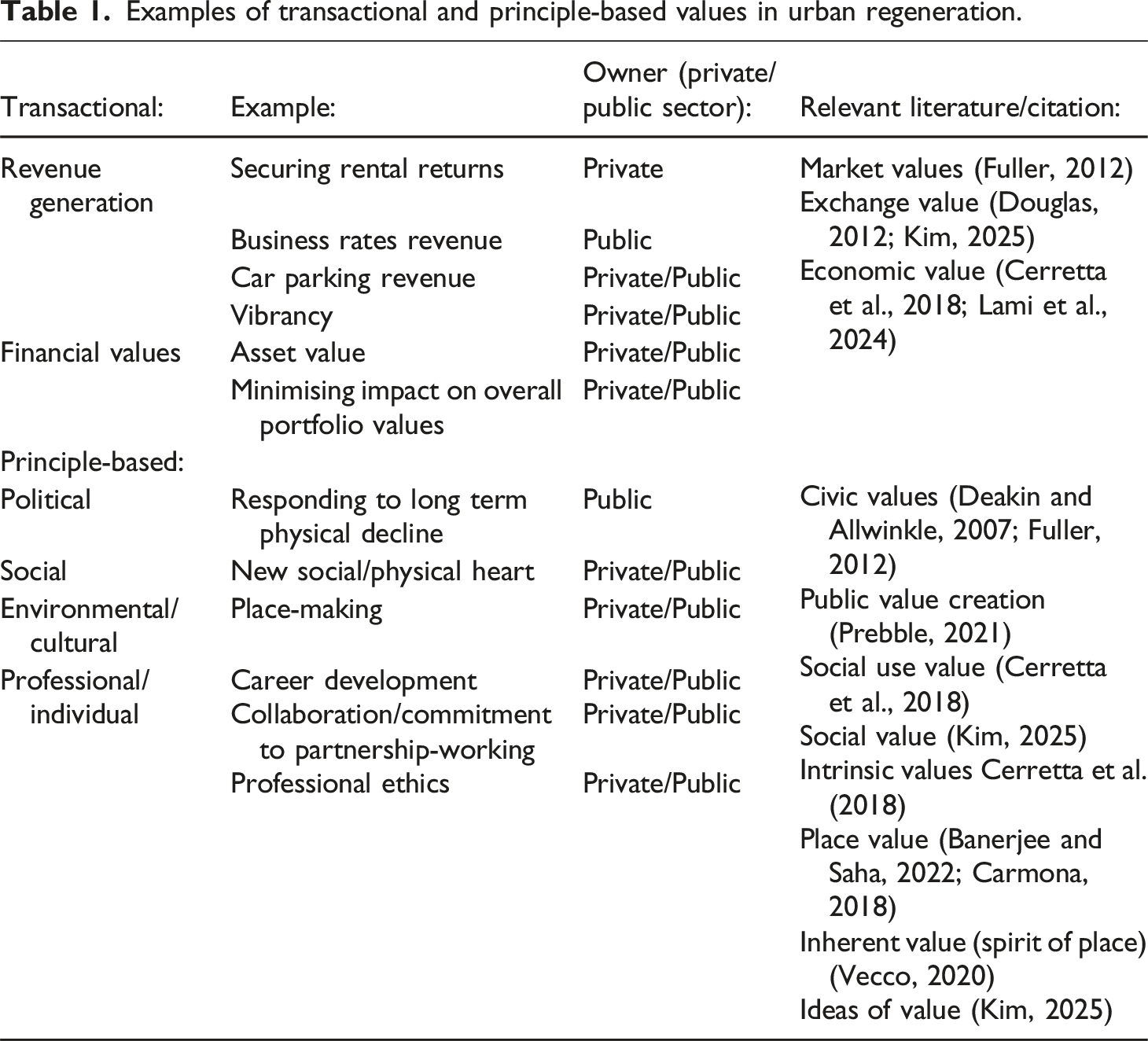
While these categories appear stable, in practice the things they signify are dynamic, interdependent and hard to disentangle. Table 1 is thus a simplification to provide visual clarity and enable us to alight on specific points in the literature. Figure 1 develops this representation, layering in the project lifespan and trying to capture a sense of movement but also where shared acceptable standards (or intrinsic values, Cerreta et al., 2018) begin to solidify (Stage 2). It is when these values prompt behaviours or help define a course of action (Stage 3) that we can point to the emergence of a productive values system tailor-made for a specific context (Cerreta et al., 2018). Various project tools and management techniques play a role in harnessing and directing values. Collaborative governance, the processes and structures in decision-making and management that “engage people constructively across the boundaries of public agencies, levels of government, and/or the public, private and civic spheres in order to carry out a public purpose that could not otherwise be accomplished” (Emerson et al., 2012: 1) is an especially important feature of Bracknell's regeneration. The management of values in urban regeneration.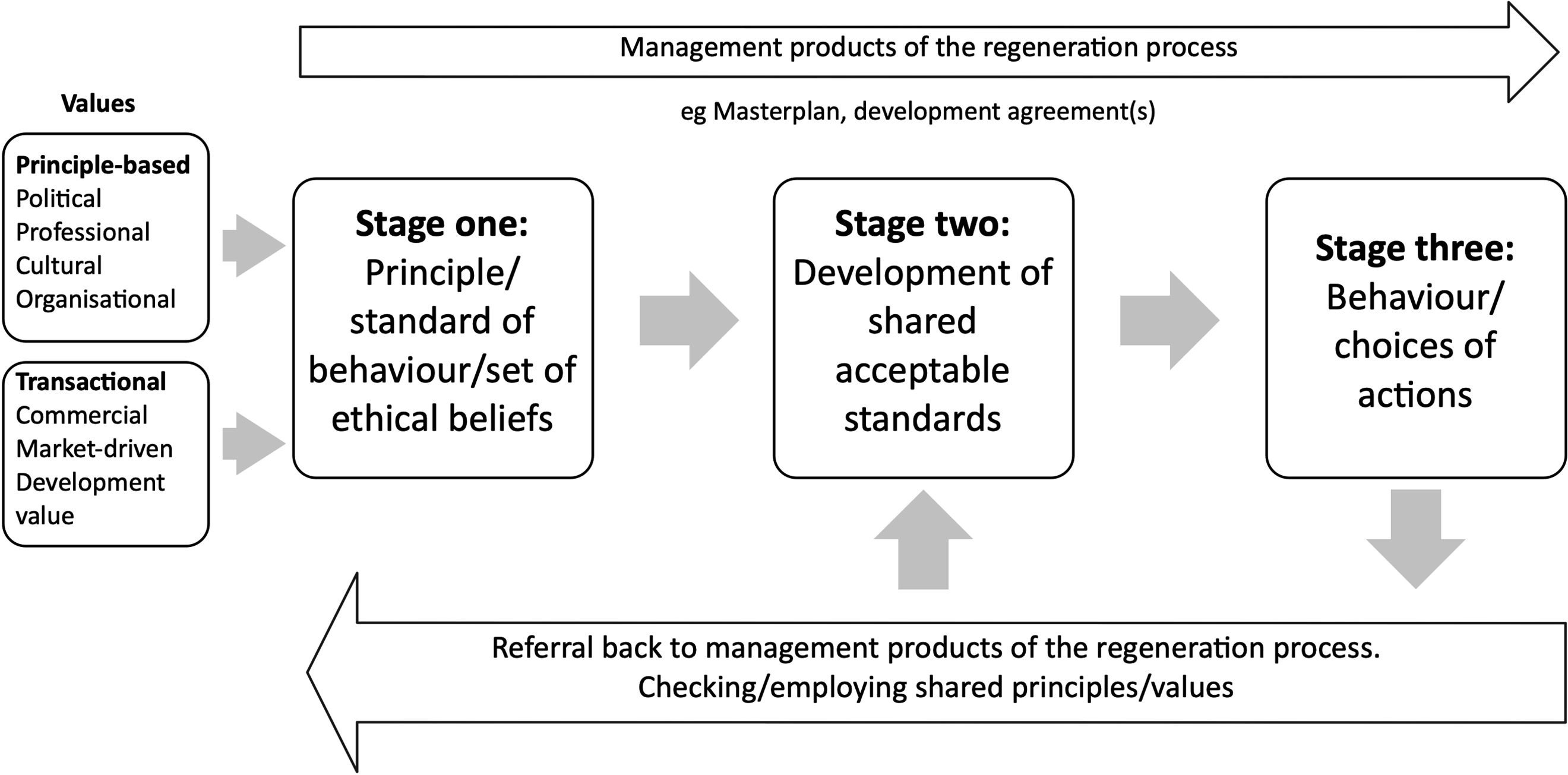
In summary, understanding the role value(s) play(s) in regeneration is important for two main reasons. First, regeneration is implicated in various value-creation claims but there is limited research showing how these are formulated and put to work. Our paper adds empirical detail here and thus contributes to theories of urban regeneration (and development), and broader theories of value. Second, regeneration is characterised by a diversity of stakeholders, goals, activities and outcomes, increasing the likelihood that different (potentially conflicting) values are present over time. This makes urban regeneration a fertile space through which to explore ideas of value and how they emerge through, and are put to work in, specific local contexts. Our case study offers a window onto this.
A word on method
This paper draws on 20 years of practical involvement in, and a further nine years researching, the regeneration of Bracknell. One of the co-authors was a local government professional before moving into academia. He led Bracknell Forest Council’s regeneration team which established the overall strategy and crafted the approach to plan-making, stakeholder engagement, and collaboration with partners to deliver the renewed town centre. This meant working closely with local political decision-makers and landowners/developers at the highest level over the project’s lifespan (Figure 2). His ‘insider’ status meant the research team were party to information (anecdotal, confidential) otherwise impossible to access. While this may not be conventional, it is valuable because “facts at the surface” alone are not able to capture what takes place “outside the scrutiny of the public eye” (Baonada Fuchs and Baonada Fuchs, 2022: 176). Our researcher-researched status means we do not lay claim to impartiality. We concur with Ettlinger (2009: 1019) who highlights the “futility of Truth claims as they apply to case study research”. We see our paper as part of a tradition of practitioner engagement in planning theory and research (McCulloch, 1952). Benefits to this cross-fertilisation are plentiful and extend to “biographical interpretivist research” where practitioners are not merely the subject of analysis but active agents in the research process (Bragaglia et al., 2025: 2). Bracknell town centre regeneration timeline.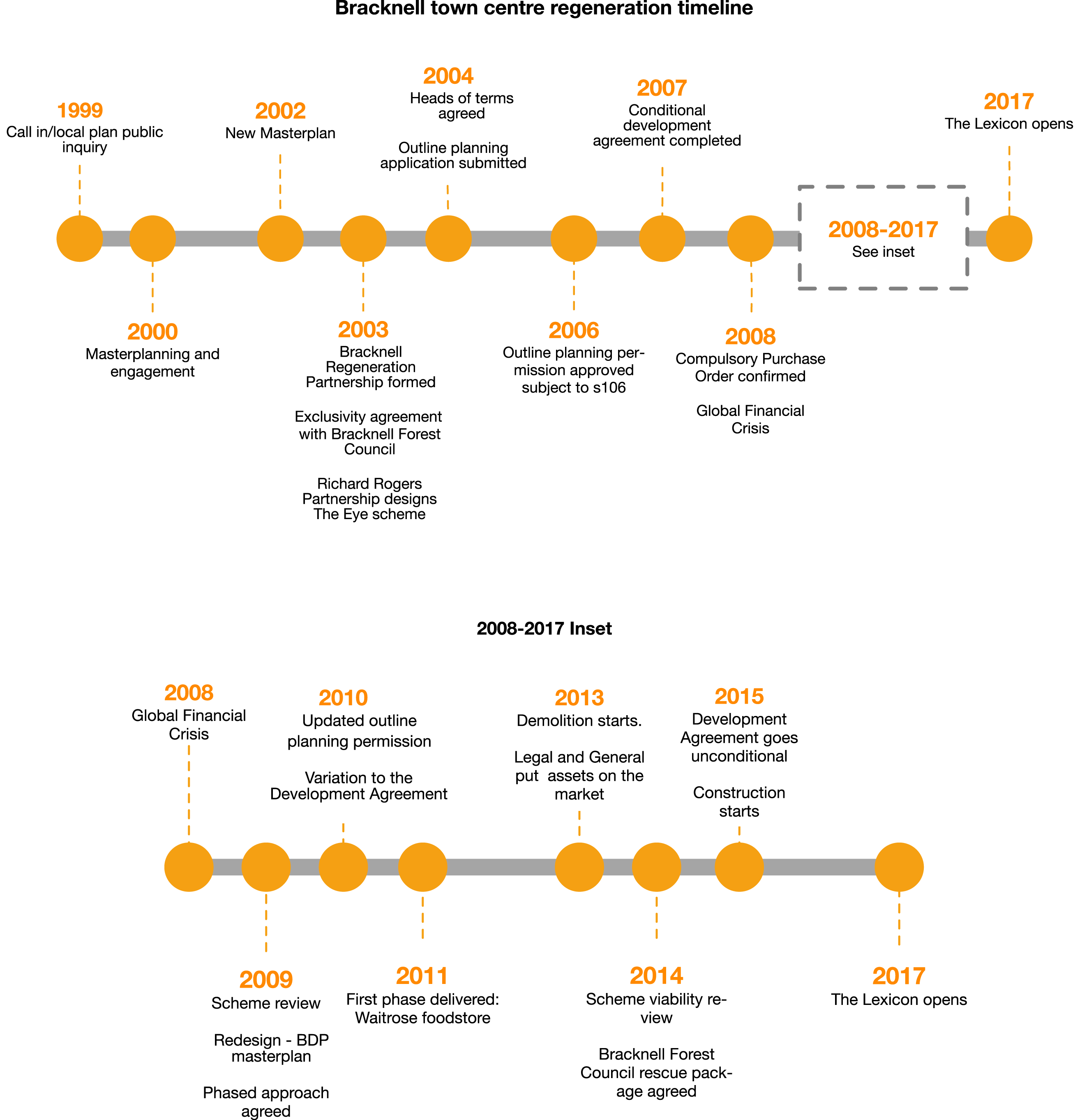
The research question at the centre of our work asks simply: “how did the regeneration happen?” Ours is a grounded theory generated by themes that emerged from data during rounds of inductive analysis, “capturing the essence of meaning or experience drawn from varied situations and contexts” (Bowen, 2006: 13; see also Ettlinger, 2009). Independent researchers conducted two sets (2016 N=15 and 2021 N=14) of in-depth, semi-structured interviews lasting between 30 minutes and 1 hour with project team actors. The same researchers then analysed the transcripts using an inductive manual dual coding (‘researcher triangulation’) approach. Two code books with a total of 280 unique codes resulted. The ensuing narrative of the town’s regeneration represents the voice of these project team members. For the sake of brevity, interview quotes are not used. Instead, we summarise the proportion of interviewees that referred to a particular theme in Table 2, Appendix 1. Hundreds of documents accrued over a 20 year period (project plans, policies, committee minutes, news articles etc) were also analysed using the same coding framework (see also Nicholls and Street, 2019, 2022).
Our case study is (of course) unique but holds illustrative value since “exceptional circumstances…count” (Ettlinger, 2009: 1019). Moreover, case studies can be defined as “an approach to the study of the particular” wherein the “researcher’s liability is to afford sufficient contextual information to facilitate the reader’s judgment as to whether a particular case can be generalised to a specific field of practice” (Ruddin, 2006: 804/808). Commonly orientated around a real-world problem, the ‘dual project’ of case study research is thus to provide empirical detail (often through thick description) and to clarify how and why different academic discourses may be helpful in “highlighting different dimensions of a problem” (Ettlinger, 2009: 1019) but without being prescriptive. So how did Bracknell’s regeneration happen? And what role did value(s) play in this?
Reimagining Bracknell
Bracknell is a town located 30 miles (48 km) west of London in the southeast of England. The principal centre of Bracknell Forest Borough, it has a population of 124,600 (ONS, 2023). The town’s regeneration took more than 20 years to come to fruition and involved stakeholders including the local municipal authority, Bracknell Forest Council (BFC), landowners Legal and General (L&G) and Schroders (later known as Bracknell Regeneration Partnership) and other professionals including contractors, architects, engineers and specialist consultants, and politicians, residents and businesses. Bracknell was one of the original ‘Mark One’ British New Towns delivered under the 1946 New Towns Act. This resulted in 27 settlements that today are home to 2.8 million people (TCPA, 2021: 1). Designed in response to poor living conditions and urban sprawl, New Towns provided employment and educational facilities, green space, modern housing, and civic amenities. The model’s success is debated but continues to attract interest (Forsyth and Peiser, 2021); the UK Government is currently planning a new generation of New Towns to help deliver its housebuilding ambitions (MHCLG, 2025).
Being one of the earliest post-war New Towns presented challenges. Bracknell’s architecture was influenced by Modernist design principles which later became unpopular (Habermas, 1985). Most of the town centre buildings and public realm were constructed over a compressed timeframe, meaning they deteriorated at a uniform rate, while retail units did not meet contemporary needs. Bracknell’s town centre is contained within a ring road 1 that restricts growth and access options [See Figure 3]. This pre-regeneration phase (Stage 1, Figure 1) was about understanding how these factors interrelated and establishing the ‘need’ for regeneration. It was thus also about grasping the potential value of a renewed town centre. The Council began to assemble the case for regeneration, drawing together evidence of the transactional values (e.g. cost of refurbishment vs. potential increased rental returns) and principle-based values (e.g. low civic pride vs. improved public realm) that renewal could help generate. Though there were different values at work, the general view was that buildings were too expensive to reconfigure; the fact that the development area contained only five listed heritage buildings reinforced this perspective. Options to refurbish effectively fell outside frames of reference (Metzger and Wiberg, 2018).
By the 1980s the town centre was struggling but the Bracknell area housed several international knowledge sector firms attracted by good transport connections, proximity to other global companies in the Thames Valley Berkshire region (Howes, 2004) and plentiful skilled workers (Turok, 1989) 2 . Bracknell also became the headquarters for Waitrose (an upmarket UK food store) and, later, a hub for the John Lewis Partnership, one of the UK’s best-known retailers. Bracknell’s residential population grew substantially in the 1990s-2000s with urban extensions adding 5500 dwellings 3 . This represented a commercial opportunity for those with (underperforming) town centre assets. Combined with the Borough’s strong socio-demographic profile (above-average incomes, high levels of economic activity, low unemployment rates and a younger than average population profile, BFC, 2006), the declining town centre came to be seen as an anomaly.
This reimagining phase of the project aligns with what Rousseau (2009) describes as the adaption of urban centres to cater for the tastes of the middle classes. The Council commissioned forecasts of available retail expenditure to evidence the town’s ability to attract a wider catchment of affluent shoppers and support transactional value generation. Complementary principle-based values linked to place-perception and civic pride also began to emerge. For instance, measures to increase the vitality of places support the generation of economic value. They also feed into what Vecco (2020) calls ‘inherent’ value or the spirit of a place. On the latter point, overhauling Bracknell’s ‘loser city’ status (Rousseau, 2009) became a priority. Like other New Towns (Lock and Ellis, 2020), Bracknell had an image problem. Bracknell regularly featured in ‘Crap Towns’ polls (Bracknell News, 2013; Jordison and Kieran, 2003). This had tangible impacts. For instance, a 1990s urban extension was branded “Warfield” (not Bracknell) as perceptions of the town as outdated and unattractive became instituted. As the 2002 masterplan (BFC, 2002a para.2.1.2; the focus of the next section) states: “The town […] reflects the legacy of the New Town development […] there has been relatively little development and improvement in the town centre since the 1960s. The result is a mix of uses and an urban environment and architecture that do not inspire confidence, meet modern requirements or match current aspirations” (see also BFC, 2006 para.1.16, vi).
Bracknell’s ‘New Town-ness’ also presented opportunities for redevelopment. Plentiful green spaces facilitated a reimagining of the “look and feel of place” (Degan and Ward, 2022: 109). Here placemaking narratives with the necessary elasticity to enable actors to rationalize value in multiple ways can be invoked (Ellery et al., 2021). The way in which the Bracknell Development Corporation (responsible for leading the New Town’s planning and delivery) was wound up in 1982 also shaped its reimagination. The town’s legacy assets were disposed of to the Coal Industry Nominees (subsequently Legal and General Investment Management Ltd) and Allied London (subsequently Schroders Asset Management Ltd). The low number of land ownerships in the town centre (Figure 3) reduced complexities around land acquisition and transfer that can hinder development (Louw, 2008), strengthening the case for wholesale renewal. Land ownerships in Bracknell town centre, 2002.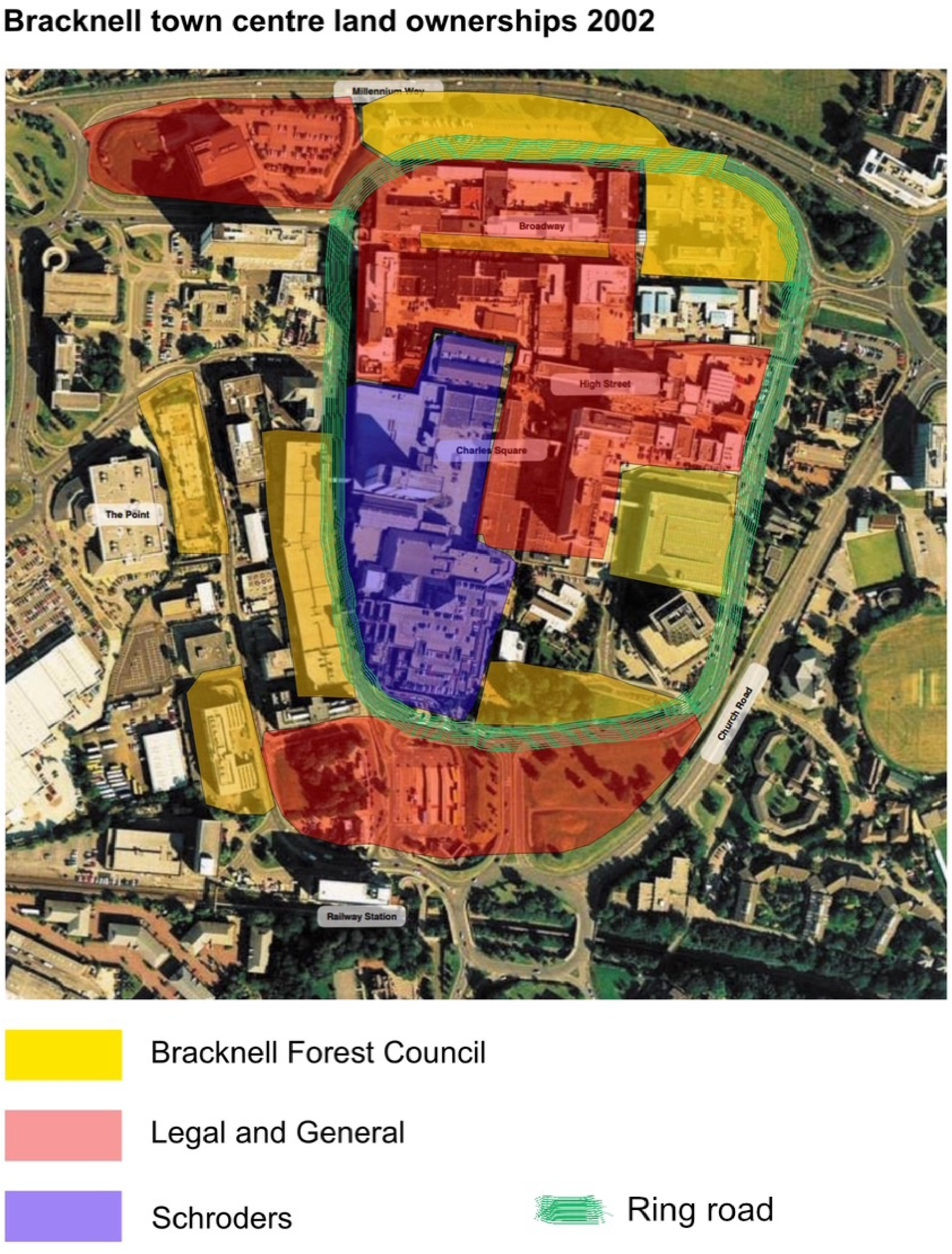
In the 1990s, two strategic approaches emerged to address the needs of the town centre. In 1993, the local authority approved a proposal to redevelop its offices for a new department store to boost the overall retail offer in the town centre. But nothing was delivered. In practice, the Council was working towards a redevelopment not comprehensive regeneration. This was more than just semantics. The Council focussed its energies on promoting individual development schemes to augment (rather than transform) the existing centre, resulting in mixed messages to commercial partners and a failure to progress to vision-making. However, this became moot as the early 1990s recession meant transactional values were impacted.
In response, the Council looked further into the benefits to be gained by unlocking the town centre’s commercial and place-making potential. A regenerated Bracknell was framed as an aspirational place. Acting as a ‘higher-order’ value, this connected and consolidated other values (asset value, reversing long term decline, place-making etc) into a common order (Fuller, 2012; after Boltanski and Thevenot, 2006). The result was that intrinsic values (Cerreta et al., 2018), or what we call shared acceptable standards (see Stage 2 of Figure 1), emerged around the need for comprehensive renewal. However, while some of the qualities that supported the reimagining process have been noted (green space, few landowners), others (refurbishment) fell outside the frame of reference and remained marginal (heritage) (Metzger and Wiberg, 2018). What constitutes shared acceptable standards is a reflection of who is at the table and the values they represent. Thus, at this stage, while principle-based values were invoked they were mainly framed in terms of the transactional value they could help to generate.
Having established the need for comprehensive renewal, moving this forward (Stages 2 to 3 in Figure 1) proved problematic. In 1995, the Council took a new approach that began to recognise the scale of change required constituted regeneration rather than a series of piecemeal development projects. It began to look at the town centre more comprehensively. This change in emphasis was politically controversial locally. Some borough councillors considered ‘regeneration' to be aimed at run-down urban areas, characterised by income deprivation, rather than an economically successful, high-income borough. However, the use of the term ‘regeneration’ prevailed and, as a statement of its intent to translate this into reality, the Council appointed urban designers to produce a framework as a basis for future development (Nicholls, 2002). They then sought development partners. Discussions with the two major landowners concluded with one, Legal and General, being selected. A partnership agreement between the Council and Legal and General was put in place and a commercially-orientated proposal comprising 1 million sq ft (93 000 sqm) of retail space followed.
Allied London (later Schroders) was concerned the scheme would prejudice their land and devised a competing scheme of similar scale that also focussed on maximising retail capacity. Both proposals were formalised as applications for outline planning permission, attracting significant opposition. Traffic and retail impact, urban design, and planning policy issues were raised, presenting challenges to the progress of the applications. This indicates failures in the alignment of values across project functions and between actors (Painter et al., 2019); in short, this foundational work had not yet been done. The proposals were considered at a conjoined Local Plan/s78 inquiry during early 1999. The Government’s inspectors concluded (a view that was confirmed by the Secretary of State) that the proposals should be rejected. The Council was urged to take a more strategic approach that reflected what Bracknell’s community actually needed rather than what was commercially achievable.
Values-based masterplanning
On receiving the Inspectors’ report, the Council looked afresh at its approach and took on a place leadership role taking “the reins…in driving place change” (Colledge et al., 2022: 20; Collinge et al., 2010). A place leadership approach recognises that while professional skills and competencies are vital, truly effective leadership is generated by mobilising stakeholders from a diverse range of organisations and interests (Vallance et al., 2019). This phase of the project duly emphasised collaborative ways of working to create a context whereby the actions and resources of various actors were drawn into governance structures to accomplish goals (Mizzau et al., 2025). This meant considering internal dynamics (aligning officers’ work across the Council) as well as external relationships. The bruising and costly experience of the public inquiries into the competing planning proposals focussed minds on the value of taking a collaborative, plan-led, place leadership approach.
The ability to speak a common language was critical in preventing certain values from dominating and in generating mutual trust. This is the work of mundane (everyday) governance an approach that became increasingly central to the project (La Grouw et al., 2024). A Town Centre Regeneration Committee was established which invited the leader of the opposition party to be a co-opted member. This cross-party approach was agnostic in that the potential for disagreement was acknowledged but the scope to harness oppositional values was created. Political support was vital to establishing legitimacy and progressing the regeneration onto the next stage (Stage 3, Figure 1). The Council made creating a “Town fit for the 21st Century” its top corporate priority while publicity for the ruling Conservative party featured town centre renewal as its number one electoral issue 4 . The Council also undertook to learn from other towns and cities that had completed regeneration 5 . Together, these activities fostered a shared understanding about the value of collaboration among project team members that later became critical to keeping the project alive.
Masterplanning work commenced embodying these values and ensuring the project aligned with regional, strategic and local planning policy frameworks (GOSE, 2001). Masterplanning became more commonplace in Britain in the late 1990s though whether this represented “renewed interest in improving the built environment” or “the dominance of private interests in the production and planning of the built environment” remains unclear (Bell, 2005: 81). Some are sceptical about the purpose of masterplanning at all, arguing it is a way of “doing something – and doing nothing at the same time” (Colledge et al., 2022: 20). In Bracknell, the masterplanning process was invaluable in moving the regeneration forwards. It helped establish and embed a set of shared objectives (reflecting principle-based and transactional values) across (and beyond) the project team. The leadership and coordination of the masterplan process was not handed over to external consultants (Colledge et al., 2022; Wargent et al., 2020). 6 Instead, in July 2001, a council resolution established a new Project Director and a team of officers to deliver this newly strategic approach to regeneration. The Council’s Heads of Property and Planning and Transport Policy co-led this work, using ‘actor-positioning' (La Grouw et al., 2024: 426) to select team members based on their skills, willingness to work across professional boundaries and to focus single-mindedly on project outcomes. Questions of professional ethics, a broad term encompassing matters such as training, trustworthiness and autonomy (Airaksinen, 2012) thus came into play.
The masterplan vision was developed in a way that meant no one sector, organisation or individual ‘owned’ any aspect of the regeneration, rather everyone bought into everything. Scheme viability was ‘baked in’ at all stages ensuring the proposals had commercial credibility. This could be interpreted as the market order’s continuing dominance (Fuller, 2012). Or it could be read as an insurance policy protecting other values from being traded out if viability were to be revisited (Holgeveen, 2014). Either way, it shows the effort the Council put into being seen as knowledgeable about the scheme’s transactional value. 7 Earlier failed attempts at renewing the town centre had damaged the development industry’s perception of the town. Building trust and transparency through the masterplanning process was critical in turning this around. As the Council’s Decision Notice accompanying the launch of the masterplan stated: “[the masterplan] has focused the attention of the major landowners as to how a new town centre will be delivered, and the way in which they can help achieve this” (BFC, 2002b: p1 para 1.2).
The masterplan vision also reflected the sentiment that a foundation of principle-based and transactional values was necessary to deliver the kind of scheme that would transform Bracknell in a way that reflected the actual needs of the community, rather than the maximum amount of retail units. The vision thus recognised – albeit tacitly – the inter-dependence of different values. While a 600,000 sq ft plus retail-led scheme may have been commercially viable at the time it would not have led to the transformative place-based changes the masterplanning process indicated was needed to deliver a more culturally self-confident place and in turn drive place and exchange value. Strong professional relationships engendered trust between project members and partners allowing people to go “beyond their own personal, institutional, and jurisdictional frames of reference and perspectives toward understanding other peoples’ interests, needs, values, and constraints” (Emerson et al., 2012: 13).
Extensive stakeholder engagement aimed to prevent a repeat of the opposition to the previous proposals. Previous objectors were consulted on the technical specialist consultancy briefs before the procurement process began. This strategic ‘de-risking’ ran alongside engagement with the wider Bracknell community. It is worth pointing out that engagement exercises were approached from the perspective that renewal was urgently needed. While virtually no responses asked to retain the town centre in its original form, and regeneration had been identified as a priority in other engagement exercises (BFC, 2002c), it is possible that Bracknell’s delivery-focussed approach meant some interests were prioritised over others and engagement opportunities were managed accordingly (Legacy, 2016). There are no statutory rules about engaging communities in the development of masterplans. The Bracknell masterplan exercise went far beyond what a statutory planning consultation would entail by engaging neighbouring local authorities, community groups, parish councils and interest group meetings and events, and delivering leaflets to every household in and adjacent to Bracknell Forest Borough. Nonetheless, the modalities point to consultation rather than deeper levels of partnership or citizen control (Arnstein, 1969).
Approved in 2002 following unanimous consent from all councillors, the masterplan (BFC, 2002a) proposed 600,000 sq ft of new retail development, 600 residential units and 600,000 sqft of new business floorspace. New public spaces, transport connections including a new bus hub and a redeveloped civic quarter requiring the replacement of the Borough Council offices, library, magistrates court and police station, were proposed. The design retained the existing street pattern, referencing ‘Urban Renaissance’ principles, an influential policy and placemaking agenda (UTF, 1999). Organisationally, the Chief Executive personally promoted the regeneration while an Assistant Chief Executive-level post was created to lead it (Figure 4).
The masterplan vision statement is recognisably one of regeneration with high-level value claims about the social, cultural, economic and environmental benefits the renewed town centre will deliver. It is significant that the Council (and not one of the landowner developer partners) took the masterplan vision forward via a comprehensive outline planning application. This reflected the view that regeneration was urgently needed and placed the Council in the dual role of applicant and local authority development manager 8 . Discussions with the two landowners continued, resulting in two major agreements. First, Schroders and Legal and General formed a joint venture, Bracknell Regeneration Partnership (BRP), to deliver regeneration in accordance with the Council. Second, in April 2003, BRP concluded an agreement with the Council, giving the landowners exclusive negotiating rights. Built on a foundation of trust, partnership-working and transparency, years of mundane governance work seemed to have paid off (La Grouw et al., 2024). The Council therefore ceased work on its outline planning application and BRP engaged their own team including developers Stanhope who invited global architecture firm Richard Rogers Partnership (now Rogers Stirk Harbour) to devise a scheme. The resultant scheme, ‘The Eye’, comprised a new covered street, civic space and five storey mixed-use development. Heads of terms for a new development agreement were agreed between the Council and BRP in 2004. An outline planning application was also submitted and work continued on a more comprehensive land and development agreement. In early 2006, outline planning permission was granted and in 2007 the development agreement was concluded.
These processes were complex and lengthy. Tasan-Kok et al. (2020) highlight varied and ambiguous contractual governance environments that define modern property development including the responsibilities of diverse public and private actors. Seen in this light, development agreements are management devices but also tools of governance reflecting the values of actors and organisations. Practically, the development agreement process involved candid and difficult discussions but working together also created compromises. For example, ‘transparency’ was a value upheld across the team with project governance following due process. Communication was taken seriously. Everyone in the project team was by now ‘speaking the same language’ (La Grouw et al., 2024). In February 2008 a major milestone was met when a Compulsory Purchase Order (CPO) inquiry was held to consider the land assembly for the site (confirmed in October 2008). However, this coincided with the start of the Global Financial Crisis (GFC) which severely tested the scheme’s resilience and underlying values.
The Global Financial Crisis (GFC)
The GFC had a transformational impact on retail-led regeneration schemes. The Council and BRP reviewed 33 town centre retail-led regeneration proposals; by the middle of 2009, all bar three had been abandoned 9 . Bracknell’s socio-economic profile helped keep regeneration commercially attractive. But the unprecedented conditions dictated the scheme’s viability be revisited.
The architectural team had already changed to BDP, a global interdisciplinary design firm with a reputation for producing commercially-viable schemes. BDP reviewed the proposals, dispensing with some of the architectural ambitions of The Eye, arriving at a form much closer to the 2002 Masterplan framework. While transactional values were to the fore, the project team held onto core principle-based values. For instance, a pattern of semi-covered streets, together with a lower profile development was proposed to enhance the quality of the public realm, access and vibrancy. Delivery needed a major rethink though. Rather than the whole town centre being demolished and redeveloped, plans were divided into phases and programmed to aid viability; the ‘civic quarter’ was allocated to a future phase reducing costs by some £40million.
There are different ways to interpret this. One is that the masterplan vision was not fatally compromised but rather demonstrated enough flexibility to allow rebalancing of some transactional and principle-based values while the core regeneration vision was upheld and the scheme was kept alive. Another perspective is that the removal of the civic quarter shows that transactional values usurp principle-based values especially in periods of crisis (Raco and Street, 2012). Either way, moving towards delivery was now a high-stakes endeavour. Strategically, the work had been done to advance the scheme closer to completion (in planning and contractual terms). Hearts and minds had also been ‘won' and public expectation was that the regeneration would finally commence. It was with this in mind that the project team adopted a key test, “if we do x, is regeneration more or less likely to happen?” Applied to the viability-related changes outlined above, the answer was yes. The nuance here is the masterplan vision (and the values it encompassed) continued to dictate what ‘regeneration’ meant.
Delivering town centre regeneration
The revised scheme masterplan Figure 5 was endorsed by the Council’s regeneration committee and approved as a modification to the extant outline planning permission, forming the basis of a variation to the land and development agreement in 2010. The first phase of the regeneration was delivered in November 2011 with the opening of a new Waitrose foodstore which provided confidence to residents and investors that the regeneration was happening. Waitrose has an ‘upmarket’ reputation’ (Cascade, 2023; Wells-Burr, 2016)
10
with the presence of stores linked to local property price increases (Ilyankou et al., 2023). The store’s opening reflected (and created) transactional value but it also set a benchmark for the quality of the next phase of regeneration and thus can be seen through the lens of principle-based values and the goal to create a “destination of choice for the people of Bracknell” (BFC, 2002a). Bracknell town centre masterplan 2002, vision statement.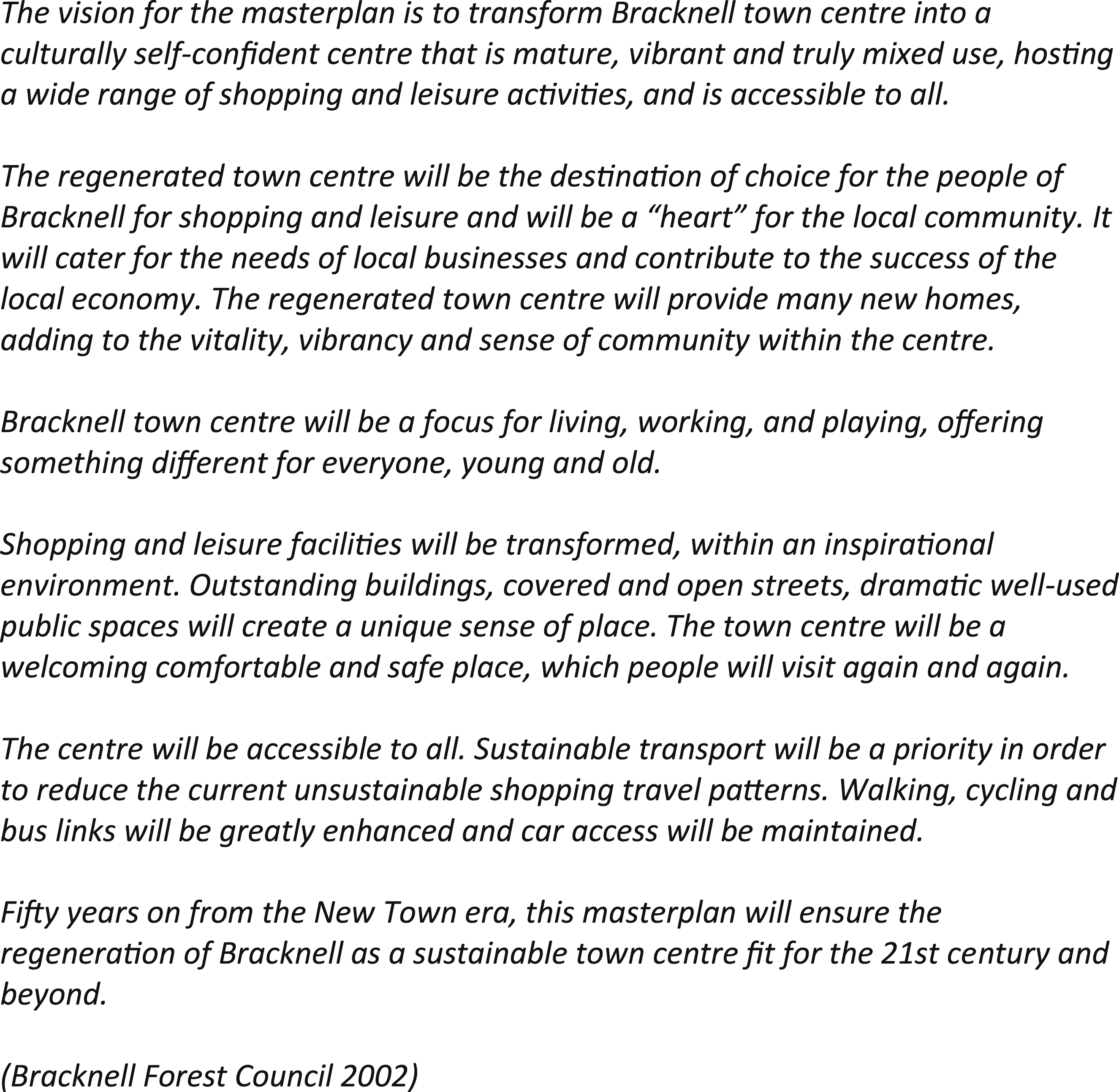
Across the rest of the town centre, the CPO was implemented and land assembly began. However, the development agreement contained several ‘conditions precedent’ which needed to be satisfied before development could begin. Key tenants that BRP and the Council hoped would be attracted to the renewed town centre were yet to be formally committed to the scheme. Strategic (planning) factors also came into play with outline planning permission needing to be implemented within three years of decision. The scheme needed to progress urgently.
Demolition of the majority of Bracknell town centre began in July 2013. But, despite earlier viability work, economic conditions had not fully recovered since the GFC. In October 2013 Legal and General decided to review their options and consider whether to dispose of their assets in BRP. This prompted another viability review in response to which the Council assembled a package valued at £12.4m including bringing forward public realm and highways works and taking on a 40-year lease for a new car park. Here we see the Council adopt the role of development intermediary to “safeguard particular interests and values” (Healey and Barrett, 1990: 91) as the other key partner, Schroders were keen to proceed. Keeping the project on track (and partners working together) meant drawing on the aforementioned principles of collaboration which engendered individuals’ long-term commitment to a place but also to each other (Winter et al., 2006). There was very low churn in team roles and the project’s lengthy duration meant for some, the project was career-defining (Douglas, 2012), just as the original New Towns were for many of the professionals involved in them.
The development agreement finally went ‘unconditional’ in January 2015. The construction phase was complex not least because parts of the existing town centre remained operational during building works. The Lexicon opened in September 2017 winning Development of the Year at the Revo industry awards. Other metrics also point to the scheme’s ‘success’. Bracknell reached 33 in the retail rankings (up from 255) and the number of visitors increased from 4 to 5m in 2013 to over 16m at the end of the first year’s trading in September 2018 (WSP, 2020). However, part of the challenge of ascertaining value creation in regeneration results from the diverse (including non-transactional values) activities may lay claim to. Further research is thus needed to evaluate how the regeneration has been perceived. Adopted and revised Bracknell town centre masterplan 2002/2009.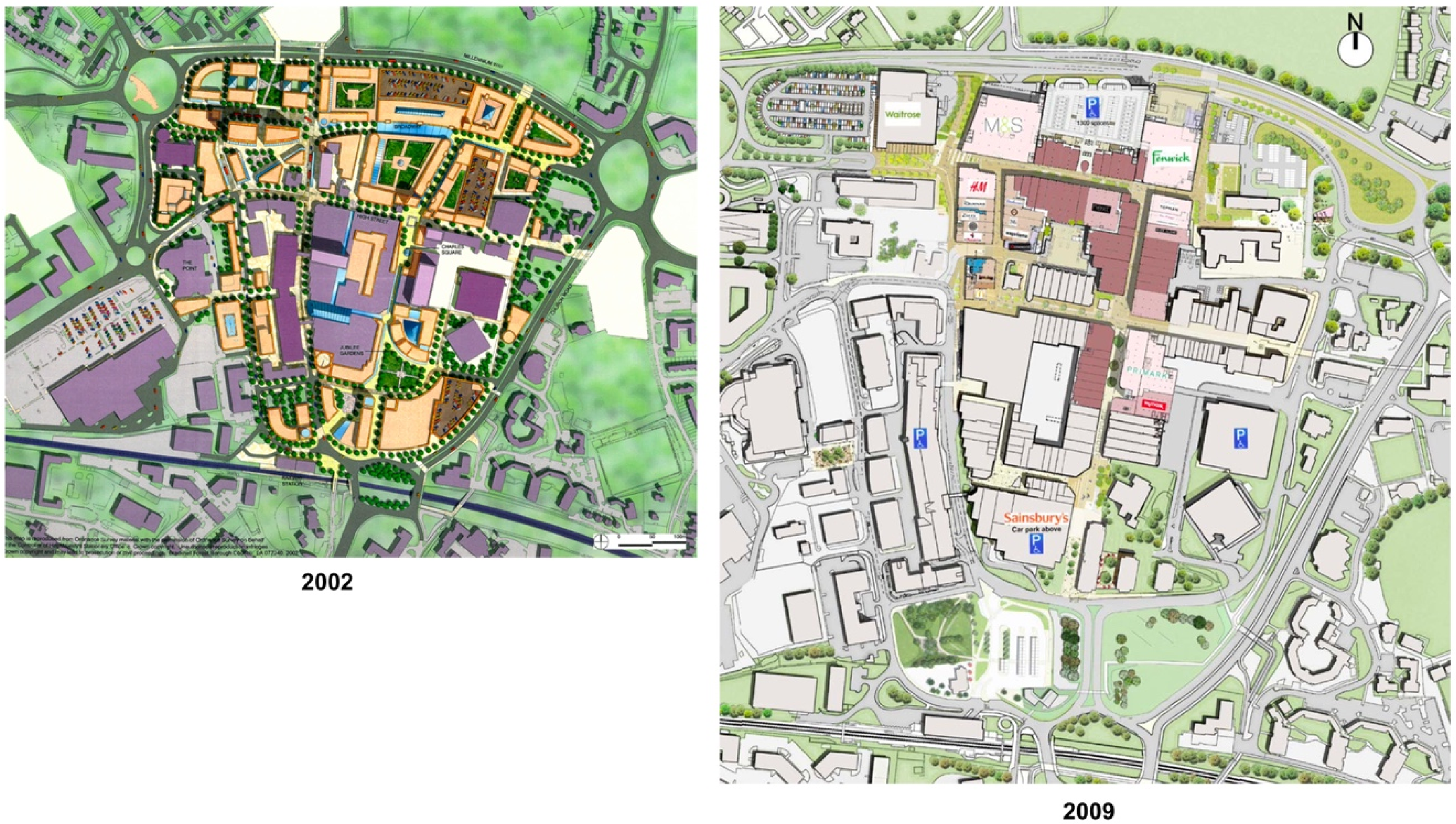
Conclusions
Complex, comprehensive regeneration takes time. Despite significant setbacks, Bracknell’s town centre was eventually regenerated. In answering, ‘how did it happen?’ our paper makes contributions in two main areas. The first set of contributions are primarily empirical. Our case study provides a rich compendium of values that underpinned the delivery and design of a major regeneration scheme. We found that state/market boundaries did not explain which individuals or organisations held particular values; these were very often cross-sectoral in their origin and orientation. The vision-making (masterplanning) process, led by the Council in a place-leadership role, was instrumental in bringing professionals together around principle-based values that also supported transactional values; vibrancy - a measure of town centre health that refers to diverse land uses and activities - is a case in point. The mundane, governance work (much of which takes place behind closed doors) that went into harnessing individual and organisational values into a shared set of acceptable standards about what the regeneration could and should do was also critical to keeping the project going. These things are not easy to research and is one reason why existing literature pays relatively little attention to these kinds of input values, instead focussing on value creation (outputs). Accounts like ours, that show how dynamic and diverse values can be put to work, hold insights for practitioners like planners who are under pressure to deliver quality, sustainable (re)development while maintaining financial viability. For instance, understanding where and how different value sets align as part of vision-making processes can aid delivery and ensure principles are maintained over (and beyond) project lifespans.
A second set of contributions are more theoretical in their orientation. We acknowledge that this is not a conventional Planning Theory paper. We did not set out to research value, rather value ‘found us’ through the (interview) accounts of project professionals and partners, and via one of the author’s ‘insider knowledge’. A grounded theory approach allowed us explore a range of conceptual ideas through the stages of data analysis. Our research thus contributes to theories of value and of urban regeneration; specifically, in thinking through how value explains differences in (re)development and regeneration. Our insights are uniquely bound to Bracknell but this holds theoretical (and empirical) power since understanding regeneration is also about understanding local contextual drivers of change. Bracknell’s future was shaped by “productive values systems tailor-made for a specific context” (Cerreta et al., 2018, p.9) that drew in values associated with its New Town legacy to inform the shape and feel of its (regenerated) future. We wonder if other places undergoing long-term, transformative change have seen regeneration values play out in a similar way and what effects this has had. And we concur with Kim (2023: 181) that the richly empirical nature of research adopting critical pragmatic frameworks offers potential for further theoretical insights and, moreover, “could become a gathering ground for scholars and studies aiming to bridge the gap between academic research and planning practice”.
Finally, we are aware that our narrative focusses primarily on the dynamics within and between project team and professional partners (e.g. consultants, designers, politicians etc), rather than other stakeholders such as local businesses or residents. Engaging these communities was part of Bracknell’s regeneration story but has not been a focus of our research thus far. Regeneration’s diversity and complexity means it often entails multiple value-claims about the need for intervention but also about project outcomes that may span economic, cultural, social and environmental spheres. Further research is needed to establish what long term value creation looks like in different contexts (Winter et al., 2006). More generally, it seems likely that the need to operate within planetary limits will prompt further (urgent) “evolution of the urban value proposition” within the property sector (Holden et al., 2015: 451). This underscores the need to stay empirically and theoretically attuned to ideas of value.
Supplemental material
Supplemental Material - Vision making and values in urban regeneration
Supplemental Material for Vision making and values in urban regeneration by Emma Street and Victor Nicholls in Planning Theory.
Footnotes
Acknowledgements
The authors gratefully acknowledge the research support from Frederick Adu-Boahen, Emily Grigoleit, Cornelia Agyenim-Boateng, Allyson Tindall and Laura Eimermann, who assisted with previous rounds of research. We would also like to thank those who reviewed drafts of the paper and provided valuable feedback and to all those who participated in the research interviews.
Declaration of conflicting interests
The authors declared no potential conflicts of interest with respect to the research, authorship, and/or publication of this article.
Funding
The research underpinning this work was generously supported by funding received from the University of Reading’s Undergraduate Research Opportunities Programme and Rapid Response Policy Engagement Fund, the Reading Real Estate Foundation, and the David Robins Fund.

Supplemental material
Supplemental material for this article is available online.
Notes
Author biographies
References
Supplementary Material
Please find the following supplemental material available below.
For Open Access articles published under a Creative Commons License, all supplemental material carries the same license as the article it is associated with.
For non-Open Access articles published, all supplemental material carries a non-exclusive license, and permission requests for re-use of supplemental material or any part of supplemental material shall be sent directly to the copyright owner as specified in the copyright notice associated with the article.
