




Abstract
The paper delves into the role of academic institutions in urban commoning, which involves the sharing and collaborative management of common resources. It specifically examines the impact of Practices of Urban Inclusion, an experimental learning programme, in fostering new forms of collaboration across places and institutions. This programme was co-designed and co-run by a network of four architecture and urban planning schools and three third-sector organisations across four European countries. The paper mobilises the concept of 'threshold spaces' by Stavros Stavrides to discuss if and how urban knowledge and learning can be co-produced and circulated ‘on the threshold’ between academia and civil society. Practices of Urban Inclusion is thus seen as a threshold space that aimed to bring different subjectivities and forms of knowledge into connection by foregrounding experiential knowledge, fostering collaborative learning, and connecting temporalities. The paper reflects on the key characteristics of the programme and highlights some of its commoning outcomes. We suggest that conceptualising knowledge co-production through ideas of commoning and threshold spatiality allows for more nuanced understandings of the dynamics of academia-civil society collaborations.
Introduction
This paper explores how pedagogical initiatives can function as ‘threshold spaces’ (Stavrides, 2016) between academia and civil society, theory and practice, experience and reflection. Specifically, the paper discusses an experimental learning programme entitled Practices of Urban Inclusion. The programme emerged from two EU-funded collaborative projects: DESINC – Designing Inclusion (2016–2019) and DESINC Live – Designing and learning in the context of migration (2019–2022). 1 The most recent of these projects, DESINC Live, explored the role of urban space and urban practice in creating conditions of exclusion or inclusion in cities.
DESINC Live was set within the European context and centred on migration as both a vital component of urbanisation and as an important perspective for understanding how dynamics of power, oppression, and emancipation relate to city-making. The project also emphasised the role of knowledge and learning in reproducing or disrupting these dynamics. It sought to examine what knowledge informs decision making in urban policy, planning, and design; where and by whom this knowledge is produced; and how more diverse and horizontal networks of knowledge production can facilitate more inclusive forms of city-making.
To achieve these goals, the project developed a trans-local, interorganisational learning programme called Practices of Urban Inclusion. The programme was co-created by a network of four architecture and urban planning schools and three civil society organisations based in four European countries. Over the course of six months, it brought together a diverse group of students, practitioners, and academics, as well as local activists and residents in two neighbourhoods in Milan and Berlin. The programme aimed to co-produce a shared body of knowledge about the implications of observing, designing, planning, and transforming urban spaces through the lens of movement and migration.
The paper reflects on this experience by retracing the design, development and outcomes of the Practices of Urban Inclusion learning programme. Specifically, it explores the value of this initiative as a “threshold space.” In the commons literature, the idea of threshold space was established by Stavros Stavrides to describe the spatio-temporal qualities of “passages that connect while separating and separate while connecting” (Stavrides, 2016: 5). We use his concept to analyse the potential of learning collaborations between academic and civil society partners. Such analysis is situated within broader debates on the contribution of academic institutions to processes of urban commoning. The aim is to identify if and how collaborative learning initiatives can support the emergence of new forms of life in-common and cultures of sharing in an urban context.
Our learning initiative stemmed from the position that in a world full of differences, such new forms of sharing must be supported through urban practices that are also rooted in diversity. We term these practices as “practices of urban inclusion” and connect them to a larger debate on spatial agency (Awan et al., 2011), feminist spatial practice (Schalk et al., 2017), grounded urban practices (CLUSTER and Non-fiction, 2019), and urban practice (Abmann et al., 2017). This debate spans various fields including architecture, urban planning, activism, art practice, and social development. Developing and implementing such practices is a creative and political act that requires actors from academia, practice, and civil society to unlearn and relearn their own roles, ways of working, and relationships. The DESINC Live project aimed to engage in this political and creative process by bringing together different perspectives to learn from each other ‘on the threshold.’
The paper is divided into eight sections. In sections two and three, the theoretical basis of the right to the city, commoning, and pedagogy are discussed. Section four outlines the programme's structure and the reflective activities that support this paper. Sections five and six provide a detailed analysis of the collaborative activities that occurred in Berlin and Milan. In section seven, the key outcomes of this experience are discussed, while section eight provides a conclusion.
Common space and thresholds
Critical urban scholarship has extensively examined the challenges that contemporary cities face at the intersection of urbanisation, social inequality, the climate crisis and global mobility. Much has been written in recent years about the need to understand cities as socially constructed entities, produced through unequal relations of power based on locally-articulated practices of exploitation and value extraction (Soja, 2010, among others). These relations affect social recognition and political representation, as well as the distribution of resources and opportunities among urban inhabitants (Fraser, 2009; Fainstein, 2014). Research in this field has significant implications for urban practice, as it views urban planning, architecture, and other approaches to the built environment and spatial production as inherently interconnected with power dynamics (Awan et al., 2011, among others).
Scholars and activists working towards the right to the city have projected this analysis forward, emphasising the production of space as a means to challenge unequal power relations and enable emancipation (Lefebvre, 1968; Purcell, 2002; Harvey, 2003; Beebeejaun, 2017). This perspective stresses the relational dimensions of city-making, as the right to the city and the ability to reclaim it depend on creating shared resources, collective capabilities, and new forms of assembly.
In recent years, this has led to the idea of the commons “as a unifying concept prefiguring the cooperative society that many are striving to create” (Federici, 2018). Specifically, a focus on ‘common space’ and ‘commoning practices’ have offered a lens to imagine how collaborative acts of spatial production may contribute to dispersing and redistributing power, leading to more just and emancipatory forms of city-making. Seen as a social system, the commons include a pool of shared resources, a community of commoners who use/produce them, and a structure of horizontal, democratic governance (De Angelis and Harvie, 2014). These elements are reproduced, maintained and expanded through the process of “commoning” (Lindebaugh, 2008). Feminist scholar Silvia Federici posits that commoning requires, first of all, a profound transformation in our everyday life, which involves connecting the personal to the political, de-linking oneself from exploitation and value extraction, healing social divisions, and building bonds of solidarity based on cooperation and mutual responsibility (Federici, 2018). Viewed from a spatial perspective, commoning provides a possible way to achieve the right to the city, and highlights that urban planning, architecture, and spatial practice are among the tools that can be used to make it a reality.
In the text Common Space, architect and activist Stavros Stavrides engages explicitly with the idea of the city–as–commons and the spatial dimension of commoning (Stavrides, 2016). He emphasises a form of common space that transcends enclosures and concentrations of power and is open towards new commoners. In Stavrides’s work, common space is “produced by people in their effort to establish a common world that houses, supports and expresses the community that they participate in” (2016: 54). This world can be seen as stable and defined as a gated community, or as “a porous world, always-in-the-making” (2016: 54). This distinction is important as it highlights that the commons can operate in exclusionary ways. In contrast, Stavrides advocates for creating open commons shaped by the networking practices of a diverse and ever-emerging community. Through this position, he moves away from a definition of the commons as controlled enclaves of emancipation and celebrates their messy, open, and transitory nature. The metaphor of the threshold offers “a counterexample to the dominant enclave city”: thresholds are areas of crossing and connecting, and as such, they are a symbol of “the potentiality of sharing” (2016: 56). Common spaces as threshold spaces act as both connectors and prefigurations: they connect across differences and they serve as models for alternative futures by embodying acts of commoning in the present. By centring the threshold, “one is encouraged to cross boundaries, invent … spaces of encounter, and appreciate situated identities as open and developing” (Stavrides 2016: 72). This view of the city as commons is grounded in a culture of recognition, mutual involvement, and negotiation that draws links across species, spaces, cultures, and communities (Urban Commons Research Collective, 2022).
Pedagogies of urban inclusion
Our pedagogical approach is informed by a history of initiatives that have explored how learning occurs in and through the city. Some of these are described by architectural educators Sam Vardy and Julia Udall (2018) who emphasise learning as a means of cultivating “respons-ability” (Haraway, 2016) among spatial practitioners: the capacity to respond in situated ways, taking responsibility towards our entangled relations with the world around us. This perspective connects to interdisciplinary debates on critical urban learning, a concept extensively explored by geographer Colin McFarlane. Critical urban learning views the city as a learning infrastructure where knowledge is produced, contested, and transformed through social practices and interactions (McFarlane, 2011). It regards knowledge as a relational process and emphasises the potential for collective knowledge exchanges rooted in local practices to effect change (Facer and Buchczyk, 2019). Critical urban learning also highlights the importance of engaging with multi-stakeholder networks and power structures in the real world (Allen et al., 2018). By centring multiplicity, this approach challenges naturalised hierarchies of knowledge and power, as suggested by Robin et al. (2019).
Ortiz and Millan (2022) contribute to this debate by defining critical urban learning as a process that is both cognitive and affective, rooted in everyday experiences of place, body, and memory. This approach emphasises the importance of being aware of one's embodied position and perspective in relation to the social context. Anthropologist Tim Ingold proposes a similar approach to knowledge and learning, which he calls “correspondence.” Correspondence involves habit, improvisation, and “agencing”, rather than volition and agency. It highlights a relational and generative orientation, immersing oneself in the city with care, longing, and imagination (Ingold, 2017).
The design of the learning programme Practices of Urban Inclusion was informed by these debates. The programme aimed to facilitate the co-production of knowledge about the intersections of migration, social inclusion, and urban practice. It sought to discuss the meaning of urban practice in the context of migration and to explore how urban practice can foster new forms of social relations in European cities. To achieve this, we created a collaborative programme that could function as a threshold space in itself: both a connector between different people, institutions, and ways of knowing and doing, and a prefiguration of more inclusive and emancipatory forms of urban practice and knowledge exchange. This threshold was made possible by three critical decisions: prioritising experiential knowledge, cultivating collaborative learning, and connecting temporalities.
Learning from experience
The Practices of Urban Inclusion programme adopted a situated approach to learning. This approach is rooted in Donna Haraway's concept of “situated knowledges” (1988), which recognises that knowledge is always situated in time and space, and therefore celebrates partiality. It requires an awareness of one's own subjectivity while attending to the subjectivity of others, and demands careful positioning, attending to power relations, and centring lived experiences and seldom-heard voices. In the context of the commons, this idea connects to Stavrides’ notion of “comparability,” which involves challenging existing hierarchies and establishing the basis of comparisons “between different subjects of action and … different practices” (Stavrides 2015: 14). Comparability highlights the importance of recognising, and valuing as comparable, the diverse perspectives and experiences of all those involved in common spaces and commoning practices. What is at stake is the recognition of the commoning process as one based not on homogenisation, but on multiplicity (Hardt and Negri, 2005: 348–349, in Stavrides, 2016: 41).
The Practices of Urban Inclusion programme aimed to challenge knowledge hierarchies by deeply questioning the differentiation between tacit and codified knowledge, observers and observed, learners and teachers. Activities emphasised the significance of learning from everyday acts of sharing and through mundane commoning experiences. The programme aimed to bring together diverse intersectional identities, cultures, and ways of knowing to facilitate connections.
Collaborative learning
The programme had the objective of establishing a learning community that could act as a distributed yet entwined learning and knowing subject. By bringing together participants and educators with diverse cultural, geographic, and disciplinary backgrounds, the ambition was to establish links between the knowledge that arises from various places, fields, institutions, and perspectives. We aimed to create shared understanding through a collaborative process of mutual approximation.
This view links to the idea that “the common is always organised in translation” (Roggero, 2010: 368). Such emphasis on the processes of translation highlights the acts of care, negotiation and adaptation that are required to make and manage resources in common, among diverse and expanding communities.
The programme brought together academic and civil society partners, students, practitioners, and residents from different urban contexts to contribute their unique perspectives to our shared questions. The programme aimed to generate “emancipatory circuits of knowledge” as defined by Butcher et al. (2022). These circuits democratise the channels through which knowledge is produced, disseminated, and actioned, making knowledge production accessible to more people and challenging dominant narratives.
Connecting temporalities
The programme also explored the importance of time in the collaborative learning process. Mason (2021) stresses the significance of long-term engagement in socially engaged scholarship, linking collaborative research to the idea of 'staying' and to ethical commitments to reciprocity and care. Doucet and Frichot (2018) argue that “once the researcher lives within the world he or she observes, they cannot help but also care for that world.” We agree with this stance and believe that a focus on time is crucial in collaborative learning practices developed with sensitivity and care towards the lives of people and places they are entangled with.
With reference to the commons, thinking about time is also a means of attending to the prefigurative nature of common space. Prefiguration refers to the idea of building alternative futures in the present, creating and enacting the kind of society or political system that one hopes to achieve (Fians, 2022).
Practices of Urban Inclusion reflected on temporality by viewing the programme as a moment intersecting multiple personal and institutional timelines, as well as an anticipation of future practice. The programme aimed to take responsibility for its own outcomes, impact, and limitations beyond its immediate duration. This approach emphasised the need for supporting long-term involvement with multiple personal and institutional lives and trajectories of change.
Learning journey and reflective methods
[Figure 1 Learning Journey Map. Illustration: Lucia Caistor-Arendar.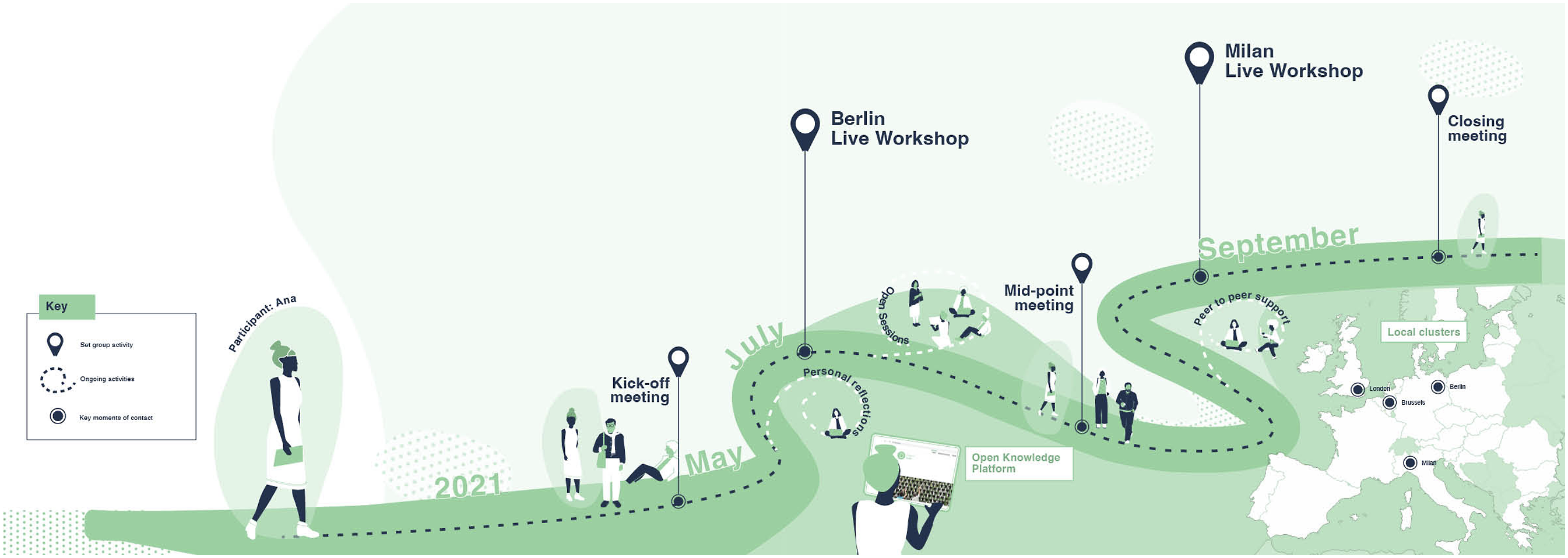
The programme activities were conducted collaboratively with tutors from four universities and three civil society organisations (CSOs), programme participants 3 including university students, built environment and social development practitioners 4 and young asylum seekers/refugees; 5 and local organisations and residents of the two neighbourhoods during the live workshops. To cater to this diversity, the programme employed a variety of learning formats that allowed participants to develop their own learning trajectories and forms of engagement with each other and with the experience (De Carli and Caistor-Arendar, 2021; Cognetti and Pontiggia, 2022).
During the programme, there was a strong emphasis on reflexivity at both the individual and collective levels. Reflective activities took place in structured and unstructured ways through whole-group online meetings, local cluster meetings, individual tutorials, and personal learning journals. After the programme, one of the project's academic partners led a formal evaluation process. Although the learning programme was not explicitly designed as a commoning experience, the evaluation revealed that both the initiators and participants viewed it as a common ground for learning together and engaging in knowledge sharing and commoning practices. The evaluation also highlighted the value that participants placed on hands-on learning in context, as well as the value and labour of collaboration, peer-to-peer exchanges, and learning 'with' rather than 'about' others (d’Auria et al., 2022: 32–34; 47).
This paper is an attempt by some of the academic partners to contribute further reflection to this evaluative process, by linking the programme to our broader thinking on urban learning (Cognetti and Castelnuovo, 2019) and commoning (Urban Commons Research Collective, 2022). We developed the theoretical framework and argument collaboratively and in conversation with some of the programme's tutors and participants who were interested in the process of meaning-making and theorising.
Learning from Marzahn, Berlin
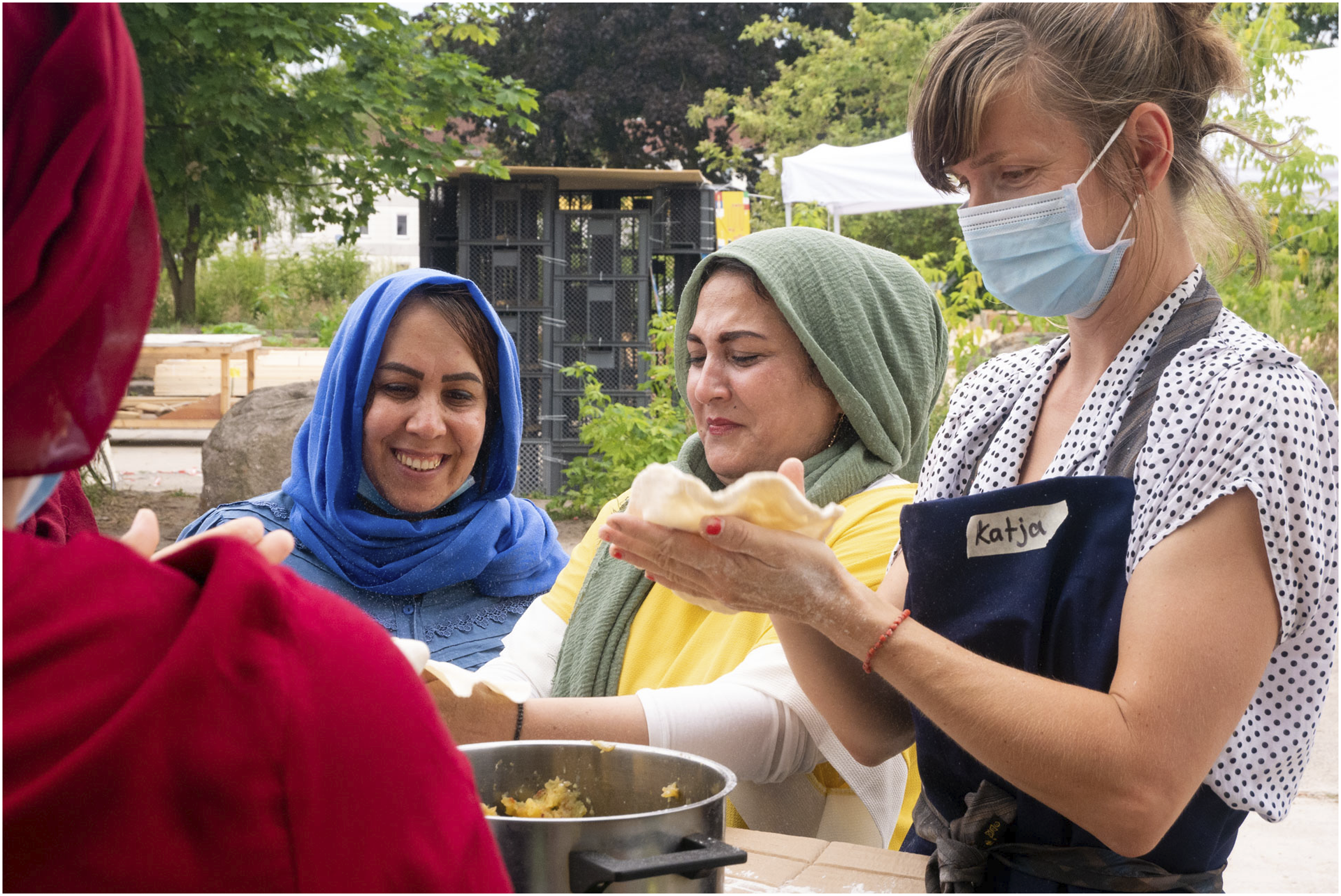
[Figures 2 and 3 The context of Stadtwerke mrzn. Photo: Nils Koenning. Collaborative cooking in Marzahn. Photo: Luisa Durrer.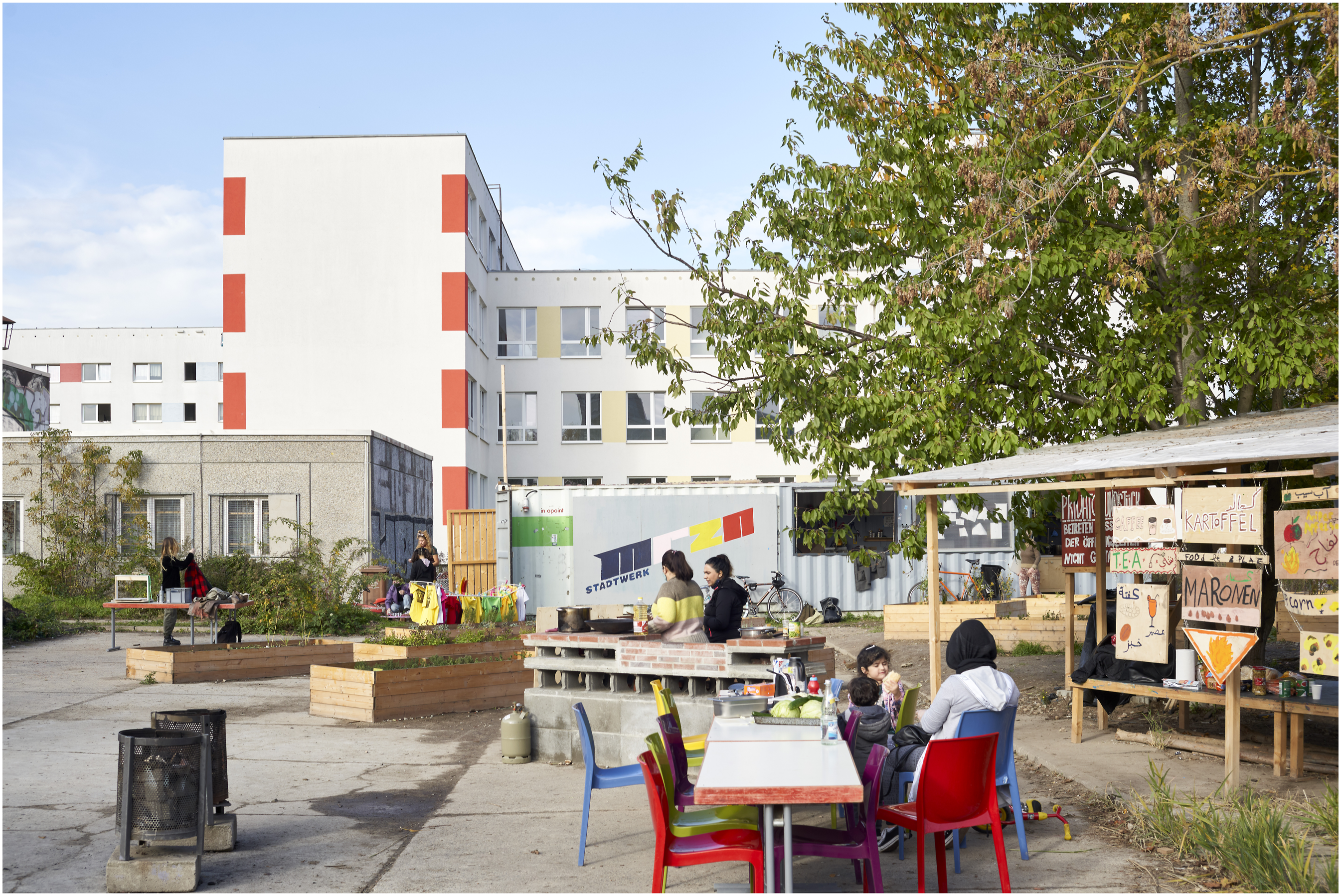
Despite being officially classified as an industrial area, the refugee accommodation site is home to families, children, youth and elderly who struggle to transact their daily lives in a space that was not designed to accommodate them. The wider neighbourhood faces significant challenges, including exclusion, segregation and neglected facilities. The financial situation, housing conditions and access to work all play a role in determining the prospects of those who live there. It is a place that feels on the edge of the city and far from its dynamics.
The Practices of Urban Inclusion workshop in Berlin engaged with this diverse urban context through the ‘experimental construction site’ known as Stadtwerke mrzn. Stadtwerke mrzn was initiated by the civil society organisation S27 – Kunst und Bildung 7 in summer 2020, as part of a new citywide initiative called Urbane Praxis Berlin. 8 Stadtwerke mrzn is located at Otto-Rosenberg-Platz in the centre of an industrial area and separated from the residential area by a multi-lane road. Close to it are a privately run homeless shelter and a youth centre.
Urbane Praxis Berlin was established to explore possibilities for engaging meaningfully with neglected and invisibilised contexts on the outskirts of Berlin. Within this initiative, the project Stadtwerke mrzn utilised hands-on building and art making to establish relationships with local residents in Marzahn, specifically those living in the refugee accommodation site. The project aimed to support residents' sense of connectedness and agency by involving them in the physical transformation of a large public open space in their neighborhood, Otto-Rosenberg-Platz, through design and building activities.
Learning from experience in Marzahn
The pedagogical project implemented by Stadtwerke mrzn had two main components: a university-based, semester-long studio and a week-long international workshop, which formed part of Practices of Urban Inclusion. The workshop focused on urban practice as situated at the interface of art and architecture and investigated the potential of making as a means to foster community resilience in the context of migration and social exclusion. The studio laid the groundwork for this exploration, providing a foundation for the workshop's activities. The studio activities were organised at three different scales: micro, meso, and macro. At the micro level, the focus was on establishing relationships with residents and users of the Stadtwerke mrzn site. The meso scale focused on exploring the relationship between people and the environment in the surrounding neighbourhood. At the macro level, the studio aimed to understand the divisions between the periphery and the centre while redefining Marzahn's place on the map.
The workshop was a collaborative and cross-disciplinary effort with a focus on urban space as a product of multiple relationships. Urban practice was seen as an instrument for social change, based on collective acts of “making” or “doing together” in space. During the workshop, street furniture and installations were built with found objects and materials; cooking and cleaning were means to take care of the site (Rohde, 2021). These shared, hands-on activities helped participants connect with the area and its occupants, engaging in conversations about their experiences, views, and desires. Throughout the workshop week and in dialogue with site residents and users, participants built a multi-functional learning space, a stage, and a moving archive of edible plants and stories. The final event of Practices of Urban Inclusion in Marzhan featured a community cooking workshop led by Afghan and Moldavian women living in the area.
Collaborative learning in Marzahn
The workshop and studio were grounded in a long-term relationship between Universität der Künste Berlin (UdK) and S27. The UdK team comprised two urban practitioners who had recently moved into academia and were promoting a practice-based approach to learning and teaching. The S27 team was formed by the two artistic directors of the Stadtwerke mrzn project and the head of the social workers' team. Throughout the process, other stakeholders from both institutions and beyond joined the team temporarily, mostly linked to the broader Urbane Praxis Berlin initiative. As such, the project was part of a broader peer learning network exploring ways to reappropriate the city's neglected spaces through everyday practice.
The organisers collaborated horizontally, making collective decisions for both the studio and the international workshop. The focus on hands-on building and art making was crucial in this regard because it highlighted the knowledge and skills of S27 as central to the initiative. However, breaking down pre-existing roles such as academic tutors or social development workers proved to be challenging. Despite everyone's attempts to contribute and learn from a variety of activities, it was difficult to avoid reverting to naturalised hierarchies of knowledge. The establishment of shared practices of care, such as collective cooking, cleaning, gardening, and celebrating, played a crucial role in fostering an attitude of mutual support and collaboration in this context.
The initiative also experimented with horizontal collaboration among learners. UdK students became hosts and prepared the setting for the international workshop participants. Negotiating the project development among the two groups proved to be challenging as some ideas had already developed from UdK students' prior engagement with the site. With new voices and perspectives joining, their thoughts had to be reconsidered.
The international workshop faced significant challenges in engaging with local residents in a socially fragile space with a history of isolation. Language also posed a barrier as people living in the camps spoke German rather than English as their second language. However, connections began to form through participants' embodied and active presence on-site. Communication and collaboration largely occurred through hands-on interactions, such as building street furniture or cooking together, which became a form of inclusive design in action.
Connecting temporalities in Marzahn
As discussed, the collaboration between UdK and S27 involved establishing a semester-long studio open to architecture and urban planning students at both bachelor's and master's levels. This studio culminated in the week-long international workshop and was also part of S27's longer engagement with the site. A member of S27 described the collaboration as an open-ended process of “taking care,” where tasks, responsibilities, joy, and anger could be shared. This open-endedness created a meeting ground that “encouraged people to linger” and “supported creativity, experimentation, and learning” (Schlesische27, 2022).
This experience highlights the challenges that many socially engaged creative processes face in having a lasting impact. However, several traces have remained after the programme, including objects, practices, and perceptions, as well as the residents' sense of ownership over the place and their capacity to organise. For instance, a women's mutual support group formed during the workshop and remained active after the end of Stadtwerke mrzn. Furthermore, the workshop's documentation and dissemination have contributed to enhancing the area's visibility by circulating co-produced knowledge about the experiences of people living in the refugee site.
Learning from San Siro, Milan
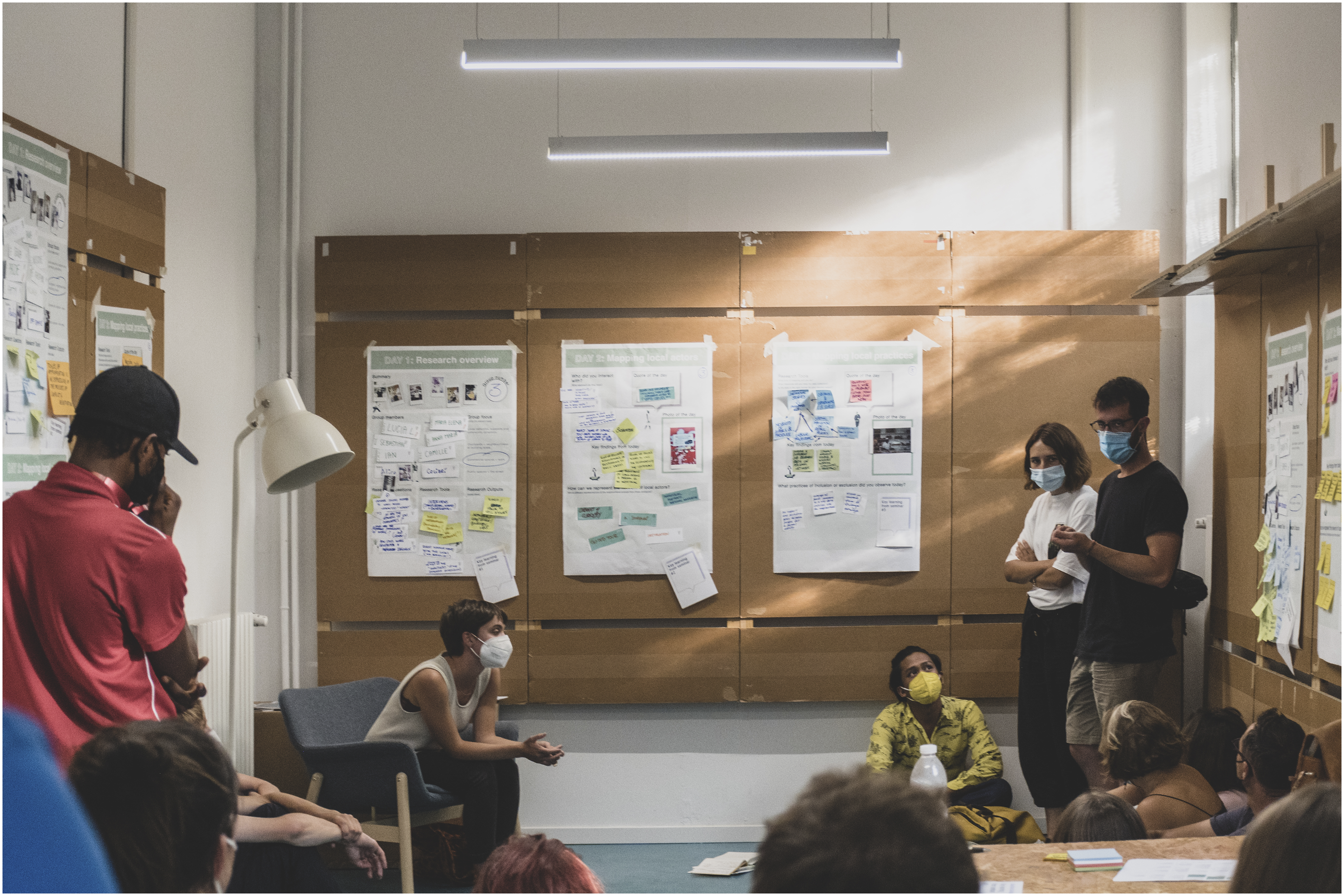
[Figures 4 and 5 The context of San Siro. Photo: Niside Panebianco. Reflective discussion at Off Campus. Photo: Niside Panebianco.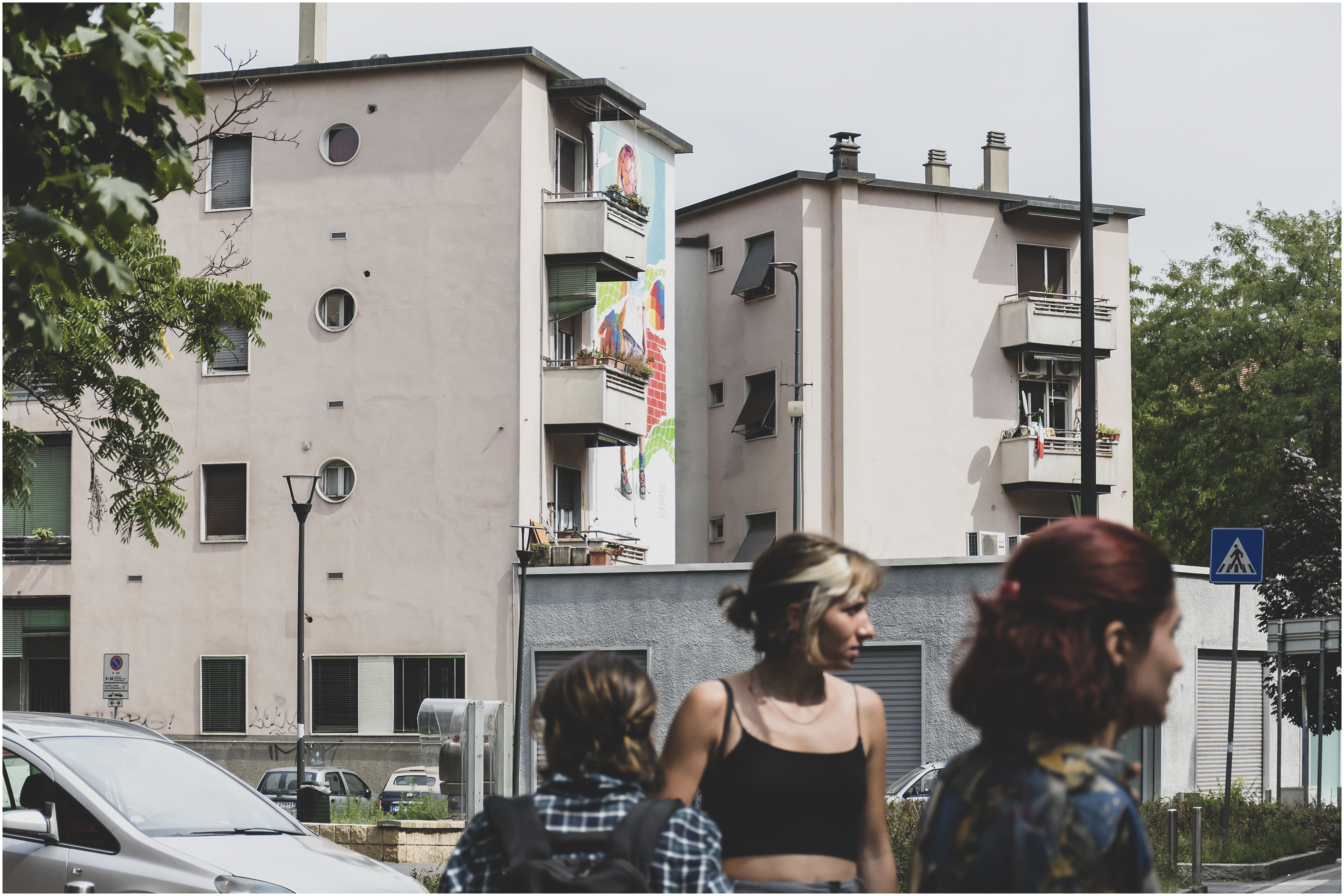
Built between the 1930s and 1950s, San Siro consists of around 6,110 housing units that were established as public housing and are inhabited by around 11,000 residents. Many of the current residents are older people living alone, and people with mental health conditions; about 50 percent of them are foreign-born (double the city average). The district is characterised by strong socio-spatial inequalities, intercultural and intergenerational conflict, that are reproduced in the public space landscape (Cognetti and Grassi, 2023) and reinforced by a progressive lack of maintenance of the housing stock (Cognetti and Padovani, 2018). San Siro is thus both a superdiverse and a highly stigmatised neighbourhood (Grassi, 2020); Italian media often refer to the area as dangerous and problematic, and have derogatorily called it a ‘kasbah’, a ‘little Molenbeek’, or a ‘souq’. At the same time, San Siro is home to a rich and active network of civil society organisations. Bottom-up practices and responses to local needs, desires, and expectations are prominent. The work of local stakeholders ranges from research-based, policy-oriented initiatives to providing day-to-day services such as legal counselling and language programmes.
Politecnico di Milano has been active in the area for over ten years through a research and teaching project called Mapping San Siro. Mapping San Siro is an interdisciplinary group linked to Politecnico di Milano. 9 It conducts socially oriented research based on inclusive knowledge production processes. The group’s activities are co-designed with local stakeholders and aimed at producing positive change through concrete actions and advocacy. Mapping San Siro was the first project to be supported by Off Campus, the university’s outreach initiative. 10
Learning from experience in San Siro
The workshop used mapping and storytelling as methods to engage with issues of diversity, cohabitation, and care in the context of San Siro. The main focus was to explore the lived experience of people with of migrant background, with an emphasis on understanding the dynamics of inclusion and exclusion that people face locally, as well as the spaces and relationships that contribute to these dynamics. The aim was to collect micro-narratives of mobility and migration from a hyper-local perspective, while also connecting local experiences to broader transnational spaces and flows.
Storytelling was particularly significant as mainstream narratives about San Siro are often built from the outside in and produce overly simplistic understandings of poverty, migration, ethnicity, and their intersections. In an attempt to weave together a plurality of stories that could disrupt stereotypes, the workshop hosts designed different ways for participants to engage with this local context, from walk-and-talks to one-to-one interviews with residents and group discussions with local organisations. Participants also exchanged ideas with a wider network of researchers who have been collaborating with Mapping San Siro for several years. A pin-up wall was set up in the publicly accessible Off Campus space to enable knowledge sharing amongst all those involved.
Walk-and-talks and one-to-one interviews were a core component of the work. Initial interviewees included residents who were well-known by the Mapping San Siro researchers. During the workshop, however, several participants took on an important role as mediators and sought to establish relationships with a much broader range of people, capturing the stories of invisibilised groups, including foreign-national, non-Italian-spea youths and children, as well as adult residents and traders. The focus on attending to other people’s life stories, together with the heterogeneous cultural and linguistic background of the participants, involving first-language Romanian, Arabic, and Spanish speakers among others, played a key role in facilitating these new relations. Many workshop participants put in a significant effort to establish connections based on their own heritage and cultural backgrounds. This was a labour of care that opened up new pathways for collaboration within the local network and led to more nuanced understandings of life in the neighbourhood.
The workshop emphasised the co-production and communication of knowledge over potential planning and architecture projects, leading to a focus on creating new narrative frameworks and devices rather than producing design or planning products. The final outputs included proposed walks, dialogues, situational performances and temporary installations, which opened up further space for encounters in the neighbourhood.
Collaborative learning in San Siro
In such a complex and multi-layered context, the relationship between the Mapping San Siro team and residents, organisations, and project partners is multifaceted and continuously renegotiated. This relationship was somewhat challenged by the Practices of Urban Inclusion initiative.
The live workshop in Milan was co-designed and co-led by Mapping San Siro and Refugees Welcome Italia (RWI). RWI is an independent organisation that promotes the mobilisation of citizens to foster social inclusion for asylum seekers and refugees. As the workshop aimed to explore the potential of collaborative inter-organisational learning, tutors from both organisations co-led the activities, leveraging their unique perspectives to create a horizontal and cooperative learning space. For instance, RWI led the development of the one-to-one model of interview, which was grounded in their practice of matching host families and refugees/asylum seekers. This exchange of methods and approaches created a fertile environment for participants to connect with one another and experiment with new positionings and perspectives.
However, the relationship between the Milanese partners was complex. Each organisation was expected to contribute with their own knowledge and skills, but this was challenging due to the complexity of local relationships. Workshop activities focused on creating space for slow-paced, intimate conversations between participants and residents. The Mapping San Siro group was a key mediator in this process due to their extensive history of local engagement. Therefore, while the academic partner was better positioned to facilitate site-based activities, Refugees Welcome Italia had a less clearly defined role. Co-hosting the programme taught the organisers that maintaining radical openness to newcomers can be complex and delicate when introducing new agents to long-standing, hyper-local networks. Prioritising dialogue is crucial to avoid tensions and foster a deeper understanding of the learning experience in a local situation.
Connecting temporalities in San Siro
The Milan workshop was firmly grounded in the experience of Off Campus San Siro and the activities of the Mapping San Siro action-research group. The goal is to co-design alternative urban regeneration scenarios for the neighbourhood, stimulate public debate about its future, and activate resources to improve living conditions in this and similar areas. To develop these scenarios, a stable local base plays a fundamental role, becoming a “living lab” that is both urban and socially oriented (Cognetti, 2023) and facilitates embedded research through a relational approach.
The Practices of Urban Inclusion programme in Milan was framed within this process. Due to this relationship, many residents and local organisations volunteered to support the workshop and acted as a liaison with the neighbourhood, helping participants to access and capture a plurality of narratives about San Siro. Visitors were welcomed and recognised by local people and groups as part of the Mapping San Siro initiative. This recognition fostered a sense of trust and support that enabled participants to engage more deeply with residents and their unique perspectives.
From the beginning, the organisers recognised the risk that this openness might translate into instrumental and extractive relationships, which could result in the workshop benefiting students and project partners over residents and their organisations. This risk is inevitable in co-learning initiatives. To address this in San Siro, the workshop was firmly placed within a longer history of cooperation and mutual support. Organisers, participants, and local partners continually reflected on how day-to-day activities might contribute to broader narratives and lines of advocacy. This amplified the potentiality of the neighbourhood as a site of agency and creative thinking and confirmed the role that learning ‘on the threshold’ can play in addressing epistemic imbalances.
Finding common ground
Understanding pedagogical initiatives as 'threshold spaces' sheds light on the contribution of academic institutions to processes of urban commoning, which are seen as a pathway towards advancing the right to the city. As discussed in Section 2, Stavrides uses the notion of 'threshold spaces' to describe common spaces that resist enclosures and power concentrations and are open to ever-new participants (Stavrides, 2016: 5). Threshold spaces contribute to actualising the right to the city because they can enact more emancipatory relations, forms of city-making, and knowledge production.
Making a collective threshold subject
The idea of community is essential to discussions surrounding the commons. As Mies (2017) explains, a community is necessary for the existence of commons, meaning that the production and reproduction of commons rely on the formation of networks that are united by shared responsibilities towards the common good, as well as towards each other. These networks are shaped by institutionalised codes and protocols of sharing (Ostrom, 1990) as well as relationships of care and solidarity (Federici, 2018).
The partners involved in the programme formed a horizontal, self-managed learning network involving people and institutions who exchanged knowledge and made decisions collaboratively. We negotiated and co-designed rules and systems for collaboration throughout the project, involving others as we went along. Initially, this network involved representatives from the four universities and three civil society organisations that initiated the project. It then expanded to further local actors in each city as the project progressed. In Milan, the workshop was co-designed by Politecnico di Milano, Refugees Welcome Italia, and local stakeholders in San Siro. In Berlin, decisions about the workshop were made with those involved in the Stadtwerke mrzn initiative and, at specific moments, Urbane Praxis Berlin.
Power relations are inherent in collaborative initiatives, and our trans-local, intersectoral network was no exception. Despite our efforts to share power, it was not always seamless, and tensions arose throughout the programme as well as during the final programme evaluation. For example, one of the CSO tutors expressed concern about ensuring that inclusion was always prioritised in our work and improving how we related to each other, taught, and used certain terms. To address these tensions, we devoted significant time to evaluating the quality of our partnership. We constantly strove to self-regulate and resist traditional power concentrations—particularly those related to knowledge hierarchies, which tend to privilege codified over tacit knowledge; and counteract structural power imbalances—such as those embedded in the funding structure itself, which placed different exchange value on the contribution of academic and non-academic partners.
The programme faced challenges in involving local residents, partly due to language barriers and social distancing rules resulting from Covid-19. Additionally, the limited one-week interactions with each site restricted the opportunity to engage in-depth with the local contexts. However, despite these challenges, the workshops included several breakthrough moments of meaningful connection. Invariably, these moments were made possible by care-full activities such as collaborative cooking and celebrating in Berlin, or listening to and documenting personal stories in Milan. Through these activities, the workshops were able to initiate novel relationships with residents that have continued even after the programme ended. This is similar to Stavrides' idea that the power of temporary common spaces persists “when they remain 'infectious', osmotic and capable of extending egalitarian values and practices outside their boundaries” (2015: 16).
The experience of sharing a physical space during the two live workshops played an important role in allowing programme participants to enter, appropriate and expand this collaborative network. Set within the challenging conditions of an intersectoral, multilingual, and geographically disparate partnership, as well as the Covid-19 pandemic, the live workshops were key moments in the space- and knowledge-commoning process. They enabled participants to establish relationships with each other, as well as with tutors, project partners, and local residents, thus making the programme more porous and opening up established circuits of knowledge (Butcher et al., 2022) and learning.
The programme highlighted the importance of relational qualities such as active listening, empathy, critical thinking, mediation, and communication. Civil society and university participants found the programme stimulating because it put them in situations where these qualities were essential to connect meaningfully, navigate challenges together, and reflect on the political implications of their experience. This strongly emphasised the value of placing oneself in a position of mutual engagement and vulnerability, connecting to Butler's concept of “bounded selves” (2005). As Velicu and García-López (2018) highlighted, recognising our interdependencies and mutual vulnerabilities is the basis for learning to live in-common across differences. In practice, the workshops created the conditions for all involved to value and mobilise their own biographies as complex, intersectional subjects who are simultaneously professionals and migrants, teachers and learners, who speak multiple languages and move across multiple cultures in their daily lives.
Stavrides (2015) cites Uruguayan activist Raúl Zibechi's assertion that “community does not merely exist, it is made. It is not an institution... but a way to make links between people” (Zibechi, 2010). This position aligns with Isabel Stengers' concept of an “ecology of practice” (2005), highlighting that bonds of interconnectedness are adaptable and always evolving. In writing about feminist spatial practice, Hélène Frichot mobilises this idea to assert that “it is not that we can refer to a ‘we’ as in ‘we architects’ or ‘we creative practitioners’, in advance of our practice; instead it is through the practice … that this ‘we’ will emerge” (Frichot, 2016: 74).
In our experience, the everyday creation of connections, negotiation of relationships, and translation of knowledge were essential in forming a collective threshold subject during the programme. These processes were ongoing and dynamic, and required significant care. We find that it was through these laborious and contingent processes that a temporary collective subject emerged.
Sharing power/knowledge
The collective subject that emerged through this process catalysed around producing common knowledge about the idea of an urban practice of inclusion, which reveals the power imbalances involved in knowledge production. In the perspective of commoning, the challenge for heterogeneous networks such as the one underpinning our project is not to create conditions to erase such power imbalances.
Embracing the trans-local dimension of the initiative was crucial in facilitating the sharing of knowledge and power among partners and participants. Connecting spaces and experiences across different local settings made it possible to generate something new on an urban and international scale that exceeded the scope of what could be known and learnt by any individual in a single place. Participants commented that “one of the best sides of the programme is to experience different realities and different cities” and that “the two-workshop setup” was “a great experience” because it created the opportunity to engage with two contexts, and experience two different ways of approaching a similar set of questions, through the lenses of hands-on making and storytelling (d’Auria et al., 2022: 56–59). Recognising the different approaches of civil society organisations and academic partners to making and circulating knowledge was equally important in the process. Many participants experienced this as a starting point for sharing their own perspectives.
The programme also involved numerous uncomfortable but necessary acts of bringing to light imbalances of knowledge and power. Participants often took the lead in this process by drawing attention to who has the authority to choose the terminology used when discussing a shared question. Individual participants were also affected by power imbalances, which were discussed throughout the evaluative process (d’Auria et al., 2022: 49). Many emphasised that there was often a dominant discipline (architecture) and language (English) throughout the programme. It was recognised that counterbalancing this was complex, partly because this difference was embedded in the institutional and financial structure of the partnership itself, which, for instance, enabled the participation of a greater number of university students compared to non-academic learners.
At a subjective level, the programme had to address variations in motivations, existing skills, capacities, and learning opportunities among a diverse cohort of learners. For participants who were asylum seekers or refugees, in particular, some fundamental barriers prevented them from fully participating in the experience. The evaluative process highlighted that some participants were ‘intersectionally disadvantaged’ due to a combination of factors, such as lack of knowledge of the programmes' dominant languages, inability to travel due to citizenship and visa status, background in a lesser-represented discipline, or lack of familiarity with group work (d’Auria et al., 2022: 49). This experience provides valuable lessons for learning initiatives that aim to stay ‘on the threshold’. As highlighted in our report, it is crucial to co-create tools for removing these barriers to create a radically open space and learning experience. Otherwise, commons can be (or become) exclusionary spaces (see also Huron, 2022).
For academic partners and students specifically, the intentional linking and commoning of different knowledge forms can help deconstruct the privileged perspective of academia as a centre of knowledge and power and recontextualise codified knowledge production as one among many different and equally valuable processes of learning, sense-making, and knowing. For civil society networks, and particularly for local residents and their organisations, the process contributes to recognising and explicitly articulating tacit and experiential knowledge as equally valuable and worthy of being amplified.
However, this process of knowledge-commoning is complex and not immune to the risk of marginalising minority voices and co-opting the knowledge created by non-academic communities. The creation of clearer institutions and protocols for knowledge sharing is an important issue that this and similar initiatives should address in more explicit ways.
Conclusion
In this paper, we built on Stavrides's concept of ‘threshold spaces’ to explore how urban learning initiatives can counter enclave urbanity. We posited that such initiatives act as thresholds themselves, connecting people, institutions, and knowledge, and prefiguring more inclusive and emancipatory forms of urban practice and knowledge exchange. We examined the Practices of Urban Inclusion programme as a threshold space that was co-produced within and across multiple urban settings. As we have argued, this space is not exempt from the risks of exclusion that commoning holds.
The programme was an experiment and a prefiguration of possible ways of approaching knowledge and learning on the threshold. Looking at it through the lens of commoning and threshold spatiality allowed us to explore the potentiality of similar initiatives to act as connectors and forms of prefiguration, as well as to unveil the power imbalances involved in co-productive initiatives.
We discussed how the pedagogical focus of this experience played a key role in allowing the threshold to emerge. The choices of foregrounding experiential knowledge, fostering collaborative learning, and connecting temporalities shaped the threshold in specific ways. We looked at these aspects in the two local contexts to shed further light on how learning initiatives might materialise as thresholds.
The programme enabled the emergence of a learning community that was open to valuing ever-new forms of urban knowledge and ever-new knowledge bearers, establishing links across and beyond partner institutions. The process questioned and renegotiated the divides between academia and civil society, tutors and participants, and participants and residents. These crossings went beyond the formal policies and codes of collaboration established between institutions and played a key part in weaving together a collective subject that could share knowledge, learn collaboratively, and reach out to others beyond its own boundaries.
Collaborative learning was possible within the framework of pre-existing institutional partnerships and relational networks. The short duration of the programme limited the scope for meaningful interactions with those who were newcomers to these networks; nonetheless, the programme generated important meeting grounds and opened up new opportunities for further connection and collaboration with less-heard voices. This in turn highlighted the importance of time and understanding the prefigurative potentiality of commoning moments that are temporary.
The experience prompted participants and tutors from both academia and the civil society to question their professional roles, conceptual tools, and subjectivities, highlighting how tackling inequality and exclusion requires a collective and multi-pronged approach. This led to challenging ideas of expertise and experimenting with transversal forms of practice. It also triggered reflections on disciplinarity and the position of both the urban practitioner and the university.
During the programme, discussions frequently returned to the question of what urban planning and architecture entail beyond the production and management of built objects. The programme shifted the focus to the architecture of social encounters and the making of networks and common spaces, which was a new perspective for many. This involved a process of learning as much as unlearning and deconstruction, challenging and dismantling preconceived beliefs.
Finally, our reflection on the programme revealed that an emphasis on learners’ own intersectional identities (Crenshaw, 1991) is an essential step in building bonds across differences. However, the experience also showed the difficulty of deconstructing and subverting entrenched power/knowledge imbalances and meaningfully resisting power/knowledge concentrations. Notwithstanding these imbalances, we find with the Urban Commons Research Collective that “connecting knowledge across places, positions, and disciplinary boundaries works to enhance what some would call epistemic permeability” (Urban Commons Research Collective, 2022). As a result, we posit that collaborative urban learning initiatives that aim to resist enclave urbanity and foster the right to the city need to creatively make new codes and protocols of knowledge-sharing that embrace and perhaps subvert these risks. This will open up more radical spaces of critical learning and knowledge exchange on the threshold, and will challenge knowledge injustice by acknowledging the variety of knowledges, positions, and perspectives that exist in the world.
Footnotes
Acknowledgements
“DESINC Live - Designing and Learning in the Context of Migration” was co-led by Politecnico di Milano, Refugees Welcome Italia, Universitat der Kunste Berlin, S27 Art and Education, Katholieke Universiteit Leuven, University of Sheffield (2019–2020), London Metropolitan University (2020–2022), and Architecture Sans Frontières UK. As part of the project, the learning programme “Practices of Urban Inclusion” was co-created by a team of dedicated individuals, including Markus Bader, Giorgio Baracco, Lucia Caistor-Arendar, Ida Castelnuovo, Francesca Cognetti, Viviana d’Auria, Beatrice De Carli, Vera Fritsche, Tahmineh Hooshyar Emami, Rowan Mackay, Stefano Pontiggia, Katharina Rohde, Anton Schunermann, and Angelica Villa.
Over the course of three years, DESINC Live and Practices of Urban Inclusion involved numerous other people, and we are grateful to all the project participants and tutors for their contributions and shared moments of reflection. We would like to extend a special thank you to Lucia Caistor-Arendar, Stefano Pontiggia and Katharina Rohde with whom we discussed this paper at an early stage.
This paper is part of a special issue titled “Coproducing the Just City: Interrogating the Civil Society/Academy Interface.” We are grateful to the guest editors, Barbara Lipietz and Agnès Deboulet, for their support.
Declaration of conflicting interests
The author(s) declared no potential conflicts of interest with respect to the research, authorship, and/or publication of this article.
Funding
The author(s) disclosed receipt of the following financial support for the research, authorship, and/or publication of this article: This initiative was made possible by two consecutive European Union Erasmus+ grants, and we are deeply appreciative of the support we have received over the years.
This article is part of the Special Issue “Coproducing the Just City: Interrogating the Civil Society/Academy Interface” curated and edited by Barbara Lipietz and Agnès Deboulet.
