




Abstract
Dementia is a cluster of disorders affecting a growing number of people around the world, with consequent disruption to the lives of those diagnosed and their loved ones. The impact of dementia on families has been widely documented; however, this is often done through the lens of caregiver burden. In contrast, the present research explores the wants and needs of couples living with dementia in terms of their shared leisure activities. Five Australians living with dementia and their partners participated in recorded semi-structured interviews. Thematic analysis of transcribed interviews produced four main themes and 15 subthemes highlighting this population’s needs and values regarding leisure. Themes included, “increased awareness of how dyads spend their time”, “awareness of dyadic changes within the relationship”, “appreciation of fulfilling moments”, and “person with dementia’s engagement/activity moderation and support by care partner”. The results support existing research including changes to relationship dynamics and lifestyle post-diagnosis. This research indicates the importance of leisure interventions that focus on improving socialisation for people with dementia and their partners and supports increased opportunities for quality time together.
Introduction
Improving areas associated with well-being has been shown to have positive outcomes for both people diagnosed with dementia and their care partners (Ciofi et al., 2022; Smith-Carrier et al., 2021). Currently, research targeting well-being and dementia has largely explored the experiences of family, carers, and people diagnosed with dementia individually. However, other research suggests that well-being of people with dementia and their care-partners is heavily interrelated (Balfour, 2014), further suggesting that care approaches considering both people within this partnership is invaluable. While there are interventions including both people with dementia and family or care partners, there is little emphasis on the experiences of couples specifically. Following the exploration of existing literature, the present study aims to understand the shared experiences of couples living with dementia and what is important to them regarding leisure.
Dementia describes a cluster of neurological disorders marked by distinct changes to the brain and a passive decline in functioning (McGoven, 2015; Tucker-Drob, 2019). Specific symptomology may vary between individuals, but commonly includes cognitive degeneration, along with psychological and behavioural changes. With no cure for dementia, research focusses on preventing and ameliorating symptomology and increasing comfort through improved well-being (Baharudin et al., 2019).
The Importance of Positive Psychology for Dementia
Well-being can be understood via the positive psychology model Positive emotion, Engagement, Relationship, Meaning, Accomplishment (PERMA) (Seligman, 2012). While other well-being theories focus on life-satisfaction and happiness (e.g., Diener et al., 2006; Fredrickson, 2004), the PERMA model extends these for a more holistic view (Seligman, 2012). Positive emotion is most closely related to alternative models and refers to the aim of feeling happiness and joy (Seligman, 2012). Engagement is described as being absorbed, interested and involved in an activity. The relationship element represents a social connectedness and experiencing satisfaction from connections to others. Meaning involves having a sense of direction and purpose. Lastly, Seligman (2012) included accomplishments to describe that which supports positive well-being. Although elements are positively correlated, they can be sought independently by individuals and are considered building blocks of well-being; collectively, they lead to increased overall well-being (Seligman, 2018).
Elements of the PERMA model can be seen throughout interventions aimed at improving the lives of those living with dementia and their care partners. Examples of successful interventions for caregivers include horticultural therapy (Kim et al., 2020) and memory cafes (also known as dementia cafes; Chesterton et al., 2021; De Luca et al., 2021). These intervention strategies involved social engagement within the dementia community, with social support being a recognised protective factor for caregiver stress (Ruisoto et al., 2020). From a PERMA perspective, each study identified positive emotions, engagement, and relationships as factors in reducing stress and improving overall well-being (Chesterton et al., 2021; De Luca et al., 2021; Kim et al., 2020).
Positive outcomes across interventions for people with dementia have reportedly slowed the progression of dementia as well as improved general well-being (Ciofi et al., 2022; Huber et al., 2020; Smith-Carrier et al., 2021). Specific benefits to well-being have been demonstrated by Hall et al. (2018) and Smith-Carrier et al. (2021), whose work showed positive results from horticultural therapy programs through promoting positive emotion, social connections (relationships), and engagement. Smith-Carrier et al. (2021) specifically mention the importance of a meaningful and purpose-focused activity for people with dementia, which is in accordance with the PERMA principles. Additionally, through the study’s gardening program, participants reported a sense of accomplishment and meaning from having a purpose for each visit and something to reflect on between visits. This included working to grow their gardens, the growth that occurred between visits, and the interactions they had with other participants. Smith-Carrier et al. (2021) show how well-being for people with dementia can be improved through a social activity and the application of PERMA highlights how this is achieved.
Dementia Well-Being as a Shared Experience
While the aforementioned studies are good examples of the benefits of the PERMA model elements, they are still focussed on the individual. To date, there is limited research reporting the experiences of the person living with dementia and their care partner as a couple. As diagnoses often occur after daily function is impaired, major life changes (such as driving cessation) are a common experience for people with dementia and their families (Balfour, 2014). Caring in the early stages of dementia is often taken up by partners or family members. As a result, considerable pressure can be placed on people with dementia and their care partners, highlighting the importance of better understanding this dynamic (Dooley et al., 2021; Wadham et al., 2016). The well-being of families of a person living with dementia is often framed in terms of deficits or burden, addressing the negative health, financial, or social impacts experienced by those living with dementia (Baharudin et al., 2019; Ruisoto et al., 2020. Yet, some care partners express very positive experiences and descriptions of well-being related to caring (Tulloch et al., 2022a). It is therefore important to consider positive emotions and experiences even in adverse circumstances (Fredrickson, 2004), including via a structured approach to well-being like PERMA.
Research focusing on caregiver burnout and health outcomes for people living with dementia suggests that reduced caregiver burden leads to better outcomes for people with dementia (Knobloch et al., 2020). This is congruent with previous research reporting that individuals’ well-being in a couple fluctuated together in a synergistic fashion; improving one person’s well-being could improve the other’s (Balfour, 2014). Yet, to date this research focuses on well-being as something that exists within the individuals, and neglects the shared well-being benefits that only exist as part of the unique, shared space of a close dyadic relationship. Well-being is important to assist people with dementia to maintain functioning (Balfour, 2014) as well as to mitigate burnout and fatigue associated with caregiving (Ruisoto et al., 2020). Importantly, positive well-being may assist to ensure informal carers and people living with dementia are able to retain their shared identities and maintain the qualities of their relationship they value most highly (Carbonneau et al., 2011; Fletcher, 2020).
Leisure as a Vehicle for Shared Well-Being in Dementia
Engagement in leisure is a widely supported protective factor for cognitive, physical, and mental health of older people across cultures (Sala et al., 2019). Leisure activities may also encourage maintenance of relationships and strengthen bonds for couples (Carbonneau et al., 2011) while providing a platform to engage with others (Gallagher & Beard, 2020). Some intervention studies aimed to increase shared pleasurable moments through activities such as museum visits (Hendriks et al., 2021) and tai chi (Yao et al., 2008). These interventions highlighted the value of shared quality time through leisure. Hendriks et al. (2021) further illustrated the value of social engagement as a key determinant of appreciation of their program. These specific interventions do not explicitly talk about the PERMA model; however, the implication is positive emotion, engagement, and relationships were factors in their success.
Although there are successful interventions and explorations of dyadic experiences specific to dementia, there is minimal literature which includes both points of view (Fletcher, 2020). Many studies fail to include the perspective of people with dementia. This may both limit possibilities within research (McKeown et al., 2010) and add unnecessary pressure on care partners to provide insight (Carbonneau et al., 2011). A further limitation of existing literature is minimal understanding of why informal care dyads engage in their chosen leisure activities. There has been little recognition of whether participants chose to undertake the research activities out of genuine interest in the activity itself, out of altruism to contribute to research, or another reason. There is recognition of the barriers couples face (e.g., adaptation, Cheung et al., 2021; economic challenges, Waterworth et al., 2019) but little reporting of how families living with dementia face changes to their leisure activities.
Based on the uniqueness of the relationship between persons with dementia and their care partners it is important to explore dementia from a relational context (Gallagher & Beard, 2020). The present research aims to better understand why couples living with dementia are engaging in leisure activities while emphasising the positives of doing so. Therefore, it is asked, what is important for post-dementia diagnosis dyads when considering shared leisure activities from a positive psychological perspective?
Method
Design
The study is a qualitative design, using semi-structured dyadic interviews. These were conducted as part of a larger study investigating the experiences of people living with dementia when participating in farming activities for community benefit (Tulloch et al., 2022b). Prior to data collection, two authors (HB who conducted the interviews, and KT who supervised and aided coding) had contact with participants through this larger study. This was an important feature of the present study as it facilitated familiarity and comfort between interviewer and interviewees, which can be important for engagement when conducting research with people with dementia (Cheung et al., 2021).
Position Statement
The research was conducted from within a social constructionist perspective (Pretorius, 2024 #1045), whereby we considered reality and knowledge to be established through social processes and dialogue along with cultural contexts, to build shared understandings of the world. In doing so, we recognised the inextricable nature of values in research. This was a particularly important perspective as several members of our team have had family members diagnosed with dementia and related disorders. This lived experience from the family perspective informed initial knowledge of complexities within care relationships, and potential emotional variability during interviews. These perspectives informed our axiology of researchers’ involvement in co-constructing understanding with participants, and the importance of honouring the participant voice by confirming and checking our understanding throughout interviews.
Participants
Participant Information, Relationship, Dementia Type and Year of Diagnosis
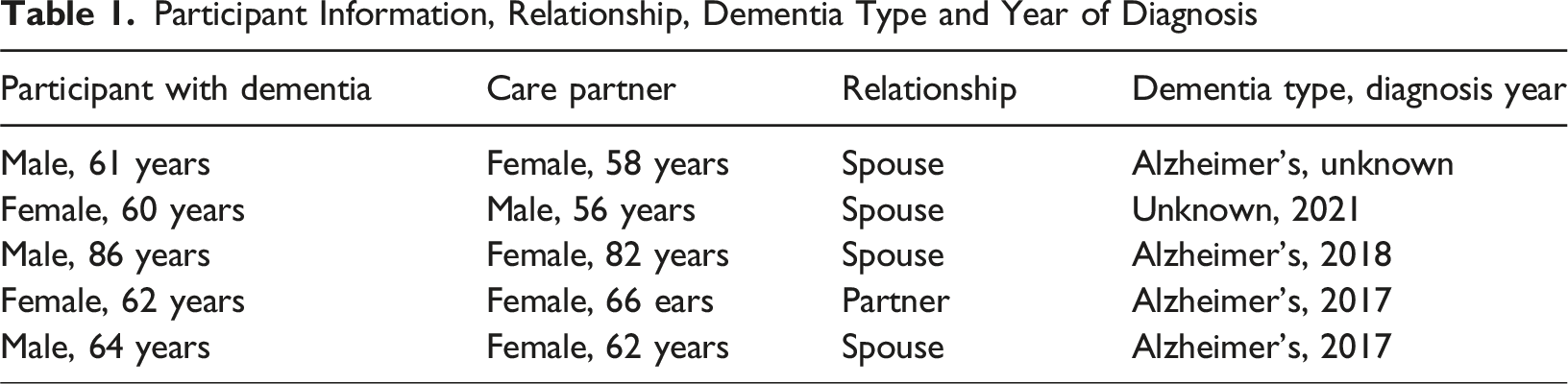
Consent
Ethical approval was granted by the University of the Sunshine Coast Human Research Ethics Committee (approval #A221714) prior to the commencement of the study. This study used a co-consenting procedure whereby the person with dementia and the care partner each needed to consent individually. Each participant therefore had the right to reject participation and if this were the case the other member of the dyad was unable to participate. Information and consent forms were written at a Flesch-Kincaid grade level of eight, indicating the material should be comprehensible for someone with eight years of education, which is congruent with the standard in Australia for health literacy to ensure accurate comprehension (SA Health, 2013).
Throughout their time with participants the research team ensured they gained ongoing verbal consent, including prior to interviews at the end of the project. This was done informally and conversationally (e.g., “Would you like to do the interview now?”), and no interviews were undertaken without full agreement from both people within each dyad.
Materials
Dementia UK (2020) recommend avoiding open-ended questions when communicating with people living with dementia, posing a challenge for qualitative research with this population. Further recommendations include speaking slowly and clearly while limiting the number of questions asked (Dementia UK, 2020). Accordingly, the present study’s questions were designed to relate well to each other, meaning multiple questions are likely to be answered together. This limited direct questioning and risk of participant fatigue. With consideration for the likely varying degrees of capacity of participants, questions were designed prioritising the person with dementia’s needs, to reduce the likelihood that their care partner would speak on their behalf. Balfour (2014) suggests providing context can support memory recall for persons with dementia. As such, although the questions were predominantly open-ended, many provided context including links to earlier points of conversation. An example of this is ‘You mentioned previously travelling overseas, how does that compare to your recent travel?’. Specific questions were also informed by prior knowledge obtained through conversation during participation in the farming activity. Questions were designed to identify the ways in which dyads engage in leisure activities together, how this changed post-dementia diagnosis, and the impact of their farm volunteering on their relationship and day-to-day lives. All questions had probes and following questions to assist in guiding conversation.
Procedure
Farming Sessions
Farming sessions were included as part of the larger research project, to be reported elsewhere. The sessions included approximately 90 min weeding garden beds, planting and harvesting vegetables and herbs. Followed by a morning tea provided by the study team. Sessions were scheduled based around the participants’ availability and preferences. Each dyad attended 5-8 sessions (M = 6.25, SD = 1.26) over a period of 2-12 weeks (M = 7.00, SD = 4.16).
Interviews
Following verbal consent interviews were conducted after the farming activity, on the farm, at a location of the participants’ choice to optimise comfort. Duration was somewhat consistent (M = 38.15 min; SD = 9.8 min). Dementia UK (2020) mentions tiredness and other illness as barriers to communication, so participant fatigue was discreetly monitored throughout. If fatigue or restlessness was displayed the interviewer (HB) asked if they were still comfortable or wished to move, with the option to continue the interview while walking, or discontinue the interview. None of the participants required interviews to conclude early or be adjusted for fatigue. In keeping with the relaxed conversational style, the interviewer did not ask questions one after another, and instead allowed the conversation to flow, asking questions where necessary to keep on topic, ensuring the listed questions were answered. Interviews were recorded using handheld Philips DVT4110 Digital Voice Tracer recording devices. Following interviews, the recordings were uploaded to the secure and password protected site Otter.ai to be transcribed. Transcripts were then manually checked and corrected for accuracy by the research team.
Analysis
Using NVivo v12 software (QSR International Pty Ltd., 2018) transcripts were coded by author HB according to the research question, initially producing 92 codes. Following methods outlined by Braun and Clarke (2021), these were reviewed with assistance from author KT and those with low relevance or duplicates were discarded, resulting in 73 final codes. Thematic analysis was used to explore and group statements into themes and trends within the transcribed data. Once themes were identified and confirmed they were reviewed, and the PERMA model was applied. Identifying the PERMA elements following theme identification allowed the participants experiences to remain at the centre. While also acknowledging what areas of well-being participant actions may be targeting in reference to the theory.
Results
Themes, PERMA Components, Subthemes, and Quotes
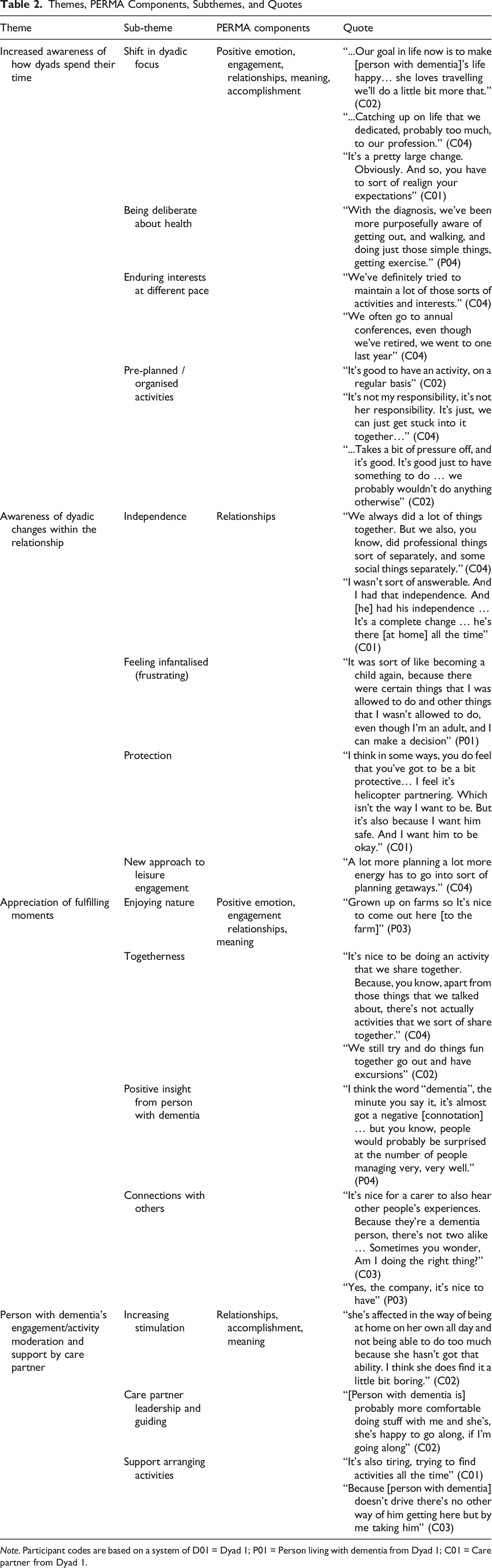
Note. Participant codes are based on a system of D01 = Dyad 1; P01 = Person living with dementia from Dyad 1; C01 = Care partner from Dyad 1.
Increased Awareness of How Dyads Spend Their Time
The first theme reflects a purposeful approach to how dyads spend their time. This theme can be characterised through adaptation and priority changes. Discussion points within this theme reflected dyads intentions to adapt activities they enjoy, and try new activities, while being mindful of the impact to their health. They spoke about how their priorities have shifted to focus on doing things they could not do previously, “… catching up on life…” (C04), and realigning expectations based on the dementia diagnosis, “We’re obviously interested in doing stuff that’s going to help [person with dementia]” (C02). Responses included proactivity regarding health such as engaging in exercise for the sake of fitness, “With the exercise we do twice a week. That’s just aimed at keeping ourselves physically strong” (P04). As well as increased awareness of how activities impact well-being for both care partners and people with dementia, “As a family it [an activity] offers the fight to try and keep [person with dementia] at home, and in doing that, you need something like [the gardening sessions] today for you to get out and get [person with dementia] out” (C03). Participants spoke about life having slowed down, but they have maintained previous interests where possible. Dyads also expressed the value of having pre-planned or organised activities both to take the pressure off thinking what they will do, “It’s not as if I have to think, okay, what are we going to do Saturday morning?” (C02), and to provide some routine, “It’s good to have an activity, on a regular basis” (C02). The sub-themes collectively represent some of the thought process behind their participation in select activities.
Awareness of Dyadic Changes within the Relationship
An awareness of how the dyadic relationship had changed was reflected in several ways. This theme can also be characterised by adaptation but more specifically within the relationship dynamic. Participants spoke about changes to independence for both care partner and person with dementia, “We always did a lot of things together. But we also ... did professional things separately, and some social things separately.” (C04). Discussions included recognition of the changing needs of the partner diagnosed with dementia, as well as a need to recognise the strengths they still have. Specifically, the person with dementia feeling like a child again, “It was sort of like becoming a child again … Even though I’m an adult, and I can make a decision” (P01) and their partner wanting to protect them, “The thing is, I don’t want you to be hurt, I don’t want you to be endangered” (C01). Responses also included new approaches to leisure, “A lot more planning, a lot more energy has to go into sort of planning getaways.” (C04). One dyad also shared that their children have become instigators for planning activities now, “And that was them instigating it, not us… So, we’re pretty close as a family and they still want to do stuff with us” (C02). Another discussed changing how they take holidays because of difficulties that arose within their new roles, “take that … out of the equation. Because it [driving and navigating maps] just becomes an absolute power play [between us]. And that’s really unpleasant.” (C01). Conversation points within this theme highlighted the balancing act dyads undertake each day to keep up with the changing environment they now live in.
Appreciation of Fulfilling Moments
Appreciation was a common theme across all five dyads. Discussions included enjoying being in nature, “she loves pottering around the garden, and I love being in nature” (C04), and positivity surrounding time spent together, “It’s nice to be doing an activity that we share together” (C04). One care partner also expressed simply enjoying watching the way their partner interacted with others, “Today, I’m here with him [I] can see just his movements and the way he talks and tells his stories. Which is nice.” (C03). Even when discussing the challenges families may face as a result of dementia, participants often acknowledged silver linings. One participant with dementia shared: “…one of the first things I did after diagnosis was give up driving… You sort of reconnect with your walking abilities and you realise how much you see when you’re just traveling by foot… So that’s been good.” (P04). Further discussions included the recognition of the negative connotations attached directly to the word ‘dementia’ and how the preconceived ideas may not always be the case because: “I think many people would be surprised how many people [are] being very productive… People would probably be surprised at the number of people managing very, very well. Who they might not imagine would have.” (P04). Further, all participants spoke about the value of the connections they create with others within the dementia community, “It’s nice for a carer to also hear other people’s experiences” (C03) and outside of the dementia community, “We like to speak to people and make new friends” (P01). This theme represents that amongst the awareness of change seen in the previous themes; dyads continue to have positive experiences.
Person with Dementia’s Engagement/Activity Moderation and Support by Care Partner
The last theme that was interpreted during analysis was the unique role of the care partner to ensure the person with dementia has leisure and stimulating activities to engage with. It aligns closely with the first theme, as there was recognition of the need to make pro-health decisions. However, the focus within this theme is not the awareness of the activity choice, but the role the care partner has in facilitating engagement. Within this theme, responses referred to needing to increase stimulation in the life of the person with dementia, “[person with dementia] does spend a fair chunk of time at home alone. So, it’d be good to have some other activities” (C02), and care partners being leaders for their partners to engage in activities, “[person with dementia is] probably more comfortable doing stuff with me and she’s happy to go along, if I’m going along” (C02). Additionally, care partners guided their partners toward healthier and safer options. Where care partners were wanting to reduce engagement in under stimulating activities like watching T.V. and replace these with more recommended activities these sub-themes were closely linked. Care partners also expressed the challenges with finding and arranging appropriate activities, “Because [person with dementia] doesn’t drive there’s no other way of him getting here but by me taking him” (C03). The theme overall represents the role care partners of people with dementia have in organising and guiding engagement with activities, and the challenges associated with this.
Discussion
The purpose of this study was to further the understanding of what matters most to couples affected by dementia regarding their engagement in leisure activities, viewed through a positive psychology lens. The study provides insights into several key areas: how decision-making may evolve, how the roles of care partners and people with dementia shift within their relationships, and the current role of leisure in their lives. Additionally, it highlights ways to promote ongoing fulfillment within the lives of couples affected by dementia. Through thematic analysis, four main themes were identified, each highlighting a different aspect of the couples’ experience. Results may further the understanding of the needs and values within this population to assist the development of future programs and activities as well as highlight the value of including people diagnosed with dementia in research and development.
Throughout discussions with dyads there was mention of leaving work, loss of license, and a general disengagement with activities in which they previously participated. For some this included a lessening of social engagement, consistent with previous literature (Balfour, 2014; Carbonneau et al., 2011; Dooley et al., 2021; Wadham et al., 2016). Additionally, the need for care partners to find and organise activities was commonly spoken about. Including the risk of low engagement in any activities for the person with dementia if the care partner did not put plans in place. Care partners spoke about desires to protect their partners from harm as well as prioritising their partner’s health and happiness within their lives. Consistent with previous research, these conversations highlighted the importance of the care partners role (Etters et al., 2008; Hendriks et al., 2021). Although the extensive role of a care partner is often discussed as a challenge, care partners expressed that their persistence came from a place of love for their partners, through their expressions of wanting to continue for their partner’s sake. Similarly, findings from Shim et al. (2013) showed people found meaning from caring for their spouse through a strong sense of love and living according to their values. Further, reciprocity is suggested as a reason people decide to care and continue to care for partners and loved ones (Zarzycki et al., 2022; Zarzycki & Morrison, 2021). This is reflected within the current sample as care partners mentioned the benefit of seeing their partner happy and engaged as a result of organising activities.
Interview questions were designed with consideration for identifying PERMA elements within dyads’ pre-existing well-being strategies; however, there was minimal direct questioning about the elements. Participants spoke largely unprompted about different elements, as a result the PERMA model integrates well across all themes. Unsurprisingly, the most prominent element was relationships, followed by engagement, meaning, then positive emotion. Accomplishments were not extensively spoken about in relation to the research question; however, as suggested by Seligman (2012), accomplishments may not always be consciously sought. Thus, it is more likely it would be prominent when discussing a particular activity as opposed to activities and leisure in a general sense.
Within the four themes established in the results, there are six main takeaways regarding what is important for couples living with dementia. The first is ensuring the person with dementia is appropriately stimulated throughout the day. Participants mentioned the recommendations from health professionals which is supported by research that adequate stimulation is a mitigating factor for the progression of dementia (James & Bennett, 2019; Sas et al., 2020). Care partners specifically spoke about wanting to ensure their partner did not spend most of their time in the home with little to do. Multiple care partners suggested wanting to ensure their partner engaged in activities they particularly enjoyed. The importance of this is directly related to engagement and meaning, by care partners wanting their partners to continue to have a sense of direction through involvement in something they are interested in.
Participants also spoke to the need for care partner support in facilitating leisure activities for the person with dementia. This was discussed in relation to pre-planned activities and access to pre-existing programs. It is suggested that even when formal care is provided care partners still spend a lot of time supporting their partners (Chesterton et al., 2021). The current participants suggest a lot of this time is dedicated to planning or encouraging engagement with activities or friends. Care partners explained it can be very tiresome and targeted support for this would be valuable.
Part of the value in providing supports for care partners stems from the importance of facilitating a happy life, in terms of PERMA a ‘pleasant life’ filled with happiness (Seligman, 2012). From care partners’ perspectives this was through ensuring partners with dementia have activities with which to engage. People with dementia themselves acknowledged their partner needing to have independence as well. There is a range of research about positive emotions and their benefits (Huber et al., 2020; Pu et al., 2019; Zhao et al., 2020) and amongst dyads it was consistently important.
According to dyads there was a desire to spend time together engaged in activities, especially those they had previously enjoyed. The central theme of this research was the understanding of the couple within the context of dementia, based on previous research suggesting its importance (Balfour, 2014; Fletcher, 2020; Wadham et al., 2016). The couples’ desire to spend specifically meaningful time together supports the notion that more interventions and programs need to be inclusive of both people within the couple (Carbonneau et al., 2011). Leisure activities provide positive emotion (Smith-Carrier et al., 2021) as well as the maintenance of relationships (Carbonneau et al., 2011) and in terms of the PERMA model these elements will aid in the overall well-being of the couple (Seligman, 2012).
Further, it was important to find balance between independence for both people and ensuring adequate care for the person with dementia. One dyad spoke at length about the trouble finding independent time, so time together could be more valuable. Another discussed the challenge of balancing work while ensuring their partner with dementia receives the care they need. In Fletcher’s (2020) research it is discussed how as dementia progresses, relationship dynamics can become work-like, and it is important to avoid this for joint well-being. As Seligman (2012) suggests, healthy relationships that provide satisfaction through connectedness are key determinants for well-being. Similarly, this was important for the current participants.
The importance of social connections was mentioned by all dyads as being valuable to them. Social connections are considered a protective factor for well-being (Harris, 2013), and facilitating more group programs that include both care partners and persons with dementia is necessary to support dyads. Dyads expressed pleasure from meeting people through the farming activity as well as through other dementia specific programs they had participated in outside of the study. Dyads also reported enjoyment from meeting with friends they have kept throughout their lives, further confirming the importance of engagement and social relationships.
Overall, participants conveyed many positive aspects to life for example seeing more of their environment from walking more, amongst challenges commonly linked to living with dementia (such as less independence). One participant with dementia, while discussing feelings of being infantilised and the associated frustration of losing independence, expressed it was not exclusively because of rules being imposed on them, rather that frustration surrounded their belief they were still very capable. They displayed a very positive outlook on their well-being which their partner also acknowledged. Participants with dementia showed particularly positive insight into their lives, explaining how sometimes forgetting was good when it surrounded negative experiences. Although inclusion of people with dementia in research has largely been overlooked until recent years (Fletcher, 2020; McKeown et al., 2010), there were valuable contributions to the current research that would not have been possible without their participation, highlighting the importance of working with people diagnosed with dementia.
Congruent with research (McGoven, 2015), it was pointed out by a participant with dementia that the word ‘dementia’ holds negative connotations and when other people hear their diagnosis, they automatically assume the worst. The stigma surrounding dementia has a strong impact on the opportunities for this population, their minimal involvement in research is just one example (Aboseif & Woo, 2020; McKeown et al., 2010). In recent years there has been greater effort to reduce the stigma surrounding dementia (Bacsu et al., 2022); however, there is still potential for improvement. While stigma remains, it is important for research specifically to recognise the importance of including people diagnosed with dementia, as has been shown in the current study, and support their involvement.
A strength of the study design was the opportunity for familiarity and building of trust between the interviewer(s) and the participants, both with and without dementia. Familiarity and comfort can aid in facilitating better engagement with people with dementia (Cheung et al., 2021), and in this context where participants are talking about personal experiences it is important to ensure comfort.
A further strength of the study was the inclusion of people with dementia, who as stated are often overlooked within research and data collection. The stories, and interpretations of the participants diagnosed with dementia provided valuable insight into their experience within the dyad which could not have been achieved without their active participation.
A limitation of the study was the small sample size as it has reduced the generalisability of the results. Further, most of the participants diagnosed with dementia were in the early stages experiencing mild symptoms therefore, findings may not be relevant to people in the moderate to later stages of dementia.
Conclusion
It is important that research is attuned to the unique needs of different people and groups to best formulate supports for them. The current article outlines themes surrounding the experience of couples living with dementia specific to leisure that can offer some insight as to how to most appropriately support them to flourish well into their later years. This research is an example of the value of including people with dementia within research. The knowledge that has been obtained may inform future intervention development and research processes to generate greater inclusivity.
Footnotes

Ethics Approval
The Human Research Ethics Committee at The University of the Sunshine Coast approved this research (approval: A221714) on August 26, 2022.
Consent to Participate
Participants provided written informed consent prior to the commencement of the research. The research team gained ongoing verbal consent throughout their time with participants including prior to commencing interviews.
Consent for Publication
All participants personal information and identifying characteristics have been omitted from the article to uphold confidentiality.
Funding
The authors disclosed receipt of the following financial support for the research, authorship, and/or publication of this article: This work was proudly supported by the AAG Research Trust’s Hal Kendig Research Development Program, NA.
Declaration of Conflicting Interests
The authors declared the following potential conflicts of interest with respect to the research, authorship, and/or publication of this article: Several authors declared having family members with dementia or related disorders. Biases may exist within the interpretation of results, and from an attachment to improving knowledge in this area.
Data Availability Statement
The datasets generated and analysed during the current study are not publicly available to protect the privacy of participants, but are available from the corresponding author upon reasonable request.