




Abstract
Elder clowning is a psychosocial intervention delivered to persons living with dementia in long-term care. It aims to improve quality of life through interpersonal interaction and connection. This review aimed to synthesise international cross-disciplinary qualitative research regarding elder clowning specialist capabilities, engagement techniques, and potential benefits, for persons living with dementia, their families, and staff. The method was informed by systematic review methodologies. A comprehensive search of major health databases was undertaken. The search identified 198 studies, 15 articles from 10 studies were appraised and included in the review. Three major themes resulted from the synthesis: 1) understanding the elder clown, 2) journeying together to cultivate connection, and 3) promoting wellbeing through connection. Elder clowns were suggested to be perceptive, attuned, empathetic, present, adaptive, and performative. These capabilities supported a wide range of engagement techniques used to prepare for, approach, initiate, sustain, redirect, appeal for, and exit engagement with persons with dementia, which resulted in potential benefits across cognitive, behavioural, emotional, social, and experiential domains. The synthesis offers a common rubric for describing the components of elder clowning interventions for use across disciplines and identifies potential benefits to aid in the design of future trials of effectiveness.
Introduction
In 2023, it was estimated that over 55 million people were living with dementia worldwide, and this number is expected to increase by 10 million each year (World Health Organisation, 2023). Approximately one-third of persons with dementia live in long-term care (Eisenmann et al., 2020) and more than half of residents live with dementia (Fagundes et al., 2021). The needs of persons with dementia living in long-term care are complex (Cohen-Mansfield, 2013). They become increasingly dependent on others for activities of daily living (Arvanitakis et al., 2019) and require opportunities for stimulation and social interaction (Cohen-Mansfield, 2013). Aged care staff may lack capacity to meet these needs which, if not adequately met, can result in responsive behaviours such as agitation, aggression, depression, and anxiety (Kales et al., 2015). Responsive behaviours can be challenging for staff, families, and other residents and are managed through either pharmacological or non-pharmacological approaches (Loi et al., 2015). As pharmacological interventions offer only a short-term solution and can have serious adverse effects (Cohen-Mansfield, 2013; Tible et al., 2017), non-pharmacological, person-centred interventions are recommended initially (Guideline Adaptation Committee, 2016; Mitchell & Agnelli, 2015). Non-pharmacological interventions aim to address the unmet needs that lead to responsive behaviours and modify challenging behaviours or emotions (Cabrera et al., 2015; Meyer & O’Keefe, 2020). Such interventions are increasingly being integrated into long-term care (Cabrera et al., 2015) and can include music, validation, reminiscence, and exercise therapies (Meyer & O’Keefe, 2020).
One such non-pharmacological intervention is humour therapy, defined as “any intervention that promotes health and wellness by stimulating a playful discovery, expression or appreciation of the absurdity or incongruity of life’s situations which may enhance health or… facilitate healing or coping, whether physical, emotional, cognitive, social or spiritual” (Association for Applied and Therapeutic Humor, 2024). Medical clowning is one type of humour therapy delivered in healthcare settings to improve quality of life of patients (Karnieli-Miller et al., 2023). It originated in paediatrics, however, has since been adapted for older populations and is now delivered in long-term care with persons living with dementia (Warren & Spitzer, 2013). It is delivered by professionally trained specialists, often referred to as elder clowns, however, they are also termed therapeutic, relational, or medical clowns; miMakkus clowns; or Laughter Care specialists, depending on programme and geographic region (Dunn et al., 2013; Hendriks, 2012; Plez et al., 2023; Raviv, 2014; Warren & Spitzer, 2011). Elder clowns often wear a red-nose, vintage-inspired clothing, and no theatrical make-up. Their presentation is respectful and understated to align with the soft and subtle ways they engage compared to the traditional clown (Warren & Spitzer, 2011). Elder clowns engage with persons with dementia using a variety of individualised techniques, such as storytelling and humour (Kontos, Miller, Mitchell, et al., 2017; Rämgård et al., 2016; Warren & Spitzer, 2013). A component of one elder clowning program is to integrate selected long-term care staff as well as families of residents into the program (The Humour Foundation, 2022). Despite elder clowning interventions being delivered globally, there is no common rubric that delineates its components to enhance understanding of the intervention across disciplines to improve knowledge, practice, or evaluation.
To date, only one randomised controlled trial has evaluated elder clowning in long-term care (Low et al., 2013). This was an Australian multisite trial involving 189 residents across 35 long-term care facilities, which found significant reductions in agitation but not its primary outcome of depression. The trial did not explore outcomes for families or staff. Authors of the study theorised that their outcome measures may not have been sensitive to anecdotally reported benefits (e.g., positive mood, socialisation) (Low et al., 2013). Because elder clowning is delivered through social interaction, evidence of benefits may be ephemeral and abstract, and thus difficult to measure. Nonetheless, the design of future trials requires the identification of potential benefits to inform selection of appropriate outcome measures.
The aims of this review were to synthesise cross-disciplinary qualitative evidence to identify the capabilities of elder clowns, describe the engagement techniques they use with persons with dementia, families, and staff, and identify potential benefits for residents, families, and staff. The resulting synthesis will provide a common rubric of elder clowning interventions and identify potential benefits to aid in the design of future trials of effectiveness.
Methods
Protocol Registration
This systematic review was registered with PROSPERO [CRD42023457305] and reporting follows ENTREQ guidelines (Tong et al., 2012).
Search Strategy
The initial search was conducted in MEDLINE, Embase, CINAHL, PsycINFO, and Scopus in May 2023. Searches were re-run intermittently until August 2024. A health librarian was consulted to develop the search strategy. Search terms were mapped to each database using relevant MeSH terms, subject headings, and keywords. Search terms included: Alzheimer, dementia, cognitive function, cognitive dysfunction, mild cognitive impairment, clown, laughter therapy, and humour intervention. There were no restrictions on searches. Handsearching was conducted to locate any eligible articles not returned in the database search.
Eligibility Criteria
Articles were included if: 1) the intervention described was elder clowning; 2) the intervention was delivered by elder clowns or clowning specialists; 3) participants were persons with dementia, or persons delivering, observing, or participating in elder clowning interventions in long-term care; 4) they reported expert commentaries, qualitative studies, or mixed-methods studies where qualitative data pertaining to elder clown interactions could be extracted; 5) published in English language peer-reviewed journals. Articles from all countries and any publication date were included. Expert commentaries included articles written by elder clowning experts that were not empirical studies.
Articles were excluded if they were: quantitative studies, grey literature, abstracts, protocols, book chapters, and theses. These were excluded due to lack of data or rigorous peer-review. Where there were relevant articles included in a review, individual articles were assessed against the eligibility criteria.
Screening
Each article retrieved via the search strategy was screened (title and abstract) in Covidence by two reviewers to identify potentially relevant articles. The full text of each screened article was then assessed by two reviewers as relevant for final inclusion according to the eligibility criteria. Any disagreements were discussed between reviewers until consensus was reached. See Figure 1 for PRISMA flow chart. PRISMA Flowchart of Articles Identified Through Electronic Database Search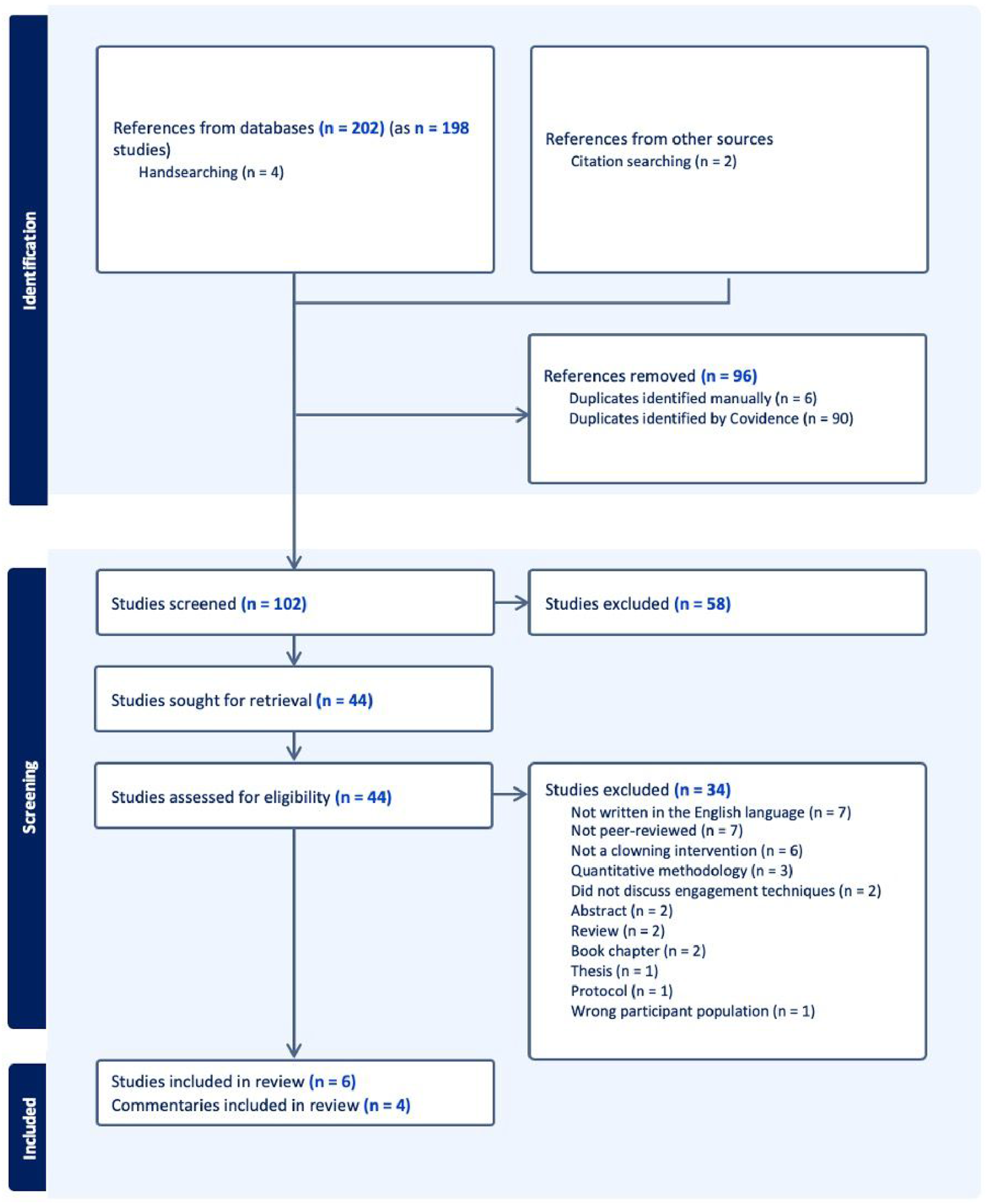
Critical Appraisal
Risk of bias was assessed using the Standards for Reporting Qualitative Research (SRQR) tool, which provides a 21-item framework for the assessment of the varied methodologies used in qualitative research (O'Brien et al., 2014). For each article, title and abstract, introduction, methods, findings, discussion, and other characteristics were assessed at the study level by two reviewers (O'Brien et al., 2014). Reviewers discussed discrepancies in decisions across all papers until consensus was reached.
Data Extraction
Data pertaining to study characteristics (authors, year of publication, country, aims, research questions, participant disease, number of participants, intervention, data collection methods, analysis methods) were extracted into a MS excel spreadsheet to contextualise each study. Included articles were imported into NVivo software. Due to the paucity of raw data in some papers, data in this review includes material presented within the results and discussion sections. All data pertaining to engagement techniques, capabilities of elder clowns, and benefits were extracted from included articles (from introduction, methods, findings, and discussion due to different reporting styles of each journal) (Thomas & Harden, 2008) into categories in NVivo (techniques, capabilities, benefits, other) for coding. Capability is defined as the integration of knowledge, skills, and personal qualities, used appropriately and effectively in varied circumstances (Stephenson & Yorke, 1998). ‘Other’ included any relevant information not directly related to research questions. Data was extracted by the primary reviewer (S-J.R.), with a portion of extracted articles checked by a second reviewer (M.D.) to ensure relevance of data extracted.
Data Synthesis
Thomas and Harden’s thematic synthesis (Thomas & Harden, 2008) was used to inductively generate descriptive and analytical themes from the data. The synthesis was conducted by the primary author (S-J.R), who is a postgraduate student with a background in psychology. First, line-by-line coding of text was undertaken and allocated a descriptive keyword according to its content and meaning. This facilitated synthesis of studies (Thomas & Harden, 2008). Data was allocated to multiple codes if necessary. Free codes were then grouped into categories of similar or related concepts to form an initial coding tree (capabilities, engagement techniques, benefits). Data from within the coding tree was then synthesised through written analysis. Here, initial codes or groupings may have shifted to new or different categories as understanding and meaning developed. For example, a concept initially identified as a technique may have moved into the capabilities category. Regular meetings were held with the team (S-J.R., T.L., S.I., M.D.) to discuss the coding tree, develop and progress the analysis, and work towards greater coherence of the analysis. The coding tree formed the basis of broad descriptive themes, which supported development of analytical themes that captured the essence of elder clowning intervention components. The process of analysis was iterative.
Results
Study Selection Results
Study Characteristics
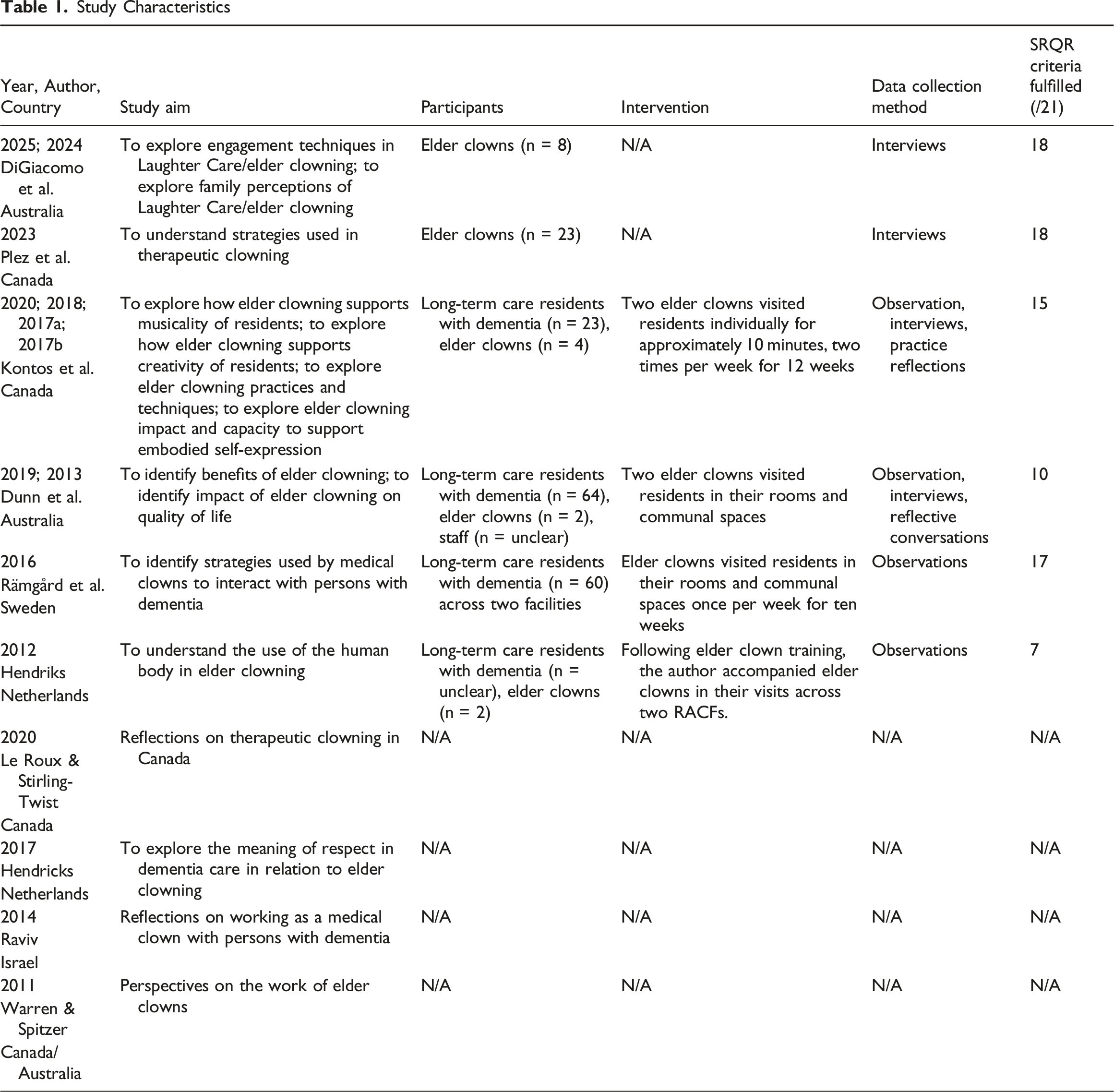
Quality Appraisal Results
The median SRQR score of the included articles was 16 out of 21. All studies reported purpose or research questions. The majority of studies (3 or more) fully reported problem formulation, ethical issues, data collection methods, units of study, data analysis, synthesis and interpretation of results, links to empirical data, integration of prior work, conflicts of interest, and funding. The majority partially reported title, context, sampling strategy, data collection instruments, and data processing. Fewer than three studies reported researcher characteristics, techniques to enhance trustworthiness, and limitations. Other items (abstract, qualitative approach) were evenly split between fulfilling, partially fulfilling, or not fulfilling the criteria. No studies were excluded due to low scores. Although the median score of included studies is low, which may be attributed to varying reporting criteria across disciplines, none were excluded as each offered multi-disciplinary perspectives into elder clowning.
Synthesis
Figure 2 provides an overview of the resulting components of elder clowning interventions informed by this synthesis: 1) the capabilities of elder clowns; 2) elder clowning engagement techniques; and 3) potential benefits for persons living with dementia, their families, and staff. Elder Clowning Intervention Components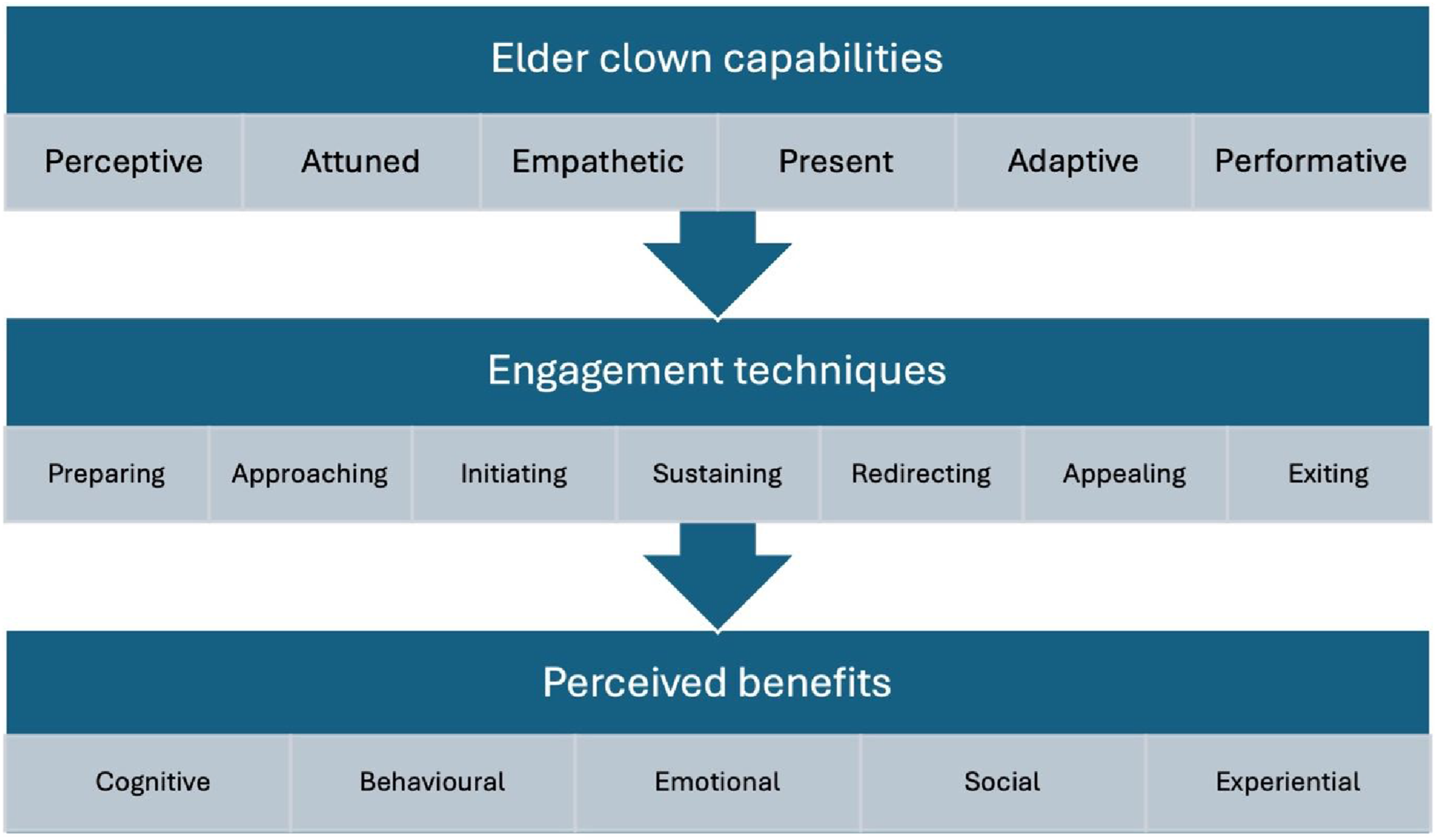
The following synthesis explores three themes that reflect each component of the intervention: understanding the elder clown, journeying together to cultivate connection, and promoting wellbeing through connection.
1) Understanding the Elder Clown
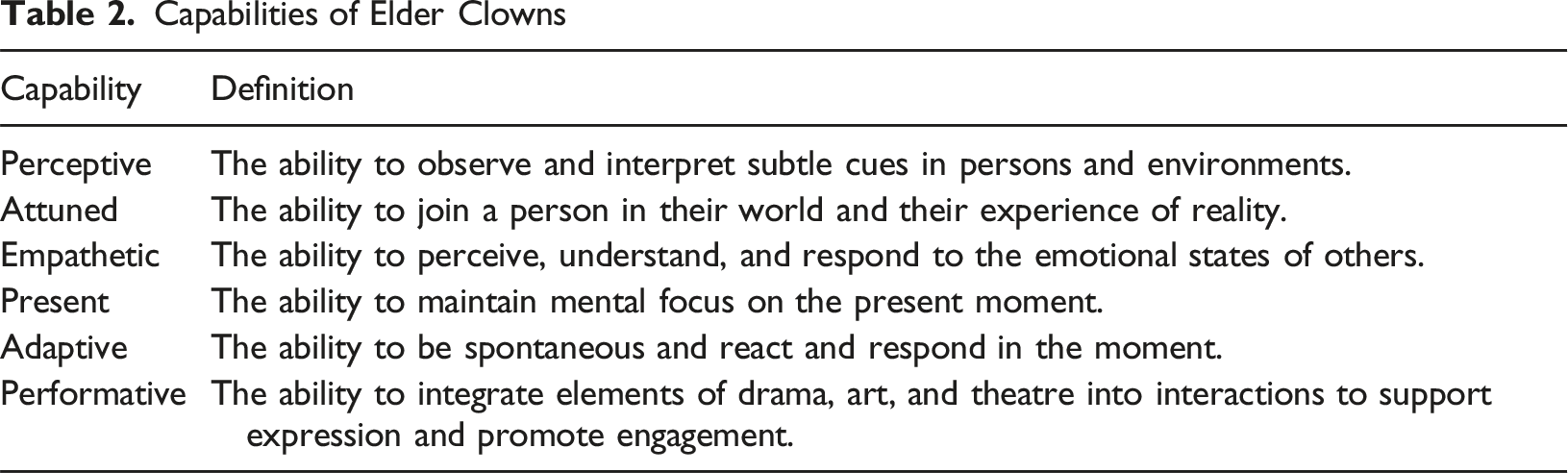
Capabilities of Elder Clowns
Perceptive
Elder clowns are perceptive of, and receptive to, subtle cues in residents and/or their environment. Perceptiveness allows elder clowns to determine which engagement techniques may be appropriate for an interaction based on the resident, their verbal and non-verbal cues, their emotional state, the mood of the environment, and the present and unfolding situation (DiGiacomo et al., 2025; Dunn et al., 2013; Hendriks, 2012, 2017; Plez et al., 2023; Rämgård et al., 2016).
Attuned
Elder clowns attune themselves to each resident and situation by ‘go[ing] along with the rhythm, intensity, emotional mood, and specific form of their physical presence’ (Hendriks, 2012, p. 467). Attunement allows elder clowns to join the resident in their world and experience what it could be like for them. Attunement allows elder clowns to support residents if they experience alternate realities. Rather than correcting, elder clowns will enter the reality of the resident to support communication and connection (Hendriks, 2012, 2017; Kontos, Miller, Mitchell, et al., 2017; Raviv, 2014).
Empathetic
Elder clowns are sensitive and responsive to the emotional states of residents, including joy and sadness. Resident expressions of emotion can be subtle, verbal, or non-verbal. Empathy allows elder clowns to give legitimacy to residents’ expressions of emotion (Dunn et al., 2013; Hendriks, 2012; Kontos, Miller, & Kontos, 2017; Kontos, Miller, Mitchell, et al., 2017; Raviv, 2014).
Present
Elder clowns consciously focus on becoming and remaining present and ‘in the moment.’ This is due to the perception that persons with dementia can sense when someone is not present in the here and now, which is perceived to effect connection (DiGiacomo et al., 2025; Hendriks, 2012; Kontos & Grigorovich, 2018).
Adaptive
Elder clowns do not prepare routines for visits. As ways of engaging are individualised, engagement techniques used by elder clowns are often improvised, applied spontaneously ‘in the moment’ (DiGiacomo et al., 2025; Dunn et al., 2013, 2019; Hendriks, 2012; Kontos, Miller, & Kontos, 2017; Kontos, Miller, Mitchell, et al., 2017; Kontos & Grigorovich, 2018; Le Roux & Stirling-Twist, 2020; Plez et al., 2023; Rämgård et al., 2016; Raviv, 2014; Warren & Spitzer, 2011).
Performative
Due to their training, elder clowns are adept at integrating elements of theatre and drama into interactions. They are creative, expressive, and hold an extensive musical and linguistic repertoire. Through performance, elder clowns are engaging and can transform spaces (Dunn et al., 2013, 2019; Hendriks, 2012, 2017; Kontos, Miller, Mitchell, et al., 2017; Kontos et al., 2020; Kontos & Grigorovich, 2018; Plez et al., 2023; Raviv, 2014; Warren & Spitzer, 2011).
2) Journeying Together to Cultivate Connection
This section provides a description of elder clowning engagement techniques, from ‘preparing’ prior to the interaction to ‘exiting’ the interaction (Figure 3). Elder clowns may oscillate between stages (and their respective techniques) depending on their relationship with the resident and the resident’s wellbeing on the day. Oscillation Between Stages of Engagement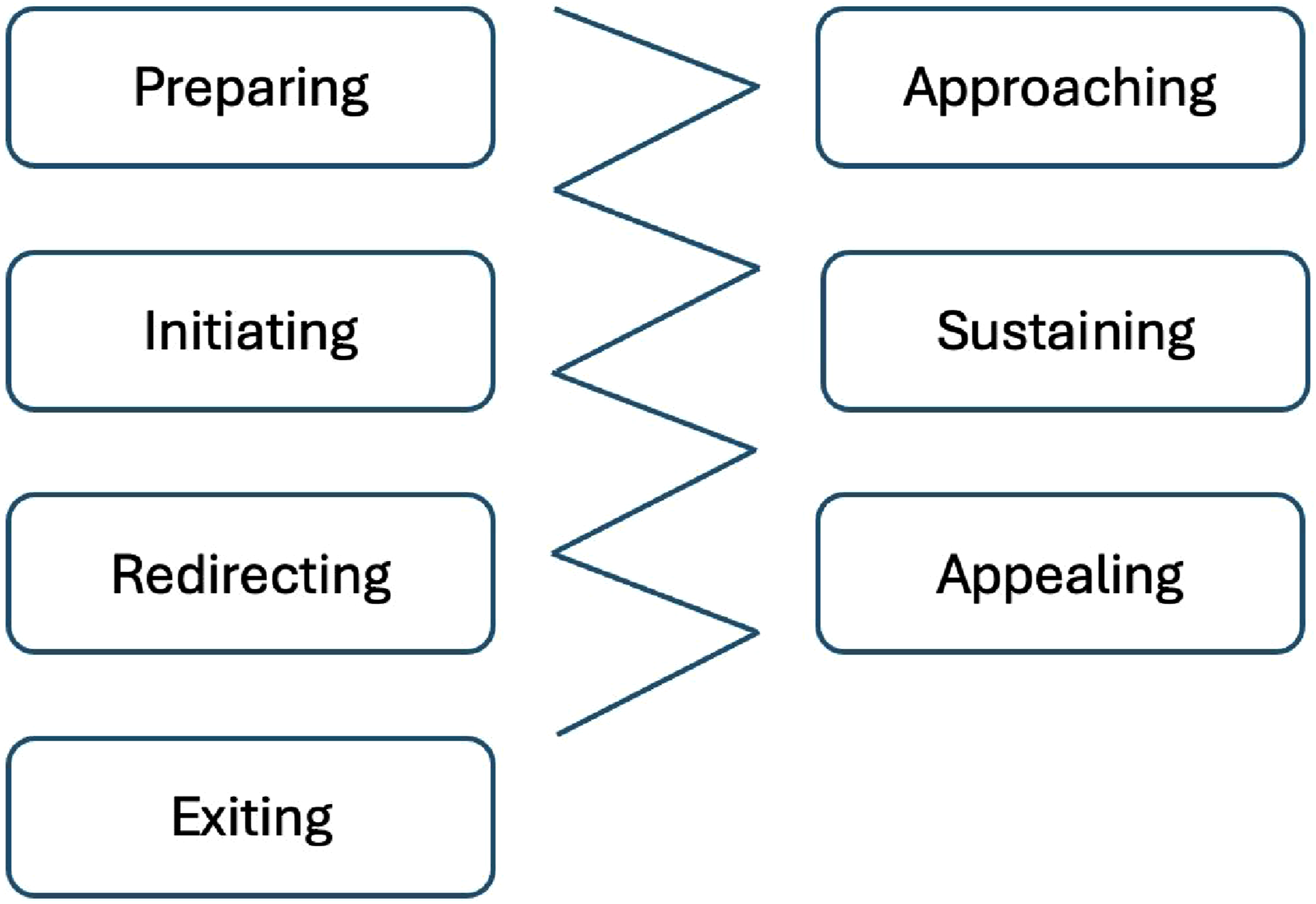
The elder clown will determine which engagement techniques may be appropriate at any moment. Examples included residents taking the lead in interactions or contributing in small ways (e.g., singing a few words). In interactions, elder clowns remain aware of the resident’s capabilities, follow their cues, respect their limits, and do not insist on a response (Dunn et al., 2013, 2019; Kontos, Miller, Mitchell, et al., 2017, Kontos et al., 2020; Plez et al., 2023; Rämgård et al., 2016).
Any combination of engagement techniques may be possible within any visit. Multiple engagement techniques may be used simultaneously. To supplement engagement techniques, elder clowns use expressive tools and verbal and non-verbal communication tools. Expressive tools include an elder clown’s character, appearance, props, and use of music/song. Non-verbal communication tools include use of speech, silence and space, and body language (see Supplemental Files 2 and 3 for descriptions). These tools support elder clown expression and engagement with residents through sensory stimulation.
Preparing
Before visiting residents, elder clowns prepare by seeking information about residents to facilitate person-centred visits (see Supplemental File 4 for supporting quotes for the remaining analysis).
Seeking Social Biographies
Elder clowns seek biographical information about residents from staff or family prior to visits to tailor techniques to the person (DiGiacomo et al., 2024, 2025; Dunn et al., 2013). If this information is inaccessible, they may use a pre-established scenario to initially connect (e.g., conversation about finding a girlfriend) or draw from contextual clues. As relationships develop, elder clowns can further individualise interactions (Dunn et al., 2013, 2019; Kontos, Miller, & Kontos, 2017; Kontos, Miller, Mitchell, et al., 2017; Kontos & Grigorovich, 2018; Plez et al., 2023; Rämgård et al., 2016; Warren & Spitzer, 2011).
Approaching
Elder clowns then approach residents to ask permission to visit. Staff may request visits for certain residents depending on needs (e.g., socially isolated) (DiGiacomo et al., 2025; Plez et al., 2023).
Asking Permission to Interact
Before attempting to engage with residents, elder clowns introduce themselves, ask permission to visit, and wait for a response. If residents decline a visit, elder clowns respect their decision and withdraw. However, before leaving, elder clowns may use the rejection as a final opportunity to gently test whether resident’s might be open to engaging or try again over subsequent visits as willingness to engage may increase over time (DiGiacomo et al., 2025; Dunn et al., 2019; Hendriks, 2017; Kontos et al., 2020; Le Roux & Stirling-Twist, 2020; Plez et al., 2023).
Initiating
After permission is granted, elder clowns may then use a variety of techniques to initiate interaction.
Elder clowns may engage with residents using techniques that are gentle and supportive, particularly when residents have advanced dementia, disability (e.g., vision loss), or ill health. If a resident is distressed, this distress may be further compounded by a language barrier (DiGiacomo et al., 2025; Dunn et al., 2013; Hendriks, 2012; Plez et al., 2023). In such scenarios, elder clowns will combine the use of gentler techniques to bring comfort and engage (DiGiacomo et al., 2025; Dunn et al., 2013; Plez et al., 2023).
Physical Presence
When making initial contact, elder clowns will attempt to convey that they are friendly, open, gentle, warm, and empathetic. Elder clowns may sit quietly with residents without speaking or engaging in activity if the resident has moderate-severe dementia or ill health (DiGiacomo et al., 2025).
Touch
Elder clowns may use physical touch to engage with residents, which may involve holding their hand, stroking their arm, or gently touching their cheek or face (Dunn et al., 2019; Kontos, Miller, & Kontos, 2017; Kontos, Miller, Mitchell, et al., 2017; Plez et al., 2023; Rämgård et al., 2016; Warren & Spitzer, 2011).
Following a Lead
Following a lead occurs when an elder clown joins an activity a resident is already engaged in rather than interrupting them with another activity. Following a lead can be an effective technique when residents are experiencing fictional past or multiple versions of reality (DiGiacomo et al., 2025; Dunn et al., 2019; Hendriks, 2012; Kontos, Miller, Mitchell, et al., 2017, Kontos et al., 2020; Raviv, 2014).
Finding Commonality
Elder clowns may approach residents over time to build rapport and encourage engagement. To do so, they may begin by using social biographies of residents to introduce topics of conversation (e.g., sports, jewellery) (DiGiacomo et al., 2025; Dunn et al., 2013).
Based on her social biography, [elder clown] begins by seeking [resident]’s advice about which earrings she should wear to an upcoming dance (Dunn et al., 2019, p. 47).
Sustaining
Once initial contact has been made, elder clowns may use a variety of other engagement techniques to sustain the interaction and promote continued engagement (see Figure 4). ‘Sustaining’ Engagement Techniques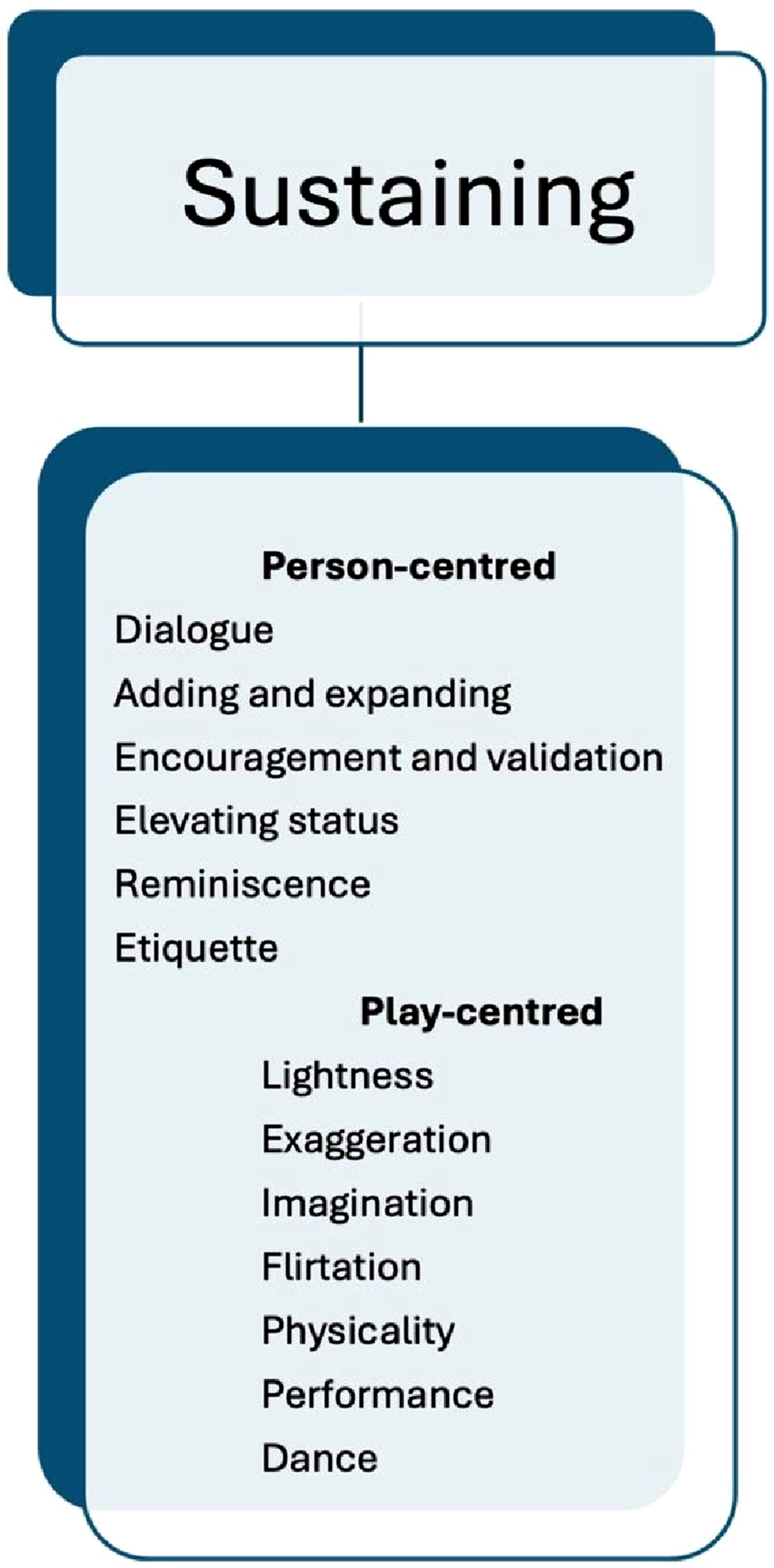
Person-Centred
Person-centred techniques prioritise a resident’s identity and emotions as the foundation for engagement.
Dialogue
Elder clowns use dialogue to facilitate exchange of thoughts, ideas, and feelings. This can include asking questions, letting the resident choose a topic to discuss, discussing objects in the room, engaging in playful conversation (e.g., discussing the height of a horse), deep conversation (e.g., about death), storytelling, or practising a second language (residents teaching elder clowns) (DiGiacomo et al., 2025; Dunn et al., 2013, 2019; Rämgård et al., 2016; Warren & Spitzer, 2011). When conversing, elder clowns follow the resident’s line of thought, deepen the dialogue and show genuine interest in the conversation, even when speech may be unclear (DiGiacomo et al., 2025; Dunn et al., 2013; Rämgård et al., 2016). It may take several visits for residents to be willing to talk to the elder clown. Listening is a key technique to engage residents (DiGiacomo et al., 2025; Dunn et al., 2019). It's amorphous really because we're not really doing or achieving anything, but we're talking or connecting… we reach the end of them telling a story or if we're being more playful it's once we're all laughing and we've had a jolly good time and we'll take that breath, “Well, that was fun.” (DiGiacomo et al., 2025, page 5)
Adding and Expanding
To facilitate improvisation, elder clowns will accept a resident’s contribution, add to it, and then give it back to them to facilitate co-creation with residents. Elder clowns will also build on an interaction by adding more ideas to the play to keep it going, which can result in humour or emotional states (such as excitement or joy) (Kontos, Miller, Mitchell, et al., 2017, Kontos et al., 2020).
Encouragement and Validation
Elder clowns validate the contributions of residents in interactions through continuous encouragement and reinforcement. If a resident contributes a response or an idea, elder clowns are supportive of their contributions, respond with enthusiasm (e.g., applause following a song performance) or compliments, and act on their suggestion (Dunn et al., 2019; Kontos, Miller, Mitchell, et al., 2017, Kontos et al., 2020; Rämgård et al., 2016).
Elevating Status
Elevating the status of residents is commonly achieved by elder clowns by seeking advice from residents to solve a problem, answer a question, or learn a skill (e.g., how to count in another language) or by referencing a part of their identity (e.g., calling a resident ‘Dr. Ben’ instead of ‘Ben’ based on his past occupation) (DiGiacomo et al., 2025; Dunn et al., 2013). Such techniques focus on what residents can still contribute to an interaction, rather than what they cannot (DiGiacomo et al., 2025).
Reminiscence
Elder clowns may aim to facilitate memory recall, familiarity, or reminiscence of a resident’s past experiences through dialogue, fashion, mannerisms, etiquette, dance, and/or music (DiGiacomo et al., 2025; Dunn et al., 2013, 2019; Kontos et al., 2020; Kontos & Grigorovich, 2018; Plez et al., 2023; Rämgård et al., 2016). Elder clowns may also use their knowledge of residents and their past hobbies (e.g., playing the violin) to introduce props or activities to interactions as a way for residents to connect with an aspect of their identity and facilitate memory recall (Dunn et al., 2019; Kontos et al., 2020; Rämgård et al., 2016).
Etiquette
Elder clowns may also incorporate etiquette that reflects the upbringing and generational norms of residents. This includes using good manners and demonstrating respect (DiGiacomo et al., 2025; Le Roux & Stirling-Twist, 2020; Plez et al., 2023).
Play-Centred
Play is a component of person-centered care as it may be a way for residents to express their identity and emotions. Play-centred techniques use playfulness and humour to bring a sense of lightness and joy to the interaction.
Lightness
One goal of visits is to create opportunities for people with dementia to partake in playful social interaction (Dunn et al., 2013). In this context, playful activities may be considered along a spectrum. These may range from activities that bring lightness to an otherwise dull or sad moment (e.g., through song) or laughter through physical or verbal games (Dunn et al., 2013; Plez et al., 2023). Playful activities are always grounded in sensitivity and responsiveness (Plez et al., 2023). Although humour and laughter are components of elder clowning visits, they are not always overt. Some interactions are focused on playfully creating connection and building relationships rather than generating laughter (DiGiacomo et al., 2025; Dunn et al., 2013; Plez et al., 2023).
However, elder clowns may also be overtly humorous during visits in an attempt to achieve play and laughter, when appropriate. Integrating humour into interactions include techniques such as verbal jousting, telling jokes, physicality, foolishness, or playful conversation (DiGiacomo et al., 2025; Kontos, Miller, Mitchell, et al., 2017; Plez et al., 2023; Raviv, 2014; Warren & Spitzer, 2011).
Exaggeration
Elder clowns may exaggerate emotion to provide residents with a break from the ordinary or expected (DiGiacomo et al., 2025). Sometimes I will be grumpy, deliberately grumpy about something, and they tend to like that… [I say,] ’what’s that doing there? Who put that,’ you know? So, I get upset about things and they tend to like just a change of scenery. (DiGiacomo et al., 2025, page 8)
Imagination
Elder clowns use imagination to facilitate moments of playful and creative engagement with residents. Imaginative engagement involves introducing ideas or concepts to an interaction that do not have a physical manifestation (e.g., an imaginary object) and are not grounded in reality (e.g., an imaginary scenario, such as turning a living room into a fishing pond) (Kontos, Miller, & Kontos, 2017; Kontos, Miller, Mitchell, et al., 2017; Plez et al., 2023). However, physical objects may be used to facilitate this (e.g., a piece of paper and pen) or the elder clowns body movement (e.g., miming painting a landscape) (Kontos, Miller, & Kontos, 2017; Kontos, Miller, Mitchell, et al., 2017). [Resident]’s waiting for the clowns. He always says the same thing. . . like ‘he is going to take us fishing’ and ‘he’s going to pay for everything’ and then ‘I got bumped off the boat last week’ but you know the clowns play with that. It’s really fun, it’s really fun. (Plez et al., 2023, page 3)
Flirtation
Elder clowns sometimes use flirtation to humorously engage with residents. This is often due to a resident or family member initiating a flirtatious interaction with an elder clown. In these interactions, elder clowns may engage in conversations about their need for companionship (e.g., looking for a husband) (Kontos, Miller, & Kontos, 2017).
Physicality
Elder clowns use their body in various ways during visits, including whole-body physical movements such as slapstick, high energy physical games (e.g., pretend lawn bowls), and magic (DiGiacomo et al., 2025; Dunn et al., 2013; Kontos, Miller, Mitchell, et al., 2017; Plez et al., 2023; Warren & Spitzer, 2011). Sometimes residents involve themselves in the physicality of the interaction, other times they watch on (Dunn et al., 2013). And [when (resident) kicked me], I would go flying across the room to play with it [to exaggerate the impact of his kick]. And he [resident] laughed again. (Kontos, Miller, Mitchell, et al., 2017, page 55)
Physicality is often intended to be humorous (DiGiacomo et al., 2025). However, through their physicality, elder clowns can also provide persons with dementia an opportunity to take care of them (e.g., by acting disorientated, elder clowns give residents the opportunity to relate, offer encouragement, and help) (Hendriks, 2012).
Performance
Elder clowns may put on a performance to encourage engagement. For example, elder clowns may perform a play or stage a wedding. Residents may be involved by playing music for the performance or taking on a role, if appropriate, or simply participate as an audience member (Dunn et al., 2019; Rämgård et al., 2016).
Dance
Elder clowns may use dance to engage residents. Residents may initiate dance with elder clowns or elder clowns may invite residents to dance, if they are able. These dances may be slow (e.g., a waltz) or fast-paced (e.g., belly dancing). Elder clowns may hum a tune, play a song, and/or use a prop (e.g., shawl) to facilitate dance (Kontos et al., 2020; Kontos & Grigorovich, 2018; Rämgård et al., 2016; Raviv, 2014; Warren & Spitzer, 2011).
Redirecting
Occasionally, residents may initiate interactions with elder clowns that are inappropriate (e.g., sexual advances, aggression) and elder clowns will attempt to redirect the interaction. Elder clowns will usually redirect in ways that are passive and integrate humour. Ways of redirecting interactions can include encouraging manners and diversion (e.g., asking if the resident would like a cup of tea) (DiGiacomo et al., 2025; Kontos, Miller, & Kontos, 2017).
Appealing
One study described how a resident may remain unresponsive to the elder clown due to advanced dementia (e.g., incomprehensible repetitive speaking). At this point, the elder clown selected an unconventional technique in a last attempt to engage the resident (Hendriks, 2012). I dared to go further than all the previous times. I came much closer to Mrs. Janssen than I had done before… Finally, my face was about eight inches from hers… I was taken completely by surprise by her kiss on my cheek. And again. And again. Her voice quieted, the talking stopped... I answered her by getting even closer to her and stroking her arm. I was given lots more kisses. (Hendriks, 2012, page 472)
Exiting
At the conclusion of a visit, elder clowns must exit an interaction. However, there is very little information provided in included articles about exiting. Only one paper described how an elder clown might do so, which involved using their sibling role to exit and conclude their visit (Dunn et al., 2013).
3) Promoting Wellbeing through Connection
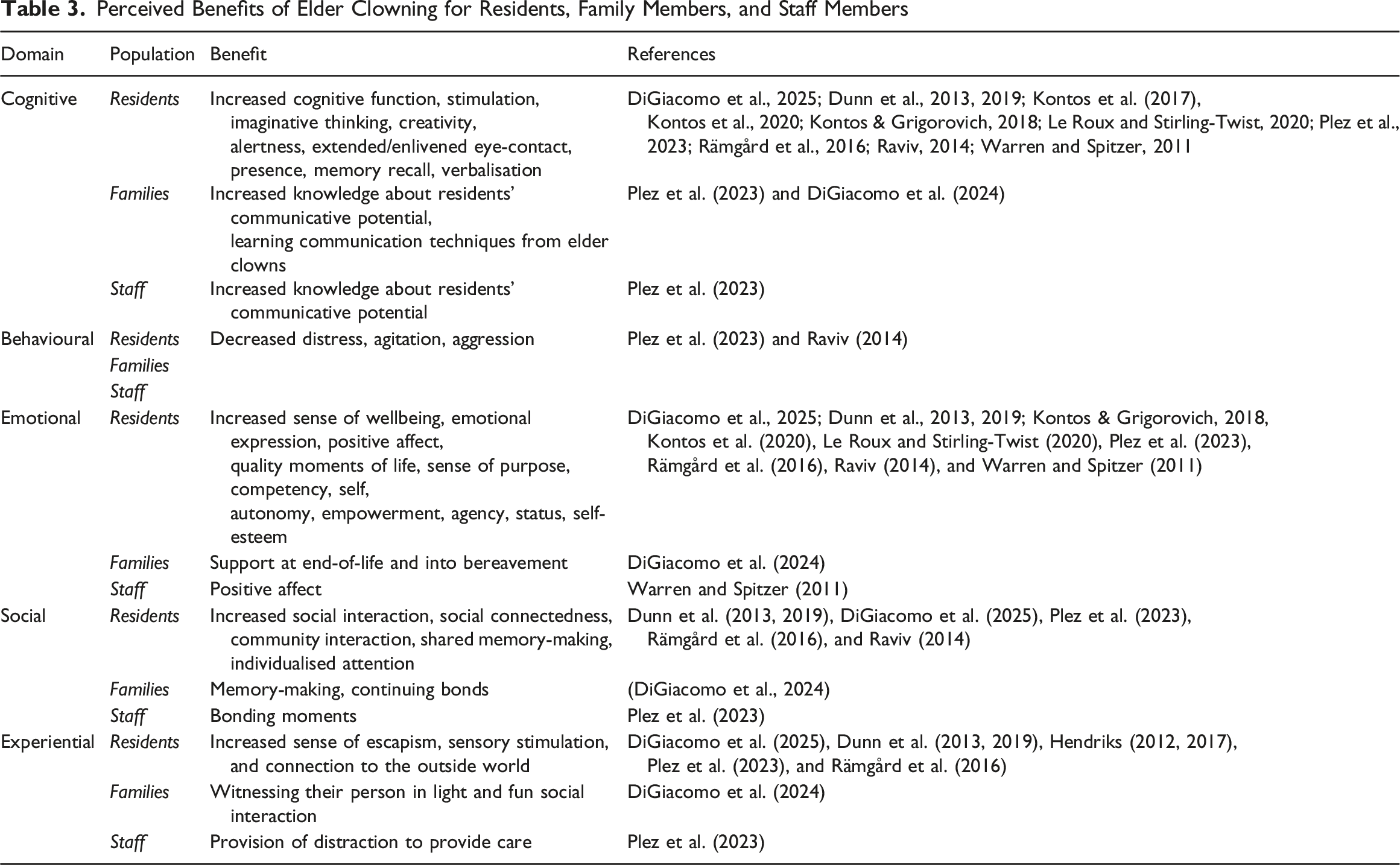
The key process that could lead to benefits for persons with dementia identified across studies was the concept of achieving reciprocal engagement. Reciprocal engagement occurred when residents were active participants in an interaction and worked with elder clowns to co-create interactions. This involved residents either initiating engagement spontaneously or responding to attempts to engage by elder clowns (Dunn et al., 2013, 2019; Kontos, Miller, & Kontos, 2017, Kontos, Miller, Mitchell, et al., 2017; Kontos et al., 2020; Kontos & Grigorovich, 2018; Plez et al., 2023; Rämgård et al., 2016).
Perceived Benefits of Elder Clowning for Residents, Family Members, and Staff Members
Discussion
This review suggests that elder clown capabilities include being perceptive, attuned, empathetic, present, adaptive, and performative. These capabilities in turn support a wide range of techniques used to prepare for, approach, initiate, sustain, redirect, appeal for, and exit engagement with persons with dementia. The studies we included suggested potential benefits to persons with dementia, their families, and staff across cognitive, behavioural, emotional, social, and experiential domains. Unlike other reviews on medical clowning which focus on evaluating effectiveness (Lopes-Júnior et al., 2020), this review synthesised concepts described in contemporary studies into a taxonomy that provides a common rubric for elder clowning interventions worldwide. This rubric offers a framework for elder clowning interventions, describing its key components to enhance understanding of the intervention across disciplines. Through delineation of capabilities, engagement techniques, and potential benefits, the rubric may aid practitioners, researchers, and stakeholders to more effectively select, implement, and evaluate elder clowning interventions. Beyond supporting evaluation, the rubric may serve as a tool for guiding future qualitative research exploring elder clowning, providing a framework to examine its nuanced, relational components. It may also be used to support the ongoing training and professional development of elder clowns and aid in program/intervention development.
Through their training, elder clowns are well placed to engage safely with persons with dementia and deliver high quality services. Safe, high quality dementia care prioritises a person-centred approach, which respects and responds to a person’s identity, needs, and preferences (Australian Commission on Safety and Quality in Health Care, 2023). Unlike medical clowns, who often work in hospitals with children and adults, elder clowns work in long-term care facilities and are trained to work with persons living with dementia (Karnieli-Miller et al., 2023; Rämgård et al., 2016). This training enables them to communicate with persons with dementia sensitively based on their specific needs. Persons with dementia may experience delusions, disengagement, repetitive questioning, aggression, and communication losses due to their cognitive decline (Boamah et al., 2021; Kales et al., 2015). This can contribute to social isolation from their visitors and other residents in long-term care (Boamah et al., 2021). Social isolation coupled with communication difficulties may mean that a person with dementia may have fewer opportunities to engage in meaningful conversation. Elder clowns use targeted techniques (e.g., following a lead, listening) to support persons living with dementia to communicate and engage in ways that are meaningful to them. Elder clowns empower them by actively listening to (and validating and encouraging) their contributions to conversation. A key elder clown capability that supports this engagement is being adaptive, which supports persons living with dementia to engage even when they are experiencing another version of reality.
There are various non-pharmacological interventions delivered with persons living with dementia in long-term care, including music, sensory stimulation, simulated presence, validation, cognitive stimulation, reminiscence, exercise, and psychological therapies (Meyer & O’Keefe, 2020). However, elder clowning is unique in that it incorporates principles of many of these therapies into the one intervention (i.e., music, dance, props, listening, storytelling, reminiscence, imagination, encouragement and validation). Therefore, elder clowning may be a promising intervention for long-term care due to its versatility in consolidating multiple therapeutic approaches, potentially offering a broader range of benefits than single-modality interventions. Further, it is person-centred in that elder clowns select modalities depending on the person and their interests, rather than providing a one-size-fits-all approach. Despite elder clowning being increasingly delivered in long-term care globally, there is currently little empirical evidence regarding how elder clowning is perceived by long-term care staff and management. Although, there is a growing appreciation of the value of non-pharmacological interventions in long-term care as they can be delivered by external personnel, reducing burden on staff and the healthcare system more broadly (Berg-Weger & Stewart, 2017). Elder clowning may further support the healthcare system by reducing agitative behaviours in persons with dementia (Low et al., 2013). However, the cost of non-pharmacological interventions may be prohibitive. One study has identified that families become increasingly accepting of the intervention after observing positive engagement between the resident and the elder clown (DiGiacomo et al., 2024). However, future research is needed to understand the ways the intervention is viewed by staff, from their own perspectives.
The identification of capabilities in this review will not only aid in future selection and training of elder clowns but may support the development of a more dementia-capable workforce. In Australia, select staff who wish to receive training in dementia and elder clowning can participate in the program alongside elder clowns in a supportive role. The intent of this collaboration is to upskill aged care staff in delivering person-centred care by learning select engagement techniques and incorporating them into daily care (The Humour Foundation, 2022). Staff may be able to learn how to be perceptive, empathetic, and present. Conversation, seeking advice, listening, singing, giving compliments, and dancing are techniques staff may learn to better engage with residents that do not require a performance background. This may mean that staff can carry out components of the intervention even when elder clowns are not present to support delivery of person-centred care and promote positive outcomes for persons with dementia.
While our review identified various techniques that elder clowns use to engage with persons with dementia, we identified few studies on engagement with families or staff. One study reported that families are involved through providing auto-biographical information about the resident and involvement in music and song (DiGiacomo et al., 2024). The only reported involvement of staff was through provision of auto-biographical information about residents to elder clowns (Dunn et al., 2013, 2019; Plez et al., 2023; Rämgård et al., 2016; Warren & Spitzer, 2013). While families and staff may participate elder clowning, the ways they are involved remain largely unexplored. Future studies are therefore needed to explore their perspectives to inform optimal approaches to engaging families and staff in elder clowning interventions.
Finally, while the studies in our review suggested a range of potential benefits of elder clowning, these were all based on author or elder clown observations rather than the perspectives of persons with dementia, their families, or staff themselves. Given the current era of value-based care, it is important that benefits be defined by beneficiaries rather than those delivering care. Future research is needed to elicit the perspectives of these groups to ascertain whether there is benefit. This would require research design to be sensitive to the needs of persons with dementia to support their participation. Perceptions of persons with dementia, families, and staff may support the selection of more appropriate outcome measures that can be included in future trials of elder clowning. There has been debate over whether outcome measures used in trials can effectively evaluate the impact of arts-based interventions (Hendriks, 2023). Qualitative researchers argue that quantitative studies fail to register the subtle effects of arts-based interventions and that outcomes are not generalisable due to differences in individual experience (de Medeiros & Basting, 2014). This argument is supported by the experiential benefits for persons with dementia identified in this review. However, funding for arts-based programs and interventions may be dependent on evidence that is generated in trials of effectiveness. One way to potentially address both concerns is to conduct qualitative sub-studies within randomised controlled trials to enhance the evidence of effectiveness produced by the trial (O'Cathain et al., 2013).
Limitations
Findings from this review are limited by the results available for inclusion, which varied in the degree to which they included raw data to enable confirmability of themes. Synthesis was made more difficult by reporting across disciplines, including gerontology, applied arts, social science, philosophy, and healthcare. Despite this, the studies included in this review offered multi-disciplinary perspectives into elder clowning, which provided an increasingly holistic understanding of the intervention.
Conclusion
This review elucidated a variety of techniques used in elder clowning to promote engagement with persons with dementia, which is perceived to offer several benefits. However, there is very little information about the ways in which families and staff are involved in the elder clowning or whether their involvement provides benefit. The voices of residents, families, and staff are currently missing from the literature.
Supplemental Material
Supplemental Material - Elder Clowning Interventions for Persons With Dementia in Long-Term Care: A Systematic Review and Metasynthesis of Qualitative Research
Supplemental Material for Elder Clowning Interventions for Persons With Dementia in Long-Term Care: A Systematic Review and Metasynthesis of Qualitative Research by Sara-Jane Roberts, Tim Luckett, Serra Ivynian, and Michelle DiGiacomo in Dementia
Footnotes
Acknowledgements
We acknowledge and appreciate the support of UTS Health Librarian, Rebecca Dale.

Ethical Considerations
Ethics approval is not required for this systematic review study as the synthesis consists only of data from articles available in public domains.
Author Contributions
Sara-Jane Roberts: Conceptualisation; data curation; formal analysis; investigation; methodology; project administration; visualisation; writing – original draft. Tim Luckett: Conceptualisation; methodology; supervision; writing – review and editing. Serra Ivynian: Conceptualisation; methodology; supervision; writing – review and editing. Michelle DiGiacomo: Conceptualisation; methodology; supervision; writing – review and editing.
Funding
The authors disclosed receipt of the following financial support for the research, authorship, and/or publication of this article: The primary author is supported by an Australian Government Research Training Program Scholarship.
Declaration of Conflicting Interests
The authors declared no potential conflicts of interest with respect to the research, authorship, and/or publication of this article.
Data Availability Statement
All data is available in public domains.
Supplemental Material
Supplemental material for this article is available online.
Author Biographies
References
Supplementary Material
Please find the following supplemental material available below.
For Open Access articles published under a Creative Commons License, all supplemental material carries the same license as the article it is associated with.
For non-Open Access articles published, all supplemental material carries a non-exclusive license, and permission requests for re-use of supplemental material or any part of supplemental material shall be sent directly to the copyright owner as specified in the copyright notice associated with the article.
