




Abstract
This qualitative study investigates the experiences of individuals with dementia and their caregivers following earthquakes, focusing on identifying challenges, coping mechanisms, and support needs during this critical period. Semi-structured interviews were conducted with participants who lived through earthquake events. The data were analyzed using interpretive phenomenological analysis to extract meaningful insights into their post-earthquake experiences. The analysis revealed four main themes: (1) “Adapting to Change and Addressing Unmet Needs,” highlighting how individuals with dementia and their caregivers struggled to adapt to post-disaster circumstances, often facing unmet needs in healthcare and daily living; (2) “Crisis Care Dilemma: Balancing Concerns for Loved Ones with Dementia,” illustrating the caregivers’ internal conflicts in prioritizing their safety while addressing the ongoing care needs of their loved ones with dementia; (3) “Healthcare Hurdles: Struggles in Access and Support,” shedding light on the difficulties in obtaining timely and appropriate medical care during and after the earthquakes, with limited resources exacerbating the stress of caregiving; and (4) “Navigating Challenges: Recommendations for Well-being,” presenting practical suggestions from participants on how healthcare and support systems can be improved to better serve this vulnerable group during crises. The findings emphasize the multifaceted and complex nature of post-earthquake experiences for people with dementia and their caregivers. Targeted interventions are essential to provide specialized healthcare services and crisis management support. These interventions should be integrated into policy and practice to ensure that the unique needs of this population are addressed effectively in disaster preparedness and response efforts. The study’s insights have important implications for guiding future support strategies to enhance the well-being of individuals with dementia and their caregivers in post-disaster contexts.
Introduction
On February 6, 2023, a massive seismic event with a magnitude of 7.7 hit Türkiye and Syria at 4:17 am, followed by a 7.6 magnitude earthquake on the same day. These earthquakes affected 11 provinces and around 13.5 million residents in Türkiye. Subsequent seismic activity on February 20, 2023, worsened the already damaged area with a 6.4 magnitude tremor in Hatay province’s Defne district and a 5.8 magnitude tremor in Samandağ district. As reported by the Disaster and Emergency Management Authority (AFAD) on April 5, 2023, the earthquakes had far-reaching consequences — resulting in 107,204 injuries, 50,339 deaths, and the destruction of over 500,000 buildings. Nearly, 3 million people, including children and older individuals, were displaced from their homes (International Federation of Red Cross and Red Crescent Societies [IFRC], 2023; World Health Organization [WHO], 2023). Those who remained in their places had to endure life without shelter, food, or water. Despite ongoing efforts by AFAD and other civil society organizations, the destructive effects of the earthquake persist in the region (Durak, 2023). Data provided by the Turkish Statistical Institute (TÜİK) indicates that approximately 4,805,937 individuals under the age of 18 and 1,032,972 individuals aged 65 and above reside in the provinces impacted by the earthquakes. Within this demographic, 168,452 older adults are reported as living alone (Taşcı & Gökçe, 2023; Turkish Family Health and Planning Foundation [TAPV], 2024).
Existing research consistently indicates that older adults are disproportionately susceptible to adverse outcomes in the context of disasters. This increased vulnerability stems from a combination of factors, including disruptions in routine functioning, the high prevalence of chronic medical conditions, and the progression of cognitive, physical, and sensory impairments. These risks are often compounded by social isolation and limited economic resources, which collectively diminish the capacity of older adults to prepare for, respond to, and recover from disasters (Abbasian et al., 2023; Ahmadi et al., 2018; Al-Rousan et al., 2014; Bell et al., 2021; Kang, 2014). The disproportionate impact of disasters on older adults has been observed in multiple large-scale events. For example, following Hurricane Katrina, approximately 64% of the reported mortalities were among older adults, and a considerable proportion of these individuals were likely affected by pre-existing cognitive impairments (Brunkard et al., 2008; Christensen & Castañeda, 2014). Moreover, disasters have the potential to exacerbate existing health conditions such as dementia, delirium, and depression within this population, further increasing their vulnerability and diminishing their capacity to recover (Holle et al., 2018).
Older adults, particularly those with Alzheimer’s and associated dementias, heavily rely on others during crises, rendering them more susceptible during catastrophic events (Bell et al., 2023). These population necessitate specialized care due to dementia-related impairments, impacting their functionality and frequently leading to psychological and behavioral challenges like agitation, depression, and anxiety (Furukawa et al., 2013; Furukawa et al., 2012; Gibson et al., 2018; Nogales-Gonzalez et al., 2015). Managing these symptoms might place stress and burden on caregiving families and communities, potentially resulting in the neglect of addressing the unique needs of older adults (Abbasian et al., 2023; Gibson et al., 2018; Nogales-Gonzalez et al., 2015).
A recent study uncovered a surge in mortality among those with Alzheimer’s disease in the 3-6 months post-hurricanes, a spike apparently unrelated to the direct impacts of the hurricanes (Bell et al., 2023). The findings highlight the importance of scrutinizing the well-being of older adults with dementia in the aftermath of disasters and assessing the care quality they receive. In alignment with these findings, a growing body of literature examining the aftermath of large-scale disasters—including tsunamis, earthquakes, nuclear accidents, hurricanes, and floods—in countries such as Japan, the United States, and New Zealand, consistently demonstrates that older adults with dementia are acutely vulnerable to multidimensional decline. This deterioration spans physical health, cognitive capacity, emotional regulation, and behavioral functioning, and is frequently intensified by the disruption of environmental familiarity, social support structures, and access to specialized care (Brown et al., 2012; Christensen & Castañeda, 2014; Furukawa et al., 2012; Furukawa et al., 2013; Gibson et al., 2018; Heppenstall et al., 2013; Miyagawa et al., 2021).
Family caregivers are a primary resource in managing the psychological and behavioral symptoms of individuals with dementia and ensuring their support and well-being continue (Huang et al., 2015; Rui et al., 2022). Numerous studies have examined the physical and psychological challenges faced by family members providing care for individuals with dementia, as well as the burden and stress that caregiving brings (Basu & Mukhopadhyay, 2021; Brodaty & Donkin, 2009; Jang et al., 2016). In times of disaster, this responsibility intensifies, adding to the already heavy burden on caregivers (Otobe et al., 2022). On the other hand, it is emphasized that family caregivers can produce effective solutions in the face of difficulties in the caregiving process (Huang et al., 2015).
Even though there have been some studies delving into the health conditions of individuals with dementia in the context of disasters, the responses of caregivers, factors impacting the transition to recovery, the coping strategies in care management, and the barriers they have faced remain insufficiently understood. Studying the experiences of caregivers attending to individuals with dementia is pivotal in enhancing readiness for both these cohorts and policymakers amidst potential disaster scenarios. This holds significance in formulating strategies aimed at bolstering resilience among post-disaster caregivers and augmenting preparedness for both caregivers and policymakers concerning this demographic. Thus, this qualitative study aims to explore the experiences of individuals with dementia and their caregivers following the Türkiye-Syria earthquakes.
Methods
Design
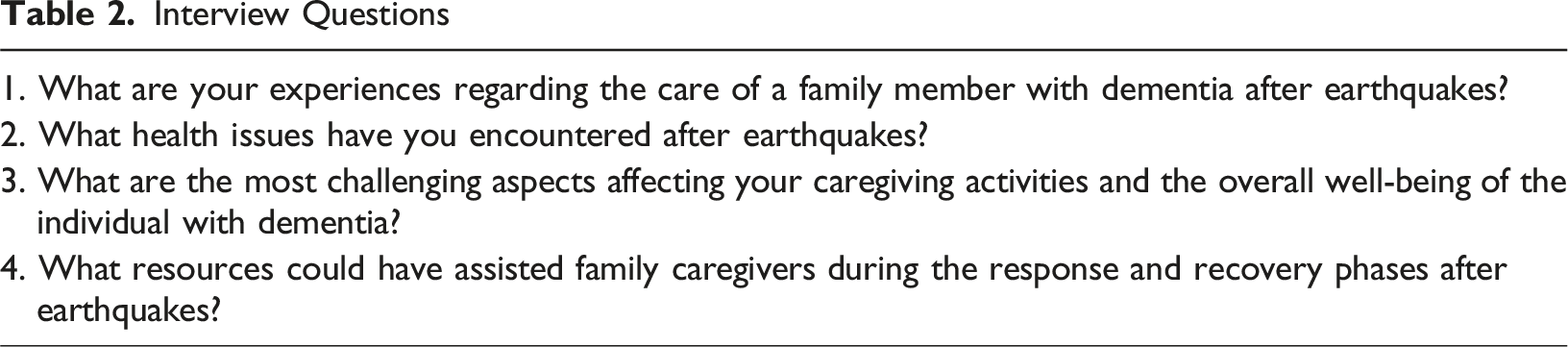
This study employed a qualitative explorative design, which is particularly suited for understanding complex experiences and meanings within specific contexts (Creswell & Poth, 2018). Through this research, we aim to contribute essential knowledge that enhances disaster preparedness, caregiving support, and policy considerations, ultimately fostering a more resilient and empathetic society that prioritizes the well-being of its vulnerable citizens. Semi-structured interviews were chosen as the primary data collection method due to their flexibility in facilitating open-ended discussions and allowing participants to share their unique narratives (Kvale & Brinkmann, 2015).
Participants and Setting
Characteristics of Participants
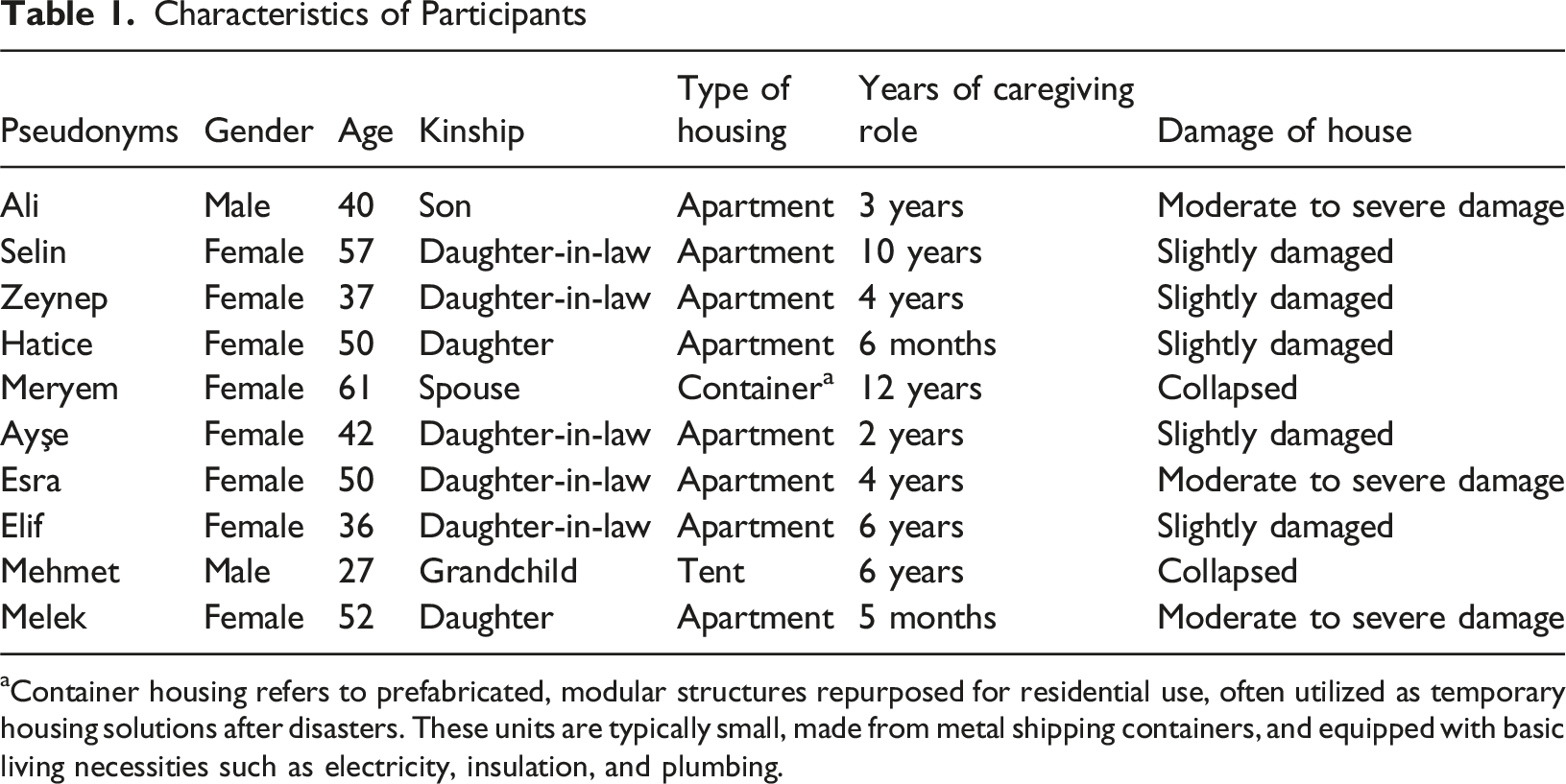
aContainer housing refers to prefabricated, modular structures repurposed for residential use, often utilized as temporary housing solutions after disasters. These units are typically small, made from metal shipping containers, and equipped with basic living necessities such as electricity, insulation, and plumbing.
Data Collection
Interview Questions
Data Analysis
The data analysis for the qualitative study was conducted using the Interpretative Phenomenological Analysis (IPA) approach. IPA is a qualitative research method that focuses on exploring how individuals make sense of their personal and social world, aiming to understand the lived experiences of participants in their own terms. The steps involved in conducting data analysis using IPA described by Smith & Osborn (2008); (1) looking for themes in the first case, (2) Connecting the themes, (3) Continuing the Analysis with Other Cases, (4 ) Writing Up.
Rigor and Trustworthiness and Ethical Issues
To ensure rigor and trustworthiness, we maintained researcher reflexivity throughout data collection and analysis. The interview guides were created, and to familiarize themselves with the interview process, interviewers practiced using the semi-structured guides to ensure uniform question delivery and effective probing techniques. Data were coded independently by the researchers; disagreements were discussed together and finalized. Additionally, peer debriefing and reflexivity were employed to minimize bias and enhance the study’s credibility. The research team were experts in the field of public health nursing; the first author holds a PhD degree, and the second author is a PhD candidate. Both researchers held qualitative research methodology training and the expertise of the primary researcher in this methodology contributed to the overall quality of the study.
The study obtained ethical approval from the Ethics Committee of Koç University (IRB) on date of 19th of September 2023 (approval number: 2023. 294.IRB3.137) before participant recruitment. Informed consent was obtained from all participants before data collection, ensuring they were fully aware of the study’s objectives, confidentiality measures, and their right to withdraw at any time. All participant names and identifiable details were removed or replaced with pseudonyms to protect privacy. Audio recordings, transcripts, and consent forms were stored in password-protected digital files and secure physical locations, accessible only to the research team. Identifiable information was not shared with third parties, and results were reported in a way that prevented re-identification. Interviews were conducted in private locations to ensure confidentiality and minimize external disruptions. Participants were informed that they could leave the study at any time and that no compensation or incentive would be given for participation, as indicated in the consent form.
Results
The study included ten family caregivers of individuals with dementia, consisting of one son, one spouse, two daughters, one grandchild, and five daughters-in-law. Most caregivers (n = 7) were daughters-in-law, highlighting their significant role in caregiving responsibilities within the family structure. The average duration of caregiving varied significantly, ranging from 5 months to 12 years. On average, participants had been caregiving for approximately 4.6 years. Regarding housing conditions, most caregivers (n = 7) lived in apartments, while one lived in a container home, and another resided in a tent due to safety-related displacement. Housing damage varied, with three caregivers reporting moderate to severe damage, two reporting complete collapse, and five reporting slight damage. Characteristics of participants are shown in Table 1.
Four main themes emerged from this analysis: (1) Adapting to Change and Addressing Unmet Needs, (2) Crisis Care Dilemma: Balancing Concerns for Loved Ones with Dementia, (3) Healthcare Hurdles: Struggles in Access and Support, (4) Navigating Challenges: Recommendations for Well-being.
Adapting to Change and Addressing Unmet Needs
All participants shared their experiences starting from the moment of the earthquake. Some participants conveyed that the individuals with dementia felt frightened during the earthquake, while others mentioned they did not sense anything. All participants mentioned the difficulties they faced in meeting the basic needs such as water, electricity, transportation, nutrition, and shelter for the individuals with dementia they were caring for. In particular, the lack of hygiene materials, limited access to incontinence products, and unmet toilet and bathing needs contributed to an increase in hygiene-related illnesses among those requiring special care. Ayşe described how the post-earthquake living conditions exacerbated the hygiene challenges they faced: “Since we were in a tent, there was no cleaning, no water, no toilet and bathroom, my father-in-law had his diaper on all the time. We needed diapers so bad. Thus of course the diseases increased.”
The shelter was identified as one of the most crucial issues expressed by the relatives of individuals with dementia. Living in a communal space with someone who has dementia was a significant concern for caregivers, and they were quite apprehensive about this situation. One caregiver described the overwhelming difficulties they encountered while trying to care for a family member with dementia in a shared tent: “We were in a group of around 60 people in the tent. I was constantly trying to manage my father-in-law. He’s unaware, both scared and unaccustomed to sleeping in such a place. We placed mats and tried to lay him on it. He couldn’t lie down; he kept yelling day and night saying his back hurt.”
Caregivers observed a marked deterioration in the health of their loved ones, with significant declines in daily functioning, memory, cognitive abilities, and speech. The disruption of their familiar environment, particularly the loss of their homes, played a critical role in exacerbating these effects. For many individuals with dementia, the adaptation process to temporary housing was overwhelming, and the stress appeared to worsen both their mental and physical health. As Meryem explained, the sight of his destroyed home triggered a profound emotional and physical response in her relative: “When he saw his home in such a destroyed state, he felt disturbed, his legs and hands became unsteady. He fainted. He said, ‘I will live in it, where is my home?’ He feels sad, sometimes cries, and falls into depression.”
Similarly, Mehmet shared how his relative, deeply distressed by the situation, expressed thoughts of despair and hopelessness: “Sometimes he said words that implied that he could not stand this situation and did not want to live. He did not want to leave his destroyed house.”
These accounts reveal the intense emotional toll that such catastrophic events have on individuals with dementia, with caregivers noting not only a physical decline but also an exacerbation of mental health symptoms such as depression and suicidal ideation. The loss of home and the inability to return to familiar surroundings were key triggers for this deterioration, highlighting the intricate connection between environment, mental health, and dementia care.
It is explained that health conditions were changed after the earthquakes and these changes created a challenge for those in shared places. Wandering and incontinence levels worsened significantly, whereas previously, they had no or less problems in these issues. These changes not only made caregiving more challenging but also created discomfort among others in the tent.
One of the primary concerns voiced by caregivers was the fear that relocation to temporary accommodation centers could exacerbate agitation in individuals with dementia. The crowded environment and unfamiliar setting were seen as potentially overwhelming, increasing the likelihood of distress. Additionally, caregivers were concerned that their loved ones’ behavior might disturb others, further complicating the situation.
For many, placing a family member in temporary accommodation was seen as too risky. As Ayşe explained: “Some people say take him to the temporary accommodation centers. We said, he attacks, he cannot be taken there. Lots of people were living there, and he could harm them too, nobody would take this risk.” The coping solution they devised for such a situation was to isolate themselves and return to the damaged house. “When the situation worsened, my husband declared, “No matter what, I’ll stay at home with my father.”
Elif shared how she and her spouse took turns staying awake at night to manage the increasing agitation of their loved one, as the tent environment seemed to intensify her distress and had to return to their damaged home as she explained: “We were forced to enter the house. Because staying in the tent was triggering her more, and she wouldn’t sleep all night. She would try to put out the candles. If the candle fell, it would set fire to the sheets and the tent. She wouldn’t stop; we were sitting up all night. We took turns staying awake; my spouse and I couldn’t sleep.” Caregivers were also grappling with other safety concerns, particularly related to theft incidents that surged after the earthquake. As some caregivers noted, the heightened danger of theft made it even more difficult to consider relocating their family members, underscoring the complex web of safety, security, and caregiving responsibilities they faced in the aftermath of the disaster.
Crisis Care Dilemma: Balancing Concerns for Loved Ones with Dementia
Family caregivers expressed their concerns and dilemmas about whom to prioritize on the day of the earthquake and what steps to take for their loved one with dementia during the crisis. In such moments of crisis, caregivers not only worry about their own safety but also face the difficult decision of how best to protect and care for them. The caregivers experienced a unique set of challenges as they juggle the needs of both their relatives with dementia and other family members, all while managing the overwhelming stress of the situation. Elif shared her feelings of helplessness and anxiety during the earthquake, reflecting on the emotional toll of caregiving under such extreme circumstances: “I mean, my psychology was very bad too. I couldn’t talk to anyone. If I did, what would I say? You can’t keep up with the children and her, it’s helpless. Helplessness…. She (the patient) didn’t understand anything.”
A central concern for many caregivers was the fear of leaving the person with dementia alone in such a chaotic and unstable environment. The uncertainty of aftershocks, the risk of further injury, and the overwhelming responsibilities of caring for multiple family members added to their anxiety. Meryem expressed the profound anxiety she felt, torn between the urgent need to rescue her daughter trapped in rubble and the responsibility of caring for her spouse with dementia: “Aftershocks were still ongoing, I was worried. My daughter was trapped in the rubble. I needed to rescue my daughter from the wreckage, and I was also worried about what to do with my spouse. I took him out of the house; he was undressed, and there was nowhere to sit him down. I didn’t know what to do and where to leave him.”
For many caregivers like Meryem, the inability to balance the needs of multiple family members—particularly in the context of a disaster—left them feeling helpless and overwhelmed. The worry of leaving their loved one with dementia alone was a constant source of distress. As Elif shared: “Her biggest problem is being alone at home, we sleep in the same room, if she doesn’t see us she gets up and worries.” Moreover, caregivers often found themselves exhausted from the dual demands of managing the deteriorating health of their loved ones with dementia while also calming and supporting other family members.
Caregiver Elif, who is also a mother, shared her experiences: “Should I attend to my children, or should I attend to my mother-in-law? I couldn’t leave my mother-in-law alone in any way. It’s truly a feeling of helplessness… After the earthquake, being alone became her greatest fear. She kept repeating sentences like, ‘There will be another earthquake, and I will die alone.’ I have to reach out to her. As she said these things, the children became even more frightened. I have to calm them down too. While trying to attend to them, I lost track of what I should attend to. That’s why, about 2-3 months ago, I stopped breastfeeding my son and started using antidepressants.” The lack of social support during this time compounded the mental and physical exhaustion, highlighting the immense strain on caregivers during such crises.
Healthcare Hurdles: Struggles in Access and Support
A critical concern voiced by all participants was the inadequacy of healthcare services. The shortage of specialized doctors and the lack of functioning hospitals forced caregivers of individuals with dementia to look for healthcare solutions beyond their usual resources. In addition, the requirement to obtain prescription reports from specialists became a significant barrier, making it even more difficult for caregivers to access necessary medications during an already challenging time.
Elif expressed her frustration as follows: “I don’t have the means to go somewhere else. Why did they make it so difficult for us to obtain these medications, which he consistently uses? I’ve been going back and forth to the hospital every day for a week. Where can we renew these prescriptions?
This lack of access to essential healthcare services not only impeded caregivers’ ability to maintain their loved ones’ medication regimens but also caused added emotional distress. Compounding this issue, some caregivers reported that the medications they were provided as assistance had expired and were no longer usable. As a result, they were forced to independently acquire medications from out of town.
This breakdown in healthcare access led to significant neglect in the necessary health check-ups for this vulnerable population. As Ayşe pointed out: “His doctor is gone, there is no hospital, there is nothing. Where will we take him? We disrupted his medication, his treatment, and everything around 8 months.”
The inability to access healthcare services left many caregivers feeling uncertain and anxious, particularly when it came to managing the health conditions of their loved ones with dementia. With limited access to specialists, caregivers were not only concerned about maintaining ongoing care but also feared making wrong decisions, such as seeing a new doctor or altering medications. This uncertainty created a sense of indecision, leaving them unsure of how to best navigate their caregiving responsibilities.
Navigating Challenges: Recommendations for Well-Being
All participants expressed their gratitude for the relief organizations that supported their basic needs following the earthquake. Ali conveyed his appreciation, noting how a relief organization provided a wheelchair that significantly eased the caregiving process: “A relief organization provided us with a wheelchair. This was helpful for us because it made it easier for us to meet my father’s toilet and bathing needs.” The support they received from both family and community also played a key role in their coping mechanisms during the recovery process.
Despite receiving a caregiver pension for the person they care for, many caregivers felt that this financial assistance was insufficient to cover their ongoing expenses. Elif shared the difficulty of managing the costs of caregiving, particularly for essential items such as diapers: “I mean, if I buy diapers for my mother-in-law, even her own pension is not enough for diapers because diapers are very expensive. So, you try to take her to the toilet as often as possible. Although her medicines are reported, we pay a percentage for her medicines.” This statement highlights the financial strain caregivers experience, even with the pension they receive.
While aid materials were sent, some specific items for people with special needs, such as diapers, wheelchairs, and medicines, were either not included or were difficult to access due to logistical challenges. This gap in necessary supplies further complicated the caregiving process and underscored the ongoing challenges faced by caregivers in the aftermath of the earthquake.
Three out of ten participants perceived discrimination against elderly individuals, particularly in the prioritization of resources and care during the post-earthquake period. Mehmet expressed his frustration with how the elderly were treated, emphasizing that younger individuals with a higher chance of survival were given priority: “Priority was given mainly to those who were genuinely young and had a higher chance of survival. Especially during this process, priority was not particularly given to the elderly.” This perception of neglect highlighted the emotional and practical struggles caregivers faced in ensuring that their elderly relatives received the attention and care they needed. Furthermore, some of the participants believed that the government should oversee and address the basic needs of this special-needs group. They expected support and prioritization, but the lack of complete fulfillment of these needs resulted in caregivers feeling disappointed and abandoned as expressed: “We were somewhat like stepchildren.” “At first, a container should have been provided for individuals who have special conditions and needs. Six months later, they gave us a container, but there was nothing inside. There has been no one reaching out to help us so far.”
The caregivers suggested that mobile healthcare services—which involve delivering medical care directly to affected individuals in their living space— along with consulting services to address their questions or health concerns, daycare services or respite care for those in need of special care, psychosocial support for caregivers, and skilled nursing care services located in one place or container could enhance the well-being of both the caregivers and the individuals they care for in the post-earthquake period. Melek explained how having a container or a tent near their home could help caregivers manage the adjustment process: “We had a lot of adaptation issues with my mother. Initially, providing shelter is crucial for these patients. The faster they can transition to normal life, the better it is for them.” Mehmet “After all, this is a serious health problem. First of all, there needs to be a hospital with (dementia) specialists. All hospitals were destroyed here. When you add financial problems and transportation problems, the person cannot reach the healthcare provider, and we cannot produce any alternative for their well-being.” These suggestions underscore the caregivers’ belief that practical, accessible healthcare services and support systems are critical to improving the quality of life for both caregivers and individuals with dementia in the aftermath of such crises.
Discussion
The qualitative study about the experiences of individuals with dementia and their family caregivers following earthquakes provided valuable insights into how they cope with the aftermath of such catastrophic events. The emergence of four main themes sheds light on the multifaceted challenges faced by this vulnerable group and underscores the importance of tailored interventions for their well-being. The themes identified were: Adapting to Change and Addressing Unmet Needs, Crisis Care Dilemma: Balancing Concerns for Loved Ones with Dementia, Healthcare Hurdles: Struggles in Access and Support, and Navigating Challenges: Recommendations for Well-being.
The theme of “Adapting to Change and Addressing Unmet Needs” highlights the transformative process individuals with dementia undergo in the wake of earthquakes. In the aftermath of the disaster, caregivers of individuals with dementia encountered substantial challenges, as they were compelled to respond to emergent and often unmet needs while simultaneously adapting to highly unstable living conditions. For some, residing in overcrowded communal environments significantly exacerbated the difficulties of caregiving; such settings not only disrupted established routines but also intensified behavioral symptoms and compromised privacy and safety. In contrast, other families refrained from relocating to temporary accommodation centers due to concerns related to social stigma associated with dementia, despite the relative benefits these facilities might have offered in terms of security and access to services. Across both scenarios, the psychosocial and functional health of people with dementia was adversely affected. Many caregivers reported uncertainty regarding evacuation procedures and access to appropriate shelter and care, reflecting a broader absence of disaster preparedness tailored to cognitively impaired populations. These findings are aligned with an expanding body of literature documenting the deterioration of cognitive, emotional, and behavioral functioning among individuals with dementia following large-scale disasters, often attributed to disruptions in environmental stability. Reported manifestations include heightened agitation, anxiety, aggression, emotional distress, disorientation, and depressive symptoms (Brown et al., 2012; Christensen & Castañeda, 2014; Furukawa et al., 2012; Gibson et al., 2018; Heppenstall et al., 2013; Miyagawa et al., 2021). Additionally, studies have demonstrated the long-term psychological and cognitive consequences of disasters among older adults, including impaired psychological recovery (Toyabe et al., 2006) and increased risk of dementia onset following exposure to traumatic events such as earthquakes (Hikichi et al., 2016).
Contributing to this vulnerability, factors such as overcrowding, physical and logistical barriers, limited access to resources, and the persistent fear of stigma have been shown to discourage caregivers from engaging in post-disaster recovery processes, thereby further isolating both caregivers and care recipients (Smith et al., 2016). The inability to effectively anticipate or manage basic care, housing, and safety needs—amplified by systemic deficiencies in disaster planning—underscores the urgent need for more inclusive and responsive preparedness strategies. In this context, the integration of dementia-specific educational resources, straightforward and accessible preparedness guidelines, and the provision of dementia-friendly accommodations within shelters and temporary housing facilities should be prioritized. The incorporation of these measures into both national and international disaster preparedness frameworks is essential to address evacuation-related safety concerns and to ensure adequate psychosocial support for individuals with dementia and their caregivers (Peterson et al., 2024).
The theme of “Crisis Care Dilemma” delves into the intricate decisions caregivers face in prioritizing the safety and well-being of their loved ones with dementia and other family members during and after earthquakes. The caregivers grapple with the tension between ensuring the immediate safety of their family members and the psychological changes or consequences of earthquakes observed in individuals with dementia. Evacuation to inadequate conditions often worsens their mental and cognitive health (Yen, 2019). Coping with these worsening cognitive symptoms could potentially strain and impose burdens on caregiving families and communities, leading to a risk of overlooking the distinctive needs of older adults (Smith & Osborn, 2008). This emphasizes the need for comprehensive crisis management strategies that consider the unique needs of individuals with dementia and provide guidance for caregivers in making challenging decisions. Effective disaster preparedness for individuals with dementia necessitates detailed pre-disaster planning, including clearly defined evacuation procedures that specify the destination, mode of transportation, and designated support persons. Equally important is the establishment of robust post-disaster social support networks to ensure continuity of care for this highly vulnerable population (American Psychological Association, 2023; Brown et al., 2012). Consistent with the findings of the present study, Gibson et al. (2018) and Uekusa (2019) have also emphasized the significance of family support in influencing caregivers’ mental health in post-disaster contexts. In conjunction with these measures, the integration of community-based support interventions—such as adult day care programs, peer support groups, and in-home care services—has been recommended to strengthen caregivers’ psychological resilience and enhance their ability to manage the complex and often overlapping responsibilities associated with dementia care (Gibson et al., 2018). The psychosocial experiences of caregivers in disaster contexts have also been explored empirically. For example, Nicosia et al. (2022) investigated the impact of a wildfire in the United States on individuals with cognitive impairment and their caregivers who participated in an integrative group movement program at an adult day care center. The study revealed that caregivers reported moderate levels of perceived stress, which remained stable over time and did not significantly increase.
In circumstances where dementia symptoms escalate beyond the capacity of informal caregiving, transitioning the individual to a long-term care facility—where specialized and continuous support may be more readily available—alongside the development of sustained support mechanisms involving both family members and healthcare professionals, might be a viable option (Nishikawa et al., 2018). However, both aging in place and relocating to institutional settings entail unique challenges and potential psychological risks for individuals with dementia. Therefore, such decisions should be made proactively, through collaborative discussions between caregivers and healthcare providers, with careful consideration of the individual’s needs, preferences, and vulnerabilities, as well as a thorough evaluation of the potential risks and benefits in the context of disaster preparedness.
The study also identified the challenges in accessing healthcare and support, which aligns with the findings of Asfuroğlu and Gümüşoğlu (2023), who discussed the increase in orthopedic injuries after earthquakes, imposing a significant burden on the health system. The study’s recommendations for well-being resonate with the work of Davarani et al. (2022), which explored the challenges and barriers of preparing households against earthquakes, emphasizing the importance of disaster preparedness for the overall well-being of individuals and families. To mitigate the potential interruption of healthcare access during disasters, caregivers should proactively develop preparedness plans that include the secure storage of essential medications, medical equipment, and relevant health documents, as well as the compilation of accurate and up-to-date contact information for local pharmacies and healthcare service providers. Moreover, the impact of earthquakes on cognitive function, as indicated by Pollice et al. (2011), further emphasizes the need for comprehensive support for individuals with dementia and their caregivers in the aftermath of such disasters. Our study revealed that individuals living with dementia and their families experienced significant difficulties in accessing social assistance in the aftermath of the disaster and were confronted with feelings of exclusion. Similarly, Abbasian et al. (2023) reported that, following the earthquake in Tehran, older adults were unable to receive adequate support from authorities, and their age-related illnesses and physical limitations were largely overlooked. This not only hindered their mobility and access to essential resources but also led many to feel like a burden. Disaster response planning should systematically prioritize vulnerable populations, particularly those who face structural barriers in accessing social welfare and healthcare services. When available, household registration systems should be utilized to accurately map the locations and needs of older adults and persons with disabilities, enabling the delivery of individualized, home-based assistance. In the absence of such data infrastructure, local authorities should undertake rapid assessments either in advance of, or immediately following, a disaster to develop an accurate and operational registry of these at-risk groups. Establishing such a system is essential for ensuring equitable, targeted, and efficient allocation of post-disaster resources.
The theme of “Navigating Challenges” brings forth valuable recommendations for enhancing the well-being of both individuals with dementia and their caregivers in the post-earthquake period. Mobile healthcare services were among the key suggestions proposed by caregivers to improve post-disaster care for individuals with special needs. These services involve the delivery of essential medical care through specially equipped vehicles or mobile units that operate outside traditional healthcare facilities. While these units may not offer the full range of hospital services, they are designed to provide primary healthcare, chronic disease management, mental health support, and emergency care—particularly to those living in disaster-affected, remote, or underserved areas. In such contexts, mobile healthcare units are typically coordinated by national health authorities and dispatched from unaffected regions to ensure continuity of care when local infrastructure is compromised. As such, they are vital in filling service delivery gaps for vulnerable populations, including older adults and individuals with disabilities. In addition to mobile healthcare services, caregivers also recommended the provision of consulting services to address emerging health concerns, as well as daycare or respite care options for individuals requiring continuous support. Furthermore, psychosocial support tailored to the needs of caregivers themselves was emphasized as an essential component of a comprehensive and integrated approach to post-disaster care. Together, these suggestions underscore the importance of building multi-layered service models that address both medical and psychosocial dimensions of recovery. Alongside the findings of the present study, existing literature identifies several coping strategies recommended for individuals with dementia and their caregivers in post-disaster contexts. These include engaging in artistic and social activities to promote emotional well-being, drawing on spiritual and religious beliefs as sources of strength, sharing experiences with other caregivers to foster mutual support, and adopting a problem-focused coping approach by directing attention toward controllable aspects of the situation rather than ruminating on circumstances beyond one’s control (Kruse, 2006; Nicosia et al., 2022; Smith & Osborn, 2008). These recommendations provide a roadmap for policymakers, healthcare providers, and support organizations to implement targeted interventions that address the unique needs of this population.
Limitations
While this study offers valuable insights into the experiences of individuals with dementia and their family caregivers following earthquakes, several limitations must be acknowledged. The relatively small sample size may limit the broader applicability of the findings; however, since qualitative research prioritizes depth over generalizability, the interpretive phenomenological approach enabled a detailed exploration of participants’ lived experiences. The study was confined to a specific earthquake-affected region, potentially limiting the diversity of experiences captured, as factors such as disaster preparedness, healthcare infrastructure, and local support systems can vary significantly across different locations. Participants’ recollections may have been subject to recall bias, as interviews were conducted eight months after the earthquake events. Emotional distress or memory distortions may have influenced their narratives. Implementing longitudinal studies or real-time ethnographic observations could help address this limitation. Finally, the researcher’s positionality and interpretative lens may have influenced the analysis; however, reflexivity and peer debriefing were employed to enhance credibility, though alternative interpretations of the findings remain possible.
Conclusion
This study reveals the multidimensional challenges faced by individuals living with dementia and their family caregivers in the aftermath of earthquakes, highlighting the profound impact of disasters on this highly vulnerable group. Participants’ experiences demonstrated severe deficiencies in meeting basic needs such as shelter, hygiene, access to healthcare, and care support, all of which contributed to the deterioration of cognitive and physical symptoms in people with dementia and significantly increased the psychological burden on caregivers. In particular, the lack of social support systems intensified feelings of helplessness and burnout among those providing care alone. The findings underscore the urgent need for disaster preparedness plans to be tailored to the specific needs of individuals with dementia and their caregivers. Enhancing the accessibility of integrated services—including mobile healthcare, adult day care centers, consulting services, and psychosocial support—during the post-disaster period is critical. The results clearly indicate the necessity for developing specialized disaster preparedness programs and educational materials for people living with dementia and their caregivers in Türkiye. We also recommend the establishment of a helpline to provide counseling for caregivers affected by the earthquake to help them to manage the symptoms associated with dementia and to protect the mental health of carers. In this context, the involvement of civil society organizations in providing psychosocial support to caregivers emerges as a critical component of comprehensive post-disaster care.
The study also revealed a marked worsening of dementia symptoms following the disaster, suggesting the need for longitudinal, quantitative research to examine the neuropsychiatric and cognitive effects of disasters over time. Furthermore, the elevated stress levels and perceived caregiving burden among caregivers in the aftermath of earthquakes highlight the importance of targeted psychosocial interventions, such as peer support groups. Future research might focus on interventions aimed at strengthening disaster preparedness among people with dementia and their caregivers, as well as on evaluating the effectiveness of community-based solidarity models and neighborhood-level social support systems. Additionally, adult day care centers should be strengthened to play an active role in post-disaster service delivery, and their infrastructure should be made resilient to future disasters.
Footnotes
Acknowledgments
We would like to extend our deepest gratitude to all the participants who generously shared their experiences and insights, making this study possible. We are especially grateful to the caregivers who took time from their challenging roles to contribute to this research.

Ethical Statement
Funding
The authors received no financial support for the research, authorship, and/or publication of this article.
Declaration of Conflicting Interests
The authors declared no potential conflicts of interest with respect to the research, authorship, and/or publication of this article.
Data Availability Statement
The data that support the findings of this study are available from the corresponding author upon reasonable request. Due to the sensitive nature of the interviews and the confidentiality agreements with participants, some data may be restricted to protect their privacy.