




Abstract
Background
With the growing population of older adults in Nigeria comes a simultaneous rise in the incidence of dementia in the country. Adequate knowledge of dementia is needed to effectively administer interventions for persons living with dementia. Physiotherapy is one of the professions providing care for people with dementia. The aim of this study was to evaluate the knowledge of dementia among physiotherapists in Nigeria.
Methods
An online survey method was used to collect data from the sample population of practicing physiotherapists in Nigeria. Data was collected using the 21-item Dementia Knowledge Assessment Tool Version Two (DKAT2) and the respondents also provided some demographic information. Mann Whitney test, Kruskal Wallis test and Spearman’s rho correlation were used to test for association between the DKAT2 scores and the demographic variables and this association was further explored with multiple linear regression analysis.
Results
A total number of 223 physiotherapists participated in this study. The findings of the study show that there is limited knowledge of dementia among the physiotherapists. Number of years of professional experience and specialty groups predicted significantly higher knowledge scores.
Conclusion
The knowledge deficits found among physiotherapists in Nigeria indicate that older adults living with dementia might not be receiving the best evidence-based physiotherapy treatments for their condition. This research therefore advocates for an educational intervention to be carried out within the physiotherapy profession in order to improve the quality of services rendered to their patients.
Introduction
The prevalence of dementia is on the rise globally and currently estimated to be about fifty-five million people with nearly ten million new cases yearly (World Health Organization, 2021). In Sub Saharan Africa, persons with dementia were 2.13 million in 2015 and are estimated to be 7.62 million by 2050 (Alzheimer Disease International, 2019). In Nigeria, the incidence of dementia has increased over the past two decades and currently has a prevalence of five percent among older adults aged 60 and above (Adeloye et al., 2019).
Numerous studies assess the knowledge of dementia among the public as well as healthcare workers worldwide. A poor knowledge of dementia is seen among many populations in Nigeria and beyond. In studies conducted in Nigeria, South Africa, The Republic of Congo and Tanzania, aside from the common misconceptions of dementia, there appears to be a spiritual link established with dementia which makes many people seek spiritual healing like fasting, praying and exorcism when they or their family/friends exhibit symptoms of dementia (Kehoua et al., 2019; Khonje et al., 2015; Mushi et al., 2014; Uwakwe, 2000). One of the ways of understanding dementia among the general public is through information provided by healthcare workers approached (Gonçalves-Pereira et al., 2020). Public awareness has been advocated as a way of improving intervention for persons with dementia and reducing the burden it has on them and their caregivers (Adebiyi, Fagbola, Olakehinde, & Ogunniyi, 2015; Uwakwe, 2000). This hereby highlights one of the reasons why health workers need to have a very good knowledge of dementia to pass on.
Educating healthcare workers in dementia and other mental health issues is crucial in improving assessment, diagnosis, and management of persons with dementia (Liu et al., 2016). In Sub Saharan Africa, there is a dearth of studies on knowledge of dementia among health workers. Two of the articles which were found indicated poor knowledge due to lack of training in pre or post medical education and this made some health workers feel less confident and more uncomfortable whenever they encounter people living with dementia or other cognitive impairments (Cettomai et al., 2011; Kamoga et al., 2019).
Physiotherapists are part of a multidisciplinary team involved in giving quality care, promoting and maintaining independence in people with dementia (Chavan, 2018; Foley, Sheehan, Jennings, & O’Sullivan, 2018). In Nigeria, physiotherapy education is a five-year Bachelor of Physiotherapy or Bachelor of Medical Rehabilitation program with two years of premedical training and three years of clinical education with specialties in Orthopedics and sport; Neurology and Medicine; Women’s Health, Cardiopulmonary; Geriatrics, and Pediatrics (MRTB Nigeria, 2022). Physiotherapy in dementia aims to improve function, reduce risk of falls, slow down the disease progression, reduce pain, improve quality of life and educate patients on their condition (Chavan, 2018; LeDoux, Lindrooth, Seidler, Falvey, & Stevens-Lapsley, 2020). Physiotherapists tackle issues like reduced balance, strength deficits, impaired postural control, gait abnormalities, and musculoskeletal issues resulting from falls or fractures and pain (Chavan, 2018; Hall, Watkins, Lang, Endacott, & Goodwin, 2017). During planning of rehabilitation programs, the physical, cognitive and emotional status of the patients are considered as well as the status of the caregivers because of their vital contribution to care of these patients (Chavan, 2018). Exercises and early rehabilitation have been known to be beneficial to people living with dementia by slowing functional decline and improving balance, strength and ability to function independently (Dawson, Judge, & Gerhart, 2019; LeDoux et al., 2020; Morandi et al., 2019).
Studies on the knowledge of dementia among physiotherapists have been carried out in countries like Australia, The United Kingdom, Ireland, The United States of America and Canada. Hunter and Divine (2020) in a Canadian survey highlighted that out of 36% of physiotherapists who had received a prior training on dementia either as part of their physiotherapy degree program or other outside courses, 40% of them felt they needed additional training in order to effectively treat people with dementia (Hunter & Divine, 2020). Similar findings were reported in studies (Lorio, Gore, Warthen, Housley, & Burgess, 2017; Miles, Staples & Lee, 2019) carried out in the United States which assessed the knowledge and attitude of physiotherapists towards dementia care. Although most of these physiotherapists have an advanced certification, they agreed they needed more training on dementia with half of them not feeling confident with their capabilities in dementia care (Miles et al., 2019). A qualitative study among physiotherapists in Ireland reported having minimal dementia education during their undergraduate or postgraduate training which created a barrier in achieving optimal physiotherapy care (Foley, Sheehan, Jennings, & O’Sullivan, 2020). In the Canadian survey, the attitude of physiotherapists in working with people with dementia was associated with their level of knowledge (Hunter & Divine, 2020). Physiotherapists with higher educational qualification and knowledge had more positive attitude (Hunter & Divine, 2020). Studies (Hunter & Divine, 2020; Lorio et al., 2017; Miles et al., 2019) on level of knowledge of dementia among physiotherapists reported a low confidence level (7.8%) among physiotherapists. However, additional training program proved helpful in the increasing the confidence level of physiotherapists in working with people with dementia (Lorio et al., 2017). Lack of confidence was thought to be due to having insufficient cognitive and behavioral management strategies (Hunter & Divine, 2020).
In all these studies which were conducted in developed countries, the physiotherapists although having a good knowledge of dementia needed more training. To the best knowledge of the authors, there is no known published study on knowledge of dementia among Sub Saharan Africa physiotherapists. In this study, we aimed to evaluate the level of knowledge of dementia among Nigerian physiotherapists, discover areas of knowledge deficit as well as factors that could influence their knowledge.
Materials and methods
Study design
This study adopted a cross-sectional research design to evaluate the understanding of dementia among physiotherapists in Nigeria.
Participants and sampling technique
Participants were physiotherapists irrespective of practising in any state in Nigeria either in an academic, domiciliary or a clinical setting. Data were collected between June and August 2020. The convenience sampling technique was used to recruit participants. The request for participation was issued on social media (WhatsApp, Telegram, Facebook, LinkedIn, and Twitter) to physiotherapists practising in Nigeria and through emails and SMS to physiotherapists in all Nigerian states. As there was a global pandemic at the time of this survey, other methods of collecting data were not recommended.
Data collection tools
A web-based survey was used to collect data from the participants. The web-based survey included some demographic questions that identified age, gender, speciality in physiotherapy practice and the number of years the participant has practiced as a physiotherapist. The survey also included the Dementia Knowledge Assessment Tool version two (DKAT2). This questionnaire has been pre-approved by its creators during its original publication, demonstrated reliability and validity, is user-friendly and does not require the permission of authors before use (Toye et al., 2014). An item in the questionnaire was adapted to suit the context most familiar in the country, specifically the item asking about window blinds was changed to curtains because the term ‘blinds’ was not commonly used in Nigeria. Each correct answer in the DKAT2 is scored as one while incorrect answers are scored as zero. A total of the correct answers is calculated at the end of the questions and scores can range from 0-21. Scores from 0-7 are regarded as poor, 8-14 are average while 15-21 are good.
Data analysis
Descriptive analysis was carried out on the independent variables of age, gender, specialty, and number of years of experience as well as the individual items on the DKAT2 and was presented in counts and percentages.
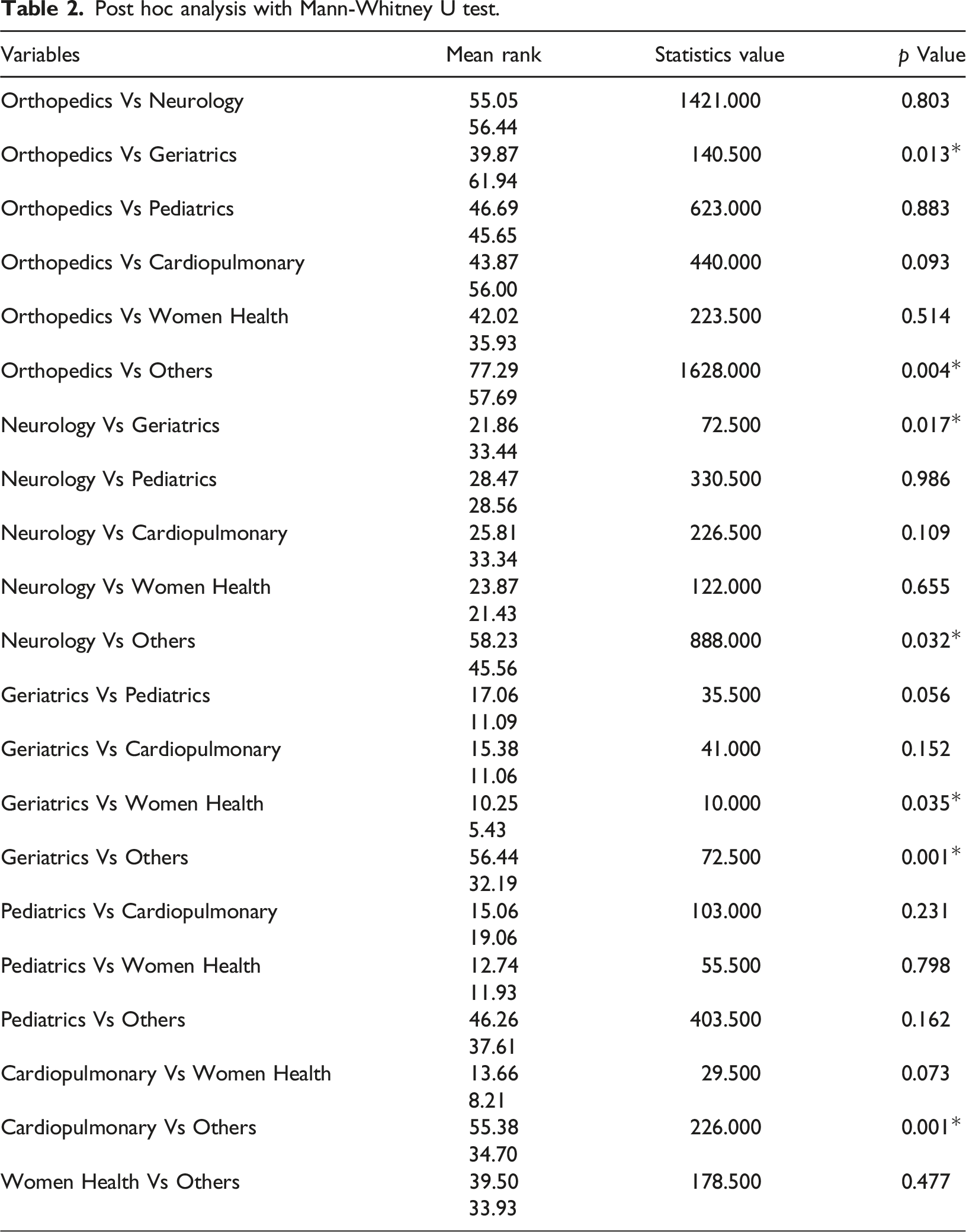
Bivariate analysis using the Mann-Whitney test was used to test for difference between knowledge of dementia in men and women. The Kruskal-Wallis test was used to test for difference in the knowledge of dementia in the different specialties in physiotherapy and a post hoc analysis using the Mann Whitney U test was conducted among the specialties in order to determine which speciality has a significantly different level of knowledge. Spearman rho correlation was used to test for association between knowledge (total DKAT2 scores) and the continuous variables which are participants age and years of experience. These non-parametric tests were used because the data collected were not normally distributed. Multivariate analysis model using the multiple linear regression was used to further explore the association of independent variables of gender, age, specialty and years of experience on the knowledge of dementia in the sample population. All analysis was carried out with the SPSS software and p ≤ 0.05 was considered significant for all the analyses conducted.
Results
Participants demographics.
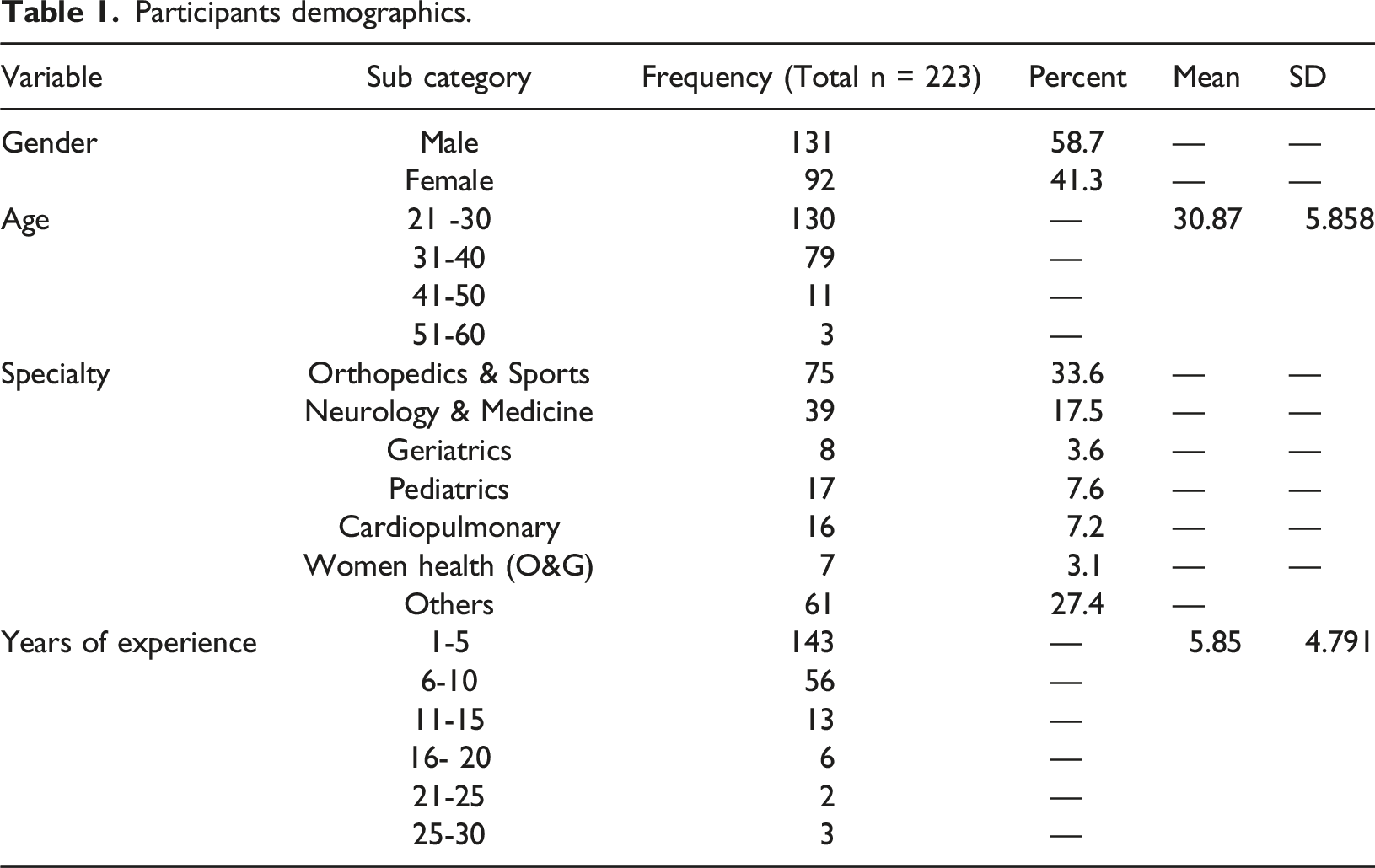
DKAT2 Scores
The average score on the Dementia Knowledge Assessment Tool Version 2 was 13.52. The respondents correctly answered the questions 64.4% of the time with scores ranging from 3 to 21 (the maximum score for the questionnaire is 21). Item 12 “Sudden increase in confusion is a characteristic of dementia” (false) scored the least where only 10.3% of participants correctly answered the question. In comparison, the item “Dementia occurs because of changes in the brain” (true) had the highest score were 96.4% correctly answered the question.
In terms of specialty participants in the geriatric specialty had correctly answered (100%) nine questions in the domains of Late Stage Symptoms and Care, Causes, Prognosis, and Role of exercise. Physiotherapists in the cardiopulmonary and women’s health specialties had scored correctly (100%) in four questions each. No other specialty scored 100% in any item. Respondents with more than 16-20 years of experience correctly answered statements (100%) in nine items. Those with 21-25 years of experience correctly answered (100%) questions in 11 items while the most experienced (25-30 years) correctly answered questions in 13 items. Respondents with 1-15 years of experience had no question where they all answered correctly. In the age variable, the oldest participants (51-60 years) scored a 100% in 13 items in the domains of prognosis and causes and late stage care, while they failed two items in the domain of symptoms. Participants within the age range of 41-50 scored correctly in five items in the causes and late stage care domains. Younger participants (<40) had no item where they all answered the questions correctly. Similarly, no gender correctly got (100%) any item.
Bivariate analysis
The association of the total score of the DKAT2 and the predictor variable of age, gender, specialty and years of experience was analysed at the bivariate level using Kruskal-Wallis test with a post hoc Mann-Whitney test, and Spearman rho correlation test. These non-parametric tests were used because of the dependent variable’s significance (p < 0.01) when tested for normality using the Kolmogorov-Smirnov and Shapiro-Wilk tests.
Using the spearman rho correlation to assess the association between the total score of the DKAT2 and the number of years of experience as a physiotherapist revealed a positive relationship between their years of experience and their level of knowledge of dementia which was statistically significant (rs = 0.224, p < 0.001). The relationship between the total DKAT2 scores and the participants ages did not reveal any relationship (rs = 0.106, p = 0.114).
Post hoc analysis with Mann-Whitney U test.
Multivariate analysis
Multivariate regression analysis for DKAT2.
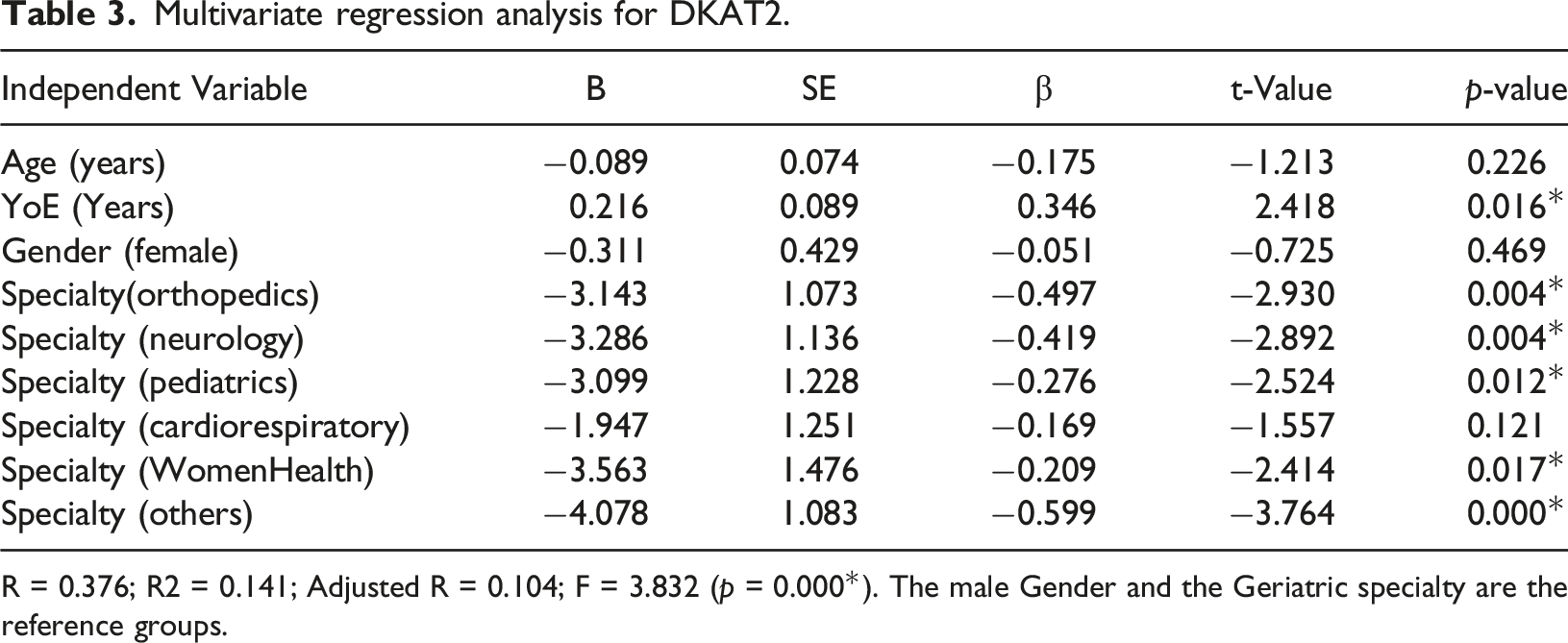
R = 0.376; R2 = 0.141; Adjusted R = 0.104; F = 3.832 (p = 0.000*). The male Gender and the Geriatric specialty are the reference groups.
Only 14.1% of the variance in the outcome variable “total score” is accounted for in this model using the four predictors. The f test is statistically significant (p < 0.01) which shows the partial correlation coefficients are not zero. In the coefficient table some results were noted to be significant. The two variables that provided an explanation for the significant f test is the specialty and the years of experience. For every increase in years spent practicing as a physiotherapist, the level of knowledge increases by 0.216 holding the effects of other variables constant. This model also showed that compared to the geriatric specialty, other specialties (orthopedics, neurology, pediatrics, women health and non-specialized) had significantly lower scores holding the effects of other variables constant. The contribution from gender and age variables were not significant in this model.
Discussion
This study’s findings show limited level of knowledge of dementia (an average of 64.4% correct answers across the entire sample) among the sample population. This is notably much lower than other studies assessing dementia knowledge among physiotherapists in Canada, and Australia as well as other healthcare professionals in China and in India (Biswas et al, 2017; Hunter & Divine, 2020; Maggs, Kay & Ovaskainen, 2019; Wang et al., 2018).
Descriptive analysis of the DKAT2 items showed the areas in dementia that are generally well-known, and areas hardly known and easily confused about. Many participants in this study cannot differentiate between delirium and dementia symptoms. Among the DKAT2 items, the erroneous statement “Sudden increase in confusion is a characteristic of dementia” was the item least likely to be answered correctly. A similar finding by Lawler, et al (2020) using the Dementia Knowledge Assessment Scale (DKAS) noted that the item “the sudden onset of cognitive problems is characteristic of common forms of dementia” (false) was also the most failed question. Other low scores in the DKAT2 items were in the domain of symptoms. The study in China also highlighted similar findings of knowledge deficiency in symptoms of dementia among healthcare professionals (Wang et al., 2018). This deficit in identifying symptoms of dementia has been noted to be a barrier to early detection and diagnosis among healthcare professionals (Foley et al., 2020).
This study found that knowledge of dementia is not influenced by age or by gender, a similar result was seen in Australia where no significant relationship existed between knowledge of dementia and gender or knowledge of dementia and age (Annear, 2020). This is however in contrast to studies by Wang et al (2018) where more dementia knowledge was found among the older participants and amongst females. This study also found a significant relationship between years of experience and dementia knowledge. The improvement in knowledge of dementia with increased years of experience was attributed to an advancement in research and clinical practice (Hunter & Divine, 2020) and the present study concurs with this notion. In specialty variable, all other physiotherapy specialties had a lower score compared to the geriatric specialty, this may be because the geriatric specialty are more likely to receive training, encounter and treat persons with dementia than other specialties. Participants without a specialty had the least knowledge and this may be due to lack of experience associated with specialization as other specialties may encounter persons with dementia whilst treating their comorbid conditions.
A considerable amount of variance in knowledge of dementia could not be explained by the demographic characteristics and other predictor variables used in this study. However, the variance in this study is notably lower than that of other studies, this may be due to the absence of other predicting factors like prior dementia training, self-reported confidence, and caring experience which have significantly affected the level of knowledge of dementia but were not analysed in this study.
Part of the physiotherapist’s duties is to accurately inform the patients and caregivers on their conditions, possible future changes in their lives and adaptations to improve their quality of life. All these can only be achieved if the physiotherapist is well informed on the condition. A reason for this limited knowledge in dementia may be due to lack of training in dementia both at the undergraduate level and afterwards. Most continuing education programs in Nigeria focus on other conditions often neglecting impact of physiotherapy in mental health. Qualitative interviewing of physiotherapists in Ireland (Foley et al., 2020) and other healthcare workers in Uganda (Kamoga et al., 2019) revealed little to no training on dementia in medical school and this causes them to lose confidence when caring for people with dementia and they sometimes ignore the symptoms and focus on other comorbidities of dementia. Although these two countries are in different continents and stages of development (developed and developing country) and have different educational system, it is seen that not much attention is paid to dementia during undergraduate training of healthcare professional including physiotherapists. Adequate knowledge is vital in guiding persons with dementia and their caregivers and providing the best evidenced quality care to improve their lives and slow the disease progression.
Limitations of the study
A limitation of this study is the lack of use of some predictor variables such as prior training in dementia and previous experience caring for persons with dementia which were significantly associated with level of knowledge in other studies. This could have affected the variance in this study which has been shown to be lower than that of other studies. Also, because the participants chose to respond to the invitation to complete the survey, those who participated may be the ones who have an interest in dementia, this could imply that the level of knowledge among the sample population may be lower than seen in this study. Another limitation is that due to the online recruitment approach used in this study, some physiotherapists without internet access during the duration of the study may have been excluded which could have influenced the study.
Conclusion
The findings of this study reveal that Nigerian physiotherapists demonstrated a limited knowledge of dementia. Therefore, the deficit in knowledge in this study suggests that older adults with dementia may not receive the best physiotherapy services. Items in the DKAT2 helped to highlight areas of deficiency and this can inform the healthcare providers and physiotherapists on where to focus more training. The area which was noted to be deficient is crucial in identifying and diagnosing the condition as well as improving the person-centred care management of dementia. The significance of specialty and dementia shows that some physiotherapists are exposed to information about dementia more than others. However, other specialities such as orthopaedics may encounter dementia patients with hip fractures and other complications from falls and loss of balance and have to plan their treatment whilst noting their dementia diagnosis. The relationship between years of experience and knowledge of dementia shows the impact of learning by exposure, however waiting to learn by exposure should not be the only means to learn. Educational policy makers should ensure a revision of the undergraduate and post-graduate physiotherapy school curriculum to include dementia and other mental health conditions. Similarly, workplace seminars and continuing program education should include training/brush-up courses on dementia to their staff/attendees. This will help prepare the physiotherapists whenever they encounter persons with this condition at any point in their career. The importance of person-centred care in physiotherapy management of dementia has been duly noted and advised in other studies and physiotherapists should be trained to adapt a treatment regimen to suit the needs of the person with dementia.
Footnotes
Acknowledgement
We would like to thank all participants for taking part in this study. We will also like to thank the Department of Gerontology, University of Southampton as this research was conducted for an MSc Dissertation within the Department. Finally, we will like to thank the Commonwealth Scholarship Commission for awarding the scholarship for the MSc program which brought about the dissertation.
Declaration of conflicting interests
The author(s) declared no potential conflicts of interest with respect to the research, authorship, and/or publication of this article.
Funding
The author(s) received no financial support for the research, authorship, and/or publication of this article.
Ethical considerations
Ethical approval was sought and granted by the University of Southampton ethics committee. Also, the Nigerian Society of Physiotherapy which is official association for Nigerian Physiotherapists gave an approval as gate keepers of this population. An introductory page seeking the consent of participants after providing details on the importance of the study was used and the survey was designed to be anonymous and therefore did not ask for any personal identifying information from the participants.
