




Abstract
Background
Intergenerational programmes are formal activities bringing different generations together and have been identified as a way to help people living with dementia to stay socially connected. While there is some evidence from individual studies as to their benefits, there is no overall coherent account as to the perceptions and experiences of participants who engage in such programmes. This review synthesises qualitative evidence of the experiences and perceptions of young people and older people living with dementia of participating in such programmes.
Methods
We searched EBSCO CINAHL, OVID Medline, Embase, Ovid PsycINFO, the Web of Science, Epistemonikos and grey literature sources. We used thematic synthesis to analyse and synthesise the evidence in to four themes, with 11 key findings. We assessed our confidence in each of these findings using the GRADE-CERQual (Confidence in the Evidence from Reviews of Qualitative research) approach.
Findings
Our review highlights the potential enjoyment for young people and older people living with dementia when participating in Intergenerational programmes, despite some initial trepidation. These programmes provide an opportunity to establish and develop relationships and for young people to learn about dementia, ageing and how to interact with older people living with dementia. However, it is important to have staff facilitators present to provide reassurance to both groups. It is also important to take the personal preferences of participants into account and to be considerate of noise levels and other aspects of programme delivery that may inhibit engagement.
Conclusion
This is the first qualitative evidence synthesis specifically exploring Intergenerational programmes aimed at older people living with dementia. We provide insights into the perspectives of those who have participated in Intergenerational programmes. It is important to consider these views, together with other evidence of effectiveness, when planning Intergenerational programmes. While our review is limited by a small number of studies from only a few countries, we have moderate to high confidence in our findings. Further research into the development of Intergenerational programmes specifically tailored for people living with dementia is needed. The findings also provide guidance for people planning to deliver or design future Intergenerational programmes.
Keywords
Background
Community dementia supports and services are pivotal for helping people living with dementia to stay socially connected. One such engagement approach is the use of Intergenerational programmes. ‘Intergenerational programmes’ refer to formal activities that bring different generations together in a meaningful way (Galbraith et al., 2015; Park, 2015; Teater, 2016). Participants in Intergenerational programmes commonly include older people (with and without dementia) aged over 65 years (Bagnasco et al., 2019; Radford et al., 2018), and younger generations ranging from pre-school, school aged and university students (Martins et al., 2019). Evidence from previous research outlines a number of potential benefits of Intergenerational programmes: enhancing a sense of well-being for people living with dementia; raising awareness among children engaging in the activities (thus reducing stigma) and maximising the role of the community in social engagement with people living with dementia (Galbraith et al., 2015; Teater, 2016).
The delivery of Intergenerational programmes varies across settings, and three models of Intergenerational care have been previously identified (Radford et al., 2018). Firstly, centre-based visitation, where one generation visits another in a designated centre. A second model is a shared campus approach with facilities for both generations, with a common area for intergenerational care. The third model is a family day care approach suitable for when the older generation requires 24-h nursing care. A scoping review by Galbraith et al. (2015) identified 27 articles exploring dementia-specific Intergenerational programmes in different settings including long-term care facilities, dementia-specific units, shared sites and intergenerational schools. Art, music, Montessori approaches, education, mentorship, story-telling and recreational activities were used to create an intergenerational connection. A separate scoping review by Gerritzen et al. (2020) identified buddy systems, Montessori-based activities and reminiscence programmes as successful activities in Intergenerational programmes. In addition, dementia education, creating a non-stigmatising environment and reflective journals were important considerations when designing Intergenerational programmes for people living with dementia. Non-dementia specific reviews of Intergenerational programmes included other activities such as reminiscence interventions, health education and virtual approaches (Bagnasco et al., 2019; Lee et al., 2020). This highlights the broad scope of activity that can be used in Intergenerational care.
There are challenges associated with the delivery of Intergenerational programmes for people living with dementia and younger generations. Children and/or their caregivers may be hesitant to interact with people living with dementia (Galbraith et al., 2015). This demonstrates that Intergenerational programmes need to be carefully considered and developed from the best evidence to ensure maximum benefit with minimal risk. A systematic review identified some considerations for the delivery of Intergenerational programmes (Su, 2017), including frequency, duration and composition/participants. The ideal length of a programme was identified as between 45 min and 2 h. Intergenerational programmes consisting older people and secondary school aged children or college students were found most effective, so narrower age gaps should be considered. The most effective Intergenerational programmes were those that had close to a 1:1 ratio of older and younger people.
Previous research has mainly examined the impact of Intergenerational programmes for older people (Baker et al., 2017; Camp & Lee, 2011; Low et al., 2015; Skropeta et al., 2014). Outcomes have been measured using engagement, quality of life and depression scales. Overall, Intergenerational programmes increase engagement and quality of life, but it is unclear how sustainable these outcomes are. Less research explores the impact of Intergenerational programmes for younger people involved. Low et al. (2015) conducted 21 interviews with children to assess their attitudes towards older people following their participation in a 12-week Intergenerational programme. However, children tended to answer more generally about their overall experience with older people and struggled to understand the questions posed by researchers. This emphasises a need to find more creative ways to collect data from younger children.
Existing evidence on the effectiveness of Intergenerational programmes for people with dementia is primarily quantitative (Martins et al., 2019; Radford et al., 2018; Su, 2017). One recent qualitative synthesis (Bagnasco et al., 2019) explored Intergenerational programmes for older people and young people, reporting that Intergenerational programmes have the potential to build intergenerational empathy and respect for both younger and older people and ‘uplift’ older people. However, from the older persons’ perspective, several barriers were identified including the ‘babyish’ nature of activities, finding the Intergenerational programme very tiring and feeling anxious about their capacity to contribute to the programme. Although relevant, this review did not look specifically at people living with dementia. Furthermore, the search was conducted in 2017, and more recent qualitative studies may have been conducted since that year. It is important to capture how participants view and experience Intergenerational programmes, to provide the context for what the current evidence deems effective in terms of setting, age groups, activities and other aspects of programme delivery. Qualitative evidence synthesis brings together qualitative insights in a meaningful way that can inform policy and practice (Thomas & Harden, 2008).
Objectives
The aim of this qualitative evidence synthesis was to explore the experiences and perceptions of participating in Intergenerational programmes for young people and people living with dementia. The specific objectives were to: • Explore the experiences and perceptions of older people living with dementia of Intergenerational programmes • Explore young people’s experiences and perceptions of Intergenerational programmes • Identify the factors that help or hinder Intergenerational programme delivery • Examine differences across settings, age groups and activities in Intergenerational programmes.
Criteria for considering studies for this synthesis
Types of studies
This review included qualitative primary research, incorporating several designs such as phenomenology, ethnography, grounded theory and more contemporary approaches. We included studies that have used and reported on both qualitative data collection and analysis methods. Data collection methods could include semi-structured interviews, focus groups or observations. As recommended by Sandelowski et al. (2007), mixed-method studies incorporating qualitative methods of data collection and analysis were also included if the qualitative component was clearly identifiable and could be extracted.
Types of participants
Two participant groups were included. Older people living with dementia included participants over the age of 65 with a formal or informal diagnosis of dementia. Studies focussing on people with early to late stage dementia were included (Hennelly et al., 2018). Individuals could be living in the community, attending day care centres or be resident in a care home.
Young people were defined as below the age of 18. We included pre-school and school aged children. We did not include younger adults attending third level education or aged 18 and over.
Types of interventions
Intergenerational programmes were defined as formal activities that bring different generations together in a meaningful way (Galbraith et al., 2015; Park, 2015; Teater, 2016). The activities could range from play, art, education and recreation, as identified above. There were no exclusions based on activity type, but we excluded intergenerational care among family members. The Intergenerational programme setting could be in the community, centre-based or on a shared campus.
Phenomenon of interest
The phenomenon of interest was the experiences and perceptions of completed or proposed Intergenerational programmes. We included studies that examined the acceptability, engagement, barriers and facilitators of Intergenerational programmes if the perspectives and experiences of one or both participant groups were captured. Studies that only examined the perspectives and experiences of formal and informal caregivers were excluded.
Methods
Search methods for identification of studies
We conducted a systematic search using keywords and controlled vocabulary up to 22 July 2020 (see supplementary file 1 for MEDLINE search).
Electronic databases
• MEDLINE (In-Process & Other Non-Index Citations (OvidSP)) • CINAHL (EBSCOhost) • PsycINFO (OvidSP) • ERIC (EBSCOhost) • SocINDEX (EBSCOhost) • Ageline (EBSCOhost) • Web of Science • Cochrane (Search for systematic reviews & QES) • Epistemonikos
In addition to searching the databases outlined, we conducted a grey literature search including theses via DART E-theses portal and ProQuest Dissertations & Theses Abstract & Index, as well as reviewing the reference lists of included studies and key references. We conducted a cited reference search in Web of Science and Google Scholar. Finally, we contacted key authors for any relevant unpublished data as well as seeking their expertise on studies that might meet our inclusion criteria as per EPOC guidance (Glenton et al., 2020). We did not apply any limits on language or publication date as per EPOC guidance (Glenton et al., 2020, p. 7).
We have reported the results of searching, screening and included studies using the PRISMA flowchart (Moher et al., 2009). (see Figure 1). PRISMA 2009 flow diagram.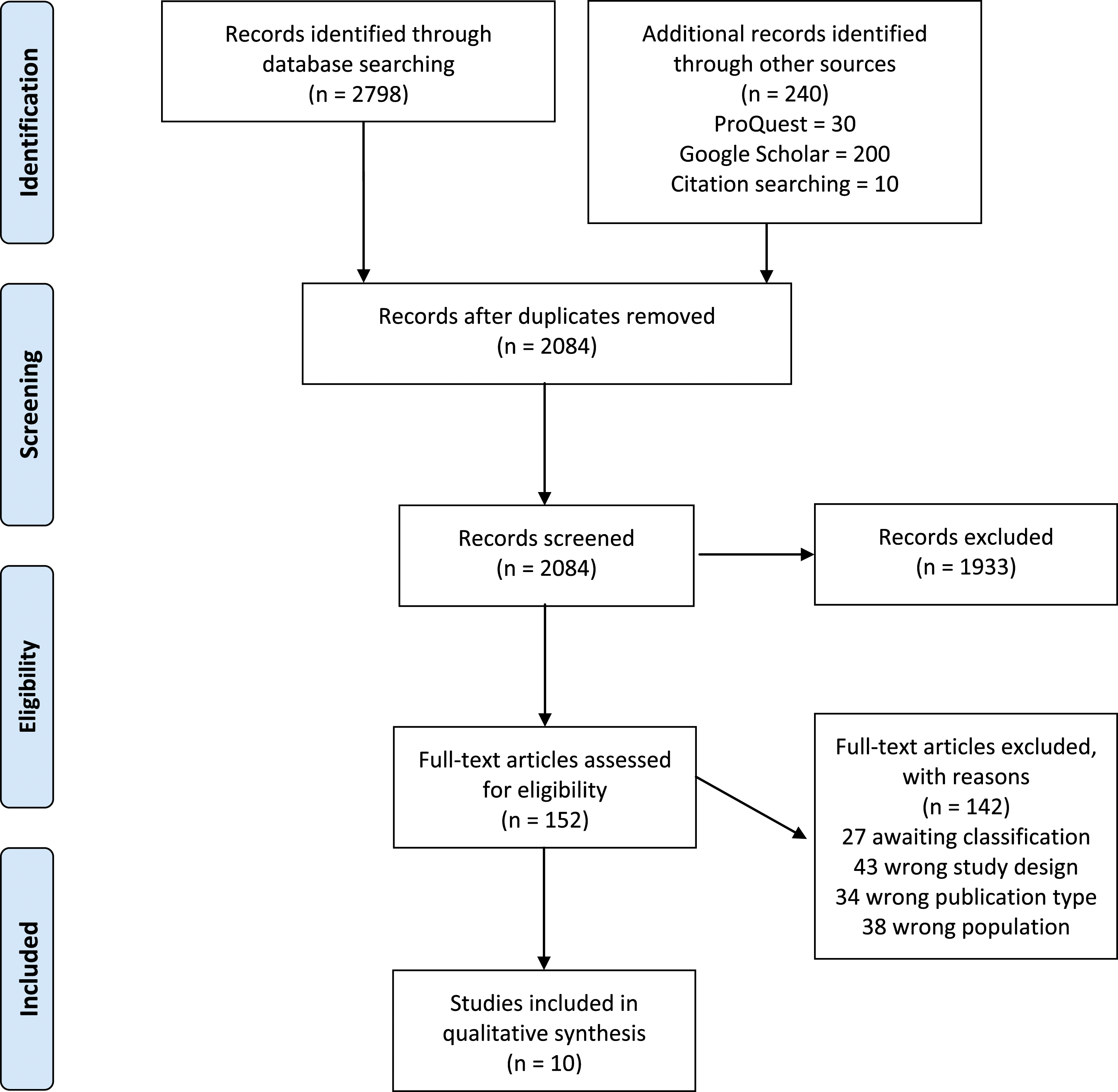
Data collection, management and synthesis
All the research records from the search strategies were collated and possible duplicates removed. Six members of the team (CH, ÁT, MH, SS, NH, MQ) worked in pairs to independently screen the title and abstract of each citation against inclusion and exclusion criteria. A subset of title and abstracts were assigned to each pair, both members of the pair separately reviewed the entirety of this subset. If uncertainty or disagreement arose regarding citation inclusion, the review team discussed decisions to moderate and resolve disagreements. The same process was adopted for full-text screening, with six review authors involved (ÁT, MH, SS, NH, FJ, CHJ).
Data extraction and synthesis
The RETREAT framework developed by Booth et al. (2018) was used to identify the most appropriate synthesis approach. It comprises seven domains: Review question, Epistemology, Timeframe, Resources, Expertise, Audience and purpose and Type of data. We used thematic synthesis as described by Thomas and Harden (2008), which moves beyond description to create analytical, and therefore more interpretive, themes. Thematic synthesis identifies three key stages: line-by-line coding; developing descriptive themes and generating analytical themes. The findings generated from this approach are particularly useful to policymakers and practitioners (Booth et al., 2016).
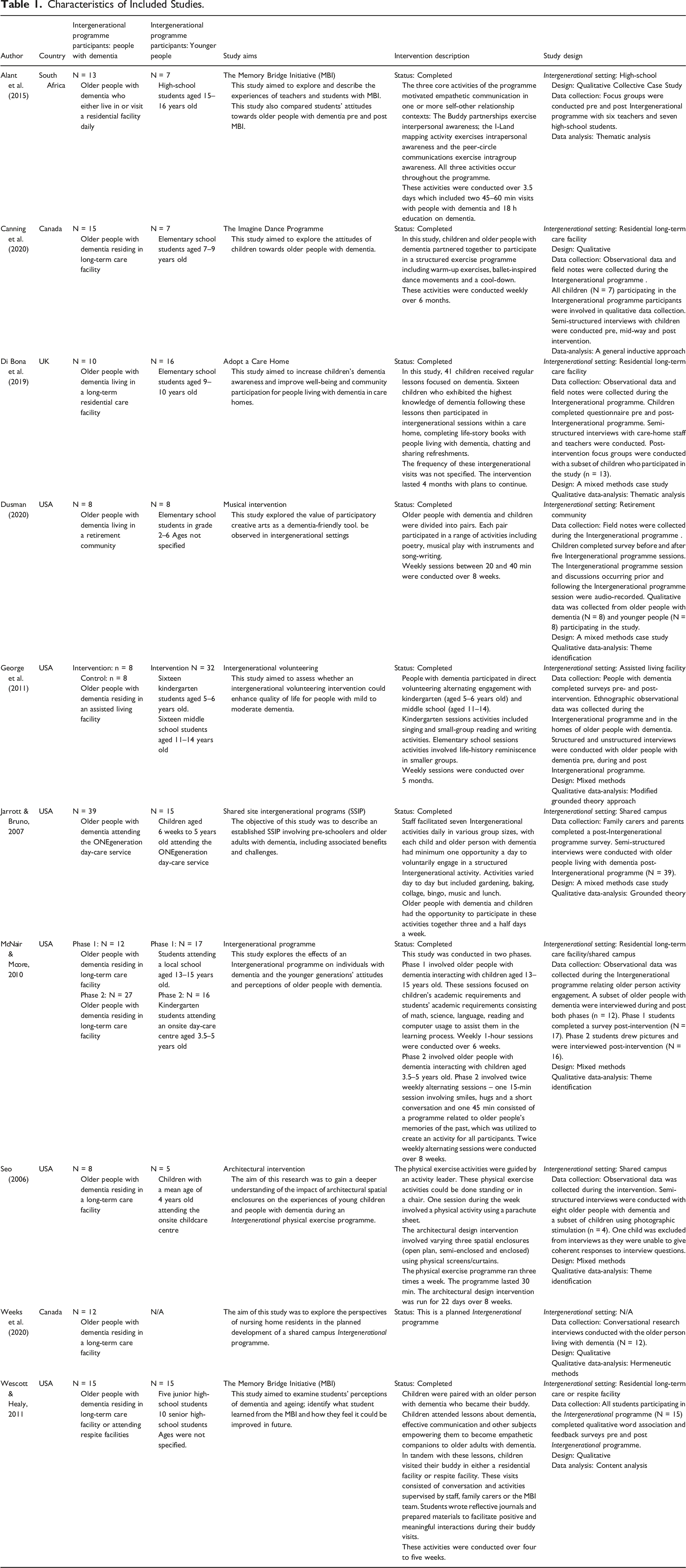
Characteristics of Included Studies.
Assessment of methodological limitations in primary studies
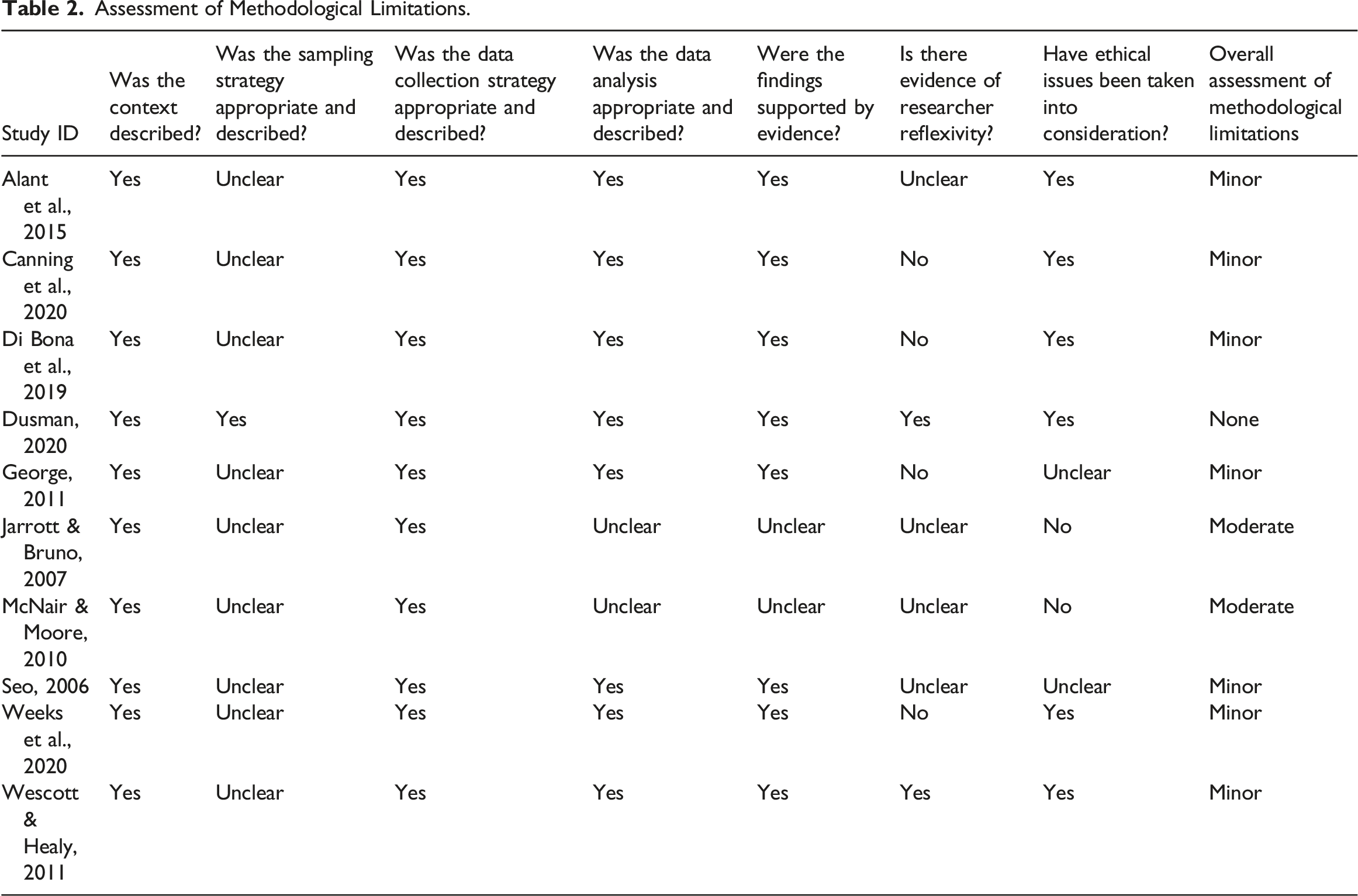
Assessment of Methodological Limitations.
Assessment of confidence in the review findings
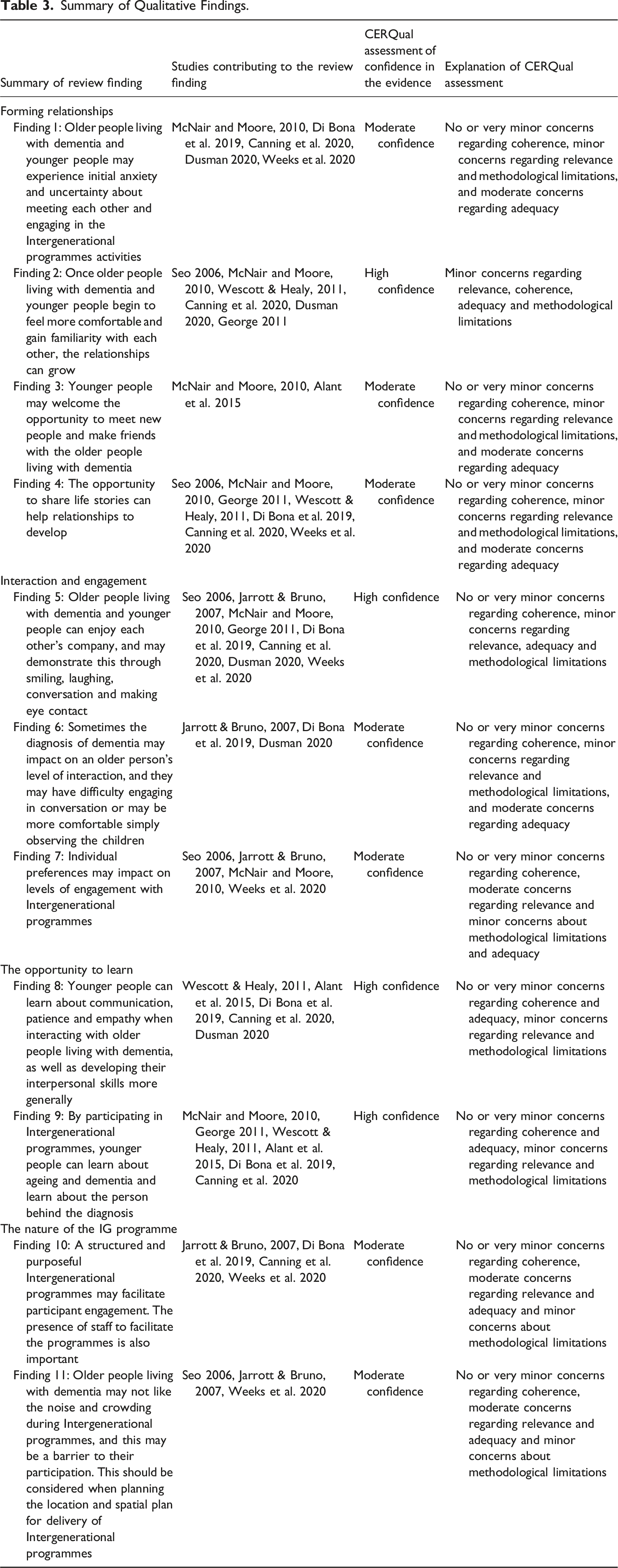
We used the Confidence in the Evidence from Reviews of Qualitative research (GRADE-CERQual) approach, developed by Lewin et al. (2018) for this purpose. Application of GRADE-CERQual involves assessing the methodological limitations and relevance of studies contributing to a finding combined with the coherence of the finding and adequacy of data (Lewin et al., 2018). GRADE-CERQual was applied to each of the summary findings to assess the confidence in the findings of each statement.
Review author reflexivity
The idea for this review was generated from a shared interest in Intergenerational programmes and a desire to learn more about the potential benefits of bringing children and older people living with dementia together. Some of the review team have experience as nurses of working with people living with dementia (SS, FJ, CH‐J, MQ and DC) and many of the team having experience in psychosocial dementia research (CH, SS, NH, FJ, CH-J, DC and ÁT). We acknowledge we have less collective experience with children’s research; however, MH has extensive experience of research with children and young people around food and health issues. Also, CH has experience of working as a children’s nurse. CHJ and MQ have experience of running an Intergenerational programme within the older person services and have seen first-hand the benefits of facilitating children and older people to engage in activities together. As a group, we have all had our own personal experiences of caring for children and/or people living with dementia and are acutely aware of the potential value of bringing these two groups together.
We also share an appreciation of a sense of community, and the importance of connectivity and social interaction. This is something that we now value more, having lived within the recent restrictions as a result of the COVID-19 pandemic. Our intention at the outset of this review was to use the findings to develop our own Intergenerational programme; and we hope that in time, we still can.
Reporting
The protocol for this review was registered with International Prospective Register of Systematic Reviews (PROSPERO). We were guided by the Cochrane EPOC guidelines (Glenton et al., 2020). The review was reported in line with the ENTREQ guidelines (Tong et al., 2012).
Findings
Results of the search
We included 10 studies in our review (Figure 1). These studies were published between 2006 and 2020.
Descriptions of the studies
The 10 studies in this review captured the perspectives and experiences of young people (n = 138) and older people living with dementia (n = 167) in the planning, implementation and evaluation of Intergenerational programmes (see table 1). Five of the studies captured the perspective of both participant groups, three studies sought the perspectives of the older person living with dementia and two sought the perspectives of younger people. In studies that also sought the perspectives of staff, parents and caregivers, we only extracted data for the population under review. Six studies were conducted in the USA, two from Canada, one from the United Kingdom and one from South Africa.
All studies focused on completed Intergenerational programmes except one that sought perspectives for the planning of an intervention. Two independent studies evaluated the Memory Bridge Initiative (MBI), which aims ‘to develop qualities in young people that enhance care of older adults with dementia’ (Wescott & Healy, 2011, p. 311). Other interventions included a dance programme, creative sessions, mentorship programmes, architectural design and more nonspecific Intergenerational programmes. Examples of activities across all programmes included dance class, life story booklet, song writing, reading, writing, reminiscence sessions, gardening, baking, collage, bingo, music, lunch together and physical exercise.
Review findings
We developed four main themes outlining the experiences and perceptions of Intergenerational programmes. These are forming relationships, interaction and engagement, the opportunity to learn and the nature of the Intergenerational programme. Our 11 key findings are presented within these themes.
Assessment of methodological limitations
We assessed one study as having no methodological limitations, seven studies as having minor and two studies as having moderate methodological limitations (see Table 2). All studies described the context and described an appropriate data collection strategy. Most studies described appropriate data analysis (n = 8), ethical considerations (n = 6) and findings supported by evidence (n = 8). Many studies under-reported their sampling strategy (n = 9) and evidence of researcher reflexivity (n = 8).
Assessment of confidence in our review findings
Summary of Qualitative Findings.
Forming relationships
This theme focuses on the way relationships can develop between older people living with dementia and younger people, and how familiarity and learning about each other can facilitate this process.
Participants in five studies expressed some initial anxieties about meeting each other for Intergenerational programmes (Canning et al., 2020; Di Bona et al., (2019); Dusman, 2020; McNair & Moore, 2010; Weeks et al., 2020). Some children in the study by Di Bona et al., (2019) were worried about meeting people living with dementia and how they might react when they met. As one child asserted, ‘I were a bit quiet, but once I got used to it I started asking questions’ (p. 1686). Similarly, the majority of adolescents in the study by McNair and Moore (2010) acknowledged they felt nervous or scared about what to expect. One adolescent in this study outlined, ‘I was excited, scared nerves, worried, anxious. I didn’t know what to expect. That’s why I was scared’ (no page number (np)). However, it was evident that these anxieties subsided once the young people were participating in the programme (Canning et al., 2020; Di Bona et al., (2019); McNair & Moore, 2010). Anxieties were also expressed by people living with dementia (Di Bona et al., (2019); Weeks et al., 2020). Di Bona et al. (2019) observed people living with dementia looking anxious and uncertain when children arrived and looked to staff for reassurance. When residents with dementia were asked about the introduction of an Intergenerational programme, Weeks et al. (2020) found they had concerns about their ability to interact with the children and the commitment involved. With regards the expectations of the children, one woman outlined, ‘You don’t want them expecting you and then you’re not feeling well’ (p. 10). Regarding the activities themselves, one woman stated, ‘I couldn’t lift anything heavy, and I can’t walk, so I mean, maybe I couldn’t handle it. I don’t know’ (p. 10). Like the young people, Di Bona et al. (2019) observed people living with dementia becoming less anxious after the first visit with residents saying that they were looking forward to the children’s next visit.
Findings reveal that as older people living with dementia and younger people become more comfortable, and gain familiarity with each other, positive relationships can develop (Canning et al., 2020; Dusman, 2020; George, 2011; McNair & Moore, 2010; Seo, 2006; Wescott & Healy, 2011). The duration of the intervention could impact on this, as the majority of the students in the study by Wescott and Healy (2011) felt that four weekly visits was inadequate for building relationships with older companions. In contrast, in the study by Canning et al., 2020, Intergenerational dance classes took place over 6 months, and findings revealed that as comfort and familiarity increased, relationships developed between the children and older people living with dementia. Children sought all residents as dance partners, and not just those they considered to have better mobility or ability to communicate. One girl stated that she always picked a different dance partner ‘cause everybody needs a turn, they can’t just like pick the same person each time’ (p. 278). Likewise, one girl in the study by Dusman (2020) noted that their partners with dementia became more comfortable in talking with them as the programme progressed, ‘They were much livelier! They weren’t as quiet. Annie talked a lot more, Kitty was a lot louder than usual, and she actually sung along this time’ (p. 133). Dusman (2020) also observed that children increasingly used the name of the person with dementia as time went on, and that the use of physical touch such as hand holding increased a sense of comfort and increased communication.
In two studies, young people expressed an appreciation of the opportunity to meet new people and make friends with older people living with dementia (Alant et al., 2015; McNair & Moore, 2010). All high-school students in the study by Alant et al. (2015) mentioned the opportunity to make new friends as part of their Intergenerational experience. One student outlined, ‘you can learn patience, kindness and make great new friends’ (p. 150). This is reflected in the study by McNair and Moore (2010), where one adolescent stated, ‘Felt good cause I learned a lot with my senior friend and also surprised that I enjoyed spending time with my senior friend. Feel a lot more comfortable around elders’, with another stating, ‘Came more of a friend with her, surprised how it went more comfortable’(np).
Older people living with dementia and younger people valued the opportunity to hear each other’s stories, which could help relationships to develop (Canning et al., 2020; Di Bona et al., (2019); George, 2011; McNair & Moore, 2010; Seo, 2006; Weeks et al., 2020; Wescott & Healy, 2011). One adolescent highlighted the value of sharing ideas and memories, ‘I learned that I can help someones [sic] life by just talking to them and shareing [sic] ideas and memorys [sic]. That I can make a difference by just talking to someone’ (Wescott & Healy, 2011, p. 319). Sharing stories could make the experience more enjoyable as highlighted by another adolescent, ‘It's fun I feel better that I did this. Wow when I heard their stories’. (McNair & Moore, 2010, np). People living with dementia also valued hearing about the lives of the younger people, as outlined by one resident, ‘If you stop to think and pay attention to children, they will tell you some unbelievable stuff’ (Seo, 2006, p. 228). Seo (2006) focused on spatial plans for Intergenerational programmes and found that closeness of seating arrangement facilitated this opportunity for sharing stories.
Interaction and engagement
This theme explores participants’ levels of interaction and engagement, and how this can be determined by individual circumstances and preferences.
Older people living with dementia and younger people reported enjoying each other’s company and were observed smiling, laughing, making eye contact and engaging in lively conversations (Di Bona et al., (2019); Dusman, 2020; George, 2011; Seo, 2006). The opportunity to interact with each other was reported as being fun and enjoyable (Canning et al., 2020; George, 2011; Jarrott & Bruno, 2007; McNair & Moore, 2010; Seo, 2006; Weeks et al., 2020). The experience of having fun was most referred to by the older people living with dementia, as one person outlined, ‘I love children. I always love children. They always have fun. It makes me have fun watching them’ (McNair & Moore, 2010, np). Similarly, in the study by George (2011), one participant highlighted that ‘It is energizing… the younger kids especially, but, you know the older ones, both age groups make you feel very wanted. They want to be with you, they fight for your attention, and they struggle with each other to get your full attention’ (p. 991). However, children could also view the experience as fun, ‘I have fun exercising with Ms. Nancy every time’ (Seo, 2006, p. 231). The children in the study by Canning et al., 2020, learned over the course of the intergenerational programme, that mobility problems would not prevent older people with dementia from engaging with them, and that they could still dance and enjoy themselves, albeit it in a different way. As one child asserted, ‘There’s a girl named J, and she, I think broke both of her feet … [she’s] in her chair, so it’s kinda hard for her to dance, but we still try to get her to dance, to have fun, and she still can’ (Canning et al., 2020, p. 278).
In some instances, the older person living with dementia would adopt a more passive role during the Intergenerational programme and observe the activities rather than actively participate in them (Di Bona et al., (2019); Jarrott & Bruno, 2007). Sometimes communication could also be challenging, and the person living with dementia struggled to answer the children’s questions. This was observed in the study by Di Bona et al., (2019), ‘Amongst all those who spoke with the children, there were occasions when they struggled to answer the children’s questions, finding it difficult to understand what or why they were being asked, or being unable to recall the detail. When this happened, some laughed it off, some turned to staff for help or sometimes staff intervened spontaneously, either to rephrase the question or to provide the person living with dementia some form of memory prompt’ (p. 1686). This could cause confusion for the child also, who also sometimes looked to staff for assistance on these occasions (Di Bona et al., (2019)). Children in the study by Dusman (2020) also noted the challenges of communicating with people living with dementia as they could not always comprehend what was being said.
Some participants did not perceive Intergenerational programmes as beneficial or did/would not value the opportunity to interact with the other generation (Jarrott & Bruno, 2007; McNair & Moore, 2010; Seo, 2006; Weeks et al., 2020). Some older people living with dementia wanted to do the activities on their own without young people, or others felt that young children would not like interacting with them (Jarrott & Bruno, 2007; Seo, 2006). As one older person stated, ‘They (children) don’t follow the exercise very well. I focus on exercising and do it without focusing on kids’ (Seo, 2006, p. 228). One woman living with dementia highlighted that not everyone would be interested in interacting with children, ‘I find it would make it more interesting for me, because I am involved in children, now I don’t know about everybody, I imagine there would be a lot that wouldn’t be interested in it’ (Weeks et al., 2020, p. 8). Seo (2006) highlighted that both residents and children may have preferences for who they would like to interact with, or how often they would like to engage with the activities, and the seating arrangements should facilitate this. Dusman (2020) identified that in some instances, the people living with dementia would defer to the children when identifying how the activities would progress. This was possibly due to the children’s enthusiasm for contributing to discussions about the activities.
The opportunity to learn
This theme describes what young people can learn from participating in Intergenerational programmes. This includes interpersonal skills as well as learning more about ageing and dementia.
Young people reported that the Intergenerational programme experience helped them to develop skills in communication and other interpersonal skills such as showing empathy, patience and kindness (Alant et al., 2015; Canning et al., 2020; Di Bona et al., (2019); Dusman, 2020; Wescott & Healy, 2011). These skills were not just specific to older people with dementia, but with people more generally, as outlined by one high-school student, ‘it’s like at school we never think of working with people and communicating … I don’t know how to say it but yeah. And yeah it’s a life experience. We’ll never forget about it because once you learn something it stays forever. And yeah, I think. And patience too. And also that understanding …’ (Alant et al., 2015, p. 151). More specifically to people living with dementia, students in another MBI programme identified the importance of listening and patience, with one stating, ‘discovered some kind of strength. I can adaptate [sic] myself to the conditions of the buddy’s world’ (Wescott & Healy, 2011, p. 319). One child also outlined the importance of patience, ‘You should not rush them or get angry but offer to help them as they might have dementia’ (Di Bona et al., (2019), p. 1687). Similarly, a girl in the study by Dusman (2020) suggested, ‘Just taking a little time to adjust to what you’re asking. Cause their minds don’t work as well as ours do, so I sort of have to talk slowly so they understand me, but she understands me anyway. And then she nods, or she talks softly and I put my ear close. She’s… fun. She’s fun! And she has a lot of sarcasm’ (p.137).
Young people found that through participating in Intergenerational programmes, they learned more about ageing, Alzheimer’s disease and dementia (Alant et al., 2015; Canning et al., 2020; Di Bona et al., (2019); McNair & Moore, 2010; Wescott & Healy, 2011). For some students, participating in the programme highlighted that ‘age is just a number’, and that individuals with Alzheimer’s disease are people too (Alant et al., 2015; Wescott & Healy, 2011). For example, one adolescent in the study by Wescott and Healy (2011) outlined, ‘They are people just as we are and they still retain their own distinct personality’ (p.321). Similarly, a child commented, ‘people with dementia were like normal people, funny and told jokes’ (Di Bona et al., (2019), p. 1687). From the older person’s perspective, one man identified the potential learning for children by participating in Intergenerational programmes, ‘I think it’s a really good thing for the kids. They’ll meet all kinds of individuals and get accustomed to seeing especially people with Alzheimer’s’ (Weeks et al., 2020, p. 9). Similarly, people living with dementia appreciated their role in helping children to learn about dementia (George, 2011). One participant with more severe dementia noted that the children ‘have to learn these different things that happen. I think I can help them a lot… and if we can do that, then I think it is a situation that can be helpful and healthful’ (p.992).
The nature of the Intergenerational programme
This theme examines how some elements of the programmes were perceived, and how they might impact on participants engagement with Intergenerational programme.
Having a structured and purposeful intergenerational programme was considered helpful for facilitating participant engagement (Canning et al., 2020; Weeks et al., 2020). The activities involved could potentially motivate older people to engage, as outlined by one woman, ‘I’m really looking forward to it … I’m usually always in my room … but I’m looking forward to this’ (Weeks et al., 2020, p. 8). The presence of a staff member was comforting for children partaking in the programmes and encouraged them to interact more with older people (Di Bona et al., (2019); Jarrott & Bruno, 2007). For some older people with dementia in the study by Weeks et al. (2020), it was important to know that staff would be there to supervise, and that the responsibility for the children did not lie solely with the older person, as expressed by one woman, ‘But as a resident, if I would be selected, you kind of would be under someone’s guidance, is that right’ (p.9).
Some older people living with dementia identified that they did not like the noise and activity of children during Intergenerational programme (Jarrott & Bruno, 2007; Seo, 2006; Weeks et al., 2020). Some residents in the study by Jarrott and Bruno (2007) expressed a dislike for noise, commotion and impoliteness of children during Intergenerational programme. Similarly, some residents in the study by Seo (2006) said they preferred children who do not get out of control. As one woman in the study by Weeks et al. (2020) asserted, ‘They can’t just run in … and go all over the place and holler and scream’ (p.9). The focus of the study by Seo (2006) was on the space and physical environment for Intergenerational programmes. Some residents did not like closed spaces because of feelings of discomfort and crowding. Others felt that a closed space promoted intimacy and prevented children from getting distracted by other people and activities outside of the Intergenerational programme. Seo (2006) was unable to draw conclusions as to the best physical space in which to deliver Intergenerational programmes.
Discussion
We identified varying perspectives of, and levels of engagement with, Intergenerational programmes and some barriers and facilitators to how well programme delivery was perceived. For instance, both older people living with dementia and younger people expressed trepidation ahead of the programmes, but this often alleviated once they engaged with the activities. As programme participants became more familiar with each other, positive relationships developed, with younger people referring to their ‘friendships’ with the older people they met. Sharing stores was valued by both older and younger people. Seo (2006) believed sitting closer together during sessions optimised this chance to learn about each other. The optimal length and duration of programmes for relationships to develop was not evident in our findings. However, the systematic review by Su (2017) found that meeting too often was less effective than weekly programmes, though this review included, but was not specific to, Intergenerational programmes with people living with dementia.
Both older and younger people in our review enjoyed the Intergenerational programmes. This was reported by them but also observed in studies though smiling, laughing and touch. Similarly, Bagnasco et al. (2019) identified that Intergenerational programmes had a positive effect on mood and well-being. A recent systematic review by Zhong et al. (2020) reported social interactions with young children created health benefits for older adults, including physical and psychosocial health, cognitive function, social relationships, physical activity and social activity. The findings of the current review also highlighted that older people with dementia enjoyed the company of younger people through observation including smiling, laughing, making eye contact and engaging in lively conversations (Di Bona et al., (2019); Dusman, 2020; George, 2011; Seo, 2006). Older people with dementia also reported having fun (Canning et al., 2020; George, 2011; Jarrott & Bruno, 2007; McNair & Moore, 2010; Seo, 2006; Weeks et al., 2020). However, sometimes interactions could be challenging when the person living with dementia had difficulty communicating, or the younger person could not comprehend what was being said. In some instances, the person with dementia would adopt a more passive role or defer to the assertiveness of some children in deciding how activities should proceed. Our findings could not compare different age groups; however, Su (2017) found that combining the oldest adults with the youngest age groups was least effective, so narrower age gaps could be considered when planning Intergenerational programmes. Similarly, we were unable to draw comparisons across different types of activities, but Galbraith et al. (2015) concluded that the type of activity is less important than ensuring it is meaningful for participants in an environment that permits relationships to develop.
Individual preferences could impact on how well the participants engaged with the activities. For example, some older people liked spending time with children, whereas others did not. Zhong et al. (2020) advise that when considering Intergenerational programmes, it is important to remember that older adults can differ in terms of their sociocultural backgrounds, personal preferences and health conditions. Our review also recognises that noise and sense of chaos of some types of Intergenerational programmes may be off-putting for older people with dementia. Hyperacusis (excessive auditory perception) may be a significant issue for people living with dementia (Mahoney et al., 2011). This should be considered when planning how Intergenerational programmes are implemented. In addition, when implementing the programmes, the presence of staff to facilitate can be comforting for both younger and older people.
Our review found, with high confidence, that Intergenerational programmes provided learning opportunities for younger people. They learned about dementia and ageing, but also learned about communication, patience and empathy when interacting with older people living with dementia. Some older people living with dementia also recognised the role they had in raising awareness and teaching children about their condition. Bagnasco et al. (2019) also identified the valuable learning for younger people but also identified that older people learned more about children as well.
Our review was based on a limited number of studies, mainly from the USA, and our confidence in the review findings was limited at times by lack of detailed data in the findings. One of our review aims was to examine differences across settings, age groups and activities in Intergenerational programmes. However, the nature of the data did not lend itself to those comparisons. Previous systematic reviews have also highlighted the variations in study design, setting, intervention content and outcome measurements, making conclusive recommendations difficult (Lee et al., 2020; Martins et al., 2019; Radford et al., 2018; Zhong et al., 2020). Further research exploring the longitudinal impact of Intergenerational programmes and larger study samples would strengthen evidence in this area. Most included studies investigated Intergenerational programme engagement in long-term care settings; therefore, more research exploring the experiences of community dwelling older people with dementia is needed. Nonetheless, we were able to identify some key findings in which we have moderate to high confidence. These findings bring together participants’ perspectives of such programmes and therefore are important to consider when developing and implementing intergenerational programmes.
Conclusions
Regardless of the activities involved, when developing and implementing Intergenerational programmes, researchers and clinicians should consider the findings of this review. It is important to consider individual participants’ preferences, noise levels and find ways to reduce the trepidation that some participants may experience in advance. It is also important to consider adequate presence of staff and the optimum environment to reassure and comfort participants. These findings can be used in conjunction with the evidence from the other reviews discussed in this work, to guide the planning and implementation of future Intergenerational programmes. As highlighted by Canedo-García et al. (2017), the aim should be to incorporate effective and efficient Intergenerational programmes that meet users’ needs, such as those identified in this review.
This is the first qualitative evidence synthesis specifically exploring Intergenerational programmes aimed at older people living with dementia. An additional review, focussing on perspectives of staff, caregivers and family members, would provide comprehensive insights from multiple perspectives. Furthermore, further development and testing of dementia-specific Intergenerational programmes, with a longitudinal design, would contribute to our understanding of the potential benefits and challenges of this approach to enhancing social connections. Finally, with the current COVID-19 pandemic, alternative ways to connect older and younger people, through online and remote platforms, needs to be considered. In this way, current restrictions will not prevent younger people and older people living with dementia from building relationships and enjoying and benefitting from each other’s company.
Supplemental Material
Supplemental Material - The experiences and perceptions of young people and older people living with dementia of participating in intergenerational programmes: A qualitative evidence synthesis
Supplementary Material for The experiences and perceptions of young people and older people living with dementia of participating in intergenerational programmes: A qualitative evidence synthesis by Catherine Houghton, Marita Hennessy, Siobhan Smyth, Niamh Hennelly, Michael Smalle, Fionnuala Jordan, Catrin H Jones, Dympna Casey and Áine Teahan in Dementia
Footnotes
Acknowledgements
The authors thank Staff and residents at St. Patrick’s Hospital, Carrick-on-Shannon, Co. Leitrim, for allowing lead author to attend their intergenerational programme (Blossom Together).
Author contributions
Each author contributed significantly to the development of this article. All authors were involved in conception and design of study (CH, MH, SS, NH, MS, FJ, CHJ, MQ, DC and ÁT). Screening, data extraction and synthesis were conducted by CH, MH, SS, NH, FJ, CHJ, MQ and ÁT. CH and ÁT drafted the article which was revised critically by all authors. Finally, all authors approved the final draft for submission.
Declaration of conflicting interests
The author(s) declared no potential conflicts of interest with respect to the research, authorship, and/or publication of this article.
Funding
The author(s) received no financial support for the research, authorship, and/or publication of this article.
Ethical approval/patient consent
As this evidence synthesis used secondary analysis, ethical approval nor patient consent was needed.

Supplemental Material
Supplemental material for this article is available online.
References
Supplementary Material
Please find the following supplemental material available below.
For Open Access articles published under a Creative Commons License, all supplemental material carries the same license as the article it is associated with.
For non-Open Access articles published, all supplemental material carries a non-exclusive license, and permission requests for re-use of supplemental material or any part of supplemental material shall be sent directly to the copyright owner as specified in the copyright notice associated with the article.
