




Abstract
Fifteen years after the publication of the IJCCM Special Issue on paradigms in Cross-Cultural Management (Primecz et al., 2009), the editors of the most recent Special Issue invited us to reflect on its contemporary state. In this reflective piece, we consider our original motivation, which was to ensure the recognition of multiple research paradigms in Cross-Cultural Management (CCM), and question whether this remains relevant today. We also discuss our original aim and conclude by reflecting on whether a multiplicity of paradigms in CCM has been established.
Why talk about research paradigms in CCM?
The word “paradigm” carries multiple meanings. Even in his groundbreaking book, The Structure of Scientific Revolutions, Thomas Kuhn used the term in several different ways, continually developing his terminology as a response to various critiques. Although it is common to reference his book when the concept of paradigms is used in Management and Organization Studies (MOS) or the Social Sciences, Kuhn explicitly stated that his focus was on the history of physics and its related fields. He even admitted that he knew nothing about the social sciences, recalling his surprise at discovering how heated debates over the basic assumptions of social science disciplines were regularly conducted. This is rarely the case, however, in the natural sciences; he sought to capture the rare and exciting times when such debates happened in the history of physics (Kuhn, 1962).
Building on Burrell and Morgan (1979), who explicitly stated that they use the term paradigm as an inspiration, and not in Kuhn’s strict scientific sense, we define the term as a notion to mean the ontological assumptions and epistemologies of a discipline that guide researchers in their theoretical and methodological approaches. These approaches ultimately inflect the knowledge they produce. Paradigms are built on the basic assumptions of the research discipline in which a researcher is socialized, specifically the methods in which they are trained and the questions they consider relevant to pose and answer. Simply put, we could draw the following analogy: paradigms are the “culture” in which researchers are socialized and produce cross-cultural management knowledge. This implies that the social sciences may consist of several “cultures” or paradigms used to investigate a given phenomenon, thus approaching differently the various facets of a complex social reality.
In the 1990s, when cross-cultural management (CCM) was becoming an established stream in international management and international business, the contours of the field were very different from those today. CCM was established in the footsteps of its founding father, Geert Hofstede; his seminal works argued for a predominantly monolithic conception of culture, which assumed unique, stable, and relatively homogenous cultures across different countries. The central tenet of CCM was demonstrated by Hofstede (1980), who established how cultural dimensions influence management theory and practice. A decade or so later, Boyacigiller et al. (1996, 2004) traced the development of CCM by identifying three streams of research, each with “a relatively distinct interpretation of the culture construct. These three streams grew out of different social, economic, political and intellectual contexts” (Boyacigiller et al., 2004: 101). The authors demonstrated that the three research streams —labeled cross-national comparison, intercultural interaction, and multiple-cultures perspective— were based on different assumptions, which influenced the focus, goals, methodologies, and insights gained.
Research in each of these three streams employed two broad research paradigms. The first was labelled “functionalist,” sometimes called “positivist,” “quantitative,” or “etic.” The second was termed “interpretive” or “constructivist,” and sometimes “naturalistic,” “hermeneutic,” “phenomenological,” “qualitative,” or “emic” (Sackmann and Phillips, 2004). Given Hofstede´s influence, cross-national comparisons were inspired by a functionalist paradigm, approaching culture primarily in terms of values and dimensions that could be measured and compared. Typical examples include the works of Hofstede (1980), Trompenaars (1993), Triandis (1980), and Schwartz (1994). In addition, numerous examples of qualitative studies followed functionalist assumptions about research, such as those by Barner-Rasmussen et al. (2014), Caligiuri and Bonache (2020), Cho and Lee (2018), Gómez et al. (2000), Rosenzweig and Nohria (1994), and Szymanski et al. (2019).
The intercultural interaction stream of research was inspired by interpretive stances, focusing on how culture is influenced by and expressed through actors’ sense-making and manifested in their interactions (see Chevrier, 2003; d’Iribarne, 1989, 2003; 2006, 2008; Dupuis, 2014). The tradition of intercultural interactions is shown in the works of Barmeyer and Davoine (2019), Brannen and Salk (2000), Clausen (2007), Clausen and Keita, 2016, or Yagi and Kleinberg (2011). The multiple-cultures perspective (De Vries, 1997; Martin, 2001; Phillips, 1994; Sackmann, 1997; Ybema, 1997) originally served as a framework, with such research primarily employing interpretive, inductive research methods (Sackmann and Phillips, 2004).
This plurality of perspectives in the emerging CCM field was highlighted by researchers trained in organization theory, due to the so-called “paradigm war” following the publication of Burrell and Morgan’s (1979) classifications of paradigms. For CCM researchers rooted in other disciplines, the relativity of their paradigmatic position was also perceived, often as parochiality—emphasizing the unilaterality of the knowledge produced (cf. The work of Boyacigiller et al. on parochiality of CCM knowledge development 1996, 2004). Yet, CCM education tended to give precedence to the streams of cross-national comparisons. Educators built their teaching materials on dimensional models, mostly equating cultures with nations, and assumed homogeneity within cultures, despite the already existing plurality in cross-cultural management research (Blasco, 2009; Fougère and Moulettes, 2012).
Theorizing cross-cultural management within the competing research paradigms of various management disciplines did little to stop the Hofstedian legacy from becoming dominant in business school teaching and among practitioners (cf. Contributions in Magala et al., 2024), despite spreading methodological critiques (Ailon, 2008; Boski, 2024; McSweeney, 2002, 2024; Schiffinger, 2024; Schwartz, 1994). One reason might be the labels and numbers that allow a pragmatic approach to intercultural phenomena (Phillips and Sackmann, 2015; Phillips and Sackmann, forthcoming). Hence, many educators’ and students’ understanding of culture, including their managerial toolkits, remained largely aligned with the post-war era of CCM, particularly its cross-national comparisons (Blasco, 2009). These models are strikingly resilient to criticism, their relative simplicity and their intuitive character, based mainly on social stereotypes, allow them to remain popular, especially among trainers, practitioners and business people (Frame, 2023).
In early 2000s, a more nuanced adoption of the interpretive approach gained momentum, for example, with Brannen and Salk’s (2000) negotiated culture concept influencing the work of Clausen (2007), Primecz et al. (2009), Clausen and Keita, 2016, and Barmeyer and Davoine (2019). Several other authors also engaged in interpretive studies (Barmeyer et al., 2021; Chanlat et al., 2013; Chevrier, 2024; Chevrier and Viegas-Pires, 2013; Gertsen and Søderberg, 2011; Gertsen and Zølner, 2012; Søderberg, 2014). Nevertheless, the existence of more context rich empirical results seldom reached CCM education, textbooks, and teaching materials, with Primecz et al. (2011) and d’Iribarne et al. (2020) as notable exceptions to this.
Additional concerns about cultural blindness or paradigm blindness started to be voiced by authors drawing on critical and postcolonial perspectives. Researchers argued that the West was producing knowledge about the rest of the world through a very Western view of science (Lowe, 2001; Lowe et al., 2007, 2012). Whereas China, with its Confucian cultural heritage, was considered a strong alternative to the Western-centric conceptualization of culture in CCM (cf. Confucian dynamism or long-term orientation as Hofstede 5th dimension in Hofstede and Bond, 1988; Lowe, 2001; Fang, 2003; Lowe et al., 2007). Postcolonial perspectives (Jack and Westwood, 2009) were, however, difficult to position within these streams (Prasad, 2003; Romani et al., 2018a).
Given these developments, the necessity of discussing multiple paradigms was clear for any scholar familiar with the “paradigm war” in organizational theory, as demonstrated by the Cross-cultural management research: Contributions from various paradigms Special Issue in International Journal of Cross Cultural Management in 2009. Our ambition was to show the variety of possible paradigmatic positions in CCM and to encourage a more diverse approach to the development of our CCM knowledge. Fifteen years later, however, we must ask if this ambition remains relevant. Today, we find numerous voices stressing the limits and potential problems of building our knowledge within a limited range of theories and paradigmatic approaches (Busch, 2024). International business scholars are invited to embrace a much larger range of studies and ideologies for addressing contemporary issues and global challenges (Arikan and Shenkar, 2022; Tung, 2023).
CCM scholars increasingly focus on the reality of a globalizing business world, with its increasingly mobile workforce and individuals that may hold several cultural identifications, beyond their nationality (Phillips and Sackmann, 2015; Sackmann, 2023; Sackmann and Phillips, 2004; Søderberg and Holden, 2002). In fact, topics like mobile professionals and international migration have replaced the earlier themes and research on expatriation (Haak-Saheem and Brewster, 2017; McNulty and Brewster, 2020; Zølner, 2024). In other words, the plurality of CCM is evident not only in this Special Issue’s article, but also in the topics addressed by CCM itself. We have come a long way from the once dominant monolithic view of culture.
Voices stressing the partiality of Western knowledge are increasingly prevalent (Jack and Westwood, 2009), even as knowledge production undergoes active decolonization. Decolonial studies (cf. Mignolo, 2007; Mignolo and Walsh, 2018; Patel, 2023) have investigated how knowledge production is linked to a modern project 1 of controlling knowledge, regarding who produces it and who has access to it (Lowe, 2001; Szkudlarek, 2009). The functionalist paradigm has established claims of universality (see the cultural dimensions and other universal value structures by Hofstede (1980), Schwartz (1994), or Inglehart (2020)), leaving the plurality of local and indigenous knowledge unrecognized (Jackson, 2018a; 2018b, 2021, 2023). The decolonial methodologies in favor of delinking, pluri-versality, and co-creation of knowledge represent a contemporary call to engage in multi-paradigmatic studies. In Quijano’s (2000) terms, delinking detaches knowledge production from the modern project, bringing to the foreground other epistemologies, principles of knowledge, and an understanding that leads to plurality.
Endeavors for a pluralist CCM
When we called for cross-cultural research from different paradigms in our first editorial, we took stock of existing paradigms employed in cross-cultural management research, using Burrell and Morgan’s (1979) taxonomy—while building on and moving beyond what Sackmann and Phillips (2004) suggested. Studies addressing cross-national comparisons dominated the field based on a functionalist paradigm. Intercultural interaction studies were less common and research from a multiple-culture perspective was even scarcer. In addition, we highlighted that a small proportion of intercultural interaction studies could be categorized as employing a critical paradigm, which could be placed within Burrell and Morgan’s (1979) radical humanist quadrant (Figure 1). Besides the quantitative imbalance, the paradigmatic richness of cross-cultural research was often overlooked, prompting our suggestion that more studies should be conducted beyond the dominant functionalist paradigm (Primecz et al., 2009). Cross Cultural Management (cf. Chanlat et al., 2013; Mahadevan, 2023) streams using Burrell and Morgan (1979) paradigm grid (reprinted from Primecz et al., 2009: 4).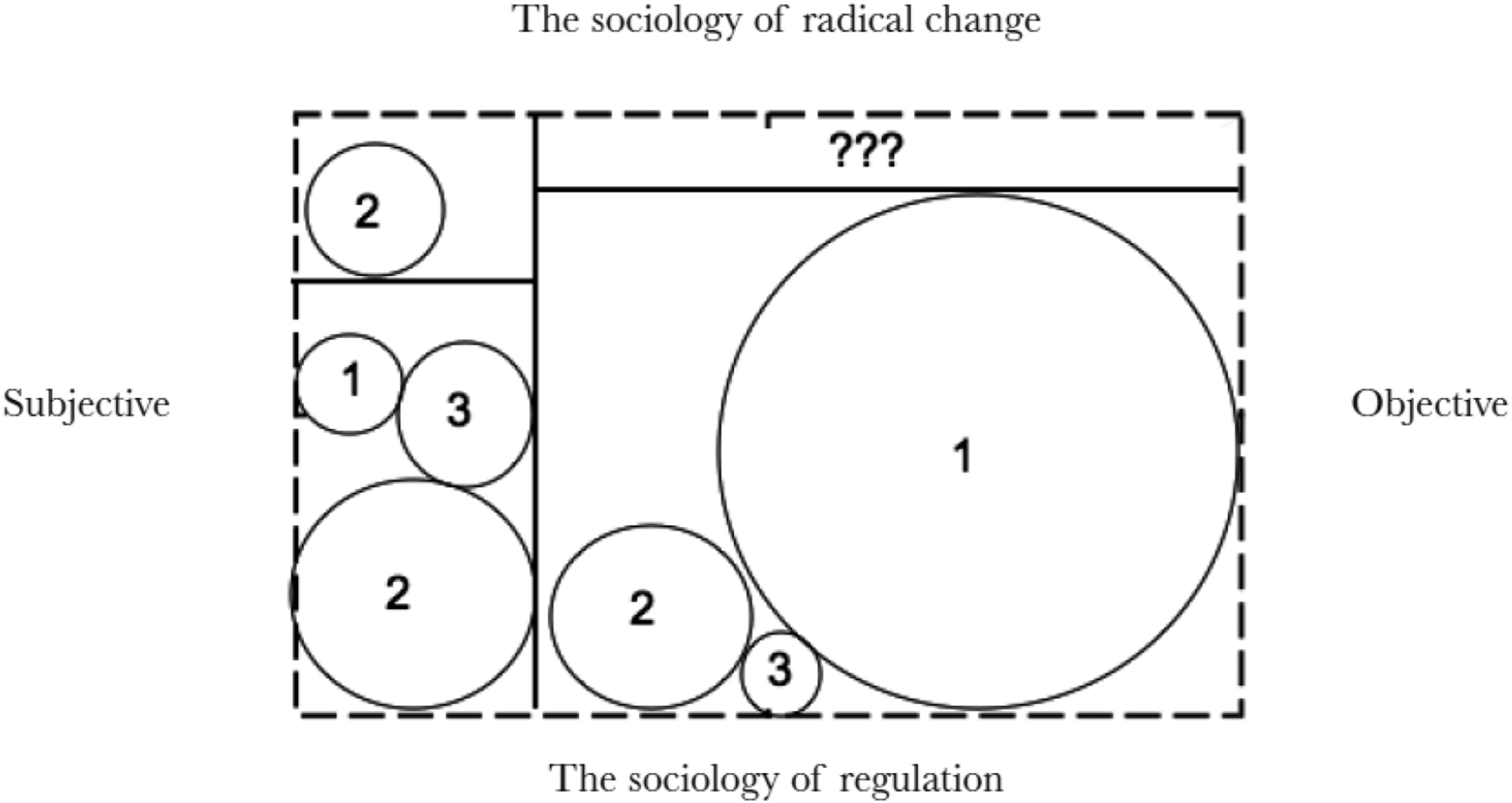
At that time, Burrell and Morgan’s (1979) social science paradigm taxonomy was the most widely used framework in management and organization studies (MOS). However, Deetz (1996) criticized their matrix, suggesting it represented a closed system and failed to accurately capture MOS research. He proposed an alternative categorization, that we believed could better reflect the current state of research in cross-cultural management. His categorization consists of positivism, interpretivism, postmodernism, and critical studies. Furthermore, he labeled the clusters as academic “discourses” rather than paradigms. Subsequently, this categorization was used by several scholars for analysing existing research in the field (Romani et al., 2018a). Romani (2011) and Romani et al. (2014) also used the four discourses for structuring a textbook chapter, presenting cross-cultural management theories within positivist, interpretivist, postmodernist, and critical categories. These chapters offered a case study for analyses from the four different paradigmatic angles.
Our focus progressively shifted towards critical studies and ways to support their development. Primecz et al. (2016) edited a Special Issue in International Journal of Cross-Cultural Management, explicitly aiming to promote critical works. In the editorial, we called for research from a critical cross-cultural perspective. Building on Burrell and Morgan’s (1979) matrix, Romani et al. (2018b) further elaborated on the stream of studies from a critical perspective. In this article, the authors explained the common ground of radical humanist and radical structuralist research and presented works in Critical Cross-Cultural Management (Romani et al., 2018b). Despite these calls, research using a critical paradigm remains less common compared to the use of the functionalist or interpretive paradigms. In fact, critical work is often published in Special Issues (Primecz et al., 2016) and edited volumes (Mahadevan et al., 2020), such as Romani et al. (2018b) and Boussebaa et al. (2014), which are among the most cited articles in critical CCM.
Beyond that, research employing multiple paradigms is relatively rare, although it is on the rise, given the many calls for multi-paradigm research (e.g., Caprar et al., 2015; Phillips and Sackmann, 2015; Primecz et al., 2009; Sackmann and Phillips, 2004). Examples include Primecz et al. (2015) who illustrated a multiparadigm study by applying Deetz’s (1996) taxonomy to empirical data collected from Turkish mobile professionals living in Hungary (see also Romani and Primecz, 2019; Topçu et al., 2007). Zolfaghari et al. (2016) employed a mixed-method, embedded design to study the changing salience of cultural identifications depending on the context. Their methodology involved a short survey based on the “mosaic” framework of culture proposed by Chao and Moon (2005) several months before interviewing the respondents, who were then asked to rank-order tiles and their perceived impact on their work behaviour.
These efforts to promote paradigmatic plurality in CCM have contributed to establishing and legitimizing alternative perspectives and epistemologies. Other calls for methodological diversity (Caprar et al., 2015) have further promoted plurality. Yet, these calls seem to have predominantly attracted studies using a positivist paradigm (Fitzsimmons et al., 2017). In 2019, Barmeyer et al. (2019) conducted a comprehensive literature review on research published between 2001 and 2018 in two leading journals in cross-cultural management: Cross Cultural & Strategic Management Journal (CCSM) and International Journal of Cross Cultural Management (IJCCM). They concluded that positivist studies continue to dominate the field, although the use of an interpretive paradigm increased in the years leading up to 2017, they declined sharply in 2018 (Figure 2). Unfortunately, the authors only differentiated in their review between positivist and quantitative, qualitative and interpretative, and mixed-method studies. As a result, their review neither explicitly identified studies conducted from a critical perspective nor those using a postcolonial paradigm. However, it can be inferred that both types of research were relatively rare. Research methods in merged journals by year. Reprint from Barmeyer et al. (2019: 233), (Figure 9), showing the number of studies published in both journals (CCSM and IJCCM) combined by year between 2001 and 2018.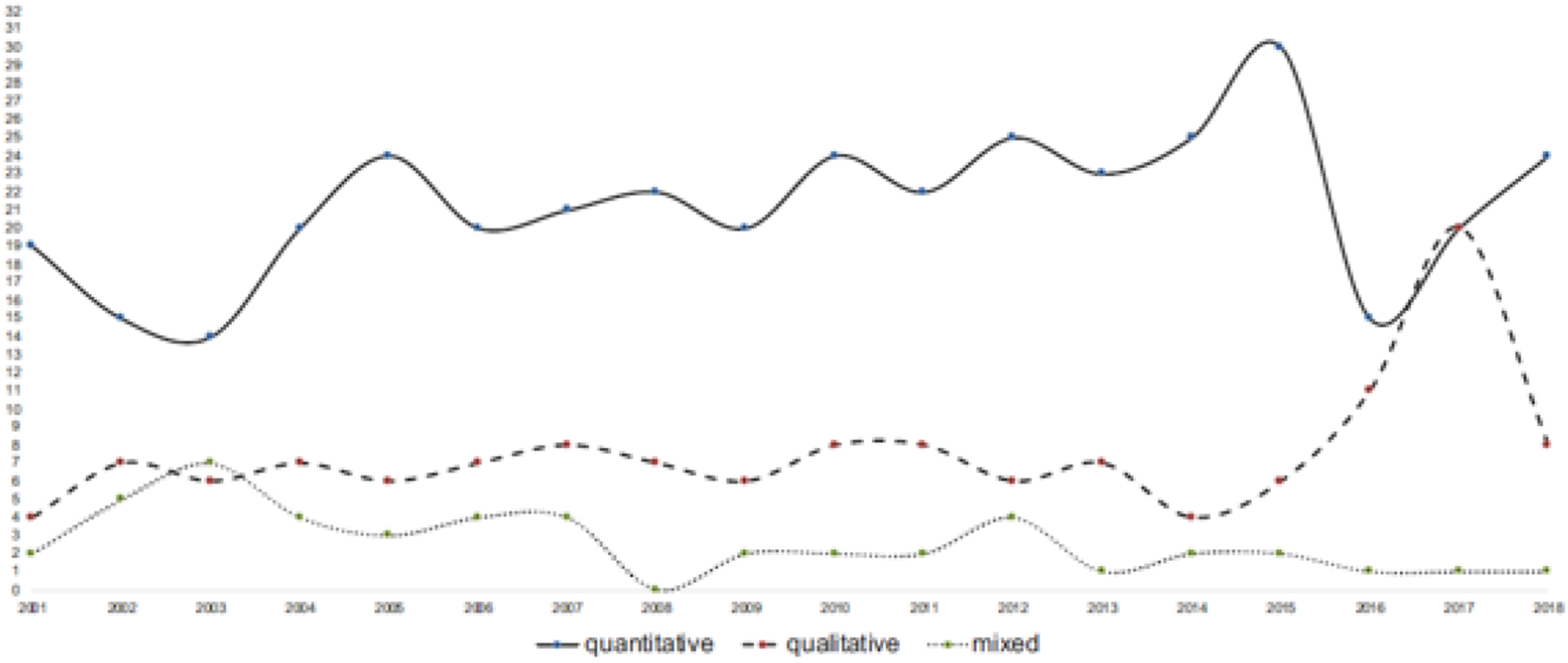
Barmeyer et al. (2019) concluded that publications using an interpretive paradigm caught up with positivist studies from around 2016 and 2017. As their investigation ended in 2018, it was difficult to predict whether this was a steady trend or just a temporary equalization. Finally, these efforts to promote the plurality of research paradigms in CCM culminated in the edition of the Sage Handbook in Contemporary CCM. This Handbook organized the paradigmatic presentation around three major paradigms: positivist (Sackmann, 2020), interpretive (Gertsen and Zølner, 2020), and critical (Romani et al., 2020), as well as their respective methodological tenets (Romani et al., 2020). Although the impact of the volume still needs to be assessed, it marked the first time that a Sage Handbook on CCM presented, and therefore legitimized, the use of different paradigms in CCM research.
How “cross-cultural” is CCM knowledge production today?
What is the state of plurality in CCM research today in management journals? To answer this question, we reviewed published empirical research in the two leading journals, CCSM and IJCCM, from 2019 to mid-2024, following the footsteps of Barmeyer et al. (2019). Between 2019 and August 2024, we identified 72 studies published in IJCCM employing positivism with two of the studies using mixed methods; 18 studies using interpretivism; three qualitative studies, and one study employing a critical-qualitative perspective. We only included empirical studies in our review, deliberately excluding conceptual articles and editorials. During the same time period, the CCSM journal published 119 articles using positivism (including one using mixed methods) and 20 articles using interpretivism (two of which employed mixed methods). Publications in both journals combined added up to 191 using a positivist/functionalist paradigm and 38 using an interpretive one (Figures 3 and 4). The number of empirical publications using paradigms in empirical studies published in the two journals, IJCCM and CCM, between 2019 and August 2024. The number of empirical publications using the respective paradigm published in the two journals IJCCM and CCM between 2019 and August 2024, year by year.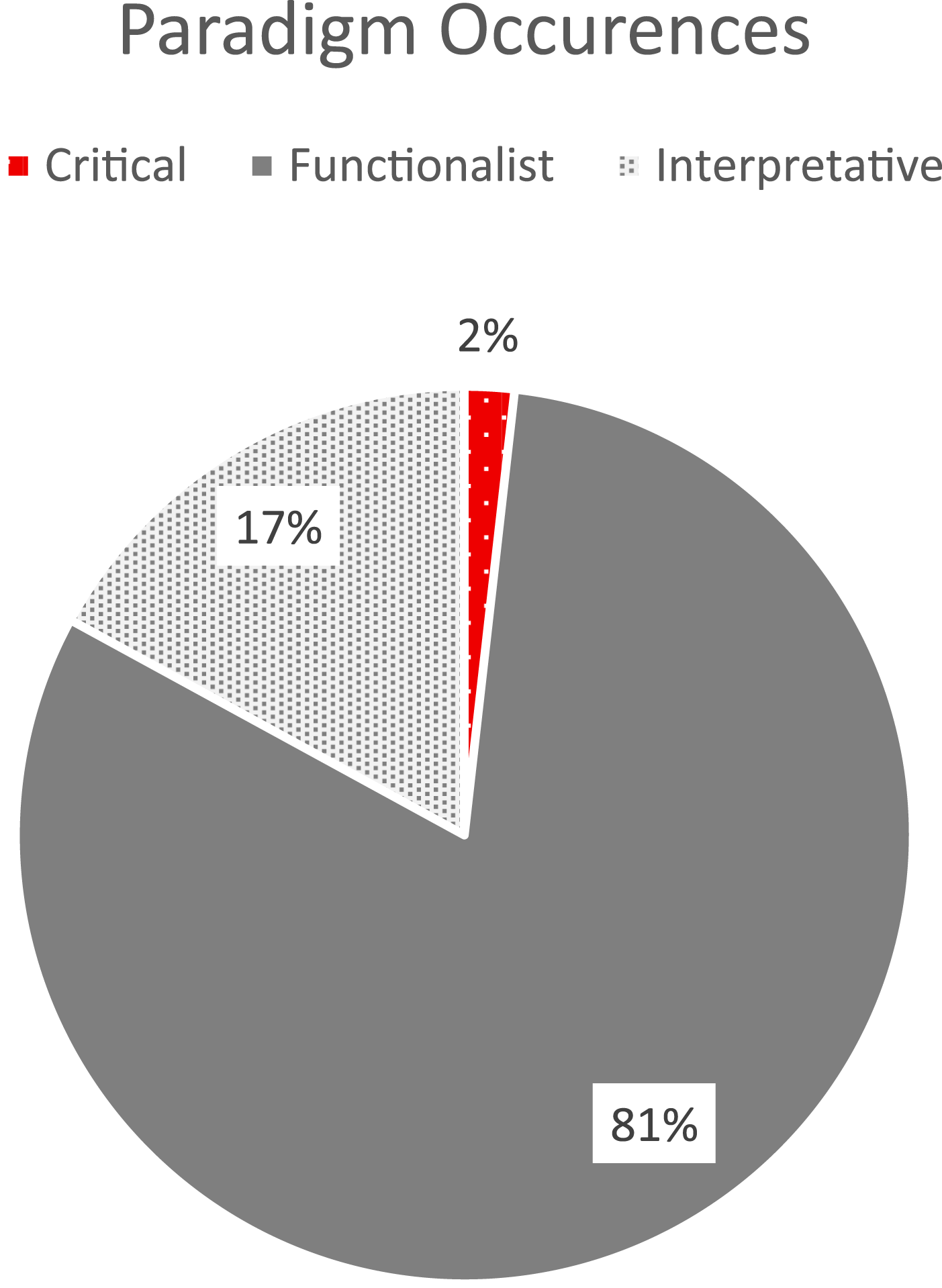
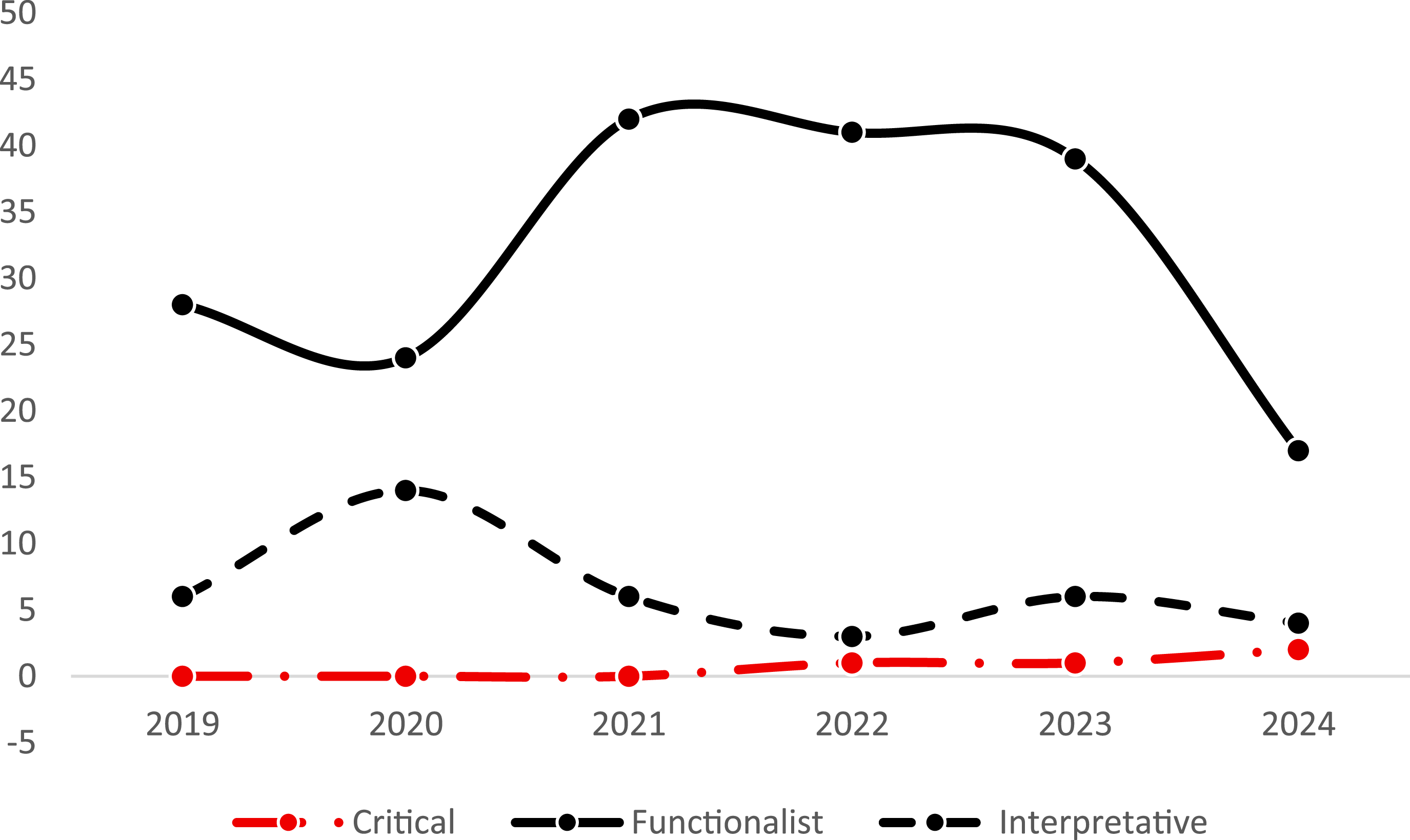
To summarize, our review of publications from 2019 to mid-2024 in these two journals revealed that the overall picture has not fundamentally changed (as shown by Barmeyer et al., 2019). The majority of empirical research published in these two journals is positivist (81%), the second-largest group consists of interpretive studies (17%), and only a small proportion represent critical studies (2%). Not all qualitative studies were clustered among interpretive studies, as some were considered critical studies. When analyzing the few mixed-method studies, we clustered them according to their paradigmatic approach. The majority were positivist, and only one was considered interpretive, as the authors used their quantitative data only for descriptive statistics, while the core of their analysis was an interpretive analysis of their qualitative data (Fjellstrom and Frick, 2020). Although mixed-method studies could potentially open the door to multiparadigm analysis, this was not true for any published empirical works in these two journals. All of the research using mixed-methods clearly belonged to one paradigm.
However, our analysis requires further considerations for a more nuanced picture. Although the two journals included can be considered core outlets for CCM research, other relevant publications exist that we did not include in this review. These include articles in IB journals such as Journal of International Business Studies (Balogun et al., 2019; Kriz and Welch, 2018), the Journal of World Business (Tenzer and Pudelko, 2017; Yakovleva and Vazquez-Brust, 2018), the Journal of Global Mobility (Li et al., 2024), handbooks and companions (cf. Holden et al., 2015; Szkudlarek et al., 2020), and textbooks (e.g., d’Iribarne et al., 2020; Mahadevan, 2023).
While the majority of research conducted in the field of CCM still employs the functionalist paradigm, the use of alternative paradigms has slowly but steadily increased. The interpretative paradigm (e.g., Chevrier, 2024; d’Iribarne et al., 2020) and the critical paradigm inspired by ideology critique (Ailon, 2008; Dörrenbächer and Gammelgaard, 2019; Roberts and Dörrenbächer, 2014) are not merely present, but have gained a legitimacy they lacked 25 years ago. The decline in qualitative publications from 2020 to 2022 could be attributed to the pandemic. Regarding postcolonial analysis, Bouseebaa et al.’s (2014) research was the first to be published in JIBS, and critical or postcolonial CCM studies now appear in mainstream IB journals (cf. Mahadevan and Moore, 2023). Whereas the proportion of scholars socialized in these different paradigms might not have changed much over the years, the recognition of their work has (Welch and Piekkari, 2017). This increase in publications using alternative paradigms might also be partially attributed to the editorial work of Terence Jackson in IJCCM (e.g., Jackson, 2018a; 2018b, 2021, 2023).
However, one paradigm is almost absent from CCM research today. Empirical research using a postmodern approach with a focus on deconstruction has practically vanished (for a possible explanation, see Calas and Smircich, 1999). Postmodern philosophy triggered considerable debate in management and organization studies in the 1990s, highlighting French philosophers, such as Lyotard, Foucault, and Derrida, who focused on deconstruction. In contrast, contemporary German social scientists, such as Habermas, argued against postmodernism and its relativism. The ongoing debate in the field of organization theory was ended by previous supporters of postmodern conceptualization in management and organization studies, namely Calas and Smircich (1999). They stated that postmodernism had a positive impact on theorizing in management in the 1990s, and their legacy is manifested, for example, in post-structural feminism and postcolonial studies. Other aspects of postmodernism, such as the problem of objective reality and knowledge, have been adopted by researchers using the interpretive paradigm.
This might explain why comprehensive reviews, such as that by Primecz (2020), could not identify any postmodern empirical studies being published in four major journals (International Journal of Human Resource Management, Journal of World Business, Journal of Global Mobility and International Journal of Cross-Cultural Management). Consequently, in line with Gephart (2004), three paradigms were clearly present among the investigated studies: positivist, constructivist, and critical (Primecz, 2020). The Sage Handbook of Contemporary Cross-Cultural Management also organized the paradigmatic presentation around these three major paradigms: positivist (Sackmann, 2020), interpretive (Gertsen and Zølner, 2020), and critical (Romani et al., 2020), reflecting on how postmodern studies are no longer visible in CCM. Eventually, a revised textbook chapter on paradigm plurality in CCM presented these three paradigms: positivist, interpretive, and critical views (Romani et al., 2024).
To summarize, the use of paradigms in CCM research has evolved with no radical changes. This is visualized in Figure 5 representing a slight revision and update of Figure 1 (from Primecz et al., 2009). Map of current positioning of CCM studies.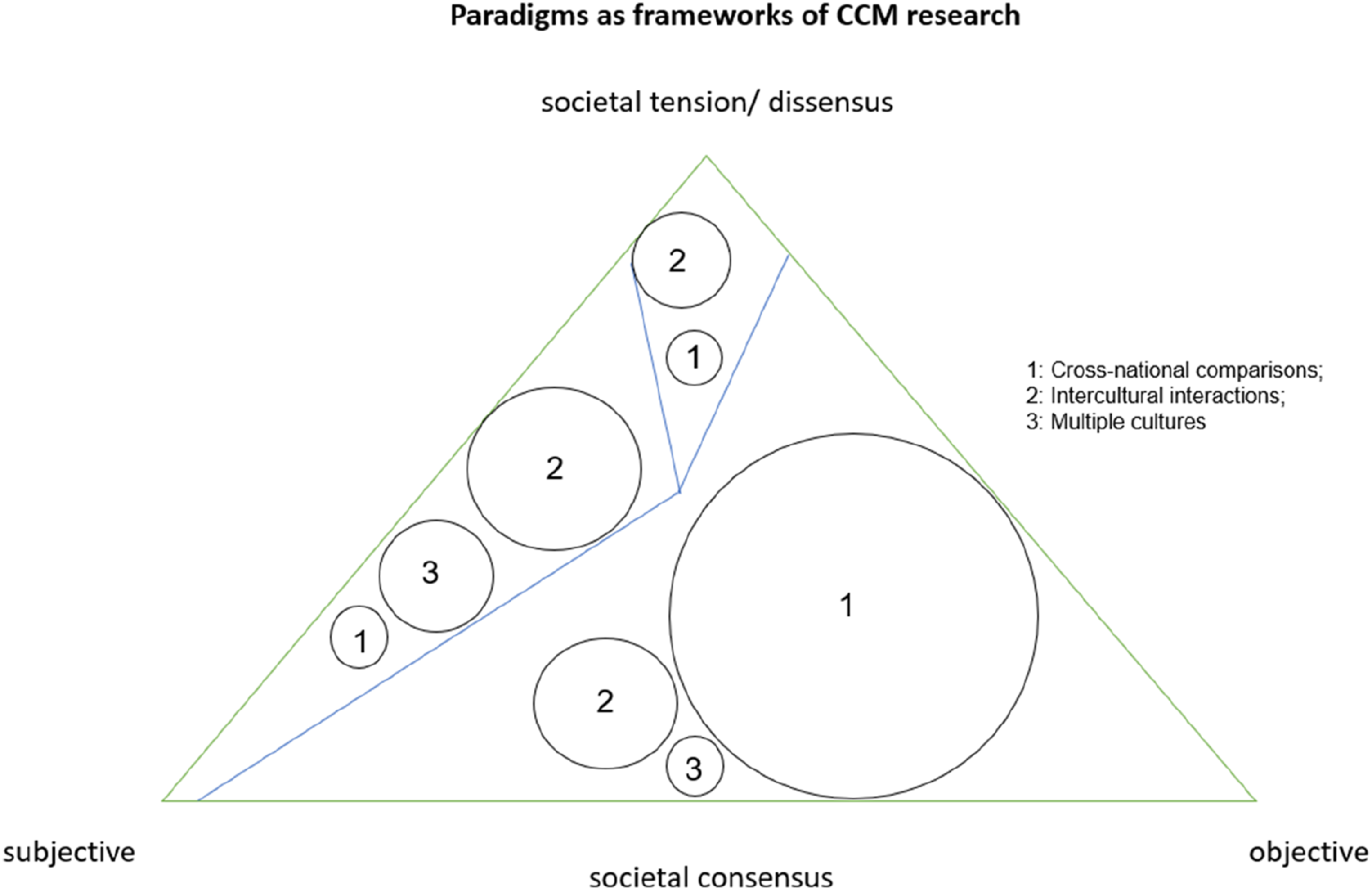
Concluding reflection
Returning to the analogy that research paradigms can be compared to “cultures,” current researchers in the field of CCM both recognize and more strongly acknowledge the existence of various “cultures” (paradigms). This plurality creates a better and more nuanced understanding of the complex and multifaceted CCM field. Therefore, the number of “bicultural” and “multicultural” researchers have grown. These researchers are at home in more than one research paradigm. Furthermore, decolonial scholars are supporting the idea of delinking our knowledge production to only a limited form of knowledge and epistemologies.
What remains marginal today is the investigation of multi-paradigm studies’ potential in CCM, despite growing awareness and acknowledgement of paradigm plurality. This void is being addressed by the editors of this Special Issue and their contributions. While multi-paradigm studies are rare, they are not entirely uncommon and are mostly present in Management and Organization Studies (e.g., Gagnon et al., 2022). Tracing the citations of Romani et al.’s (2011) work on paradigm interplay, we find multiple studies in CCM (e.g., Bausch and Mahadevan, 2024; Frame, 2023; Grosskopf and Barmeyer, 2021; Mahadevan, 2017, 2024a, 2024b; Patel, 2017; Primecz, 2020, 2024; Sanchez et al., 2023; Zølner, 2024) that clearly employ multiple paradigms. This Special Issue represents an exciting opportunity to further strengthen the recognition of the plurality of our cultures and to engage in a unique intercultural academic work. Less dominant voices need support to maintain and further enrich this plurality.
Footnotes

Funding
The author(s) disclosed receipt of the following financial support for the research, authorship, and/or publication of this article: The research portion was partly founded by Estonian Research Council grant PRG1513.
Declaration of conflicting interests
The author(s) declared no potential conflicts of interest with respect to the research, authorship, and/or publication of this article.