



Abstract
The positive relationship between job crafting and positive work outcomes, often mediated by individual basic needs, is well-supported; however, little is known about whether these relationships, specifically the mediation, hold across cultures. We investigated the relationship between job crafting and job satisfaction among nurses from diverse cultural contexts, as well as the potential mediating role of basic need satisfaction. We conducted a cross-cultural comparative study among nurses in hospital settings across three distinct cultural contexts: Lebanon, India, and the USA. We tested (a) whether the scales employed were psychometrically invariant via MGCFA and (b) conducted multi-group SEM to test the relationship between job crafting, need satisfaction, and job satisfaction across the three cultural samples. Only two of the four job crafting dimensions (increasing social job resources and increasing challenging job demands) and one of the three basic need satisfaction dimensions (need for autonomy) reached metric invariance. Hypotheses were tested for the metrically invariant scales: While job crafting was related to job satisfaction in the Lebanese and USA samples, no such relationship was found in the Indian sample. Only in the Lebanese and USA samples, increasing challenging job demands was related to job satisfaction, through the satisfaction of the need for autonomy. Increasing social job resources was related to job satisfaction only in the Lebanese sample. We recommend testing the psychometric appropriateness of measures before employing them and discuss what this means for job crafting research directions and practical implications.
Keywords
Introduction
By engaging in job crafting, employees shape their work to make it better fitting with their needs, preferences, and strengths (Kooij et al., 2017; Tims and Bakker, 2010). Extensive research has documented the benefits that job crafting has for both employees and organizations across different occupational settings (Lazazzara et al., 2020; Lichtenthaler and Fischbach, 2019; Rudolph et al., 2017). However, there is not much research (a) on job crafting and its benefits across cultural contexts, and (b) among nurses for whom it was found that job crafting accounted for 57% of the variance in work engagement (Baghdadi et al., 2021).
Job crafting originated in a Western setting, and it is therefore not surprising that it has a strong emphasis on individualism, self-determination, and agency, which becomes apparent also when investigating an individual’s motives behind job crafting (Lin and Meng, 2024). At present, there is no clear evidence whether job crafting is similar across cultures. Job crafting might be highly similar in more collectivistic, non-Western contexts, or it could manifest differently, which might influence the behaviors that fall under job crafting in these contexts and the way it is conceptualized and measured (similar to differences in the effects of agency and autonomy).
Research on personality is a good showcase: The Big Five model of personality is the dominant approach, measured by the NEO Personality Inventory (NEO-PI-R; Costa and McCrae, 1992). However, this model does not cover the breadth of personality characteristics in several non-Western cultures such as South Africa, China, and the MENA region. Accordingly, the South African Personality Inventory (SAPI; Hill et al., 2013), the Chinese Personality Assessment Inventory (CPAI; Cheung et al., 1996), and the Arab Personality Inventory (API; Zeinoun et al., 2017) were developed (for an overview, check Cheung et al., 2011). All of these personality conceptualizations share structural and content similarities with the Big Five but also capture traits that it did not cover (or did not cover extensively) since the Big Five was developed in a single (Western) context.
When applying this notion to the concept of job crafting, we can argue that it might have a different structure in different cultural contexts, but – to our knowledge - this has not been assessed yet. The phenomenon of job crafting rests on the assumption that employees have opportunities to change their jobs - and that such changes are welcomed by their organizations and key stakeholders, such as one’s direct supervisor and colleagues (Van der Heijden et al., 2020). While some of the barriers for job crafting might be specific to the nursing profession (e.g., having little autonomy at work), others might be external and more prominent as they are dictated by socio-economic and cultural characteristics. Cultural contexts differ in their degree of acceptance of individuals deviating from what is expected of them (Gelfand et al., 2007). Specifically, agentic activities like job crafting may not be equally welcomed in non-Western contexts.
Possible variations in the structure and content of job crafting are also relevant to the relationship job crafting has with positive work outcomes. In our study, we focus on job satisfaction as one of the most widely used indicators of positive job attitude in relation to job crafting (check Holman et al., 2024; Rudolph et al., 2017). While there is considerable evidence on the relationship between job crafting and job satisfaction in different occupational settings (De Beer et al., 2016), it is still unclear whether the empirical relationships would be similar in non-Western countries. Investigating how the working conditions of nursing can be improved has been one of the ongoing concerns of research given the influence this has on patient care and the fact that there is a serious shortage of nurses across the globe (Drennan and Ross, 2019). The emotionally, physically, and psychologically draining nature of the profession negatively impacts nurses’ attendance behavior at work and places them at high risk of job or professional turnover (Daouk-Öyry et al., 2014). This positions job satisfaction as a critical variable to investigate among nurses considering its impact on nurses’ job performance, intention to leave the hospital and the profession (Burmeister et al., 2019), burnout, and organizational commitment (for a review see Lu et al., 2019). Job satisfaction is also one of the most common positive experiences linked to job crafting (Fuller and Unwin, 2017).
Our study offers important contributions to the job crafting literature. First, we explore job crafting among nurses, a difficult to reach population, and from a cross-cultural perspective, an under researched area in the literature. Specifically, we investigate the relationship between job crafting and positive work outcomes across three different cultural contexts: Lebanon, the USA, and India. While there is strong empirical evidence supporting the role of context (Glaser et al., 2016) and the national culture (Claes and Ruiz-Quintanilla, 1998) on proactive behavior, little research has explored their influence on job crafting behavior. Second, we provide empirical evidence on the cross-cultural validity and invariance of the most widely used scale of job crafting developed by Tims et al. (2012). We stablish whether the structure of job crafting and related variables is comparable (configural invariance), and whether we can compare relations of variables across cultural contexts (metric invariance) (Van de Vijver et al., 2015; Van de Vijver and Leung, 2021). Finally, we provide more evidence on the role that basic need satisfaction in the relationship between job crafting and job satisfaction in distinct cultural contexts.
Literature review and hypothesis development
Job crafting and the nursing profession
Job crafting comprises specific proactive work behaviors that employees engage in to actively change the characteristics of their jobs (Tims and Bakker, 2010; Wrzesniewski and Dutton, 2001). Job crafting was first coined by Wrzesniewski and Dutton (2001) who argued that it is driven by three basic needs: the need to have a positive self-image, the need to have control over ones environment and the need to establish and maintain connections with others. They divided job crafting into three dimensions: relational, structural, and cognitive crafting. Tims and Bakker (2010) expanded the concept theoretically, introduced the Job Demands-Resources model (JD-R; Bakker and Demerouti, 2007), and distinguished four job crafting dimensions: increasing social job resources, increasing structural job resources, increasing challenging job demands (approach dimensions), and decreasing hindering job demands (avoidance dimension) (Tims et al., 2012). Job crafting interventions conducted among governmental employees, medical specialists, nurses, police officers, teachers and many more (for a review check, Oprea et al., 2019) show positive implications on work engagement and performance.
The nursing profession is a highly standardized one that is bordered by standard operating clinical procedures, however, this does not prevent nurses from engaging in job crafting (Baghdadi et al., 2021; Bakker, 2018; Yepes-Baldó et al., 2018). This is not surprising, since in the health field, creativity and imagination are essential for overcoming bottlenecks and solving everyday problems (Debono et al., 2013). Wrzesniewski and Dutton (2001) argued that employees can engage in job crafting, even when their jobs offer them little room to do so. Job crafting has been shown to have many benefits in the nursing profession. For instance, Bakker (2018) showed that increasing job resources is positively related to development opportunities, performance feedback, and person-organization fit. Romeo et al. (2021) reported that job crafting (task, relational, and cognitive) is positively related to the quality of care in residential homes for the elderly. Gordon et al. (2018) concluded from their intervention study that job crafting influences well-being (i.e., work engagement, health, and reduced exhaustion), and job performance (i.e., adaptive, task, and contextual performance).
Job crafting is positively related to psychological empowerment (Harbridge et al., 2023), enhanced quality of care in elderly residential homes for the elderly (Romeo et al., 2023), and reduced work alienation (Zohourparvaz and Vagharseyyedin, 2023). In their investigation of the mechanisms through which job crafting is related to job satisfaction among nurses, Li et al. (2023) found that person-job fit mediates the relationships between job crafting dimensions and job satisfaction.
Job crafting and job satisfaction: The role of basic needs
Job crafting relates to self-initiated employee strategies to better align their jobs with their needs, preferences, and strengths. It is therefore no surprise that basic intrinsic needs have been linked to dimensions of job crafting. Basic intrinsic needs are linked to positive outcomes once they are satisfied, which is the core of the Self-Determination Theory (SDT; Deci and Ryan, 1985; Deci and Ryan, 2000, 2008). According to SDT (Deci and Ryan, 2008), three universal psychological needs lead to optimal functioning when satisfied: the needs for autonomy, competence, and relatedness (Deci and Ryan, 2000). Autonomy requires being the owner of one’s behavior and having a sense of choice. Competence requires successfully completing challenging tasks. Relatedness requires the experience of being cared for, respected, and needed. Wrzesniewski and Dutton (2001) argued that job crafting is driven by three main needs: the need to have control over one’s job, the need to have a positive self-image, and the need to establish and maintain connections at work. There is a clear conceptual correspondence between these needs and basic human motivation as outlined in SDT, whereby the satisfaction of basic needs results in feelings of value and meaningfulness (Hu et al., 2020).
Job crafting is a need-driven work behavior (Tims and Bakker, 2010) that has been shown to be positively linked to employee well-being (for a review, check Rudolph et al., 2017). Accordingly, SDT provides a good medium for us to understand how job crafting satisfies basic needs and in turn is linked to one of the frequently used indicators of work well-being in relation to basic need satisfaction: job satisfaction (for a review, check Nunes et al., 2024). Previous research has linked job crafting, being operationalized by means of three dimensions (i.e., cognitive, structural, and relational) to the three basic needs (Slemp and Vella-Brodrick, 2014). However, this research has neither linked the four-dimensional structure of job crafting to these basic needs nor investigated this link across different cultures. Work behaviors like job crafting depend on autonomy, which is known to vary across counties and professions (Van Hoorn, 2018). We set out to fill this gap in the scholarly field and argue that job crafting may satisfy one’s basic needs, which can, in turn, serve as a resource to enhance one’s job satisfaction. We do so while taking into consideration, in the sample selection rationale, cultural dimensions that might influence the universality of the basic needs and the main drivers of job crafting.
Job crafting and national culture
Being proactive and engaging in job crafting might have many positive outcomes in contexts where such behaviors are encouraged and expected. In other settings where conforming and fitting in is more valued, it might not yield the same results. In other words, culture might influence whether, why, and how employees engage in proactive work behaviors including job crafting (Urbach et al., 2021). Many factors can influence engagement in job crafting such as power distance, tolerance to ambiguity, individualism/collectivism, and tightness and looseness. For example, seeking feedback from people higher up in the hierarchy is not encouraged in high power distance societies (e.g., Morrison et al., 2004) and employees low on tolerance to ambiguity tend to be more proactive than those who tolerate more ambiguity in their work and performance (Furnham and Marks, 2013). Seeking feedback from colleagues and supervisors and being proactive at work irrespective of the outcome lie at the core of job crafting. Similarly, in cultures where the fulfillment of personal needs is relatively more central (Hofstede, 2001; Minkov and Kaasa, 2022), such as the case in predominantly individualistic societies, agentic behaviors such as job crafting are more likely to take place. Agency and autonomy may even come with very distinct consequences: autonomy at work can be positively (USA) and negatively (India) related to job satisfaction (for an overview, Oldham and Fried, 2016) climates for autonomy can be negatively (USA) and positively (China) related to stress (Hirst et al., 2008). Individuals in tight societies tend to be more careful and less impulsive than those in loose societies, which might influence their amount of engagement in proactive work behaviors (Gelfand et al., 2006).
A few job crafting studies have been conducted across cultures and a very limited number in non-Western samples (Boehnlein and Baum, 2022). Gordon et al. (2015) adopts a cultural perspective between two Western samples (USA and the Netherlands), and found that, in line with the masculine versus feminine distinction (Hofstede, 2011; Minkov and Kaasa, 2022), shaping job demands were higher in the USA and job resources were higher in the Netherlands. Emamizadeh and Beveridge (2018) conducted a qualitative study that examined the effects of generational differences and national culture on job crafting using working samples from Iran and China. They found that job crafting activities go against values and beliefs that are at the core of the Iranian and Chinese cultures, such as loyalty to the family and relationship building. It becomes evident that cultural differences do exist in job crafting which is in line with several theoretical approaches (e.g., Gelfand et al., 2006; Hofstede, 2011; Minkov and Kaasa, 2022) but these have not been systematically investigated.
Hypotheses
First, we investigate the invariance of the scales for the assessment of job crafting, need satisfaction, and job satisfaction. We elaborate on that more in the analyses. Second, on the basis of prior research in Western contexts, we predict that job crafting is a source of need satisfaction, and through that job satisfaction, across the three investigated cultural contexts. For that, we are differentiating approach dimensions of job crafting (increasing social job resources, increasing structural job resources, and increasing challenging job demands) and the avoidance dimension (decreasing hindering job demands). Approach dimensions of job crafting are linked to promotion focus, while the avoidance dimension is linked to prevention focus (Bruning and Campion, 2018; Lichtenthaler and Fischbach, 2019). Individuals high on promotion focus are more concerned with growth and advancement, while individuals high on prevention focus are more concerned with safety and security and avoiding losses (Higgins, 1997). More specifically, individuals prefer seeking goals in ways that fit their regulatory focus in order to feel engaged in what they are doing (Cesario et al., 2004; Freitas and Higgins, 2002). Promotion focus supports the satisfaction of their needs for autonomy, competence, and relatedness more than avoidance focus (Vaughn, 2017). As the three basic needs for autonomy, competence, and relatedness are analogous to the main drivers of job crafting, that is to have control over one’s work, to have a positive self-image, and to establish and maintain relationships with others (Wrzesniewski and Dutton, 2001), we contend that job crafting is a determinant of satisfying those three basic needs. For example, when nurses engage in job crafting by increasing their social job resources, it is likely that they are satisfying their need for relatedness by establishing meaningful relationships, and their need for competence by receiving good feedback from others. Accordingly, we formulated the following:
Increasing social job demands is positively related to the basic needs for autonomy (H1a), competence (H1b), and relatedness (H1c).
Increasing structural job resources is positively related to the basic needs for autonomy (H2a), competence (H2b), and relatedness (H2c).
Increasing challenging job demands is positively related to the basic needs for autonomy (H3a), competence (H3b), and relatedness (H3c). In addition, in line with previous research that linked job crafting with wellbeing, via need satisfaction (Slemp and Vella-Brodrick, 2014), we argue that the satisfaction of the three basic needs is the mechanism through which job crafting has positive outcomes at work, in our case job satisfaction. Accordingly, we formulated:
The basic need for autonomy mediates the relationship between increasing social job resources (H4a), increasing structural job resources (H4b), and increasing challenging job demands (H4c) and job satisfaction.
The basic need for competence mediates the relationship between increasing social job resources (H5a), increasing structural job resources (H5b), and increasing challenging job demands (H5c) and job satisfaction on the other hand.
The basic need for relatedness mediates the relationship between increasing social job resources (H6a), increasing structural job resources (H6b), and increasing challenging job demands (H6c) and job satisfaction, on the other hand. We do not hypothesize relationships for the avoidance dimension of job crafting (decreasing hindering job demands) as this dimension has been shown to relate in an inconsistent way to other variables (Rudolph et al., 2017). Recent reviews have also indicated that this dimension lacks the proactive features that job crafting is known for and is, in many cases, counter-effective (e.g., Zhang and Parker, 2019). Figure 1 summarizes our research model.
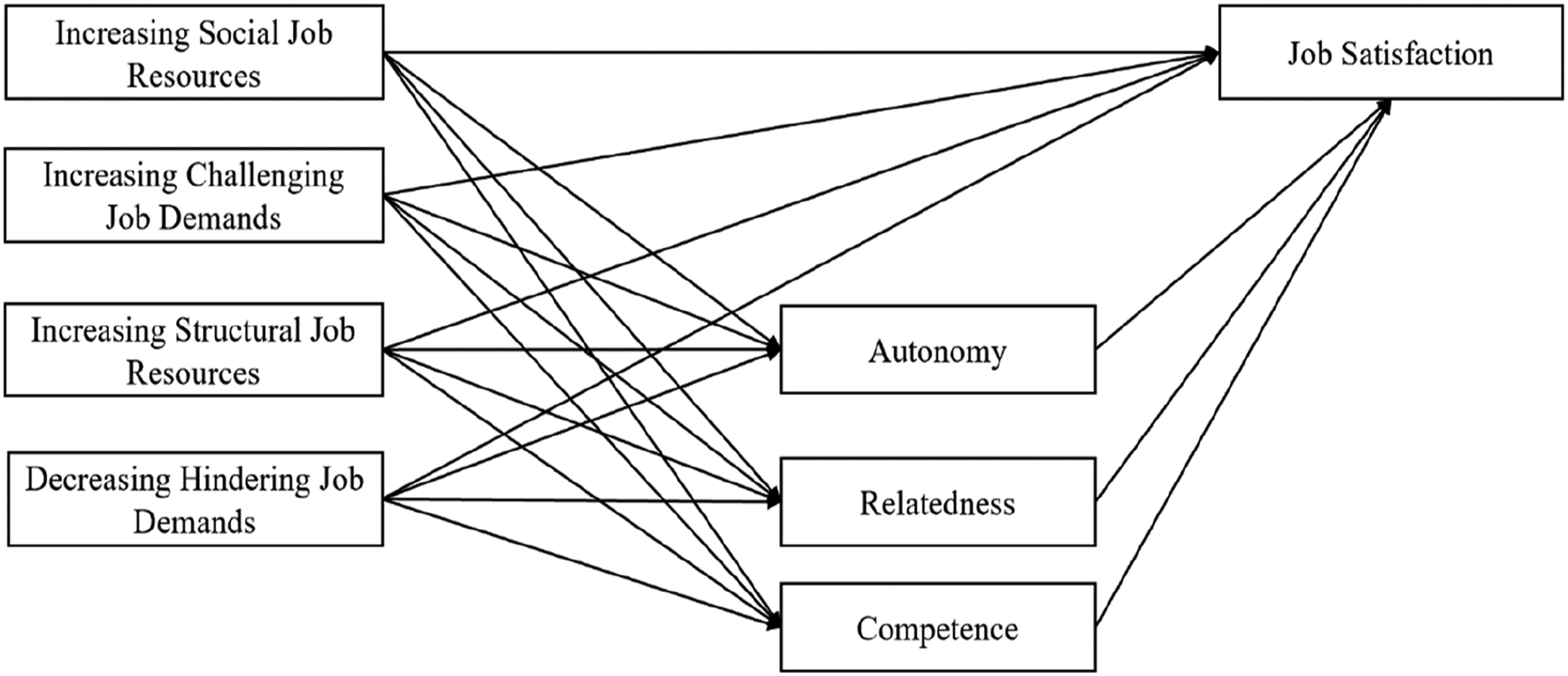
Hypothesized model.
Methodology
Study design
For the purpose of this study, we adopted a cross-cultural, cross-sectional comparative study design as this is aligned with the aim of the study to investigate cultural differences in the structure and function of job crafting. We purposefully selected three cultural samples that vary across important cultural characteristics such as individualism/collectivism and power distance (Van de Vijver and Leung, 2021), which appear particularly relevant for the investigated concept of job crafting. We have chosen the USA as a context that is characterized by high scores on individualism, Lebanon with moderate scores, and India with general low country-level scores on individualism. Lebanon, and India are underrepresented non-Western societies. We elaborate further on the sample selection below.
Study population and sample size
Indicators across Lebanon, India, and the USA.
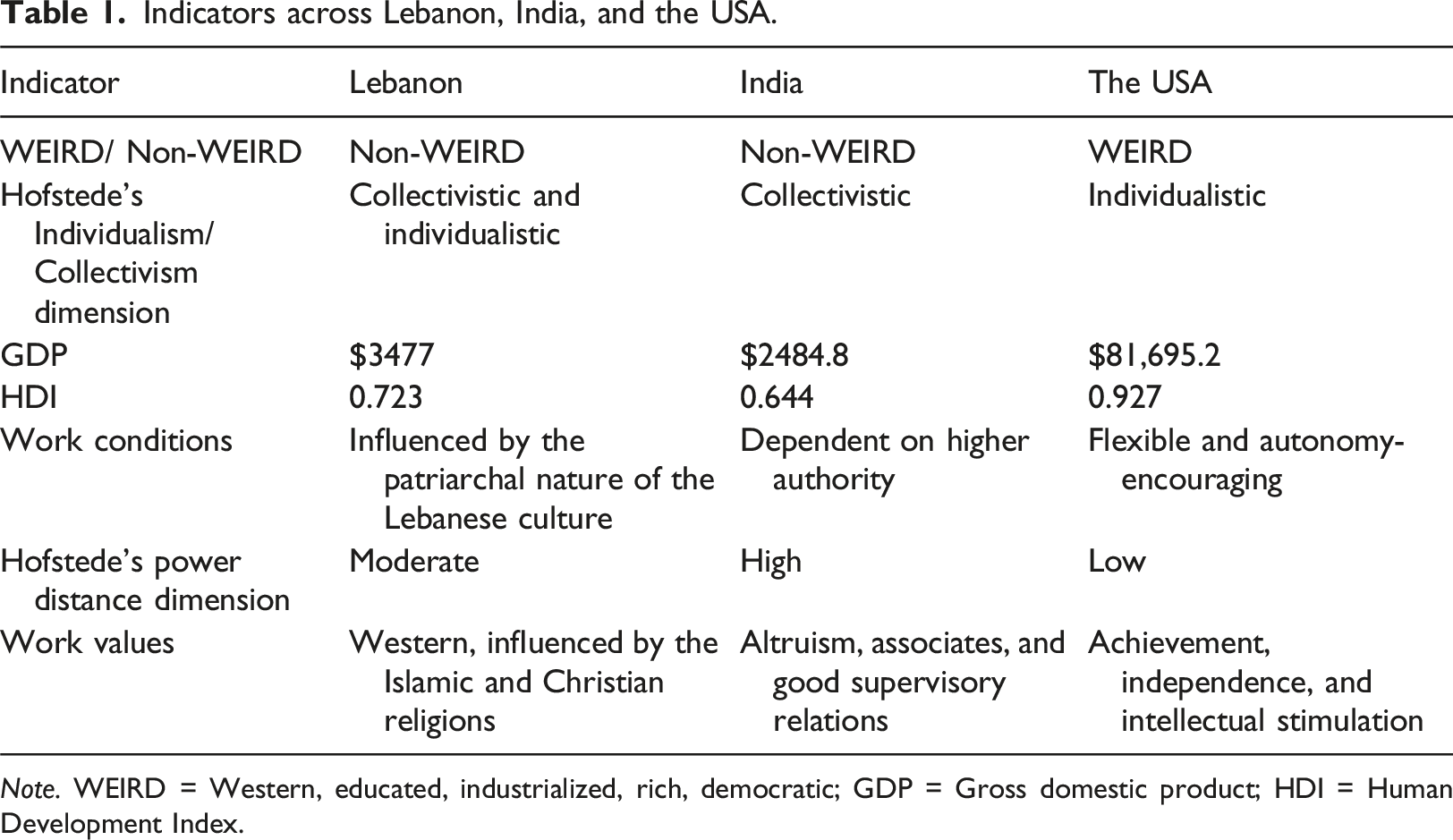
Note. WEIRD = Western, educated, industrialized, rich, democratic; GDP = Gross domestic product; HDI = Human Development Index.
Lebanon, our first sampling context is characterized by moderate scores on Hofstede’s individualism-collectivism dimension at the national level. In contrast to other Arab countries, Lebanon tolerates Western ideals and lifestyles (Barakat, 1977), and even shares some Western work values, while also valuing those influenced by the Islamic and Christian religions. Employees are influenced by the patriarchal nature of Lebanese culture, where individuals tend to depend on and follow the rules of the father (Sharabi, 1988). Based on the recent reports, Lebanon has a Gross Domestic Product (GDP) per capita of $3477 (The World Bank, 2021) and a Human Development Index (HDI) of 0.723 (UNDP, 2024). India has a lower GDP per capita of $2484.8 (The World Bank, 2023a) and an HDI of 0.644 (UNDP, 2024).
Comparable to Lebanon, India is also a high power distance society (Almutairi et al., 2021; Minkov and Kaasa, 2022), restricting the expression of autonomy, reinforced by the caste system and India’s colonial past (Lawler et al., 1995). Indian employees are highly concerned about rules and very dependent on higher authority (Gelfand et al., 2011; Minkov and Kaasa, 2022). India is, compared to the USA, a collectivistic and traditional country (Hofstede et al., 2010), where employees adopt work values of altruism and good supervisory relations (Hartung et al., 1996).
In contrast, low power distance (Hofstede et al., 2010; Minkov and Kaasa, 2022) and high flexibility (Minkov et al., 2018), provide employees in the USA with high autonomy at work, and facilitate work values of achievement, independence, and intellectual stimulation (Hartung et al., 1996). The USA has a GDP per capita of $81,695.2 (The world Bank, 2023b) and an HDI of 0.927 (UNDP, 2024). The USA is a Western, prototypically individualistic context (Hofstede et al., 2010), with high educational attainment (Schmidt, 2018). The USA is also most comparable to previous samples studied in the domain of job crafting (Rudolph et al., 2017), and therefore serves as an important reference point.
Data collection
Our target population of nurses in three cultural contexts is a difficult-to-reach sample, as nurses and healthcare workers, in general, are short on time and experience many stressors (Daouk-Öyry et al., 2014), often leading to relatively high drop-outs when filling out surveys (VanGeest and Johnson, 2011). Data was collected via an online survey on Qualtrics. In order to promote participation in the study, the participants were provided with a report about their results after completion of the study. The report included general information and recommendations that can help nurses who want to know more about job crafting.
Different strategies were adopted in order to get access to the different samples. For the USA sample, we opted for a panel of nurses via TurkPrime (Litman et al., 2017) whereby each nurse received $7 for their participation. As the mainstream crowdsourcing platforms provide limited access to non-Western samples, the Indian and Lebanese samples were recruited via the researcher’s personal connections and via different social media platforms.
Demographic characteristics.
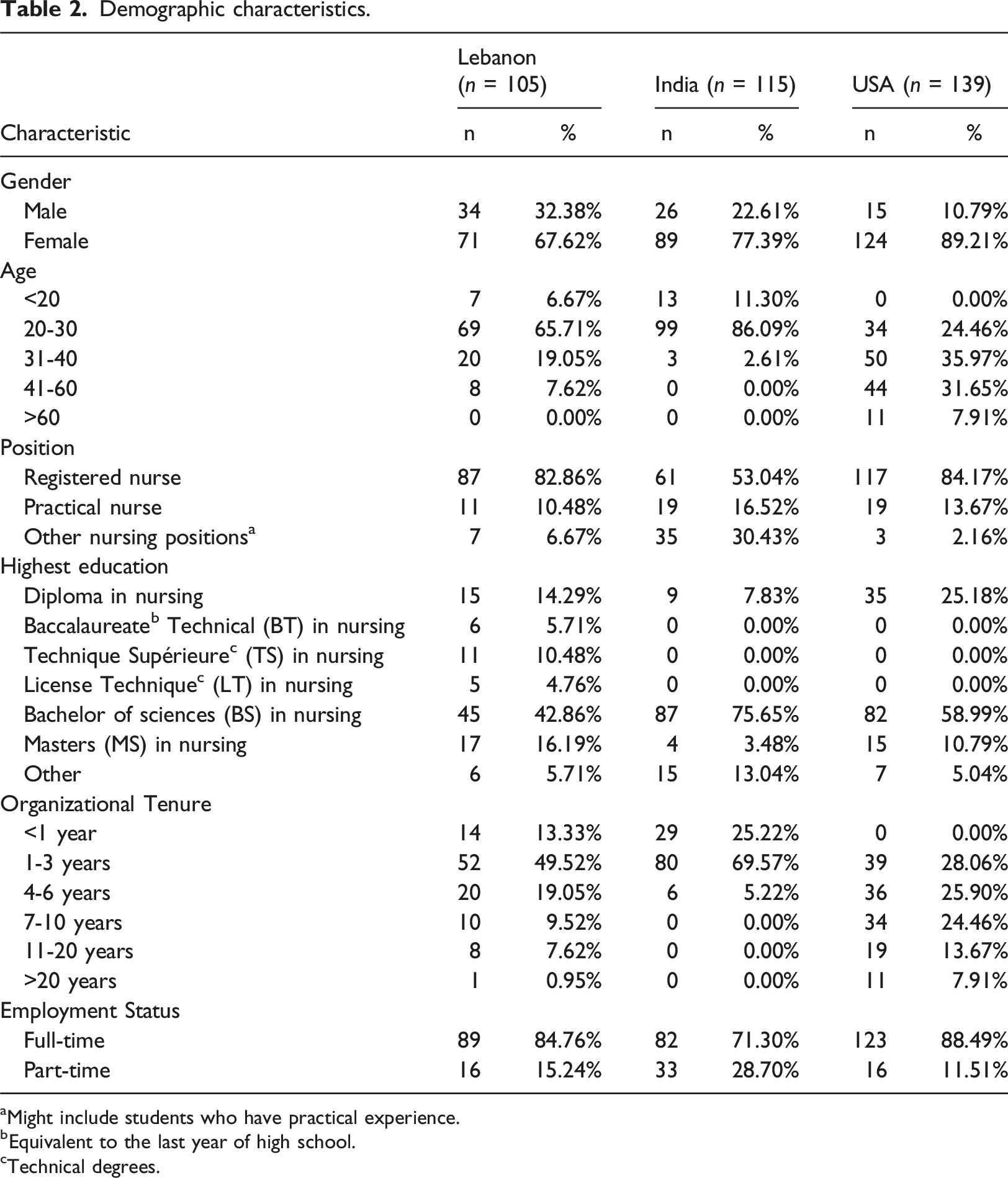
aMight include students who have practical experience.
bEquivalent to the last year of high school.
cTechnical degrees.
Measurement tools and test adaptation
To decrease possible effects of differential item functioning due to sub-optimal translations, the original instruments were adapted and back-translated, rather than being only translated, into the local language by bilingual local researchers who are familiar with the language and culture (Van de Vijver and Leung, 2021). Additionally, we conducted cognitive interviews to ensure the multi-lingual versions of the test are understood in the same manner in the different languages (Daouk-Öyry and McDowal, 2013). We collected data from the Lebanese sample using scales adapted into Arabic. For the Indian sample, we opted for the English version since English is the lingua franca in biomedical professions in India (Narayan, 2013) and educated individuals are expected to be proficient in it (Minkov et al., 2018). Finally, for the USA sample, we used the validated English versions of the scales.
Means, standard deviations, and zero-order correlations.
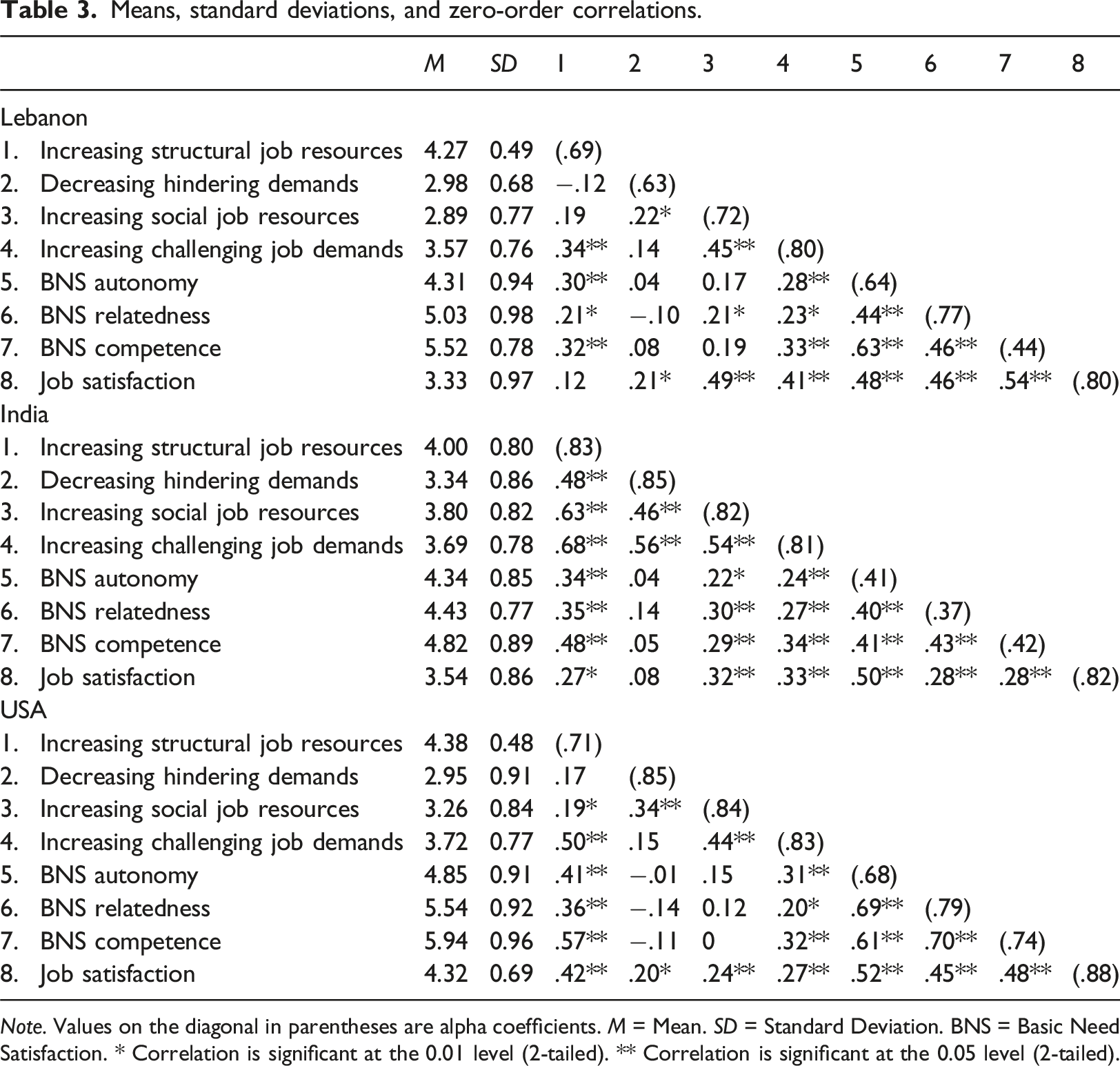
Note. Values on the diagonal in parentheses are alpha coefficients. M = Mean. SD = Standard Deviation. BNS = Basic Need Satisfaction. * Correlation is significant at the 0.01 level (2-tailed). ** Correlation is significant at the 0.05 level (2-tailed).
Data analysis software and tests
The analysis was a two-step one, we first conducted a Multi-Group Confirmatory Factor Analysis (MGCFA) (Bollen, 1989; Byrne, 2010) in MPlus (Muthén and Muthén, 2012) to identify the invariant variables. Once this step was done, we conducted a multi-group SEM on MPlus.
Ethical consideration
Data collection only started after securing ethical approval (ref: OSB.LD.17; EC-2017.EX99). The participants were provided with an information and consent form that includes specifics of the study and its purpose along with the potential risks and benefits for the participants. We also assured them that their responses will be anonymized and will remain confidential.
Analysis and results
When conducting comparative cross-cultural research, researchers run the risk of misinterpreting results due to systematic bias and equivalence issues interfering with the different versions of the same test tools in the different cross-cultural contexts (see Van de Vijver and Leung, 2021). To address this research recommends to assess measurement invariance, which is the degree of comparability of test results between the different cultures (Byrne and Matsumoto, 2021). A recent systematic review study by Maassen et al. (2023), found that only 4% out of 929 cross-sample comparisons have conducted such measurement invariance analyses before hypothesis testing. Accordingly, before exploring the hypothesized relationships we examined whether there is measurement invariance, as only then comparisons between different groups can be made (For the general argument, see Van de Vijver and Leung, 2021). This measurement invariance analysis included testing and comparing different models of increasing strictness (for a checklist of important steps, see Van De Schoot et al., 2013), and starts with a baseline model that tests for configural (structural) invariance, examining if items are loading unto the same factor in each group (i.e., sample). Against this configural model, the metric invariance model was tested, with factor loadings constrained to be equal across the distinguished groups. The final step compared the metric invariance model with the scalar invariance model, which has item intercepts constrained to be equal across the groups, resulting in a full comparability of test scores between cultural contexts.
Step 1: Invariance testing
Before analyzing the data, we removed cases that had missing values rates higher than 25%, since this would reduce bias (Tabachnick and Fidell, 2012). We first conducted a Multi-Group Confirmatory Factor Analysis (MGCFA) (Bollen, 1989; Byrne, 2010) in MPlus (Muthén and Muthén, 2012), and evaluated the model fit using Chi-square tests, Comparative Fit Index (CFI), Tucker-Lewis index (TLI), and Root Mean Square Error of Approximation (RMSEA). When comparing the models (from less to more restricted) a change of CFI and RMSEA within the .01 difference range helps us to conclude that the more restricted model is acceptable and preferred over the less restricted model (Cheung and Rensvold, 2002).
Model fit information.
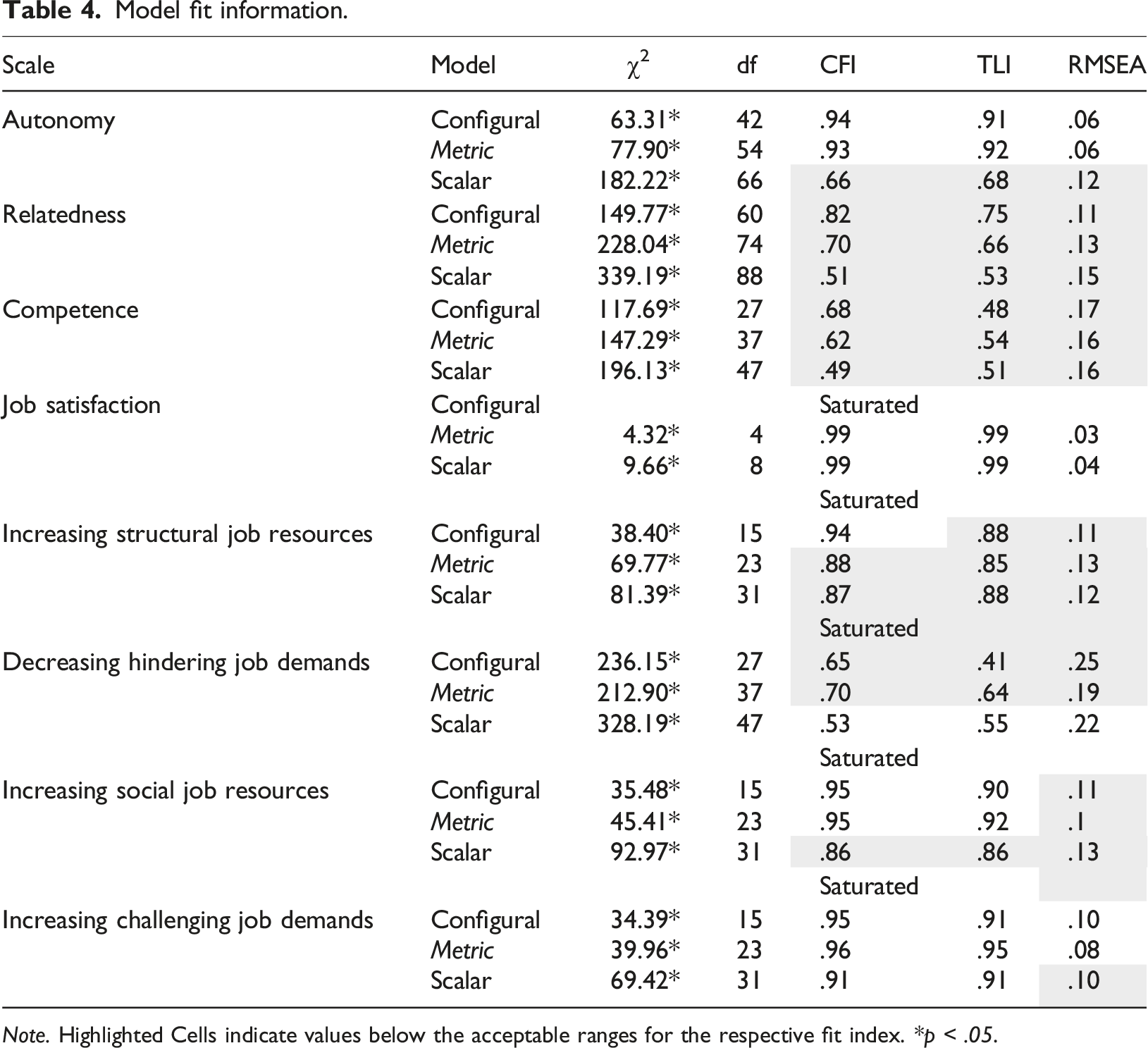
Note. Highlighted Cells indicate values below the acceptable ranges for the respective fit index. *p < .05.
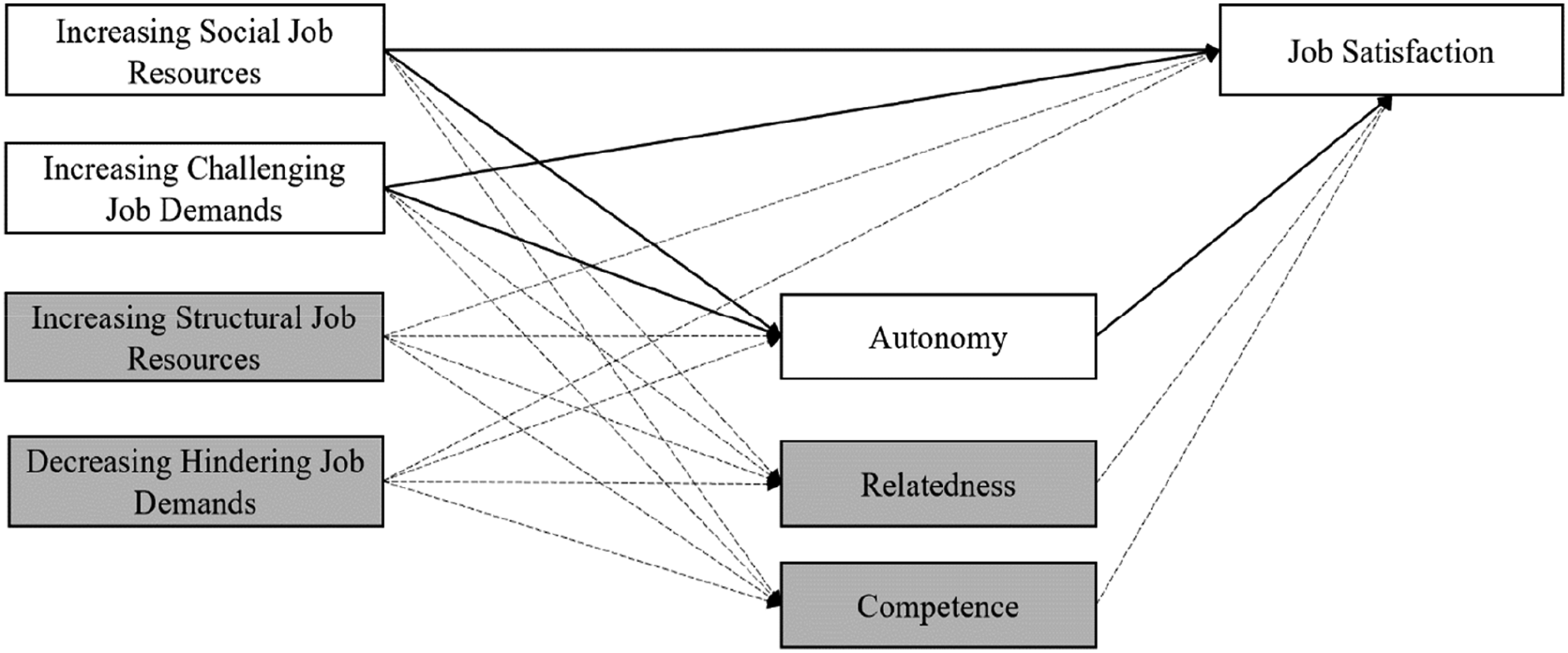
Hypothesized model after incorporating the outcomes of the metric invariance testing. Greyed-out variables are variant and therefore needed to be removed from our analysis. Dashed arrows indicate relationships between one or two variant variables, which cannot be tested. Step 2: Test of the Conceptual Model.
Step 2: Test of the conceptual model
We tested the hypothesized model (see Figure 2) using Structural Equation Modeling (SEM) (Byrne, 2010). Since assessing the comparability of the model relationships across cultural contexts was our main purpose, we tested two models: (1) all with all the paths between the variables constrained to be equal, and (2) one wherein all the paths between the variables were allowed to vary across the three samples, in order to account for the differences in the relationships across the three groups and to better judge cross-cultural differences and similarities of the structural relationships.
Estimates across samples in same metric model and in the constrained model.
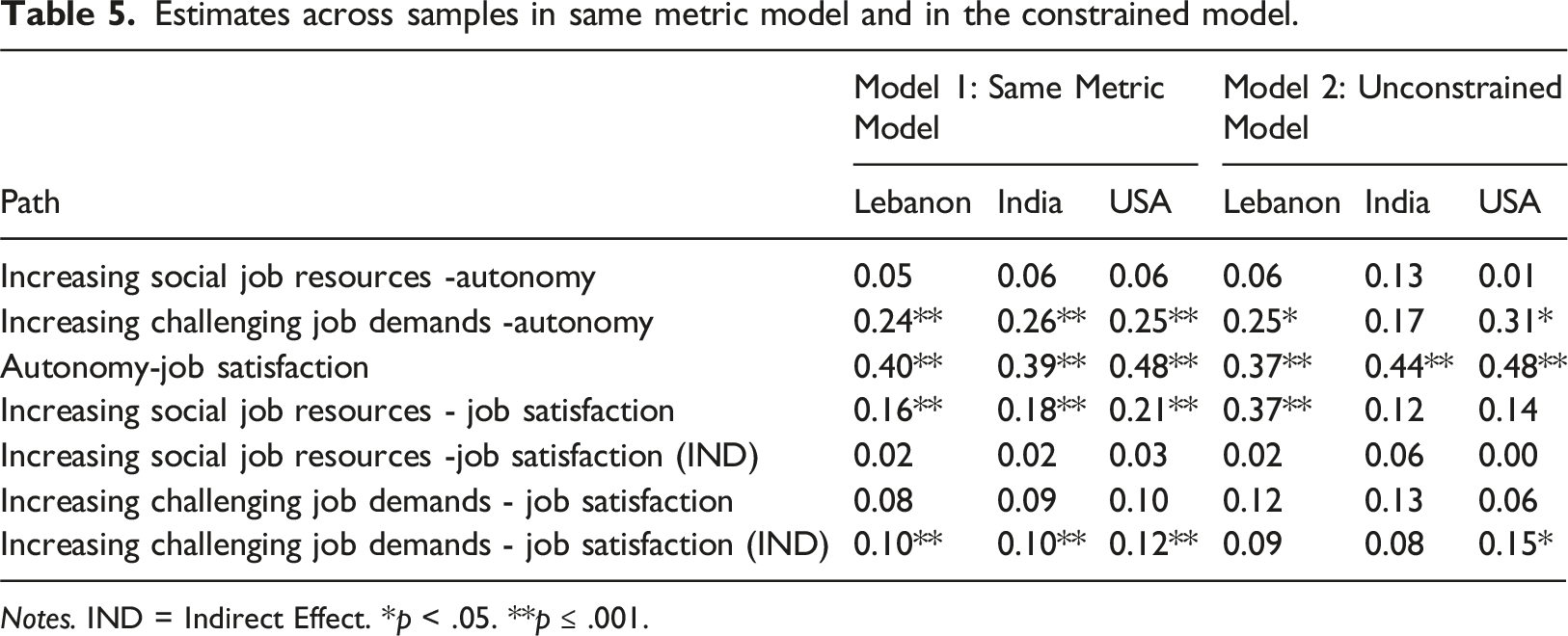
Notes. IND = Indirect Effect. *p < .05. **p ≤ .001.
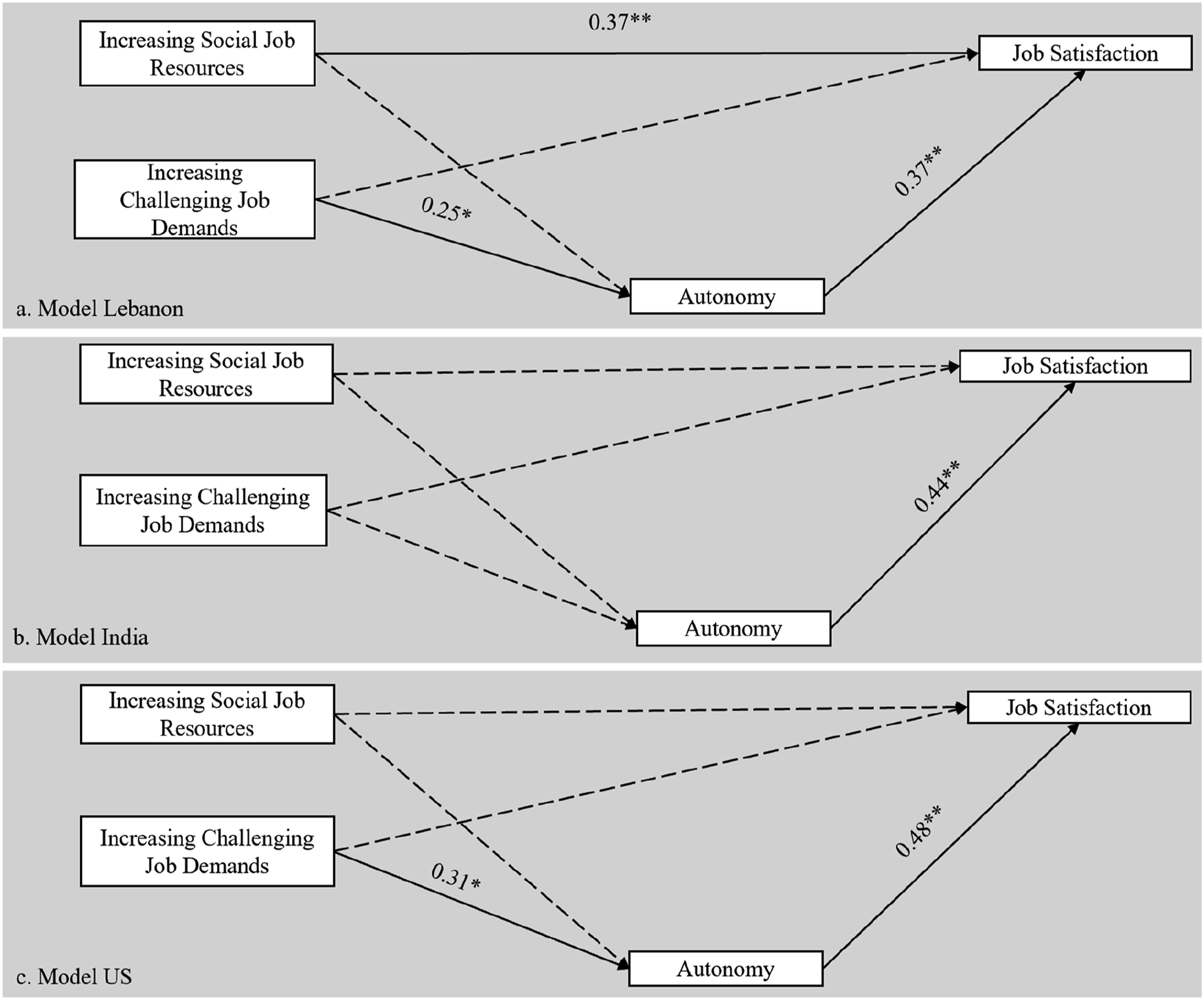
Model outcomes for the Lebanese (a), Indian (b), and the USA (c) samples. *p < .05 **p < .001.
Discussion
Previous studies have shown that job crafting might enhance the perception of personal control one has over their work, which in turn facilitates the satisfaction of their need for autonomy (Slemp and Vella-Brodrick, 2014). We provide evidence to support this relationship, however, we show that there are important cultural differences to take into account, both in terms of the relationships we have documented and also in terms of the applicability of the measures employed.
We found that, unlike what previous research has shown, job crafting is not always linked to job satisfaction. While job crafting was related to job satisfaction in the Lebanese and USA samples, no such relationship was supported in the Indian sample. Our results indicated that basic need satisfaction is associated with achieving positive work outcomes, namely job satisfaction across different cultural contexts. We did not find general support for the mediating role of basic need satisfaction between job crafting and job satisfaction. Our study showed that in the Lebanese and USA samples, increasing challenging job demands is related to job satisfaction, yet only through the satisfaction of the need for autonomy (i.e., a full mediation effect was found). However, there was no relationship between these two variables in the Indian sample. When it comes to increasing social job resources, it was related to job satisfaction, yet only in the Lebanese sample.
We find that the widely adopted tools used to measure constructs in the study (job crafting and basic need satisfaction) do not function equally across these three different cultural contexts. Accordingly, greater attention needs to be given to the interpretation of results from job crafting measurements from different cultural contexts, specifically for practitioners.
We also have specific suggestions that could help sketch a way forward in understanding the cultural variation we find in the relationships. Taking a closer look at the cultural and professional contexts can help us understand the relationship between job crafting, need satisfaction, and culture. In the Lebanese context, nurses claim that having a poor supportive work environment is one of the major reasons driving them to leave Lebanon (El-Jardali et al., 2008). Accordingly, job crafting helps create this supportive environment, which might explain the relationship between increasing social job resources and job satisfaction in the Lebanese sample. On the other hand, job crafting was found to be unrelated to job satisfaction in India. Nurses might engage in job crafting, but this does not influence their levels of job satisfaction, since the latter will be more influenced by how much the organization meets their expectations, needs, and preferences (Dasgupta, 2015). Finally, the partial mediation we found between increasing challenging job demands and job satisfaction via autonomy only in the USA sample, can be because it is a highly individualistic country and many of the work behaviors demonstrated by individuals from such a cultural context are driven by the need to fulfill one’s self and to satisfy the need for autonomy (Minkov and Kaasa, 2022).
Practical implications
Our results indicate that engaging in job crafting behaviors, specifically increasing challenging job demands, might be advantageous as it is associated with satisfaction of the need for autonomy, and, in turn, job satisfaction among nurses. Top management and HR professionals may benefit from organizing job crafting workshops that nurses who have a high need for autonomy can enroll in to familiarize them with what job crafting it and how they can engage in it. This can increase their learning opportunities, which has been shown to have direct effects on work engagement among healthcare workers (Sarti, 2014) and contribute to their career sustainability (Van der Heijden and De Vos, 2015). Given the extreme shortages of nurses in many countries across the globe, which has only increased since the COVID-19 pandemic (Falatah, 2021), it is of utmost importance to implement HRM systems, such as high-performance work systems and high-commitment work systems that enable nurses to craft their job and to align their daily tasks and responsibilities where possible with their persona preferences.
All of the above can be the case, but our findings also come with a clear recommendation for managers and HR professionals who are thinking about implementing or facilitating job crafting initiatives to foster need satisfaction and job satisfaction: They should attend to the cultural context in which they are operating to understand how discrepant it is from the context in which job crafting has been developed (and widely shown to be relevant) prior to making this implementation. This can be done by understanding how different or similar their local culture is compared to the Western context that job crafting was developed in. We have shown that assuming comparability is premature. In line with other studies on the cross-cultural comparability of constructs, we advise assessing the invariance of the tools (for an overview, see Bender and Adams, 2021; Van de Vijver and Leung, 2021).
Theoretical contribution
The relationship between job crafting and job satisfaction does not hold across different cultural contexts. Autonomy does have a role in mediating this relationship in certain cultural contexts (Lebanon and the USA), but not in others (India). Such findings help us better understand job crafting as a psychological phenomenon (Borsboom et al., 2004) and provide evidence on the contextual embeddedness and dependence of job crafting (Zhang and Parker, 2019) and its relationships with other variables. Our findings indicate the touted relationship between job crafting and job satisfaction does not hold among nurses across different cultural contexts even when framed using the SDT.
Research so far has shown that job crafting is related to many positive work outcomes across different professions (Oprea et al., 2019). Metanalytic research has also highlighted the significant positive relationship between job crafting and job satisfaction (Rudolph et al., 2017). However, previous research has indicated that national culture influences job satisfaction and its antecedents (e.g., Sousa-Poza and Sousa-Poza, 2000). We find that the job crafting dimensions were related differently to job satisfaction across the different cultural samples, and basic need satisfaction did not always mediate the relationship between job crafting and job satisfaction. This corresponds with Toyama et al. (2022) who found that increasing social job resources was not related to work engagement (Bakker and Sanz-Vergel, 2013).
We argued that it is necessary to consider the psychometric appropriateness of our tools (Van de Vijver and Leung, 2021) across cultures, and failing to do so, “may lead to over- or underestimating the true effect and erroneous or incomplete inferences about psychological constructs and what affects them” (Maassen et al., 2023: p. 2). In our study, we found that only parts of the job crafting scale were invariant (i.e., psychometrically comparable) across the three cultural contexts. The dimensions of increasing social job resources and increasing challenging job demands reached metric invariance and are comparable (in the investigated samples), while the other two job crafting dimensions (increasing structural job resources and decreasing hindering job demands) differed per context. We therefore cannot consider the total job crafting scale as culturally invariant, indicating the presence of construct bias (Van de Vijver and Leung, 2021). The structure of job crafting may not be the same which means we need to consider which elements are comparable across cultures (etic) and which are specific to some cultures (emic).
Two important lines of research help us make sense of this. First, the same behavior may have different implications in different contexts, and second, there may be different behaviors that may be part of job crafting in different contexts. First, research on the role of religiosity in well-being shows a strong positive link. However, this seems to be contingent on the match with the larger context of the individual (e.g., Christian in a Christian context, Muslim in a Muslim context, seeGebauer et al., 2017 , religiosity-as-social-value hypothesis). This positive association is weakened/disappears in the case of mismatch (i.e., Christian in a Muslim context). Applied to job crafting, it might be the case that agentic aspects carry positive associations only in contexts where these are also positively connotated. A Second line of research that we can draw on, is research on Organizational Citizenship Behavior (OCB), a proactive job behavior (similar to job crafting). Previous research has shown that OCB has emic (culturally specific) and etic (comparative, universal) components (Farh et al., 1997; Gelfand et al., 2007). OCB etic dimensions include altruism (helping colleagues), conscientiousness (going beyond minimum role requirements), and civic virtue (being involved in the organization). Emic components focus more on courtesy (voluntary actions to avoid workplace conflicts), and sportsmanship (ability to endure discomfort without complaint.). This might partially explain the variance in the avoidance dimension of job crafting.
Taken together, this highlights the need to investigate important contextual and individual variations while ensuring we sample both common and culture-specific job crafting elements. The job crafting dimensions of decreasing hindering job demands and increasing social job resources may be more relevant outside of Western contexts as relationality and avoidance are at their core (similar to the emic aspects of OCB). In terms of contextual variation, a high need for autonomy, linked to job crafting behaviors may be linked to (job) satisfaction, but only in contexts that do not feature societal barriers or sanctions toward such a need expression (e.g., tight cultures, Gelfand et al., 2006), and that place value on individualism (Hofstede et al., 2010; Minkov and Kaasa, 2022). Conversely, a low need for autonomy (and a high need for relatedness) may be adaptively linking job crafting and satisfaction in contexts where deviations are punished more.
We suggest that disentangling these elements holds the key to understanding different pathways toward adaptive work behaviors across cultural contexts.
Limitations and directions for future research
This study has several limitations. First, our data is cross-sectional, and we can therefore not examine the influence of job crafting over time or discern causality. Second, our sample selection was guided by comparing national contexts on multiple indicators, including Hofstede (1983) cultural assessment. We recommend considering individual-level variability of cultural orientations (i.e., within a single cultural context). Finally, while we find evidence for measurement invariance of the tool across cross-cultural samples, further research is needed to explore the sources of this invariance. For example, there may be culturally-specific variants of job crafting that can only be discovered by investigating emic, localized conceptualizations of job crafting (for a comparable argument regarding personality, see Cheung et al., 2011). Future studies are encouraged to develop, adapt, and refine job crafting measures that show desirable psychometric properties in specific cultural contexts.
Footnotes
Declaration of conflicting interests
The author(s) declared no potential conflicts of interest with respect to the research, authorship, and/or publication of this article.
Funding
The author(s) received no financial support for the research, authorship, and/or publication of this article.
