



Abstract
This research explores cross-cultural differences in skill requirements for the emerging HR analyst role. We extract data from 541 HR analyst job postings across six countries and use Python software to conduct competency-based text analysis. We also employ LDA (latent Dirichlet allocation) topic modeling technique to contrast our results. Our text analysis and dictionary creation are guided by a recently published competency model for the HR analyst role. We thus evaluate the practicality and applicability of such a competency model in a cross-cultural context. Although we find significant differences in competency weightings across our sample, these differences cannot be explained by cultural theory. Power distance and individualism predicted competency related text in a unified manner. The associations observed between uncertainty avoidance and competency-related text were counterintuitive. Our findings contribute to the scarce literature exploring cross-cultural job design and further advance the discussion on HR analyst competencies. Implications for cultural theory and job design are discussed.
Introduction
Competition, globalization, and technology continue to act as driving forces of change for the HR role (Fenech et al., 2019; Fernandez and Gllardo-Gallardo, 2021; Obedgiu, 2017). From its administrative origins in the early twentieth century to a core strategic business partner, the HR role continues to evolve (Ulrich and Dulebohn, 2015). One of the most recent evolutions in HR is the HR analyst role (Margherita, 2022). The HR analyst role is essentially a hybrid position requiring skills traditionally found in both HR (i.e., business acumen, staffing, compensation) and IT domains (i.e., software proficiency, data modeling), thus requiring interdisciplinary competencies (Chen et al., 2012). Given this complexity, researchers have noted that the skills, competencies, and responsibilities required for success in the HR analyst role remain unclear (De Mauro et al., 2018; Kashive and Khanna, 2023; McCartney et al., 2021). Furthermore, cultural values may impact HR activities such as job design (Erez, 2010). There is a recent discussion on whether cross-cultural research is having an impact (Jackson, 2023), and understanding how culture influences job design could inform recruiters and job seekers about differences in skills demanded as well as the transportability of the HR analyst role.
That is, do cultural values influence job design? And are the skills required to succeed in the HR analyst role in India the same as those skills required for success in Canada? Significant differences could imply that the skills and competencies required (or emphasized) for the same position in one country vary from another. Furthermore, exploring how the HR analyst role competencies vary cross-culturally (i.e., where levels of hierarchy, collectivism, and IT sophistication differ) is likely to surface notable differences in HR analyst job designs (Warner, 2013). The HR analyst role in collectivist, high-power distance societies (i.e., India, China) for example, may require more team-focused and less autonomous decision-making competencies compared to those competencies required for similar roles in Canada. We thus see the HR analyst role as an ideal position to explore cross-culturally given its embryonic state and interdisciplinary design. The research question we seek to address is:
How do cultural differences impact job design for the HR analyst role?
Surprisingly, the literature examining cultural influences on job design is scarce (Aycan, 2005; Taylor et al., 2008; Ahmed et al., 2012), and the few studies exploring HR analyst competencies have done so in a homogeneous cultural context (i.e., De Mauro et al., 2018; McCartney et al., 2021). Although job design is a critical theoretical foundation of human resource development, researchers and practitioners have largely neglected it (Lee and Lee, 2018). In their literature review of job crafting and performance, Lee and Lee (2018) found several elements of job design (i.e., increasing structural job resources, increasing social job resources, decreasing hindering job demands) were positively related to performance. Job design influences employees’ behavior, attitudes, well-being, and performance (Humphrey et al., 2007), and the manner in which organizations structure the work of their employees (i.e., time/performance pressure, task structure, routinization) are significant predictors of creativity (see Cai et al., 2020). It is therefore important for researchers to explore how job design differs (potentially) cross-culturally.
Over two separate studies, we explore how cultural values impact job design for the HR analyst roles across six countries. We draw heavily upon Aycan’s (2005) HR-related cultural framework and McCartney and colleagues’ (2021) HR analyst competency wheel to develop testable hypotheses and explore differences in job advertisements across Canadian, Chinese, Filipino, Indian, American, and French postings. We analyze job advertisement text using python software to explore competency weighting differences across our sample. Our manuscript proceeds by reviewing the extant literature on job design, the role of HR analysts, and research examining the transportability of jobs across nations. Following this, we outline our methodological approach, including dictionary creation, data collection, and analysis processes. Finally, we discuss our findings, limitations, and avenues for future research.
Literature review
HR analyst role
HR predictive analytics and the HR analyst role (see Edwards and Edwards, 2019) are hybrids of traditional HR and IT functions (Chen et al., 2012). The role requires a sophisticated understanding of both the ‘people’ side and the ‘technical’ side of business. Given this complexity, scholars have recently begun to debate the essential knowledge, skills, abilities and other characteristics (KSAOs) of HR analysts (Andersen, 2017; McIver et al., 2018; Minbaeva, 2018; Van der Togt and Rasmussen, 2017). For example, according to Andersen (2017), HR analysts need to have excellent statistics and number skills, robust data management skills, and the ability to create data visualizations and be captivating storytellers. Van der Togt and Rasmussen (2017) argue that HR analysts also need to have a strong business focus and a deep understanding of behavioral science in addition to excellent data, statistical skills, and the ability to tell a data story. Other skills mentioned in the literature include problem-solving capabilities (Durai et al., 2019), IT skills (Mishra et al., 2016), predictive modeling (Edwards and Edwards, 2019; Minbaeva, 2018), data mining (Liu et al., 2020) and familiarity with statistical software packages (McIver et al., 2018; Pessach et al., 2020).
McCartney and colleagues (2021) significantly advanced the skills debate by developing a competency model for the HR analyst role. After analyzing 110 postings and conducting qualitative interviews with HR professionals, they narrowed down the specific KSAOs required to succeed in the HR analyst role to six competencies, namely, storytelling and communication, research and discovery, HR and business acumen, consulting, technical knowledge, and data fluency and data analysis (McCartney et al., 2021). Their research also summarizes approximate ‘weightings’ for each competency (see McCartney et al., 2021) derived from the results of their job description(s) text analysis. For example, McCartney and colleagues (2021) found that job description text related to technical knowledge (TK) 1 competency represented 31%, followed by consulting (CON) 27%, data fluency and data analysis (DATA) 25%, storytelling and communication (SC) 12%, and HR and business acumen (HRB) 5%. The sixth competency research and discovery (RD) was derived separately from McCartney and colleagues’ (2021) thematic analysis through qualitative interviews with HR professionals. In sum, their research produced an HR analyst competency wheel and addressed a gap between academics and practitioners concerning the competencies and skills required to perform HR analytics (Edwards and Edwards, 2019; Minbaeva, 2018). However, McCartney and colleagues’ (2021) sample was extracted solely from Anglo-Saxon countries, which overlooks how cultural factors may impact job design (Erez, 2010). The present study addresses this point by exploring differences in the KSAOs advertised for various HR analyst job postings across six countries.
Job descriptions and job design
A job description or summary is a document that provides an overview of the primary work activities and the most critical KSAOs required for successful performance (Taylor et al., 2008). The description also typically includes qualifications reflecting organizational expectations regarding the ideal candidate, such as degrees and certifications they deem necessary for successfully performing a role (Sekiguchi, 2004). Although traditional forms of finding jobs are still abundant (i.e., direct contact, networking, recruitment agency, etc.), online applications through job sites and company webpages are increasing and serve as an important source for immigrant job seekers. Job sites now rival personal and professional networks as a top source of job information (Smith, 2015).
Job descriptions are the product of job design, the way that a set of tasks, or an entire job, is organized (Morgeson and Humphrey, 2006). HR personnel and general managers responsible for designing jobs must consider how best to integrate motivational, social, and contextual elements that enhance employee experience while achieving organizational objectives (Humphrey et al., 2007). Therefore, approaches to job design often vary depending on the job, organizational culture, and strategic goals. Different approaches may include designing for efficiency (i.e., industrial engineering), motivation (i.e., skill variety, feedback), physical health and well-being (i.e., ergonomics), and mental health and well-being (cognitive ergonomics). For example, research has highlighted the importance of team dynamics (Aycan, 2005), active autonomy in job crafting (Wrzesniewski and Dutton, 2001), and ergonomics (Khattak, 2021) in job design. Furthermore, research has found that different job designs emerge in different cultures, creating unique ways of enhancing employees’ self-worth and well-being (Erez, 2010).
Therefore, research investigating the influence of culture on job design could rely on public advertisements for insights into cultural differences. Similar research designs have been carried out in the past. For example, Ahmed and colleagues (2012) explored whether employers’ soft skills requirements, as advertised in job postings, within different roles of software development are similar across different cultures. Their study was based on 500 job advertisements posted on well-known recruitment sites spanning four continents (Europe, North America, Asia, Australia). Although some roles (i.e., designer, programmer & tester) revealed substantial similarities in soft skills across cultures, significant differences in system analyst roles were found (Ahmed et al., 2012). De Mauro and colleagues (2018) analyzed real-world job posts published online and established a common dictionary to be used by HR recruiters and educational providers to help bridge the gap between supply and demand in the job marketplace. The authors’ primary motivation in this study was to address a research gap regarding the formal definition of the most prominent Big Data jobs and their required educational needs (Miller, 2014; Song and Zhu, 2015). Their findings provided a data-based description of job roles and skills that companies need to make use of big data.
The present study uses a similar research design to recent studies (i.e., Ahmed et al., 2012; De Mauro et al., 2018; McCartney et al., 2021) but takes a deeper level of analysis surrounding cultural factors influencing required competencies for the HR analyst role. We develop a competency dictionary and use Python text analysis to statistical test for country-level differences.
Cross-cultural job design
Very little empirical research exists exploring cross-cultural differences in job descriptions. However, some insights can be drawn from a few exceptions. The first is Taylor and colleagues’ (2008) research exploring Occupational Information Network instruments for three jobs (first-line supervisor, office clerk, computer programmer) across four countries: New Zealand, China, Hong Kong, and the United States. The authors found limited support for the majority of their hypothesized country differences; however, some significant differences in mean scores for decision making were found for New Zealand and Hong Kong, as well as between China and the USA (Taylor et al., 2008). These findings are significant given that these country pairings had the largest cultural distance (see Arseneault and Roulin, 2024). It is also worth noting that Taylor and colleagues’ (2008) research relied on job incumbents’ self-reported values, an approach that is vulnerable to subjective self-report bias, differences in cultural response patterns, and other issues concerning cross-sectional methods (Spector, 2019). To overcome these methodological challenges recent trends in job analysis research has shifted towards a reliance on job advertisement data.
For example, Ahmed and colleagues (2012) explored whether employers’ soft skills requirements, as advertised in job postings, within different roles of software development are similar across different cultures. Their study was based on 500 job advertisements posted on well-known recruitment sites spanning four continents (Europe, North America, Asia, Australia). Although some roles (i.e., designer, programmer & tester) revealed substantial similarities in soft skills across cultures, significant differences in system analyst roles were found (Ahmed et al., 2012). This finding is worth noting given that among the three job roles explored in their study, the ‘analyst role’ is most likely to include skills (IT-related) that overlap with HR analysts in the present study. The cross-cultural differences Ahmed and colleagues (2012) found in the analyst role within their study was intuitively consistent with the collectivist, individualist and power distance dimension literature (Erez and Earley, 1993; Hofstede, 2001). Specifically, the authors found that for the analyst position(s), the North American job market placed a significantly higher emphasis on analytical and problem-solving skills, the ability to work independently (individualist) and the ability to adapt to change (low power distance) in comparison to the Asian job market. Ahmed and colleagues (2012) analyzed and compared actual job postings designed by HR staff, reflecting organizational values (Sekiguchi, 2004). The present study also applies this approach to explore how cultural differences may impact job descriptions of HR analysts across six countries.
Theory
The following sections draws upon cross-cultural theory (Hofstede, 2001) and job design research (Erez, 2010; Aycan, 2005) to develop hypotheses as to which competencies will be most prominent in HR analyst positions across our six-country sample. Culture can be defined as those values, beliefs, and norms that are shared by societal members (Hofstede, 2001). The geographic location of the advertisements sourced for our study (i.e., six countries) serves as a proxy for the cultural values, and associated dimension scores from Hofstede’s (2001) framework. Despite criticisms (see McSweeney, 2002), Hofstede’s (2001) cultural framework has been cited over times 100,000 times and is still widely used in research. Hofstede’s (2001) research initially identified systematic differences in national cultures on four primary dimensions: power distance (PDI), individualism (IDV), uncertainty avoidance (UAI) and masculinity (MAS) – three of which (PDI, IDV, UAI) have been found to be most relevant to how organizations engage in job design (see Aycan, 2005) and is therefore used in the present study’s hypotheses development. Power distance refers to the extent to which the less powerful members of organizations and institutions accept and expect that power is distributed unequally; Individualism vs. collectivism refers to the degree to which people in a society are integrated into groups; and Uncertainty avoidance refers to a society’s tolerance for ambiguity (Hofstede, 1980, 2001).
Erez and Earley (1993) were among the first to discuss how various facets of job-enrichment (i.e., autonomy, feedback, skill / task variety, see Hackman, 1980) could be more prevalent in individualistic rather than collectivist cultures. Empowerment at the individual level through job-enrichment activities have been noted to contribute greatly to employee satisfaction (Orpen, 1979) but are more likely to be prominent across individualistic societies. We therefore expect job descriptions containing content related to autonomy, feedback, and skill variety (Hackman, 1980) to be more prominent in individualistic cultures. This theory has been supported by empirical evidence. For example, Aycan and colleagues (1999) found that employees in India, a low individualism country rated their level of job autonomy and skill variety as significantly lower than ratings made by employees in Canada. Aycan (2005) later conducted a systematic review of the literature on cultural and institutional/structural contingencies influencing HRM practices in six key areas, including job analysis and design. She created a framework that draws upon cultural theory to develop propositions of how various HRM activities could be influenced by cultural values. This conceptual paper was based off years of empirical research which broadly suggests that cultural values can influence HRM practices such as job design and job requirements (Aycan, 2005). Under ‘Job Analysis’ Aycan (2005: see Propositions 18-20) specifically draws upon cross-cultural theory to predict how cultural values may impact job design. She discusses how three cultural dimensions (uncertainty avoidance, power distance & collectivism) may impact job design. Aycan (2005) mentions that in high uncertainty avoidance cultures, jobs are defined in specific rather than broad terms to reduce role ambiguities (Wong and Birnbaum-More, 1994). Further, high power distance cultures, tend to define jobs in broader terms with a reduced necessity to have specific job descriptions. This ‘broad’ job design provides managers with more power discretion (i.e., due to role ambiguity) resulting in a heavy reliance on supervisory guidance. Aycan (2005) also mentions how collectivist cultures place more emphasis on within-job activities among team members (Sanchez and Levine, 2009), which translates into more teamwork and interpersonal qualities text in job descriptions. We therefore predict that job postings within cultures higher in uncertainty avoidance, power distance and collectivism will have less text resulting to storytelling and communication. In other words:
There will be significant differences in the use of
Aycan (2005) also draws upon an empirical study by Love and Bishop (1994) to develop a job design proposition, which explored participative job analysis in Japan. The study found that Japanese managers had difficulty soliciting the opinions (i.e., feedback) of individual workers to assist with job analysis. The source of this difficulty was cited as being due to Japan’s collectivist and high-power distance culture where it is not appropriate for employees to express opinions overriding superiors and where jobs are designed for groups, rather than individuals. Taylor and colleagues (2008) later examined the transportability of three American positions (i.e., first-line supervisor, office clerk, computer programmer) to three countries (New Zealand, Hong Kong, and China) using the O*NET system (Occupational Information Network). Although they found limited support for the majority of their hypothesized cultural differences, mean ratings of decision-making for New Zealand participants (i.e., individualist, low power distance) were significantly greater than those of Hong Kong. Taylor and colleagues (2008) also discuss how studies of Chinese societies have highlighted that decision-making authority is rarely delegated to subordinates and that executives in China have rated their managers as less likely to delegate authority (see Yates and Lee, 1996). Their research found that New Zealand (i.e., individualistic, low power distance) participants reported higher mean scores related to decision-making than did those participants form Hong Kong (i.e., collectivist, high power distance). Such cross-cultural variations in workers’ freedom to make decisions concerning their work (i.e., within the same position) are likely to be reflected in job design. We believe that the competencies of consulting and business acumen are most likely to be related to decision making, and based on this discussion, we would expect HR analyst job descriptions within high power distance and collectivist countries to contain less responsibilities related to ‘feedback’, ‘recommendations’, and ‘decision-making’. Therefore, we predict:
There will be significant differences in the use of
There will be significant differences in the use of
Prior cross-cultural job analysis research (i.e.., Shin et al., 2007; Taylor et al., 2008) tested hypotheses using the two cultural dimensions (i.e., collectivism, power distance). e.g., Shin and colleagues (2007) explored the links between power distance and collectivism with job analysis ratings for U.S. government employees working as expatriates on international assignments. They found that items composing a dimension of relationship-oriented behaviors were negatively related with countries’ scores on individualism, and partial support for a relationship between scores on a dimension of administrative behaviors and power distance. This suggests that higher power distance and collectivist societies are more likely to include HR analyst job descriptions that focus on administrative behaviors (i.e., technical reporting, analysis) and relationship-oriented behaviors (i.e., teamwork) than societies lower on these dimensions. Further, it is well known that social relationships are considered particularly critical in collectivist societies (Aycan, 2005; Hofstede, 2001). Jobs are designed around cohesive work groups to maximize the social and technical aspects of the job (Erez, 1993). Organizational success in collectivist countries is attributed to the sharing of information and the development of political alliances (Hofstede, 2001) and strategies that emphasize communication and the building of interpersonal relationships. Based on this discussion, we predict that HR analyst positions in societies with higher power distance, collectivism, and uncertainty avoidance will include text i.e. more descriptive and technically based. Specifically:
There will be significant differences in the use of
There will be significant differences in the use of
And finally, we acknowledge that predictions in cross-cultural differences pertaining to the competency of research and discovery have little research support. According to McCartney and colleagues (2021), the competency of research and discovery pertains to an analyst’s ability to formulate testable research questions, uncovering underlying business challenges and drivers. To successfully conduct these activities, researchers require the freedom and full authority to access cross-departmental archives (i.e., balance sheets, executive compensation data, notice of assessments). However, such freedom and authority as well as the capacity to ‘think outside the box’ (Niu and Sternberg, 2002) are likely to be less prominent among employees working for organisations in societies with higher power distance and collectivism. Therefore, we predict:
There will be significant differences in the use of
Methods
Data collection
Our data include HR analyst job advertisements extracted from various job sites across six countries. As justified in prior research (i.e., Ahmed et al., 2012; De Mauro et al., 2018; McCartney et al., 2021), job advertisements were selected due to accessibility, objectivity, understanding market demands, and offering insight into how organizations view the skill requirements of the role needed to succeed (Carliner et al., 2015; Harper, 2012). Our sample includes six culturally diverse nations (with Canada and USA having the most overlap) that all have sizeable economies and IT labor markets. Therefore, we believe this sample has high relevance for global firms recruiting, relocating and training personnel for similar job roles. The job advertisements were collected from popular job sites across Canada, China, the Philippines, India, France, and the USA. We searched for HR analyst postings using Indeed, LinkedIn, Google, etc. Only HR analyst jobs collected from China and France required translation. The principal investigators were bilingual in Chinese (Mandarin), and French and used back translation methods (Brislin, 1970) to confirm the consistency of meaning within job descriptions.
We searched across the above-mentioned sites using the following job titles and keywords: “Human Resource Analyst”; “HR Analyst”; “HR Analytics”; and “HR Data Analyst”. Text data used for analysis were exclusively derived from the job responsibilities and job requirements sections of job advertisements. The company overview, company description, and job benefits text were excluded. Job postings were collected from February 1st, 2023, to June 30th, 2023. Our search efforts returned over 600 positions. However, common issues, including duplicates, insufficient content (i.e., job requirements, missing descriptions), and non HR-related positions (i.e., exclusive IT roles), arose. After data clean-up, our final sample included 541 job advertisements.
Sample Description and Sentiment Analysis Across six Countries.
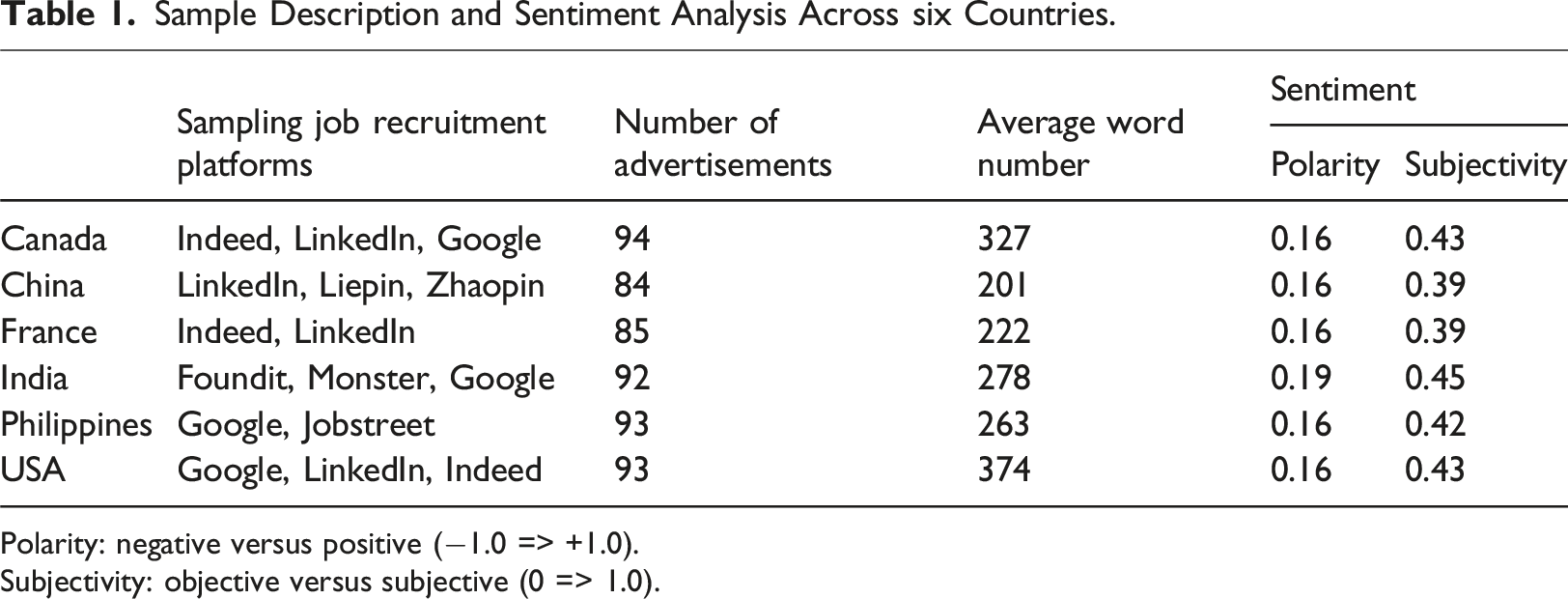
Polarity: negative versus positive (−1.0 => +1.0).
Subjectivity: objective versus subjective (0 => 1.0).
Study 1: Competency weighting analysis using a top keyword-generated dictionary
Method
The objective of Study one was to use an empirical approach to explore whether cross-cultural differences in competency weightings exist and to test our hypotheses. To achieve this, we followed four methodological steps: (1) descriptive analysis, (2) ANOVA analysis, (3)t test analysis, and (4) linear regression analysis clustered by country. Each step is detailed below.
Competency Dictionary Generated From Country Advertisement Top Keywords.
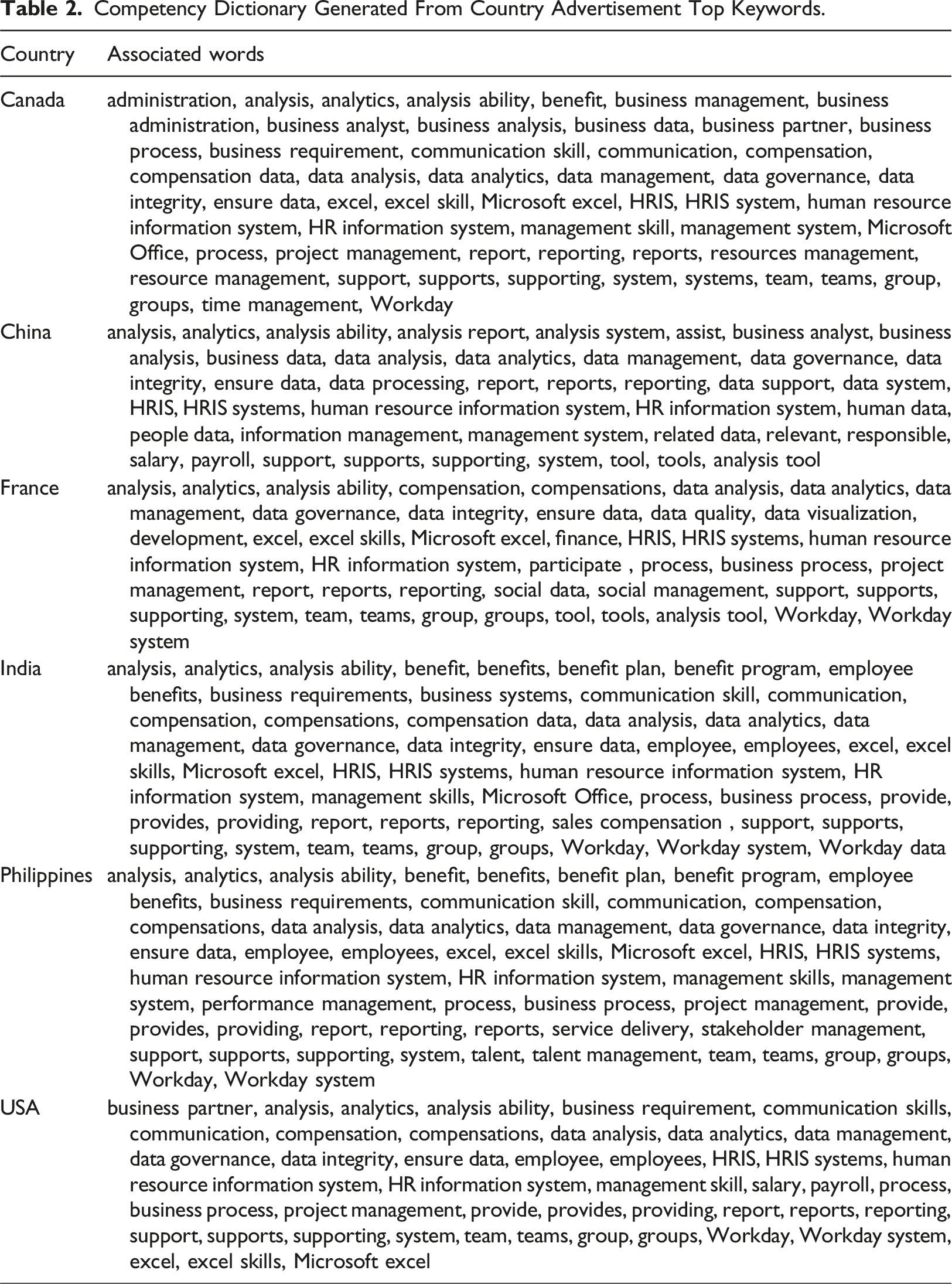
Descriptive analysis
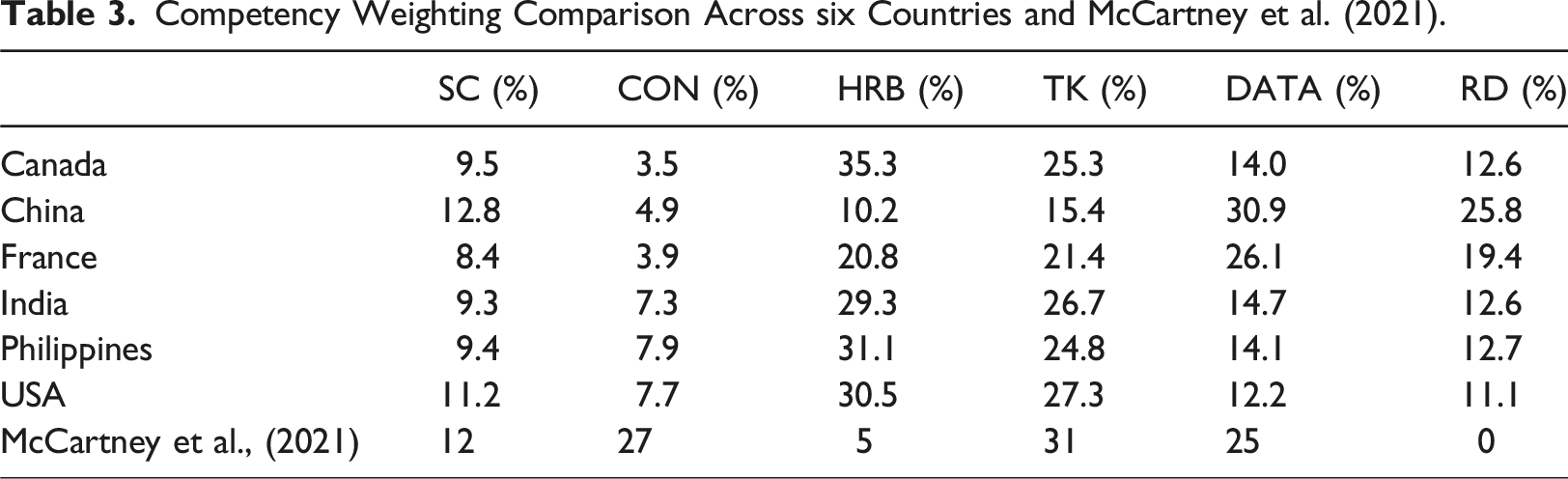
Competency Weighting Comparison Across six Countries and McCartney et al. (2021).
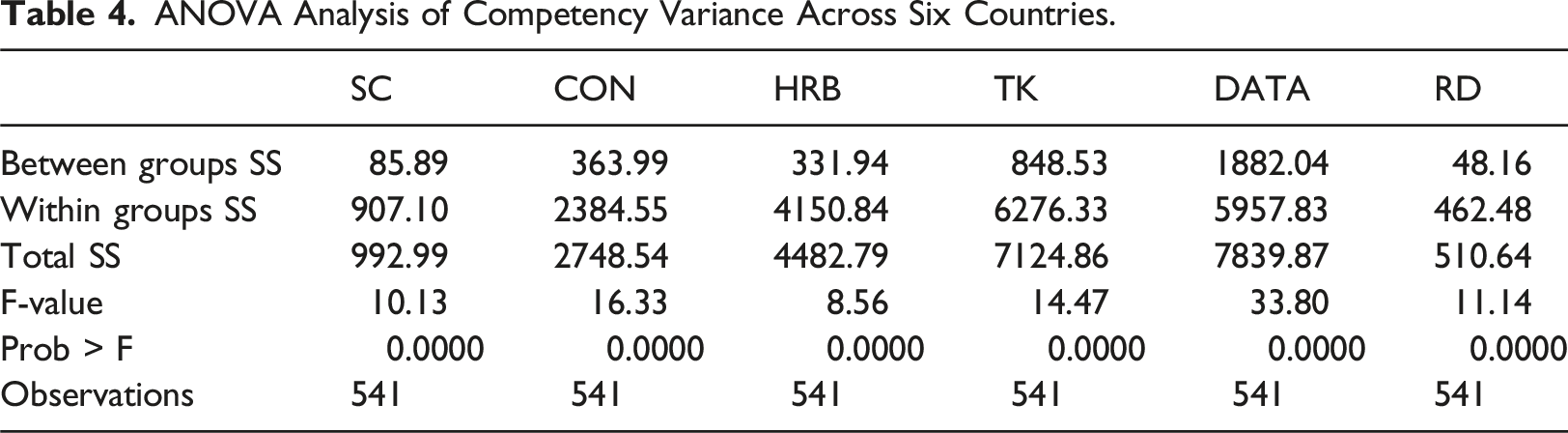
ANOVA analysis
ANOVA Analysis of Competency Variance Across Six Countries.
T-test analysis
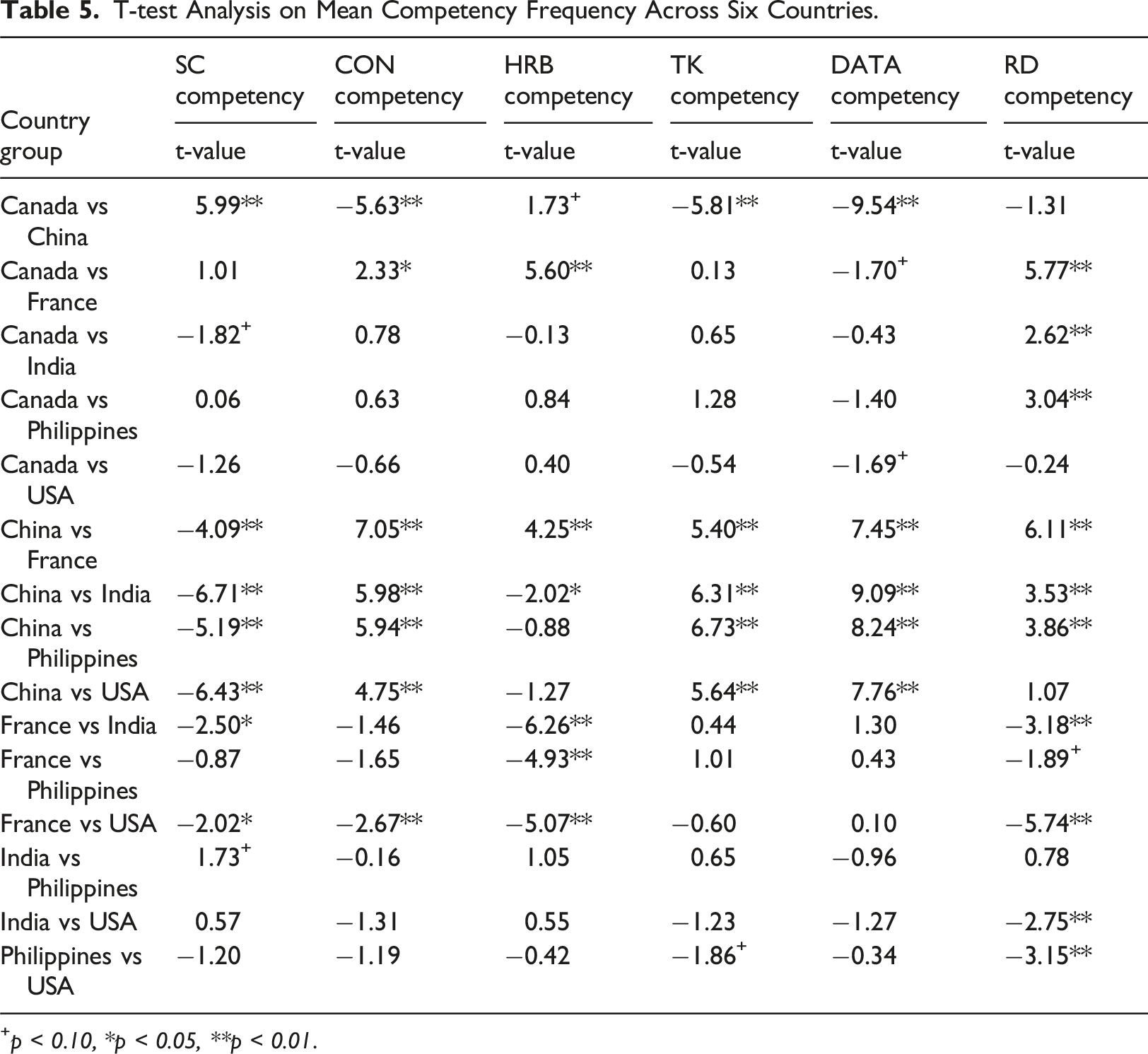
T-test Analysis on Mean Competency Frequency Across Six Countries.
+p < 0.10, *p < 0.05, **p < 0.01.
In summary, the t test results indicate significant differences in competencies among the six countries. We observed Chinese advertisements to be consistently and significantly higher in competency words except for SC and HRB. Notably, Canada, USA, India and the Philippines, showed the most similar competency means. France competency means were consistently among the lowest across our sample.
Linear regression analysis
Hofstede’s Cultural Dimension Scores for six Countries.

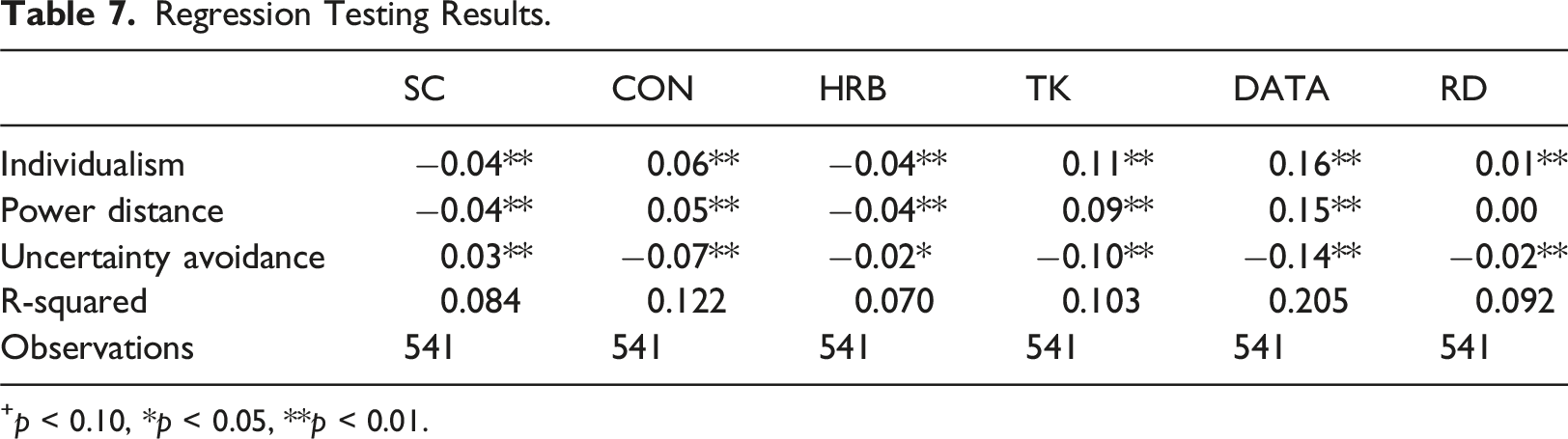
Regression Testing Results.
+p < 0.10, *p < 0.05, **p < 0.01.
Study 2: Competency topic analysis using LDA topic modeling
To further compare our samples’ content with that found in McCartney and colleagues’ (2021) research, we conducted the LDA (latent Dirichlet allocation) topic modeling technique. The LDA model assumes that each word in a text is generated from latent topics characterized by topic word probabilities (see Büschken and Allenby, 2020), and that people use similar words when discussing similar topics (Taeuscher et al., 2021). LDA does not assume mutual exclusivity between topics and creates a word-topic matrix representing a vector of topics along with their weighted probabilities (Blei et al., 2003). Through an iterative process, LDA creates a word-topic matrix and subsequently represents each text in the corpus as a vector of topics and their weighted probabilities (Blei et al., 2003). The LDA topic modeling technique was implemented using Python. The text analysis process included preprocessing data, creating a corpus, training the LDA model, using algorithms, evaluating the model, and extracting and interpreting topics. The algorithms involved included Variational Inference (online variational Bayes algorithm) and Gibbs Sampling.
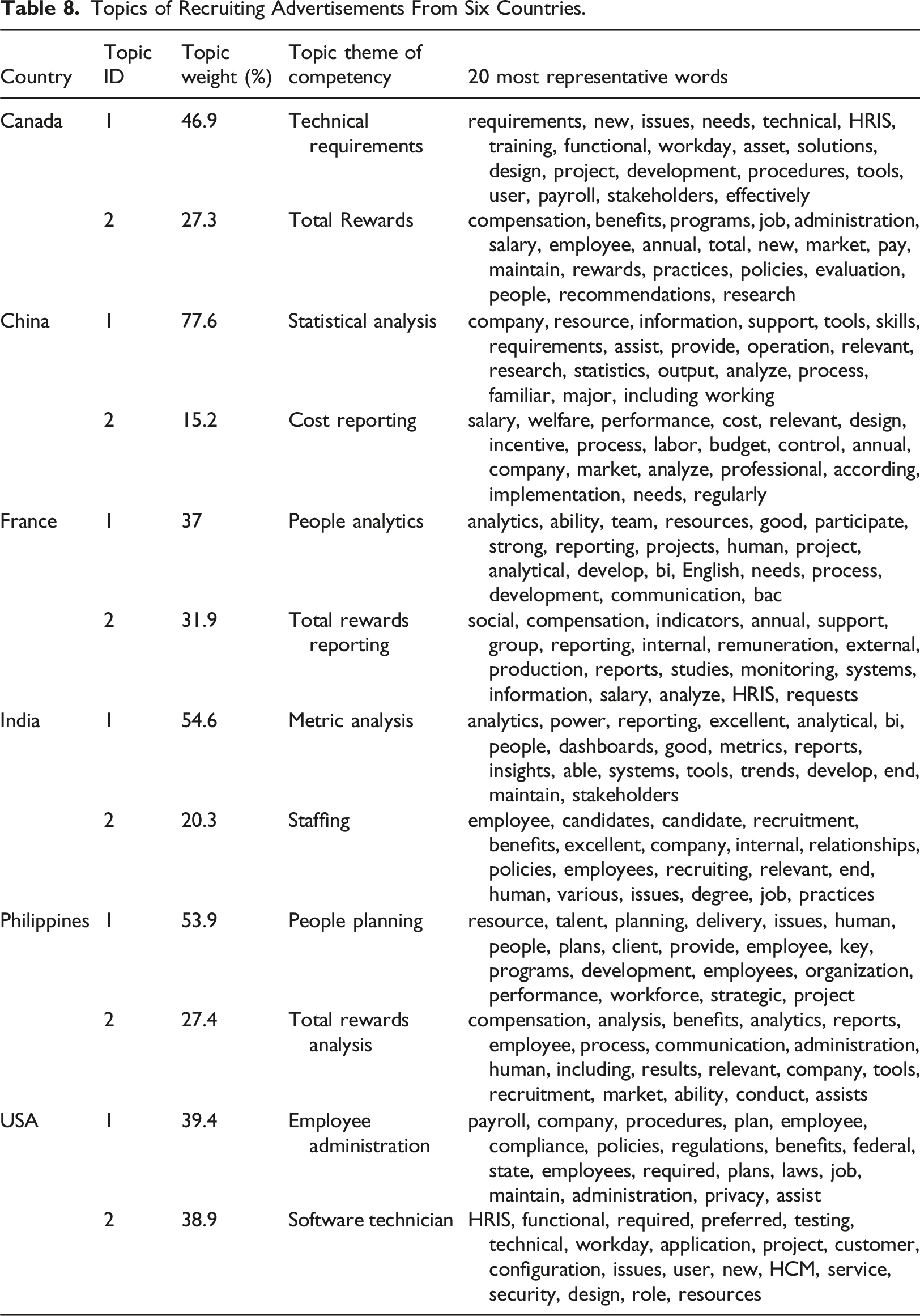
Topics of Recruiting Advertisements From Six Countries.
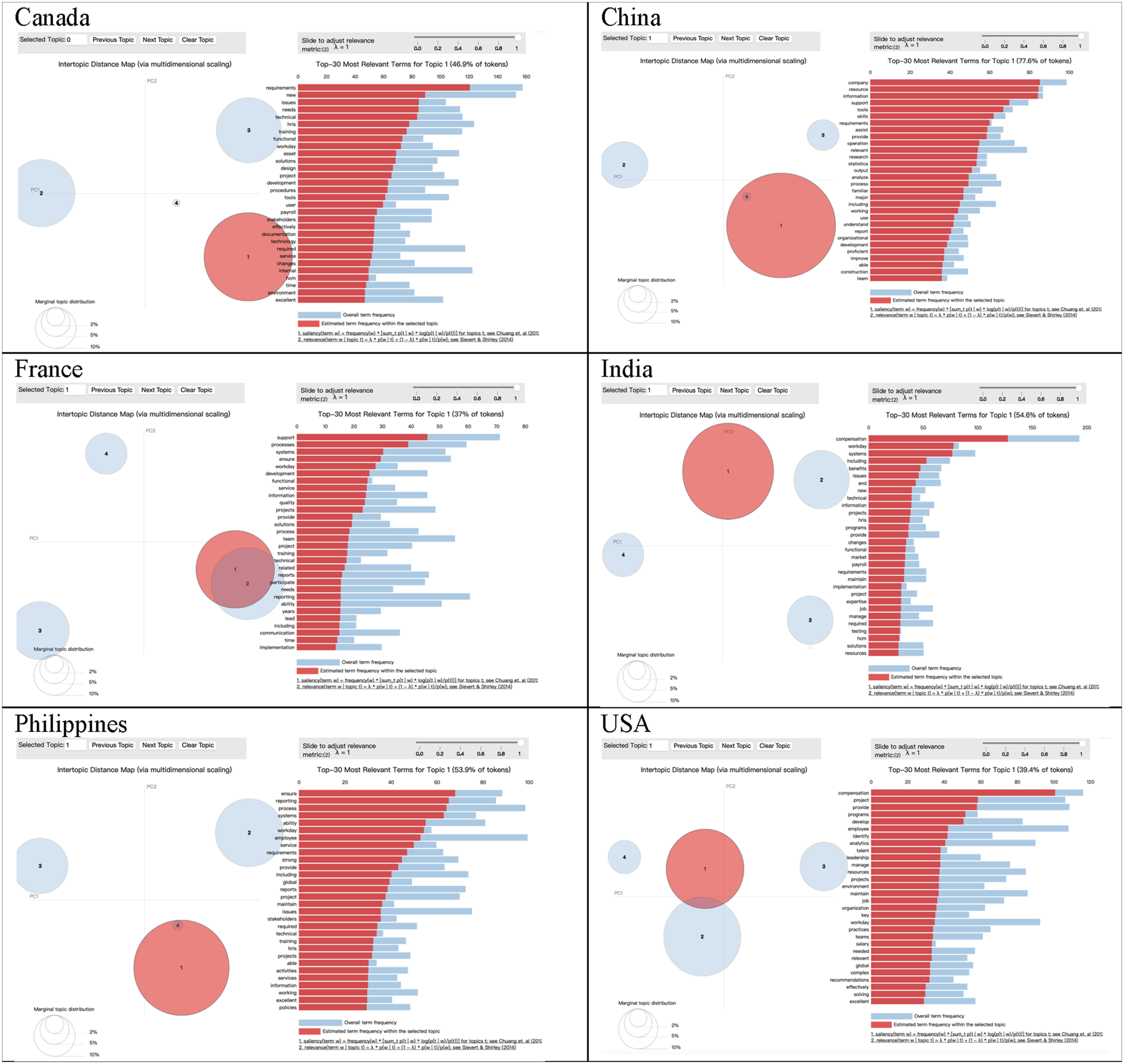
LDA visual presentation for six countries.
Overall, we found that the six countries advertisements aggregated their focus on the competencies of ‘HR management’ and ‘information technology’. Within countries, some distinguishable differences are noteworthy. For example, Canadian HR analyst job advertisements seem to focus on the competencies of ‘technical requirements’ and ‘total rewards’. Chinese advertisements focus on the competencies of ‘statistical analysis’ and ‘cost reporting’. French advertisements focus on ‘people analytics’ and ‘total reward reporting’. Indian advertisements focus on ‘metric analysis’ and ‘staffing’ competencies. Filipino advertisements focus on ‘people planning’ and ‘total reward analysis’ competencies. Finally, USA job advertisements seem to have a focus on ‘employee administration’ and ‘software technical’ competencies.
We used LDAvis to visualize the information contained in LDA topic models and provide more details on the clustering of the topics. Figure 1 presents six LDA visual panels, one for each country in our sample. The content within each panel can be interpreted as follows.
For each LDA visual presentation, the left side displays the global topic view, while the right side shows bar charts (with topic one selected for each LDA visualization). The linked selections reveal the topic-term relationships (Sievert and Shirley, 2024). Each bubble represents a topic, with larger bubbles indicating a higher percentage of advertisements containing text relevant to that topic. When a blue bubble is selected, it turns red, and the topic weight along with the most representative words are displayed.
Blue bars represent the overall frequency of each term in the corpus. If no topic is selected, the blue bars show the most frequently used terms. Red bars indicate the estimated number of times a given term was generated by a given topic. For example, in Canadian advertisements, the term ‘HRIS' appears approximately 120 times overall, and about 80 of these instances occur within topic 1. The positioning of bubbles is also relevant: the further apart they are, the more different the topics they represent.
Based on the most relevant terms for topics, Canadian and Indian job advertisements focused on the competencies of ‘technical knowledge’ and ‘HR information systems’. Chinese job advertisements emphasized the competencies of ‘employing tools to analyze information’ and ‘support HR decisions’. French and Filipino job advertisements concentrated on the competencies of ‘utilizing HR information systems’ and ‘supporting HR development’. USA job advertisements focused on ‘analyzing HR programs’ and ‘supporting HR development’.
Discussion
There is debate in the literature among scholars as to which skills are most relevant for HR analysts (Andersen, 2017; McCartney et al., 2021; Minbaeva, 2018; Van der Togt and Rasmussen, 2017). Our study findings contribute to this debate by offering a cross-cultural perspective to understanding the competencies employers seek to fill HR analyst roles. This level of analysis has been previously overlooked and responds to recent calls inquiring whether cross-cultural management studies are having a real impact (Jackson, 2023). Although research exploring how cultural values impact various HR activities including recruitment and selection (Arseneault and Roulin, 2024), performance management (Wildman et al., 2022), and training (Barmeyer, 2004) exist, studies exploring how culture impacts job design are scarce. We found significant differences in competency weightings for HR analyst roles across the globe. We discuss their implications for cultural theory, HR practitioners, and list avenues for future research.
Theoretical implications
Cross-cultural job design theory suggests that cultural values can influence such practices (Aycan, 2005; Warner, 2013), but empirical studies are scarce, and results are mixed (Ahmed et al., 2012; Taylor et al., 2008). The present study contributes to this literature by exploring how cultural values may influence HR analyst job design. Although we found notable country-level differences in competency weightings across our sample, these differences could not be entirely explained by cross-cultural job design theory. Our regression analysis found all three cultural dimensions were significant predictors of competency-related words in HR analyst job advertisements, but often in directions opposing cultural theory. For example, power distance and individualism were associated with all six competencies in a similar manner. Cross-cultural theory suggests that collectivism (as opposed to individualism) and power distance should be correlated (Hofstede, 1980, 2001). This made it difficult to confirm (partially) to what extent our results aligned with prior literature. Research suggests that collectivist and hierarchical societies (i.e., India, China, and the Philippines) design jobs around cohesive work groups to maximize the social and technical aspects of the job (Erez, 1993). Organizational success in these societies is attributed to the sharing of information (i.e., communication), the development of political alliances, and technical competencies (Hofstede, 2001). We therefore predicted that high power distance and collectivist societies should include job advertisement text that focuses on communication (SC), administrative behaviors (TK, DATA) as well as relationship-oriented behaviors (i.e., teamwork) compared to societies lower on these cultural dimensions. However, our results were mixed, in terms of alignment with prior research (Shin et al., 2007). Further, uncertainty avoidance was negatively associated with TK and DATA competencies, which is counterintuitive given that more detail (i.e., higher TK/DATA) leaves less uncertainty. The positive association observed between uncertainty avoidance and SC, is somewhat intuitive, in that more communication (i.e., higher SC) should lead to less uncertainty.
Overall, we found country-level differences in competency weightings for HR analyst advertisements that were not aligned with cross-cultural theory. One possible explanation for our findings may be that economic and demographic aspects of different labor markets significantly contributed to differences in competencies found between countries.
Descriptive findings
Our descriptive analysis of competency weighting differences across our six-country sample revealed two distinct groups. China and France seemed to be outliers (high/low extremes) in terms of competency weightings, for nearly all six competencies. Our t test results demonstrated that China was consistently and significantly the highest for all competencies except SC and HRB. France was consistently the lowest for all competencies, suggesting that French HR analyst positions contained the highest frequency of irrelevant text across our sample. The remaining four countries were clustered, in terms of mean differences in competency relevant text. e.g., HRB related text was the highest among all competencies for Canada, India, the Philippines, and the USA but different from the remaining two countries. This pattern (i.e., two distinct country groupings) was consistently observed.
Research suggests that high power distance cultures (i.e., China, India, Philippines) tend to define jobs in broader terms to reduce role ambiguity (Wong and Birnbaum-More, 1994). However, we found that Chinese HR analyst job advertisements (i.e., high power distance) had the highest competency word frequency despite having the lowest number of words per advertisement. This finding again was counterintuitive to theory but suggests that Chinese HR analyst job advertisements were the most efficiently written in terms of competency-relevant text. Our descriptive analysis also found that the competencies of CON and SC were in low demand for the HR analyst role. This finding was not aligned with prior research (McCartney et al., 2021). Cross-cultural differences in these competency weightings were minor and the lowest of all competencies explored in this research. It may be difficult for HR practitioners engaged in job design to ‘capture’ the essence of these constructs/skills within text posted on job advertisements. We note an overall low prominence of these competencies found across all countries and suggest that recruiters rely on alternative methods (i.e., interviews, job simulations) to communicate their importance to future candidates.
Finally, practitioners may use our study’s findings to understand cultural preferences in HR analyst job design. For example, Chinese job advertisements were found to be highly efficient, in terms of job role / skill requirement text. In contrast, French HR analyst job role descriptions contained very little job role / skill requirement text. Chinese and French HR analyst job descriptions tend to contain high levels of data fluency related text, whereas the remaining four countries explored in our study contained noticeably higher levels of HR and business acumen related text.
LDA findings
By employing LDA topic modeling to compare HR analyst job advertisements across six countries, we identified both commonalities and differences in the focus on core competencies. Advertisements from all countries consistently emphasized the importance of ‘HR management' and ‘information technology', indicating that technical and information processing skills are now essential in global HR management. Specifically, Canadian and Indian job advertisements prioritized technical knowledge and the application of HR information systems, reflecting these countries’ high regard for technical proficiency and system management capabilities. Chinese advertisements emphasized the use of statistical tools and data analysis, showing a preference for data-driven decision-making. French and Filipino advertisements focused on utilizing HR information systems to support HR development, indicating a broader focus on the holistic development and optimization of human resources. USA advertisements highlighted competencies in analyzing HR programs and supporting development, underscoring the importance of system management and project optimization.
These differences not only reflect the varied economic development stages and technological applications of each country but also reveal unique strategies and priorities in addressing HR management challenges in a globalized context.
Dictionary creation implications
Another implication of our study relates to the process of creation and use of competency wheels in job design. HR recruiters and practitioners responsible for job analysis/design may draw upon competency wheels that do not reflect actual market needs. For example, in addition to divergent findings from McCartney and colleagues’ (2021) competency weightings, our text analysis of job postings did not find evidence supporting prior claims of HR analysts requiring deep grounding in behavioral science, such as strong psychological skills (Andersen, 2017; Van der Togt and Rasmussen, 2017). It is important for practitioners to understand that the meaning of words can vary across contexts (Loughran and McDonald, 2011), and multiple approaches to text analysis exist (Lewis and Young, 2019). Although we followed dictionary creation guidelines for business research methods (Calic et al., 2021; Short et al., 2010) to develop dictionaries for text analysis, our competency weighting outcomes were likely dependent upon our dictionary creation method. Other researchers should be transparent in their dictionary creation procedures, and apply multiple approaches, when possible, to assess convergent validity.
Limitations & future directions
Our study includes the following limitations. We discuss these as well as directions for future research. First is the temporal limitation of our data collection. Our job advertisements were collected during a fixed 4-month period. As discussed earlier, the HR analyst role is highly evolving (Chen et al., 2012; Ulrich and Dulebohn, 2015), and so likely are its job requirements, responsibilities, and types of occupancies available. In other words, applying the same methodological approach used in this study, several years later, would potentially produce different results as industry labor demands change. Furthermore, the majority of job analysis research that relies on job advertisement data (i.e., Ahmed et al., 2012; De Mauro et al., 2018; McCartney et al., 2021) captures a ‘snapshot’ in time. We therefore recommend that future studies apply longitudinal designs that could additionally track and analyze job skill changes over time (Deming and Noray, 2020).
Next, our analysis did not control for company size, nor position seniority across our sample. Our job advertisements were simply extracted in sequential order of appearance on popular job sites. Given that more senior roles typically require different skill sets than those of entry-level roles, these could have impacted our sample. It is also well known that larger organizations typically have more specialized HR roles than SMEs (Kryscynski et al., 2018). Future studies should control for job seniority and company size to explore whether HR analyst competencies vary. However, large job advertisement samples will be necessary given that senior executive-level roles are scarce in relation to entry-level roles.
We also acknowledge the limitation of creating and using our own competency dictionary to analyze our findings. Using word dictionaries to analyze text in business research is gaining momentum (Calic et al., 2021; McCartney et al., 2021; Short et al., 2010) but frequently produces results that are influenced by creation processes (Lewis and Young, 2019). It is possible that the competency weighting differences across HR analyst job advertisements observed our study versus others (i.e., McCartney et al., 2021) is a result of dictionary creation processes. It is therefore important for authors to be transparent in their dictionary creation approaches and use multiple approaches, when possible, to demonstrate concurrent validity.
Finally, we acknowledge limitations in our sample and the cultural dimensions explored. The six countries and three cultural dimensions explored in the present study offer a modest representation of the cultural variability present across the globe. More specifically, the focus of our study is on six countries, which might limit the generalizability of our findings. The inclusion of additional countries in future studies could present cultural and non-cultural variability factors (i.e., economic and demographic aspects of labor markets) not present in our six-country sample. We strongly suggest that similar research investigate both additional countries as well as labor market factors.
Conclusion
This research explored country-level differences in competency requirements for HR analyst jobs across six countries. We drew upon a recently published HR analyst competency model (McCartney et al., 2021) to categorize job advertisement text into six competencies and descriptively analyzed their weighting differences. By extracting data from actual job advertisements spanning six countries, we hope to contribute to the discussion on whether cross-cultural management studies are having a real impact (Jackson, 2023). Our findings suggest that the competencies desired for the HR analyst role vary internationally but cannot be explained by differences in cultural values (Aycan, 2005; Shin et al., 2007; Erez, 2010). Individualism and power distance similarly predicted competency-related text, despite the well-established cross-cultural literature placing these dimensions in opposition to each other. Uncertainty avoidance was associated with competency words that were counter intuitive. Our LDA topic modeling approach further confirmed country-level differences in the skills sought to fulfill the HR analyst role.
We believe that our methodological approach (dictionary creation) influenced our competency weighting results. Our results diverged from the weightings observed in prior research for the HR analyst role (McCartney et al., 2021). Despite following dictionary creation guidelines for business research methods (Calic et al., 2021; Short et al., 2010), our competency weightings were likely influenced by our dictionary. It is thus important for practitioners to understand that when designing competency wheels (and subsequently job advertisements), the meaning of words can vary across contexts (Loughran and McDonald, 2011). We also found that some competencies (storytelling & communication, consulting) may be difficult to ‘capture’ in written text.
Our research contributes to cross-cultural theory (Hofstede, 1980; Aycan, 2005), the HR analyst skills debate (Andersen, 2017; McCartney et al., 2021; Minbaeva, 2018; Van der Togt and Rasmussen, 2017), and the scare literature on the transportability of similar job roles (Ahmed et al., 2012; Taylor et al., 2008).
Footnotes
Declaration of conflicting interests
The author(s) declared no potential conflicts of interest with respect to the research, authorship, and/or publication of this article.
Funding
The author(s) received no financial support for the research, authorship, and/or publication of this article.
