



Abstract
Leadership studies have predominantly relied on Western-centric concepts and models, often neglecting the particularities of context-specific leadership approaches. This imbalance highlights the need for more contextualised and culturally sensitive research to deepen our understanding of leadership practices in intercultural contexts. Therefore, this study adopts a contextualised and culturally sensitive approach that emphasises specific nuances and variations in paternalistic leadership practices. Building on this perspective, we propose an understanding of Paternalistic Leadership (PL) that goes beyond a simplistic dyad, recognising the cultural specificities that shape a ‘hybrid’ form of PL, characterised by a humanistic and a person-oriented dimension that prioritises building interpersonal relationships and fostering emotional bonds, as found in Latin American societies. We also explore its adoption outside its traditional cultural contexts, particularly in intercultural settings, an area that has rarely been explored in Cross-Cultural Management (CCM) and leadership research. To address this gap, we conducted a qualitative case study with a female leader from Chile and her multicultural team in a German multinational corporation (MNC). Our findings suggest that this ‘hybrid’ form of PL was embraced, as it was both adopted by the leader and accepted by the followers through leadership practices and behaviours characterised by emotional engagement, a balanced approach between control and care, and the leader’s multicultural experiences. Furthermore, we offer insights into how leaders from non-Western cultures navigate leadership in Western MNCs.
Keywords
Introduction
To adapt to the rapidly changing social, political and economic landscape and the increasing global interdependence and competition, organisations and multinational companies are recognising the importance of effective leadership and leaders with diverse skills and a global mindset (Gyamfi et al., 2023; Osland et al., 2013). These leaders need to manage this dynamic context, where cultural diversity and multicultural teams are essential for fostering international collaboration, ensuring optimal team performance, and ultimately achieving organizational goals (Minbaeva et al., 2021; Stahl and Maznevski, 2021).
Therefore, interculturally competent leaders who have significant multicultural experience are well equipped to develop essential leadership skills (Rath et al., 2021). These encompass a wide range of abilities, including adapting effectively to different intercultural contexts and navigating between different cultural and organisational environments (Hong and Minbaeva, 2021). Following this, research efforts have increasingly been directed towards understanding the role of global leadership (d’Iribarne et al., 2020; Dorfman et al., 2012; House et al., 2004; Mendenhall et al., 2012; Reiche et al., 2017; Romani et al., 2018).
Within global leadership trends, paternalistic leadership (PL), which is present in many societies, with few exceptions, it is often overlooked in Cross-Cultural Management (CCM) and leadership research (Aycan, 2006; Aycan et al., 2013; Hiller et al., 2019; Mansur et al., 2017). This oversight is rooted in a Western-centric dominance of leadership research and conceptualisation, where PL tends to be stigmatised (Jack and Westwood, 2009; Jackson, 2016).
PL refers primarily to a hierarchical relationship in which the leader guides the follower in professional and personal matters like a parent and expects loyalty and obedience in return (Aycan, 2006; Pellegrini and Scandura, 2008). This leader-follower relationship implies a duality between control and care, with elements of authoritarianism and obedience alongside benevolence and generosity. And it is this contradiction between authority and benevolence that poses a challenge for Western scholars to assimilate (Aycan, 2006).
While the GLOBE study (House et al., 2004) briefly acknowledges PL, primarily in the context of human orientation, its treatment is limited. Furthermore, the practice of PL outside its usual cultural contexts and in intercultural settings remains largely absent from research. To address this gap, our study takes a broader approach to PL, considering the negative aspects but also focusing on the benevolent and constructive attributes (Barmeyer and Mayer 2020; Barmeyer et al., 2021), and highlighting additional characteristics associated with PL found in the Latin American cultural context, such as emotional engagement and person-oriented characteristics.
Therefore, we address the following research questions: RQ1: How does PL manifest in intercultural contexts? and RQ2: Which factors contribute to the practice and acceptance of PL in this context? To answer these questions and to deepen the understanding of PL in intercultural contexts, we conducted a qualitative single case study. By interviewing a female leader from Chile and five team members who are part of a multicultural, global team in a product division of an MNC, which we call SPORTIVO, in Bavaria, Germany.
Our findings show, first, that a ‘hybrid’ form of PL, that is, features of PL extended to include Latin American cultural nuances, can be effectively adapted and practised, and therefore embraced, in an intercultural context. Second, the emotional engagement that results from these ‘hybrid’ PL practices plays an important role in their acceptance by followers. This emotional dimension influences the extent to which followers identify with and demonstrate loyalty to their leader, with variations influenced by their cultural background. This has important implications for the effectiveness and efficiency of leadership practices.
Overall, this study makes three important contributions to the leadership and Cross-Cultural Management literature. First, it extends the understanding of PL beyond a simplistic dyad by acknowledging contextual specificities, thereby addressing a research gap. Second, it explores the factors influencing its adoption and acceptance within a Western MNC, such as the use of emotional involvement and person-oriented characteristics. Third, it provides insights into how PL is recontextualised outside its traditional cultural context, facilitated by the leader’s multicultural experience and intercultural competence.
The paper is structured as follows. First, we discuss conceptual frameworks related to leadership in cross-cultural contexts. We then examine the specific characteristics of PL associated to the Latin American cultural context. Next, we outline our research methodology. Finally, we present the main findings and discuss the contributions of our research, highlighting their implications and relevance.
Leadership in cross-cultural contexts
In the early 1990s, there was a growing interest in managers working in international contexts and in understanding and explaining the different roles and skill requirements of leadership on a global scale (Bird and Mendenhall, 2016). The study conducted by House and colleagues (2004) as part of the Global Leadership and Organisational Behaviour Effectiveness Research Program (GLOBE), surveyed approximately 17,000 managers from 62 cultures to examine how cultural influences shape perceptions of leadership and work behaviour.
Based on Hofstede’s (1980) cultural dimensions, the GLOBE study revealed that cultural factors have a profound impact on the understanding of leadership. The findings revealed that leadership is culturally contingent, with significant differences in leader status and influence across cultural contexts (House et al., 2004).
In recent years, the concept of ‘global leadership’ has gained traction among scholars seeking to define and systematise the skills required for successful leadership in a global context (Mendenhall et al., 2012; Reiche et al., 2017). The study of global leadership draws on a range of disciplines, including expatriation, comparative leadership and intercultural communication, and CCM research (Bird and Mendenhall, 2016). In this landscape, cultural awareness and intercultural competence are increasingly seen as essential components of global leadership skills (Caligiuri and Tarique, 2012; Rath et al., 2021).
Despite the evolution of leadership concepts, traditional leadership models developed mainly from US research between the 1950s and the late 1980s are still widely used (Grint et al., 2016; Yukl, 2010). However, questions about their applicability and universality in non-Western contexts are increasing due to significant institutional and cultural differences (Chevrier and Viegas-Pires, 2013; d’Iribarne et al., 2020; Jack and Westwood, 2009).
These concerns highlight the need for more contextually relevant and culturally sensitive leadership frameworks. Therefore, there is a growing call for contextualised leadership research and studies that focus on indigenous approaches (Holtbrügge, 2013; McClellan, 2017). This includes exploring how individuals from non-Western cultures, such as those with Latin American cultural backgrounds, adapt to leadership roles in MNC and organisations in Western contexts (Aguinis and Joo, 2014).
In addition, there is a growing need for leadership approaches to increasingly focus on ethic and human responsibility, particularly in relation to the emotional well-being and needs of followers (Wilson, 2022). This shift coincides with the evolving expectations of followers seeking leaders who demonstrate empathy and emotional adaptability.
PL and its cultural ties with Latin America
As mentioned in the introduction, this study highlights the importance of contextualised research, with a particular focus on PL. Paternalism is characterised by a hierarchical superior-subordinate relationship in which the superior creates a family environment and provides care, protection and guidance to subordinates in both professional and personal aspects. In return, subordinates are expected to show loyalty and deference to the superior (Aycan et al., 2013).
This leadership style is often overlooked in mainstream research and is typically viewed negatively within Western-dominated leadership discourses (Jackson, 2016). Aycan (2006) takes on a neutral stance on PL here, focusing on role expectations within the leader-follower relationship without making moral judgements (Bullock, 2015). To this end, she developed five dimensions of PL, shown in Table 1. This approach facilitates a deeper understanding of the complexities of paternalism and its impact on organisational outcomes. “The nature of paternalism is hard to capture, and yet almost every discussion about it (scholarly or otherwise) is loaded with controversy as well as ideological and moral overtones. […] Is paternalism “something” to endorse or avoid; moral or immoral; effective or ineffective; empowering or repressing; exploitative or benevolent? These controversies make paternalism an interesting construct to investigate.” (Aycan 2006: 445). Key aspects of paternalistic leadership (Aycan 2006: 449; Aycan et al., 2013: 977).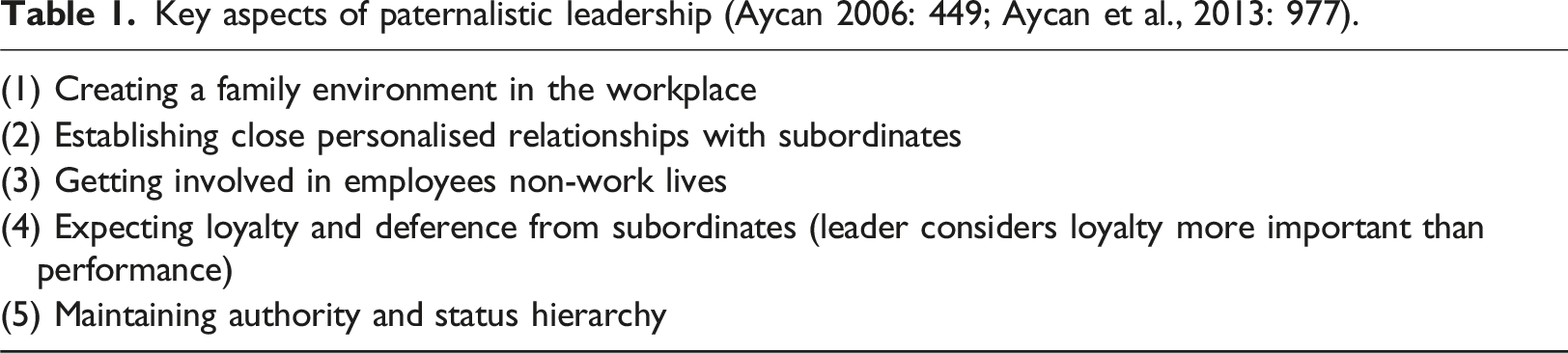
Although different authors have provided different descriptions of PL in different cultures, contemporary studies commonly characterise it as a leadership style that combines discipline and authority with a benevolence similar to a father figure (Farh and Cheng, 2000; Pellegrini and Scandura, 2008). Paternalistic leaders show a personalised, comprehensive concern for the professional and personal well-being of their followers, emphasising an awareness of their feelings and needs (Aycan, 2006; Farh and Cheng, 2000).
To some extent, PL has been studied in different cultural clusters (Mansur et al., 2017). Some authors argue that in Latin American societies, PL is characterised as a style based on humanistic and more pronounced benevolent aspects (Davila and Elvira, 2009; Martínez 2005), which are also linked to the cultural values of Latin American work culture (Azevedo et al., 2020; Davila and Elvira, 2012). Consequently, interpersonal relationships, warmth and the creation of emotional bonds are crucial for effective leadership in this region (Castaño et al., 2015; Davila and Elvira, 2012; Martínez, 2005; Ogliastri et al., 1999; Osland et al., 1999).“[…] what differentiates this type of [humanistic] leadership from all other […] is its well-rounded purpose: it treats people as holistic individuals with multiple needs and motives; […].” (Fu et al., 2020).
Some studies have highlighted constructs that exemplify these social and emotional ties developed in personal relationships. Examples include ‘jeitinho’ in Brazil and ‘compadrazgo’ in Chile and Mexico. The former is recognised as a Brazilian cultural trait that involves the use of emotional resources such as warm manners, smiles and empathy, becoming a social and emotional mechanism within a reciprocal relationship, which also applies to leader-follower relationship (Duarte, 2006; Bausch et al., 2024; Davila and Elvira, 2012).
Latin America’s cultural diversity is a central element in understanding leadership practices and represents a fruitful avenue for the study of leadership and Latin American leaders today (Davila and Elvira, 2012). Building on this perspective, we suggest an understanding of leadership that moves beyond a simplistic PL dyad by recognising the cultural idiosyncrasies that shape PL practices. Despite the challenge of identifying specific practices due to the internationalisation of management knowledge, our research identifies a model that combines PL characteristics such as benevolence and authority with Latin American cultural traits, embracing and emphasising humanistic, person-oriented and emotional engagement.
Although there are studies on leadership in Latin America that approach the topic from a range of context-specific models that provide a deeper understanding of local leadership practices (Beamond et al., 2020; Martínez, 2005; Ramirez and Søderberg, 2019; Rodríguez and Ríos, 2009; Wallace, 2004), these studies remain scarce. Latin American leaders in different cultural contexts have also received limited research attention.
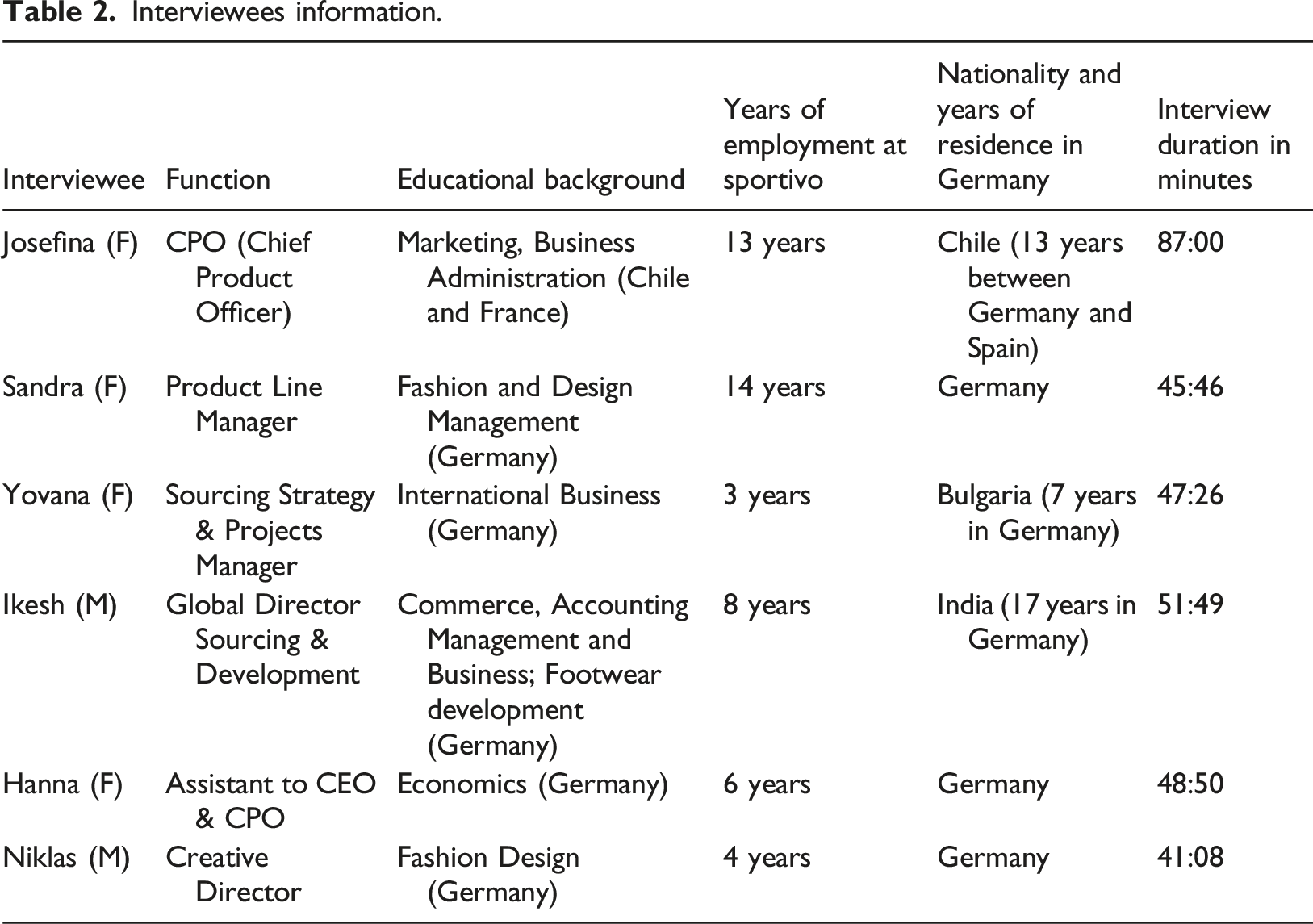
Interviewees information.
Research methodology
For our research, we adopt an interpretative qualitative approach (Bansal et al., 2018; Welch and Piekkari, 2017), based on a single case study. This approach involves in-depth exploration through descriptive narratives and extend theoretical frameworks by highlighting the uniqueness of the context and enriching it through interpretive processes (d’Iribarne et al., 2020; Welch et al., 2011). We chose this approach because it not only uncovers detailed insights and provides multiple perspectives, but also explores the underlying motivations behind behaviours (Chevrier, 2024), focusing on understanding social interactions (why and how), rather than just explaining them (what) (Piekkari and Welch, 2011; Piekkari et al., 2020).
In this sense, our single case study approaches both, the leader and follower perceptions and narratives using interpretative sensemaking (Welch et al., 2011), through the lens of existing concepts and contextual factors. This is beneficial for research in intercultural settings as it fosters a better understanding of intercultural interactions (Barmeyer et al., 2019; d’Iribarne et al., 2020; Gertsen and Zølner, 2020; Romani et al., 2018) and helped us to integrate cultural influences (Chevrier, 2024), human intentionality (the explanations and reasons given by our interviewees) and their position within the social structure (Welch et al., 2011).
Our interpretive sensemaking allows us to embrace context, narratives and, no less importantly, our personal engagement (Alvesson and Sköldberg, 2017; Bausch et al., 2024; Stake, 1995). Our own roles as researchers and our own cultural repertoires in the production of knowledge need to be considered, which is why we have presented this study as a possible reading rather than a law-like theory. The narratives presented here tell us more about how the leader and followers talk about leadership, culture, emotions, personal relationships and therefore experience it.
Our case study explores the adoption and practice of PL in a German MNC in Bavaria, a cultural context theoretically less conducive to such a leadership style. We identify aspects that favour the adoption of PL and extend its characteristics with specific cultural features found in the Latin American cultural context, such as the budding of emotional engagement between leaders and followers, based on humanistic values that foster caring and strong interpersonal relationships. The methods and setting of our research are detailed in the following sections.
The case study
The MNC, SPORTIVO
Founded and operating in Germany, Sportivo is embedded in a cultural framework characterised by a high degree of decentralisation, deeply embedded in German organisational practices (Barmeyer et al., 2019). This characteristic is consistent with Germany’s low score on Hofstede’s (1980) Power Distance Index, which indicates a preference for equality and decentralised decision making, where managerial authority is distributed rather than centralised.
Sportivo’s culture, as described in official company documents, emphasise the company’s goals and values as follows: “Learning and growth, Diversity, Inclusion and Wellbeing”. “Learning and growth” focuses on developing employees’ knowledge, skills and abilities to meet the company’s needs in the sporting goods industry. The emphasis on “diversity, inclusion and well-being” reflects strategic objectives to reduce employee turnover and optimise performance by increasing morale and job satisfaction.
This MNC operates with an organisational structure, characterised by a hierarchical arrangement with the corporate headquarters at the top, where strategic decisions made by top executives are disseminated to other components of the organisation for implementation (Sportivo Website). The main features of the organisational structure include “Hierarchy of functional departments”, “Product-based divisions” and “Geographic divisions”.
Sportivo’s Executive Board consists of the Chief Executive Officer, Chief Sourcing Officer, Chief Financial Officer and Chief Product Officer, who also represent three different nationalities. This case study was conducted with the Chief Product Officer (CPO) and within the company’s Product-based divisions, who is primarily responsible for product design and development within the company’s product-based divisions (Sportivo Annual Report).
Interviews and additional material
For this study we conducted semi-structured interviews at Sportivo with a female leader (CPO) from Chile and five members of her team, each with different cultural backgrounds and roles within the same division (Table 2). Semi-structured interviews were chosen for their ability to maintain consistency in addressing key questions while allowing respondents the flexibility to discuss important but unforeseen situations (Myers, 2008).
The interviews were conducted by the first author between July and August 2023 and lasted on average around 50 min. They were conducted in Spanish, German and English, ensuring that at least five interviewees could express themselves clearly in their native language and to stablish rapport (Barmeyer and Davoine, 2021). There was only one exception, where the interviewee’s first language was Bulgarian, but with an English proficiency at native level. This multilingual approach created an empathic connection between the researcher and the interviewees, allowing communication to take place without resistance. This significantly increased the reliability and trustworthiness of the data, which are crucial factors in qualitative research (Bausch et al., 2024).
We developed two interview guides, one for the leader and other for the followers, consisted of two sections: the first section collected background information about the interviewees, including their professional and cultural experiences and their roles within the team. The second section focused on exploring their perceptions of leadership practices and style. The interviewees shared and discussed their perspectives and experiences and were encouraged to describe specific events and comment on them.
All interviews were transcribed and coded using the qualitative analysis software (MAXQDA), starting with in vivo coding of the interviews and preserving the original language in which the interviews were conducted (Chidlow et al., 2014). Each statement was labelled to reflect its content, and then condensed into concise statement. We then compared and contrasted different sections of each interview, juxtaposing the narratives of the team members with those of the leader. The second-order categories were then recombined (Gioia et al., 2013), which resulted in 22 codes containing 102 quotations.
As the Sportivo participants were located away from the headquarters in Bavaria, all interviews were conducted via video call. This was supplemented by field notes, email communication, an initial telephone interview with the CPO in March 2023, as well as official company reports and a journalistic report about the CPO, which is not referenced here to maintain anonymity.
To ensure a thorough and detailed analysis, we focused not only on frequently recurring themes, but also on individual, rarely mentioned narratives, which not only helped us to highlight connections between our findings and the existing literature, but also allowed us to identify intriguing aspects within our data. From our field notes, we were able to interpret the expression of emotions, judgements in the way that opinions were formulated during the interviews, for example, through the de-notation of words or facial expressions that could be interpreted as underlying emotions (Chevrier, 2024).
Research findings
Our findings are organised into two main sections. First, we discuss the adoption of PL within the Sportivo product-based division, based on the perceptions and narratives of Josefina (CPO) and her team. Second, we analyse how this PL is characterised in our case study by expressions of emotional engagement, such as caring and fostering interpersonal relationships.
This in turn shapes how followers from different cultural backgrounds talk about and reflect on leadership practices. By contrasting the responses of German and non-German team members, we gain insights into the impact of cultural perceptions and how we can understand and interpret them. Organising our findings into themes provides a comprehensive analysis of PL practices in a ‘hybrid’ form, illustrated in Figure 1 and supported by selected interview quotes from leaders and followers. Data analysis structure.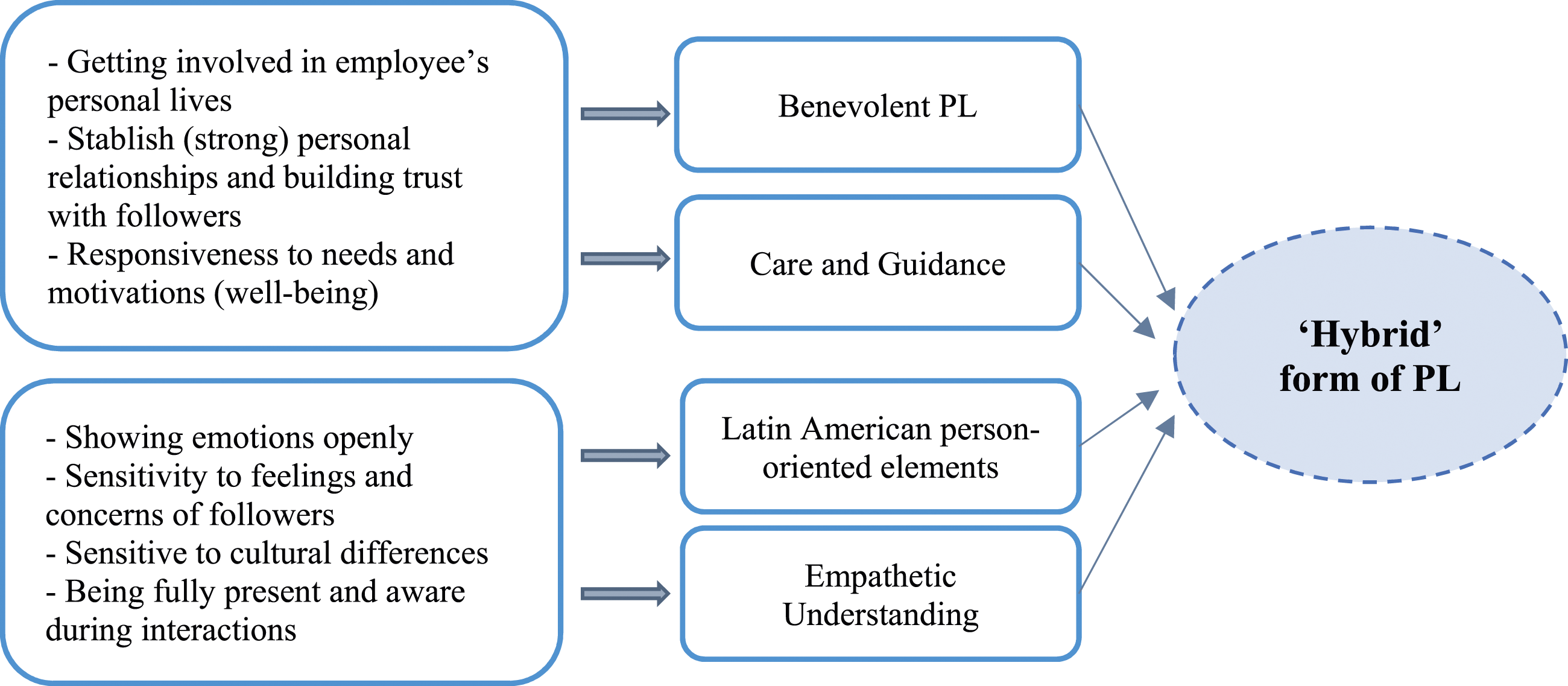
The presence of a ‘hybrid’ form of PL
Leader’s perspective
“And if I must be honest my [cultural] background is noticeable. More within a colder environment. I’ve always been a much warmer leader, a leader who takes care of not only the professional but also the personal side. I’m quite a maternal leader, quite a protective leader, in many cases I try not to be, but it comes naturally to me. I am a leader in the sense that they know that if they are in trouble or if they need help, my door is always open, and they can count on me.” (Josefina, CPO).
In this quote, Josefina acknowledges that her approach to leadership is culturally embedded, emphasising warmth, protection and an openness that may contrast with the more detached, professional ethos of the environment in which she works. This implies that culture shapes leadership behaviour and that leaders often bring traits from their upbringing into the professional environment. The reference to a ‘colder environment’ is likely to suggest a more formal or less emotionally involved culture, where leadership may prioritise strict professionalism over relational dynamics.
The term ‘maternal leader’ emphasises the emotional and relational aspects of her leadership style. The maternal metaphor often implies a nurturing, empathetic and supportive approach and also suggests a sense of responsibility and caring that extends beyond workplace obligations. Josefina’s remark about ‘trying not to be so maternal’ implies an awareness of these cultural expectations and a struggle to balance her natural inclinations with the demands of the German professional environment.
From a German perspective, the ‘Privatsphäre’ is separated from the professional or work sphere, therefore emotional, warm and person-oriented leadership practices may be seen as unprofessional or inefficient, leading to tensions or misunderstandings. However, by expressing concern for her team members’ professional and personal lives and emphasising that she is open and available to them, she reflects aspects of benevolent PL characterised by a caring and protective attitude (Aycan, 2006; Humphreys et al., 2015). “When you are able to connect with a person, the loyalty and commitment increases infinitely more, and I think, fortunately, as Latinos, we have a lot of experience with interpersonal relationships, so it comes much more naturally to us. I think empathy is very important nowadays, and to empathise with you, I must know you, [...]. So yes, a lot of people come to my office to cry, [...], a lot of people call me to tell me things because they know I can empathise with them.” (Josefina, CPO).
Josefina links her leadership style to her Latin American background, emphasising a cultural predisposition to interpersonal relationships. This cultural foundation gives Josefina an intuitive understanding of how to connect with people on a human level, making empathy and relational dynamics integral to her approach. Relational skills are both a strength and a natural part of her identity. By using these cultural strengths, she can create an emotionally supportive environment, where empathy is not a superficial or abstract quality, emphasising holistic care and fostering a family-like atmosphere where employees feel safe and understood.
While the quote focuses primarily on the nurturing side of PL, it also shows, not explicitly, a degree of authority and the expectation of loyalty in return. Josefina’s emphasis on increased loyalty and commitment when genuine relationships are formed reflects the reciprocal aspect between leader and follower: followers remain loyal and committed because they feel supported, respected and valued on a personal level.
Her office becomes a safe space where people feel comfortable expressing their vulnerability, whether through tears or sharing personal challenges. This suggests that emotional transparency is valued rather than suppressed. Her role as a compassionate, approachable figure to whom team members turn in times of need, exemplifies the nurturing aspect of PL. However, the expectation of loyalty and the highly personal nature of this leadership style can blur the lines between professional obligations and personal favours. “[...] the Oscars were the joke of the year. I was busy collecting photos all year, so there were categories [...] ‘best holiday shot of the year’ or something like that. And that meant that they realised that I had been looking at them and watching them for a whole year. And in a way I was also picking up on activities that had nothing to do with their work, but in a very authentic and personal way. [...] it was our secret, and I bought an Oscar and gave it to them.” (Josefina, CPO).
This last quote illustrates Josefina’s focus on building personal and authentic connections with her team members through thoughtful, humorous (Vanderheidenand and Mayer, 2024), non-work-related interactions. This personalised engagement fosters a sense of belonging and recognition that goes beyond job performance, reinforcing the idea that each person is valued as an individual.
Josefina’s playful yet thoughtful gesture of handing out an ‘Oscar’ demonstrates her ability to lead with warmth and humour, while still earning the respect and admiration of her team. This initiative not only recognises their individuality, but also strengthens their bond, which fosters a sense of mutual respect and camaraderie (compadrazgo). However, this gesture also suggests a degree of control over the team’s activities outside of work, which could give the impression of surveillance.
Follower’s perspective
Quotes illustrating key aspects of PL (Aycan 2006: 449; Aycan et al., 2013: 977).
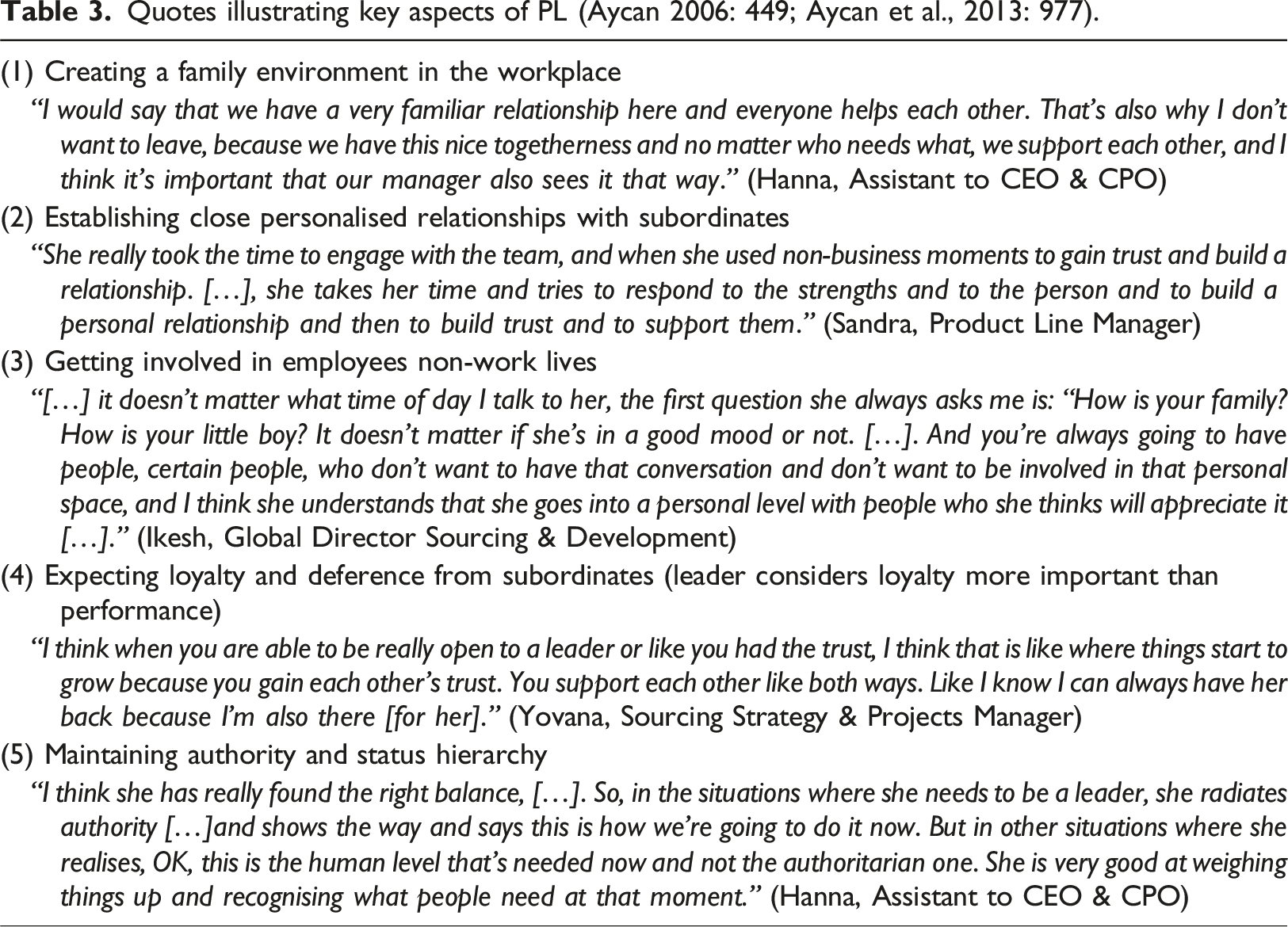
Hanna’s statement (1) highlights Josefina’s success in fostering a family atmosphere at work. This environment is characterised by mutual support and a sense of community that makes employees feel valued and connected. The fact that this familial approach makes Hanna reluctant to leave underlines its positive impact on employee retention and how it can foster loyalty and a cohesive team.
The second quote from Sandra (2) illustrates Josefina’s commitment to building close, personal relationships with her team. By taking time to connect in non-work-related moments, she builds trust and rapport. Her focus on responding to individual strengths and needs demonstrates care and emotional engagement with each team member by treating them as unique individuals.
Ikesh’s short anecdote (3) shows Josefina’s involvement in the personal lives of her followers. By asking about their families, she creates emotional bonds and shows empathy. However, she is also perceptive and adaptable, recognising that not everyone is comfortable with this level of personal involvement. By tailoring her approach to those who appreciate it, she fosters trust and connection while remaining sensitive to individual preferences.
The reciprocal nature of loyalty and trust is emphasised in Yovana’s statement (4). Trust is described as the foundation from which growth and collaboration emerge, creating a dynamic where both the leader and followers feel committed to supporting each other. This two-way relationship emphasises loyalty and shared responsibility, where employees are not only cared for but also inspired to give back and stand by the leader.
Hanna’s observation (5) illustrates Josefina’s ability to balance authority and humanistic traits. In situations that require clear direction and decision making, Josefina knows when to assert authority and guide the team decisively, providing clear direction when necessary. At the same time, she is perceptive and adaptable, recognising when a more humane and compassionate approach is needed, adjusting her leadership style accordingly. Her ability to assess situations and respond appropriately demonstrates a nuanced understanding of her team’s needs and a frame-switching ability that is highly valued in leadership.
Emotional engagement and multicultural experience
The involvement of emotions in leadership practices emerged as a prominent theme during the interviews. This was also evident in the non-verbal gestures of the interviewees. Field notes taken during the interviews further supported these observations and aided in the interpretation and analysis of our material. In the product division at Sportivo, we found that although these emotional manifestations may seem unconventional, they were generally accepted and viewed positively by Josefina’s followers.
Followers’ quotes on emotional engagement divided into German and non-German team members.
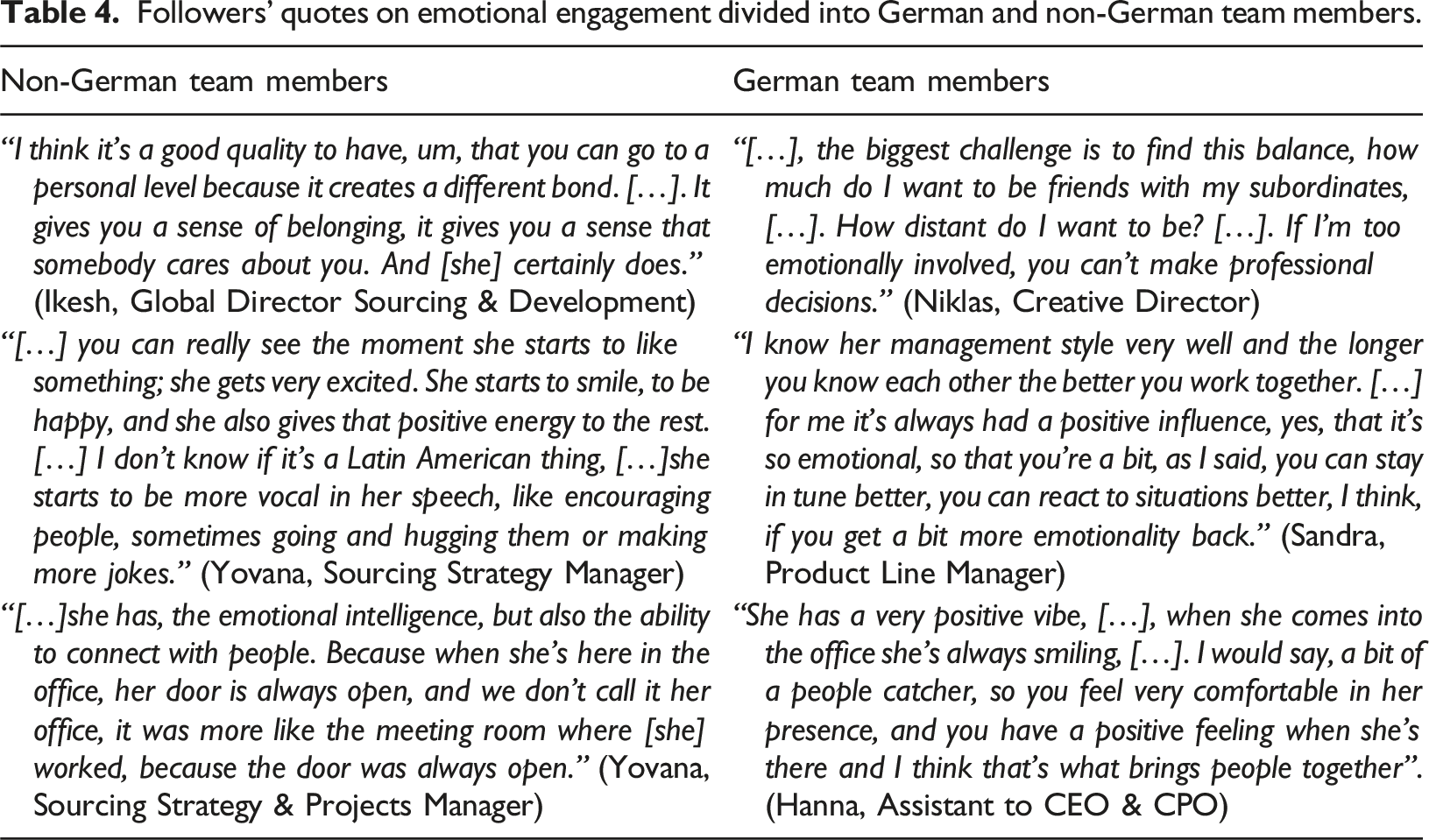
The non-German team members consistently emphasise a positive impact of Josefina’s emotional engagement and personal connection to them. Ikesh highlights the importance of her ability to connect on a personal level, particularly in how this emotional engagement creates a ‘different bond’. This connection fosters a sense of belonging and care, making team members feel valued and supported. In this case, emotional engagement becomes a tool for building trust and loyalty within the team.
Yovana reinforces this idea by describing Josefina’s enthusiasm and how her genuine excitement and positive energy affect the team. The reference to Josefina becoming more animated and expressive - smiling, encouraging, hugging and joking - highlights how emotions can be used to create an energetic and supportive environment. This behaviour not only fosters a sense of closeness, but also contributes to a lively and cohesive team dynamic.
Josefina’s open-door policy illustrates how she creates an accessible and collaborative environment. This practice is consistent with PL, where leaders provide guidance and support while remaining available and engaged with their team members. The use of humour, physical gestures such as hugs and informal interactions further emphasises the nurturing aspect of PL, which extends to the use of emotion to strengthen personal relationships and bonds.
Mentioning her Latin American background suggests a cultural component to emotional expressiveness, that may influence her leadership style, making emotional engagement a natural and integral part of how she interacts with her team. This suggests that emotional engagement is not only accepted but also seen as part of effective leadership practice.
These quotes illustrate a tendency for non-German team members to have a positive view of emotional expression. These narratives can be interpreted as a reflection of the interviewees’ own cultural background and migration experience. These factors may influence their perceptions of Josefina’s leadership, as they may see themselves reflected in her by sharing these characteristics and perceiving her as a neutral insider-outsider or role model (Adamson and Kelan, 2019; Gyamfi et al., 2023).
On the other hand, the German team members expressed both the positive aspects and the challenges of using emotions in leadership. Niklas articulates a common dilemma: finding the right balance between emotional closeness and professional distance. He reflects on the risks of becoming ‘too emotionally involved’, which can complicate decision-making and professional objectivity.
Sandra appreciates Josefina’s emotionally expressive leadership style and notes that it has had a positive impact on her work experience. This suggests that Josefina’s emotional expressions and being a ‘people catcher’ promote greater alignment and adaptability within the team, making members more responsive and cohesive. This emotional openness may increase responsiveness and create a positive, welcoming atmosphere, despite the German cultural tendency towards formality (Barmeyer et al., 2019).
Analysing how members of this team talk about and perceive each other’s displays of emotion reveals cultural nuances and individual preferences. Both, Germans and Non-Germans generally view emotional expression positively, recognising its benefits for team responsiveness. The difference may be due to an empathic response to shared experiences such as migration and being a foreigner, as well as pre-existing friendly relationships that some team members have with Josefina (Fitzsimmons, 2013).
German team members show a range of responses from welcoming emotional closeness to concern about maintaining professional boundaries, perceived as a form of control over employees, suggesting a culturally nuanced approach to emotional expression at work that seeks to balance personal connection with professional integrity. In contrast, non-German team members, embrace a more expressive and physically demonstrative interaction style, reflecting a cultural tendency towards warmer, more interpersonal leadership styles.
When discussing the role of emotions in her leadership approach, Josefina states: “That kind of energy, that kind of passion, I don’t know what [...]. Whether we can link it to Latin America or not, [...]. I feel that it is something that we are generally more energetic, we are more, eh, we are quite passionate. The blood runs fast in our veins, and I can tell when I’m angry. [...]. Now I always feel like I’ve been able to smooth it out. Carrot and stick, so to speak.” (Josefina, CPO).
In this quote, Josefina reflects on the high energy and passion she brings to her leadership, suggesting a cultural influence. By describing this passion as something deeply ingrained, emphasising that “the blood runs fast in our veins”, she highlights a vivid image of her natural tendency to be emotionally expressive and demonstrates how cultural roots can shape leadership behaviour. The awareness of her emotional responses, such as anger, indicates also a high level of emotional self-awareness.
The use of the ‘carrot and stick’ approach reflects the characteristics of PL. While she exudes warmth, passion and energy, she also recognises the need to establish authority and maintain discipline. This phrase suggests that she strives to balance encouragement and support with firmness when necessary. This regulation helps her to maintain credibility and authority while remaining emotionally engaged and approachable (Haver et al., 2021).
When discussing the role of multi- and intercultural experience, Josefina states “I think that knowing different cultures and living in different places and knowing different realities makes you develop empathy and put yourself in other people’s shoes in a more honest way or with more foundation or with more knowledge. And that helps you in the end because, [...] people are not only professionally motivated [...], nowadays I feel that the new generations are looking for more representation and for a purpose. [...].” (Josefina, CPO).
Josefina emphasises the importance of experiencing and understanding different cultures in order to develop empathy and balance emotions appropriately. Intercultural competence enables leaders to understand and relate to the perspectives of others, fostering meaningful connections and effective communication (Caligiuri and Tarique, 2012; Maddux et al., 2021). She recognises that today’s followers are looking for more than professional motivation; they crave representation and a sense of purpose. Josefina’s approach reflects this awareness as she considers the diverse backgrounds and needs of her team members, embodies these values and connects with them emotionally.
Our findings show that the acceptance of emotional expression in leadership is influenced by both cultural and individual factors. While cultural background often shapes how emotional expression is implemented, perceived and accepted, individual differences can lead to responses that either conform to or deviate from typical cultural norms. This variation highlights the complexity of leading with emotions in intercultural teams.
Contributions and discussion
Our qualitative study makes three contributions to the field of Cross-Cultural Management and leadership. First, it offers a contextualised understanding of PL, extending it into a ’hybrid’ form that integrates elements characteristic of Latin American societies and culture. In doing so, our research extends PL theory by not only acknowledging negative aspects, such as non-benevolent, exploitative or autocratic traits, but by adopting a constructive approach (Barmeyer et al., 2021; Stahl and Tung, 2015) that emphasises the positive integration of cultural nuances to PL. This perspective suggests that such ‘hybrid’ form of PL can be adopted and adapted to different cultural contexts.
Our findings show a positive reception and the acceptance of this ‘hybrid’ form of PL, which is characterised by a holistic approach that balances performance with caring and commitment to the emotional well-being of followers. Strongly influenced by its roots in Latin American societies and culture, it emphasises interpersonal relationships and is consistent with a humanistic perspective which are crucial for effective leadership practices (Martínez, 2005).
Our understanding of ‘hybrid’ PL is consistent with the concept of fatherly leadership proposed by Banai and Mayer (2024), which blends servant and paternalistic leadership styles. This approach emphasises personal motivation driven by love rather than service, and notably excludes the authoritarian component of traditional paternalistic leadership. Similarly, our interpretation highlights a more compassionate and nurturing form of leadership, which resonates with the emotional and benevolent aspects observed in our case study.
The ‘hybrid’ form of PL observed in Sportivo manifested as maternal leadership. This feminine variant of PL aligns with emotional and more person-oriented characteristics. While it retains the nurturing and benevolent aspects of PL, it places a stronger emphasis on emotional engagement (Mayer et al., 2017; Singh et al., 2023). This ‘maternalistic’ aspect, linked to the concept of women’s leadership, is a highly relevant topic for future research (Adler, 2007; Banai and Mayer, 2024; Jackson, 2016).
Second, our study contributes to the discussion of the role of emotions in leadership by demonstrating how ‘hybrid’ PL incorporates emotional engagement to strengthen personal relationships and loyalty between leaders and followers. The Latin American cultural background of the leader in our case study exemplifies this ‘hybrid’ PL, where emotional and nonverbal cues act as social facilitators, fostering personal relationships that enhance performance and reduce confrontation (Davila and Elvira, 2012; Duarte, 2006).
There is great interest in research exploring how leaders’ emotional expressions affect employees’ emotional states and how different leadership styles influence these dynamics (Bono and Ilies, 2006; Li et al., 2016; Mayer et al., 2017; Riggio and Reichard, 2008). In certain contexts, expressing emotions may be more effective and beneficial than maintaining a neutral demeanour (Castaño et al., 2015). However, it is also important to recognise that negative emotions, such as anger and fear, can damage leader-follower relationships and negatively impact overall team performance (Denham Smith, 2023).
At Sportivo, emotions were integrated into daily interactions and used to inspire and engage team members, even in a German cultural work context that tends to be performance-oriented and assertive, and more resistant to open emotional expression, and scores low on emotional qualities such as compassion and humane orientation (Brodbeck et al., 2002; Brodbeck and Frese 2007). This was achieved through humorous and playful activities such as the Oscar awards and an interest in the personal lives of followers, creating an environment where open emotional expression was encouraged and supported by an open-door policy.
Josefina’s leadership exemplifies the idea that female leaders often possess high emotional intelligence (Adler 2007; Banai and Mayer 2024; Lopez-Zafra et al., 2012). While the stereotype that women are more emotional than men is prevalent (Shields, 2002), research has often viewed emotionality as a barrier to women’s advancement in leadership (Brescoll, 2016). In contrast, in our case study emotional engagement was not seen as a disadvantage. Rather, it was recognised as a strength, that enabled connection and the building of meaningful personal bonds.
Third, by highlighting the ability of the leader in our case study to effectively embrace, integrate, adapt and recontextualise her leadership approach in intercultural contexts, we have shown the importance of intercultural competence and multicultural experiences in leadership practice. Josefina’s multicultural experiences have provided her with a robust set of global leadership skills (Fitzsimmons, 2013; Hong and Minbaeva, 2021; Reiche et al., 2017), which enable her to navigate complex intercultural environments with skill and insight.
Furthermore, these multicultural experiences and intercultural competence enhance adaptability, tolerance and sensitivity in intercultural situations, allowing for frame-switching and contextual adaptation (Maddux et al., 2021), effectively adapting to the demands of different cultural environments. This ability to reframe and modify leadership practices and strategies ensures the success in meeting the challenges inherent in multicultural contexts.
The following Figure 2 illustrates the main characteristics of PL in its two widely discussed forms: authoritarian (control) and benevolent (care). It highlights the middle position of our ‘hybrid’ form of PL, which incorporates elements of both styles, emphasising characteristics rooted in Latin American culture and identified in the studies referenced in our research. This is complemented by the contextual features of PL observed in our case study at Sportivo. Illustration of PL (control and care) and ‘hybrid’ PL at Sportivo.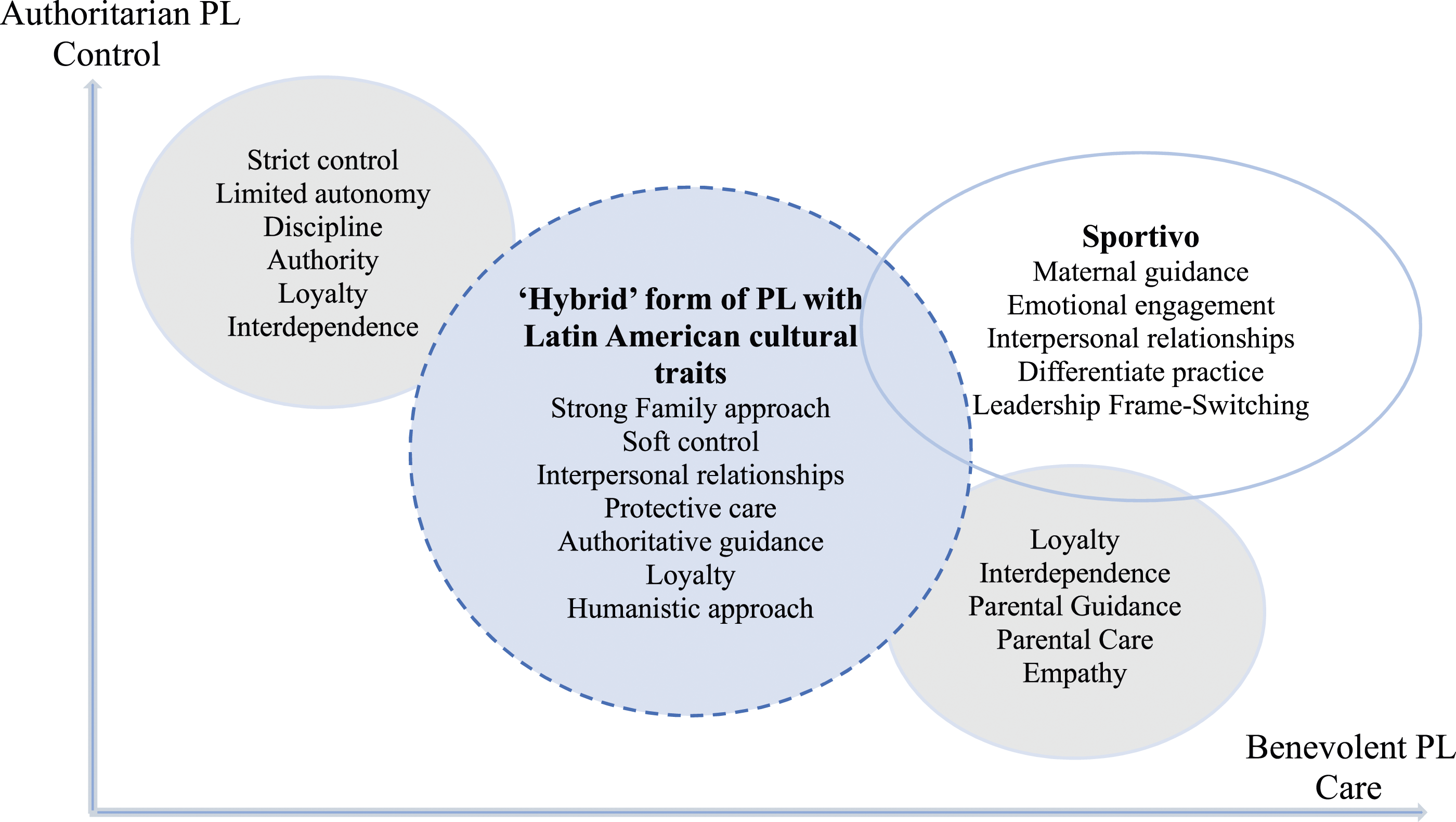
Our study acknowledges limitations inherent in a single-case qualitative approach. First, our research relies heavily on the perspectives and interpretations of one intercultural team and its leader within a product division of a German multinational. While these accounts provide valuable and unique insights into individual experiences of leadership and cultural influences, future research could benefit from incorporating additional case studies using the same methodological framework. Extending the research in this way would help to deepen our understanding of ‘hybrid’ PL in different cultural contexts.
Second, our deliberate focus on a German cultural and organisational setting was intended to provide in-depth insights into a unique context. However, future research could extend this perspective by examining organisations in different countries and industries. By incorporating cross-cultural comparisons and industry-specific analyses, researchers could gain a more comprehensive understanding of how variations in PL manifest in different settings.
A third limitation is the lack of face-to-face interaction. While our reliance on virtual communication channels reflects the evolving nature of contemporary work environments, it also presents challenges for thorough data collection and analysis. Although our study did not explicitly focus on the nuances of virtual work environments, the data underscore their importance.
Conclusion
This research deepens the understanding of how a ‘hybrid’ form of PL, characterised by features common to Latin American culture and society, was adopted, practised and embraced by a Latin American female leader and her followers in a cultural context different from where it is traditionally most prevalent - specifically, in a German MNC. Through a qualitative single case study, we found that this ‘hybrid’ PL, characterised by emotional and person-oriented elements and an emphasis on building personal relationships between leader and follower, was generally perceived and received positively by an intercultural team.
In this complex context, the interviewees shared their perspectives and described specific situations. Through our interpretative process, we concluded that this ‘hybrid’ PL was characterised by emotional engagement, which is prominently present in the interactions between the leader and followers. This emotional engagement fosters strong personal connections, highlighting the significant role that emotions play in their leadership dynamics.
By adopting an interpretive approach, we were able to access and analyse the experiences and personal reflections of the interviewees, which we then contrasted with established PL dimensions and the more benevolent, humanistic and person-oriented aspects of PL in relation to Latin American cultures (Aycan, 2006; Davila and Elvira, 2012). By integrating these intercultural perspectives, we provide deeper insights into the role of emotions in the adoption and acceptance of a ‘hybrid’ form of PL at Sportivo.
Footnotes
Declaration of conflicting interests
The author(s) declared no potential conflicts of interest with respect to the research, authorship, and/or publication of this article.
Funding
The author(s) received no financial support for the research, authorship, and/or publication of this article.
